My life has been pretty limited by health issues for awhile — I don’t just mean intracranial hypertension, either. I try not to dwell on it, because that’s not really helpful for me. If anything, it just keeps me from being useful when and where I can.
Sometimes, though? I just want to be a gigantic baby about it, dammit.
Part of my problem is a digestive issue that, to date, three different ERs, five doctors, a barium swallow, three ultrasounds, four x-rays, and countless dietary adjustments have not solved. There’s still a lot of diagnoses to rule out (I’ve never been scoped, or tested for H. pylori, Celiac disease, or SIBO, for example), but it’s been a long slog finding a doctor willing to pursue things and not just shrug and hand me a PPI . I’ve been told to “come back if it still isn’t better in a week” when it hasn’t been better in years, and, when I do, it’s another shrug and a recommendation to try fasting for a day.
If I fasted every time I felt sick, I’d be dead.
Getting insurance was a pain. Finding a doctor who I felt confident would actually help me continues to be a pain. Some won’t do anything for me because they have no experience with idiopathic IH (statistically speaking, I’m one of 7 people in this entire city who has it. I guess I can’t be too surprised). It’s frustrating. It’s disheartening. It’s very… physically unpleasant.
Through it, my S.O. has been a huge help. He calls doctors for me, sends in paperwork, deals with the ongoing, complicated mess of adding me to his insurance. Sometimes, I feel powerless not only because I’m physically unwell, but because that illness makes me less able to advocate for myself. I don’t like having him do this, so part of my contribution was hunting down a doctor I thought would be willing to do more than order another ultrasound and ask me, for the nth time, if I’m really, absolutely sure this isn’t all just anxiety. I even found one!
Unfortunately, they don’t answer the phone.
“I can get you an appointment with my doctor,” my S.O. texted me, but I didn’t want to get another five minute visit with someone who’d just order the same tests that were no help the first seventeen times. I didn’t want to go through trying the same handful of acid reducers, only to end up anemic, covered in bruises, and feeling no better. I’d gone through a lot of trouble to find a doctor whose approach seemed like one that would actually help me, who my insurance would cover. We’d already filled out the new patient paperwork and sent it in, why wasn’t this office answering their damn phone?
I was having a low point when I decided to pull out one of my tarot decks. What could I do to help myself heal? It feels like I’ve tried everything I can, physically speaking. Taking more Mylanta probably isn’t going to help at this point. I had my doubts about eating nothing but banana smoothies for a(nother) month. FODMAPs was already a flop. What else was there for me to do?
The Two of Cups.
The Cups are the cards of emotions, and the Two of Cups is full of partnership imagery — a pair of figures, the twining snakes of the staff of Hermes. While it doesn’t always mean a romantic partnership, it does point to one where both people are very emotionally invested in the same endeavor.
Right now, my goal is getting well (or, if not well, then at least less awful). I know my S.O. is invested in it, too, or he wouldn’t be filing paperwork and making calls. My approach obviously isn’t working, or I’d have an appointment by now. It seems like I need to defer to the other person in this partnership — he cares about my well-being just as much as I do, just as I care about his. If I’m going to listen to anybody right now, it should probably be the other person with a vested interest on keeping me on the right side of the dirt, you know?
“When you are writing, you’re conjuring. It’s a ritual, and you need to be brave and respectful and sometimes get out of the way of whatever it is that you’re inviting into the room.” ― Tom Waits
Ever use shufflemancy? It’s a type of technomancy that relies on shuffling through a collection of music. It could be an album, it could be a playlist of your favorite songs, any sufficiently large number of tunes will do.
Tom Waits has been described as a lot of things: avant-garde, gravelly, whiskey-soaked, experimental, a raconteur. John Hodgman said that “[w]e all hear our own stories in our favorite songs (that is why Tom Waits sings in werewolf language—you can pretend it is about anything you want!),” and I’m inclined to agree.
And so, I tacked together a shufflemancy playlist made up entirely of Tom Waits tracks.
It’s pretty self-explanatory. Clear your head, ask your question, hit shuffle, and listen. (Or, if you’re not using the Spotify app, shut your eyes, scroll, click, and listen.) Do any lyrics leap out at you? What impressions do you get? Let the werewolf troubadour sing(/play/beat the bathroom door with a 2×4) you a divination.
Ever have a card that ends up showing up a bunch? Seemingly out of the blue, it starts showing up in every reading you receive or do for yourself.
Right now, I’ve got the Kind of Wands.
Across multiple decks (he’s been a crow, a man, and even a taxidermy fish in a squirrel suit), he keeps showing up. The first time was when I tried a very interesting three-card reading — how you see yourself and how others see you, versus how you really are. Ever since then, any time I have a question about feeling sure about my place in the world, or keeping up my confidence, he’s there. The funny thing is, I don’t think I’ve ever received the King of Wands in a reading before then. Not when I pulled cards for myself, not when I paid for a reading by someone else, not even when my ex’s stepmother was teaching me to read.
In truth, I could do a lot worse than the King of Wands. He’s a leader. In the Rider-Waite-Smith deck, he’s holding a blossoming branch that symbolizes verdant life and the energy of creativity. He’s surrounded by symbols of strength, nobility, and the element of fire. In the Crow Tarot, he is a sign that focus and energy will ensure a successful outcome. In the Deviant Moon Tarot, he’s a charismatic (if easily annoyed) leader or innovator. In the Regretsy Tarot, he is a fish in a squirrel suit.
The King of Wands is a determinator. If he wants to throw his weight behind something, it will blossom. If he doesn’t, it will wither. As a King, he is less impetuous than a Knight. Unfortunately, that also means that the success or failure of an opportunity rests entirely on the King’s willingness to act on it. No pressure, or anything.
I often feel like I’m spinning my wheels. Even during the times when I know exactly what I need to do to feel happy and successful, health challenges mean that I don’t always have the ability to do them. Here, at least, it seems like the King of Wands is a reassurance that all isn’t lost — I can still achieve what I want with energy and focus.
My music needs change a little from season to season. As the weather turns from snow to sun, I start seeking out bouncier, more energetic songs. If you’re like me, you might dig this collection of tunes for planting your metaphorical seeds and getting the sap running. Happy Ostara!
Once, I mentioned to someone that I was interested in visiting a Reiki massage therapist. Immediately after I said it, I received a very baffling piece of advice: “Don’t join a cult.”
I say baffling, because:
What do either of those things have to do with each other?
Cults have a very definite set of characteristics that make them destructive to the people they trap. People don’t join a cult because they’re foolish or don’t know any better. They join them because they are desperate, and cults have a highly evolved set of strategies for preying on this desperation. Saying “don’t join a cult” is an extremely reductive treatment of a set of very complex psychological and social problems.
Cults work because people don’t realize they’re about to join one. Saying “don’t join a cult” is a bit like saying “don’t choke to death on a potato” or “don’t get malaria.”
In Drawing Down the Moon: Witches, Druids, Goddess-Worshippers, and Other Pagans in America, Margot Adler points out that Pagan groups don’t share the characteristics of cults. I can’t reasonably say that no Pagan group leader has ever used their influence the way a cult leader does, but the motivations for being Pagan, or even being a secular witch, are not rooted in the desperation and desire to belong that are the hallmarks of someone vulnerable to a cult. (Given the number of solitary Pagans and witches, it would really odd way to go about obtaining a sense of belonging.)
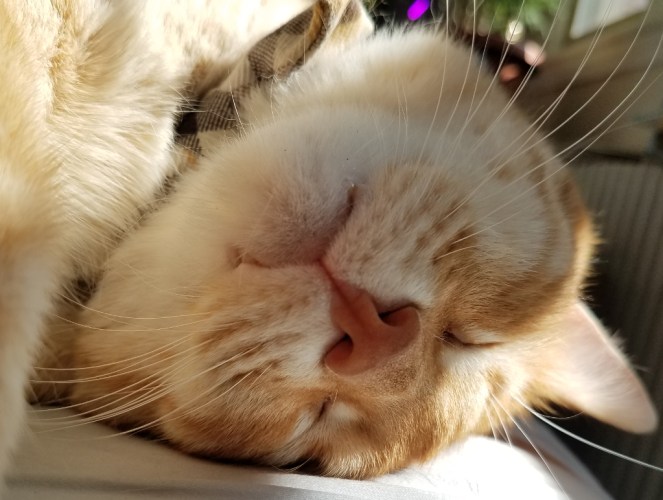
I have no idea what image would be appropriate for this sort of post, but all of the blogging guides say I need to have one. So, here’s Pye’s enormous, doofy face, because the rest of this post is heavy.
That said, sometimes spiritual advisors and Pagan group leaders take a hard left into toxicity. I mean, there’s a whole range of behavior between garden-variety low functioning manipulators and Shoko Asahara (and none of it is good).
So, how do you tell if your spiritual advisor may not have your best interests at heart?
1. “You’re cursed, but I can save you.”
I can’t tell you how many horror stories I’ve heard from people who went to a psychic or other advisor only to be told that they were suffering from a terrible curse, and only the advisor could help them.
Dealing with curse-breaking, like other forms of witchcraft, requires practice, learning, and dedication, but there is nothing so special about it that only one person in the world can help you… and it definitely shouldn’t cost you four easy payments of $10k each. But, while most people know to get a second opinion if their doctor delivers some bad news, they often don’t necessarily feel the same about spiritual advisors.
I hate to be all “not all psychics,” but it’s true. Just like with any other bad news, get a second (or third) opinion, and learn what you can do to help yourself first. Curses also aren’t nearly as common as many people think, so the odds of you actually having a curse that needs removing are not very high.
2. Nudity is not optional.
“Going skyclad” is a thing that I think a lot of people have weird ideas about. It’s a way to remove the trappings of rank from people, to place all of the participants on equal footing. It’s also a way to delineate the ritual setting, since most people don’t go about their daily lives in the nude, and to celebrate the body without shame — if you’re uninhibited enough to be in the buff, you’re uninhibited enough to fully give yourself over to the emotions and feelings of the ritual.
That said, nobody has any place to tell someone that they must be skyclad. Nobody.
There have been instances where gross perverts have maneuvered themselves into leadership positions in part to preside over a space full of naked people. Anyone who insists that you absolutely have to be naked in front of them (and isn’t, like, a literal emergency room trauma surgeon) is not anyone who should be trusted.
3. Something something root chakra.
There’s a lot of crossover between Western new age spirituality and the concept of chakras in Hindu tantrism (something which both Hindu people and members of new age movements often feel several ways about). Part of this is the appropriation of the idea of chakra opening.
The root chakra is part of a complex physical and spiritual energy system. I can’t speak for Hindu tantrism in particular, but, in Westernised practices, this chakra is associated with sexuality, survival, security, and all of the other lower Maslow-type business. A blockage of the root chakra also impacts all of those above it. This makes sense — if you don’t feel safe and have your basic needs met, you probably aren’t going to really open up to much else in life.
The weird part is the number of people who want to personally unblock your chakras. Preferably with their junk.
As with going skyclad, there is no reason to allow someone to do anything to you that you are not comfortable with, even a guru. This isn’t like overcoming fear through skydiving or bungee jumping — this is a predator who wants to take advantage of someone in a vulnerable position. Cloaking it in a veneer of spirituality doesn’t legitimize it.
4. “You’re special!”
Here is where things cross over into cult recruitment tactics. One of the things cults are known for is love bombing. Love bombing is sometimes used toward positive ends. More often, it’s manipulation.
Love bombing takes a vulnerable person and makes them feel wanted and special. It can also take a person who just thrives on praise and make them feel elevated and unique. Once that “loved” status is obtained, most people don’t want to let go of it — so they put up with a lot to keep the love coming.
For a very brief time, I was involved in a small coven led by someone I trusted. All of the people involved in it were friends, and we all knew each other pretty well. I didn’t stay long, because my gut feeling pulled me away — I could tell something in the milk wasn’t clean, even if I didn’t know what. In the short time I was there, though, I could see the leader love bombing one of the members. This member got endless compliments, elevated to a higher rank, and the leader insisted that a kiss was part of the ritual structure.
Long story short, some rumors of sexual misconduct and a broken marriage later, that coven isn’t a thing anymore.
5. “The world doesn’t understand.”
Here’s another crossover into cult territory. One of the signs of a cult is isolation — the cult can only function if its members have a complete reliance on it. So, it shuts down critical thought and fosters the sense that the rest of the world is at fault, and it’s good and right to be at odds with it.
I’m not saying that it’s wrong to be against a lot of the things society accepts as normal. Being anti-capitalist, anti-overconsumption, or anti-patriarchal doesn’t make someone weird or wrong — far from it.
It does become toxic when that feeling extends to being unable to associate with anyone outside of a given belief system. When a trusted advisor tells you that you should alienate anyone who questions what you’re doing, that’s bad news.
Weirdly, it’s something that shows up in multi-level marketing schemes, too. Amway even has a name for these outsiders: dream stealers. This name is a way to “other” people who are suspicious of their activities. If a person doesn’t want to join your downline, buy Amway products, or otherwise go whole-hog into the Amway lifestyle? “Why, they’re just a loser who doesn’t want to see you succeed! They want to take away your dream!”
If your advisor tries to control the narrative by shutting down critical thought, that’s bad news.
6. “Your doctor is holding you back.”
It used to be an oft-repeated refrain that you simply couldn’t practice witchcraft if you were under the influence of anything. While this is understandably interpreted as a caution not to drink your weight in sacramental beer or rip a fat rail off of the back of a toilet immediately before entering the circle, you can still find people who take a dangerous, hard line approach.
As in, you shouldn’t be on anything. The medication you need for anxiety? Nope. The mood stabilizers that help you function? Nah. Antipsychotics? No way.
I think this happens when the importance of practicing with a clear head gets crossed with a kind of orthorexia — the idea that you must adhere to a contrived standard of internal “purity” in order to be worthy, and relying on outside help to function somehow makes you lesser. From my observation, this doesn’t seem to arise out of a desire for control (trust me, I’m much less tractable when I’m anxious), but telling someone to stop taking medication that they need is still destructive.
I’ve had some great experiences with spiritual advisors and group leaders, and some not-so-great ones. When spiritual advisors are good at what they do, they can help foster tremendous growth and creativity. “Help” and “foster” are the key words, though — they are there to advise, while the actual growth comes from within. If someone tries to make you dependent on them by claiming to be the only one who can save you, forces you into a vulnerable position, love bombs you, urges you to isolate yourself from anyone else who might see them for who they are, or tells you to stop taking your medication, it’s time to drop them.
I get a lot of use out of social media. Sure, it’s got its flaws. When you’ve moved around as much as I have, though, it’s a pretty useful way to stay in touch with the people who’re important to you. (Especially when your local postal service can charitably be called “unreliable.”)
Still, there’s something about it that makes me dread using it. Every scroll through my feed is a list of the worst headlines from the last news cycle, friends arguing, and edgelords edgelording, occasionally interspersed with pictures of kittens. It’s a lot to keep up with, and it amazes me how much mental energy it ends up sapping — and I don’t have that much to start with.
Stepping back from it really bothers me, though. Call it FOMO, I guess, or at least the fear of losing touch. But is it even worth it when it leaves me feeling drained and anxious within minutes, and most of the news stories I read are things I’ve read elsewhere? A lot of my social media is private, and I’m not exactly writing to an audience of millions — what does it matter if I like or re-post the stories my friends have most likely already seen? At what point does it become purely performative?
Mental energy is a precious resource for anyone, but I depend really heavily on it to pay my bills. If I can’t stand being online, I can’t write for my clients. If I’m too agitated to focus, I can’t make things. As obvious as that seems now, there was a long while where I didn’t realize it — it felt like that agitation and mental fatigue were normal. They were the cost of participating, or something I had to put up with in order to keep in touch with people and signal boost things I care about.
It seems like such a Millennial problem, doesn’t it? But with six states under my belt and my mobility restricted by my health, social media has become more important to me than it probably otherwise would have. On one hand, this isn’t entirely a good thing (otherwise I wouldn’t be fussing about it now). On the other, I can’t imagine how isolated I’d end up feeling otherwise. I like being somewhat itinerant. I’m an extrovert, and I thrive on meeting new people. The flip side to that is that it’s extra rough when I end up leaving them behind.
On a lark, I pulled a few cards from a tarot deck I recently picked up. I didn’t have any pressing concerns, just wanted to get a feel for the energy of the cards and see what they were like to read from.
“How can I put more into my art and writing,” I asked, “And get to a point where I’m more fulfilled creatively?”
And I got The Hermit.
The Hermit is alone, but not lonely. This card expresses a need for introspection, a meditative period away from distraction. It’s dedication to a goal, and a solid understanding of the path that he is on. The Hermit has to turn inward first, before he can find understanding.
In other words, he needs to be the hell off of Facebook so he can learn a thing.
… Okay, so, in retrospect, this seems head-smashingly obvious. Still, on the tail end of about three entire minutes of Twitter, it really clicked for me. Putting myself through the wringer of reading, liking, and re-tweeting post after post about the worst the world has to offer isn’t really doing much good, even in a signal boosting sense. I don’t want to get all gift-shop-driftwood-plaque-with-the-word-“Breathe”-painted-on-it, but I need to stop this. It’s definitely not improving me as a person, and I don’t think it’s even really helping anyone else.
So, I’m experimenting with another social media hiatus. I’m still updating my Instagram and other strictly blog- and shop-related things, but I really need to figure out better ways to internet while maintaining my sanity.
Learn more about Deepening Resilience here, or read my previous post in this series here.
“Climate change” seems like such a soft term, doesn’t it? George Carlin talked about how euphemistic “global warming” and the “greenhouse effect” sounded, and I agree with him — warm sounds cozy, a house is a home, and greenhouses grow things. Climate change doesn’t really seem to encapsulate the full scope of acidifying oceans, dust-choked air, and the creeping horror of feeling your muscles freeze stiff in the deathgrip of a polar vortex, either.
If you can’t tell, I find the whole thing pretty frightening.
Part of it is that I worry for all of the people hurt the worst by it. This is especially true because the people most affected by climate change are women, especially those in developing nations where poor infrastructure creates additional barriers to preparedness. As long as low income women are the ones experiencing the worst of climate change, you will never get the people capable of making a global impact to care.
Part of it is knowing how many animals suffer because of climate change. Unless they’re cute and marketable, though, the people capable of making a global impact still won’t care.
Part of it is a gnawing dread, like watching a slow-motion car wreck. Knowing that there is a tipping point at which we can no longer do anything (how are we going to capture all of the methane currently trapped in melting ice?). Knowing that we’re pretty much there. Knowing that those with the ability to hit the breaks, aren’t.
Part of it is pure self-interest. Extremes in temperature mess me up. The heat makes my brain feel like its being crushed, I can’t breathe, and my heart pounds. The cold makes every limb feel swarmed with fire ants. Knowing that these extremes are only going to be worse, and come more often, isn’t comforting.
Climate change isn’t necessarily the kind of thing you can prepare for. Sure, you can develop a Bartertown-style compound for surviving a Mad Maxesque, worst-case-scenario apocalypse, but that only lasts as long as your ability to defend it does. Investing in gold or other concrete things would make for a great updated retelling of The Cock and the Jewel. Land and supplies are only as good as your ability to keep them, and even the most ardent stockpiler will run out of bullets, eventually.
Personally, I’m not sure how I’d prepare even if I were entirely able-bodied. I know how to grow food and forage, but this is only helpful as long as the right conditions for growing things last. With the weather weirding and disappearing pollinators, I have no misapprehensions about being able to feed myself. I have other useful skills I could barter, but that isn’t really bankable in such an extreme scenario.
I feel the most prepared when I open myself to the possibility of disaster. It might sound fatalistic, but death positivity has done more to help make me an effective person than anything else. When I embrace the fact that everything is probably not going to be okay, when I can look in the face of the absolute certainty that I’m going to die of something at some point, it’s freeing because I don’t have to worry about it anymore. I can hope and work for the best, but expect (and accept) the worst. Death, itself, holds no fear for me.
As trite as it is, an ounce of prevention is worth a pound of cure. There are things that can be done now (not “things we can do” — there is very little, on a day-to-day level, that individuals can do to stop climate change), and the people preventing them are not gods.
Not everyone celebrates the spring equinox. I do, because you can never have too many reasons to eat food and party about stuff.
Spring weather has had a lot of false starts around here — we’d go from days in the 60s, to days in the 30s, from warm sun, to snow. My plants are all confused. But soon, with the sun passing over the equator next week, it will finally, officially be spring.
(Also officially time for me to start up my antihistamines again, but that’s neither here nor there.)
It’s been interesting to see how the color and shape of spring has changed as I’ve moved around the country. In New York, I was young enough that it was basically the year’s equivalent to Wednesday — a hump season on the way to summer vacation (and pow-wow season). In Delaware, I met it with dread, knowing I probably had about three weeks before my doctor put me back on Prednisone. In California, I watched the landscape change as the farmers tilled and planted. Now, I mostly experience the season through trips to the arboretum or aquatic gardens to see the trees with their buds and new, green leaves, still bright and fresh and soft as silk.
I like to perform a ritual on the spring equinox. It generally isn’t a long or complicated one, just a bit of giving thanks that the long, cold winter is at an end, and sowing the metaphorical seeds of all of the things I want to reap in the upcoming months. This year, I have a ton to set up. There are creative projects I want to see come to fruition, we’re planning a move, there’re a lot of professional growth opportunities… All of them need hard work to make happen, but a little magical help never hurt anything.
The rituals I do all follow the ADF structure, but there are a couple of things I do that are specific to the season, like:
Put fresh flowers and ferns on my altar.
Create a list of all of the “seeds” that need planting, charging it, and releasing it to be fulfilled.
Light green and yellow candles, for growth and creativity.
Make seed bombs for a neglected spot. (Local wildflowers only!)
Open all of the windows and doors, to let the air blow through.
Also, there’s food. Back when I was vegan, I used to make lemon cake pretty often. It was easy — substitute soy milk for dairy milk, and use lemon juice, baking soda, and baking powder to make it rise. Many varieties of lemons are in season now, so these lemon cupcakes are a perfect addition to a spring equinox menu.
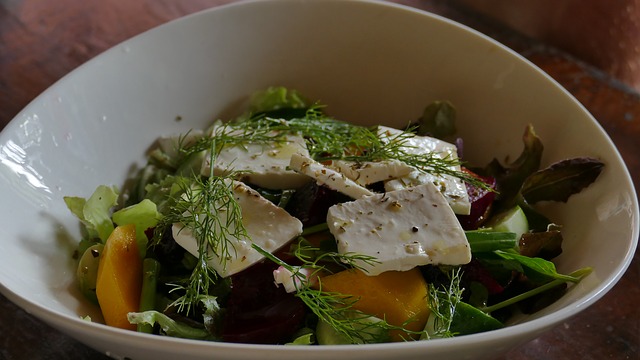
I also love mixing up a salad of spring greens, soft goat cheese, strawberries, and a splash of balsamic vinegar. The sweetness of the berries, tartness of the vinegar, and smooth creaminess of the goat cheese are really nice together, and it’s a great, light side dish.
A green salad with a little goat cheese and fruit: good stuff.
Also, since I would eat my weight in goat cheese if science would let me, I like to make lemon, asparagus, and goat cheese pasta. I usually wing it (it’s really simple!), but this recipe from Smitten Kitchen outlines exactly what to do. I prefer to omit the tarragon, use lots of black pepper, and sometimes add some white beans for protein, but this recipe is very easy to remix according to your preferences.
Even if you don’t perform a ritual to mark the equinox, get outside, if weather and circumstances let you. Chow down on the fruits and vegetables coming into season. Bring the outdoors into your space, and let yourself experience the warmth and promise of a new season.🌹
Ever have a day when you just feel off? You’re not getting sick, nothing really caused it, you just have a sort of wrong feeling. Maybe you’ve been around someone who left you feeling drained, overheard something that made you uncomfortable, or even just had to listen to an annoying, insipid muzak soundtrack in line at the grocery store. You’re left feeling bogged down, maybe even annoyed.
You need a five minute pick-me-up.
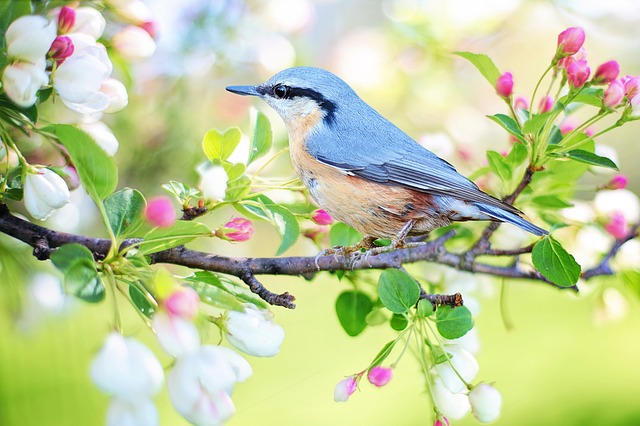
This picture has nothing to do with anything, I just thought it was cool.
These short rituals are designed to be able to be done whenever you have the time for them — there’s not a lot of ceremony involved, just simple, effective rituals to help get you back on an even keel.
1. Use a Sponge
For this, you’ll need:
A clean sponge
A bowl (preferably glass or china)
Water
Sliced lemons, or a few drops of your favorite essential oil
Add the lemons or oil to the water, and stir in a clockwise direction with your dominant hand. As you stir, picture the bowl filling with warm, bright, effervescent energy.
Take the bowl somewhere peaceful — maybe in your garden, or your favorite chair. Hold it on your lap, and inhale the uplifting scent of the water.
Hold the dry sponge in your hand, and visualize all of the stress, tension, and negativity in you pouring into it. Dip the sponge in the water, hold it over the bowl, and squeeze it as hard as you can. Let the sponge soak up your negative energy, and let the clean, empowered water wash it away.
Repeat this as many times as necessary — really crush that sponge like a soggy stress ball, and let your tension fall away. When you are through, pour the water on the earth with thanks.
2. Try the Cloud Meditation
Find somewhere where you can sit quietly and comfortably. If you have trouble focusing on your breath or meditating with your eyes closed (me too!), don’t worry. Just imagine a soft, fluffy cloud directly over your head. It glows with a bright light, the color of a sunset, and smells like fresh rain.
Tree’s about to get cleansed like whoa.
When you have a solid mental image of the cloud, visualize it beginning to rain down on you. The rain is bright, just like the cloud, tinged with golden light. Everywhere it touches, it washes away the stress, tension, and negativity in your energy field. Imagine the gentle caress of the gleaming water trailing down your skin, carrying away all of the negative energy with it. Keep this up for as long as you need to, then allow the cloud to dissipate.
3. Use a Selenite Wand
I love selenite. Not only is it helpful for pain (for me, anyway), it’s widely used to help cleanse energy fields. If you have access to a selenite wand, no matter how small or unpolished it may be, you can use it to quickly sweep negative energy away from you.
Hold one end in your dominant hand, the way you’d hold a lint roller, or the handle of a portable vacuum. Sweep the wand over yourself, about 3-4″ from your skin, from head to toe. At the end of each stroke, give the wand a shake. If you prefer, you can also point the end of the wand at yourself, and twirl it the way you’d twirl a cotton candy stick. Visualize the negative, stagnant energy catching on the end of the wand, then shake it off, move the wand to a new area, and repeat.
4. Hold a Stone
For this, you’ll need:
Stone
A body of water
To do this, take a stone in your dominant hand. Hold it tightly, as you visualize all of your stress and negative energy filling it. Let the stone take your tension and worries from you. when you are ready, toss it into a moving body of water with your thanks. The water will rinse away the negativity, and return the stone to a place where it can help someone else.
5. Feel the Sun and Wind
The weather can be a powerful ally when it comes to energy cleansing. If it’s a windy day, stand in the wind and feel it carrying the negative energy away from you. If it’s a warm, sunny day, close your eyes, turn your face up to the sun, and feel the warmth and brightness burning away whatever negativity clings to you. Say your thanks, and continue your day feeling lighter, safer, and more relaxed.
Picturesque mountains optional.
It’s hard to avoid negative energy entirely. Depending on what you do, it may not be a good idea to try — it’d be hard to be a trauma counselor or ER doctor if you consciously distance yourself from negativity! If you’re feeling bogged down by the people, places, and things you’ve come in contact with, taking a few minute for an energy cleansing ritual can help you relax and return to normal.
Resilience is toughness. It’s the ability to spring back after a blow, to have the capacity to return to a healthy state after going through hard times. It’s elasticity.
But, above all, it’s about breathing space.
Picture a mattress. In your mind’s eye, push your fist into the middle of that mattress, as hard as you can. Feel it give under your hand. Feel the foam squish or the springs creak. If you keep pushing, you can hold it like that. It’s only after you let go that the mattress is able to return to its own shape.
In an ecological sense, resilience is the capacity for an environment to return to a state that, while it might not be identical to its beginning state, is still capable of supporting the life that originally depended on it. Let a field go to seed, and the birds, deer, and insects will return. Let a warehouse in the middle of the city begin to crumble, and the moss and vines will creep in through the cracks while pigeons nest in the rafters. Over time, more of the original flora and fauna will return — so long as they aren’t extinct.
But even the earth needs breathing space. It isn’t possible to take and take, and expect the environment to continue to be able to give. Taking anything, whether it’s food, water, wood, or stone, requires some kind of reciprocal relationship, and part of that reciprocal relationship is knowing when to stop and rest. The environment isn’t the only thing that needs that pause, though — the constant push to produce is no more natural or healthy for people than it is for the land or water. Profit is not a natural motive.
Ecological resilience looks like reciprocity, and feels like rest.
There’s another aspect to resilience at play here. To wit, have you ever experienced choice fatigue?
It’s a funny thing. You’d think that having more options is objectively better, but, unfortunately, there’s a point where our brains become overwhelmed. What seems like it should be freedom instead becomes stifling. Choices become harder to make. We may even end up seeking out a similar scenario that offers fewer choices instead, or not choosing anything at all. If we do make a choice, we’re less satisfied with it. There’s only so much we can process, even when it’s something “good.”
The reason I bring this up is that it doesn’t just apply to jelly, or cars, or any other consumer good. It applies to everything. Reading the news is a nightmare in part because it’s almost never good news, but also because there’s an overwhelming number of situations that demand our attention. It’s easy to become overwhelmed and succumb to fatigue. When it comes to taking action effectively, that overwhelmed, mentally exhausted feeling is a surefire way to tank it.
If you read the comment section of pretty much any news story posted on social media, there will always be at least one person who shows up just to go, “Well, what about [some other horrific situation happening right now]?” The quick, sensible response here is that it’s possible to care about more than one thing at a time. It’s possible to be upset about more than one thing at a time.
I just also think it’s only possible for one person to really act on a limited number of things at a time.
Resilience is flexibility. It’s the ability to take a blow and recover quickly. One of the biggest impediments to this is a lack of breathing room — when you’re hit, over and over, by tragedy after tragedy, there is no space to bounce back. It’s something that political figures count on: Throw too many bad headlines and worse decisions at the public, they won’t be able to fight back indefinitely. Monopolize the breathing room, and you can keep people from being able to act. The healing never begins if there is no space between fresh hell.
The key to developing and maintaining resilience in the face of this fatigue is to prioritize. Choose what is the most important to you (or what needs you the most), whether it’s on a local, national, or global level, and pour your energy into it. It’s okay to feel anger and frustration when things are brought to our attention, but not everything needs immediate and direct action on an individual level. It’s okay to read a news story or see a problem somewhere, find out who is already acting on it, offer whatever support we can offer without overextending ourselves, and release that anger with gratitude to the people who are already working on it. Chances are, they know what they need to do.
Outrage is not finite, but energy is (particularly for those of us whose energy is limited by disabilities). Don’t let politics and the news grind you down, because that’s exactly what the end goal is. Find your breathing space, and support those who are not yet in their breathing space. Bounce back, then react. Maintain your resilience.


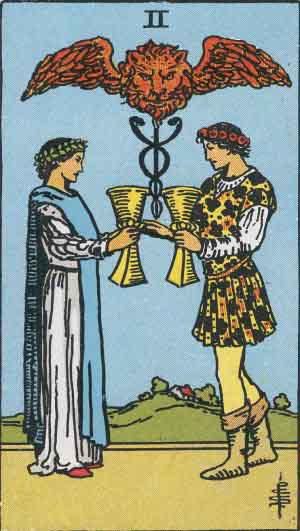 The Two of Cups.
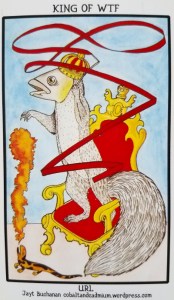 In truth, I could do a lot worse than the King of Wands. He’s a leader. In the Rider-Waite-Smith deck, he’s holding a blossoming branch that symbolizes verdant life and the energy of creativity. He’s surrounded by symbols of strength, nobility, and the element of fire. In the Crow Tarot, he is a sign that focus and energy will ensure a successful outcome. In the Deviant Moon Tarot, he’s a charismatic (if easily annoyed) leader or innovator. In the Regretsy Tarot, he is a fish in a squirrel suit.





 Marble Crow