Environment

Deepening Resilience: The shape of ecological resilience.

Learn more about Deepening Resilience here.

Resilience is toughness. It’s the ability to spring back after a blow, to have the capacity to return to a healthy state after going through hard times. It’s elasticity.

But, above all, it’s about breathing space.

Picture a mattress. In your mind’s eye, push your fist into the middle of that mattress, as hard as you can. Feel it give under your hand. Feel the foam squish or the springs creak. If you keep pushing, you can hold it like that. It’s only after you let go that the mattress is able to return to its own shape.

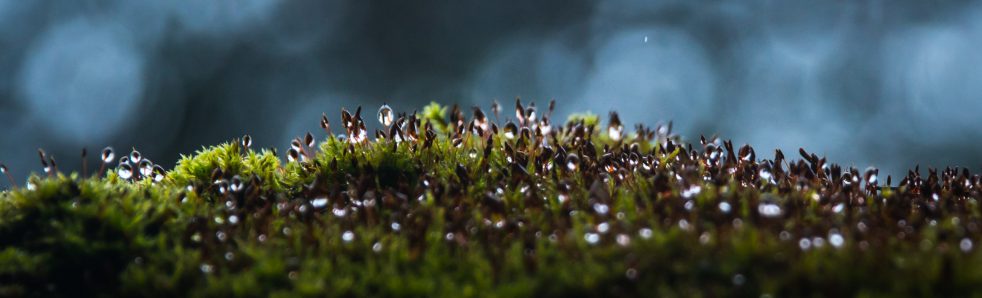
In an ecological sense, resilience is the capacity for an environment to return to a state that, while it might not be identical to its beginning state, is still capable of supporting the life that originally depended on it. Let a field go to seed, and the birds, deer, and insects will return. Let a warehouse in the middle of the city begin to crumble, and the moss and vines will creep in through the cracks while pigeons nest in the rafters. Over time, more of the original flora and fauna will return — so long as they aren’t extinct.

lost-places-1929423_1280

But even the earth needs breathing space. It isn’t possible to take and take, and expect the environment to continue to be able to give. Taking anything, whether it’s food, water, wood, or stone, requires some kind of reciprocal relationship, and part of that reciprocal relationship is knowing when to stop and rest. The environment isn’t the only thing that needs that pause, though — the constant push to produce is no more natural or healthy for people than it is for the land or water. Profit is not a natural motive.

Ecological resilience looks like reciprocity, and feels like rest.

There’s another aspect to resilience at play here. To wit, have you ever experienced choice fatigue?

It’s a funny thing. You’d think that having more options is objectively better, but, unfortunately, there’s a point where our brains become overwhelmed. What seems like it should be freedom instead becomes stifling. Choices become harder to make. We may even end up seeking out a similar scenario that offers fewer choices instead, or not choosing anything at all. If we do make a choice, we’re less satisfied with it. There’s only so much we can process, even when it’s something “good.”

The reason I bring this up is that it doesn’t just apply to jelly, or cars, or any other consumer good. It applies to everything. Reading the news is a nightmare in part because it’s almost never good news, but also because there’s an overwhelming number of situations that demand our attention. It’s easy to become overwhelmed and succumb to fatigue. When it comes to taking action effectively, that overwhelmed, mentally exhausted feeling is a surefire way to tank it.

If you read the comment section of pretty much any news story posted on social media, there will always be at least one person who shows up just to go, “Well, what about [some other horrific situation happening right now]?” The quick, sensible response here is that it’s possible to care about more than one thing at a time. It’s possible to be upset about more than one thing at a time.
I just also think it’s only possible for one person to really act on a limited number of things at a time.

Resilience is flexibility. It’s the ability to take a blow and recover quickly. One of the biggest impediments to this is a lack of breathing room — when you’re hit, over and over, by tragedy after tragedy, there is no space to bounce back. It’s something that political figures count on: Throw too many bad headlines and worse decisions at the public, they won’t be able to fight back indefinitely. Monopolize the breathing room, and you can keep people from being able to act. The healing never begins if there is no space between fresh hell.

The EPA granted “emergency” approvals for dumping bee-killing pesticides. Oil and gas pipelines leak with disturbing frequency. Environmental protections are eroded more day by day. Then there’s the border wall. How do you focus? What do you act on? How do you act?

The key to developing and maintaining resilience in the face of this fatigue is to prioritize. Choose what is the most important to you (or what needs you the most), whether it’s on a local, national, or global level, and pour your energy into it. It’s okay to feel anger and frustration when things are brought to our attention, but not everything needs immediate and direct action on an individual level. It’s okay to read a news story or see a problem somewhere, find out who is already acting on it, offer whatever support we can offer without overextending ourselves, and release that anger with gratitude to the people who are already working on it. Chances are, they know what they need to do.

Outrage is not finite, but energy is (particularly for those of us whose energy is limited by disabilities). Don’t let politics and the news grind you down, because that’s exactly what the end goal is. Find your breathing space, and support those who are not yet in their breathing space. Bounce back, then react. Maintain your resilience.


life

The Buzzcut: One Year(ish) Later

The New Year’s day before last, I shaved my head. The whole thing, right down to the skin. I did it for a variety of reasons — some magical, most mundane. Now, after a year (and change), how does it feel?

17952710_10211841750497007_6599383343916337071_n
Not shown: the picked-over patches hidden by that ridiculous part.

I’ve gotta be honest, I don’t regret it. I only regret not having done it sooner.

I don’t keep my hair as (non-existently) short as that first cut. Most of the time, it hovers between a #3 and a #5. I’ve debated allowing it to grow out again, but, every time, I hit about an inch in length and get the urge to buzz it again.

26240277_10214210989086491_5780526394462620721_o
Bald af.

It was a little tough to get used to, at first. I’ve almost always had very long hair. It was part of how I mentally pictured myself. Even in dreams, I had long hair. A big part of why I cut it was trichotillomania — after two decades of feeling through my hair, looking for all of the strands that were too thick, to coarse, too curly, or otherwise too different, and then pulling them out, I was ready to stop. I also knew I didn’t want to go the route of buying hair fiber sprays or putting in expensive extensions that’d only end up damaging what hair I had left. Unfortunately, like a lot of things on the obsessive-compulsive spectrum, it’s not that easy to just up and quit trich. Buzzing it short removes not only the temptation, but the ability to grasp hairs and pull them. As a “fix,” it’s a bit hardcore… but it works.

Sometimes I struggle with the idea of keeping my hair short. Most of the people — men, women, or otherwise — who informed my standard of beauty growing up had long hair. The typical image of the witch in popular imagination is a woman with long, wild hair. Some spells even call for unbinding and shaking out hair, using hair as a taglock, braiding hair together with other objects, or wearing items in hair. Some traditions call for keeping hair bound or covered. I have never been a part of one that did, but I kept my hair bound anyway — I shed like a golden retriever, so it helped keep my hair off of things. (It also helped keep it out of other people’s hands. No sense in giving someone an easy way to focus a jinx on you, you know?)

On the flip side, a large component of magic is embracing change and releasing what no longer serves you. Honoring sunk costs or holding on to things that do nothing for you only serves as an energy sink that detracts from your ability to grow, create, and bring in things that don’t suck the joy out of living. With that in mind, and considering how much mental energy it took to go through the hair-pulling process, obsess about it afterward, try to hide the evidence, and keep my hair in decent shape, I don’t at all regret shaving it.

Will I let my hair grow out again? I don’t think so. I like how it looks short. I love how little care it requires. I like that I can make bars of shampoo last much longer now. I love that I never have to worry about it being dull, or limp, or frizzy, or unmanageable. Not having long hair has taken a tremendous load off of me.

Strangely enough for someone who’s had long hair pretty much her whole life, I feel more like myself with little-to-no hair at all.

40535922_10216173871437323_8889769613303218176_o
I still like to wear hats, though.
Plants and Herbs

Fixing Etiolated Succulents

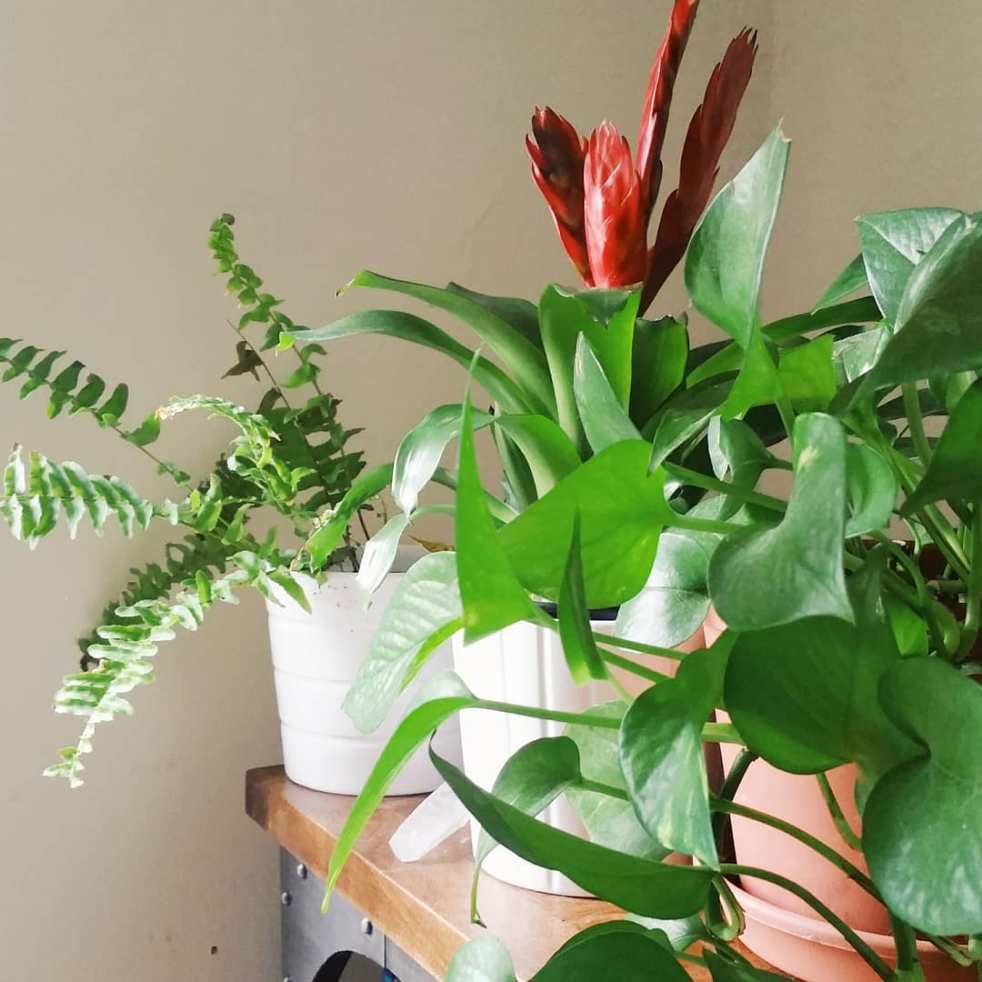
It’s almost spring, and the unseasonably warm weather has my plants all confused. I’ve got a new basal shoot on my nepenthes, my cacti are putting out new growth, my pothos and aloe are threatening to take over my apartment… So, even though it’s a bit early still, I figured now was a good time to take inventory and see who’s going to need some pruning and re-potting. Unfortunately, it looks like the lack of winter sunlight has left some of my younger plants in a bit of a state, and they’re going to need some “fixing.”

Why is fixing in scare quotes? Well, unfortunately, once a plant is etiolated, there’s really no going back. A stretched-out echeveria is not going to become a neat, compact rosette again, no matter what you do for it.

That doesn’t mean all hope is lost, though.

Let me start from the beginning.

Continue reading “Fixing Etiolated Succulents”

life

Let’s eat paste!

Okay, not really.

I haven’t written much lately, mostly because of two reasons:

  1. I was incredibly sick and felt like death, and
  2. It’s almost time for me to turn in all of the essays I’ve written over the past year for evaluation by whoever at ADF is in charge of that kind of thing.

So, in essence, I haven’t written much because I’ve been busy writing in between bouts of coughing and other assorted misery. I have done some other creative-type things, though, which is awesome. I’m in the process of moving my altar (hopefully to a place where cats can’t happen to it), too.

Anyway, you’re probably wondering what the paste bit is about. Let me explain.

Continue reading “Let’s eat paste!”

life

DIY Brain Chemistry

I’ve been doing a lot of reading.

I don’t want to call it “research,” because looking up a bunch of studies isn’t really the same as designing an experiment or compiling a meta analysis, but it’s a lot of reading nonetheless.

See, for years, I’ve been trying to find ways to mitigate some Brain Things. It isn’t purely panic disorder, because there are some very evident physiological aspects to that aren’t really adequately explained by anxiety. It also isn’t purely physical, either.

The first doctor I ever discussed it with was my pediatrician. I was thirteen, had begun experiencing regular panic attacks, and my mother was tired of it.

“It’s anxiety,” he said. And that was it.

It went untreated for years — I was told it was all in my head, that the liver absorbs adrenaline in under a minute (lol what), and there was no reason for any panic attack to last longer than that. This left me with two things:

  1. A raging, untreated panic disorder.
  2. A diagnosis of anxiety.

Getting diagnosed with anxiety is a curse in its own right, particularly if you’re medically female. Women’s pain is often ignored as it is, particularly for black women. If you have a history of anxiety and depression, it is downright impressive how many medical conditions it’ll get blamed for. (Like the time I was given SSRIs to treat a symptomatic hemangioma. Fun!)

Continue reading “DIY Brain Chemistry”

Blog · life

Living my best life is sucking the life out of me.

Its 2:00 in the morning, and I am writing because I have, once again, destroyed my sleep schedule.

Well, not just my sleep schedule.

I have idiopathic intracranial hypertension. It makes me forget things, feel crushing headaches every moment of the day, occasionally lose my ability to see, and want to sleep basically forever. Left to my own devices, I will sleep for twelve hours and still be able to take a substantial midday nap.

Such is life.

Unfortunately, this doesn’t allow me much time for anything else. This doubly sucks, because what time I am left is also devoted to coping with the headaches, dizziness, anxiety, depression, and other trappings of having a head full of surplus brainjuice. Showering is tiring. Clothes hurt. On a high-pressure day, even holding my head up is more than my neck can manage.

Continue reading “Living my best life is sucking the life out of me.”

life

Why “Unseelie?”

So, I’ve gotten asked, “Why do you go by Unseelie J online?”

There are a couple of reasons. Yes, it’s a pun on unseelie fae, but it goes a bit deeper than that.

While the word unseelie, particularly when attached to the unseelie court, is taken to mean “malevolent,” it has a number of uses. Seelie, its opposite, meant blessed, lucky, or happy. Unseelie, therefore, meant unhappy, unfortunate, or not blessed. It’s a term that resonates with me.

I have mostly created my own luck in life — I was born to a poor family, in a not-terribly-great family situation, raised by an abusive, staunchly religious homophobe, nearly killed in a car accident as a teenager, and, to top it all off, was diagnosed with a very rare, poorly understood, incurable, potentially lethal neurological disorder about six years ago.
It’s been quite a time.

I’ve also long realized that my primary purpose in life may very well be to serve as a cautionary tale to others, and I’ve become okay with that. I’m also okay with the fact that I am chiefly alive out of pure contrariness.

After all, like Maria Bamford says,

spite.gif

So, while I’ve got a neurological disorder, anxiety, physical pain, and the weight of my past to carry around, I’m okay with being unseelie. At this point, I also aim to be the biggest thorn in the side of the status quo that I can be, so I’m even okay with being considered malevolent.

It all depends on who’s doing the considering.  💜


life

I did the thing!

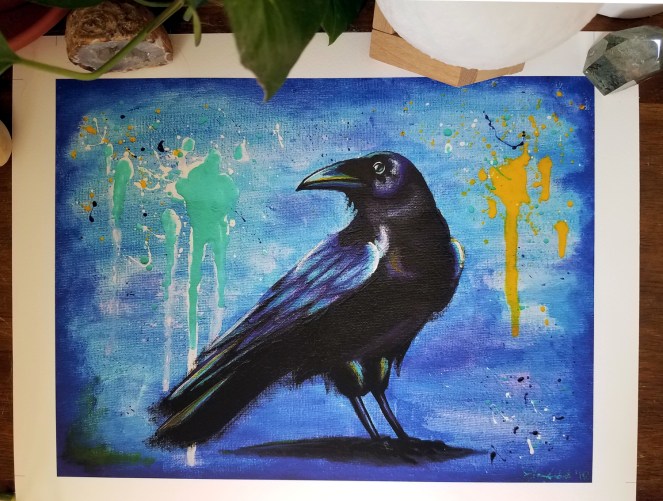
Years back, I had an Etsy shop. It worked out pretty well — I made a little money, a few friends, and had customers who genuinely enjoyed my art. Unfortunately, I fell out of it after I moved, was diagnosed with a neurological disorder, and began losing my sight.

I’ve always wanted to start it up again, though my artistic output isn’t as prolific as it used to be. Finally, I figured, why not? I have some finished paintings, jewelry making supplies, and other things I could use to start my store up again, so why not?

So, I did:

LP2untitled5.jpg

It isn’t yet fully stocked, because I had the sneaking suspicion that, if I chose to wait until it was stocked to my complete satisfaction,I’d never get around to actually opening it. So, if you’re interested in tarot readings or prints of my artwork, I’ve got you covered. In the meantime, I’m working on more things to add, so please favorite and keep an eye out!


Blog · life

The baby got locked in the car, and then an exorcism broke out.

I wasn’t always self-employed. Did I ever tell you that I used to work retail?

If not, this is why.

Don’t get me wrong, it wasn’t a bad gig — I learned a lot, especially about nutrition. The management was often a nightmare, but the work was decent enough to keep me doing it for several years.

I also had a number of customers who seemed to think I was pretty neat. One lady managed to avoid putting down her son’s dog after I made a dietary recommendation (he had been medicated for severe allergies of unknown origin, then needed phenobarbital to counteract the seizures his medication gave him. It turned out to be a severe allergy to corn). One couple straight-up told me that, when I changed stores, they would continue shopping at whichever one I ended up working at.

Those times were nice. The other days, though? Ho-lee crap.

Continue reading “The baby got locked in the car, and then an exorcism broke out.”

Blog · Neodruidry

Honoring Your Blood Ancestors (even if you probably would’ve hated most of them)

Awhile ago, I had a DNA test. The results contained a couple of surprises, though the fact that there were surprises wasn’t, in itself, surprising.

Let me back up.

Years ago, when I was recently diagnosed with IIH, drugged to the gills, recovering from a spinal tap, and bored out of my mind, I decided genealogy would be more fun than staring at the ceiling and trying not to throw up. There was only one problem.
We’ll call him Albert.

Albert was my great-grandfather. He was my maternal grandmother’s father and, by all accounts, an absolute chemical toilet fire of a man. My grandmother wasn’t really raised by her parents — her mother died in a sanitarium at age 22, and her father, well…

Let’s just say I didn’t have much to go on other than that side of my family was French-Canadian, and their name was spelled wrong. It was extremely difficult to get more information about them, because every search result for my great-grandfather only turned up his many, many, many appeals from Attica. (Also, he was the one who changed the spelling of his last name, and was the only one in his entire family who spelled it that way. It’s like he went out of his way to make this impossible.)

I probably would not have liked great-grandpa Albert if I had known him in life. I have two toxic relatives who are both much closer to me and still living, and I don’t even talk to them. Neither of them have even been in and out of maximum security prison (as far as I know. It’s been awhile).

Continue reading “Honoring Your Blood Ancestors (even if you probably would’ve hated most of them)”