Plants and Herbs

Pansy Folklore and Magical Uses

Pansies remind me of my late grandmother. She used to grow them in her backyard garden, as little cheery-faced border plants. She also had a very gentle, relaxing aesthetic — I remember the grandfather clock in the hallway, the little embroidered pillow full of fragrant pine needles, the print of geese with cheery blue ribbons on the kitchen wall, the way the hallway always smelled like roses and the kitchen smelled like fresh coffee. I can always tell when she’s around me because of those smells.

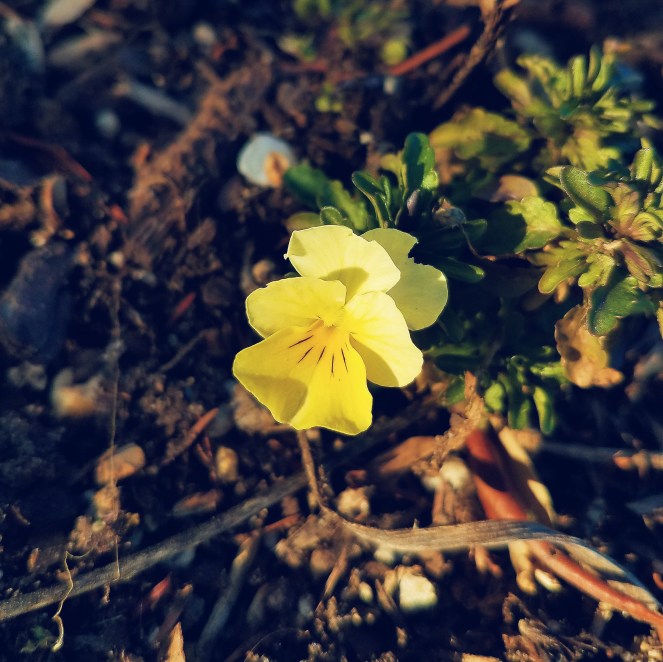
It was nice spotting these little flowers last week, with their yellow faces turned toward the sun. I’m not positive about their exact species, but they resembled my grandmother’s pansies enough to make me curious about their uses.

Processed with VSCO with  preset
And this appears to be some yellow Viola tricolor.

It’s probably unsurprising to hear that pansies have a wealth of properties associated with them. You can heart it in their names, too — heartsease, call-me-to-you, love-lies-bleeding, love-in-idleness.

Heartsease Magical Properties and Folklore

In Roman mythology, the viola turned to love-in-idleness when Eros mistakenly struck it with one of his arrows, causing it to smile.

In Greek mythology, Zeus created the flowers as a way to repent for his treatment of his lover, Io. She was once a beautiful maiden, but Zeus’ wife, Hera, became jealous. To protect Io, Zeus transformed her into a cow. Since she was forced to be on a diet of grasses and herbs, Zeus made the earth yield flowers.

In another legend, Cupid worshipped the heartsease flowers. To stop this, Aphrodite turned them from white, to tricolored.

Pansies and violets are associated with Venus, and often used as a love ingredient. Placing some under your pillow is said to attract a new lover. Planting them in a heart shape is a bit of sympathetic magic — if they thrive, so will your relationship.

They are also associated with Pluto, and death and rebirth.

Picking the herb on a sunny day is said to cause a storm to come. Picking one that’s still dewy brings death.

Using Heartsease

I think love magic gets a bad rap. When many people think of it, they picture a desperate, lovelorn person, performing spell after spell to convince the object of their affections to want them back. That’s not really the case, though. I mean, if you think about it, everything is love.

Want more money? You really want your boss or your clients to love your work.
Want to be more successful or popular? That’s platonic love.
Love magic is attraction magic. If you draw in love, you can use those same attributes to attract whatever you desire.

Pansies come in a variety of colors, which lends them well to color magic. Each color has its own particular attributes. The little yellow ones I found could be found for mental abilities, divination, happiness, travel, or blessing a new home.

If I could, I’d plant a pot of yellow pansies near the front door of my home. Bless the space and draw in love all at the same time!

Medicinally, heartsease has been used to treat asthma, inflammatory lung conditions, and cardiac complaints. Externally, it’s used for skin problems like eczema. Considering this, and considering how many other herbs’ medical uses mirror their magical ones, it’s really not surprising that it’s an herb of love and death.


Pansies are demulcent, mucilaginous, and anti-inflammatory. They have been used to calm irritated skin, ease chest complaints, and soothe other matters of the heart, too. They’re also easy to grow, so, if you have the room, I definitely recommend planting some of these cheerful little flowers!

divination

Learning the Tarot of Marseilles

Following Tuesday’s post using the Tarot de Maria Celia, I wanted to talk about actually interpreting this deck.

I admit, the first thing that drew me to the Tarot de Marseille was its visual appeal.

I spotted the Marshmallow Marseilles deck, and fell hard for the colors and imagery. It seemed a little daunting, sure — I’m experienced at reading your fairly standard interpretations of the Rider-Waite-Smith-inspired decks… But one with no illustrations on the pip cards?

I’ve talked a bit about how I interpret and familiarize myself with decks before, but it’s a technique that relies on there being images to interpret in the first place. This is something that Marseilles-inspired decks lack by design. Where the Rider-Waite-Smith deck was intended for divination, the original Tarot of Marseilles was a deck of playing cards. Still, I’ve never been interested in anything because it was easy, so let’s go!

Numbers, Cycles, and the Pip Cards

First, I’d like to briefly mention that there are a number of wonderful books on interpreting the Marseilles tarot. That said, I don’t have any of them, and wanted to try to see how the cards “felt” myself before engaging with someone else’s experience.

It seems there are two ways for me to go about interpreting the pip cards:

  1. Apply the same meanings given to the Rider-Waite-Smith cards of the same value.
  2. Look at only the information presented by the card — the suit and the value.

Not gonna lie, the first way involves way more memorization than I feel like doing. With a Rider-Waite-Smith-inspired deck, the images provide a visual cue. Without that, this angle seems, to me, to be more trouble than it’s worth. (Also not discounting the fact that I have access to plenty of RWS-inspired decks — if I wanted that kind of interpretation, I could easily use one!)

So that leaves me with the cards themselves.

Numerologically, there’s a lot going on here. Every suit has ten pip cards — the Ace through the Ten, the beginning through the end. Each suit is a cycle, easily divided up into smaller, three-card cycles within. The Ace to the Three, the Four to the Six, the Seven through the Nine, with the Ten as the ultimate culmination.

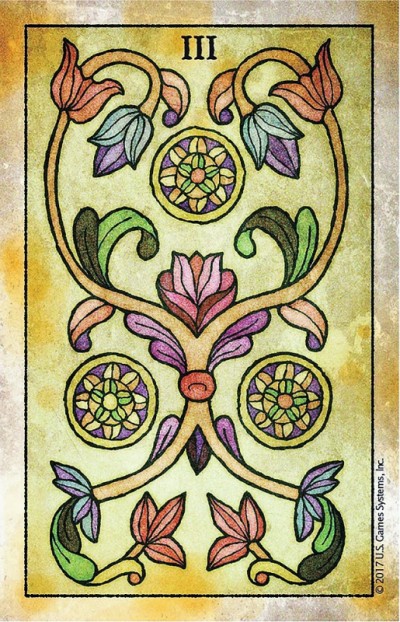
Interpreting the pip cards in the Tarot of Marseilles is an interesting combination of the meaning of the suit, the ideas suggested by the numbers themselves, and their position within these cycles. The artwork is completely decorative — there’s really not much information to be gained there, and the imagery is very consistent through each suit. The Five of Coins looks like the Three of Coins, just more of it.

Really, I kind of enjoy the freedom.

Interpreting a more art-based tarot deck is a fun challenge, but ultimately becomes a kind of find-the-hidden-image search. It’s a game of seeing what jumps out at you, what details you notice, and what meaning you can assign to them. Strength depicts someone wrestling with a lion, what meaning do lions have symbolically? Red is the color of passion, blood, and fire, how much red is in the artwork, and where? Are there alchemical symbols? Heraldic? On top of all of that, what overall “sense” do you get from the image?

With a purely suit + number interpretation, it’s free association in a pretty basic numeric framework.

Look at the III de Deniers, for example:

  • It’s the suit of Coins (or Pentacles), so it relates to wealth, money, security, and the Earth element.
  • It’s a three.
  • It’s the final card in the first cycle.

As the final card in the first cycle, the number following two, and three, specifically, Three is the manifestation of the creative joining of the Two. The pollen meets the ovum, the Two come together in a fertile, creative union, and the fruit, a third entity, is produced. As the suit of Coins, it’s the first manifestation of something monetary, economical, or physical — the result of the first effort represented by the Ace-Two-Three cycle. As the end product of the first cycle, it’s an encouragement to continue working hard and moving toward the ultimate goal represented by the Ten.

Reading them is a lot like unlearning the way I usually read tarot. I like it!


divination

Bâtons, Deniers, Épées

This week, I wanted to try something a little different.

Not long ago, I picked up a copy of the absolutely beautiful Tarot de Maria Celia, a deck based on the Tarot of Marseilles, illustrated by Lynyrd-Jym Narciso. The ToM is a bit different from conventional Rider-Waite-Smith-based decks, in that the pip cards aren’t illustrated — they’re much more like a regular deck of playing cards. The meanings of the pip cards also vary a little, with their own subtleties and nuances.

Learning to interpret them has been a bit of a challenge. I’m not a fan of rote memorization, but pip cards that don’t have actual scenes on them don’t leave you nearly as much to go on. That has its advantages, but can make things a little intimidating.

troisdedeniers
Notably not pictured: three people standing under a fancy archway.

So, for this week’s reading, I settled on an easy three card spread. Even without artwork to read into, I figured three cards would give me enough information to build something from.

I drew the II de Bâtons (Wands), the XIIII de Deniers (Pentacles or Coins), and the XIII d’Épées (Swords).

Twos are the continuation of the beginnings indicated by the Aces. As a duality, they can represent two sides of a situation, or a decision of some sort. Two is a pair, and the fertile, creative energy between them.

As a decision, the Two of Wands represents the shift from the physical to the creative. It’s at the very beginning of the Wands cycle, so it also represents the opportunity to broaden your horizons. If the Ace represents the beginning and the choice of a goal, the Two is the next step: planning in order to make it a reality.

Nines are the completion of their respective cycle. As in other decks, Deniers represent material wealth and physical comforts. The Nine of Pentacles here is a point of freedom and self-governance. It stands in contrast to the Two — it’s nearing the end, knowing the plan, and and understanding that self-discipline and follow through are what got you here.

The Eight of Swords is self-imposed restriction. It is near the end of the cycle, but notably not there yet — there’s an obstacle in the way, and it’s you. Use too much caution, spend too much time devoted to making the right decision, and no decision will be made. At the same time, it’s a good idea not to make any major decisions until you are able to recognize that your entire decision making process has been defined by limits you’ve set for yourself. It’s choice fatigue, the paralysis of indecision, the trouble with Katy Make Sure.

I feel pretty called out.

We are comfortable. I’m at the very beginning of some creative plans, working out the kinks and deciding how to progress. At the same time, because I’m at a point where I’m comfortable, there’s a not-insignificant part of me going, “Now what?”

Growing up poor, much of my thinking was dominated by material concerns. I was presented with many, many different incarnations of the idea that if I just had this thing, I could be that person, and they are better than I am. It was kind of a huge relief when “shabby chic,” thrift-store clothes, capsule wardrobes, and mason jars became trendy, because that’s all stuff I had anyway, just out of poverty reasons.

I’m freer now. I’m more autonomous now. I spent a lot of time pursuing goals that lined up with an idea of success that I didn’t choose for myself, and now that I’ve attained many of them, what now? 

It’s a scary feeling. A sort of unsettling is-this-it feeling. Is it just this, and more of this, and then eventually we die? How do I shake the limitations of traditional markers of success?

Four things have made me ecstatically happy recently:

  • Finding pants that fit. (I’m a 2 now, and a Petite. If I accept this, finding the right size will be much harder, but I also won’t look like I’m wearing my partner’s pants.)
  • My partner surprised me with a gift. (Otter socks, a card, and a stuffed otter. His name is Philippe.)
  • I started a painting. (Three guesses what it’s of, and the first two don’t count.)
  • I found some neat flowers I hadn’t seen before.

Literally none of these line up with the goals I was raised to have. None of them are really markers of success, either. But is it really okay to just let go of that?

I’m ready to make a plan, to work towards new aspirations. I’m at a point where we have the time and money to do this. I just need to let go of these limitations first.

Then what?


Blog · life · Plants and Herbs

The end; no morel.

(That pun’s pretty bad. Sorry, readers. Sorry, internet. Sorry, college.)

I don’t really know as much as I’d like about mushrooms. I mean, I know enough to know that I don’t know enough to trust myself to eat one I pick myself. (Every mushroom is edible. Many of them are only edible once.)

I still like looking for them, though. My S.O. and I find some very neat ones sometimes — a massive chicken-of-the-woods, honey fungus, bird’s next fungus, eyelash mushrooms, all kinds. I know it’s still early to find any here (probably? I’m mean, I’m assuming), but I was still stoked to go looking for some. It’s only barely March, and things like morels and dryad’s saddles probably won’t be around for weeks yet. After being cooped up all winter, I would’ve been happy to find some of last year’s dried-out bracket fungi.

Alas, there were no mushrooms.

I did find some really neat moss, though. Complete with seed heads!

Processed with VSCO with  preset


We sat on a fallen tree to have a picnic. It was really beautiful out — chilly, but not cold. Bright, with the sun slanting through the trees and not a cloud in the sky.

“Are you taking a pic of me eating a sandwich?”

“Yeah. The sun looks neat. Besides, you’re one of my favorite subjects to photograph.”

“Aww…”

“… Y’know, I’m glad you took that as a compliment. I just realized that my dumb ass came out here unreasonably excited to see, like, fungus and moss and shit, so there were a lot of ways that could’ve gone.”

88347064_548801162510141_7133673119373328384_n

He’s pretty cool about indulging my whims. Even when those whims mean crawling around in dirt and leaves to get pictures of extremely tiny things.

Or when they mean me dragging him through the art supply store and spending twenty minutes deliberating between cotton and linen canvas, which I did on the way home.

Next weekend, I might take him hunting for cryptids. We’ll see.


Environment · Plants and Herbs

Squill Folklore and Magical Uses

Every time I find a new plant buddy, I end up spending a few hours reading up on what they’re used for — even things like mushrooms, lichen, and moss. When I spotted these pretty little blue flowers, I was immediately curious. I’d never seen them before, and their color was so vibrant against the brown dirt and handful green leaves poking out of the chilly ground. They were so small, I almost missed them.

Processed with VSCO with  preset
Scilla siberica, wood squill.

I wasn’t able to find much about wood squill specifically, other than that it’s native to Southwestern Russia (despite its other name, Siberian squill).

When most herb lore and magical texts talk about squill, they’re really talking about red (Drimia maritima) or white squill (Scilla mischtschenkoana). All of these are in the same subfamily, Scilloideae, but aren’t otherwise really synonymous.

The word “scilla” comes from the ancient Greek “skilla,” which is of unknown meaning. (A Modern Herbal claims that it means “to excite or disturb,” the way that an emetic disturbs the stomach, but I haven’t been able to verify this.)

For some people, only the actual plant that a spell calls for will do. For others, it’s okay to use a relative, if they’re close enough. This can be especially useful if the plant you want to work with is poisonous, endangered, not native to your area, or otherwise not a super great idea.

Squill Magical Properties and Folklore

Squill root is a money herb.

In hoodoo, placing squill in a container with one coin of each denomination, is used to draw in cash. (Some practitioners say it’s particularly effective if you can get a hold of old silver currency for this spell, like Mercury dimes. Others say that silver objects, like chains or beads, are even more effective than non-silver money.)

Holding squill root in your hands, focusing your intention to be unhexed, charging it, and carrying it with you is said to break all hexes and curses.

Using Squill

Red squill is used as a rodenticide, owing to a toxin called scilliroside. In creatures without a vomiting reflex, scilliroside is deadly.

White squill, on the other hand, has historically been used as a diuretic and expectorant. Compounds called glucosamides, found in the bulbs, are sometimes used in traditional medicine to treat irregular heartbeats. Wood squill also contains cardiac glycosides. This is not intended as medical advice, just an indicator of what kind of practical, medicinal applications it’s used for. As with any herb, medicinal properties can quickly become poisonous properties, so keep them away from children and pets.


Considering its medicinal properties and its appearance, it’s kind of easy to understand why it’s a money herb. It’s got that lovely plump bulb full of stored energy — fat like an onion, or the way you’d want your bank account to be. Its use as an emetic and diuretic make sense here, too. Squill has the power to eject all kinds of substances from the body. You put it in a stomach, the stomach’s contents are coming out in abundance.  Metaphysically, it stands to reason that it would be placed in a container with money in the hopes that it’d spew more money into your life.

The emetic and diuretic virtues also go hand-in-hand with hex breaking. If your body needs to purge a physical ill, squill helps. If you need to purge a magical ill, squill helps that, too.

White squill seems to be abundant and easy to find on the market, but there are areas where other varieties of squill (like the wood squill pictured above, or alpine squill) have become invasive. If you’re looking to use squill in your work, I’d suggest picking up a good plant identification guide, and seeing if your area has any invasive varieties lurking around. (Various species of squill are used as ornamental plants. If you decide you want to grow some, be sure to do it in a way that will keep it from escaping into its environment.) You can get the magical ingredients you need, develop a deeper relationship with the plants themselves, and remove damaging invasive species from your environment at the same time.


divination · life

The Sun

It seems fitting after this weekend doesn’t it?

I always draw my card for the week the way I would draw any tarot card — at random. I cut the deck however feels correct at the time, and hold my hand over each pile until I feel the little “pull” that tells me it’s the right one. When things line up like this, it just feels good. A tiny “yes” from the universe. A pat on the back from the ancestors, guiding spirits, or whoever’s in your metaphorical corner. I dig it.

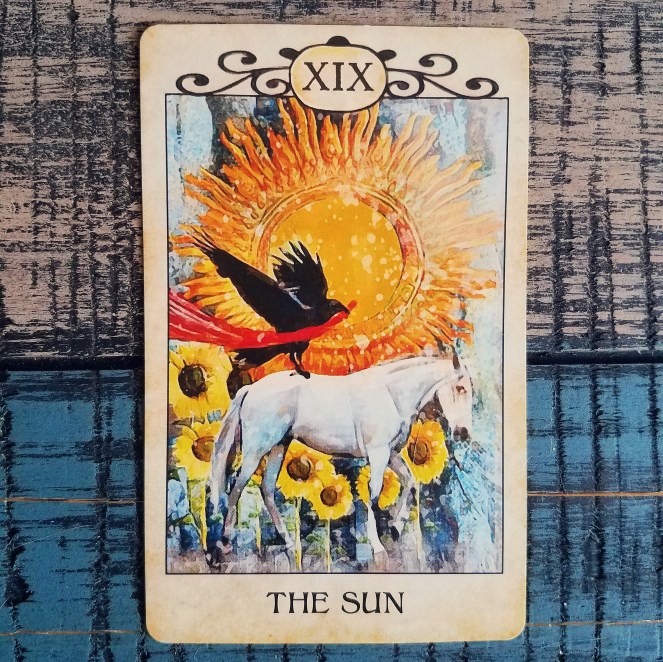
I’ve been drawing a lot of very positive cards lately. This week was no exception: I drew The Sun.

Processed with VSCO with  preset

The Sun is enthusiasm. It’s infectious, effervescent joy. It’s unfiltered light, freedom, and truth. In love readings, it’s happiness. In money and career readings, it’s prosperity and success. In health readings, it’s energy and vitality. In spirituality readings, it’s happiness and optimism. In an advice position, it tells you to take this warmth and this joy, and bring it out into the world. As a person or significator, it’s someone who is energetic, determined, playful, and fun.

With the new moon on the 23rd, it’s a very good sign for this coming cycle.

I don’t really have a specific situation that The Sun applies to right now — my life has been on an upswing in a very general sense. I’ve been doing more. Seeing more. Enjoying more. Trying to meet more people. Learning more things. Growing in ways that bring me satisfaction, in every respect. Spiritually, I’m growing like a weed. Health-wise, I feel better than I have in awhile (if tired — Zoloft fatigue plus IIH hypersomnia is real.) Career-wise, I’ve gotten more work than I know what to do with, lately. Creativity-wise, I’m painting more, cooking more, making more things, and moving forward through Ane’s story on Uruvalai (and man, the upcoming bit is an emotional doozy).

For me, in the place I am now, The Sun is a reassurance that everything really is going well. I don’t have to look for another shoe to drop — not yet, anyway. Things are as they should be. If I experience frustration in the near future, it’s alright. The earth is turning, the sun is shining, the new spring flowers are pushing up through the cold ground.

It’s all good.

Blog · life · Plants and Herbs

Sunlight and Early Flowers

I’ve been trying to get more sun lately.

I think I probably get enough vitamin D, in the sense that I’m not technically deficient, but months spent indoors have given me the preternatural paleness of a consumptive Victorian heroine. On some people, this look works. My skin has naturally beige/green undertones, so I just look like I’m half iguana.

This past weekend promised to be sunny and warmish, so my S.O. and I packed up and went for a drive. Saturday was Lake Accotink, where we walked along the edge of the water, enjoyed the light for a bit, did some people-watching, then took a detour on the way home for cheeseburgers.

(By the bye, Big Buns Damn Good Burgers lives up to the name. If you get the veggie burger, though, get it as a burger bowl. It’s very good, but very soft and probably too skooshy to hold in a bun without it falling apart.)

Processed with VSCO with  preset

Even though the trees were leafless and the sand was chilly, the sun was warm and the breeze was gentle.

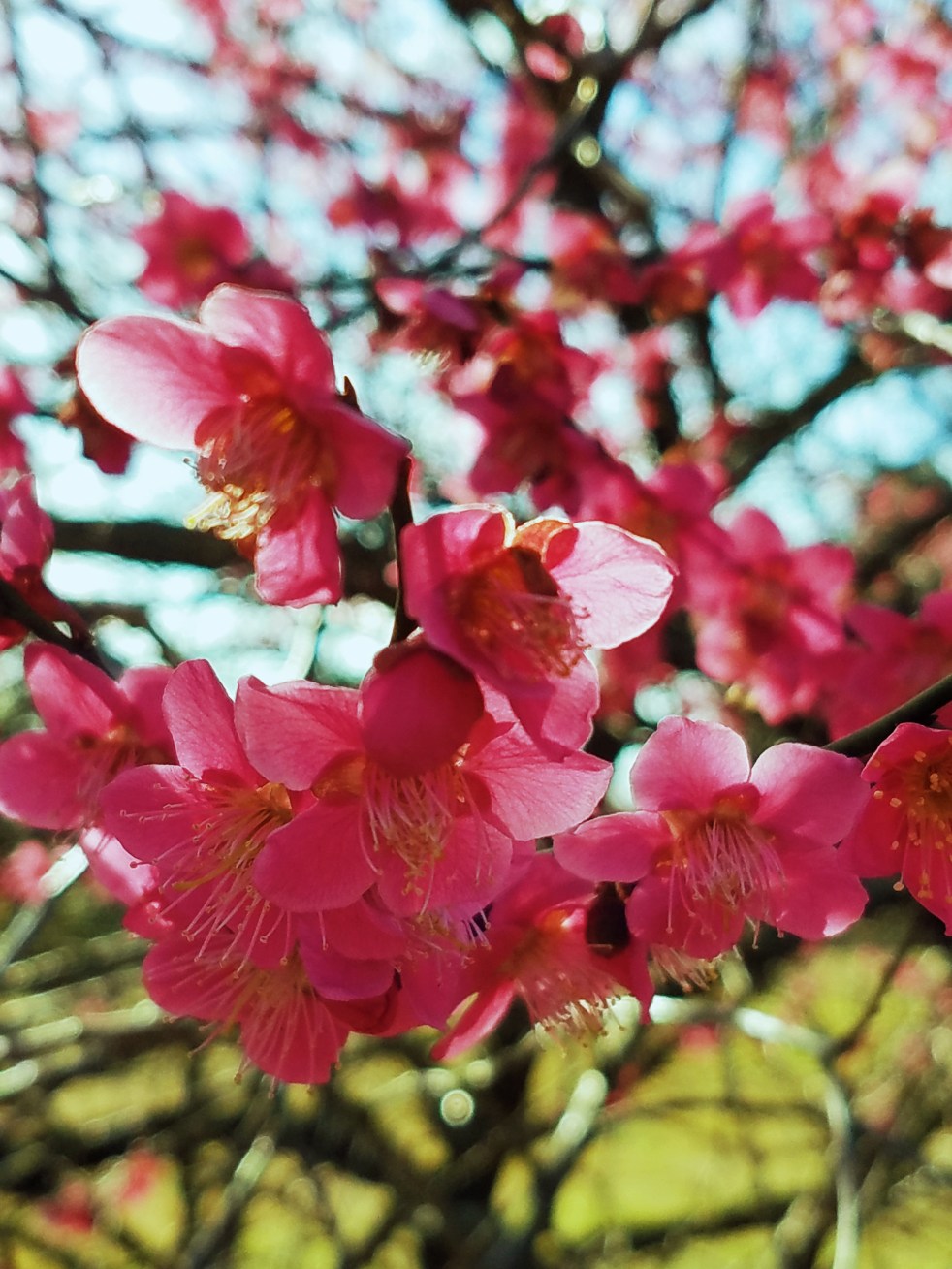
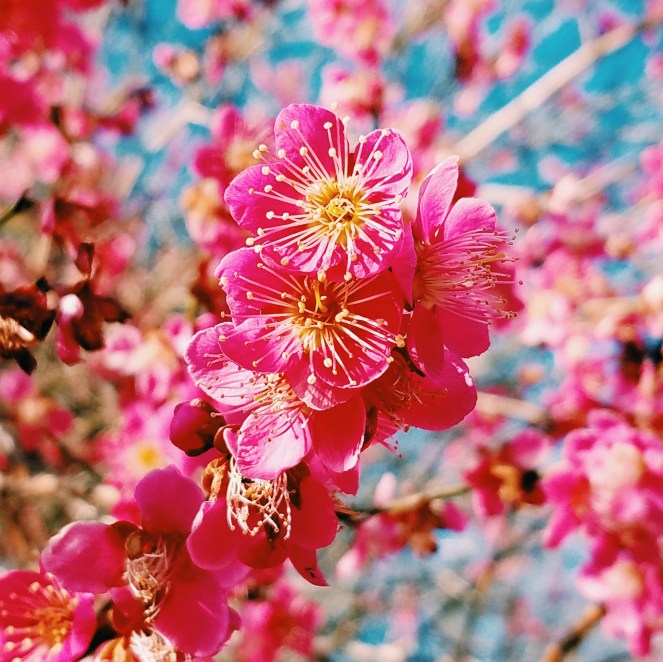
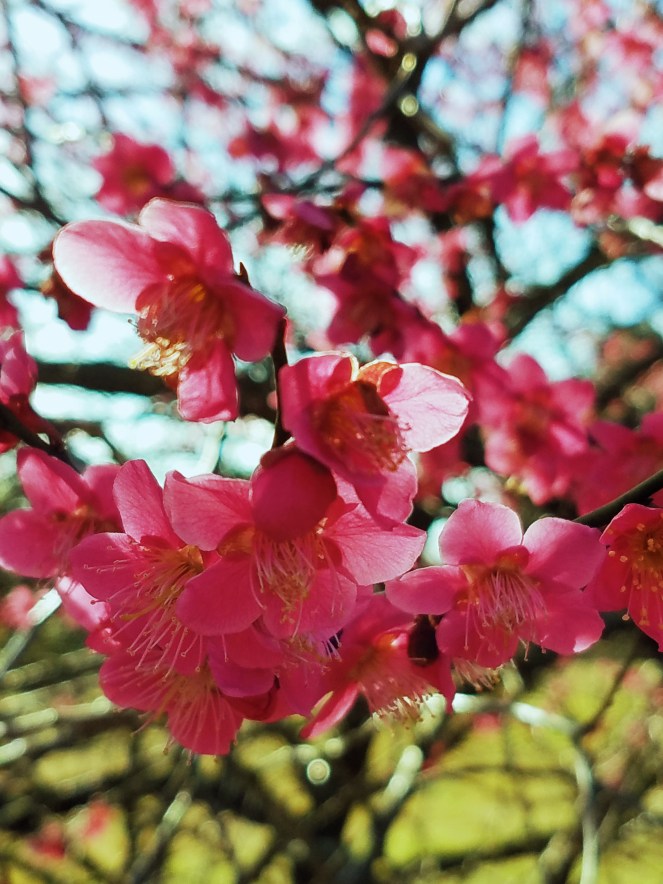
The next day, we decided to drive to the Arboretum. Most of the trees were still leafless, twisted branches scrabbling at the sky, laden with the remains of last year’s bird’s nests. Still, it seems like every time we go, we find something neat that we didn’t spot before — first the dogwood trees, then the path through the conifer specimens. This time, it was this beautiful Prunus mume, branches half-covered in fragrant, pink blooms, humming with honeybees.

Processed with VSCO with c1 preset
It smelled so good.

Processed with VSCO with  preset

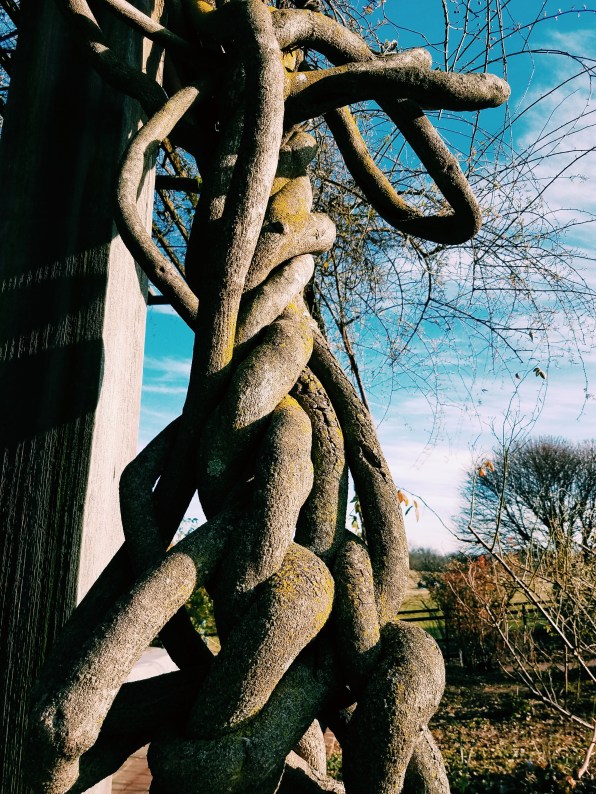
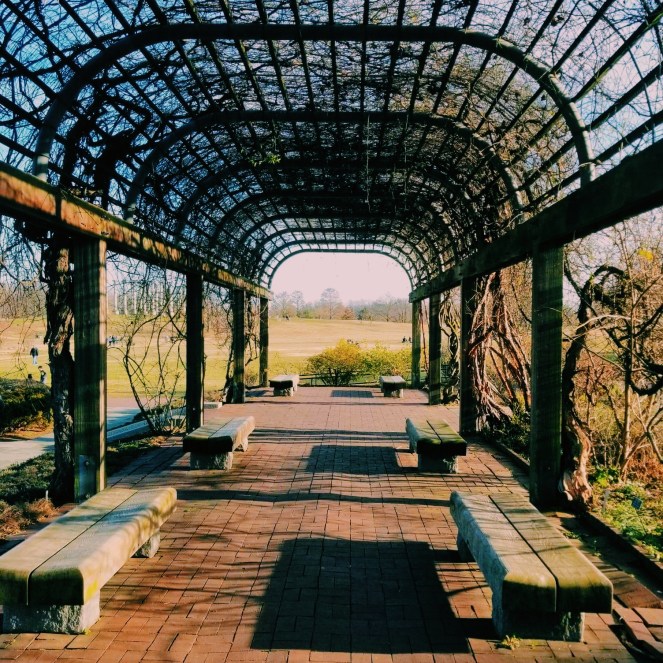
We wandered around until we found a bonsai museum and an herb garden — closed and bare, respectively, but the area was still beautiful enough. We found an arbor to sit under, which had this really cool-looking (albeit one I couldn’t identify) vine braided along one side.

Processed with VSCO with c1 preset

With the sun slanting through the trees, backlighting the few leaves and flowers daring enough to open up this early, it was nice. Relaxing.

Processed with VSCO with c1 preset

Processed with VSCO with  preset

… Though maybe I should’ve waited for it to warm up a little before I buzzed my hair again. Whoops.

As we drove through the park, I heard my S.O. huff softly.

Degenerates,” he groused.

“What?”

“Look.”

I turned my head and squinted in the light.

Processed with VSCO with c1 preset

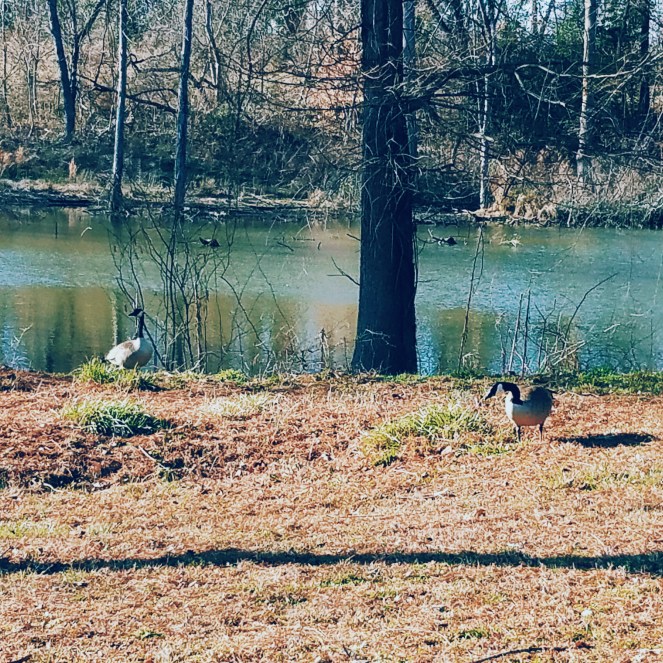
… I mean, he’s not wrong. I do not like the cobra chickens.

There are a lot of spots in the Arboretum that come alive with color in the warmer months. Bright splashes of orange, pink, and purple nestled into tufts and spikes of foliage, rosemallows the size of dinner plates, the works. There weren’t as many this time of year, but still plenty of color if you didn’t mind hunting for it.

Processed with VSCO with  preset
I think these guys are Scilla siberica, wood squill.

… And also looking very strange while laying on your stomach in order to get close enough for a picture.

Processed with VSCO with  preset
And this appears to be a yellow Viola of some kind.

There were some very pretty crocuses, too, but they were a bit too far off the path for a picture (I’m not about to go trampling sensitive terrain for a pic or two, but, unfortunately, my zoom isn’t quite good enough for a clear shot). Next weekend’s probably going to be too cloudy and cold for more adventures like this, but that’s okay. I’ve got some other plans. Secret ones.

This week’s tarot card’ll be up tomorrow. Have a good Monday!

Processed with VSCO with m5 preset


Plants and Herbs · Witchcraft

Chamomile Folklore and Magical Uses

I love chamomile.

No, I mean it. I have a devotion to the stuff that borders on fanatical. I am a chamomile evangelist. Spiritual, physical, or mental problem? Chamomile tea will probably at least help. Even if it doesn’t, it might make you take a nap, and those make everything at least a little less crappy. (Unless you’re allergic to it, but I digress.)

Chamomile Magical Properties and Folklore

In Hoodoo, gamblers wash their hands in an infusion of chamomile for luck.

Burning chamomile is said to help bring more money into the household.

The daisy-like flowers with their bright yellow centers are strongly associated with the Sun. Because of this, it’s used to bring positive energy into people and places. Sprinkling a room or washing windows and doorways with an infusion of chamomile chases away negative energy, while inviting in the good stuff.

Chamomile’s relaxant properties make it useful as an herb for dream magic and meditation.

Growing chamomile plants near windows and doors keeps away evil spirits.

Using Chamomile

The easiest way to buy and use the herb is in the form of a teabag — you can steep it in hot or cold water for tea, alcohol for a tincture, oil for an infused oil, or treat the bag itself as a simple herb sachet.

Steeping chamomile in hot bath water, or pouring a fresh cup of tea into bath water, is a fast and easy way to create a spiritual bath for removing negativity.

In medieval times, when strewing floors with fragrant herbs was common, chamomile was a favorite. When crushed, the flowers release a sweet, fruity aroma. With chamomile’s fragrance, coupled with the very solar appearance of the flowers, and its relaxing properties, it’s easy to see where its associations with the Sun and positivity come from.

The fragrance of chamomile might be part of why it’s considered effective against evil spirits. When the miasma theory was still popular, pomanders and pleasant-smelling herbs were credited with keeping disease at bay. It’s not a long jump between foul odors and disease to evil spirits — many of the most powerful negativity-banishing herbs are also the most pungent.

Chamomile is a pretty versatile herb. It keeps bad things at bay, and attracts good. While it’s often used to help gamblers, it can easily be adapted to any situation where you could use a little luck — enchant a tablespoon of chamomile and brew it into a tea before setting out to do anything that could benefit from a helping hand from fate.

divination · life

The Eight of Wands (wants me to hurry up)

Sometimes, the tarot tells you that the energy is right for embarking on a new adventure. Like the Ace of Wands, for example. Sometimes, it uses eight sticks to goad you into doing a thing, instead.

This week, I drew the Eight of Wands. I’ve got to hand it to it — I have been feeling a lot of momentum lately. I don’t know if it’s the warming weather or the appearance of the sun during what’s felt like a very cloudy winter, but I definitely get that sense of motion!

In every respect, the Eight of Wands is progress, and very rapid progress, at that. It’s a wind that picks you up and carries you along. It’s an upswing in energy. It’s a rapid recovery from a low point, It’s infatuation, movement, high energy, and flight. It’s results.

I’m happy to see it.

Positive omens are lining up for beginning another round of studying! I found a new Meetup group! I’ve made a lot of very interesting breakthroughs while meditating and journeying that I don’t really want to get into right here, because they probably won’t make any sense and will alienate literally everyone else! I have so many paintings to photograph and list, my dudes. 

As advice, the Eight of Wands can be the harbinger of good news. It’s learning from a positive experience, and letting that confidence carry you to greater heights. It’s finally gaining the understanding that, even if you had to start from zero again, you have what it takes to achieve what you want again and again, as many times as you need to. It’s a thumbs-up from the universe, a pat on the back, and a sign not to quit now.

The Eight of Wands is near the end of the Wands cycle, but it isn’t the ultimate culmination. It’s just a high point, a small success that gives you confidence that the larger success is possible. It might be tempting to take shortcuts, but that isn’t what got you here and it won’t be what gets you to the end.

It’s good stuff.


life · Neodruidry

It’s decided (sort of)!

After finishing the Dedicant Path, I needed to figure out what to do. Continue with the Initiate Path? See what’s required to pursue ordainment? Join a Guild or Kin and follow their path of instruction? I gave myself until the 8th to decide, and I did.

For now, I’m going with the first one. Having read about it, it sounds like it will bring me the closest to where I want to be. The curriculum covers things that I have experience in, and that I know interest me (trancework, divination, ceremonial magic), and covers things that interest me, but which I lack confidence in (liturgy, the bardic arts).

I did apply to join a few Guilds as well, but I think I want to work on them afterward.
It’s funny — it all feels almost like declaring a major in college. (Hopefully it’ll involve less organic chem.)

The only thing standing between me and the Initiate’s Path right now is the Initiate’s letter. It’s the answers to three questions, seemingly designed to figure out why, exactly, the respondent is interested in pursuing initiation, and how they plan to use it when they have it. Knowing I’d spend weeks writing and re-writing if I let myself, I answered and explained myself as best as I could, and fired it off.

Now I just have to wait. I’ll know if it was acceptable within the next few weeks, then I get to jump into another round of reading and writing!