Plants and Herbs

Holly Folklore and Magical Properties

I’m lucky to live not too far from an arboretum, which means that I have the ability to observe all kinds of incredible trees. A Druid group that I’m part of regularly visits it, too, in order to learn more about native trees and the traditional trees of the ogham. This season, we’re focusing on holly.

The US boasts multiple species of native holly. While these are all of the same genus as the European holly (Ilex aquafolium) of the ogham, they’re not really the same. Nonetheless, if you’re studying the ogham’s history, significance, and usage, making friends with your local trees certainly helps.

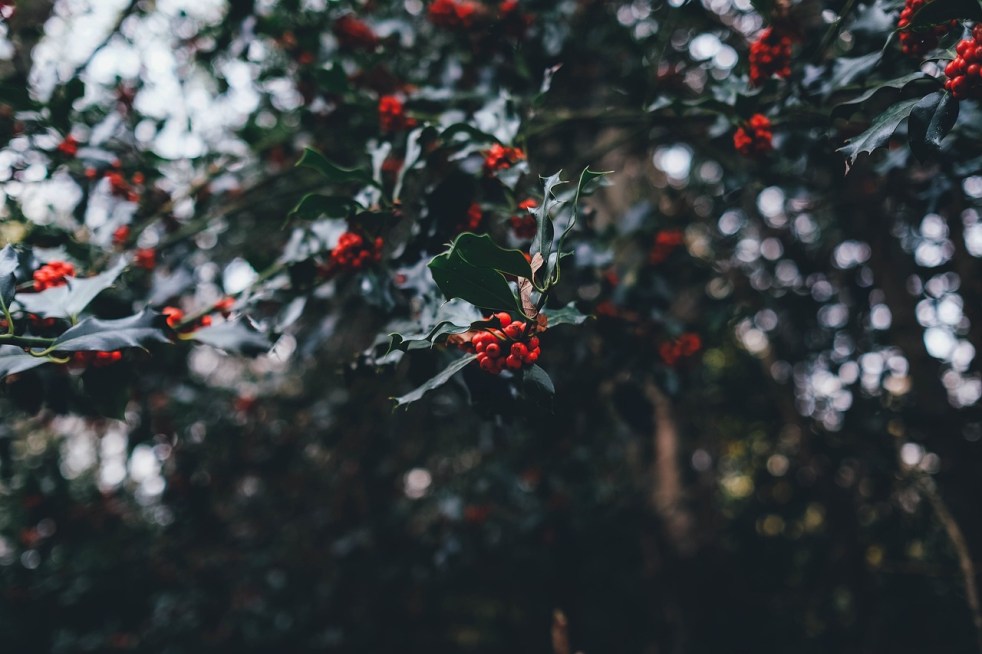
Red holly berries nestled among dark green, prickly leaves.

Holly is good for far more than its significance in the ogham. It has a long history the world over as a medicinal and magical plant.

The ogam letter “tinne” didn’t always mean holly. (There’s strong evidence that it wasn’t originally a tree alphabet, but that’s a subject for another time.) Kennings indicate that “tinne” originally referred to a metal bar or ingot.

An ogham kenning is known as a Bríatharogam. These were used to explain the meaning of each symbol, as well as to help scholars memorize them. The three Bríatharogam for tinne are “trian roith,” “trian n-airm,” and “smiur gúaile.” These translate to “one of three parts of a wheel,” “one of three parts of a weapon,” and “marrow of coal.”

In European folklore, holly was considered a highly protective plant. (If you’ve ever felt it’s hard, prickly, waxy leaves, this probably isn’t too surprising!) It was also regarded as unlucky to cut down an entire holly tree — probably because you’d be removing its ability to protect you. Instead, there was a tradition of coppicing holly trees. This let farmers use the leaves as fodder, and gave artisans access to the highly valued holly wood.

This connects interestingly to the concept of holly as “one of three parts of a wheel/weapon.” All trees and woods have their own magical properties, and holly was considered useful for controlling. That made it useful for crafting horsewhips.

Also interestingly, holly’s ability as a protective plant has some mundane basis. Holly trees often exhibit a phenomenon known as “heterophylly,” where multiple types of leaves are present on a single plant. It’s not at all uncommon to see holly trees and bushes with both smooth and prickly leaves. Researchers have found that the appearance of prickly leaves correlates to recent browsing by herbivores. After a holly tree’s smooth leaves get eaten, it replaces them with prickly leaves to defend itself!

Ilex aquifolium, exhibiting heterophylly. Many of the leaves on this branch are spiny, but some are smoother and more oval in appearance.

Holly was also believed to protect against lightning strikes. There’s evidence that the prickly shape of holly leaves helps conduct lightning, protecting the plant itself and neighboring trees and structures from damage. Somewhat ironically, certain holly species are also extremely flammable. Please thoroughly research specific species of holly before choosing to plant one near your home.

Celtic legend speaks of the Oak King and the Holly King. Each one ruled over one half of the year — the Oak King over the warm months, and the Holly King over the cold. They would do battle each solstice, and the loser would have to submit to the victor. The Holly King wins each summer solstice and rules until the winter solstice, when he’s once again defeated by the Oak King.

In the Victorian language of flowers, holly represented defense and domestic happiness.

While some species of holly have been used medicinally for inflammation, fevers, and skin problems, it isn’t commonly seen in modern herbalism. There are generally safer alternatives that are equally as effective.

In addition to protection, holly is associated with beauty, prosperity, good luck, and vengeance.

Holly makes for good, strong wands. The wood is also really white in color, so it can take decoration well. Wands made of holly wood are said to be powerful for working with and commanding spirits.

Planting a holly bush near your house is useful for protecting against malevolent entities and energies, as well as lightning. Please note that some hollies are really flammable, however, so make sure you choose the right variety for this purpose. Alternatively, bring some fresh holly boughs into your home instead.

Place some prickly holly leaves in a glass bowl of fresh water, and let it stand in the morning sunlight. Bring it in before noon, remove the leaves, and use the water to asperge rooms or objects that you wish to protect.

Holly boughs, when brought into the home, are said to protect from mischievous fairies. It’s believed that fairies come into the home with the holly boughs, so bringing them in gives the fairies a place to stay peacefully during the winter months so they don’t cause trouble. However, the fairies must be shooed away and the boughs burned by Imbolc, or the fairies may decide to stick around and become a problem. In some cultures, it’s considered unlucky to ever burn holly, so it may be better to bring the boughs outside and leave them there instead.

Hollies are also valuable food plants for birds, even though they’re poisonous to other animals. If you’re trying to cultivate a better relationship with the local fauna and spirits of the land, it may be worth planting a native holly species. The berries are hard and unpalatable for birds during the warm months, but the last a long time and grow softer and sweeter after being frozen. This means that they’re one of the last sources of food in areas that experience cold winters.

Snow on a holly branch. The bright red berries are still clearly visible and vibrant.

In my area, we have native inkberry holly (Ilex glabra). These are a bit different from the usual hollies you see on cards and decorations, since it has smooth, oval leaves and small black berries. Even if you’re like me, and the traditional spiny, red-berried holly is in short supply, native hollies are just as valuable, powerful, and interesting to meet.

Plants and Herbs

Radish Folklore & Magical Properties

We’re fortunate to have a service in our area that delivers goods from the local farmers’ market. Even if we can’t go there ourselves for whatever reason, we can still pick out what we want and get it dropped off for not a whole lot of money. A week’s worth of fruit and vegetables for us is about $40, plus $2-4 for delivery. Pad that out with beans and rice or potatoes, and it’s a good way to have a reasonably healthy, varied, local diet without spending a ton or having to go to the store a bunch. If you have fewer people to feed, a box with five items of your choice is only $25ish. It’s nice.

This week, we’re getting celery, bok choy, apples, tomatoes, kale, fennel, and a ton of radishes. Why so many radishes? ‘Tis the season! They’re cool weather plants that mature in a short time, so there’s always a bunch available in spring and autumn.

Radishes originated in China and entered the historical record in the 3rd century BCE, and spread across Europe from there. They were also one of the first plants introduced to the Americas by European colonizers.

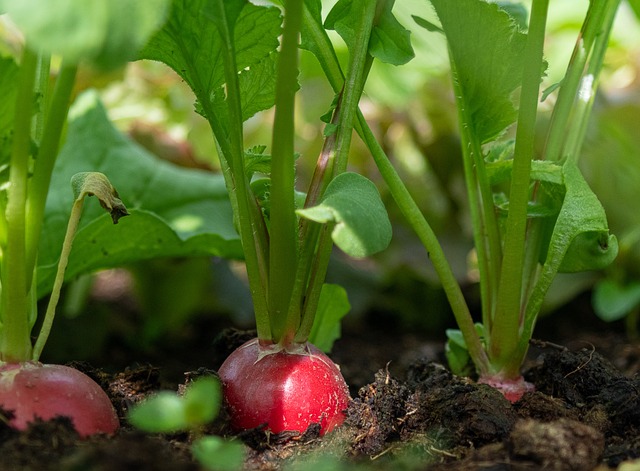
A close up of some radishes, still in the soil. The tops of the round, red roots are visible just above the soil line.

In antiquity, opinions on radishes were divided. Pliny and Discorides prized them, while Hippocrates claimed that they were “vicious” and difficult to digest.

To be fair, radishes are cruciferous vegetables. This puts them in the same group as plants like kale, mustard, cauliflower, and broccoli. They’re not the easiest things in the world to digest and are notorious for causing gas.

Radishes were offered to Apollo, but not just any radishes. It was customary to present gifts to deities in the form of intricate carvings. Radishes were so prized, Apollo received ones made of solid gold.

In Oaxaca, Mexico, people observe the Night of the Radishes. Artists compete by creating intricate sculptures carved entirely from radishes. These aren’t the typical small, round guys you see in the grocery store, however — they’re a specially grown variety cultivated specifically for this festival.

An old folk remedy for nagging and gossip involved tasting a radish before bed while fasting. This was said to protect men from being harmed by “the chatter of women.”

One old English book says that uprooting a radish while reciting the proper incantations would allow one to find witches. (Unfortunately, the author didn’t write down the incantations.)

Radishes are also associated with lust spells and protection. This makes sense, considering their peppery heat and red color. Both of these qualities are associated with sexual desire and protection and can be seen across many magical ingredients used for these purposes.

Wearing a garland of radish flowers around one’s neck was said to keep demons at bay.

The juice and oil of radishes were also considered protective and curative. Washing one’s hands in radish juice was said to enable one to safely handle venomous creatures. Another source claimed that dipping a whole radish in a glass of poison would render the poison safe to drink.
(Do not do any of these things pls.)

In Germany, radishes were associated with evil spirits. Well, one specific evil spirit: the demon Rübezahl. He is a mountain spirit who is often portrayed as a trickster figure. On one hand, he could help humans and teach them the secrets of medicine. On the other, he represents the capriciousness of the weather of the mountains. In Czech fairytales, Rübezahl (called Krakonoš) gave humans sourdough.

It’s also said that he was fond of taking whatever he pleased without asking. He kidnapped a princess who was very fond of radishes (in some versions, turnips) and locked her away in a tower. When the princess began to wither away from loneliness, the spirit turned a radish into a cricket. He warned her that, once the leaves of the radish began to wither, the cricket would die. The clever princess sent the cricket off to find her true love and bring him back to rescue her. Sadly, the radishes withered and the cricket died before he could, but he succeeded in chirping his tale to all of the other crickets in the world. Now, whenever you hear crickets chip, you hear them tell the tale of Rübezahl and the stolen princess.

It should be noted that Rübezahl is actually a mocking nickname — it’s more respectful to refer to him as Lord of the Mountains, Herr Johannes, or Treasure Keeper.

As a common culinary ingredient, radishes are pretty easy to use. Combine them in a salad with other ingredients that relate to your intention, and enjoy. Radishes, strawberries, and basil can be eaten (or fed to a consenting lover) for lust. Radishes, lettuce, oregano, and garlic can be eaten for protection. Radish greens are edible, too!

A bunch of red radishes on a cutting board, tied together with red and white string.

For best results, stick with young radishes. The older they get, the tougher and more difficult to digest they become.

Since radishes are a cool weather crop, they’re a good choice for off-season growth spells. For example, if you want to bring more love and lust into your life but it isn’t exactly growing season, you may still be able to get decent results by sowing radish seeds.

Since flowering radish tops repel evil, you may wish to include these plants in beds near your front, back, and side doors. Let them flower and keep your home protected from malevolent spirits.

Radishes are a fun, easy to grow, easy to use ingredient in food and spells alike. I remember growing some in a tiny plastic vegetable garden kit that came from McDonald’s when I was very little, and I’ve kind of had a soft spot for them ever since. If you have any space to dedicate to these little guys, give them a shot!

Plants and Herbs

Rosehip Folklore & Magical Properties

Roses (t least in their wild form) are fruit-bearing plants. These fruits, called rosehips or rose haws, are bright red, berrylike fruits that serve as a source of food for wildlife and people alike through the autumn and winter months. They’re high in vitamin C, and are frequently used in everything from supplements, to teas, to jellies, to skincare products.

They’re best harvested right after the first frost, when the fruits are bright red and slightly soft. That’s actually what prompted me to write this post — see, our first frost date is supposed to be in the middle of October. As of this writing, next weekend is supposed to be in the 80s. According to the National Weather Service, we’re not actually going to get frosty temperatures until the middle of freaking November. I could harvest the fruits anyhow and mimic the action of a frost by popping them in the freezer for a few hours, but still. 80 degrees.

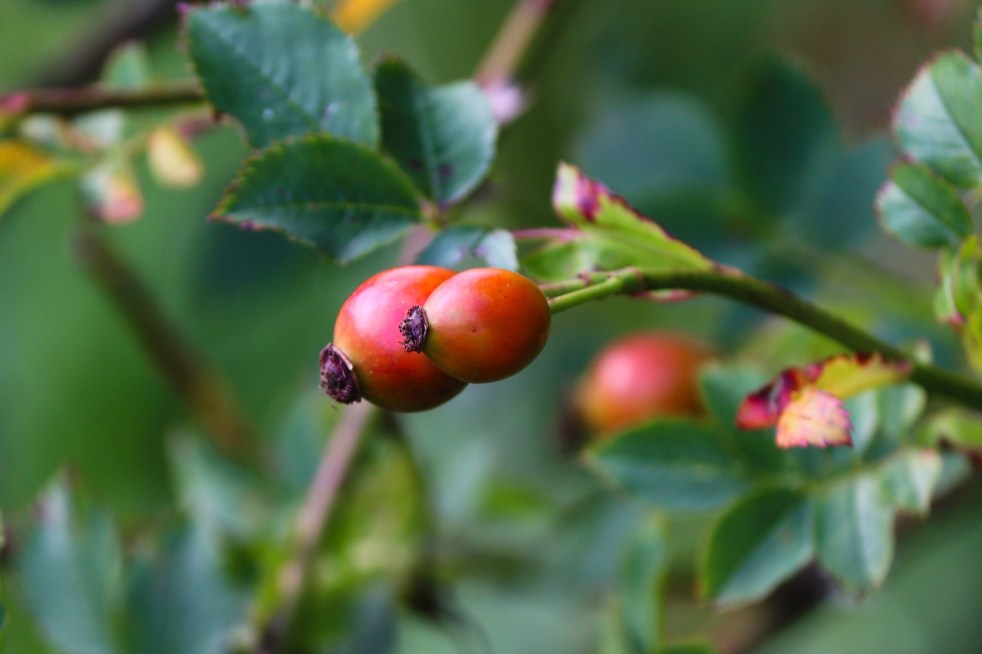
Some bright red, round rosehips on the plant.

(Side note, my Handsome Assistant and I were planning on taking a very off-season vacation on the beach. We weren’t planning on trying to swim or anything, but we decided to cancel anyway since it’d likely be too chilly to do much but hole up. Go figure!)

Rosehip Magical Uses and Folklore

Medicinally, rosehips are used for anything that benefits from more vitamin C. They’re boiled into syrup and given for colds, and used in tea over winter (when fresh fruit is in short supply). The fruit is also a mild diuretic that can help with certain urinary disorders, while the seeds, when boiled, may be helpful for symptoms of gout.

The fruit portion of a rosehip forms a kind of capsule around the seeds. These seeds are covered in irritating hairs, which is why it’s important to clean rosehips before using them. These hairs are so irritating, in fact, that they can be used to make itching powder!

Not all roses will form hips. Flat blooms, as opposed to cup or globular blooms, generally have the easiest time doing so. The reason for this is simple: cup and globular blooms are bred for show, and have masses of petals that cover their stamens and pistils. Since pollination is necessary for fruit production, bees need to be able to get in there to pollinate. This is easy for them with flat blooms, and next to impossible with more complex shapes. Deadheaded roses also won’t produce hips, since the portion that would become the hip gets cut off in the process.

Rosehips are useful for all of the same things that roses are. They shine in love and beauty magic (due, in part, to their vitamin C content). Used in ritual baths or to infuse oils, they can have a brightening effect on the skin.

Some more rosehips. These are still very green and not yet ripe.

Rosehips are also used in spells for good luck and prosperity.

To banish nightmares, place some rosehips under your pillow. You might want to use dried hips for this, since fresh ones could end up leaving you with a sticky, squishy, unpleasant surprise in the morning!

Since rosehips house rose seeds, they’re a good general addition to spells to increase anything. All seeds have immense potential and are used in magic for growth, so you can include rosehips in any spell to increase love (including self-love), money, luck, you name it.

Using Rosehips

To use fresh rosehips, wash them well, slice them open, and remove the seeds and hairs with a spoon. You can then dry them, make them into jelly, or eat them fresh. Dried hips from the store are good to go as they are.

Add fresh or dried hips to magical teas or other recipes. They have a tart flavor that pairs well with lots of drinks and dishes. Stir with your dominant hand as you cook, and intentionally infuse the mixture with the energy that you want to attract or increase.

To keep nightmares at bay, include dried hips in a dream pillow. Lavender, lemon balm, and rosemary also work very well here.

Dried rosehips (and rose seeds) are great additions to spell jars. As I mentioned above, they bring extra energy to increase whatever it is you’re looking to grow or attract.

On the other hand, the irritating hairs around rose seeds are good for protection or banishing spells. Add them to powders to keep unwanted people or spirits at bay. Sprinkle them under your doormat and instruct them to annoy anything and anyone who shouldn’t be at your door.

Rosehips are as useful as they are beautiful. If you have garden space, I highly recommend planting some wild type roses to help feed birds and other animals (and provide you with lots of powerful magical ingredients). If you don’t, keep your eyes peeled when you’re out and about — you may just find some wild roses with plenty of hips to share.

Plants and Herbs

Maple Folklore & Magical Properties

This past weekend, my Handsome Assistant and I took a small drive down Falls Road (alias Scenic Route 25). This was recently dubbed the second-best route in the country for seeing fall colors, and, while the leaves haven’t quite reached their peak just yet, it was a really lovely drive.

Red maples (Acer rubrum) are one of my favorite trees to see in autumn, and I’m lucky to share a home with one. Their leaves turn a vibrant scarlet every autumn, hence the name.

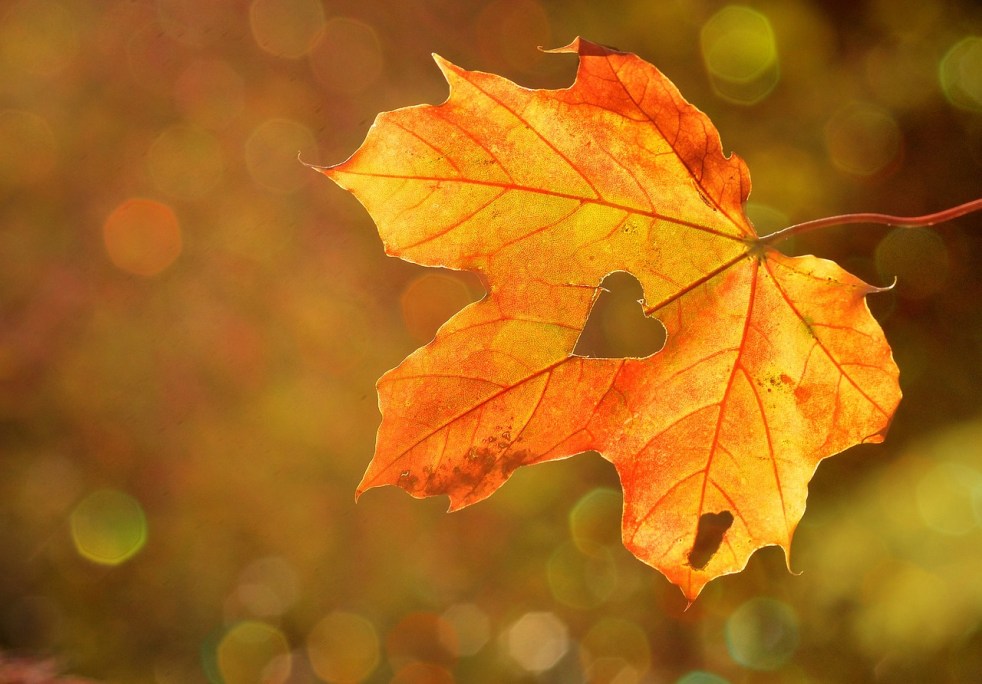
Bright red maple leaves on a branch.

Honestly, I just love maples in general. As a little kid, I used to pick up their samaras (we called them “pollynoses”) from the sidewalk, open the seed capsules, and stick them on the end of my nose. I bake primarily with maple syrup. I’m trying to convince my Handsome Assistant to make his next back of mead a batch of acerglyn (a similar beverage made of half honey, half maple syrup) instead.

I probably don’t need to say that trees have featured prominently in Pagan practices probably ever since the first Pagan. Each one has its own traits and associations, and, when it comes to working with the wood, leaves, or fruits, its own magical properties.

To be honest, maples were so ubiquitous where I grew up that I didn’t know they weren’t more widely harvested from. When I was thirteen, I was a foreign exchange student, which resulted in a brief stay in the Netherlands before going to Sweden. My student group (jetlagged and exhausted) stopped at a cafe on our first day there, where I happily ordered a plate of silver dollar pancakes and syrup.

But it was not syrup.
It was stroop.

Stroop (rhymes with “rope”) is often made of boiled-down fruit, water, and sugar, but can also be made with molasses and brown sugar. While it isn’t bad by any means, the latter variety is kind of an unpleasant surprise when you’re a kid who’s used to maple syrup with pancakes, hates molasses, and also desperately needs a nap. Not knowing any better, I drenched my pancakes in stroop and made myself a very avoidable struggleplate.

Anyway, all of this is to say that maples rock, maple syrup is the food of the Gods and should absolutely never be taken for granted, and I may still carry some molasses-induced trauma.

Maple’s genus, Acer, is Latin for “sharp.” This is due to their very unique, pointy leaves.

An Abenaki story tells how maple syrup once flowed freely from trees. It came so easily, people would lay on their backs and just let the syrup run right into their mouths. The legendary figure Glooskap saw how lazy people had become, so he turned the thick, sweet syrup into runny sap. From then on, if people wanted to eat maple syrup, they would have to work for it!

Another story, said to be of Haudenosaunee origin, tells of a man who watched a red squirrel nibble the end of a maple branch. The sap flowed until the sugars dried, hardened, and crystallized. The squirrel then came back to lick the sweet maple sugar.

In European-based magical systems, maple syrup is often used as an ingredient in love spells.

Maple sugar or syrup is also a useful ingredient in sweetening jars.

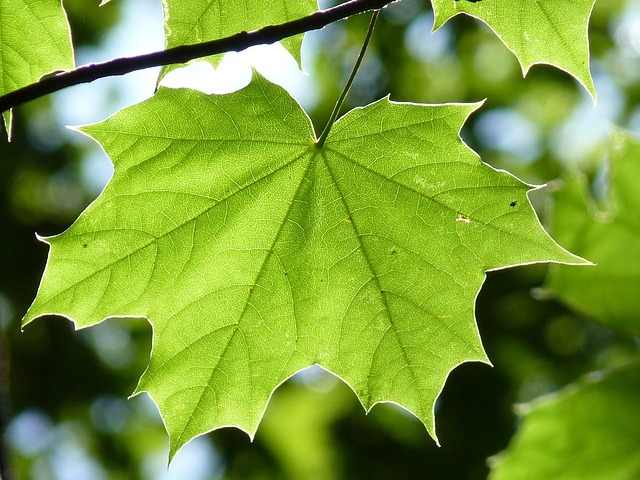
A bright green maple leaf.

By contrast, maple wood is considered very protective. It was sometimes incorporated into doorframes for this purpose.

Some sources consider maple to be good for prosperity and abundance in general.

As wand wood, maple is known for having a somewhat erratic energy. It also helps dispel negative energy, center oneself, and reveal paths and options one may not have considered.

Maples, particularly silver maple (Acer saccharinum) are considered Moon plants. They’re also associated with the element of Water.

Working with maple can be as simple as using magical tools made from the wood. Every tree — and thus every wood — has its own energy. I haven’t personally found maple to be erratic, but, to be totally honest with you, I’m erratic enough myself. (I think it also helps to have sourced the wood from a tree that I know pretty well!)

If you’re in the eastern US, you’re probably located near a maple tree. If that maple tree is anything like the one here, it probably drops plenty of sticks and smallish branches every time there’s a storm. Should you be of a mind to make your own magical tools, deadfall maple wood is honestly really easy to come by.

I can only vouch for red maple, but, once the bark and cambium are stripped off, the wood itself is light and silky-feeling. Sanded well, it takes on an almost metallic sheen. I love it.

The next easiest way to work with maple is to use maple syrup. You’ll need the real stuff for this, unfortunately — the fake stuff is cheaper, but also doesn’t really bear any resemblance to the genuine article. (There’s a good reason for that, too. Maple sap is chemically very complex, and we still don’t really understand all of the different compounds and reactions that give boiled sap its flavor. That makes it pretty much impossible to make a decent imitation syrup.)

If you’re looking to make a sweetening jar, artificial syrup is probably fine if you can’t get your hands on the real stuff. That said, plain sugar and tap water will make you a perfectly fine simple syrup that’ll a) be cheaper, b) let you add your intention or energy during the syrup-making process, and c) let you bypass the artificial flavors, colors, and other ingredients that don’t really add anything to the magic-making.

Otherwise, add maple syrup to your favorite edible magical recipes. Like I mentioned above, I bake with it almost exclusively — it’s pricey, but I love what it does for the flavor and texture of desserts. Seriously. It makes amazing breads and cakes, and is fantastic in chocolate chip cookies. Add the maple syrup, thank the tree for its sacrifice, tell the syrup what you want it to do for you, and stir your concoction clockwise using your dominant hand. Easy peasy.

Maple samaras (aka, pollynoses) can also be helpful additions to a charm bag. They end up all over the place in late spring to early autumn, so, if there’s a maple anywhere near you, you probably won’t have any trouble finding some. Add them to bags for prosperity, love, or protection.

life · Neodruidry · Witchcraft

Mabon 2023 (Or, “And then we accidentally gatecrashed a youth group.”)

I hope everyone had a good autumnal equinox, as rainy and chilly as it may have been!

Friday saw my Handsome Assistant and I hurriedly packing — he’d had to work and wasn’t able to get time off, and I’d spent most of Thursday processing fruits and vegetables and baking things. So, we pretty much grabbed whatever seemed like it’d come in handy for camping, shoved it in the car, and zoomed off.

A few hours later, we were driving down winding roads through the forest during golden hour, looking at the Shenandoah Mountains bathed in that soft orange light and listening to the wind through the trees. I couldn’t help myself — I turned on The Hu, and I turned it up.

We pulled into the campground moments later, windows down and music blaring, and hopped out to use the bathroom before going to find our group. There was a handful of people standing by one of the cabins in the distance, so we cheerfully strode up to them to discover that they were actually complete strangers. Baffled strangers. Slightly disturbed strangers.

“Um. Is this the MeetUp group…?” I asked.

“… No. This is a Lutheran Youth Group.”

“… Oh. Sorry. Mybadgottagobye!”

A few more moments and a short drive later, we found our actual campground.

After this minor slipup, the rest of the weekend passed with feasting (so much feasting), singing, chanting, poems, stories, a bonfire, divination, and rain (so much rain).

We stayed in a cabin affectionately called the Murder Cabin. Oddly enough, this was called the Murder Cabin before I discovered that one of the bunks had what appeared to be a bloodstain (it was not. We discovered this after a friend realized it looked too shiny to be blood and tentatively touched it. It was still wet and slightly oily, and we both jumped back shouting, “Oh God! Oh no! Oh God! Oh God!” One of our other friends woke up in the middle of the night to discover that he was sharing his bunk with a family of fieldmice, and I feel like fieldmice are too cute to just hang out in a Murder Cabin.)

I’d stayed in a cabin just like this as a kid, when I went to summer camp one year. I knew that they fit a twelve-year-old reasonably well but wasn’t entirely sure how well they’d fit one jacked, full grown human man and a smaller, more gremlin-style human at the same time. We’d brought our tent but forgot a second sleeping bag and the air mattress. As a result, we both crammed into a single sleeping bag, in a single bunk, and he ended up with his butt out the window and the beginnings of hypothermia. (I, however, felt fine and toasty where I was, nestled in the sleeping bag with him as a draft blocker.)

I always feel energized by being in the woods with friends. At events like this, I honestly rarely sleep. The first WickerMan I went to, I stayed up for three days then went home and absolutely crashed for a day and a half. This was no different — Handsome Assistant and I stayed up until about threeish every evening, only going back to the cabin once everyone else was ready to go back to theirs, too. (The first night, we accidentally dropped his heavy leather coat from the top bunk and startled one of our bunkmates awake, but they were very good-natured about it.)

I didn’t drink, which was probably good. I’m the kind of drunk who immediately starts complimenting strangers, telling people I love them, and becoming Eternal Best Friends with people whose names I may or may not actually remember in the morning. Also, I get terrible hangovers.
I did, however, enjoy some herbal medicine and enough sugar to send a hummingbird into a diabetic coma. (These things are probably connected.)

The Mabon ritual was beautiful. It was originally planned for outdoors, but there was a ton of rain and a big drop in temperature, so we moved it into a pavilion instead. We sang and chanted, taking turns going to a meditation tent for some solitary reflection and relaxation. When we each returned, we took a small wooden lantern as a reminder of the light that we’d each carry within us through the dark months.

Afterward, there was a feast. I’d brought pumpkin bread, strawberry scones, a vegan quiche, and vegan queso and chips, but the only things that had survived the previous day were the scones, so I put them out alongside the other dishes. Handsome Assistant grilled venison and bison burgers and brought homemade blackberry mead, someone had made a gorgeous salad with pecans, apples, greens, and pomegranate, there were black and white cookies (perfect for the equinox), breads, cheeses, fruits, salads, and just so much beautiful food.

One of the completely unironically fun things about this gathering was that it was two separate groups. On one hand, there were the Druids. On the other, there were the pan-Pagans, with more of a Witchy vibe. It was just neat seeing the similarities and differences in cultures and practices. Kind of a “fancy” versus “feral” groove, in the best way. As someone who has identified with both Druids and Witches at various points, I can see why I ended up on the path of Druidry.

After the ritual, the rain stopped for a bit. A friend built a fire, and those of us who didn’t go to bed early went out to stand around it, tell jokes and stories, and get warm and dry again. (An awning had dumped what felt like a cup of water down the back of my neck, so I was turning like a person-shaped pile of döner kebab to make sure I got evenly dry and toasty.)

This same friend remarked that he was sad that the weekend was almost over. I agreed. Even though it’d been cold and rainy, the laughing, the camaraderie, and the connection was just so awesome. I pointed out that, while it was almost over, it was also a day closer to next year’s.

And that’s what it’s about, right? Recognize the turning of the year. We’re heading into the cold days, but that just means that there’s an entire spring and summer ahead in the future. Just like I came home and crashed for seventeen (!) hours straight, I’ll have a restful winter and be ready to run amok again.

Plants and Herbs

Grape Folklore & Magical Properties

It’s the most wonderful time, of the year.

Okay, so.
There’s a new fruit quest. (If you have been reading here for a while, you might be familiar with the persimmon quest that I force my Handsome Assistant to accompany me on every year.)

A year ago, I tried my first muscadine. It was almost the size of a wild plum, the deep purple of a cloudless night sky, with firm flesh that tasted like a combination of grape jelly and extremely good wine. It was sweet and juicy, in perfect, balanced contrast to the firm, tart, slightly tannin-y skin. I could probably wax rhapsodic about muscadines and scuppernongs for way longer than anyone would be comfortable with.

Muscadines ripening on the vine.

Anyhow, I saw them pop up at the farmer’s market at about $13 a container and was sad to pass them up. Immediately after that, I saw them at Aldi for about $3.69. (Nice.)

Normally, I’d advocate for buying from farmer’s markets versus a supermarket whenever you’re able to. The thing about muscadines is that their range is very limited, so even the grocery store variety has traveled, at max, a few states away. They’re also seasonal, so they’ll disappear from the shelves as soon as their time is up.

This is why the other evening saw me leaving Aldi with arms full of containers of muscadines and scuppernongs (they’re the same species, but scuppernong is usually used for muscadine grapes that are kind of a light bronzy-green in color). I was also quietly singing a little song about how excited I was to have tasty grapes, and possibly skipping. (I am fortunate that my Handsome Assistant seems to find my goofball-ass qualities endearing.)

So, since it’s muscadine season, I figured I’d write a bit about grapes. Muscadines (Vitis rotundifolia) are strictly an American fruit, so they’re another plant you won’t find in old grimoires or European mythology, but that’s okay! They’re a kind of grape (Vitis species), and grapes in general have had a prominent place in myth and magic everywhere they appear.

Grapes figure heavily in Greek and Roman legend. According to the Greeks, the first grapevine came from a satyr named Ampelos. He caught Dionysus’ eye, and the deity romantically pursued him… at least, until Ampelos mocked the Moon Goddess Selene and got himself gored by a bull. Heartbroken, Dionysus transformed Ampelos’ body into the first grapevine.

(According to Ovid, things panned out a bit differently. In this version, grapes already existed, Ampelos fell while picking them, died, and Dionysus transformed him into a constellation.)

In Christian mythology, grapes are associated with abundance. Moses sent spies into Canaan (the “promised land”), who then returned with a cluster of grapes so large, it required two people to lift it.

On the other hand, some scholars claim that the “forbidden fruit” of the Garden of Eden was also a grape, not an apple as it’s commonly portrayed. Other scholars claim it may even have been wheat, so who knows.

Two bunches of grapes. They're a mixture of ripe and unripe fruits, showing shades of deep blue, to purple, to bright green.

In the ogham alphabet, muin, is often said to be a grape vine. However, grapes aren’t native to Ireland (they showed up with the Romans), and tend not to grow well there anyhow. Grapes also don’t really appear in Celtic legends with significance. Etymologically, connecting muin to the word “vine” is also tricky. For this reason, you’ll find a lot of debate about the actual meaning of this fid, as well as what plant it was even meant to represent in the first place. (Probably originally thorny brambles, like blackberries, though this meaning may have shifted over time.)

Grapes and wine are also generally good offerings for a wide variety of spirits and deities.

Vines, in general, are associated with binding. This isn’t necessarily binding in a negative or protective sense — binding can also be used to hold a favorable situation to you.

Elementally, grapes are associated with Earth and Water. They’re also associated with the Moon.

They’re…
They’re grapes.

All kidding aside, grapes are possibly one of the easiest magical plants to use. Eat, brew, or cook with them while visualizing yourself as prosperous and happy.

If you have the space and ability to do it, plant a grape vine in your yard to bring abundance to your home. (This may work even better than intended. Birds love grapes as a source of both energy and water, and tend to excrete more seeds when they hang out to feed. This is how I ended up with free, thriving tomato and mulberry plants, and possibly even the pumpkin vine. Free food!)

Grape vines make fantastic bases for wreaths. I’d like to devote a longer post to making and empowering magical wreaths, but, in short, take a grapevine wreath, add whatever other magical dried plants or curios you like, and hang it where it’ll do the most good. A protective wreath on the front door, for example, one for prosperity in the kitchen, or one for passion or fertility in the bedroom.

Though it also isn’t one of their traditional meanings, I also associate grapes with protection. Dark grapes make red wine, the color of courage, strength, vitality, and protection. The leaves themselves are covered in trichomes, which are small, pointy, hairlike structures. Covering the floor around your bed with grape leaves is said to be a folk remedy to control and protect against crawling pests like bedbugs.

Whether you’re like me (and do a goofy little happy dance when you’ve gotten special grapes) or your feelings about the fruit are more ambivalent, grapes are worth considering for your magical practice. They’re sweet, tasty, easy to use, and pretty straightforward in their properties and associations.

life · Neodruidry · Witchcraft

Frederick Pagan Pride 2023

It’s just this past Saturday, and my Handsome Assistant and I pull up to the Unitarian Universalist Church in Frederick, MD. The friendly young people attending the lot tell us there aren’t any parking spaces left. We’ll have to go to the lot a mile down the road, they direct us, and take the shuttle.

Personally, I’m shocked. It’s only a quarter past ten, how could the lot be full already?

A rustic pendant made of copper, quartz crystall, and azurite malachite on a copper chain.

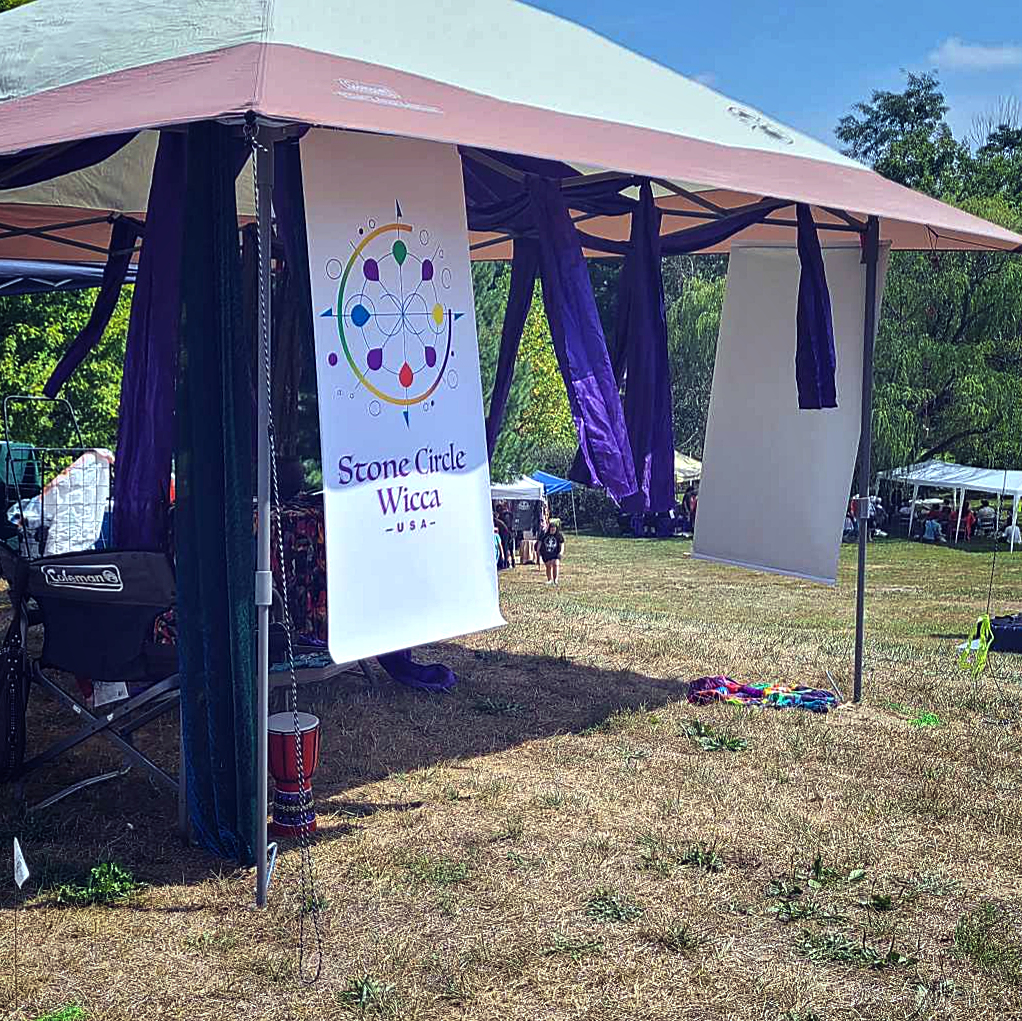
They weren’t kidding, though. Even the other lot was filling up, and the shuttle was almost completely full as we rode back. The grounds themselves were ringed with vendors, information booths, and more — there was Tempered Raven, who hand-forges beautiful blades There were so many booths of jewelry (I bought a beautiful quartz, azurite malachite, and copper necklace from Unclaimed Treasures). There were herbs, incenses, soaps, pottery, handmade brooms and whisks, woodcarvings, altar supplies, and amazing desserts. There was even free coffee, tea, and cold brew from the awesome people at Stone Circle Council (check them out — they do some very cool things).

A handmade ceramic watercolor palette with eight wells.
I also picked up a handmade palette. It’s intended for watercolor, but I’d like to see how it does with casein. Casein paint dries out so fast and softens up with a bit of water, so working with it is a bit more like gouache than acrylic. I’m thinking a glazed surface will be perfect!

There were also loads of workshops and live music. It was busy, it was vibrant, it was great. I always regret not taking more pictures of the event itself, but I always feel a bit odd about snapping pics of people unaware. (Sure, there’s no expectation of privacy in public, but something being legal doesn’t preclude it from being a bit of a dick move, you know?)

The busyness was at once a wonderful sign, and an unfortunate one.

On the one hand, it’s great that events like this are attracting a bigger audience. Aside from vendors of beautiful crafts and delicious food, there are lots of tables for different Pagan, metaphysical, and mystical organizations. If you’re looking for a path to call to you, or people to network with, this is the place to find that thing. In an era where social media has allowed — even encouraged — the proliferation of misinformation that’s unhelpful at best and dangerous at worst (and don’t get me started on AI generated books), it’s really nice that there’s still a wonderful variety of actual organizations dedicated to study and practice.

Last year, I got a little emotional about how events like Pagan Pride make me feel about community, aging, and tradition. It’s a feeling I hope everyone gets to experience at least once.

On the other hand, a big part of the reason for this large audience is that two other Pagan Pride events — the one in DC, and one in Manassas, VA — effectively no longer exist. A friend pointed out that they’d even contacted the coordinators of the DC pride event and hadn’t heard anything back at all. As if the email address was going unchecked. I looked up information on Manassas everywhere I could, but it was pretty scarce. The last event seemed to be in 2019, and the 2022 event was cancelled. According to their Facebook, they weren’t able to hold one in 2023.

A lot of Pagan community organizers seem to be either getting burned out (with everything else going on right now, who can blame them? Add the often-thankless work of organizing to the struggles everyone else is dealing with right now, and it’s completely understandable) or just aging out of their roles. All of the organizations I know, even the ones I’m a part of, operate on budgets that would make a shoestring look luxurious by comparison.

It’s something I’d love to help with, but I’m not really sure where to start. I’ve often said that, if I were handed enough money to live off of for the rest of my life, I’d put it into a small house on a large piece of property. I’d rewild as much as I could and put it under a conservation easement. Some, I’d want to guide into operating as a permaculture food forest (I have tiny fantasies of adopting a rescue donkey or small pony, having them carry a basket, and walking around with them to pick fruits and vegetables). The rest, I’d want to make into an event space for musicians, dancers, and events like Pride. I have no heirs, so, when I died, I’d will it back to whatever Indigenous group formerly held it. In the meantime, I’d want it to be a place for community members to interact — flora, fauna, and human alike.

I mean, I feel like I’m basically describing a two-person commune, but I feel like you get the gist.

I suppose what I’m saying is that it’s a shame that the world has done us up all wretched, and I wish I knew how to take on some of the burden of organizing and setting up events like this with the resources that I already have. (A tiny yard, most of which is steeply uphill, an even tinier bank account, and massive social anxiety).

In the meantime, support your local Pagan organizations and artisans, yeah?

Plants and Herbs

I decided to eat the anise hyssop (and here’s a really tasty recipe).

Not too long ago, I wrote a bit about the magical properties of hyssop. The thing that prompted me to do this was the ludicrous abundance of anise hyssop blooms (and also bees, moths, and butterflies) in the little pollinator garden in the front yard.

Anise hyssop and regular hyssop aren’t related, though. Anise hyssop, also called anise mint, is a member of the mint family. It’s called “anise hyssop” because the leaves and flowers have an anise-like scent and flavor — though I think it’s more reminiscent of root beer!

Anyhow, since some of the anise hyssop was getting tall enough to block the coreopsis and beautyberry, I figured I’d go harvest some. Sickle in hand, I shooed the bees to the other anise hyssop plants and got cutting. I also cut a few lavender flowers that were growing at odd angles.

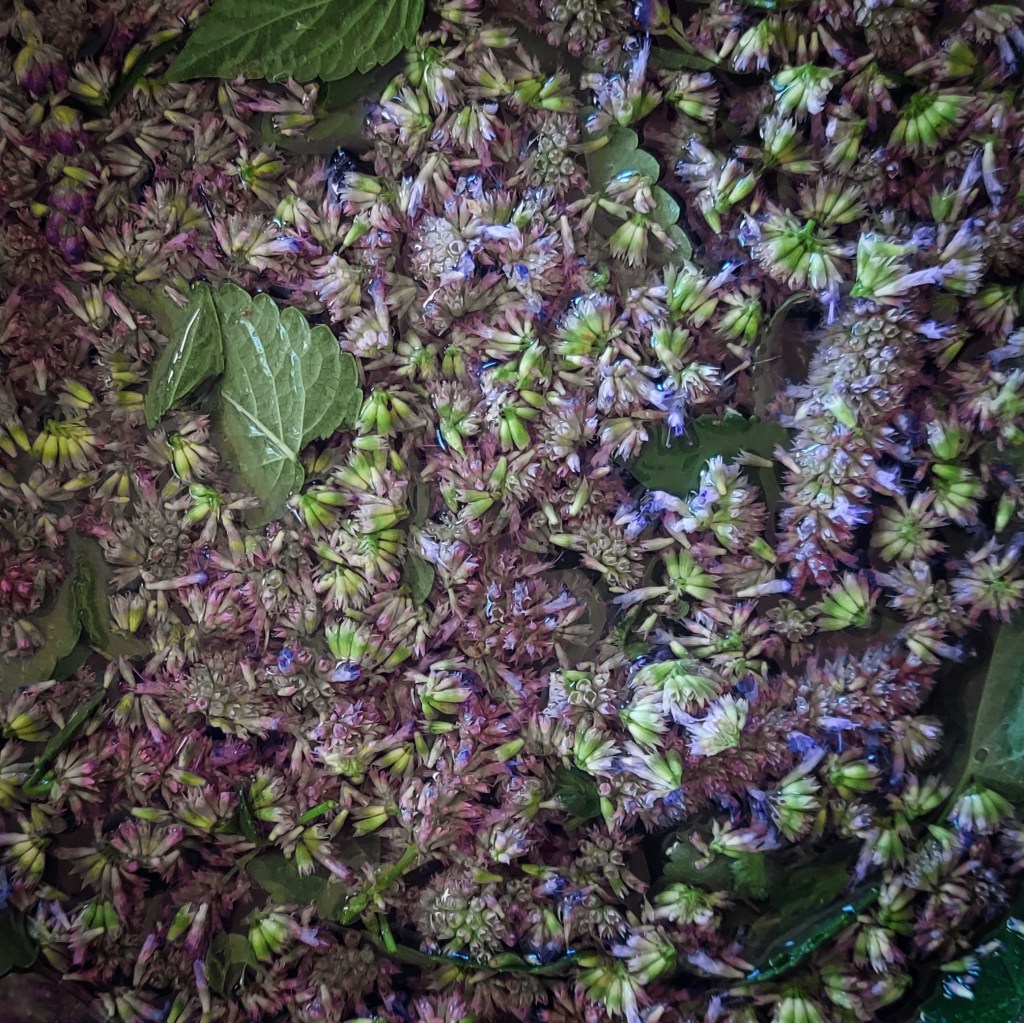
From there, I separated the good leaves from the wilted or damaged ones, and removed the flower heads. I gave everything a good wash, then boiled it in equal parts sugar and water to make a lovely, herb-infused simple syrup.

A bowl of small, bright purple flowers and green leaves soaking in water.

Once the syrup was made, I strained out the plant matter and spread it on a bit of parchment paper in my dehydrator. After an hour and a half at 165 degrees F, once everything was dried to a crisp, I was left with some lovely candied flowers that do, in fact, taste exactly like root beer.

Anise hyssop is used as a carminative and expectorant, and is very soothing. I don’t really need an expectorant right now, but I plan to use the flowers and syrup to ease digestive complaints. The only thing is, I don’t really need that much. So what do I do when I’ve got way more delicious candied flowers than I need?

I make scones.

These are easy, nut-, egg-, and dairy-free, and delicious. They only require one bowl and about half an hour of your time.

Dry Ingredients:

  • 2 cups of flour (I used einkorn, but regular wheat flour is fine)
  • 1/2 cup sugar
  • 1 tablespoon flaxseed meal
  • 2 teaspoons baking powder
  • 1/2 cup cold vegan butter or coconut oil
  • 1 handful fresh anise hyssop flowers
  • 1 generous cup of blackberries (depending on their size, you may want to cut them into smaller pieces)

Wet ingredients:

  • 1/2 cup milk substitute of your choice (I used pea milk)
  • 1 teaspoon of vanilla extract

Tools:

  • A nice big mixing bowl
  • A spoon
  • A whisk or fork
  • A pastry cutter or fork (optional)
  • Measuring cups and spoons
  • A baking sheet
  • A sharp knife

Making the Scones

  1. Preheat your oven to 400 degrees F.
  2. Place the sugar and fresh anise hyssop flowers in your mixing bowl.
  3. Rub them together with your hands, until the flowers are mashed with the sugar and the mixture resembles moist sand.
  4. Add the flour, flaxseed meal, and baking powder. Whisk together until well mixed.
  5. Add the cold butter substitute or coconut oil. (You might want to do this in cubes or spoonfuls, it’ll make the next bit easier.) Use a fork, pastry cutter, or just your hands to work the fat into the dry ingredients. Keep at it until the mixture looks like coarse crumbs.
  6. Measure out a half cup of milk substitute. Add the vanilla extract to the milk and stir.
  7. Pour your milk into the mixing bowl. Stir until it’s just combined — avoid over stirring. If it seems too dry to hold together, add another tablespoon or two of milk.
  8. Fold in your blackberries.
  9. With floured hands, lightly knead the dough until it all comes together. Visualize yourself kneading health, love, and prosperity into the dough.
  10. Turn the dough out onto a floured surface. Form it into a ball, and pat it out into a flat circle roughly an inch thick.
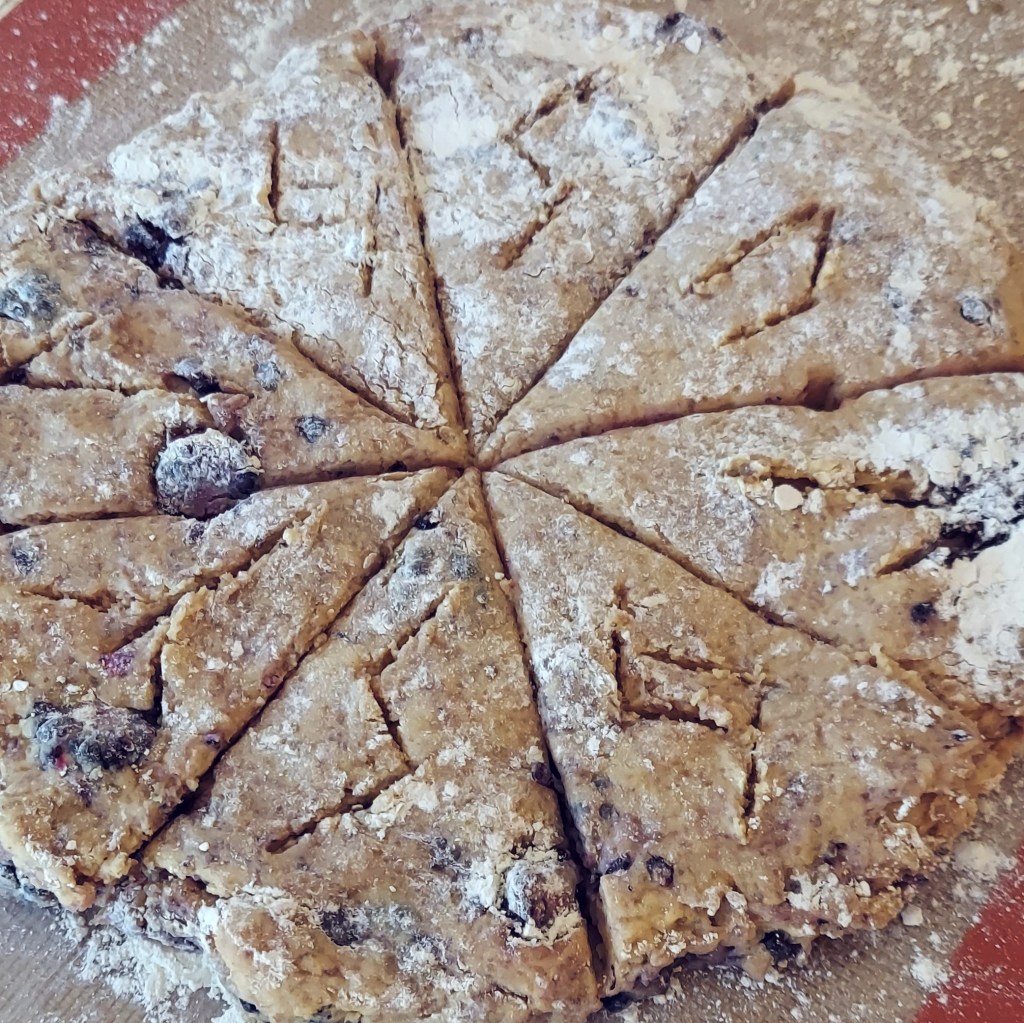
  11. Slice it into triangles. If you like, you can use a toothpick or the tip of a knife to carve the tops with runes, sigils, ogham feda, or other symbols significant to you.
  12. Place the triangles on a baking sheet. Bake for about 25 minutes, or until they’re golden brown.
Unbaked blackberry scone dough, formed into a circle, cut into triangles, and inscribed with the runes jera, sowilo, teiwaz, uruz, algiz, and laguz.

Making Them Extra Fancy

If you like, you can also ice your scones. Mix up a cup of confectioner’s sugar, two tablespoons of milk substitute, and, if you like, some finely crumbled candied anise hyssop leaves and flowers. Stir well until the mixture is smooth and liquid. If it seems too thick, add some more milk substitute. If it’s too thin, add more sugar.

Once your scones are cool (give them about 20 minutes), drizzle the icing on with a spoon. Give the icing a few minutes to harden, then serve.

A baked scone, inscribed with the rune uruz and covered with a sweet glaze.
crystals

Selenite vs. Satin Spar: What’s the difference, and does it matter?

Oh, gypsum. You’re fertilizer, walls are made of you, you make tofu tofu, and you’re also some of the most coveted minerals on the crystal market.

If you like collecting or working with crystals, you’ve almost definitely seen it. It’s usually marketed as selenite (though it also frequently appears in flowerlike forms called desert roses).

There’s only one problem — like olive oil, wasabi, and citrine crystals, the selenite you know and love may not actually be selenite at all. This is another situation where mineral names and trade names collide, like you see with white turquoise.

Selenite is a very common name for gypsum in the crystal trade. It’s usually used to describe the fibrous, silky, silvery-looking form of gypsum sold as rough wands, polished wands, palm stones, or heart shapes. These stones have a silvery sheen and a decidedly lunar feel, so the name selenite makes sense, right?

Unfortunately, it’s a bit more complicated than that.

Okay, so. Selenite and satin spar are both the same mineral: gypsum. Gypsum is a variety of calcium sulfate, so it’s pretty common. There’s a good chance you live in it, and an even better one that you’ve eaten it before. No big deal.

The difference between selenite and satin spar lies entirely in how they form.

A hand holding a thin satin spar wand. The satin spar is slightly translucent and exhibits a silvery-white color overall.
A “selenite wand” (that’s actually satin spar), showing satin spar’s characteristic fibrous, satiny appearance.

Satin spar forms as thin, fibrous crystals. If you’ve ever seen it crumble (which isn’t uncommon to observe — gypsum is soft), you might have noticed that the remnants look more like small splinters. This gives this mineral a silky, translucent appearance with a silvery sheen. It usually exhibits chatoyancy, or a “cat’s eye” effect. Because of how it forms, this is the mineral that you usually see sold as “selenite wands,” palm stones, or charging bowls.

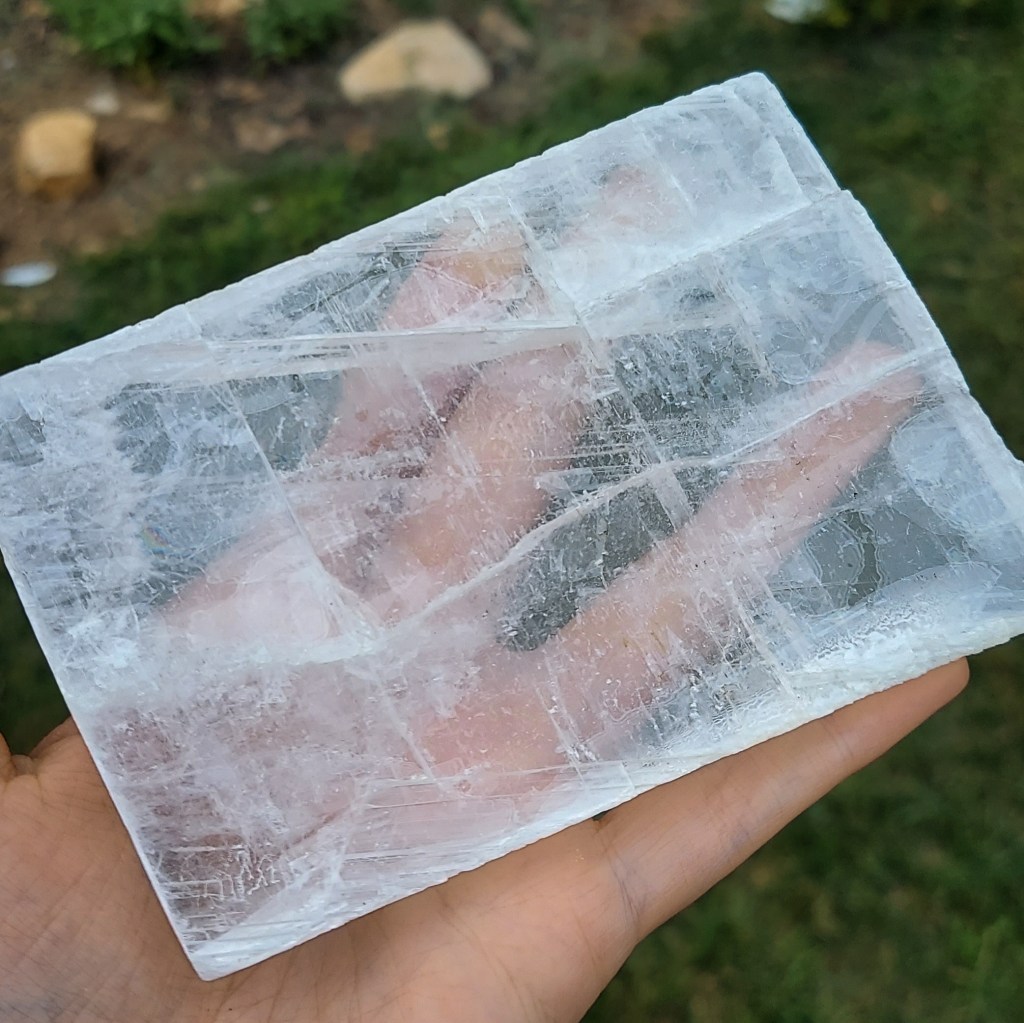
A roughly rectangular selenite plate balanced on a hand. The hand is visible through the selenite, save for a few areas where healed fractures or inclusions give the stone a slightly cloudy appearance.
A selenite plate, displaying its transparency.

Actual selenite forms as sheets. It’s usually transparent and colorless, though it may have impurities that give it a cloudy appearance. It’s much rarer than satin spar and is usually sold as flat specimens. The way it fractures means that it isn’t a good choice for carving into wands. Its unique crystal form is best exhibited as-is, though you may see it sold as charging plates.

Nope. The chemical composition, hardness, solubility, and everything else is completely the same. The only differences are clarity, fracture planes, and formation.

Satin spar and selenite are used identically. They’re both considered very high-energy crystals that are used to cleanse rooms, people, and objects, or even cleanse and charge other crystals. If you have a selenite that you’ve suddenly realized is actually satin spar, that’s okay. There’s virtually no metaphysical difference between the two.

If you work with crystals in a magical or metaphysical sense, then no. The usage, properties, and care instructions for satin spar and selenite are exactly the same.

If you collect minerals or have some specimens that you plan to sell to gem collectors, then yes. Selenite is rarer than satin spar. It forms and looks differently. If you have satin spar in your collection, and you want to find a piece of actual selenite, you’d be pretty disappointed to find that all of the “selenite” on the market is just more satin spar!

I’m all for accuracy, so I prefer to call selenite selenite, and satin spar satin spar. However, I also get that “selenite” has been a trade name for satin spar for a long time now, and me taking a pedantic stand isn’t likely to change that.

Like I said, it might be a good idea to remember that there is a difference. In magical and metaphysical circles, nobody’s that likely to care much. In gem collecting circles, people are more likely to use the term that’s more technically correct.

If you want to split the difference, you could call satin spar “satin spar selenite.” This isn’t really right, but it probably has the best shot at ensuring that the person you’re talking to knows what you mean.

Or just call them all gypsum and let everyone else figure it out.

Plants and Herbs

Echinacea Folklore and Magical Properties

Echinacea, or coneflower, is a genus of flowering plants found solely in parts of the US. They’re native to where I currently live, so I’ve added several different wild type and nativar plants to the front and back yards here. They’re a unique addition to the landscape, and help bring in even more pollinators than the bee balm and anise hyssop already do!

These flowers are probably best known for their medicinal qualities. The first time I’d ever heard of echinacea was from my father’s former significant other. She had some echinacea tea, and I overheard her talking about how she used it medicinally. (Though they’ve since split up, I’m still friends with her — she went on to become a bodywork therapist who specializes in sound healing and craniosacral therapy, and is one of the founders of the nonprofit Columbia Resilience Integrated Health Community Project. She’s a pretty cool lady.)

Unfortunately, the popularity of echinacea means that wild populations are suffering from overharvesting (two species, E. tennesseensis and E. laevigata, have only recently recovered from being on the endangered species list). If you want to use these plants, it’s best to grow your own. Fortunately, that’s really easy to do — they self-seed super easily and will grow pretty much anywhere there’s sun. They’re also great for helping populations of native pollinators.

Since these are American plants, they’re not found in European-based grimoires. They’re still very valuable to develop a relationship with, even if they don’t show up in old world folk or ceremonial magic.

To the Ute people, echinacea’s traditionally called “elk root” due to the belief that injured elk sought out these plants to use medicinally.

Echinacea roots are used as a physical and spiritual medicine. They’re a traditional healing herb for burns, pain, and inflammation, and some peoples have chewed them as part of their ritual purification ceremonies.

The name “echinacea” comes from the Greek word for hedgehog, “ekhinos.” This is because the center of the flowers is round and spiky, like a hedgehog.

Today, echinacea is often touted as a way to help prevent or eliminate respiratory viruses like the common cold. Research doesn’t really bear out assertions that coneflower can significantly help with the common cold, but there’s evidence to suggest that coneflower’s immune activity may have a lot to do with the bacterial populations within the plant itself. These studies are on isolated cells in vitro, however, not on humans. Overall, it seems like echinacea isn’t really a great remedy for upper respiratory viruses.

Topically, infusions of echinacea are helpful for soothing the skin. Prepare a strong brew of the root (and any other soothing herbs you like, like chamomile or marshmallow), filter out the plant matter, and add the liquid to a bath.

Some green witches use echinacea as a way to increase the power of their spells. It’s best employed when attempting to overcome a problem that doesn’t respond to other measures, but adding a little of the root or seeds to any spell will help increase its effectiveness.

Hanging a sachet of echinacea over the bed is said to act as a fertility charm.

A bright red cultivar of echinacea, showing the characteristic spiky center surrounded by a ring of bright, daisy-like petals.
One of the bright scarlet echinacea cultivars in the front yard. You can see a bit of the mysterious pumpkin vine in the background.

Coneflowers are also associated with strength and vitality. Sprinkling powdered echinacea root in one’s shoes is said to increase physical vitality and endurance. This is particularly interesting to me, since the same is said of mugwort. Both echinacea and mugwort are pretty opportunistic plants that will tolerate poor soils. The plants’ own resilience could be why they’re connected to the idea of endurance and strength.

Some sources also claim that placing a single echinacea flower on one’s brow can enhance psychic abilities. Interestingly, mugwort is also used to enhance psychic abilities.

When cut and kept in a vase, it’s believed to bring prosperity into the home.

The large, brightly colored flowers are frequently used as natural offerings to the spirits of a place.

Coneflowers are also part of an herbal formula to attract same-sex love, particularly by men. Combine deerstongue herb (which has a lovely vanilla aroma), echinacea, and imitation musk, ambergris, and civet.

Echinacea is associated with the planet Mars and element of Earth.

In general, it seems like the flowers are used for offerings and laying on the body, and the roots and seeds are used for everything else. The roots and seeds are also said to have the most magical power. I can definitely see that — seeds, in particular, are symbols of infinite potential. If you want to start something new, include some seeds in your spell.

The easiest way to use echinacea magically is to include a bit of the whole seeds or ground root in sachets, jars, or herbal spell blends. There doesn’t seem to really be a limit to what this plant can empower.

You can also steep some larger bits of root in a carrier oil and use it as a protective or empowering anointing oil.

Personally, I plan to experiment with using echinacea alongside and in place of mugwort. There seems to be a fair amount of crossover in both their ecological and magical uses, though their planetary and astrological correspondences differ. Echinacea is native and grows like nobody’s business here, while mugwort is invasive. I’ll definitely harvest invasive wild populations of mugwort when I have the chance, but I’d like to see how far I can get with the herbs that I grow myself.

Medicinally, echinacea tea may be made from the flowers, leaves, or roots of Echinacea purpurea. This can be taken internally or used topically. Traditionally, it’s a remedy for inflammation and pain. Nowadays, it’s often touted as a treatment or preventative for respiratory viruses, but research shows that it probably isn’t very good at that last bit.

Overall, this herb is pretty safe, but people who are allergic to members of the daisy family will definitely want to avoid it. It isn’t known how safe this is for people who are pregnant or nursing, so ask your doctor if you have any concerns.