life · Plants and Herbs · Witchcraft

Relieving Pain by Means Magical and Mundane

Hello! The inside of my face has been replaced with centipedes.

… Okay, fine, but that’s what it feels like.

Friday, I had a minor surgery (which, depending on how things go, may end up being the first of several. Sigh). This would not be a deal for most people, let alone a big deal, but things get complicated afterward when you have a very limited list of pain relievers that you can safely use. So, I figured I’d write this handy-dandy guide for other people in this position.

Why might someone have trouble getting pain relief? A lot of reasons. Some people avoid them because of a personal or family history of addiction. Some medical conditions, like breathing problems, preclude the use of specific types of pain killers. Some medications don’t combine well with them, either. In my case, too many pain meds manage to raise cerebrospinal fluid pressure, have a reduced effect when combined with an SSRI, and increase the risk of serotonin syndrome. This underlines the importance of disclosing everything to your doctors — your past and current medical conditions, every medication you’re taking, the whole lot. They’re not there to judge you, they’re just there to make sure you don’t die.

Anyhow, there are herbal, mineral, and magical means of coping with physical pain when everything else is contraindicated. These shouldn’t take the place of appropriate pharmaceutical pain management when that’s a) available and b) necessary, but can definitely help take the edge off when that isn’t an option. As with any herbs, don’t use them if you’re allergic to other plants in the same family, or if you’re on other medications that might interact with them. A lot of plants that relieve pain are also relaxants, so be mindful that they may make you drowsy or slower than normal. If you have an upcoming surgery, ask your doctor if these herbs are safe to use in the days running up to your operation.

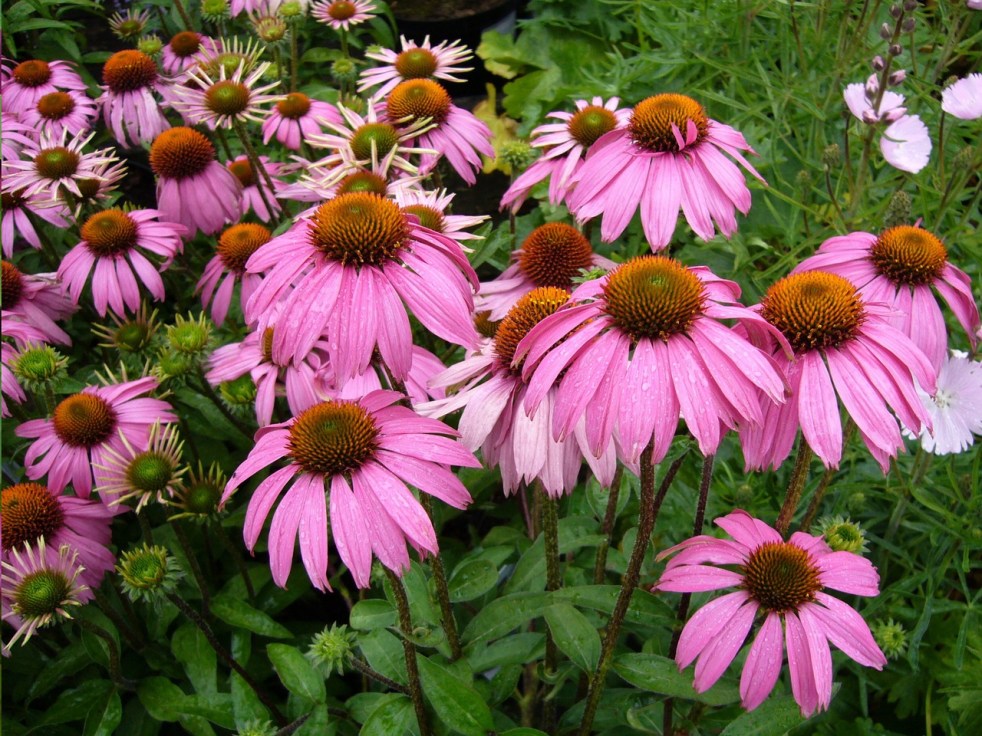
Ah, chamomile. My number one solution to so many of life’s problems. It’s relaxing, it helps me sleep, and it’s surprisingly good at helping with pain.

Here, we’re talking about both German (Matricaria chamomilla, also known as M. recutita) and Roman chamomile (Chamaemelum nobile). One study found that a topical gel of 3% chamomile extract helped with pain from oral mucositis induced by chemotherapy. A clinical trial quoted in this same study showed that chamomile, when inhaled, reduced cesarian pain. Other quoted trials demonstrated a very helpful anti-inflammatory effect, as well.

Chamomile flowers floating in a cup of tea.

When I need chamomile to do more than help me relax, I prefer to use a tincture. It seems to work faster and provide more relief than tea alone (though a nice cup of iced, double-strength chamomile tea certainly has its place). A few drops of chamomile tincture are also great at soothing toothaches and mouth sores.

Chamomile essential oil is also helpful in an aromatherapeutic context (the way it was used in the cesarian surgery pain trial), but isn’t absorbed all that great. Topical applications of chamomile oil were much more effective when they were blended in a nanogel to aid absorption.

Lemon balm, Melissa officinalis, is best known as a relaxant and digestive herb. Some people use it for pain relief, but structured research is limited in this area. Still, if you’ve experienced pain that has kept you up at night, you probably know the value of something that can help you get to sleep.

Lemon balm, like chamomile, is also anti-inflammatory.

As a word of caution, lemon balm can be powerful. I don’t really get sleepy from chamomile, but a cup of lemon balm tea can knock me out. Be cautious when using it with other herbs or medicines, and don’t use it when you need to be alert.

Turmeric is an anti-inflammatory herb that I initially started using for joint pain. Combining it with black pepper, specifically the compound piperine, helps to make turmeric more effective. Piperine isn’t very soluble in water, though, so preparations made with isolated piperine usually involve extraction using solvents like dichloromethane.

Personally, I use turmeric and ginger tea all of the time. I feel a difference when I don’t. (If I’m having a rougher day than usual, it’s often because I’ve been skipping my tea by accident.) These plants are actually related, and they have some overlap in their medicinal effects.

A wooden spoon and glass jar of turmeric powder.

Turmeric and ginger are the kind of herbs that are better for chronic pain, not acute pain. Think of it like this: If you deal with joint pain on the regular, turmeric and ginger may be a big help. If you currently have a headache, you’re better off reaching for something else.

Got a toothache? Clove oil (Syzygium aromaticum) is your buddy… at least, if you’re an adult.

A drop or two of this stuff, diluted in a carrier oil, placed on a cotton bud, and swabbed on the affected tooth, can help halt tooth pain in its tracks with amazing efficiency. It’s effective for making cavities and broken teeth less agonizing until you can get to a dentist. One of the compounds in clove oil, eugenol, is even used to help manage the pain from alveolar osteitis (dry socket).

As a note of caution, clove oil is potent medicine. Use it straight, and it can burn the absolute tits out of your mouth. It can also be toxic in large doses. For children, a “large dose” is not a whole lot, so it should never be used to sooth teething babies. Clove oil can also be bad for people with liver disorders, unstable blood sugar, or who are taking anticoagulants. While a drop or two isn’t going to harm a healthy adult when used properly, it’s worth knowing this stuff and treating cloves with respect.

It’s also important to use real clove oil. Make sure the bottle says that it’s 100% essential oil from the appropriate species of tree. (Don’t worry about qualifiers like “therapeutic grade” — there are no regulatory bodies that determine this, it’s just a marketing term). Avoid products labeled “fragrance oil.”

No clove oil? Mash a little ground clove spice with warm water and apply the paste instead.

If you have a toothache and clove oil isn’t an option, biting down on a piece of raw garlic can help. Chew it until it’s soft, and let it sit on the affected tooth. If you don’t want to chew on raw garlic, mush it into a paste with a spoon or mortar and pestle, or grate it first. The important thing is to let it sit on the aching tooth.

From my experience, garlic doesn’t relieve tooth pain quite as effectively as clove oil, but it can be safer for some people. If you’re really struggling, you’re about at your limit with swabbing clove oil in your mouth, and you don’t have any chamomile tincture, garlic is definitely a solid runner up.

This is all purely anecdotal, but I’d feel remiss not to include it. I have a satin spar wand — nothing fancy, just an unpolished, rectangular hunk of gypsum — which has come in handy time and time again for pain related to intracranial hypertension. As it turns out, a number of pain relievers are associated with increased cerebrospinal fluid pressure, so there’s often not much you can do to deal with the crushing pain.

I get it the worst right at the base of my skull, as do a lot of people. I’ve found that lightly pressing a piece of satin spar to that spot really helps. Oddly enough, other massage wands don’t. Neither do other crystals. Honestly, even ice packs are a bit hit-or-miss.

Should you throw out all of your NSAIDs and stock up on satin spar? No, I don’t think so. But satin spar wands are common enough that, if you’re reading this, it’s likely that you already have one. If so, it may be worth giving a shot. It certainly has been for me!

I have a lovely bit of chlorite quartz that came from Ireland. It’s very clear, save for a bloom of deep green in its heart– like a cluster of fluffy moss.

A lot of guides attribute healing properties to chlorite quartz, but these are pretty vague. “Healing.” “Emotional healing.” “Detoxification.” Interestingly, I haven’t seen it used for relieving pain, though I have seen more than one site make the wildly irresponsible claim that it’s good against serious, potentially lethal health conditions like cancer and heart disease.

I discovered by accident that the particular specimen I mentioned is helpful for headaches. Holding it in my dominant hand has stopped one in its tracks on multiple occasions, to my delighted surprise. As someone who has headaches of varying severity on a daily basis, anything that can put the brakes on one is nothing short of miraculous.

One old remedy for tension headaches involves taking a knife (preferably one with a broad, pointed blade, like a chef’s knife) and holding it against the head. The user is then instructed to take the knife outdoors and stab it into the ground, while declaring that the headache is now sent into the dirt for the Earth to deal with. Even if you don’t necessarily believe in the power of sympathetic magic, the coolness of a piece of metal can help ease a mild headache, and the psychological benefits of this exercise shouldn’t be overlooked.

Other remedies involve transferring illness to objects like candles, then burning them. These are just as valid, but take a bit too long for my taste. If I’m having too much pain to sleep, the last thing I want to do is babysit a burning candle for several hours!

Pretty much everyone knows about using ice and heat to help relieve inflammation and pain, but setting up the right temperature gradient can turn that relief up to eleven.

When it comes to headaches, warming your feet while cooling your head can be a huge help. This helps increase blood flow to your lower extremities, while narrowing vessels in your head. If you have the kind of throbbing headaches that are triggered or made worse by heat, this can really improve things by a surprising amount. A warm footbath and an ice pack on the back of my neck can be an absolute lifesaver sometimes.

It’s really not uncommon for people to end up in a situation where their pain relief options are limited. This list isn’t to suggest that herbs and crystals can substitute for, say, a morphine drip for a terminally ill person, but to hopefully offer some ideas for people who, like me, don’t really have safe, effective options available.
Plants and Herbs

The robot uprising is here, and they’re trying to kill us with bad foraging advice.

When foraging, it’s said that you should be as confident identifying edible plants in the wild as you are in a grocery store. Foragers also say that the best way to learn is to have an experienced person to guide you. Not everyone has access to someone like that, though. Enter: Books about foraging.

Ripe wineberries. They are shiny, red raspberry-like fruit on a stem covered in red hairs.

Now, gathering and eating wild plants based entirely on the photos and descriptions in a book can be a bit intimidating. For some plants, this isn’t a big deal — wineberries, for example, are an invasive edible that’s really easy to pick out. Garlic mustard and wild onions, too. Some plants don’t really have poisonous lookalikes, so the odds of making a dangerous mistake are pretty slim. Others, not so much.

All of this is to say that books about foraging aren’t all bad. At least, they weren’t.

Here’s where shit gets weird.

People looking to make a quick buck have turned to artificial intelligence and Amazon’s publishing platform to pump out a lot of barely-concealed drivel. A lot of this is in the form of children’s books, I guess because they seem easier to make than a full-length novel. This is far from harmless, because children’s books play a role in the development of literacy and empathy that you don’t really want to hand off to a computer.

This attempt to cash out isn’t limited to children’s books, either. Amazon and other online book sellers have become the proud purveyors of foraging books written by AI. This isn’t really a new phenomenon, but, on the off chance any of you out there’re in the market for foraging guides, I figured I’d give you a heads up.

To be fair, a lot of these are simply useless and the worst they’ll do is waste your money. The books in this category claim to be foraging guides, but end up being about why foraging is good, listicles on the benefits of eating more fruits and vegetables, and recipe ideas. Pretty harmless overall.

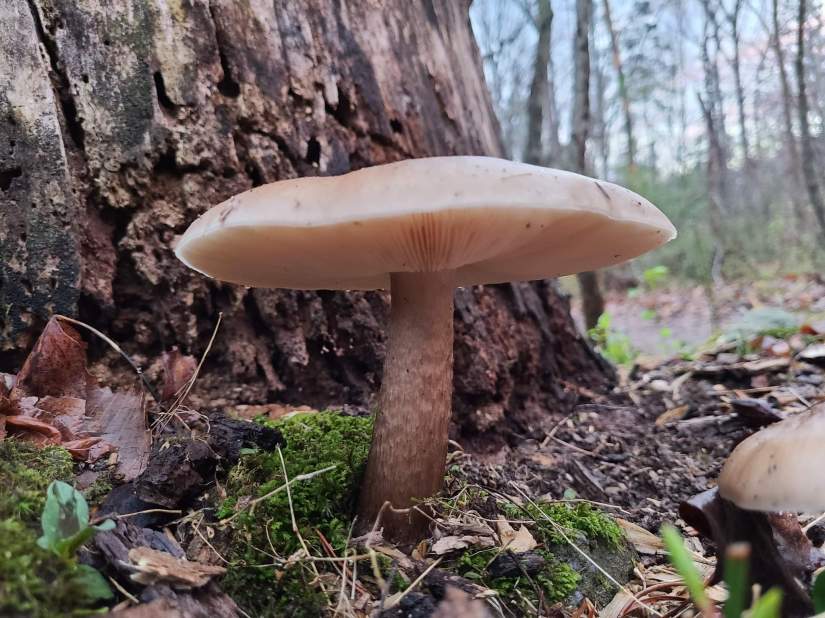
An underside view of the gills of a cream-colored mushroom.

On the other hand, there are books offering actual descriptions of “edible” plants and mushrooms(!). Some of them even list “taste” as an identifying feature of plants and fungi, which could encourage inexperienced foragers to taste things they haven’t positively identified. Since many extremely poisonous mushrooms are visually similar to harmless ones, this could get someone killed. Hell, plenty of people already mistake poisonous mushrooms for edible ones even without books encouraging them to taste them.

It’s not always easy to pick out which books are written by actual human people, and which aren’t. There are a couple of things that you can look for:

  • Publishing dates. Books written before the rise of AI generated content are a safer bet here.
  • The author’s web presence. Even if they have a photo, that doesn’t necessarily mean that they’re a person. The photo could be stolen (just see any of the fake identities on Scamfish), or made up by a different AI. Look for a blog. A Facebook page. A TikTok. An Instagram. Something to indicate an existence beyond the cover of a dodgy book.
    As this article from 404 Media states, “‘Edwin J. Smith’”’ is the author listed on two books[,] but doesn’t have any other books, or an online presence otherwise. The only Edwin J. Smith I could find was a Professor Emeritus of medicine at Indiana University from a staff list that’s more than a decade old.”
  • The author’s credentials. They should be actual, and not completely made up. Beware of author bios that offer vague, unrelated information.
  • A sample of the prose. A lot of bots pull from very varied sources, so you’ll get bits that sounds like they’re cut from a recipe blog, a florist’s website, an actual foraging manual, and so forth. These are also likely to be thrown together without much thought, because no actual humans looked at it to make sure it’d make any damn sense at all.
  • The editing. Bad, AI generated foraging guides often have mistakes that any human editor (or writer, for that matter) would pick up on right away.
  • A bad score from an AI-detection tool, like Scribbr or GPTZero. Get a sample of the text, paste it in a detection tool, and see what it says. While you’re at it, paste the author’s bio in there, too.

Again, if you’re able to, connect with an experienced foraging expert before going out in the field on your own. Your local university may be able to help you. You might even be able to find a group of foraging enthusiasts on sites like Meetup. Even if you can’t go out with a foraging expert, they may be able to recommend actual, useful guides, videos, and other resources for you.

life

Gonna take this cold on Antiques Roadshow.

Hello! I went to the Maryland Renaissance Festival yesterday, and I think I’m dyin.

Okay, not really. I did do much more than my accustomed amount of walking, though, and it was one of those days that seems to alternate between toasty and very chilly, which is pretty much guaranteed to give me a headache. By the time I got home, I felt like I’d been run over. (And I’ve been run over.)

My Handsome Assistant and I make a point to go to at least one Ren Faire a year. In my case, I think it’s genetic — my dad was very into that kind of thing, to the point where he actually made his own armor and chainmail. There’s a baby picture of me, bare-ass naked, with an adult-sized morion helmet on. He had a collection of swords. (I think it was one of the many bones of contention in my parent’s marriage, which is why I’m also glad that my Handsome Assistant and I can agree that swords are cool and a large knife collection is a good thing to have. But I digress.)

This year, we met up and hung out with our Druid group. Well… as much as its possible to “meet up” and “hang out” at any large event like this. Even times when I’ve gone there with groups of friends, everyone ends up splitting up and meeting periodically throughout the day. This was no exception. We met up to go to the Bee Folks, then got separated when my Handsome Assistant got sidetracked by a sculptor and I went to go find him. We met up again, later, when everyone else was watching a band play and he and I were looking for somewhere to sit down for a bit.

The two of us bought some artwork and some sculptures for the garden, pounds of specialty honey for mead brewing, more specialty honey because it’s delicious, and a large bag of honey candy for cold season. I found a shirt I liked, he found a pauldron he liked, and so we continued the tradition of adding one piece or so to each of our costumes every year. It was fun, the food was good (there were even options for herbivores like me), the music was good, and I had a good time, as always.

The following morning, though? Woof.

I have one working nostril, and my lungs appear to have accumulated several pounds of Substances throughout the evening. COVID tests were negative, so I’m pretty sure I’m just dealing with a regular vintage cold. A bit of stuffiness from the before times, if you will. It almost makes me miss being on massive doses of Diamox — it altered the pH of my blood to the point where I never got sick. This also meant that I had chloride acidosis pretty much constantly, but still.

It’s a good thing we got all of that honey.

Now, I’m settled in with warm blankets and a wonderful-yet-incredibly-impractical mug which I love. It’s massive and great for when I feel sick, but the handle is goofily small. It used to have a gold image of a crystal ball on the side that said, “Your Future is Bright!” but an accidental trip through the dishwasher has rubbed off the gold until all it says is “Ufb.” Which, to be fair, is usually exactly how I’m feeling when I most want to use this mug.

And so, for the time being, I am taking naps and doing my usual autumn cleaning. I also have a raised bed that I’d like to plant with cold-weather crops, but I haven’t decided what I want to plant yet. (After last year, I’m probably not doing kale again. There were so many seeds, and there’s volunteer kale everywhere now. I even saved half a jam jar of broccoli/kale/some kind of hybrid seeds for growing microgreens, so I am full up with brassicas.)

Here’s hoping everyone else is successful at staving off autumn and winter bugs.

Witchcraft

Let the new moon wipe it away.

I’ve been taking inventory. Thinking of stuff I want to change (well, mostly get rid of) with next week’s new moon.

I have times where I feel like I’m wearing memories like a lead apron. Protective in some ways, perhaps, but ultimately smothering, uncomfortable, and heavy. We don’t yet have ways to erase them, à la Eternal Sunshine of the Spotless Mind, but man do I wish we did.

Sometimes, it almost feels like physically they have hooks in me. Nasty, twisting wires that seem to pull on my limbs, as if some invisible hand were trying to turn me into a marionette. It’s times like this that I can really see the tremendous value in cord cutting.

To that end, here’s a simple ritual for cutting unwanted connections and starting this moon cycle with a clean slate. I’ve written in the past about cord cutting to sever toxic familial ties, but this is a much more general practice that serves just as well as a kind of energy cleanse.

  • A dull knife or knife-shaped object. I have a bone ceremonial knife, but a butter knife, rubber knife, or even a knife shape cut from cardboard will work. The important thing is that it does not have a sharp or serrated edge.
  • A candle. I typically use unaltered beeswax candles (hey, if it’s good enough for the bees, it’s good enough for me), but you can choose whatever wax or color feels correct to you. I’d suggest white (as a neutral color), black (as a neutralizing color), or red (as a strengthening color), myself.

That’s it!

Like I said, this is a very simple ritual.

Take a moment to take an inventory of yourself. Feel your physical body. If you can’t relax, that’s okay. Feel where tension, pressure, or “stuck” feelings seem to reside. Feel where you store stress.

Now consider your energetic body or aura. Feel out any inconsistencies. Are there any energetic cords or tethers?

Take the representation of the knife. Hold it an inch or so above your skin, parallel. Pass it over your entire body, as if you were shaving your aura. Picture this knife paring away whatever unwanted connections you may have.

As you do this, tell these connections goodbye. Affirm that your dealings with them are complete — they are severed from you and you are no longer connected. Continue this until you feel like you’ve removed all of the unwanted energies or tethers that you can.

A burning beeswax candle on a dark background.

Next, wipe the knife on the candle. Whatever energetic residue remains, just wipe it off on the wax. If the candle is in glass, wipe the knife off over the wick portion. Dust your hands off over it, too, for good measure. Anything that’s left that you don’t want, send it into the wax and wick.

Now, light the candle. Picture that energetic residue burning up like dust. There is nothing more for you to worry about, nothing more for you to do. The connections are cut, the slate is clean. You are free.

Allow the candle to burn completely if you wish, or snuff it. When you discard it, you can do so far from your home if you wish. It doesn’t require any special ceremony, as its job is finished — it has burned away the remains of the energy and connections that you don’t want. The less acknowledgement you give these things, the better.

If you use a cardboard representation of a knife, you can even burn that and scatter the ashes, too. Otherwise, just clean and cleanse your knife very well.

If you have any shielding or restorative meditative practices, now is a good time to do them. Removing these unwanted connections frees up energetic space, and it’s a good idea to either protect that space or have something good in mind to fill it up with.

Here’s hoping for a happy, refreshed moon cycle for everyone!

Just for fun · life

Alex Dav’s music is a treasure, tbh.

Note: Nobody paid me or otherwise compensated me for this. I just really like Alex Dav’s music. Notice me, senpai.

I need background music.

Music, lighting, and scents are the most effective ways to set a vibe, to me. I can be in a parking garage, but if there’s some chill music playing, the faint scent of incense wafting on the air, and patches of a nice, peachy-colored sunset kind of sliding in between the concrete pillars, it’s nice. Cozy. Meditative.

That’s why I was so happy to come across Alex Dav’s music on YouTube. I was even happier to find it on Spotify, where I can just kind of keep it on without commercial breaks.

All of the songs feature a hang (also called hang drum), guitar, kalimba, piano, variety of drums, and more. Most, if not all, are tuned to a frequency of 432 Hz.

432 Hz is regarded as a “healing frequency.” Meditating to it is said to produce deeper states of relaxation. Doing so before bed may even improve sleep quality. Some also credit it with helping to release energetic blockages within the body.

While this all sounds very unscientific, there is a little bit of research to back it up. A double-blind cross-over study comparing listening sessions involving music at 440 Hz and 432 Hz had some very interesting results: The study participants experienced a slight decrease in blood pressure values (although not significant), a marked decrease in heart rate, and a slight decrease of respiratory rate values when listening to 432 Hz versus 440 Hz. These values do point to a greater state of relaxation. Subjectively, researchers also noted that “[t]he subjects were more focused about listening to music and more generally satisfied after the sessions in which they listened to 432 Hz tuned music.”

I use it for meditation, divination, maintaining a relaxed atmosphere at home, and just as background sound. It’s at once organic and ethereal, earthy and dreamlike. Personally, even as just background music, I feel like it helps me be more relaxed and creative. It’s even what inspired me to pick up a (smaller, less fancy) tongue drum.

If you’d like something that you can just turn on and go about your day, Alex Dav’s YouTube channel also has multiple live streams that are just music, all day long. If you want sleep music, there are some tracks that subtly loop for 12 hours. I highly recommend them!

Plants and Herbs

Passionflower Folklore and Magical Properties

As we kill off our grass, we’re working hard to replace it with plants that serve multiple purposes. Ideally, they should be native (or at least semi-local), attract pollinators, provide food for both humans and animals, and either return or self-seed. One of the plants that passed muster is this area’s native species of passionflower, Passiflora incarnata.

Also known as maypop, true passionflower, purple passionflower, and wild apricot, P. incarnata is a really pretty, fast-growing vine that provides both wild-looking purplish blue flowers and edible fruits. The flowers don’t last long, but they’re very striking!

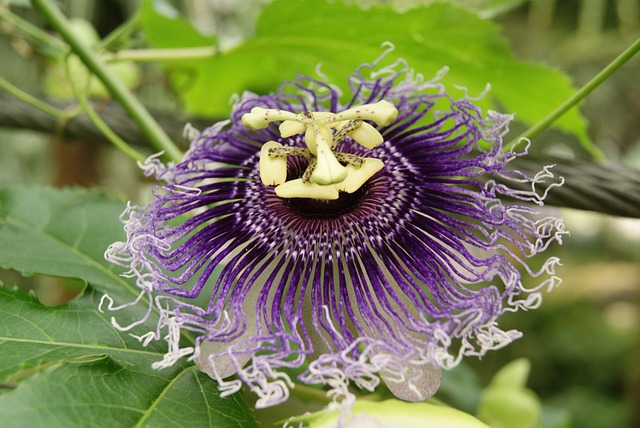
A fringy, bright purple Passiflora incarnata flower.
A flower of P. incarnata.

Unfortunately for me, I didn’t heed the old adage, “the first year they sleep, the second year they creep, the third year they leap.” As a result, I planted way too many passion vines. They’re going to eat my porch.
Help.

Anyway, as I watch my yard speedily being consumed by passion and pumpkin vines, I figured I’d write a bit on the magical uses and folklore of the passionflower.

Passionflower Folklore and Magical Uses

Despite the name, I’ve mostly seen passionflower used as an herb to dampen passions, not stoke them. They’re said to be useful for calming libido, cooling relationships, and cultivating platonic or romantic rather than erotic love.

This could be because the word “passion” has a number of very different and contradictory meanings. As Mark Z. Danielewski wrote in House of Leaves, “Like patience, passion comes from the same Latin root: pati. It does not mean to flow with exuberance. It means to suffer.”

As a new world herb, passionflower was a novel plant to the Spanish missionaries who arrived in Peru in the 1500s. Giacomo Bosio, a monk and historian, referred to passionflower as “La Flor de las cinco Llagas” (“the flower with the five wounds”). This refers to the five wounds the Christian figure Jesus Christ is said to have endured at his crucifixion. The Biblical usage of passion equates to suffering, so, to missionaries, the passionflower represented divine suffering.

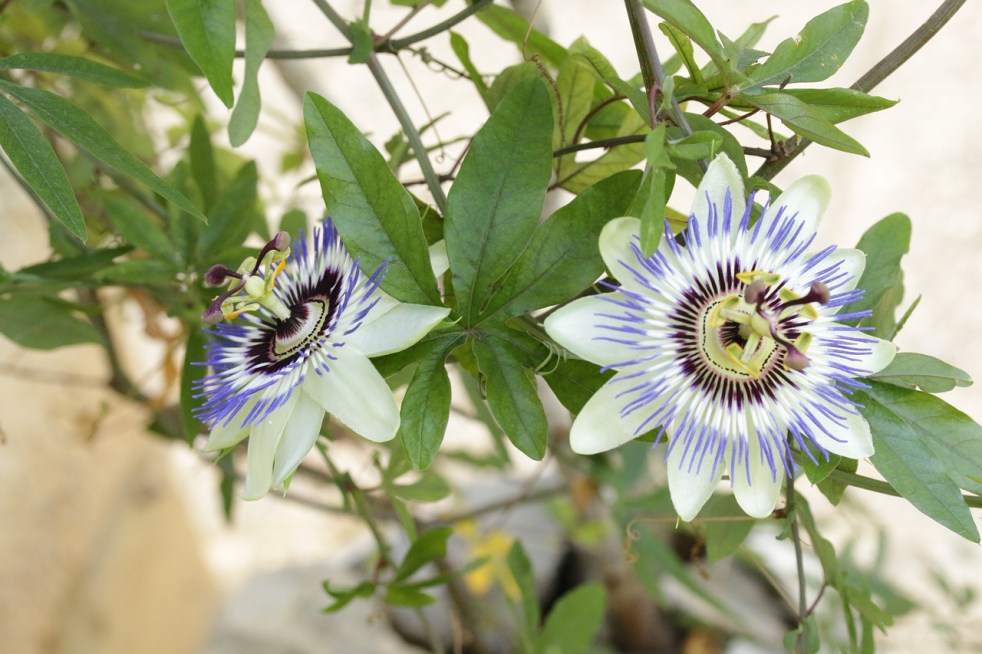
A blue and white flower of P. caerulea.
P. caerulea, a passionflower native to South America.

One tale from Brazil says that the passionflower grew from the tears of a woman who was separated from her lover.

Medicinally, passionflower is used as a calming herb. Evidence suggests that it’s safe to use internally, but there’s been some controversy as supplement manufacturers didn’t meet FDA requirements for safety data. It may interact with sedatives, monoamine oxidase inhibitors (MAOIs), and drugs to prevent blood clots, and is contraindicated in pregnancy.

In traditional indigenous herbal medicine, passionflower is used as a poultice to reduce inflammation and soothe pain.

In the garden, passionflower is irresistibly delicious to Japanese beetles. They’ll eat the leaves and flowers like there’s no tomorrow, which is bad news if you actually want to harvest any fruit!

Taken together, this paints the picture of passionflower as an herb to ease suffering. Since it was said to represent the five wounds endured by Jesus Christ, you could look at it as a “wounded healer.” This isn’t a plant that flows with exuberance, it’s one that knows suffering and eases it in others.

In Victorian flower language, passionflower was said to represent religious fervor or superstition.

Passionflower corresponds with the element of Water and the planet Venus.

Using Passionflower

If passionflower both represents and alleviates suffering, how do you use it? Since it’s native to North and South America, there isn’t really any information about it in ancient magical texts. Nonetheless, there are many ways to work with this unique plant.

As a vine, passionflower grows and clings (hence the whole porch thing.) This makes it useful in workings to bind something to yourself. Since it’s also a plant for relieving suffering, I’d use it specifically in situations where you’d like to bind a solution to a problem — for example, using passionflower to tie yourself to a stable, fulfilling job or enjoyable living situation.

Passionflower is also sometimes used in pillows or sachets for restful sleep and dream magic. Be careful with this, however, as placing passionflower under one’s pillow is also said to be a remedy to dampen libido.

This herb is also used in love magic. Bathing in an infusion is said to attract a potential partner to you, and it’s an often-seen ingredient in sachets, jars, and other charms for love. It works well for this purpose, as long as you know what kind of love you’re looking for. (If you’re after a passionate fling, skip it and go for cinnamon or ginger instead.)

Infuse the flowers in a carrier oil and use this to help ease worries and sooth the heart and mind. Anoint the temples and heart area whenever relief is needed.

All told, passionflower is a delightful herb. It’s beautiful, feeds bees and hummingbirds, and provides valuable medicine. As long as you don’t let its name fool you, it can help you with an array of spells and charms.

life

I did it!

A bit ago, I posted about having bloodwork done and discovering that my blood lipids and vitamin D levels were off. I then talked about some of the changes I was making in order to correct these things.

It is with immense relief that I can say: It worked!

Well, it’s still working.

My total cholesterol is now normal, as are my vitamin D levels. The only area of some concern is my LDL (low-density lipoprotein, or “bad cholesterol”) is very slightly higher than it should be. It has decreased, however, so I should be able to normalize it with time and a few more adjustments.

As I figured, the culprit was probably eating takeout. Even “healthy” options are often less than ideal — they’re really just healthier than, say, a burger and fries. If you’re traveling, without a kitchen, or otherwise unable to store and prepare your own meals, “healthy takeout options” are definitely better than the alternative. But, at the end of the day, all restaurant food is made with taste as its primary consideration. I knew this on a logical level. It’s just easy to let yourself ignore it when all you’re ordering is a salad or sandwich, you know?

Anyhow, I don’t have many other lifestyle changes I can make at this point. I can take a fiber supplement. I can explore some herbal remedies said to help maintain healthy blood lipids (ginger seems promising, for example). Other than that, we’re gonna have to get deeper into the weeds a little bit.

I don’t know how much I’ll speak on that, though, chiefly because I know attitudes toward medical care in the US are… complicated, at best. If I do expound on the alternative/complementary remedies I use, I don’t want someone to take that as evidence that these things will fix their own health issues. For one, their body is not my body, and thus their blood is not my blood. For two, it seems irresponsible. I feel like it might encourage someone to place outsized importance on my anecdotal evidence, and I don’t want anyone to get hurt because they refused effective conventional treatment because some outside-the-box shit I did might have helped fix what is really a very minor problem.

So yes. That’s where I am right now — happy, relieved, and figuring out my next steps. Wish me luck!

Uncategorized

Wild Bergamot/Bee Balm Folklore and Magical Properties

Monarda species, also known as bee balm, Oswego tea, and wild bergamot, is one of my favorite native flowers. The blooms themselves are striking, the leaves are fragrant, they spread very easily, and they thrive where other plants falter. They’re fantastic additions to permaculture guilds, since they’re good at attracting oft-neglected native US pollinators like the raspberry pyrausta moth. It’s also tolerant of juglone, a natural herbicide produced by black walnut trees.

Bright pink Monarda flowers, growing in a bed of maroon Coreopsis.
Some bright pink Monarda didyma flowers in my garden, planted along with some deep maroon-pink lance leaf Coreopsis.

The name “wild bergamot” is a bit misleading — these plants aren’t related to bergamot at all. Monarda is part of the mint family, while actual bergamot is a citrus fruit. I haven’t been able to find an explanation for why this group of plants is called wild bergamot, so I can only venture that it’s because of the fragrance of the leaves. They’ve a sort of minty-citrusy-herbal scent, very reminiscent of Earl Grey tea.

Wild Bergamot Magical Properties and Folklore

Monarda plants are native to the US and have a very important place in the medicinal lore of indigenous American people. The leaves soothe stomach aches when used internally, treat wounds externally, and ease headaches when used as a poultice. The name “bee balm” comes from the plants ability to calm bee stings.

After the Townshend Revenue Act of 1767, colonist American people began boycotting imported British tea. Instead, Monarda leaves provided a suitable substitute.

Bright pink Monarda flowers, of a cultivar called "Marshall's Delight."

Since Monarda is native to the US, you won’t find it in ancient herb lore or medieval European grimoires. It still has a pretty long history of use as a magical ingredient, however, as people have adapted to using what’s around them over the centuries.

Some magical resources claim that lemon balm and bee balm are synonymous. Though they’re both members of Lamiaceae, the mint family, they aren’t the same plants. Lemon balm is Melissa officinalis, native to Europe, and pretty sedating when drunk as a tea. Bee balms are Monarda species, native to the US, and gently stimulating.

Due to its associations with medicine, it’s considered a healing herb.

Monarda can also be used as a purifying and cleansing herb.

It is generally considered to be ruled by Mercury and the element of Air. Due to these planetary associations, it’s sometimes used in spells for money or success in business/academic endeavors.

Using Wild Bergamot

You’ll be pleased to know that, unlike a lot of the magical herbs I talk about, wild bergamot is edible. The whole thing. Stems, flowers, and leaves. The flowers can be used to add color and interest to salads, and the leaves make a wonderful tea. You can also use the leaves to flavor pork or poultry dishes. If you do want to eat your Monarda leaves, treat them like most other herbs: Harvest the leaves before the plant flowers, when they’re sweeter and more tender. They tend to get a bit tough and bitter after the plant matures and flowers appear.

Personally, I find wild bergamot leaves and flowers to be a very nice addition to drinkable/edible brews. Use it in place of Camellia sinensis leaves as a base for magical teas. Historically, it has been drunk to ease flatulence and as a gentle, general stimulant.

One thing I enjoy doing is making simple sugar cookies and decorating the tops with magical sigils. Candied flowers, chosen for their properties, can both decorate and empower these edible spells.

For purifying, pack some fresh leaves into a large muslin tea bag and place it under your bath faucet. You can also brew Monarda leaves into a tea, strain out the plant matter, add the liquid to a bath, and fully submerge yourself.

To purify spaces or groups of people, bundle fresh Monarda stems together, dip them in salt water, and use them to asperge.

Monarda is known to attract bees, as well as ease their stings. Since it’s connected to Mercury and Air, it’s also used as a success herb. Brew a strong tea from the leaves and use it to wash your front door and steps to attract success to your door like bees to a flower. You can also add this tea to floor washes, if you wish.

A prickly-looking Monarda seed head. Its rounded, comprising many small tubes formed by the base of the flowers.
A Monarda seed head. Each of those little “tubes” houses a single loose seed, which will be picked up by birds or scattered by the wind.

In general, Monarda is a very nice herb that plays well with others. In my experience, it acts as a general attractant — magically drawing in your desires the same way that the flowers call to hummingbirds, moths, and bees. Its flavor and scent are delicious and intriguing without being overpowering, so it’s an excellent addition to brews, kitchen witchery, and spell jars. (Most members of the mint family smell pretty acrid when burned, however, so I’d avoid putting it in incense.)

If you’re in the US, Monarda is a delightful addition to the garden. It’s easy to grow, thrives on neglect, and produces an abundance of seeds and rhizomes. You’ll have plenty to harvest and share, but, unlike non-native mints, it’s not considered invasive.

Environment · life

Doing No-Poo with Hard Water (No Distilled Water Necessary)

I’ve always had a love-hate relationship with no-poo.

If you’re not familiar, “no-poo” is a hair care method that involves shunning shampoo. This doesn’t mean that you don’t clean your hair, you just do it a little differently. An initial baking soda scrub gets rid of oil, and a vinegar rinse afterward neutralizes it and makes your hair soft and shiny.

Theoretically.

My custodial parent had very different hair from mine, and they weren’t interested in learning the difference or teaching me how to properly care for myself. As someone who was raised to believe that I was just cursed with oily hair and the only cure was copious amounts of shampoo, I’ve always been curious about how people with other hair types take care of theirs. Do they have to shampoo so often, their scalp turns tight and itchy? If not, was it just good luck on their side?

When I still lived in California, I tried no-poo. We had well water, and the water quality was way better than what I’d had before. (This is not a high bar. When I was a kid on Long Island, we had to have our pipes “flushed” yearly or so, and periodically had our water chlorine-shocked. We’d get notices about a week beforehand to warn us that our water was about to get gray, gritty, and nasty for a while. When I lived in Delaware, all the water was just… hard. Really hard.)

The trouble is, no-poo turned my hair into sticky, uncombable clumps glued together with a generous deposit of stearic acid. As it turns out, the water had way more minerals than I anticipated. It took a week for me to get things back to normal again.

I don’t know what made me consider doing no-poo again. Curiosity, perhaps. A sensitivity to a lot of shampoos, maybe. A desire to see if it’d make having trichotillomania easier to deal with.

When I experienced problems before, the prevailing advice was to just use distilled water instead of tap. Since a major part of my initial desire to go no-poo was to avoid plastic, this was counterproductive. Sure, it’s less plastic, but less plastic + a less-than-stellar experience wasn’t really a compelling reason to stick with it.

This time around, I made a solution of baking soda and sea salt for cleaning my hair, then a large jar full of one part vinegar to three parts water to rinse. I’ve also:

  • Made a rinse potion out of ginger tea and apple cider vinegar. It felt and smelled nice, but I didn’t notice much of a difference between using that versus tap water and vinegar.
  • Made a rinse potion out of chamomile tea and apple cider vinegar. This was soothing and smelled like apples and bubblegum. Not a huge difference otherwise, though.
  • Added three drops of cedar oil to the rinse potion. This was overkill and I smelled like hamsters for two days.
  • Added a drop of frankincense oil to the rinse potion. This was better.

I don’t want to jinx myself, since it’s only been three weeks, but I’m finally enjoying this. My hair is fluffier and softer than it would be with shampoo alone, and much less weighted down than it gets with shampoo and conditioner. Even my partner commented that my hair had a lot more volume than usual.

(I wanted to provide a before-and-after photo here, but all of my “before” photos are of me in various bandanas and other sundry headwear, so they’re of very limited utility. Whoops.)

The most important thing, I think, is that I didn’t wet my hair before applying the baking soda solution. I also didn’t allow the tap water to touch my hair between cleaning and rinsing. That means that the baking soda was neutralized without coming in contact with the high-mineral tap water, so I didn’t turn my hair into sticky clumps of wax. Once everything was neutralized, I had no problem with giving my hair a rinse or two with cool tap water. No distilled water necessary.

My scalp also feels much better. Like, a lot better.

I’m going to stick with it for as long as it continues to work out as well as it has so far. We’ll see how it goes!

If you want to give it a shot, the entire process goes a bit like this. I don’t really measure anything, so all quantities are estimates:

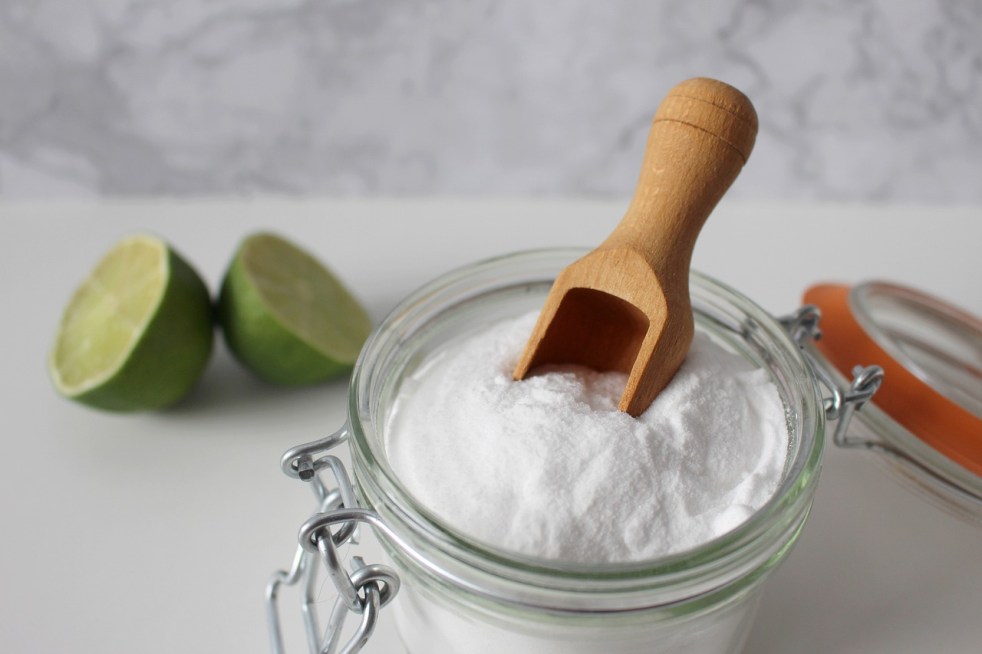
  1. I toss a handful or two (so about two tablespoons) of plain baking soda into a container filled with approximately a cup and a half of warm tap water. Not all of the baking soda will dissolve, and that’s okay.
  2. I pour this over dry hair. Once my hair is saturated, I thoroughly scrub my scalp and work it through the length of my hair.
  3. Now, without allowing any more tap water to touch my hair, I mix roughly a quarter to a third of a cup of vinegar to a cup and a half of warm tap water.
  4. I pour this over my hair to neutralize and rinse out the baking soda.
  5. If I feel like it’s necessary, I can rinse my hair with cool water at this point. I don’t always, since the scent of the vinegar dissipates pretty quickly.

That’s it! The most important part of not getting a head full of sticky residue seems to be carefully avoiding the addition of any more hard water than strictly necessary. This lets the baking soda handle the emulsification and saponification processes (while not as strong a base as lye, baking soda does produce a low enough pH to react with oil) and be neutralized by the vinegar without producing a ton of residue. Mixing the baking soda in tap water appears to be fine, as long as it’s applied to dry hair. Rinsing with vinegar in tap water is also fine, as long as I haven’t wet my hair with plain tap water beforehand.

Here’s hoping it works for you, too!

Uncategorized

Blueberry (and Bilberry) Folklore and Magical Properties

I love blueberries. Few things are as delightful as a fat slice of warm blueberry pie or cobbler, with a generous dollop of ice cream (or non-dairy ice cream equivalent, as it were).

I was very excited to find that the previous occupants of this house had planted some blueberry bushes in the back yard. Unfortunately, these bushes weren’t exactly thriving — they’d been planted in an area that’s under trees. It gets plenty of light during the late autumn to early spring, but very little in the warm months. Our soil is also hard clay, and it didn’t appear that the area had been given much organic matter.

So, as much as it worried me to do it, my spouse and I uprooted these bushes and moved them into a much sunnier spot, blended well with a generous amount of shredded bark and leaf compost. We also planted two more bushes of a different variety, to fill out the tree guild we’re building around the Chehalis apple tree I talked about two weeks ago.

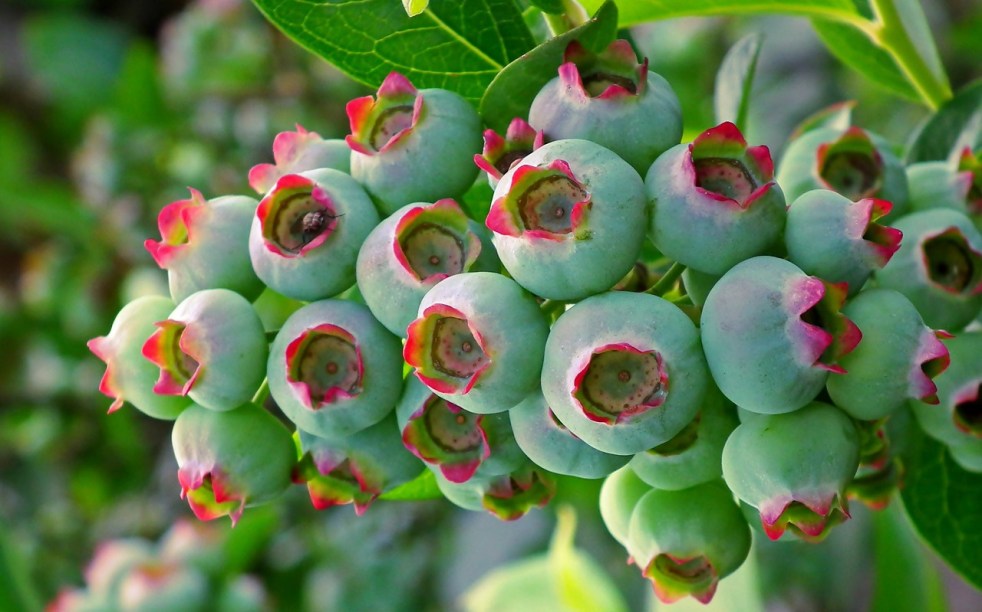
A cluster of ripening blueberries on a bush.
Some lovely little unripe blueberries on one of the bushes in the back yard.

This post isn’t about soil composition and permaculture, though I could definitely go on for volumes if it was.

No. Today, I want to get into some of the folklore and magical uses of these wonderful little balls of deliciousness.

It should be noted that blueberries (Vaccinium angustifolium, V. corymbosum, et al) are a strictly New World fruit. There’s a European relative called the bilberry (or European blueberry, Vaccinium myrtillus) that’s very similar, and the magical properties of these fruits are virtually interchangeable. If you live in an area where bilberries are native, use bilberries. If you live where blueberries grow, use those instead.

Blueberry and Bilberry Folklore

While blueberries are named for their deep purplish-blue color, the name “bilberry” is likely of Scandinavian origin. The Danish word bølle means “whortleberry,” which is another word for certain members of Vaccinium including the bilberry.

You can tell blue- and bilberries apart by their fruits. Blueberries grow in clusters, are a purplish-blue, and have a blossom end that looks a bit like a pentagon with five pointed flaps. Bilberries grow alone or in pairs, are almost black, and have a circular, smoother blossom end.

A bilberry on a bilberry shrub. The blossom end is facing upward, showing a distinct lack of the pointed flaps found on blueberries.
As you can see from this bilberry’s “butt,” they have rounder blossom ends and lack the pointy flappy bits of American blueberries. Compare it to the unripe blueberries in the photo above this one.

In Ireland, bilberries (fraochán or fraughan) are traditionally gathered during the last Sunday in July and the first of August. The first of August is Lughnasadh, a festival marking the beginning of the harvest season. Bilberries and blueberries are a traditional addition to Lughnasadh festivities all around the world.

Since gathering bilberries was traditional for the beginning of the harvest season, they were treated as a kind of oracle. If the crop was abundant, other crops would similarly flourish. If the bilberries did poorly, everything else would, too.

In ancient Greece, bilberries came from Herme’s son Myrtillus. King Oenomaus of Pisa had been given a prophecy: He would one day be killed by a son-in-law. Seeking to avoid this fate, Oenomaus decided to prevent his daughter, Hippodamia, from ever marrying by challenging every one of her would-be suitors to a chariot race on the Isthmus of Corinth. If the suitor won, he’d get Hippodamia. If he lost, Oenomaus would kill him. Since Oenomaus’ chariot was pulled by horses given to him by the god Ares, there was no way he could ever lose.

Then came Pelops. Hippodamia fell for him immediately, and went to her father’s servant, Myrtillus, for a favor. She wanted him to sabotage her father’s chariot so he’d lose the race, and Myrtillus, full of unrequited love for Hippodamia, agreed. On the day of the race, Myrtillus switched the metal linchpins of Oenomaus’ chariot with ones made of beeswax. Oenomaus’ chariot flipped, and Pelops beat him easily.

Some versions of the story say that Oenomaus, with his dying breath, asked to be avenged. Pelops then threw Myrtillus into the sea, and Hermes turned him into a bilberry shrub when he washed to shore. Another version says that Pelops, Hippodamia, and Myrtillus were traveling, when they stopped at an island so Pelops could fetch his new bride some water. When he returned, Hippodamia was in tears. Myrtillus had tried to sleep with her, she cried, while Myrtillus protested that she had promised to do so in exchange for sabotaging Oenomaus’ chariot. The enraged Pelops then killed Myrtillus.

In the folklore of some of the people indigenous to blueberry’s native range, blueberries are called “star berries” for the star-shaped blossom end.

In the Victorian language of flowers, bilberry represents treachery. This symbolism is likely borrowed from the Greek story of Myrtillus.

Blueberry and Bilberry Magical Uses

Blue- and bilberries are associated with protection and luck in European witchcraft.

Dried bilberry leaves are used in protective powders but can also be used whole for prosperity and luck.

The fruit is similarly used for protection and hex-breaking.

(Considering bilberry’s associations with treachery and crop divination, I wonder if their protective properties stem from their connection to physical danger and starvation. Today, we know that fruits like blueberry and bilberry can protect against oxidative cellular damage due to their antioxidant content, but their traditional connection to protection goes back much farther.)

Using Blueberries and Bilberries

Blueberries and bilberries couldn’t be simpler to use. For kitchen witches, include them in recipes for protection and the removal of malevolent enchantments.

Crushing the fresh berries can yield a pigment suitable for drawing protective sigils on paper talismans, the skin, and anywhere else you might need them. Just bear in mind — both of these berries are sweet, and your talismans may be sticky and likely to attract bees this way!

To protect your property, dry bilberry or blueberry leaves. Powder them well, then sprinkle the powder around the perimeter of your home or yard.

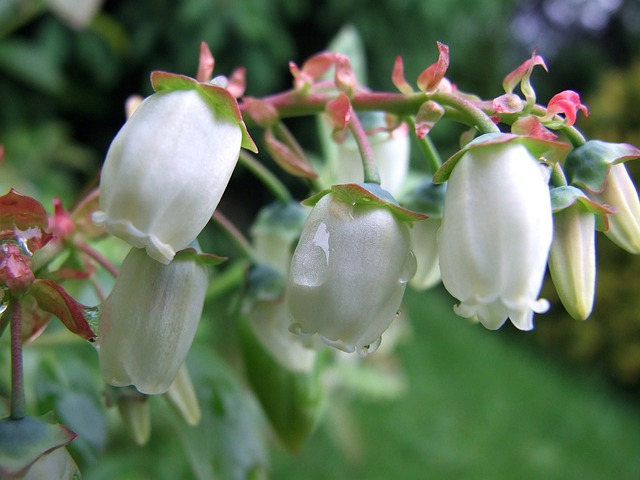
White, bell-shaped blueberry blossoms.

To break a hex, jinx, or run of bad luck, burn dried blue- or bilberry leaves. Use the smoke to fumigate the same way you’d use incense smoke.

Blueberry and bilberry don’t appear to be reversing herbs. That is, they don’t return treachery or malevolent magic to the sender. They just keep it from affecting you.

Since bil- and blueberry seems to predominantly be a protective herb, I would hesitate to use it solely for drawing luck. It appears that it’s virtue in luck drawing lies in its ability to get rid of jinxes and other things that hold you back. For luck spells, then, I’d pair blueberry or bilberry leaves with an ingredient used more specifically for attracting good luck. The berry leaves can clean up the things standing the way of your luck, and the other ingredients can draw it in. Allspice, chamomile, and fenugreek are all good options to consider here.

Interestingly, strawberries are sometimes used in small amounts for luck drawing. You could then theoretically make a jam, smoothie, or pie with both blueberries and strawberries, and, when appropriately made and empowered, use it to attract good luck to you.

It remains to be seen how my poor transplanted blueberries do, but the newer ones seem to be thriving. When the time is right, I’ll harvest the fruits and some of the leaves, and hopefully have enough protection and hex-breaking to last me all year!