Plants and Herbs

Mustard Folklore and Magical Uses

I swear, mustard is immortal. At least, the kind I scattered in one of my raised beds is.

I had a packet of giant red mustard seeds that were initially intended for microgreens. When I cleared out a neglected spot in the front yard and turned it into a slightly raised bed, I didn’t really have anything to plant in it. So, I chucked a handful of the mustard seeds in there figuring that, at worst, I’d get some sprouts that would die back and essentially act as “green manure.” At best, I’d get some tasty mustard greens.

This was two summers ago. I have not sown mustard since. I am still harvesting tons of huge, fresh mustard leaves.

A close-up of red mustard leaves.
Photo by Alfo Medeiros on Pexels.com

Right before sitting down to write this, I went out to grab some leaves to use on sandwiches and as salad for my bearded dragon, Cecil. (His salads use collards, turnip tops, kale, or mustard as a base, with various other vegetables, limited fruits, a dusting of calcium and/or vitamin powder, and a sprinkle of dried black soldier fly larvae. I swear, I put more effort into his nutrition than I do my own.) That got me thinking — I’m familiar with the spell uses of mustard, and I’ve heard the bit of Christian folklore about “having faith as small as a mustard seed” before, but what else is out there? What more does mustard have to offer?

Mustard, as a condiment, is old. Very old. In ancient Rome, people would grind mustard seeds with wine and use the resulting paste just like we use mustard today.

A close-up of mustard seeds.
Photo by Eva Bronzini on Pexels.com

(Believe it or not, the easiest way to temper the heat of mustard is to change the liquid component. Mustard seeds, on their own, don’t really taste like much when compared to mustard as a condiment. They need to be crushed and mixed with a liquid to really express their full flavor. Using water to make a mustard paste creates a very hot mustard. Acids, like wine or vinegar, temper the heat by altering the enzymatic reactions within the crushed mustard.)

Mustard is a member of the Brassica family. That means that it’s related to broccoli, kale, cabbage, turnip, Brussels sprouts, cauliflower, and kohlrabi.

In traditional Chinese medicine, mustard is used for respiratory problems, skin conditions, and pain in the joints or muscles. Mustard is actually pretty useful for muscle or joint pain, as it’s a counterirritant that encourages blood flow to an area — similarly to the way that we use capsaicin cream today.

In early Western medicine, mustard seeds were crushed, placed in a protective dressing (usually flannel), and applied to the body to warm it, improve blood flow, and speed healing. This was most commonly used for issues like joint pain, muscle strains, and chest congestion. While it has since become less popular than standardized preparations of compounds like capsaicin or menthol, it is still sometimes used as a home remedy for aches, pains, or colds.

A bit of German folklore advises that new brides should sew mustard seeds into the hems of their wedding gowns. This helps ensure that they don’t get bossed around in their new households. It also helps ensure good luck.

Mustard is, like many hot or irritating spices, used to repel things. In both Denmark and India, scattering mustard seeds around the outside of a property was believed to keep evil away.

This is something we see time and time again — the vast majority of evil-repelling plants that I’ve encountered are also good at repelling physical pests, as well. Mustard is no exception. The leaves have a spicy, subtly bitter flavor that makes them pretty unpalatable for a lot of pests. (I got to see this in action when I was cleaning cabbage loopers off of my kale and broccoli. The mustard was untouched.)

In general, mustard is considered a useful magical herb for any workings that deal with healing, repelling evil, or attracting good luck.

Mustard is associated, probably unsurprisingly, with the element of Fire.

Looking at its historical uses, mustard is one of those interesting herbs that can be a bit misleading. There are a lot of charts and tables out there that’ll tell you basic information — for luck, use x, y, or z. For love, use a, b, or c — but don’t go any further than that.

Here’s the thing: Mustard acts, in all ways, as a repellent. Medicinally, it inflames tissues, bringing in more blood flow to flush out whatever the problem is. Horticulturally, the heat and flavor in the leaves repel insects and sensitive herbivores. In folk magic, it repels evil.

While mustard is an effective herb for attracting good things, this appears to be because, traditionally, it chases away the bad. Once evil is repelled, good fortune and healing can come in.

For this reason, I don’t really recommend using mustard on its own. If you really want to dial in a working for good luck or healing, combine it with herbs that focus on those things. Mustard will help clear away the bad, and they will help bring in the good.

Since mustard is typically available as seeds, it’s also a useful tool for sympathetic magic. To increase one’s luck, combine fresh, untreated mustard seeds with luck-drawing herbs like alfalfa (another herb that’s generally better to not use alone), fenugreek, dried chamomile, or crushed allspice berries. Scatter the mixture outside declaring that your luck will grow as the mustard seeds grow.

On the other hand, if your goal is to purify or banish, then mustard is fine on its own. Scatter the seeds outside, across the area in front of your front and back doors, etc. Sprinkle bits of ground mustard powder in the corners of your rooms and under your door mat. Tell the seeds that you want them to repel evil, and thank them for their help.

Mustard is a delightful, delicious, and nutrient-dense addition to any meal. It also packs quite a metaphysical wallop — while its hot and bitter compounds are great at keeping garden pests away, it’s equally good at repelling evil. It’s a very useful addition to spells to attract good things, as it’ll help keep away the bad and make room for more blessings in your life.


Plants and Herbs

Wintergreen Folklore and Magical Uses

Winter’s rapidly coming to an end — we still have a day or so of snow and cold temperatures here and there, but there are signs of the plants and soil waking up all over. On one particularly nice day, I was sipping a root beer on the back deck when a memory came to me out of the blue.

Two glasses of soda, with ice and straws.
Photo by PhotoMIX Company on Pexels.com

“I could never stand that stuff,” a friend of mine once said.

“What, root beer? It’s like the most basic beverage of no offense to anyone.”

“It tastes like mouthwash,” he replied.

“… You’ve got to be kidding me.”

He wasn’t exactly wrong, though. Some of your fancier, gourmet root beers do contain derivatives of wintergreen, perhaps best known for playing a starring role in chewing gum, breath mints, those white Lifesavers candies, and yes, toothpaste and mouthwash. Even the artificially flavored ones have echoes of this flavor.

Wintergreen is a fun ingredient. It has a ton of uses industrially, medicinally, magically, and in food. It also has one of those names that can get you in a bit of trouble if you’re not careful.

(and a bunch of chemistry stuff)

There are a lot of plants named “wintergreen.” Members of the genus Gaultheria are native to Asia, Australasia, and the Americas. Pyrola is distributed temperate and arctic North America, Europe, and Asia. Chimaphila used to be a whole separate thing, but is now in the same family as the other wintergreens. (Don’t get me started on one-flowered wintergreen.) All of these genera fall under the family Ericaceae. Some members of Lysimachia are sometimes called “wintergreen” even though they’re all pimpernels and loosestrifes (loosestrives?) and aren’t related at all. As if that weren’t confusing enough, the term “wintergreen” also used to be applied to any plant that remained green through the winter, the way we now use the word “evergreen.”

While there are a ton of different wintergreens out there, the classic oil of wintergreen flavor is primarily either derived from Gaultheria wintergreens or synthesized.

A bit of modern folklore says that, if you bite a wintergreen candy in the dark, it’ll spark. Wintergreen candies can create sparks under the right conditions. This is due to triboluminescence, which occurs when energy is put into atoms by friction, heat, et cetera. When those atoms return to their normal state, that energy is released as a brief spark. Chomping on regular old sucrose is enough to generate a little triboluminescence, but the brightness of wintergreen candy sparks comes from a neat synergy between the sugar and the wintergreen oil. The oil’s most notable aromatic compound, methyl salicylate, is fluorescent. When the sugar grinds against itself when you bite it, it emits a bit of dim triboluminescence that’s mostly outside of the visible spectrum. The fluorescent methyl salicylate absorbs this energy and releases it as much more visible blue light. Put it all together and voilà, sparks!

Red wintergreen berries and green leaves.
Photo by Mike Serfas.

Speaking of methyl salicylate, you might recognize the “salicyl” in there. (Methyl salicylate is an ester of salicylic acid — in fact, artificial wintergreen flavor is synthesized from straight-up salicylic acid and methanol.)

Traditionally, Indigenous people prepared the leaves as a tea to ease symptoms of rheumatism and other joint pains. In the body, methyl salicylate gets metabolized into salicylic acid, the same pain reliever derived from white willow bark (Salix alba). However, wintergreen oil is pretty potent stuff. A single teaspoon of it is about equivalent to 20 300mg aspirin tablets!

Another member of the Ericaceae family, Chimaphila maculata, is known as “spotted pipsissewa.” This is derived from the word pipsisikweu, meaning “breaks into small pieces,” since it was traditionally used to treat gall, kidney, and bladder stones.

Though the oil is highly potent, teaberry is edible. The berries can be made into pies, and the leaves eaten as a potherb.

Because of its evergreen properties, wintergreen is used for money drawing. In Hoodoo formulas, for example, it often finds its way into gambler’s incense. Nothing like an herb that stays green to help keep you rolling in green, right?

In other traditions, this herb is used for clarity, focus, and healing. It is sometimes included in anointing oils for meditation, in the belief that it’ll help the user focus and heighten the meditative experience.

Carrying a sprig of wintergreen is said to keep evil away and attract luck to the bearer. It’s often used as an herb for general protection. (Oil of wintergreen is also an ingredient in some lubricants used for weapons, for entirely unrelated reasons.)

Wintergreen is sometimes used as a love-drawing ingredient, though I haven’t often seen it included in recipes for this purpose. It makes sense, though, considering the ways it’s used to attract other good things.

Wintergreen is associated with Saturn (as a protective herb) and the Moon (as a healing and love-drawing herb). It’s also connected to the astrological sign Capricorn.

Man, I really wish I had more to point to here.

The thing is, I’m one of those people who’re unfortunate enough to be “salicylate sensitive.” It doesn’t take all that much for me to experience salicylate poisoning. (Pepto Bismol made me deaf for a week, with the exception of a constant, maddening, high-pitched whine.)

Sure, other herbs contain various salicylate-related compounds. I mean, even rosemary is pretty high in them. Wintergreen oil has a bit of a reputation, however, and it isn’t entirely undeserved. So even anointing with an oil containing wintergreen is A Lot for me.

(Just gonna pause here to let everyone get all the “wintergreen repels evil” jokes out of the way. Aaand… okay.)

This is by no means to scare you away from this herb — far from it. It has a long history of use as medicine because it has an effect on the body. For some, that’s relieving pain. For people like me, it’s less pleasant.

As a result, I don’t really work with wintergreen much myself. When I do, it’s usually through consuming food or beverages flavored with it, rather than using the oil or herb directly. I essentially treat them as pre-made potions, which I empower and enchant for whatever I need them to do. Usually that’s using a cold herbal root beer to ease a headache or a sour stomach.

Wintergreens are also wonderful plants to grow. Under the right conditions, they can even replace non-native lawn grasses. They’re low-growing understory plants and an abundant source of food for wildlife. Growing them near your home can help repel bad energy, attract good energy, reduce the environmental and monetary burdens of pesticides, chemical fertilizers, and extra irrigation, and bring you many small bird friends.

Should you use wintergreen? If you’re not allergic or sensitive to it or any of its components, then there’s no reason to avoid this beautiful, versatile herb. Treat it responsibly and respectfully, and keep wintergreen preparations well out of the way of pets and children.

Plants and Herbs · Witchcraft

Pea Folklore and Magical Uses

As I mentioned in my tiny plant haul, I recently picked up some packets of snap peas. I was never really a fan of peas growing up — mostly because the ones I was exposed to were the mushy, grayish kind from a can. Few things can beat a fresh, sweet peapod off of the vine, though, and they’re legitimately fun to grow!

Three pea pods, split to reveal the peas inside.
Photo by R Khalil on Pexels.com

Soon, it’ll be time to start peas from seed in my growing zone. Since I’m kind of champing at the bit to get them started, I figured this would be a good time to look into all of their folklore, symbolism, and magical correspondences.

Sweet peas and rosary peas aren’t that closely related to garden peas, or even sugar snap peas. Sweet peas (Lathyrus odoratus) are grown for their flowers and have toxic seeds. Rosary peas (Abrus precatorius), as their name implies, are grown for beads and are fatal if ingested — if it’s thoroughly chewed, a single rosary pea is enough to kill an adult human. Garden, snow, and sugar snap peas are different cultivars of Pisum sativum, and are grown for their edible shoots, pods, and seeds. L. odoratus, A. precatorius, and P. sativum are members of the family Fabaceae, but so are plants like lupine, Scotch broom, and logwood trees. For this reason, it’s important to draw a distinction between folklore and magical uses of edible peas, versus sweet pea or rosary pea.

A pair of pink sweet pea flowers.
Sweet peas in bloom. These are grown for their beauty and fragrance, and are definitely not edible. Photo by Magda Ehlers on Pexels.com

Peas are an incredibly old food source grown around the world. While garden peas (Pisum sativum) are thought to have originated around Pisa, in Italy, they’ve also been found in Egyptian tombs, and the earliest evidence of them dates back to the Neolithic era, in what is now Greece, Jordan, Turkey, and Syria. They are considered to be one of the first food crops domesticated by humans.

According to British lore, pods containing nine peas are considered lucky.

Peas were used to cure warts through sympathetic magic. This is a very common old wart-removal method — you touch or rub the wart with an object, then burn, throw away, or bury said object. As it decays, the wart shrinks. In this case, the afflicted person would touch a wart with a pea, wrap the pea in a bit of paper, then bury it in the ground. When the pea broke down, so too would the wart.

Peas are a cool-weather crop, and don’t do very well in heat. One old rhyme about the planting of peas and beans says, “Be it weal or be it woe, Beans should blow before May go.”

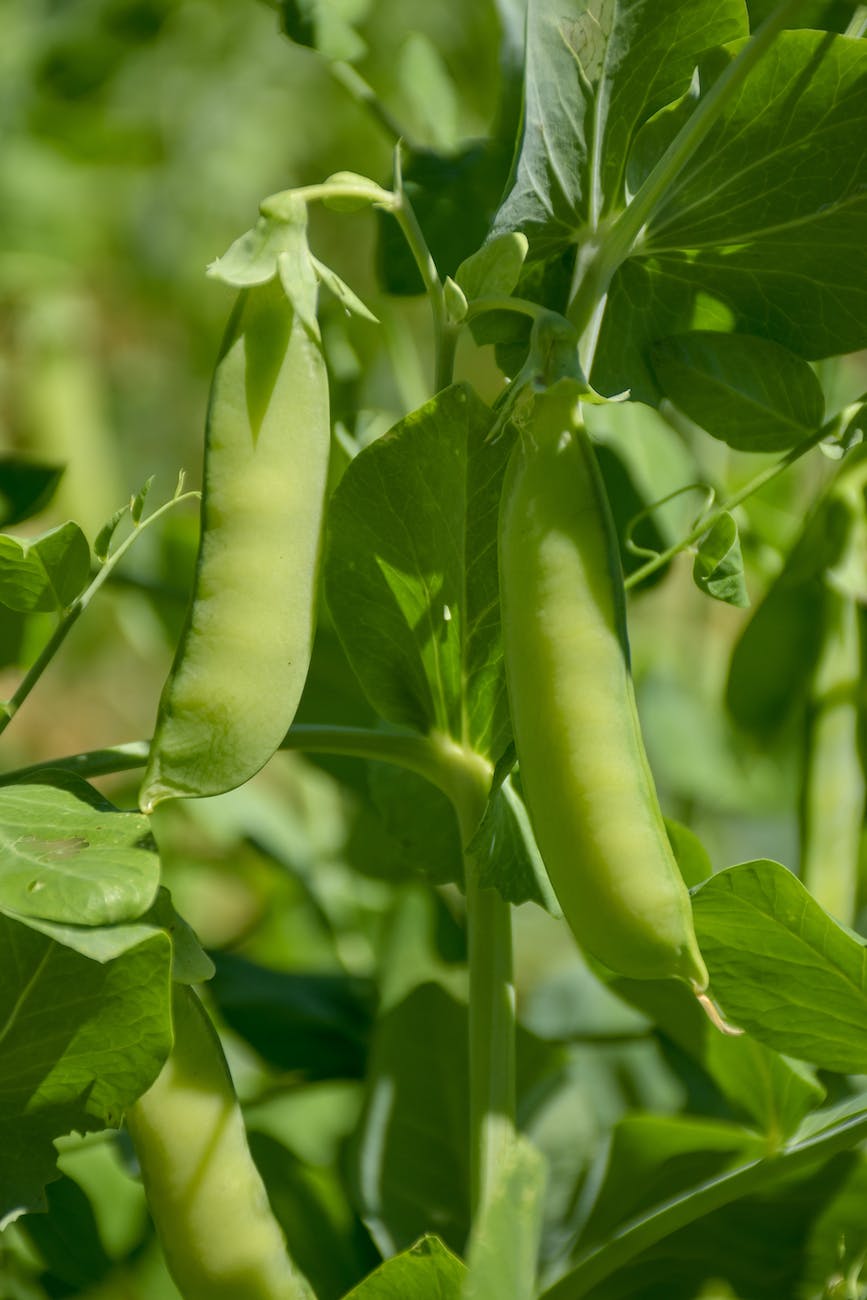
Pea pods growing on the vine.
Photo by Gilmer Diaz Estela on Pexels.com

Green peas are used in formulas for health or money. Yellow peas, on the other hand, are best for luck. In some cultures, carrying a dried pea in your purse or pocket is said to attract good luck.

Dried peas are also used for divination. They’re shaken up and cast, similarly to the way you might cast bones or runes. You then read the patterns that they form.

As a common food crop, using peas is pretty easy — especially if you like kitchen witchery. Cook and eat peas to bring in more wealth, health, and luck.

Dried peas can be added to sachets or bowls to attract money. Combine them with dried herbs like chamomile, basil, cinnamon, patchouli, and cinquefoil. Add this to a bowl containing a few pieces of citrine and/or pyrite, and some coins. Keep the bowl clean and free of dust, and periodically refresh it with new herbs and more coins. Never remove the coins from the bowl.

If you have a difficult decision to make, take one seed pea for each of your options. Plant them, carefully marking which pea corresponds to each option. Keep an eye on them as they sprout — their growth and vigor can provide guidance on what to do.

Peas are a useful magical ingredient that’s easy to grow yourself, even if all you have is a tiny space and a pot. They’ve got fiber and protein, are associated with luck, money, and healing, and keep well once dried. All told, no matter whether you’re into kitchen witchery or not, these little guys are a very useful addition to your store of magical ingredients.

Neodruidry · Plants and Herbs · Witchcraft

Chickweed Folklore and Magical Uses

Recently, we had a tiny burst of warm weather (by which I mean an extremely unseasonable 76° F/24° C). It was nice! Also very concerning, but nice!

This little bit of heat seems to have kicked the yard into overdrive — while the bigger plants haven’t started leafing out yet, we’ve had a lot of spring ephemerals suddenly make an appearance. Following the grassassination, most of our ground covers are various types of chickweed and violet while the moss phlox and other guys establish themselves. Right now, we’ve got lesser chickweed (Stellaria apetala) and regular chickweed (Stellaria media).

Some plucked sprigs of Stellaria media.
Photo of Stellaria media by kokokara on Pexels.com. If you look closely, you can see the row of tiny white hairs.

While neither of these species are native (lesser chickweed is European, while regular chickweed hails from Eurasia), they’re still a valuable herb in early spring. They’re full of minerals and vitamin C, and one of the first edible springtime greens to appear. It isn’t a good idea to eat a ton of them — not raw, anyway — but they provide nutrients that are often in short supply for winter foragers.

So, with that in mind, I figured I’d take a look at the various folklore and magical uses for these humble little groundcover plants.

Chickweed has a few poisonous lookalikes, but is also pretty easy to identify. Two of its unique characteristics are the presents of a row of white hairs (like a cock’s comb) and a firm, green stem-inside-a-stem. Pull a chickweed’s stem apart, and you’ll uncover a green “chicken bone!”

When I say that chickweed is high in vitamin C, I really mean it — sailors used chickweed steeped in vinegar to prevent scurvy during times when citrus fruits weren’t available.

Chickweed is associated with love and fidelity. This idea may stem (no pun intended) from its growth habit. Chickweed grows in groups, with spreading tendrils reaching out from the center. It’s a powerful visual metaphor for the importance of community, as each chickweed stem grows out from this connected center in order to reach its full potential.

This plant is also very tenacious. It’s hard to get rid of, and often springs right back up after being cut or pulled out. While chickweed favors moist soil with a good pH and abundant nutrients, you can also find it growing in cracks in sidewalks. This makes it useful for situations that you want to exhibit this same resilience — for example, a long-term relationship.

Some green magic practitioners also associate this plant with abundance. It produces a lot of very long-lived seeds, which connect it to fertility and prosperity.

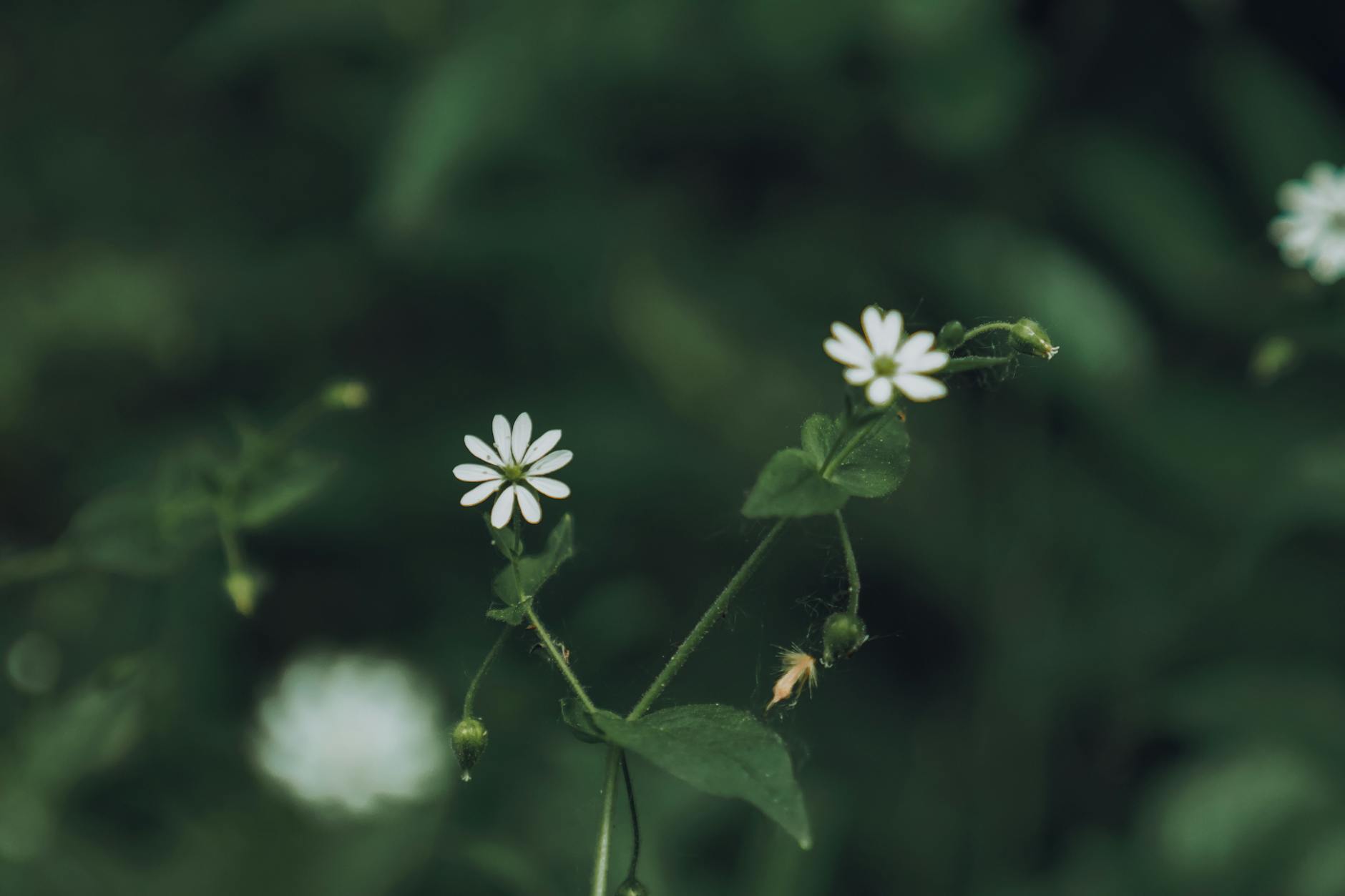
Tiny white chickweed flowers.
Photo by Imad Clicks on Pexels.com

The name “chickweed” comes from chicken and weed. Since these plants are pretty nutrient-dense and come up in early spring, they’re eagerly fed on by poultry and are particularly good for growing chicks.

Chickweed is very easy to find. Look for moist (but not soggy) soil, in early spring, just about anywhere and you can probably pick some. It’s stubborn, it’s prolific, and it’s not super fussy. Use a good plant identification app and research chickweed’s poisonous lookalikes, or, even better, go with a seasoned forager who can show you what to look for.

Once you have your chickweed, you can use it fresh or dried. Dried, it mixes well with jasmine, rose petals, lavender, and other love-drawing ingredients. Blend these dried herbs together with equal parts Epsom and sea salts, add a few drops of patchouli and rose oil, and use the resulting mixture for a love-drawing bath.

To attract a partner, wear a sprig of chickweed. These unassuming greens can be easily tucked into a boutonniere, vase necklace, flower crown, hairclip, or fascinator without too much trouble. As with the bath salt recipe above, combine them with other love-drawing plants for best effect.

To ensure the fidelity of a partner, it’s said that you should feed them chickweed. (If you do this, you should probably ensure that you have their consent, and that you’ve properly identified your chickweed or purchased it from a reputable source. Otherwise, you’re going to end up with an angry and/or poisoned partner.) Caraway seeds are used in a similar fashion.

If you have access to a yard, or even just an open field, you most likely have access to chickweed. This plant is subtle, but powerful. Whether you choose to use it as food, medicine, or a magical ingredient, this tenacious little herb can be a great friend to make.

Neodruidry · Plants and Herbs · Uncategorized

Cedar Tree Folklore & Magical Properties

I’m not a fan of fake greenery. While it can definitely amp up a room’s decor when it’s judiciously combined with real plants, I always end up forgetting to maintain it until it’s faded, dusty, and doing the exact opposite of helping things look fresh and natural. Blegh.

Anyway, when it comes to decorating for Yule, my Handsome Assistant and I go for fresh greens. There’s a florist nearby who sells trimmed branches of various evergreens pretty cheaply. Combine a few of them with some wired ribbon, and you can make a very pretty swag or garland without spending much money at all.

A close up of fanlike American cedar branches.
Photo by Abdul Zreika on Pexels.com

This year, we picked up the cutest little potted Alberta spruce tree. We’re keeping it indoors until spring, at which point I’m going to repot it and set it outdoors. Next winter, it’ll probably still be small enough to fit in the living room and be next Yule’s tree, too. Once it’s outgrown its pot, we’ll plant it in the front yard.

We also picked up some trimmed branches from an incense cedar tree (Calocedrus decurrens), which I used to decorate table tops and the top of our curiosity cabinet.

Since we’ve been taking down our Yule decorations and cleaning up the shed bits of greenery, I thought now might be a good time to look into the folk tales and magical associations of cedar trees.

First things first: “Cedar” isn’t a very exact term. True cedars are chiefly found in the Mediterranean, but there are also quite a few unrelated American species referred to as “cedar.” True cedars have needles, while American species have flat leaves, like scales, that form delicate fernlike or fingerlike structures (as seen in the photo above). There are only four species of “true” cedar: cedar of Lebanon (Cedrus libani), Atlas cedar (C. atlantica), Cyprus cedar (C. brevifolia), and deodar cedar (C. deodara). American cedar species are actually members of the cypress family, Cupressaceae!

The needles of an Atlas cedar, one of the "true cedars."
Photo by Feyza Dau015ftan on Pexels.com, showing the needles of a “true cedar.”

American cedars are culturally significant to the people indigenous to the trees’ native ranges. Indigenous people used (and continue to use) cedar as a sacred incense and purifying herb. Cedar trunks were used to make boats, the branches were used to filter sand from water and when leaching acorns for acorn flour, and the fibrous roots are still used to make beautiful baskets.

Cedar smoke was also used to prevent illness, which mirrors the old Scottish practice of fumigating one’s home with juniper for the same purpose. This is particularly interesting since the eastern red cedar, Juniperus virginiana, is actually a juniper. Junipers are also members of the cypress family, like other American cedars are.

Many Salish groups had special rituals for the felling of cedar trees. These trees are considered symbols of providence, abundance, and generosity.

A Mi’kmaq tale warns you to be careful what you wish for. A man went to the legendary Glooskap and asked if it was true that Glooskap gave people whatever they asked him for. Glooskap demurred, saying that he couldn’t always answer people’s requests, but he helped however he could. The man asked Glooskap for immortality, but he refused — all things must die. Once everything has died, even Death would probably die. Disappointed, the man asked to live longer than any man has ever lived. In return, Glooskap turned the man into a tall cedar tree.

A Potawatomi tale tells of a group of men who visited the Sun to ask for help. One desired to see the future, two desired immortality, another desired a blessing associated with water, and yet another had gone along just to help the others. The man who wished to see the future was set down in the west, where the Sun goes to end the day. One of the men who wanted to be immortal became a boulder. The man who wanted a water blessing became a half-man, half-fish. The other man who wished for immortality became a cedar tree. This is how people received the stones and cedar used in sweat lodge ceremonies.

In Judeo-Christian stories, cedar represents protection and strength. Its wood was used to build Solomon’s temple. According to Medieval Christian tradition, the cross used during the crucifixion was made of cedar. For this reason, it was considered bad luck to burn cedar wood. Planting a cedar in your yard was also believed to bring misfortune and poverty, but a cedar growing naturally was considered fortunate.

In Irish folklore, cedars were associated with strength and durability. Their wood is extremely rot-resistant, and the trees live for a very long time.

Like a lot of other magical ingredients used for protection and banishing, all types of cedar repel pests. The aromatic compounds in their essential oils are a deterrent for moths and all kinds of biting insects. All around the world, there’s a very strong connection between “plants that keep bugs out” and “plants that keep evil away.”

Depending on your needs, you may or may not be able to substitute juniper-family cedars for “true” cedars. There is quite a bit of overlap, however — no matter which species you’re working with, these trees are connected to purification, protection, longevity, and strength.

Since we’re talking about some very distinct groups of trees that use the same common name, I won’t go into cedar’s medicinal properties here. This underlines the importance of using standardized nomenclature — each of these species has its own bouquet of medicinal compounds (and some potentially dangerous ones, like thujone), so it’s important to know exactly what you’re using. Never go by a plant’s common name when you’re looking for medicinal ingredients, because there’s a ton of common name overlap between completely unrelated species.

The most important thing to recognize when working with cedar is that this is a plant that should be respected. The famous cedars of Lebanon (Cedrus libani) were highly regarded — the oldest among them were considered sacred, and anyone who harmed them would be overtaken by misfortune. In the Potawatomi tale above, the man who became a cedar says that one should “call the cedar tree your nephew when you speak of it.” Folklore all around the world warns against cutting down a cedar without performing the proper ceremonies.

With that in mind, there are multiple ways to work with cedar. Cedar essential oil is frequently used in magical aromatherapy (though a little bit goes a very long way). Cedar twigs can be burned as incense and used in smoke cleaning. Since the wood and needles are so strongly aromatic, you can also infuse them in oil.

Dried conifers are easy to crumble, so they’re an easy ingredient to include in magical powders or incenses. Grind dried cedar leaves fine and sprinkle the powder in the corner of your rooms or around the border of your property while asking for protection against malevolent forces.

If you or anyone in your household has been sick. use cedar smoke to drive the illness out. Give the sickroom (in modern homes, the sick person’s bedroom and bathroom) a thorough physical cleaning, air it out well, and fumigate it with cedar smoke.

Right now, I have some dried cedar branches waiting to be used. These didn’t require a tree to be felled — instead, they’re trimmings. My plan right now is to grind the leaves fine, mix them with a binder, and form them into incense cones. The branches have blessed and protected my home when they were fresh, and they can continue to do so once they’re processed into incense.

I love the warm, earthy, spicy smell of cedar. In my tradition, it’s connected to the sun and the element of Fire. During these dark, cold months, inviting the power of cedar into your home can bring some much-needed heat, light, cleanliness, and protection.

life

Which trichotillomania remedies actually work? (Or, Hair: A Retrospective)

If you’ve followed me on Instagram, you probably know that I’ve had a shaved head for years at this point. A few months back, I decided to experiment with letting some of my hair regrow. This was mainly a test to see how much of my particular case of trichotillomania is an ingrained habit, versus a deeper issue. Half of my head is currently almost shoulder-length, while the other half is still shaved.

Recently, this all got me thinking — out of all of the things I’ve tried to beat this, which ones actually seemed to help? Trichotillomania is commonly regarded as a kind of obsessive-compulsive disorder. Believe it or not, pulling out the “right” hairs (usually ones that are of a different texture than the others) can give a dopamine rush, while failing to do so can cause feelings of anxiety and an intense compulsion to find and pull the offending hair. It’s not the kind of thing you can sort out just by switching shampoos.

Photo by Luis Quintero on Pexels.com

With that said, here are the things I tried… and how well they measured up against my apparent desire to destroy my own head:

These might work for some, but they didn’t really do it for me. The problem here is that the feeling of needing to pluck my hair doesn’t really feel like it originates in my hands, so keeping them busy doesn’t get rid of the tickle in my scalp or the feeling that there’s a weird hair I need to get rid of.

A lot of the objects geared toward people with trichotillomania also aren’t refillable. You could end up going through multiple vinyl plucking toys per week, and what do you do with all of them afterward?

Fidget objects that mimic hair pulling or skin picking are also somewhat controversial. For some people, they can help redirect the behavior to an object. For others, they may just reinforce the undesirable picking/plucking.

Ugh, no.

My thought was that, since the desire to pluck starts as a subtle tickling sensation on my scalp, which progresses to me finding a hair that’s grown in with an odd texture, smoothing products would help. This was not the case. In fact, they either didn’t make any difference at all, or made my hair feel oilier and itchier. No. No, thank you.

Like the tea tree oil shampoos and conditioners, these helped for brief periods. The oils I used were chiefly rosemary and cedar, both credited with helping to regrow hair and improve hair and scalp health in general. They smelled nice. They felt nice. They made my scalp feel better, but they didn’t last very long.

These things look a bit like metal spiders with a wooden handle. You hold the handle and use the spidery bit to massage your scalp. They feel nice, they help temporarily increase blood flow to that area, but they don’t really get rid of the urge to pull.

Photo by Karolina Grabowska on Pexels.com

These are often either witch hazel based, or castor oil based. You find castor oil in formulas to moisturize the scalp and promote hair growth and witch hazel in ones for scalp health. Like other topical treatments mentioned here, these serums seemed to fall into one of two camps. They either 1) felt soothing for a couple of minutes, or 2) just made me feel stickier/greasier and itchier. The cooling sensation of some non-oil-based serums did seem to make a difference, but they needed to be reapplied frequently. The oil-based serums did seem to help regrow hair, but they were also a lot heavier. but weren’t soothing.

Like a parent trying to keep a kid with chicken pox from scratching, I tried sticking gloves on my hands. “Maybe,” I thought, “if I just make my hands worse at pulling my hair, I’ll eventually stop.”

The trouble is that the things that it harder to pull at my hair also made it harder to do absolutely everything else. There was zero incentive to keep gloves on, and very easy to forget them somewhere after cooking, washing up, etc. While this solution might work for kids, or people who don’t need to perform a lot of hands-on tasks, it didn’t for me.

People have used self-hypnosis to help with all kinds of addictions and bad habits in the past, so why not this? I mean, I have a vivid memory of being a tiny child, sitting on the couch while my mother watched a self-hypnosis video to quit smoking. (It didn’t work and I felt like I was in a Twilight Zone episode, but I still figured this was worth a shot.)

It didn’t work, and I felt like I was in a Twilight Zone episode. Other people have used self-hypnosis with success, but it definitely fell short for me here.

OCD is connected to anxiety, so anxiety medication is sometimes used to help relieve the negative feelings connected to the obsessive-compulsive behavior. Unfortunately, trichotillomania is notoriously difficult to medicate. While anxiety medication did help tremendously when it came to controlling my panic disorder, it didn’t really do much for the hair pulling.

I’ve written before about how CBT was less than helpful for me. In this case, it failed at lessening my trichotillomania because it relies on reasoning. You can’t reason yourself out of something you didn’t reason yourself into.

While it might help some people deal with feelings of anxiety and shame surrounding the behavior or the effect that it has on their appearance, it didn’t seem to touch the root cause of trichotillomania itself.

Photo by Polina Tankilevitch on Pexels.com

What if the weird hairs and tickly feeling of needing to pull were the symptoms of some kind of weird deficiency? What if I just wasn’t growing healthy hair, and my scalp was irritated because of it? What if I just straight-up ran out of other things to try?

So, I tested out multiple brands of “hair vitamin.” These are multivitamin and mineral supplements that focus primarily on hair and skin health. If you aren’t experiencing a deficiency in any of the vitamins and minerals in them, however, they’re primarily a fast way to give yourself nausea and neon yellow urine. They did not, unfortunately, help suppress the urge to pick at my hair.

A photo of me, sitting in front of a tree. My head is completely shaved.

It takes a while to break a habit. I figured that, if I couldn’t suppress the desire to pull, I could get rid of my hair. Without weird hairs to pull out and reinforce the behavior (and addiction dynamic), maybe my brain could sort itself out.

I kept my hair buzzed for a few years. The trouble is, as soon as it’d start to grow back to a pluckable length, I was right back to hunting for weird hairs to yank out.

However, keeping my hair short and unpluckable did give my scalp a chance to recover, and that’s important.

Since shaving it completely and letting it grow back didn’t work the way I wanted to, I hit upon another potential solution: What if I just shaved the areas that I plucked the most? I wouldn’t have to commit to a full buzzcut if I didn’t want to, but I still wouldn’t be able to pull at the areas that I used the most.

Lo and behold, this finally seemed to work. Right now, I’ve got hair down to my shoulder on one side, and a full shave on the other. I make it work.

This might not be a great option for people who chiefly pluck from the crowns of their heads, but can definitely be a useful tool for those who pluck from the sides or bottom. For me, it’s been working very well.

Trichotillomania sucks, to be blunt. It’s hard to treat and can be a source of deep shame (particularly for women from cultures who highly value hair). It’s also not good for you, since it can damage your scalp and eventually cause your hair to stop growing back. There are a lot of options out there to help with the symptoms, but almost no effective permanent solutions. This is what worked and didn’t work for me, but you may find that your results are different. The important thing to remember here is that your hair doesn’t determine your worth as a person — whatever helps you live without anxiety, shame, and physical pain is worth pursuing, even if it isn’t a perfect solution to trichotillomania.

Neodruidry · Witchcraft

Traditional Healing Chants (also my blender tried to kill me)

Hello! I haven’t been around for like two weeks. Originally, I did plan to take a couple of days off for Yule, however one of my household’s Yuletide gifts was a hugely upgraded blender.

(To be fair, our bar for a blender upgrade was not high. The one we were using before cost, I think, six dollars at a thrift store. We used that thing until it flat out refused to be used anymore.)

Anyhow, long story short, fancy blenders do not always fit together the way that I assumed they would. They’re also way sharper than my old one. Yadda yadda yadda, the middle felt out, hit the side of my hand on the way down, and it took so many Steri-Strips to put everything back together. I’m talking a solid half-inch thick flap of hand meat. Enough blood for an axe murder. Half a box of strips. Most of a tube of some kind of fish glue that I’m told is supposed to seal cuts closed.

A large, flamey explosion. The remains of some kind of structure can be seen silhouetted in the flames.
A reenactment.

Anyhow, typing was problematic, so I took a little bit longer. I don’t generally keep a big bank of posts to drop automatically, hence there being no content for a little bit. C’est la guerre.

This seemed like a good time to talk about healing chants. I find these really interesting — they’re not quite sympathetic magic, since they’re just spoken words, but they do remind me a lot of certain forms of weather magic. In those, you pretty much go outside, pour water on the ground, and tell the sky to get its act together because it’s not like raining is difficult. Healing chants are essentially an instruction, telling bones to knit together, wounds to close, and blood to clot.

You can see this in the following healing chant, excerpted from Joanna van der Hoeven‘s The Book of Hedge Druidry (Spell for healing, page 274-275):

Bone to bone,

Flesh to flesh,

Sinew to sinew,

Vein to vein;

As Brighid healed that

May I heal this

This is far from a modern invention. The second Merseburg charm goes as follows:

Phol ende uuodan
uuorun zi holza.
du uuart demo balderes uolon
sin uuoz birenkit.
thu biguol en sinthgunt,
sunna era suister;
thu biguol en friia,
uolla era suister;
thu biguol en uuodan,
so he uuola conda:
sose benrenki,
sose bluotrenki,
sose lidirenki:
ben zi bena,
bluot zi bluoda,
lid zi geliden,
sose gelimida sin

“[B]en zi bena, bluot zi bluoda, lid zi geliden, sose gelimida sin” translates to “Bone to bone, blood to blood, joints to joints, so may they be glued.”

Similar healing spells are used to cast out “worms” (which may be literal parasites or maggots, or a way of conceptualizing infection in general). These use a similar “flesh to flesh, bone to bone, blood to blood” formula as the chants above, with the added step of sending the infection or infestation into an object — perhaps back into the object from which the wound and infection originated.

Interestingly, these chants are often called “horse charms.” Even the Merseburg charm above relates a story of how Uuodan (Odin), Sinthgunt, and Friia (Frigg) healed Phol’s (Balder’s) horse’s sprained foot. Of the surviving examples of these chants and charms, a disproportionate number of them seem to be for healing leg and hoof ailments in horses and sheep. (Charms for fixing blender accidents are conspicuously absent.)

This photo shows a crouched figure holding a horse hoof in one hand. It shows the relative tininess of the hoof and slenderness of the leg.
Four of these have to support an animal between 900 to 1400 pounds. It is not super surprising that there are a lot of charms for fixing horse problems. Even wild horses aren’t immune to issues — the life expectancy of a wild horse is, on the high end, about half that of a domestic one.

This form of charm isn’t exclusive to Europe, either. The Wikipedia article above cites an example from the Atharvaveda, hymn IV, that follows a similar construction:

 róhaṇy asi róhany asthṇaç chinnásya róhaṇî
róháye ‘dám arundhati
yát te rishṭáṃ yát te dyuttám ásti péshṭraṃ te âtmáni
dhâtấ tád bhadráyâ púnaḥ sáṃ dadhat párushâ páruḥ
sáṃ te majjấ majjñấ bhavatu sámu te párushâ páruḥ
sáṃ te mâmsásya vísrastaṃ sáṃ ásthy ápi rohatu
majjấ majjñấ sáṃ dhîyatâṃ cármaṇâ cárma rohatu
ásṛk te ásthi rohatu ṃâṇsáṃ mâṇséna rohatu
lóma lómnâ sáṃ kalpayâ tvacấ sáṃ kalpayâ tvácam
ásṛk te ásthi rohatu chinnáṃ sáṃ dhehy oshadhe

Here, “majjấ majjñấ sáṃ dhîyatâṃ cármaṇâ cárma rohatu ásá¹›k te ásthi rohatu ṃâṇsáṃ mâṇséna rohatu” translates to “Let marrow be put together with marrow, let skin grow with skin, let thy blood, bone grow, let flesh grow with flesh.” (Here is a further analysis from Sanskrit-linguistics.org.)

This charm is especially fascinating to me, because it means one of two things are true: Either this and the “horse charms” of Europe have a common, incredibly ancient root, or they’re an example of convergent cultural evolution. I’m inclined to believe it’s the former, but the latter would be really cool. I always get such a wonderful sense of eerie mystery when things like that happen, whether it’s culturally (everyone has some kind of bread) or physically (flight has evolved multiple times in unrelated organisms and nature tries to turn everything into crabs). It’s neat. It’s a little spooky. I love it.

Long story short, after a lot of Steri-Strips, gauze, fish glue, multiple recitations of a chant primarily intended to fix horses, and some healing time, my hand is operational again and normal content should resume next week unless I, I don’t know, get my head caught in the stand mixer or light my pants on fire again.

This is why my Handsome Assistant does the dishes, though.
I can’t be trusted.

Uncategorized

Ginger Folklore and Magical Properties

Hot spices have a certain reputation in magic. On one hand, they’re catalysts — helping to speed things along and bring results more quickly. On the other, many of them are baneful or strongly protective. (Chili peppers, for example, are found in many a banishment and protection recipe.)

Then there are what I call the “sweet heat” spices. These are catalysts that don’t show the powerful banishing or repelling properties of other hot spices. They have heat, but their heat is more geared toward attracting things than driving or keeping them away. This is where things like cinnamon and ginger fall.

Since it’s December, I figured a post on ginger would be timely. After all, it’ll be time for ginger cryptids soon!

Ginger (Zingiber officinale) is related to turmeric, galangal, and cardamom. It originated in Southeast Asia, but there are a number of other plants that bear the name “wild ginger.” American wild ginger species are members of the family Aristolochiaceae, making them related to Dutchman’s pipe. While American wild ginger tastes and smells similarly to Z. officinale, they are not closely related. American wild ginger also contains Aristolochic acids which, while they have some medicinal properties, can also damage kidneys and trigger particular types of liver and urinary cancer. (Exposure to Aristolochic acid also correlates with a poor prognosis for liver cancer.) In short, anything that wild ginger can do, there are other remedies that can do it better and more safely. So, for all purposes that suggest ingesting ginger, please assume that this post refers to Z. officinale, and not members of Aristolochiaceae.

In ancient Greece, it was said that ginger flowers grew where Demeter’s tears had fallen after Persephone’s abduction.

In China, ginger was associated with the Monkey King Sun Wukong. He is a fiery-tempered trickster figure who first appeared in the novel Journey to the West published during the 16th century.

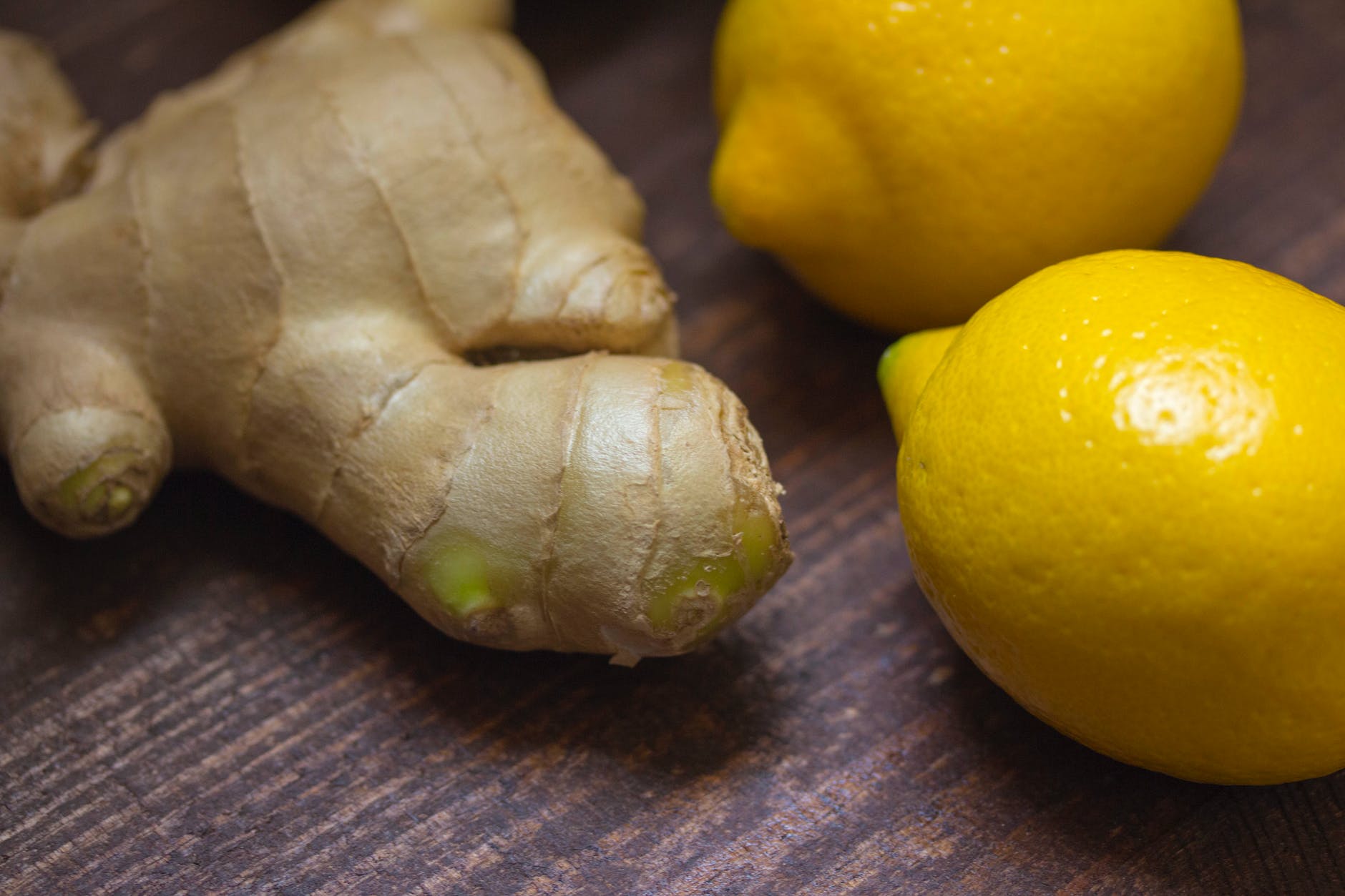
A knobby root of fresh ginger, alongside some whole lemons.

According to Hindu folklore, the first ginger plant arose when Lakshmi tossed a piece of ginger into the ocean.

Pretty much every culture that used ginger recognized it for its warming properties. In ancient Greek, traditional Chinese, and Ayurvedic medicine, ginger is regarded as a spice to ease respiratory ailments and improve digestion. Even today, ginger is used as a natural remedy to reduce nausea. It has shown remarkable efficacy for nausea triggered by pregnancy and chemotherapy.

One old healing ritual involves chewing a bit of fresh ginger root, spitting it out, and rubbing it either on a sick person, or on a photograph or poppet of the sick person.

Overall, ginger is a magical catalyst. This means that it helps achieve results more quickly. It’s also said to increase one’s “inner fire.”

Ginger is often used in romantic formulas to induce passionate feelings.

It’s said that the most powerful ginger roots are those that are shaped like humans, with a knobbly “head,” two arms, and two legs.

This root is associated with the element of Fire, as well as the Sun. As a solar herb, it’s frequently used in rituals and formulas for success and prosperity.

Just as a reminder, Z. officinale should be used for preparations that are intended to be ingested. Members of Aristolochiaceae should not be used internally.

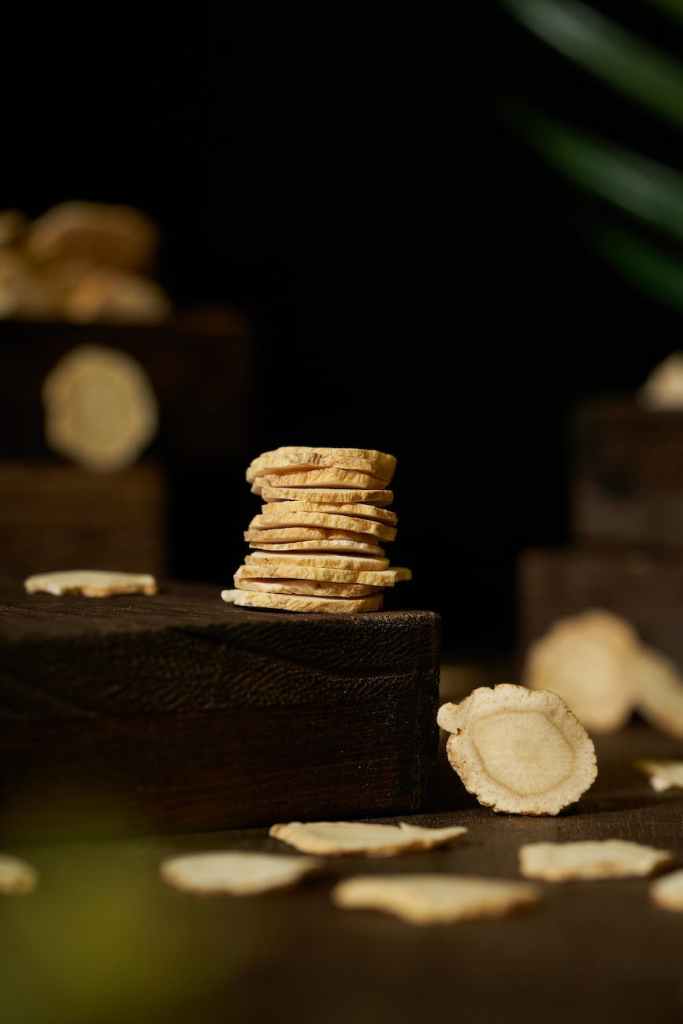
Coin-sized slices disks of ginger root.

Since ginger is a catalyst used in formulas for romantic love, it’s an excellent ingredient in “date night” recipes. Use it alone or with other love- and passion-inducing ingredients, like rose petals or cinnamon, in food or beverages to share with a lover.

A simple money spell involves sprinkling a bit of powdered ginger in your wallet. (You can also tuck a few disks of dried ginger in there, instead.)

As ginger is also considered a physically empowering, warming herb that increases heat and vitality, drinking a cup of ginger tea before a ritual may help facilitate power raising. You can also brew some ginger tea, enchant it for strength, and drink it before playing sports or doing anything physically demanding or competitive.

It’s the Yuletide season here, so ginger is very easy to come by. You can find it in tea, cookies, cakes, and savory dishes alike. With so much delicious ginger at your fingertips, why not use some in your spellcraft?

life

Faces are more like dirt than you’d think, to be honest.

Let me preface this by saying that I’m not a doctor, and, more importantly, I am not your doctor. The approach I put in here is something I cobbled together by gathering skincare advice from multiple sources, and one that I think is kind of difficult to misuse to the point of doing real harm. That said, don’t use any of the recommended products if you’re allergic to them or they’re otherwise contraindicated for you. Be safe!

I don’t want to get into a long macrocosm vs microcosm preamble here, but it really is remarkable how much our own personal microbiologies resemble dirt.

I mean it. When land is cultivated, the soil appears to be mostly fine particles, like silt, sand, and clay. Its biology is bacteria-dominant, and there aren’t a lot of fungi around. If the land is left alone, annual weeds will give way to larger perennials, shrubs, trees, and eventually old growth forests. These drop layers of branches and leaves, fungal spores move in to break them down, and you get a rich layer of organic matter with its own diverse microbiome.
It’s fascinating stuff, if you’re a fan of dirt.
(I am.)

All of this is to say that the ground and the things growing in it are healthier when they can benefit from a variety of microorganisms, and so is your face. This is something I knew on a logical level, but seeing it play out is kind of another animal entirely.
Follow me here for a minute.

Just before Thanksgiving, I had a very minor surgery. It really wasn’t a problem — I was in and out in an hour, and all I needed was a local anesthetic. Afterward, I got a much-needed prescription for 300 mg clindamycin and was sent on my happy (if achy and puffy) way.

Though I am a huge proponent of herbal and traditional medicines, I also know that a lot of not-even-that ancient people died of things that are easily treatable today. Clindamycin is a lifesaver. If you’re like me, and members of the -cillin family are verboten to you, or you have an infection that’s resistant to other first line antibiotics, it may also be the only thing standing between you and a very bad outcome.

Despite its usefulness, clindamycin has always caused problems for me about a week or so after taking it. I feel a heat in my cheeks, which turns into a prolific, itchy, bumpy rash of tiny pimples. After this happened enough times for me, I attempted a tentative self-diagnosis: Malassezia folliculitis, also known as Pityrosporum folliculitis or fungal acne.

Malassezia is a genus of fungi that colonizes the skin of animals. It’s usually the opposite of a problem — under normal conditions, you don’t want your skin to be sterile. Like the microorganisms that live in your intestines, it’s part of a (hopefully) diverse biome where everyone serves their own tiny function.

A painting of several stern looking men in ruffled collars, dissecting a cadaver. Someone put a microscope in front of it for some reason.
I tried to find a picture of yeast, but Pixabay just kept showing me bread. This came up when I looked for “microorganisms,” though, so here you go.

Alas, problems arise when antibiotic therapy kills off the other microorganisms that compete with Malassezia. Since fungi aren’t affected by antibiotics, this leaves your skin completely at the fungus’ mercy. It’s the same reason why antibiotics often cause diarrhea. When they kill off your healthy gut biome, whatever pathogens that aren’t affected get to have a field day. The same thing that happens to your intestines can happen to your skin.

In the past, I used to just tank it. I’d deal with having a rash for a few weeks, and things would eventually get back to normal. I didn’t know why this happened, and nobody could really give me a good answer, but since it was self-limiting and I don’t often need antibiotics, I figured the itching rash was just a thing I had to deal with on rare occasions.

But not this time. If there was a way to keep from looking like the Toxic Avenger and feeling like I wanted to tear my own face off, I was all for it.

Turns out, there is a simple treatment for it: Fluconazole. Yay!

One of the potential side-effects of fluconazole is liver damage. Shit!

It can take care of a fungal skin rash pretty quickly. Yay!

It can also cause a skin rash. Shit!

Anyway. In the interest of not resigning myself to having to alternate an antibiotic and fluconazole every time I got an infection, I figured I’d try to take matters into my own hands. Luckily, I was successful.

So, how can you get rid of Malassezia/Pityrosporum folliculitis following treatment with oral clindamycin? With these:

  • A bottle of Nizoral shampoo.
  • A bottle of sulfur-based anti-dandruff shampoo.
  • A bottle of The Ordinary’s Niacinamide 10% + Zinc 1% serum. Don’t get it from Amazon — there are reports of people getting counterfeit or expired product, and it’s pretty fast and cheap to get from Ulta, Sephora, or The Ordinary as it is.
  • Fresh garlic.
  • Water kefir.
  • Turmeric and ginger tea.
  • The ability to tolerate a boring diet for a while.

I also had a bottle of Hibiclens left over for Reasons, so I figured I’d give it a try. I cannot recommend this, since a) Hibiclens isn’t meant to clear up fungal acne or b) be used as a facial cleanser, and c) you will feel like you’re huffing several dozen ruptured cans of Lysol if you ignore those two things and use it anyway.

Nizoral contains ketoconazole, an antifungal. Anti-dandruff shampoos contain a variety of other antifungals. Both of these are used in the treatment of Tinea versicolor, which is caused by Malassezia globus. Niacinamide helps regulate sebum production and is effective at inhibiting Candida albicans, a skin-colonizing yeast similar to Malassezia. (It hasn’t been tested against Malassezia specifically from what I gather, but I figured it couldn’t hurt.) Similarly, turmeric has been shown to inhibit the growth of 22 fungi species, also including Candida.

You can use Selsun Blue or Head & Shoulders instead of the sulfur shampoo, if that’s what’s available to you. Selsun Blue and clinical strength Head & Shoulders contain selenium sulfide, which is an effective antifungal. Selenium sulfide has been found to be carcinogenic in rodents, but this was after it was administered orally. Since selenium sulfide isn’t absorbed through healthy skin, shampoos containing this ingredient are considered safe. However, if you have broken skin, you can end up absorbing some selenium sulfide because your skin’s barrier is compromised.

So, armed with an array of shampoos and assorted other things, I started a multi-pronged approach that focused on reducing the level of Malassezia topically and internally, and repopulating me with competitive beneficial bacteria. Kind of like removing noxious weeds before seeding a healthy, diverse garden.
Here’s what I did:

  1. In the morning, I washed my face with either the Nizoral or the sulfur shampoo. I followed this immediately with the niacinamide serum.
  2. In the evening, I’d wash my face again with whatever shampoo I hadn’t used in the morning. I’d let it stay on my face, like a mask, for about three minutes before rinsing. I’d follow this with more niacinamide.
  3. I severely reduced the amount of sugar I was eating. Microorganisms can’t get enough of the stuff.
  4. I ate raw garlic. This was probably not strictly necessary, but I felt like it couldn’t hurt.
  5. I drank water kefir. This is a probiotic. If you make it yourself, and don’t back sweeten it, it can also be very low in sugar. (About 3g a serving.)
  6. I drank two to three cups of turmeric and ginger tea a day.
  7. I didn’t load my skin up with other products. Some moisturizers and serums contain ingredients that fungi can feed on, so I wanted to avoid them.
  8. I slept on my back. This kept my skin away from my pillow. Even with changing the case every day, I felt like this offered some added safety.

Now, neither Nizoral nor other dandruff shampoos are intended to be used as face washes. They do contain ingredients like fragrance that aren’t great for your skin, but, as someone with incredibly sensitive skin, I can also offer the opinion that Malassezia is worse. They’re also designed not to be actively harmful to your skin, since they end up there anyway if you use them to wash your hair.

Since I’d already started a breakout when I began this treatment, I couldn’t avoid dealing with Malassezia entirely. Nonetheless, this did make it a lot shorter and less severe. (Like, three to four days of a mild rash instead of two weeks of looking like I’d fallen into some kind of TMNT-style mutagenic ooze.) Also, no liver damage.

As much as I wish I didn’t have to do this, there’s sometimes no other choice. If I didn’t use clindamycin, I was at risk of death. This meant that I had to try to control the microorganisms it didn’t kill off, and bring myself back into balance. This approach helps reduce the number of pathogenic Malassezia and repopulate my body with all the little guys that’re supposed to be there.

Witchcraft

The Wheel of the Moon

I’ve mentioned before that I’m a big fan of the Wheel of Life exercise. I was introduced to it by my psychologist, and I found that it was a) really helpful and b) fun. I like lists. I like charts. I like ways to visualize data, and that’s pretty much exactly what this exercise does. It’s also really flexible and customizable.

This last bit is why I’ve made it part of my full moon observations. I light a candle (a handmade full moon candle from the wonderful 13 Magickal Moons in Occoquan, VA) and some incense. I draw the wheel. I section it off and label it however is most fitting. I make the assessments, I draw the lines, and I compare the shape with the shape of the previous month.

The full moon rising behind some pines.

It’s a meditative exercise that helps me to acknowledge the changes I’ve made from month to month, because I can see them right in front of me. It highlights areas that need help, so I can use the power of the full moon to change them. By doing the wheel monthly, instead of every few months, it makes it easier for me to make incremental changes (and keep tabs on things like The Ennui).

It’s also useful for relating to the cycle of the moon. Even at the height of its power, the full moon heralds its own decrease. By that same token, the waning moon promises future growth. Looking at the Wheel of Life shows what has grown, what hasn’t, and, if need be, what should be pruned.

Below is a simple ritual outline that just about anyone can use to help better their physical and mental health, improve their relationships, and generally pull off a whole-life glow up.

You will need:

  • A pen or pencil.
  • A piece of paper with a circle drawn on it.
  • A candle, preferably in white or silver.
  • Incense. Ethically harvested sandalwood, myrrh, white rose, bay leaf, or lemon balm work well here.
  • If this isn’t your first time performing the ritual, you may also want to have a fireproof bowl.

First, consider the areas of your life that you wish to focus on. This could be your physical health, mental health, physical environment, friendships, family, love life, career, spirituality, creativity, or anything else you desire. Count up how many areas you want to work on, and divide the circle up into that many sections — like a pie chart. Alternatively, you can use an online Wheel of Life creator.

Think of each area carefully. If you had to rate that area of your life from 1 to 10, what would you rate it? Pretend the center of the circle is zero, and the very edge of each slice is 10. Draw a dot roughly corresponding to the numerical rating you choose for each section. Connect these dots with lines, and you should have a kind of asymmetrical star shape.

Here’s an example from Wheeloflife.io’s generator.

This is your Wheel of Life. It’s a visual representation of how you feel about things right now. Look at the areas where the shape is most lopsided — this is where you feel your life needs the most help at this moment. For example, if you rated “family relationships” at a 7, and “career” at a 3, “career” would be the area to focus on.

Now, light the candle and the incense. If you can, place the Wheel of Life in a spot where the full moon’s light can fall on it. If not, observe it under the candle’s glow.

White candles, burning.

Say,

“See the moon’s glow, charging the Wheel.
My life is unfolding, with each turn I feel.
Full moon energy, guide me this night.
Transform me, renew me,
With your radiant light.”

As you meditate on your Wheel, consider what changes you can make to the areas of your life that need the most help. What can you do within the next week? The next two or three weeks? The next month?

Come up with three simple actions you can do over the next week. They can follow the energy of the waning moon, but they don’t necessarily have to.

Come up with three more that you can do over the next two to three weeks.

Finish by coming up with three more that you can complete by the next full moon.

Save this Wheel. Place it somewhere where you’ll see it often. Refer to it as many times as you need to in order to keep yourself motivated and on track.

(If you like, you can turn your actions into statements of intent, and use your preferred method to further empower them. Turn them into sigils, shorten them to symbols and inscribe them on candles, and so forth.)

If this isn’t your first time performing this ritual, then take out the last full moon’s Wheel.

Take a moment to compare this full moon’s Wheel to the last one. What progress have you made? What seeds have you sown, and what have you reaped? Give thanks for any advancements you’ve made, no matter how small.

A crackled clay firebowl filled with burning herbs. A small pile of herbs sits in the foreground.

If you wish, you can light the last full moon’s Wheel in the candle’s flame and drop it into the fireproof bowl. Scatter the ashes on the wind.