life

Welp.

The election’s over. I don’t really have much to say. Other people who are far more eloquent have said everything that I possibly could.

This post from Waging Nonviolence has been very helpful to my friends and me, and I highly encourage you to read it as well. I’m not going to reiterate the excellent points that it makes, but I did want to add to the list:

Many people (women, people of color, and LGBT people) are taking this opportunity to examine and pare down their spending habits. Most major corporations and big box stores are owned by the exact demographics that will either benefit or have the luxury of remaining passive. Divest from them — literally and figuratively.

Gather a group of trusted people and see what you have to offer each other. How can your community build resilience and foster independence? What can you do to lessen your dependence on purchased goods?

Now’s also a good time to focus on reskilling.

This probably seems a bit out of left field, but it ties into number 1. Grow an edible plant. Even if you’re in an apartment. Even if all you have is a tiny windowsill under a basement window. Stick a basil in it. Shove some parsley in there. Grow something that you can eat.

Will this change the political and capitalist landscape? No, but it is a way to increase your confidence and feelings of independence. It’s one less thing you’ll have to buy in the future. It’s something you can propagate and trade with others. It’s something you can eat, at a time when the US is experiencing a resurgence of fucking scurvy because of grocery price-gouging.

It’s also worthwhile to learn to identify local edible plants, especially if you live in an urban environment. Spruce tips are a good source of vitamin C, as is purslane. These are both pretty easy to find/identify (even in a city) and beat the hell out of getting scurvy.

A lot of us don’t have much energy right now. If you have a recipe for a big pot of something that you can eat for a week (khichdi, goulash, slumgullion, stew, rice and beans, something) now’s a good time to make it. If you don’t have the energy to cook every day, it’s something you can go back to. Hell, most of these foods are ones you can make from scraps and odds and ends of things.

(Yesterday, I made a big pot of vegetable soup using a handful of lentils, some cabbage, and a broth I made from vegetable peels and end bits.)

This is another way to help boost feelings of independence and combat helplessness. You can feed yourself for days, maybe even off of things you wouldn’t have much use for otherwise — broccoli stems, onion ends, a can of beans, etc.

A big pot of something is also a good way to gather the people you trust. Invite them over. Have a potluck. Grieve, if you need to, but focus on what you can do for each other going forward.

It sounds like a lot, but it doesn’t have to be. Pick one local, one national, and one global cause that matter to you. If you can’t do much else, give money. If they need supplies, either give supplies or ask around and gather them from others. If they need volunteers, give your time. If you can’t do any of that, post about them and solicit help from those who can.

Get involved in mutual aid in a way that doesn’t spread you too thin. No single person can support every good cause that comes their way. It’s possible to care about them all, but time, money, and energy are finite resources. Even if you don’t feel like you’re able to make a difference, remember the story of the star-thrower.

Look, safety pins and blue bracelets might make people feel good, but their stated intention was to show others that the wearer is a “safe” person.

There’s only one problem with that: “Safe person” is not a title you can give yourself. If it was, it’d defeat the purpose of having that title at all. If anything, performative gestures have the opposite effect because they cast doubt on whether the wearer is listening to the valid concerns that threatened groups have.

Anyone can wear a safety pin or a blue bracelet. It’s a purely performative gesture, and nobody asked for it. The people who would ostensibly benefit from it don’t want it. It’s also been criticized as a way for the wearer to say “#NotAllWhite/Straight/etc. People.”

It’s easy for gestures like these to be co-opted by predators, and they take agency away from the people they’re trying to help. Women, people of color, religious minorities, and LGBT people can decide for themselves when someone is a “safe person.”

Some people have raised the argument that these visible gestures would make dangerous people uncomfortable, so they’re worth wearing for that reason. The problem here is that that doesn’t work. In the past, they invited mockery. Dangerous people didn’t feel threatened, and other people didn’t feel safe. These gestures only benefit the wearer.

Anyway, that’s all that I have to say for now. Grieve, but don’t stay grieving. Assemble a trusted community. Build resilience. Support the women in your life who’ve chosen the 4B (or 5B-7B) movement. Do things that will foster independence.

life

Henna Headache: Why it happens, and how to stop it.

Do you ever experience the dreaded “henna headache?”

In my case, I switched to botanical hair color from synthetic hair color because I wanted something that’d cause less irritation, have fewer fumes, and have a lower risk of sensitization. Imagine my devastation when I realized that I experienced awful migraines from what was supposed to be “safe, natural” hair color. Online research wasn’t much help in the matter, either — some people reported consistently getting headaches from using henna, but there didn’t seem to be a solid reason people could really point a finger at.

After years of experience and experimentation with a variety of dye plants, I’ve managed to narrow henna headaches down to a few common triggers. If any of these seem to match with your experience, there are ways to mitigate your discomfort and still end up with beautiful hair.

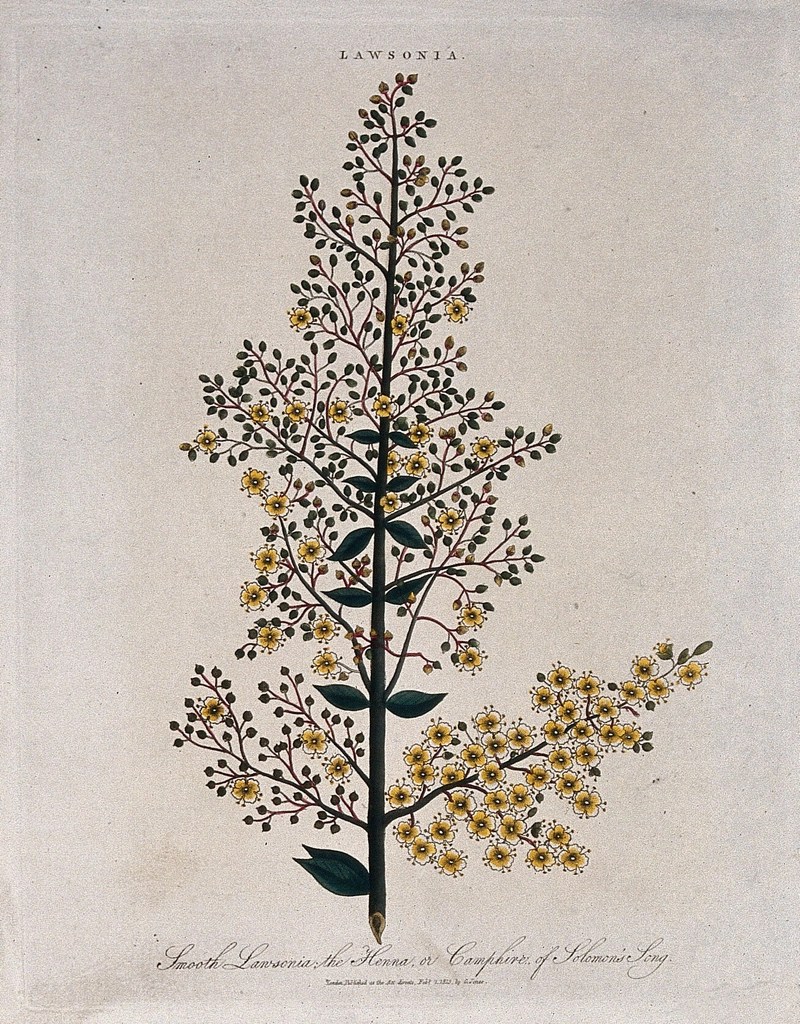
Henna plant (Lawsonia inermis): flowering

Not all henna is henna. A fair amount of the henna creams and dyes on the market are what’s called compound henna, which may be henna (Lawsonia inermis) based, but also contain other botanical dyes, metallic salts, and even synthetic colorants. Compound henna is why so many hair colorists don’t want to work on hair that’s been treated with henna — they have no way of knowing if you’ve used henna, or “henna.” The metallic salts in compound henna can react violently with some of the chemicals used in salon coloring. Some of the other components of compound henna can also cause headaches, just like synthetic colorants may.

If you’re using a henna dye that’s any color other than reddish orange, you may be using compound henna.

Even if a product isn’t compound henna, it may not be pure Lawsonia inermis. In my case, I was using a combination of pure powdered henna, and pure powdered indigo. This gave me a very nice, deep brown color. Seems safe and natural, right?

A lot of things are natural, like stonefish, nightshade berries, and manchineel fruit.

person holding a wet fabric with indigo dye
Photo by Teona Swift on Pexels.com

Indigo doesn’t start out looking the way one might assume. It’s not actually blue, for one — blue is actually the least common color in nature. It starts as a colorless precursor, indican. When this is soaked in water, it gets hydrolyzed and produces indoxyl. After the indoxyl ferments for several hours, it yields leucoindigo. When leucoindigo oxidizes, it becomes the blue indigo we’re all familiar with. Indigofera tinctoria and other members of the Indigofera genus are complex, fascinating plants with a long history of use in dyes, paints, and even medicine.

However, they also carry the potential for toxicity. If you’re using a mixture of henna and indigo powder under the assumption that it’s safe because it’s all-natural, but you’re still experiencing a henna headache every time you use it, indigo may be the culprit. In my specific case, switching from henna + indigo to just henna solved my problem entirely.

Flowering stems indigo plant (Indigofera tinctoria)

Does this mean you can’t wear your favorite dark-dyed jeans? Not at all. Just maybe avoid eating or drinking indigo or leaving it on your skin and hair for hours at a time. If you regularly work with or use indigo and find that you have a lot of otherwise-unexplained headaches, maybe try reducing your contact with it and see if it makes a difference.

Have you ever gotten a headache from going quickly from one temperature to another? You might notice it on a hot summer’s day, when going from the sunny outdoors to a chilly, air-conditioned building, or even in the depths of winter when you go from the heat to the bitter cold. Kicks my butt every time.

One headache remedy even involves using temperatures to normalize blood flow in your brain, by keeping your feet warm and your head cool.

If you apply henna paste, wrap it up, and keep your head warm while the color develops, you may inadvertently be exposing yourself to a headache trigger. Try keeping your feet warm as well, and maybe put a cool compress on your forehead.

Henna paste is pretty thick. If you have a lot of hair to color, covering every inch of it in henna paste can add a lot of weight to your poor head and neck. This extra weight can put more strain on your neck, leading to tension headaches. Unfortunately, I don’t have a good solution for you here — if at all possible, wrap your hair up in a way that’s evenly balanced, at least, to make it a bit easier to deal with. Remain sitting with your head resting comfortably on something for as long as you can. A gentle massage and a cold compress can help deal with inflammation in your neck

Henna paste dries out very easily. It’s why it needs to be kept wrapped up — it takes a long time for the color to develop well, and, if you leave it exposed to the air, the paste will dry out long before it has a chance to be effective. If your hair isn’t well wrapped up, the paste may start to dry and create a pulling sensation on your hair and scalp.

If you’ve ever worn a tight ponytail or tight set of braids and ended up with a sore, tender scalp or a headache by the end of the day, you know how much that pulling feeling can suck. In this case, the solution is pretty simple: Make sure your henna pasted hair is kept well covered and not allowed to dry out. (I use a waterproof shower cap.)

Say you’re using pure henna. You have short hair, so it’s not too much weight. You have it wrapped up well, but not too much, so it stays moist without making your head too hot. What else could it be?

Sometimes, it might be the way your hair’s wrapped up. If you use a cap that’s too tight, or wrap your hair in plastic too snugly, the pressure can cause some soreness and headaches. Experiment with different materials and wrapping techniques until you find one that’s both effective and comfortable for you.

Henna is a very safe ingredient. Pretty much all of the results that come up for “henna toxicity” deal with compound hennas — like black henna containing lead and PPD. Safety aside, allergies and sensitivities can happen to anyone, with pretty much anything.

If you’ve gone through the list and eliminated all of the other factors, it may just be that Lawsonia inermis doesn’t agree with you. You can try other botanical-based colorants, or consult with a professional colorist to find a gentle synthetic dye or a way to revert to your natural color.

It’s easy to assume that natural products are always safer and better than their synthetic alternatives, but that’s not always true. Just because a substance is (or claims to be) natural doesn’t mean that it doesn’t have the potential for harm. If you get a henna headache every time you color your hair, there may be a variety of root causes stemming from specific compounds within the dye, or even the coloring technique itself.

Plants and Herbs

Lemon Verbena Folklore and Magical Properties

I wrote a post about vervain a while ago, which I chose to limit to Verbena officinalis and V. hastata. Today, I wanted to revisit this subject with a post on a vervain relative: Aloysia citrodora, lemon verbena.

Lemon verbena is native to South America, and was introduced to Europe in the 17th century. It’s a member of family Verbenaceae with a bright, citrusy odor (hence it’s name, citrodora). It has a long history of use in cooking and, while it was only introduced to Europe fairly recently, it has made a name for itself in various systems of European-based folk and ceremonial magic.

Within its native range, lemon verbena seems to be primarily used as a medicinal and food ingredient.

Medicinally, lemon verbena appears to boost sleep quality. Lemon verbena is also used as a digestive aid, and has demonstrated very interesting antioxidant and antitumor properties. There are mixed messages about its toxicity — while it’s generally regarded as safe for humans, some sources say that it’s toxic to animals.

Historically, lemon verbena was used to treat gout, as a diuretic, and to treat inflammation of the spleen or liver.

A blend of dried herbs in a teacup, against a white background scattered with more herbs.
Photo by lil artsy on Pexels.com

Putting a sachet of lemon verbena under one’s pillow is said to keep away bad dreams.

Lemon verbena is a pretty traditional luck herb. It’s said to convert misfortune to good luck, and is useful for cleansing, protecting, uncrossing, love magic, and attracting what you want. It also acts as a strengthening herb, meaning that it adds power to anything to which it is added, so it’s a good addition to herbal formulas for positive effects.

Interestingly, lemon verbena is yet another cleansing/protecting type herb that crosses over into a natural pest repellent. It’s often grown and used to keep mosquitoes away (possibly because its strong, lemony aroma covers up the natural scent of carbon dioxide that female mosquitoes use to detect people).

Lemon verbena is typically associated with the planet Mercury.

The easiest way to use lemon verbena is by steeping it. Get some of the dried herb and brew it like you would a tea. Strain out the plant matter, and use the liquid as an offering, drink it, add it to floor, door, or window wash water, you name it. Brew it with intention, stir it clockwise using your dominant hand, and visualize it filling with energy as you do.

While this herb has a very pleasant, citrusy scent and has been used in perfumes in the past, this is no longer advised. Natural components of lemon verbena essential oil are photosensitizing. So, if you’re looking for something to add to, say, an anointing oil, maybe give lemon verbena oil a miss. It’s fine for aromatherapy uses, but shouldn’t be placed on skin. If you have sensitive skin, I’d avoid adding lemon verbena tea to ritual baths, too.

Bottles of oils on a wooden tray, set on a wooden counter in a very modern-looking bathroom.
Photo by Pixabay on Pexels.com

As a tropical plant, lemon verbena isn’t the easiest to grow outside of that zone. It seems to have limited invasive potential in most of the US because it doesn’t get very large here, doesn’t proliferate very readily, and dies at the first sign of a freeze. In warm, moist areas (like Florida, for example), lemon verbena has an easier time self-seeding and expanding via root suckers. Plant with caution.

Lemon verbena is a beautiful, interesting herb with some fascinating properties. It’s easy to come by anywhere teas or dried herbs are sold, and very easy to use. (Just don’t get the oil on your skin and then go in the sun!) For many modern magic practitioners and herbalists, it’s a staple ingredient that it always pays to have on hand.

Just for fun · life

I had an aura photograph done (and it is very blue).

So, my handsome assistant and I recently went to a small psychic fair. I’d never been to one before, so I figured a little, local one was the way to go. When I say “little,” I do mean little — there were only a few vendors and not many guests, so we had the opportunity to really browse and take in all of the artwork, mineral specimens, and assorted other good stuff without having to maneuver around crowds or budget our limited time between dozens of booths.

One booth offered aura photography. This isn’t something I’ve ever put stock in, but it was something I’ve nevertheless been curious about. Getting an aura photograph also feels almost like a rite of passage — if you’re inclined to go to psychic fairs and such in the first place, then you’re probably going to end up getting an aura photograph at some point.

The process was simple: Sit, breathe, relax, put your hand on a set of sensors, and get your photo taken. Quick, simple, and totally non-denominational and non-invasive. It’s like getting your birth chart done, but with more technology.

Auras are luminous fields of often-colorful energy around every living thing. According to some, the colors of these fields correspond to one’s personality, outlook, mood, and even physical health. The brightness, shape, and colors of auras are generally invisible to the majority of people, though some practitioners of various new age arts claim to be able to see them and there are several different techniques to train one’s eyes and mind to pick up on auras. Aura photography purports to capture this energy field and create a visual representation that anyone can see.

Once your aura photo’s done, you get a breakdown of the colors, their significance, and, depending on the photographer and their respective setup, a breakdown of your various other energetic characteristics. I got a very detailed report of my different energy centers, balance of yin/yang energy, and energy fluctuations.

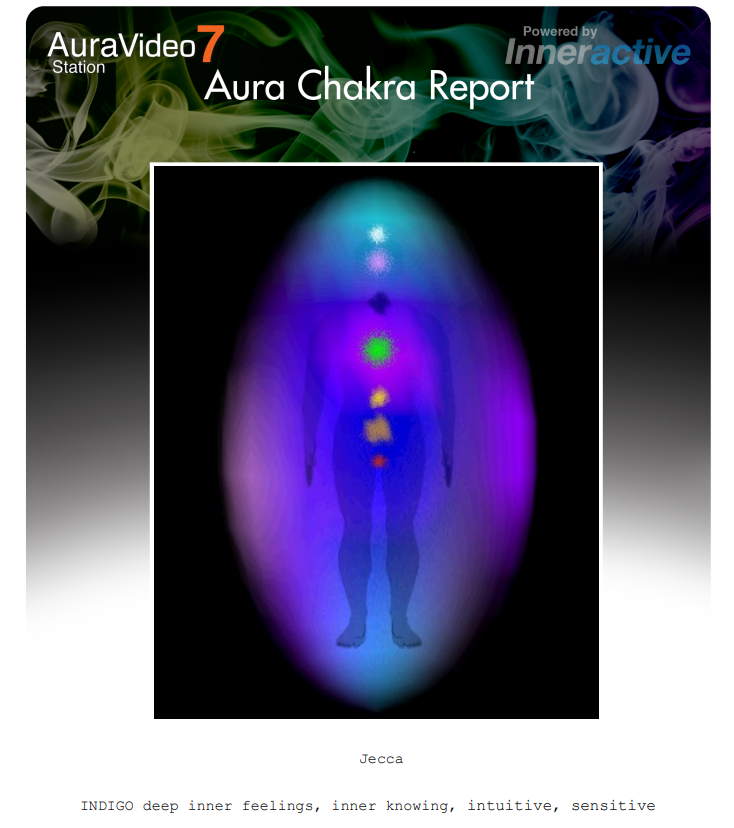
In my case, my aura was primarily indigo, with some neat blue-greens at my head and feet, and pinks/purples at either side.

It would probably be a bit navel-gazey and not super helpful to do a deep dive into my own specific energy stuff, so I’ll refrain from doing so here. Suffice to say, it was intriguing enough for me to give it a deeper look. Not only did I read the full report (which was honestly eerily accurate), I also went looking for more answers.

Mainly answers to one question in particular:

The “photography” bit is somewhat of a misnomer. The photograph of you isn’t where the information comes from — it’s mostly an aid for visualization. Instead, the actual info comes from the hand sensors.

This is in contrast to Kirlian photography, which is something completely else (and something I haven’t tried yet).

The hand sensors themselves pick up multiple different things. They’re essentially biofeedback electrodes, picking up on things like temperature, heart rate, and skin conductivity. The idea behind aura photography is that these factors are impacted by one’s energy meridians and flow, so the machine can extrapolate information about your aura from the data the sensors collect.

Once the hand sensors have picked up the information they need, the accompanying software renders it into a colorful image as seen above. These colors are superimposed on the photograph of you, and there you have it — your aura photograph.

(I did not include the actual photo of me and my aura, because it was humid and I was a sweaty mess. You get a rainbow egg and human silhouette instead.)

I mean, auras are very subjective. I’m not one to engage in solipsism, but you can never know if other people are seeing the same things you do. Even looking at something that should be objective, like a painted wall, can yield dramatically different interpretations. What you see as blue, someone else may see as aqua, cerulean, or cobalt. Someone else may only see a shade of gray or interpret it as a completely different color.

Skeptics say that auras are a fake idea. Believers say that’s wrong, and auras are absolutely real. There’s no way to completely, objectively prove either, so it’s kind of a choose-your-own-adventure thing.

Go to two aura readers, and you’re very, very likely to hear two different interpretations. People’s auras are also in flux. Even the most accurate reading or photo, therefore, will only be able to tell you how things look right now.

Would I plan my life around the results of an aura photograph? No. Did I nonetheless find the experience valuable? Yes.

To me, aura photographs are useful just like many forms of divination are useful: They give you another angle from which to consider things. Since the information they present has a degree of randomness (or, at the very least, is based on input you can’t really control), they’re unlikely to present you with information that you’ve already thought of yourself.

It’s like when life coaches, counselors, and such started introducing tarot readings into their practices. This isn’t because tarot is necessarily a diagnostic or treatment tool. It’s because it’s a great way to get a new, unbiased angle from which to look at a situation. For example, if you’re having career problems and you keep pulling cards from the suit of Cups, you may start to recognize emotional or relationship aspects of your problems that you never considered before. It’s something that takes in a bit of chaos and spits out a new way to look at things.

This is what aura photography did for me. Seeing alleged weak spots led me to read about traditional methods for remedying these things. If nothing else, it has me adding more variety to my diet, trying new exercises, exploring different methods of meditation, and checking out different perfumes and colognes. Worst case scenario, I come out of this experience with some new recipes and activities that I enjoy.

That said, this shouldn’t be used to diagnose or monitor physical or mental illnesses. Some people claim that they can do so using various aura reading techniques, but these claims are dubious at best. By all means, combine energy healing with more conventional treatments, just don’t expect aura reading or photography to give you an accurate diagnosis. Get a second (and maybe a third or fourth) opinion from a doctor.

Would I do this again? Almost definitely! It was interesting and, like I said, surprisingly accurate at times. It’s something I could see doing every few years or so, as a way to mix things up and discover new angles to explore.

Plants and Herbs

Lemon Folklore and Magical Properties

Lemons have a rich history of folklore and magical use. In the US, it’s one of the quintessential summer fruits — owing, at least in part, to its cooling properties.

A lemon hanging from a lemon tree branch.
Photo by Samer Daboul on Pexels.com

Lemons can do more than cool you down on a hot day, though. They’re also integral to the “lemon cure” that made its way around Pinterest and other social media spaces. This involved cutting a lemon into slices, salting it, and placing it in your home to (depending on the source) remove or detect negative energy. This idea didn’t come out of nowhere, either. Lemons have historically been used to counteract evil, fight disease, and much more.

Nobody knows for sure where lemons (Citrus x limon) came from. Experts theorize that the first lemons were grown in India, and genetic studies show that they’re a hybrid between citron (Citrus medica) and bitter orange (Citrus x aurantium). Bitter oranges, in turn, are likely a cross between pomelos (Citrus maxima) and mandarins (Citrus reticulata). The name “lemon” stems from the Persian word “lÄ«mÅ«n,” which referred to citrus fruit in general.

In American folklore, lemons were (and are) considered fruits of positive energy and purity. There are tales of lemon trees that would only bear fruit when a pure-hearted soul approached or cultivated them, and hanging a lemon above one’s front door is touted as a way to keep evil at bay.

In India, shopkeepers would hang lemons, chilis, and charcoal above their shop doors. This is a specifically designed to repel Alakshmi, a deity of misfortune and poverty. She is a dualistic figure to Lakshmi, and represents the fall that comes after pride, or the negative force that comes after increasing wealth. Her presence is said to cause malice, jealousy, and ruin.

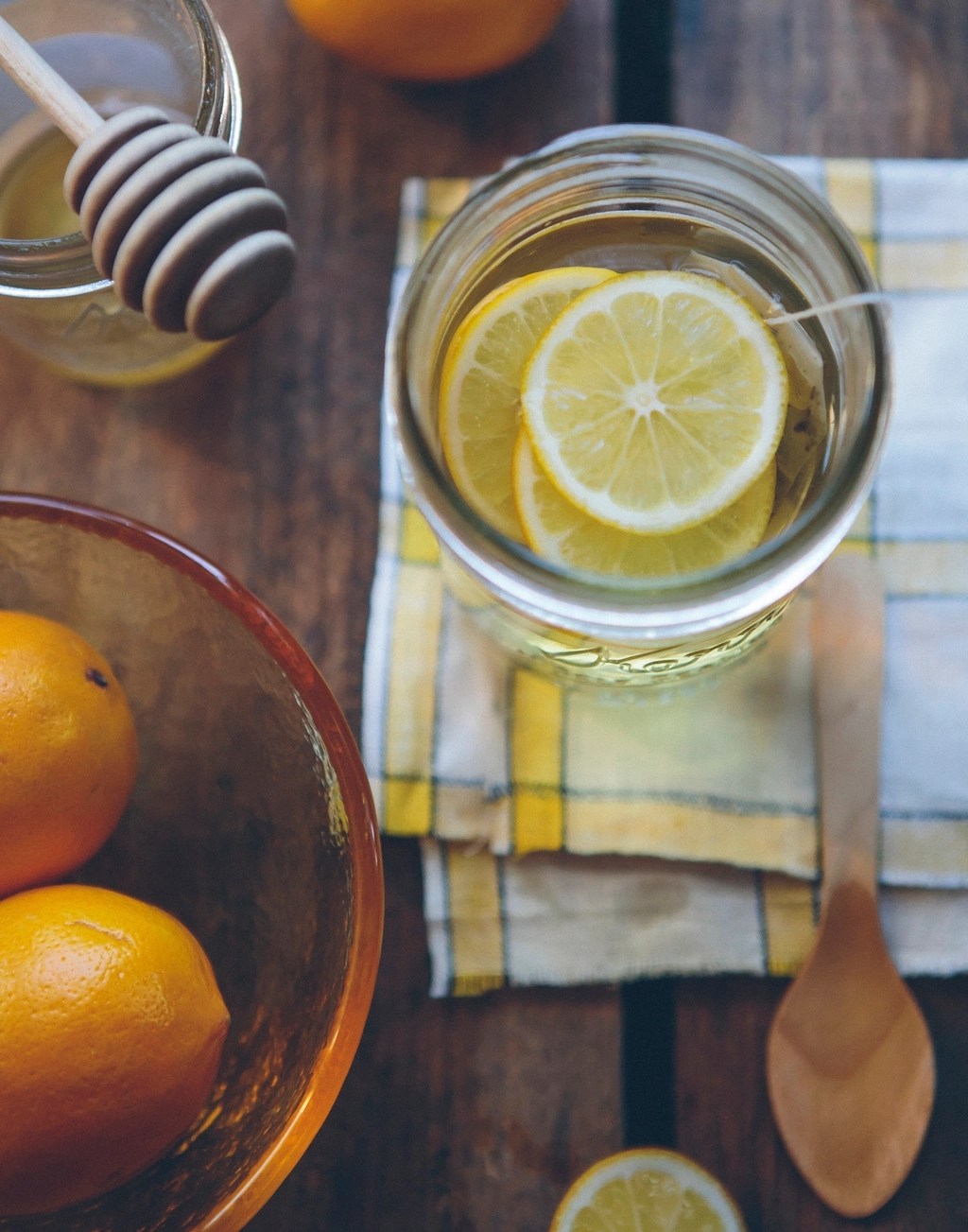
A jar of lemon tea, sitting atop a yellow and white napkin on a wooden table.

Meanwhile, in Greece and medieval Europe, lemons were associated with luxury — after all, they had to travel a long way to get there and required very specific conditions to grow. This gave them additional connections to abundance and prosperity.

Medicinally, lemons have been used to combat illnesses like sore throats and upper respiratory infections. Historically, their juice and preserved peels were used to aid digestion.

Today, lemons are commonly used as the base for the citrus pomanders commonly seen in the US around the winter holidays. Take a lemon, stud it with dried clove buds, and there you go — a pretty, festive, and wonderful-smelling pomander. These objects weren’t always holiday decorations, however.
Their origins are quite a bit darker.
Before the germ theory of disease was developed, people believed in miasma theory. Bad smells were thought to be the culprit when it came to all kinds of sickness, and people would wear or carry pomanders to ward them off. These were usually little sachets, rings, or metal cages containing fragrant ingredients that the user would hold up to their nose in order to keep from breathing in bad odors.
While citrus pomanders are often associated with Colonial-era crafts, few American colonizers would have been able to afford to wear or decorate with perfectly good food. Decorations like this were really more of a thing around the 1900s. Some confusion arose in the 1930s, when the Rockefellers helped restore parts of Williamsburg, Virginia. The residents were told that, to preserve the town’s Colonial-era museum-like quality, they weren’t allowed to decorate for the holidays since this wouldn’t be period-appropriate. Residents eventually struck a compromise in which they were allowed to decorate in a turn-of-the-century style that used fruits and greenery instead of blinking lights.
Hence, the citrus pomander as a questionably-authentic Colonial-era holiday decoration.

Overall, lemons are strongly associated with cleansing or repelling evil and attracting prosperity. The concept of prosperity is often expanded to include all good things, including fertility. Lemons are also frequently employed as catalysts in luck formulas. Lemon blossoms, in particular, are considered a powerful attractant for positive things.

Interestingly, lemons are somewhat contradictory when it comes to love — lemon blossoms are generally a romantic ingredient, and there are also traditions that involve using lemons to secure a partner. (For example, one Sicilian-American tradition involves a woman stealing a lemon from a St. joseph altar in order to get a husband.) On the flip side, as a sour fruit, lemons are used equally as often to end a relationship and drive away an unwanted suitor. Lemons are also used for mental clarity, which is generally an antidote to the twitterpated feeling of being in love!

A lemon cut into thin slices, sitting on a wooden cutting board.
Photo by RDNE Stock project on Pexels.com

One of the easiest ways to use lemons is in the lemon energy cure, as described at the top of this post. Take a good, firm, fresh lemon, and cut it into slices no more than a quarter inch thick. Sprinkle these slices with salt, and place them in the most high-traffic areas of your home — places like living rooms and dining rooms. Give the lemon a few days, then give it a look over. If it’s neatly dried, then all’s well. If it’s soft, mushy, discolored, bad-smelling, or moldy, repeat the process with a fresh lemon.

Some practitioners don’t even bother with the whole cutting and salting thing. Instead, they place whole lemons wherever necessary. If the lemons dry up, everything’s good. If they mold or decay, it’s time for a thorough cleansing and some new lemons.

Lemons are also good to add to floor, door, and window washes to remove bad or stagnant energy. Squeeze the juice of a fresh lemon into a bucket of fresh washing water and mop your home from back to front. Give your doors and windows a wipe down with the water as well.

In general, lemons are a good thing to keep around where people (especially guests) congregate. You never know what kind of energy other people are bringing in, so keeping some fresh lemons where you usually socialize is a good way to counteract any kind of negative energy that pops up. Pick up a pretty bowl from a thrift shop, add some bowl fillers and a few lemons, place it somewhere inconspicuous, and nobody’ll be the wiser.

Neodruidry · Plants and Herbs · Witchcraft

Vervain Folklore and Magical Uses

Vervain (Verbena officinalis) is a prominent herb in European folk and ceremonial magic. Its roots also extend to American Hoodoo.

Though most old grimoires mean V. officinalis when they refer to vervain, there are actually about 80 species in the genus Verbena. In my area (and all of the continental US, and fair bit of Canada) we have Verbena hastata, also known as blue vervain. While it’s not the same plant, you’ll often find V. hastata labeled simply as “vervain” in metaphysical contexts.

Lemon verbena, Aloysia citrodora, is also a member of the Verbenaceae family. However, since it’s a somewhat more distant relative, I wanted to limit this post to V. officinalis and V. hastata.

Vervain is sometimes called “the enchanter’s plant,” since it’s one of the most versatile herbs in European magic. Even outside of Europe, it was (and continues to be) considered a plant of considerable medicinal and spiritual significance.

As John Gerard wrote in 1597,

Many odd old wives’ tales are written of Vervain tending to witchcraft and sorcery, which you may read elsewhere, for I am not willing to trouble your ears with supporting such trifles as honest ears abhor to hear.

Magically, it’s used for purification, protection, divination, peace, luck, love, and wealth. It’s a pretty solid all-purpose herb that is often added to formulas to increase their power.

The name vervain comes from the Latin “verbena,” which refers to leaves or twigs of plants used in religious ceremonies. This, in turn, came from the Proto-Indo-European root “werbh,” meaning to turn or bend.
I have also seen the origins of the word vervain given as a Celtic word “ferfaen,” meaning to drive stones away. However, I haven’t found strong evidence for this origin — all attempts to look up “ferfaen” only yield articles claiming it as the word origin of “vervain,” and most of them only give “Celtic” as the language of origin. One source did cite the Cymric words “ferri” and “maen” as a possible origin, with the word “maen” mutating over time into “faen” to eventually yield “ferfaen.” (Upon further searching, I was not able to find the word “ferri,” though I did find “fferi,” meaning “ferry.” This would give the word “ferfaen” a meaning closer to “ferry away stone(s).”)
Nonetheless, the etymological sources I looked at gave “verbena” as the origin of vervain, not “ferfaen.”

A close-up of vervain flowers.
Photo by Tom Fisk on Pexels.com

Pliny the Elder credited vervain with quite a lot of magical properties. According to him, it was used to cleanse and purify homes and altars. He claimed the Gaulish people used it in a form of divination, and that Magi said that people rubbed with vervain would have their wishes granted, fevers cooled, friends won, and diseases cured.
Interestingly, he also pointed out that vervain was considered a bit of a party plant, for when dining-couches were sprinkled with water infused with vervain “the entertainment becomes merrier.”

While vervain is strongly associated with the Druids, they didn’t leave a whole lot of records of their activities behind. What we do know is largely through sources like Pliny, and it’s likely because of writers like him that vervain became strongly connected to the ancient Druids.

For the best potency, vervain should be gathered in a specific fashion. It’s best cut between the hours of sunset and sunrise, during the dark moon. Like many other herbs harvested for their leaves, it’s best to cut the leaves before the flowers open. After cutting, it’s best to offer some fresh milk or honey to the plant.

Vervain is thought to be the origin of the name “Van van oil.” While the van van oil recipes I’ve seen don’t include vervain or vervain oil, it’s possible that the Verbena family loaned its name, nonetheless. (In that case, it was most likely lemon verbena, vervain’s citrus-scented South American cousin.)

Vervain is also one of those contradictory herbs that is simultaneously said to be used by witches, but also effective against witchcraft.

In the very distant past, bards would use brews of vervain to enhance their creativity and draw inspiration.

Medicinally, vervain is an emetic, diuretic, astringent, alterative, diaphoretic, nervine, and antispasmodic. According to Hildegard of Bingen, a poultice of vervain tea was good for drawing out “putridness” from flesh.

Soak some vervain in water, then use the stems to asperge an area, person, or object that you wish to cleanse. It’s also an excellent addition to ritual baths for this purpose.

A cup filled with dried herbs.
Photo by lil artsy on Pexels.com

Sprigs of vervain are also worn as protective amulets, specifically against malevolent magic. Tie a bit with some string, put it in a sachet, and carry it with you. Tuck a sprig of it in the band of a hat. Use a small bud vase necklace and wear a bit of vervain like jewelry.

Planting vervain around your property is said to ward off evil and guard against damage from bad weather. If you choose to do this, please select a variety of vervain native to your area — in most of the US, V. hastata is a safe bet.

V. officinalis is often used medicinally, V. hastata is considered both medicinal and edible, but avoid consuming it if you’re pregnant, trying to become pregnant, or are breastfeeding. Talk to a qualified herbalist if you have any chronic conditions, or routinely take any medications. Avoid consuming a lot of it, since it is an emetic. It’s also important to be sure that the herb you’re working with is really V. hastata or V. officinalis — there are plenty of Verbena species that don’t offer the same benefits.

Vervain is a powerful plant, as long as you know which member of Verbenaceae you’re looking at. If you have the ability to grow a native vervain, by all means do so — these plants are tall, with interesting-looking flower spikes. They’re also easy to dry and store, ensuring that you’ll always have a stockpile of this powerfully magical plant.

life

On the importance of the Third Place.

There’s a concept called the “third place.”

This is a place where people congregate, distinct from their homes and workplaces (first and second place, respectively). This can be a pub, or a community center, or a church, or salons and barber shops.

For much of the Pagan community, metaphysical shops hold the distinction of “third place.” They’re more than a place to buy candles and incense. They’re where you attend events. Classes. Opportunities to socialize with and learn from other people like you. A place to find community.

A picture of a tranquil stream wending through a forest.
I’m fortunate in that, as part of a group of Druids, many of my community meeting spaces are forests. Even so, natural meeting spaces can be taken away, too. Photo by Ian Turnell on Pexels.com

Not long ago, I found out about the closing of a metaphysical shop near me which I loved dearly. A week or two ago, I found out about the closing of another. The owners had been looking to retire and sell their business, but the ownership of their location changed hands. The new owner opted not to renew their lease, leaving them without much choice other than to close the business.

A lot of metaphysical business owners and event coordinators are older, and there haven’t yet been enough people to take their place. I wish I could, but money is often the obstacle to doing so. I’ve donated money to ongoing efforts, supported businesses, reached out to figure out what I could do as far as vending, teaching, or anything else, but the problem is usually much, much bigger than I am.
Every time we lose a shop, a group, or a festival, it’s like losing a friend.

Whether you’re Pagan or not, the third place is important. For many people, it’s life- and mental health-sustaining. Don’t take your third place for granted — there are a lot of things that can take it from you. Support the local businesses that matter to you, even if they’re more expensive than big box stores. Attend community events. If you have a skill or craft to share, see what you can do to become a part of things. If you have the means, consider creating or contributing to a third place for your people.

Sacred Circle, in Alexandria, VA, will be closing at the end of the month. In the meantime, they’re having a sale with deep discounts on everything. Books, journals, candles, herbs, crystals, musical instruments, you name it.

Plants and Herbs

St. John’s Wort Folklore and Magical Uses

Ah, St. John’s wort. Taken internally, it’s reportedly a balm for the nerves. Used externally, it’s a balm for cuts and scrapes. Its turpentine-scented leaves and flowers are a source of bright red, medicinal oil, but only when very fresh. The plant itself is the subject of folklore, a medicinal treasure, and a whole lot of magical help.

So, what’s so great about St. John’s wort, and why is it called that, anyway?

Let’s start with the name. Officially, St. John’s wort is known as Hypericum perforatum — “hypericum” from “hyper” and “eikon,” referring to how the flowers were hung above icons, and “perforatum” meaning “perforated,” due to the hole-like appearance of the translucent glands in its leaves.

Hypericum is a large genus, and a lot of its members are referred to as St. John’s wort. There are even some unrelated species that bear the same common name, like the marsh St. John’s worts of the genus Triadenum, or the greater celandine that’s sometimes regionally known as St. John’s wort. For our purposes here, we’re going to stick to Hypericum perforatum.

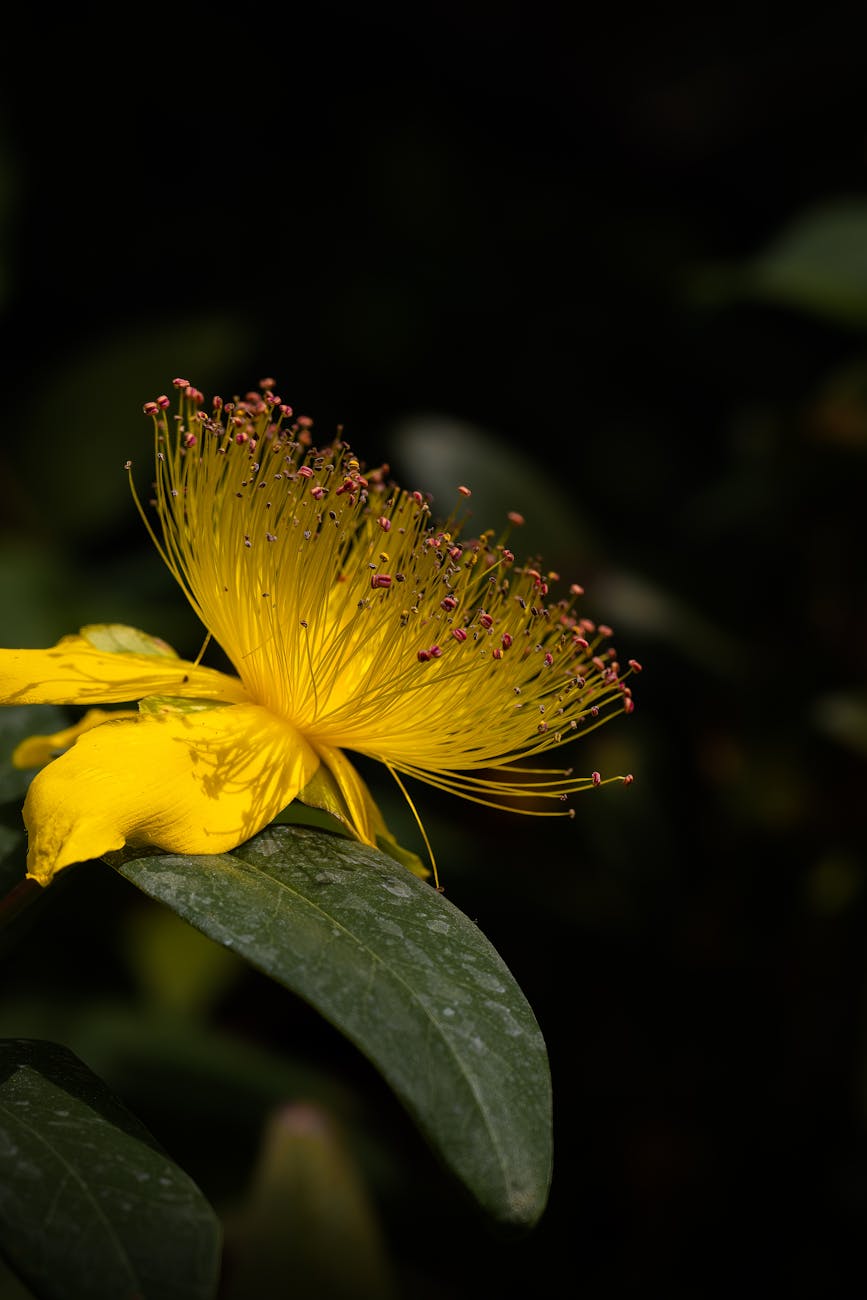
Bright yellow St. John's wort flowers.
Photo by Valter Zhara on Pexels.com

As for how this plant became known as St. John’s wort, it’s a bit of a convoluted story. Its history of use dates back to pre-Christianity, so it wasn’t always known as “St. John’s wort.” (As for the “wort” part, that’s just an old word for “plant,” derived from the Old English “wyrt.”) So, older sources will have their own names for this herb that may not be recognizable to modern readers. St. John’s wort also has a ton of regional names — in the US, it’s sometimes called goatweed, Klamath weed, or Tipton weed. In the UK, it may be called touch-and-heal, rosin rose, penny John, or balm of the warrior’s wound.

The name St. John’s wort came about because it was believed that this herb was at its most potent during Midsummer, and therefore should be harvested on or about June 24th. This was later turned into the Christian feast day of St. John, and so the plant became “St. John’s plant.” It’s also said that the plant’s red, blood-like sap runs in August, on the day that St. John was beheaded.

As evidenced by many of its healing-related common names, this herb is often hyped up in natural medicine circles. Topically, its oil is used to treat and soothe minor wounds in a similar fashion to commercial wound care ointment. Internally, it’s often used to help with symptoms of anxiety or depression. The reason it works is that St. John’s wort has a whole host of active compounds, including sesquiterpine oils, anthraquinone derivatives, and an interesting chemical called hyperforin. Hyperforin is particularly noteworthy, as it may be the source of St. John’s wort’s antidepressant effects, while the anthraquinone derivatives hypericin and pseudohypericin have demonstrated antiviral and/or antibacterial activity.

(As a side note, please avoid taking St. John’s wort internally if you’re on pretty much anything. It can alter how certain medications are metabolized by affecting specific liver enzymes, causing overdoses. It can also inhibit the effects of birth control, antivirals, chemotherapy drugs, certain anticoagulants, and medications for heart disease. Taking it with certain antidepressants also increases the risk of serotonin syndrome, and I don’t wish that on anybody.)

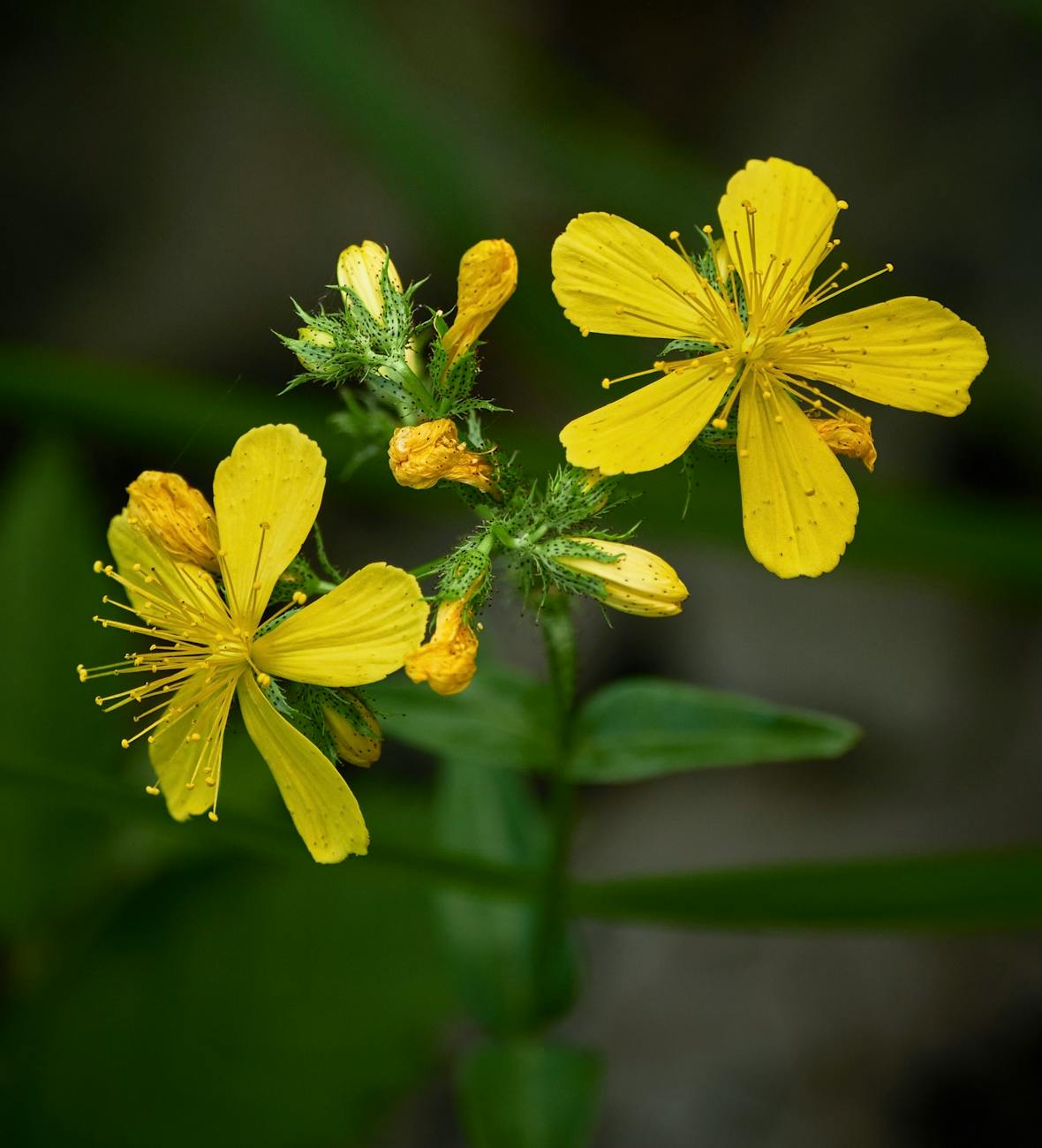
A side view of a creeping St. John's wort, Hypericum calycinum, flower.
Hypericum calycinum, or creeping St. John’s wort, displaying very similar flowers to Hypericum perforatum. Photo by shaosong sun on Pexels.com

Magically, St. John’s wort is often used to repel or banish evil. Another common name, fuga daemonium, literally means “demon flight.” It was often hung in houses, placed above religious icons, or carried as a protective talisman. Flowers, brought into the home on Midsummer’s eve, are considered particularly protective and lucky.

This plant also had some limited divinatory use as a kind of mortality predictor. If you took two sprigs of St. John’s wort and hung it over a marital bed, the sprig that wilted the fastest indicated which member of a couple would die first. Fun!

As a Midsummer plant, St. John’s wort is associated with the Sun and the element of Fire.

It’s probably best to work with this herb in dried or oil form. St. John’s wort is such a potent medicinal plant because the compounds that we use as medicine are actually the plant’s defensive mechanisms — they’re distasteful and poisonous to grazing animals, allowing the plant to grow unchecked. That’s not a super big deal if you’re within St. John’s wort’s native range across parts of Europe and Asia but can become a (rapidly spreading) problem if you’re not. This plant is considered a noxious weed elsewhere, so, unless you’re an herbalist who needs the fresh herb specifically, I’d avoid growing it.

If you have access to a patch of St. John’s wort, however, and you’re outside its native range, harvest all you like. (Not much else will use it, and you’ll be doing the native fauna and flora a favor.)

Use St. John’s wort oil for physical and magical healing. Its resemblance to blood makes it appropriate for workings related to birth, death, or rebirth (though I find a bit of bloodroot or alkanet steeped in red wine or vinegar to be a somewhat better — and easier to obtain — substitute for blood itself).

Use the dried herb for banishment. Burn it in bundles and waft the smoke around any space where you want to clear out malevolent spirits, magic, or the effects of the evil eye.

Place some of the dried herb in a protective sachet and carry it on you. You can also add it to jars, poppets, or other container spells as you deem appropriate.

life

Self-parenting and Rose Petal Jam

Hello!

So, as I write this, it’s Mother’s Day in the US. I’ve written in the past about having complicated feelings about this particular holiday, for what I think are pretty valid reasons.

(There isn’t really a long or terribly interesting story there, and it’s one that sadly seems to be all too common: I was tired of being smacked around and humiliated, I knew nobody around me was going to put a stop to it, so I did it myself. Fin.)

Rather than dedicating this post to practices to help heal from damaged or diseased familial relationships, this is for people who have had to come to the realization that they weren’t taught how to thrive and had to re-learn and re-parent themselves. Sometimes, people don’t seem to recognize that they aren’t just keeping little extensions of themselves — they’re raising future adults who will have to function in the world on their own. From seeing how other kids my aged lived, and what their families were like, I learned that things weren’t normal in mine.

Once I was on my own, I had to un-learn and re-learn everything. Nutrition. Cooking. Hygiene. How to relate to people different from me. How to recognize and recover from religious abuse. It was a lot, and I screwed (and still screw) up regularly.

So, if you’re a grown-up kid who’s also had to go back, undo the damage that was done to you, and re-learn how to live in ways that aren’t completely karked, this is for you. Chances are you’ve messed up time and again in the re-learning process, but that’s normal. The important thing is to not give up. No matter how old you are, it’s never too late for you to become the person you’ve always wanted to be.

This is a simple, but very tasty, recipe for rose petal confiture. Don’t be intimidated — it’s really very easy, it just looks and tastes fancy. To be honest, the hardest part is sourcing enough rose petals. (You’ll want ones that aren’t sprayed with anything or treated with systemic pesticides. I grew these myself, picked, and cleaned them right before cooking.)

A piece of bread covered in strawberry and rose petal jam, sitting on a blue-green plate beside a jar of said jam and a butter knife.
Pictured on a slice of fresh-baked einkorn bread.

Roses are an excellent herb for a variety of purposes, but they’re most commonly associated with love in all its forms. Visualize what life could be like if you were able to forgive yourself for whatever mistakes you’ve made in the re-learning process, and parent yourself the way that younger you needed. Infuse the preserves with this self-love as you stir them (clockwise, using your dominant hand). Eat them on bread, ice cream, yogurt, or fresh fruit.

  1. 2 cups of rose petals. Stronger-fragranced roses have a stronger flavor. For this, I used native Virginia rose petals.
  2. 1 cup of water.
  3. 1 cup of sugar.
  4. 2 tablespoons of lemon juice.
  5. A clean jar with a tight-fitting lid.

If you like, you can also add a bit of fruit to the preserves. I had an extra handful of strawberries, so I chopped them up and tossed them in, too.

  1. In a medium saucepan, combine sugar, water, and lemon juice. Bring to a boil, stirring constantly, until the sugar dissolves.
  2. Add the rose petals. Lower the heat to a simmer.
  3. Continue to cook, stirring frequently, until the rose petals release their color into the surrounding liquid and turn kind of pale and translucent and the syrup thickens a bit. (This’ll take about 20-30 minutes.)
    It won’t gel the way that fruit jellies or jams do and will maintain a somewhat syrupy consistency. That’s okay!
  4. Remove from heat and immediately pour into the jar. Put the lid on tightly.
  5. Keep the finished preserves in your refrigerator. They’ll keep for about a month but will probably get eaten long before then!

life

The Return of the Great Big Ennui

Note: This post contains a brief mention of self-termination.

Hello! I’m mentally ill.

I’ve never seen the point of beating around the bush about it. As a child, I was taught that there was a stigma around mental illness, therapy, and medication (a lesson that, among many others, luckily didn’t take). It just didn’t make much sense to me — if my pancreas or thyroid didn’t work the way it was supposed to, and I needed medication to help me, would I be ashamed? Why is it suddenly different if it’s brain tissue instead of glandular tissue?

I also don’t use person-first language for myself. I don’t have a mental illness. I have jackets and shoes I can take off if I want to. I have hair I can shave off if it annoys me. I am mentally ill. I can’t take that off like an itchy sweater. I’ll use person-first langauge for other people if that’s their preference, but it’s not for me.

So, cyclothymia (sometimes known as bipolar III) is marked by periods of hypomania, alternating with a kind of depression I refer to as “The Ennui.”

Why ennui? I call it ennui because, for me, it’s a feeling marked by bone-deep, existential boredom. Nothing is exciting. Nothing is inspiring. The things I usually enjoy become thin, gray, muffled, and flavorless. I start to be afraid that nothing will ever make me happy or enthusiastic about life again. And every time, I begin wondering if I should “encompass my own demise,” as it were, and save myself some time.

I also call it ennui to trivialize it to myself. To name a thing is to gain a measure of power over it. To name a feeling of anhedonia so deep that it threatens my existence, and name it after something as unserious as ennui, helps shrink it a little bit. It’s a reminder that this state is fleeting — just a temporary eddy in my various brain sauces, however unpleasant it may feel.

This ennui happens completely irrespective of what else I have going on. It happens on its own inscrutable, irregular schedule, independently of my hormonal cycle, the time of year, or anything else. I could have an event that I’ve been looking forward to for months and, when I hit an ennui cycle, that feeling deadens completely. I could have absolutely no reason to feel down, sad, or uninspired, and my brain chemistry literally could not give less of a shit about any of that.
If it’s ennui time, it’s ennui time.

Fortunately (for a very questionable definition of “fortunately”), this has happened often enough that I know, on a logical level, that it’s temporary. I certainly don’t feel it in the thick of things — that’s where a lot of that worry comes from, the idea that this is forever and I will only ever feel this way for as long as I live. But it’s always been temporary before.

There’s no cure for this. There’s barely treatment for it. I use an SSRI to handle the symptoms of panic disorder, but those typically aren’t the best for your various bipolars. Nonetheless, I’d rather have to deal with periodic ennui than the absolutely brutal panic attacks I used to experience, so here we are.

(Because I know there are caring people out there who offer advice because they don’t want to see another person suffer needlessly — I have a very good supplement regimen and diet, based on some in-depth blood tests and the advice of my excellent general practitioner. My GP is also a psychiatric nurse practitioner, so I’m all good on that front.)

So, if I haven’t been posting as much lately, it’s because I haven’t been doing much lately. I go through the motions — cooking, cleaning, doing paid writing gigs, tidying up the garden, making plans in the hopes that I might one day actually care about doing them — but there’s a very deep sense of “why bother?” about it all.
What difference does any of it make in the face of eventual oblivion?
Will the heat death of the universe care if I get dressed or not?

If this sounds like you, or someone you love, remember this: It’s temporary. It won’t feel like it is when you’re in the moment, but it is. Eventually, it’ll lift. When it does, do the things you need to take care of yourself. Set up a simplified routine that you can follow, even in the midst of an ennui. It won’t fix it, but it’ll make it more bearable and keep you from backsliding and feeding further into that despair.

For me, it looks a little like this:

  • A simple exercise routine. At one point, all I could do was tai chi in bed, so I did that. Now, I do about ten minutes of stretching, and ten more minutes of literally any other intentional, somewhat vigorous movement. It’s not going to get me jacked or anything, but that’s not really my priority at times like this.
  • Several simple sets of clothing. My criteria were that they had to be inexpensive enough for me to have several of them, so I could rotate them and have clean clothes even when I wasn’t able to do laundry. They also had to be comfortable, but something that I could conceivably leave the house in if I absolutely had to. Lastly, I wanted something that wasn’t disposable “fast fashion” or made of synthetic fibers that would annoy my skin. I decided on a set of recycled silk caftans, and they’ve worked out really well for me.
  • Simple, reasonably healthy food that requires very little energy to prepare. Sometimes, when I feel The Ennui coming on, I make a big pot of lentil soup or kitchari and a loaf of bread to last me through the worst of things. Other times, I eat a lot of stuff like this instant split pea soup. It has a simple ingredient list, plenty of protein, fiber, and potassium, and not a ton of salt. Open it, plop it in a bowl, microwave, done. I also like having a bottle of vegetable juice, some kind of protein powder, shelf-stable plant milk, and a fortified breakfast cereal on hand, just to fill in the gaps.
  • Simple hygiene. A low-maintenance haircut and uncomplicated skin- and haircare. Trader Joe’s facial cleanser and some jojoba oil. Lip balm. If I feel up to it, some hyaluronic acid serum. Moisturizing body wash, so I don’t need to bother with lotion. Even when I don’t have the energy for anything else, it at least keeps my skin clean and feeling okay.
  • A pill organizer. My memory is very damaged from pseudotumor cerebri at the best of times and seems to get worse when my mood dips. A pill organizer ensures that I don’t miss anything and accidentally make myself feel even more terrible.
  • Something to listen to. It doesn’t really matter what it is. I prefer listening to YouTubers or podcasts, only because having a person talking as background noise seems to be more helpful than music alone. I like:
    • ManlyBadassHero, for very relaxed horror game playthroughs. The games might be scary, but the videos very much aren’t. They’re chill and funny.
    • Zachary Michael and Zachary Michael Also, for reaction videos. Zachary Michael can be a bit polarizing (people seem to either love them or can’t stand them), but I enjoy their videos. They’re upbeat, funny, and often very heartfelt.
    • WiLLo Davis, for other reaction videos. Willo is also a musician, and the parody songs he makes to go with his videos are just *chefkiss*.
    • Dreamingofavalon. This channel has been more-or-less on indefinite hiatus for a long time, but their old videos are very lighthearted, upbeat, and uplifting. Lyn went on to start Desert Plants of Avalon with her partner, Hans. These videos have the same general feel as Dreamingofavalon does but are all about cacti and succulents.
    • SeizureRobot5000, for very specific reaction videos. SR5000 makes videos about musician, YouTuber, and dank food hacker Josh Saunders, alias KingCobraJFS, and they’re some of the funniest things I’ve listened to (especially the videos with Chauncey).
    • Robert Welsh, for makeup and beauty. I don’t care about either, but I could listen to him do deep dives into beauty companies all day. Some beauty industry controversies are bonkers.
    • I also like the Last Podcast on the Left. In particular, I usually listen to their series on Aleister Crowley when I’m feeling bad. Their cult, occult, and paranormal content is my favorite, but they also have a lot of true crime and alien episodes as well.
    • This Paranormal Life is a smaller comedy podcast put out by two best friends. In each episode, they investigate a paranormal tale, case, or claim and determine if it’s truly paranormal or not. The hosts’ chemistry and humor are fantastic, and I’ve loved every episode they’ve put out.
    • I’ve also gotten into watching Chinese historical dramas, like Ruyi’s Royal Love in the Palace. I don’t even necessarily watch the episodes in order. They’re just beautifully costumed and full of intrigue.

Remember, any self-care worth doing is worth doing badly. I may not be able to home cook meals, but reasonably healthy packaged food is better than no food at all (or eating half a jar of olives while standing over my trash can). I may not be able to exercise, but a few minutes of stretching or walking in place is better than not moving at all. This is one situation where half-assing something beats the alternative.

I don’t know if this will help anyone, but it helps me. Remember, this feeling doesn’t last forever. It doesn’t even last all that long, though it can certainly feel like it. The trick is to have a simple plan in place so you can properly take care of yourself in the midst of it all. Set this up when you don’t need it, so you can lean on it when you do.