The other day, I posted a video of foraging and processing kudzu roots to a group I’m a part of. A few friends seemed interested — one messaged me that they knew of a potential patch. That weekend, armed with trowels, bags, and gloves, we set out to track us down some kudzu.
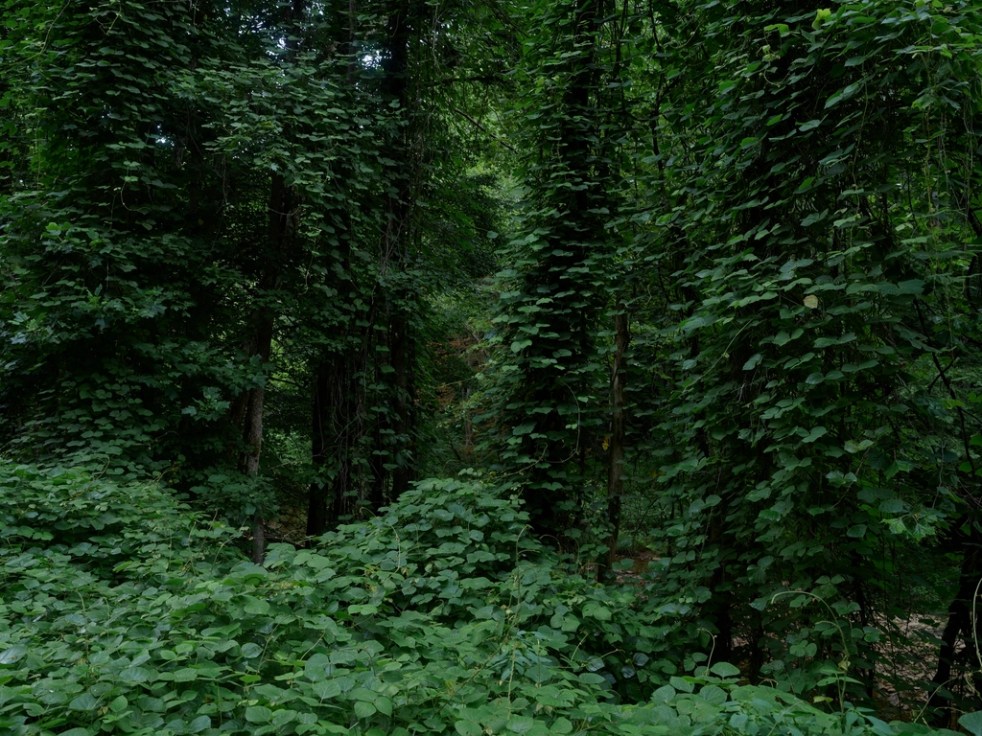
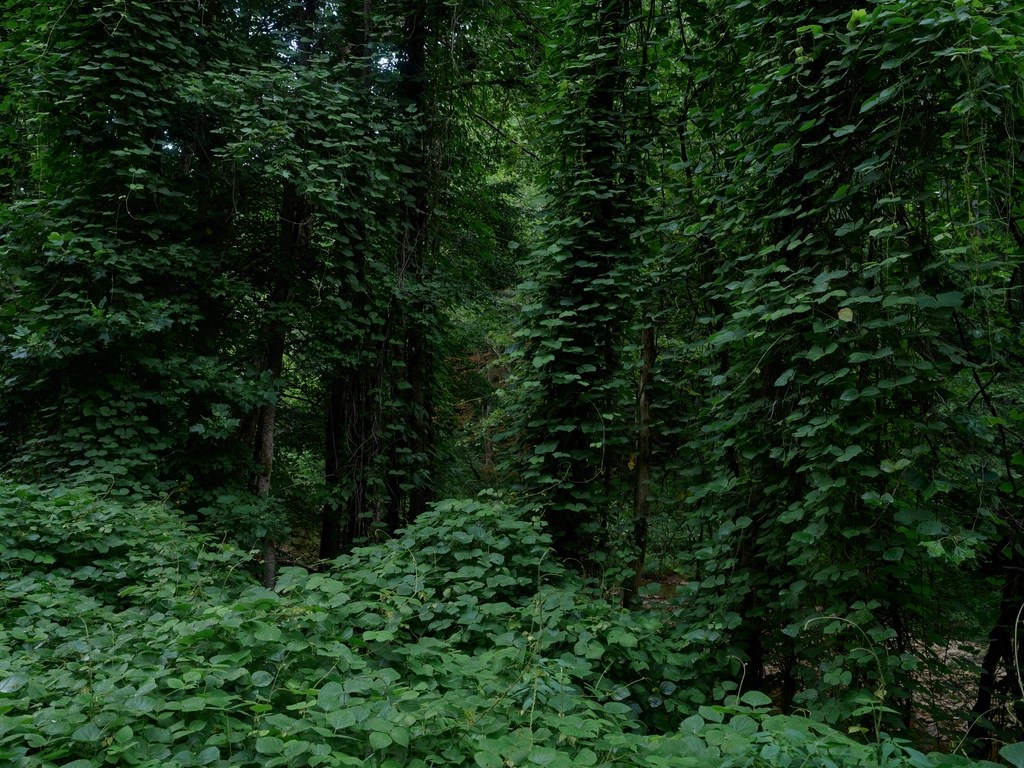
If you’re in the southeastern US and you do any kind of gardening, the word “kudzu” may well strike fear into your heart. As Nature.org‘s “Kudzu: The Invasive Vine that Ate the South” puts it, “kudzu is quite a killer, overtaking and growing over anything in its path.” Drive down a highway, and it’s not uncommon to see it choking out trees, climbing over fences, and dragging down powerlines.
In short, we were more than happy to learn how to eat some.
In its native range, kudzu is still an aggressive grower. It’s not invasive, of course, because a native plant by definition can’t be invasive. One of the things that helps keep kudzu in balance is the fact that it’s useful as a food and medicinal plant. People regularly harvest it to eat as a root vegetable and process into starch.
There’s only one problem: It was very early spring. There were no leaves on anything. Identifying it meant looking for a specific kind of brown twig in a mass of other brown twigs, then trying to follow it back to the ground, dig there for a while, and hope it had led to something resembling a kudzu root. Fortunately, kudzu doesn’t have many lookalikes, and its hairy stems and growth habit help to differentiate it.
Also, kudzu roots get enormous.
My Handsome Assistant is a powerlifter. Even with him pulling and our friend and me digging, it still took a lot of time to liberate several fairly small roots. Still, it was a success and, I figured, I decent amount for a first attempt. Nothing we’d have to bust out a table saw to cut through. Just enough to hopefully end up with some starch (and give us the opportunity to decide if it was worth the effort).
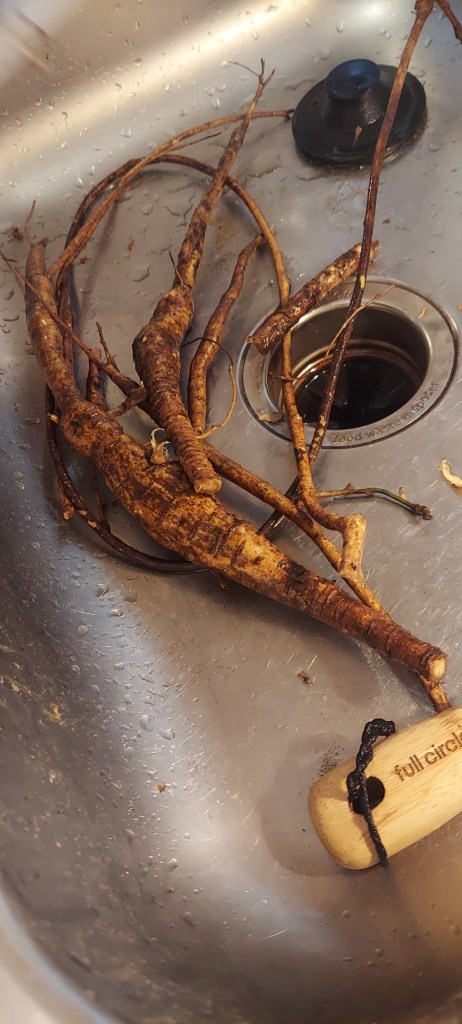
Some of the kudzu roots, trimmed from a larger one.
Tl;dr, I’m probably just going to make them into a stew next time. Maybe paper.
Processing the kudzu roots involved scrubbing them well, peeling away their tougher, fibrous outsides, cutting them into chunks, and pureeing them well with plenty of water. Once pureed, we strained the pulp, squeezed it out, rinsed it, squeezed it out again, and poured the liquid into large jars to let the starch settle to the bottom.
It was that last bit that proved the most problematic.
See, we’d hoped to get the roots before they used their stored energy (in other words, starch) to put out a flush of new spring growth. However, the roots we got were small and fairly skinny (which is probably for the best — we might’ve needed a backhoe for big ones). The little bit of starch that settled out ended up lost during the refinement and decanting process.
Still! It was an interesting learning experience. I’d definitely change how we did some things (like I mentioned, I’d love to try preparing the smaller roots in other ways, like roasting or stewing). I also have a mold and deckle and, considering that starch is used as sizing for papermaking, I’d like to try using the pulp to extract most of the starch and, rather than discarding/composting the pulp, see how it works in paper.
These chocolate chip cardamom cookies are delicious, easy to make, and suit a number of dietary restrictions. You can even make them gluten-free if you substitute your favorite 1:1 GF flour for the einkorn. The cardamom gives them a unique flavor that pairs beautifully with the chocolate (and has some other unique properties, if you’re into that).
Chocolate Chip Cardamom Cookie Ingredients
Drys
2 cups of einkorn flour (I usually use 1 1/2 cups of white einkorn, and 1/2 cups of whole grain einkorn)
1/2 t baking powder
1/2 t baking soda
3/4 t salt
1 t cardamom
1/2 to 3/4 cup of chocolate chips (honestly, I just throw in handfuls until my soul says it’s good)
Wets
1/4 to 1/3 cup sugar (unbleached, raw sugar if you’re vegan)
1/2 cup maple syrup
1/2 cup avocado oil
2 T chia seeds
1 t vanilla extract
Instructions
Preheat oven to 375° Fahrenheit.
Start by combining your wet ingredients. Just put ’em all in a bowl and give them a good stir, then set them aside to thicken a bit. (For our purposes, chia seeds serve as a wet ingredient — they’re our egg substitute. Some people make a “chia egg” by soaking the seeds in water first, but I find that this makes the chia flavor a bit more forward. I’ve found that hydrating them in the maple syrup, sugar, vanilla, and avocado oil avoids this.)
Sift together your dry ingredients, except for the chocolate chips. Add those after sifting.
Add the wets to the drys, and mix until they form a dough. Einkorn doesn’t absorb as much moisture as conventional wheat flours do, so the dough is likely to be a bit looser or wetter than you may be used to. That’s fine, but, if it’s so loose that it won’t even hold together in spoonfuls, add some more flour.
Place the dough by rounded spoonfuls on a greased cookie sheet. Bake for 12-15 minutes at 375°. (I make big spoonfuls, so I usually get about 15 cookies from this recipe.)
Allow to cool, then enjoy!
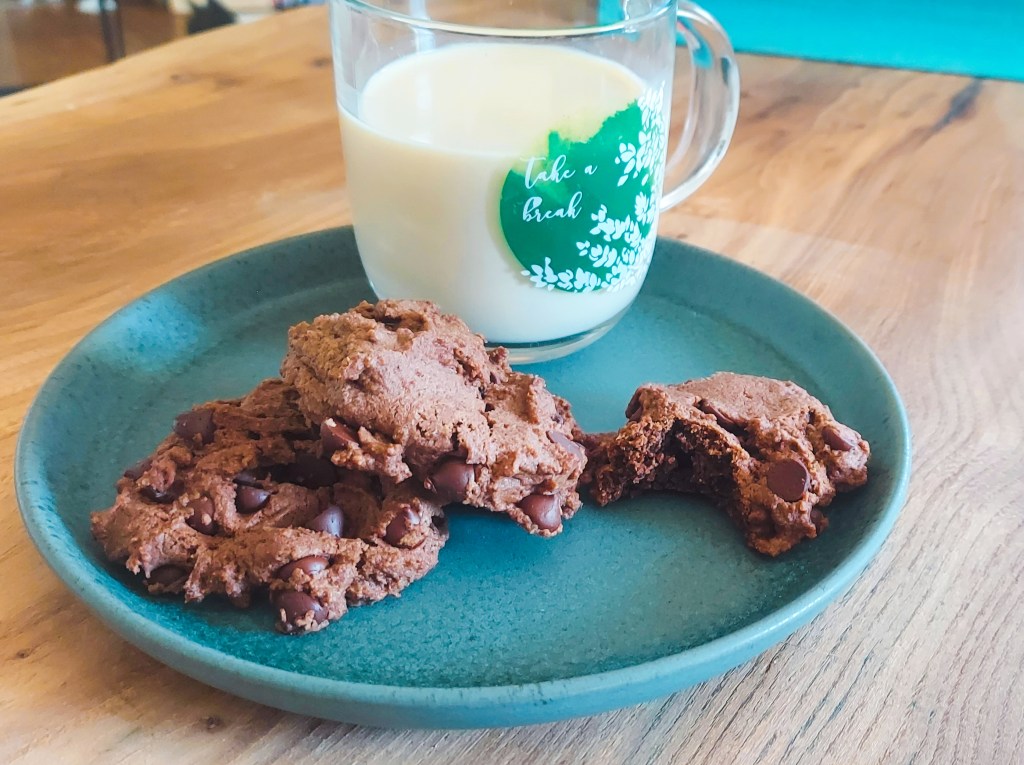
I love these chocolate chip cardamom cookies with milk (hemp or Ripple), but they’re also really good with a warm cup of spice tea. Sometimes, I’ll even eat one or two for breakfast — chia seeds are good for you, and the flour and maple syrup means these’re basically pancakes, right?
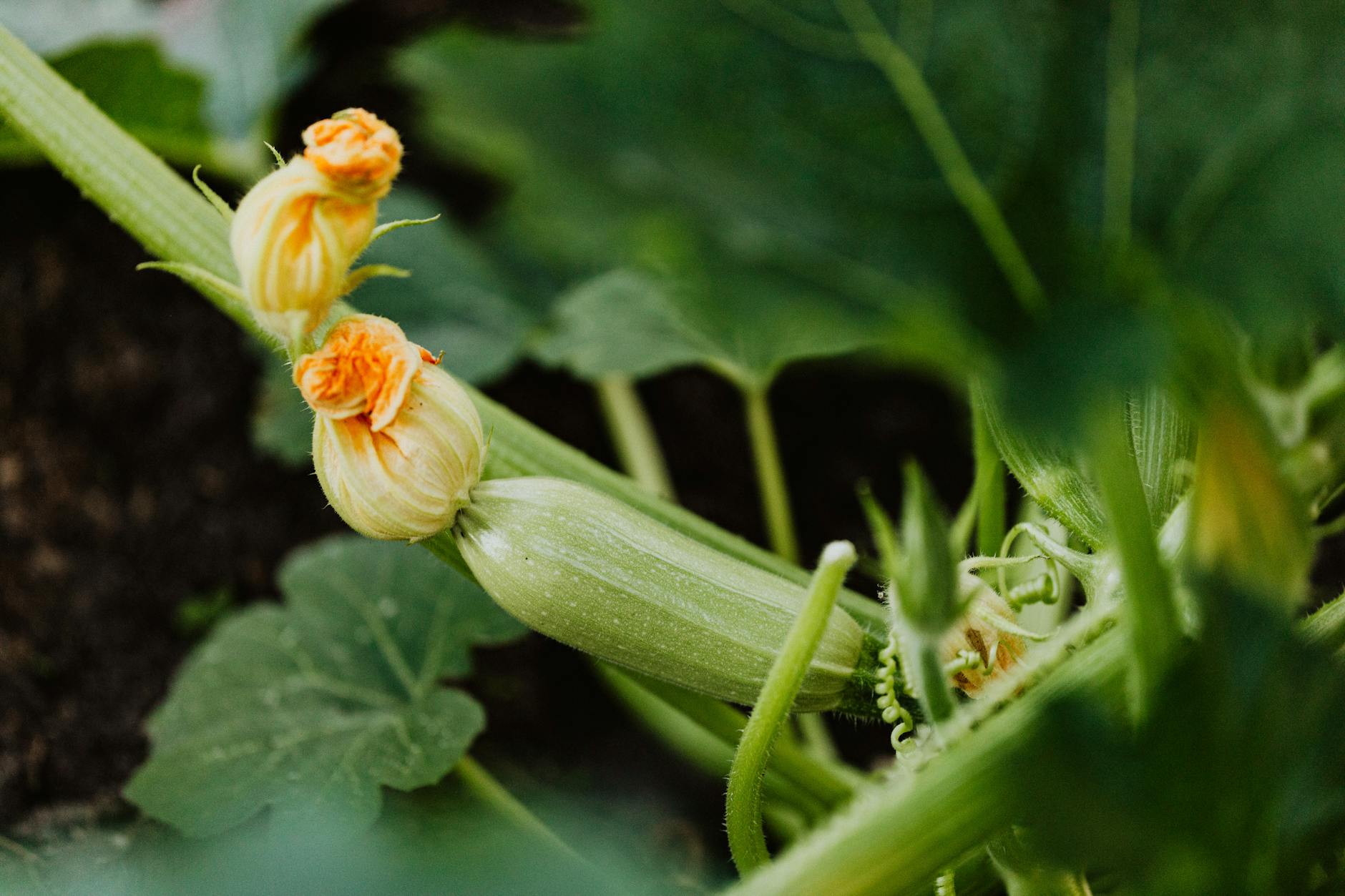
Have you been visited by a Zucchini Fairy yet? It’s a little early, but I have it on good authority that there have been a few of them about. Zucchini Fairies are magical creature known to visit neighborhoods where at least one person has planted zucchini. Overnight, a Zucchini Fairy scopes out these gardens and, the next day, all of that person’s neighbors wake up to boxes of unasked-for zucchini on their doorsteps. They’re very mysterious creatures. In fact, nobody’s ever seen one. All that’s known about them is that they are most definitely not the neighborhood zucchini-grower attempting to get rid of some of the absolutely outrageous number of vegetables that their plants put out.
Honestly, zucchini are really great plants for beginning gardeners. They’re both prolific and easy to grow, so it’s not hard to end up with an absolute buttload of fresh zucchini. You can make them into noodles (aptly named “zoodles”), roast them, slice them thin and fry them, or even bake them into desserts. If you’re more magically inclined, you can also tap into their metaphysical properties.
Zucchini Magical Properties and Folklore
The zucchini we have come to know and love was developed in Italy in the 19th century but did not originate there. It’s one of many plants that came from the Americas and underwent generations of selective breeding to arrive at its current form. Because the modern zucchini is relatively new, there’s not a lot of traditional herb lore around it.
In some areas, locals warn that you should never leave your car windows open during zucchini season. You may return to find your car packed full of it (probably by Zucchini Fairies).
(On a related note, August 8th is official Sneak Zucchini onto Your Neighbor’s Porch Day. I’m not doing zucchini this year, so, if you live near me, yas better strap in for some pumpkins instead.)
While squash is one of the Three Sisters in the traditional foodways of many Indigenous American cultures, that involves other species of squash and not what we picture when we hear the word “zucchini.” Combining corn, beans, and squash creates a food ecosystem in which each plant is fed, supported, and protected. In some Indigenous agricultural practices, each of the three plants is believed to be looked after by one of the Three Sister Spirits. These Spirits are three siblings who were never apart in life — so now, the Three Sister plants much always be planted together, eaten together, and celebrated together as sustainers of life.
If you intend to eat zucchini more or less as-is, seasoned growers suggest picking it when it’s between 6-8″ in length. When it becomes larger, it can get a bit seedy and lose its tenderness. Don’t worry, though — the bigger, tougher zucchini are still delicious when grated and made into breads, cakes, or fritters, so they don’t need to go to waste.
Due to its prolific nature, zucchini is commonly used in magic for fertility and abundance.
Zucchini is associated with the element of Earth. Practitioners who use the masculine/feminine energy dichotomy also associate this plant with “feminine” energy.
Using Zucchini
It’s possible to pick zucchini leaves or flowers to use in things like sachets or jar spells, if you wish. You can also batter and fry the flowers, which are delicious.
Personally, I prefer to leave the leaves and flowers where they are. I find the leaves unpleasant to touch, and the plant needs them more than I do. The flowers also provide food and shelter for pollinators — at night, squash bees like to crawl up inside them just before the flowers close. It gives them a safe, cozy little sleeping bag to curl up in.
As for the vegetables themselves… They’re not exactly the kind of thing you’ll be tucking into your dream pillows or anything (though that mental image is hilarious). So, in lieu of all that, here’s a fantastic recipe for egg-free, dairy-free, nut-free zucchini bread. It also uses cinnamon, which is considered a magical catalyst and love/money herb. Project your intention into the batter as you mix it, and you’ll have a delicious loaf of abundance and prosperity magic when you’re done!
Easy and Tasty Vegan Zucchini Bread
Dry Ingredients
1 cup white einkorn flour (or use regular wheat flour)
1/2 cup whole grain einkorn flour
1/2 teaspoon baking soda
1/2 teaspoon baking powder
1/2 teaspoon salt
1 teaspoon cinnamon
1 tablespoon ground flaxseed
A whole bunch of chocolate chips, walnuts, or anything else you’d like to mix in (optional)
Wet Ingredients
1/4 cup avocado oil (or other oil or fat source of your choice)
2/3 cup maple syrup
1 teaspoon vanilla extract
1 C grated zucchini
Directions
Preheat your oven to 350 degrees Fahrenheit.
While that happens, whisk or sift together your dry ingredients.
Add your wet ingredients and mix thoroughly. (If you’re using regular wheat flour instead of einkorn, you may wish to add a little extra oil, maple syrup, or a few tablespoons of a milk of your choice — einkorn typically requires less liquid than regular flour.)
Spread the batter in a well-greased loaf pan. Bake for 50-55 minutes, or until a toothpick inserted in the center comes out clean.
Whether you’re visited by the Zucchini Fairy, are your local Zucchini Fairy, or purchase your zucchini from the grocery store, these versatile vegetables are a great way to inexpensively pad out pretty much any recipe you can think of. Breakfast? Zucchini muffins. Lunch? Zoodles and pesto. Dinner? Roasted zucchini as a side. Dessert? Chocolate chip zucchini bread. Focus on the abundant, fertile, and prolific nature of these amazing plants, and invite their energy into your life.
Hello (and a relaxed and happy Pride Month to all of my fellow LGBT+ people)!
I am freshly returned from a brief trip to Cape May, NJ. My Handsome Assistant and I wanted to take some time to be near a beach for a bit, and managed to time things so we would a) have nice weather, but also b) be there during the “off season” when accommodations are generally a lot cheaper and easier to get. Fortunately for us, the stars aligned and we got a very nice room in the Angel of the Sea bed and breakfast.
(And when they say “and breakfast,” they mean it. You want breakfast? There’s fresh fruit, fancy breads, and three different entrées to pick from. Feeling snacky? There’s tea and pastries in the afternoon. Want to relax in the evening? There is wine and mountains of charcuterie. Even after you check out, you’re invited to return later that day to enjoy the amenities.)
The Angel of the Sea even comes with its own ghosts. It’s a very old building that was actually kind of… cut in half and transported to its current location. As a result, parts of it aren’t very accessible — think the narrow hallways and steep staircases you get with historic buildings — but are super haunted. As many as four ghosts have been reported to make an appearance there. There’re electrical shenanigans, shaking beds, and mysterious phantom coughs.
Our room even had a complimentary Grandma.
I brought my ghost box, figuring it’d be interesting to mess around with during our downtime. I wasn’t able to get much on the scanner, but we also didn’t experience anything out-of-the-ordinary in our particular room, either.
We did meet a gentleman named Gary who was there with his wife. Gary was a lot of fun — always enthusiastic and down for a conversation, where he’d flit from subject to subject like a hummingbird. We talked about all kinds of things every time we ran into each other: history, haunted places, music, life, death, rehab, and more. He told us a story about someone close to him passing away. Even though this person appeared to have flatlined, they turned their head, looked into the empty doorway of their hospital room, and asked, “Which way do I go?” before they passed.
Even if you don’t find a ghost in your hotel room, places like this are generally home to absolute treasure troves of fun and interesting paranormal stuff. You’ve just got to know where to look. (Antique stores. The answer is antique stores.)
I have made the weird and occasionally embarrassing habit of going into antique stores, finding someone who works there, and straight-up asking them, “If you had to guess, what object here would you say is the most likely to be haunted and/or carry some kind of terrible curse?”
(If I had to guess, it would be any one of these things. Did you know the original Annabelle doll was a Raggedy Ann? Fun!)
As it turns out, antique stores are usually not super busy and are full of dead people’s stuff. I have yet to meet an antique store employee who has not jumped right in to talking about the weird stuff that goes on there at night. Some are more skeptical, but most of them will eagerly tell you about all of the things they’ve seen or heard.
For example, Antiques Emporia is home to the ghost of a little girl. She rearranges things at night and opens the packaging of vintage toys.
Capt. Scraps in Ocean City has even been the subject of a professional paranormal investigation. Multiple customers, on several separate occasions, have reported the sense that there was something there. Eventually, an associate of one of the owners brought in a full team with EMF readers, scanners, and the works. While investigating, they were able to decipher the words “Henry. Fire. Dog.” It was later discovered that a local antiques dealer named Henry had lost his shop, his dog, and his life in a terrible fire. Some of his paintings ended up at Capt. Scraps, and Henry decided to come along with them!
I don’t know if this was one of his paintings, specifically, but something about it really struck me and I had to get a picture of it.
This store also has its share of shadow people, odd phenomena on security cameras, and the general “sense” of a ghostly presence. It’s a really neat shop.
So, while I wasn’t able to get any recordings or paranormal experiences of my own, I did come away with lots of stories.
We also found a lot of shops that were right up our alley. Good Scents has a ton of local art and jewelry, candles, soaps, and incense. (We picked up some soaps, massage oil, and a box of “smokeless” Hinoki cypress Japanese incense.) Best of all, it’s quality stuff — not the kind of smells that immediately make my throat puffy and make me feel like someone is driving nails into my face.
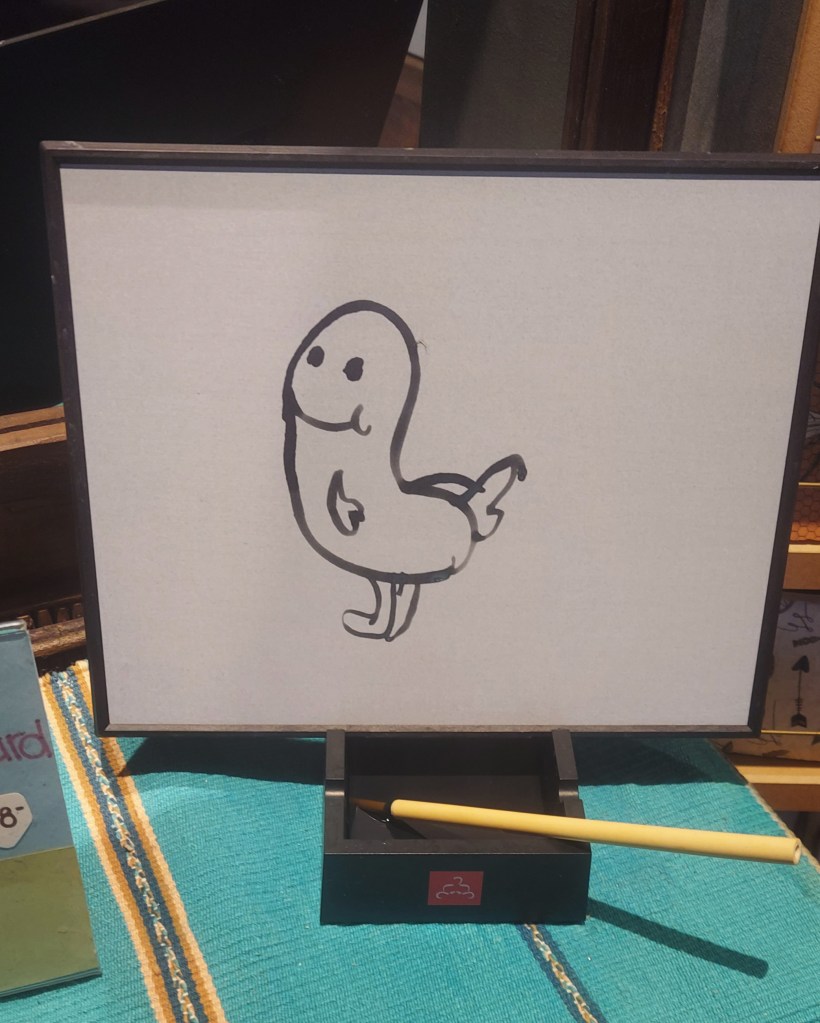
They also had one of those boards that you can draw on with water. Usually, you use them to write little notes or affirmations. Because I am a giant obnoxious child, I used it to draw a rushed, ersatz Dickbutt. (Don’t worry, I didn’t leave him there for impressionable childs to see. I drew over it.)
Guardian is another delightful place to stop if you enjoy metaphysical shops. It’s small, but well-stocked. It has some tarot and oracle decks I hadn’t seen anywhere else, and a very nice selection of books. (I picked up one that I can’t wait to review here.) When we checked out, the proprietor had us choose cards from an oracle deck — we read the affirmations and she had us keep the cards as a little bit of positivity.
We also went on a bit of a hunt for vegan cupcakes. We’d managed to find plenty of meat-, egg-, and dairy-free meal options for me, and tons of fresh seafood for my Handsome Assistant at places like The Mad Batter (like their seitan hot wings and vegan tostadas) and Good Earth (which had an amazing cauliflower steak with chimichurri), so finding vegan restaurants in Cape May wasn’t a problem at all.
My Handsome Assistant also brought me some fancy chocolates, like the Gay Bar. It’s pretty much an Old Fashioned cocktail in chocolate bar form, and it was delightful. I’ve had boozy chocolate before, but mostly just those little chocolate bottles filled with rum. Nothing really cocktail-inspired and uniquely flavorful like this.
We did eventually find Chocolate Face, a bakery that had vegan cupcakes. The chocolate ones were even oat- and nut-free, so they ticked all of my “weird dietary issues” boxes. This was about twenty minutes from where we were staying, so we decided to poke around at a couple of neat looking shops we’d seen on the map.
And buddy, we were not prepared.
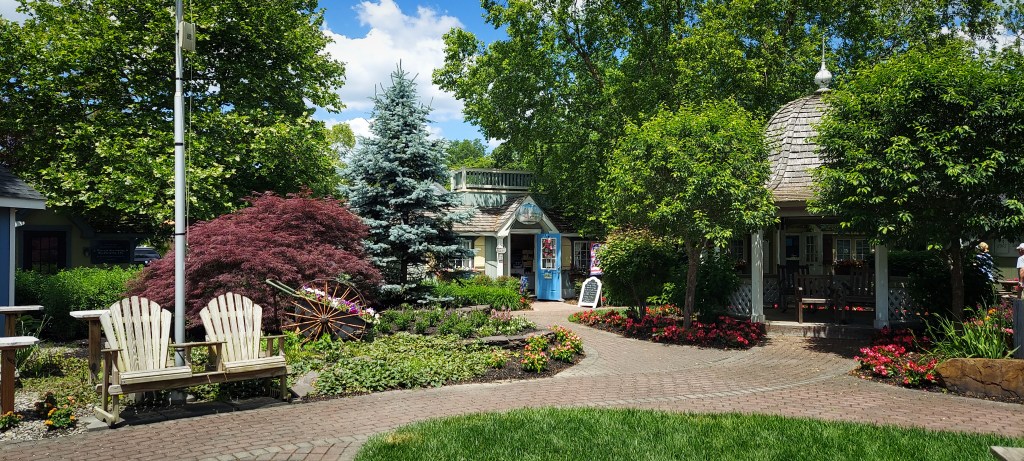
Just look at this idyllic-ass nonsense.
Don’t mind Longcat. He is protecting a stranger’s identity.
I thought it was going to be a couple of strip-mall type shops clustered around a parking lot. I was so wonderfully wrong. It was Woodland Village.
It was like… I don’t know. Little fairy cottages. Pricey goods, but not of the cheap, souvenir variety. All of this stuff was high-end. Handmade art and sculpture. Handmade clothing with vegetable-dyed fabrics. Handmade gemstone jewelry. Fine gemstone specimens. Handmade incense. Upscale men’s clothing. Teas. Perfumes. Spices.
In Red Door Gallery, I wanted to show my Handsome Assistant a pour-over coffee funnel in a beautiful, glazed ceramic. While I reached for it, I clumsily knocked over a small sculpture of a sheep. We thought he was okay, but, sadly, one of his ears was knocked off in the fall.
Obviously, I was going to bring him home and fix him.
Once we’d finished shopping, we brought our purchases (mostly handmade cat toys for the dummy squad back home). I set the small, broken figure on the counter.
“He was a casualty of the fall, but it’s okay. I can repair him. I have the technology.”
“You… really don’t have to do that,” the proprietor said.
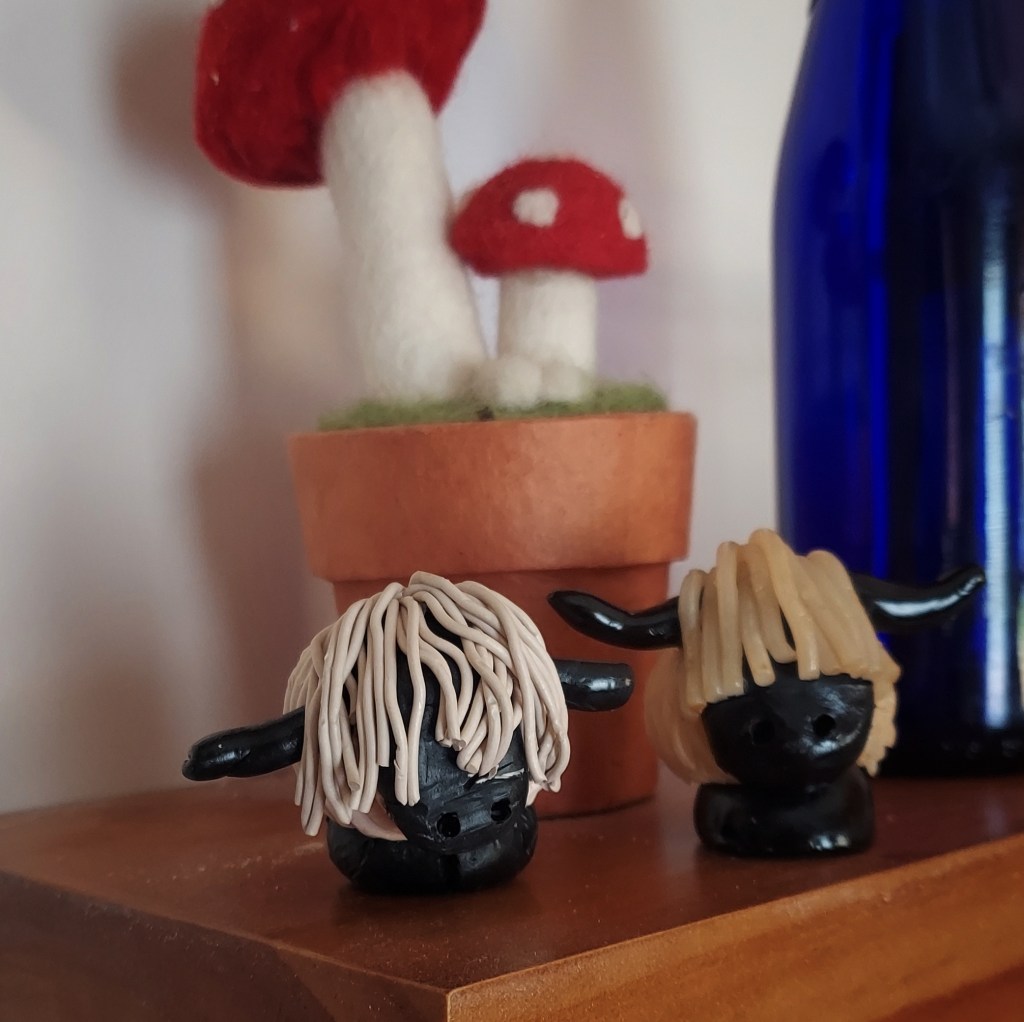
As it turns out, she was the artist who made the little figures. She didn’t want us to buy him just because he was broken, and insisted we pick out a whole one instead. I thought they were cute anyhow, so I did — even though I felt bad about the little sheep with his broken ear.
“Can you fix the broken one?” My Handsome Assistant asked.
“Oh, I don’t know,” she explained. She said she’d likely end up throwing him away.
My Handsome Assistant came over and whispered to me.
“Okay, would you really rather have the broken one, or the other one?”
“I mean… They’re both very cute, but I am going to feel terrible if the broken one ends up in the trash.”
Sure enough, he went back to the cash register and asked if, since the broken one was likely to be tossed anyhow, we could have it.
So, a bit of glue and patience later, I now have two small clay sheep in my kitchen, and a partner who is very understanding of all of my strange bullshit.
We also stopped in Summer Studio Avalon, which I probably could’ve spent all day in. It was just filled with gorgeous, handmade things. (I got a rutilated quartz, moonstone, and pyrite bracelet, some incense, and a pair of flowy teal pants that I am probably going to live in from now on.) There was beautiful embroidery, handmade incense, artwork, accessories, sculptures, crystals, all kinds of the exact sort of things I could happily spend an inordinate of time looking at and/or smelling. The proprietor was also very nice — we got caught up in a conversation about writing things, painting, and the fact that rainbow moonstone isn’t actually a moonstone and is more like a white labradorite.
We also stopped in Northeast Man, mostly for my Handsome Assistant. I found some really nice shirts and a solid cologne (Duke Cannon’s Bourbon, which he bought and I have been sneaking from him because it smells excellent and is the exact way I want to smell forever), but everything fit me in a less “mysteriously androgynous” way and more in a “fourth grader wearing their dad’s shirt” way. Most of the things there weren’t quite my Handsome Assistant’s aesthetic — more “Boat Dad” than “Office Druid” — but there were some really nice, high-quality pieces that suited him very well.
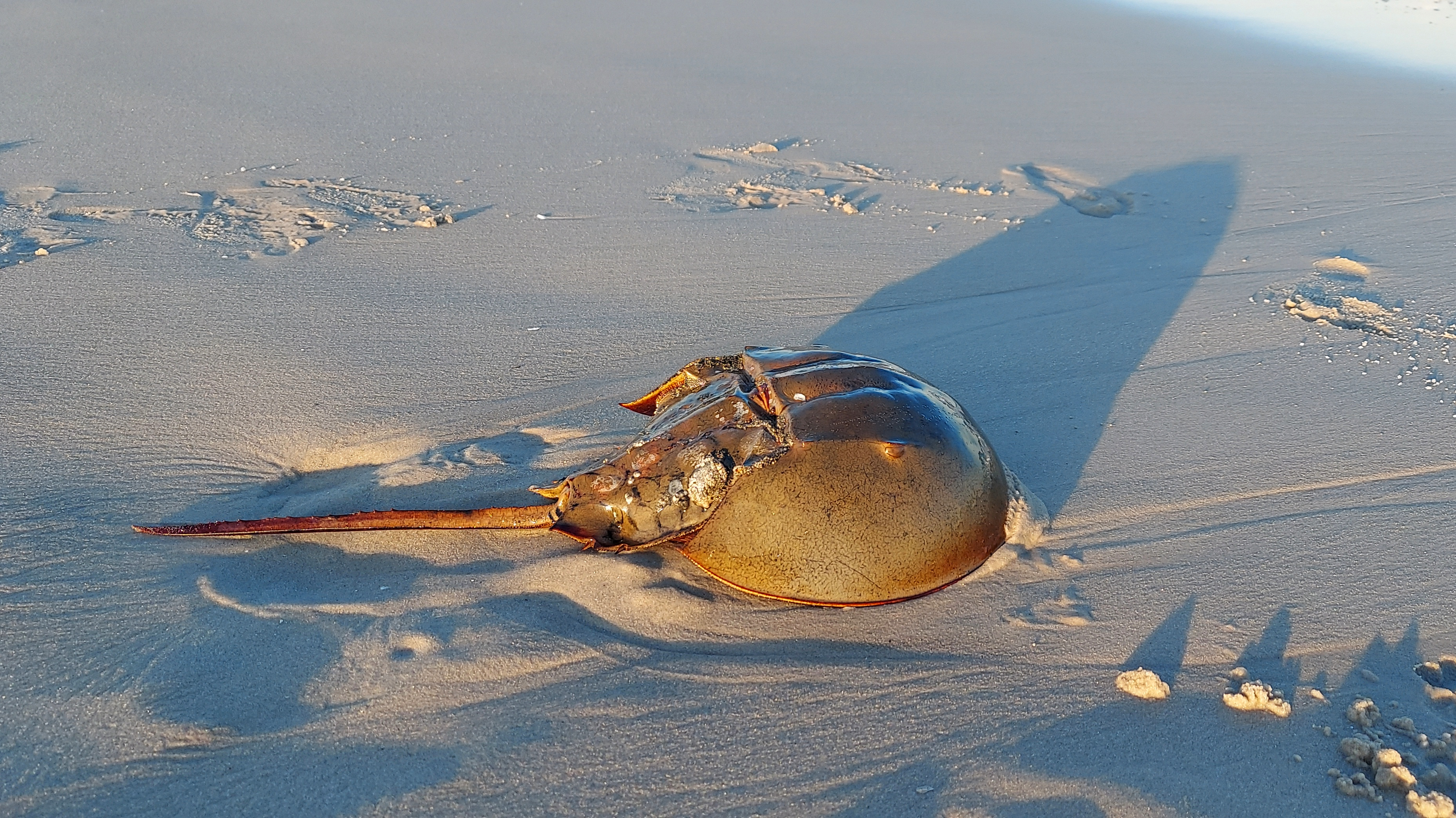
Since the Angel of the Sea is about a half a block from the ocean, we spent some time doing sunset beach walks. The weather was gorgeous, and the slanting golden light made the crests of the waves seem to glow. We also came upon a very large (and extremely deceased) horseshoe crab, which my Handsome Assistant had never encountered before. (He’s from a landlocked state, so his experience with wild marine life is somewhat limited.)
We also kept an eye out for trash, like we always do. There really wasn’t much — I think we picked up two cellophane wrappers and a water bottle, all told. It was very clean, especially compared to some beaches and hiking trails we’ve been on.
Fortunately for my Handsome Assistant, we did stop at the Nature Center of Cape May. We watched gulls and ospreys overhead, listened to the songbirds on the balcony, and admired the large, live horseshoe crabs in the marine lab.
Am I disappointed that we didn’t find any ghosts ourselves? Not really. It would’ve been interesting, but I’m fully satisfied with the experience that we had. Even during the tail end of its “off” season, Cape May was a lot of fun. Woodland Village was great, the abundance of antique stores (and antique store ghost stories) was awesome, the food was fantastic, and the beach was beautiful.
(There isn’t really a long or terribly interesting story there, and it’s one that sadly seems to be all too common: I was tired of being smacked around and humiliated, I knew nobody around me was going to put a stop to it, so I did it myself. Fin.)
Rather than dedicating this post to practices to help heal from damaged or diseased familial relationships, this is for people who have had to come to the realization that they weren’t taught how to thrive and had to re-learn and re-parent themselves. Sometimes, people don’t seem to recognize that they aren’t just keeping little extensions of themselves — they’re raising future adults who will have to function in the world on their own. From seeing how other kids my aged lived, and what their families were like, I learned that things weren’t normal in mine.
Once I was on my own, I had to un-learn and re-learn everything. Nutrition. Cooking. Hygiene. How to relate to people different from me. How to recognize and recover from religious abuse. It was a lot, and I screwed (and still screw) up regularly.
So, if you’re a grown-up kid who’s also had to go back, undo the damage that was done to you, and re-learn how to live in ways that aren’t completely karked, this is for you. Chances are you’ve messed up time and again in the re-learning process, but that’s normal. The important thing is to not give up. No matter how old you are, it’s never too late for you to become the person you’ve always wanted to be.
This is a simple, but very tasty, recipe for rose petal confiture. Don’t be intimidated — it’s really very easy, it just looks and tastes fancy. To be honest, the hardest part is sourcing enough rose petals. (You’ll want ones that aren’t sprayed with anything or treated with systemic pesticides. I grew these myself, picked, and cleaned them right before cooking.)
Pictured on a slice of fresh-baked einkorn bread.
Roses are an excellent herb for a variety of purposes, but they’re most commonly associated with love in all its forms. Visualize what life could be like if you were able to forgive yourself for whatever mistakes you’ve made in the re-learning process, and parent yourself the way that younger you needed. Infuse the preserves with this self-love as you stir them (clockwise, using your dominant hand). Eat them on bread, ice cream, yogurt, or fresh fruit.
Rose Petal Confiture
Ingredients:
2 cups of rose petals. Stronger-fragranced roses have a stronger flavor. For this, I used native Virginia rose petals.
1 cup of water.
1 cup of sugar.
2 tablespoons of lemon juice.
A clean jar with a tight-fitting lid.
If you like, you can also add a bit of fruit to the preserves. I had an extra handful of strawberries, so I chopped them up and tossed them in, too.
Directions:
In a medium saucepan, combine sugar, water, and lemon juice. Bring to a boil, stirring constantly, until the sugar dissolves.
Add the rose petals. Lower the heat to a simmer.
Continue to cook, stirring frequently, until the rose petals release their color into the surrounding liquid and turn kind of pale and translucent and the syrup thickens a bit. (This’ll take about 20-30 minutes.) It won’t gel the way that fruit jellies or jams do and will maintain a somewhat syrupy consistency. That’s okay!
Remove from heat and immediately pour into the jar. Put the lid on tightly.
Keep the finished preserves in your refrigerator. They’ll keep for about a month but will probably get eaten long before then!
Hello! I had a minor surgery yesterday. (No worries, my awesome Handsome Assistant is taking excellent care of me, I have fantastic lentil soup from one of my favorite spots, and I’m recovering well.) So, in lieu of a longer blog post, here is a recipe for very tasty vegan double chocolate cookies. They’re rich, they’re fudgy, and the maple syrup gives the flavor a bit of added depth.
Ingredients
Dry:
1 3/4 cups einkorn flour (or, if you prefer, 1 1/4 cup white einkorn, and 1/2 cup whole grain einkorn)
1/4 cup cocoa or cacao powder
2 tablespoons ground flax seed
1/2 teaspoon baking soda
1/2 teaspoon baking powder
1/2 teaspoon salt
3/4 cup dairy-free chocolate chips (I like the 72% cacao ones from Trader Joe’s)
This recipe works best as written, but you can use regular wheat flour instead of einkorn. If you do so, you may wish to increase the wet ingredients a little as einkorn flour tends to require less moisture than regular flour. You can also compensate by combining the 2 tablespoons of ground flaxseed with 4 tablespoons of water, allowing it to sit and thicken, then mixing it with the other wet ingredients. I don’t know how well this recipe plays with oat, almond, or gluten free flour blends, but, as long as the consistency isn’t too dry or goopy, you should be okay.
Wet:
1/2 cup avocado oil (not extra virgin — extra virgin has a stronger flavor)
1/2 cup + 1 tablespoon maple syrup
1 teaspoon vanilla
Directions
Preheat your oven to 350°F (176°C).
Sift flour into a large mixing bowl.
Add remaining dry ingredients and whisk together until well combined.
Combine wet ingredients in a separate bowl. They won’t cream the way butter and sugar do, but that’s okay! Mix them together as best as you can using a whisk or fork.
Pour the wet ingredients into the dry. Mix together either by hand or using a mixer.
Drop by rounded spoonfuls onto a cookie sheet. (Depending on how large you make your spoonfuls, you should end up with 15-18 cookies).
We’re fortunate to have a service in our area that delivers goods from the local farmers’ market. Even if we can’t go there ourselves for whatever reason, we can still pick out what we want and get it dropped off for not a whole lot of money. A week’s worth of fruit and vegetables for us is about $40, plus $2-4 for delivery. Pad that out with beans and rice or potatoes, and it’s a good way to have a reasonably healthy, varied, local diet without spending a ton or having to go to the store a bunch. If you have fewer people to feed, a box with five items of your choice is only $25ish. It’s nice.
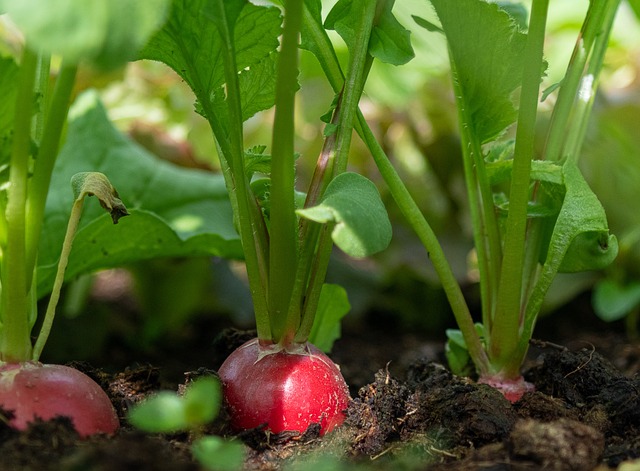
This week, we’re getting celery, bok choy, apples, tomatoes, kale, fennel, and a ton of radishes. Why so many radishes? ‘Tis the season! They’re cool weather plants that mature in a short time, so there’s always a bunch available in spring and autumn.
Radish Magical Uses and Folklore
Radishes originated in China and entered the historical record in the 3rd century BCE, and spread across Europe from there. They were also one of the first plants introduced to the Americas by European colonizers.
In antiquity, opinions on radishes were divided. Pliny and Discorides prized them, while Hippocrates claimed that they were “vicious” and difficult to digest.
To be fair, radishes are cruciferous vegetables. This puts them in the same group as plants like kale, mustard, cauliflower, and broccoli. They’re not the easiest things in the world to digest and are notorious for causing gas.
Radishes were offered to Apollo, but not just any radishes. It was customary to present gifts to deities in the form of intricate carvings. Radishes were so prized, Apollo received ones made of solid gold.
In Oaxaca, Mexico, people observe the Night of the Radishes. Artists compete by creating intricate sculptures carved entirely from radishes. These aren’t the typical small, round guys you see in the grocery store, however — they’re a specially grown variety cultivated specifically for this festival.
An old folk remedy for nagging and gossip involved tasting a radish before bed while fasting. This was said to protect men from being harmed by “the chatter of women.”
One old English book says that uprooting a radish while reciting the proper incantations would allow one to find witches. (Unfortunately, the author didn’t write down the incantations.)
Radishes are also associated with lust spells and protection. This makes sense, considering their peppery heat and red color. Both of these qualities are associated with sexual desire and protection and can be seen across many magical ingredients used for these purposes.
Wearing a garland of radish flowers around one’s neck was said to keep demons at bay.
The juice and oil of radishes were also considered protective and curative. Washing one’s hands in radish juice was said to enable one to safely handle venomous creatures. Another source claimed that dipping a whole radish in a glass of poison would render the poison safe to drink. (Do not do any of these things pls.)
In Germany, radishes were associated with evil spirits. Well, one specific evil spirit: the demon Rübezahl. He is a mountain spirit who is often portrayed as a trickster figure. On one hand, he could help humans and teach them the secrets of medicine. On the other, he represents the capriciousness of the weather of the mountains. In Czech fairytales, Rübezahl (called Krakonoš) gave humans sourdough.
It’s also said that he was fond of taking whatever he pleased without asking. He kidnapped a princess who was very fond of radishes (in some versions, turnips) and locked her away in a tower. When the princess began to wither away from loneliness, the spirit turned a radish into a cricket. He warned her that, once the leaves of the radish began to wither, the cricket would die. The clever princess sent the cricket off to find her true love and bring him back to rescue her. Sadly, the radishes withered and the cricket died before he could, but he succeeded in chirping his tale to all of the other crickets in the world. Now, whenever you hear crickets chip, you hear them tell the tale of Rübezahl and the stolen princess.
It should be noted that Rübezahl is actually a mocking nickname — it’s more respectful to refer to him as Lord of the Mountains, Herr Johannes, or Treasure Keeper.
Using Radishes
As a common culinary ingredient, radishes are pretty easy to use. Combine them in a salad with other ingredients that relate to your intention, and enjoy. Radishes, strawberries, and basil can be eaten (or fed to a consenting lover) for lust. Radishes, lettuce, oregano, and garlic can be eaten for protection. Radish greens are edible, too!
For best results, stick with young radishes. The older they get, the tougher and more difficult to digest they become.
Since radishes are a cool weather crop, they’re a good choice for off-season growth spells. For example, if you want to bring more love and lust into your life but it isn’t exactly growing season, you may still be able to get decent results by sowing radish seeds.
Since flowering radish tops repel evil, you may wish to include these plants in beds near your front, back, and side doors. Let them flower and keep your home protected from malevolent spirits.
Radishes are a fun, easy to grow, easy to use ingredient in food and spells alike. I remember growing some in a tiny plastic vegetable garden kit that came from McDonald’s when I was very little, and I’ve kind of had a soft spot for them ever since. If you have any space to dedicate to these little guys, give them a shot!
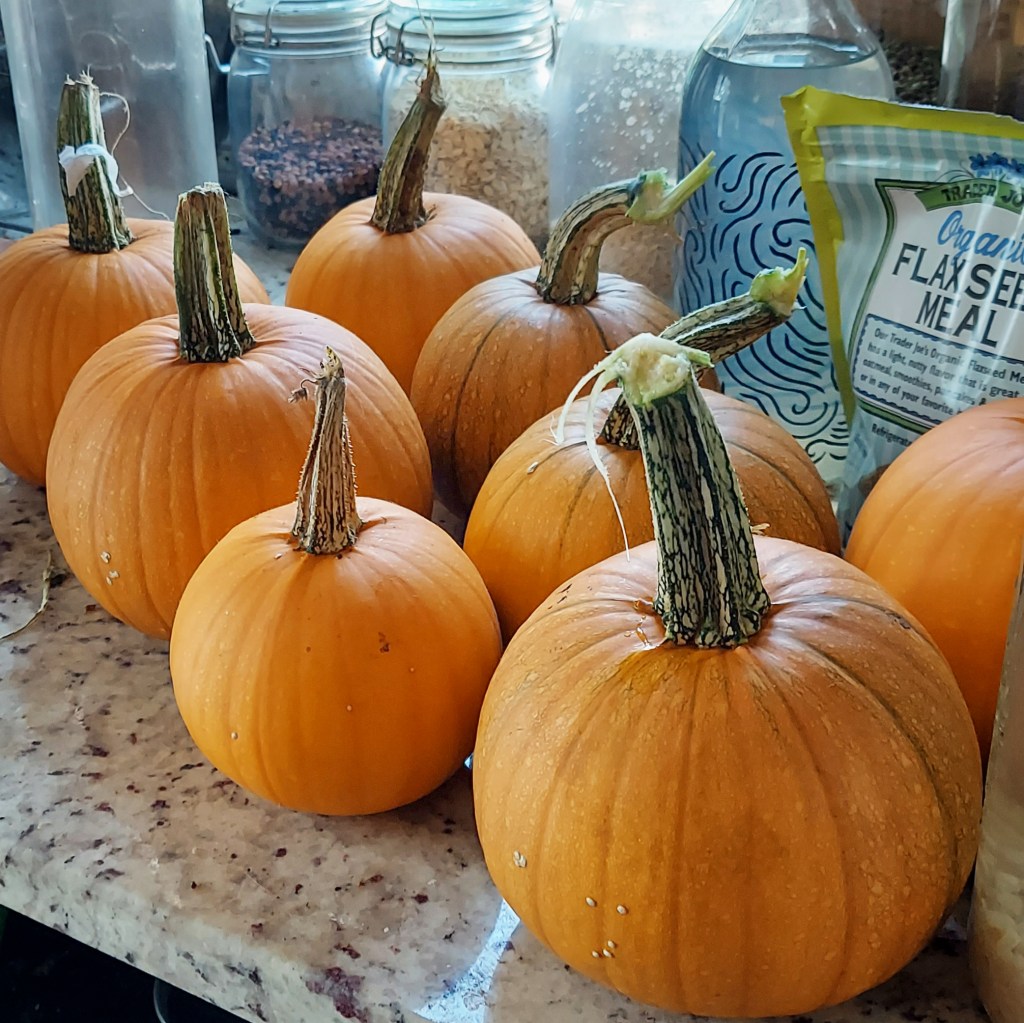
Well, that’s kind of an understatement — I’ve been attempting to gather and process pumpkins quickly enough to actually make a dent in the sheer number of them. It takes about an hour to cut and bake two of them, then I need to let them cool, then puree and freeze them. Each pumpkin seems to yield a little over 16 ounces of puree. That’s enough for either one pie, one batch of pumpkin cream sauce, or one pot of pumpkin soup.
In other words, this is basically a replay of when my spouse and I went strawberry picking. This last time, we sprung for the big cardboard flat. I still have a whole loaf of strawberry bread in the freezer, two gallon bags of whole berries, and two trays of frozen strawberry puree.
I’m either going to run out of space in the freezer for pureed pumpkin, or be completely sick of pumpkin and pumpkin-adjacent things by the time October rolls around.
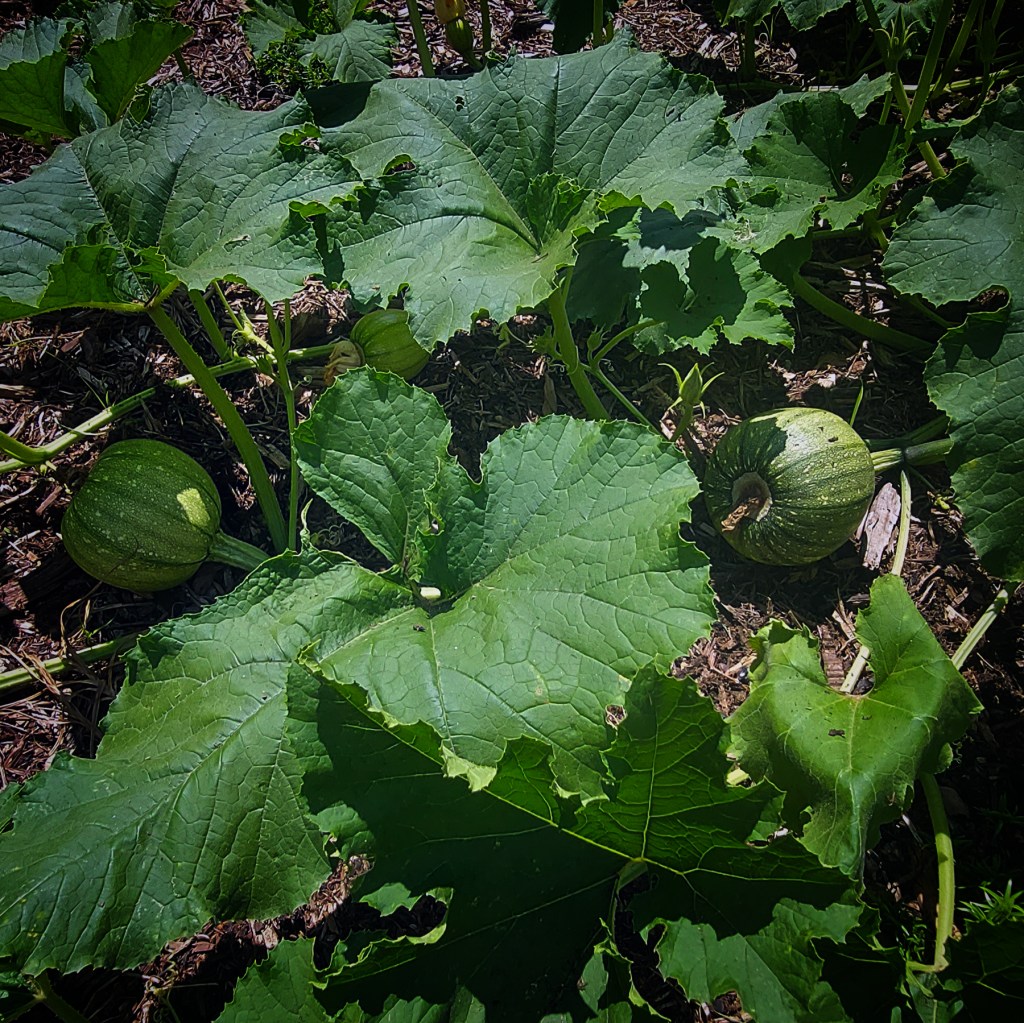
Some of the pumpkins that still need to ripen a bit.
Fortunately, pumpkin seems to keep well. Once it’s turned to pumpkin mush, I pack it into a one cup Souper Cube tray and freeze it. After it’s frozen, I can pop it out and stick it in a reusable freezer bag. I wish I had a chest freezer (but I also know that I’d just fill it up with nonsense if I did).
In the meantime, I’m amassing pumpkin recipes. So far, I’m looking at egg- and dairy-free pumpkin pie, pumpkin cream sauce, and pumpkin bread with chocolate chunks. I hope everything turns out well, but I’m also slightly concerned that I’ll end up having to sneak around and drop off piles of excess pies and breads on my neighbors’ porches in the middle of the night.
I didn’t even plant these pumpkins. I’ve watered them maybe twice ever. I have the feeling they wouldn’t be nearly this prolific if I’d actually put effort into them.
One of the benefits of encouraging wildlife to hang out is that, if things go right, it’ll basically do your gardening for you. I’ve had so many volunteer plants courtesy of the birds and squirrels, it’s bonkers. Since I’m still working on re-wilding things, I’m grateful for whatever additions the local creatures want to make — I get to see what grows well and what doesn’t, and it’s all for free.
This is all just preamble to explain that I’ve been watching the progress of some kind of plant in the front plot. The front yard is divided into two squarish plots by a walkway. In one, we’ve finally managed to kill off the grass and replace it with a redbud tree, oakleaf hydrangea, coreopsis, strawberries, moss phlox, and echinacea. Then this thing happened.
Cute, right? It seemed to appear overnight, springing up out of the ground without warning. No sprout, nothing. Just bam! This.
Out of curiosity, I left it. It was in a bare spot, and I was honestly pretty excited to see what it’d turn out to be. I tried identifying it to make sure it wasn’t something invasive or poisonous, but plant apps were stumped. It was almost definitely a member of Cucurbitaceae, but what? Pumpkin? Melon? Squash? Cucumber? Even Reddit’s gardening subs were mostly baffled. Some posters who recognized it even admitted that it looked like “some kind of weird hybrid.”
Anyhow, I figured it’d probably end up being some kind of vegetable, so I left well enough alone. I didn’t even bother watering it. I figured that it was a volunteer, it was doing fine without my interference, so it was just sink or swim from h-
Like something out of a weird fairytale (or Annihilation, or The Color Out of Space), it… expanded. It didn’t get any taller, but it sent out yards of thick, powerful vines across the ground. By the time you read this, it’ll probably have doubled in size.
It also started putting out flowers. Big, bright yellow ones. Each one had a firm, round base. Before long, we had a ton of these.
So, not cucumbers. Not melons. Some kind of pumpkin? A squash?
This guy who sometimes cuts the (remaining) grass for us said he recognized it as an ayote. He said it’s tasty when cut up and stewed with beef ribs and vegetables. I don’t do beef ribs, but I have some lovely brisket-style tempeh that could maybe work.
The trouble with volunteer Cucurbits is that there’s a risk of poisoning. If you find a wild squash in your yard, or grow one from seeds that you’ve saved yourself, taste a little bit of the raw fruit before you cook it or serve it to anyone else. Some wild Cucurbits have a lot of a toxic compound called cucurbitacin. It tastes very, very bitter, and enough of it can absolutely kill you. Tl;dr: Do not eat bitter squash, or any other members of Cucurbitaceae that taste weirdly bad.
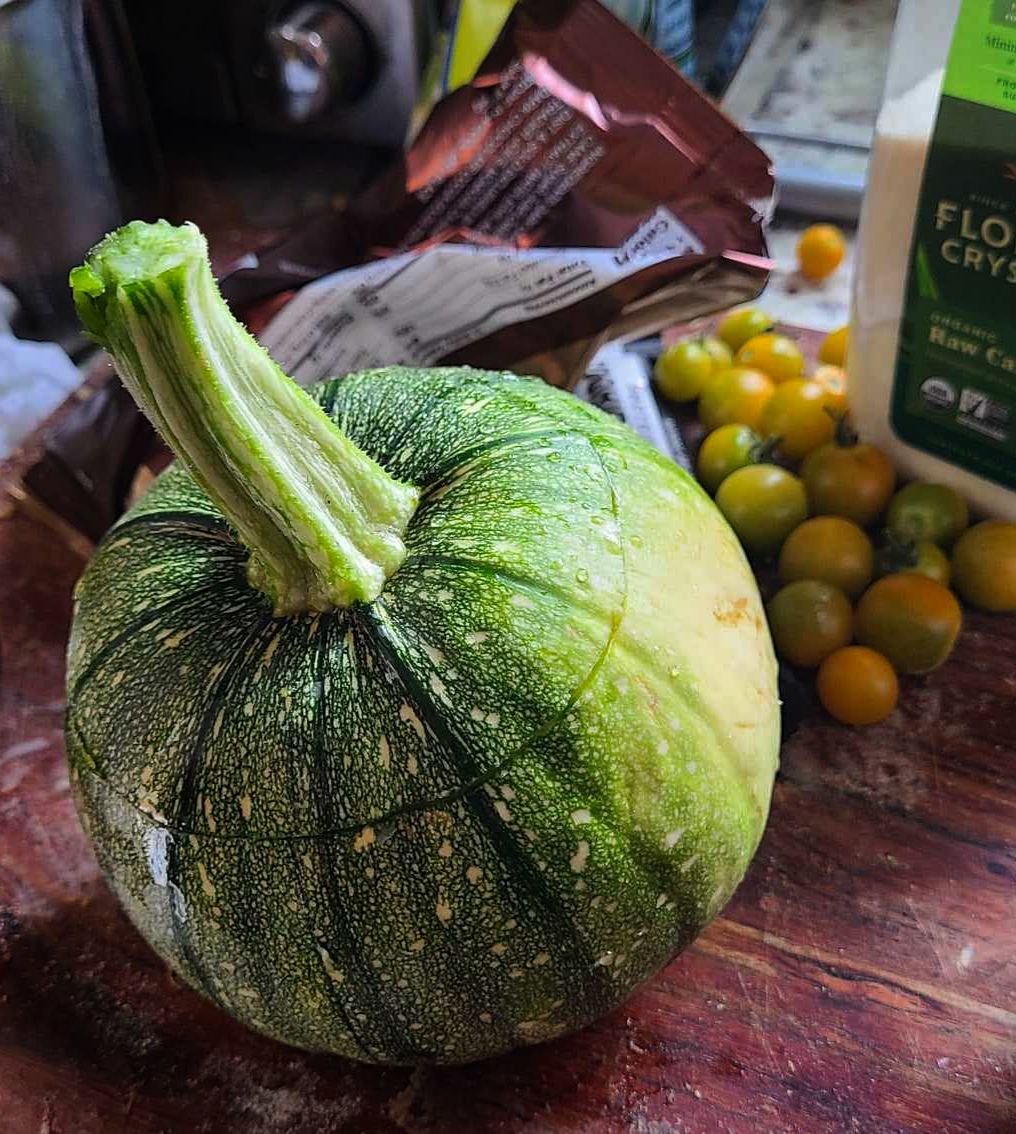
They’re nowhere near ripe yet, but I noticed that the stem of one had broken. I brough it inside for Experiments.
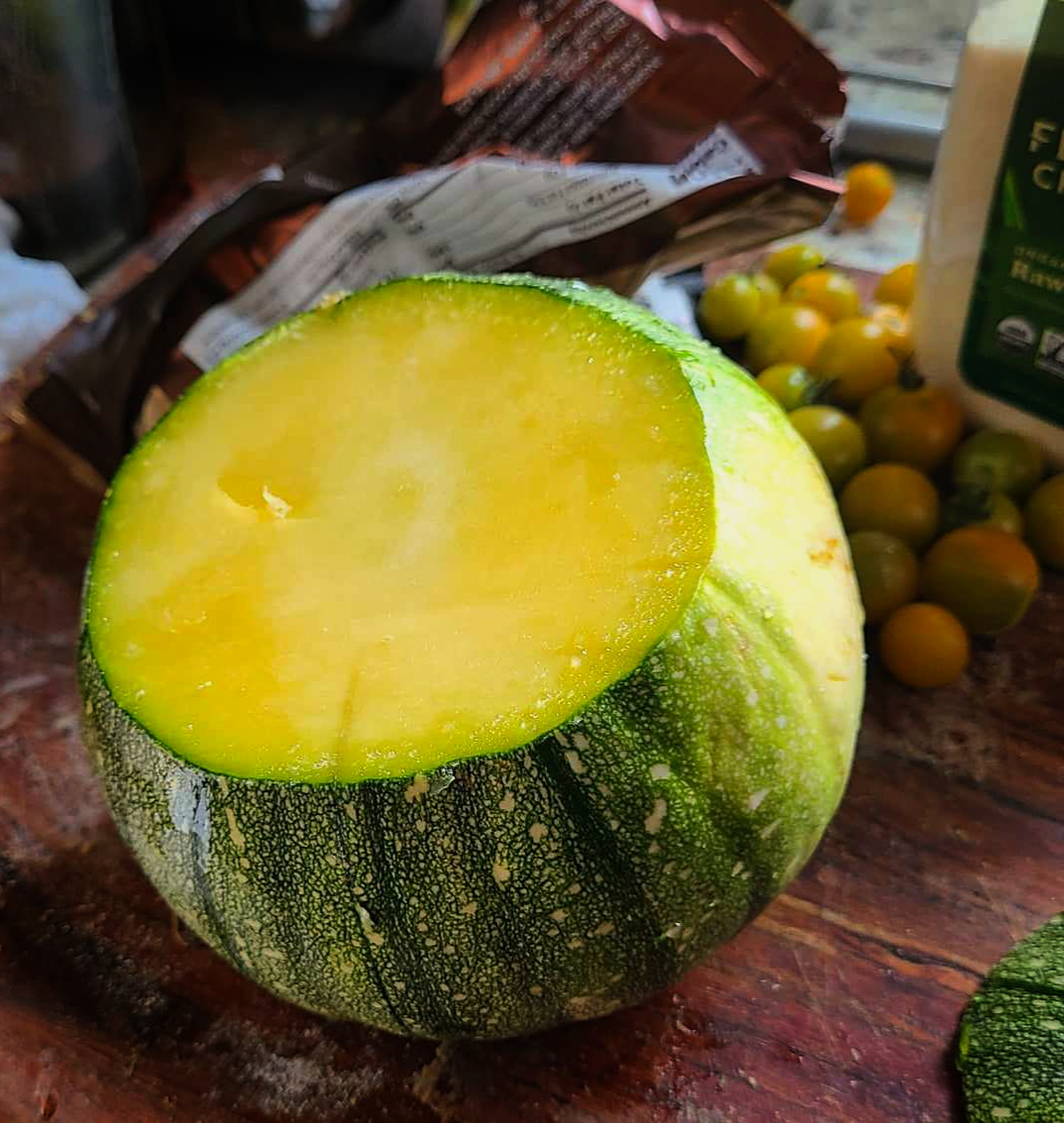
It looked inoffensive enough. I took a little taste.
Surprisingly, it was pretty good! There was no trace of bitterness, just a mild, sweetish flavor. It’s not as strongly flavored as it’ll probably be once it’s completely mature, but definitely not bad.
I haven’t decided what to do with this specific one just yet. Ayote en miel? Squash soup? Roasted squash?
Whatever I decide to make from this squash, I hope I like it. I’ll definitely have plenty.
Hello! If you’ve been reading here for a while now, you may have come across the Persimmon Quest.
This is an annual quest my partner and I go on every autumn. We call around or visit grocery stores in order to find out who actually has persimmons (preferably the astringent kind, but non-astringent will also do). Then, we purchase and eat massive quantities of persimmons.
The first time I had one was when I still lived in California. It was a Fuyu persimmon (Diospyros kaki), crunchy and sweet, and I was sold. When I had my first perfectly ripe Hachiya, like a water balloon filled with sweet, flavorful jelly, I was smitten. When I realized that one of the trees planted here by one of the former occupants was probably a persimmon, I was ecstatic.
A Druidry group I belong to recently offered a small foraging expedition. One of our members is a biologist, and he’s kind and generous enough with his time to lead seasonal foraging walks. Last spring, we hunted for ramps. Now that it’s persimmon season, we went to track down some trees.
And oh, did we ever.
Several of them were already bare, picked over by wildlife and wind. Some were still laden with fruit that fell at the slightest touch. We picked only the ripest, squishiest ones, leaving the rest to soften in the sun and feed other things.
My partner and I came away with several pounds, which I cleaned and froze for future use. They’re very different from Japanese persimmons — we snacked on a few as we foraged, and it was striking just how much the flavor seemed to vary from tree to tree. American persimmons (Diospyros virginiana) are most similar to Hachiya-type Japanese persimmons, in that they’re very astringent before they’re ripe. When they look like they’re nearly rotten, they’re at their best.
Most of the ones I tasted were almost floral when compared to a Hachiya. Still very sweet and soft (with a slight astringent bite in a few places), but floral like lavender lemonade is floral. The comparatively large seeds got in the way a bit, but I’ve read some interesting recipes for roasting and grinding them to make a coffee substitute. As someone who doesn’t drink coffee, I’m intrigued! If I can get a foraged equivalent for Dandy Blend that isn’t dandelion root, I’ll be excited.
I haven’t yet decided what to do with the persimmons themselves. I might separate the seeds and pulp, then freeze the pulp again in an ice cube tray. I figure, if I want to add them to smoothies, sauces, or desserts, I can just thaw out some cubes of prepared persimmon mush fairly quickly and easily. I could even pop a cube or two in a jar for making persimmon kefir. (One member of the group was considering doing fruit leather but based on my experiences trying to make strawberry leather in the oven, I don’t think I want to tackle that without a dehydrator.)
There was a lot more to see than just persimmons, too. Dogbane (Apocynum cannabinum) with its stringy bark (good for stripping and braiding into twine). Horsenettle (Solanum carolinense) with its bright yellow, tomato-like, deceptively delicious-looking poisonous fruits. Fragrant tufts of mountain mint (Pycnanthemummuticum), gray and brittle with age. The most striking were the coralberries (Symphoricarpos orbiculatus), their tiny, bright magenta fruits standing in vibrant contrast to their bright green leaves.
I found these berries particularly intriguing. As it turns out, they’re a valuable native food plant for birds, grow in shade, can stabilize banks, don’t have any major pest or disease vulnerabilities, and thrive on neglect. I’m still looking for native/non-invasive plants to help feed the yard’s hard clay soil and reverse some of the damage from supporting a lawn, and coralberry fills a very important niche here. From what I have read, coralberries aren’t of much value as food for humans. That’s okay, though. Not everything in the yard has to — or should — be for me to eat.
Plus they are so pretty.
I’m considering growing some mountain mint, too. Like other mints, they can take over a yard. Since they’re a native plant, I think it’ll be easier to keep them at a reasonable level than, say, the old peppermint that’s slowly eating part of the back yard. Interestingly, it’s closer to bee balm (monarda) than it is to peppermint, and there’s a faint bee balm-ness to its scent that gives that away. Mountain mint also attracts an incredible variety of native pollinators and predatory wasps, and is both edible and medicinal. Medicinally, it’s treated almost as a panacea — it’s considered a digestive, carminative, emmenagogue, expectorant, and more, though I haven’t thoroughly researched the active constituents myself yet. If it can serve as a home-grown, native substitute for peppermint tea, I’ll be all for it. The flavor does lead me to think that it’d be great for seasoning poultry or wild game, and I’m eager to try.
That’s what I love about foraging trips. Not only do I come away with tasty food, but I also get a better idea of ways to try to heal the land I’m now responsible for. Seeing a wide variety of native plants shows me what this patch of grass could be and tells me how I can help it get there. I’m excited!



























 Marble Crow