divination · Neodruidry · Witchcraft

Footprint Folklore & Magical Properties

With so much snow on the ground, it’s been even easier to keep track of all of the visitors to the front and back yards. From the efficient single-track prints of stray cats, to snowshoe prints of rabbits, to the rodent tracks ending in the sudden whump of an owl, they all stand out starkly in fresh snow.

A set of squirrel tracks in snow.
For example, these prints by resident Absolute Unit Frederick de Bonesby, the gray squirrel.

The weather is warming up bit by bit (it’s supposed to be in the 60s F this weekend, go figure), so the snow isn’t long for this world. With that in mind, I thought this might be a good time to look at different folk beliefs and folk magic practices involving animal tracks and footprints.

Unique footprints and strange feet are a defining characteristic of many cryptids and folk monsters:

  • The Tupi-Guarani people of Brazil have the Curupira (Tupi for “blister-covered”), a kind of demon with fiery red hair and backwards feet.
  • The Scottish have the glaistig or maighdean uaine (“Green maiden”); a gray skinned, blonde-haired woman with a long green skirt to hide her goat legs.
  • In Madagascar, there is the Kalanoro. This is a humanoid cryptid described as a small, hairy person with red eyes and backwards-facing legs and feet. While they are said to have once lived in corporeal forms, habitat destruction has left only their spirit forms behind.
  • In the Himalayas, there are Abarimon (“mountain-dweller”). These are said to be vicious humanoids with backwards feet who lived solely in a single mountain valley. While Abarimon were dangerous, they could only breathe the air of their valley home, and thus were unable to ever leave it.
  • In Trinidad and Tobago, there is the Douen. This entity is another humanoid with backwards facing feet but has the distinction of also lacking any facial features other than a mouth. If they hear a child’s name, they are said to be able to mimic the parents’ voices, calling to the child to lure them into the forest. Douen may be related to the duende, humanoid spirits from Spain and Latin America.
  • In Australia, there’s the Yowie. This is a tall creature covered in dark hair, often said to have backwards-pointing feet.
  • The Dominican Republic has La Ciguapa, a lovely wild woman with long, dark, silken hair, beautiful bronze skin, and backwards feet. While small, she is perfectly proportioned and incredibly agile. She’s said to use her beauty and agility to prey on those who are foolish enough to venture into the woods — her domain — alone.
  • On the Indian subcontinent, there are ghosts known as bhuta. These can shapeshift into any animal, but often appear as perfectly normal humans — save for their backward-facing feet.

To be honest, you’d probably be hard pressed to find a culture that doesn’t have some version of “cryptid whose main thing is having weird feet.” Many of them serve as cautionary tales against wandering dangerous places alone, especially for children. They’re the personification of situations that seem perfectly safe, or even nice (like meeting a beautiful woman on a walk in the woods), and lure you in before you notice the danger that you’re in (like the fact that she’s a cannibalistic cryptid with weird feet). Across cultures, the message here is also pretty consistent: Stay away from strangers, and out of the wilderness at night.

In northeastern Tanzania, there are a series of incredibly ancient footprints set in stone. These point to two small groups of hominids (likely members of Australopithecus afarensis) traveling in the same direction. The Maasai people associate these footprints with Lakalanga, a hero so big that he was said to leave footprints sunk into the ground wherever he walked. He is said to have helped the Maasai win a battle against a neighboring enemy, long, long ago.

In South Devon, England, a heavy snow fell in the winter of 1855. The next day, and for two days after that, mysterious sets of very hooflike marks appeared. They were in single file, roughly 4 inches long by 3 inches wide, and managed to cover a total area of about 40 to 100 miles. Strangely, these hoofprints didn’t seem to care about obstacles — they traveled straight over fences, hedgerows, walls, and even houses. Called the “Devil’s Footprints,” hypotheses for their appearance range from experimental balloons to kangaroos… But there’s still no accepted explanation.

In some magical traditions, footprints are used for sympathetic magic. Any spell benefits from the addition of something belonging to the target — a nail clipping, a lock of hair, or a scrap from their clothing, perhaps. (I once managed to pull something off by getting a target just to touch a grass poppet that I’d made, but that’s neither here nor there.) In the absence of these, footprints often suffice.

Some magical powders, like the hot foot powder used in Hoodoo, are sprinkled into a person’s footprints to control their actions. This derives from the traditional West African practice of foot track magic, brought to the Americas by the transatlantic slave trade.

Reading animal tracks is also a method of divination. While augury was traditionally divination using the flight paths of birds, you can also gather omens from the number, direction, and maker of tracks you come across.

A set of cat tracks through snow.
These belong to a stray cat. Cats conserve effort when walking trough snow by placing their hind feet directly in the prints of their forefeet.

When it comes to divination using a human’s footprints, the practice is called “ichnomancy.” This comes from the Greek “ixnos,” meaning “footstep,” and “manteia,” meaning “method of divination.”

Divining with footprints can be a little difficult, since you need to be able to read them in a mundane sense first. For example, deep footprints indicate a heavy load. Widely-spaced ones indicate a long stride, perhaps someone running. The different depths of the impression in the heel and ball of the foot areas can also tell you different things.

My first suggestion for working with animal tracks and footprints is to familiarize yourself with what you’re likely to encounter. If a deer walked through your yard, what would it look like? How about a dog, or a bear? What impressions does it leave when a bird of prey scoops up a rat, or a squirrel? Consider your connections and associations to each of these creatures. What would their appearance mean to you?

Next, consider their other qualities. Movement to the left is often considered an ill omen, while the right is considered a positive one. For example, seeing the tracks of a bear or mountain lion moving quickly toward your left could be an omen of danger. Seeing the tracks of an animal you have a positive connection to, moving at a leisurely pace toward your right, could be a very good omen.

Working with footprints in a magical context is a bit different. You can collect the dirt from within a footprint and use it to target a spell toward whoever left the footprint. You can also sprinkle magical powders or crushed herbs in someone’s tracks, or over a place where you expect them to step. (There are far too many magical powders to enumerate all of their uses and qualities here, unfortunately. Since this is a method frequently employed by Hoodoo practitioners, you may wish to consult with one for more information. Many online sellers of Hoodoo supplies offer consultations and can answer your questions on foot track magic.)

As for me, I love seeing fresh tracks in the snow. It’s a reminder that, while the outdoors seems to sleep under its cold, fluffy comforter, there’s still plenty happening. Tracks also give me another way to gauge the way everything’s activity increases as we inch closer to spring. I look forward to seeing tracks in the mud and snow just as much as I look forward to seeing new faces at the feeders and in the fruit trees.
Neodruidry · Witchcraft

Snow Folklore & Magical Properties

As I write this, it’s snowing. It’s a good snow, too — big, dry, puffy flakes. Kids have a snow day, and the hill in the back yard is covered in a good six inches of fluffy powder.

JJ has never seen snow before, so we tried bringing her outside to explore. She was curious, but also did not seem to enjoy the feeling of cold, wet paws. So, I brought her her own plate of snow, because we’ve got a washable rug and I’m full of bad ideas.

A small, adorable gray tabby cat paws at a pile of snow on a plate.

All of the plants are covered, branches bent under the weight of snow. Even the evergreens and the bright magenta beautyberries are hidden from view. So, I thought today might be a good time to talk about the tales, legends, myths, and magical properties of snow!

While not strictly related to snow, one of my favorite weather omens deals with cold winters: “Onion skin very thin, mild winter coming in. Onion skin thick and tough, coming winter long and rough.” The same is said of apple peels. Of course, this works best with local onions and apples — an onion grown in another country probably can’t tell you much about the weather in yours!

No onions? No problem. You can also foretell a cold winter by looking at walnuts and acorns. A heavy crop means a harsh winter. Similarly, thick shells on walnuts also warn of a cold winter.

A pair of acorns.
Photo by Ylanite Koppens on Pexels.com

The seeds of American persimmons are also used to predict winter weather. If they’re shaped like spoons, you’ll have lots of snow to shovel!

Leaves that fall early predict a mild winter. Leaves that fall late (or worse — wither on the branch and don’t fall at all) predict a cold one.

Animals can also warn you about a cold, snowy winter. If their fur is thicker than usual, winter is likely to be a doozy. If squirrels stash their nuts up high, then you’re likely to see a lot of snow. If you live in an area with a wild turkey population, watch where they decide to rest. If they perch in trees and won’t come down, snow is coming.

If you see a woolly bear caterpillar, take note of the width of its bands. Caterpillars with especially wide middle bands predict a mild winter.

Mushrooms are yet another way to predict snowfall. If you see abundant mushrooms in autumn, then you’re likely to get a lot of snow. If mushrooms are scarce, your winter will probably be dry. This makes a lot of sense — mushrooms need humidity. If you have a lot of humidity in the cold months, you’re likely to get a lot of precipitation, too.

Supposedly, the date of the first snowfall can help you predict more. Whatever date the first snowfall falls on will tell you how many more snowfalls you’ll get that winter. (For example, following this logic, we’d be looking at fifteen more snows!)
Another variation calculates the number of snowfalls a slightly different way: However many days past Christmas the first snow falls, that’s how many you’ll have that winter. (Using this method, we’d be looking at twenty one.)
Yet another variation calculates the number of snowfalls using the date of the new moon. The date of the first snowfall, plus the number of days since the new moon, will tell you how many snowfalls to expect. (According to this, we’d be looking at twenty.)

In Japanese folklore, there’s a snow spirit known as yuki-onna, or some variant thereof. This translates to “snow woman,” but she may also call herself “snow daughter,” “snow granny,” “snow hag, “snow girl,” or even “icicle woman,” depending on the region. There are many stories about the origins of these spirits, ranging from otherworldly princesses trapped on Earth, women born from snow drifts, or the vengeful spirits of murdered women. Yuki-onna is also associated with children, as multiple tales describe one holding a child, accompanied by a child, or stealing children.

Frau Holle, or Old Mother Frost, is a figure from German folktales. She is related to the Germanic goddess Perchta, and it was said that the souls of those who died in infancy went to her. She also causes snowfalls when she shakes out her bedspread and beats her pillows.

A frozen lake, with snow-covered mountains in the distance.
Photo by Riccardo on Pexels.com

Cultures all around the world have personified winter and snow. These include figures like the Cailleach in Ireland, Beira in Scotland, Despoina and Khione in Greece, Itztlacoliuhqui in Mesoamerica, Skadi in Norway, and Tengliu in China.

When it comes to the magical properties of snow, the most important thing to remember is that it’s water. It shares the same magical uses, it’s just in a more convenient, semi-solid format. You can draw runes or sigils. Snow is useful for beauty, purification, and healing, particularly emotional healing. Because of its ephemeral nature, snow is also helpful for banishing.

You can use snow in the same ways that you’d use water. If you like cleaning crystals or ritual objects in rain, collect some snow and use that instead. It works every bit as well!

Snow is also a great vehicle for sympathetic magic. If you’d like to banish something (or someone) from your life, collect some snow in a bowl or on a plate. Draw a representation of this thing (or, if it’s a person, write their name) in the snow. Put it in the sun, let it melt, and pour the water out far from your home.

Snow-covered mountains under a starry sky.
Photo by eberhard grossgasteiger on Pexels.com

If someone you know is creating problems for you, you can also use snow to get them to knock it off. (Assuming, of course, that pelting them with snowballs and shouting at them isn’t an option.) Write the person’s name on a slip of paper and place it in a jar or other lidded container. Pack the jar with snow, while you demand that this person piss off and stop troubling you. Put the jar in your freezer and leave it there until they go away. If you like, you can also ask the frost giants, spirits of frost, or your tradition’s frost deities to sit on them.

With the (sometimes radical) shifts in this region’s weather, my local area has experienced droughts. This makes an inconvenient amount of snow a very welcome sight, since that’s what’s going to replenish everything and help nurture new life come spring. Here’s hoping for a fruitful, abundant spring and summer this year!

Plants and Herbs

Orange Folklore & Magical Properties

Ah, oranges. Sweet little globes of deliciousness. They run the gamut from “will basically peel themselves if you look at them hard enough” to “will peel a quarter inch at a time and leave an impenetrable layer of pith.” Some are massive, some are tiny enough to eat in a bite. Some are delightful, some can be potentially deadly. They’re good for you, unless they aren’t. They’re convenient to eat, unless they aren’t. In short, oranges are a land of contrasts.

Right now, I’ve got a farmers’ market box of delightful tiny oranges from Georgia. I also have some slices of orange and lemon drying in my dehydrator for making garlands. It seemed like a good time to get into the folklore and magical uses of oranges, so here we go!

In general, oranges are used for attraction and positivity. They’re also a symbol of wealth and status in European art, since oranges don’t naturally grow in cold climates. They either had to be imported or grown in special conservatories called orangeries.

Even before oranges reached the colder parts of the world, they were associated with prosperity and luck. Virgil, the Roman poet, called them “lucky apples.”

A bowl of peeled oranges.

A Haitian folktale tells of a girl whose mother passes away. Her father remarries a cruel woman who refuses to feed or care for the girl. One day, weak with hunger, she succumbs to temptation and eats three oranges sitting on the kitchen table. When her stepmother comes home, the girl knows she’ll be beaten. She runs from the house, all the way to her mother’s grave. While kneeling and lamenting her fate, an orange seed falls from her skirt and lands on the soil. In desperation, the girl sings to the orange seed until it becomes a sapling, then a branching tree, then a mature tree laden with fruit. Happy, the girl fills her arms with oranges and carries them home.

Her stepmother greedily eats the delicious oranges before asking the girl where they came from. The girl leads her stepmother to the orange tree. As her stepmother begins to pick and eat the oranges, the girl sings to the tree once again. It grows tall — far taller than the stepmother can climb down from — so the stepmother begs and pleads for the girl to help her down again. The girl does so, but, as soon as the tree lowers, her stepmother begins eating all of the oranges again. Knowing that she’ll be punished once the oranges are gone, the girl sings to the tree to make it grow tall. Finally, she cries out, “Break, orange tree! Break!” The tree shivers into a thousand pieces, and the stepmother with it. The girl saves a single orange seed from that tree, plants it, and goes on to sell the sweet oranges at the market.

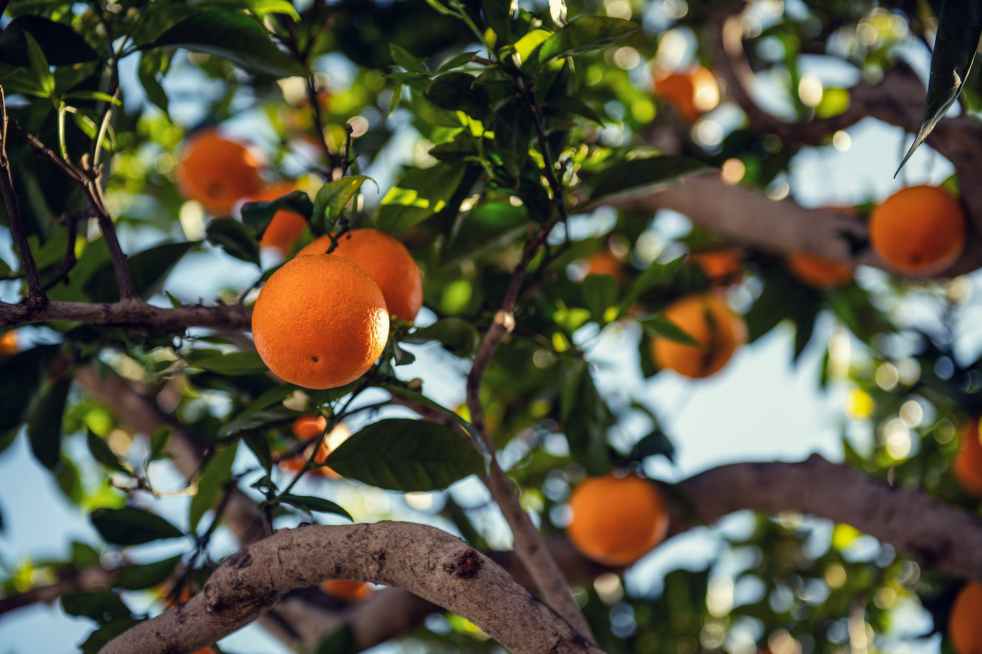
An orange tree, filled with fruit, against a blue sky.
Photo by Olena Bohovyk on Pexels.com

Christian mythology from Andalusia says that Mary, Joseph, and Jesus were travelling a long distance, when Mary became hungry and thirsty. The family happened upon an orange tree guarded by an eagle. When Mary asked for some of the oranges, the eagle fell asleep and allowed her to take three — one for each part of the Trinity.

Orange blossoms and oranges are often used interchangeably in magical formulas, but orange blossoms have their own, unique associations and symbolism. They’re generally considered symbols of purity, fertility, and virtue, as well as abundance, luck, and positivity. When it comes to attracting things, orange blossoms are excellent in love formulas.

According to the Victorian language of flowers, orange blossoms represented purity and chastity. They were said to say, “Your purity equals your loveliness.” The flowers were often associated with brides.

The blossoms’ connection to purity likely comes from their white color and sweet scent. They also appear abundantly on orange trees, and are followed by fruit, hence their connection to fertility.

There’s some debate about which came first, orange the fruit or orange the color. The word “orange” comes from the Sanskrit nāranga, which originally referred to the orange tree. This gradually transformed into naranja, pomme d’orenge, and even the Middle English “pume orange.” Interestingly, the word “orange” wouldn’t refer to a color until the early 1500s.

Orange pomanders, made by studding an orange with cloves, are a descendant of the Medieval pomander. This was a small ball or case that held fragrant herbs and resins, which would be held to the nose and sniffed as a protection against bad smells (which were believed to cause disease). These cases originally usually contained ambergris, which led to the name “pomme d’ambre,” or “amber apple.” As these things often go, “pomme d’ambre” became “pomander” in English.

One of the most interesting ways I’ve seen to use oranges involves just two simple ingredients: a bottle of orange seltzer, and a bathtub filled with fresh water. Pour the seltzer into the bath and immerse yourself completely. (You can also stand in the shower and pour the seltzer over yourself). The scent and power of orange, coupled with the effervescence of the seltzer, is said to boost creativity.

A drop of sweet orange oil makes a lovely addition to oil blends for prosperity and luck. You only need a very little bit, though, as it can overpower the scent of other oils.

Orange peels are nice additions to potpourris. They add color, and they soak up essential oils pretty readily. To attract love, mix with cloves (a magical catalyst), cinnamon (another catalyst that draws in love and money), bay leaves (a power herb used for love and money), and orris root (a love herb that focuses the power of the other herbs with which it’s combined).

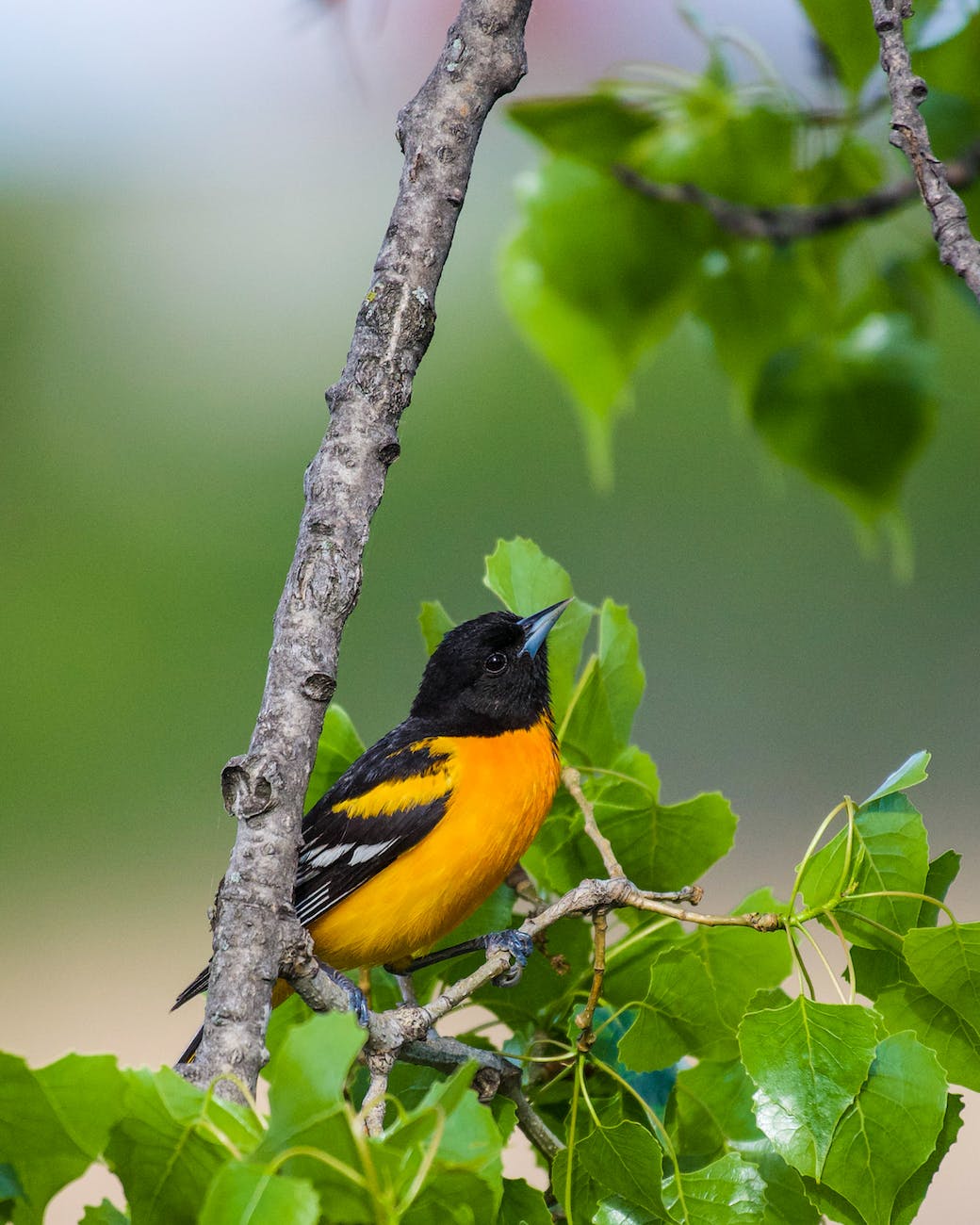
Oranges make wonderful offerings, particularly if you live in an area with orioles.

An oriole perched on a branch. The bird has a jet black head, bright orange breast, and wings with black, orange, and white bars.
Photo by Andrew Patrick on Pexels.com

Dried or candied orange peel is great in teas. You can also add orange blossom water to other beverages. Consider putting a splash of blossom water in a cocktail for attracting or strengthening love.

If you do choose to use orange peel in food or beverages, opt for organic oranges (or, if you can, grow them yourself). A lot of conventionally raised oranges have their peels treated with colorants and antimicrobials. While the amounts used are tiny and considered safe, oranges are also typically peeled before eating. If you plan to use the peel, shoot for fruits that have as little added to their peels as possible.

Oranges are a perfect little nutrient-packed snack that was once a treat for kings and queens. Tap into their sweet powers to attract more luck, love, and money into your life.

Plants and Herbs · Witchcraft

Cardamom Folklore and Magical Uses

When I was in college, one of my lab partners was a beautiful girl whose family was from Yemen. She was always dressed very conservatively, though fashionably, but beneath her impeccably neat, studious exterior she was warm, kind, and funny as hell.

One day, she brought me some cardamom pods to try as a tea. I hadn’t ever had caramom before (that I knew of), and I was pleasantly surprised. Like she herself, their neat outer pods concealed a wealth of warmth and complexity.


Cardamom Magical Uses and Folklore

This ginger relative is one of the oldest spices in the world. It’s believed that it was introduced to Europe by Alexander the Great, who brought it back from the Cardamom Hills of southwest India.

As a warm spice with a hint of sweetness, it’s probably not surprising that this herb has found its way into many a love potion. Some sources associate it with Venus, while others attribute it to Mars — making it perhaps better suited for formulas for lust and passion than anything else. It’s also said to have some commanding and compelling properties, particularly in the areas of lust and love.

Since it’s a Mars herb, it’s also useful for protection. However, unlike the harsh heat of an ingredient like cayenne, cardamom is much softer and gentler — an iron fist in a velvet glove.

In some areas of Asia and Africa, it was used as an aphrodisiac.

To charm a prospective lover (or anyone else, really), chew a few cardamom seeds before talking to them.

Cardamom is an ingredient in some versions of kyphi, an ancient Egyptian incense. It’s often presented as a substitute for cinnamon. It was also used as an ingredient in several ancient perfumes.

Scent- and flavor-wise, it blends very well with a wide array of other herbs. In magical formulas, it’s often used as a catalyst. Overall, it seems to “play nicely” with a pretty impressive variety of ingredients.

Cardamom is said to have a calming, uplifting effect on mood. It relaxes the body and stimulates the mind — no wonder it’s been used as an aphrodisiac!


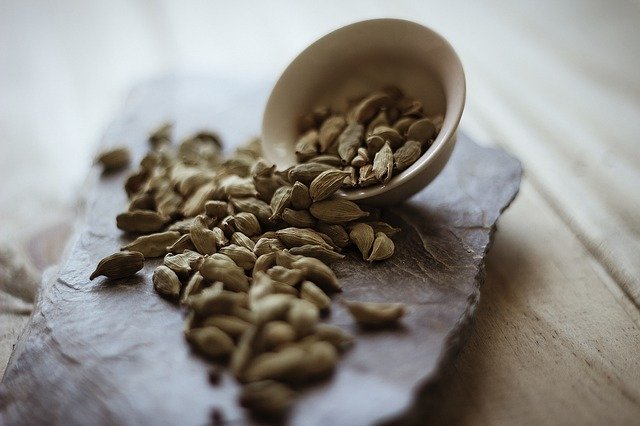
cardamom-2244253_640


Using Cardamom

As a culinary and magical herb, the easiest way to use cardamom is to eat it. Add the pods to soups, stews, or rice dishes and remove after cooking, the way you’d use a bay leaf. You can also add the ground spice near the end of cooking.

You can find cardamom in many Indian, Middle Eastern, Turkish, African, and Scandinavian recipes. It’s an ingredient in chai, desserts, sausage, poultry, fish, coffee, and just about any other food or beverage you can imagine.

If you want to charm a lover, serve them some food flavored with cardamom. Empower the cardamom before adding it by telling it what you want it to do, and visualizing it filling with bright, warm, red or pink light. Add the cardamom, and stir the dish with a spoon held in your dominant hand. (If you have a special spoon dedicated to kitchen witchery, so much the better). If you have a love chant, say it. Otherwise, you can sing your favorite love song (or your favorite song to bone down to).

Since cardamom comes in tidy little pods, it’s a great ingredient for love or protection sachets, poppets, or bags. It doesn’t crumble and make a mess like leafy herbs and, if it accidentally gets crushed, it releases a wonderful aroma.

I like to add cardamom to lentils. I boil up a pot of lentils with cardamom, pepper, and turmeric, and add them to dishes throughout the week. It’s an inexpensive, nutritious, flavorful way to stretch out a meal.


Cardamom is a wonderful spice with a long history of use. It’s powerful, though its action is gentle, and its warmth blends well with tons of other magical and culinary ingredients. If you’re looking for a subtle — yet potent — love or lust ingredient, you can’t really go wrong with cardamom.

Plants and Herbs · Witchcraft

Elderberry Folklore and Magical Uses

With colds, the flu, and COVID-19, elderberry syrup has made a lot of appearances in various “crunchy” and DIY blogs. Elderberry is touted as an herbal “medicine chest” — even Hippocrates and Pliny the Elder had a hard time overstating the herb’s value. It’s said to improve allergies, inflammation, sinus problems, and pain, and, with prompt use, shorten the duration of cold and flu symptoms.

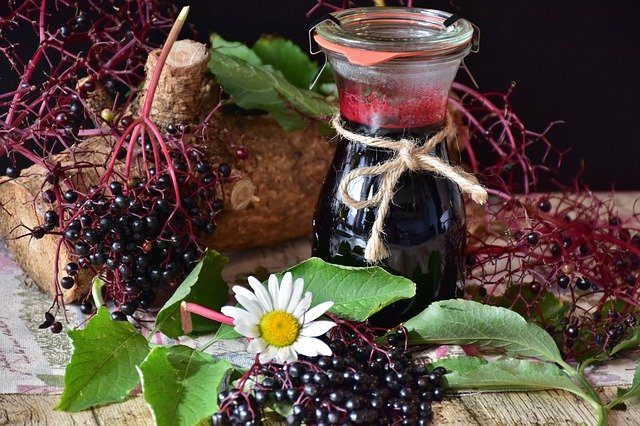
Elderberries and syrup.

That’s not all elderberry is used for, though. This tree, with its white flowers and dark, shiny berries, has a lot of folklore and a long history of magical use behind it.

Elder Magical Uses and Folklore

The elder tree is believed to house a spirit with the power to help or harm. In Denmark, it is Hylde Moer. Elsewhere, it was dryads, or simply the Old Lady of the Elder tree.

Taking any of the tree’s gifts has to be done with permission. If permission is granted, they have the power to heal and protect. If it isn’t, they have the power to harm. One charm for cutting elder wood goes:

“Old Lady of the Elder Tree,
Let me have some of your wood,
And, when I am a tree,
You may have some of mine.”

In southern Italy, the wood is used to drive out evil, and protect against thieves and serpents.

In Germany, hanging elder branches in a home on Walpurgisnacht protects from evil.

The spongy centers of elder branches are soaked in oil and used as a kind of lamp wick to reveal all of the witches in an area.

In England, carrying an elder stick or cross made of elder wood was said to protect from rheumatism.

Building a cradle from elder wood is a bad idea, for spirits with pinch and poke any child that sleeps in it.

It’s considered a very bad idea to burn elder wood. In Ireland, it was believed that burning elder would would make you see the devil in the flames. Part of the Wiccan Rede goes as follows:

“Elder be the Lady’s tree. Burn it not, or cursed be.”

(Considering the cyanide content of uncured fruitwoods, and the fact that hydrogen cyanide is liberated by heat, this is probably very good advice!)

elder-4246132_640

The scent of elder flowers is said to be narcotic in nature. Sleeping under an elder tree would cause the sleeper to dream of the fairy realm, or else not wake up at all.

Magically, carrying elder wood, leaves, twigs, or berries is said to protect you from harm, while hanging elder branches over doors and windows of a building protects its occupants.

Elder is associated with death and rebirth — all parts of the plant are toxic (except the ripe, cooked berries), and elder grows quickly from cuttings.

Elder wood is used for wands, and for making instruments whose music is said to be favored by spirits.

In some situations, elder is used as a commanding herb.

Using Elder

All parts of the plant produce cyanogenic glycosides, hence all of the old admonitions against the improper use of elder. The berries are used medicinally, but that’s only after proper preparation.

Magically, elder is a powerful tree — which stands to reason, since the plant itself contains the power to heal and kill. Any tree should be asked for permission before gathering its products, but that goes double for elder. From what I have read, elder wood should be avoided for mundane purposes, and its use should be restricted to magical tools.


Elder has gotten a lot of press lately because of its use as a remedy for respiratory illness, but there’s only so much it can do. It can help with sinus problems, inflammation, and shorten cold and flu symptoms, but the best way to keep from getting sick is still to eat well, rest well, stay hydrated, and stay away from people.

life · Plants and Herbs

You Can’t Erase People.

Every fall, I drag my S.O. out for what has become a small, but important, tradition for us: Persimmon Quest.

I’d never had a persimmon before, until I moved to California to live with my then-boyfriend on his family’s pomegranate orchard. His mother brought a dozen Fuyu persimmons — squat, sweet, golden bundles of deliciousness. Ever since returning to the east coast, I’ve had a much harder time finding them. Most grocery stores in my area don’t even know what I’m asking for when I call to see if they have any, and there’s only one that carries them with any kind of reliability this time of year.

(All of this, despite the east coast to the midwest having its own, wild type of persimmon. However, like paw paw fruit, they’re not exactly easy to find for sale.)

Wild persimmons on a branch.

Persimmons have their magic properties, like any other thing. The tree is used for healing magic, and good luck, too. The fruit, however, has a very intriguing use in folk magic…

Changing sex.

Folklore holds that, if a girl wanted to be a boy, “all” she had to do was eat nine unripe persimmons. (“All” is in scare quotes because, if you’ve ever accidentally tasted an unripe astringent persimmon, you probably know how horrifying the idea of having to eat nine of them would be!)

This isn’t new magic. It’s old-school Alabama folklore. So, why do legislators seem to think that transgender people are a new idea? That the days they have such misplaced nostalgia for weren’t also populated by transgender people? Or do they not care, so long as they never have to confront the idea and can remain comfortably ignorant while others live in fear and pain?

(I think I know the answer.)

I am considered to be under the trans “umbrella,” though I don’t consider myself trans — I have no desire to transition, and I would not talk about myself in the same breath as those who suffer from dysphoria. I have no real concept of gender, which, at times, can also make it more difficult to empathize with those for whom gender is a real and vital aspect of their identities. (Pink pens for women, black rubber loofahs for men, I don’t get it.) I also don’t care which pronouns are applied to me, because all of them are equally valueless. In truth, I’d rather people not apply any, because I dislike being talked about behind my back.

When I was younger, I used to care more about putting on a gender performance. Like a high school kid preoccupied with wearing the right labels on their clothes, I cared about how my gender was perceived. People still saw through it, though… I will never forget sitting in a living room with a group of friends, getting ready to watch T.V., only to have my room mate (annoyed that we didn’t want to watch what she wanted to watch instead) huffily declare,

“Well, [J]’s not even a real girl!”

Shit, I thought, am I that obvious?

As I matured, I learned better than to sacrifice my energy to keeping up a performance that, frankly, I couldn’t care less about. I’m a witch, I do as I please, and gender is a game I’ve no interest in playing. I live as I please, I dress as I please, I wear my hair (or not at all) as I please, I paint my face as I please, and I perform gender-expected functions of society as I please. I’m not the only one. This is going to continue, regardless of who thinks they can attempt to legislate my, or anyone else’s, existence away piece by piece.

It’s not going to work. Not on me, and not on anyone else.

You don’t get to erase people that easily.