March 12th is Plant a Flower Day. While the idea of dedicating a day to planting seeds goes back pretty far, this is a fairly recent innovation that likely originated in the US. A lot of the seasonal celebrations that I follow revolve around things like seed swaps, observing wild plants as they exit dormancy, and planting seeds as a form of sympathetic magic, but I also like observing days like this.
Of course, the best way to observe Plant a Flower Day is to select a native (or carefully-selected nativar) flower variety for your area, choose a spot in your yard, and conscientiously plant it. You’ll increase your local area’s biodiversity and provide a source of food and shelter for native insects (who really, really need it) and birds.
If your garden is dedicated toward food rather than flowers, consider planting an edible species. Nasturtiums, for example, are beautiful, easy to grow, and taste nice. (You can even pickle the seeds and use them as a substitute for capers!) As far as native edible flowers go, violets are lovely, a very nice groundcover, edible, and there are a number of varieties native to various parts of North America. White wood sorrel produces very pretty little white flowers, and both the flowers and leaves have a tart taste that’s very nice in salads. Wherever you live, I can pretty much guarantee that there’s a native flower that can feed the birds, bees, butterflies, and you.
And, just because this is a secular observance doesn’t mean that you can’t work some magic into it. Planting seeds is a very common and easy type of sympathetic magic — as the seeds grow and flourish, so, too, should the intention with which you planted them. Get together with a partner, hold a handful of seeds, and visualize yourselves having a happy, peaceful relationship. Choose seeds of herbs associated with prosperity, picture your bank account growing, and plant them. The only real trick here is that you need to keep the seeds tended. If they die from neglect, you may soon find your intention following suit!
Even if you don’t have the space to dedicate to a flower garden, consider planting some seeds in a pot on a windowsill. It’s good for your mental and physical health, and it can help you bring the energy of spring into your home. Plus, if you choose an edible variety, it’s pretty much close-to-free food and decor in one.
I sprained my ankle a little bit ago when I made the foolhardy error of trying to get my mail. This has, as you can imagine, somewhat curtailed my adventures. (Well, with the exception of going to see Whose Live Anyway at Warner Theater. Shoutout to the lady who let us go in through the lounge so I wouldn’t have to walk as much! I hope you experience a series of small, comfortable miracles.)
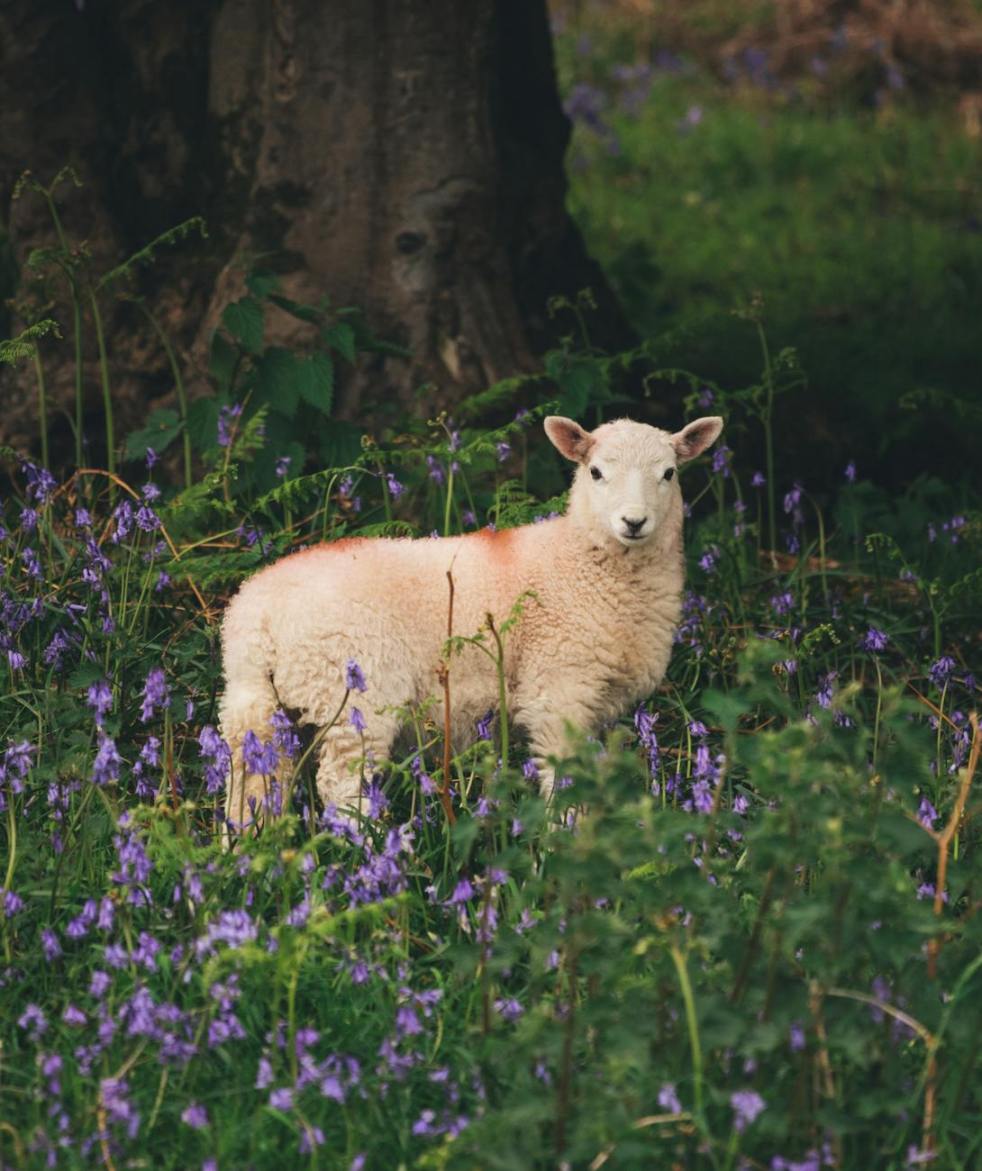
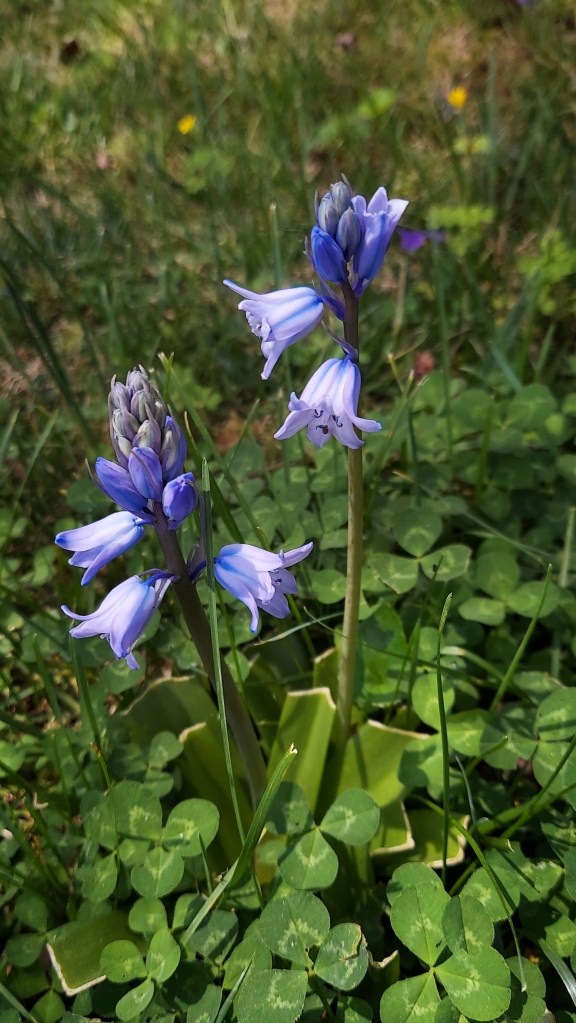
Fortunately, I’ve got plenty to get up to at home. For example, right now, the yard is filled with flowers. Many, I planted — moss phlox, strawberries, blueberries, apple blossoms, pear blossoms — and many I didn’t. I expected to see the same violets, dandelions, and stars of Bethlehem that I saw last year. What I did not expect was all of the bluebells.
We didn’t have bluebells last year.
I didn’t plant bluebells.
Whycome bluebells?
The particular species we have right now seems to be Spanish bluebell (Hyacinthoides hispanica). I know it probably isn’t English bluebell (H. non-scripta) and definitely isn’t native Virginia bluebell (Mertensia virginica). Nonetheless, they’re delightful little flowers and I’m enjoying them. They don’t seem to be stealing space or resources from anything but the grass that I’m systematically attempting to assassinate anyway at the moment, so they can stay for now.
(Spanish bluebells are a bigger issue in the UK, where they’re more likely to be invasive and can hybridize easily with — and eventually displace — native H. non-scripta. The bluebells we have here won’t hybridize, however, as they’re not closely related at all.)
Either way, I’m always in search of new plants to study and write about, so the appearance of these guys is pretty fortunate — I haven’t really looked into bluebells before this, and I like that they’re demanding my attention now.
Bluebell Magical Properties and Folklore
Bluebells are strongly associated with faeries. The fae were believed to ring them, just like you would a metal bell, in order to call other faeries.
However, should you hear the soft tinkling of bells when you’re near bluebells, watch out — anyone who hears the bluebells ring was said to experience the death of a loved one soon after.
This connection to faerie magic is also why it was considered unwise to pick a bluebell. Anyone foolish enough to do so put themselves at risk of being cursed or led astray by the faeries.
A similar, but unrelated, plant is known as the harebell, witch’s bell, or Scottish bluebell (Campanula rotundifolia). These flowers get their name because hares frequent fields of them. It was even said that witches would disguise themselves as hares and conceal themselves amidst the harebells.
It has been a frequent complaint, from old times, as well as in the present, that certain hags in Wales, as well as in Ireland and Scotland, changed themselves into the shape of hares, that sucking teats under this counterfeit form, they might stealthily rob other people’s milk.”
(It’s weird how much traditional witchcraft reportedly revolved around stealing milk. Case in point, the tilberi.)
These bluebells were also known as “the aul’ man’s bell,” where the “old man” in question is the Christian Devil.
English bluebells, photo by Suzy Hazelwood on Pexels.com
Bluebells are also connected to love magic. This seems to be largely due to the fact that they’re tenacious, bulb-growing plants. They even send out contractile roots that allow them to sort of “burrow” into the soil where there’s more moisture and protection. As a result, they come back year after year and are considered a symbol of enduring love.
They’re also used for a kind of love magic. Should you be able to brave the faeries’ wrath, pick a single bluebell flower, and turn it inside out without tearing it, you could ensure that your true love returned your affections.
Bluebells are related to hyacinths, and, like hyacinths, they actually can come in a variety of colors — pale to deep blue, violet, and pink. As with other flowers that come in many colors, their colors do, to an extent, dictate their potential magical uses. Pink flowers, as a rule, are useful for love magic. This can be attracting new love, strengthening an existing love, or even just helping with emotional healing and self-love. Purple flowers, crystals, and such are commonly used for more mystical, psychic, or divinatory pursuits, as well as ambition and success. Blue flowers and the like are helpful in rituals for healing, peace, truth, and emotional understanding.
Speaking of which, putting a wreath of bluebells around a person’s neck was said to compel them to speak only the truth.
While bluebells produce a wide range of compounds with potential medical uses, this is one of those situations where there’s a fine line between “medicine” and “poison.” Some of these compounds may be the next line of anticancer drugs, if they’re properly standardized. If you just straight-up eat bluebells, however, you’re setting yourself up for an evening of nausea, pain, and heart rhythm disturbances. Possibly even a long nap on the wrong side of the grass.
Today, bluebells are considered an ancient woodland indicator. This means that they’re commonly found thriving on the floors of old growth forests.
In Victorian floriography, the “language of flowers,” bluebells represented kindness.
Bluebells are associated with the planet Saturn and the Moon, as well as the element of Air.
Using Bluebells
Overall, the message of the bluebells seems to be pretty clear: They’re beautiful, they can represent things like kindness, resilience, and everlasting love… and if you pick them, you’re screwed.
I’ve found several references to drying bluebells and keeping them in the bedroom, but not any definitive reason to do this. Presumably, this may tie into bluebell’s association with peace or love magic. It definitely seems to be either a peaceful dream thing, a romantic love thing, or a “do this to dream of your lover” thing.
Bluebells could theoretically be offered to faeries or other nature spirits. However, since this would involve picking the bluebells first, they might interpret it more like the horse head scene in The Godfather. A much safer bet would be to designate an area of your garden for the faeries and keep an offering of potted bluebells there instead.
If you’re in the United States, you may want to consider planting native bluebells in your garden. Should you choose to work with English or Spanish bluebells, do so conscientiously — avoid planting them directly in the soil, as their sheer resiliency means that they can become invasive under the right circumstances.
All told, I’d recommend enjoying bluebells as they are, as harbingers of faeries, reservoirs of nectar for pollinators, and indicators of ancient forests. These are one plant that is best worked with in situ, rather than picked, dried, and added to a spell.
Hello! It’s April, it’s going to be almost 90° F this weekend, and winter skipped us.
Well, we had like one cold week, but that was it.
Honestly, it’s had me worried. A number of plant species that are native to this area require cold stratification — in other words, they need a period of cold and some pretty big temperature swings in order to trigger them to germinate at the correct time. This includes a tree that’s very important to me, the bald cypress. They’ve evolved to need cold stratification because without it, their seeds could germinate far too early and die off in the middle of winter.
I have packets of seeds that I want to plant, too, that need to be sown within a narrow window of time. I’m talking when temperatures are cool (but not too cool), usually right around the last frost date. The trouble is… like I said, it’s going to be in the high 80s this weekend. Our official last frost date was a few days ago.
Now that I’ve gotten my complaining out of the way, there’s an idea I’ve been exploring.
I first ran into it when I was researching native hydrangeas. I love hydrangeas in general (my grandfather had a big hydrangea next to the house I grew up in, alongside a strangely persistent and hardy opuntia cactus), but they’re not really known for their heat tolerance. They are, by far, not the only plants that are going to suffer as temperatures increase either.
Smooth hydrangea (Hydrangea arborescens) is native to this area. They also prefer daytime temperatures in the 70s and require supplemental irrigation when it gets too hot and dry.
Oakleaf hydrangeas (Hydrangea quercifolia) are native to the Southeastern United States. In other words, they’re from the US, just a bit lower than where I live. Changes in average temperatures are expanding the range of some southern plants and animals, while driving others further north.
Unfortunately, there’s not much that a single person can do to keep their cool temperature-loving plants from suffering from this effect. It’s also debatable whether we should — landscapes are ever-changing and evolving, and state borders are artificial constructs that plants and animals don’t recognize. It may increase the resilience of the landscape to work with this shift, rather than against it.
For this reason, I’m experimenting with oakleaf and smooth hydrangeas. Experts point out that this area’s climate is slowly aligning with species that used to be relegated to more southern states. Blending some Southern species with Midatlantic species could help create a plant, animal, and fungal community that’s more resilient to climate change, and decrease the need for supplemental irrigation or treatment for diseases related to heat stress.
Saving seeds from the individual native plants that seem to struggle less with the heat can help their species adapt over time, which will feed and protect the native animal species that depend on them. Adding in native-ish species from a bit further south can help the land adapt. It also ensures sources of food and nesting sites for the animals that are also being driven north as temperatures rise.
In places that enjoy warm winters, these bright yellow flowers can be spotted year round. If you’re in a temperate area like I am, then you’re probably seeing them all over as we get ready to enter the last month or so of their peak flowering season — especially as business closures and shelter-in-place orders leave a lot of outdoor spaces untended.
Believe it or not, these ubiquitous yellow blooms aren’t actually native to the U.S. In places where they grow naturally, they’re a valuable source of food for honeybees. While they may not be quite as useful to U.S. wildlife, they still have a ton of magical properties that make them a valuable addition to your herb cabinet (and, if you enjoy the flavor, your tea cupboard and salad bowl).
Dandelion Magical Uses and Folklore
The name dandelion comes from the French phrase “dent de lion,” or “tooth of the lion.” Another, more accurate, name is “pissenlit.” “Lit” means “bed.” The rest, I’ll leave up to your imagination.
On a related note, dandelion is a diuretic.
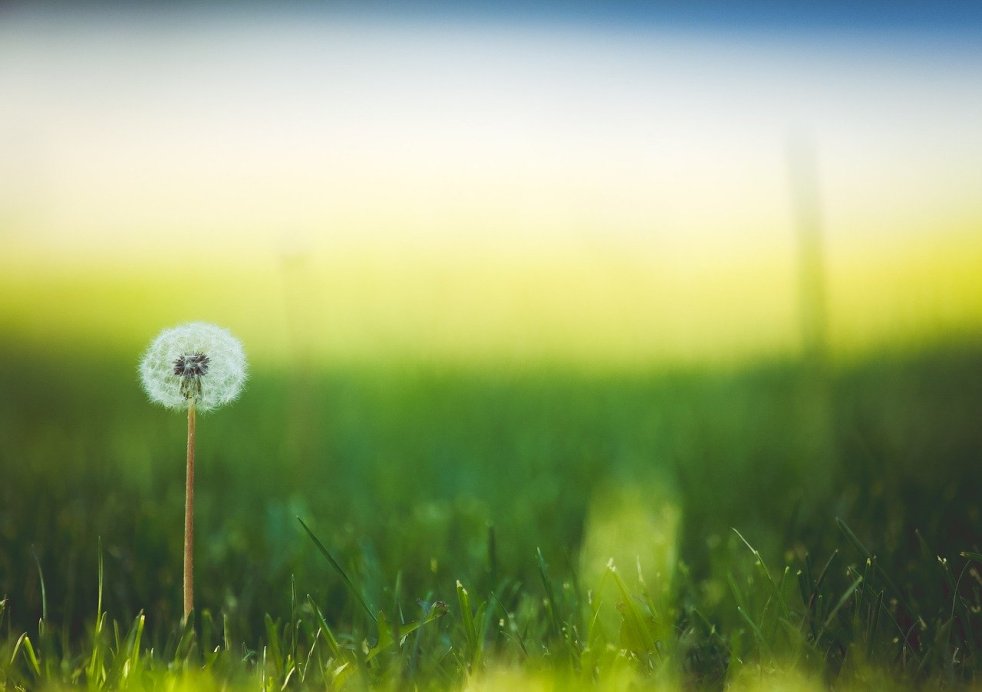
When a dandelion sets seeds, its yellow flower turns into a nimbus of fluff. Pick a dandelion, make a wish, and give it a good, hard puff — the seeds will scatter, carrying your wish with them.
Similarly, if you have a bad habit you want to get rid of, blowing on a dandelion puff will carry it away from you. They can also carry your affections to a distant loved one.
Dandelion puffs are also used in love divination. If you think of your beloved and blow on one, it will show you how loved you are. If the seeds completely disperse, your beloved is infatuated with you. If some seeds remain, they have some reservations.
After you blow on a dandelion puff, watch the direction that the seeds go. It will show you where to seek your fortune.
Hold a dandelion under your chin. If it shines yellow, you’ll be rich some day. A similar belief holds that, the brighter the yellow glow, the kinder you are.
In the Encyclopedia of Magical Herbs, Scott Cunningham writes that dandelion root tea can help with divination and prophetic dreams.
Brewing dandelion root tea and leaving a cup of it by your bedside is said to call spirits.
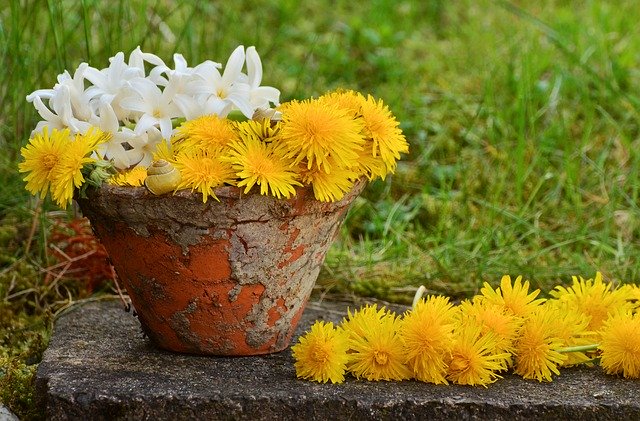
Including dandelions in a wedding bouquet is said to ensure happiness for the married couple.
Dandelion sap was used as a remedy for warts. Squeezing some milky sap from the stem of the plant onto a wart is said to make the wart disappear. (Though this folk remedy has been in use for hundreds — if not thousands — of years, there’s no real clinical data to back it up.)
Some use the dandelion to predict the weather. After they’ve gone to seed and become all fluffy, they are very sensitive to changes in moisture — when the weather’s likely to be wet, they’ll close up. When the rain has passed and things are going to be dry for a bit, they open so their seeds can disperse.
Dandelion is ruled by Jupiter.
The plants are associated with Hecate, Aphrodite, Brigid, Belenos, and solar deities.
Using Dandelion
The easiest way to use dandelions is in a salad. The young leaves are very good, though the adult leaves have a tendency to be bitter. You can also boil the leaves up with onions, carrots, and parsley, strain, and save the broth. It’s delicious and packed with minerals.
Roast the ground root and use it as a caffeine-free coffee substitute. I often drink a beverage made from dandelion root extract called Dandy Blend — it’s good for scratching a coffee itch, especially since I have to avoid stimulants.
Most magical uses of dandelion involve brewing it into a tea. You can purchase prepared dandelion teas, or collect your own leaves, dry them, and use a tea strainer. Leaf tea has a pleasantly grassy flavor with some bitterness, while the roots have an interesting nutty taste. Make yourself a cup before performing a divination.
If you choose to go dandelion-foraging, don’t pick any that grow by roadsides, or that may have been sprayed with pesticides, herbicides, or fungicides! These plants are extremely hardy and grow basically anywhere, so you’re best off planting your own so you know what they’ve been in contact with. Many other plants also resemble dandelions, so be absolutely sure you’ve IDed your potential meal correctly.
I love dogwood blossoms, I think they’re my favorite non-flower flower. Even the wood and foliage of some species is absolutely breathtaking to look at — there’s nothing quite like a bloody dogwood in the snow.
Depending on where you are, dogwoods are either blooming, starting to bloom, or have been blooming for a few weeks. Since I’m missing the dogwoods at the National Arboretum so much, I figured this would be a good week to look at the folk and magical applications of Cornus wood, leaves, berries, and flowers.
Dogwood Magical Uses and Folklore
As a native American tree (eastern U.S. and Mexico), there’s not a lot of writing on flowering dogwood (Cornus florida) as it pertains to European-based witchcraft. Southern Europe does have a plant called the Cornelian cherry (Cornus mas), which is in the dogwood family, and most of Europe and western Asia has the common dogwood (Cornus sanguinea). C. mas and C. sanguinea both flower, but neither of these are quite as showy as the big white or pink blooms of C. florida. Since all of these plants are related, it’s possible, even preferable, to make substitutions depending on what species are locally available to you.
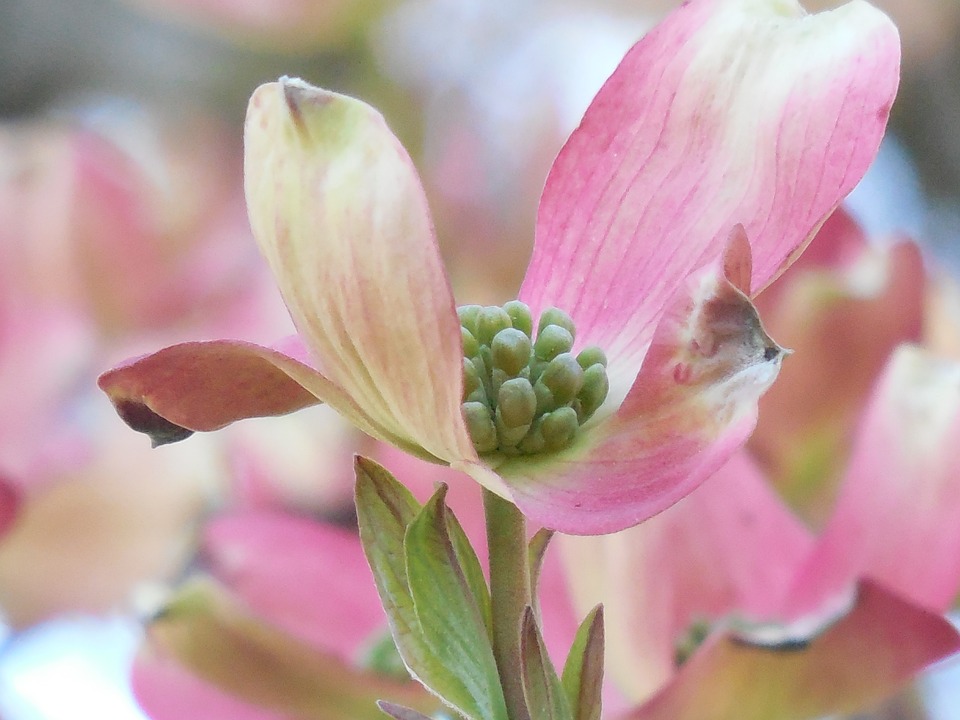
Dogwood is associated with loyalty, secrets, wishes, protection, fertility, desire, and illusion. (The illusion part, in particular, makes a lot of sense — the flowers of the flowering dogwood aren’t actually flowers at all, they’re modified leaves.)
The dogwood is strongly tied with Christian mythology, since the flowers form a cross shape. It was believed that the wood was used to form crosses for crucifixion, so Jesus prevented the dogwood from ever growing large enough to be used for this purpose again.
An old folk remedy for treating mange in dogs involved making a decoction of dogwood bark, and washing the affected areas with it.
Leaves, bark, or flowers can be used as a protective charm.
As an herb of secrecy, it’s a good idea to include some dogwood leaves in a diary, grimoire, or Book of Shadows. An oil made from the flowers can be used to dress a letter and keep prying eyes off of it.
Make a wish come true by catching a drop of dogwood sap on a cloth on the evening of Midsummer, and wishing on it. Carry it until you get your desire, then bury the cloth.
It’s bad luck to bring dogwood flowers into your home, or to burn the wood in your hearth.
Using Dogwood
One theory for the etymology of “dogwood” is that the name stems from “dag,” from which we also get “dagger.” This is related to the straightness and density of the wood — the sticks are pretty much ideal for crafting shafts for tools or weapons (Ötzi was found with dogwood arrows), and the wood is dense enough to sink in water. In a practical sense, this makes dogwood an excellent material for crafting wands or other magical tools.
A lot of dogwood’s associations fit neatly into one another. Illusion, protection, and secrecy all blend well. I probably wouldn’t use dogwood in place of, for example, cayenne pepper as a protective herb because the energy is so different. Dogwood is subtler — it protects by concealment. It’s a smokescreen, not a fiery wall. Even its use as arrow shafts points to a plant that’s best used to take advantage of the shadows!
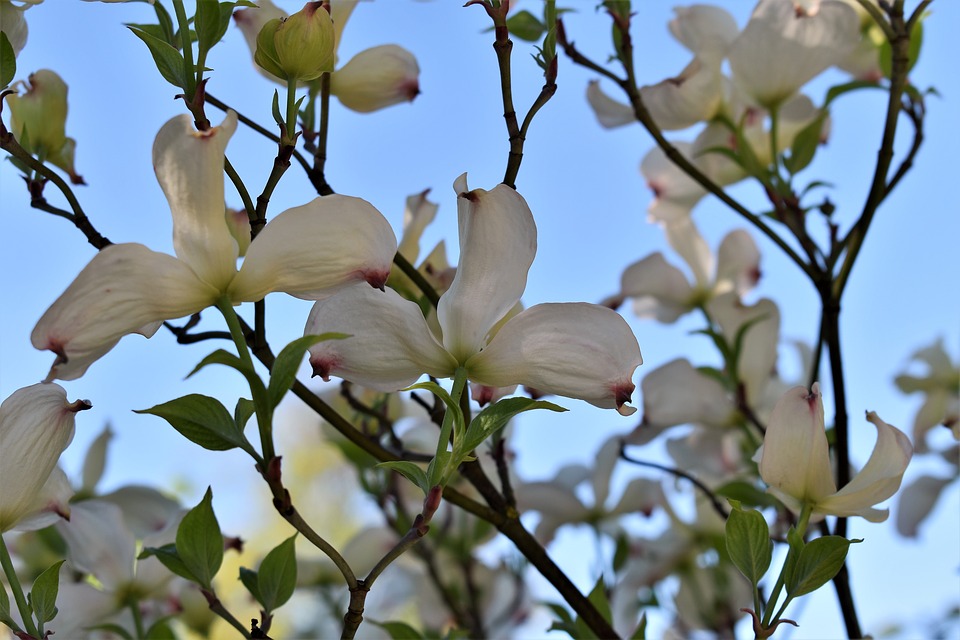
American flowering dogwood has four bracts. From a numerological standpoint, four is strength, stability, and pragmatism. This blends nicely with its use as an herb for protection and loyalty.
Dogwood is useful in color magic, since the blooms can range from white, to yellow, to pink, to red. Even the leaves can turn from gold or green to pink, yellow, orange, or red.
Pansies remind me of my late grandmother. She used to grow them in her backyard garden, as little cheery-faced border plants. She also had a very gentle, relaxing aesthetic — I remember the grandfather clock in the hallway, the little embroidered pillow full of fragrant pine needles, the print of geese with cheery blue ribbons on the kitchen wall, the way the hallway always smelled like roses and the kitchen smelled like fresh coffee. I can always tell when she’s around me because of those smells.
It was nice spotting these little flowers last week, with their yellow faces turned toward the sun. I’m not positive about their exact species, but they resembled my grandmother’s pansies enough to make me curious about their uses.
And this appears to be some yellow Viola tricolor.
It’s probably unsurprising to hear that pansies have a wealth of properties associated with them. You can heart it in their names, too — heartsease, call-me-to-you, love-lies-bleeding, love-in-idleness.
Heartsease Magical Properties and Folklore
In Roman mythology, the viola turned to love-in-idleness when Eros mistakenly struck it with one of his arrows, causing it to smile.
In Greek mythology, Zeus created the flowers as a way to repent for his treatment of his lover, Io. She was once a beautiful maiden, but Zeus’ wife, Hera, became jealous. To protect Io, Zeus transformed her into a cow. Since she was forced to be on a diet of grasses and herbs, Zeus made the earth yield flowers.
In another legend, Cupid worshipped the heartsease flowers. To stop this, Aphrodite turned them from white, to tricolored.
Pansies and violets are associated with Venus, and often used as a love ingredient. Placing some under your pillow is said to attract a new lover. Planting them in a heart shape is a bit of sympathetic magic — if they thrive, so will your relationship.
They are also associated with Pluto, and death and rebirth.
Picking the herb on a sunny day is said to cause a storm to come. Picking one that’s still dewy brings death.
Using Heartsease
I think love magic gets a bad rap. When many people think of it, they picture a desperate, lovelorn person, performing spell after spell to convince the object of their affections to want them back. That’s not really the case, though. I mean, if you think about it, everything is love.
Want more money? You really want your boss or your clients to love your work.
Want to be more successful or popular? That’s platonic love.
Love magic is attraction magic. If you draw in love, you can use those same attributes to attract whatever you desire.
Pansies come in a variety of colors, which lends them well to color magic. Each color has its own particular attributes. The little yellow ones I found could be found for mental abilities, divination, happiness, travel, or blessing a new home.
If I could, I’d plant a pot of yellow pansies near the front door of my home. Bless the space and draw in love all at the same time!
Medicinally, heartsease has been used to treat asthma, inflammatory lung conditions, and cardiac complaints. Externally, it’s used for skin problems like eczema. Considering this, and considering how many other herbs’ medical uses mirror their magical ones, it’s really not surprising that it’s an herb of love and death.
Pansies are demulcent, mucilaginous, and anti-inflammatory. They have been used to calm irritated skin, ease chest complaints, and soothe other matters of the heart, too. They’re also easy to grow, so, if you have the room, I definitely recommend planting some of these cheerful little flowers!
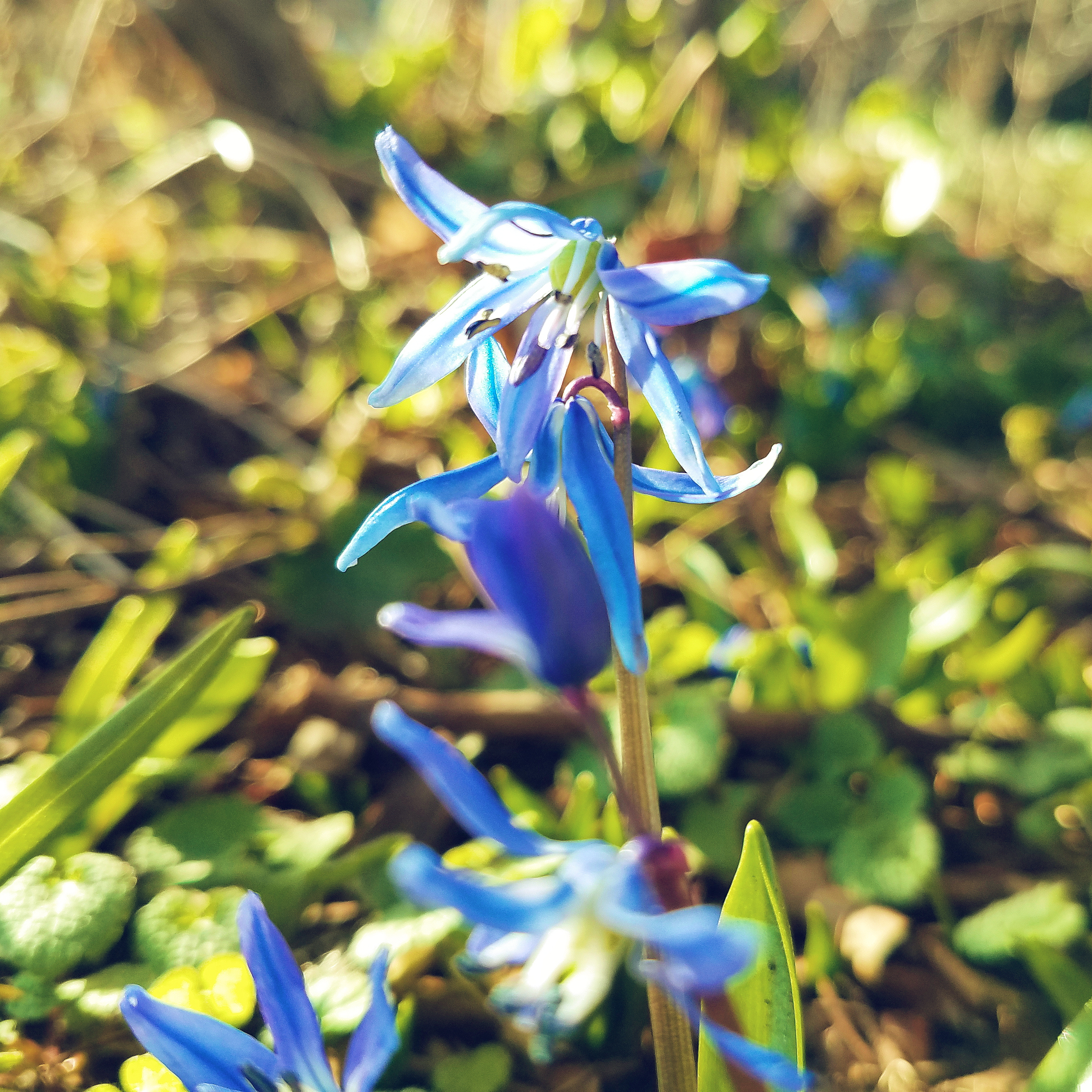
Every time I find a new plant buddy, I end up spending a few hours reading up on what they’re used for — even things like mushrooms, lichen, and moss. When I spotted these pretty little blue flowers, I was immediately curious. I’d never seen them before, and their color was so vibrant against the brown dirt and handful green leaves poking out of the chilly ground. They were so small, I almost missed them.
Scilla siberica, wood squill.
I wasn’t able to find much about wood squill specifically, other than that it’s native to Southwestern Russia (despite its other name, Siberian squill).
When most herb lore and magical texts talk about squill, they’re really talking about red (Drimia maritima) or white squill (Scilla mischtschenkoana). All of these are in the same subfamily, Scilloideae, but aren’t otherwise really synonymous.
The word “scilla” comes from the ancient Greek “skilla,” which is of unknown meaning. (A Modern Herbal claims that it means “to excite or disturb,” the way that an emetic disturbs the stomach, but I haven’t been able to verify this.)
For some people, only the actual plant that a spell calls for will do. For others, it’s okay to use a relative, if they’re close enough. This can be especially useful if the plant you want to work with is poisonous, endangered, not native to your area, or otherwise not a super great idea.
Squill Magical Properties and Folklore
Squill root is a money herb.
In hoodoo, placing squill in a container with one coin of each denomination, is used to draw in cash. (Some practitioners say it’s particularly effective if you can get a hold of old silver currency for this spell, like Mercury dimes. Others say that silver objects, like chains or beads, are even more effective than non-silver money.)
Holding squill root in your hands, focusing your intention to be unhexed, charging it, and carrying it with you is said to break all hexes and curses.
Using Squill
Red squill is used as a rodenticide, owing to a toxin called scilliroside. In creatures without a vomiting reflex, scilliroside is deadly.
White squill, on the other hand, has historically been used as a diuretic and expectorant. Compounds called glucosamides, found in the bulbs, are sometimes used in traditional medicine to treat irregular heartbeats. Wood squill also contains cardiac glycosides. This is not intended as medical advice, just an indicator of what kind of practical, medicinal applications it’s used for. As with any herb, medicinal properties can quickly become poisonous properties, so keep them away from children and pets.
Considering its medicinal properties and its appearance, it’s kind of easy to understand why it’s a money herb. It’s got that lovely plump bulb full of stored energy — fat like an onion, or the way you’d want your bank account to be. Its use as an emetic and diuretic make sense here, too. Squill has the power to eject all kinds of substances from the body. You put it in a stomach, the stomach’s contents are coming out in abundance. Metaphysically, it stands to reason that it would be placed in a container with money in the hopes that it’d spew more money into your life.
The emetic and diuretic virtues also go hand-in-hand with hex breaking. If your body needs to purge a physical ill, squill helps. If you need to purge a magical ill, squill helps that, too.
White squill seems to be abundant and easy to find on the market, but there are areas where other varieties of squill (like the wood squill pictured above, or alpine squill) have become invasive. If you’re looking to use squill in your work, I’d suggest picking up a good plant identification guide, and seeing if your area has any invasive varieties lurking around. (Various species of squill are used as ornamental plants. If you decide you want to grow some, be sure to do it in a way that will keep it from escaping into its environment.) You can get the magical ingredients you need, develop a deeper relationship with the plants themselves, and remove damaging invasive species from your environment at the same time.
I think I probably get enough vitamin D, in the sense that I’m not technically deficient, but months spent indoors have given me the preternatural paleness of a consumptive Victorian heroine. On some people, this look works. My skin has naturally beige/green undertones, so I just look like I’m half iguana.
This past weekend promised to be sunny and warmish, so my S.O. and I packed up and went for a drive. Saturday was Lake Accotink, where we walked along the edge of the water, enjoyed the light for a bit, did some people-watching, then took a detour on the way home for cheeseburgers.
(By the bye, Big Buns Damn Good Burgers lives up to the name. If you get the veggie burger, though, get it as a burger bowl. It’s very good, but very soft and probably too skooshy to hold in a bun without it falling apart.)
Even though the trees were leafless and the sand was chilly, the sun was warm and the breeze was gentle.
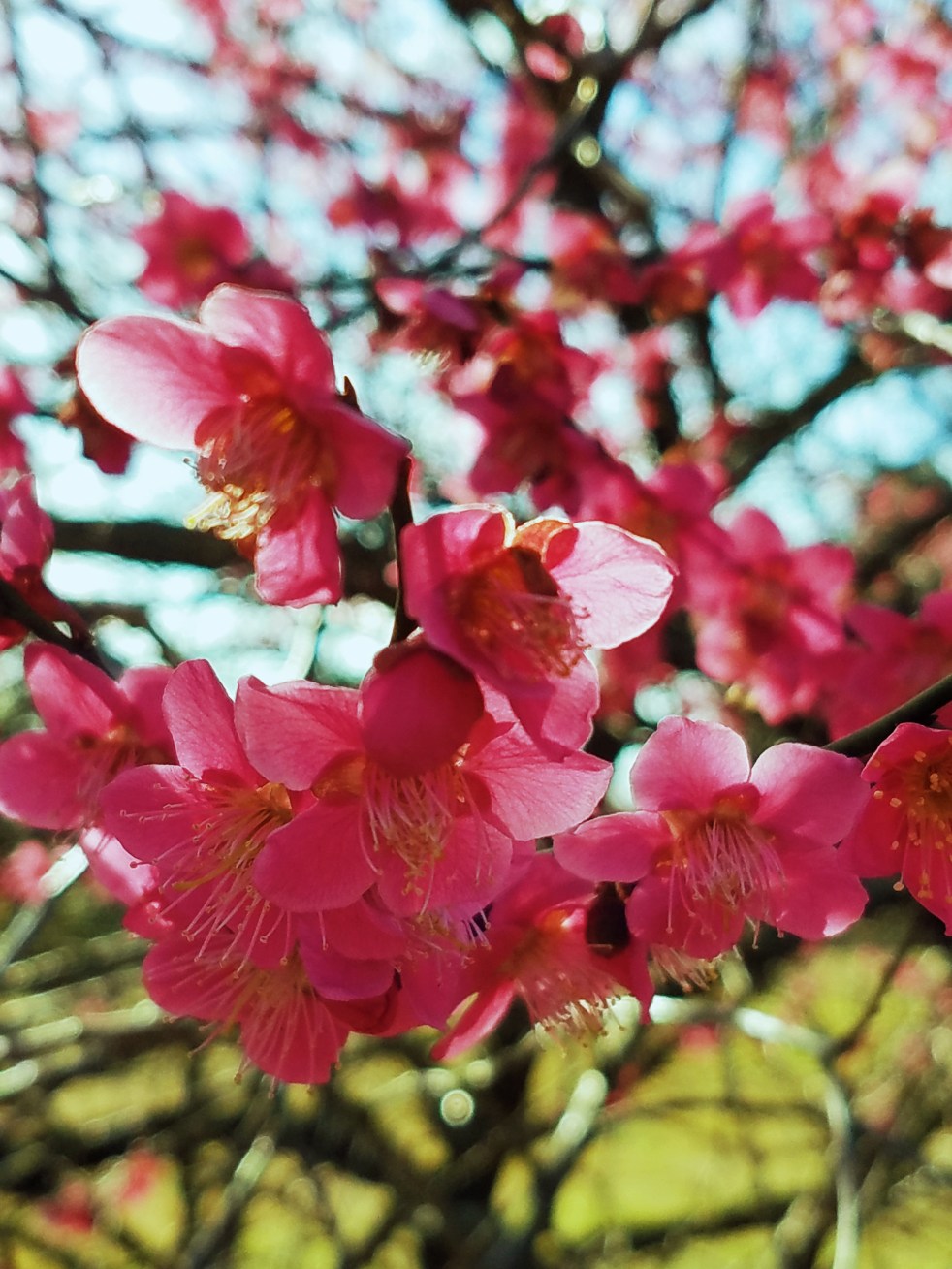
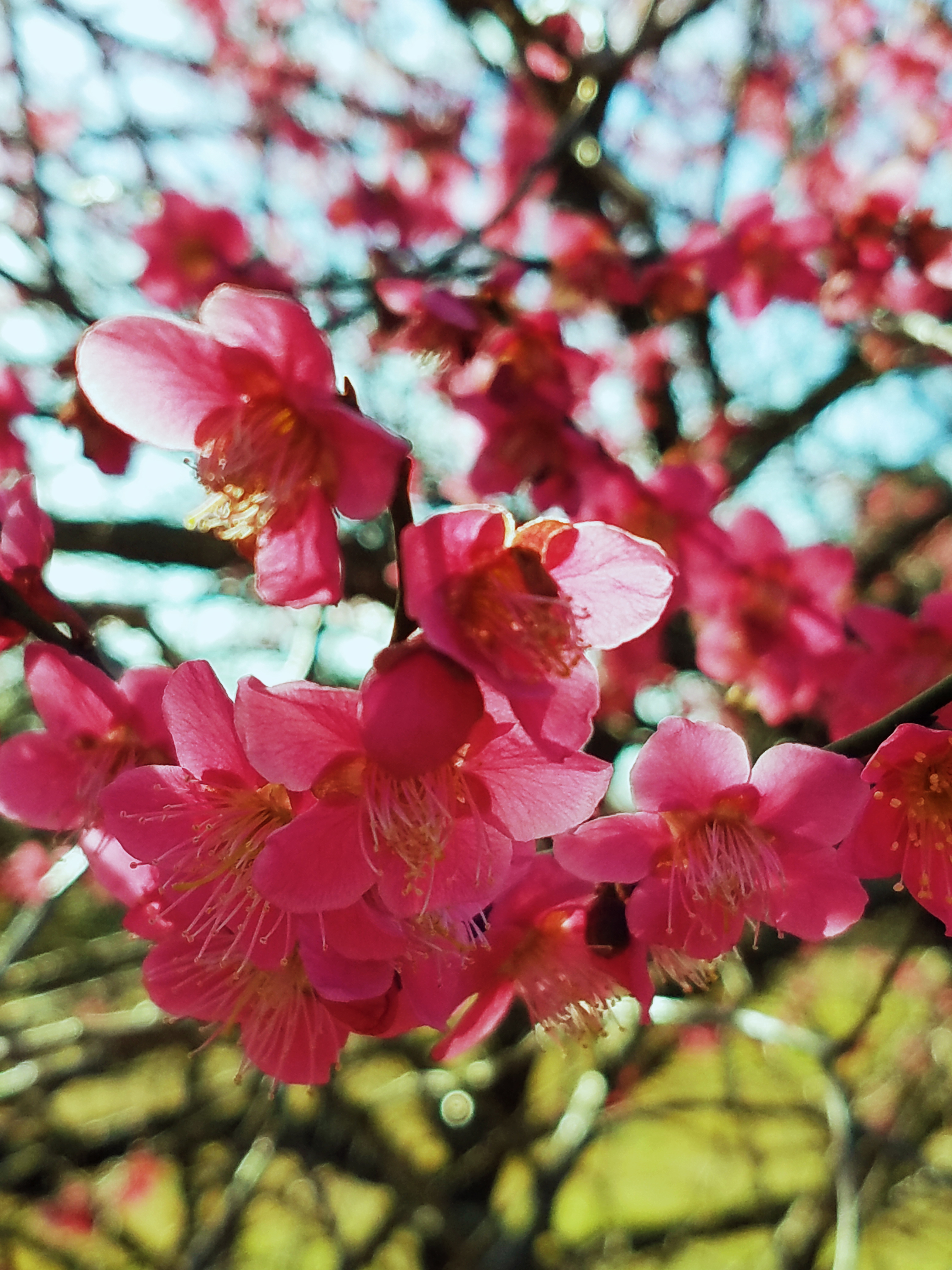
The next day, we decided to drive to the Arboretum. Most of the trees were still leafless, twisted branches scrabbling at the sky, laden with the remains of last year’s bird’s nests. Still, it seems like every time we go, we find something neat that we didn’t spot before — first the dogwood trees, then the path through the conifer specimens. This time, it was this beautiful Prunus mume, branches half-covered in fragrant, pink blooms, humming with honeybees.
It smelled so good.
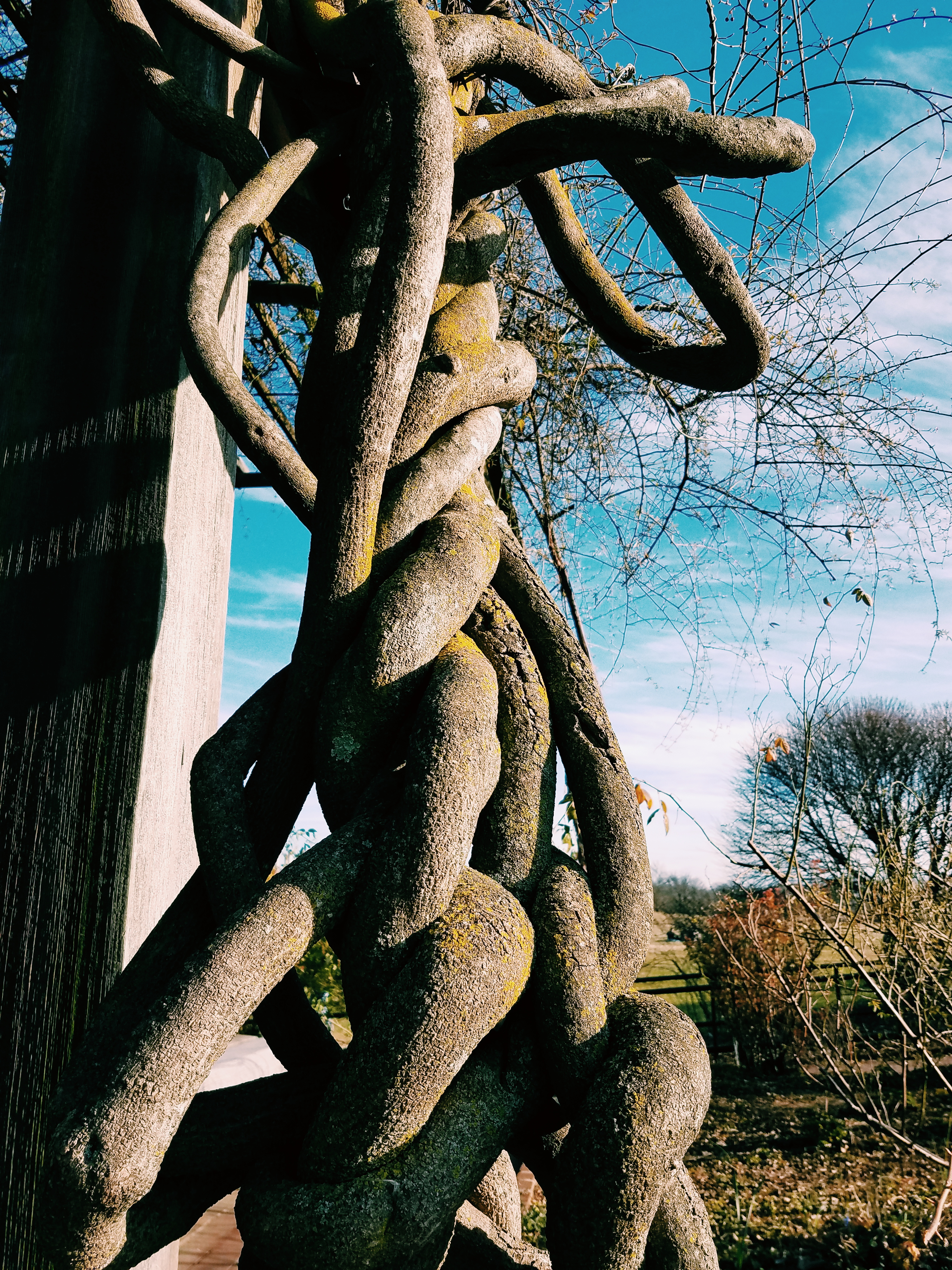
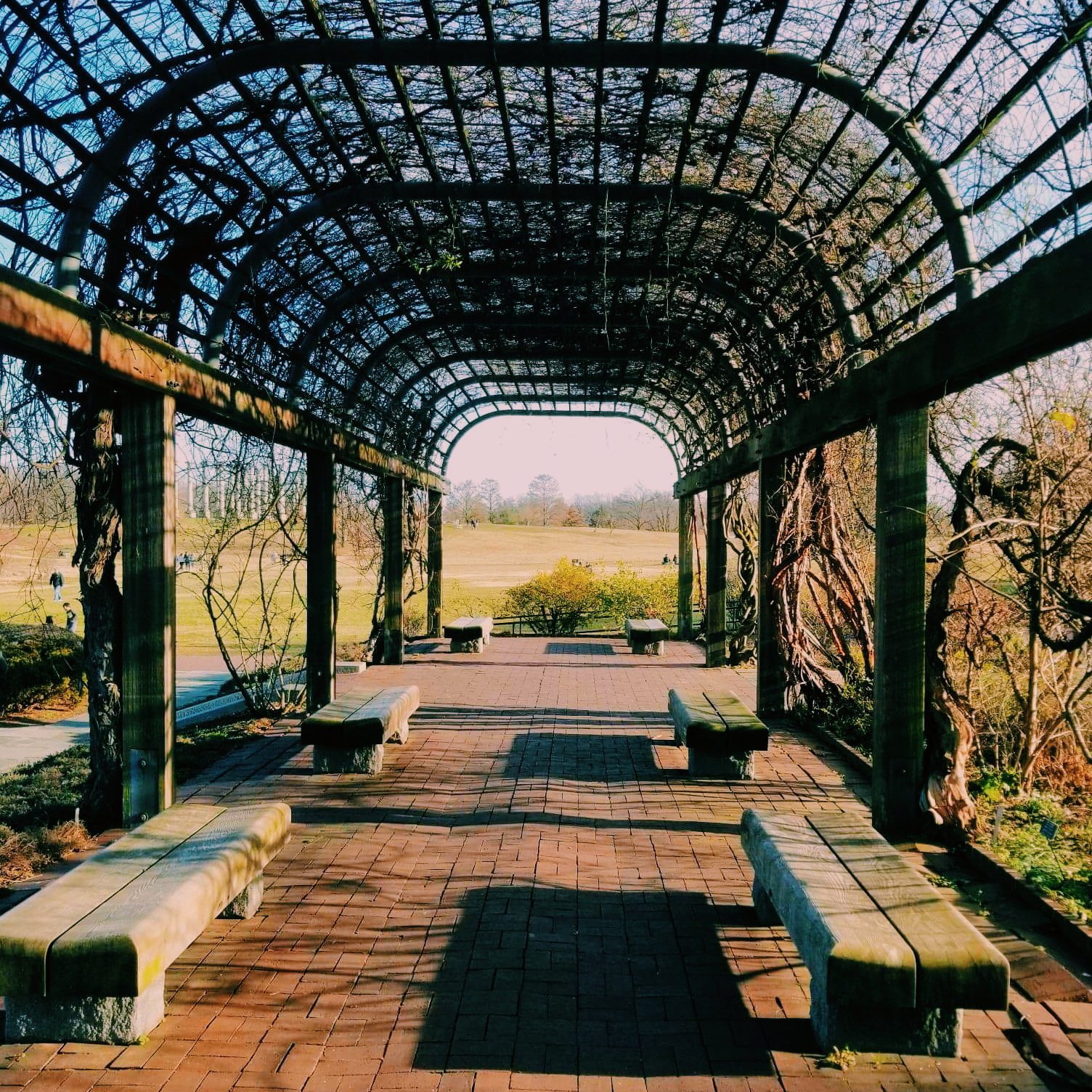
We wandered around until we found a bonsai museum and an herb garden — closed and bare, respectively, but the area was still beautiful enough. We found an arbor to sit under, which had this really cool-looking (albeit one I couldn’t identify) vine braided along one side.
With the sun slanting through the trees, backlighting the few leaves and flowers daring enough to open up this early, it was nice. Relaxing.
… Though maybe I should’ve waited for it to warm up a little before I buzzed my hair again. Whoops.
As we drove through the park, I heard my S.O. huff softly.
“Degenerates,” he groused.
“What?”
“Look.”
I turned my head and squinted in the light.
… I mean, he’s not wrong. I do not like the cobra chickens.
There are a lot of spots in the Arboretum that come alive with color in the warmer months. Bright splashes of orange, pink, and purple nestled into tufts and spikes of foliage, rosemallows the size of dinner plates, the works. There weren’t as many this time of year, but still plenty of color if you didn’t mind hunting for it.
I think these guys are Scilla siberica, wood squill.
… And also looking very strange while laying on your stomach in order to get close enough for a picture.
And this appears to be a yellow Viola of some kind.
There were some very pretty crocuses, too, but they were a bit too far off the path for a picture (I’m not about to go trampling sensitive terrain for a pic or two, but, unfortunately, my zoom isn’t quite good enough for a clear shot). Next weekend’s probably going to be too cloudy and cold for more adventures like this, but that’s okay. I’ve got some other plans. Secret ones.
This week’s tarot card’ll be up tomorrow. Have a good Monday!












 Marble Crow