

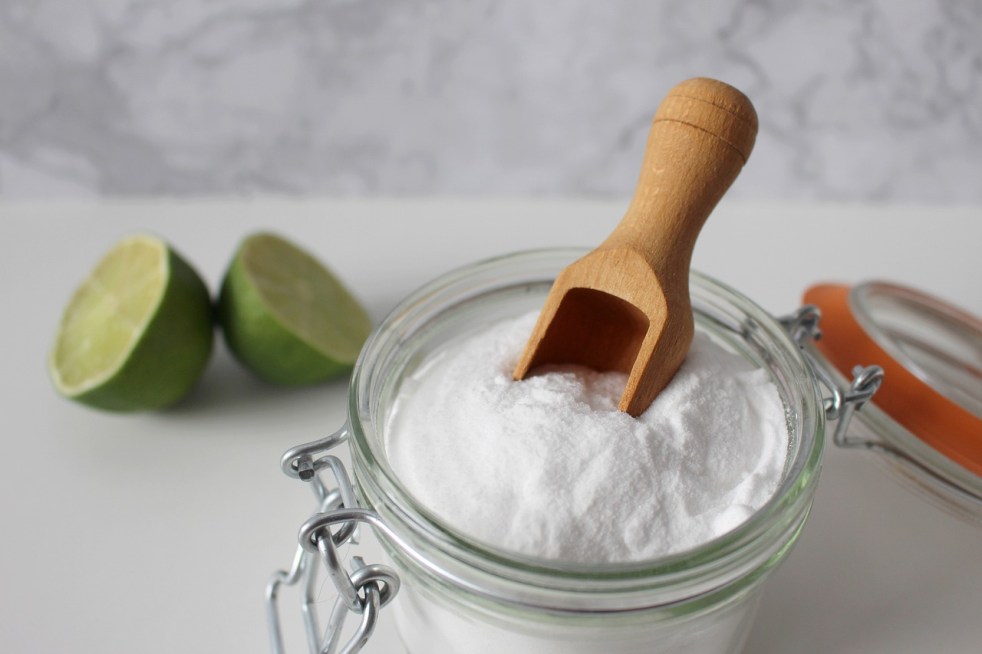
I’ve always had a love-hate relationship with no-poo.
If you’re not familiar, “no-poo” is a hair care method that involves shunning shampoo. This doesn’t mean that you don’t clean your hair, you just do it a little differently. An initial baking soda scrub gets rid of oil, and a vinegar rinse afterward neutralizes it and makes your hair soft and shiny.
Theoretically.
My custodial parent had very different hair from mine, and they weren’t interested in learning the difference or teaching me how to properly care for myself. As someone who was raised to believe that I was just cursed with oily hair and the only cure was copious amounts of shampoo, I’ve always been curious about how people with other hair types take care of theirs. Do they have to shampoo so often, their scalp turns tight and itchy? If not, was it just good luck on their side?
When I still lived in California, I tried no-poo. We had well water, and the water quality was way better than what I’d had before. (This is not a high bar. When I was a kid on Long Island, we had to have our pipes “flushed” yearly or so, and periodically had our water chlorine-shocked. We’d get notices about a week beforehand to warn us that our water was about to get gray, gritty, and nasty for a while. When I lived in Delaware, all the water was just… hard. Really hard.)
The trouble is, no-poo turned my hair into sticky, uncombable clumps glued together with a generous deposit of stearic acid. As it turns out, the water had way more minerals than I anticipated. It took a week for me to get things back to normal again.
I don’t know what made me consider doing no-poo again. Curiosity, perhaps. A sensitivity to a lot of shampoos, maybe. A desire to see if it’d make having trichotillomania easier to deal with.
When I experienced problems before, the prevailing advice was to just use distilled water instead of tap. Since a major part of my initial desire to go no-poo was to avoid plastic, this was counterproductive. Sure, it’s less plastic, but less plastic + a less-than-stellar experience wasn’t really a compelling reason to stick with it.
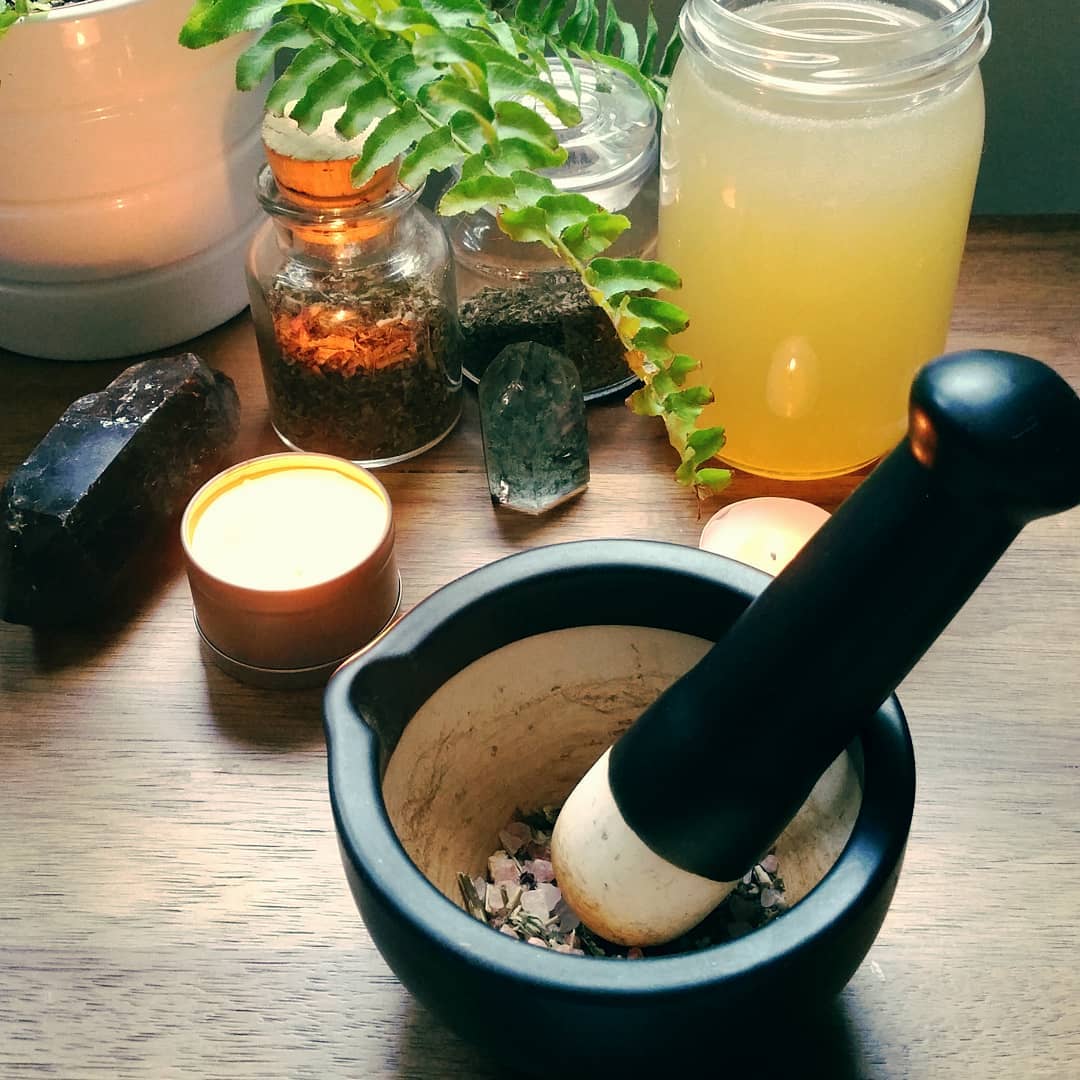
This time around, I made a solution of baking soda and sea salt for cleaning my hair, then a large jar full of one part vinegar to three parts water to rinse. I’ve also:
- Made a rinse potion out of ginger tea and apple cider vinegar. It felt and smelled nice, but I didn’t notice much of a difference between using that versus tap water and vinegar.
- Made a rinse potion out of chamomile tea and apple cider vinegar. This was soothing and smelled like apples and bubblegum. Not a huge difference otherwise, though.
- Added three drops of cedar oil to the rinse potion. This was overkill and I smelled like hamsters for two days.
- Added a drop of frankincense oil to the rinse potion. This was better.
I don’t want to jinx myself, since it’s only been three weeks, but I’m finally enjoying this. My hair is fluffier and softer than it would be with shampoo alone, and much less weighted down than it gets with shampoo and conditioner. Even my partner commented that my hair had a lot more volume than usual.
(I wanted to provide a before-and-after photo here, but all of my “before” photos are of me in various bandanas and other sundry headwear, so they’re of very limited utility. Whoops.)
The most important thing, I think, is that I didn’t wet my hair before applying the baking soda solution. I also didn’t allow the tap water to touch my hair between cleaning and rinsing. That means that the baking soda was neutralized without coming in contact with the high-mineral tap water, so I didn’t turn my hair into sticky clumps of wax. Once everything was neutralized, I had no problem with giving my hair a rinse or two with cool tap water. No distilled water necessary.
My scalp also feels much better. Like, a lot better.
I’m going to stick with it for as long as it continues to work out as well as it has so far. We’ll see how it goes!
If you want to give it a shot, the entire process goes a bit like this. I don’t really measure anything, so all quantities are estimates:
- I toss a handful or two (so about two tablespoons) of plain baking soda into a container filled with approximately a cup and a half of warm tap water. Not all of the baking soda will dissolve, and that’s okay.
- I pour this over dry hair. Once my hair is saturated, I thoroughly scrub my scalp and work it through the length of my hair.
- Now, without allowing any more tap water to touch my hair, I mix roughly a quarter to a third of a cup of vinegar to a cup and a half of warm tap water.
- I pour this over my hair to neutralize and rinse out the baking soda.
- If I feel like it’s necessary, I can rinse my hair with cool water at this point. I don’t always, since the scent of the vinegar dissipates pretty quickly.
That’s it! The most important part of not getting a head full of sticky residue seems to be carefully avoiding the addition of any more hard water than strictly necessary. This lets the baking soda handle the emulsification and saponification processes (while not as strong a base as lye, baking soda does produce a low enough pH to react with oil) and be neutralized by the vinegar without producing a ton of residue. Mixing the baking soda in tap water appears to be fine, as long as it’s applied to dry hair. Rinsing with vinegar in tap water is also fine, as long as I haven’t wet my hair with plain tap water beforehand.
Here’s hoping it works for you, too!





 Marble Crow