Here’s to a week of various inboxes filled with old men typing paragraphs.
After a while, I kind of started to wonder if all of it was even genuine. The repetition was suspect, at best — an endless line of profile pictures featuring what very well could’ve been the same guy: sunburnt, pudding-faced, probably in sunglasses, most likely with a patchy beard, and almost definitely taking a selfie in a truck. The nattering of the same right-wing dog whistles and centrist mythology, like some kind of VanderMeer-esque madness mantra, didn’t do much to change this perception. Considering that all this was in response to a post that primarily revolved around getting together with trusted friends, having soup, sharing skills, and cultivating community resilience, it seemed especially absurd.
Like a string of identical, pink-eyed mice preaching to a henhouse that it’s perfectly fine that a fox is in charge now, actually, and you’re hysterical if you think that might be a problem.
“Personally, I’m doing just fine right now. That means that everything’s fine.” Photo by Pixabay on Pexels.com
But if there’s one thing I’ve learned well, it’s when not to waste my time. Not everyone is worth a response. Not everyone’s words are even worth consideration. That’s not always an easy lesson to internalize, however — particularly when people show up to try to rile you up on purpose. There are an awful lot of arguments for why they think they deserve your time and attention, and ohboy will they repeat them at you. Here’s why these arguments aren’t true:
“You’re being divisive!”
Please understand me when I say, from the bottom of my heart, that it doesn’t matter.
There’s a very common idea in toxic dynamics that the person who points it out is the one who’s the problem — not the person responsible for the toxic dynamic in the first place. If you didn’t point it out, then everyone else could’ve gone on quietly ignoring it and not having to admit their complicity. It shows up in families, workplaces, and social groups alike. I’ve seen it. You probably have too.
But keeping that kind of peace is not worth it.
“Division” isn’t a bad word. It will let you know who you can actually trust. You needn’t to go out of your way to please others, especially if they’ve shown up just to talk down to you about topics that they don’t understand.
“You’re just creating an echo chamber.”
There’s a difference between retreating to an echo chamber and prioritizing where your attention goes. If someone Kool-Aid-Mans in just to waste your time, you are not obligated to let them do it.
Modern media has created the false perception that all opinions need to be heard and respected equally. This is how we ended up with broadcasts featuring respected professionals alongside the heads of Facebook groups who think giving children bleach enemas will cure them of Autism. Everyone is free to express their opinion. You’re also free to not give them a platform or an iota of your time and attention. It’s okay.
By now, anyone who’s remained willfully ignorant (of actual evidence, not Qanon “think mirror” posts) isn’t going to be swayed by a reply in an email or comment section. It’s just a way to get you to waste energy that could be better spent on yourself, your family, and your actual community. It’s their choice if they want to spend their time trying to antagonize you, but you are by no means required to indulge them.
There’s a saying that, sometimes, arguing is like playing chess with a pigeon. You can do your best, but your opponent is still going to shit all over the board and strut around like they’ve won. You don’t need to include yourself in every argument that tries to rope you in. Save your energy and use it for the people who actually matter.
The election’s over. I don’t really have much to say. Other people who are far more eloquent have said everything that I possibly could.
This post from Waging Nonviolence has been very helpful to my friends and me, and I highly encourage you to read it as well. I’m not going to reiterate the excellent points that it makes, but I did want to add to the list:
1. Find people you trust, and see what skills you have between you.
Many people (women, people of color, and LGBT people) are taking this opportunity to examine and pare down their spending habits. Most major corporations and big box stores are owned by the exact demographics that will either benefit or have the luxury of remaining passive. Divest from them — literally and figuratively.
Gather a group of trusted people and see what you have to offer each other. How can your community build resilience and foster independence? What can you do to lessen your dependence on purchased goods?
Now’s also a good time to focus on reskilling.
2. Grow an edible plant.
This probably seems a bit out of left field, but it ties into number 1. Grow an edible plant. Even if you’re in an apartment. Even if all you have is a tiny windowsill under a basement window. Stick a basil in it. Shove some parsley in there. Grow something that you can eat.
Will this change the political and capitalist landscape? No, but it is a way to increase your confidence and feelings of independence. It’s one less thing you’ll have to buy in the future. It’s something you can propagate and trade with others. It’s something you can eat, at a time when the US is experiencing a resurgence of fucking scurvy because of grocery price-gouging.
It’s also worthwhile to learn to identify local edible plants, especially if you live in an urban environment. Spruce tips are a good source of vitamin C, as is purslane. These are both pretty easy to find/identify (even in a city) and beat the hell out of getting scurvy.
3. Make a big pot of something.
A lot of us don’t have much energy right now. If you have a recipe for a big pot of something that you can eat for a week (khichdi, goulash, slumgullion, stew, rice and beans, something) now’s a good time to make it. If you don’t have the energy to cook every day, it’s something you can go back to. Hell, most of these foods are ones you can make from scraps and odds and ends of things.
(Yesterday, I made a big pot of vegetable soup using a handful of lentils, some cabbage, and a broth I made from vegetable peels and end bits.)
This is another way to help boost feelings of independence and combat helplessness. You can feed yourself for days, maybe even off of things you wouldn’t have much use for otherwise — broccoli stems, onion ends, a can of beans, etc.
A big pot of something is also a good way to gather the people you trust. Invite them over. Have a potluck. Grieve, if you need to, but focus on what you can do for each other going forward.
4. Pick three causes.
It sounds like a lot, but it doesn’t have to be. Pick one local, one national, and one global cause that matter to you. If you can’t do much else, give money. If they need supplies, either give supplies or ask around and gather them from others. If they need volunteers, give your time. If you can’t do any of that, post about them and solicit help from those who can.
Get involved in mutual aid in a way that doesn’t spread you too thin. No single person can support every good cause that comes their way. It’s possible to care about them all, but time, money, and energy are finite resources. Even if you don’t feel like you’re able to make a difference, remember the story of the star-thrower.
5. Skip the bracelets and pins.
Look, safety pins and blue bracelets might make people feel good, but their stated intention was to show others that the wearer is a “safe” person.
There’s only one problem with that: “Safe person” is not a title you can give yourself. If it was, it’d defeat the purpose of having that title at all. If anything, performative gestures have the opposite effect because they cast doubt on whether the wearer is listening to the valid concerns that threatened groups have.
Anyone can wear a safety pin or a blue bracelet. It’s a purely performative gesture, and nobody asked for it. The people who would ostensibly benefit from it don’t want it. It’s also been criticized as a way for the wearer to say “#NotAllWhite/Straight/etc. People.”
It’s easy for gestures like these to be co-opted by predators, and they take agency away from the people they’re trying to help. Women, people of color, religious minorities, and LGBT people can decide for themselves when someone is a “safe person.”
Some people have raised the argument that these visible gestures would make dangerous people uncomfortable, so they’re worth wearing for that reason. The problem here is that that doesn’t work. In the past, they invited mockery. Dangerous people didn’t feel threatened, and other people didn’t feel safe. These gestures only benefit the wearer.
Anyway, that’s all that I have to say for now. Grieve, but don’t stay grieving. Assemble a trusted community. Build resilience. Support the women in your life who’ve chosen the 4B (or 5B-7B) movement. Do things that will foster independence.
As I write this, the results of the US presidential election are being calculated. I’m trying to do anything other than be uselessly anxious about that all night, so I figured I’d write about a cozier topic to get my mind off of it. Hence: Apples.
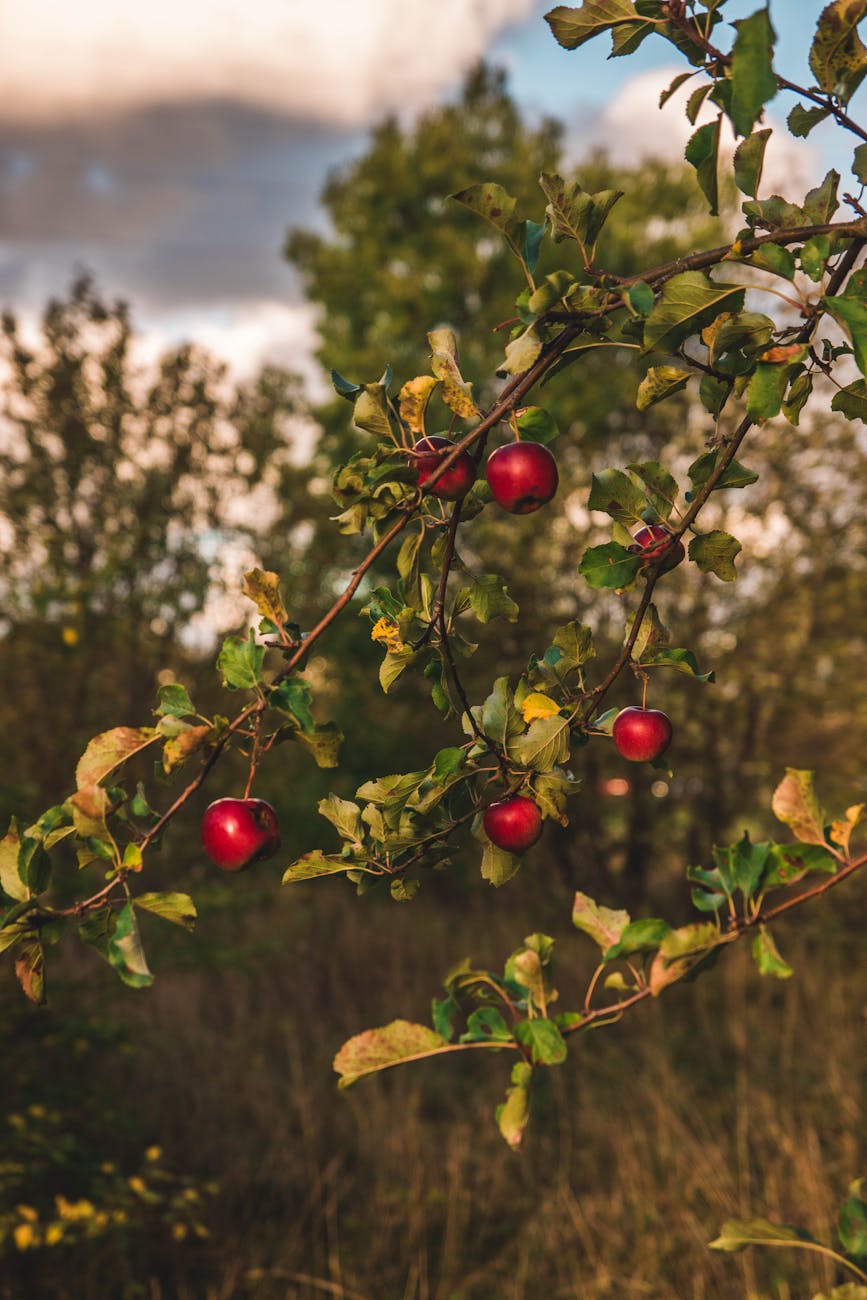
Apples are a traditional food for Samhain. This year, I had originally hoped to save at least an apple or two for us. I went out, covered about half of the young fruits with organza bags I had left over from gifts, and thought I was good to go. There were some for me, some for the local fauna, and everyone should’ve been fine. Then there was a spell of dry weather. Anyhow, I got no apples, and also the squirrels stole all of my bags.
Then, at Mabon, we were working on masks and costumes for the Council of All Beings. Someone found a dropped googly eye, and I made a joke about them not having natural predators. That’s when it hit me — what if I put googly eyes on the apples?
“They might just attack the apples from the side without eyes,” a friend of mine said.
Anyhow, as the time for various delightful apple dishes approaches (like my favorite, cornbread stuffing with sage, onions, and apples), I figured it’d be a good time to look at their folklore, mythology, and metaphysical aspects.
Apple Magical Uses and Folklore
Jokes about Biblically accurate apples aside, the forbidden fruit of Christian mythology most likely wasn’t a member of Malus domestica. While apples are cultivated all over the world, they originate from Central Asia. The Bible also doesn’t mention the fruit by name — it’s just commonly depicted as an apple as a kind of visual shorthand. (It’s also a fun bit of wordplay. In Latin, the worlds for both “an apple” and “an evil” are written as malum. Pronounced with a long a, it’s apple. With a short a, it’s evil.)
In China, apples are also a source of a bit of wordplay. The funny thing is, it’s almost exactly the opposite to Latin. The word for apple (苹果) and peace (平安) both start with the same sound in Cantonese and Mandarin. As a result, apples are associated with peace.
Apples have a long and varied history in Germanic Paganism. The Norse goddess Iðunn is the keeper of golden apples that give the gods eternal youth. The Poetic Edda details eleven golden apples given to the jötunn Gerðr, as a gift from the god Freyr. In the Völsunga saga, the goddess Frigg sends King Rerir an apple as he prays for a child. Rerir’s wife eats the apple and conceives Völsung. This demonstrates a connection between apples, youth, fertility, and life. Interestingly, the skald Thorbiorn Brúnarson also mentions “apples of Hel.” Scholar H.R. Ellis Davidson points out that this may indicate that apples were considered the “life-giving fruit of the other world.”
There is a similar connection between apples and the Otherworld in Celtic mythology, as well. Manannán mac Lir’s domain, Emhain Abhlach, translates to Isle of Apple Trees and is said to be a place where there is nothing but truth and disease and decay are absent. (Emhain Abhlach may also be where Avalon ultimately derives from.) In the tale Echtra Cormaic, Manannán gives Cormac mac Airt gifts including a silver branch with apples of gold. This branch made magical music that was said to lull anyone suffering from sickness, injury, or childbirth to sleep. Another tale tells of Connla, the son of Queen Aife and King Connaught. A fairy woman gives him an apple that, once eaten, becomes whole again. Infatuated with the fairy woman, Connla allows her to take him to the Otherworld where the fruit grows. The otherworldly apples give him everlasting youth, but for a great price: Connla can’t return to the land of the living.
Apples also have a lot of representation in Greek and Roman legend. The most infamous example is probably the Apple of Discord. When the Goddess of Strife, Eris, wasn’t invited to the wedding of Peleus and Thetis, she decided to start some trouble. She threw a golden apple inscribed “For the most beautiful” into the wedding party. Hera, Aphrodite, and Athena all claimed the prize, so Paris of Troy was tasked with selecting a winner. Each goddess offered him a bribe to choose her, but only Aphrodite’s bribe appealed to him — she’d give him the most beautiful woman in the world for a wife. There was only one problem. That woman was Helen of Sparta. And she was married. Whoops.
Apples were then considered sacred to Aphrodite and were even used as declarations of love. In the story of Atalanta and Hippomenes, Atalanta challenged all of her prospective suitors to races. If they could beat her, she’d marry them. (Since she was unbeatable, this seemed like a safe bet for her.) Hippomenes knew he’d never be able to outrun her, so he distracted her with three golden apples. With both his speed and his cunning, he barely managed to beat Atalanta and win her hand in marriage. One of the labors of Hercules also involved retrieving golden apples from the Tree of Life in the Garden of the Hesperides, which creates another link between apples and life.
So, why are these fruits so deeply connected with life? Why do they come from the gods or Otherworld? Part of this might be because they literally came from afar — the ancestor of most of our modern apples came from Central Asia, so it would’ve traveled a great distance to reach the Mediterranean and Northern and Western Europe. They may be deeply connected with life because they’re honestly pretty durable. They’ve got firm flesh and can last a long time when properly harvested and stored. That makes them an important staple in areas that experience cold winters — you could grow a bunch of apples, keep them in a cold, humid area with good air circulation, and they could last you all winter. Having a source of fresh fruit during the depths of winter could be the difference between life and death. This may also be part of their connection with fertility. The fruit remains good in storage all through winter, when everything else withers. As a source of food when food is at its most scarce, those who have access to apples would likely experience better fertility than those who didn’t.
If you slice the fruit in half horizontally, the seeds form a pentagram.
Apple wood is considered a good material for tools for working with the fae and the Otherworld.
In modern European-based witchcraft, apples are used for fertility, healing, divination, wisdom, and knowledge. In some traditions, they are used for ancestor veneration and workings related to the dead.
They are said to be associated with the element of Water.
Using Apples
The simplest way to use these fruits is to eat or cook with them, first asking their help with whatever your goal or intention may be. Make your favorite sauce or pie recipe, tell each of the ingredients what you’d like them to do, thank them, and add them to your dish. Stir it clockwise with your dominant hand, serve, and enjoy.
You can also bury apples or place them on an ancestor altar as an offering.
Apples are frequently used for love divination. One old method involves peeling an apple in one continuous piece, then tossing the peel over your shoulder while saying, “Saint Simon and Saint Jude, on your I intrude, with this paring to discover, the first letter of my own true lover.” Look at the shape of the peel when it falls to see your true love’s initial. Another love divination involves cutting an apple into nine equal pieces and eating them while mirror-gazing. Pierce the last piece with a knife and hold it over your shoulder, and an apparition of your true love may just appear in the mirror to take it.
When it comes to using apples for love magic, the blossoms are usually the best. (They have an amazing fragrance.) They’re seductive, but not overtly so — think of it as a sensual invitation rather than a command. They’re a great addition to a love-drawing bath, as well as baths for success, peace, and relaxation.
Apples aren’t just delicious; they have a lot of magical tradition behind them. They’re the food of the Otherworld, sustenance through the cold of winter, and a fruit of boundless fertility, youth, and eternal life.
Saturday, part of the Druidry group took a walk in the woods. It was a silent, contemplative walking meditation, initially meant to observe and enjoy the first frost. However, since this area hasn’t really had a legit frost yet, it was mostly about observing the changes that autumn has brought.
It was a little disheartening to have such good weather. It should be cooler this time of year. I shouldn’t be comfortable in a tank top and a thin jacket in November. I found a woolly bear caterpillar the other day, and its stripes forecast a mild winter, too. Winter precipitation is so important for avoiding droughts later in the year, and I worry about it. There was a serious drought when I lived in California, and I don’t want to go through that again.
Still, part of a walking meditation is about being present. Not to worry about next summer, but to appreciate this autumn as it is. There hasn’t been much rain, but the early evening sky is beautiful, and the bare, dark branches and golden leaves make it look like stained glass. There’s the sweet smell of decomposing leaves, and their satisfying rustle and crunch underfoot. The leaves aren’t all brown yet, so the entire trail is carpeted in gold, deep crimson, and salmon pink. Some of the leaves are multicolored, like they’ve been ice-dyed in shades of red and green.
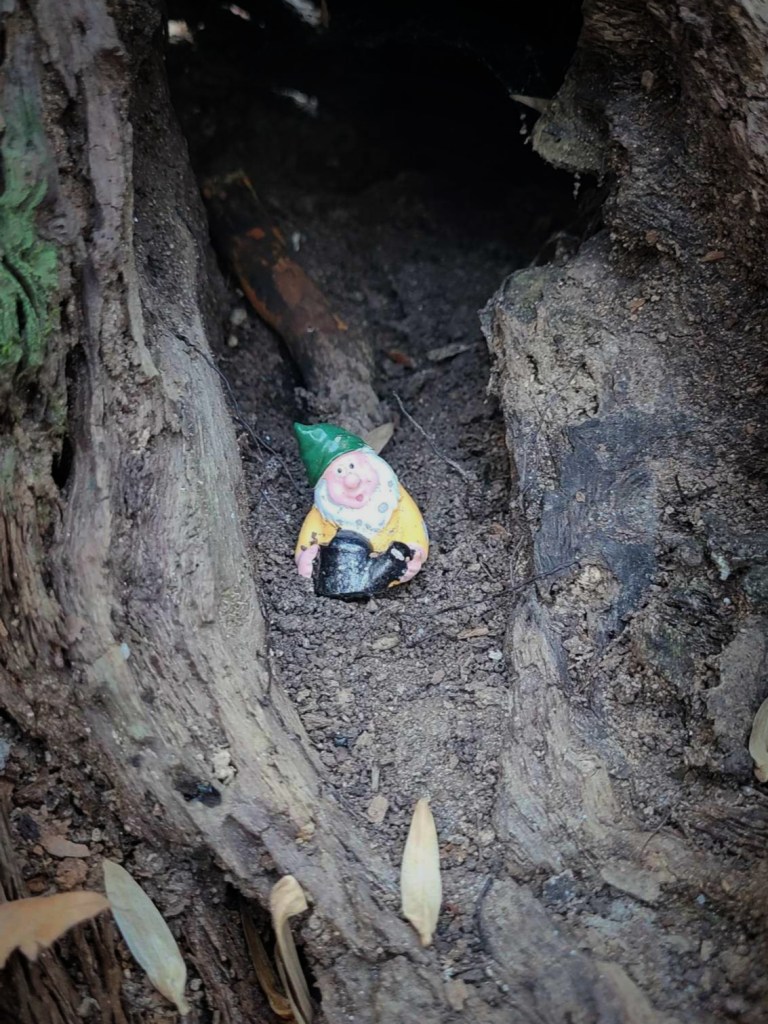
Also, we found a bunch of little guys.
The first one, I found under a small pile of debris in a crevice of a fallen tree. (I always look in gaps and holes in trees — I found some really amazing eyelash mushrooms in one once, so now I check every time I see one.) It looked like a child’s discarded toy, covered in debris and with chipping paint. I felt bad about leaving him, so I picked him up.
Then I found a broken bottle. I didn’t have gloves or a bag for trash picking, so I initially left it where it was… but I only made it about twenty feet before I felt too badly and had to go back for it. I piled the pieces into a sort of avant-garde trash sculpture and continued on, gnome in one hand and broken bottle pile in the other.
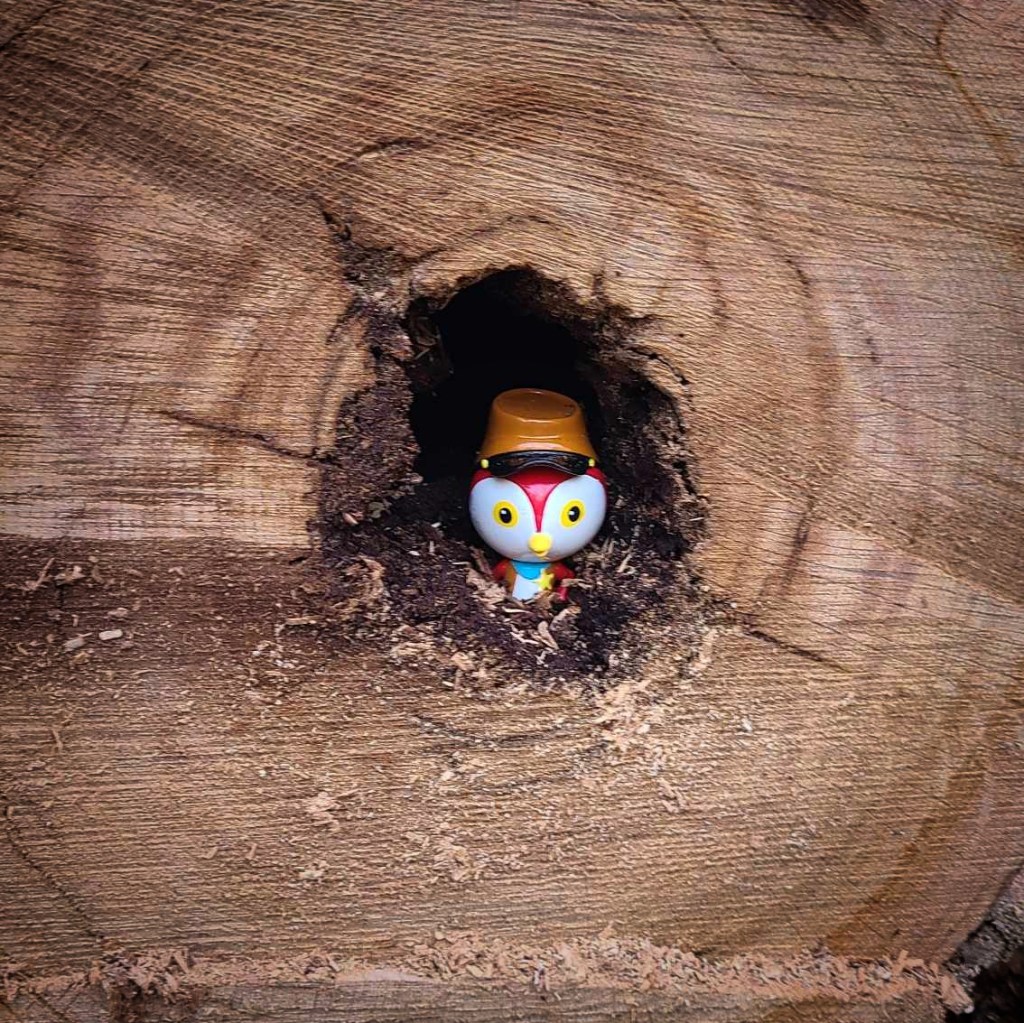
A little further onward, we found a red woodpecker with a sheriff’s badge. His placement was intentional and whimsical, so I left him where he was to be a surprise to another trail-goer. (And kept my eyes peeled for other little guys.)
Then there was a blue elephant. Since we were walking in silence, my Handsome Assistant and I have a series of hand gestures we use when we want to point out things to each other. Mushrooms, particularly interesting sticks, small blue elephants…
And then there was another gnome.
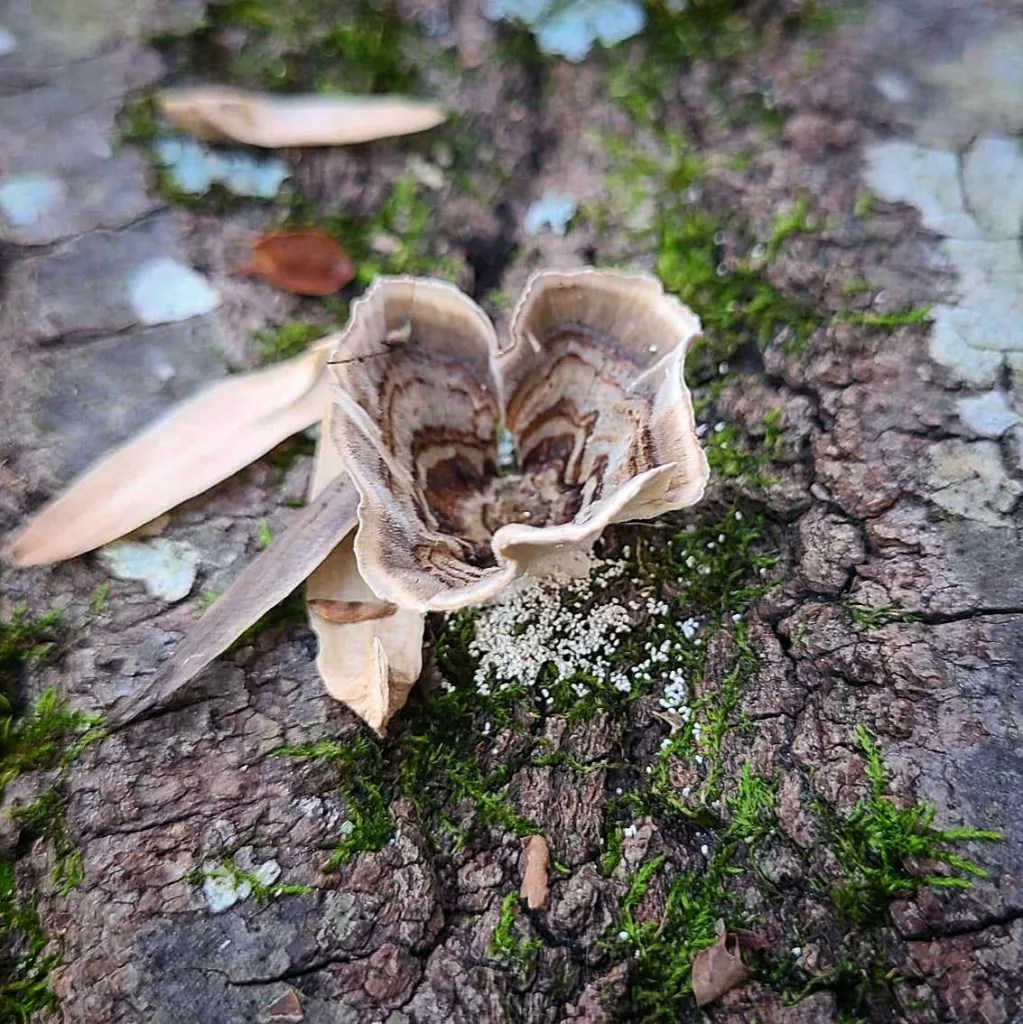
Despite the lack of rain, there were also loads of mushrooms. Striped turkey tails, unfolding like flower petals. Round puffballs like dollops of meringue. Clusters of other fungi, nestled amid fallen leaves, ferns, and small groundcover plants.
As we said our goodbyes to each other and left, we also spotted a chubbly little squirrel absolutely gruffling some gourds. Occasionally, he’d dart away from the sidewalk as people passed, but he’d always go back and resume snacking — thoroughly engrossed, thoroughly enjoying himself, absolutely without a fuck to give.
I could say I want to be more like this squirrel, but I don’t really. I don’t think I really can stop worrying about the future. I like to think this makes me conscientious, but maybe I’m just more anxious than I need to be. Either way, I hope the snow comes soon. In the meantime, I also hope all of the squirrels get their fill of gourds.
Despite popular depictions of Samhain/Halloween, it’s not really a major holiday for me in a religious sense. It’s more or less New Year’s. There are some events here and there — workshops on ancestor veneration, dumb suppers, and such — but it’s not quite as big for me as the solstices and equinoxes are (especially Mabon).
This year, we had tentative plans to have dinner and watch movies with friends, but that fell through. Instead, it was handing out candy to trick-or-treaters, doing small, homey things, and holding a spirit feast.
Dumb suppers are a traditional way to celebrate Samhain and involve sharing a meal in silence with the ancestors. Spirit feasts are a bit different — they’re not necessarily silent, and there are a lot more invitations to go around.
Dumb suppers tap into a kind of sacred silence that’s part mourning, part veneration, part listening and being receptive. The intention is to pay attention to the spirits of the ancestors, rather than the noise of living beings. Sometimes, people use this as a time for divination by listening for the voices of the dead.
When I conduct a spirit feast, on the other hand, it’s more like a party. Deities, spirits of nature, spirits to whom I may owe a debt, and spirits of ancestors (blood-related or otherwise) are all invited. I may offer food (this year, for example was fresh-baked biscuits with peach honey butter). I usually also offer incense, candles, liquor, tea, flowers, honey, and/or perfume. I play music (usually the lyre or dulcimer guitar). I read poetry. I tell stories or jokes. I put new artwork on my altar.
The atmosphere and focus are a bit different. It’s less about communing with the dead, and more about offering the best of what I have to all of the people, animals, plants, elements, places, and gods that have made me who I am.
I do this year-round, but Samhain makes it a bit more special. Plus, it’s easier for everyone to attend.
Getting Ready for the Winter Months
This year, I’m honestly looking forward to winter. I have a lot of small-scale stuff to do to prepare for spring and summer, and I’m excited to get to it. I have art to make, wood to prepare for wands, trees to prune, and areas of the garden to set up for vegetable and herb beds. Honestly, I’m almost more eager to do that than I am to see the payoff later on.
I’ve built up a pretty good stock of art, wands, and jewelry. I’m starting to study incense making and botanical perfumery. I’m super stoked to find actual markets to vend at next year, so I can expand beyond just selling things online. It’s a little scary, but even more exciting.
No matter whether you celebrate Samhain or not, here’s hoping all of you have had a peaceful, happy October 31st and are looking forward to the months ahead!
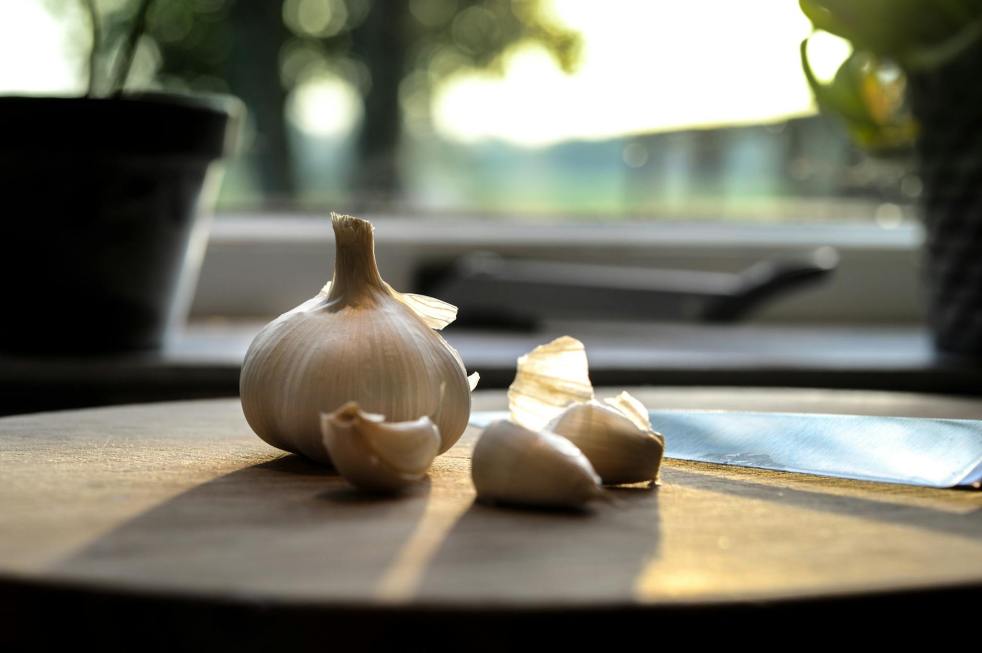
Have you planted any garlic yet? I’ll admit it — I haven’t. The weather has been so weird here lately that I wasn’t sure if it was a great time to do it. (For real, we currently have one very lonely and confused violet in the front yard.)
Still, it’s good to get garlic in the ground in autumn in temperate areas. This ensures that it’ll be one of the first things to pop up in spring and will be mature and ready for harvest in summer. Since its garlic planting time, I figured it’d also be a good time to explore the magical and folkloric uses of garlic.
Garlic Magical Uses and Folklore
Garlic is probably best known as a way to repel vampires. Some believe that eating it can also help keep mosquitoes, ticks, and other blood suckers at bay. However, research has shown that it actually seems to attract leeches.
In China, garlic was one of the ways to repel the jiangshi (僵尸), a kind of undead, vampiric creature that moves primarily by hopping.
This herb is also well known for its medicinal properties. It has naturally occurring antibacterial, antifungal, and antioxidant compounds. It’s sometimes used to treat various types of infection, high blood pressure, arterial plaque formation, and as part of a general health tonic. However, taking medicinal quantities of it can be contraindicated in some instances, so it’s important to discuss using supplements with your doctor. (True story: I used to habitually eat so much garlic that, when combined with some very necessary medications, I ended up with bleeding/bruising problems. It was a truly bonkers amount of it, though.)
Garlic was very important in Egypt. This herb was a key part of the rations given to pyramid builders. When they threatened to abandon the project, they were given more garlic. Pliny claimed that people in parts of Egypt invoked alliums as deities. He’s an outside source, so this should be viewed with some skepticism, but he also had a high opinion of garlic’s virtues. In Natural History, he offers a very long list of situations that call for it as a remedy.
Alexander Neckam, a 12th century English poet, theologian, and writer, recommended garlic as a remedy for the heat of the sun during hard labor.
In some traditions, garlic is considered an aphrodisiac and a charm for a happy wedding night. In India, it’s highly praised in the texts of the Ayurveda. However, those following ascetic paths avoid it, since it’s a food that increases sexual desire. (Interestingly, some of the main causes of penile erectile dysfunction are high blood pressure, narrowed arteries, and high cholesterol. The clitoral bulbs also have erectile tissue. As an herb with cardiovascular benefits, the idea of garlic promoting/improving sexual desire and performance has credence.)
The Hindu texts Ashtanga Hridaya and Ashtanga Sangraha talk about how a rakshasa (essentially a demon) took a seat among the gods and received a sip of nectar from Vishnu. When Vishnu saw this, he cut off the demon’s head. The head fell to the ground, mouth open, spilling the nectar the demon had taken. From this spot, garlic sprang up. Since it comes from sacred nectar, it is a powerful remedy. However, since it also came from the mouth of a demon, some (especially Brahmin people) choose not to eat it. On the other hand, the Bhavprakash nighantu, verse 217-220, says that garlic was created when Garuda stole the nectar of immortality from Indra. As he fled, some drops spilled on the soil and grew into garlic. I think the most interesting aspect here is that, despite their very different origins and viewpoints about this plant, both of these stories acknowledge its sacred and powerful origins. In one, the plant is “defiled” by being tainted by the mouth of a demon. In the other, it isn’t. However, both see garlic as arising from a sacred source.
In The Schools’ Collection, an archival record of folk remedies, garlic is mentioned as a cure for multiple ailments. However, most of these are respiratory in nature. There are methods for treating tuberculosis, asthma, influenza, and the common cold, among many others. These range from boiling it in donkey’s milk, to keeping a piece in your shoe. In China and Japan, it was used for digestive and intestinal complaints, as well as as an antiparasitic.
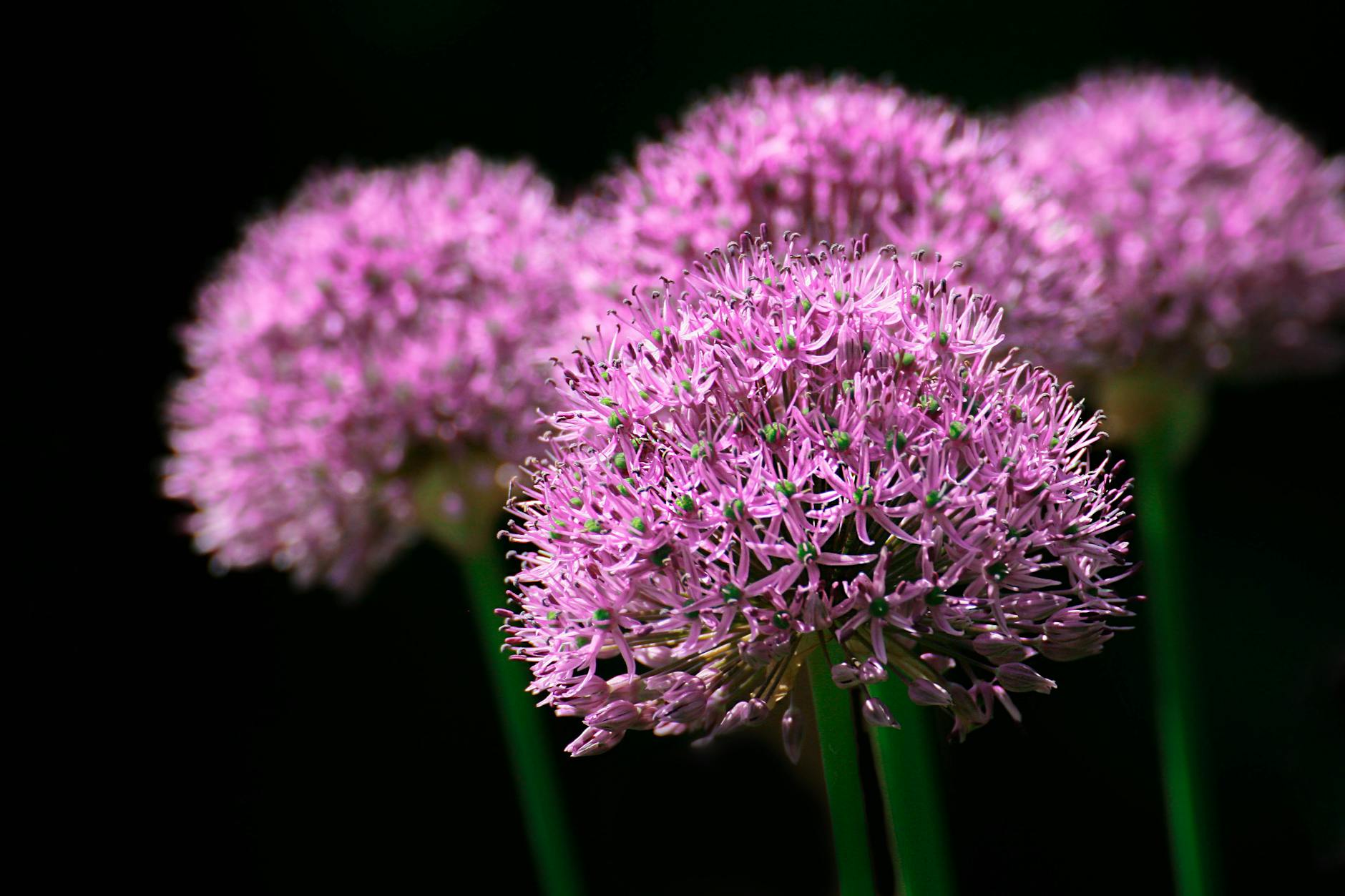
In central and western Europe, garlic is typically regarded as an herb for protection. The bulbs or flowers could be worn, hung in the home, or placed/rubbed on doors and windows to keep out malevolent spirits or repel the effects of the Evil Eye.
Though garlic is native to northeastern Iran and Central and South Asia, Roman armies were responsible for spreading the plants everywhere they went. Soldiers would eat it before battle, believing that it filled them with courage. They also planted it everywhere, so they’d always have access to it and that courage would be symbolically transferred to the battlefield.
In modern witchcraft, which is typically derived from European traditions, garlic is a protective and banishing herb. In Hoodoo, which arose from the African diaspora, it is used to ward off evil and protect.
According to Culpepper, garlic is ruled by Mars. It’s considered an herb of Fire.
Using Garlic
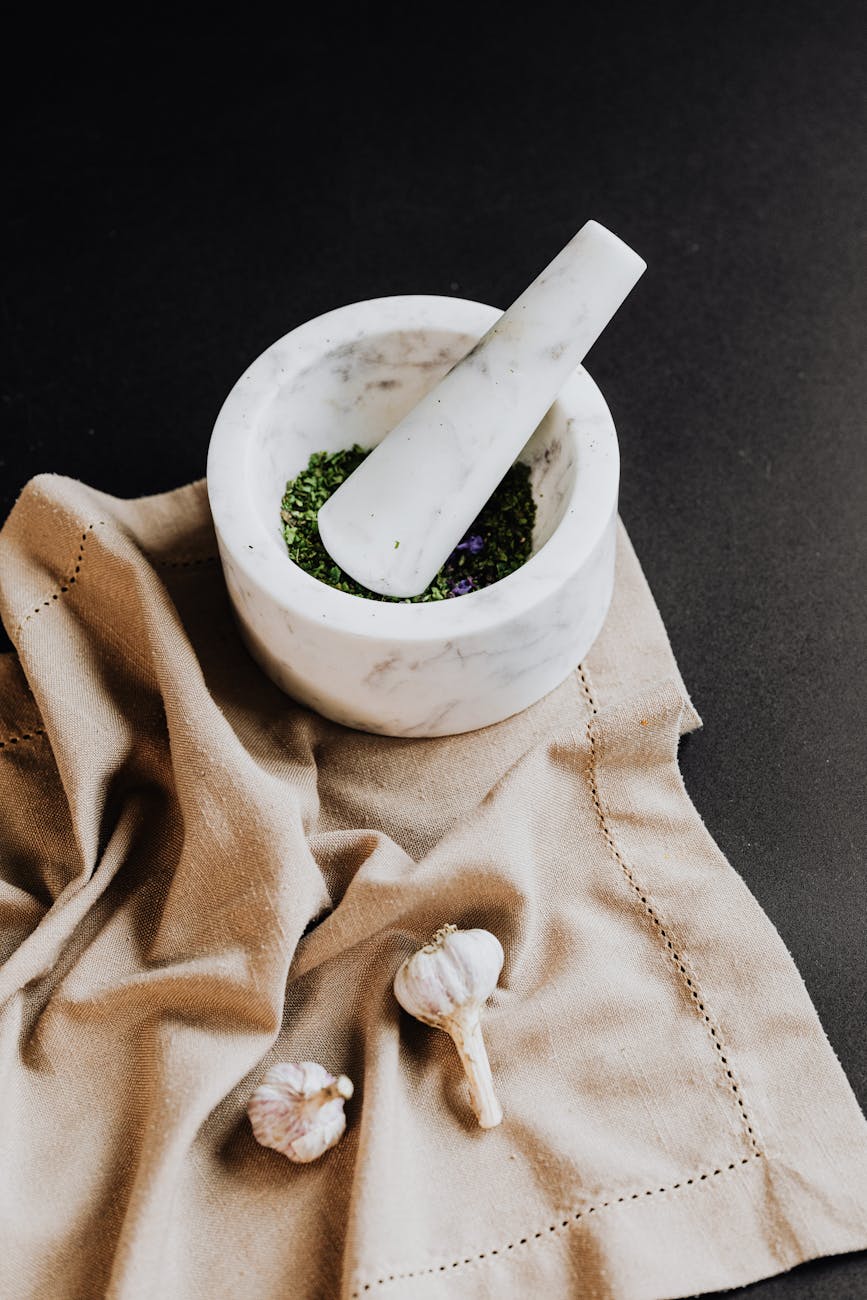
The easiest way to use garlic is in kitchen witchery. Before chopping, mashing, or otherwise adding it to foods, hold a clove in your dominant hand and ask the garlic to assist you. Include it in dishes when you need a little extra courage or protection from malevolent energies or envy.
You can also tap into garlic’s banishing properties with little more than a whole clove of it, a pot of soil, a slip of paper, and a windowsill. Write down the name of a bad habit that you wish to be rid of (nail biting, smoking, et cetera). Dig a small hole in the pot of soil, and place the slip of paper at the bottom. Plant the garlic clove over it and tend to it the way you would any other plant. As the garlic sprouts and grows, it’s said to help you overcome the habit. This is a pretty old charm that uses both the herb’s reputation as a banishing and purification plant, and a bit of sympathetic magic. As the garlic grows, so, too, does the planter’s resolve and distance from their bad habit.
It’s also useful in salts or powders to protect an area. Mix dried, powdered garlic in black salt (or regular table salt) and sprinkle it in the corners of a room you wish to ward. If you want to use it outdoors, skip the salt and combine it with other protective herbs. If you have pets, be aware that too much garlic can cause a condition called Heinz bodyhemolytic anemia. If you’re trying to ward a room that cats or dogs frequent, either skip the garlic and salt and go for pet-safe herbs or keep the animals out until you feel the herbs and salt have done their job and then sweep and vacuum the area thoroughly.
You can also decorate with garlic bulb wreaths/ropes, or even vases of the fresh flowers. Place them in any room you wish to keep clear of bad vibes. (Kitchens are typically considered the “heart” of a home, so they’re the perfect place for this. Also, you can pull off a fresh bulb to use whenever you need one).
Garlic is more than delicious — it’s healthful and powerfully protective. It’s also surprisingly easy to grow and harvest, making it a very useful addition to any magical or mundane home garden.
There are a lot of small, local waterways in this area. Creeks feed into streams, streams into rivers, rivers into the sea, like a vast circulatory system. All of the trash that ends up in parks and little groves around these creeks doesn’t just stay locally, it eventually moves along, causing more damage as it goes. That’s why it’s so important not to litter in the first place. But, since people are gonna people, it also helps to go actively engage in a park cleanup.
This past Saturday, five of us (from the Neodruidry group I’m part of) went to a park that’s part of the local watershed. Armed with grabbers, bags, and gloves, we started along the trail and kept going for about an hour and a half, filling bags with a speed that was honestly pretty surprising. Old clothes, broken dishes, water bottles (mostly water bottles), liquor bottles, diapers, shopping bags, takeout containers, plastic wrap, aluminum foil… There was a surprising variety of grossness.
At one point, I was just following along from one bit of trash to the next like I was pursuing some kind of very disturbed Hansel and/or Gretel. Next thing I know, I’m on a steep, rocky bank with no easy way to climb up and a bag that’s too heavy to let me even if there was.
Oh well. That’s one fun thing about a park cleanup — you sometimes end up in interesting places you didn’t expect to be.
I continue along the creek, fishing trash out and stuffing it into the bag. I eventually find a spot that looks easier to climb, right beside a bridge. I conk my head in the process, but I do eventually emerge, crashing through the undergrowth like Sasquatch, to run into my Handsome Assistant.
“Oh. There you are! I was looking for you.”
“Ha ha, yep!” I laugh, trying my best not to look like someone who’d just climbed out of a creek with a sack of trash and sticks in their hair, arms studded with fresh scabs and thorns. “Look!” I pull an object out of my pocket. “I found a cool thing!” It is an abandoned wasp nest.
He is very understanding about all of this. We join the others and continue bagging trash.
By the end of the park cleanup, we’ve got nine bags (nine!) of garbage. No scale, but most of them were pretty heavy (I’d say they ranged from 15-35 pounds). Some people thanked us as we worked, which was really nice — I just feel a little bad because I wasn’t expecting it and thought they were talking to someone else at the time, so I didn’t think to acknowledge it.
I’m tired and sore now, but it’s totally worth it. It’s the good kind of tired. The park was beautiful even before cleaning it up, but it’s great to know that none of those metals or plastics will end up in our waterways now.
These chocolate chip cardamom cookies are delicious, easy to make, and suit a number of dietary restrictions. You can even make them gluten-free if you substitute your favorite 1:1 GF flour for the einkorn. The cardamom gives them a unique flavor that pairs beautifully with the chocolate (and has some other unique properties, if you’re into that).
Chocolate Chip Cardamom Cookie Ingredients
Drys
2 cups of einkorn flour (I usually use 1 1/2 cups of white einkorn, and 1/2 cups of whole grain einkorn)
1/2 t baking powder
1/2 t baking soda
3/4 t salt
1 t cardamom
1/2 to 3/4 cup of chocolate chips (honestly, I just throw in handfuls until my soul says it’s good)
Wets
1/4 to 1/3 cup sugar (unbleached, raw sugar if you’re vegan)
1/2 cup maple syrup
1/2 cup avocado oil
2 T chia seeds
1 t vanilla extract
Instructions
Preheat oven to 375° Fahrenheit.
Start by combining your wet ingredients. Just put ’em all in a bowl and give them a good stir, then set them aside to thicken a bit. (For our purposes, chia seeds serve as a wet ingredient — they’re our egg substitute. Some people make a “chia egg” by soaking the seeds in water first, but I find that this makes the chia flavor a bit more forward. I’ve found that hydrating them in the maple syrup, sugar, vanilla, and avocado oil avoids this.)
Sift together your dry ingredients, except for the chocolate chips. Add those after sifting.
Add the wets to the drys, and mix until they form a dough. Einkorn doesn’t absorb as much moisture as conventional wheat flours do, so the dough is likely to be a bit looser or wetter than you may be used to. That’s fine, but, if it’s so loose that it won’t even hold together in spoonfuls, add some more flour.
Place the dough by rounded spoonfuls on a greased cookie sheet. Bake for 12-15 minutes at 375°. (I make big spoonfuls, so I usually get about 15 cookies from this recipe.)
Allow to cool, then enjoy!
I love these chocolate chip cardamom cookies with milk (hemp or Ripple), but they’re also really good with a warm cup of spice tea. Sometimes, I’ll even eat one or two for breakfast — chia seeds are good for you, and the flour and maple syrup means these’re basically pancakes, right?
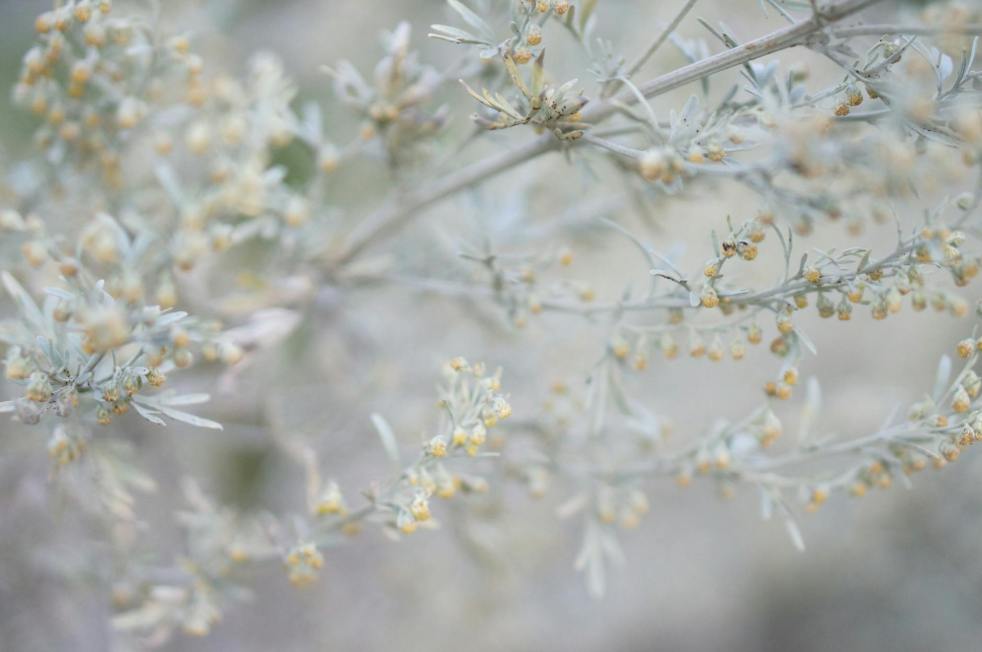
Wormwood (Artemisia absinthum) is an African/Eurasian herb and relative of mugwort that’s widely grown in Canada and the US for its ornamental, medicinal, and even magical uses. It’s also a key ingredient in genuine absinthe, and is purportedly why the drink was rumored to cause hallucinations (but more on that in a bit). While the medicinal properties of A. absinthum have since been superseded by other herbs and pharmaceuticals, it’s still a powerful magical ingredient and a beautiful ornamental plant.
Wormwood Magical Uses and Folklore
Wormwood is a very bitter herb, so much so that it’s been used over and over again in literature as a metaphor for bitterness. Shakespeare mentioned it. The Bible mentioned it. This bitterness may, in part, be a source of its hepatoprotective properties: Bitter herbs are said to trigger the release of gastric juices, including bile from the liver, which helps sort of flush things out. This is why herbal digestifs and digestive bitters became a thing. There’s not a lot of peer-reviewed research on the subject, but bitters have a very long history of safe use as digestive aids.
Wormwood is also one of those magical plants that doubles as a pest repellent. This is something we see pop upover and over. There’s a logical progression from “herb that keeps disease-carrying pests away,” to “herb that keeps all unwanted influences at bay.” This makes wormwood valuable for protection and purification. Interestingly, I have also seen wormwood listed as an ingredient for spirit calling. I don’t know if I’d use wormwood alone for this, but it certainly seems like it’d be a useful ingredient to make sure you’re calling the right spirits. (I see parsley mentioned with wormwood pretty frequently, which is funny because it’s another weird one for spirit work. It is listed both as a spirit attractant and repellent, go figure.)
This herb also plays a protective role in Slavic lore. The rusalka is an entity, said to be the spirit of a young woman who died by drowning, who is associated with life-giving rain… and, after the 19th century, with madness, death, and trickery. Carrying wormwood was a way to guard against rusalki. They are said to target young men, so guys were told to carry a sprig of wormwood with them wherever they went. A rusalka would inevitably ask if they were carrying wormwood, or parsley. Say “wormwood,” and she’ll scream and try to flee, at which point you must throw the herb at her eyes. Say “parsley,” and she’ll ensnare, drown, and/or tickle you to death. (As someone who is a) ticklish, b) hates it, and c) was frequently tickled against my will as a child, I think I’d rather drown.)
Wormwood is also connected to divination. It’s a relative of mugwort and has many similar properties. The two aren’t entirely interchangeable, but you can often substitute one for the other in certain situations. Wormwood’s focus seems to be more connected to protection and purification, while mugwort is more psychic and divinatory. This herb is sometimes used in love magic, but not as an attractant — its main virtue seems to lie in love divination. There are multiple recipes and instructions for tying wormwood leaves to one’s forehead, placing them under a pillow, or brewing them with other herbs and honey and anointing oneself in order to get a vision of one’s future spouse.
Wormwood is tenuously connected to the Greek goddess Artemis (and Roman goddess Diana) through its name. However, the genus name Artemisia may be a reference to Artemisia II of Caria, and not Artemis directly. In practice, this herb is considered to be ruled by Mars and Mercury, while Artemis and Diana are Lunar deities.
Wormwood is associated with Fire (which I can certainly see, as it’s a Mars-ruled herb that likes sunny spots and dry ground), but I’ve also seen it listed as an Air plant.
The Myth of Absinthe
Contrary to popular depictions, absinthe wasn’t some kind of magic hallucination juice. Genuine absinthe does use wormwood, which contains the compound thujone. Thujone can, in concentrated form and large doses, cause hallucinations, convulsions, and death, but is present in absinthe in such tiny amounts that it doesn’t really do a whole lot. (Ironically, the compound absinthin is an anti-inflammatory and doesn’t have much to do with any of that.) Absinthe’s hallucinatory effects have more to do with its high alcohol content (the stuff is about 50-75% ABV), the power of suggestion, and the fact that unscrupulous absinthe makers started adding copper salts as an artificial green coloring around the late 19th century.
During its heyday, absinthe was also much enjoyed by counterculture movements. This led to it being vilified by social conservatives, who had every motivation to hype up its “dangerous, toxic, and hallucinatory properties.” So, what do you get when you mix an herb that might, potentially be toxic in specific circumstances, a buttload of alcohol, a bunch of bohemians, cheap absinthe full of poisonous colorants, and a bunch of social conservatives? You get a liquor with a legendary reputation as a toxic hallucinogen, and an unfair ban.
Using Wormwood
You can grow Artemisia absinthum fairly easily. Like mugwort, it grows in bright, dry, disturbed soil. It also self-seeds readily, so be prepared to either keep it confined to an area where it can’t do that (like a pot on a patio), deadhead the flowers, or keep up with rigorously removing new baby wormwoods as they pop up.
While wormwood isn’t as dangerous as popular depictions would have you think, it’s still a plant with toxic components that should be treated with respect.
Wormwood has historically been used as a flavoring herb. If you want to use wormwood internally, do so under the guidance of a qualified herbalist. There are multiple health and pharmacological contraindications at play here, so it’s important to be careful.
Otherwise, dried wormwood makes a wonderful addition to protective bottles, sachets, and other charms. You can:
Grind it into a fine powder and sprinkle it on or around anything you wish to protect.
Burn it and waft the smoke around an object or area you wish to purify.
Keep some dried wormwood (perhaps with its cousin, mugwort) with divination tools to keep them cleansed and ready for use.
Soak it in water and asperge spaces, objects, or people to cleanse them.
Soak or steep it in water and use the resulting “tea” to wash your front and back doors for protection.
Grow wormwood near doors for protection against malevolent energies, entities, or bugs. (For real, a lot of what we consider pest insects really don’t seem to like it.)
These aren’t the only uses for this herb, of course, but they’re probably the ones most in wormwood’s wheelhouse. You can also use it for love divination or spirit work, but this may depend heavily on your specific tradition, techniques, and situation.
Wormwood is a beautiful, interesting, complex, and contradictory herb. It’s a poisonous healer, a repeller and attractor of spirits, and an invaluable addition to a magical herb collection.
My Handsome Assistant, some friends, and I try to go to at least one Renaissance Faire every year — usually the MD or PA Ren Faire. If you’re not familiar with them (they seem to mostly be an American thing), Ren Faires are basically big mostly-outdoor markets, made to look like a Tudor era village. There’s food, entertainment, and people often like to wear loosely Renaissance or fantasy-inspired costumes to go. They’re a lot of fun, and I’ve found some very cool stuff (and people!) at them. This year, we went to the PA Renaissance Faire in Manheim, PA, at Mount Hope Estate.
I don’t really do a lot of shopping during the rest of the year — I might go to a thrift shop if I have a specific item of clothing or houseware that I’m looking for, but otherwise I’m all about make, make do, and mend — so I save up to get to go a little wild at Ren Faires and Pagan Pride Day. We usually have a list of things we’re looking for specifically. For my Handsome Assistant, this is usually belts, bags, or additions to his costume. For me, this year I was looking for handmade instruments and fountain pens.
(We also tend to buy a lot of tea anytime we take a vacation or day trip. I joke that it’s how I time things. When we run out of tea, it’s time to get out of the house.)
Stuff
First, shopping at the PA Ren Faire. Like I mentioned above, we bought some tea because we always do. I did also get a very nice cherry wood fountain pen from Denyan Designs (which is currently loaded with Diamine Writer’s Blood).
My Handsome Assistant got a lovely cloak from Up Your Kilt/As You Like It (“Because if it’s not as you like it, it has no business being up your kilt!”). It’s a very nice, versatile olive color, thick and warm, and long enough to fold and wear in a lot of different ways. He also got some new bracers to replace his old, plasticky costume set.
The World’s Best Hat
“It probably fits you fine! Stop flirting with it and just get the hat.”
I like hats. I started liking hats when I first shavedmy head and realized that my choices were a) start wearing a lot more hats and bandanas, or b) rub sunscreen into my head every day. Even now that it’s only half-shaved, I’m still very careful to keep the sun off of my head. (Melanoma is not invited to my pizza party.)
I went to the PA Ren Faire wearing a sun hat already, like I usually do — it goes with my costume, and helps keep my decidedly not period-correct hair from detracting too much from the “look.”
Then I saw the hat. A black bowler. Satin braid around the rim, with a fringe of tiny teal crystals all around. A wide teal ribbon as a band, festooned with peacock feathers. Teal tulle and a purple ribbon trailing from the back. All of my favorite colors. It was gorgeous, and also looked to be entirely too small. Still, I kept going back to it. I didn’t want to try it on in the shop, because some shops are touchy about that. I took it down from the display, admired it, and put it back. I took it down again, took off my sun hat, and compared the two side by side. Finally, my Handsome Assistant just threw his hands up. Just get the hat.
So, I did. It fit like it was made for me. It didn’t quite go with my costume, but it was safely ensconced in a bag and I was already planning all of the outfits I’d wear it with. (Like this really cool jacket I got when we went to New Hope.)
And Then I Wore the Hat
We ducked into Oh, Jessa!, a bright, showy clothing shop. I wasn’t really looking for another costume piece, but I’m a sucker for bright colors and shiny things as much as any toddler or corvid.
(Sometimes, I take pictures of interesting color combinations so I can play around with them while painting.)
Then I checked the tag — XS. I’m a fine weight for my size, with a decent amount of muscle, but I don’t know of any reality in which I can make myself occupy an extra small. Still, it looked like it might fit, and it did lace up…
“If you’re about a size 4 or 5, it’ll probably fit,” one of the very nice shopkeepers told me. I had my doubts, and it was more than I wanted to spend on a piece I hadn’t planned for, but just trying it on wouldn’t hurt, right?
Go figure, it was incredibly comfortable. The colors were the perfect jewel tones that suit my complexion (aggressively beige, very neutral, greenish in undertone, with a tendency to tan). It provided the perfect amount of support, even loosely laced in a hurry over a very voluminous chemise.
I stepped out and asked my Handsome Assistant to hand me the hat. It was a perfect match — down to the peacock feathers on the brim and the decidedly peacock-like tail of the ruffled bottom of the vest. This is going to sound very “and then everyone clapped,” but three people exclaimed about how good it all looked together. I took the tag from the vest, handed it to the person at the register, and left wearing it and the world’s best hat.
When we got outside, my Handsome Assistant wanted to take some pictures. I was awkwardly posing (I hate pictures), when a tiny, adorable child ran up to me and looked up, eyes enormous.
“I like your costume!”
“Thank you!”
“Do you want a-” I couldn’t make out the last bit.
“Sure!” I was already sold. I probably would’ve followed this kid into battle.
They handed me something and quickly ran away, back to their parents. I looked down at my hand, and you guys.
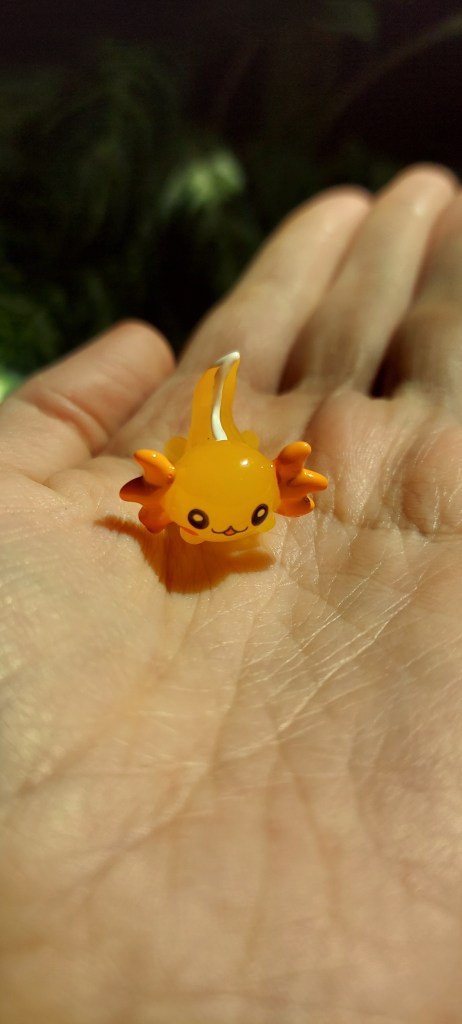
It was a tiny orange axolotl. I think my heart melted and ran out of my body.
(For real, kids don’t mess around and have a very well-deserved reputation for having no filter. A sincere compliment from a tiny child is worth more to me than every compliment I’ve ever received from an adult.)
I did also get several other compliments on the hat that day, which was a pretty big boost to my confidence and overall mood. Assuming that sky burials aren’t legal by the time I bite the grass, I am going to be buried in this hat.
Food
It’s not easy to avoid eggs, dairy, or meat at places/events like this, because food is usually done for flavor and convenience and the majority of Americans don’t really have an issue with any of those dietary components. Just in case, I stashed some Feel bars in my belt bag before we left.
(I also keep a 3″ knife, waterproof matches, a multitool, bug spray, a tick spoon, four kinds of lip balm, a can of Emergency Seltzer, a fountain pen, and two kinds of suncreen in my regular, every day backpack. I am nothing if not extremely prepared, always.)
The PA Ren Faire had more food options for me this year, which I liked — I knew there’d probably be a baked potato stall, giant pickles, and possibly a spot for steamed vegetables and rice, but there was also a place for walking tacos, vegetable crudités, and fruit salad.
If you’re not like me, there’re a lot more options. Giant smoked turkey legs, barbecue, sausage, pizza, you name it.
The only caveat is that pretty much all of the food is cash-only (or uses “Coin of the Realm,” tokens you can get near the entrance). Credit card fees can be pretty brutal for businesses that primarily do a large volume of small transactions — picture being charged $1 processing fee on one $100 transaction, versus $1 on each of 20 $5 transactions. To circumvent this, food vendors don’t take credit or debit cards. It can be slightly annoying if you aren’t expecting it but isn’t a big deal if you come prepared. Also, water is expensive, it can get hot, and it’s important to stay hydrated when you’re walking so much, so we brought our own glass water bottles to refill them at fountains/sinks as needed.
Fun
So, the PA Ren Faire has parades, jousting, and a variety of comedy shows, plays, demonstrations, and musicians.
We passed by a troll sitting under a bit of a ruined bridge, singing loudly. There were two boxes in front of him: one labeled “keep playing,” and the other labeled “hush money.” At that point, my Handsome Assistant’s curiosity was piqued and he made up his mind that we were going to watch the troll show.
As it turns out, Hob the Troll was delightful. It’s an all-ages show, so there’s nothing too racy, but all of the songs had a great balance of “stuff kids will get and laugh at” and “stuff only adults will get and laugh at.” My favorites were the song about Fröštïë the Snowman, the Dread Ship Montessori, and a “children’s drinking song” about that juvenile rite of passage: making Potions.
(Side note, when my younger sibling was four or so, he was complaining of a bad stomachache out of nowhere. A couple of hours later, he produced a two-liter soda bottle filled with a mixture of tap water, Pert Plus 2-in-1 shampoo, and the insides of a yellow highlighter and loudly warned, “Nobody drink this.”)
Also! We met a beautiful African pied crow named Goose. Like the pied crow at Pagan Pride Day, Goose accepted donations. What’s more, he’d take the donation from you, hop onto a cash box, and deposit it inside. And let me tell you, this boy was so freaking happy and excitedto do his tiny job!
We walked up to the area where he accepted donations, and he was full on hopping all along his perch, onto the cash box, off of the cash box, doing little spins, bobbing his head, all just super stoked to get to do his thing, because doing his thing means treats and praise.
Goose, the African pied crow, being very excited to get to deposit donations.
Also there were unicorns.
The PA Ren Faire was a fun, albeit very tiring day. I wish we’d been able to get to more than one Faire this year, but it seems like everywhere sold out pretty quickly. Fortunately, I’m probably going to get plenty of wear out of The Hat long before next year’s Faire season rolls around!
















 Marble Crow