Just for fun · life

Let’s go to the PA Ren Faire! (And get the World’s Best Hat)

My Handsome Assistant, some friends, and I try to go to at least one Renaissance Faire every year — usually the MD or PA Ren Faire. If you’re not familiar with them (they seem to mostly be an American thing), Ren Faires are basically big mostly-outdoor markets, made to look like a Tudor era village. There’s food, entertainment, and people often like to wear loosely Renaissance or fantasy-inspired costumes to go. They’re a lot of fun, and I’ve found some very cool stuff (and people!) at them. This year, we went to the PA Renaissance Faire in Manheim, PA, at Mount Hope Estate.

I don’t really do a lot of shopping during the rest of the year — I might go to a thrift shop if I have a specific item of clothing or houseware that I’m looking for, but otherwise I’m all about make, make do, and mend — so I save up to get to go a little wild at Ren Faires and Pagan Pride Day. We usually have a list of things we’re looking for specifically. For my Handsome Assistant, this is usually belts, bags, or additions to his costume. For me, this year I was looking for handmade instruments and fountain pens.

(We also tend to buy a lot of tea anytime we take a vacation or day trip. I joke that it’s how I time things. When we run out of tea, it’s time to get out of the house.)

A mannequin wearing a unicorn head mask, a blue shawl, purple dress, a leather corset, and a necklace made of a coyote skull. It's standing outside of a shop with a sign reading "Welcome to the Curio Cabinet."

First, shopping at the PA Ren Faire. Like I mentioned above, we bought some tea because we always do. I did also get a very nice cherry wood fountain pen from Denyan Designs (which is currently loaded with Diamine Writer’s Blood).

My Handsome Assistant got a lovely cloak from Up Your Kilt/As You Like It (“Because if it’s not as you like it, it has no business being up your kilt!”). It’s a very nice, versatile olive color, thick and warm, and long enough to fold and wear in a lot of different ways. He also got some new bracers to replace his old, plasticky costume set.

“It probably fits you fine! Stop flirting with it and just get the hat.”

I like hats. I started liking hats when I first shaved my head and realized that my choices were a) start wearing a lot more hats and bandanas, or b) rub sunscreen into my head every day. Even now that it’s only half-shaved, I’m still very careful to keep the sun off of my head.
(Melanoma is not invited to my pizza party.)

A person in a straw sunhat, an ivory chemise, and a blue bodice and skirt. They're holding a fake nose and moustache on a stick in front of their face.

I went to the PA Ren Faire wearing a sun hat already, like I usually do — it goes with my costume, and helps keep my decidedly not period-correct hair from detracting too much from the “look.”

Then I saw the hat. A black bowler. Satin braid around the rim, with a fringe of tiny teal crystals all around. A wide teal ribbon as a band, festooned with peacock feathers. Teal tulle and a purple ribbon trailing from the back. All of my favorite colors. It was gorgeous, and also looked to be entirely too small.
Still, I kept going back to it. I didn’t want to try it on in the shop, because some shops are touchy about that. I took it down from the display, admired it, and put it back. I took it down again, took off my sun hat, and compared the two side by side. Finally, my Handsome Assistant just threw his hands up. Just get the hat.

So, I did. It fit like it was made for me. It didn’t quite go with my costume, but it was safely ensconced in a bag and I was already planning all of the outfits I’d wear it with. (Like this really cool jacket I got when we went to New Hope.)

We ducked into Oh, Jessa!, a bright, showy clothing shop. I wasn’t really looking for another costume piece, but I’m a sucker for bright colors and shiny things as much as any toddler or corvid.

(Sometimes, I take pictures of interesting color combinations so I can play around with them while painting.)

That was when I saw the vest. It had a ruffled collar that stood up from the shoulders, and a kind of ruffly peplum/bustle/skirt. It’s decidedly not the androgynous, low-key daily uniform I usually go for, but it was also teal, magenta, purple, and gold and I was drawn to it like a moth to a streetlight.

Then I checked the tag — XS. I’m a fine weight for my size, with a decent amount of muscle, but I don’t know of any reality in which I can make myself occupy an extra small. Still, it looked like it might fit, and it did lace up…

“If you’re about a size 4 or 5, it’ll probably fit,” one of the very nice shopkeepers told me. I had my doubts, and it was more than I wanted to spend on a piece I hadn’t planned for, but just trying it on wouldn’t hurt, right?

Go figure, it was incredibly comfortable. The colors were the perfect jewel tones that suit my complexion (aggressively beige, very neutral, greenish in undertone, with a tendency to tan). It provided the perfect amount of support, even loosely laced in a hurry over a very voluminous chemise.

I stepped out and asked my Handsome Assistant to hand me the hat. It was a perfect match — down to the peacock feathers on the brim and the decidedly peacock-like tail of the ruffled bottom of the vest. This is going to sound very “and then everyone clapped,” but three people exclaimed about how good it all looked together. I took the tag from the vest, handed it to the person at the register, and left wearing it and the world’s best hat.

When we got outside, my Handsome Assistant wanted to take some pictures. I was awkwardly posing (I hate pictures), when a tiny, adorable child ran up to me and looked up, eyes enormous.

“I like your costume!”

“Thank you!”

“Do you want a-” I couldn’t make out the last bit.

“Sure!” I was already sold. I probably would’ve followed this kid into battle.
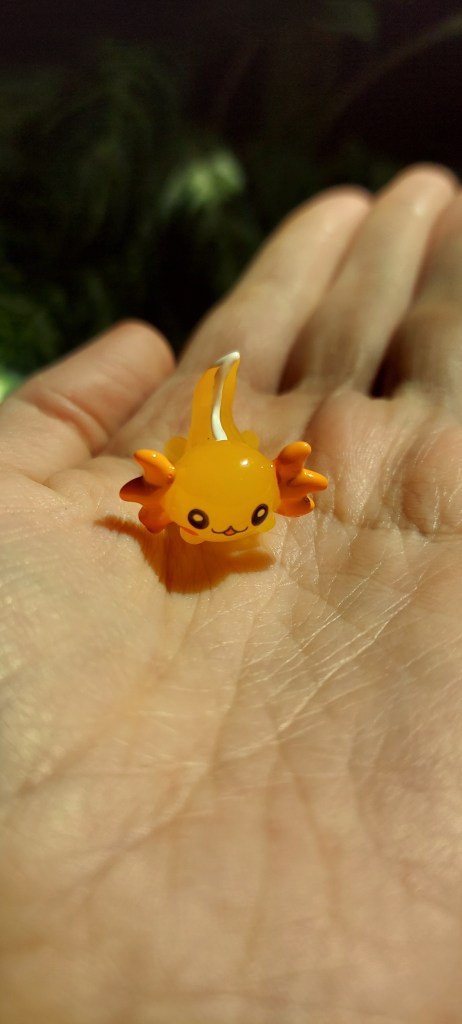
A tiny translucent orange axolotl sitting on the palm of a hand.

They handed me something and quickly ran away, back to their parents. I looked down at my hand, and you guys.

It was a tiny orange axolotl. I think my heart melted and ran out of my body.

(For real, kids don’t mess around and have a very well-deserved reputation for having no filter. A sincere compliment from a tiny child is worth more to me than every compliment I’ve ever received from an adult.)

I did also get several other compliments on the hat that day, which was a pretty big boost to my confidence and overall mood. Assuming that sky burials aren’t legal by the time I bite the grass, I am going to be buried in this hat.

It’s not easy to avoid eggs, dairy, or meat at places/events like this, because food is usually done for flavor and convenience and the majority of Americans don’t really have an issue with any of those dietary components. Just in case, I stashed some Feel bars in my belt bag before we left.

(I also keep a 3″ knife, waterproof matches, a multitool, bug spray, a tick spoon, four kinds of lip balm, a can of Emergency Seltzer, a fountain pen, and two kinds of suncreen in my regular, every day backpack. I am nothing if not extremely prepared, always.)

The PA Ren Faire had more food options for me this year, which I liked — I knew there’d probably be a baked potato stall, giant pickles, and possibly a spot for steamed vegetables and rice, but there was also a place for walking tacos, vegetable crudités, and fruit salad.

If you’re not like me, there’re a lot more options. Giant smoked turkey legs, barbecue, sausage, pizza, you name it.

The only caveat is that pretty much all of the food is cash-only (or uses “Coin of the Realm,” tokens you can get near the entrance). Credit card fees can be pretty brutal for businesses that primarily do a large volume of small transactions — picture being charged $1 processing fee on one $100 transaction, versus $1 on each of 20 $5 transactions. To circumvent this, food vendors don’t take credit or debit cards. It can be slightly annoying if you aren’t expecting it but isn’t a big deal if you come prepared. Also, water is expensive, it can get hot, and it’s important to stay hydrated when you’re walking so much, so we brought our own glass water bottles to refill them at fountains/sinks as needed.

So, the PA Ren Faire has parades, jousting, and a variety of comedy shows, plays, demonstrations, and musicians.

We passed by a troll sitting under a bit of a ruined bridge, singing loudly. There were two boxes in front of him: one labeled “keep playing,” and the other labeled “hush money.” At that point, my Handsome Assistant’s curiosity was piqued and he made up his mind that we were going to watch the troll show.

A picture of an adorable troll with pointy ears and tusks, in a brown vest and a patchy leather hat with a yellow eye.
Photo credit: Staci Burke. Taken from Hob the Troll’s website.

As it turns out, Hob the Troll was delightful. It’s an all-ages show, so there’s nothing too racy, but all of the songs had a great balance of “stuff kids will get and laugh at” and “stuff only adults will get and laugh at.” My favorites were the song about Fr​ö​š​t​ï​ë the Snowman, the Dread Ship Montessori, and a “children’s drinking song” about that juvenile rite of passage: making Potions.

(Side note, when my younger sibling was four or so, he was complaining of a bad stomachache out of nowhere. A couple of hours later, he produced a two-liter soda bottle filled with a mixture of tap water, Pert Plus 2-in-1 shampoo, and the insides of a yellow highlighter and loudly warned, “Nobody drink this.”)

Also! We met a beautiful African pied crow named Goose. Like the pied crow at Pagan Pride Day, Goose accepted donations. What’s more, he’d take the donation from you, hop onto a cash box, and deposit it inside. And let me tell you, this boy was so freaking happy and excited to do his tiny job!

We walked up to the area where he accepted donations, and he was full on hopping all along his perch, onto the cash box, off of the cash box, doing little spins, bobbing his head, all just super stoked to get to do his thing, because doing his thing means treats and praise.

Goose, the African pied crow, being very excited to get to deposit donations.

Also there were unicorns.

A pair of small white (really light gray) ponies, with their manes and tails colored with rainbows and costume unicorn horns attached to their halters. They're being led down a path by their handlers.

The PA Ren Faire was a fun, albeit very tiring day. I wish we’d been able to get to more than one Faire this year, but it seems like everywhere sold out pretty quickly. Fortunately, I’m probably going to get plenty of wear out of The Hat long before next year’s Faire season rolls around!

The author and their Handsome Assistant. He's pretending to eat their face, and they're wearing an exaggerated expression of shock.
life

Henna Headache: Why it happens, and how to stop it.

Do you ever experience the dreaded “henna headache?”

In my case, I switched to botanical hair color from synthetic hair color because I wanted something that’d cause less irritation, have fewer fumes, and have a lower risk of sensitization. Imagine my devastation when I realized that I experienced awful migraines from what was supposed to be “safe, natural” hair color. Online research wasn’t much help in the matter, either — some people reported consistently getting headaches from using henna, but there didn’t seem to be a solid reason people could really point a finger at.

After years of experience and experimentation with a variety of dye plants, I’ve managed to narrow henna headaches down to a few common triggers. If any of these seem to match with your experience, there are ways to mitigate your discomfort and still end up with beautiful hair.

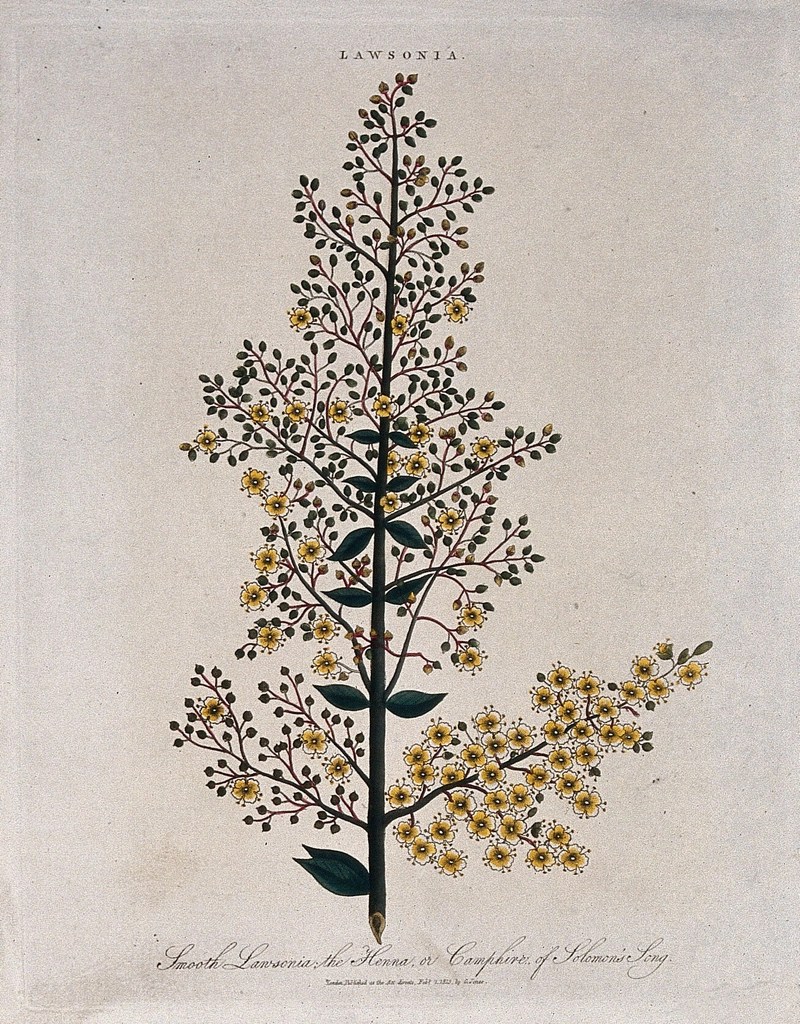
Henna plant (Lawsonia inermis): flowering

Not all henna is henna. A fair amount of the henna creams and dyes on the market are what’s called compound henna, which may be henna (Lawsonia inermis) based, but also contain other botanical dyes, metallic salts, and even synthetic colorants. Compound henna is why so many hair colorists don’t want to work on hair that’s been treated with henna — they have no way of knowing if you’ve used henna, or “henna.” The metallic salts in compound henna can react violently with some of the chemicals used in salon coloring. Some of the other components of compound henna can also cause headaches, just like synthetic colorants may.

If you’re using a henna dye that’s any color other than reddish orange, you may be using compound henna.

Even if a product isn’t compound henna, it may not be pure Lawsonia inermis. In my case, I was using a combination of pure powdered henna, and pure powdered indigo. This gave me a very nice, deep brown color. Seems safe and natural, right?

A lot of things are natural, like stonefish, nightshade berries, and manchineel fruit.

person holding a wet fabric with indigo dye
Photo by Teona Swift on Pexels.com

Indigo doesn’t start out looking the way one might assume. It’s not actually blue, for one — blue is actually the least common color in nature. It starts as a colorless precursor, indican. When this is soaked in water, it gets hydrolyzed and produces indoxyl. After the indoxyl ferments for several hours, it yields leucoindigo. When leucoindigo oxidizes, it becomes the blue indigo we’re all familiar with. Indigofera tinctoria and other members of the Indigofera genus are complex, fascinating plants with a long history of use in dyes, paints, and even medicine.

However, they also carry the potential for toxicity. If you’re using a mixture of henna and indigo powder under the assumption that it’s safe because it’s all-natural, but you’re still experiencing a henna headache every time you use it, indigo may be the culprit. In my specific case, switching from henna + indigo to just henna solved my problem entirely.

Flowering stems indigo plant (Indigofera tinctoria)

Does this mean you can’t wear your favorite dark-dyed jeans? Not at all. Just maybe avoid eating or drinking indigo or leaving it on your skin and hair for hours at a time. If you regularly work with or use indigo and find that you have a lot of otherwise-unexplained headaches, maybe try reducing your contact with it and see if it makes a difference.

Have you ever gotten a headache from going quickly from one temperature to another? You might notice it on a hot summer’s day, when going from the sunny outdoors to a chilly, air-conditioned building, or even in the depths of winter when you go from the heat to the bitter cold. Kicks my butt every time.

One headache remedy even involves using temperatures to normalize blood flow in your brain, by keeping your feet warm and your head cool.

If you apply henna paste, wrap it up, and keep your head warm while the color develops, you may inadvertently be exposing yourself to a headache trigger. Try keeping your feet warm as well, and maybe put a cool compress on your forehead.

Henna paste is pretty thick. If you have a lot of hair to color, covering every inch of it in henna paste can add a lot of weight to your poor head and neck. This extra weight can put more strain on your neck, leading to tension headaches. Unfortunately, I don’t have a good solution for you here — if at all possible, wrap your hair up in a way that’s evenly balanced, at least, to make it a bit easier to deal with. Remain sitting with your head resting comfortably on something for as long as you can. A gentle massage and a cold compress can help deal with inflammation in your neck

Henna paste dries out very easily. It’s why it needs to be kept wrapped up — it takes a long time for the color to develop well, and, if you leave it exposed to the air, the paste will dry out long before it has a chance to be effective. If your hair isn’t well wrapped up, the paste may start to dry and create a pulling sensation on your hair and scalp.

If you’ve ever worn a tight ponytail or tight set of braids and ended up with a sore, tender scalp or a headache by the end of the day, you know how much that pulling feeling can suck. In this case, the solution is pretty simple: Make sure your henna pasted hair is kept well covered and not allowed to dry out. (I use a waterproof shower cap.)

Say you’re using pure henna. You have short hair, so it’s not too much weight. You have it wrapped up well, but not too much, so it stays moist without making your head too hot. What else could it be?

Sometimes, it might be the way your hair’s wrapped up. If you use a cap that’s too tight, or wrap your hair in plastic too snugly, the pressure can cause some soreness and headaches. Experiment with different materials and wrapping techniques until you find one that’s both effective and comfortable for you.

Henna is a very safe ingredient. Pretty much all of the results that come up for “henna toxicity” deal with compound hennas — like black henna containing lead and PPD. Safety aside, allergies and sensitivities can happen to anyone, with pretty much anything.

If you’ve gone through the list and eliminated all of the other factors, it may just be that Lawsonia inermis doesn’t agree with you. You can try other botanical-based colorants, or consult with a professional colorist to find a gentle synthetic dye or a way to revert to your natural color.

It’s easy to assume that natural products are always safer and better than their synthetic alternatives, but that’s not always true. Just because a substance is (or claims to be) natural doesn’t mean that it doesn’t have the potential for harm. If you get a henna headache every time you color your hair, there may be a variety of root causes stemming from specific compounds within the dye, or even the coloring technique itself.

animals

The Magical Meaning and Symbolism of Frogs

If you’re tired of bugs, you’re in luck! This week, we’re taking a look at frog symbolism.

A green tree frog, clinging to a metal post under a path light. Some purple asters are visible in the background.

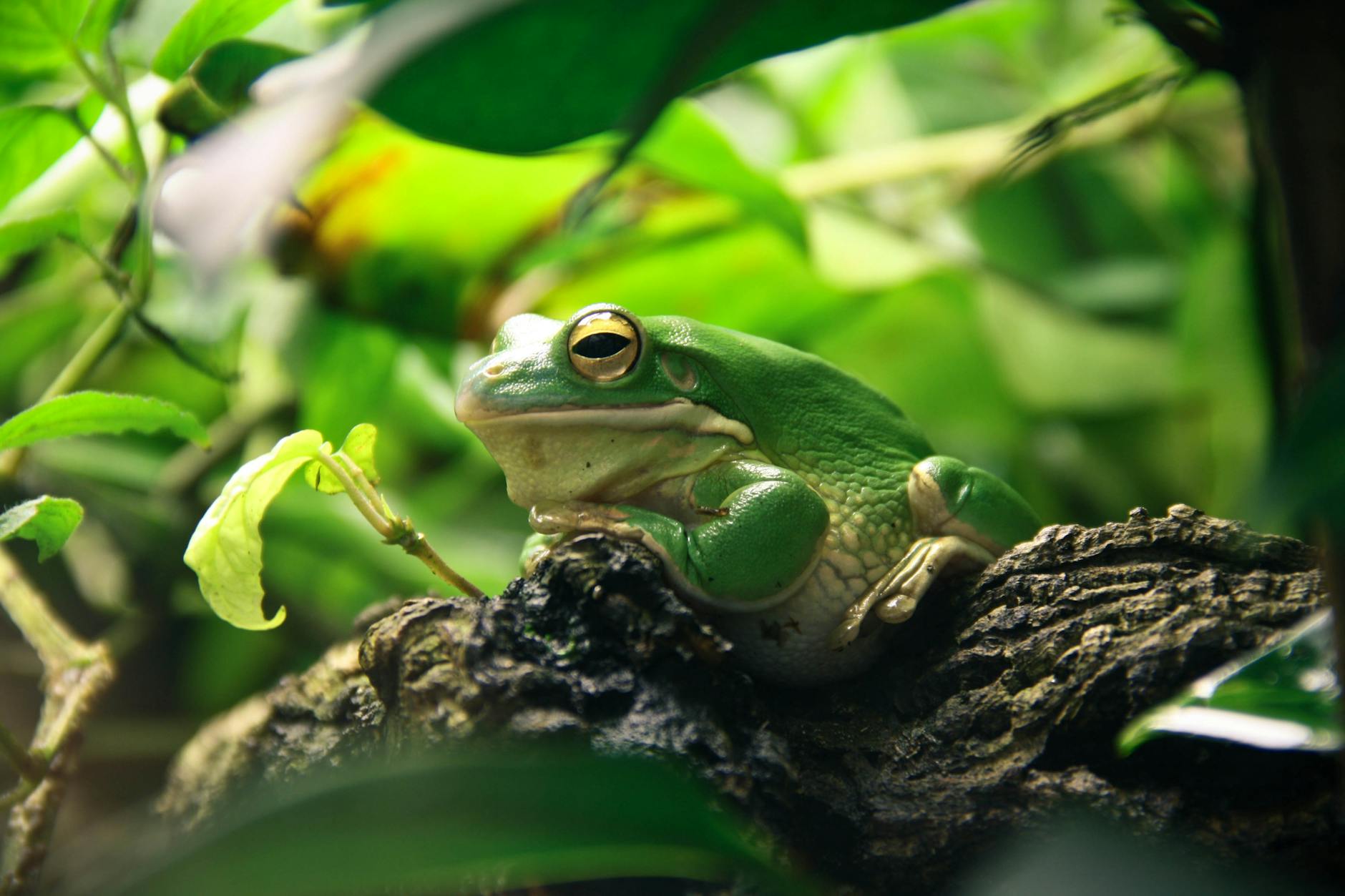
My Handsome Assistant and I went for a walk the other day. It was late in the afternoon, and the weather was perfect for a little stroll to see if the leaves had started changing in earnest yet. While we didn’t see much autumn color yet (which is to be expected, as leaves change a bit later year by year), we did see something else that was pretty cool — a little green tree frog!

He’d camped himself out just under the glow of a path light. It was an ingenious move, since it gave him a virtually all-you-can-eat buffet of bugs attracted to the glow. He held still while we did a little amphibian photoshoot, with a backdrop of asters.

Frog symbolism is one of the most ancient and enduring features of civilizations around the world. According to The Book of Symbols, “[f]igures with a frog’s body and a woman’s face and genitalia have been found dating to as long ago as 6000 BCE, suggesting that the notion of a frog goddess is extremely ancient.” The book also notes that there are similarities in the posture of a human giving birth and a frog sitting.

The above similarity may be part of why frogs are sacred to the Egyptian goddess Heqet, a Goddess of Fertility. Frog symbolism is also rooted in the yearly flooding of the Nile, when the water (and nutrient-rich silt it brought with it) brought greater fertility to the land. Frogs also reproduce in water, depositing their eggs either in the water directly, or on leaves where their spawn can easily fall into water upon hatching.
Interestingly, Heqet may be the origin of the name of the Greek Goddess of Witchcraft, Hecate.

Southward, in South Africa, the ǀXam-ka ǃʼē people had traditions surrounding frogs and menstrual seclusion. The frog deity !Kwah was said to watch over women and girls during this time. If any were to defy this deity and leave seclusion, they and their families would be turned into frogs.

green and white frog resting on brown tree branch
Photo by Pixabay on Pexels.com

In Mayan culture, frogs were rainmakers. They held an important role in the story of Kumix, a deity of maize, the sun, and rain. In some versions, they act as directional rain deities that reside on mountains. Here, again, is a connection between frogs and life-giving water — however, rather than the flooding of the Nile, the water comes from rain.
In Diné legend, frog symbolism is also associated with the cardinal directions. In the story of the creation and destruction of the First World (which we mentioned in the post about wasps), Frog lived in the sea to the west. Frog was also one of the creatures who became upset when the world grew crowded and chaotic.

In Hindu legends, frogs are associated with the sun. Bheki is a frog that represents the sun on the horizon. It’s said that Bheki was originally a beautiful woman. A king fell in love with her, and she agreed to marry him on one condition: He must never, ever show her a single drop of water. One day, Bheki grew tired and asked for a drink. Her husband brought her water, and she sank out of sight like the sun beneath the water.

vibrant red eyed tree frog on leaf
Photo by Ivan Rojas on Pexels.com

In feng shui, the Jin Chan (金蟾) is a charm for prosperity. Often translated as “money frog” or “money toad,” it is most commonly represented as a bullfrog with two forelegs and one hind leg, seated on a pile of coins with another coin in its mouth. This charm is said to protect against bad luck and help draw wealth into the household. For this reason, it shouldn’t be placed facing an exterior door, or in the bathroom or kitchen (where water flows out of the house).
While the connection between frog symbolism and water isn’t really explicit here, there are connections between fertility and prosperity through the concept of multiplying one’s desires or good fortune. In Egypt, the Nile floods, and the land’s fertility brings prosperity. In Meso- and South America, rain brings fertility to the land, and the land’s abundance brings prosperity.
In Chinese mythology, the Jin Chan is also connected to the moon — it’s said to appear on a full moon, near homes and businesses that are about to experience positive financial news. As the moon is also intimately connected to water through the tides, this may be another frog-to-water-to-prosperity connection.

Given the ubiquity of frog symbolism in myth and legend, it’s next to impossible to recount all of them here. Fortunately, a number of common threads arise with just a little bit of scrutiny. Frogs reproduce in water and are active where water is abundant. They’re thus connected to fresh, life-giving water, rain, and the fertility of the land. Through this, it’s also possible to see connections to abundance, prosperity, and fertility in general.

Sometimes, frogs also play key roles in the creation of people or civilization. This is particularly interesting, because it often involves a transformation in either direction. In Myanmar, the Va people believed that their ancient ancestors were two tadpoles that grew into frogs, and eventually into ogres. These ogres consumed all kinds of animals until, one day, they ate humans. From that day forth, they were able to reproduce and create human offspring — the ancestors of the Va.
On the other hand, in Vietnam, Bahnar legend tells that a human became a frog and ascended to the heavens to become a God of Agriculture.

photo of green frog on leaf
Photo by Lexo Salazar on Pexels.com

On the other hand, frog symbolism isn’t always positive or life-giving. In Christian mythology, frogs are one of the plagues of Egypt and spew forth from the mouths of monsters.
Frogs are also common fodder for witchcraft folklore. How many times have you heard stories of witches turning someone into a frog or toad? Even children’s tales like The Frog Prince revolve around such a transformation. You can see this reflected in modern media, too — ask anyone who’s ever played one of the older Final Fantasy games. Getting turned into a frog in the middle of a battle sucks.

Through their connection to water (and their own abundant procreation), frogs are tied to fertility. This isn’t just the fertility of animals and humans, but of the land itself.

Frog symbolism is also connected to cleansing, renewal, or purification. This is through frogs’ connection to water, but also because of their unique biology: Frog skin is a respiratory surface. It’s very permeable, and very susceptible to damage from imbalances in water chemistry. Frogs can’t thrive where things are dirty, and they are one of the “canaries in the coal mine” for water pollution.

Macro photography of green frog in water. Frog symbolism is closely connected to cleanliness, purity, and renewal because of their connection to water.
Photo by Pixabay on Pexels.com

Frogs also represent transformation, of a variety of types. There’s the very obvious transformation from egg, to tadpole, to froglet, to frog, but there’s also more subtle, alchemmical ideas at play. As The Book of Symbols explains,

In dreams and fairy tales the frog arrives, quite suddenly, out of water somewhere, just as an aspect (often princely) of self-substance emerges from the waters of the unconscious, but is not yet in fully conscious, recognizable form. In many such fairy tales, this fertile little being from the watery regions must be accepted and attended to in its frog form, however unattractive or odd it may seem, and inevitably it transforms into the soulful prince or princess.”

Dreaming of frogs is said to herald a change or transformation. If the frog catches a bug, it symbolizes seizing an opportunity. If you eat the frog, it represents an unpleasant task that needs doing.
On the other hand, seeing leaping frogs can represent an inability to commit to a person, idea, or situation.

Frogs are one of our longest-enduring symbols, and frog symbolism is present in everything from creation myths to children’s tales and poems. Not only do these creatures help keep pest populations in check, they’re also powerful symbols of renewal, transformation, fertility, and prosperity.

Just for fun

Party like a Corvid

Note: This post contains some affiliate links. These links allow me to earn a small “finder’s fee” on purchases, at no additional cost to you. Thank you for supporting artists, artisans, and this site!

I’m not usually one to categorize myself with a single “core” or “vibe,” but I’ve been described plenty often as Goblin- or Crowcore. Honestly, I agree. My ideal aesthetic is “abandoned baroque theater slowly being reclaimed by an adjacent swamp,” and I apologize to no one.

The trouble is, I also like parties. When it comes to entertaining that matches my crowcore party vibe, I usually come up short. (Martha Stewart ain’t exactly jumping at the chance to chime in on this one.)
Besides, I’m not into filling my house with mass-market goods. I don’t like it when things are too matchy-matchy, and slow decor is my speed. Stuff that’s secondhand, handmade, or straight-up found in the yard? Yes.

During the big Mabon feast, I ended up having to bring my contributions in things like silicone bags and mixing bowls. (Which is a bit less “slow decor and thoughtful consumption” and a bit more “first apartment” than what I was going for.) So, since we’re getting closer to the autumn/winter holiday season, I figured I’d put together a list of Things I Find Cool for Fall Parties.
If you’re like me, maybe you find them cool also.
Enjoy!

If food is art, a really nice serving dish is like an excellent frame. Not only will good serving dishes make foods look better, they’ll make them easier to serve. One thing I lack is serving dishes, but I found some by CreatingComfortLab that I really like. They’re a Ukranian-American company that makes all of their ceramics by hand, and they have beautiful dinnerware (I like their serving dishes in green or black, around $48-58 each).

A set of green oval serving platters on a gray background. A sliced kiwi and small knife sit on one of the platters.

If you prefer to thrift your crowcore party dinnerware, shops like GraniteStateAntiques have some beautiful vintage pieces, like this Pyrex forest fancies casserole dish. It’s a versatile piece that I really like, and looks great when mixed with newer, handmade dishes.

A gorgeous butter dish in black and beige, topped with morel mushrooms and patterned with multiple other mushroom species.

Nice serve ware isn’t just limited to plates, bowls, and platters, though. I also found this awesome morel butter dish ($65) by SweetArtAttackEllen. This shop has a lot of really fun, interesting designs, like this snail, moss, and turkey tail mushroom butter dish, and this spoon rest.

During certain times of year, all you need to do to find a good goblincore party centerpiece is go outside — there’re tons of pieces of interesting wood with really beautiful lichen and moss, cool stones, and fresh flowers. That isn’t an option for everyone, though, but artisans like AuroraMOSSDesigns use natural materials to create beautiful, interesting centerpieces for coffee tables and dining tables alike. Check this one out:

A light wood coffee table with an interesting centerpiece made of wood, moss, dried mushrooms, and pinecones.

Isn’t that gorgeous? It’s only one of many one-of-a-kind designs available, ranging from about $37 to $190.

If you prefer to make your own, you can also find small ornaments to help bring your centerpiece to the next level. I’m particularly fond of these handmade mushroom ornaments by juliecollings — mushrooms often lose their colors and shape during the drying process, but these can give you the same look in a more robust, longer-lasting form.

I like mismatched dishes — it’s much more my speed to have things that go together, rather than match. I also really enjoy vintage water goblets, in a whole array of shapes and colors. I keep my eyes peeled for them every time I go to a secondhand shop, but it takes time to build up a collection capable of serving a group. Sellers like SecondSongHomestead and ValmontVintage have a selection of colorful, eclectic vintage glasses available.

I’m a sucker for brass candlesticks (mismatched, just like my glasses). They’re another thing I keep an eye out for whenever I’m looking through secondhand shops. When they’re old, they develop some unique and lovely patinas, but they also polish up beautifully.

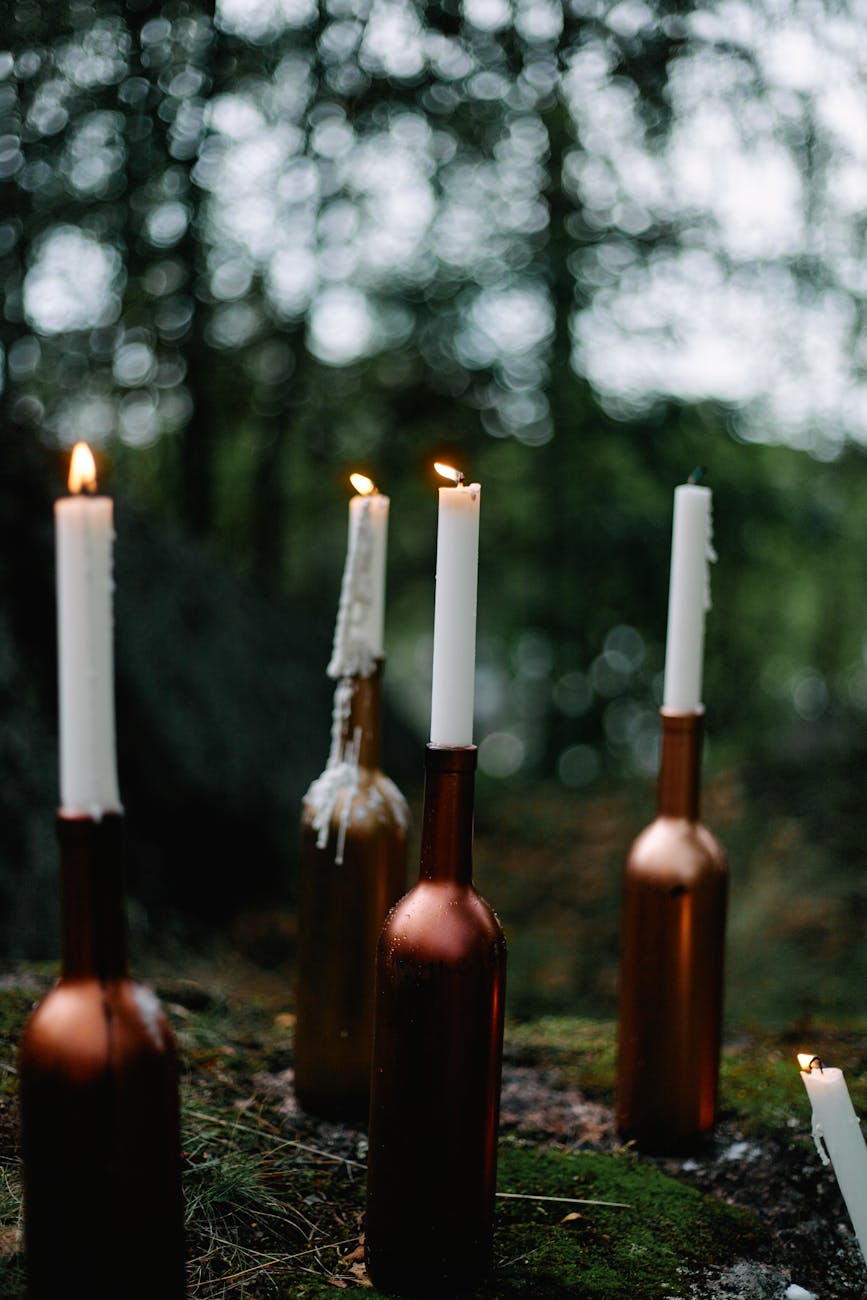
candles on sticks
Photo by Gizem Çelebi on Pexels.com

As with vintage water glasses, it can sometimes be difficult to find specific pieces to round out the look that you’re going for. A nice group of brass candlesticks, filled with natural beeswax candles, is a really beautiful addition to a crowcore party table or buffet when you’re entertaining. If you’re hunting for a specific shape or style of candlestick, and can’t seem to find it, TheCherryAttic and pamscrafts7631 might be able to help you. They both have groups of assorted brass candlesticks, sold separately so you can pick exactly what you’re looking for ($9-30).

Some nice beeswax taper candles aside, there are plenty of other lovely handmade candles that can help set the mood for your gathering. I love this massive toad candle from HoneyHoleCandles (and these smaller ones by LuxArtCandles). I wouldn’t ever burn him — I just want to have him around. LOOK AT HIM.

A person in a beige sweater, holding a large black beeswax candle shaped like a toad.

If scented candles are more your thing, you might want to check out this Witch of the Wood soy wax candle (scented with balsam, cedar, vetiver, sage, and citrus) by MoonstoneandMyth, or this Petrichor candle by ValiantCandle.

I mean, not for humans. I trust you probably have things figured out on that front. (If not, maybe try this post’s recipe for banana bread — it’s really good.)

These are snacks specially formulated for corvids — crows, ravens, jays, and magpies. AnitaApothecaryShop has a bagged blend for feeding your familiars, while OrganicRawRootsFarm has a whole starter kit for feeding crows. Pair it with a dish of fresh, clean water (they like to dunk their food), and you’ll likely have bird friends showing up in no time.

The last thing a party needs is some ambience. If you’re into fantasy lofi, check out Medieval Lofi. If Pagan and witchy music is more your vibe, I’ve put together a playlist (that I listen to all the time):

For more autumnal favorites, check out Etsy’s list of Fall Entertaining and Decor picks. Happy partying! 

🖤
animals

The Magical Meaning and Symbolism of Wasps

Last week was spiders, this week we’re doing the magical meaning and symbolism of wasps.

Why wasps?

In temperate climates, late summer and early autumn when many wasps (the eusocial ones, at least) start losing direction. Like kids on spring break, they no longer have the structure they once did — the nest is likely done producing larvae, the newly-created queens are getting ready to hibernate, and the wasply lifecycle comes to a close to start back up in spring. This means that the workers, if they haven’t died already, are about to.

The lack of larvae to raise also means that the wasps’ dietary habits shift. Where babies need protein in order to grow big and strong (and adequate protein is so important, worker wasps have been observed shoving drones into lockers in order to make sure that the larvae eat first), the workers have already done all the growing they’re going to do. They don’t need a high protein diet; they need carbs for energy. This often puts them in conflict with humans, as sugar sources start to wind down a bit this time of year and humans are generally a veritable bonanza of sugary treats.

A close-up of a wasp's face.
This one’s weirdly cute. Photo by David Hablu00fctzel on Pexels.com

So, if you’re noticing larger numbers of more aggressive wasps than usual, that’s probably why. They’re hungry, and they’re on a kind of wasply rumspringa. Don’t worry, though — they won’t be around much longer. It’ll get cold, the workers will die off, the queens will hibernate, et fin.

Right now, we have a wasp nest beneath a tree stump. We considered removing it, but it’s late enough that nature will take its course pretty soon, and then we can fill in the cavity to keep anyone else from setting up shop.

In honor of the last of the summer’s wasps, here are various bits of folklore, mythology, magical properties, and the symbolism of wasps.

Insects feature pretty frequently in Japanese folklore and mythology, wasps included. In one story, the deity Susanoo-mikoto ordered his son-in-law, Ôkuninushino-kami, to sleep in a room infested with wasps and centipedes. Fortunately, Suseribimeno-mikoto, his wife, gives him an insect-repelling cloth to protect him.

One of the plays of Aristophanes, an ancient Greek playwright, is titled The Wasps. In it, the titular wasps are a group of jurors. Bdelycleon, son of Philocleon, has imprisoned his father after many, many unsuccessful treatments for Philocleon’s seeming addiction to trials. When the jurors (Philocleon’s comrades) learn of his imprisonment, they swarm Bdelycleon like wasps. Bdelycleon eventually gives in, and turns the house into a “courtroom” where his father can judge household disputes.

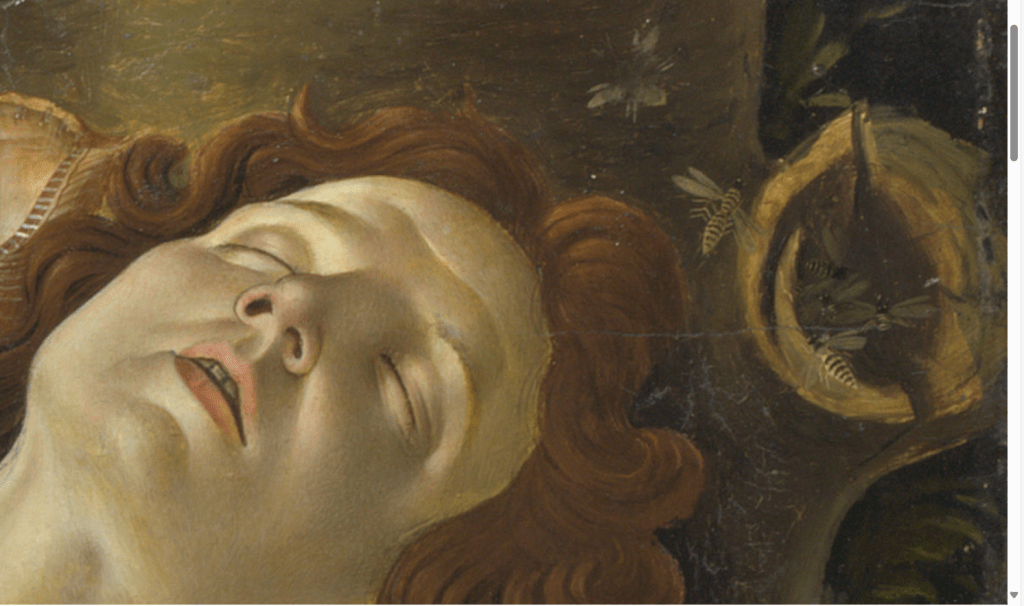
In Boticelli’s painting Venus and Mars, there’s a small wasp nest far to the right, near Mars’ head. Wasps are associated with Mars (and his Greek counterpart, Ares) as animals that are considered aggressive or warlike, but this may not be why Boticelli chose to include them. The painting may have been commissioned by the Vespucci family (from the Italian “vespa,” or “wasp”), and the inclusion of the wasp nest may have been a nod to that.

Detail from Botticelli's Venus and Mars, showing Mars' face and an adjacent wasp nest.

Ichneumon wasps, a family of parasitoid wasps, were also instrumental in strengthening Charles Darwin’s doubts about the existence of a benevolent creator:

I cannot persuade myself that a beneficent and omnipotent God would have designedly created the Ichneumonidae with the express intention of their feeding within the living bodies of caterpillars[.]

I have seen multiple references to wasps as sacred animals in Indigenous American cultures, but haven’t found many specific examples of this — particularly examples sourced from Indigenous peoples themselves. This isn’t to say that this isn’t true, but any references to wasps as sacred, totemic, or spirit animals in generic “Native American” culture should be taken with a grain of salt. (North America is kind of a huge place.)
One specific story comes from the Diné people and tells the story of the First World — known as Ni’hodilhil, the Dark or Black World. This was a black place surrounded by four cloud columns: Black Night to the north, White Dawn to the east, Blue Daylight to the south, and Yellow Twilight to the west. The First Man, along with a perfect ear of white corn, was formed at the place where Black Night and White Dawn met. The First Woman, along with a perfect ear of yellow corn, was formed where Blue Daylight and Yellow Twilight met.
At that time, creatures did not have their present forms. They were as mists, but would one day become their present shapes.
In the story, the first man and first woman meet and live together. Gradually, other beings appear. First is Great-Coyote-Who-Was-Formed-in-the-Water, who hatched from an egg and knew all that went on under the water. Second was another Coyote, First Angry, who insisted that he had been born first, and brought witchcraft into the world. After that, four more beings appeared. They were the Wasp People, and they knew how shoot and harm others. They were followed by the Red Ants, the Black Ants, and many others, until the world became crowded and was full of arguing.
Eventually, the Gods became angry and the occupants of the First World were forced to leave. The First Man planted a reed in the east, which grew tall and strong. The First Man, First Woman, and all of the other creatures of the world climbed up it to safety, to the Second World.

A black and yellow wasp on a white flower.
Photo by Pixabay on Pexels.com

Ahti, a little-known Egyptian deity, was represented as a hippopotamus with the head of a wasp. Not much is known about her, though her interesting composition has led some scholars to associate her with chaos, disorder, and spite.

In Hindu mythology, wasps are associated with Bhramari — the goddess of bees. Bees, wasps, hornets, spiders, termites, mosquitoes, and biting flies cling to her body, and she could send them out to attack for her. In the tenth book of the Devi Bhagavata Purana, there is a powerful asura named Aruna. He performs a penance to Brahma, and, in return, Brahma makes it so Aruna cannot be killed in war by any man, woman, weapon, bipedal creature, quadrupedal creature, or any combination thereof. Feeling suitably overpowered, Aruna called on other beings to attack the devas. He nearly succeeded in beating them, too, until Adi Parashakti appeared and began releasing bees from her hands. Calmly, she continued releasing insects that clung to her body, making her larger and larger and creating the divine form of Bhramari.
When all of Aruna’s army had been defeated except him, she released her insects upon him to tear him limb from limb. This story is especially interesting because the warlike symbolism of wasps is still present, but used in a defensive, benevolent sense.

John Gerard, a sixteenth century herbalist, had a method of tree divination using acorns. The technique involved finding an acorn at a specific time of year (likely autumn), breaking it open, and examining the contents:

  • If there was an ant inside, there’d be an abundant harvest in the coming year.
  • On the other hand, a worm that attempts to crawl away means a light harvest.
  • A spider was a harbinger of pestilence for humans.
  • A white worm was a harbinger of pestilence for animals.
  • If the worm thrashed and turned away, however, it meant the plague.
  • If there was a worm that “flew away” (perhaps by growing into an adult knopper gall wasp), it foretold war.
A wasp climbing on a mossy stick.
Photo by Pixabay on Pexels.com

Some modern witches use deceased wasps as an ingredient in banishing or protective powders. Combine them with ingredients like salt, hot pepper, and garlic, and grind to a fine powder. Use to dress candles, sprinkle around borders, et cetera.

The symbolism of wasps generally revolves around war, arguments, and violence. This is probably undeserved, as there are plenty of non-aggressive wasp species. (I mean, I woke up the other day with a little ichneumon wasp crawling on my leg. She was tiny, harmless, and seemed at least as confused as I was, considering both of us were A) in a bed and B) under a blanket.)

Wasps’ connection to violence isn’t always unjustified, however. These creatures, and stinging insects in general, also frequently represent punishment and wrath. Even in the story of Bhramari, where wasps are part of the insect army that eventually defeat Aruna, they are part of the righteous, defensive wrath of the goddess.

They’re also symbols of strictly enforced boundaries and protection.

On the other hand, the symbolism of wasps in dreams is linked to evil and negative emotions. Dreams of being stung by a wasp may indicate envy. Killing a wasp in a dream represents bravery in overcoming the negativity or malicious actions of others.

Are wasps aggressive? They certainly can be, but this isn’t directionless aggression. In reality, they’re very protective. The trouble is, it’s often difficult for humans to tell where our territory ends and theirs begins, which frequently brings us into conflict. Still, wasps perform very important functions as pollinators and predators of pest insects, so it’s worth learning about your local wasp species and finding ways to coexist whenever possible.
Sometimes that long “stinger” is just an ovipositor, and that wasp is on the way to take care of your garden for you!

animals

The Magical Meaning of Wasps

Last week was spiders, this week we’re doing wasps.

Why wasps?

In temperate climates, late summer and early autumn when many wasps (the eusocial ones, at least) start losing direction. Like kids on spring break, they no longer have the structure they once did — the nest is likely done producing larvae, the newly-created queens are getting ready to hibernate, and the wasply lifecycle comes to a close to start back up in spring. This means that the workers, if they haven’t died already, are about to.

The lack of larvae to raise also means that the wasps’ dietary habits shift. Where babies need protein in order to grow big and strong (and adequate protein is so important, worker wasps have been observed shoving drones into lockers in order to make sure that the larvae eat first), the workers have already done all the growing they’re going to do. They don’t need a high protein diet; they need carbs for energy. This often puts them in conflict with humans, as sugar sources start to wind down a bit this time of year and humans are generally a veritable bonanza of sugary treats.

A close-up of a wasp's face.
Photo by David Hablu00fctzel on Pexels.com

So, if you’re noticing larger numbers of more aggressive wasps than usual, that’s probably why. They’re hungry, and they’re on a kind of wasply rumspringa. Don’t worry, though — they won’t be around much longer. It’ll get cold, the workers will die off, the queens will hibernate, et fin.

Right now, we have a wasp nest beneath a tree stump. We considered removing it, but it’s late enough that nature will take its course pretty soon, and then we can fill in the cavity to keep anyone else from setting up shop.

In honor of the last of the summer’s wasps, here are various bits of folklore, mythology, and magical properties associated with these creatures.

Insects feature pretty frequently in Japanese folklore and mythology, wasps included. In one story, the deity Susanoo-mikoto ordered his son-in-law, Ôkuninushino-kami, to sleep in a room infested with wasps and centipedes. Fortunately, Suseribimeno-mikoto, his wife, gives him an insect-repelling cloth to protect him.

One of the plays of Aristophanes, an ancient Greek playwright, is titled The Wasps. In it, the titular wasps are a group of jurors. Bdelycleon, son of Philocleon, has imprisoned his father after many, many unsuccessful treatments for Philocleon’s seeming addiction to trials. When the jurors (Philocleon’s comrades) learn of his imprisonment, they swarm Bdelycleon like wasps. Bdelycleon eventually gives in, and turns the house into a “courtroom” where his father can judge household disputes.

In Boticelli’s painting Venus and Mars, there’s a small wasp nest far to the right, near Mars’ head. Wasps are associated with Mars (and his Greek counterpart, Ares) as animals that are considered aggressive or warlike, but this may not be why Boticelli chose to include them. The painting may have been commissioned by the Vespucci family (from the Italian “vespa,” or “wasp”), and the inclusion of the wasp nest may have been a nod to that.

Detail from Botticelli's Venus and Mars, showing Mars' face and an adjacent wasp nest.

Ichneumon wasps, a family of parasitoid wasps, were also instrumental in strengthening Charles Darwin’s doubts about the existence of a benevolent creator:

I cannot persuade myself that a beneficent and omnipotent God would have designedly created the Ichneumonidae with the express intention of their feeding within the living bodies of caterpillars[.]

I have seen multiple references to wasps as sacred animals in Indigenous American cultures, but haven’t found many specific examples of this — particularly examples sourced from Indigenous peoples themselves. This isn’t to say that this isn’t true, but any references to wasps as sacred, totemic, or spirit animals in generic “Native American” culture should be taken with a grain of salt. (North America is kind of a huge place.)
One specific story comes from the Diné people and tells the story of the First World — known as Ni’hodilhil, the Dark or Black World. This was a black place surrounded by four cloud columns: Black Night to the north, White Dawn to the east, Blue Daylight to the south, and Yellow Twilight to the west. The First Man, along with a perfect ear of white corn, was formed at the place where Black Night and White Dawn met. The First Woman, along with a perfect ear of yellow corn, was formed where Blue Daylight and Yellow Twilight met.
At that time, creatures did not have their present forms. They were as mists, but would one day become their present shapes.
In the story, the first man and first woman meet and live together. Gradually, other beings appear. First is Great-Coyote-Who-Was-Formed-in-the-Water, who hatched from an egg and knew all that went on under the water. Second was another Coyote, First Angry, who insisted that he had been born first, and brought witchcraft into the world. After that, four more beings appeared. They were the Wasp People, and they knew how shoot and harm others. They were followed by the Red Ants, the Black Ants, and many others, until the world became crowded and was full of arguing.
Eventually, the Gods became angry and the occupants of the First World were forced to leave. The First Man planted a reed in the east, which grew tall and strong. The First Man, First Woman, and all of the other creatures of the world climbed up it to safety, to the Second World.

A black and yellow wasp on a white flower.
Photo by Pixabay on Pexels.com

Ahti, a little-known Egyptian deity, was represented as a hippopotamus with the head of a wasp. Not much is known about her, though her interesting composition has led some scholars to associate her with chaos, disorder, and spite.

In Hindu mythology, wasps are associated with Bhramari — the goddess of bees. Bees, wasps, hornets, spiders, termites, mosquitoes, and biting flies cling to her body, and she could send them out to attack for her. In the tenth book of the Devi Bhagavata Purana, there is a powerful asura named Aruna. He performs a penance to Brahma, and, in return, Brahma makes it so Aruna cannot be killed in war by any man, woman, weapon, bipedal creature, quadrupedal creature, or any combination thereof. Feeling suitably overpowered, Aruna called on other beings to attack the devas. He nearly succeeded in beating them, too, until Adi Parashakti appeared and began releasing bees from her hands. Calmly, she continued releasing insects that clung to her body, making her larger and larger and creating the divine form of Bhramari.
When all of Aruna’s army had been defeated except him, she released her insects upon him to tear him limb from limb.

John Gerard, a sixteenth century herbalist, had a method of tree divination using acorns. The technique involved finding an acorn at a specific time of year (likely autumn), breaking it open, and examining the contents:

  • If there was an ant inside, there’d be an abundant harvest in the coming year.
  • On the other hand, a worm that attempts to crawl away means a light harvest.
  • A spider was a harbinger of pestilence for humans.
  • A white worm was a harbinger of pestilence for animals.
  • If the worm thrashed and turned away, however, it meant the plague.
  • If there was a worm that “flew away” (perhaps by growing into an adult knopper gall wasp), it foretold war.
A wasp climbing on a mossy stick.
Photo by Pixabay on Pexels.com

Some modern witches use deceased wasps as an ingredient in banishing or protective powders. Combine them with ingredients like salt, hot pepper, and garlic, and grind to a fine powder. Use to dress candles, sprinkle around borders, et cetera.

Wasps represent war, arguments, and violence. This is probably undeserved, as there are plenty of non-aggressive wasp species. (I mean, I woke up the other day with a little ichneumon wasp crawling on my leg. She was tiny, harmless, and seemed at least as confused as I was, considering both of us were A) in a bed and B) under a blanket.)

Wasps’ violence isn’t always unjustified, however. These creatures, and stinging insects in general, also frequently represent punishment and wrath. Even in the story of Bhramari, where wasps are part of the insect army that eventually defeat Aruna, they are part of the righteous, defensive wrath of the goddess.

They’re also symbols of strictly enforced boundaries and protection.

On the other hand, dreaming of wasps is said to represent evil and negative emotions. Dreams of being stung by a wasp may indicate envy. Killing a wasp in a dream represents bravery in overcoming the negativity or malicious actions of others.

Are wasps aggressive? They certainly can be, but this isn’t directionless aggression. In reality, they’re very protective. The trouble is, it’s often difficult for humans to tell where our territory ends and theirs begins, which frequently brings us into conflict. Still, wasps perform very important functions as pollinators and predators of pest insects, so it’s worth learning about your local wasp species and finding ways to coexist whenever possible.
Sometimes that long “stinger” is just an ovipositor, and that wasp is on the way to take care of your garden for you!

Blog · Just for fun

Cozy Horror Picks for October

I like cozy horror. No jump scares, just a deeply unsettling vibe. The more it blurs the lines between fiction and reality, the better. I like my horror weird, too. Surreal. Like taking a nice walk down a country lane on a soft drizzly morning and encountering something gray and viscous moving toward you that may once have been a deer.
That kind of thing.

These are my favorite pieces of cozy horror, perfect for an October afternoon:

1. I am in Eskew

I am in Eskew is a surreal horror audiodrama that follows the life of a man living (or trying to) in an ever-shifting city that seems bent on tormenting him. Every episode is essentially an audio diary, narrated by one (and eventually two) voices with the sound of rain in the background. It’s very weird.
It’s very unsettling.
It’s also weirdly soothing.

This series is also complete, so you don’t have to worry about waiting for new episodes to drop.

2. The Codex Seraphinianus

The Codex Seraphinianus is an illustrated guide to an imaginary world, complete with indecipherable writing. Why is the writing indecipherable? Because it’s meant to be — it’s asemic, and intended to convey the wonder and mystery of a child “reading” a book they don’t yet understand. While this book isn’t exactly horror, I’ve included it here because it does create a delightfully unsettling atmosphere — like a discarded relic from a complete, complex, fully fleshed-out world that you don’t understand, never knew existed, and operates entirely differently from your own.

3. Modes of Thought in Anterran Literature

This is another audiodrama, and it’s just delightful. It’s delivered as a series of lectures (and some assorted other recordings here and there) given by a professor who was once a big name in classical studies, but seems to have gone off the deep end. Upon getting tenure and the permission to teach one class of his choosing, he created “Modes of Thought in Anterran Literature” — a class dedicated to analyzing the literature of a long-dead society.

Anterra is also the world’s oldest civilization, tens of thousands of years older than any other recorded society. It was completely unknown until a Chinese submarine sank in the Pacific, coming to rest nearly on top of an Anterran city.

The character of the unnamed professor is engaging, but also soothing enough to make this a decent podcast to sleep to. There are virtually no jumpscares here — just the creeping dread of uncovering the secrets of a dead civilization, including what caused them to mysteriously collapse.

4. The Magnus Archives

The Magnus Archives is an episodic horror anthology, though all of the stories are connected by common threads. The Magnus Institute is an organization dedicated to studying the bizarre. Jonathan Sims, the Institute’s new head archivist, sits down to convert hundreds of written records to audio and, when necessary, add follow-up notes based on research by his team.

Individually, the stories are spooky enough. Once you get deep enough in, a bigger, much more frightening picture starts to emerge.

5. Welcome to Night Vale

Night Vale is a sleepy desert town with some… interesting characteristics. Welcome to Night Vale is an audiodrama in the form of a nightly news show. Hosted by the very soothing-voiced Cecil, it blends the surreal and the macabre with the everyday.

I first got into Night Vale when I was living in California, shortly after being diagnosed with intracranial hypertension. I was severely disabled at the time, unable to leave the house (or bed, most days). Night Vale kept me company, kept me entertained, and provided the perfect blend of humor, horror, and relaxation that I needed.

6. Junji Ito’s Cat Diary: Yon & Mu

Yon and Mu are two cats owned by renowned horror manga artist Junji Ito and his wife. The cat diary details Ito’s life as he adjusts to living with two cats — but, because it’s him, the illustrations are hilariously unsettling. He uses exaggerated horror to illustrate some of the most mundane aspects of living with a cat, and the end result is often more funny and heartwarming than frightening.

7. Weeping Cedars

Weeping Cedars is an audiodrama in the form of a documentary on the small upstate New York town of Weeping Cedars. It’s the site of more than its share of group violence and hysteria, but that’s not the strangest part. The town also seems to just sort of “forget” all of these tragedies, so nobody notices that things have developed a strangely cyclical — possibly even predictable — pattern.

The documentarians try to uncover the lost secrets behind these events, but is it too late? Can they do more than just sit and watch as things continue to unravel?

8. The Last Movie

The Last Movie is an audiodrama set in the same universe as Tanis (one I probably would also recommend, but sadly not beyond the first season or so). Nic Silver and MK investigate the existence of an underground — and possibly cursed — movie.

It’s short, self-contained, and very good if (like me) you’re a fan of cursed media.

9. The Dark Pool

The Dark Pool is another audiodrama, this time set in Maryland. A college professor and a group of students engage in a series of meditation exercises, and record their follow-up conversations. However, as the series goes on, it becomes terrifyingly apparent that there’s a lot more going on than just learning to quiet the mind. As the experiment continues, they begin experiencing bizarre phenomena. Will they be able to break free, or have they already gotten the attention of something they can’t escape?

Here’s hoping your autumn is equal parts cozy and strange!

animals

The Magical Meaning and Symbolism of Spiders

(If you’re arachnophobic, you probably want to skip the whole “symbolism of spiders” post. Don’t worry — I’ll be back next week with some more non-spider related lore.)

This is Matilda. I was out checking for more ground candy (aka, the delicious maypops that fall off my porch’s vines when they’re ripe), when I happened to look up and realize that I was face-to-face with a massive orbweaver (Neoscona species).

A close up of a large, hairy orb weaver perched in the center of a web.

Later that afternoon, once she’d had a chance to build a sizeable web right across the upper part of my window, I very carefully opened the window to snap multiple pics of her from a variety of angles.
It was then that I realized that there was a fire truck and an ambulance in front of one of my neighbor’s houses.

(Note to neighbors: THERE WAS A COOL SPIDER. I PROMISE THAT I’M NOT A MANIAC.)

(Also the emergency vehicles left pretty uneventfully, so hopefully everyone is okay.)

*Ahem*

Anyhow, this is the time of year when sightings of these guys peak around here. So, in honor of Matilda, I figured now would be a good time to write a bit about the magical meaning and symbolism of spiders.

In Greek mythology, the first spider was a woman named Arachne. She was a marvelously talented weaver — allegedly better than Athena herself. She challenged her to a weaving contest, and Arachne’s weaving was, indeed, very beautiful. However, while her weaving was flawless, Arachne had chosen to create a tapestry mocking the gods. (In some tellings, Athena is simply enraged by Arache’s pride.) Angered, Athena transformed her into a spider.

A close up of a jumping spider's face, showing their fuzzy pedipalps and big, black, almost puppylike eyes.
Photo by Pixabay on Pexels.com

In Catholic Christian mythology, the symbolism of spiders relates to faith. Saint Conrad of Constance, a German bishop, is said to have seen a spider fall into his cup during Easter Mass. While it was widely believed that all spiders were venomous (or, in this case, poisonous) Conrad drank the wine and trusted in his faith to preserve him.

Probably the best-known spider in mythology is Anansi, from the Ashanti people. He’s viewed as a cunning trickster figure. He’s so prominent, that he gave rise to the term “spider tales,” which encompasses several kinds of story within the Ashanti oral tradition.

In North America, spiders were viewed as either trickster figures, or ingenious creators. The Hopi and Diné people have Spider Grandmother, who plays a key role in the creation of the world.

Another close up of a very cute, fuzzy white jumping spider.
Photo by Pixabay on Pexels.com

In Peru, spiders frequently appear in ancient artworks (including the famous Nazca lines). While the specific significance of these depictions is often uncertain, it is known that the Cupisnique people had a spider deity associated with weaving, nets, war, and power.

In Australia, spiders sometimes appear in art and as clan totems.

The people of Kiribati Island and the Republic of Nauru, of Micronesia, both have spider figures that play a central role in their creation mythology.

In Japan, there are spider-like yokai called ogumo, yatsukahagi, or tsuchigumo. Tsuchigumo translates as “earth spider,” but likely didn’t originate as a spider at all. Historian Yoshiyuki Takioto put forth the idea that tsuchigumo were local chieftains (described as short people with long limbs, who lived in caves, eschewed civilization, and disregarded the imperial court), These chieftains were most likely shamans.
The yokai tsuchigumo first turns up in medieval literature, as a spider-like figure 60 meters long. When killed, the heads of almost 2000 people fell from its belly.

In Scotland, spiders were an inspirational figure during the First War for Scottish Independence. After a series of defeats, Robert the Bruce hid in a cave. While there, he watched a spider struggle to climb a strand of silk. Despite failing over and over, the spider eventually succeeded. This gave him the encouragement he needed to go back into battle and eventually win Scotland’s independence.

A slender black and yellow spider perched on its web.
Photo by Pixabay on Pexels.com

It’s often said to be bad luck to kill a spider that you find in your home. This has a (perhaps unsurprising) grain of truth to it — killing spiders in your house means that you’re opening yourself up to all of the much less desirable things that spiders eat. If an infestation of flies or ants looks like bad luck to you, then you might want to heed this bit of folklore!

The symbolism of spiders in dreams includes:

  • Feeling like an outsider — like a spider in a web in the corner of a room.
  • Wanting to be an outsider.
  • A protective force.
  • A strong or overbearing feminine figure.
  • Rewards for one’s hard work.
  • Unpleasant relationships. Relationships one can’t escape, a (usually feminine) person who is draining one’s energy, a conflict with an overbearing person.

However, dreaming specifically of a rainbow colored spider is said to point to a situation that you probably want to avoid.

Spiders have far-reaching symbolism. Across cultures, they’ve been everything from tricksters to cosmic creators, to the unfortunate fate of the proud.

In general, these animals are associated with industry and creativity. Spider webs come in an astonishing variety of shapes and sizes — from small, silk-lined burrows to impressive constructs that are as delicate as they are massive.

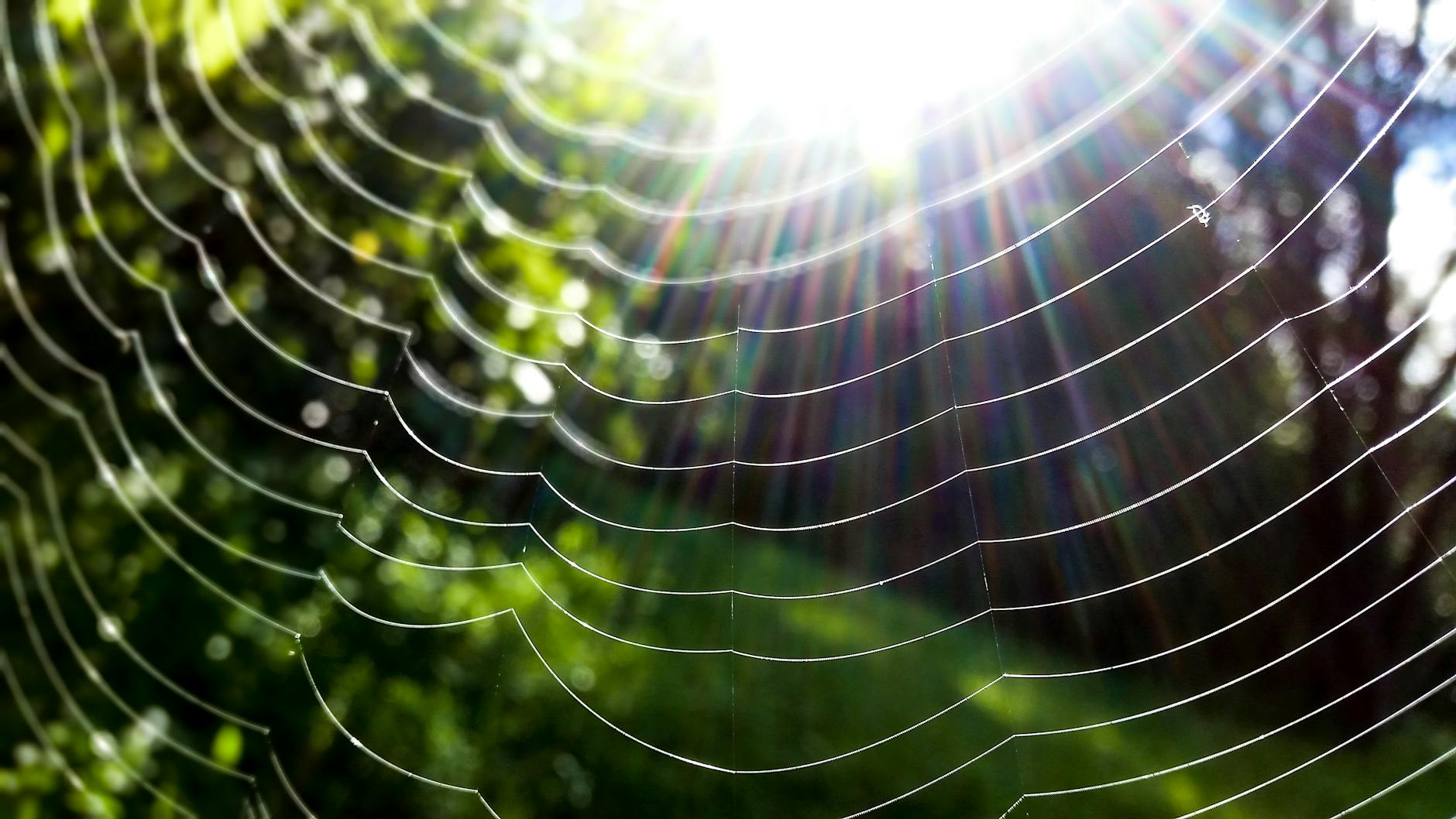
Strands of a spider's web, highlighted in the sunlight. There are trees and shrubs visible in the background.
Photo by Phil Kallahar on Pexels.com

They’re also associated with snares, webs, and trickery. Spiders who use webs to catch their food place them in places where they’ll be both efficient and unobtrusive — virtually invisible, until an unwitting insect (or unlucky hiker) bumps into them. Spiders who don’t use webs generally either rely on natural camouflage to hide them as they run down their prey, or conceal themselves and wait for the opportunity for ambush. In all cases, they are patient, diligent, and cunning.
This can be good for you, if you’re seeking to emulate the spider a la Robert the Bruce.
It can also be very bad, if you’re heading into a situation that may prove to be a trap.
As with all things, context is important when it comes to interpreting omens.

A close up of a jumping spider, on what appears to be a striped rug or blanket.
Jumping spiders are ambush predators. Photo by Skyler Ewing on Pexels.com

Spiders are also connected to resiliency. No matter how many times their webs are destroyed, they rebuild them. They get knocked down, and they climb right back up again.

To an extent, spiders are also symbols of healing and rebirth. A spider can lose a leg or two and (if they survive the injury without losing too much hemolymph) will regrow them with subsequent molts.

Not a lot of people like spiders. Personally, I was never a fan of them — they terrified me as a kid. Eventually, I forced myself to take an interest in them, their body language, and their habits. I’m glad I did, because they’re really beautiful, fascinating, helpful creatures when you get right down to it.

animals

The Magical Meaning of Spiders

(If you’re arachnophobic, you probably want to skip this one. Don’t worry — I’ll be back next week with some more non-spider related lore.)

This is Matilda. I was out checking for more ground candy (aka, the delicious maypops that fall off my porch’s vines when they’re ripe), when I happened to look up and realize that I was face-to-face with a massive orbweaver (Neoscona species).

A close up of a large, hairy orb weaver perched in the center of a web.

Later that afternoon, once she’d had a chance to build a sizeable web right across the upper part of my window, I very carefully opened the window to snap multiple pics of her from a variety of angles.
It was then that I realized that there was a fire truck and an ambulance in front of one of my neighbor’s houses.

(Note to neighbors: THERE WAS A COOL SPIDER. I PROMISE THAT I’M NOT A MANIAC.)

(Also the emergency vehicles left pretty uneventfully, so hopefully everyone is okay.)

*Ahem*

Anyhow, this is the time of year when sightings of these guys peak around here. So, in honor of Matilda, I figured now would be a good time to write a bit about the magical meaning of spiders.

In Greek mythology, the first spider was a woman named Arachne. She was a marvelously talented weaver — allegedly better than Athena herself. She challenged her to a weaving contest, and Arachne’s weaving was, indeed, very beautiful. However, while her weaving was flawless, Arachne had chosen to create a tapestry mocking the gods. (In some tellings, Athena is simply enraged by Arache’s pride.) Angered, Athena transformed her into a spider.

A close up of a jumping spider's face, showing their fuzzy pedipalps and big, black, almost puppylike eyes.
Photo by Pixabay on Pexels.com

In Catholic Christian mythology, spiders are connected to faith. Saint Conrad of Constance, a German bishop, is said to have seen a spider fall into his cup during Easter Mass. While it was widely believed that all spiders were venomous (or, in this case, poisonous) Conrad drank the wine and trusted in his faith to preserve him.

Probably the best-known spider in mythology is Anansi, from the Ashanti people. He’s viewed as a cunning trickster figure. He’s so prominent, that he gave rise to the term “spider tales,” which encompasses several kinds of story within the Ashanti oral tradition.

In North America, spiders were viewed as either trickster figures, or ingenious creators. The Hopi and Diné people have Spider Grandmother, who plays a key role in the creation of the world.

Another close up of a very cute, fuzzy white jumping spider.
Photo by Pixabay on Pexels.com

In Peru, spiders frequently appear in ancient artworks (including the famous Nazca lines). While the specific significance of these depictions is often uncertain, it is known that the Cupisnique people had a spider deity associated with weaving, nets, war, and power.

In Australia, spiders sometimes appear in art and as clan totems.

The people of Kiribati Island and the Republic of Nauru, of Micronesia, both have spider figures that play a central role in their creation mythology.

In Japan, there are spider-like yokai called ogumo, yatsukahagi, or tsuchigumo. Tsuchigumo translates as “earth spider,” but likely didn’t originate as a spider at all. Historian Yoshiyuki Takioto put forth the idea that tsuchigumo were local chieftains (described as short people with long limbs, who lived in caves, eschewed civilization, and disregarded the imperial court), These chieftains were most likely shamans.
The yokai tsuchigumo first turns up in medieval literature, as a spider-like figure 60 meters long. When killed, the heads of almost 2000 people fell from its belly.

In Scotland, spiders were an inspirational figure during the First War for Scottish Independence. After a series of defeats, Robert the Bruce hid in a cave. While there, he watched a spider struggle to climb a strand of silk. Despite failing over and over, the spider eventually succeeded. This gave him the encouragement he needed to go back into battle and eventually win Scotland’s independence.

A slender black and yellow spider perched on its web.
Photo by Pixabay on Pexels.com

It’s often said to be bad luck to kill a spider that you find in your home. This has a (perhaps unsurprising) grain of truth to it — killing spiders in your house means that you’re opening yourself up to all of the much less desirable things that spiders eat. If an infestation of flies or ants looks like bad luck to you, then you might want to heed this bit of folklore!

In dream dictionaries, dreaming of spiders is believed to represent:

  • Feeling like an outsider — like a spider in a web in the corner of a room.
  • Wanting to be an outsider.
  • A protective force.
  • A strong or overbearing feminine figure.
  • Rewards for one’s hard work.
  • Unpleasant relationships. Relationships one can’t escape, a (usually feminine) person who is draining one’s energy, a conflict with an overbearing person.

However, dreaming specifically of a rainbow colored spider is said to point to a situation that you probably want to avoid.

Spiders have far-reaching symbolism. Across cultures, they’ve been everything from tricksters to cosmic creators, to the unfortunate fate of the proud.

In general, these animals are associated with industry and creativity. Spider webs come in an astonishing variety of shapes and sizes — from small, silk-lined burrows to impressive constructs that are as delicate as they are massive.

Strands of a spider's web, highlighted in the sunlight. There are trees and shrubs visible in the background.
Photo by Phil Kallahar on Pexels.com

They’re also associated with snares, webs, and trickery. Spiders who use webs to catch their food place them in places where they’ll be both efficient and unobtrusive — virtually invisible, until an unwitting insect (or unlucky hiker) bumps into them. Spiders who don’t use webs generally either rely on natural camouflage to hide them as they run down their prey, or conceal themselves and wait for the opportunity for ambush. In all cases, they are patient, diligent, and cunning.
This can be good for you, if you’re seeking to emulate the spider a la Robert the Bruce.
It can also be very bad, if you’re heading into a situation that may prove to be a trap.
As with all things, context is important when it comes to interpreting omens.

A close up of a jumping spider, on what appears to be a striped rug or blanket.
Jumping spiders are ambush predators. Photo by Skyler Ewing on Pexels.com

Spiders are also connected to resiliency. No matter how many times their webs are destroyed, they rebuild them. They get knocked down, and they climb right back up again.

To an extent, spiders are also symbols of healing and rebirth. A spider can lose a leg or two and (if they survive the injury without losing too much hemolymph) will regrow them with subsequent molts.

Not a lot of people like spiders. Personally, I was never a fan of them — they terrified me as a kid. Eventually, I forced myself to take an interest in them, their body language, and their habits. I’m glad I did, because they’re really beautiful, fascinating, helpful creatures when you get right down to it.

animals · life

Pagan Pride 2024! (In which I meet some very handsome lads.)

This past Saturday was Pagan Pride at the Unitarian Universalist Congregation of Frederick. If you’ve never been, I highly recommend it — there’s live music, workshops on a variety of subjects, food, and tons of vendors of all kinds of cool stuff!

(I, personally, came away with a mug, some artwork, a mushroom-shaped incense holder, a pin, a set of earrings, dried organic lavender, magnesium butter, a really cool jar shaped like a skull, a hand-dyed and block printed bandana, and a display of a mossy log set with three corked test tubes. The stump in the front yard has been putting out a ton of interesting mushrooms lately, and I’ve been dehydrating what I can identify. I’m looking forward to displaying them once they’re done!)

This year, I decided to skip the workshops in favor of hanging out with friends (actually, many of the friends that I just saw at the Mabon celebration), listening to music, and eating delicious sorbet. The Street Cow‘s Cowabunga sorbet pop is non-dairy, real fruit puree, and awesome.

An image of a series of moon-shaped suncatchers. They're all made of copper wire, decorated with gemstones, brass charms, and crystals.

Also, I met some very handsome lads.

This is Spectre.

An image of a snowy owl, with his beak agape.
Spectre is fine, it was just toasty out and he is a young boy who is very excited to see new things.

He was part of Avian Encounters, a group of falconers who provide people with the chance to learn about and see raptors close up. These are all trained birds, kept by licensed professionals who know how to properly feed, care for, and mentally engage them. Getting to see birds like this up close is a rare and fascinating experience.

They also had a little screech owl, an American kestrel…

And (oh, be still my heart) a gorgeous African pied crow.

A close up of an African pied crow, showing their distinctive white chests and backs. They look like black crows that are constantly wearing little white sweater vests.

“May I take a picture of him?” I asked, barely able to contain my excitement.

“Sure! If you make a donation, you can also hold him and take a picture.”

!!!!

A photo of the author with the pied crow perched on their arm.

Needless to say, I did. He sat still for a short video (the picture to the right is a still), before hopping back to his handler. The whole time, I gushed to him (like a starstruck dork) about how pretty he is.

Human celebrities are all well and good (I saw one of my favorite musicians not long ago and managed to be surprisingly normal about it). A really cool bird or bug, though? I will absolutely lose my mind.

Pagan Pride is delightful every year, but this year was particularly special. I really hope Avian Encounters is there next year, too — the birds are all beautiful, alert, and well cared-for, and it’s a great opportunity to learn more about them and get some close-up reference photos for paintings.