

life

Ghost Hunting in Cape May

Hello (and a relaxed and happy Pride Month to all of my fellow LGBT+ people)!

I am freshly returned from a brief trip to Cape May, NJ. My Handsome Assistant and I wanted to take some time to be near a beach for a bit, and managed to time things so we would a) have nice weather, but also b) be there during the “off season” when accommodations are generally a lot cheaper and easier to get. Fortunately for us, the stars aligned and we got a very nice room in the Angel of the Sea bed and breakfast.

(And when they say “and breakfast,” they mean it. You want breakfast? There’s fresh fruit, fancy breads, and three different entrées to pick from. Feeling snacky? There’s tea and pastries in the afternoon. Want to relax in the evening? There is wine and mountains of charcuterie. Even after you check out, you’re invited to return later that day to enjoy the amenities.)
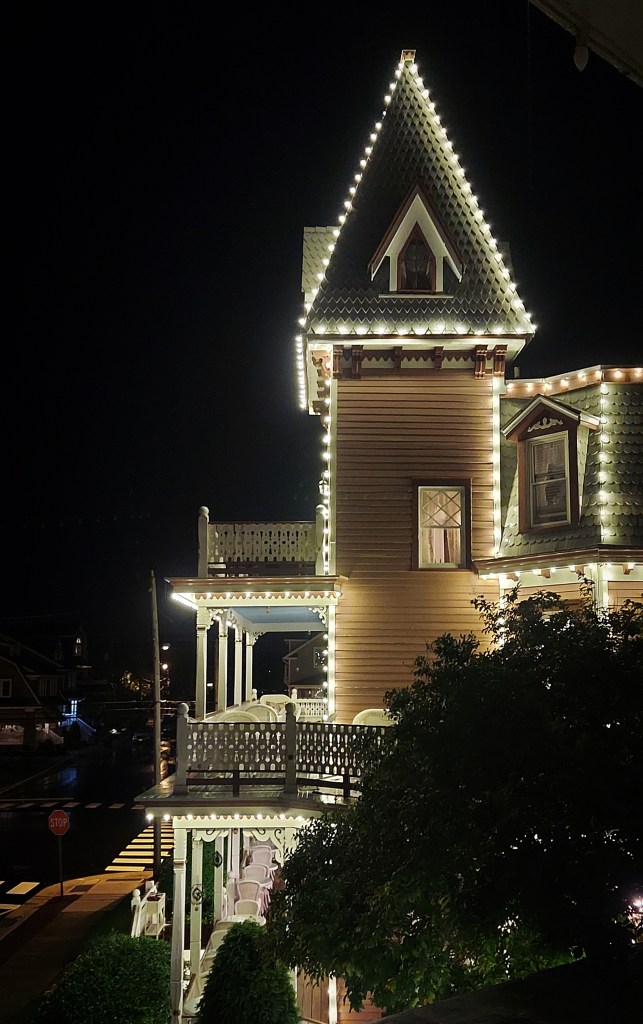
A view of a pink Victorian house at night. It has "gingerbread" details and a scalloped roof and is lit with strings of cafe lights.

The Angel of the Sea even comes with its own ghosts. It’s a very old building that was actually kind of… cut in half and transported to its current location. As a result, parts of it aren’t very accessible — think the narrow hallways and steep staircases you get with historic buildings — but are super haunted. As many as four ghosts have been reported to make an appearance there. There’re electrical shenanigans, shaking beds, and mysterious phantom coughs.

A photo of a picture on a wall. It's a very old, oval photograph of a sad-looking woman, in an ornate gilt frame.
Our room even had a complimentary Grandma.

I brought my ghost box, figuring it’d be interesting to mess around with during our downtime. I wasn’t able to get much on the scanner, but we also didn’t experience anything out-of-the-ordinary in our particular room, either.

We did meet a gentleman named Gary who was there with his wife. Gary was a lot of fun — always enthusiastic and down for a conversation, where he’d flit from subject to subject like a hummingbird. We talked about all kinds of things every time we ran into each other: history, haunted places, music, life, death, rehab, and more. He told us a story about someone close to him passing away. Even though this person appeared to have flatlined, they turned their head, looked into the empty doorway of their hospital room, and asked, “Which way do I go?” before they passed.

Even if you don’t find a ghost in your hotel room, places like this are generally home to absolute treasure troves of fun and interesting paranormal stuff. You’ve just got to know where to look.
(Antique stores. The answer is antique stores.)

I have made the weird and occasionally embarrassing habit of going into antique stores, finding someone who works there, and straight-up asking them, “If you had to guess, what object here would you say is the most likely to be haunted and/or carry some kind of terrible curse?”

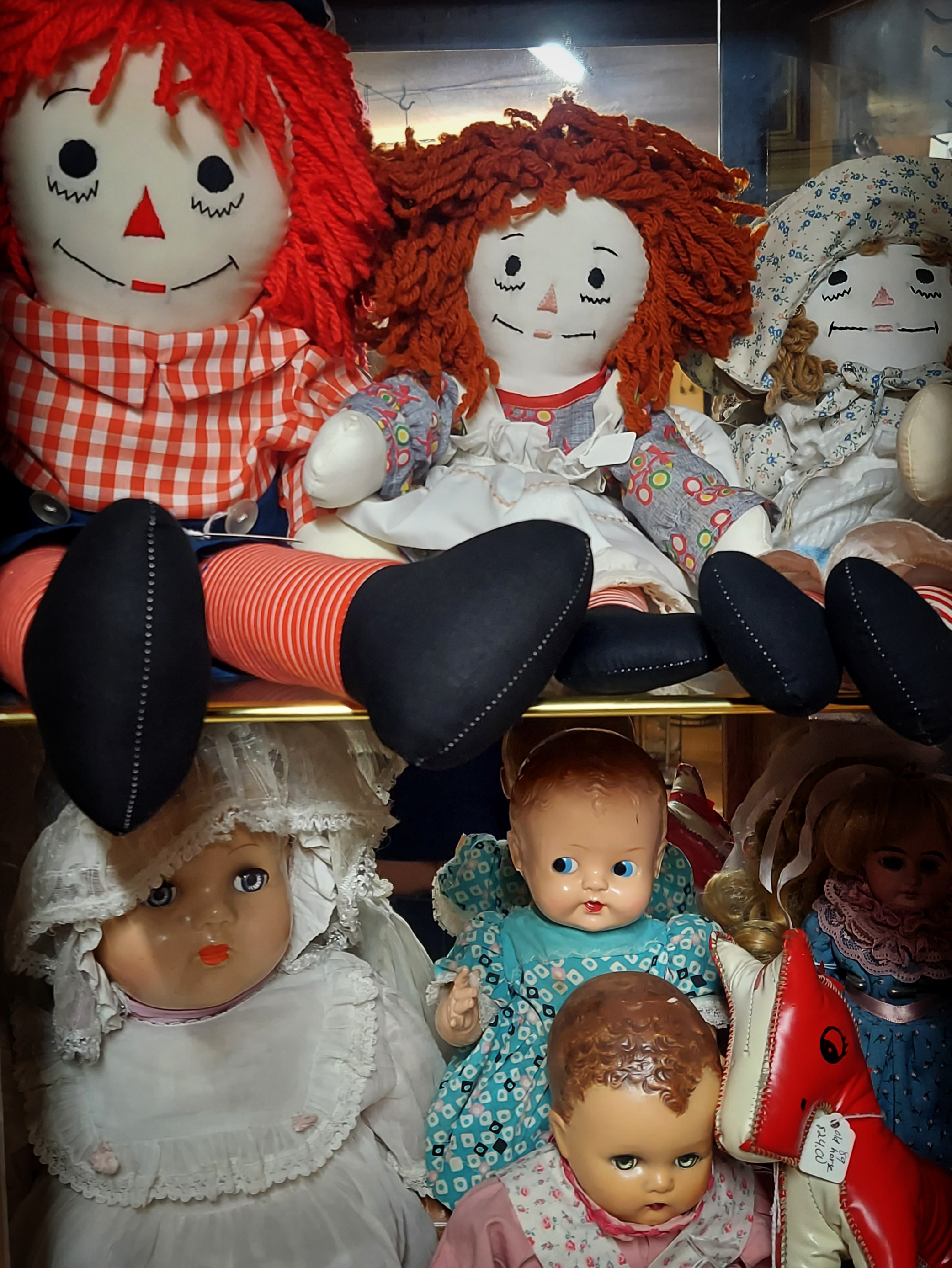
(If I had to guess, it would be any one of these things. Did you know the original Annabelle doll was a Raggedy Ann? Fun!)

As it turns out, antique stores are usually not super busy and are full of dead people’s stuff. I have yet to meet an antique store employee who has not jumped right in to talking about the weird stuff that goes on there at night. Some are more skeptical, but most of them will eagerly tell you about all of the things they’ve seen or heard.

For example, Antiques Emporia is home to the ghost of a little girl. She rearranges things at night and opens the packaging of vintage toys.

Capt. Scraps in Ocean City has even been the subject of a professional paranormal investigation. Multiple customers, on several separate occasions, have reported the sense that there was something there. Eventually, an associate of one of the owners brought in a full team with EMF readers, scanners, and the works. While investigating, they were able to decipher the words “Henry. Fire. Dog.” It was later discovered that a local antiques dealer named Henry had lost his shop, his dog, and his life in a terrible fire. Some of his paintings ended up at Capt. Scraps, and Henry decided to come along with them!

A painting of a black-eyed woman in a large hat. The background is indistinct and abstract, and the colors are very bright. There's a large red flower in the foreground.
I don’t know if this was one of his paintings, specifically, but something about it really struck me and I had to get a picture of it.

This store also has its share of shadow people, odd phenomena on security cameras, and the general “sense” of a ghostly presence. It’s a really neat shop.

So, while I wasn’t able to get any recordings or paranormal experiences of my own, I did come away with lots of stories.

We also found a lot of shops that were right up our alley. Good Scents has a ton of local art and jewelry, candles, soaps, and incense. (We picked up some soaps, massage oil, and a box of “smokeless” Hinoki cypress Japanese incense.) Best of all, it’s quality stuff — not the kind of smells that immediately make my throat puffy and make me feel like someone is driving nails into my face.
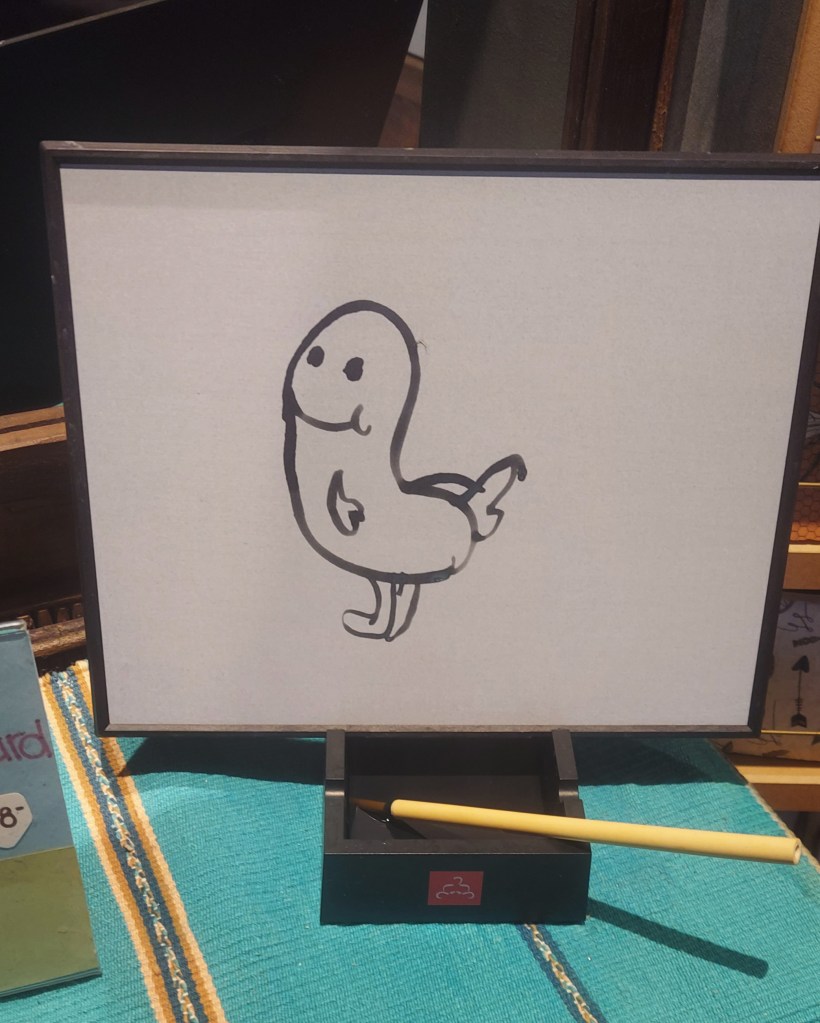
A crude drawing of Dickbutt.
A large black heart.

They also had one of those boards that you can draw on with water. Usually, you use them to write little notes or affirmations. Because I am a giant obnoxious child, I used it to draw a rushed, ersatz Dickbutt. (Don’t worry, I didn’t leave him there for impressionable childs to see. I drew over it.)

Guardian's storefront. There is a chain of copper bells and a wooden image of an angel on the front door.

Guardian is another delightful place to stop if you enjoy metaphysical shops. It’s small, but well-stocked. It has some tarot and oracle decks I hadn’t seen anywhere else, and a very nice selection of books. (I picked up one that I can’t wait to review here.) When we checked out, the proprietor had us choose cards from an oracle deck — we read the affirmations and she had us keep the cards as a little bit of positivity.

We also went on a bit of a hunt for vegan cupcakes. We’d managed to find plenty of meat-, egg-, and dairy-free meal options for me, and tons of fresh seafood for my Handsome Assistant at places like The Mad Batter (like their seitan hot wings and vegan tostadas) and Good Earth (which had an amazing cauliflower steak with chimichurri), so finding vegan restaurants in Cape May wasn’t a problem at all.

Vegan tostadas from The Mad Batter.

The outside packaging of Fruition's Gay Bar. It's primarily purple and depicts several anthropomorphic animals: a bear in drag, a deer bartender in a rainbow scarf, and a small beaver dressed as Rosie the Riveter.

My Handsome Assistant also brought me some fancy chocolates, like the Gay Bar. It’s pretty much an Old Fashioned cocktail in chocolate bar form, and it was delightful. I’ve had boozy chocolate before, but mostly just those little chocolate bottles filled with rum. Nothing really cocktail-inspired and uniquely flavorful like this.

We did eventually find Chocolate Face, a bakery that had vegan cupcakes. The chocolate ones were even oat- and nut-free, so they ticked all of my “weird dietary issues” boxes. This was about twenty minutes from where we were staying, so we decided to poke around at a couple of neat looking shops we’d seen on the map.

And buddy, we were not prepared.

Just look at this idyllic-ass nonsense.

A photo of tiny cottages surrounded by brick paths and immaculate gardens. Lanterns hang from a large tree in the foreground, and the buildings are surrounded by flowers.
Don’t mind Longcat. He is protecting a stranger’s identity.

I thought it was going to be a couple of strip-mall type shops clustered around a parking lot. I was so wonderfully wrong. It was Woodland Village.

It was like… I don’t know. Little fairy cottages. Pricey goods, but not of the cheap, souvenir variety. All of this stuff was high-end. Handmade art and sculpture. Handmade clothing with vegetable-dyed fabrics. Handmade gemstone jewelry. Fine gemstone specimens. Handmade incense. Upscale men’s clothing. Teas. Perfumes. Spices.
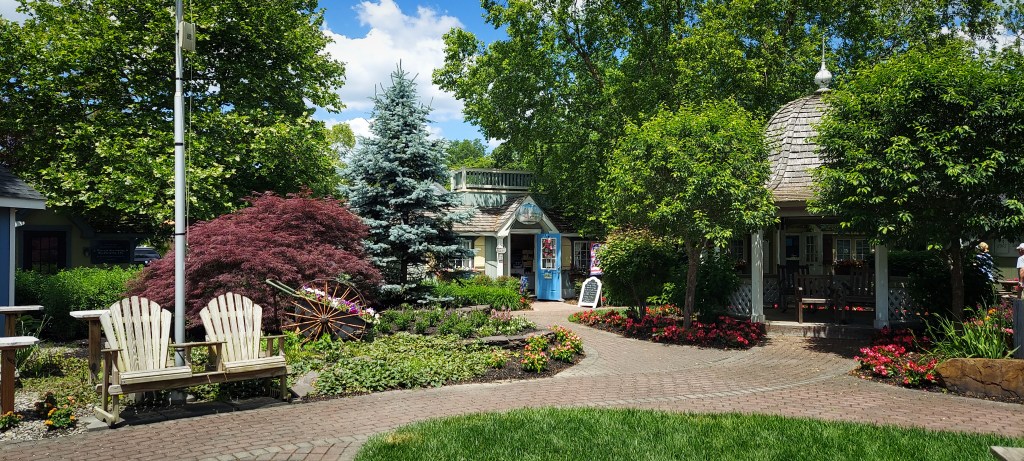
Another view of Woodland Village, showing a gazebo, brick pathways lined with flowers and trees, an old-fashioned wheelbarrow full of plants, a set of wooden Adirondak chairs, and a shop in the background.

In Red Door Gallery, I wanted to show my Handsome Assistant a pour-over coffee funnel in a beautiful, glazed ceramic. While I reached for it, I clumsily knocked over a small sculpture of a sheep. We thought he was okay, but, sadly, one of his ears was knocked off in the fall.

Obviously, I was going to bring him home and fix him.

Once we’d finished shopping, we brought our purchases (mostly handmade cat toys for the dummy squad back home). I set the small, broken figure on the counter.

“He was a casualty of the fall, but it’s okay. I can repair him. I have the technology.”

“You… really don’t have to do that,” the proprietor said.

As it turns out, she was the artist who made the little figures. She didn’t want us to buy him just because he was broken, and insisted we pick out a whole one instead. I thought they were cute anyhow, so I did — even though I felt bad about the little sheep with his broken ear.

“Can you fix the broken one?” My Handsome Assistant asked.

“Oh, I don’t know,” she explained. She said she’d likely end up throwing him away.

My Handsome Assistant came over and whispered to me.

“Okay, would you really rather have the broken one, or the other one?”

“I mean… They’re both very cute, but I am going to feel terrible if the broken one ends up in the trash.”
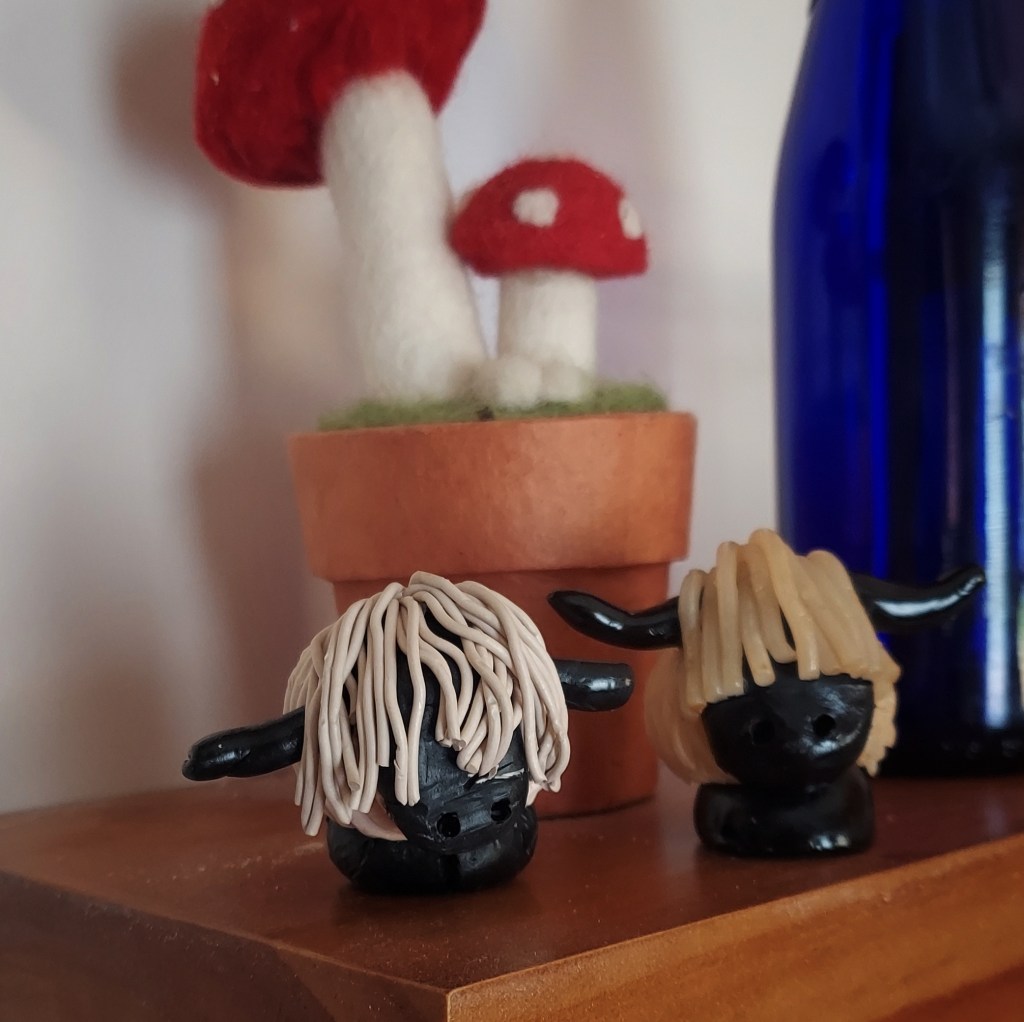
A pair of small, polymer clay sheep in front of a blue glass bottle and a needlefelted Amanita muscaria.

Sure enough, he went back to the cash register and asked if, since the broken one was likely to be tossed anyhow, we could have it.

So, a bit of glue and patience later, I now have two small clay sheep in my kitchen, and a partner who is very understanding of all of my strange bullshit.

We also stopped in Summer Studio Avalon, which I probably could’ve spent all day in. It was just filled with gorgeous, handmade things. (I got a rutilated quartz, moonstone, and pyrite bracelet, some incense, and a pair of flowy teal pants that I am probably going to live in from now on.) There was beautiful embroidery, handmade incense, artwork, accessories, sculptures, crystals, all kinds of the exact sort of things I could happily spend an inordinate of time looking at and/or smelling. The proprietor was also very nice — we got caught up in a conversation about writing things, painting, and the fact that rainbow moonstone isn’t actually a moonstone and is more like a white labradorite.

We also stopped in Northeast Man, mostly for my Handsome Assistant. I found some really nice shirts and a solid cologne (Duke Cannon’s Bourbon, which he bought and I have been sneaking from him because it smells excellent and is the exact way I want to smell forever), but everything fit me in a less “mysteriously androgynous” way and more in a “fourth grader wearing their dad’s shirt” way. Most of the things there weren’t quite my Handsome Assistant’s aesthetic — more “Boat Dad” than “Office Druid” — but there were some really nice, high-quality pieces that suited him very well.

Since the Angel of the Sea is about a half a block from the ocean, we spent some time doing sunset beach walks. The weather was gorgeous, and the slanting golden light made the crests of the waves seem to glow. We also came upon a very large (and extremely deceased) horseshoe crab, which my Handsome Assistant had never encountered before. (He’s from a landlocked state, so his experience with wild marine life is somewhat limited.)

We also kept an eye out for trash, like we always do. There really wasn’t much — I think we picked up two cellophane wrappers and a water bottle, all told. It was very clean, especially compared to some beaches and hiking trails we’ve been on.
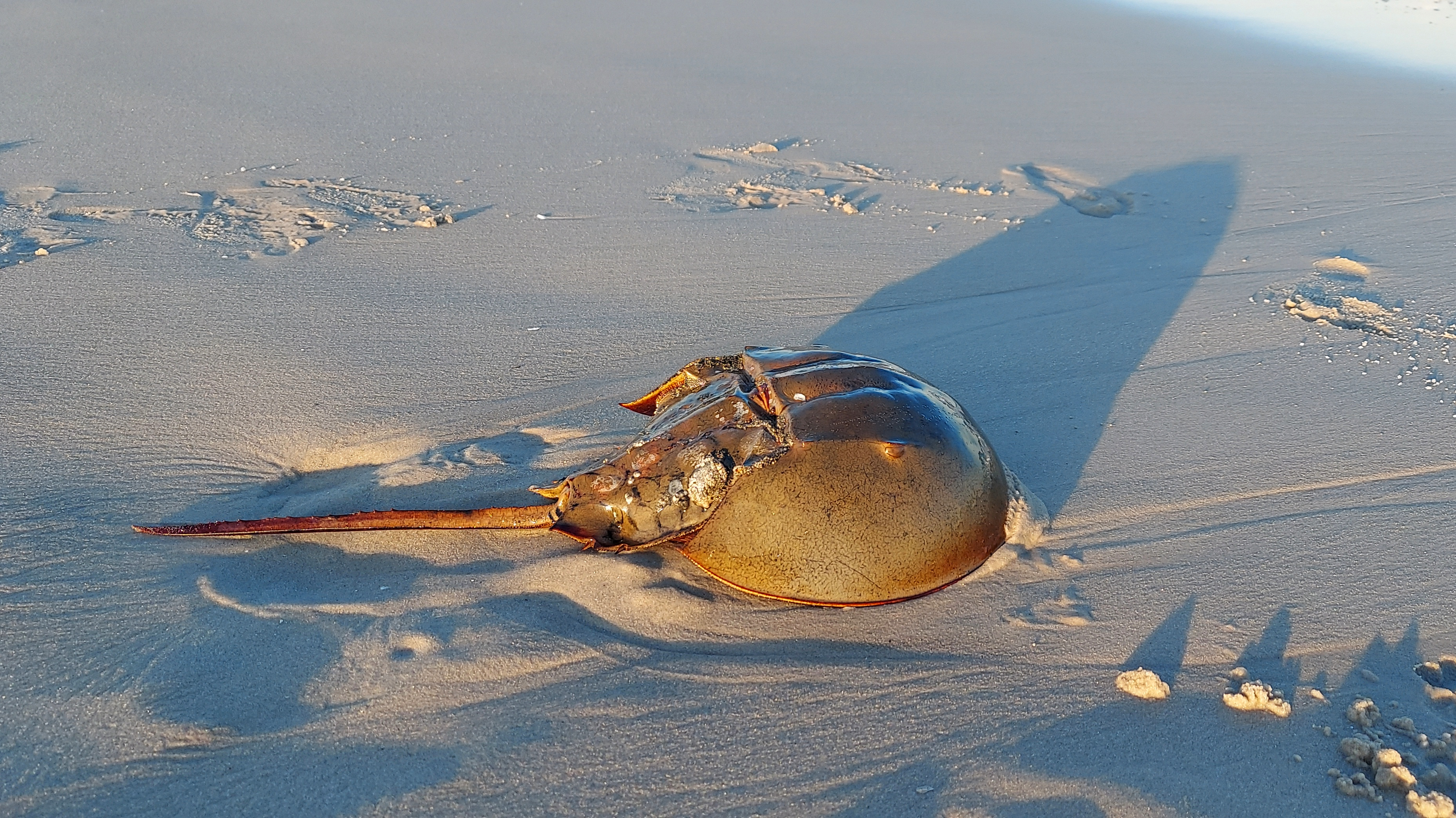
Fortunately for my Handsome Assistant, we did stop at the Nature Center of Cape May. We watched gulls and ospreys overhead, listened to the songbirds on the balcony, and admired the large, live horseshoe crabs in the marine lab.

Am I disappointed that we didn’t find any ghosts ourselves? Not really. It would’ve been interesting, but I’m fully satisfied with the experience that we had. Even during the tail end of its “off” season, Cape May was a lot of fun. Woodland Village was great, the abundance of antique stores (and antique store ghost stories) was awesome, the food was fantastic, and the beach was beautiful.

Plants and Herbs

Hen and Chicks Folklore and Magical Uses

Do you have little to no success with plants?
Do you want to get into gardening, but lack confidence?
Hoo boy, are hen and chicks succulents made for you.

Members of the genus Sempervivum, these succulents are also known as “live forever” or “houseleek.” They have the plump leaves of your average succulent but can thrive in growing zones 9-4. I have one that I stuck in a pot on my deck and did literally nothing for — not even water — and it’s filled the pot, put out tons of little green pups, and is flowering like there’s no tomorrow.

A top-down view of a Sempervivum plant in a pink pot. In the center of the photo, several pink flowers and buds are visible.
A close up of that plant’s first flowers. In the background, you can kind of see other buds emerging on their talk stalks.

Along with their easygoing nature, hen and chicks plants have some interesting folklore and usages in magical disciplines.

Let’s look at their common names first. “Hen and chicks” derives from their most notable method of reproduction — in addition to producing seeds, they send off little offsets in the form of round rosettes which give the impression of a large mother “hen” plant surrounded by baby “chicks.” They’re called “live forever” because they’re evergreen and very difficult to kill. Lastly, the name “houseleek” has no relation to the other plants known as leeks. Instead, the word “leek” comes from the Anglo-Saxon word “leac,” meaning “plant.”

As for why they’re called something that literally translates to “house plant,” there’s an excellent reason for this. Hen and chicks plants were (and are) frequently grown on houses. (When I lived in California, the house I stayed in had some lovely Sempervivum growing on the roof.) This practice originated with the belief that these plants helped to ward off fire and lightning strikes.

These plants are also associated with prosperity, health, and luck. Possibly as an extension of their fire- and lightning-protective connections, some cultures grew Sempervivum on roofs as a way to ensure the health and wealth of a house’s occupants. In Wales, these plants are still sometimes grown on roofs for luck.

(Of course, if you live in the US and have an average modern shingle roof, you may not want to grow plants there. Excess moisture could cause problems, and using your roof as an ersatz garden could void your warranty. Sempervivum are great for green roofs, however.)

As for warding off fire and lightning strikes, there are a few reasons for this. Some species of Sempervivum grow fine, snow-white hairs on them, that look a bit like fine wool or thick cobwebs, and their growth habit can make them resemble a jutting, sculpted beard. This is reflected in the German name “Donnerbart,” or “Thunder beard.” These plants are connected to various thunder deities, like Thor and Zeus.

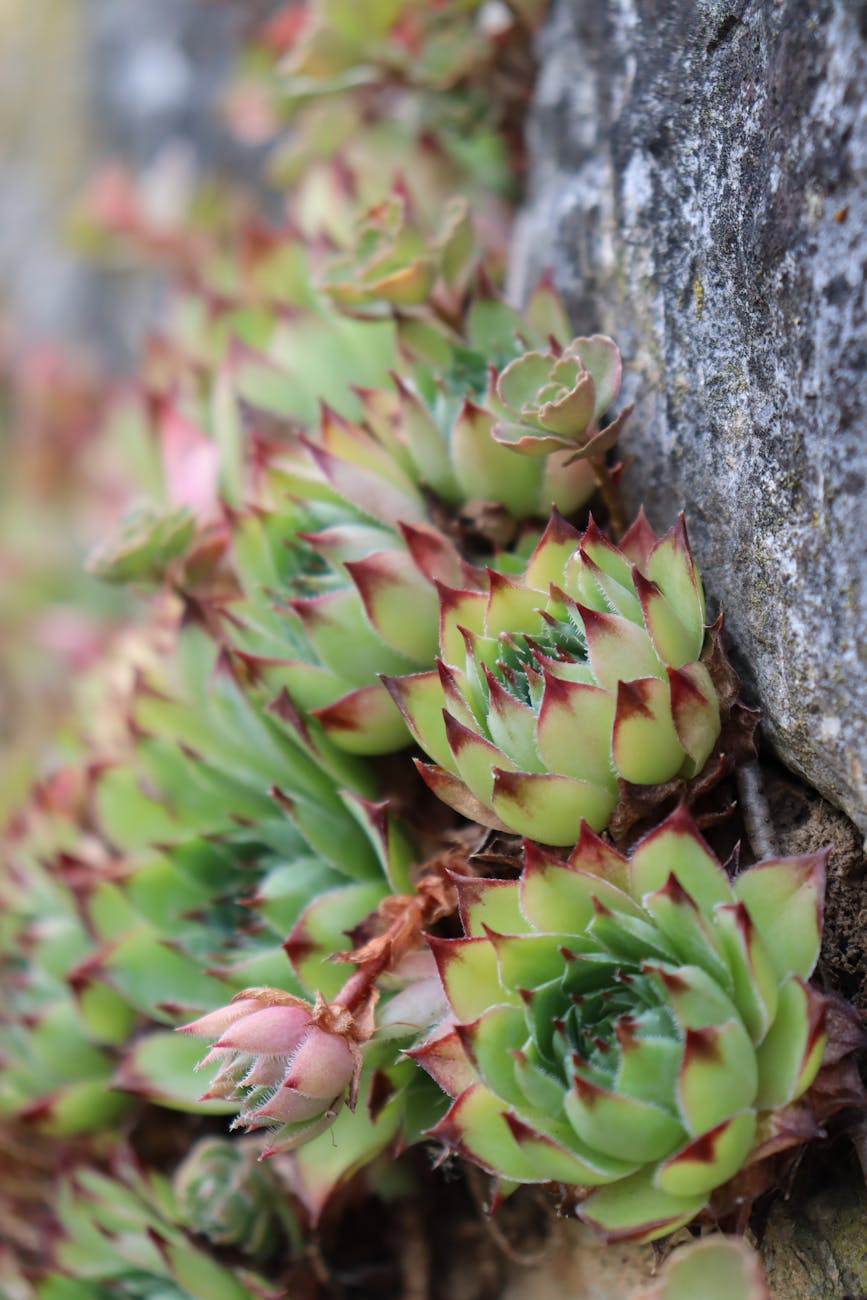
Sempervivums clinging to a rock face.
Photo by Honglei Yue on Pexels.com

The other reason behind it is that Sempervivum can act less as a protector than as an indicator. These plants can thrive in very dry areas, but they still need some moisture to stay plump and green. The presence of healthy hen and chicks plants generally indicates that conditions aren’t conducive to combustion.

Houseleeks are also used to ward off attacks by malevolent magic.

Medicinally, Sempervivum plants are used similarly to Aloe vera. Topically, it is sometimes a treatment for cuts, burns, or warts. This herb was also considered a very useful treatment for diarrhea, while larger doses were a powerful emetic. Traditionally, it’s considered a very cooling herb.

Elementally, Sempervivum is associated with Fire. It is also connected to all thunder deities.

From everything I’ve seen, Sempervivum‘s protective and lucky magical attributes are best employed by simply growing them. Give them a sunny spot and some well-draining soil in the right growing zones, and they’re pretty much good to go. (Of course, if you intend to use your hen and chicks plants in this fashion, it’s good form to ask them for their help.)

While these plants aren’t native to the US, I have noticed that they seem to be a favorite of small native pollinators. So far, I’ve seen three different species of sweat bee. They’re also useful for xeriscaping in especially challenging areas.

As I mentioned previously, you may want to avoid growing them on your roof. Yes, it’s very picturesque and cottagecore, and yes, it’s traditional, but having to pay upwards of five grand to fix or replace a modern shingle roof is none of those things. Plants trap moisture, which roofs need to shed. Their roots can infiltrate minute gaps between shingles, widening them and allowing water in. It may not happen immediately, but growing plants directly on a conventional roof, without any kind of barrier or container between the two, is generally not a good idea.
If you have a flat spot near your roof, like a windowsill, window box, or balcony, stick a couple Sempervivum plants in terracotta pots and put them there instead.

As for using them internally, I don’t recommend it. If you have a minor burn and don’t have a fresh aloe leaf handy, by all means, try applying some Sempervivum goop topically. Using these plants as an anti-diarrheal or purgative has largely dropped off in favor of other remedies, even in alternative medicine.

Hen and chicks plants are adorable, inexpensive, and exceptionally hard to kill. Magically, they’re just cute little protective and luck-drawing charms. If you have the space to devote to one (or a few), they’re well worth their tiny investment of time and money.

Plants and Herbs

St. John’s Wort Folklore and Magical Uses

Ah, St. John’s wort. Taken internally, it’s reportedly a balm for the nerves. Used externally, it’s a balm for cuts and scrapes. Its turpentine-scented leaves and flowers are a source of bright red, medicinal oil, but only when very fresh. The plant itself is the subject of folklore, a medicinal treasure, and a whole lot of magical help.

So, what’s so great about St. John’s wort, and why is it called that, anyway?

Let’s start with the name. Officially, St. John’s wort is known as Hypericum perforatum — “hypericum” from “hyper” and “eikon,” referring to how the flowers were hung above icons, and “perforatum” meaning “perforated,” due to the hole-like appearance of the translucent glands in its leaves.

Hypericum is a large genus, and a lot of its members are referred to as St. John’s wort. There are even some unrelated species that bear the same common name, like the marsh St. John’s worts of the genus Triadenum, or the greater celandine that’s sometimes regionally known as St. John’s wort. For our purposes here, we’re going to stick to Hypericum perforatum.

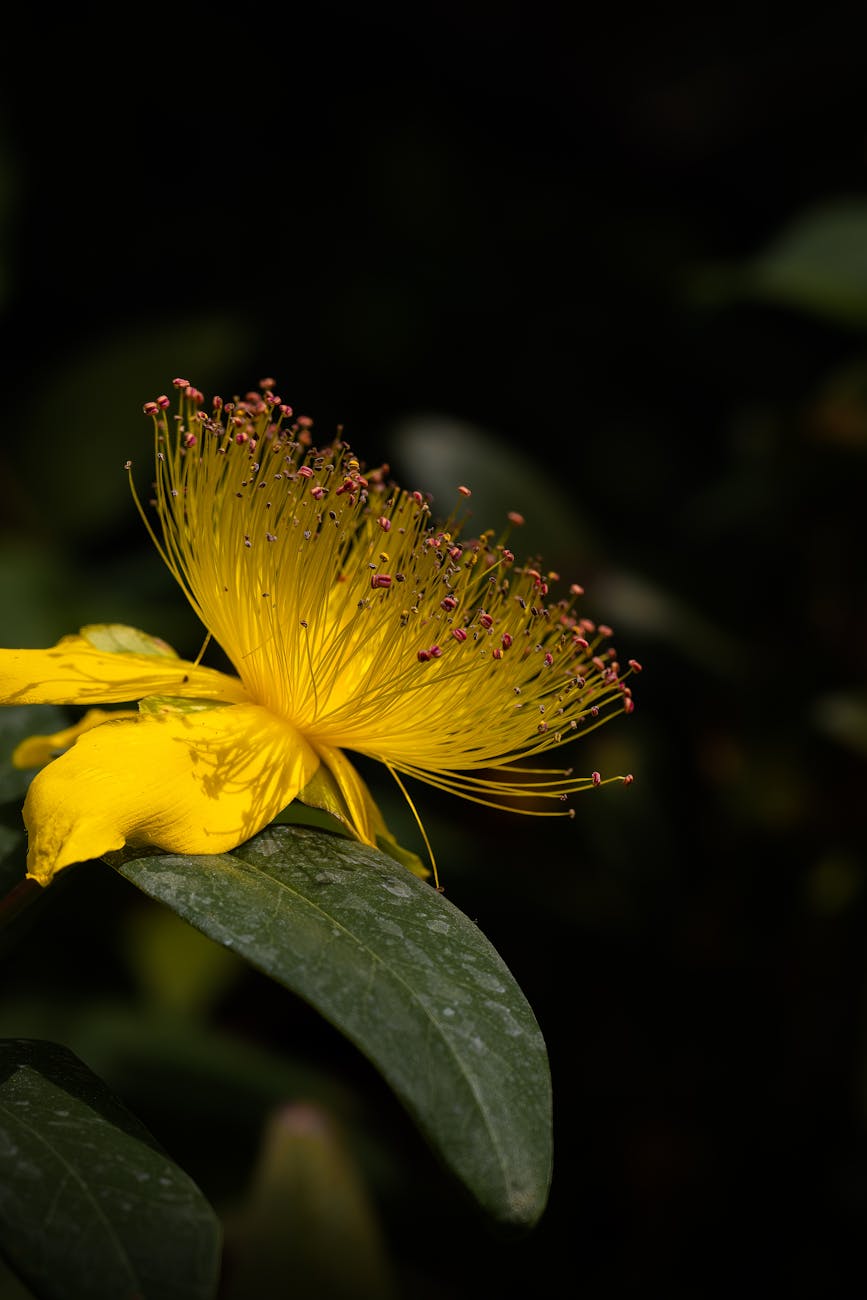
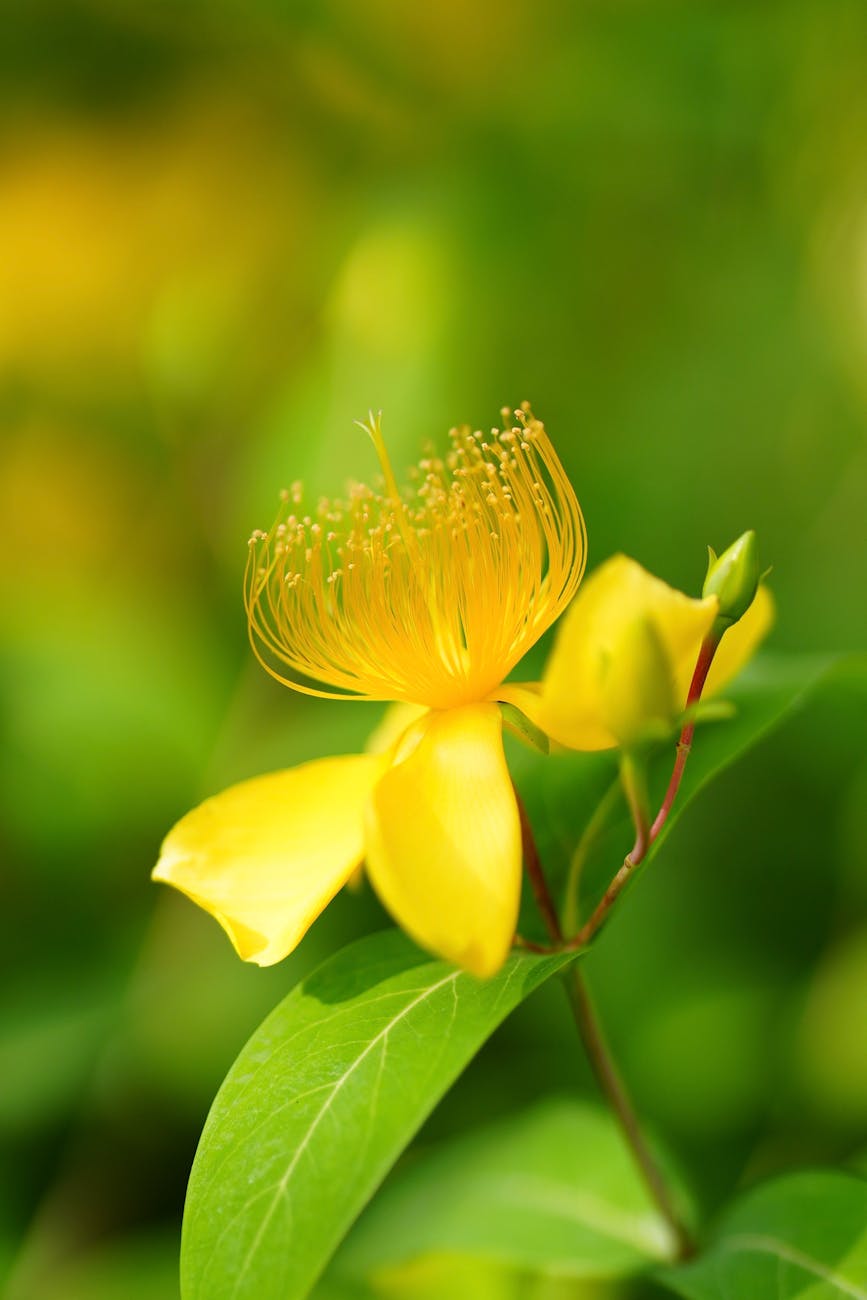
Bright yellow St. John's wort flowers.
Photo by Valter Zhara on Pexels.com

As for how this plant became known as St. John’s wort, it’s a bit of a convoluted story. Its history of use dates back to pre-Christianity, so it wasn’t always known as “St. John’s wort.” (As for the “wort” part, that’s just an old word for “plant,” derived from the Old English “wyrt.”) So, older sources will have their own names for this herb that may not be recognizable to modern readers. St. John’s wort also has a ton of regional names — in the US, it’s sometimes called goatweed, Klamath weed, or Tipton weed. In the UK, it may be called touch-and-heal, rosin rose, penny John, or balm of the warrior’s wound.

The name St. John’s wort came about because it was believed that this herb was at its most potent during Midsummer, and therefore should be harvested on or about June 24th. This was later turned into the Christian feast day of St. John, and so the plant became “St. John’s plant.” It’s also said that the plant’s red, blood-like sap runs in August, on the day that St. John was beheaded.

As evidenced by many of its healing-related common names, this herb is often hyped up in natural medicine circles. Topically, its oil is used to treat and soothe minor wounds in a similar fashion to commercial wound care ointment. Internally, it’s often used to help with symptoms of anxiety or depression. The reason it works is that St. John’s wort has a whole host of active compounds, including sesquiterpine oils, anthraquinone derivatives, and an interesting chemical called hyperforin. Hyperforin is particularly noteworthy, as it may be the source of St. John’s wort’s antidepressant effects, while the anthraquinone derivatives hypericin and pseudohypericin have demonstrated antiviral and/or antibacterial activity.

(As a side note, please avoid taking St. John’s wort internally if you’re on pretty much anything. It can alter how certain medications are metabolized by affecting specific liver enzymes, causing overdoses. It can also inhibit the effects of birth control, antivirals, chemotherapy drugs, certain anticoagulants, and medications for heart disease. Taking it with certain antidepressants also increases the risk of serotonin syndrome, and I don’t wish that on anybody.)

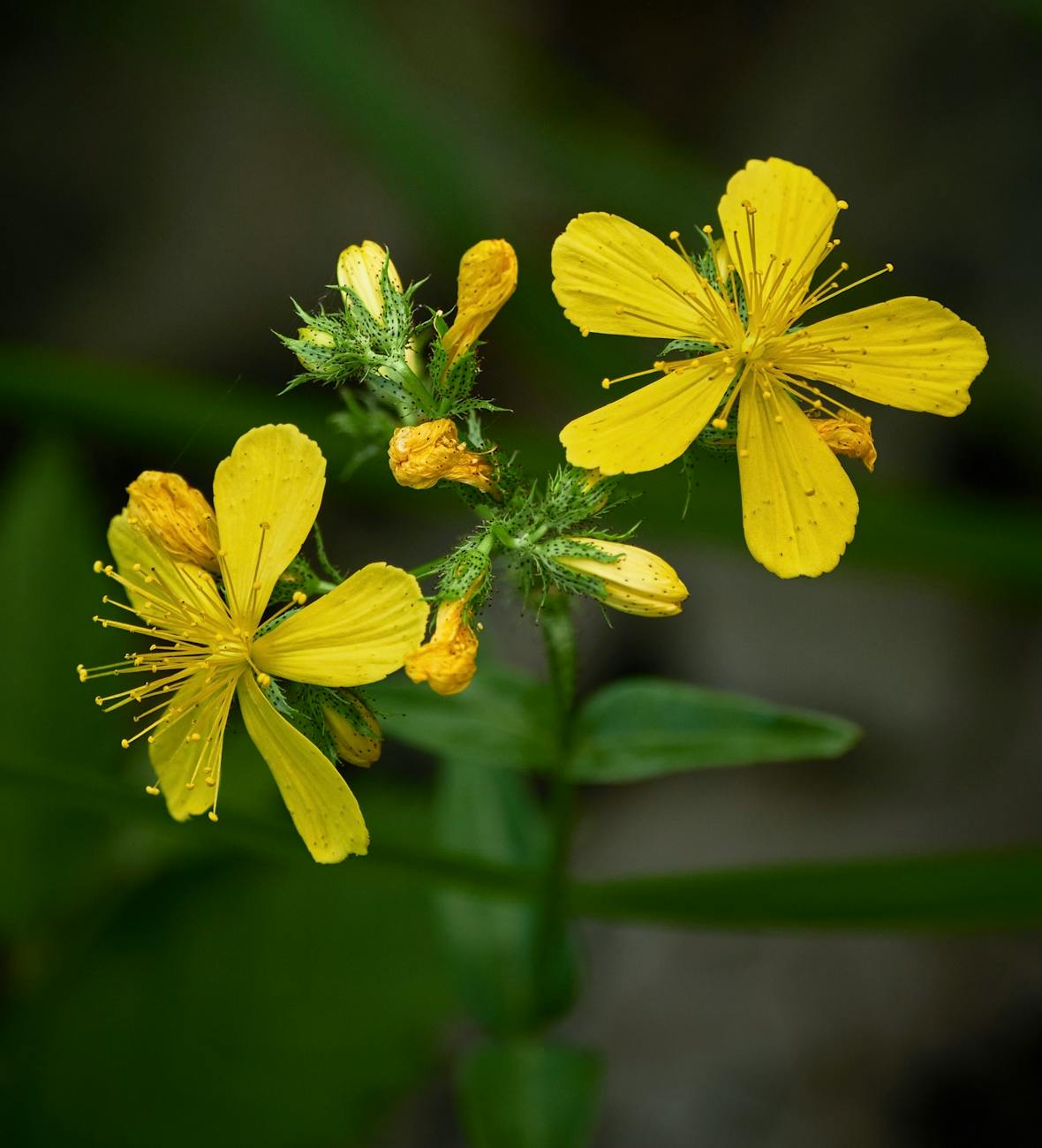
A side view of a creeping St. John's wort, Hypericum calycinum, flower.
Hypericum calycinum, or creeping St. John’s wort, displaying very similar flowers to Hypericum perforatum. Photo by shaosong sun on Pexels.com

Magically, St. John’s wort is often used to repel or banish evil. Another common name, fuga daemonium, literally means “demon flight.” It was often hung in houses, placed above religious icons, or carried as a protective talisman. Flowers, brought into the home on Midsummer’s eve, are considered particularly protective and lucky.

This plant also had some limited divinatory use as a kind of mortality predictor. If you took two sprigs of St. John’s wort and hung it over a marital bed, the sprig that wilted the fastest indicated which member of a couple would die first. Fun!

As a Midsummer plant, St. John’s wort is associated with the Sun and the element of Fire.

It’s probably best to work with this herb in dried or oil form. St. John’s wort is such a potent medicinal plant because the compounds that we use as medicine are actually the plant’s defensive mechanisms — they’re distasteful and poisonous to grazing animals, allowing the plant to grow unchecked. That’s not a super big deal if you’re within St. John’s wort’s native range across parts of Europe and Asia but can become a (rapidly spreading) problem if you’re not. This plant is considered a noxious weed elsewhere, so, unless you’re an herbalist who needs the fresh herb specifically, I’d avoid growing it.

If you have access to a patch of St. John’s wort, however, and you’re outside its native range, harvest all you like. (Not much else will use it, and you’ll be doing the native fauna and flora a favor.)

Use St. John’s wort oil for physical and magical healing. Its resemblance to blood makes it appropriate for workings related to birth, death, or rebirth (though I find a bit of bloodroot or alkanet steeped in red wine or vinegar to be a somewhat better — and easier to obtain — substitute for blood itself).

Use the dried herb for banishment. Burn it in bundles and waft the smoke around any space where you want to clear out malevolent spirits, magic, or the effects of the evil eye.

Place some of the dried herb in a protective sachet and carry it on you. You can also add it to jars, poppets, or other container spells as you deem appropriate.

Plants and Herbs

The Pumpkining. It begins.

I messed up.

I don’t know if you remember, or even read this bit last year, but I had a whole Thing where the front yard started growing some kind of mystery plant out of nowhere, the guy who helps us out with cutting the grass identified it as a kind of squash, and it ended up being a pumpkin vine that produced a large (large) number of beautiful and delicious little sugar pie pumpkins.

I didn’t save the seeds from those pumpkins because the flowers were open-pollinated and I am afraid of toxic squash syndrome. (Long story short, if you grow any cucurbits from seeds that you’ve saved, never eat any that taste weirdly bitter.) I did want to grow more pumpkins since they seemed to do so well, so I bought a little packet of seeds.

I figured I’d plant all of them just kind of wherever. Not all of the seeds would germinate, because nature is unpredictable like that. The ones that did would likely have to fight for survival, because I don’t spray for anything. I don’t even really water stuff. The most I do is wipe down leaves with pest eggs on ’em, and I barely even bother with that unless the eggs are from an invasive species.

So, knowing that these baby pumpkins would have to fight for their tiny lives, I planted all of the seeds.

And they’ve all sprouted.

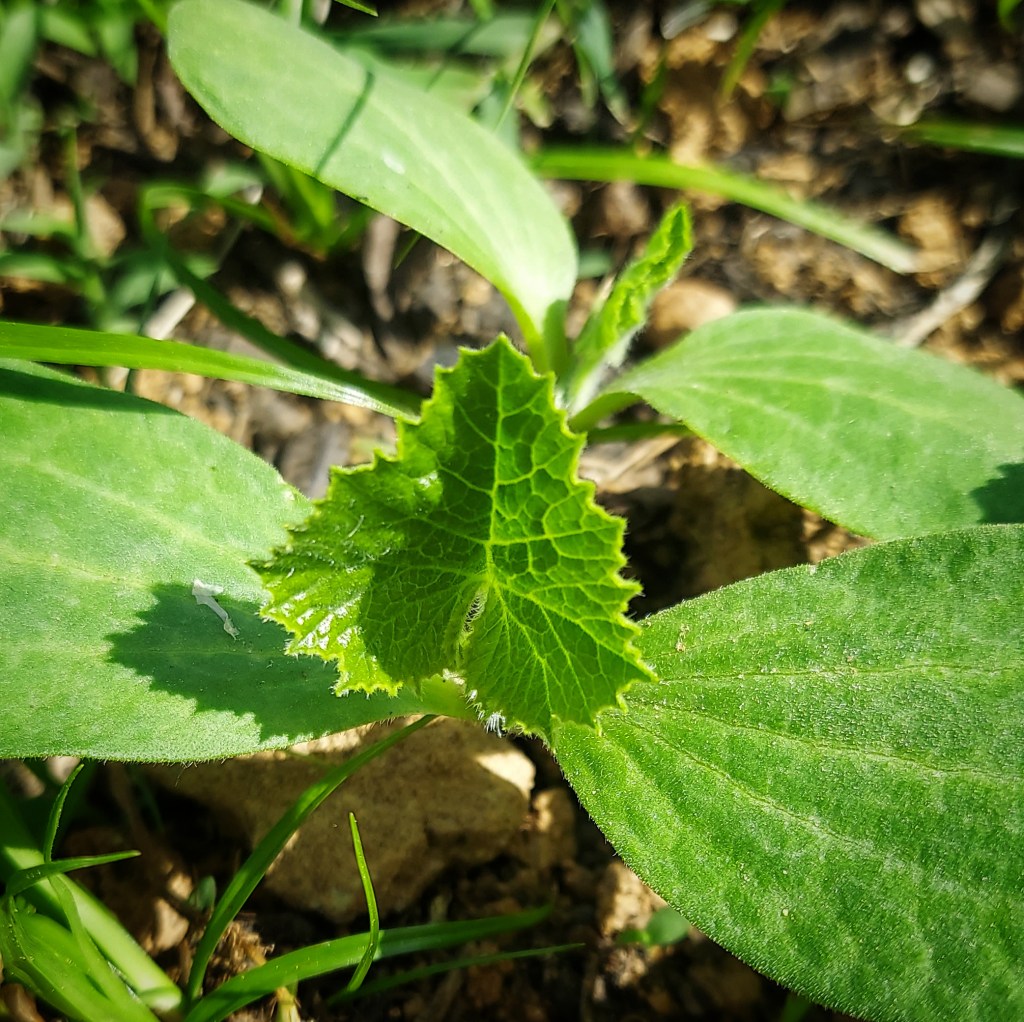
A top-down view of several small pumpkin sprouts.
This was the day before yesterday. Their secondary leaves are now unfurled, ready to go, and looking for trouble.

And they’re gaining strength.

Their stems are plump and sturdy. Their secondary leaves are uncurling. They’ve started to develop the fine, stiff spines that protect their leaves and stems from predators.

A pumpkin sprout, secondary leaf unfurled.
Today.

Where one pumpkin vine gave me more pumpkins than I could handle myself (and pumpkin bread, pumpkin pie, pumpkin bisque, pumpkin sauce), I am now facing about twenty.
That could be hundreds of pumpkins.

I wish I could say that this is the first time that something like this has happened, but it isn’t. I have a track record of vastly underestimating plantlife. Just ask the Passiflora incarnata growing up my porch.

I could pinch off the weakest ones, but none of them actually seem… well, weak. They’re thriving. Living their best little green lives. Just absolutely vibing out here.

I might just have to let them have at it.
Let the yard be a little pumpkin Thunderdome for a bit. May only the strongest survive.

Failing that, I’ll be stealthily abandoning baskets of unwanted sugar pie pumpkins on people’s porches by August.

Uncategorized

RAL’s Spring Art Show

Hello! Sunday was the opening of RAL‘s Juried Members’ Spring Show. My Handsome Assistant and I attended, albeit briefly, because of a combination of scheduling conflicts and also enough antihistamines to sedate the Cloverfield monster. (I had two paintings selected for the show — one acrylic, the other casein and gold leaf.)

While we didn’t get to stay for the award ceremony, it’s always great to see the artwork itself. Since this is one of RAL’s bigger shows, there are pieces that cover pretty much every combination of genre and material. If you’ve never been, I recommend it. If you can’t attend, you can explore the exhibit online.

Right now, I’m about to go pick strawberries and peas, feed the crows, and plant a rosebush. Here’s hoping today is treating you well!

Plants and Herbs

Lemon Balm Folklore and Magical Uses

Et tu, lemon balm?

I have tried so hard to love it. It’s relaxing. It’s delicious. You can make it into tea or syrup or use it to flavor anything from sugar to fish. If you have anxiety, it’s touted as a virtually ideal way to calm down — the closest thing to an herbal benzo out there.

However, I can also tell you that, from personal experience, that it can also leave you waking up from a nap that leaves you like Robin Williams in Jumanji.

Fortunately, even if you are sensitive lemon balm’s very relaxing properties, there are other things you can use it for. It’s still very tasty in less-than-therapeutic doses and has an abundance of interesting uses in folk magic.

Lemon balm’s official name is Melissa officinalis. “Melissa” is Greek for “honey bee,” since the plant is a favorite of bees and was often planted to help attract them. Beekeepers would also pinch off fresh sprigs of the plant and rub them on the entrances of beehives to entice them to move in and stay.

(“Officinalis” (or “officinale”) just denotes organisms that are useful in medicine or cooking. Kind of like how “sativa,” “sativum,” and “sativus” just mean “cultivated,” and denotes crops grown from seed.
Cannabis sativa and Avena sativa are not closely related, to put it mildly.
Melissa officinalis, the lemon balm, and Sepia officinalis, the cuttlefish, are also not related.)

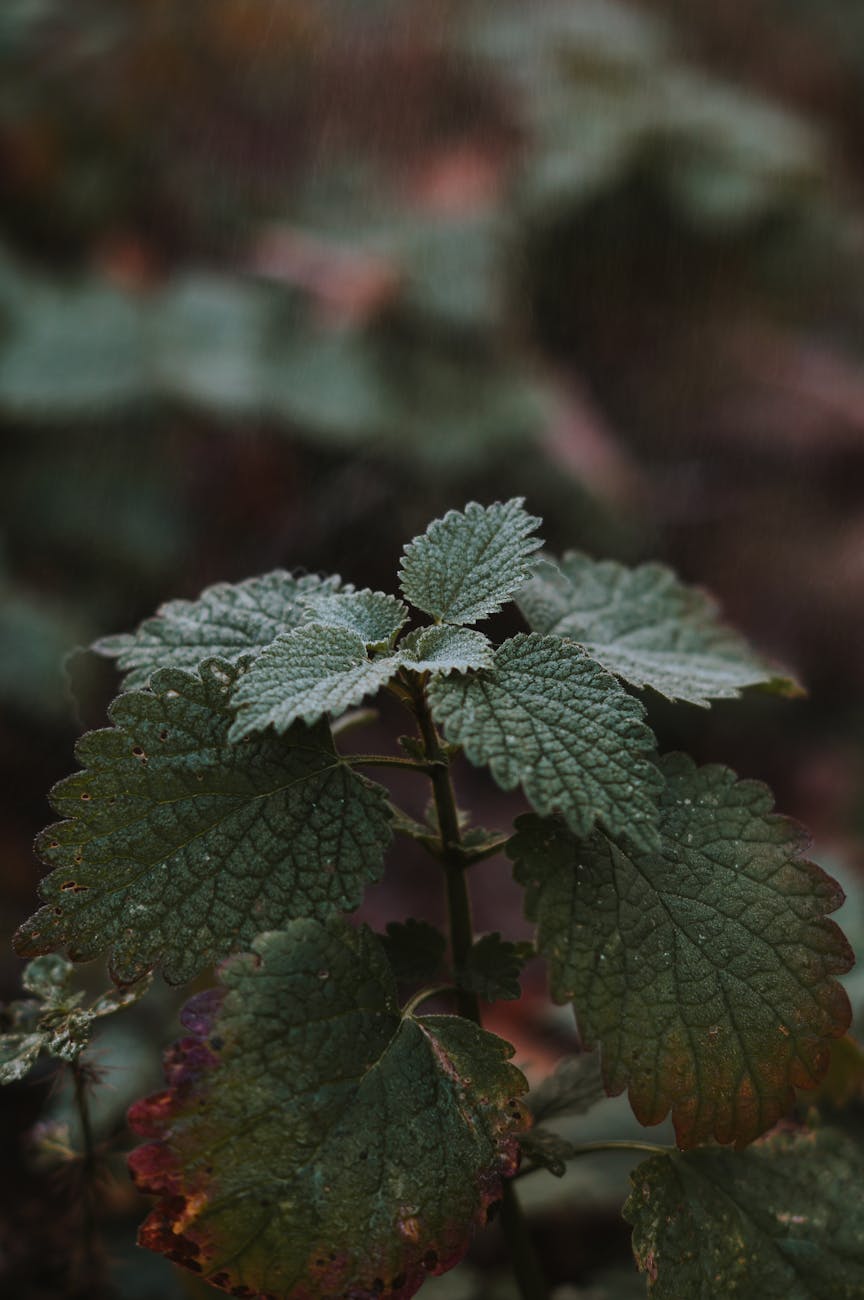
A sprig of lemon balm against a dark background.
Photo by Oksana Abramova on Pexels.com

Lemon balm is good for attracting more than just bees, though. Magically, it’s frequently used as an herb for good luck and general positivity. Tons of recipes feature it for love, fertility, and money.

To a somewhat lesser extent, lemon balm is also used for repelling evil and attracting good spirits. Since it’s so fragrant, it was used to strew the floors of Christian churches. In Abruzzi, Italy, women who happened on wild lemon balm would crush a sprig between their fingers in hopes that the scent would ensure that Jesus Christ would guide them to Heaven.

Lemon balm is considered a sacred herb of Hecate. It’s said that she gave the knowledge of lemon balm and other “witches’ herbs” to her daughters, Medea and Circe.

As well as being a mild sedative, lemon balm is used to soothe digestive issues. However, while it’s a tasty and relaxing herb, it’s best avoided by people with thyroid issues. It can interfere with thyroid hormone replacement therapy.

In the past, lemon balm was also applied to scorpion stings, bites from rabid dogs, and the venom of serpents. Since this herb isn’t an antivenom or protective against rabies transmission, this practice likely met with very limited success.

Nobody seems able to agree on lemon balm’s planetary or astrological associations. Nicholas Culpeper called it an herb of Jupiter and the sign Cancer. Other authorities say it’s an herb of Venus, Neptune, or the Moon. It is considered a generally “Water”-y herb, which makes sense when you consider its ability to relax the mind and soothe the emotions.

I know I usually advocate for growing your own herbs whenever possible, but planting lemon balm is one of those situations where you really want to exercise caution. Lemon balm requires next to no maintenance. Like other members of the mint family, it spreads aggressively outside of its native habitat. Absolutely do not plant it in the ground unless you want the entire area to be lemon balm. Keep it in window boxes, pots, or even containers indoors. If you do grow it in a container outside, avoid placing that container directly on the soil. When I say this stuff spreads, I’m not messing around.

Photo by Alesia Kozik on Pexels.com

In my experience, mints do not smell very good when burned straight. Instead of making lemon balm into incense, consider using it to infuse alcohol for making sprays, or oils for anointing or making balms.

The easiest way to use lemon balm is just to sprinkle some of the dried leaves across your front doorstep. The second easiest is to brew it into a tea and either drink it, use it for washing crystals or other curios, or use it to wash the doors of your home. As you do this, visualize good fortune coming in, and back luck or malevolent spirits turning away.

Lemon balm is one of those herbs that’s readily available fresh, dried, or as an oil. You can try it in a tea, or, depending on how fancy your local shops are, in a gourmet syrup. Its flavor is refreshing, citrusy, and herbal, while also tasting quite unlike anything else. As far as magical ingredients go, it’s also hard to go wrong with lemon balm — it’s a useful herb for attracting good things (also bees) and keeping out the bad. All of that aside, I wouldn’t rely on this as a protective herb on its own, but it’s great for filling up an empty space with useful, positive energy.

life

Self-parenting and Rose Petal Jam

Hello!

So, as I write this, it’s Mother’s Day in the US. I’ve written in the past about having complicated feelings about this particular holiday, for what I think are pretty valid reasons.

(There isn’t really a long or terribly interesting story there, and it’s one that sadly seems to be all too common: I was tired of being smacked around and humiliated, I knew nobody around me was going to put a stop to it, so I did it myself. Fin.)

Rather than dedicating this post to practices to help heal from damaged or diseased familial relationships, this is for people who have had to come to the realization that they weren’t taught how to thrive and had to re-learn and re-parent themselves. Sometimes, people don’t seem to recognize that they aren’t just keeping little extensions of themselves — they’re raising future adults who will have to function in the world on their own. From seeing how other kids my aged lived, and what their families were like, I learned that things weren’t normal in mine.

Once I was on my own, I had to un-learn and re-learn everything. Nutrition. Cooking. Hygiene. How to relate to people different from me. How to recognize and recover from religious abuse. It was a lot, and I screwed (and still screw) up regularly.

So, if you’re a grown-up kid who’s also had to go back, undo the damage that was done to you, and re-learn how to live in ways that aren’t completely karked, this is for you. Chances are you’ve messed up time and again in the re-learning process, but that’s normal. The important thing is to not give up. No matter how old you are, it’s never too late for you to become the person you’ve always wanted to be.

This is a simple, but very tasty, recipe for rose petal confiture. Don’t be intimidated — it’s really very easy, it just looks and tastes fancy. To be honest, the hardest part is sourcing enough rose petals. (You’ll want ones that aren’t sprayed with anything or treated with systemic pesticides. I grew these myself, picked, and cleaned them right before cooking.)

A piece of bread covered in strawberry and rose petal jam, sitting on a blue-green plate beside a jar of said jam and a butter knife.
Pictured on a slice of fresh-baked einkorn bread.

Roses are an excellent herb for a variety of purposes, but they’re most commonly associated with love in all its forms. Visualize what life could be like if you were able to forgive yourself for whatever mistakes you’ve made in the re-learning process, and parent yourself the way that younger you needed. Infuse the preserves with this self-love as you stir them (clockwise, using your dominant hand). Eat them on bread, ice cream, yogurt, or fresh fruit.

  1. 2 cups of rose petals. Stronger-fragranced roses have a stronger flavor. For this, I used native Virginia rose petals.
  2. 1 cup of water.
  3. 1 cup of sugar.
  4. 2 tablespoons of lemon juice.
  5. A clean jar with a tight-fitting lid.

If you like, you can also add a bit of fruit to the preserves. I had an extra handful of strawberries, so I chopped them up and tossed them in, too.

  1. In a medium saucepan, combine sugar, water, and lemon juice. Bring to a boil, stirring constantly, until the sugar dissolves.
  2. Add the rose petals. Lower the heat to a simmer.
  3. Continue to cook, stirring frequently, until the rose petals release their color into the surrounding liquid and turn kind of pale and translucent and the syrup thickens a bit. (This’ll take about 20-30 minutes.)
    It won’t gel the way that fruit jellies or jams do and will maintain a somewhat syrupy consistency. That’s okay!
  4. Remove from heat and immediately pour into the jar. Put the lid on tightly.
  5. Keep the finished preserves in your refrigerator. They’ll keep for about a month but will probably get eaten long before then!

life

Korpiklaani at Baltimore Soundstage (Or, how thick thighs really *can* save lives.)

Remember when I said I couldn’t maypole dance because my ankle’s still janky (a jankle, if you will) and so I had to pick my battles?
This is what I meant.

Sunday, my Handsome Assistant and I got to see Korpiklaani. They were part of a lineup of bands that were mostly symphonic metal — Foretoken, a local band from Virginia; Illumishade, formed by some members of Eluveitie; and Visions of Atlantis, which I wasn’t familiar with but, if I had to describe them, I’d probably say “what would happen if Nightwish got really into seafaring.”

Also, also, also! As we were pulling up to the parking garage, we passed within a few feet of Jonne Järvelä. I waved and smiled, he waved and smiled back, I had an embarrassing fan nerd moment in the car in front of my Handsome Assistant, it was rad.
(I didn’t stop, get out of the car, or try to actually talk to him or anything, of course. Man was taking a break, and I definitely didn’t want to be rude or make a nuisance of myself. It was just a brief gesture of, “Hello! I am super excited about what you are about to do,” and it was cool to get a smile and wave back.)

The show started on time, which kind of amazed me. I don’t think I’ve ever been to a concert that actually started when it said it was going to before. There wasn’t a lot of downtime between bands, either.

All of the bands were enjoyable — Visions of Atlantis, in particular, was a lot of fun — but Korpiklaani brought the house down. Since my motion was somewhat limited and it’s still a bit challenging to put weight on my ankle for too long, I had to stay by the railing. Even so, I danced enough that I accidentally butt-donated (or, I guess, leg-donated) to the Share the Meal app.
Multiple times.
With a working ankle, I probably could’ve solved world hunger and gone devastatingly and irreversibly into debt.
My Handsome Assistant, on the other hand, went into the pit to dance.

There wasn’t a lot of banter or downtime between songs. As soon as Korpiklaani got on stage, they kept the energy up the whole time. It was sometimes hard to hear Jonne Järvelä singing, but I think this was a mic issue and it wasn’t exclusive to them.

Honestly, this was one of my bucket list items. I’ve got a pretty long list of bands that I need to see either before I die, or they stop touring. Korpiklaani absolutely lived up to and surpassed my expectations. I had a fantastic time.

Some kind soul has also made a Spotify playlist of Korpiklaani’s setlist, if you’d like to know it. I’ve been listening to it pretty much on repeat ever since.

If you get the chance to see them live, do it. It’s absolutely worth it.

Plants and Herbs

Chili Pepper Folklore and Magical Uses

Have you ever gone to the store with an idea of what you need, but no real list? And then you go home and discover that you’ve bought everything but a specific item you actually needed?

Tl;dr, I have a lot of pepper plants now.

See, I was going to the garden store for some tomato starts. (I love tomatoes. When my grandpa kept a garden, he grew big, fat beefsteak tomatoes and there are many, many photos of me and my sibling as tiny children with whole tomatoes in our hands, cheeks smeared with juice and seeds. I do not, however, try to grow tomatoes from seed because it is tedious and saving and fermenting them is Not a Good Time.)

Yellow peppers on a pepper plant.
Photo by Zen Chung on Pexels.com

Somehow, I managed to return with the herbs I wanted for some railing boxes, a bunch of pepper plants I never planned on, and exactly zero tomatoes. None. None tomatoes.

So, I figure now’s as good a time as any for a refresher on the many, many magical uses of the various cultivars of chili pepper.

Chili peppers are members of the Capsicum genus. 90% of the time, Capsicum annuum.
“What about jalapeños?” C. annuum.
“Bell peppers?” C. annuum.
“Serranos?” C. annuum.
“Habaneros?” Okay, those are C. chinense, but mostly due to a series of errors.

It’s been my experience that hot spices, in general, fall into two camps. While the heat of hot spices is great for acting as a kind of magical catalyst to really get things moving, this can be used in one of two ways. The “sweet heat” spices (your cinnamons, ginger, etc.) are commonly used for money, love, and passion. The other hot spices, like chili peppers, are commonly used to banish or protect. In both cases, hot spices are used to get things moving quickly. Whether you want things to move to you or away from you is the deciding factor.

A dried chili pepper, whole star anise, clove buds, and whole nutmegs on a wooden table.
Photo by Pranjall Kumar on Pexels.com

Hot peppers are good at repelling more than just unwanted people, entities, or energies. Capsaicin, the primary compound that gives peppers their heat, is a defensive mechanism to keep peppers from being eaten. Humans, massive weirdoes that we are, decided that capsaicin was delicious, actually, and no plant was gonna tell us what to do.
Birds are unaffected by capsaicin, so they’re a major means of pepper seed dispersal. They eat the brightly colored fruits and scatter the seeds in their droppings.

In Coahuila, Mexico, chili peppers are used to counter malevolent magic. Specifically, they’re a remedy against salting, a practice akin to Hoodoo foot track magic. The practitioner combines salt from the homes of three different widows and graveyard dirt taken from the burial site of someone who died violently, and sprinkles it in front of their intended victim’s front door. To counter this, the victim combines chili peppers, star anise, garlic, rue, rosemary, storax, and myrrh, and uses the mixture to fumigate every corner of their home to drive the evil out.

Chilis are also a remedy for the evil eye.

The Tsáchila people, who live near the foot of the Andes mountains in Ecuador, use chilis to foil a kind of vampiric entity called the red demon. This demon feeds on people’s blood, leaving them pale and lifeless. Burning chilis in a fire while serving chili pepper-laden food drives the creature away, since it can’t tolerate the spicy food or pepper fumes.

The Aymara people of Bolivia, on the other hand, add chilis to a pot of boiling water and other herbs to create a cleansing steam bath. Sitting under a blanket, in the steam, is said to drive out evil energies.

To be honest, anywhere you’ll find hot peppers, it seems you’ll find a ritual that involves burning them to drive out evil. It reminds me of a specific incident from my own life — I was making some spicy sautéed broccoli on the stove top and added the spices a little too early. The capsaicin heated up and became aerosolized, and the fumes drove my then-partner outside. So, burning hot peppers really can drive out malevolent influences!

Hot foot powder is another common use for chilis, specifically within Hoodoo. While specific recipes can vary from culture to culture and practitioner to practitioner, chili is usually the base. This is sprinkled in a target’s footprints, in their shoes, where they will walk (like in front of their door), or in a container with a photo of them, paper with their name written on it, or personal possession of theirs. This isn’t a strictly protective practice, though it is certainly used that way. It’s just meant to drive unwanted people away from the user. Some scholars of folk practices think that hot foot powder may be a variation of walkin foot, which is intended to create confusion in one’s target.

Of course, chilis also have their dark side too. One way to curse someone involves throwing specially prepared chili peppers into their home or workplace. The seeds may also be combined with other baneful ingredients, added to a fabric or paper parcel, and tossed in instead.

Medicinally, capsaicin triggers a cooling response in the body. It helps increase circulation and is often used as a topical “counter irritant” for muscle and joint pain. I personally have a few different muscle rubs and pain-relieving balms, and about half of them are capsaicin based.

Hot peppers are ruled (unsurprisingly) by the planet Mars and the element of Fire.

As mentioned above, chili peppers are excellent at making things go away.
(Well, except birds.)

Red and yellow peppers on a pepper plant.
Photo by Yan Krukau on Pexels.com

Someone bothering you? Find you someone who can make you some hot foot powder. Need protection? Add chili peppers (or the ashes or char from burned chili peppers) to protective salt and sprinkle it in the corners of all of your rooms. Getting badgered by malevolent magic or evil entities? Smoke ’em out by burning some chilis on charcoal. Just be careful with that last one — chili pepper fumes are no joke for babies, children, and people with respiratory disorders. Basically, don’t expose anyone to the smoke that you wouldn’t also want to spray in the face with bear mace.

I also want to reiterate that, while chili peppers are a magical catalyst, I’d avoid them in situations where you aren’t specifically trying to repel something in a hurry. If you’re looking to attract things instead, go for one of the “sweet heat” spices — like nutmeg, cinnamon, or ginger.

I would not advocate using them for malevolent magic. Don’t get me wrong, cursing is absolutely useful and appropriate in some situations, but that’s something you’re better off learning somewhere other than a random website.

Right now, we’re trying not to count our peppers before they hatch. Should we have an abundant harvest, we’ve got a dehydrator, several batches of mango and hot pepper mead, peach and hot pepper water kefir, pepper jelly, spicy dark chocolate, and plenty of other uses in mind. (I love sweet and spicy flavors together, and mango/pepper, peach/pepper, or red berries/pepper/chocolate are my favorites.) Here’s hoping for an abundant harvest!

Neodruidry · Witchcraft

Beltane with Frederick CUUPs

This past Saturday, my Handsome Assistant and I went to celebrate the first of the fire festivals with the Congregation of Unitarian Universalist Pagans. It was a bit rainy, so outdoor bonfires were out, but they managed to make even an indoor-only Beltane a ton of fun!

There was lots of food, drumming, dancing, and a maypole. When we arrived, we were asked to write a message on two pieces of ribbon — one was a wish for ourselves, the wider community, or the world. The other was a specific wish for an anonymous person in the community.

The first ribbon was tied to the longer ribbons streaming down the maypole. The as the dancers dipped and wove around each other, these ribbons were all beautifully interwoven together in a powerful representation of community, togetherness, and cooperation.

A different maypole, pre-dancing. Photo by Sandeep u2736 on Pexels.com

The second ribbon was placed in a basket, for another attendee to select at random. (The one I picked simply said “joy,” which is a succinct and delightful thing to wish for another person. I tied it to my backpack, and it makes me smile every time I see it. Sure, the person who wrote it doesn’t know me, and the wish wasn’t for me in particular, but the idea that someone out there hopes that a stranger is happy is still a sweet notion.)

I also brought my big tongue drum. I wasn’t sure how it’d fit with the rest of the percussion, but it was fine. A bit challenging to keep up the tempo of the drumming, since tongue drum notes are meant to be sustained, and not very loud, but still lots of fun to play — and my first time playing it at a public event.

I danced a little in the beginning but couldn’t really take part in the maypole dancing. I’m still coming off of spraining my ankle, and, with everything else this weekend held, I knew I had to pick my battles. So, drumming and socializing it was!

After the ritual, I was carrying my drum back to the car when I was sidetracked by an adorable tiny child in a skeleton costume. Said tiny child came up and began bapping at the top of the drum, in the absolutely fearless and unselfconscious way of tiny childs, so I set it down on the floor, sat next to them, and let them play. I showed them how the small metal tongues make the high notes, and the larger ones make the low, and they seemed to have a blast making all kinds of sounds.

The ritual was beautiful, the drumming was high-energy and exciting, and everyone there was delightful and welcoming. It was great to see friends I hadn’t seen in some time (some since the Mabon camping trip) and make new ones. 🧡