life · Neodruidry · Witchcraft

A Weather Eye

One of the biggest challenges I’ve faced as a Pagan is the fact that my mind and body’s internal cycles don’t really do the whole “seasons” thing.

It isn’t a question of living in a city, or using air conditioning, or things of that nature — the personal rhythms of creation, growth, harvest, and rest are there, just mismatched. Summer is when I’m at my least active, it’s really closer to what should be winter. Heat basically makes me one of those flattened blob people from the old Zoloft commercials.

All of this is to say that I can’t wait for it to be fall. I know pumpkin spice season has apparently officially started, but I’m not even in it for the nutmeg. I can’t wait for cool weather and orange trees. I crave the smell of gently rotting leaves like a lab monkey craves amphetamines. There’s just something in the dirt and the moss and the wind that lights my soul up.

It’s supposed to be below 80°F next Saturday, and I almost don’t know what to do with myself. Should I go looking for the Sykesville monster? Hunt for an outdoor ritual space? Go mushroom spotting? There are so many options. Like a border collie who’s just heard the words, “Want to go for a w-,” I am pawing at the door and wiggling like my life depends on it.

This highlights what I mean, though. Akin to some kind of bizarro-realm iguana, I get more active as things cool off. It throws off my whole jam when it comes to the High Days. I feel like I should be feeling things in spring and summer that my biology doesn’t really get around to until October. Coupled with living in a city, it’s pushed me to find new meanings in holidays and the rhythm of the seasons — not only changing how I celebrate, but pushing things to other days, or even building new celebrations entirely.

Lately, it’s given me a lot to think about the days of the week, and the way each is attributed to a celestial force or deity. Sunday’s the day of the Sun, and best for workings involving success and happiness. Tuesday is Mars’ day, and best for workings for strength, battle, and so forth. It’s something that pops up a lot in various forms of witchcraft, but it’s also something that, in my opinion, it’s okay to dispense with in a lot of cases.

One thing I’ve learned is that, while it’s said that “purely mental magic yields purely mental results,” a solid 80% of it is setting up the right mental space for raising and releasing energy. Herbs, stones, and other materials have their own properties, but much of that can be overshadowed by what they do for you, the worker, on a personal level. (This is where unverified personal gnosis and personal associations come in, and why it’s so important to label them as such — the relationship between you and your materials is deeply subjective, and passing a subjective interpretation off as traditional is confusing, at best, and irresponsible, at worst.)

What all of this means is that, if a specific day, month, or season isn’t drawing the right feeling out of you, listen to yourself. Thursday is supposed to be the day of abundance and increase, but if your payday’s Monday and Thursday is when your bills come due, don’t let a stack of old books tell you how to feel about it. Maybe your prosperity spells will work better for you on a day when you actually feel prosperous. Maybe they’ll work better on a day that traditionally corresponds to them.

I’m old enough now to know that the only thing I can know for certain is that the world is a big, weird place, and it doesn’t like telling anyone the whole story. Old grimoires are the map, but they aren’t the territory. At some point, you have to figure out how to engage with the weird on your — and its — own terms

Here’s to autumn, my dudes.

life

Hunky Dory Space Adventures with Adolf Wolfli

I’m not very good at coming up with date ideas.

I mean, I’m good at coming up with ideas, just generally not ones that I can convince other people to do with me. That’s why my S.O. is pretty awesome — he’s almost always up for my bullshit.

The weekend before last, the heat finally crept below 80°F. Of course, it also stormed the whole time, so options were limited. Last weekend, the sweltering heat was back. Hanging out indoors somewhere else isn’t something either of us considered optimal, so we made our own fun.

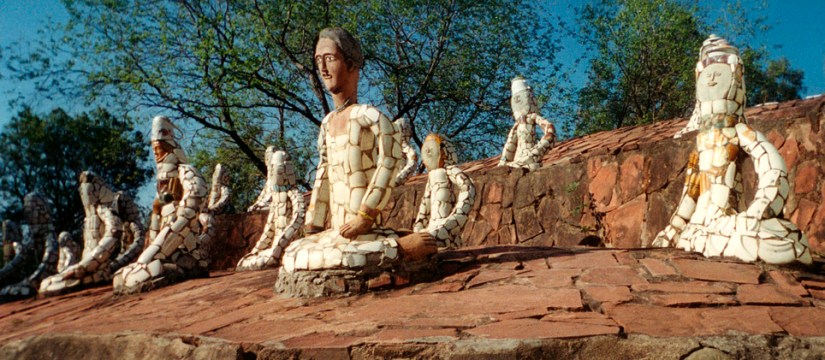
Saturday, we picked up some pies (tofu curry and Baltimore bomb for me, pulled pork and strawberry rhubarb for him), put on David Bowie’s Hunky Dory, and cracked open my copy of John Maizels’ Raw Creation: Outsider Art and Beyond. (I bought this book used, and somehow ended up with a signed copy. So, if you’re out there Steve Moseley, thanks.) My S.O. and I huddled around it like kids with a pile of comic books, poring over the incredible body of work of Adolf Wölfli, the otherworldly twists of the Palais Idéal, and the incredible figures of the Rock Garden of Chandigarh.

Photo of sculptures in the Rock Garden of Chandigarh by Fanoflesage. CC BY-SA 3.0

(Honestly, if you’re not familiar with Wölfli, get ready to go down a deep rabbit hole. His work is fascinating and unmatched in scope. You can even find some of his musical compositions on Spotify.)

Sunday, we had crêpes and settled in to watch a movie — Color Out of Space. Admittedly, I mostly find Lovecraft kind of tiresome, owing in no small part to a former room mate who was a little too into his work. Still, COoS is probably my favorite of his short stories. I’ve got a thing for malevolent architecture and eldritch landscapes, and this tale in particular scratches that particular horror itch really well. (So do SCPs 455 and 3219, if you’re into that sort of thing.) It’s also the kind of subject that lends itself to Lovecraft’s particular style, which tends to vacillate between “I can’t describe it, but trust me, it was super weird” and “they were secretly… Foreigners!” When you’re talking about something that defies description by its very nature, like a nonexistent color, it works.

Speaking of, I dig the artistic choice to show the eponymous Color as various shades of magenta. While magenta does exist at least as much as any other color, it’s pretty much the color mascot for the fact that so much of what we consider real is incredibly subjective. Neato.

I also dug some of director Richard Stanley’s other choices in this film. For one, there are two main protagonists (I’m hesitant to attach the word “hero” to a story so bleak): a Black man and a young white woman. There’s some romantic tension between them. You know, the kind of stuff that would’ve made Lovecraft have to take to his bed with a cool rag and some kind of nostrum.

There’s also one scene with a horse where the horse’s eye briefly flashes purple. It’s ambiguous, however, whether this and the horse’s subsequent freakout are a sign of the contagion or not. Notably, the part of the horse’s eye that appears to flash is the tapetum lucidum, the membrane that reflects light and aids in night vision. Is the horse acting out because the Color’s gotten to it? Is it reacting to what it sees emanating from the people it’s looking at? Is it both? It’s the little fridge horror/fridge brilliance touches like that that I really enjoy.

Lavinia, the family’s daughter, also provides some interesting references to Wicca. Nothing too complicated or heavy, really, though mentioning the Wiccan Rule of Three provides a bit of foreshadowing. The Necronomicon makes a brief appearance at one point, though it’s left unclear whether the in-universe book is meant to be genuine, or just a paperback for edgy kids. Some viewers put forth the idea that, while the Necronomicon itself is widely regarded as a hoax, all of the best hoaxes contain something tangentially genuine — so it’s possible, at least in-universe, that Lavinia’s ritual did something.

(It just wasn’t what she wanted.)

Lastly, near the end, we’re given a brief glimpse of the Color’s home planet. Normally, I hate this kind of thing — one thing Lovecraft got right here was the fact that the things your imagination conjures are inevitably far more terrifying than anything anyone else can show you. In this case, the look we’re given is brief enough, and the atmosphere built by the flashing colors, patterns, emotions, and musical score building to that point is just mentally overwhelming enough, that it’s impossible to fully absorb what you see. You’re given an image, but your imagination still has plenty of room to build around it.

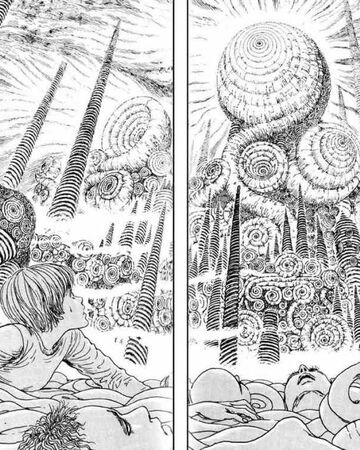
It also strikes me as somewhat visually similar to the ending city in Junji Ito’s Uzumaki:

Which I thought was awesome, because I love Uzumaki. (I get some very Hellstar Remina vibes, too.)

No idea what we’ll do next weekend. There’s an abandoned pyrite mine I’d like to poke around, and this reservoir I found a bone at once. Really, after all this, I kind of just want to snuggle up and re-read a bunch of Ito’s books.

Plants and Herbs · Witchcraft

Capers Folklore and Magical Properties

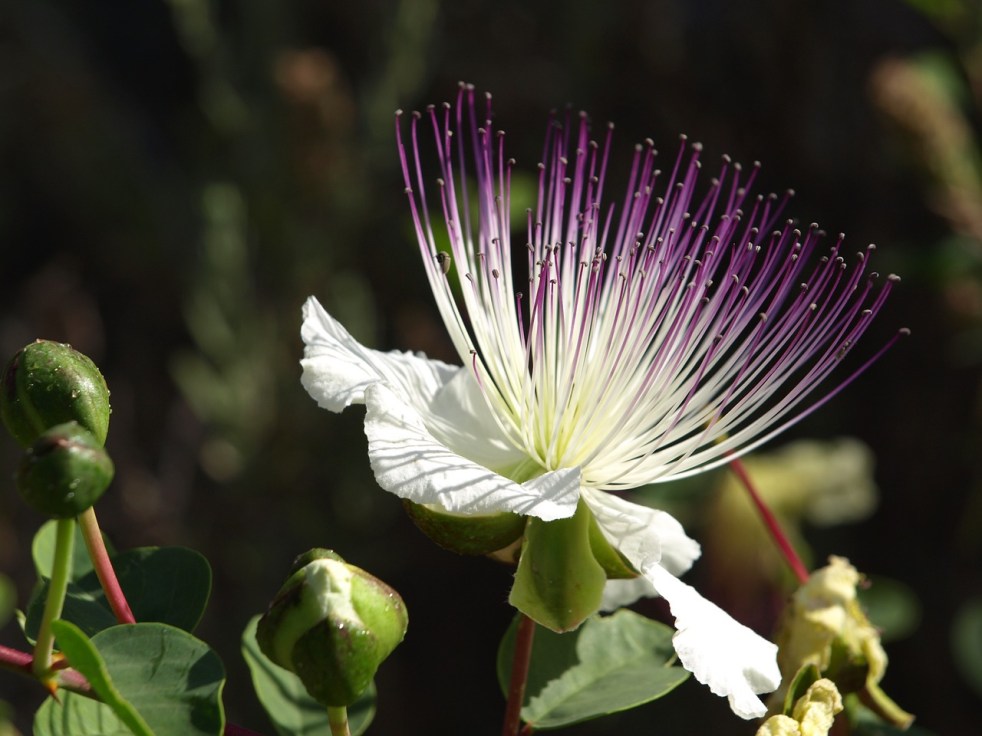
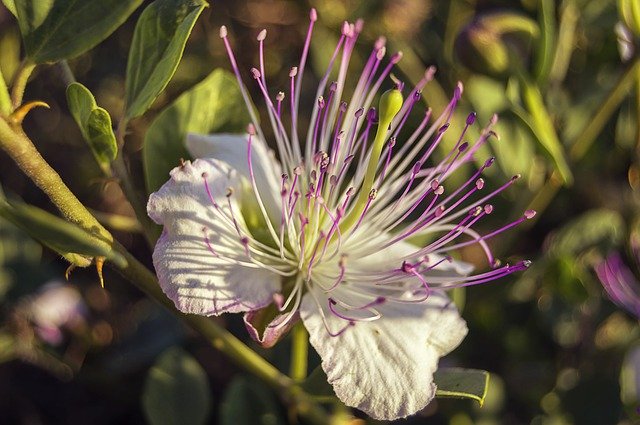
Edible flowers have always intrigued me — I love floral flavors, far more than floral scents. Lavender Italian soda, candied violets, briny capers… Give me all of the flowers. I was eating my favorite breakfast the other day (toasted sesame bagel, veggie cream cheese, sliced tomato, thinly sliced red onion, and capers) when one of the little pickled buds dropped out and rolled onto my plate. It was surprisingly pretty, a deep olive green at the tip, turning to a deeper violet near the base, and it got me thinking.

What are capers good for?
(Besides being delicious.)

I didn’t find many traditional magical uses for these guys in my search, but I did find some very interesting medical uses and folklore than seems to provide the basis for their modern magical properties.

Capers Magical Properties and Folklore

Going down to bone town.

No, really. They’re mostly used as aphrodisiacs.

Even the Christian Bible acknowledges this — in Ecclesiastes, translations dispute whether a certain passage should read as “desire” or “caperberry.” In Hebrew, the word for caperberry, aviyyonah, is linked to the word avah, meaning “desire.” The King James version of Ecclesiastes 12:5 reads, “the grasshopper shall be a burden, and desire shall fail.” Meanwhile, older translations render the word “desire” as “caperberry.” As a result, some modern translations go for “desire,” while others use “caperberry.” Confusing, huh?

In ancient Greek medicine, capers were used to relieve gas and bloating. This isn’t really tied to any aphrodisiac effect, but it’s probably easier to want to do the do when you aren’t farting like a Clydesdale.

The Witch’s Cottage Garden lists capers as a Mars plant. This is most likely due to the plant’s thorns — plants associated with Mars tend to be prickly — but also fits its use as an aphrodisiac. While Venus plants are associated with love and beauty, Mars energy can be passionate and lustful, in addition to assertive and warlike.

Other sources list as useful in magic for lust and potency, which also suits it’s Mars energy and desire-promoting qualities.

Using Capers

Eat them, but not too much. Capers are preserved, so they’re very high in sodium. (Ironically, if you have sodium-sensitive blood pressure and blood pressure-related sexual dysfunction, they can make it harder to get in the mood.)

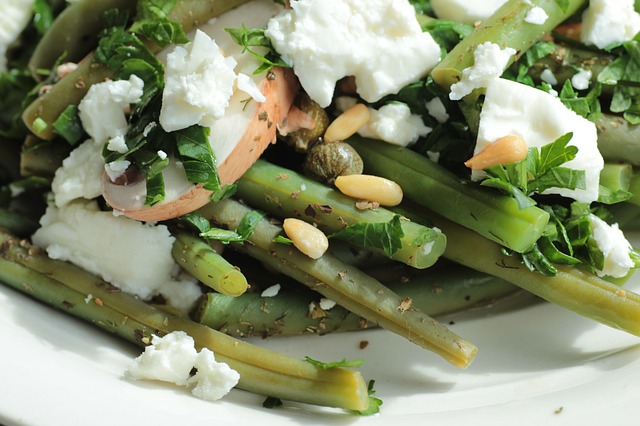
I like including them in salads or, as I mentioned before, on a bagel with cream cheese. If you don’t eat cheese, a nondairy alternative or some avocado would work — I find that the salty, lemony bite of capers benefits greatly from something cool and creamy to offset it.

If you want to use capers in your magic without eating them, the mature flowers are very pretty and unusual-looking. While I haven’t seen the flowers for sale (I think most people prefer to pick them when they’re just buds, for culinary purposes), you can find the whole plant for sale and grow them fairly easily if you’ve got a dry climate and plenty of sun.

As a note of caution, the caper spurge (Euphorbia lathyris) is a poisonous plant that is often confused for capers. Eating the buds can cause mouth pain, nausea, cardiac arrhythmia, fainting, and delirium. So, if you going to go try to find capers, maybe stick to garden centers and grocery stores unless you’re really, really good at IDing plants.

art · life

New artwork!

In case you don’t follow my shop, there are a bunch of new prints available.

I’ve also added a new line — now, in addition to the matte giclee prints, you can also get most of my work as lustre photographic prints. (These are just as high-quality as the others, just printed on a subtly glossy photo paper instead of heavy matte stock.)

And several others!

I always purchase copies of my prints before I list them, so I can make any adjustments to the source files to make sure they look as good as possible. Not to toot my own horn, but computer images don’t really do these justice — the prints came out so good, friends.

I also have several different tarot readings available. Please feel free to drop me a line through Etsy or my Contact page if you have any questions.

life

A Bicycle Built for Who

Some people don’t like the idea of adopting rescue animals, especially adult ones. They worry that they won’t be as trainable as a puppy or kitten — they might have all kinds of behavioral issues and odd quirks from their past home(s).

To be perfectly honest, I’m pretty sure Kiko and Pye were normal before we got them. (At least, I’m reasonably certain that Pye didn’t throw noisy tantrums if you neglected to sit next to him and eat cereal in the morning.)

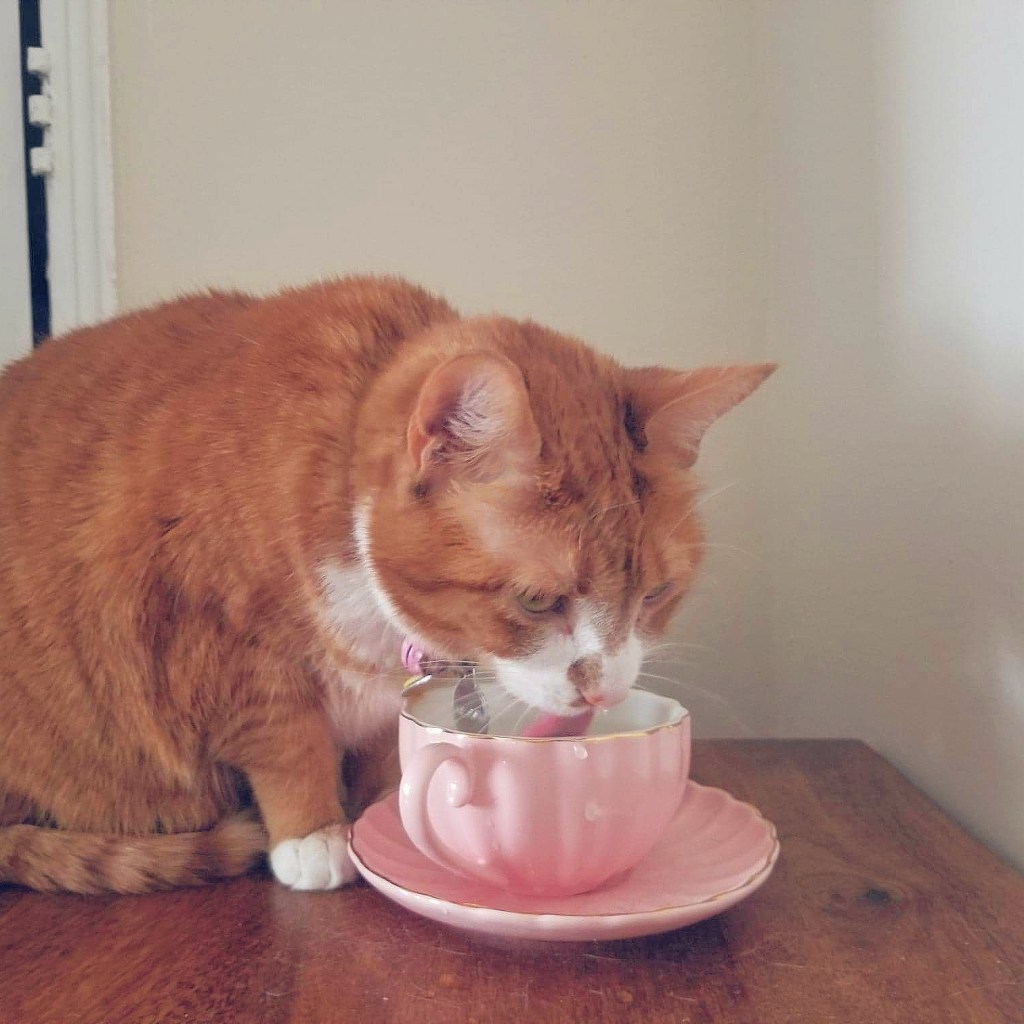
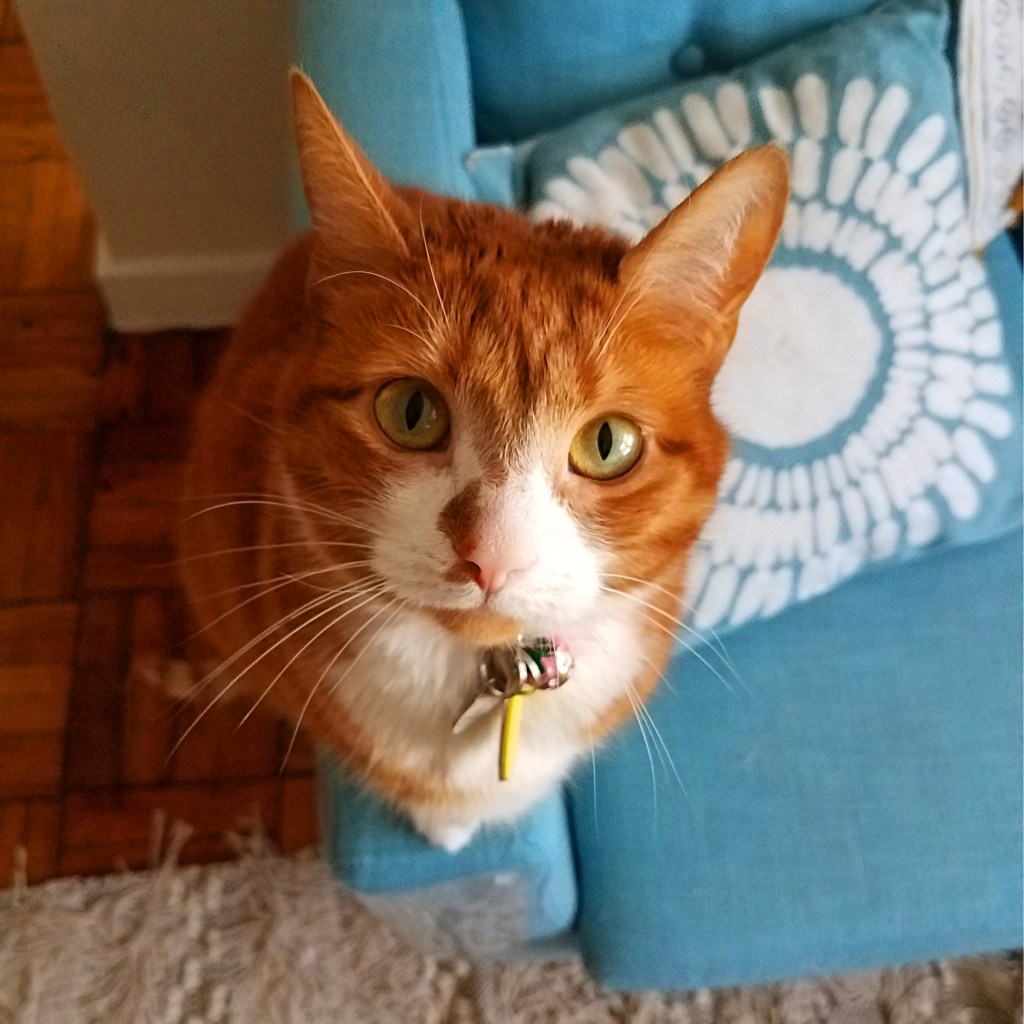
I don’t know how Kiko could’ve survived otherwise. Her history indicates she was an outdoor cat — undersized, post-partum, a hair’s breadth from losing a leg to gangrene. Now, she taps my forehead to wake me up to watch her eat, will only drink out of a special pink teacup, requires smooches on the head at exactly 11:30 AM, and knows that the sound of me brushing my teeth means it will shortly be Cuddle Time. She won’t eat cat treats — her preferred snacks are strawberry yogurt and butter lettuce. She doesn’t like to walk through the apartment, either — she’ll launch herself face-first at my ankles, cry and hold up a paw as if she’s injured, and make big, sad eyes at me until I pick her up.

Her favorite thing, though, is the exercise bike.

I have a bog-standard stationary bike ever since my cardiologist recommended that I start taking short, easy rides to rebuild my endurance. I don’t know how, and I don’t know when, but Kiko made up her macadamia-sized mind that This Was an Activity of Buddies.

And so, she chubbles.

She sits at the edge of the bed, gazing up at me with her cartoonishly large, round eyes. She knows she has me wrapped around her little white paws, and all she has to do is wait patiently. If I fail to respond, she daintily taps at my knee.

Eventually, I will have to pick her up.

I always do.

I have no idea what she gets out of this. It’s a stationary bike. We don’t go anywhere. There is nothing to see but the bedroom door. She nestles herself into my elbow, flops her head back to mush her face on mine and give me her little :3 smile, and purrs. And she’ll stay like that until I’m done pedaling.

There’s no reason for it. She could be ignoring me, happily cuddling with my partner. The second she hears the telltale boop of my exercise tracker app, she pries herself away to chubble at me. She could be asleep, she’ll wake up. She could be in a different room, I’ll hear the strawberry bell on her collar jingling as she hurries from wherever she’s been hiding. She cannot get enough of turning me into some kind of incredibly inefficient one-person palanquin.

So, yes. Sometimes, when you adopt an older animal, they can be a little weird. Most of the time, it’s in the best way.

life · Neodruidry

Lughnasadh, Pandemic Style

Lughnasadh is one of the High Days that falls between the solstice and the equinox. It’s an ancient celebration of the first harvest, but I’m probably not alone in feeling less than enthusiastic about this year. To be honest, I can’t honestly say I “celebrated” it.

The harvest is when you reap what you sow, and we’re reaping a whole lot of bad right now. Unable to get the message, police forces respond to protests against police brutality with increased brutality. Told that we need to wear masks and avoid indoor gatherings to slow the spread of a virus, people vocally rebel by not wearing masks and having rallies indoors. Other countries ostracize the U.S. as if it were a mass of plague rats, and I can’t really blame them. This is what we’ve collectively sown, and what are we harvesting in return?

I made a small offering (some beans I sprouted in a jar), but this Lughnasadh was less about celebration and enjoying the fruits of the first harvest than it was about understanding cause and effect. What we sow, we reap. You can’t meet challenges with brutality and callousness and expect to harvest success.

While I have plenty of growth and cause for celebration in my own life, it pales in comparison to what’s happening outside. Even so, that serves as its own reminder to find joy where we can. Even when the world’s on fire, there are small triumphs worth recognizing. There are still new bean sprouts in the jar.

Thanks for indulging my melancholy today. Promise I’ll be less of a buzzkill tomorrow 🧡

Witchcraft

Raising Power (and Then What?)

The whole moon hexing-thing seems to have opened up a whole can of worms, hasn’t it?

It seems like most witchy spaces have kind of gotten past the collective initial reaction to it, but it continues to raise a lot of interesting questions — some thought-provoking, some annoying and gatekeepy.

One discussion I came across involved the validity of using the internet as a magical learning tool. Sure, there’s a lot of very “Well, in MY day” attitudes about it among older witches and Pagans, but there are some valid criticisms to levy. The internet has democratized the spread of information, but that goes hand-in-hand with the spread of misinformation (as anyone currently dealing with relatives who believe COVID-19 is a hoax can attest). Granted, a lot of books on the subject are no better. I can’t recall the title, but I vividly remember reading one passage about an Irish potato goddess that someone not only wrote, but someone else published and other people bought. Misinformation still spread, just more slowly.

From this sprouted a discussion about the validity of online spells, and the preponderance of people looking for magic as a kind of quick fix. “Ceremonial” magic gets derided, while simple candle and jar spells pop up and get passed around everywhere. The only problem there is that the “ceremonial” stuff is often not ceremonial it all — it’s the power-raising and the meat of what makes the magic happen. Candle and jar spells are completely valid and workable, but there’s more the thing than putting herbs in a jar and hoping for the best.

This, in turn, hosted a conversation about power raising. One person was completely unconcerned about online spells — they could never work to begin with, because the instructions didn’t include anything about raising power “properly.” Why, one person asked, would you send your energy into your materials?
That, in particular, got me thinking: What does proper power raising and releasing even look like?

Before I even came to witchcraft, I was familiar with raising power — not as a practice, but as a feeling. I picked up on the bright, effervescent thrill that went through me when I was dancing, or when the song I was listening to hit that crescendo that was just perfect, and I could feel the build and release of energy. It wasn’t going anywhere in particular, but it was happening.

As I learned, I was taught the basic circle casting, power-raising, releasing toward your goal construction of a spell. While that’s a perfectly workable means of spellcasting, it’s also not the only way to do it “right.”

Like anything else in magic, it depends on the intention. I don’t mean the intent of the spell, I mean your intention to cast it in the first place. Your intent might be to get a new job, but your intention is to use a candle/jar/sigil/whatever spell to get a new job. That determines what your spellcasting looks like, even down to the release of power. Not every situation calls for a “cast a circle, raise power, release it toward your goal” strategy.

Candle spells are nice because they’re a simple, accessible type of sympathetic magic. You want something to happen as the candle burns. Maybe you want to reverse a hex, so you use a two-color candle and watch the black wax neutralize whatever the other color is. Maybe you want to feel better, so your fatigue decreases as the wax is consumed. Maybe you want to attract a lover, so their heart warms as the flame grows and burns. Versatile!

That also means that the candle is a way of releasing that power. You light the wick, the flame consumes the wax, it releases it as the products of combustion — heat, light, soot, and water vapor. Sending your intention and energy into the candle allows it to be burned when the time is right, or as needed — you raise and release power once, direct it into the sympathetic vessel, and let the element of fire do the rest. You could raise and release power toward your intent, but, at that point, the candle is strictly ambiance.

Jar spells are nice because they’re long-lasting. You fill a container with symbols of your intent, and put it somewhere to work. Maybe you want to keep a happy and stable home, so you fill it with peaceful ingredients and bury it in your back yard. Maybe you want to attract a new lover, so you fill it with rosebuds and bury it near your front door. Maybe you work with someone who really sucks, so you fill it with nails, hot pepper, and stolen pieces of hair and ditch it by a railroad crossing. In this case, much like the candle, the spell isn’t necessarily helped or hurt by a one-time release of energy toward a goal.

Sigils are their own thing entirely. They hopscotch back and forth over the line between magic and psychology as a matter of course, so they’re not going to follow the rules for raising and releasing power. That doesn’t mean that they don’t work, though.

Servitors are interesting energetic constructs, but that means that your energy should be directed toward making them. You don’t really need a circle for it — you’re going to give the energy its own shape, anyway. If you can’t keep it from getting away from you without a magical container, you’re probably going to have trouble with that second part as it is.

Knot magic is another time-release kind of spell. It’s a form of sympathetic magic where the tying or untying of knots contains and releases energy as needed. If you aren’t putting your energy into the knot-tying itself, then the action of untying the string doesn’t actually release anything.

Does this mean that energy raising and releasing have no real rules, and any online spell will work? Well… No.

The common thread of all of the types of spells I mentioned above is that the materials and actions in the spell have a reason for being there. The spell jar’s a magic battery. The knotted string is a string of magical firecrackers. The candle is a way of holding energy until the flame releases it. There are definitely some spells out there that are unfocused, at best.

For example, say you want to draw in a new lover. You fill a pretty dish with rosebuds, lavender, and jasmine flowers, add a drop of love-drawing oil, and send your energy and intent into the dish. You feel that the herbs have absorbed all of the energy they can, so the spell is over and you dispose of the remnants.

And then what? Where does the energy go? How does it get to its goal? You could burn the herbs and release it with the element of fire, fire’s related to warmth and passion. You could even scatter them in a moving body of water, water’s related to the emotions. But, unless the spell tells a novice witch to do that, are they going to?

I like online spell resources because they’re good for ideas. You can usually tell which have a chance of working (and which don’t stand a brine shrimp’s chance in a photon tube) by asking a pretty simple question for each ingredient and instruction: Why is this here?

Most will tell you to meditate or visualize. These are ways of raising mental and magical energy, but not the only ones. You can dance, sing, or ride a twelve-speed vibrator the size of a Thermos until your eyes bug out, and it’ll work just as well as long as you keep your goal in mind.

They might not give you an effective way to direct or release this energy. Don’t get me wrong, you can do way worse for yourself than holding a bunch of lavender flowers and meditating on something that would bring you joy, but that probably isn’t going to bring you much closer to your goal.

At each step, ask why. At each ingredient, ask why. Not only will it let you know if you’re wasting your time, it’ll make it easier to write your own spells or make substitutions when necessary.
divination · life

I apologize for my tardiness.

I ate most of my bodyweight in melon and pasta and, like the mighty African rock python consuming the equally mighty springbok, I needed to sleep on a warm rock and not move for an extended period of time.

Anyway. I’ve been doing a lot of considering re: the Jungian concept of the “shadow self.” It’s a topic I’d like to delve into further, but really deserves a post (or three, or four) of its own. Suffice it to say that I think it’s what’s making the pandemic especially difficult for a lot of people — when it’s hard to be in the same room as yourself, you’re not likely to enjoy having a lot of free time on your hands.

This led on a short free-association jaunt through various meditations, trance work, and sound healing, and I landed on a specific need: a guide to what I’m trying to fix in the first place. I know my faults, and I like to think I’m relatively self-aware, but there’s more to integration than that. There’s really no road map for how this kind of thing is supposed to go, though.

In my search, I came across the Cleansing the Soul tarot spread by Emerald Lotus Divination. “Sure,” I thought, “Why not?”

It’s not a super complicated spread, but it yields a lot of information — from the needs of the physical body, to the soul, to the inner child, to how to stay connected to your higher self. I’m not really under any illusion that the general public is super into my own inner journey here, but, if you’re curious about how a theoretical spread might look and how the cards relate to each other, this might be helpful.

I used the Animalis Os Fortuna deck, and my own spread shook out like this:

What my physical body needs: Nine of Wands, depicting the iguana. In this place, this appears to mean the need to push forward. I’ve been engaging in more physical activity, so the message here seems to be to keep at it, and keep increasing my reps. I even bought a sledgehammer to make a shovelglove!

What my soul needs: Five of Wands, depicting the axolotl. Struggles, obstacles, and rivalry. I’m competitive by nature. I’m at my best when I have an opponent, even if they don’t know they’re my opponent and I make no attempt to take the competition out of my own mind. It’s practically what the concept of Instagram hate following was made for, if you substitute “hate” with “rivalry.” I’m not too enlightened to enjoy opposition. Comparison isn’t always the thief of joy — a little healthy competition keeps life interesting, and helps spur me to be a better version of myself.

What my inner child needs: Two of Wands, depicting the salamander. A pause, and to bide my time. Considering a lot of what I’ve been struggling with lately are childhood memories, it sounds like my inner whelp needs a break. I don’t blame them.

How my shadow self is impacting my life: Knight of Swords, depicting the magpie. Impulsiveness, aggression, and overenthusiasm. Consequences, schmonsequences, he has things to do. He goes for what he wants, and everything else be damned. His intentions are pure, but he’s kind of a dick about them. That’s… Yeah, that sounds about right.

This magpie’s probably choosing a new victim to swoop on.

A way that I can begin to accept my shadow aspect: Five of Swords, depicting the peacock. Defeat, and suffering from egotism. There’s an interesting pathology that impacts people in relationships with others who show signs of narcissistic personality disorder, no matter whether those relationships are romantic or familial. Laconically, it’s usually called “fleas.” They’re behaviors that seem to “jump” from a narcissist to a victim, and, if they aren’t resolved, from that victim to their victims. Essentially, they’re protective mechanisms — tiny things you do to protect yourself from narcissistic rage and other forms of abuse at the hands of someone with a fragile, wounded ego.

I can see a flea here. My shadow self impacts my life by making me impulsive and aggressive. I jump from one thing to the next if I’m not immediately good at it, because my upbringing showed me that failure meant mockery and pain. Aggression was rewarded, while softer feelings were mocked and rooted out.

How to better process my emotions: Ace of Cups, depicting an overflowing vessel. Interestingly, this card stands for optimism and new opportunities. It also shows a cup overflowing, and the suit of Cups specifically relates to the emotional self. This cup runneth over, sharing its bounty. The advice here is to process feelings by sharing them.

Something I need to be more aware of: Ten of Swords, depicting the vulture. Oof. Vulture and I go way back, and he usually seems to show up when some kind of purging needs to or is about to happen. (Did you know that vultures sometimes eat so much that they can’t fly, and need to vomit before taking off? Fascinating! Also super gross!) The Ten of Swords is despair and ruin. It’s the end of a cycle, and the ending ain’t a happy one. In this context, it means to let go and be reborn. This cycle is over, and it sucked, so get ready to start a better one.

They also poop on their own legs to cool off.

How to stay more connected with my higher self: The Queen of Wands, depicting the cobra. I love the Queen of Wands. She stands for generosity, creativity, and drama. She has power and self-possession, she’s courageous and hot-tempered. She’s beauty, she’s grace, she can probably wreck your face. The lesson is to temper that power with kindness, and invest energy into creative work.

The pandemic has done everyone’s nerves up wretched, and I think the shadow self has a lot to do with that. It’s not easy to have a lot of time on your hands if you don’t enjoy your own company, and it’s also not a simple problem to solve. This tarot spread doesn’t offer a quick fix, but it does answer some important questions.

life · Neodruidry · Witchcraft

How Antidepressants Made Me Better at Witchcraft

Have you ever seen that meme about psychiatric medication? The one that’s all, “pills are trash, forests are medicine!” (Which, by the way, is a toxic, steaming load of horse puckey.)

It’s not an uncommon attitude in some new age and Pagan-adjacent circles. I could digress into a discussion of the destructive power of the naturalistic fallacy, but it’d take at least eleven posts just to contain it. Instead, I want to point out one thing:

Medication made me way better at everything, including witchcraft and Druidry.

A lot of people express reluctance at trying psychiatric medication, and I can’t blame them. It can take awhile to find the right one, and, after that, to work out the right dose. That’s frustrating, even scary. Some worry that medication will “dope them up,” reduce their creativity, or subdue the traits that make them them. For me, nothing could be further from the truth. Without the constant high-pitched background buzz of anxiety and panic disorder, I’m much freer. I have some side effects, but they’ve been a small price to pay.

I do occasionally feel stabs of resentment that I’m reliant on something “unnatural” — but that’s a me problem. If there were a “natural” equivalent to what I need, believe me, I would have found it. I didn’t, despite years of experimentation. I came close a few times, but there was no herbal remedy for my panic that didn’t also knock me unconscious, make me throw up, or worse.

The fact is, the idea of “perfect” physical or mental health is a construct. It’s not a birthright, it’s not even a natural concept. In Sick Woman Theory, Johanna Hedva explains,

“Sickness” as we speak of it today is a capitalist construct, as is its perceived binary opposite, “wellness.” The “well” person is the person well enough to go to work. The “sick” person is the one who can’t. What is so destructive about conceiving of wellness as the default, as the standard mode of existence, is that it invents illness as temporary. When being sick is an abhorrence to the norm, it allows us to conceive of care and support in the same way.

By contrast, in nature, an organism that is “well” is one that’s able to meet the challenges of its environment. That isn’t a super high bar to clear — it also very often doesn’t look like the human conception of wellness. In reality, few creatures would meet the definition of “well” to which humans aspire. Animals live with parasites. Crows steal lit matches and bow over ant hills, seeking relief from mites when they need to. One crow with an injured beak needed the help of his mate to eat, and she gave it. We find deer that have lived for years with teeth or bullets embedded in them, muscle and bone growing gnarls over what biology apparently considered an impolite intrusion. We find creatures that have existed, eaten, and fucked for a lifetime, tumors and abscesses locked away behind walls of thickened bone. As salmon amply demonstrate, as long as you can survive to adulthood and pass on your genes, nature doesn’t much care what state you’re in. If you end up truly unwell, you don’t survive. If you’re surviving, even if it takes an anthill, a patchwork of scars, or an understanding mate to keep you there, you’re doing well.

“Perfect wellness” is not a natural standard, and the kind of health sold by the wellness industry is not only unnatural, it is deeply damaging.

Natural perfect health is rare enough to be nearly mythical, because there is no real binary opposite to sickness. Everyone will experience a significant amount of pain and disability at some point in their life. Some are fortunate enough not to experience that until they are very old. For others, that point just comes earlier and lasts a bit longer.

We are pushed to consider caring for ourselves as temporary, which perpetuates the myth of being “well” as a default, natural state. As long as the aspirational standard of natural perfect health exists, we’ll keep working ourselves to death trying to reach it. So, the idea that you must be naturally, perfectly clear-headed in order to commune with the Divine or perform magic? It’s kind of crap.

It’s an idea that’s also used to delegitimize practices that use entheogens — practices where altered mental states are valuable, if not necessary. It derides rituals that use substances in favor of quiet, whitewashed sensibilities.

In my case, it’s just a lot easier for me to get things done when my brain isn’t dysfunctionally revved up on a constant stream of high-test adrenaline, neurons struggling to swap about four serotonin molecules between them. It doesn’t matter if the “things” I’m trying to do are dishes or divination.

It’s not wrong to prefer natural tools in ritual, but the standards that apply to a wand or an herb don’t work when you try to apply them to the self. Medication — the help that gets us closer to the functional, animalistic concept of “wellness” — isn’t an enemy or a detraction from spiritual experiences.

If you’re hanging in there, even if you need medication to keep you here, you’re doing well. Nature and the divine won’t reject you for that.

life · Witchcraft

You don’t need to worry about the moon.

Today, in Things I Never Thought I’d Have to Type:

Just in case you came across this Twitter thread yesterday — the moon is going to be fine. A minor internet kerfluffle ensued when some kids got the bright idea to hex the moon (?) and the fair folk (??) for… Reasons, I guess.

Everyone who gets into a hobby — whether it’s pottery, baking, or witchcraft — has a moment or two when they develop starry-eyed aspirations of punching way above their weight. For some people, that means trying to tat an entire lace tablecloth by hand. For others, I guess it’s trying to curse the moon. But, much like ending up with a pile of tangled thread instead of heirloom-quality table linens only really hurts the crafter, trying to hex the moon or the fae only really hurts the caster. The only real difference between the two is that a finished tablecloth would have been beautiful and served a purpose.

Kids have been doing asinine things since the beginning of time. When I was four, I ate an icicle that was hanging off of the muffler of my grandma’s car and became violently ill. When I was ten, I ate a plate of dog food to prove a point (the point was that chicken alfredo is gross, don’t @ me). My adorable baby cousin once spent twenty minutes enthusiastically smashing sliced peaches into his hair. This probably isn’t the first — or even most impressive — time someone’s tried to pull something like this. The moon will be fine. Moon deities will be fine. They’ve survived the destruction of their temples and imagery, the forced conversion of their believers, and actual people walking around and leaving trash on the moon. They survived Theodosius the Great and the Donation of Constantine. This is kind of adorable by comparison.

(It’s also what happens when you dive headlong into spellwork without learning enough about history or theory, but that’s another subject.)

space egg

Admittedly, energy might be a little weird for a bit. Not to get too deep in the weeds, but, during some vision work I performed before finding out about all this, I experienced what I can only describe as an energetic whirlpool. I tried to feel it, but it slipped right over my hands like oil on water. I asked what it was and what it was for, and was told that it wasn’t my problem and not to worry about it. I went on my way. I didn’t know what it meant at the time, and, to be frank, didn’t feel like it was useful or important to delve into something that had been expressly described as Not My Problem. In retrospect, it makes sense.

I don’t think these witches should be bound or otherwise disciplined by more experienced heads. I think they’ll get what’s coming to them well enough, either through the backlash of their own work, or the humbling realization that the whole situation is more cringey and hilarious than anything else.

As for the fae, maybe leave some honey or milk out in your garden. Wear some gold. Carry some cold iron. The fae are temperamental at best, and this definitely isn’t a situation where I’d recommend going the “fuck around and find out” route.