

Ah, St. John’s wort. Taken internally, it’s reportedly a balm for the nerves. Used externally, it’s a balm for cuts and scrapes. Its turpentine-scented leaves and flowers are a source of bright red, medicinal oil, but only when very fresh. The plant itself is the subject of folklore, a medicinal treasure, and a whole lot of magical help.
So, what’s so great about St. John’s wort, and why is it called that, anyway?
St. John’s Wort Magical Properties and Folklore
Let’s start with the name. Officially, St. John’s wort is known as Hypericum perforatum — “hypericum” from “hyper” and “eikon,” referring to how the flowers were hung above icons, and “perforatum” meaning “perforated,” due to the hole-like appearance of the translucent glands in its leaves.
Hypericum is a large genus, and a lot of its members are referred to as St. John’s wort. There are even some unrelated species that bear the same common name, like the marsh St. John’s worts of the genus Triadenum, or the greater celandine that’s sometimes regionally known as St. John’s wort. For our purposes here, we’re going to stick to Hypericum perforatum.
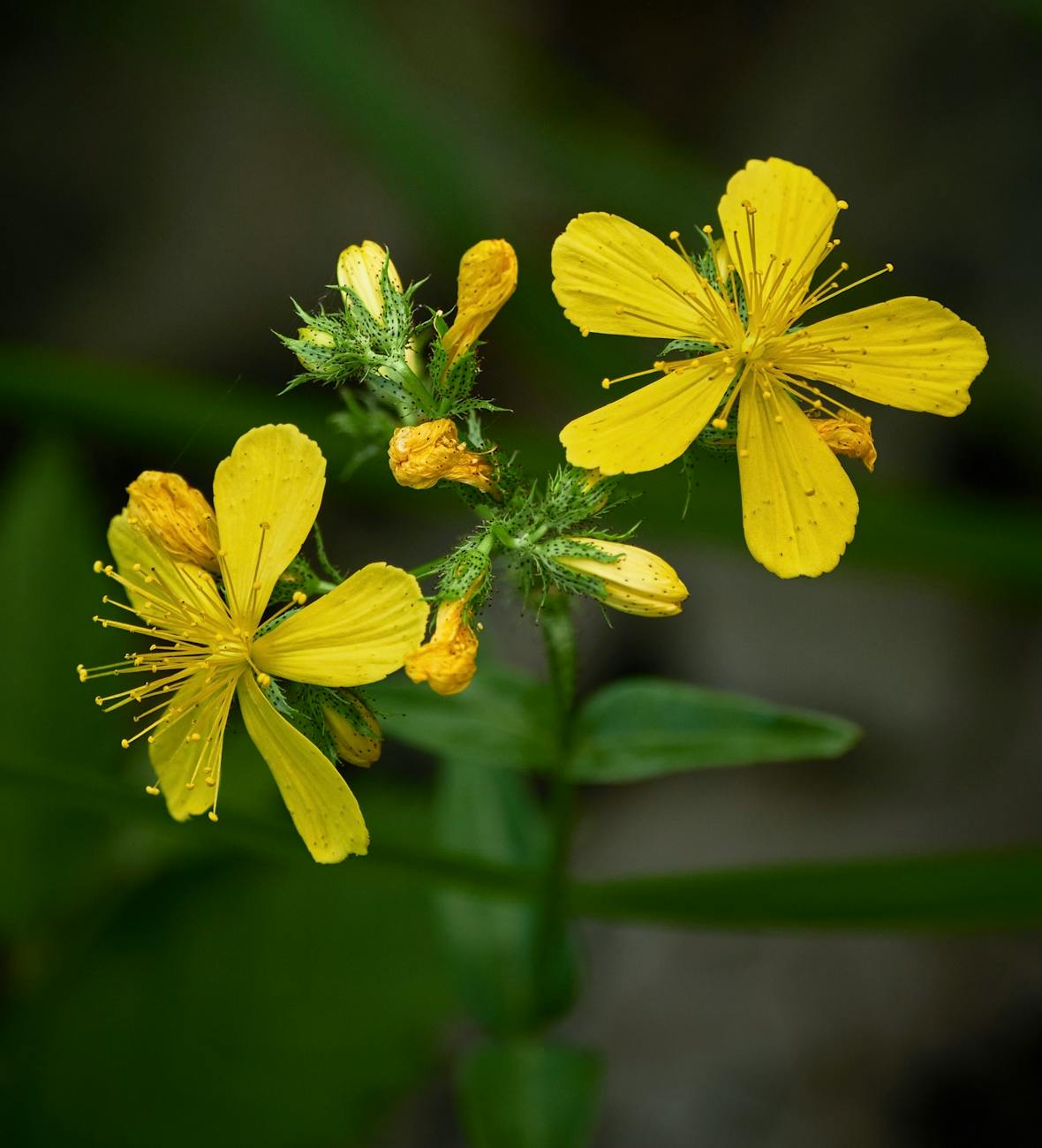
As for how this plant became known as St. John’s wort, it’s a bit of a convoluted story. Its history of use dates back to pre-Christianity, so it wasn’t always known as “St. John’s wort.” (As for the “wort” part, that’s just an old word for “plant,” derived from the Old English “wyrt.”) So, older sources will have their own names for this herb that may not be recognizable to modern readers. St. John’s wort also has a ton of regional names — in the US, it’s sometimes called goatweed, Klamath weed, or Tipton weed. In the UK, it may be called touch-and-heal, rosin rose, penny John, or balm of the warrior’s wound.
The name St. John’s wort came about because it was believed that this herb was at its most potent during Midsummer, and therefore should be harvested on or about June 24th. This was later turned into the Christian feast day of St. John, and so the plant became “St. John’s plant.” It’s also said that the plant’s red, blood-like sap runs in August, on the day that St. John was beheaded.
As evidenced by many of its healing-related common names, this herb is often hyped up in natural medicine circles. Topically, its oil is used to treat and soothe minor wounds in a similar fashion to commercial wound care ointment. Internally, it’s often used to help with symptoms of anxiety or depression. The reason it works is that St. John’s wort has a whole host of active compounds, including sesquiterpine oils, anthraquinone derivatives, and an interesting chemical called hyperforin. Hyperforin is particularly noteworthy, as it may be the source of St. John’s wort’s antidepressant effects, while the anthraquinone derivatives hypericin and pseudohypericin have demonstrated antiviral and/or antibacterial activity.
(As a side note, please avoid taking St. John’s wort internally if you’re on pretty much anything. It can alter how certain medications are metabolized by affecting specific liver enzymes, causing overdoses. It can also inhibit the effects of birth control, antivirals, chemotherapy drugs, certain anticoagulants, and medications for heart disease. Taking it with certain antidepressants also increases the risk of serotonin syndrome, and I don’t wish that on anybody.)
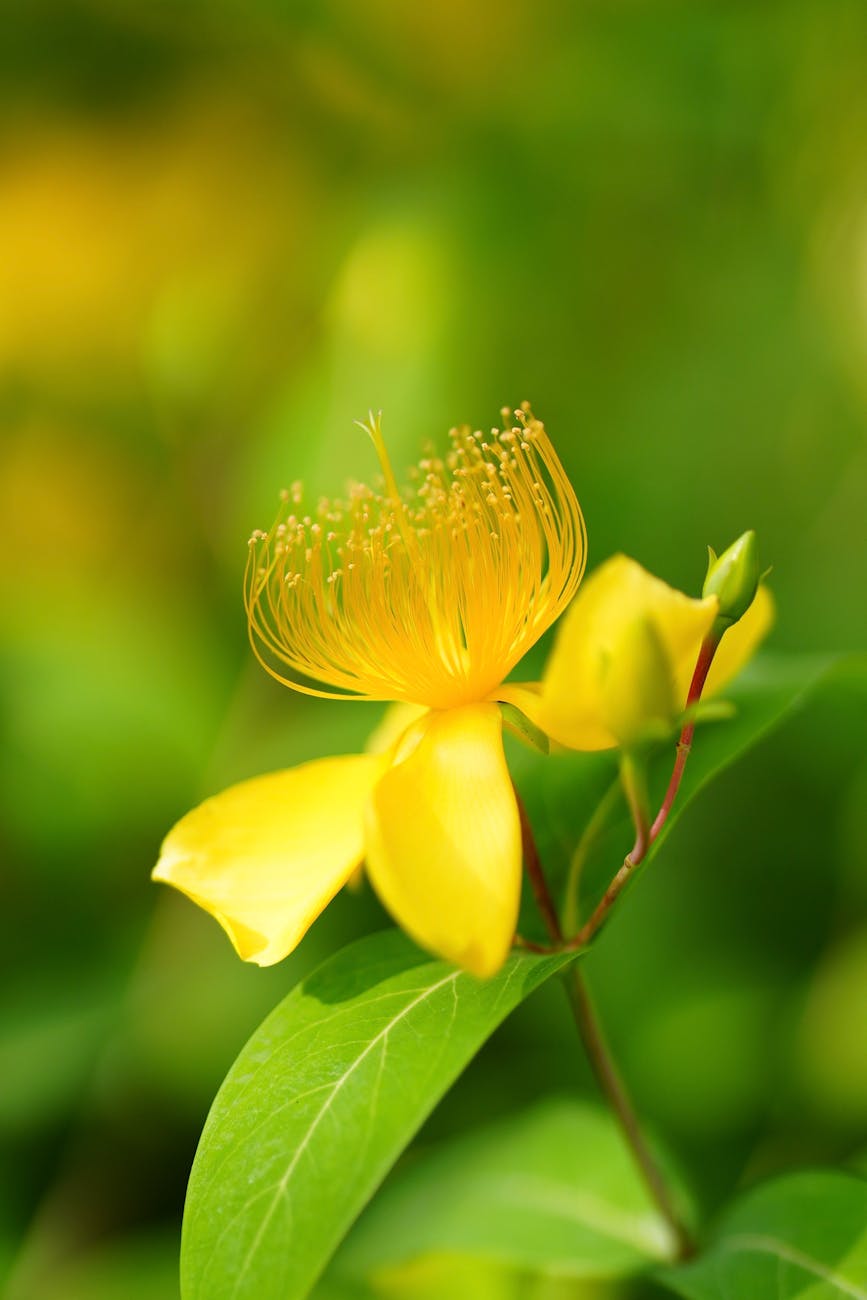
Magically, St. John’s wort is often used to repel or banish evil. Another common name, fuga daemonium, literally means “demon flight.” It was often hung in houses, placed above religious icons, or carried as a protective talisman. Flowers, brought into the home on Midsummer’s eve, are considered particularly protective and lucky.
This plant also had some limited divinatory use as a kind of mortality predictor. If you took two sprigs of St. John’s wort and hung it over a marital bed, the sprig that wilted the fastest indicated which member of a couple would die first. Fun!
As a Midsummer plant, St. John’s wort is associated with the Sun and the element of Fire.
Using St. John’s Wort
It’s probably best to work with this herb in dried or oil form. St. John’s wort is such a potent medicinal plant because the compounds that we use as medicine are actually the plant’s defensive mechanisms — they’re distasteful and poisonous to grazing animals, allowing the plant to grow unchecked. That’s not a super big deal if you’re within St. John’s wort’s native range across parts of Europe and Asia but can become a (rapidly spreading) problem if you’re not. This plant is considered a noxious weed elsewhere, so, unless you’re an herbalist who needs the fresh herb specifically, I’d avoid growing it.
If you have access to a patch of St. John’s wort, however, and you’re outside its native range, harvest all you like. (Not much else will use it, and you’ll be doing the native fauna and flora a favor.)
Use St. John’s wort oil for physical and magical healing. Its resemblance to blood makes it appropriate for workings related to birth, death, or rebirth (though I find a bit of bloodroot or alkanet steeped in red wine or vinegar to be a somewhat better — and easier to obtain — substitute for blood itself).
Use the dried herb for banishment. Burn it in bundles and waft the smoke around any space where you want to clear out malevolent spirits, magic, or the effects of the evil eye.
Place some of the dried herb in a protective sachet and carry it on you. You can also add it to jars, poppets, or other container spells as you deem appropriate.

 Marble Crow