
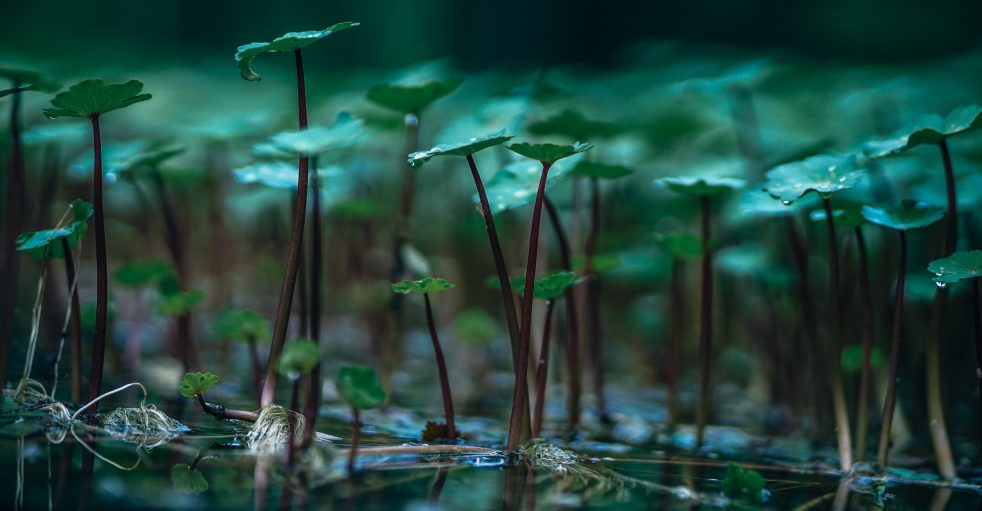
Thank you for being patient with me while I slept for essentially a week straight. It may have “just” been a vintage cold, but that coupled with the rainy weather was enough to put me out. If there’s one nice thing to come out of that, though, it’s emerging from my tiny, forced hibernation to see the ways the garden is changing as the days shorten and temperatures drop.
Earlier this year, I planted an American beautyberry (Callicarpa americana) bush. By “planted a bush,” I primarily mean “stuck a stick in the ground.”
The original sapling was a tiny, nearly leafless thing with just a few roots. This year alone, it’s managed to grow into a roughly three-foot-tall bush with tons of leaves, tiny flowers, and — eventually — fruits.
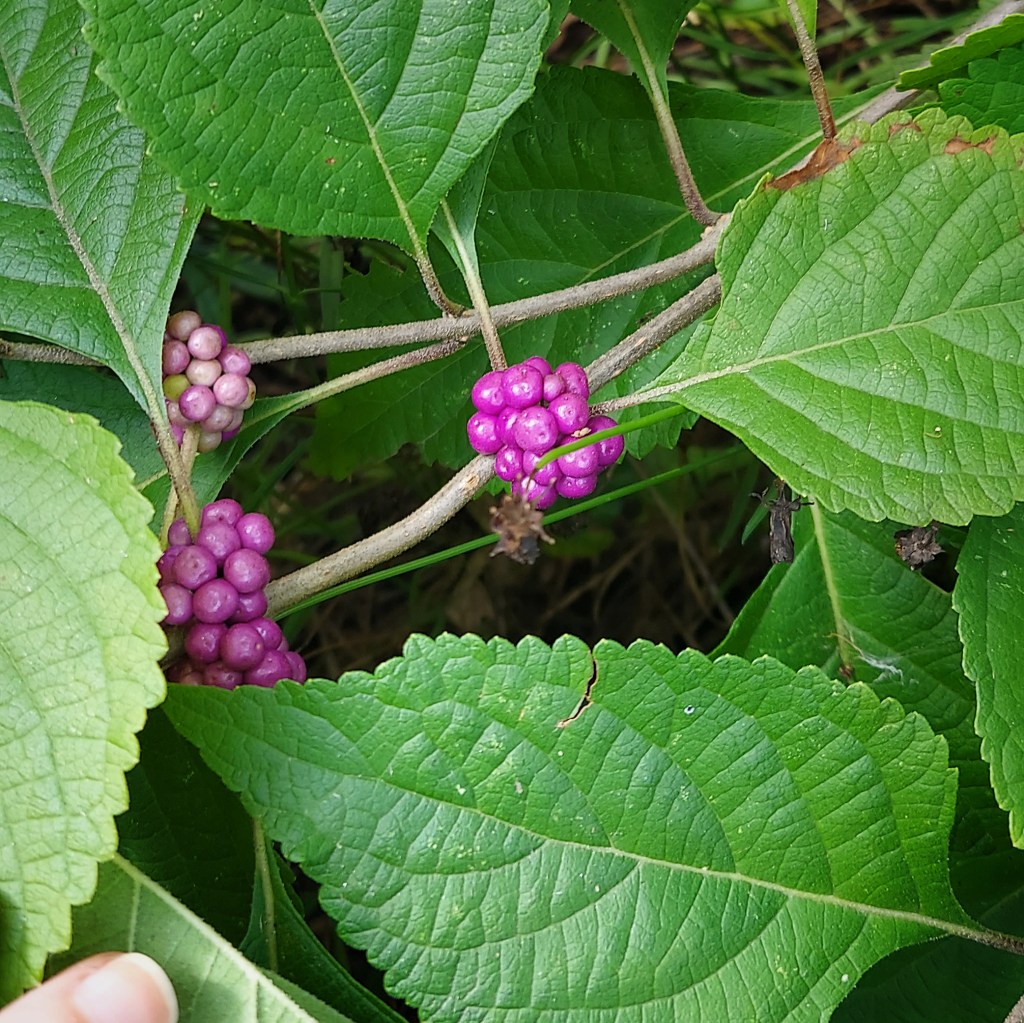
The fruits are all starting to really ripen, which has been incredible to see. While the flowers of beautyberry are rather indistinct and unremarkable, the berries are absolutely gorgeous: tight clusters of tiny, round, bright magenta berries that can persist through the cold months. While they aren’t a first choice for birds and other animals, this actually makes them even more valuable to wildlife once winter really hits. When other, more palatable sources of food are used up, beautyberry’s there to help keep everyone going.
What do beautyberries taste like?
The berries are bright, attention-grabbing, and non-toxic, so why aren’t they more popular among wildlife? It’s purely a matter of taste — literally. I’ve eaten a few ripe beautyberries straight off of the bush, and the opening flavor is sweet and very unique. It’s hard to describe, but, if I had to, I’d say it’s a combination of lemon, grape, and cucumber, perhaps with very subtle notes of raspberry and bergamot.

Unfortunately, this is followed by a rather bitter aftertaste. I don’t think it’s a dealbreaker when it comes to snacking on a few here and there, but I can absolutely see how an animal with an abundance of other food sources might. If I had to describe the bitterness, I’d say it’s about on the level of grapefruit.
What else is beautyberry helpful for?
Medicinally, beautyberries are really interesting. The leaves contain aromatic compounds that have been said to repel mosquitoes comparatively to DEET. People indigenous to its range have used it as a natural bug repellent, and researchers have extracted some unique compounds that “showed significant repellent activity against [Aedes egypti] and Anopheles stephensi.” Anecdotally, some people claim it’s also effective against ticks, but other users have found it to be of little use. There are loads of DIY mosquito repellent recipes using C. americana available on the internet, but those that macerate the leaves in alcohol (ethanol or isopropanol) are likely to be more effective than those that use water.
Other than making mosquito repellent, the leaves and roots are traditionally used to treat colic, edema, dysentery, stomach pain, rheumatism, and symptoms of malaria.
Researchers have also found an aromatic compound, 12(S),16ξ-dihydroxycleroda-3,13-dien-15,16-olide, that can help treat antibiotic-resistant staph infections. MRSA is a big deal because it can be very difficult to treat. Beta-lactam antibiotics are some of the safest ones we’ve got, but don’t work very well against resistant bacteria. The compound found in beautyberry helps to restore drug-resistant staph’s sensitivity to oxacillin, a beta-lactam antibiotic.
Are there any beautyberry lookalikes?
C. americana is only one species of beautyberry. There are also C. japonica from Japan, and C. dichotoma and C. bodinieri from China. Beautyberries all look alike, but there are some key differences to look for if you’re not sure which bush you’ve got.
C. americana has magenta berries that grow very closely around the stems of the bush. There’s basically no airspace between the bark and the berries, which gives these plants a rather unusual appearance. One cultivar, C. americana var. lactea, produces white berries.

Asian species of beautyberry look very similar to C. americana but produce berries in clusters on short stems. Instead of closely circling the branches of the bush, there’s a little bit of air space between them.

How do you grow American beautyberry?
If you’re me, you get a little sapling, find a place with lots of sun, stick it in the ground, and wish it the best of luck. Wild beautyberry is found in meadows, woods, and the edges of ponds and streams. It’s not really picky.
I admit, I’m probably not a great person to ask how to grow things. Most of my most successful plants have been accidents (hi, pumpkins) and part of the reason that I love gardening with native plants and nativars is because they don’t require coddling. Find an appropriate spot, and the plant’ll know what to do.
At the moment, the beautyberry bush I planted is still fairly small. While it’s putting out berries like a champ, there aren’t enough for me to harvest some and leave enough for the birds. Since it’s done so well, though, I’ll definitely be looking for more places to add it to the landscape. By next year, I’ll hopefully have enough for jam, sauce, and even pie!

 Marble Crow
If you’ve recently acquired a vaccine or two that may have been what put you down. I’ve read a handful of blog posts recently where the authors have been “knocked down” pretty hard by them.
LikeLiked by 1 person
I actually haven’t! It’s been… I think my last one was a year and a half ago? That did knock me out for a few days, but it’s been pretty smooth sailing since. I’m thinking it was probably a combination of the changing seasons, travel stress, and crowds.
LikeLike
Beautiful plant and a very interesting read, thank you! 🙂
LikeLiked by 1 person