
Neodruidry · Witchcraft

Does AI have a place in witchcraft?

I discovered a YouTuber fairly recently, GrumpyOldCrone. I find her videos delightful — she’s talented and funny, and it’s refreshing to hear someone else complain about the same minor things that I find annoying, but don’t really have anyone else with which to gripe about them. She’s fun. I like her. You might, too.

Two months ago, she posted a video about AI’s increasing presence in witchcraft circles:

I watched it when it first came out, I agreed with it, and it recently popped up again for me. So, I thought I’d reiterate it here: I wholeheartedly agree that artificial intelligence doesn’t have a place in witchcraft.

Like, literally anywhere.

When it comes to spellcraft, why would the Universe heed something that nobody could be bothered to actually make? The process of performing a spell starts long before you’ve lit the candles, said the chants, et cetera. On top of that, a lot of thought, research, and history goes into developing a good magical working. A generative AI that pulls concepts from various internet spells (some of which are already highly questionable on their own) and mashes them together isn’t doing that. If it has any results at all, they’re likely to be unpredictable at best.

When it comes to herb lore, it’s a bad idea to trust a web-based hallucination machine to give advice. There are already problems with computer-generated foraging guides allegedly “written” by authors that have never existed. Of course, human error is also a thing. (As evidenced by that crystal worker who put an ore of mercury in a fire, and that lifestyle blogger who put out a cookbook that included a recipe for raw, chocolate-dipped morels.) This is why it’s important to read multiple sources, and to both vet and question what you read. This is getting increasingly difficult as it is as AI models begin to poison the well of their own information — if kludging together flawed information was a problem to begin with, it’s one that’s only getting worse as more computer-generated “guides” enter the info pool.
Have you ever seen the movie Multiplicity?
It’s like that, but with more poison.

Obtaining this information doesn’t have to be expensive or challenging, either. There are tons of Pagan, witchcraft, foraging, and nature crafting communities online, and in real life via Meetup groups. A library card and an app like Libby can give you access to tons of e-books. Scribd offers a free trial, during which you can straight-up download your choice of 3 books in PDF form. I have read some fascinating research on historical magical artifacts and techniques through Academia, for free. If you’re looking for instruction in a specific technique, Udemy often has sales where their courses are as low as $10 a pop.
The only challenge is that the seeker actually has to consume it and absorb this information themselves. It isn’t as easy as asking ChatGPT for instructions, then following them. Few worthwhile pursuits are.

I also want to take a second to bitch about the uptick in AI generated Pagan “art.” My objections here are twofold: For one, I hate that artists are having their actual work taken, mashed up, and squirted out of the digital equivalent of a Play-Doh Fun Factory as something with too many fingers and its legs on backward. I also hate that so much of it is legitimately ugly and bad. I’ve gone to marketplaces and seen a lot of Pagan-flavored AI slop, and it’s honestly really disheartening. I’m not exactly stoked about the proliferation of the same handful of resin mold and 3D printed designs either, but at least they require a modicum of effort (and have the right number of limbs).

Some things take time and work, and there isn’t really a way around that. The “industry disruption” phenomenon doesn’t work in every context, and this is one of them. AI is not making witchcraft more accessible; it’s providing something that poorly apes it. Even if it were to improve, it isn’t a substitute for learning from a human, or for community, or tradition, or genuine artfulness.

While there are some things that modern AI models can do and do much better than humans (accurately diagnosing certain medical conditions, for one, or processing phenomenally large amounts of data into a useful form and suggesting a course of action), witchcraft isn’t it.

Uncategorized

Today’s Plant a Flower Day!

March 12th is Plant a Flower Day. While the idea of dedicating a day to planting seeds goes back pretty far, this is a fairly recent innovation that likely originated in the US. A lot of the seasonal celebrations that I follow revolve around things like seed swaps, observing wild plants as they exit dormancy, and planting seeds as a form of sympathetic magic, but I also like observing days like this.

Of course, the best way to observe Plant a Flower Day is to select a native (or carefully-selected nativar) flower variety for your area, choose a spot in your yard, and conscientiously plant it. You’ll increase your local area’s biodiversity and provide a source of food and shelter for native insects (who really, really need it) and birds.

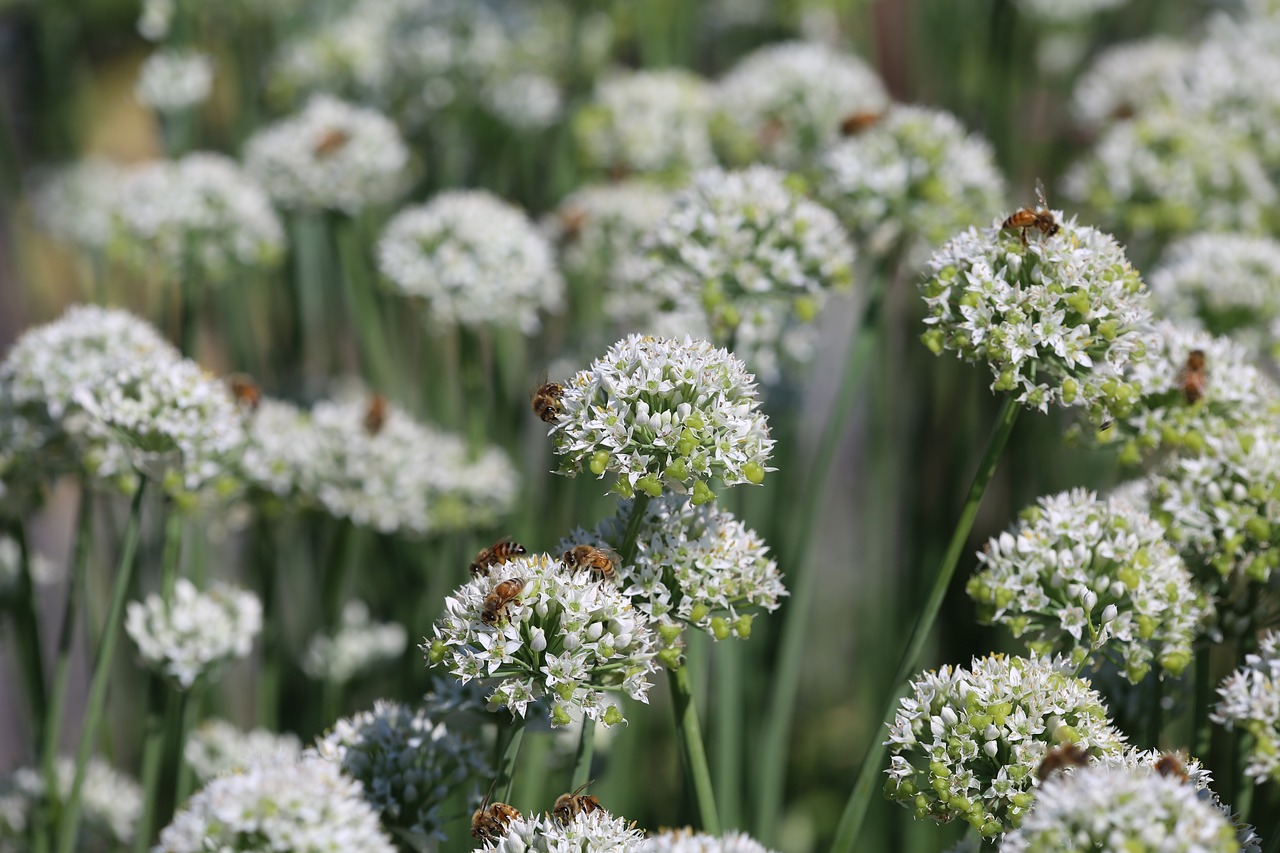
Bees on ornamental allium flowers.

If your garden is dedicated toward food rather than flowers, consider planting an edible species. Nasturtiums, for example, are beautiful, easy to grow, and taste nice. (You can even pickle the seeds and use them as a substitute for capers!) As far as native edible flowers go, violets are lovely, a very nice groundcover, edible, and there are a number of varieties native to various parts of North America. White wood sorrel produces very pretty little white flowers, and both the flowers and leaves have a tart taste that’s very nice in salads. Wherever you live, I can pretty much guarantee that there’s a native flower that can feed the birds, bees, butterflies, and you.

And, just because this is a secular observance doesn’t mean that you can’t work some magic into it. Planting seeds is a very common and easy type of sympathetic magic — as the seeds grow and flourish, so, too, should the intention with which you planted them. Get together with a partner, hold a handful of seeds, and visualize yourselves having a happy, peaceful relationship. Choose seeds of herbs associated with prosperity, picture your bank account growing, and plant them. The only real trick here is that you need to keep the seeds tended. If they die from neglect, you may soon find your intention following suit!

Even if you don’t have the space to dedicate to a flower garden, consider planting some seeds in a pot on a windowsill. It’s good for your mental and physical health, and it can help you bring the energy of spring into your home. Plus, if you choose an edible variety, it’s pretty much close-to-free food and decor in one.

Witchcraft

The Magical Meaning of String

When I was a tiny child (very tiny, maybe six or seven), my grandma taught me to crochet. I didn’t learn much — my clumsy little hands weren’t able to do more than work a piece of string into a basic chain — but it was something I’ve wanted to get back into. So, as part of my desire to continue reskilling this year, I picked up some merino yarn and a basic #5 hook and got to it.

(So far, I’ve managed to make one tiddy portion of a bikini top in single crochet, and most of a scarf that I accidentally did entirely in slip stitch. This is okay, though. Even if you do crochet wrong, as long as you do it wrong enough and consistently enough, you’ll most likely end up with a useable item once you’re done anyway.)

Close up photo of teal yarn and a copper colored crochet hook.
Photo by Castorly Stock on Pexels.com

So, since I’ve ended up with a number of odds and ends of string, I thought it’d be a good idea to point out its many magical virtues and uses.

Witches and Pagans — at least, the ones I know — are nothing if not resourceful. Every weed, seed, stick, stone, empty jar, scrap of paper, and bit of string has potential. Sure, supplies from a local metaphysical shop are beautiful and fun, but you’d be amazed at what you can get up to with the contents of your trash.

(Literally. One of my most successful workings involved nothing more than a Sharpie, some toilet paper, and about ten seconds a day for a week.)

Anyway. String.

One of the most recognizable uses of string/yarn/floss/twine/thread/etc is the witch’s ladder. This is a length of cord knotted at intervals, often with feathers, leaves, stones, or other curios placed within the knots. Ultimately, the ladder is a talisman — as it’s made, the creator imbues each knot and curio with their intention for the ladder.

Wikipedia describes a specific instance known as the Wellington Witch Ladder, the first recorded instance of someone finding a witch’s ladder in an old house. Charles Godfrey Leland discovered that it was remarkably similar the description of a kind of folk charm used in Italy. Witches would utter a baneful spell as they braided the cord (along with locks of the victim’s hair and feathers from a black hen) and place the finished piece under a victim’s bed, in order to cause them pain, illness, and misfortune.

(As a magical device, a witch’s ladder isn’t solely for baneful magic. The inclusion of different curios and chanting a different spell would, by necessity, give the finished product a different effect.)

String, envelopes, and a pocket knife.
Photo by Fotografia Eles Dois on Pexels.com

A more stripped-down version if the witch’s ladder is basic knot magic. This involves taking a length of string and tying knots (usually nine) at intervals, starting with the center, then both ends, then working back toward the center. Each knot is accompanied by a chant.

This is useful as a kind of magic “bank” — each knot holds a portion of the spell and, when the knots are undone, the spell is released. One way to use this involves untying a knot once a day for nine days. I’ve also used them to tie around my wrist or ankle. Once the string breaks, the spell is released.

Strings also have the more mundane use of securing magical sachets and pouches. In Hoodoo, the traditional knot for this is the miller’s knot. Other traditions may have their own methods that call for a particular knot (or number of knots), or none in particular. Here, the string is mostly just intended to keep the contents of the pouch from falling out, but it’s easy to apply basic techniques like color magic if you so choose.

If you know how to embroider, it’s easy to apply this skill to creating sigils or other magical images. Embroider them onto pouches, clothing, altar cloths, or any other fabric items sturdy enough to handle them. This is a great method for magic you wish to keep with you — think workings for protection, prosperity, or attraction.

Lastly, strings have a powerful symbolic component. Take the photographs of two would-be lovers, for example, place them face-to-face, and tie them together with red or pink string for a love spell. Or, use a string as a component of cord cutting magic, to help you visualize and act directly on the “etheric tethers” that hold you to old relationships, situations, or other undesirable things. Strings represent the “ties that bind,” for good or ill, and you can use them to either strengthen or sever these ties as you wish.

Okay, so. Like I said, I’ve been crocheting. I’ve ended up with a lot of odds and ends of yarn as a result. I probably don’t need all of these bits of yarn, so it pays to be a bit selective in what I decide to keep. If you hold on to odds and ends of string for magical purposes, you’re likely to end up in the same boat.

So, how do you decide?

First, I recommend against using synthetic fibers for magical purposes. This isn’t because I feel like they’ll necessarily have a bad impact on the magic itself — they’re just not practical. They don’t break down like cotton, hemp, linen, silk, or wool do, so they’re not great for spell cords that need to fall apart eventually. They also don’t burn well (and, when they do, tend to melt and produce awful, migraine-inducing fumes), so they’re not great for any spells that involve burning cords.

Close up shot of blue yarn in a wicker basket.
Photo by Miriam Alonso on Pexels.com

Second, you don’t necessarily need a ton of strings of the same length and color. You probably know what spells you tend to work the most, and what it makes sense to hold onto. (For example, if you’ve been focusing a lot on money magic, you probably don’t need an ever-increasing stash of red strings.) If you don’t, that’s fine — shoot for white or black strings, and one or two in other basic colors. Develop your preferences from there.

Third, destash periodically. There are a ton of posts and vlogs about people who fall out of practice, or struggle to find the motivation to continue regularly doing magical workings. Let decluttering your magical supplies be a reason to use them. With knot magic, this is especially practical — knot your cords, recite your chants, and put what you’ve made to good use. (Or gift them to your witchcraft-inclined friends.)

Often times, working magic means seeing the potential in what would otherwise be discarded. A plain piece of string can be everything from a curse to a love spell, from a healing charm to a magical battery.

Plants and Herbs

Dittany of Crete Folklore and Magical Properties

So, we watched Hereditary not long ago. When I was reading various social media posts about it afterward, one person mentioned that the herb placed in Charlie’s baby bottle and in Peter’s joint was dittany of Crete. And herb, they said, that is “known for making the body more susceptible to demonic possession.”

“Huh,” I said to myself, “I’ve got a whole bag of that in the kitchen cabinet.”

(It’s true. It smells like pizza.)

Seeing as how I have used it to facilitate demonic possession exactly zero times, I thought now might be an opportune time to talk about the actual folklore and magical uses of dittany of Crete.

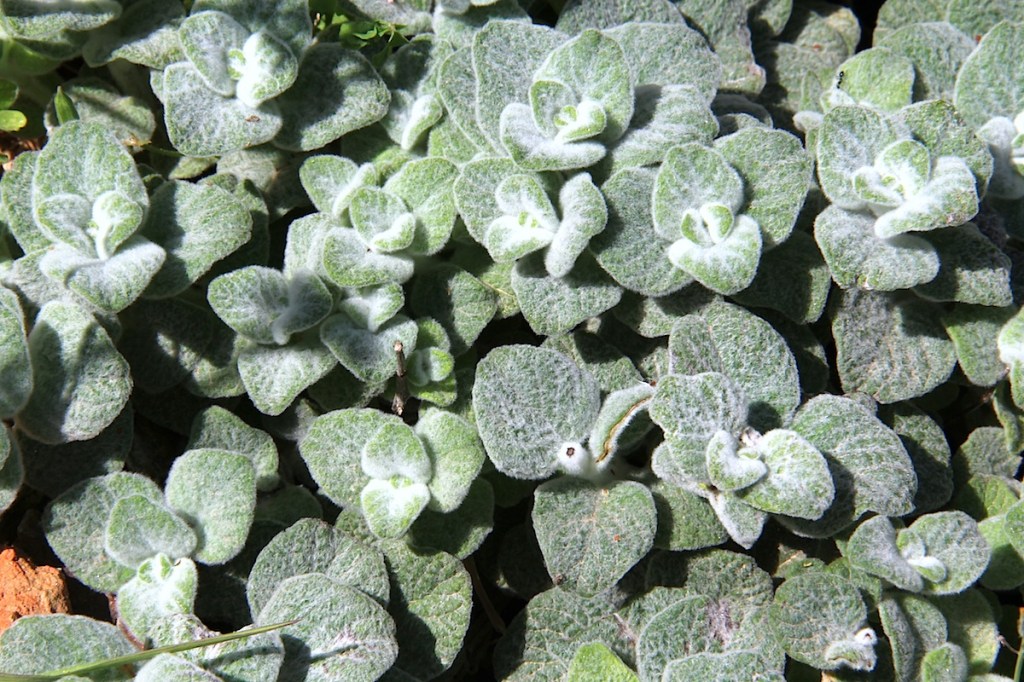
Dittany of Crete (Origanum dictamnus) is a perennial herb with velvety leaves, native to the mountainsides of Crete. It’s related to oregano and marjoram, which becomes immediately apparent the moment you smell it — it has that same kind of aroma.

A close-up of dittany of Crete leaves.
Photo by Peter Mansfeld.

In the past, it was used to decorate temples, as a kind of tonic and panacea, and as an aphrodisiac. It was also used to soothe stomachs, bring on late menstruation, and encourage wounds to heal. According to Aristotle, wounded goats would seek out dittany of Crete and consume it as medicine. (While this may be true, he also said that dittany helped them eject arrows from their bodies, which is… less credible.)

Really, dittany of Crete is mainly known for healing, not inviting in demons. Not only does it have a long history of use as a medicinal herb for specific maladies and general ill health, but it has also been referenced over and over again in fiction. In the Aeneid, Venus uses it to heal Aeneas. Beaudelaire references this in his poem Tout entière, where he proclaims that his lover is “entirely dittany” and therefore able to heal his wounded soul.

Even outside of Beaudelaire, dittany of Crete is also strongly connected to love. In the Cretan dialect, the herb is called erontas (έρωντας) which means “love.” Dittany-harvesters were called “love seekers,” and considered very brave and passion-driven. They’d have to be, in order to climb the tall, treacherous places dittany calls home!

In European folk magic, feeding a person dittany of Crete was said to make them fall in love with you.

Dittany (Origanum dictamnus): flowering plant.

In other esoteric arts, dittany is said to help spirits manifest (primarily by burning it to allow them to show themselves in the smoke) and to facilitate trancework and astral projection. Both Crowley and Blavatsky considered it a powerful magical herb.

A number of Greek dishes from Crete include dittany. Martini Rosso, red vermouth, includes it as a flavoring agent alongside many other herbs and fruits.

In fact, I was unable to find a single recorded instance of someone using dittany of Crete as a way to make someone susceptible to possession. The closest I could come was a rather large leap from its use as a way to help spirits manifest, and as an aphrodisiac. The thing is, dittany is said to help spirits manifest, not occupy people. But, if one were to generously interpret “aphrodisiac” and “love-inducing” as “increased suggestibility,” then one could see where a horror movie might get the idea that an herb that a) makes you horny, b) helps spirits appear in its smoke, and c) facilitates trancework could be a suitable fictitious catalyst for demonic shenanigans.

False dittany (Ballota acetabulosa (L.)
An illustration of “false dittany,” Ballota acetabulosa.

Be careful when you try to purchase dittany of Crete — the herb is classed as rare, and there are measures in place to protect it. As a result, the real stuff can be kind of expensive and not super easy to come by. Some shops will sell Dictamnus alba (fraxinella, gas plant, or burning bush), or even plain marjoram or oregano as dittany of Crete. Remember: Look for the fuzzy oval leaves and distinctive oregano-like smell.

I’ve only found this herb in its dried form and find that using it is much like using any other herb. Personally, I infuse it into a base of jojoba alongside other ingredients for a special oil that I make once a year for meditation and trance work. Otherwise, I don’t really have much use for it outside of this specific recipe. A tiny bit goes rather a long way.

Dried dittany of Crete is suitable for using in handmade incense. Mix it with other loose herbs and resins and spoon it over a lit block of charcoal. As mentioned above, it has been used in this way to help spirits manifest in the smoke.

You can also roll a candle in it. Anoint the wax with oil first, then give it a few rolls back and forth in some finely ground dried dittany. When you feel it’s ready, light it. Use a pink candle, anoint it with rose and jasmine oil, then roll it in ground rose petals, dittany of Crete, and a pinch (just a pinch) of cinnamon, then light it to get your romantic energies burning high.

Dittany of Crete is also suitable for jar spells, sachets, and other forms of container magic. It’s honestly a very nice herb with a delightful fragrance.

Really, Dittany of Crete is not nearly as dangerous as Hereditary makes it seem. I have a feeling they chose a somewhat obscure herb with an intriguing name, tangentially related to the goal of the movie’s antagonist, rather than inventing one whole cloth. It’s related to oregano. It smells like pizza. It’s a nice addition to a dream/vision oil. That’s really about it.

animals · Plants and Herbs

Tooth Folklore and Magical Properties

The other day, my Handsome Assistant and I had the chance to watch the movie Moon Garden. It’s a beautiful, strange, surreal, very dark fantasy about a (very parentified) little girl who suffers an injury and falls into a coma. While she’s comatose, she has to find her way through an industrial horror landscape to make it back to her family. The entire movie is done with practical effects, and it has some of the most striking imagery — and villains — I’ve ever seen. Particularly the main antagonist: Teeth.

(Admittedly, I was a bit disappointed that Teeth turned out to be the only villain. The Mud Witch looked extremely cool and I would very much have liked for her to have a bigger role.)

Teeth is a manifestation of emptiness. An anthropomorphization of a chattering teeth toy and her grandpa’s dentures. Human teeth can also be transient — the little girl is at the age when she’d start to lose her baby teeth, and Teeth’s decayed-looking maw is an embodiment of neglect.

Outside of Moon Garden, teeth still have meaning and symbolism. They’re useful, beyond their biological function. They’ve been at the root of myth, legend, and folklore for as long as humanity’s had any of those things (or teeth, for that matter).

In the US, western Europe, and other areas with a heavily European influence, there’s the Tooth Fairy. When children lose baby teeth, they’re told to put them under their pillows. Then, at night, the Tooth Fairy is said to come to trade a little bit of money for the lost tooth.
(Traditionally, anyway. Today, some parents have moved away from giving money and give small toys, stickers, or other treats as “payment” instead.)
In Italy, the Tooth Fairy is a little mouse named Topolino. In France, La Petite Souris. In Spain and other Spanish-speaking countries, El Ratoncito Perez. In Scotland, it’s a white rat.

Finland has a modern figure (or figures) known as Hammaspeikko, or “tooth troll.” The tooth troll isn’t a Tooth Fairy like figure, though. Instead, it’s an explanation for dental cavities that comes from a 1949 Norwegian children’s book. Eating candy lures in tooth trolls, and these trolls drill holes in teeth. Luckily, they can be scared away by brushing.

Close up of a mugger crocodile in Bangladesh.
He’s grumpy because he’s got all them teeth and no toothbrush. Photo by RatuL CR♠️ on Pexels.com

Interestingly, the Tooth Fairy doesn’t really have direct parallels in European myth or folklore. Some folklorists say that the idea comes from an old Scandinavian practice of tand-fé, a “tooth fee,” but this is unlikely. In the Norse Eddas, tand-fé is described as ritual in which a child’s mother would give them a small amount of money for the loss of their first baby tooth — no fairies involved.

Ditto for other old practices for dealing with baby teeth. In England during the Middle Ages, children were told to throw their baby teeth in the fire. If they didn’t burn them, they’d spend their afterlife searching for all of their lost teeth.

For the most part, the Tooth Fairy, tooth-burning, and tooth-purchasing do seem connected to one core belief: The idea that those teeth need to be either accounted for or destroyed. There may be a good reason behind this (and it’s not as heartwarming as needing something to put in a baby book or keepsake box).

In spellcraft, there’s the idea of including some “personal concerns” (sometimes called taglocks) in order to help the spell reach and act on its target more effectively. These can be pretty much anything — a piece of jewelry worn by the target, a scrap of fabric cut from their clothing, a shoelace — but the best are physically connected to the target. That means nail clippings, hair, or teeth.
These can be used to very good effect — like sending healing to someone through a poppet with a lock of hair inside, or creating a kind of protective magical decoy — but can also be used for ill. Hexes, curses, jinxes, and other attacks work a lot better when they have a good idea of who they’re going to!

In other words, if you didn’t want anyone to work malevolent magic on your offspring, you had better either keep hold of those baby teeth or make sure they’re totally unusable. Children were regarded as a common target of things like the evil eye or the jealousy of spirits, so it’s not a huge leap from “don’t compliment babies too much or they’ll be cursed,” to “better hide all those baby teeth from witches, just in case.”

Alternatively, children’s teeth were sometimes treated as a kind of talisman. In this case, you wanted to keep those teeth for good luck and success in battle.

Close up of hippopotamuses in a river. One hippo's mouth is open, showing their very impressive teeth.
The “success in battle” bit might work better if the teeth in question come from a juvenile hippopotamus, just saying. Look at those things! Photo by William Warby on Pexels.com

Sometimes, mothers would even swallow lost baby teeth, or encourage their children to swallow them.

Another common ritual involved offering the lost tooth to an animal, typically a rodent or other animal with strong teeth. The idea was that, if the animal received the tooth along with the appropriate prayers, the child’s teeth would grow in as strong as the animal’s.

Close up of a nutria, showing its strong, orange-hued teeth.
May your offspring have teeth as strong as those of the noble nutria. Photo by Petr Ganaj on Pexels.com

Teeth show up in more than just Tooth Fairy stories. In ancient Greek legend, the teeth of a dragon feature prominently in the story of the quest for the Golden Fleece and the tale of Cadmus.
King Aeëtes of Colchis demanded that Jason sow dragon’s teeth given to him by Athena in order to get the Golden Fleece. His daughter, knowing what was up, told Jason that warriors would spring up where the teeth were planted and, if he didn’t want them to turn on him, he needed to throw a stone between them. He did so, and the warriors turned on each other and battled to the death.
Cadmus, on the other hand, killed a dragon that served as the guardian of a spring dedicated to Ares, the God of War. Athena gave Cadmus half of the creature’s teeth and told him to sow them as he would seeds. He did so, and fierce warriors sprang up from the soil. He, like Jason, threw a stone into their midst and they all turned on each other. Only five remained standing, and they helped Cadmus found the city of Thebes.

In Chinese medicine, each tooth is said to be connected to a different organ through energy meridians. Pain in a tooth, then, indicates a problem or imbalance with that particular organ.

Ideally, you have a source of baby teeth. Otherwise, I’d strongly recommend against trying to seek them out elsewhere for magical purposes because 1) it’d hurt, B) it’s likely to be wildly unethical, and III) desecrating corpses is against the law.

A wild boar in close up shot, showing its curving tusks.
They might not be useful for biting, but those tusks are a defensive weapon nonetheless. Photo by Dario Fernandez Ruz on Pexels.com

That aside, human teeth are great taglocks for poppets, spell jars, and other workings. Still, all things considered, you’re probably better off sticking with a lock of hair or a few nail clippings.

Animal teeth are used for animal magic, or (in the case of canine teeth from predators) protection. They can be worn as amulets or talismans on their own or included in protective sachets.

Losing baby teeth is a rite of passage for most kids and parents alike. It’s a sign of growth and, depending on your culture, potentially a source of danger. Whether you still have your teeth saved in a keepsake box somewhere, or you’re creating ways to make visits from the Tooth Fairy special for your own kids, you’re partaking traditions with ancient roots.
(No pun intended.)

life

How to Protect Your Magical Stuff

About a week or so ago, I got a lovely message from someone who I wasn’t able to email back. In it, they asked if this site functioned as a kind of grimoire for me, and, if not, if I had any charms for protecting a hard copy grimoire or other magical text.

To the first point, I wouldn’t say that this site is really a grimoire for me personally. Right now, I have a pretty solid background in magical techniques and a running list of go-to ingredients to be able to do what I need to do on the fly. Magic in Druidry also tends to have a different emphasis than witchcraft and folk magic. I mostly keep this site because I have fun writing about folklore and exploring the connections between old beliefs, way-less-old traditions, and modern science.

I do have a small notebook and couple of pages in a notes app that I use for working out recipes. This is for when I’m working on a specific brew, incense, or oil and need to take notes.

As far as protecting things goes, this can be very important. I grew up in an abusive household headed by someone who went from staunch Catholic to American Evangelical, with all of the emphasis on fear, the End Times, and absolutely everything being Satanic. Every few months was another sign of the Apocalypse and a miniature Satanic panic. It was exhausting. The psychological aftermath of it is still exhausting.

Fortunately, there are a lot of ways you can protect yourself and your materials if you’re in a situation where you need to.

I’ll be honest, I’m not super into protection charms for hiding objects. I don’t have a real reason why, other than that I like to rely on more mundane means first. Still, a short, sweet protection charm, when slapped on over several other layers of security, can certainly be a welcome addition.

The easiest protection charm is an old Wiccan bit I picked up ages ago. It’s succinct, it’s simple, and it’s nice as an added layer on top of mundane infosec.

  1. Place the object in front of you.
  2. Hold your dominant hand over it.
  3. Channeling your energy into your hand, send it down into the object.
  4. Trace a pentagram over the object.
  5. Say, “With this pentagram, I lay protection here both night and day. And the one who should not touch, let their fingers burn and twitch. This is my will, so it will be.”
    (The original contained the line, “I now invoke the Rule of Three. This is my will, so mote it be.” I leave most of that out, as the Rule of Three doesn’t actually have any meaning in my tradition.)

Whatever you do, don’t just look up lists of “protection herbs” and throw a bunch of them together. Lists of magical correspondences are useful for some things, but every herb has a folkloric and often medical or scientific basis for its use. Carraway seed, for example, is usually invoked for protection against theft and loss. Good for keeping chickens and such from wandering off, not so much for keeping someone from reading your diary.

Also, the presence of these herbs may be a tip-off. Most regular notebooks don’t come dusted with a generous helping of bindweed and St. John’s wort.

Magical alphabets are writing systems that are sometimes said to have a unique power of their own but also function as cyphers. Some of them are 1-to-1 swaps for the Latin alphabet. Someone who isn’t well-versed in them would have no idea what they say and, even if they had an inkling, they’d have to find the right alphabet and painstakingly translate letter by letter.

You want to create something that an interloper wouldn’t be able to immediately decipher? A magical alphabet is your friend.

Magical alphabets can also be used to hide things in plain sight. Get a sketchbook, memorize a magical alphabet (or create your own cipher), and draw something. Anything. Write the information you want to record in your cipher or magical alphabet, incorporating it into the drawing or background. At most, it’ll look like asemic writing.

If you can’t have a handwritten magical text, the next best bet is to go online and start stashing stuff in weird places.

If you have an email address or app, start writing an email. Don’t send it. Let it stay in your “Drafts” folder. Use it to save whatever information is important for you.

Open up Notepad, Wordpad, or something like it. Write strings of gibberish and symbols. In the middle, write the information that you need to save. If possible, change the font to Wingdings. Save the file as something innocuous, preferably stashed in a program file somewhere on your computer. Few people are going to bother hunting for occult secrets in “Sims 4 > Mods > earringconfig.txt.”

Even better, set it to be “hidden,” stick it in a ZIP file and encrypt it, or password-protect it.

You can also start a free blog on something like tumblr, Blogger, or WordPress. Don’t access it through an app that you need to download, use the site’s interface instead. Don’t use a URL or username that you use anywhere else, especially not your actual name or birthdate. (For best results, use a common word you’d find in the dictionary. It’ll obfuscate your stuff in search engine results.) If you can, password protect it or mark it as private. Use that to organize whatever information you need. Clear your browsing history after each time you update it, and don’t save your login information to your computer or phone.

If you have an altar space or tools that you want to protect, do like the old heads did: Use the most mundane stuff imaginable.

I’m talking a stone to represent the Earth (or the pentacle, if that’s your jam). A mug, cup, or jar for a chalice. Your hand for a wand or athame. A scented candle (even if its unlit) for Fire or the hearth. A bud vase of flowers for the Tree.
(Of course, your tradition/path may call for all, none, or more of this, but you get the idea.)

The principle here is to strip everything down to its most basic. A fancy altar with a cloth embroidered with occult symbols, a towering pillar candle, a chalice, a ritual sword, a staff, and a cauldron is going to attract attention. A windowsill with a tea light, a bud vase, and a rock, not so much.

There’s an old trick that won’t exactly protect a book or small box of objects but can tell you when someone’s been snooping.

If you have long hair, pull out a single strand. Tie it around the book or box. It’s inconspicuous but will easily break when someone tries to go through your stuff. If you go back and your hair is no longer there, you know someone has read your grimoire or gone through your things.

There are some who’ll probably say, “But J., you’ve just told people how to find all of our secrets!” I don’t really think this will be the case, especially if you use several measures at once — save part of what you want to save in an email Draft, another part in an innocuous file, and another in a drawing. Even if one part gets found out, you can still maintain plausible deniability.

Having to protect yourself, your stuff, and your desire to learn is a pain. It’s demoralizing and disheartening. Unfortunately, it’s also sometimes necessary. If you have secrets you need to keep, it’s better to pile on both magical and mundane measures to make sure your stuff stays safe.

Plants and Herbs · Witchcraft

Soap Folklore and Magical Properties

I came across a rather strange argument the other day. One person mentioned “solid body wash,” which prompted another to go “so, soap?” This was followed by several people who either a) vehemently swore up and down that it was a marketing gimmick and there was no difference, or b) vehemently swore up and down that there was an enormous difference, but both c) could not explain why.

Focus photography of a bubble.
Photo by Pixabay on Pexels.com

I didn’t want to Kool-Aid Man in, all, “HELLO YES LET ME TELL YOU SOAP,” so I didn’t. Nonetheless, it gave me the idea to write this post — soap is a very important part of many magical traditions, and something most readers of this blog probably come in contact with every day. Sacred bathing, magical housekeeping, magical soap-making, herb craft, it all ties in together to create a vibrant, powerful, and useful set of magical techniques.

Okay, so. Just to get this out of the way — there’s an enormous difference between “soap” and “body wash.” Soap is specifically made of saponified fat. This is oil (or another fat) that has reacted with lye to produce salts that act to reduce the surface tension of water or reduce the tension where two substances interface. Like, for example, dirt or oil on your skin. Its molecules have a polar end that binds to water, and a non-polar end binds to other stuff.
Body wash is a detergent. Detergents are also made of surfactant salts, but their chemistry is very different. Detergents may be made of petroleum byproducts but are also often plant-based. While the polar end of soap is usually tipped with a carboxyl group, the polar end of detergent molecules is tipped with sulfonates.
Ultimately, as the end user, the biggest difference is this: If you have hard water, soap sucks. It reacts with the minerals in your water to produce soap scum (stearates) a waxy residue that sits on your tiles, your clothes, and your skin.
Detergents don’t produce soap scum the way soap does because they don’t react as readily with hard water minerals and have a higher pH than soap, so they tend to work better and have fewer issues in water that has a high mineral content.
Body wash isn’t really a chemical term — a body wash can be soap based but is usually a detergent because soap tends to strip and dry out skin. They also often contain ingredients designed to benefit the skin beyond cleansing, like moisturizers or exfoliants.
Does this make a difference in a magical sense? Not really, though the ingredients that make up a soap or detergent can be invoked for their own properties. Olive trees, sunflowers, and so forth all have their own energy to contribute.

A close-up of rows of wrapped bars of soap.
Photo by Polina Tankilevitch on Pexels.com

(Also, it should be noted that you can make soap less reactive in hard water. The addition of chelating agents or various forms of vitamin C can help prevent some of the formation of soap scum. It just requires some recipe tinkering.)

One bit of folklore surrounds the origins of the word “soap.” “Soap” is said to come from Mount Sapo, in Italy. In ancient Rome, there was a bend in a river at the base of the mountain. People would gather to do their laundry there because their clothes got cleaner than they did elsewhere.
Interestingly, this mountain is also where people conducted animal sacrifices. The liquefied fat, combined with the pyre ashes, reacted and ran/was washed by the rain down into the Tiber River. This fresh water, combined with unintentional soap, led to much cleaner togas.

This wasn’t the first soap, however. There are recorded mentions of using soap to wash wool going back as far as 2800-2500 BCE. Some Sumerian cylinders from 2200 BCE specifically mentions “fats boiled with ashes” — an old recipe for soap.

Bath with lemon slices in water and lit pillar candles on the floor.
Photo by Monstera Production on Pexels.com

Magically, bathing is used to both banish and attract. There are magical bath recipes for everything from breaking curses to getting a raise. They usually involve making a decoction of herbs in water, straining out the herbs, and adding the liquid to the bathwater.
Magical soaps are formulated with herbs and oils that align with specific intentions. They provide a somewhat more portable and less labor-intensive way to take a magical bath. A shop owner or salesperson, for example, may carry a bar of soap formulated to attract prosperity so they can wash their hands with it throughout the day.

This idea carries through to housekeeping. Floor, window, and door washes work the same way — by using a decoction of herbs or dilution of oils to either bring something into or get something out of a home. Back in the day, people in various cultures had other ways of achieving this goal. For example, smoke cleansing a house with juniper in order to banish sickness, or bringing in fresh sweet-smelling strewing herbs to cover a floor. Now, there are hard floors and glass windows that get washed.

Soap isn’t always associated with positive things, though. Soap Sally, an Appalachian and Southern villain figure, is said to wait with her basket for children who try to slack off when doing chores. She shapeshifts and convinces the children to follow her back to her cottage, where they gorge on candy and fall asleep.
Once asleep, Soap Sally would render the children in her stewpot. Their melted fat would be formed into hand-shaped candles or soaps, which she’d send back to their families. The families would end up burning or washing up with the remains of their own children.
Soap Sally appears to have roots in stories like Baba Yaga or Hansel and Gretel, as well as being a kind of “morality villain” to put the fear in children who’d rather play and goof off than do household chores.

Yes, yes, I know.
Who needs to be told how to use soap?
But this isn’t about just washing up — it’s about using soap for a specific purpose.

In the section above, I mention sacred bathing to attract or banish things. The process usually goes something like this:

  1. Take a regular bath or shower to physically clean yourself.
  2. Drain the tub or basin, and refill with fresh water.
  3. Add a decoction of herbs that match your intention.
  4. Declare your intention as you add the strained decoction. (Some traditions add that you should stir it into the bathwater in a clockwise direction, using your dominant hand.)
  5. Get into the bath and fully immerse yourself.
  6. Remain in the bath until you feel it’s had the intended effects.
  7. Get out of the bath. In some cases, you may be instructed to allow yourself to air dry so you don’t “wipe off” the effects.
  8. Dispose of the bathwater. In some traditions, this means taking a basin outside and throwing it over your left shoulder, toward the rising sun.

Whether the washing is “attracting” or “banishing” depends on your intention and the ingredients you add. Want to attract a lover? Rose petals, vanilla, basil, and jasmine are nice. As you bathe, you’ll be absorbing the sweet scents and loving energies from these plants. Want to banish unwanted things? Salt, rosemary, rue, and hyssop. As you bathe, you’ll be washing away whatever you don’t want.

Small bars of natural soap on linen dishcloths
Photo by Vie Studio on Pexels.com

Having a specially formulated magical soap can make this process easier. You still take a regular bath first, in order to clean yourself, but from there you just have to get into a fresh tub of water, soap yourself thoroughly with the magical soap, then rinse off.

Add a bit of magical soap to a bucket of mop water, then wash your doors, windowsills (maybe not the glass, if you’re hoping for a streak-free shine), and floors. Go from front to back to bring things into your home, and back to front to banish or push things out.
Specially compounded magical floor washes and soaps are largely found in the Hoodoo tradition, but just adding decoctions of herbs (or acids, like vinegar or lemon) is a bit more widespread.

The most basic “washing up” recipe I know of involves adding salt and lemon juice to a bucket of water, then mopping/washing walls, doors, and windows with it to help clear out old, unwanted, or stagnant energy. Pretty simple.

Whether soap originated from the accidental combination of animal sacrifices and a river, or the work of ancient Sumerian scientists, the idea of washing with soap or detergent has become ubiquitous in modern societies. When you couple the act of washing with herb lore and magical techniques, it can become much more than the sum of its parts.

(Also! I’ve gotten a few messages through the site’s Contact form lately, but they don’t include valid email addresses. If you’d like a reply, please, please double-check and make sure that your email address is correct. I’m not going to save it or sell it or put you on an email list or anything, it’s just important if you’d like me to email you back. Thank you!)

Plants and Herbs

Needle and Pin (and Other Sharp Object) Folklore and Magical Properties

The desire to do things correctly, by the letter, is something that I think plagues everyone who’s new to witchcraft (or, really, any type of magical work). I’ve seen it said that there’s no one way to do magic, but there are infinite ways to do it ineffectively, and I wholeheartedly agree with this sentiment. That said, it’s not always that important to have the exact ingredients that a spell, charm, or formula calls for. As long as you know what they’re doing in there, you can usually figure out workable substitutions.

That’s why I wanted to write a post about sharp stuff. Not any sharp stuff in particular. Just… you know. Sharp things. Pokey bits.

Where do I even begin?

Think of every story you’ve ever heard about a sword, or a needle, or a thorn. Think about idioms like “to needle someone.”

closeup photo of cactus plants
Photo by Madison Inouye on Pexels.com

Arthur receives Excalibur, and it confers kingship upon him. Swords are a symbol of sovereignty here because they represent force: both the force needed to maintain one’s position as ruler, and the force needed to defend a country.

A lion receives the business end of a thorn in his paw, and it weakens him to the point where he needs a mouse’s help. Here, the lion — a strong, symbolically dominant figure — is brought down by the pain of something as small as a thorn. A mouse pulls it free, and the lion is in his debt.

It can be as large as a scythe, or as tiny as the hairs on a spider’s belly. Regardless of the pokey thing in question, the message is clear: As long as you’re on the right end of it, you’re at an advantage.

Roses, holly leaves, hawthorns, and blackthorns are pokey to discourage herbivores. (Interestingly, holly leaves don’t really start out all spiney-looking. They re-grow that way as a response to browsing animals, in order to keep from losing any more leaves than strictly necessary.)

Even the thin, needlelike leaves of conifers and cacti are a defensive mechanism, albeit one that protects them against the elements. Cacti leaves are needles to keep them from losing precious moisture to the dry desert air. Conifer needles keep them from losing moisture, holding on to too much heavy snow, or being blown over in harsh winter winds.

Needles and pins are used in magic to “pinpoint” the effect of a spell or charm. Jab them in a poppet, and you can send healing into an arthritic joint, or inflict pain and debility instead.

Sharp tacks in brown round container
Photo by cottonbro studio on Pexels.com

Athames and swords are used in some traditions as a way to direct energy from their points. This is in contrast to ritual knives, which are generally working tools used for mundane tasks like harvesting herbs, cutting offerings, and bloodletting. Even though they’re not strictly “magical,” these working tools still have the same symbolism — these tools are what allows the user to obtain what they need, whether it’s a leaf, a slice of cake, or blood.

Blackthorn spines, porcupine quills, sewing needles, and old nails are all used in defensive and offensive magic alike, generally in various forms of sympathetic magic. Jab a representation of your target, and the idea is that the target themselves will feel the effects. Fill a jar with sharp things, hair, and urine, and the idea is that your hair and urine will attract malevolent energy sent your way, while the sharp things ensnare and poke at it.

When sharp things are involved, it usually doesn’t matter exactly what that thing is — the important aspects are a) the size, and b) that they’re sharp. A protection jar spell that calls for straight pins can use sewing needles, rose thorns, or even the itchy hairs from rosehips instead. A spell that calls for a pin with which to inscribe a candle will work just as well with a knife, or even the tip of a sharp stone. A poppet spell that needs pins and needles will work just as well with porcupine quills.

As I mentioned above, the symbolism of sharp objects is pretty straightforward. Ideally the pointy end should (symbolically) go in the other guy, for good or ill.

When it comes to directing energy, they are an aid to visualization — an extension of the index finger, commanding and pointing and saying, “This is my will, so it will be done.”

When it comes to apotropaic magic, they are a trap. Like the quills on a hedgehog, the stinger of a hornet, or the studs on a leather jacket. They represent the fate of someone (or something) that decides to cross you. This is why they’re employed in various magical decoys, like witches’ bottles.

When it comes to offensive magic, they are weapons. Not in a literal sense, but they represent a sharp, decisive action, or even a physical or emotional pain. They’re the needles poked into a poppet, or the shaken spell jar filled with hot peppers, broken glass, and a photo of an enemy.

Broken glass bottle in a gutter
Photo by Suzy Hazelwood on Pexels.com

In various online magical circles, people joke that we’re all hoarders. We save jars, lids, corks, scraps of fabric, old nails, ribbons, and assorted junk, because there’s immense potential in everything and you never know when it’ll make itself useful. I might dispute the “hoarder” label myself, but I’d also be lying if I said I didn’t have a drawer full of junk-that-I-might-need-for-a-spell-some-day.

Sharp things are symbolic of polarity. The safe and the unsafe. The sharp and the dull. The defensive and the offensive. The sword that cuts, and the scalpel that heals. They’re a pretty simple symbol, but it’s this simplicity that makes them versatile, powerful tools.

life · Neodruidry · Witchcraft

A very happy Samhain!

Despite popular depictions of Samhain/Halloween, it’s not really a major holiday for me in a religious sense. It’s more or less New Year’s. There are some events here and there — workshops on ancestor veneration, dumb suppers, and such — but it’s not quite as big for me as the solstices and equinoxes are (especially Mabon).

This year, we had tentative plans to have dinner and watch movies with friends, but that fell through. Instead, it was handing out candy to trick-or-treaters, doing small, homey things, and holding a spirit feast.

Elegant dinner table with floral centerpiece
Photo by Alina Skazka on Pexels.com

Dumb suppers are a traditional way to celebrate Samhain and involve sharing a meal in silence with the ancestors. Spirit feasts are a bit different — they’re not necessarily silent, and there are a lot more invitations to go around.

Dumb suppers tap into a kind of sacred silence that’s part mourning, part veneration, part listening and being receptive. The intention is to pay attention to the spirits of the ancestors, rather than the noise of living beings. Sometimes, people use this as a time for divination by listening for the voices of the dead.

Close up photograph of two lit sticks of incense.
Photo by Abhas Jaiswal on Pexels.com

When I conduct a spirit feast, on the other hand, it’s more like a party. Deities, spirits of nature, spirits to whom I may owe a debt, and spirits of ancestors (blood-related or otherwise) are all invited. I may offer food (this year, for example was fresh-baked biscuits with peach honey butter). I usually also offer incense, candles, liquor, tea, flowers, honey, and/or perfume. I play music (usually the lyre or dulcimer guitar). I read poetry. I tell stories or jokes. I put new artwork on my altar.

The atmosphere and focus are a bit different. It’s less about communing with the dead, and more about offering the best of what I have to all of the people, animals, plants, elements, places, and gods that have made me who I am.

I do this year-round, but Samhain makes it a bit more special.
Plus, it’s easier for everyone to attend.

This year, I’m honestly looking forward to winter. I have a lot of small-scale stuff to do to prepare for spring and summer, and I’m excited to get to it. I have art to make, wood to prepare for wands, trees to prune, and areas of the garden to set up for vegetable and herb beds. Honestly, I’m almost more eager to do that than I am to see the payoff later on.

I’ve built up a pretty good stock of art, wands, and jewelry. I’m starting to study incense making and botanical perfumery. I’m super stoked to find actual markets to vend at next year, so I can expand beyond just selling things online. It’s a little scary, but even more exciting.

No matter whether you celebrate Samhain or not, here’s hoping all of you have had a peaceful, happy October 31st and are looking forward to the months ahead!

Plants and Herbs · Witchcraft

Wormwood Folklore and Magical Properties

Wormwood (Artemisia absinthum) is an African/Eurasian herb and relative of mugwort that’s widely grown in Canada and the US for its ornamental, medicinal, and even magical uses. It’s also a key ingredient in genuine absinthe, and is purportedly why the drink was rumored to cause hallucinations (but more on that in a bit). While the medicinal properties of A. absinthum have since been superseded by other herbs and pharmaceuticals, it’s still a powerful magical ingredient and a beautiful ornamental plant.

Wormwood is a very bitter herb, so much so that it’s been used over and over again in literature as a metaphor for bitterness. Shakespeare mentioned it. The Bible mentioned it.
This bitterness may, in part, be a source of its hepatoprotective properties: Bitter herbs are said to trigger the release of gastric juices, including bile from the liver, which helps sort of flush things out. This is why herbal digestifs and digestive bitters became a thing. There’s not a lot of peer-reviewed research on the subject, but bitters have a very long history of safe use as digestive aids.

Wormwood is also one of those magical plants that doubles as a pest repellent. This is something we see pop up over and over. There’s a logical progression from “herb that keeps disease-carrying pests away,” to “herb that keeps all unwanted influences at bay.” This makes wormwood valuable for protection and purification.
Interestingly, I have also seen wormwood listed as an ingredient for spirit calling. I don’t know if I’d use wormwood alone for this, but it certainly seems like it’d be a useful ingredient to make sure you’re calling the right spirits.
(I see parsley mentioned with wormwood pretty frequently, which is funny because it’s another weird one for spirit work. It is listed both as a spirit attractant and repellent, go figure.)

Leaves of a wormwood plant in close up photography.
Photo by Veronica on Pexels.com

This herb also plays a protective role in Slavic lore. The rusalka is an entity, said to be the spirit of a young woman who died by drowning, who is associated with life-giving rain… and, after the 19th century, with madness, death, and trickery.
Carrying wormwood was a way to guard against rusalki. They are said to target young men, so guys were told to carry a sprig of wormwood with them wherever they went. A rusalka would inevitably ask if they were carrying wormwood, or parsley. Say “wormwood,” and she’ll scream and try to flee, at which point you must throw the herb at her eyes. Say “parsley,” and she’ll ensnare, drown, and/or tickle you to death.
(As someone who is a) ticklish, b) hates it, and c) was frequently tickled against my will as a child, I think I’d rather drown.)

Wormwood is also connected to divination. It’s a relative of mugwort and has many similar properties. The two aren’t entirely interchangeable, but you can often substitute one for the other in certain situations. Wormwood’s focus seems to be more connected to protection and purification, while mugwort is more psychic and divinatory.
This herb is sometimes used in love magic, but not as an attractant — its main virtue seems to lie in love divination. There are multiple recipes and instructions for tying wormwood leaves to one’s forehead, placing them under a pillow, or brewing them with other herbs and honey and anointing oneself in order to get a vision of one’s future spouse.

Wormwood is tenuously connected to the Greek goddess Artemis (and Roman goddess Diana) through its name. However, the genus name Artemisia may be a reference to Artemisia II of Caria, and not Artemis directly.
In practice, this herb is considered to be ruled by Mars and Mercury, while Artemis and Diana are Lunar deities.

Wormwood is associated with Fire (which I can certainly see, as it’s a Mars-ruled herb that likes sunny spots and dry ground), but I’ve also seen it listed as an Air plant.

Contrary to popular depictions, absinthe wasn’t some kind of magic hallucination juice. Genuine absinthe does use wormwood, which contains the compound thujone. Thujone can, in concentrated form and large doses, cause hallucinations, convulsions, and death, but is present in absinthe in such tiny amounts that it doesn’t really do a whole lot. (Ironically, the compound absinthin is an anti-inflammatory and doesn’t have much to do with any of that.)
Absinthe’s hallucinatory effects have more to do with its high alcohol content (the stuff is about 50-75% ABV), the power of suggestion, and the fact that unscrupulous absinthe makers started adding copper salts as an artificial green coloring around the late 19th century.

Assorted liquor bottles.
Photo by Chris F on Pexels.com

During its heyday, absinthe was also much enjoyed by counterculture movements. This led to it being vilified by social conservatives, who had every motivation to hype up its “dangerous, toxic, and hallucinatory properties.”
So, what do you get when you mix an herb that might, potentially be toxic in specific circumstances, a buttload of alcohol, a bunch of bohemians, cheap absinthe full of poisonous colorants, and a bunch of social conservatives? You get a liquor with a legendary reputation as a toxic hallucinogen, and an unfair ban.

You can grow Artemisia absinthum fairly easily. Like mugwort, it grows in bright, dry, disturbed soil. It also self-seeds readily, so be prepared to either keep it confined to an area where it can’t do that (like a pot on a patio), deadhead the flowers, or keep up with rigorously removing new baby wormwoods as they pop up.

While wormwood isn’t as dangerous as popular depictions would have you think, it’s still a plant with toxic components that should be treated with respect.

Close up of common wormwood.
Photo by Jeffry Surianto on Pexels.com

Wormwood has historically been used as a flavoring herb. If you want to use wormwood internally, do so under the guidance of a qualified herbalist. There are multiple health and pharmacological contraindications at play here, so it’s important to be careful.

Otherwise, dried wormwood makes a wonderful addition to protective bottles, sachets, and other charms. You can:

  • Grind it into a fine powder and sprinkle it on or around anything you wish to protect.
  • Burn it and waft the smoke around an object or area you wish to purify.
  • Keep some dried wormwood (perhaps with its cousin, mugwort) with divination tools to keep them cleansed and ready for use.
  • Soak it in water and asperge spaces, objects, or people to cleanse them.
  • Soak or steep it in water and use the resulting “tea” to wash your front and back doors for protection.
  • Grow wormwood near doors for protection against malevolent energies, entities, or bugs. (For real, a lot of what we consider pest insects really don’t seem to like it.)

These aren’t the only uses for this herb, of course, but they’re probably the ones most in wormwood’s wheelhouse. You can also use it for love divination or spirit work, but this may depend heavily on your specific tradition, techniques, and situation.

Wormwood is a beautiful, interesting, complex, and contradictory herb. It’s a poisonous healer, a repeller and attractor of spirits, and an invaluable addition to a magical herb collection.