life · Uncategorized

What’s going down in Rock Creek (and why it’s a big deal)

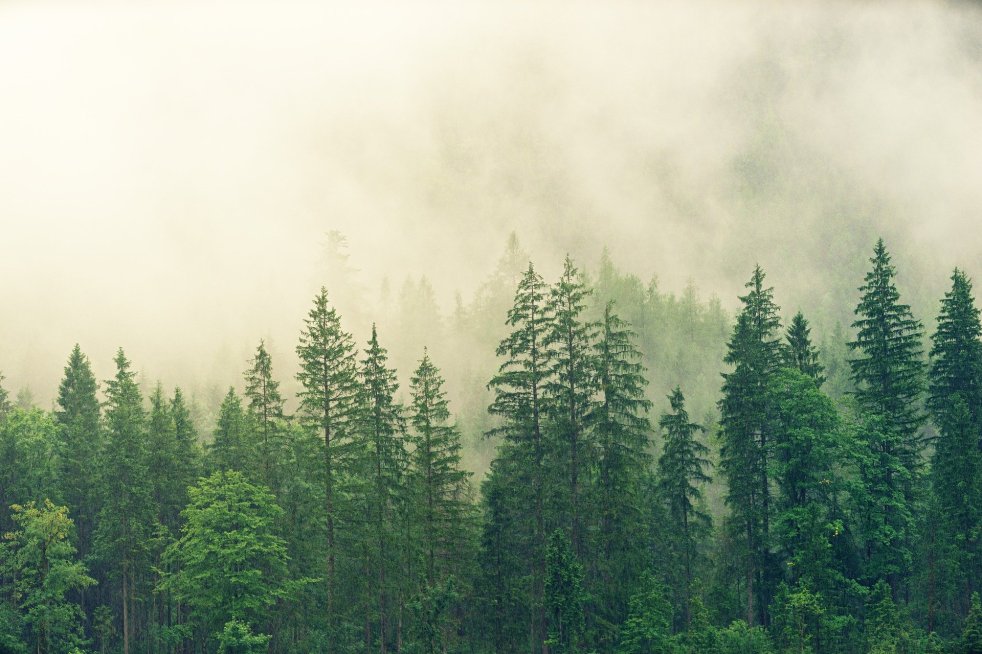
This weekend, my Handsome Assistant and I attended an educational picnic to save Rock Creek, which is currently at risk from the continued expansion of a golf course. Construction has already begun, parts of the forest are being turned into mulch as we speak. Over 1,200 trees are slated to be cut down, including some that would otherwise be considered special or heritage trees under DC law.

This deforestation is part of an effort to expand multiple golf courses throughout the DC area.

Yeah, I know.

Even without further examination, I mean — who is building golf courses right now, of all things? The answer is the National Links Trust. While people worry about paying rent and getting their next meal, the National Links Trust apparently thinks that the public yearns for more golf courses. It’s something that sounds almost moustache-twirlingly villainous. Like the plot of an after school special where the heroes are a band of plucky cartoon kittens. Unfortunately, this is actually happening.

What’s the deal with the National Links Trust?

The NLT’s stated intention is “positively impacting our community and changing lives through affordable and accessible municipal golf.”

This is something that doesn’t sound… terrible, barring the whole “people-can’t-afford-food-right-now-you-rich-weirdoes” aspect. However, here’s what the NLT isn’t saying:

Lem Smith, NLT board member, International & Federal Government Affairs Manager for Chevron, and Former VP, Federal Government Relations for the American Petroleum Institute.
  • One of the board members, Lem Smith, is the International and Federal Government Affairs Manager for Chevron. The Chevron responsible for dumping 16 billion gallons of toxic wastewater into the Amazon basin. The Chevron currently denying millions in fossil fuel transit fees to the Palestinian people. The Chevron currently funding apartheid and war crimes. That Chevron.
  • While they claim that they’re attempting to mitigate the harm done by the deforestation of Rock Creek (harm that is, once again, completely unnecessary and unasked for), they are not adhering to the best practices for doing so. There are multiple ways to mitigate the damage of both removing old growth trees and the presence of invasive plants, but their policy seems to be to mulch everything and call it good.
  • They’re not actually accountable to anyone. They can make half-hearted promises to plant meadows and maintain the forest all they want, but there is no incentive for them to keep them and nothing to stop them from doing whatever they want.

They claim that they’re willing to dedicate unused golf courses to being replanted as meadows. This is not a suitable compromise for multiple reasons:

There’s also the fact that it doesn’t seem like anybody actually asked for this. When asked, local golfers appear to be ambivalent at best. The NLT was able to scrape together some who are in favor of it to make a public appearance, but these don’t appear to reflect the opinion of the majority of the new course’s ostensible user base. They are absolutely not reflective of the larger population of DC and the adjacent area.

Here’s why it matters (no matter where or who you are).

So the NLT is attempting to build a golf course. Like I said, this is a huge deal and will have far-reaching effects even if you don’t live anywhere near DC. Here’s why:

Old growth areas are carbon sinks.

It is generally thought that old forests cease to accumulate carbon, but this isn’t the case. Research shows that in forests between 15-800 years of age, “net ecosystem productivity (the net carbon balance of the forest including soils) is usually positive.” What’s more, carbon doesn’t cease to exist once it’s taken up. When these areas are disturbed, that carbon is liberated as plant matter decays or is burned. Rather than trees dying naturally over time, breaking down, and having their nutrients (including carbon) absorbed into the mature forest, deforestation disrupts this natural cycle.

Rock Creek is part of the Potomac watershed.

Trees support healthy watersheds. Rock Creek itself connects to the Potomac River, and eventually drains into the Atlantic Ocean via the Chesapeake Bay. Trees contribute to healthy waterways by anchoring soil in place, preventing erosion. Their root systems (including the mycorrhizae within the soil that surrounds their roots) help capture nutrients. Without these systems in place, they would otherwise flow into the water to encourage algal blooms and fish kills, a process known as eutrophication. Removing these trees and replacing them with grass that requires a regimen of fertilizers and treatments to maintain is a terrible idea.

The last thing anyone needs is golf course runoff oozing into our local waterways.

Golf courses need a lot of water.

I already mentioned supplemental irrigation, but I’ll say it again: Golf courses need a lot of water. They are generally watered with sprinkler systems that lead to a lot of waste and loss through evaporation. This also puts strain on existing systems, reducing the availability of water for other uses and increasing scarcity issues. Only about 12% of golf courses surveyed use recycled water, and even with more efficient irrigation methods, turf grass remains a very wasteful use of land and water.

We’ve already had droughts here. We’re already told not to use any more water than necessary during the summer because of scarcity issues. Why are they building a golf course?

This could increase the transmission of avian flu.

I’m not being hyperbolic when I say this. Destruction of wildlife habitats drive populations of wild animals into greater contact with humans. If old growth trees are destroyed, the thousands of birds that they house and feed get pushed elsewhere. That “elsewhere” is going to be people’s back yards.

How does that relate to the H5N1 virus? More displaced birds mean more contact between wild birds and flocks of backyard fowl. It means more indoor-outdoor cats that come in contact with potentially infected birds. It means more bird feces on cars, decks, and feeders. A higher overall population of birds congregating in the same feeding and shelter areas means a higher risk of potentially zoonotic H5N1 moving through that population.

Birds aren’t the only ones that’re going to be displaced, either. Look for more conflicts with foxes, raccoons, rodents, and coyotes, too.

If it was living in that part of Rock Creek, it’s gonna need a new place to go. In an area as densely populated as DC and the surrounding suburbs, there aren’t many other options.

This further undermines Washington, DC, as a political entity.

Washington, DC, has been pushing for statehood for some time now. (A significant part of the reason why it keeps getting struck down is that DC would be a majority blue state, so it benefits the Conservative party to avoid allowing it to have any more representation than it already does.) While it isn’t a state, DC does still have home rule in some aspects. For example, DC’s tree law provides numerous protections specifically for heritage trees. Removal of a tree that qualifies as a “special tree” requires a permit. Healthy heritage trees cannot be removed, period.

Rock Creek is part of the National Park System. As such, even though a significant portion is within DC, DC isn’t able to enforce its tree laws to protect it. This inability to protect trees within its area further undermines DC as a legal and political entity.

The National Park Service is part of the problem.

Rock Creek is a national park, but it hasn’t been maintained as one. Invasive plants are a significant issue, and one that the National Park Service hasn’t adequately remedied. There are local people who are trained as Weed Warriors, who are able to legally remove invasive plants. However, there’s only so much they can do.

Part of the inception of the National Park Service was to push Indigenous Americans off of their ancestral land, with the claim that the land must be “preserved.” (Madison Grant helped launch the national parks movement — he also wrote The Passing of the Great Race, which gave a very detailed account of his negative views of Indigenous people, Black people, and immigrants.) In reality, the land in the National Park System was being preserved just fine while its original stewards were living there.

The neglect of Rock Creek shows that this land is not being protected or preserved. Furthermore, its current state has incentivized the NPS to sell part of Rock Creek in order to have it cut down and turned into a golf course. The idea is, I guess, that the National Links Trust would do the preserving instead, by… cutting the trees down and turning the land into a putting green.

It’s all so, so ridiculous, and it’s a terrible omen of things to come. Nothing good will come of the NPS being allowed to neglect public lands, then sell them off.

Light pollution is going to be a problem, too.

In addition to the loss of exceptionally old trees, biodiversity, and wildlife habitat, the presence of a golf course will increase light pollution in the area. The plans call for a driving range that will be lit through the night hours. This will disrupt nocturnal animals, including (especially) insects. We’re already experiencing a dramatic drop in insect populations. We don’t need a @#$%ing driving range that nobody asked for to begin with.

The land is removed from public use.

Right now, you can just go to Rock Creek. You can walk around. Picnic. Bird watch. Have a grand old time.

Already, the area of the forest that is earmarked for cutting has been removed from public use. You can’t just go there — people who have have been told to leave.

Meadows aren’t forests.

Even if the NTL carries out their plan to turn unused golf courses into meadows, meadows do not provide the same benefits as forests. I’ve been very vocal here about my efforts to remediate the immature, hard clay soil and turn it into mature soil. Cultivating turf grass is terrible for soil and doesn’t allow it to mature.

So here’s a bunch of immature soil that’ll be used to grow some (one can hope, but certainly not assume) native flowers and grasses. This will take over a hundred years become anything like the area that’s currently being cut down, in a process known as forest succession. While meadows are certainly better than the sterile monoculture of a putting green, they do not play the same role or have the same benefits as a century old forest.

Here’s what you can do.

Right now, the easiest thing to do is to boycott Chevron and its associated companies. People across the US and around the world are rejecting Chevron. Coupled with lower sales of jet fuel and other factors, Chevron recently reported a loss for the first time since 2020.

This effort to turn part of Rock Creek into a golf course is just a continuation of Chevron’s ongoing pattern of land acquisition and destruction. They are promoting this destruction via the National Links Trust. If you are interested in helping to put a stop to this, please visit Defend Rock Creek’s Linktree for further steps that you can take.

life

Happy Spring Equinox!

As I write this, it’s the first day of spring. There’s an Ostara celebration this weekend, things are coming up in the garden, and the crows have returned from their winter perambulations. Happy spring equinox!

Sadly, I probably won’t be able to make it to the big ritual and feast this weekend — it’s a bit of a hike for my Handsome Assistant and me, and it’s been a rough week. (He’s had stress from his not-being-my-assistant-job, I started my meds for my seasonal allergic asthma again, and we’re both tired of the constant stress of the news cycle. We’re pretty much wiped out and a long drive, sadly, probably isn’t in the cards.)

All that aside, I’m excited about the changes I’m seeing in the garden. I’m going to go through and do a bit of a bigger inventory soon, but, for now, I’ve been noticing buds on the persimmon, apple, and plum trees, the return of the raspberries, buds on the roses and blueberries, and new growth in the yarrow and sage plants. The tulips and daffodils I planted are also returning, and they’re looking really good so far.

Unfortunately, there’s some bad news. The big maple tree seems to be infested with a native species of oak borer. It’s dropping more limbs at an accelerated rate, and there are tons of larvae under the bark. (The woodpeckers, on the other hand, think this is a wonderful development.) The trouble is, even assuming the tree isn’t too far gone to be saved, the treatment of choice is injection with a neonicotinoid pesticide. Neonicotinoids are controversial, and for good reason — while they’re very effective, they’re also nonspecific and terrible for non-target species. They’re notorious for killing bees, but bees aren’t the only ones that they harm. As much as I want to save this tree, I can’t do it at the expense of the insects that I’ve been working so hard to attract, feed, and shelter here. We’re losing too many bugs as it is.

Close-up of a maple leaf.

Since this is a native species of borer, the fact that an infestation has progressed like this so quickly means that there’s an underlying problem. Treatment with pesticide would, therefore, be a bandaid solution at best. I don’t know how old this tree is, just that it’s mature. I know that the yard is (still, mostly) immature, hard, heavy clay soil, stemming from years of cultivating turf grass. We haven’t lived here that long, and I don’t know all of the stressors that the tree has experienced. I only know what it’s told me and what I’ve witnessed in the brief period of its rapid decline. I really, really don’t want to lose it, but I don’t know what to do that wouldn’t just be a temporary solution that would end up making so many other things worse. It’s a sucky situation to be in for everyone — and everything — involved.

Plus… As annoyed with them as I am, the native borers belong here, too. Unlike invasive borer species, they evolved to have a place in the local environment and are a food source for several important species of parasitoid insects and insect-eating birds. They wouldn’t even be a problem if there weren’t something else already wrong.

The spring equinox is a balance point. The word “equinox” means “equal night,” and stems from the fact that this is the time when the length of daylight and night hours is equal. From now until the autumnal equinox, the daylight hours will continue to lengthen.

Balance means taking the good with the bad. It’s life and death. It’s the decay of autumn’s leaves that feed the soil and make way for new growth. As much as I don’t want to lose this tree, I know the end might be coming and I’m grateful for all it’s done in its life.

Things leave, things return, and new things arise. The important thing is not to dwell on the loss, but to build on it and sow the seeds of things to come.

Neodruidry · Plants and Herbs · Uncategorized

Cedar Tree Folklore & Magical Properties

I’m not a fan of fake greenery. While it can definitely amp up a room’s decor when it’s judiciously combined with real plants, I always end up forgetting to maintain it until it’s faded, dusty, and doing the exact opposite of helping things look fresh and natural. Blegh.

Anyway, when it comes to decorating for Yule, my Handsome Assistant and I go for fresh greens. There’s a florist nearby who sells trimmed branches of various evergreens pretty cheaply. Combine a few of them with some wired ribbon, and you can make a very pretty swag or garland without spending much money at all.

A close up of fanlike American cedar branches.
Photo by Abdul Zreika on Pexels.com

This year, we picked up the cutest little potted Alberta spruce tree. We’re keeping it indoors until spring, at which point I’m going to repot it and set it outdoors. Next winter, it’ll probably still be small enough to fit in the living room and be next Yule’s tree, too. Once it’s outgrown its pot, we’ll plant it in the front yard.

We also picked up some trimmed branches from an incense cedar tree (Calocedrus decurrens), which I used to decorate table tops and the top of our curiosity cabinet.

Since we’ve been taking down our Yule decorations and cleaning up the shed bits of greenery, I thought now might be a good time to look into the folk tales and magical associations of cedar trees.

First things first: “Cedar” isn’t a very exact term. True cedars are chiefly found in the Mediterranean, but there are also quite a few unrelated American species referred to as “cedar.” True cedars have needles, while American species have flat leaves, like scales, that form delicate fernlike or fingerlike structures (as seen in the photo above). There are only four species of “true” cedar: cedar of Lebanon (Cedrus libani), Atlas cedar (C. atlantica), Cyprus cedar (C. brevifolia), and deodar cedar (C. deodara). American cedar species are actually members of the cypress family, Cupressaceae!

The needles of an Atlas cedar, one of the "true cedars."
Photo by Feyza Dau015ftan on Pexels.com, showing the needles of a “true cedar.”

American cedars are culturally significant to the people indigenous to the trees’ native ranges. Indigenous people used (and continue to use) cedar as a sacred incense and purifying herb. Cedar trunks were used to make boats, the branches were used to filter sand from water and when leaching acorns for acorn flour, and the fibrous roots are still used to make beautiful baskets.

Cedar smoke was also used to prevent illness, which mirrors the old Scottish practice of fumigating one’s home with juniper for the same purpose. This is particularly interesting since the eastern red cedar, Juniperus virginiana, is actually a juniper. Junipers are also members of the cypress family, like other American cedars are.

Many Salish groups had special rituals for the felling of cedar trees. These trees are considered symbols of providence, abundance, and generosity.

A Mi’kmaq tale warns you to be careful what you wish for. A man went to the legendary Glooskap and asked if it was true that Glooskap gave people whatever they asked him for. Glooskap demurred, saying that he couldn’t always answer people’s requests, but he helped however he could. The man asked Glooskap for immortality, but he refused — all things must die. Once everything has died, even Death would probably die. Disappointed, the man asked to live longer than any man has ever lived. In return, Glooskap turned the man into a tall cedar tree.

A Potawatomi tale tells of a group of men who visited the Sun to ask for help. One desired to see the future, two desired immortality, another desired a blessing associated with water, and yet another had gone along just to help the others. The man who wished to see the future was set down in the west, where the Sun goes to end the day. One of the men who wanted to be immortal became a boulder. The man who wanted a water blessing became a half-man, half-fish. The other man who wished for immortality became a cedar tree. This is how people received the stones and cedar used in sweat lodge ceremonies.

In Judeo-Christian stories, cedar represents protection and strength. Its wood was used to build Solomon’s temple. According to Medieval Christian tradition, the cross used during the crucifixion was made of cedar. For this reason, it was considered bad luck to burn cedar wood. Planting a cedar in your yard was also believed to bring misfortune and poverty, but a cedar growing naturally was considered fortunate.

In Irish folklore, cedars were associated with strength and durability. Their wood is extremely rot-resistant, and the trees live for a very long time.

Like a lot of other magical ingredients used for protection and banishing, all types of cedar repel pests. The aromatic compounds in their essential oils are a deterrent for moths and all kinds of biting insects. All around the world, there’s a very strong connection between “plants that keep bugs out” and “plants that keep evil away.”

Depending on your needs, you may or may not be able to substitute juniper-family cedars for “true” cedars. There is quite a bit of overlap, however — no matter which species you’re working with, these trees are connected to purification, protection, longevity, and strength.

Since we’re talking about some very distinct groups of trees that use the same common name, I won’t go into cedar’s medicinal properties here. This underlines the importance of using standardized nomenclature — each of these species has its own bouquet of medicinal compounds (and some potentially dangerous ones, like thujone), so it’s important to know exactly what you’re using. Never go by a plant’s common name when you’re looking for medicinal ingredients, because there’s a ton of common name overlap between completely unrelated species.

The most important thing to recognize when working with cedar is that this is a plant that should be respected. The famous cedars of Lebanon (Cedrus libani) were highly regarded — the oldest among them were considered sacred, and anyone who harmed them would be overtaken by misfortune. In the Potawatomi tale above, the man who became a cedar says that one should “call the cedar tree your nephew when you speak of it.” Folklore all around the world warns against cutting down a cedar without performing the proper ceremonies.

With that in mind, there are multiple ways to work with cedar. Cedar essential oil is frequently used in magical aromatherapy (though a little bit goes a very long way). Cedar twigs can be burned as incense and used in smoke cleaning. Since the wood and needles are so strongly aromatic, you can also infuse them in oil.

Dried conifers are easy to crumble, so they’re an easy ingredient to include in magical powders or incenses. Grind dried cedar leaves fine and sprinkle the powder in the corner of your rooms or around the border of your property while asking for protection against malevolent forces.

If you or anyone in your household has been sick. use cedar smoke to drive the illness out. Give the sickroom (in modern homes, the sick person’s bedroom and bathroom) a thorough physical cleaning, air it out well, and fumigate it with cedar smoke.
Right now, I have some dried cedar branches waiting to be used. These didn’t require a tree to be felled — instead, they’re trimmings. My plan right now is to grind the leaves fine, mix them with a binder, and form them into incense cones. The branches have blessed and protected my home when they were fresh, and they can continue to do so once they’re processed into incense.

I love the warm, earthy, spicy smell of cedar. In my tradition, it’s connected to the sun and the element of Fire. During these dark, cold months, inviting the power of cedar into your home can bring some much-needed heat, light, cleanliness, and protection.
Plants and Herbs

Holly Folklore and Magical Properties

I’m lucky to live not too far from an arboretum, which means that I have the ability to observe all kinds of incredible trees. A Druid group that I’m part of regularly visits it, too, in order to learn more about native trees and the traditional trees of the ogham. This season, we’re focusing on holly.

The US boasts multiple species of native holly. While these are all of the same genus as the European holly (Ilex aquafolium) of the ogham, they’re not really the same. Nonetheless, if you’re studying the ogham’s history, significance, and usage, making friends with your local trees certainly helps.

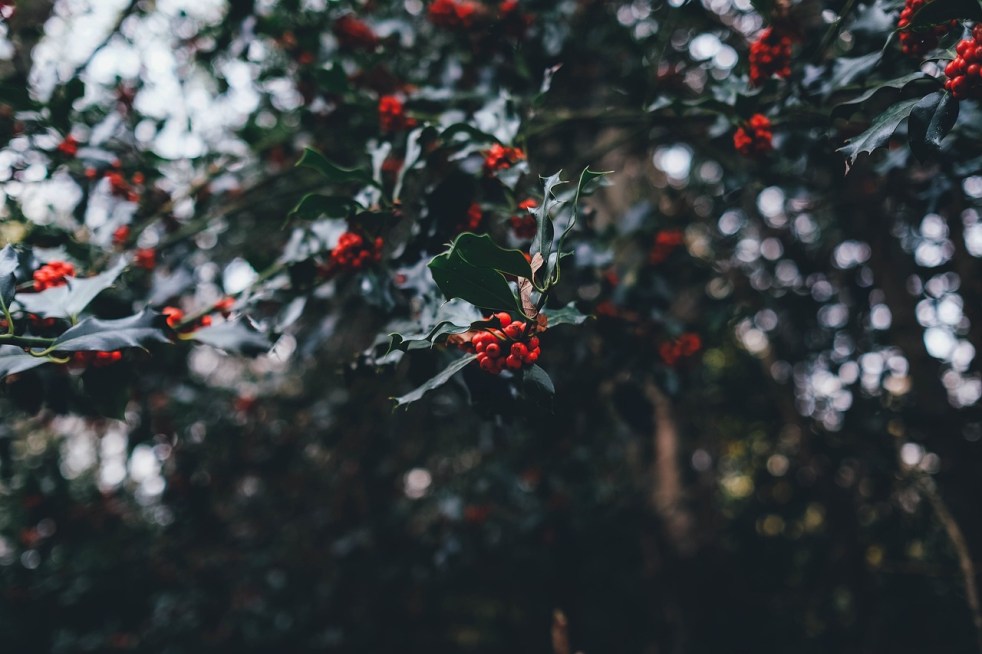
Red holly berries nestled among dark green, prickly leaves.

Holly is good for far more than its significance in the ogham. It has a long history the world over as a medicinal and magical plant.

The ogam letter “tinne” didn’t always mean holly. (There’s strong evidence that it wasn’t originally a tree alphabet, but that’s a subject for another time.) Kennings indicate that “tinne” originally referred to a metal bar or ingot.

An ogham kenning is known as a Bríatharogam. These were used to explain the meaning of each symbol, as well as to help scholars memorize them. The three Bríatharogam for tinne are “trian roith,” “trian n-airm,” and “smiur gúaile.” These translate to “one of three parts of a wheel,” “one of three parts of a weapon,” and “marrow of coal.”

In European folklore, holly was considered a highly protective plant. (If you’ve ever felt it’s hard, prickly, waxy leaves, this probably isn’t too surprising!) It was also regarded as unlucky to cut down an entire holly tree — probably because you’d be removing its ability to protect you. Instead, there was a tradition of coppicing holly trees. This let farmers use the leaves as fodder, and gave artisans access to the highly valued holly wood.

This connects interestingly to the concept of holly as “one of three parts of a wheel/weapon.” All trees and woods have their own magical properties, and holly was considered useful for controlling. That made it useful for crafting horsewhips.

Also interestingly, holly’s ability as a protective plant has some mundane basis. Holly trees often exhibit a phenomenon known as “heterophylly,” where multiple types of leaves are present on a single plant. It’s not at all uncommon to see holly trees and bushes with both smooth and prickly leaves. Researchers have found that the appearance of prickly leaves correlates to recent browsing by herbivores. After a holly tree’s smooth leaves get eaten, it replaces them with prickly leaves to defend itself!

Ilex aquifolium, exhibiting heterophylly. Many of the leaves on this branch are spiny, but some are smoother and more oval in appearance.

Holly was also believed to protect against lightning strikes. There’s evidence that the prickly shape of holly leaves helps conduct lightning, protecting the plant itself and neighboring trees and structures from damage. Somewhat ironically, certain holly species are also extremely flammable. Please thoroughly research specific species of holly before choosing to plant one near your home.

Celtic legend speaks of the Oak King and the Holly King. Each one ruled over one half of the year — the Oak King over the warm months, and the Holly King over the cold. They would do battle each solstice, and the loser would have to submit to the victor. The Holly King wins each summer solstice and rules until the winter solstice, when he’s once again defeated by the Oak King.

In the Victorian language of flowers, holly represented defense and domestic happiness.

While some species of holly have been used medicinally for inflammation, fevers, and skin problems, it isn’t commonly seen in modern herbalism. There are generally safer alternatives that are equally as effective.

In addition to protection, holly is associated with beauty, prosperity, good luck, and vengeance.

Holly makes for good, strong wands. The wood is also really white in color, so it can take decoration well. Wands made of holly wood are said to be powerful for working with and commanding spirits.

Planting a holly bush near your house is useful for protecting against malevolent entities and energies, as well as lightning. Please note that some hollies are really flammable, however, so make sure you choose the right variety for this purpose. Alternatively, bring some fresh holly boughs into your home instead.

Place some prickly holly leaves in a glass bowl of fresh water, and let it stand in the morning sunlight. Bring it in before noon, remove the leaves, and use the water to asperge rooms or objects that you wish to protect.

Holly boughs, when brought into the home, are said to protect from mischievous fairies. It’s believed that fairies come into the home with the holly boughs, so bringing them in gives the fairies a place to stay peacefully during the winter months so they don’t cause trouble. However, the fairies must be shooed away and the boughs burned by Imbolc, or the fairies may decide to stick around and become a problem. In some cultures, it’s considered unlucky to ever burn holly, so it may be better to bring the boughs outside and leave them there instead.

Hollies are also valuable food plants for birds, even though they’re poisonous to other animals. If you’re trying to cultivate a better relationship with the local fauna and spirits of the land, it may be worth planting a native holly species. The berries are hard and unpalatable for birds during the warm months, but the last a long time and grow softer and sweeter after being frozen. This means that they’re one of the last sources of food in areas that experience cold winters.

Snow on a holly branch. The bright red berries are still clearly visible and vibrant.

In my area, we have native inkberry holly (Ilex glabra). These are a bit different from the usual hollies you see on cards and decorations, since it has smooth, oval leaves and small black berries. Even if you’re like me, and the traditional spiny, red-berried holly is in short supply, native hollies are just as valuable, powerful, and interesting to meet.

Environment · life

Fines don’t matter when you’re rich.

Monetary punishments only work as a deterrent for poor people. For the wealthy, fines are just the cost of doing business.

This happens across the entire legal system, too. To someone living at or below poverty level, parking fines actually work — you think twice about parking illegally if it’s going to get you hit with a $200 fine. For someone who can afford to lose that money, the world looks different. There are no illegal spots, just spots that cost more to park in than others.

If that sounds outlandish, look at this bullshit here:

Developer In Takoma Cuts Protected Heritage Tree, Over Protests From Neighbors

The title buries the lede a bit. This wasn’t a bunch of nosy neighbors protesting the felling of a tree. This was a developer outright breaking the law in a way that impacts an entire community, and that community attempting to stop them.

A pair of very old trees, with their trunks and roots covered in moss.

Looking deeper, you can see where the parking space analogy comes into play:

“‘Get off my property, I’m going to cut this tree down,’’ Giancola recalls him saying. Neighbors told the owner that cutting the tree was illegal, Giancola says.

“He said, ‘I don’t care. Everybody does it, all developers do it. We pay the fines, nobody cares,’” Giancola says.

[…]

Eutsler says the property owner is facing as much as $72,000 in fines for cutting down three protected trees — the heritage oak, and two smaller “special trees.”

It’s the same thing. Only, instead of talking about a $200 parking space, we’re talking about a fine potentially over $72,000.

And it doesn’t matter. Why doesn’t it matter?

“If by removing a protected heritage tree, you can add substantial square footage to a building, you’re probably able to simply recover the cost that the fine imposes,” says Eutsler.

So, in short, wealthy developers are incentivized to break the law, because doing so lets them squeeze another couple hundred square feet out of a property. That allows them to absorb the cost of the fine, and then some.

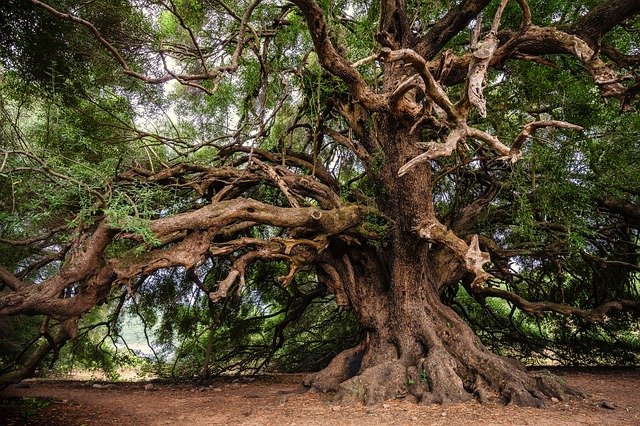
A gnarled old olive tree.

What’s even more laughable is that this is, at the moment, completely unpreventable. The channels that handle this aren’t empowered to actually stop it from happening. Forestry has to wait for the trees to be felled, and then the fines (the completely pointless fines that developers don’t care about) are levied.

The thing is, bigger fines wouldn’t even necessarily help. Making them proportional to the perpetrator’s income would, as well as keep poor families from being bankrupt by a minor infraction. The angry treehugger in me, however, wishes it was a jailable offense. If Forestry can’t order them to stop work, then they need to be stopped somehow. (I should note that I’m not in favor of the carceral state. However, in the absence of a law that would allow the forestry department to stuff perpetrators into burlap sacks, I figure you need to work with what’s available.)

This isn’t even necessarily about the trees themselves, as much as I hate seeing a 100-year-old oak fall. It could’ve been a street sign instead. It could’ve been a tree that was getting ready to fall over. It could be anything, and the fact that money allows people to break the law with impunity would still be abhorrent. Fines don’t work to deter crime except for at the poorest levels of society, but poor people aren’t the ones going around dumping hazardous materials, lying about safety, or chopping down heritage trees.

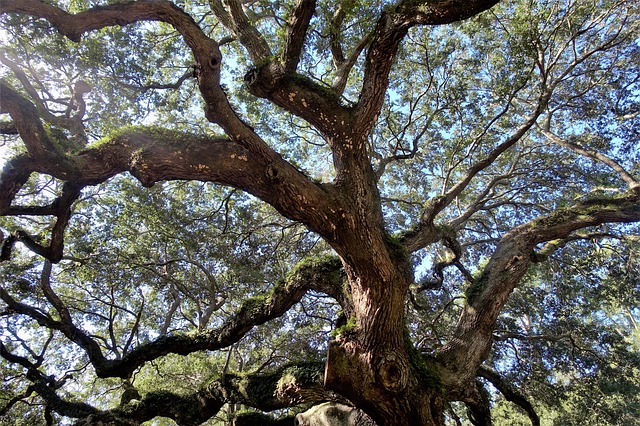
An old oak tree with twisted, spreading branches.

I could get into the urban heat island effect, the importance of old trees as micro-ecosystems unto themselves, the deleterious impact of urban deforestation, or that people of color (especially women) bear the brunt of the impact of poor conservation and climate change, but I don’t think anyone has that much time.

Just remember. Environmental destruction isn’t a faceless, unstoppable phenomenon. It’s perpetrated by people, and they have names.

Blog · divination · Environment · life · Neodruidry

Friday: Black. Hike: Taken. Hams: Strung.

I don’t like Black Friday. Part of it comes from several years of retail work, part of it comes from reading way too many stories of people getting shanked over Elmo dolls and discount TVs. It sucks for workers, it sucks for shoppers, it just sucks all around.

So, when a Meetup group I’m in posted a late afternoon hike this past Friday, I was more than happy to do that. The weather didn’t look promising, but there’s no such thing as bad weather — just the wrong clothes. As long as it kept me from being bombarded with reminders of Black Friday, I would’ve hiked in a storm.

This came right after a Zoom session about the role of walking as a spiritual practice. It was a really enjoyable discussion, and I was intrigued by the number of different roles it seems to occupy for people. I never really gave walking much thought — it’s part of my spiritual practice, but not one I really had to devote brainspace to, if that makes sense. Some talked about entering a kind of flow state, where the walk itself was a way to disconnect from the body. For others, walking was the opposite — a chance to focus on mindful movement, and quiet the mind. It all depends on what you need from it. Will walking be an external practice, or an internal one?

For me, it’s always been a weird form of augury. I don’t want to use the phrase “connect with nature,” because I feel like the wellness movement has worn it pretty thin. Really, it’s a way to make friends, as long as your definition of “friends” is flexible enough to include fungi and holes in the ground. If I meet a lot of new friends, it’s a pleasant walk and a good omen. If I don’t, it isn’t.

It can be a more specific divinatory practice, too. I know it’s not uncommon for people experiencing a lot of synchronicities (angel numbers, and the like) to ask for a sign or some kind of answer. Asking for one, then going out for a walk to see what you get is a useful form of divination. It’s definitely easier than trying to find a haruspex in this day and age.

It’s also a gratitude practice for me. I’m not about to get all gratitude journal on you, but, after spending several years too sick and deconditioned to do much of anything, I feel like the best way to express thanks for still having a mostly-functioning body is to use it for stuff.

We started out by meeting up in a parking area near one of the picnic groves. (There are trails all over this area, so you can pretty much start walking in any direction and end up on one.) It was really good to finally meet some of the people I’d only be able to speak to on Zoom calls, and the hike itself wasn’t too tough — three miles start to finish, through trees that helped cut some of the blustery wind and whose leaves lit up like lanterns once the sun sank below the lead-colored clouds. The air was scented with the vaguely spicy smell of gently decaying leaves, and so cold that I could feel it like a razor every time I reached the top of a hill.

Which is exactly how I ended up having to stop and catch my breath a bunch of times, wrestling with my jacket to pull out the carton of warmish coconut water I’d kept snuggled against my chest like a newborn. Fortunately, I brought a bandana-style mask with me. It helped warm the air before I breathed it in, which made things a bit easier, and also allowed me to pretend to be normal while actually gasping like a malfunctioning Billy Bass.

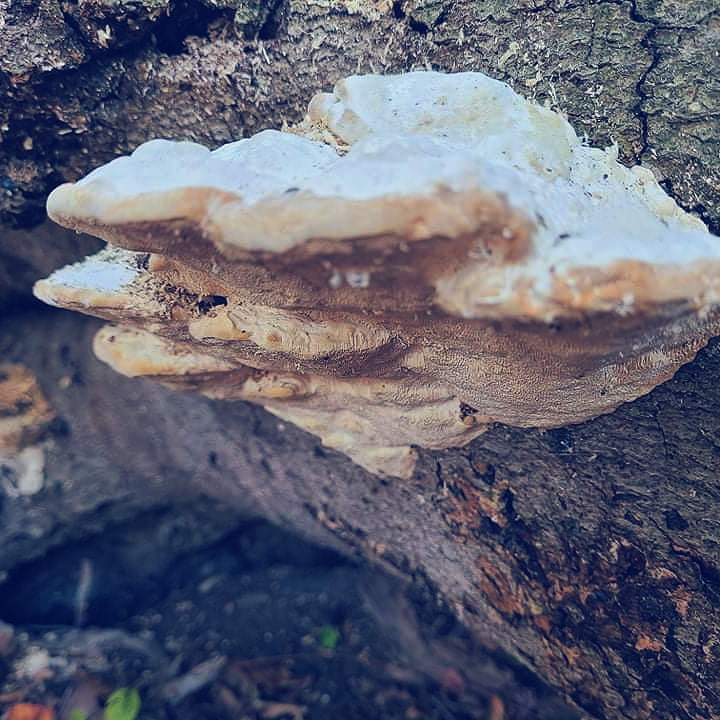
The entire forest is slowed down for the cold seasons, so it wasn’t like hiking earlier in the year. While the moss was still green, it was confined to neat, short little mats without their long, almost eerie-looking spore capsules. There were no eyelash cups or jack-o-lantern mushrooms. I did spot some neat-looking shelf fungi, and scrambled down into a space under a fallen tree for a picture. Another branch held some tiny specimens that were so fine and woody, they almost looked like ruffled feathers.

We all made it to the end, just before sunset. The light had that “golden hour” magic going on, which turned the treetops and patches of sky into a stained-glass canopy and the fallen leaves into a blanket of gold and copper. There was a peaceful moment where we paused before leaving, to make offerings of water and close out the experience. My partner and I picked up tea and dinner, then headed home.

It was the longest uninterrupted hike I’d been able to do in years. It gave me a chance to push my limits a bit more, and feel the edge of where my endurance is now. I get winded and dizzy easier than I did before IH, but I did it, and I’m intensely happy and grateful.

A good walk, and a good sign.

Neodruidry · Plants and Herbs · Witchcraft

Spruce Folklore and Magical Properties

I’m finally moved, and luckily settled in to a place that my partner and I absolutely love. Seriously — we decided against buying a house right now (it’s very much a seller’s market), and it’s going to take a very special house to get me out of here once we are ready to buy. There are lots of very lovely trees around, from neighborhoods full of crape myrtle and magnolias, to a Kousa dogwood whose fruits tempt me every time I walk past it. (I always have to tell myself no, it’s part of the landscaping, not really owned by anyone in particular, and there’s no way to tell what it’s been treated with.)

My favorite, however, is a big blue spruce.

It has a weeping growth habit, so its massive branches of smoky blue needles hang dramatically. It has a really cool energy, too — not necessarily the “loving, supportive, enlightened” feeling a lot of herbal energy guides point to, more like a very old and wise thing who is also very curious about the tiny things around it. I get a gentle amusement from it. It even has a natural face in the bark. I love it.

How to Tell a Spruce vs. Pine vs. Fir

First, the big question: What kind of tree are you looking at? All of these species fall under the general category of conifers, meaning that they are cone-bearing seed plants. Spruce, pine, and fir all produce needles, too, which can make identification tricky from afar. Fortunately, there’s a pretty easy way to tell.

Pine

Are the needles long, thin, and sprout from a single spot in groups? You’re looking at a pine.

Fir

Are the needles short and flat? Pick one up (there’ll probably be plenty shed on the ground) and pinch it between your index finger and thumb. Does it roll easily? If the answer’s no, then you’ve got yourself a fir.

Spruce

Are the needles similar to fir needles, but have a square cross-section instead of a flat one? Try rolling them between your index finger and thumb. If they roll, that’s a spruce.

Spruce Magical Uses and Folklore

In western Sweden, researchers have found a spruce that may be the world’s oldest living tree. It’s nearly ten thousand years old, and has survived by cloning itself via layering.

According to the Hopi people, the spruce was once a medicine man who turned himself into a tree. It’s a sacred plant.

To the A’â’tam, the father and mother of humanity escaped a flood by floating in a ball of spruce pitch.

Northern Algonquian people used it to prevent illness.

One source indicates that blue spruce is a symbol of pure intentions, while, in a more general sense, spruces represent generosity, enlightenment, protection, healing, and intuition.

Using Spruce

Just befriend one. It’s both easier and more difficult than it sounds.

Trees are individuals, so the easiest way to tell if you’re barking up the wrong tree (ha ha) is by sitting near one. They have natural ways to mount a defense against creatures they don’t want around them, so see if you end up covered in ants, breaking out in a rash, or otherwise having a bad time. That’s a sign that this tree doesn’t want to be friends — at least not yet.

On the other hand, if you’re sitting by a tree and smell a sweet fragrance, maybe feel a gentle breeze and the sun on your face, hear the birds singing, get a sense of comfort and acceptance, and otherwise generally feel good, this tree might want to get to know you.

Once you’ve found a tree to be friends with, look at it. Look at it from afar, and examine the bark close up. Let your pareidolia take over, and see what features you can see in the bark. The tree might choose to show you its face to make it easier for the two of you to connect. After all, it’s easier to converse when you can see the other party’s face, right?

Talk to the tree. It doesn’t have to be out loud. Hang out. Make it little offerings, like fresh water or an interesting (and plant-safe) rock. Remember, this is a friendship — do small things to show you’re thinking of it, and don’t forget that, sometimes, the best gift you can give is your time.

The relationships you forge in the natural world are part of the foundation of magic. You’ve gotta learn to speak the language if you’re going to try to ask for help.

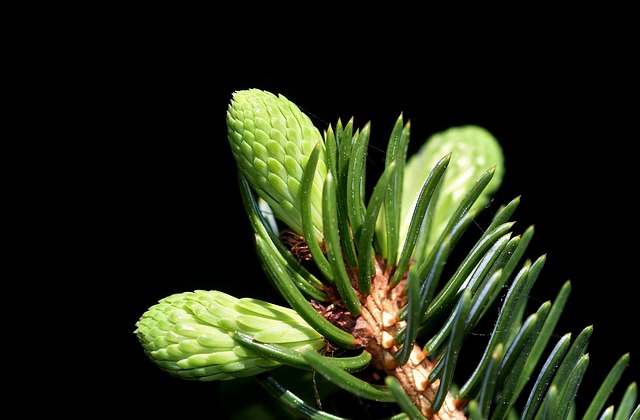
You can also consume spruce buds, as long as you’re sure the tree hasn’t been exposed to a systemic pesticide, industrial runoff, or car exhaust. Spruce buds are high in vitamin C, and have been used for tea, in syrup, and even to make a beer to sustain sailors over long voyages. You can also eat the young buds directly, if you’re into that.

Spruce trees are beautiful things native to the northern regions of the world. I can’t speak for all of them, but the ones I’ve known have been very nice to work with, even if that “work” is just sitting and exchanging energy for a time. If you don’t live in an area with native spruce trees, and you’d like to work with them, consider using spruce bud tea or syrup to experience some of their power.

life

Isolation Vacation

As it turns out, there’s a buttload more to working from home than setting up a desk.

I think neither my partner nor I would’ve been able to predict the effects it had: worse sleep hygiene, confused cats, a general air of unease, a much harder time separating work and life, working an extra three hours or so a day. The trouble is, if you have to work from home, you don’t get much choice in the matter — you either have a separate space for an office and the kind of mental walls that help you keep your work life and home life separate, or you’re kind of boned.

So we engineered a way to take a vacation in the most low-risk, isolated way possible.

Getaway offers tiny cabins a little less than two hours outside of D.C. It worked out perfect for us — we booked and paid for the cabin online a few months in advance (they fill up quick), picked up some extra provisions during our last grocery trip, filled up on gas when we normally would anyhow, and made the trip without having to stop. Checking in was completely contactless, too. We received a text with the lock code, keyed it in to the number pad on the door, and stepped into a very comfy, charming one-room cabin.

It was pretty much perfect. There was a spacious bathroom at one end, with a large shower and accessibility bars. At the other, there was a big, marshmallowy queen sized bed under an enormous window that looked out onto the woods. The cabin also had a pretty well-equipped kitchen, with a two burner stove, sink, pots, pans, silverware, and dishes. (There was even a bowl for traveling dogs.)

It snowed pretty heavily, which kept us from really taking advantage of the trails or the fire pit. Even so, it was really wonderful being able to snuggle up in bed with a cup of tea and some pancakes, under that huge window, and watch the snow through the trees. The night sky was gorgeous, too — I stayed up late both nights to stargaze.

It was just cozy, you know? Peaceful. Idyllic. No work emails, no calls, no wifi to answer them even if we wanted to. Just the creaking of the trees in the wind, snow, and the stars at night.

It turned out to be a great atmosphere for brainstorming, too. My S.O. and I did some storyboarding, and he wrote a really awesome short story (that will hopefully go up somewhere in the future). I had about a thousand ideas, but didn’t really get into writing or making art while I was there — I took a few notes and made some sketches, but I didn’t want to lose too much time trancing out in a creativity fugue like usual.

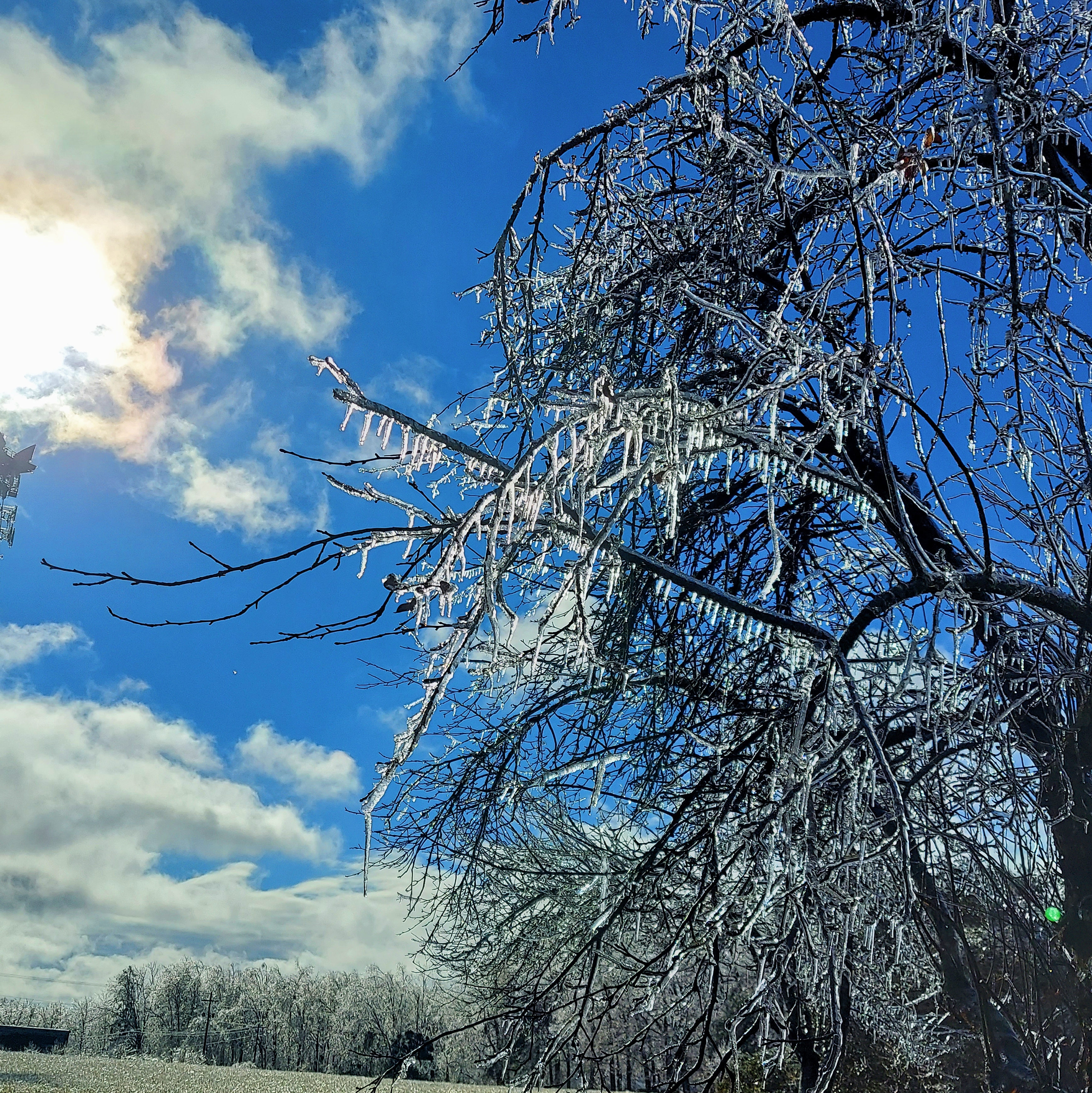
Even the way home was pretty. It rained after it snowed, and the nighttime temperature drop made the water freeze around all of the bare trees until it looked like they were covered in diamonds. The sky was blue, and the sun glittered through the trees’ ice-covered claws until even an ordinary road next to a set of power lines looked like something out of Narnia.

Everything was so bright and pretty, in fact, and we felt so refreshed, that we didn’t really want to go home right away. Stopping somewhere populated wasn’t really an option, but that’s okay.

There’re always roadside attractions.

We’re both kind of suckers for them (by which I mean that, if there’s a World’s Largest Something between here and California, we’ve probably stopped by). The biggest windchime? Been there, rang it, had a slice of pie. My S.O. had barely opened his mouth to say he wished there was something cool on the way home before I had a list of things that were a) large, b) unpopulated, and c) at least slightly ridiculous.

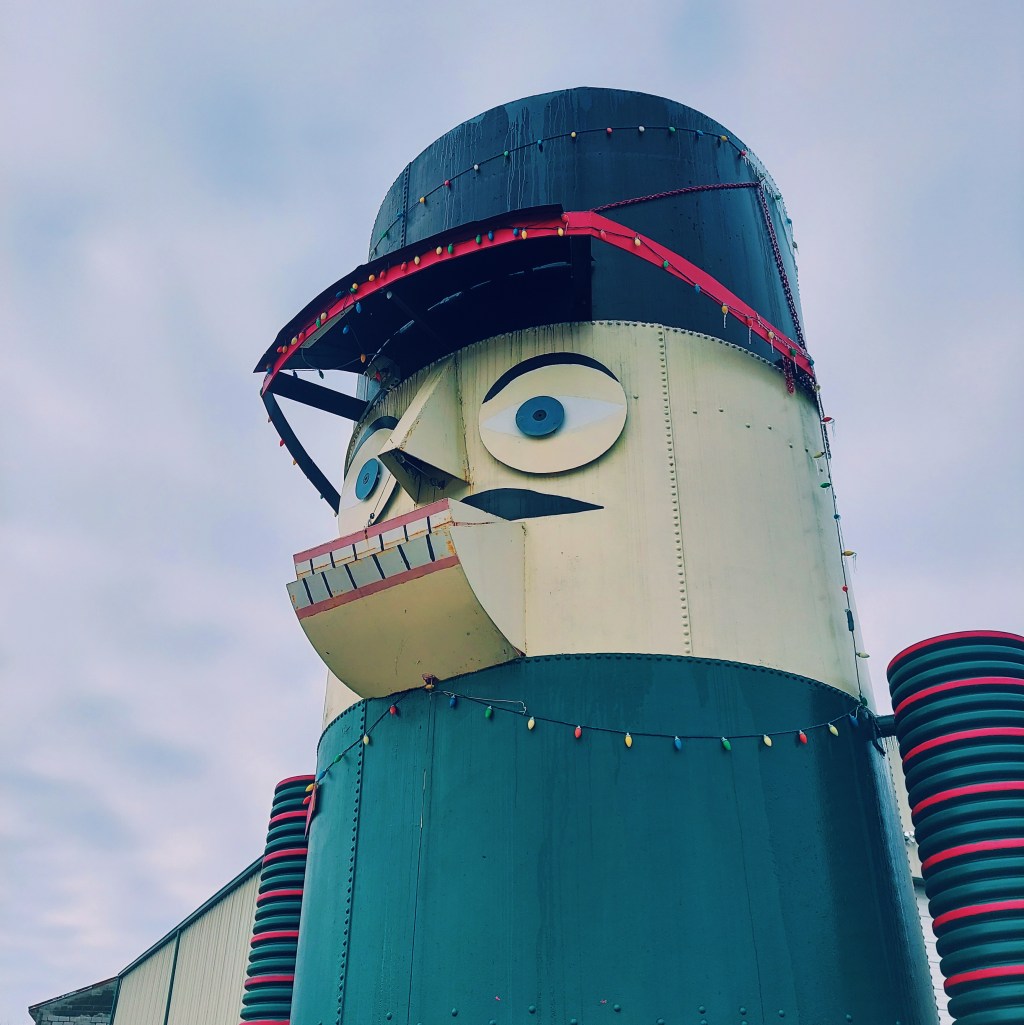
And that’s how we found a giant nutcracker. (Well, mostly the head.)

He used to be a paving company’s tar silo. When a paint company bought the property, they painted it and converted it to this fellow. Honestly, the setting had a pretty unique sense of melancholy — there he was, with the approaching clouds just beginning to gray the sky, strewn with unlit Christmas lights, staring unblinkingly out at a McDonald’s across the street.
It felt very Lynchian, though I’ll be damned if I can explain how.

Our appetites whetted by the urge to see more huge things, we next drove back to D.C. to find an actual giant.

Fortunately, it being the middle of the week, during a pandemic, and also December, the place was pretty much deserted. Several areas were closed off, so I wasn’t able to get closer to the sculptures themselves, but the image was still very striking. There he was, this metal titan struggling up from the beach sand, face twisted in anguished effort.
Then, in the background, a lazily turning Ferris wheel.

I don’t know if any of you have played Kenshi, but there’s one particular area that gives me a similar feeling. There’s just something about massive metal hands clawing vainly at the sky that’s so damn eerie. When it’s juxtaposed against a beach and a carnival ride, it’s surreal as hell. I love it.

Now we’re home, snuggled up with two cats who had Many Things to Say about our absence. If you’re reading this the day it was posted, it’s the winter solstice. Keep your eyes peeled tonight for the conjunction of Jupiter and Saturn, and have a happy Yule.

Blog · life · Plants and Herbs

In the conifers.

As much as I love cypress trees literally any time of year, November to early December is my favorite time for them.

Why?

Because they make everything smell fantastic.

Bald cypress trees turn orange and shed their needles in autumn to early winter — as I write this, most of the ones here are, indeed, impressively bald. The result is a carpet of needles mingled with sticky, resinous cones.

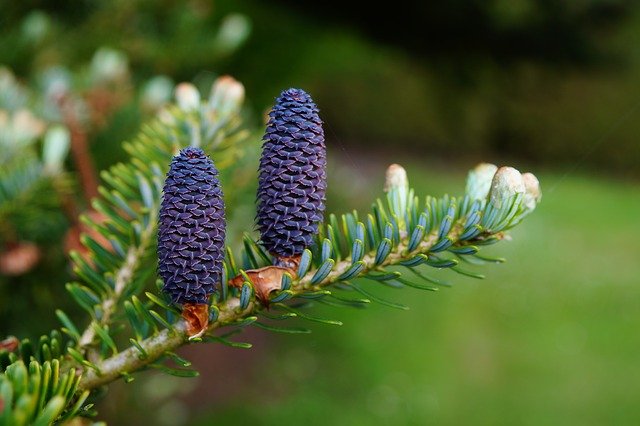
The cones are particularly interesting to me. They start out as small, hard green buds. Sometimes you can find them on the ground as early as October, but they don’t really ripen for another month after that. Then, they expand and become almost crumbly, their scaly surfaces separating and falling apart to reveal the fragrant seeds inside. That’s when it’s really nice to find a stand of them and pick up a few from the ground. I live for the smell of the rich, autumn soil, the earthy-spicy-sweet smell of decaying leaves, and the fresh, piney, almost citrusy scent of cypress resin. If I can meet some mushrooms or a neat patch of lichen on the same trip, I’m ecstatic.

(I’m a pretty easy organism to please, all told. I’m pretty much a beetle with different ideas.)

We went and gathered a few cones not long ago. I keep a small jar of them on my altar, right next to a bald cypress knee. The seeds, I sneak into various concoctions — nothing ingestible, though. While cypress trees are generally not considered poisonous, they’re not edible, either. It’s a bit of a bummer, if you ask me. I’d love to be able to have it as a twist on pine tip tea.

After that, we took a trip to the arboretum. Naturally, there’s not much to see this time of year — the flowering dogwoods are not, the lilac is long since asleep, and the oaks and maples are skeletal — but there’s a kind of architectural beauty to a lot of the bare trees. Now is when they get to show off colors and patterns in their bark, the strange, Escher-like twists of their branches, and all of the other things leaves hide in spring and summer.

Most of the conifers, of course, are still going strong. I met a Norway spruce that I found especially pretty — I hadn’t realized that their immature buds look like flowers before, their papery brown petals unfolding like tiny roses.

It wasn’t late when we arrived, but this time of year, the early sunset and angle of the planet slants the sunlight in a way that makes everything look almost surreal. It’s a cold beauty, but I love it.

life

Dirt, Moss, and Cypress Knees

One of the really hecking sweet parts of having more physical endurance now is that places I already loved to go have opened up a lot more to me. Take Kenilworth Aquatic Gardens, for one.

It’s a very quietly beautiful place most of the year, other than summer when the lotuses bloom in a sea of brilliant pink. It’s never very crowded, there are always plenty of places to sit, and you rarely hear people over the orchestra of insect calls and birdsong. Even the city traffic dulls to a low, forgettable roar in the background.

Even though the gardens are arguably at their best in summer, I like them the most in autumn. My favorite part of them isn’t the lotuses, really (though I have a certain appreciation for their alien-looking pods), it’s the bald cypress trees.

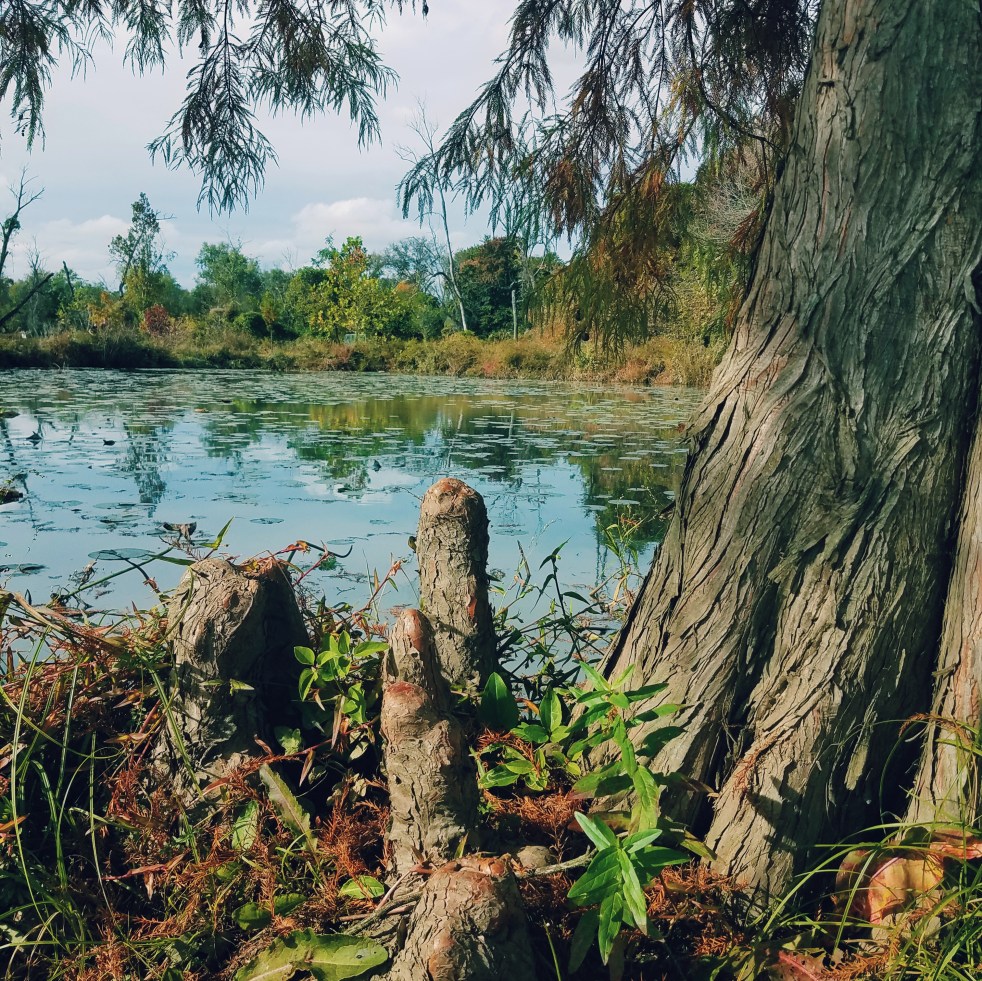
I love bald cypress trees. They’re my favorite tree. I love their scent (I once knelt down to take a picture of one, and ended up ruining a good pair of jeans by permanently staining the knees green. I felt embarrassed afterward, like a child ruining a set of school clothes on the playground, but sweet, fresh smell of crushed cypress needles was almost worth it). I love the way their needles turn brilliant orange in autumn. I love that they’re one of the few weirdo conifers that actually loses their needles in winter. I love the way they grow, in the liminal space between land and water. I love their alien-looking knees — mistaken for people, animals, and even monsters once they get large enough.

A bald cypress tree with a set of knee-like protuberances on its roots.
Knees!

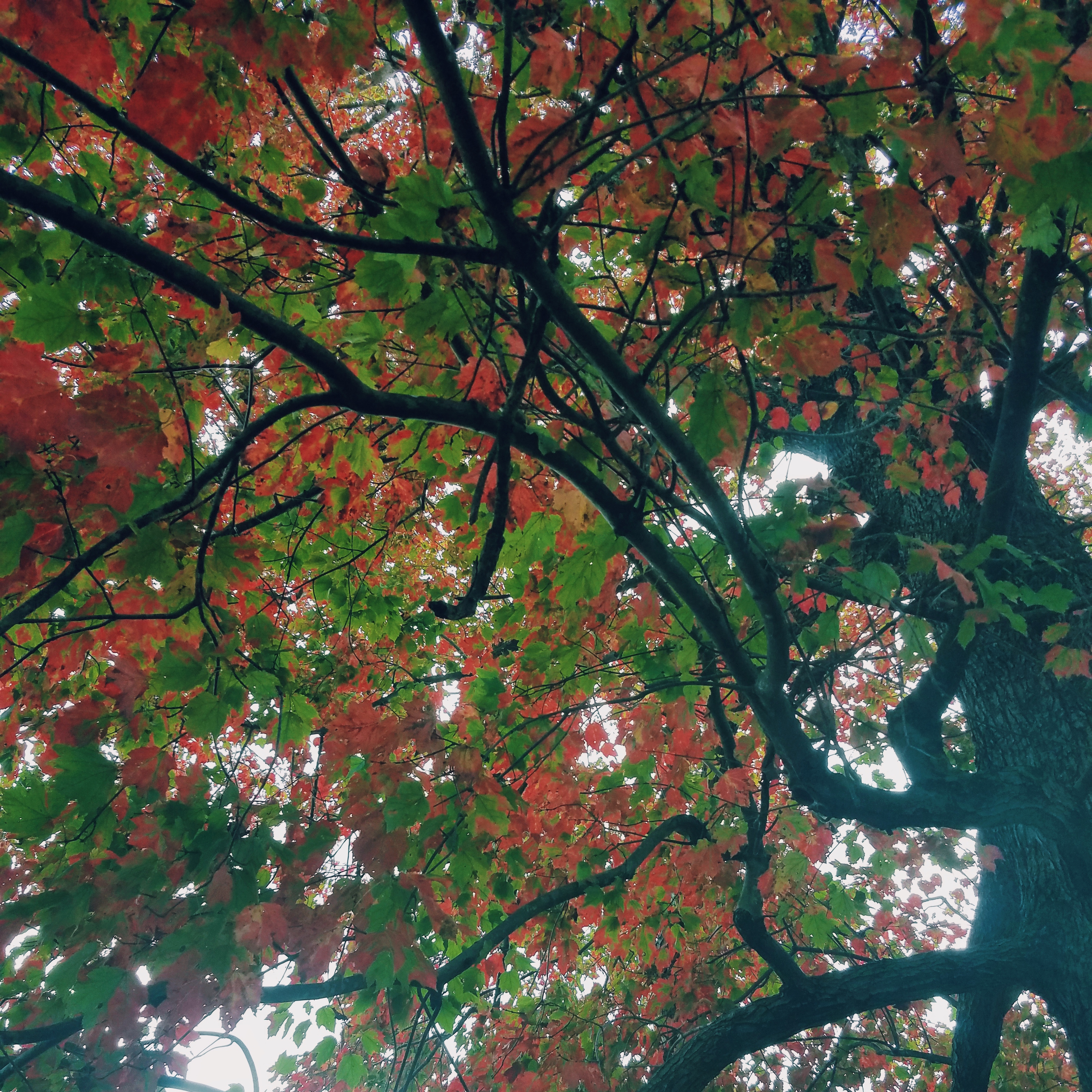
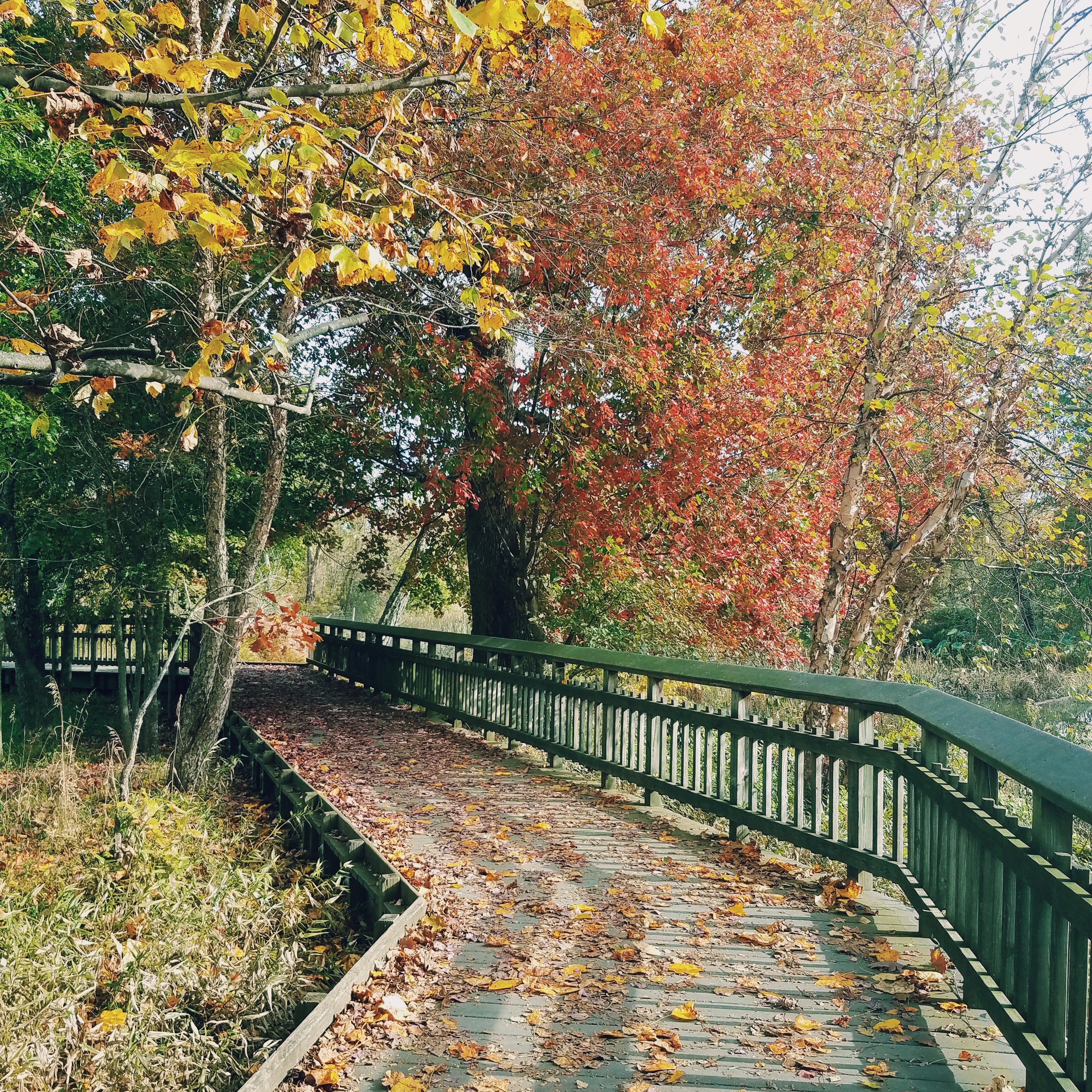
Anyway, before I launch into another paean to bald cypress trees, all of this is to say that we took a long walk in the park and it was pretty nice. The boardwalk is especially pretty this time of year, with the leaves falling on it like confetti in shades of burgundy, vermillion, violet, and saffron.

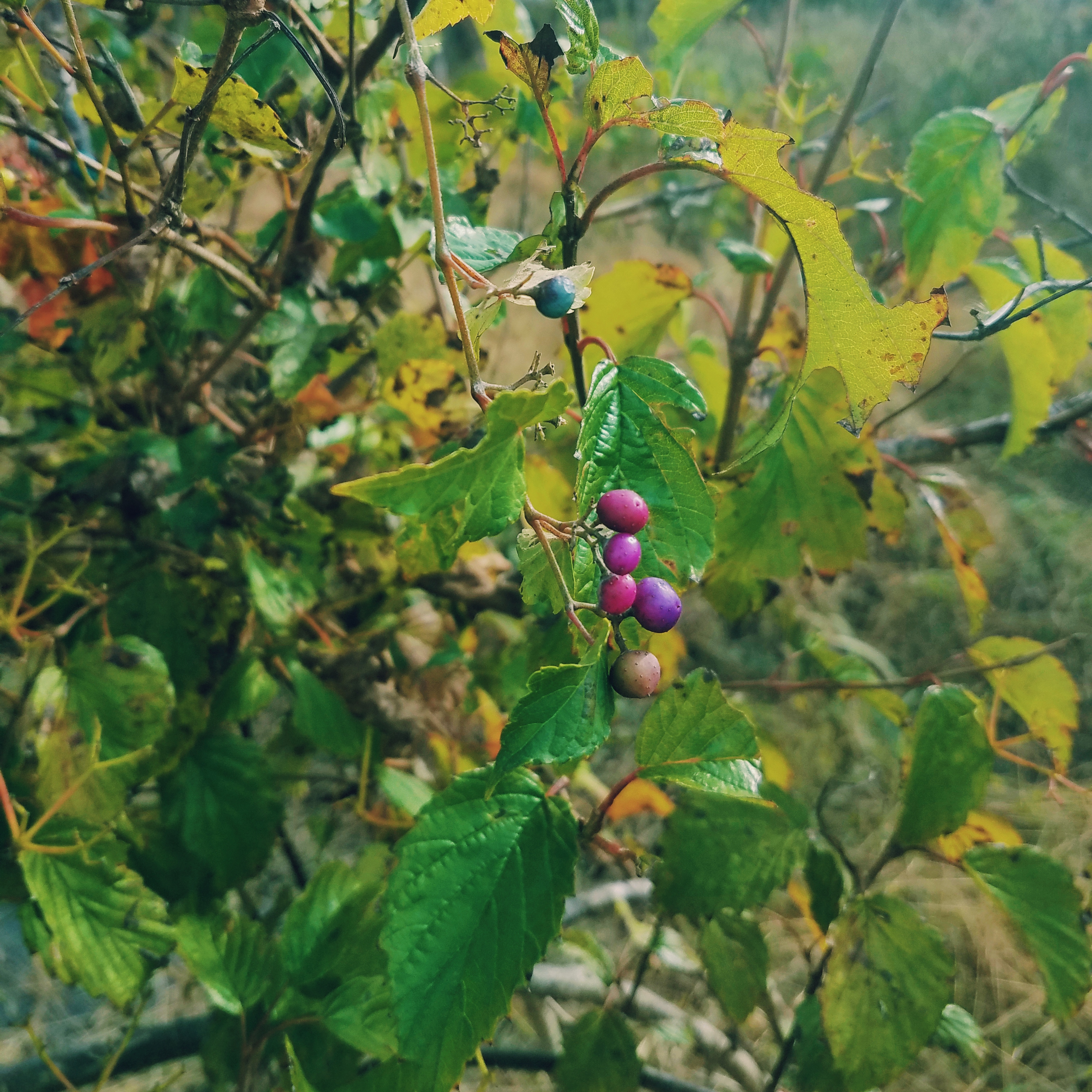
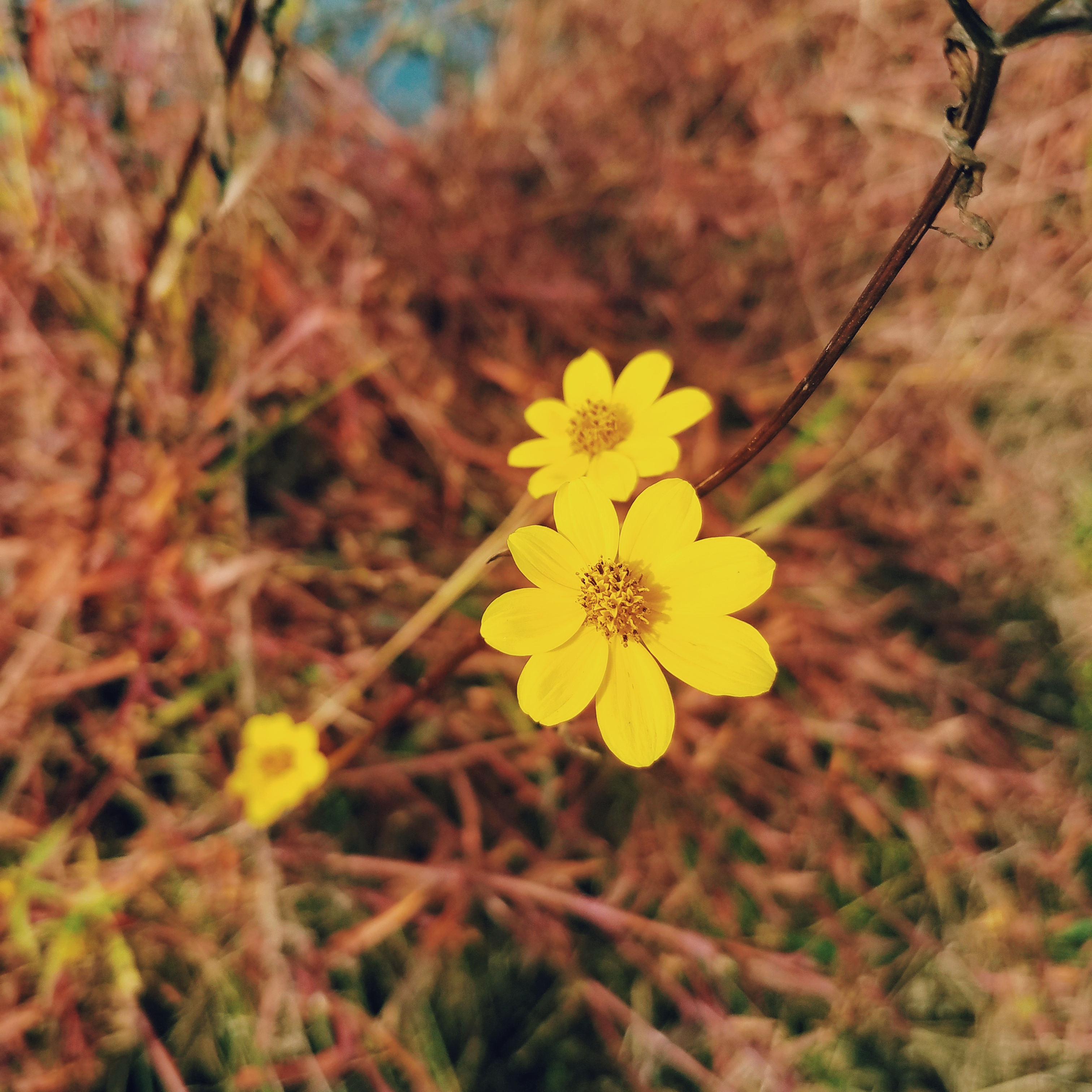
There weren’t as many flowers, of course. I found some kind of yellow asteraceae, and these very pretty silver cock’s combs, but that was about it. I did also spot some aggressively purple berries on (what I think is) a viburnum, though. Judging by the number of bare twigs, the birds have been hitting them up for snacks pretty hardcore. I know cardinals will happily eat them — I used to have a bright red buddy who hung out outside of the window of my old apartment.

My partner and I sat on a bench for a bit, enjoying the sound of the insects chirping, birds warbling, and wind soughing through the trees.

“What… What are you doing?” He asked.

“Taking off my shoes,” I replied.

“Why?”

I shrugged. “Something about ions. Mostly because it feels good. Dirt. Moss. You know.”

“Fair enough.”

(He eventually followed suit and realized I was right — the cool ground felt wonderful, and the moss was very soft.)

As I write this, it’s Saturday night, I’m snuggled up and waiting to watch a livestream by Gareth Reynolds. I’ve got my partner, my cats, and a fantastic slice of pie. All told, not a bad end to the day!