

life

Project Pan: What’s Worth It, and What Wasn’t.

As I mentioned a bit ago, I’ve been doing a sort of Project Pan with my skincare supplies. (I am not a dude of makeup, so I don’t tend to accumulate enough of that to warrant one. When I do get fancy face colors, they’re usually sample sizes to begin with.) I’ve made quite a bit of progress, so I thought I might do a short breakdown of what proved to be worth re-buying, and what definitely wasn’t.

For full disclosure, I’ve got sensitive combination skin. Finding products that work for me is a challenge — even if I get samples first, it can take a bit for negative reactions to become apparent. That’s why I’ve accumulated skincare over time, as I try to find what actually does the job without too many downsides.

Also, absolutely nobody is paying me to do this and none of these are affiliate links. I’m just including them for convenience’s sake, so you can check out whatever piques your interest. All product photos belong to their respective brands.

composition of cosmetic bottle with pink rose petals and wooden plate
Photo by Photo By: Kaboompics.com on Pexels.com

First, the stuff worth re-buying:

Cleanser: Trader Joe’s Nourish cleanser, about $7

This stuff just works for me. It’s also cheap and easy to get and if they ever discontinue it, I may have a fit of apoplexy. It doesn’t irritate or dry out my skin the way many other cleansers do, and it doesn’t leave any weird residues. It’s just nice and functional.

My only complaint is the plastic bottle (the efficacy of plastic recycling has been greatly overstated), but it’s a pretty basic one without any extraneous bells and whistles so at least it isn’t as wasteful as it otherwise could be.

Toner: Pyunkang Yul Essense Toner, $15.99
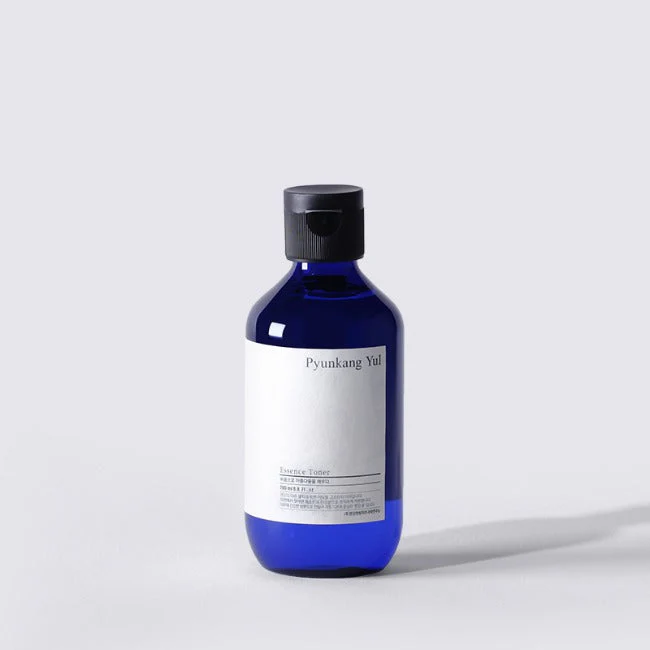
This toner is more like a serum. It’s inexpensive, it’s soothing, and it has astragalus extract in it which I guess does something. I’ve had days when all I’ve used is a cleanser, this, and moisturizer, and my skin has felt fabulous. I also notice a difference when I’ve run out of it.

I pat it on my skin immediately after washing, while my face is still damp. Then I either use a serum on top of it, or go right to moisturizer.

This is another product that comes in a plastic bottle, but, because of the way it’s dispensed, I’m not sure how well glass or aluminum would work. As with the TJ’s cleaner, at least it’s a pretty basic bottle.

Serum #1: The Ordinary Marine Hyaluronate, $9.20

This is a waterier version of The Ordinary’s other hyaluronic acid. It’s very light, but it does the job. It doesn’t make my skin feel tight or sticky, it’s just a gentle, soothing humectant. I use about five drops of it, so a bottle lasts me for a while. The very light, watery texture also means that it layers well with other serums — it absorbs right away, so there’s no pilling or other weirdness.

Like the PKY toner, I also notice a difference when I’ve run out of this one. It’s just so nice for some added moisture under a heavier serum or cream.

This one comes in a glass dropper bottle. I often end up reusing these for oil blends and other stuff.

Serum #2: The Ordinary Pycnogenol 5%, $11.50
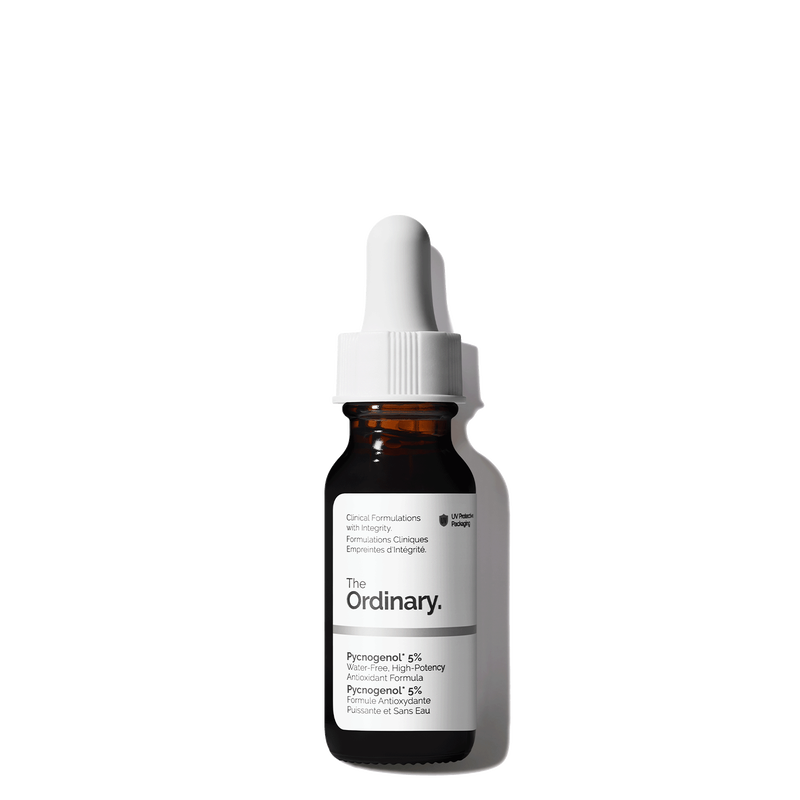
This is an oil-like (but oil-free) serum containing maritime pine extract. It’s a potent antioxidant, and the consistency means that it’s moisturizing, too. The naturally reddish color also makes me look like I’m painting my cheeks with the blood of my foes, and that’s a neat concept!

It has a natural sort of piney, almost floral fragrance. It’s very nice. I like to use this during the day, or at night any time I’ve been in the sun, on the road, or otherwise exposed to conditions that would make me benefit from some help with skin recovery.

These come in little amber glass dropper bottles. As with the hyaluronic acid serum, I usually end up reusing them myself. It’s a tiny bottle, but a little bit goes a very long way.

Serum #3: The Ordinary Lactic Acid 5% + HA, $8.10

This is a gentle chemical exfoliant. I don’t respond super great to retinoids, but lactic acid leaves my skin plump and glowy. There’s also a 10% version, but I like the gentler 5% version more for my sensitive skin.

I use about three drops at night, and definitely notice a difference when I haven’t been using it. It’s nice, it doesn’t sting, smell terrible, or leave my face feeling tight or gunky.

These come in frosted glass bottles.

Day Cream: Pyunkang Yul Calming Moisture Barrier Cream, $16.99

This is a light day cream that’s almost between a cream and a gel. I use it in the mornings, and it doesn’t feel heavy, break me out, or leave my skin sticky. It’s just a nice, inexpensive moisturizer that works. No fragrances, nothing that makes my sensitive combination skin uncomfortable, it’s just good.

The jar is heavy plastic. I wish it was glass. I love it, but if I’m able to find a substitute in a glass jar then I wouldn’t mind switching.

Night Cream: Derma-E Ultra Hydrating Advanced Repair Night Cream, $31.50

This is the most expensive item in my routine, and it’s still really reasonable for what it does and how much I use. It’s a nice, rich cream that absorbs well but is still occlusive enough that I don’t feel like it’s all gone by morning. Layered over hyaluronic acid and pycnogenol, it’s lovely. The jar isn’t huge, but it lasts me for quite a while.

This one comes in a glass jar, which is rad.

Sunscreen: haruharu WONDER Black Rice Pure Mineral Relief Daily Sunscreen, $22.00

This stuff is really nice. It’s SPF 50+, made for sensitive skin, reef safe, and doesn’t leave me with a whitish case. (I have light skin with beige undertones. It is aggressively neutral and, even though my skin is light, a lot of mineral sunscreens make me look like I’m wearing corpse paint.) It’s also lightly hydrating and feels nice.

I wish it came in a glass pump bottle. Their other packaging materials are 100% recycled and Forest Stewardship Council-certified paper printed with soy-based inks, so that’s nice.

The stuff that I’m not re-buying:

Serum: The Ordinary Matrixyl 10% + HA, $10.90

I don’t know if this even did anything other than make my face sticky and give me an occasional pimple. Someone else may very well benefit from it, but I didn’t see any.

I ended up using it on the backs of my hands so it wouldn’t go to waste. My hands did look smoother and feel softer, but I feel like adding a serum step to an anti-aging hand care routine is a bridge too far for me.

The bottle is a nice glass dropper bottle, though.

Serum: The Inkey List Retinol Serum, $15.00

This one was just sort of fine. I probably would’ve repurchased it, but the plastic squeeze tube was a really annoying and inconvenient way to dispense it. I feel like I waste product by dispensing it into my hands first, so I really prefer to be able to drop a single drop where my skin needs it most. With this packaging, it almost invariably dispensed way more than I needed, which got annoying.

I used it all up on my face, but the inefficient application and plastic tube make it a no for me.

Moisturizer: The Inkey List Bakuchiol Moisturizer, $15.00

I’ve used products with bakuchiol in the past, but this moisturizer was a no-go for me. The squeeze tube, while not my favorite, was fine for applying a cream. However, the moisturizer itself was just kind of sticky and irritating. I don’t like feeling sticky, and I don’t like feeling itchy, and this did both.

I ended up using it on the backs of my hands, and now my hands are officially fancy.

Lip Balm: The Inkey List Tripeptide Plumping Lip Balm, $13.00

I wanted to love this. I did. It even seemed to work at first — my lips felt smoother and plumper, and it wasn’t sticky. The trouble here lies in one single ingredient: Castor oil.

For some people, castor oil is fine. For others, not so much. If you find that lip balm tends to make your lips flakier afterward, you might be sensitive to castor oil. (You may also find that you react badly to natural deodorants that contain zinc ricinoleate.)

This balm made my lips to dry and peely, it was almost like a chemical burn. Like, dead-of-winter, have-not-had-a-drop-of-moisture-even-half-of-a-time-in-months dry. Your mileage may vary, but, if you’ve had issues with products containing castor oil or zinc ricinoleate in the past, you probably want to skip this one.

I’m feeling pretty good. I’ve whittled things down to what works for me, and I don’t feel a need to try to continue to optimize my routine. A cleanser, a toner, serum, and moisturizer. One exfoliating serum, one moisturizing serum, and one antioxidant serum. I’m pretty much covered for whatever my skin goes through.

life

Faces are more like dirt than you’d think, to be honest.

Let me preface this by saying that I’m not a doctor, and, more importantly, I am not your doctor. The approach I put in here is something I cobbled together by gathering skincare advice from multiple sources, and one that I think is kind of difficult to misuse to the point of doing real harm. That said, don’t use any of the recommended products if you’re allergic to them or they’re otherwise contraindicated for you. Be safe!

I don’t want to get into a long macrocosm vs microcosm preamble here, but it really is remarkable how much our own personal microbiologies resemble dirt.

I mean it. When land is cultivated, the soil appears to be mostly fine particles, like silt, sand, and clay. Its biology is bacteria-dominant, and there aren’t a lot of fungi around. If the land is left alone, annual weeds will give way to larger perennials, shrubs, trees, and eventually old growth forests. These drop layers of branches and leaves, fungal spores move in to break them down, and you get a rich layer of organic matter with its own diverse microbiome.
It’s fascinating stuff, if you’re a fan of dirt.
(I am.)

All of this is to say that the ground and the things growing in it are healthier when they can benefit from a variety of microorganisms, and so is your face. This is something I knew on a logical level, but seeing it play out is kind of another animal entirely.
Follow me here for a minute.

Just before Thanksgiving, I had a very minor surgery. It really wasn’t a problem — I was in and out in an hour, and all I needed was a local anesthetic. Afterward, I got a much-needed prescription for 300 mg clindamycin and was sent on my happy (if achy and puffy) way.

Though I am a huge proponent of herbal and traditional medicines, I also know that a lot of not-even-that ancient people died of things that are easily treatable today. Clindamycin is a lifesaver. If you’re like me, and members of the -cillin family are verboten to you, or you have an infection that’s resistant to other first line antibiotics, it may also be the only thing standing between you and a very bad outcome.

Despite its usefulness, clindamycin has always caused problems for me about a week or so after taking it. I feel a heat in my cheeks, which turns into a prolific, itchy, bumpy rash of tiny pimples. After this happened enough times for me, I attempted a tentative self-diagnosis: Malassezia folliculitis, also known as Pityrosporum folliculitis or fungal acne.

Malassezia is a genus of fungi that colonizes the skin of animals. It’s usually the opposite of a problem — under normal conditions, you don’t want your skin to be sterile. Like the microorganisms that live in your intestines, it’s part of a (hopefully) diverse biome where everyone serves their own tiny function.

A painting of several stern looking men in ruffled collars, dissecting a cadaver. Someone put a microscope in front of it for some reason.
I tried to find a picture of yeast, but Pixabay just kept showing me bread. This came up when I looked for “microorganisms,” though, so here you go.

Alas, problems arise when antibiotic therapy kills off the other microorganisms that compete with Malassezia. Since fungi aren’t affected by antibiotics, this leaves your skin completely at the fungus’ mercy. It’s the same reason why antibiotics often cause diarrhea. When they kill off your healthy gut biome, whatever pathogens that aren’t affected get to have a field day. The same thing that happens to your intestines can happen to your skin.

In the past, I used to just tank it. I’d deal with having a rash for a few weeks, and things would eventually get back to normal. I didn’t know why this happened, and nobody could really give me a good answer, but since it was self-limiting and I don’t often need antibiotics, I figured the itching rash was just a thing I had to deal with on rare occasions.

But not this time. If there was a way to keep from looking like the Toxic Avenger and feeling like I wanted to tear my own face off, I was all for it.

Turns out, there is a simple treatment for it: Fluconazole. Yay!

One of the potential side-effects of fluconazole is liver damage. Shit!

It can take care of a fungal skin rash pretty quickly. Yay!

It can also cause a skin rash. Shit!

Anyway. In the interest of not resigning myself to having to alternate an antibiotic and fluconazole every time I got an infection, I figured I’d try to take matters into my own hands. Luckily, I was successful.

So, how can you get rid of Malassezia/Pityrosporum folliculitis following treatment with oral clindamycin? With these:

  • A bottle of Nizoral shampoo.
  • A bottle of sulfur-based anti-dandruff shampoo.
  • A bottle of The Ordinary’s Niacinamide 10% + Zinc 1% serum. Don’t get it from Amazon — there are reports of people getting counterfeit or expired product, and it’s pretty fast and cheap to get from Ulta, Sephora, or The Ordinary as it is.
  • Fresh garlic.
  • Water kefir.
  • Turmeric and ginger tea.
  • The ability to tolerate a boring diet for a while.

I also had a bottle of Hibiclens left over for Reasons, so I figured I’d give it a try. I cannot recommend this, since a) Hibiclens isn’t meant to clear up fungal acne or b) be used as a facial cleanser, and c) you will feel like you’re huffing several dozen ruptured cans of Lysol if you ignore those two things and use it anyway.

Nizoral contains ketoconazole, an antifungal. Anti-dandruff shampoos contain a variety of other antifungals. Both of these are used in the treatment of Tinea versicolor, which is caused by Malassezia globus. Niacinamide helps regulate sebum production and is effective at inhibiting Candida albicans, a skin-colonizing yeast similar to Malassezia. (It hasn’t been tested against Malassezia specifically from what I gather, but I figured it couldn’t hurt.) Similarly, turmeric has been shown to inhibit the growth of 22 fungi species, also including Candida.

You can use Selsun Blue or Head & Shoulders instead of the sulfur shampoo, if that’s what’s available to you. Selsun Blue and clinical strength Head & Shoulders contain selenium sulfide, which is an effective antifungal. Selenium sulfide has been found to be carcinogenic in rodents, but this was after it was administered orally. Since selenium sulfide isn’t absorbed through healthy skin, shampoos containing this ingredient are considered safe. However, if you have broken skin, you can end up absorbing some selenium sulfide because your skin’s barrier is compromised.

So, armed with an array of shampoos and assorted other things, I started a multi-pronged approach that focused on reducing the level of Malassezia topically and internally, and repopulating me with competitive beneficial bacteria. Kind of like removing noxious weeds before seeding a healthy, diverse garden.
Here’s what I did:

  1. In the morning, I washed my face with either the Nizoral or the sulfur shampoo. I followed this immediately with the niacinamide serum.
  2. In the evening, I’d wash my face again with whatever shampoo I hadn’t used in the morning. I’d let it stay on my face, like a mask, for about three minutes before rinsing. I’d follow this with more niacinamide.
  3. I severely reduced the amount of sugar I was eating. Microorganisms can’t get enough of the stuff.
  4. I ate raw garlic. This was probably not strictly necessary, but I felt like it couldn’t hurt.
  5. I drank water kefir. This is a probiotic. If you make it yourself, and don’t back sweeten it, it can also be very low in sugar. (About 3g a serving.)
  6. I drank two to three cups of turmeric and ginger tea a day.
  7. I didn’t load my skin up with other products. Some moisturizers and serums contain ingredients that fungi can feed on, so I wanted to avoid them.
  8. I slept on my back. This kept my skin away from my pillow. Even with changing the case every day, I felt like this offered some added safety.

Now, neither Nizoral nor other dandruff shampoos are intended to be used as face washes. They do contain ingredients like fragrance that aren’t great for your skin, but, as someone with incredibly sensitive skin, I can also offer the opinion that Malassezia is worse. They’re also designed not to be actively harmful to your skin, since they end up there anyway if you use them to wash your hair.

Since I’d already started a breakout when I began this treatment, I couldn’t avoid dealing with Malassezia entirely. Nonetheless, this did make it a lot shorter and less severe. (Like, three to four days of a mild rash instead of two weeks of looking like I’d fallen into some kind of TMNT-style mutagenic ooze.) Also, no liver damage.

As much as I wish I didn’t have to do this, there’s sometimes no other choice. If I didn’t use clindamycin, I was at risk of death. This meant that I had to try to control the microorganisms it didn’t kill off, and bring myself back into balance. This approach helps reduce the number of pathogenic Malassezia and repopulate my body with all the little guys that’re supposed to be there.