Note: This post contains some affiliate links. These links allow me to earn a small “finder’s fee” on purchases, at no additional cost to you. Thank you for supporting artists, artisans, and this site!
I’m not usually one to categorize myself with a single “core” or “vibe,” but I’ve been described plenty often as Goblin- or Crowcore. Honestly,I agree. My ideal aesthetic is “abandoned baroque theater slowly being reclaimed by an adjacent swamp,” and I apologize to no one.
The trouble is, I also like parties. When it comes to entertaining that matches my crowcore party vibe, I usually come up short. (Martha Stewart ain’t exactly jumping at the chance to chime in on this one.) Besides, I’m not into filling my house with mass-market goods. I don’t like it when things are too matchy-matchy, and slow decor is my speed. Stuff that’s secondhand, handmade, or straight-up found in the yard? Yes.
During the big Mabon feast, I ended up having to bring my contributions in things like silicone bags and mixing bowls. (Which is a bit less “slow decor and thoughtful consumption” and a bit more “first apartment” than what I was going for.) So, since we’re getting closer to the autumn/winter holiday season, I figured I’d put together a list of Things I Find Cool for Fall Parties. If you’re like me, maybe you find them cool also. Enjoy!
1. Nice Serving Dishes
If food is art, a really nice serving dish is like an excellent frame. Not only will good serving dishes make foods look better, they’ll make them easier to serve. One thing I lack is serving dishes, but I found some by CreatingComfortLab that I really like. They’re a Ukranian-American company that makes all of their ceramics by hand, and they have beautiful dinnerware (I like their serving dishes in green or black, around $48-58 each).
If you prefer to thrift your crowcore party dinnerware, shops like GraniteStateAntiques have some beautiful vintage pieces, like this Pyrex forest fancies casserole dish. It’s a versatile piece that I really like, and looks great when mixed with newer, handmade dishes.
During certain times of year, all you need to do to find a good goblincore party centerpiece is go outside — there’re tons of pieces of interesting wood with really beautiful lichen and moss, cool stones, and fresh flowers. That isn’t an option for everyone, though, but artisans like AuroraMOSSDesigns use natural materials to create beautiful, interesting centerpieces for coffee tables and dining tables alike. Check this one out:
If you prefer to make your own, you can also find small ornaments to help bring your centerpiece to the next level. I’m particularly fond of these handmade mushroom ornaments by juliecollings — mushrooms often lose their colors and shape during the drying process, but these can give you the same look in a more robust, longer-lasting form.
3. Eclectic Glassware
I like mismatched dishes — it’s much more my speed to have things that go together, rather than match. I also really enjoy vintage water goblets, in a whole array of shapes and colors. I keep my eyes peeled for them every time I go to a secondhand shop, but it takes time to build up a collection capable of serving a group. Sellers like SecondSongHomestead and ValmontVintage have a selection of colorful, eclectic vintage glasses available.
4. Candlesticks
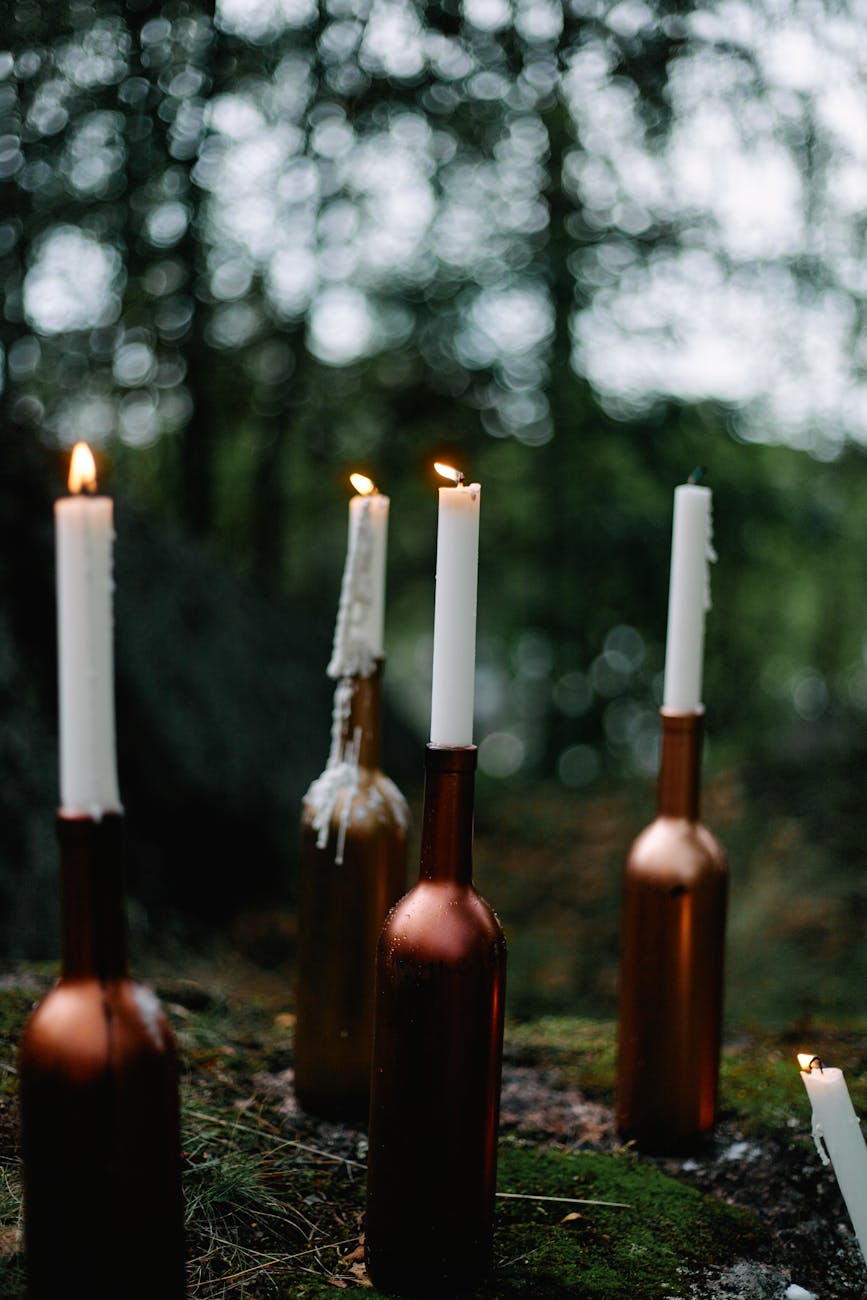
I’m a sucker for brass candlesticks (mismatched, just like my glasses). They’re another thing I keep an eye out for whenever I’m looking through secondhand shops. When they’re old, they develop some unique and lovely patinas, but they also polish up beautifully.
As with vintage water glasses, it can sometimes be difficult to find specific pieces to round out the look that you’re going for. A nice group of brass candlesticks, filled with natural beeswax candles, is a really beautiful addition to a crowcore party table or buffet when you’re entertaining. If you’re hunting for a specific shape or style of candlestick, and can’t seem to find it, TheCherryAttic and pamscrafts7631 might be able to help you. They both have groups of assortedbrass candlesticks, sold separately so you can pick exactly what you’re looking for ($9-30).
I mean, not for humans. I trust you probably have things figured out on that front. (If not, maybe try this post’s recipe for banana bread — it’s really good.)
These are snacks specially formulated for corvids — crows, ravens, jays, and magpies. AnitaApothecaryShop has a bagged blend for feeding your familiars, while OrganicRawRootsFarm has a whole starter kit for feeding crows. Pair it with a dish of fresh, clean water (they like to dunk their food), and you’ll likely have bird friends showing up in no time.
7. Tunes
The last thing a party needs is some ambience. If you’re into fantasy lofi, check out Medieval Lofi. If Pagan and witchy music is more your vibe, I’ve put together a playlist (that I listen to all the time):
Crows (and corvids in general) can be pretty divisive. I don’t think I’ve met someone who can just take or leave them — it’s always either a fervent love, or a deep dislike.
And I get it, honestly. They’re noisy. They’ve been known to eat nestlings, eggs, and small mammals. To many, they’re a nuisance and they don’t understand why anyone would go out of their way to make their yard more attractive to these birds.
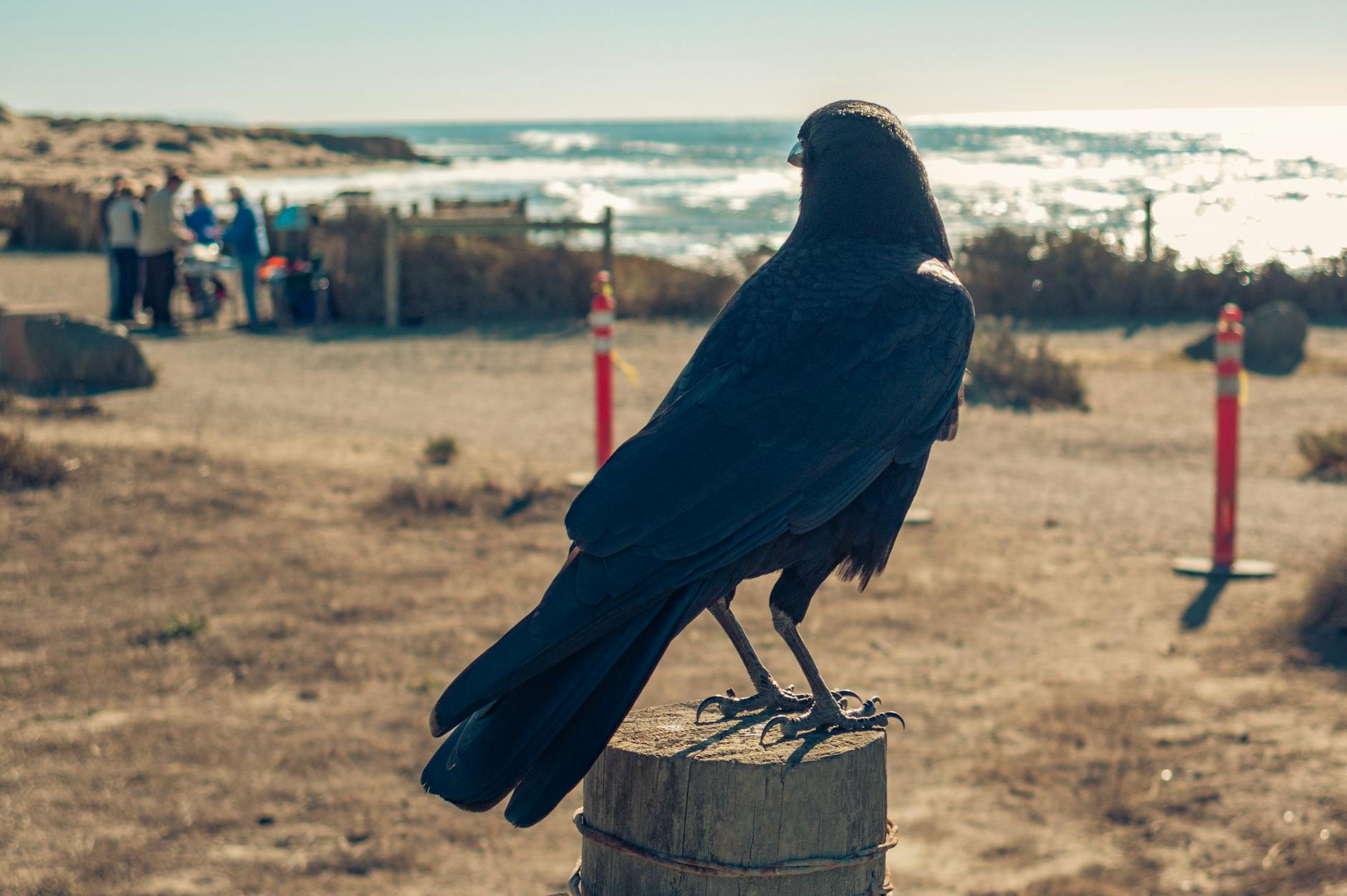
Ever since we moved here, I’ve been feeding a small family of crows whom I’ve come to love dearly. I’ve hesitated to feed other species, because I don’t want to encourage them to congregate (and potentially spread avian flu) when that isn’t their normal feeding pattern. While the debate about feeding birds and crow/raven behavior will likely never come to an end, here are a couple of things I’ve personally observed when making an effort to coexist with crows:
They’re very smart. (Like, really smart.)
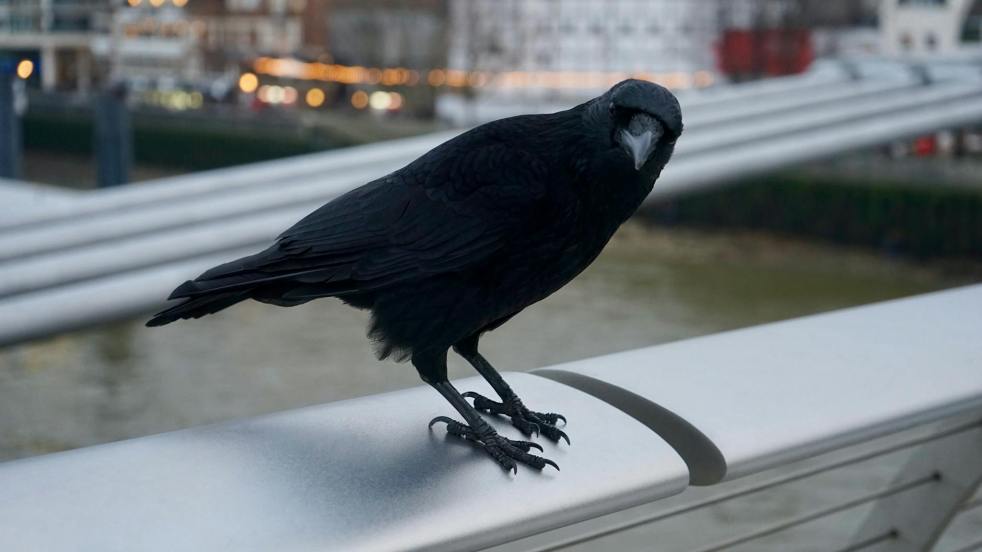
With most members of corvidae, you’re dealing with a very intelligent animal. With crows specifically, something on the level of a toddler or a very bright dog.
I wanted to mention this right off the bat because it heavily impacts a lot of my other points.
They’re also opportunistic.
In general, crows aren’t really hunter hunters. They do eat meat, and they will eat young, weak, or sick animals, but they’re opportunistic feeders. If the opportunity isn’t there, or there’s an easier source of high-value food somewhere else, they’ll go elsewhere.
Crows are also a prey species for larger carnivores. When they’re eating, they’re vulnerable because their attention is directed toward that and not toward looking for threats. This is why groups typically have a sentry or two, to keep an eye on things while the others feed.
A blue jay, one of the more colorful members of the corvid family. Photo by Pixabay on Pexels.com
They’re also still wild animals, no matter how closely they may coexist with humans. Wild animals will go for easier-to-get food sources whenever possible, because more challenging ones a) aren’t guaranteed, and b) require more effort (read: calories) and attention to access. The exception to this seems to be when there’s a particularly appealing, usually calorie-dense food item available that’ll make up for the potential danger and extra effort expended to get it.
You can direct their behavior.
With the above things in mind, you can direct their behavior to a degree.
I’ll give you an example. When I worked in pet retail, I had customers that’d come in and complain that squirrels and large birds that kept getting into their bird feeders. We had tons of anti-squirrel technology available — baffles, special lubricants for poles, specially shaped feeders, and even battery powered ones that vibrated, spun, or did all kinds of other gymnastics. I’d gently try to guide these customers to dedicated platform feeders and bags of corn, but they always turned it down. No matter what they bought, they’d be back in a few weeks for something else. A greased pole was no longer enough, because the squirrel learned how to jump from a tree at just the right angle to defeat it. A specially shaped feeder wasn’t enough, because the crows would team up to work around it. The cycle would inevitably repeat, until they finally just gave up and bought the platform feeder and the bag of corn. After that, the squirrels and large birds would eat the easy to access food, and the smaller birds had their own.
Since this crow population was already established here (and has since grown due to habitat destruction caused by some recent construction), giving them high-value, easy to access food has ensured that I get to keep more of the fruit and vegetables from my garden. This isn’t just because the crows don’t take as much, either — they’ve also done quite a bit to keep various garden pests away.
I don’t leave their food unattended — I usually feed them items I know they like, then sit out there just a few feet away with my own lunch. I have never once been harassed for my food. I’m pretty sure it’s because, like other intelligent animals, they’re able to distinguish between what food is given to them and what food is mine. Why bother me to eat off of my plate, when their plates are right over there? Why run the risk of a potential conflict with a human when they have accessible, desirable food already?
They might not impact songbird populations in the way most people think.
This study covers the relationship between various predator and prey species. One of its findings is that, as prey species numbers increase, so do predator species numbers, and there isn’t strong evidence that native (non-invasive) predators alone drive species decline.
A single predator, or small group of predators, can impact local numbers of prey animals, but don’t appear to correlate with a decline in overall numbers. The thing here is that crows are, like I said, opportunistic. They take prey from nests, where other predators are more likely to be less discriminating and take reproductively mature animals (since those are the ones they’re most likely to encounter out and about). Many corvids are also very territorial — an established family of crows will actively drive off other, larger, less opportunistic predators. They appear to exert both a predatory and protective influence on local prey species.
While I offer food for the local birds and squirrels, I’m careful not to do it every day. (Water, on the other hand, is always available.) Nobody goes hungry, and there seems to be less impetus for them to eat what I’m growing or trying to protect, but they still need to engage in natural foraging behavior.
This works in my case because this crow family had already established this area as their territory. If you listen to their calls, you can hear them relaying from one tree to the next. While they’ll cover a lot of ground in order to find food and water, a sentry alerts the others when there are snacks available. They can go about their business and stop by when there’s food.
(One funny thing I’ve noticed is that their vocalizations change when I’m on the deck, whether I’m putting food out or not, like they’re telling everyone that it’s almost time to eat. Once, I was only watering a few plants and went right back inside, and I got to hear a very excited crow call trail off into something that sounded unmistakably like disappointment.)
They’re not just garbage birds.
Crows (and many other members of corvidae) will get into dumpsters if there’s an opportunity, somewhat rightly earning them the nickname of “garbage chickens.” Stories abound of people feeding them fries, chips, and other very palatable, salty, oily, and largely carbohydrate-based foods. These really aren’t optimal dietary contributions for them, though, and having a positive relationship with your local corvids should mean taking their actual nutritional needs into account.
I explored the foraging habits of crows, plus the diets fed to pet pied crows in captivity as well as crows and ravens at rehabilitation centers. In the end, I came up with a mixture of cat or puppy kibble, cracked corn, raisins, and a low sodium, unfortified cereal as a base. To that, I add hardboiled eggs (cut into quarters, shell attached), dried mealworms or black soldier fly larvae, peanuts (in the shell), and fruit, depending on what I have on hand. Sometimes, if I have the leftover tail end of a loaf of homemade bread, I’ll cut that into cubes and toss it in too. This all seems to work out pretty well — they appear to enjoy it, and they’ve got some of the darkest, shiniest feathers I’ve ever seen on an urban crow.
They may not really react to humans like you might expect.
One thing people bring up often is that crows will get used to humans, which will cause problems.
There are definitely cases of birds, including corvids, losing their fear in areas with frequent, close contact with a variety of people. Anyone who’s ever tried to eat French fries on a boardwalk can probably give you several examples. (I was almost eaten by a pelican when I was little. It was a defining experience.)
I can’t speak to this in general, but I can point out my own observations as someone dealing with an urban crow population that already has a lot of incidental contact with humans. Like I mentioned above, I also stay out there by the feeders after I fill them. While the family of crows has certainly grown bolder with time, this change in behavior seems to be limited to me. If I’m out there and my Handsome Assistant joins me, their behavior switches gears immediately. They keep their distance, and even make some unique vocalizations. If I’m there with a stranger, the difference is even more stark. As intelligent animals with the capacity to recognize individuals, they seem to have drawn some very firm lines between “human what puts the food,” “other human,” and “some guy, idk.”
One interesting experiment with ravens kind of highlights this. A researcher was teaching a raven to trade, by offering the bird a small piece of cheese (a high-value food item) in exchange for a piece of bread (a lower-value one). At one point, the researcher accepted the raven’s bread, then had the audacity to eat the cheese right in front of them. The raven, understandably pissed, refused to engage in any more trading exercises… but only with that particular researcher.
Sometimes, they just leave (and that can be a good thing).
Animals have their own agenda, though it’s often tempting to see them through a humanized lens. I’ve seen a lot of posts from people asking why their local population of crows just left — do the birds not like them anymore? Did they offend them somehow???
The truth is, wild animals have their own schedule. They likely won’t, don’t need to, and shouldn’t come hang out every day. During summer, when a lot of fruits ripen and grains are harvested, crows are likely to go off to agricultural areas to eat the dropped grain. They also have babies, so they’ll be off doing parent activities. In winter, they may need to go to a more desirable climate or more abundant food and water source. If the larger murder of crows is going off to do something, a given crow family will go with them.
If they stop showing up for a while, it can honestly be a good sign because it means they’re still being wild birds. It might suck if larger carnivores move in and start causing trouble in their absence, but that’s nature for you.
A magpie. Photo by Manuel Torres Garcia on Pexels.com
On top of all of this stuff, I’ve also noticed some interesting impacts on my hyper-local environment since I began putting food out for these birds:
There actually seems to be more biodiversity now.
In the beginning, I was lucky to get some house sparrows, starlings, and the occasional mourning dove. As time goes on, I’ve begun to see more species. Like, a lot more. Blue jays, cardinals, finches, dark-eyed juncos, woodpeckers, and grackles, to name a few. (Even a mockingbird that has absolutely given the crows a run for their money when it comes to territoriality.)
Part of this may be because there’s more food available, but most of the food I put out consists of things that would appeal to crows and jays, not necessarily other species. I have, however, noticed that the local crows do a lot to keep the smaller birds safe, because…
They will not tolerate nonsense.
I’ve written before about how this family of crows have effectively become my unpaid, unasked-for yard bouncers. In addition to dispatching particularly chaotic squirrels, I’ve seen them bounce bigger predators, too. They’ll get together and mob a hawk (which is honestly fascinating to watch). They’ll chase away stray and feral animals. They’ll even warn me if there’s a particularly suspicious snake in the vicinity. They’ve kept rats, mice, and grubs away, too. They have very definite ideas about Who Belongs and Who Does Not.
These crows seem like a protection racket. Like a dragon that demands an occasional sacrifice from a local village, or a rat snake that keeps mice and rats out of a chicken coop in exchange for the occasional egg. It’s weird, but I’ve seen them on my deck, coexisting perfectly fine with the smaller birds and other squirrels… So, I guess it’s all chill?
I’ve actually gotten a ton of free food out of the deal.
Granted, a lot of this is because I’m not particularly fussy about garden borders. If something neat springs up, isn’t a noxious weed, and won’t run the risk of poisoning me, I’m inclined to let it be and see what happens.
As it turns out, “what happens” is a ton of volunteer tomatoes, corn, grapes, and berries. (The smaller birds even planted a bunch of millet and broccoli.)
They’ve also brought me occasional small gifts, but I can’t eat those.
When it comes to coexisting with these incredible animals, the important thing to remember is that a) they’re very smart, b) they have the capacity to remember and distinguish between individuals, and c) they’re wild. While it might seem flattering to feel needed and loved like you would with, say, a dog, that’s counterproductive to a wild animal’s survival both physically and mentally. It is possible to interact positively with them without harming their ability to live without you, and this should be the goal of anyone who really loves these birds.
“Man, that salad outside looks good. I’m almost jealous.”
It’s not really a salad, though. It’s sunflower seeds. Cracked corn. Peanuts. A handful of blueberries and strawberry tops, garnished with an equal handful of cat kibble.
On of the things I love about where I live is that it’s the territory of a family of crows. I don’t know them very well yet, but there are two who stand out: one I call Magni, because he’s the largest, most intimidating, and usually spends his time acting as a sentry for the others. Another, I call Muse. This one’s smaller and doesn’t fly far when I go out to fill the bird feeders — only to the other edge of the deck, where they sit and wait for me to finish. (I call them “Muse” because this behavior means that they’re the easiest member of the family to snap pictures of, so I have tons that I can use for painting references.)
I’ve planted plenty of things that crows like, though that’s mostly just different kinds of berries for now: three elderberries by the big maple tree, dozens of strawberries, four blueberry bushes. The little mock strawberries, embedded in the grass and clover like jewels, I leave alone. They’re not strictly desired, but their bright red berries are still edible and sought after by birds.
As the weather warms up, I see more and more small friends coming to share crow salad. There’re the ubiquitous house sparrows, song sparrows, cardinals, starlings, juncos, and one cocky blue jay. I sit in my kitchen, peering over the edge of the windowsill, to see where they go once they’ve eaten their fill. Kiko and JJ sit on the mat, chattering in their strange little cat language to birds that will never reply.
I’d like to befriend the crows that visit here, but the advice I’ve seen hasn’t been much help. I’ve tried crow calls, but they respond better to my ridiculous sing-song, “Hello, babies!” People say to give them peanuts, but these guys are more excited for cat kibble and odds and ends of fruit. Sometimes, though not often, they’ll sneak an orange tomato from my bush and fly off with it like raven stealing the sun.
This summer, there might be wild pigeon grapes too. Next, there’ll be beautyberry. Hopefully they like those.
I’ve also added a new line — now, in addition to the matte giclee prints, you can also get most of my work as lustre photographic prints. (These are just as high-quality as the others, just printed on a subtly glossy photo paper instead of heavy matte stock.)
I always purchase copies of my prints before I list them, so I can make any adjustments to the source files to make sure they look as good as possible. Not to toot my own horn, but computer images don’t really do these justice — the prints came out so good, friends.
I also have several different tarot readings available. Please feel free to drop me a line through Etsy or my Contact page if you have any questions.
A very grumpy and scruffy baby, but that is probably to be expected.
My partner told me that he’d spotted the wee one on the steps. I was so excited to go see, I actually went out without a mask (or shoes, or pants) to check up on them and leave some cat kibble and a bit of water.
Crow fledglings sometimes spend as long as two weeks on the ground. Nine times out of ten, there’s nothing actually wrong with them, they’re just in the awkward stage of learning to fly, growing their adult feathers, and looking like cranky little Halloween decorations that’ve been left in the attic a bit too long. Crow families and the rest of the murder are pretty close-knit, so their parents are usually right nearby to keep an eye on things. Babies have to learn to spread their wings eventually, though, so it’s not at all uncommon to come across a grumpy youngster, feathers all bedhead-ed up, covered in grass and dirt from hitting the ground seventeen times.
While cute, this baby is not a crow. This is probably an Ayam Cemani chick.
I talked to this one a little bit, left the kibble and water, and came back inside. We’ll keep an eye on them and make sure they still appear healthy, alert, and at an appropriate level of cleanliness (well, for a teenager, anyway). If they start looking listless or ill, we’ll get in touch with a wildlife rehabilitator.
For now? Good luck, little one! Hope you and your fam like chicken cereal.
Crows, ravens, and other corvids are A Thing for me — maybe this baby is one of the signs I’m supposed to be expecting?
Well… Re-embarking on an old one, but in a new direction. Still counts!
I started my Etsy shop years ago. It was an experiment, a new way for me to stretch my limits and see what I was capable of. I’m doing some more stretching.
All of this is to say that I have new listings available — tarot readings, prints of my artwork, you name it. (As long as you are naming one of those two things.)
Whoo!
All of these are high-quality prints made using the giclée
process, on Somerset velvet fine art paper. In the future, I’d like to offer some of my original work, too, and maybe some jewelry. For now, I’m focusing on prints and seeing how things go.
Painting has always been a way for me to work through things. For years, I suffered from crippling thanatophobia — living almost seemed pointless if it was all going to end eventually, and nonexistence was terrifying. Painting ravens, crows, and other carrion birds and death imagery in bright, lively colors was one way for me to come to terms with things. To stop seeing death as something to be feared, and, instead, as a part of the cycle of life. It was a big step toward my goal of death positivity, and it was through death positivity that I could really start living.
Now, I’m not afraid. I love the aesthetic quality of juxtaposing carrion birds and bright colors. I take a lot of inspiration from ravens and crows in my artwork, my divination, and my magical workings. (I even have a raven-inspired oil that I use for journeying work that’s amazing.)





 All of these are high-quality prints made using the giclée
 Marble Crow