Plants and Herbs

Mugwort Folklore and Magical Properties

The other day, after attending the drum class I wrote about yesterday, I was waiting in the herb shop to stock up on some things I need for teas, oils, and the like. I overheard the customer in front of me talking about mugwort, and, since it’s an herb I use often, I maybe kind of eavesdropped a little bit. What followed was a really interesting conversation about herbs, dreams, lucid dreaming, dream recall, and trance work.

It was so nice to get to talk about herbs with someone outside of a purely medicinal context, that I figured that this was a good week to talk about one of my absolute favorite plants: mugwort.
(And, if you were that person, I’m so sorry for being an eavesdropping weirdo but I also had a really fun time talking to you about herbs.)

An old statue depicting Artemis alongside a stag.
Photo by V Marin on Pexels.com

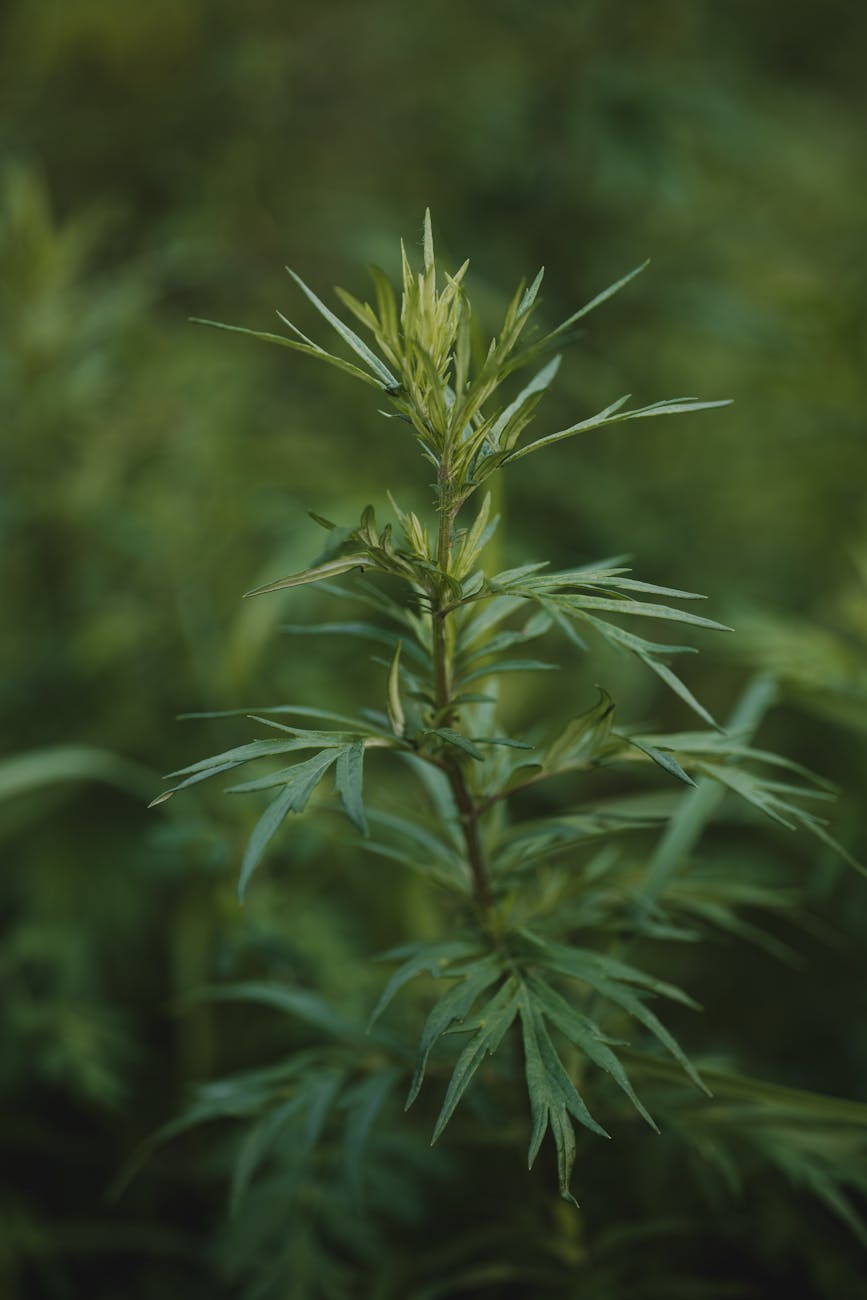
Okay, I know the name “mugwort” leaves a bit to be desired in English — it’s not exactly the most phonetically pleasing word — but its scientific name is rather beautiful: Artemisia vulgaris. The “vulgaris” in this instance means “common,” like the “wort” in “mugwort” roughly translating to “plant.” Mugwort is a very interesting, very magical, and very common plant.
The “mug” in mugwort may come from its use as an insect-repelling herb. The Old English word “mygg” is where we get the modern word “midge.” Another possibility is from its use as a flavoring herb in brewing. The “Artemisia” in Artemisia vulgaris, naturally, comes from the lunar and woodland goddess Artemis.

Mugwort was an important herb to the ancient Greeks and Romans. Soldiers and travelers would place sprigs of it into their shoes, in order to ward off fatigue.

Mugwort is very commonly included in herbal blends for dreams, psychic abilities, divination, cleansing, protection, and banishing. Like so many other herbs that are used for cleansing and banishing, this may stem from mugwort’s use as a pest repellent — it can literally banish the evils of disease brought by insects, ergo it must be useful against other evils as well. (See also: Pennyroyal.)

In Christian mythology, mugwort is associated with John the Baptist. It’s said that he carried mugwort with him to ward off evil. As a result, people would wear garlands of the herb on St. John’s Day (June 24th) and toss them into fires to ensure protection for the next year.

In some shamanic practices, mugwort is a representation of ancient wisdom. This plant is often visualized as a kind of crone figure, and used to facilitate a connection to ancestors.
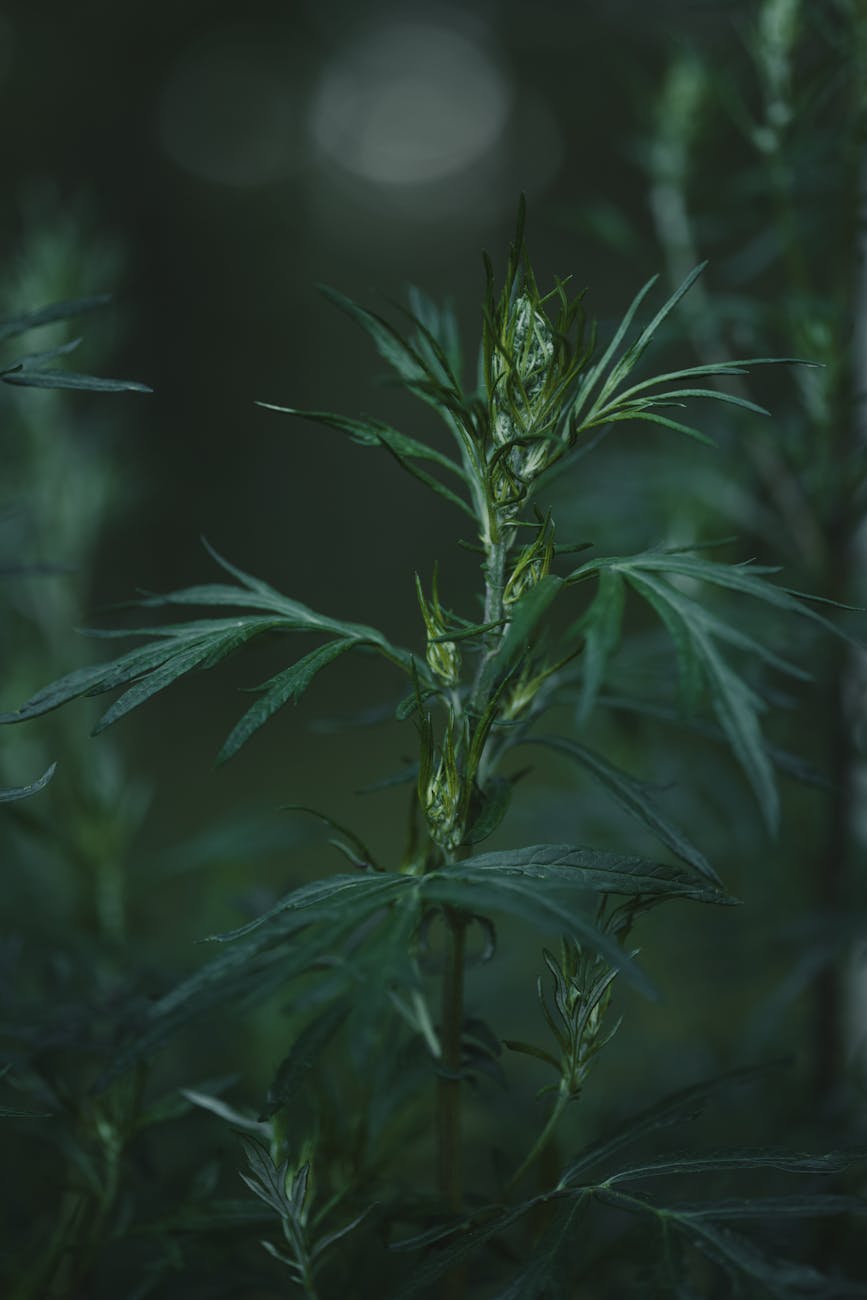
A close-up of a young sprig of mugwort.
Photo by Lauri Poldre on Pexels.com

Medicinally, mugwort was (and often still is) used to help ease difficult periods, treat menstrual irregularity, and as a mild pain reliever and anti-inflammatory. Mugwort is also used in the acupuncture practice of moxibustion, in which pieces of mugwort are placed at the end of acupuncture needles and burned.

Mugwort is also part of the Nine Herbs Charm according to one source, along with plantain, lamb’s cress, fumitory, chamomile, nettle, crab apple, chervil, and fennel. In this charm, mugwort is honored as the “oldest of plants,” strong against both poison and an unnamed force that travels the land. (This may be either a personification of evil, a venomous serpent, or a specific disease, but it’s referred to simply as “the loathsome thing.”)
The Nine Herbs Charm is a beautiful piece of poetry that combines Pagan and later Christian influences in a way that passes down important medical knowledge. The charm concludes with the recipe for a healing salve made by powdering the herbs, mixing them with old soap, mixing this with lye to make a paste, and combining it with boiled fennel. The charm is sung several times during the process — three times to each herb, then over the patient’s mouth, ears, and the wound being treated.
This is not only a magical consideration, but a practical one as well. It’s considered important to declare one’s intentions in adding an herb to a magical mixture, but the number of times the incantation is sung may correspond to how long it takes to powder and mix everything correctly. Singing it once while powdering an herb, for example, may yield a coarse consistency that doesn’t properly blend. Singing it three times, on the other hand, gives you the exact length of time needed to properly powder and mix the herbs. It’s like having a portable kitchen timer that not only tells you the recipe, it tells you what each ingredient is for and makes sure you do it right.

Mugwort was also used like hops before hops were a thing in brewing. Hops didn’t really achieve widespread use until the 15th century — before that, brewers used mugwort. It’s still used in food and teas for its unique flavor, which is like a bit astringent and savory, with a really interesting resinous character. Kind of like a mix between celery, mint, and eucalyptus.

While mugwort isn’t native to the US, it’s not exactly hard to find here, either. It does have a number of lookalikes, so you’ll want to get the help of a seasoned forager to make sure that you’re correctly IDing it. Start by looking for it in ditches, by roadsides, fields, and other places where the ground has been disturbed.
(Of course, if you’re foraging mugwort in order to consume it internally, avoid any that’s growing within ten feet of a roadside. In general, it’s better to avoid foraging near roadsides at all because the soil and plants there are contaminated by vehicular pollution. Leaving the plants in place ensures that you’re not consuming any of this pollution, and also allows them to remain and continue bioremediation.)

A large clump of mugwort, absolutely thriving next to a drainage ditch full of water.
Mugwort growing beside a drainage ditch in the Norton Marshes by Evelyn Simak is licensed under CC-BY-SA 2.0

Of course, as with many other plants, I advocate for growing mugwort if you want to develop a relationship with it. However, if you’re in the US or another area where mugwort is a problem, I recommend either growing it in containers, or trying a related native species. (Like Artemisia douglasiana, California mugwort, in the western US.)
If you’re looking for mugwort’s medicinal properties, stick with A. vulgaris or other Artemisia species specifically used in herbal medicine. Different species may not have the same active compounds in the same concentrations, and some may even have some not-very-desirable qualities as well.
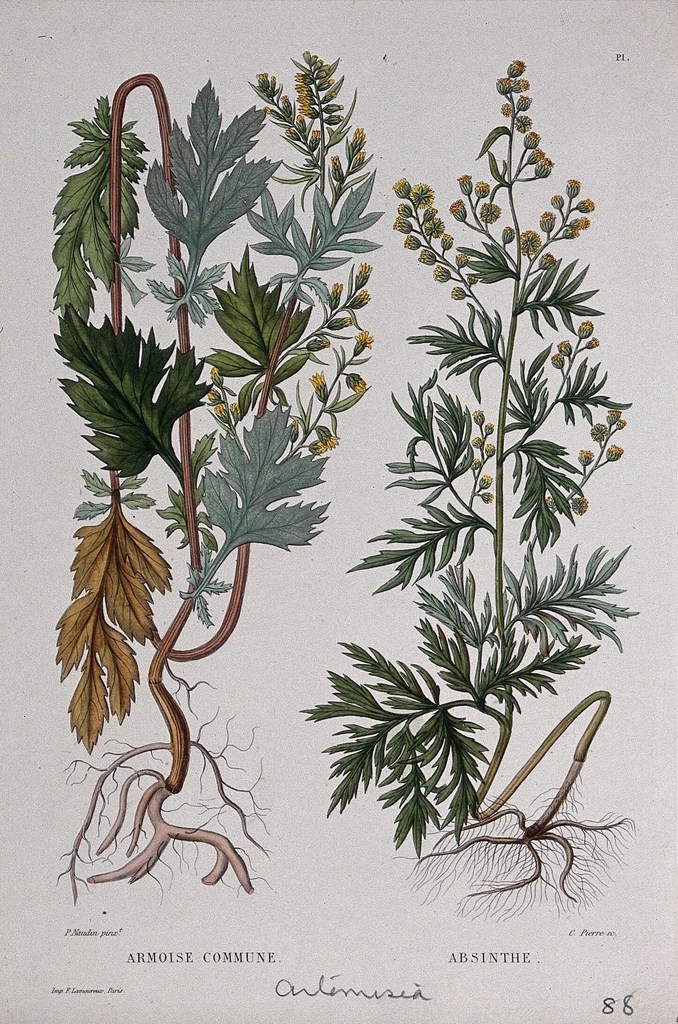
An old botanical illustration of a member of Artemisia.
The “Absinthe” on this illustration suggests wormword, Artemisia absinthum. However, the pointy leaves with green tops and silver undersides indicate mugwort.

Once you have some, using it is pretty easy:

  • Dry the leaves and add them to dream pillows along with herbs like lavender or chamomile. Squeeze the pillow and inhale the scent before dropping off to sleep.
  • Add dried mugwort to incense and light it before card reading, scrying, or other forms of divination.
  • Powder it fine and combine it with protective herbs, then sprinkle them in the corners of your home or around the border of your property.
  • Rub fresh mugwort on a black candle and burn it to banish a person, entity, or situation.
  • Dry whole sprigs of mugwort, tie them into bundles either alone or with other cleansing herbs, and burn to purify spaces and prepare them for ritual work.

You can consume mugwort as a tea or flavoring agent in breads, soups, poultry dishes, or beverages. However, high consumption of this herb does come with some unpleasant side effects like muscle spasms. If you’re looking to tap into mugwort’s psychic, trance, or dream benefits, you should still avoid consuming more than you’d normally get in an herbal tea, and avoid doing so for more than two weeks at a time. More isn’t always better.

If you’re pregnant or seeking to become so, avoid consuming mugwort. One of its chief medicinal uses has been to treat menstrual irregularity by stimulating uterine contractions. So, unless a qualified herbal practitioner says to use it, it’s best to avoid mugwort in these situations.

The mugwort of European folklore may not be from the US, but its invasive and resilient nature means that its probably here to stay. If you want to enjoy the long magical, mythological, culinary, and medicinal history of this herb, I recommend growing it in a container or purchasing the pre-dried herb to add to teas, incenses, sachets, or other preparations.
Plants and Herbs

Angelica Root Folklore and Magical Uses

Recently, my Handsome Assistant experienced a minor vehicular mishap. He was on a motorcycle, so things could’ve been a lot worse, but his injuries weren’t too serious and he’s recovering well.

When he first got his bike, I made him a safe travel charm that he’s kept with him everywhere he rides. He’s dodged the “serious motorcycle accident” bullet, and it could use a refresh. This got me thinking about protective charms in general, which, naturally, led me to what’s probably one of the strongest of them all: angelica root.

Seriously. It’s probably a little too good at what it does, but more on that below.

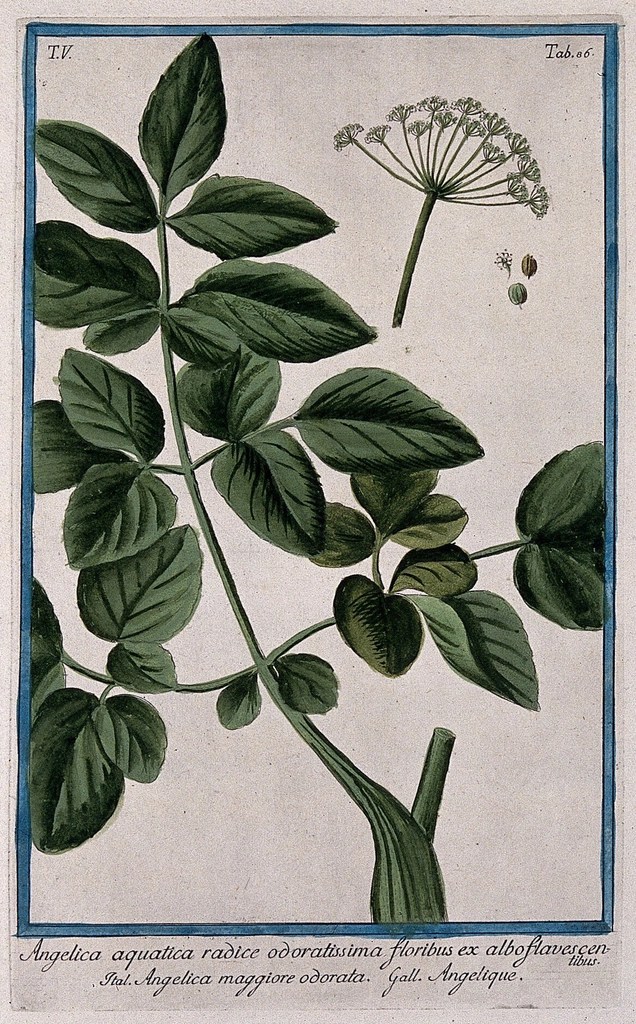
An old botanical illustration of angelica. The caption at the bottom reads, "Angelica aquatica radice odoratissima floribus ex alboflavescentibus. Ital. Angelica maggiore odorata. Gall. Angelique."

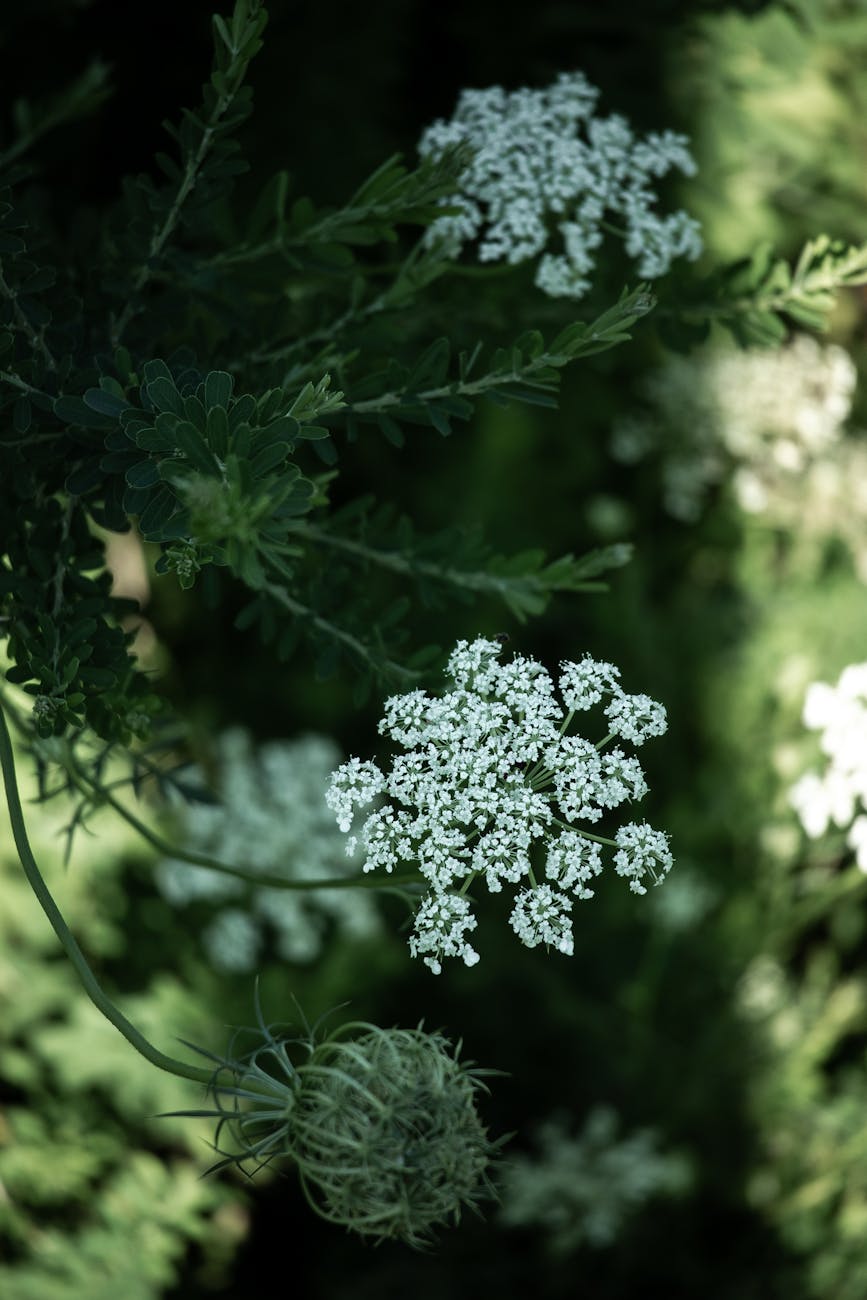
Also known as wild celery, masterwort, and archangel, angelica (Angelica archangelica) and celery are related as members of the family Apiaceae. Angelica archangelica is native to far northern Europe and Russia. Another species known as angelica, masterwort, or purple-stemmed angelica (Angelica atropurpurea) is native to wet areas in the eastern US.

The name angelica derives from the plant’s blooming period. Its flowers typically appear around Michaelmas, the feast of the Christian Archangel Michael.

In both Western European folklore and the Hoodoo tradition, angelica is associated with protection, particularly from evil spirits. It’s also occasionally used to break hexes, jinxes, or curses, depending on their nature.

Purple-stemmed angelica (A. atropurpurea) has a long history of use as both a sacred and medicinal plant by Indigenous people of the southeastern US. It could calm anxiety, ease back pains, soothe stomach trouble, and treat parasites in children. It’s also used in healing ceremonies and as a purification herb. This puts purple-stemmed angelica in the same group as many other purification herbs the world over — namely, herbs that both drive off evil or unwanted energy, and get rid of physical parasites or pests.

Angelica is also sometimes associated with luck, love, and psychic abilities. This may be because it’s so good at keeping unwanted interference at bay — combined with other herbs more directly suited to these purposes, it can keep one’s magical path clear.

On the other hand, angelica also has a reputation for being a bit too good at what it does. According to the (no longer extant) Pooka Pages’ “Concerning the Magical Properties of Herbs & Oils,” angelica may also keep away some things that you do want. If you’re attempting to use it to help you attract something into your life, it’s a good idea to keep this in mind — sometimes, those things aren’t without risk, so angelica may not be the best choice.

An angelica relative, A. sinensis, is also known as lady ginseng or dong quai. It grows in cool, mountainous areas of east Asia, and has a long history of use in Chinese medicine.

Honestly, there are few protective charms more convenient than a whole angelica root. They’re sort of lumpy and oblong, but firm, compact, and easy to stash in a pocket, bag, sachet, or any other container. I’ve never had one that was crumbly or messy, either.

Hold it in your dominant hand, tell it what you’d like it to do, project this thought, request, or energy into the root, thank it for its help, and you’re good to go. You can also anoint it with an oil, if you’d like.

You can hang a whole angelica root over your front and back doors to keep unwanted forces out or bury a root at each corner of your property.

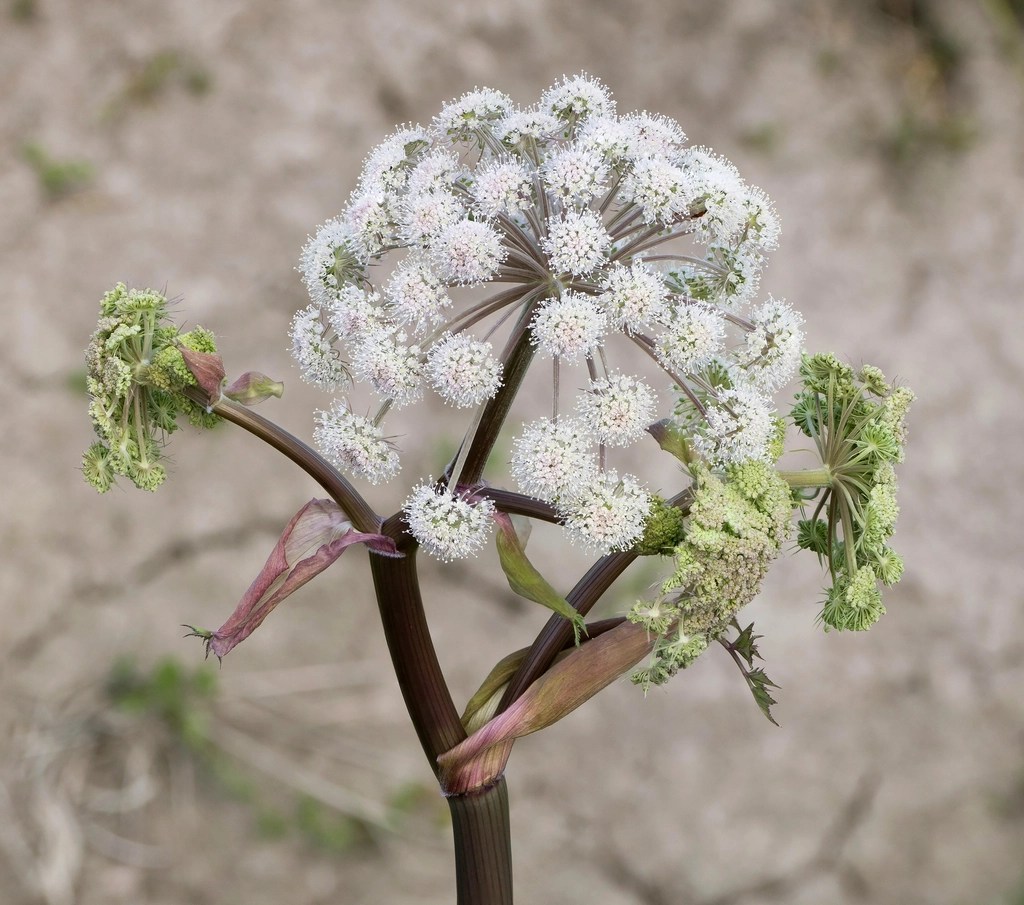
A budding wild angelica plant (Angelica sylvestris).

Soak an angelica root in water, then add the water to a floor or door wash, sprinkle it in corners of a room, or pour it along the borders of your property to ward off evil and strengthen magical boundaries.

Angelica roots also make lovely additions to protective oils themselves. Put it in a neutral carrier oil and let it infuse in a cool, dark, dry area, shaking it regularly. If you want a stronger fragrance, add essential oils just before you bottle the finished product. For this, you might want angelica root pieces rather than the whole root — it’ll have an easier time transferring its fragrance to the oil if it has more surface area.

Since the roots are fragrant themselves, and hold other fragrances well, they’re great additions to potpourri or other scented herb mixtures.

You can also eat A. archangelica stems and roots. However, you may not be able to find them in your local grocery store, and they can be challenging to identify in the wild. They have several poisonous lookalikes, so you should never consume anything that you’ve only tentatively identified as angelica. Unless you’re an expert forager yourself, get an expert forager’s opinion first. As the saying goes, you should be as confident identifying a wild edible as you would be identifying it in a grocery store. Otherwise, don’t eat it.

Angelica may not be the most versatile magical plant, but it’s one worth knowing. It’s one of the best at what it does, sometimes to the point of being too effective. It’s one of those herbs that I find it’s better to have on hand and not need, than to need and not have on hand. Whole roots aren’t too expensive, and you can use them to steep in water for magical baths, washes, or asperging, infuse them in oil, or use them whole as protective talismans.

Plants and Herbs

St. John’s Wort Folklore and Magical Uses

Ah, St. John’s wort. Taken internally, it’s reportedly a balm for the nerves. Used externally, it’s a balm for cuts and scrapes. Its turpentine-scented leaves and flowers are a source of bright red, medicinal oil, but only when very fresh. The plant itself is the subject of folklore, a medicinal treasure, and a whole lot of magical help.

So, what’s so great about St. John’s wort, and why is it called that, anyway?

Let’s start with the name. Officially, St. John’s wort is known as Hypericum perforatum — “hypericum” from “hyper” and “eikon,” referring to how the flowers were hung above icons, and “perforatum” meaning “perforated,” due to the hole-like appearance of the translucent glands in its leaves.

Hypericum is a large genus, and a lot of its members are referred to as St. John’s wort. There are even some unrelated species that bear the same common name, like the marsh St. John’s worts of the genus Triadenum, or the greater celandine that’s sometimes regionally known as St. John’s wort. For our purposes here, we’re going to stick to Hypericum perforatum.

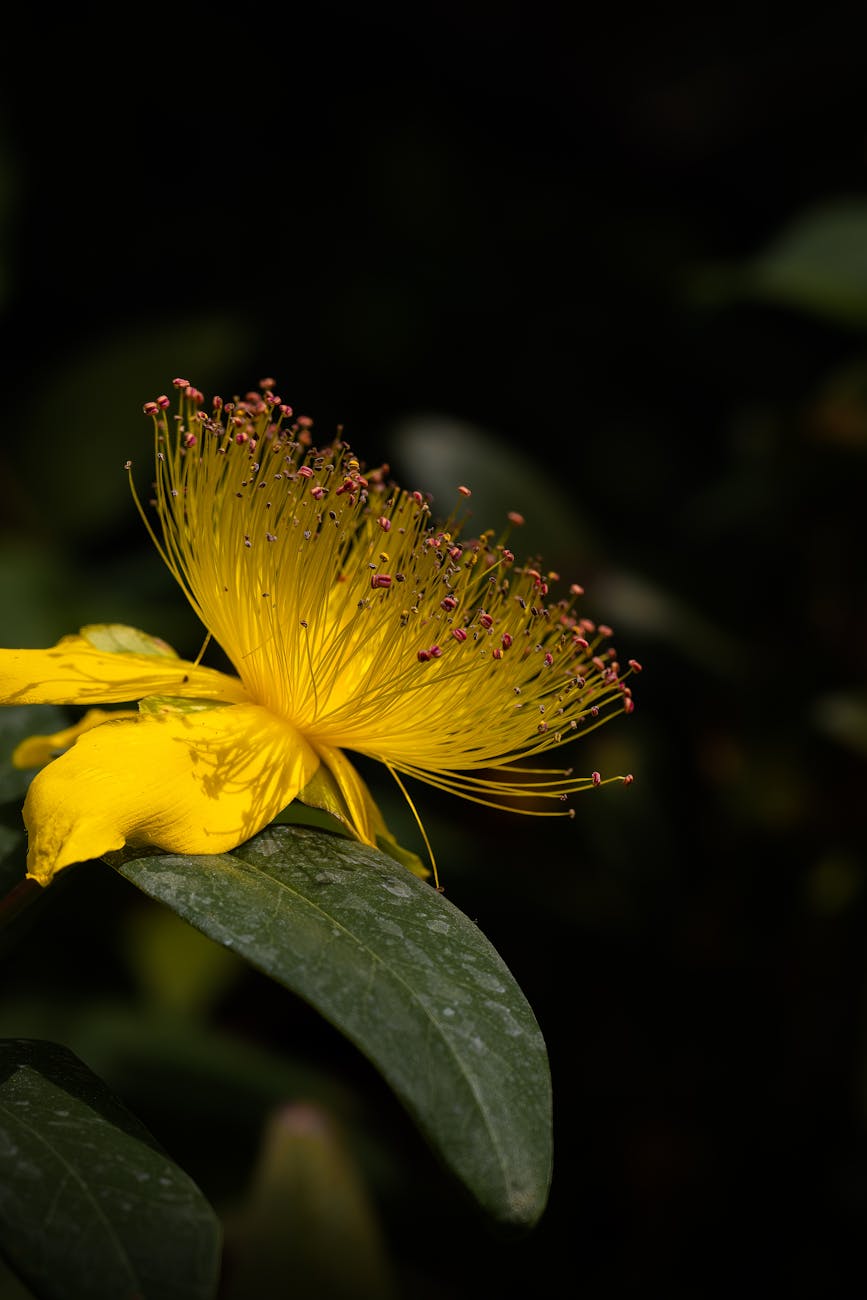
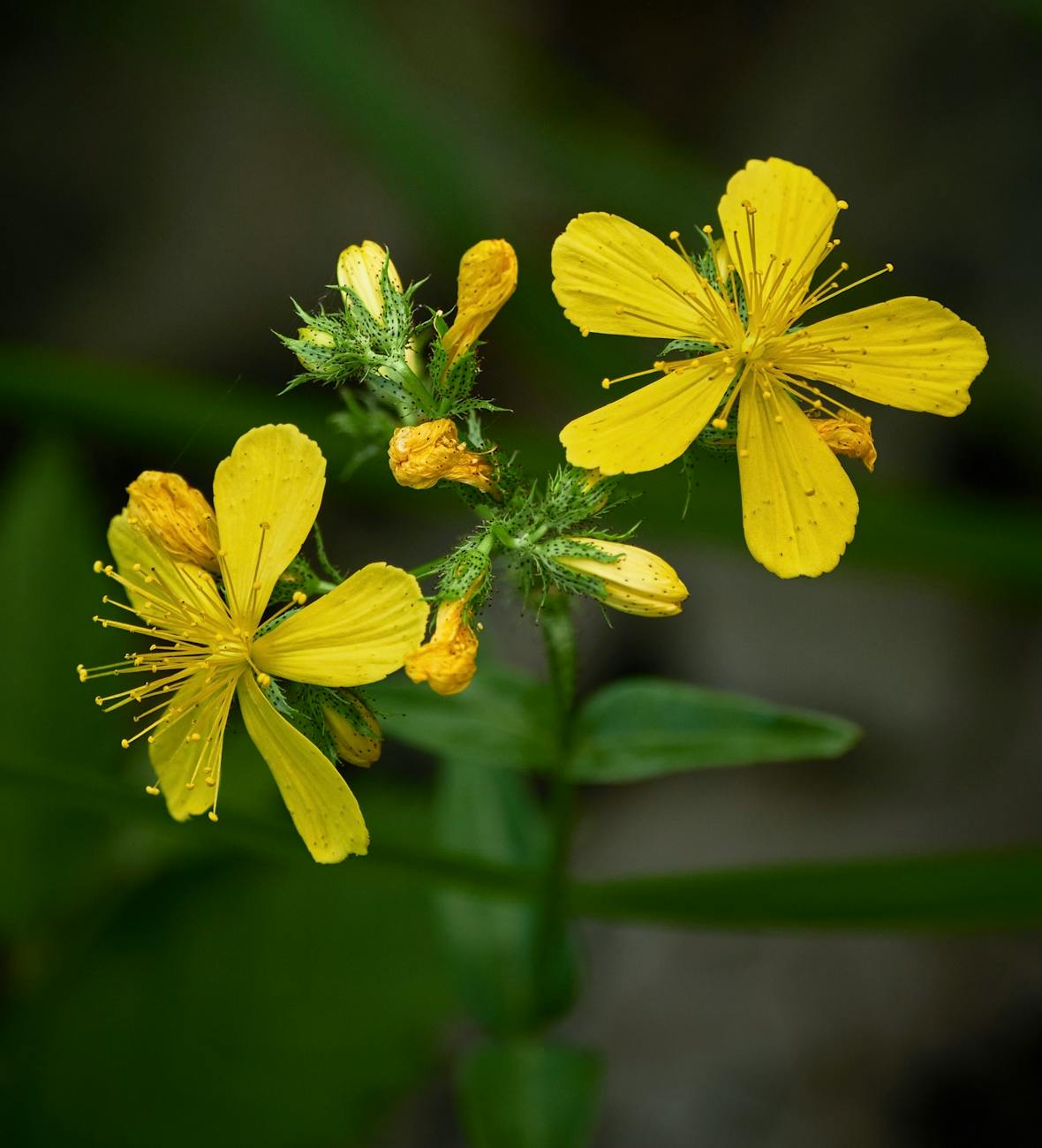
Bright yellow St. John's wort flowers.
Photo by Valter Zhara on Pexels.com

As for how this plant became known as St. John’s wort, it’s a bit of a convoluted story. Its history of use dates back to pre-Christianity, so it wasn’t always known as “St. John’s wort.” (As for the “wort” part, that’s just an old word for “plant,” derived from the Old English “wyrt.”) So, older sources will have their own names for this herb that may not be recognizable to modern readers. St. John’s wort also has a ton of regional names — in the US, it’s sometimes called goatweed, Klamath weed, or Tipton weed. In the UK, it may be called touch-and-heal, rosin rose, penny John, or balm of the warrior’s wound.

The name St. John’s wort came about because it was believed that this herb was at its most potent during Midsummer, and therefore should be harvested on or about June 24th. This was later turned into the Christian feast day of St. John, and so the plant became “St. John’s plant.” It’s also said that the plant’s red, blood-like sap runs in August, on the day that St. John was beheaded.

As evidenced by many of its healing-related common names, this herb is often hyped up in natural medicine circles. Topically, its oil is used to treat and soothe minor wounds in a similar fashion to commercial wound care ointment. Internally, it’s often used to help with symptoms of anxiety or depression. The reason it works is that St. John’s wort has a whole host of active compounds, including sesquiterpine oils, anthraquinone derivatives, and an interesting chemical called hyperforin. Hyperforin is particularly noteworthy, as it may be the source of St. John’s wort’s antidepressant effects, while the anthraquinone derivatives hypericin and pseudohypericin have demonstrated antiviral and/or antibacterial activity.

(As a side note, please avoid taking St. John’s wort internally if you’re on pretty much anything. It can alter how certain medications are metabolized by affecting specific liver enzymes, causing overdoses. It can also inhibit the effects of birth control, antivirals, chemotherapy drugs, certain anticoagulants, and medications for heart disease. Taking it with certain antidepressants also increases the risk of serotonin syndrome, and I don’t wish that on anybody.)

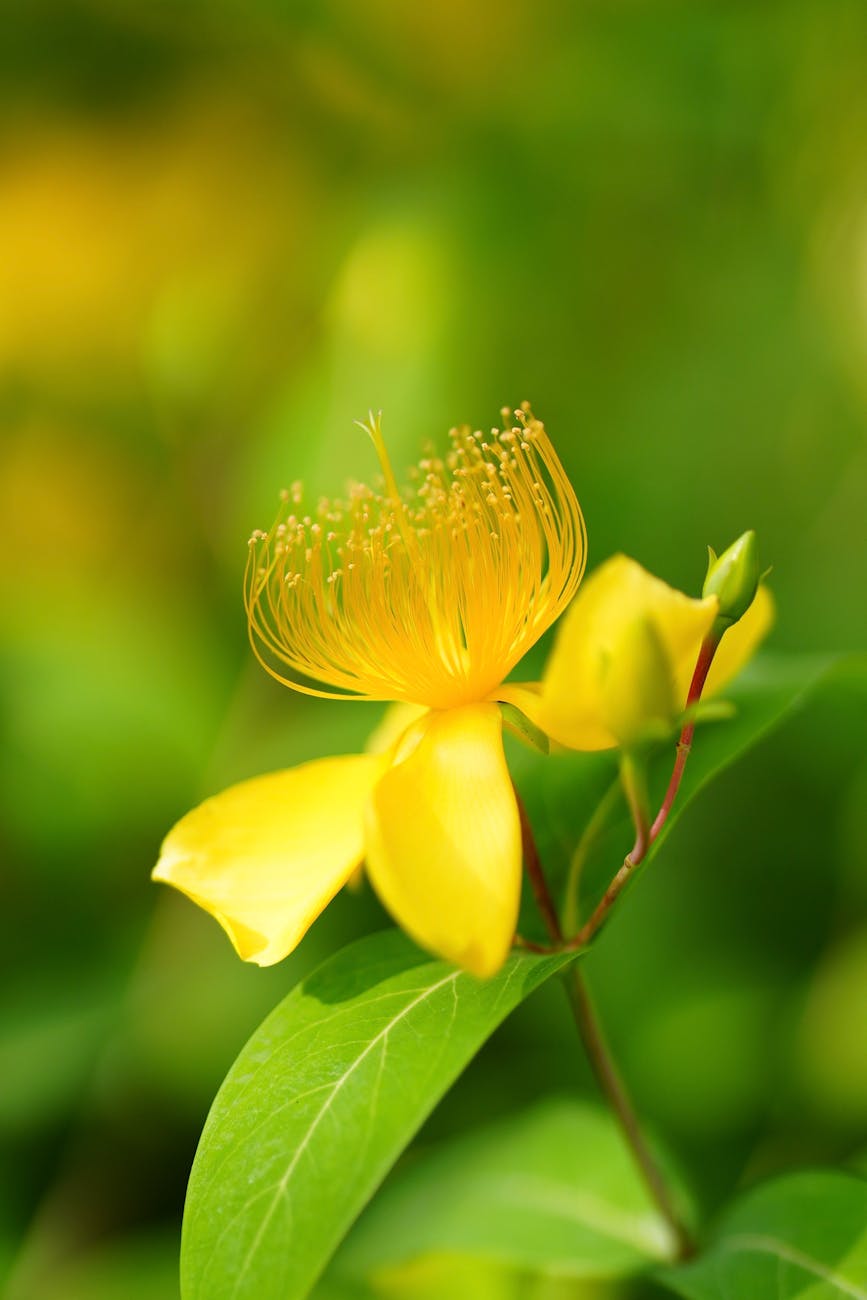
A side view of a creeping St. John's wort, Hypericum calycinum, flower.
Hypericum calycinum, or creeping St. John’s wort, displaying very similar flowers to Hypericum perforatum. Photo by shaosong sun on Pexels.com

Magically, St. John’s wort is often used to repel or banish evil. Another common name, fuga daemonium, literally means “demon flight.” It was often hung in houses, placed above religious icons, or carried as a protective talisman. Flowers, brought into the home on Midsummer’s eve, are considered particularly protective and lucky.

This plant also had some limited divinatory use as a kind of mortality predictor. If you took two sprigs of St. John’s wort and hung it over a marital bed, the sprig that wilted the fastest indicated which member of a couple would die first. Fun!

As a Midsummer plant, St. John’s wort is associated with the Sun and the element of Fire.

It’s probably best to work with this herb in dried or oil form. St. John’s wort is such a potent medicinal plant because the compounds that we use as medicine are actually the plant’s defensive mechanisms — they’re distasteful and poisonous to grazing animals, allowing the plant to grow unchecked. That’s not a super big deal if you’re within St. John’s wort’s native range across parts of Europe and Asia but can become a (rapidly spreading) problem if you’re not. This plant is considered a noxious weed elsewhere, so, unless you’re an herbalist who needs the fresh herb specifically, I’d avoid growing it.

If you have access to a patch of St. John’s wort, however, and you’re outside its native range, harvest all you like. (Not much else will use it, and you’ll be doing the native fauna and flora a favor.)

Use St. John’s wort oil for physical and magical healing. Its resemblance to blood makes it appropriate for workings related to birth, death, or rebirth (though I find a bit of bloodroot or alkanet steeped in red wine or vinegar to be a somewhat better — and easier to obtain — substitute for blood itself).

Use the dried herb for banishment. Burn it in bundles and waft the smoke around any space where you want to clear out malevolent spirits, magic, or the effects of the evil eye.

Place some of the dried herb in a protective sachet and carry it on you. You can also add it to jars, poppets, or other container spells as you deem appropriate.

Uncategorized

Blueberry (and Bilberry) Folklore and Magical Properties

I love blueberries. Few things are as delightful as a fat slice of warm blueberry pie or cobbler, with a generous dollop of ice cream (or non-dairy ice cream equivalent, as it were).

I was very excited to find that the previous occupants of this house had planted some blueberry bushes in the back yard. Unfortunately, these bushes weren’t exactly thriving — they’d been planted in an area that’s under trees. It gets plenty of light during the late autumn to early spring, but very little in the warm months. Our soil is also hard clay, and it didn’t appear that the area had been given much organic matter.

So, as much as it worried me to do it, my spouse and I uprooted these bushes and moved them into a much sunnier spot, blended well with a generous amount of shredded bark and leaf compost. We also planted two more bushes of a different variety, to fill out the tree guild we’re building around the Chehalis apple tree I talked about two weeks ago.

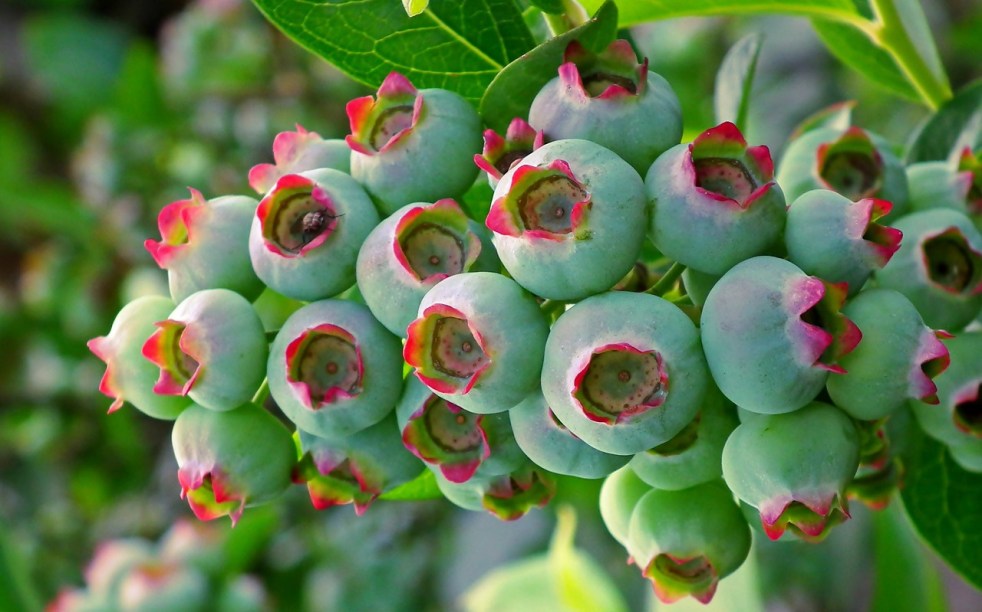
A cluster of ripening blueberries on a bush.
Some lovely little unripe blueberries on one of the bushes in the back yard.

This post isn’t about soil composition and permaculture, though I could definitely go on for volumes if it was.

No. Today, I want to get into some of the folklore and magical uses of these wonderful little balls of deliciousness.

It should be noted that blueberries (Vaccinium angustifolium, V. corymbosum, et al) are a strictly New World fruit. There’s a European relative called the bilberry (or European blueberry, Vaccinium myrtillus) that’s very similar, and the magical properties of these fruits are virtually interchangeable. If you live in an area where bilberries are native, use bilberries. If you live where blueberries grow, use those instead.

Blueberry and Bilberry Folklore

While blueberries are named for their deep purplish-blue color, the name “bilberry” is likely of Scandinavian origin. The Danish word bølle means “whortleberry,” which is another word for certain members of Vaccinium including the bilberry.

You can tell blue- and bilberries apart by their fruits. Blueberries grow in clusters, are a purplish-blue, and have a blossom end that looks a bit like a pentagon with five pointed flaps. Bilberries grow alone or in pairs, are almost black, and have a circular, smoother blossom end.

A bilberry on a bilberry shrub. The blossom end is facing upward, showing a distinct lack of the pointed flaps found on blueberries.
As you can see from this bilberry’s “butt,” they have rounder blossom ends and lack the pointy flappy bits of American blueberries. Compare it to the unripe blueberries in the photo above this one.

In Ireland, bilberries (fraochán or fraughan) are traditionally gathered during the last Sunday in July and the first of August. The first of August is Lughnasadh, a festival marking the beginning of the harvest season. Bilberries and blueberries are a traditional addition to Lughnasadh festivities all around the world.

Since gathering bilberries was traditional for the beginning of the harvest season, they were treated as a kind of oracle. If the crop was abundant, other crops would similarly flourish. If the bilberries did poorly, everything else would, too.

In ancient Greece, bilberries came from Herme’s son Myrtillus. King Oenomaus of Pisa had been given a prophecy: He would one day be killed by a son-in-law. Seeking to avoid this fate, Oenomaus decided to prevent his daughter, Hippodamia, from ever marrying by challenging every one of her would-be suitors to a chariot race on the Isthmus of Corinth. If the suitor won, he’d get Hippodamia. If he lost, Oenomaus would kill him. Since Oenomaus’ chariot was pulled by horses given to him by the god Ares, there was no way he could ever lose.

Then came Pelops. Hippodamia fell for him immediately, and went to her father’s servant, Myrtillus, for a favor. She wanted him to sabotage her father’s chariot so he’d lose the race, and Myrtillus, full of unrequited love for Hippodamia, agreed. On the day of the race, Myrtillus switched the metal linchpins of Oenomaus’ chariot with ones made of beeswax. Oenomaus’ chariot flipped, and Pelops beat him easily.

Some versions of the story say that Oenomaus, with his dying breath, asked to be avenged. Pelops then threw Myrtillus into the sea, and Hermes turned him into a bilberry shrub when he washed to shore. Another version says that Pelops, Hippodamia, and Myrtillus were traveling, when they stopped at an island so Pelops could fetch his new bride some water. When he returned, Hippodamia was in tears. Myrtillus had tried to sleep with her, she cried, while Myrtillus protested that she had promised to do so in exchange for sabotaging Oenomaus’ chariot. The enraged Pelops then killed Myrtillus.

In the folklore of some of the people indigenous to blueberry’s native range, blueberries are called “star berries” for the star-shaped blossom end.

In the Victorian language of flowers, bilberry represents treachery. This symbolism is likely borrowed from the Greek story of Myrtillus.

Blueberry and Bilberry Magical Uses

Blue- and bilberries are associated with protection and luck in European witchcraft.

Dried bilberry leaves are used in protective powders but can also be used whole for prosperity and luck.

The fruit is similarly used for protection and hex-breaking.

(Considering bilberry’s associations with treachery and crop divination, I wonder if their protective properties stem from their connection to physical danger and starvation. Today, we know that fruits like blueberry and bilberry can protect against oxidative cellular damage due to their antioxidant content, but their traditional connection to protection goes back much farther.)

Using Blueberries and Bilberries

Blueberries and bilberries couldn’t be simpler to use. For kitchen witches, include them in recipes for protection and the removal of malevolent enchantments.

Crushing the fresh berries can yield a pigment suitable for drawing protective sigils on paper talismans, the skin, and anywhere else you might need them. Just bear in mind — both of these berries are sweet, and your talismans may be sticky and likely to attract bees this way!

To protect your property, dry bilberry or blueberry leaves. Powder them well, then sprinkle the powder around the perimeter of your home or yard.

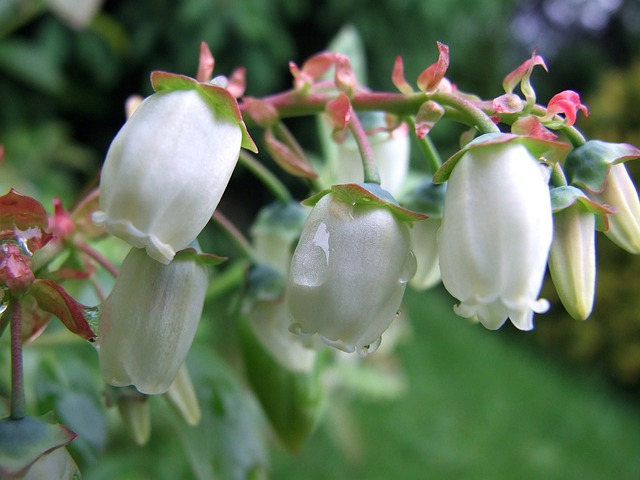
White, bell-shaped blueberry blossoms.

To break a hex, jinx, or run of bad luck, burn dried blue- or bilberry leaves. Use the smoke to fumigate the same way you’d use incense smoke.

Blueberry and bilberry don’t appear to be reversing herbs. That is, they don’t return treachery or malevolent magic to the sender. They just keep it from affecting you.

Since bil- and blueberry seems to predominantly be a protective herb, I would hesitate to use it solely for drawing luck. It appears that it’s virtue in luck drawing lies in its ability to get rid of jinxes and other things that hold you back. For luck spells, then, I’d pair blueberry or bilberry leaves with an ingredient used more specifically for attracting good luck. The berry leaves can clean up the things standing the way of your luck, and the other ingredients can draw it in. Allspice, chamomile, and fenugreek are all good options to consider here.

Interestingly, strawberries are sometimes used in small amounts for luck drawing. You could then theoretically make a jam, smoothie, or pie with both blueberries and strawberries, and, when appropriately made and empowered, use it to attract good luck to you.

It remains to be seen how my poor transplanted blueberries do, but the newer ones seem to be thriving. When the time is right, I’ll harvest the fruits and some of the leaves, and hopefully have enough protection and hex-breaking to last me all year!

life · Neodruidry · Plants and Herbs · Witchcraft

Wood Sorrel Folklore and Magical Properties

Take a look at your lawn. Unless you maintain it to putting-green smoothness, you’re likely to see some yellow flowers.

Not the dandelions — look closer.

You might mistake them for buttercups at first, but they’re really quite different. These little yellow five-petaled flowers are yellow wood sorrel (Oxalis stricta). They’re a native wildflower where I live, and vastly superior to the grass that still attempts to poke its way up through their heart-shaped leaves and small yellow flowers.

A plant with heart shaped leaflets and five-petaled yellow flowers.
A tuft of yellow wood sorrel.

As a native herb here, it doesn’t have a long history of use in old European grimoires. There are, however, many other varieties of wood sorrel — some native, some not, and some of questionable origins.

I’m a big proponent of using native alternatives to exotic herbs whenever possible, so I figured I’d give some background on wood sorrel and a few ways to use its magical (and delicious) American cousins.

Wood Sorrel Folklore

The species name Oxalis comes from the Greek word oxus, meaning “acidic” or “sharp.” The leaves of wood sorrel have a very tart flavor which makes them a tasty addition to salads. When dried, wood sorrel can be used to curdle milk for cheesemaking.

These plants are connected to fairies and woodland spirits. In Wales, wood sorrel is called fairy-bells.

A European wood sorrel plant (Oxalis acetosella), with heart-shaped leaflets and white, bell-shaped flowers.
The white flowers of Oxalis acetosella show why this plant’s sometimes known as “fairy bells.”

In herbal medicine, a decoction of the leaves was used for thirst and fever. Applied externally, the crushed leaves have an astringent effect which helps with abscesses, boils, and wounds.

Dried leaves are said to attract luck and, due to the doctrine of signatures, be healing and protective to the heart.

It’s also said that the dried leaf will allow the user to see fairies.

There’s some debate about shamrocks (an Anglicization of the Gaelic seamróg, meaning “little or young clover”). Shamrocks are associated with Saint Patrick, who used a three-leafed plant to explain the idea of the Christian Holy Trinity. Most depictions of the shamrock show it with three heart-shaped leaves. Since clovers have rounded leaves, this indicates that the shamrock may actually be a species of Oxalis and not a clover at all.

The ancient Druids were said to have regarded the shamrock as a sacred plant with the power to drive off evil spirits.

In the Victorian language of flowers, wood sorrel represented joy and motherly affection.

Wood Sorrel Magical Uses

Magically, wood sorrel is used in spells for luck, healing, protection from evil and misfortune, and love.

These plants can also be useful for working with three-part deities, like the Triple Goddess or Brighid. They make good offerings, or even natural representations of the deities themselves in a pinch.

Using Wood Sorrel

Wood sorrel isn’t a substitute for a visit to a doctor, but it can be a helpful herb for minor problems. Be sure you can reliably identify sorrel before attempting to consume it or use it topically.

If you live where wood sorrel naturally grows, you may want to cultivate a native species in your yard or garden space. This is especially true if you have an altar or dedicated space for nature spirits — wood sorrel is strongly connected to these entities. I’m planning to put an offering bowl and some large bull quartz crystals on the edge of the patch of yellow wood sorrel here, for example.

Using wood sorrel as a protective plant is an interesting idea. This protection may stem from the plant’s three-leaved appearance, which is reminiscent of various triple deities. The number three is also regarded as sacred in itself, since it reflects the past, present, and future; youth, adulthood, and old age; birth, life, and death; and the upper, middle, and lower worlds. Wood sorrel may also be considered protective because it’s very sour. Sour things, like lemons and vinegar, are often used to ward off or cleanse away negative energy.

Yellow wood sorrel leaves. The leaves consist of three heart-shaped leaflets, arranged similarly to clover leaves.
This picture shows the heart-shaped leaves and small yellow buds of yellow wood sorrel.

With all of this in mind, I’d brew a tea of wood sorrel and use it to wash doors, windows, and thresholds. Growing wood sorrel could also have a protective and luck-drawing quality.

The dried leaves and flowers would make a very nice addition to jar spells and sachets for love magic. I’d probably combine the flowers with roses, apple blossoms, and other seasonal blooms associated with love-drawing, then use this mixture in a magical bath.

If you’ve never tasted wood sorrel, I highly recommend it. The tart leaves and flowers are a very interesting addition to salads, soups, and sauces. If you’re into kitchen witchery, these edible wildflowers can be a powerful way to work with your local landscape to bring love, protection, and luck into your life.

life · Neodruidry · Plants and Herbs

Apple Folklore and Magical Properties

So, apples.

They’re versatile, inexpensive, and delicious. You can use them to carve stamps, prepare stuffing, or make a pie. Got an apple core? Feed it to worms or toss it in compost. They’re a delightful package of deliciousness, nutrition, and fiber.

They’re also pretty prominent in the religions of the areas from which they come. Eris tossed a golden apple and started the Trojan war. Iðunn’s golden apples give the gods youth, immortality, and vigor. Manannán mac Lir tempted Cormac mac Airt with a branch covered in nine apples of red gold. Emain, the otherworldly Plain of White Silver, had silver boughs with white apple blossoms.

We don’t have magic apples here, though I feel like Chehalis apples come close. I was drawn to their colors, ranging from emerald green, to golden yellow, to a pale, almost ethereal shade somewhere between the two. (I’ll just be happy if I get to eat one of these apples without the birds and wasps getting to them first!)

An apple ripening on a tree.
One of the little Chehalis apples on the tree in the back yard.

But apples are more than just magical symbols of the Otherworld, anyway. They’re also an indispensable ingredient in kitchen witchery, and even herbal healing.

Apple Folklore

Teasing out the folkloric significance of apples is more challenging than it might seem. Up until the 1800s, the word “apple” was used not just for apples, but also for as a generic term for fruits other than berries. This is why we have “oak apples” (a plant deformity caused by gall wasps), “earth apples” (cucumbers or potatoes, depending on who you ask), “love apples” (tomatoes), or “May apples” (a low-growing relative of barberry).

Ethnobotanists have made some compelling arguments for apples being used as a symbolic substitution for fly agaric mushrooms (Amanita muscaria), an entheogenic fungus. This is an interesting bit of information to keep in mind as you read through the rest of the folkloric and symbolic significance of apples.

The fruit eaten by Adam and Eve in the garden of Eden in Christian mythology is often said to be an apple. This is particularly interesting when you consider the effect of that apple and Terence McKenna’s “Stoned Ape” theory of humanity’s development. This widely-criticized theory holds that entheogens (specifically Psilocybe cubensis) are responsible for much of the progress of humankind. If Adam and Eve’s apple could be viewed as an entheogenic fungi, then the Christian story of the fall of man would be an allegory for entheogens leading to the development of clothing, agriculture, and more.

The larynx, which is usually (though certainly not always) more prominent in male humans, is called an “Adam’s apple” because of a bit of folklore that claimed that the prominence was created by the fruit sticking in Adam’s throat.

In later Christian mythology, Jesus Christ is portrayed as holding an apple. Here, the apple transforms from a sign of the fall of humanity, into a sign of redemption. Considering that this redemption leads to eternal life, this apple is somewhat akin to the apples of Iðunn.

In the Norse Prose Edda, the goddess Iðunn is said to carry an ash wood box in which she keeps golden apples. When the Norse gods begin to grow old, they eat her apples and become young again. The gods, then, depend very heavily on Iðunn’s presence and good will in order to maintain their youth and strength.

Apples weren’t always associated with youth and life, however. In the Heiðarvíga saga, the poet speaks of the “apples of Hel.” These appear to be the antithesis of Iðunn’s apples — the food of the dead.

In Greek mythology, Eris felt insulted when she wasn’t invited to the wedding of Peleus and Thetis like the other gods were. As revenge, she tossed a golden apple inscribed with the words “to the fairest” in between Hera, Athena, and Aphrodite. They immediately began arguing over who deserved it, and asked Paris to mediate. Aphrodite promised him the hand of the most beautiful woman in the world if he chose her, so he did. Unfortunately for everyone, that woman was Helen of Troy, and Paris’ decision kicked off the Trojan War.

The island of Avalon, the mythical, mystical place of Arthurian legend, is the Island of Apples. The name “Avalon” is thought to stem from the Welsh word “afal.”

In Cornwall, Kalan Gwav (Allentide) is a time for giving shiny, bright red apples to friends and family as tokens of luck.

In the Irish Echtra The Voyage of Bran, Bran mac Febail sets out on his adventure when he receives a silver apple bough brought from Emain, the Plain of White Silver.

The Irish sea god Manannán mac Lir’s golden apples emitted a kind of magic lullaby. This could soothe people afflicted with injuries or illnesses to a healing sleep. The name of his paradisical home, Emain Abhlach, comes from the Old Irish “Ablach” (“of the fruits” or “of the apples”).

Apples, fresh flowers, and sheet music on a wooden table. One of the apples has been cut in half to expose the seeds. An ornate knife sits nearby.

In the mythology of the people from the North Caucasus, there is a tree that groows magic apples capable of guaranteeing a child to whoever eats them.

During the Jewish holiday Rosh Hashanah, people dip apples in honey and eat them to bring in a sweet year ahead.

Wiccan lore views apples as a sacred symbol. This is because, when cut in half horizontally, their seeds and core form a pentagram.

An old bit of boat builder’s lore holds that it’s bad luck to make a boat from apple wood, since apple wood was used to make coffins. Doing so was believed to doom the sailors to an early grave.

A common bit of marriage folklore says that, if an unmarried woman peels an apple in one long, continuous piece, then throws it over her shoulder, the peel will fall in the shape of the first letter of her future spouse’s name.

Wassailing is an old English folk practice performed to bless the trees and bring in a big crop in the next harvest season. (I went to a wassail ceremony earlier this year, and it was a ton of fun!)

The Magical Uses of Apples

Apples are a common autumn food and addition to altars for autumn and winter holidays. This is because they’re in season during autumn, and tend to keep very well if they’re stored properly. Apple sauce, apple cider, dried apples, and carefully-stored fresh apples were vital additions to the western European diet during the cold months.

An apple bough with buds, flowers, ripe fruit, and unripe fruit is said to mark a door to the Otherworld.

In general, apples are magically associated with love, fertility, protection, and prosperity. The flowers are excellent additions to charm bags, the fruit is great for kitchen witchery, and the leaves can bring fertility and prosperity to one’s home or garden.

Using Apples in Magic

Apples are possibly one of the easiest and most convenient magical ingredients. Since apples are pretty sturdy and edible when raw, they’re often used as a kind of edible “package” for magical intentions. Hold an apple in your hands, visualize it filling with your intention, whisper your intention to it, and eat.

If you have access to apple leaves (either pruned or fallen — please don’t pick fresh leaves from the tree), bury thirteen of them in your garden. This is said to increase its productivity for the next year. I’d argue that you could also add these leaves to compost, or bury pruned or fallen apple wood in your hügelkultur mounds.

Apple blossoms are great ingredient for love magic. Their action is said to be gently seductive. They are also used for peace, contentment, and success. This suggests that they’d be a useful addition to any spell for attracting happiness into one’s life.

Apples are also said to be protective. Apple cider vinegar can be a useful (and pungent) addition to jars and bottle spells for protection against both one’s enemies and malevolent energy.

Another small Chehalis apple ripening on a tree.
Another little Chehalis apple.

I can’t tell you how excited I am for apples this year. The springtime apple blossoms were incredible, and I check on the ripening fruits with excitement every day. Here’s hoping you can find ways to incorporate these magical fruits into your meals, rituals, and daily practices.

life · Neodruidry · Plants and Herbs · Witchcraft

Herbs for Justice, Protection, and Invisibility

If you’re taking part in the June 5th spiritual protest or any other justice-related spellwork, you might be wondering what materials you should reach for. Traditional hoodoo resources are a great source for this — the generations of the Black community’s mistreatment at the hands of law enforcement is made painfully evident when you look at the number of oils, powders, and roots that help with court cases and legal trouble.

If you don’t have access to traditional rootwork resources, though, that’s okay. There are plenty of other plants you can go to, especially if your spiritual and magical path hails from a different part of the world. Since this is somewhat short notice and COVID-19 is still affecting business closures, here are some herbs I thought would be a) effective, and b) easy-to-find, even if you don’t have them already. Some, you might be able to find by the side of the road. Others, you might have in your kitchen already.

Amaranth

Amaranth is used for protection and invisibility — help journalists and protesters avoid violence. It’s an ancient grain, so, if you have a sensitivity to wheat, you may already have some to cook with.

Buckthorn

Buckthorn is useful for protection and legal trouble. Alder-lead buckthorn grows across the U.S., Carolina buckthorn can be found in the east, and California, cascara, and hollyleaf buckthorn grows in the west. Common and glossy buckthorn also occur in the U.S. as invasive species — get your magical ingredients and curb the invasion, all in one shot.

Celandine

Celandine is protective and helps with legal matters. It helps win the good will of a jury, and is used to avoid unjust imprisonment. Lesser celandine is an invasive species in the U.S., especially in the east and northwest, and is sometimes known as “fig buttercup.”

Mugwort

Mugwort is used for protection and healing. It keeps away evil, protecting the target from dark forces. When carried, it helps ensure that loved ones return home safely. Mugwort grows as a weed everywhere but the plains states in the U.S. You can find it on waste ground, roadsides, by train tracks, and in fallow fields.

Oregano

Chances are, you’ve got some of this common spice in your kitchen. Grab a shaker of it, a piece of charcoal, and a fireproof dish, and burn the leaves. As you do this, pray for justice. Your intent will be carried on the smoke.

You can also add oregano to spells for protection — useful for aiding the protesters and oppressed communities.

Rosemary

Rosemary is my favorite protective plant. It’s also an easy-to-find culinary herb — if you don’t have rosemary itself, you might have “poultry seasoning” (which probably has sea salt, garlic, and other protective goodies in it).

Vervain

Vervain is a very powerful sacred herb. It empowers anything it’s added to, and is used for protection, peace, healing, sending negativity back, and more. This is common vervain, not the U.S. native blue vervain, but both are part of Verbena. Blue vervain grows wild in disturbed areas.

Woad

Woad is often used for ancestor work, particularly by those of Celtic extraction. It’s also used for banishing and spiritual protection. As far as I’m aware, the Celtic peoples didn’t really give a flying fornication about ethnicity or bloodline purity or what have you, so, if using it speaks to you, go wild.

Woad isn’t particularly easy to find, but it’s a favorite for battle magic.

Yarrow

Yarrow helps instill courage. You can find it all across the U.S., in gardens, forests, and grasslands alike, growing along roadsides and hiking trails.

This is a very short, basic list based on my own experience and research. (For a more in-depth treatment of war witchcraft, there’s a great article on Zindoki.com.) Most of these herbs are pretty easy to find, you might even be able to harvest some from untended land near your home. Just remember — take no more than 30% of the plant, and always ask permission and leave an offering.

The injustice suffered by some of us, hurt all of us.
Work your magic by the moon. Kick some ass.