life · Neodruidry · Plants and Herbs · Witchcraft

Wood Sorrel Folklore and Magical Properties

Take a look at your lawn. Unless you maintain it to putting-green smoothness, you’re likely to see some yellow flowers.

Not the dandelions — look closer.

You might mistake them for buttercups at first, but they’re really quite different. These little yellow five-petaled flowers are yellow wood sorrel (Oxalis stricta). They’re a native wildflower where I live, and vastly superior to the grass that still attempts to poke its way up through their heart-shaped leaves and small yellow flowers.

A plant with heart shaped leaflets and five-petaled yellow flowers.
A tuft of yellow wood sorrel.

As a native herb here, it doesn’t have a long history of use in old European grimoires. There are, however, many other varieties of wood sorrel — some native, some not, and some of questionable origins.

I’m a big proponent of using native alternatives to exotic herbs whenever possible, so I figured I’d give some background on wood sorrel and a few ways to use its magical (and delicious) American cousins.

Wood Sorrel Folklore

The species name Oxalis comes from the Greek word oxus, meaning “acidic” or “sharp.” The leaves of wood sorrel have a very tart flavor which makes them a tasty addition to salads. When dried, wood sorrel can be used to curdle milk for cheesemaking.

These plants are connected to fairies and woodland spirits. In Wales, wood sorrel is called fairy-bells.

A European wood sorrel plant (Oxalis acetosella), with heart-shaped leaflets and white, bell-shaped flowers.
The white flowers of Oxalis acetosella show why this plant’s sometimes known as “fairy bells.”

In herbal medicine, a decoction of the leaves was used for thirst and fever. Applied externally, the crushed leaves have an astringent effect which helps with abscesses, boils, and wounds.

Dried leaves are said to attract luck and, due to the doctrine of signatures, be healing and protective to the heart.

It’s also said that the dried leaf will allow the user to see fairies.

There’s some debate about shamrocks (an Anglicization of the Gaelic seamróg, meaning “little or young clover”). Shamrocks are associated with Saint Patrick, who used a three-leafed plant to explain the idea of the Christian Holy Trinity. Most depictions of the shamrock show it with three heart-shaped leaves. Since clovers have rounded leaves, this indicates that the shamrock may actually be a species of Oxalis and not a clover at all.

The ancient Druids were said to have regarded the shamrock as a sacred plant with the power to drive off evil spirits.

In the Victorian language of flowers, wood sorrel represented joy and motherly affection.

Wood Sorrel Magical Uses

Magically, wood sorrel is used in spells for luck, healing, protection from evil and misfortune, and love.

These plants can also be useful for working with three-part deities, like the Triple Goddess or Brighid. They make good offerings, or even natural representations of the deities themselves in a pinch.

Using Wood Sorrel

Wood sorrel isn’t a substitute for a visit to a doctor, but it can be a helpful herb for minor problems. Be sure you can reliably identify sorrel before attempting to consume it or use it topically.

If you live where wood sorrel naturally grows, you may want to cultivate a native species in your yard or garden space. This is especially true if you have an altar or dedicated space for nature spirits — wood sorrel is strongly connected to these entities. I’m planning to put an offering bowl and some large bull quartz crystals on the edge of the patch of yellow wood sorrel here, for example.

Using wood sorrel as a protective plant is an interesting idea. This protection may stem from the plant’s three-leaved appearance, which is reminiscent of various triple deities. The number three is also regarded as sacred in itself, since it reflects the past, present, and future; youth, adulthood, and old age; birth, life, and death; and the upper, middle, and lower worlds. Wood sorrel may also be considered protective because it’s very sour. Sour things, like lemons and vinegar, are often used to ward off or cleanse away negative energy.

Yellow wood sorrel leaves. The leaves consist of three heart-shaped leaflets, arranged similarly to clover leaves.
This picture shows the heart-shaped leaves and small yellow buds of yellow wood sorrel.

With all of this in mind, I’d brew a tea of wood sorrel and use it to wash doors, windows, and thresholds. Growing wood sorrel could also have a protective and luck-drawing quality.

The dried leaves and flowers would make a very nice addition to jar spells and sachets for love magic. I’d probably combine the flowers with roses, apple blossoms, and other seasonal blooms associated with love-drawing, then use this mixture in a magical bath.

If you’ve never tasted wood sorrel, I highly recommend it. The tart leaves and flowers are a very interesting addition to salads, soups, and sauces. If you’re into kitchen witchery, these edible wildflowers can be a powerful way to work with your local landscape to bring love, protection, and luck into your life.

Just for fun · life

“They call it a ‘divorce boat.'”

At which point I began to doubt that this was necessarily the wisest way for my spouse and I to learn kayaking.

It’s something we’ve always wanted to do but hadn’t really found a way. We checked out kayaking classes and ran up against some teachers who felt that learning to kayak was a major lifestyle decision — nay, a calling — and we would need to approach it with the same solemnity and devotion one might expect from novice monks.
So, we kind of shelved that idea for a while.

Then we had the chance to go on a kayaking dealy with our Druidry group. Score! All we’d have to do is rent a kayak and some life jackets, and we could figure it out, right?

Since we were both going, we could just get a tandem kayak. My spouse has more upper body endurance than I do right now, so he could do the majority of the paddling with me as backup. It’d be easier and safer than taking individual kayaks, where something could happen that’d conceivably result in one of us needing a tow anyway. Easy peasy!

Tandem kayaks are known as “divorce boats” because, as it turns out, paddling a kayak with two people is only slightly more difficult than herding cats or folding origami dragons using nothing but your forehead. If your paddling isn’t in unison, then things get weird. You might hit each other’s paddles, or spin in a circle, or distribute your weight wrong and flip over.

(Speaking of which, did you know that kayaks can be carried on your head?

It’s true! A kayak might seem way too big at first glance, but, once you flip it over and put it on your head, it’s capsized! ᕕ(ᐛ)ᕗ )

Fortunately, our partnership survived the Ordeal of the Tandem Kayak, and nobody even almost drowned. He sat in front, so I just kind of let him set the rhythm, helped with turns, and took over when he needed to rest for a bit. It was way easier and less nerve-wracking than I expected it to be, and we were both honestly impressed that we not only didn’t get dumped in the water, but actually managed to paddle for several miles along the Anacostia River.

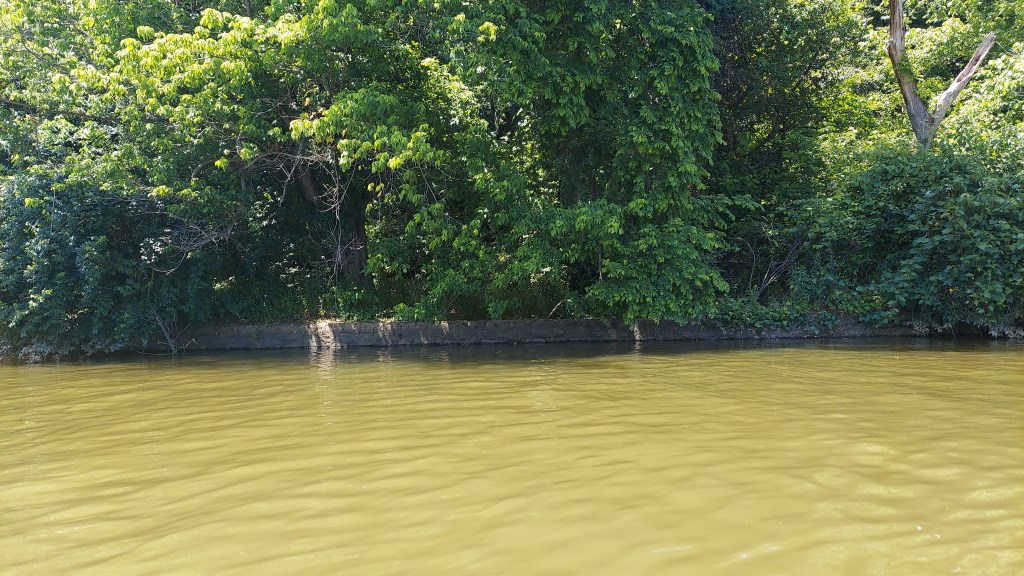
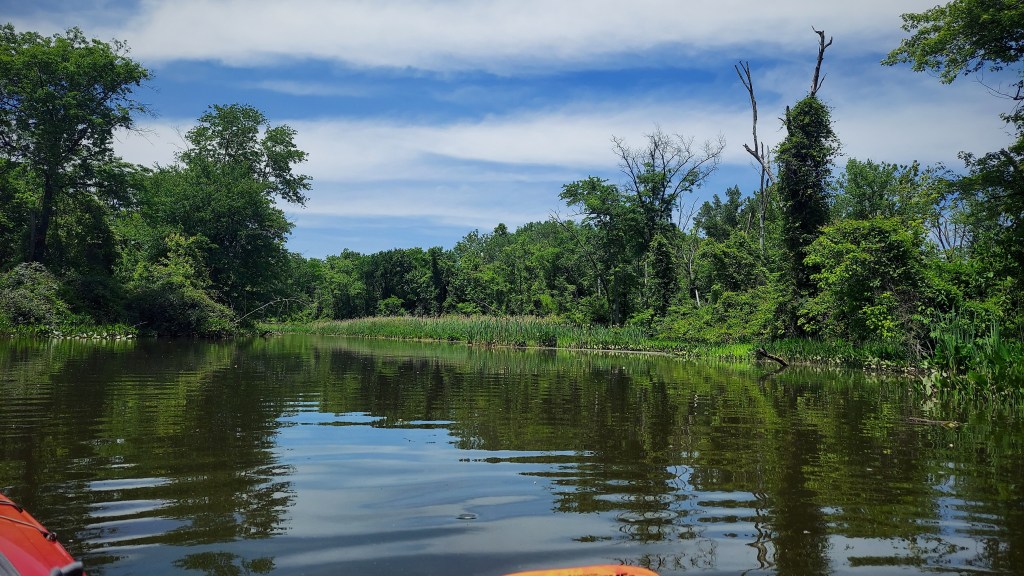
A long section of river flows between stands of trees and lotus leaves.

The Anacostia has a bad rap. In the past, this wasn’t entirely undeserved. For a long time, it was used as pretty much DC’s trash dump — to the point where parts of it are still lined with the remnants of “malaria walls.” These were retaining walls designed to help cut down on some of the garbage and assorted filth that ended up in the river, which created stagnant areas that turned into malarial mosquito breeding grounds. While this was once (sadly) helpful, it’s even more helpful to not dump things in the water in the first place. The river itself is much better than it used to be, and there are ongoing efforts to protect and improve it.

A low stone retaining wall sits partially submerged in a river. Tall trees and low-growing shrubs fill the space behind it.

For our part, we all had grabby tools for picking up any bits of floating trash that we passed by, and mesh laundry bags for holding on to it until we could reach a trash can. (As it turns out, they’re pretty much perfect for towing along behind a boat when you don’t want to have to keep muddy water bottles and waterlogged grocery bags in your lap.) Since neither of us was solely responsible for paddling, it made it easier to grab the occasional piece of litter. It’s like the watery equivalent of plogging.

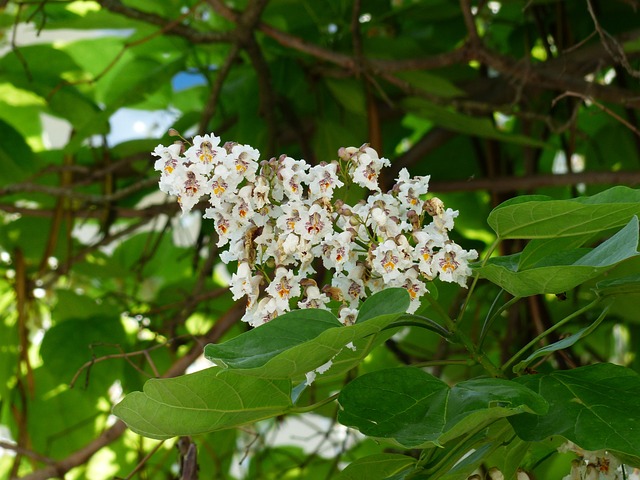
We paused for a bit near clusters upon clusters of lotuses. They aren’t in bloom right now, but the lush greenery, blue sky, songs of the red winged blackbirds, deep twang of frog calls, and the scent of catalpa flowers were still beautiful. We said a short prayer in reverence and gratitude, pausing to take it all in as we bobbed gently on the slow, easy current.

If I had to give one piece of advice here, it’d be to not just put sunscreen on your face, arms, and shins, decide that’s good enough, and let your upper thighs get burned to the color and consistency of glazed ham. I don’t even burn easily, but the sun, lack of shade, and light reflected off of the water was way more brutal than I’d anticipated. Sun hats and cool, long clothing is a must. I went with a broad-brimmed hat, a bright, long-sleeved two-piece bathing suit, a pair of jorts, and some hiking sandals. With the exception of the jorts, this worked out pretty well.

Seriously. It’s only on my upper thighs.
I have Neapolitan legs.
It’s ridiculous, and now every time I wear pants it feels like I’m rolling in ground glass.
The aloe plants in my kitchen aren’t super happy about the situation, either.

Also, wear bright oranges, yellows, and hot pink. The color of your swimsuit/clothing can make a huge difference if you end up in the water and need to be saved. You might be surprised at just how many colors seem to blend in and disappear under water, especially natural bodies of water.

All in all, the experience was 10/10. (I won’t even deduct a point for sunburn, because that was my own dumbass fault.) The only near accident came when I noticed a small stowaway on my hat, and we tried to navigate near an overhanging branch to let them go safely. A boat passed by, and the wake made things get weird for a moment.

(This stowaway was a spider. If you have arachnophobia, you should maybe stop scrolling now.)

(It’s kind of a small spider, though. The picture makes it look a lot bigger than it really was.)

(Also this is not a back widow or brown recluse, so it probably isn’t bitey. Even if it is, it is probably super not a big deal.)

A small orangish spider on the brim of a black wool sun hat.

I’m excited to go again. I had a ton of fun, and I know how to do even better next time. Our group also had long stretches of the river pretty much to ourselves, too, so it was honestly a pretty beautiful and profound experience.

life · Neodruidry · Plants and Herbs

Apple Folklore and Magical Properties

So, apples.

They’re versatile, inexpensive, and delicious. You can use them to carve stamps, prepare stuffing, or make a pie. Got an apple core? Feed it to worms or toss it in compost. They’re a delightful package of deliciousness, nutrition, and fiber.

They’re also pretty prominent in the religions of the areas from which they come. Eris tossed a golden apple and started the Trojan war. Iðunn’s golden apples give the gods youth, immortality, and vigor. Manannán mac Lir tempted Cormac mac Airt with a branch covered in nine apples of red gold. Emain, the otherworldly Plain of White Silver, had silver boughs with white apple blossoms.

We don’t have magic apples here, though I feel like Chehalis apples come close. I was drawn to their colors, ranging from emerald green, to golden yellow, to a pale, almost ethereal shade somewhere between the two. (I’ll just be happy if I get to eat one of these apples without the birds and wasps getting to them first!)

An apple ripening on a tree.
One of the little Chehalis apples on the tree in the back yard.

But apples are more than just magical symbols of the Otherworld, anyway. They’re also an indispensable ingredient in kitchen witchery, and even herbal healing.

Apple Folklore

Teasing out the folkloric significance of apples is more challenging than it might seem. Up until the 1800s, the word “apple” was used not just for apples, but also for as a generic term for fruits other than berries. This is why we have “oak apples” (a plant deformity caused by gall wasps), “earth apples” (cucumbers or potatoes, depending on who you ask), “love apples” (tomatoes), or “May apples” (a low-growing relative of barberry).

Ethnobotanists have made some compelling arguments for apples being used as a symbolic substitution for fly agaric mushrooms (Amanita muscaria), an entheogenic fungus. This is an interesting bit of information to keep in mind as you read through the rest of the folkloric and symbolic significance of apples.

The fruit eaten by Adam and Eve in the garden of Eden in Christian mythology is often said to be an apple. This is particularly interesting when you consider the effect of that apple and Terence McKenna’s “Stoned Ape” theory of humanity’s development. This widely-criticized theory holds that entheogens (specifically Psilocybe cubensis) are responsible for much of the progress of humankind. If Adam and Eve’s apple could be viewed as an entheogenic fungi, then the Christian story of the fall of man would be an allegory for entheogens leading to the development of clothing, agriculture, and more.

The larynx, which is usually (though certainly not always) more prominent in male humans, is called an “Adam’s apple” because of a bit of folklore that claimed that the prominence was created by the fruit sticking in Adam’s throat.

In later Christian mythology, Jesus Christ is portrayed as holding an apple. Here, the apple transforms from a sign of the fall of humanity, into a sign of redemption. Considering that this redemption leads to eternal life, this apple is somewhat akin to the apples of Iðunn.

In the Norse Prose Edda, the goddess Iðunn is said to carry an ash wood box in which she keeps golden apples. When the Norse gods begin to grow old, they eat her apples and become young again. The gods, then, depend very heavily on Iðunn’s presence and good will in order to maintain their youth and strength.

Apples weren’t always associated with youth and life, however. In the Heiðarvíga saga, the poet speaks of the “apples of Hel.” These appear to be the antithesis of Iðunn’s apples — the food of the dead.

In Greek mythology, Eris felt insulted when she wasn’t invited to the wedding of Peleus and Thetis like the other gods were. As revenge, she tossed a golden apple inscribed with the words “to the fairest” in between Hera, Athena, and Aphrodite. They immediately began arguing over who deserved it, and asked Paris to mediate. Aphrodite promised him the hand of the most beautiful woman in the world if he chose her, so he did. Unfortunately for everyone, that woman was Helen of Troy, and Paris’ decision kicked off the Trojan War.

The island of Avalon, the mythical, mystical place of Arthurian legend, is the Island of Apples. The name “Avalon” is thought to stem from the Welsh word “afal.”

In Cornwall, Kalan Gwav (Allentide) is a time for giving shiny, bright red apples to friends and family as tokens of luck.

In the Irish Echtra The Voyage of Bran, Bran mac Febail sets out on his adventure when he receives a silver apple bough brought from Emain, the Plain of White Silver.

The Irish sea god Manannán mac Lir’s golden apples emitted a kind of magic lullaby. This could soothe people afflicted with injuries or illnesses to a healing sleep. The name of his paradisical home, Emain Abhlach, comes from the Old Irish “Ablach” (“of the fruits” or “of the apples”).

Apples, fresh flowers, and sheet music on a wooden table. One of the apples has been cut in half to expose the seeds. An ornate knife sits nearby.

In the mythology of the people from the North Caucasus, there is a tree that groows magic apples capable of guaranteeing a child to whoever eats them.

During the Jewish holiday Rosh Hashanah, people dip apples in honey and eat them to bring in a sweet year ahead.

Wiccan lore views apples as a sacred symbol. This is because, when cut in half horizontally, their seeds and core form a pentagram.

An old bit of boat builder’s lore holds that it’s bad luck to make a boat from apple wood, since apple wood was used to make coffins. Doing so was believed to doom the sailors to an early grave.

A common bit of marriage folklore says that, if an unmarried woman peels an apple in one long, continuous piece, then throws it over her shoulder, the peel will fall in the shape of the first letter of her future spouse’s name.

Wassailing is an old English folk practice performed to bless the trees and bring in a big crop in the next harvest season. (I went to a wassail ceremony earlier this year, and it was a ton of fun!)

The Magical Uses of Apples

Apples are a common autumn food and addition to altars for autumn and winter holidays. This is because they’re in season during autumn, and tend to keep very well if they’re stored properly. Apple sauce, apple cider, dried apples, and carefully-stored fresh apples were vital additions to the western European diet during the cold months.

An apple bough with buds, flowers, ripe fruit, and unripe fruit is said to mark a door to the Otherworld.

In general, apples are magically associated with love, fertility, protection, and prosperity. The flowers are excellent additions to charm bags, the fruit is great for kitchen witchery, and the leaves can bring fertility and prosperity to one’s home or garden.

Using Apples in Magic

Apples are possibly one of the easiest and most convenient magical ingredients. Since apples are pretty sturdy and edible when raw, they’re often used as a kind of edible “package” for magical intentions. Hold an apple in your hands, visualize it filling with your intention, whisper your intention to it, and eat.

If you have access to apple leaves (either pruned or fallen — please don’t pick fresh leaves from the tree), bury thirteen of them in your garden. This is said to increase its productivity for the next year. I’d argue that you could also add these leaves to compost, or bury pruned or fallen apple wood in your hügelkultur mounds.

Apple blossoms are great ingredient for love magic. Their action is said to be gently seductive. They are also used for peace, contentment, and success. This suggests that they’d be a useful addition to any spell for attracting happiness into one’s life.

Apples are also said to be protective. Apple cider vinegar can be a useful (and pungent) addition to jars and bottle spells for protection against both one’s enemies and malevolent energy.

Another small Chehalis apple ripening on a tree.
Another little Chehalis apple.

I can’t tell you how excited I am for apples this year. The springtime apple blossoms were incredible, and I check on the ripening fruits with excitement every day. Here’s hoping you can find ways to incorporate these magical fruits into your meals, rituals, and daily practices.

Books · Witchcraft

The Black Toad: West Country Witchcraft and Magic

It’s been a bit since I’ve sat down to read an entire book from start to finish. To be honest, I just haven’t had the time or attention to spare. I do want to get back into providing reviews and recommendations for books, since I see so many posts on social media asking for resources.

This week, I’ll be looking at Gemma Gary’s The Black Toad. At only 133 pages (not counting the bibliography and index), it’s a slim volume. Though diminutive, it’s definitely not hurting for content!

I’ll be honest, a lot of modern books and websites about witchcraft kind of make my eyes glaze over. Now, in a time where everything just gets boiled down to vibrations, intention, and personal gnosis, all of the advice and explanations sound very samey after a while. (They’re also not terribly helpful, and then people wonder why their craft doesn’t work!)

I really enjoy books on witchcraft that have a more historic bent. When I write about herbs or minerals, I end up looking into folklore, not modern lists of associations or uses. It gets closer to the heart of the matter and keeps me from having to reinvent the wheel through personal gnosis, as it were.

All of this is to say that I really, really like The Black Toad. It covers protection, luck, plant charms, weather witchery, and cursing, broken up into the domains of Old Mother Red-Cap, Green-Cap, and Black-Cap. All of this is presented without apology — for the one with the power to heal and protect must necessarily also have the power to destroy.

A rowan branch laden with red berries.

The spells and charms aren’t written like lists of instructions. Instead, they’re detailed descriptions of historical ways that witches and wise people had for protecting themselves and their animals, improving their luck, healing, and handling their enemies. It’s more than possible to use it as a spell book, but it’s primary value, to me, is as a depiction and explanation of traditional practices.

The only downside is that scientific names aren’t (or possibly can’t be) provided for some of the plants mentioned. Take sage, for example. The mention of sage states that it was drunk for health and longevity. However, there’s a sage native to the area that isn’t a sage at all — wood sage (Teucrium scorodonia). The actual sages, the Salvia species, are native to the Mediterranean. So is this sage an imported garden sage, or native woodland germander? Unfortunately, historic resources often don’t leave us much to go on.

A stack of books, magical seals, and dried herbs. Smoke rises from a bowl of burning herbs.

Some other reviewers pointed to the use of Biblical passages in some of the formulas as a problem. However, this is ahistoric and there are plenty of traditional resources that use passages from the Bible. There’s no reason to believe that witches and wise people, historically, would have reason to look down on doing so. The attitudes of modern people toward organized religion have no bearing on what people were likely to use in the past.

I’d recommend The Black Toad to anyone with an interest in traditional western European witchcraft. It gives a useful picture of the role and domain of wise people, as well as several spells that are still useful today.

life · Neodruidry · Plants and Herbs

Increasing Landscape Resilience with Native-ish Plants

Hello! It’s April, it’s going to be almost 90° F this weekend, and winter skipped us.

Well, we had like one cold week, but that was it.

Honestly, it’s had me worried. A number of plant species that are native to this area require cold stratification — in other words, they need a period of cold and some pretty big temperature swings in order to trigger them to germinate at the correct time. This includes a tree that’s very important to me, the bald cypress. They’ve evolved to need cold stratification because without it, their seeds could germinate far too early and die off in the middle of winter.

I have packets of seeds that I want to plant, too, that need to be sown within a narrow window of time. I’m talking when temperatures are cool (but not too cool), usually right around the last frost date. The trouble is… like I said, it’s going to be in the high 80s this weekend. Our official last frost date was a few days ago.

Now that I’ve gotten my complaining out of the way, there’s an idea I’ve been exploring.

I first ran into it when I was researching native hydrangeas. I love hydrangeas in general (my grandfather had a big hydrangea next to the house I grew up in, alongside a strangely persistent and hardy opuntia cactus), but they’re not really known for their heat tolerance. They are, by far, not the only plants that are going to suffer as temperatures increase either.

A hand touches a cluster of purple Hydrangea macrophylla flowers.

Smooth hydrangea (Hydrangea arborescens) is native to this area. They also prefer daytime temperatures in the 70s and require supplemental irrigation when it gets too hot and dry.

Oakleaf hydrangeas (Hydrangea quercifolia) are native to the Southeastern United States. In other words, they’re from the US, just a bit lower than where I live. Changes in average temperatures are expanding the range of some southern plants and animals, while driving others further north.

Unfortunately, there’s not much that a single person can do to keep their cool temperature-loving plants from suffering from this effect. It’s also debatable whether we should — landscapes are ever-changing and evolving, and state borders are artificial constructs that plants and animals don’t recognize. It may increase the resilience of the landscape to work with this shift, rather than against it.

For this reason, I’m experimenting with oakleaf and smooth hydrangeas. Experts point out that this area’s climate is slowly aligning with species that used to be relegated to more southern states. Blending some Southern species with Midatlantic species could help create a plant, animal, and fungal community that’s more resilient to climate change, and decrease the need for supplemental irrigation or treatment for diseases related to heat stress.

Saving seeds from the individual native plants that seem to struggle less with the heat can help their species adapt over time, which will feed and protect the native animal species that depend on them. Adding in native-ish species from a bit further south can help the land adapt. It also ensures sources of food and nesting sites for the animals that are also being driven north as temperatures rise.

Environment · Plants and Herbs

Dead Nettle Folklore and Magical Properties

’tis the season for deadnettles!

If you have any semi-neglected patches of ground in your life, you may have seen them — short plants with heart-shaped leaves, arranged like low towers accented by tiny flowers. Though they’re not native to this area, they’re pretty abundant. If you’re into controlling invasive plants, you’ll probably be happy to know that they’re also delicious edibles!

Don’t let the name fool you. Dead nettles aren’t poisonous, and they’re not nettles. They’re called “dead nettle” because they look an awful lot like stinging nettle, but their leaves are stingless. In reality, they’re part of the mint family (which probably explains their prolific growth and ability to thrive pretty much anywhere).

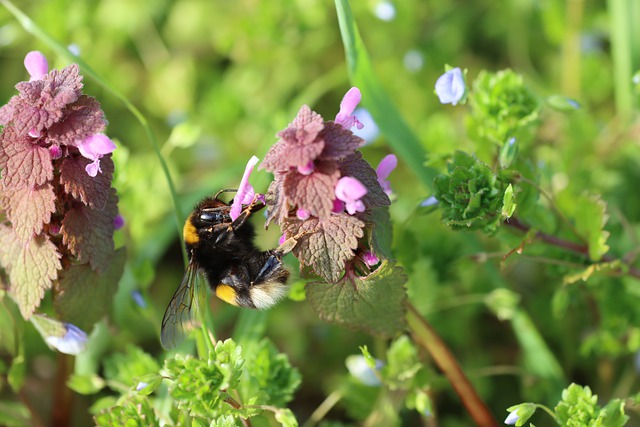
A bee enjoying some soft pink dead nettle flowers.

One of the best things about these nutritious plants? They’re easy to identify and don’t have any poisonous lookalikes. They’re also useful in all kinds of other ways.

Dead Nettle Folklore

Medically, purple dead nettle is used for allergies. It’s rich in quercetin, and has anti-inflammatory properties that make it useful for people with spring hay fever.

Some areas call it purple archangel, because it appears there around the Feast of the Apparition (May 8th). This was when the archangel Michael was said to have appeared on Mount Gargano, Italy, in the sixth century.

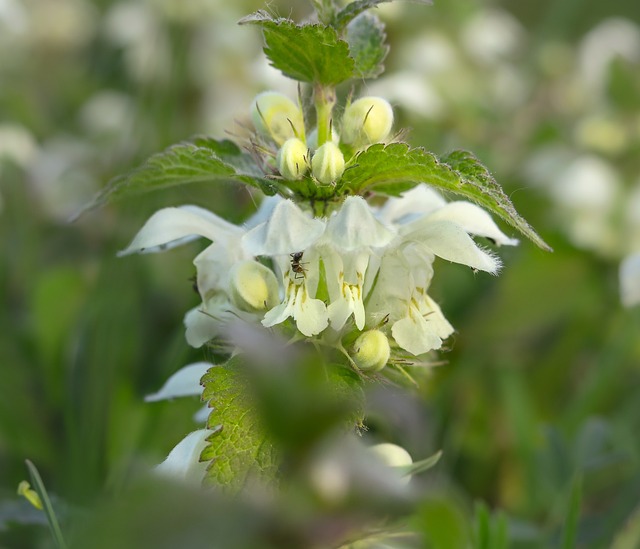
White dead nettle is sometimes called bee nettle. This is because it provides an early source of pollen and nectar, so it’s very popular with bees (and children! Kids sometimes suck the nectar from white dead nettle flowers, kind of like how kids used to suck the honeysuckle flowers that grew on the elementary school’s fence when I was little).

Some white dead nettle flowers. A small ant is crawling inside of one of them.

In Lancashire, it was said that white dead nettle flowers always come in twos, because they’re actually pixie shoes that have been left outside. These flowers also have two black spots inside, which are sometimes called “Cinderella’s slippers.”

White, spotted, and purple dead nettles are all used to treat stings from actual nettles. Mash the plant, squeeze out the juice, and apply it to the stung area. You can also chew some of the leaves and apply the resulting paste.

Magical Properties of Dead Nettle

Dead nettle is associated with determination, due to its ability to grow pretty much anywhere. (I’ve been harvesting it from cracks in the concrete, here.) It’s also connected to happiness, optimism, and relief.

Bright pink dead nettle flowers.

Like other members of the mint family, it dries well. Harvest some, hang it upside-down, and put a paper bag around it to keep off dust and catch any dropped leaves or flowers. Once you have some dried dead nettle, you can use it in teas, incense blends, sachets, poppets, jar spells, or pretty much anything else. This small, unassuming herb is fantastic any time you need a hit of joy and motivation.

Dead nettle is also useful in kitchen witchery. Add it to soups, salads, or even pesto to benefit from its magical and anti-inflammatory properties.

This plant also works wonderfully in tinctures, salves, and oils. This is a great way to preserve it well beyond its season.

For now, I’m pulling it out of my raised beds to prepare them for other things. Some will be left for the birds (chickens, especially, seem to love the stuff), and the rest will be brewed into tea, blended into smoothies, eaten fresh, dried, and pureed and frozen in ice cube trays to add to soup or fill out pesto!

life · Neodruidry · Plants and Herbs

A Little Late Wassail.

This weekend, my partner and I had the pleasure of wassailing some baby trees.

Traditionally, this was something that was done December-ish, but this particular wassail was for some very young trees that’ll be going in the ground soon. Consider it a kind of baby tree blessing.

Wassailing is a ritual to bless fruit trees, drive away unwelcome spirits, and ensure a bountiful harvest. It involved drinking cider, singing, making noise, and giving offerings of drinks and cider-soaked toast to the trees.

This wassail was hosted by someone in a Druidry group to which I belong. Another member put together songs and blessings, and all of the attendees gave their own blessings to a little sour cherry, a baby fig, and a small (somewhat struggling) dogwood.

A red squirrel in the branches of a fruit-laden cherry tree.

(I wished that the fruit trees would produce lots of flowers and nectar for the insect community, and tons of fruit for the birds, squirrels, and human community. To the dogwood, I just said, “Good luck, buddy.”)

The food was incredible. There was wassail cake flavored with lots of bright orange zest, homemade root beer, chocolate-Guinness cake, meat and vegetarian hand pies, tiny apple hand pies, fresh vegetables, ginger snaps, cheese, fruit, and so much more. We’re still without a decent oven, so we brought some extra sparkling water, graham crackers, fancy chocolate, and vegan marshmallows for fire pit s’mores. In lieu of hanging cider-soaked toast on the trees, there were bits of cider-splashed graham cracker.

The singing was fun, the yelling and cheering was fun, and the blessings were heartwarming. There was an adorable dog who did happy zoomies all around the yard, with deep, happy “doggy laughs.” I can’t tell you the last time I went to any kind of house party, so the feeling of gathering with a bunch of kind, warm, intelligent, funny people was almost indescribable. (It also set off my brain’s own personal social anxiety afterparty, during which I questioned every interaction I had all afternoon for several hours.)

It was also really nice to see someone else working on turning their yard into a source of food for their family and the local fauna. It gave me some inspiration for things that might work well in this yard. The warming weather has me absolutely raring to go out and do more to keep my promise to the spirits of this spot, and now I’ve got images of redbuds and sour cherries dancing in my head.

Be in good health!

Plants and Herbs · Witchcraft

Crocus Folklore & Magical Uses

It’s spring (kind of)!

At least, it’s getting spring-y here. Granted, I think we maybe had about four days of actual “winter,” but it’s been t-shirt weather for the past few days, and looks like it’s going to stay that way for at least another week.

Since things were warming up, I stepped out back to take a look at the yard. The elderberry bushed that I planted last year have some new leaves coming in, the bulbs I planted are starting to poke up through the mulch, and the apples are both looking good.

There’s also a large patch of surprise crocuses that seem to have popped up overnight next to my shed.

These are either Crocus vernus, the spring crocus, or Crocus tommasinianus, the woodland crocus. They’re beautiful, but decidedly not native to this area. (Crocus vernus and C. tommasinianus are related to C. sativus, the saffron crocus. However, these crocuses are definitely not a way to make rice more delicious.) Still, I am determined to enjoy them before it’s time to remove the bulbs and put in some native coralberry bushes. I’ll probably keep the bulbs and move them to somewhere where they’re less likely to spread.

If you’re also experiencing a flush of these tiny colorful flowers, here’s some old folklore and a few ways to make them magically useful.

Crocus Folklore

In ancient Greek legend, Crocus was a human man. The nymph Smilax was in love with him, but, ever the fuckboy, Crocus was dissatisfied with the affair. The gods turned him into a saffron crocus.

Another version of this story claims that Crocus was a companion of Hermes. Unfortunately, he stood up at an inopportune time during a discus throwing match, and Hermes accidentally killed him. As Crocus’ blood fell on the soil, saffron crocuses sprang up.

Spring crocuses are associated with Persephone, Aphrodite, and Venus. Mythology would also appear to tie this flower to Hermes.

A London source claimed that picking crocuses tended to “draw away the strength.” Therefore, only strong men or healthy young women should attempt to.

A field of purple and white crocuses at the base of a mountain.

According to Pliny, wearing crocus around the neck would prevent drunkenness. Interestingly, Swiss parents would place saffron around their children’s necks as a protective charm (presumably not against drunkenness, or else they’ve got some explaining to do).

In the Victorian language of flowers, crocuses represented cheer and youthful gladness.

This flower is associated with the planets Venus and Mercury, and the element of Water.

Crocus Magical Properties

Historic mentions of crocus as a protective charm typically refer to saffron crocus, not the spring crocuses. It can be hard to tease out folklore and uses attributed to spring crocuses, since the autumn-blooming saffron crocuses were generally considered more useful. For our purposes, I’m going to focus on spring crocuses here.

Spring blooming crocuses are used in charms for love, including platonic love or love of the self.

As an early spring-blooming flower, spring crocuses are also useful for spells for new beginnings.

These flowers are common altar decorations for Imbolc and Ostara. However, use caution if you bring spring crocuses indoors — all varieties of crocus other than C. sativus are toxic. Spring-blooming crocuses can cause diarrhea, vomiting, and digestive upset, while autumn-blooming crocuses can cause liver and kidney damage.

Simple Crocus Spells

You can include crocuses in charm bags for love. Add the dried flowers to a pink or red pouch along with rose petals, lavender flowers, and a bit of cinnamon bark. If you like, add a piece of rose quartz. Dress it with your favorite love-drawing oil (in a pinch, infuse some cinnamon, basil, and rose in grapeseed or sunflower seed oil, and use that) and keep it on you.

You can also use crocuses as a form of sympathetic magic. Plant a bulb along with a slip of paper with your name, and the name of your partner. Declare that as the plant grows, your love will flourish with it. When the flower is at its peak, pick it and save it for a love charm.

Plants and Herbs · Witchcraft

Nutmeg Folklore & Magical Uses

It’s the time of year when Trader Joes brings out their Wassail Punch. I don’t really drink fruit juices straight, but I like ’em for flavoring water kefir. This one’s blend of fruit and spices makes the end result taste like cola, which is pretty neat.

(Cola is one of those flavors that isn’t really meant to taste like anything in particular. It’s spices. It’s citrus. It’s all kinds of things that add up to one immediately recognizable taste.)

Anyhow, one of the key flavors in Wassail Punch (and probably cola, to be honest), is nutmeg. It’s one of those things that I can immediately recognize when I taste it but am completely unable to remember on its own. It’s like… a clove- and cinnamon-less pumpkin pie? I guess?

It was also one of those most precious substances in the world for a while, and a nearly invaluable magical ingredient.

Nutmeg Magical Properties and Folklore

Nutmeg is a spice that comes from an evergreen tree, Myristica fragrans, native to Indonesia. It’s a weird seed, too — it grows inside of a fruit similar to an apricot, surrounded by an aril that looks kind of like a flat, fleshy spider or extremely underachieving facehugger. The dried aril is the source of the spice mace. The seed itself is the nutmeg.

An image of a ripe nutmeg fruit. The outside resembles an apricot, which has split to reveal the mace-covered nutmeg inside.

It takes a long time for nutmeg trees to bear fruit, though they can do so for several decades after that. Since the spice is native to such a small geographic area, an absolutely horrific amount of bloodshed happened in the name of obtaining it, farming it, and keeping anyone else from getting a hold of it. The Dutch tortured and killed the native people of Indonesia in order to control the nutmeg trade. They also tried their damnedest to keep the English and French from sneaking any viable seeds out of the country, by dipping the nutmegs in lime to keep them from sprouting.

People used to joke (inaccurately) about Manhattan being traded for glass beads. The Dutch really did trade Manhattan to the English for some sugar and nutmeg. For real, nutmegs were so valuable that traders would mix a handful of wooden replica nutmegs in with the real ones in order to dupe their customers.

A whole nutmeg, hollowed and filled with mercury, sealed with wax, and wrapped in a green cloth, is considered a powerful charm for luck in games of chance. (You can skip the mercury poisoning by just carrying a whole nutmeg. It’s fine. Really.)

Wrap a whole nutmeg in purple cloth, and it’s said to help you win court cases.

All forms of nutmeg are considered useful for money magic. Nutmeg oil is a common ingredient in money oils, while the powdered stuff is helpful in sachet and sprinkling powders.

Money and luck aren’t nutmeg’s only properties, however. An old spell from Louisiana involves sprinkling nutmeg in a woman’s shoe to get her to fall for you. Food and drinks flavored with nutmeg were also used as love potions.

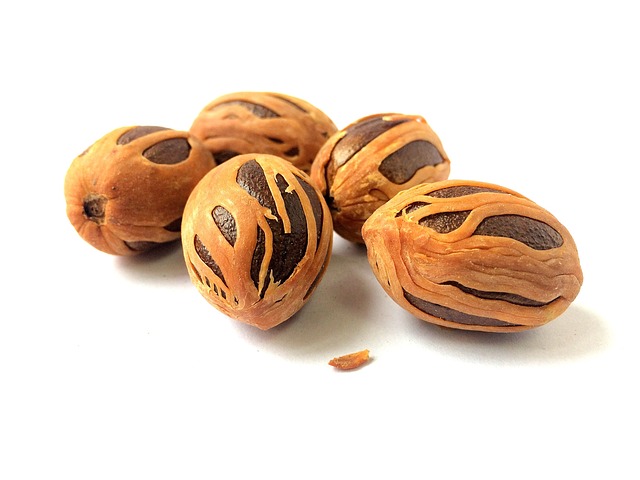
Whole nutmegs covered in mace.

Ground nutmeg was used as incense in ancient Rome.

One old remedy for rheumatism involved boiling nutmegs and cooling the resulting liquid. The nutmegs’ natural fats rise to the surface and cool, forming a solid layer. This is skimmed off and used as a topical balm. Nutmeg is a warming spice, so this would help encourage circulation and relieve some of the pain caused by cold weather aches.

Nutmeg can make you trip balls. This is not code language.
This spice is a hallucinogen, courtesy of a compound known as myristicin. Unfortunately, you have to consume a lot to feel the effects, at which point you’re putting yourself at risk of nutmeg poisoning. “A lot” is relative here — about 10 grams (two or so teaspoons) of ground nutmeg is about to trigger symptoms of toxicity. It’s not that much, but still way more than you’d typically use in cooking. Nutmeg poisoning is pretty awful, too. While I wasn’t able to find any stories of nutmeg-based fatalities, the cases I did find mentioned nausea, dizziness, heart palpitations, fatigue, confusion, and seizures. Yikes.

Nutmeg is associated with the element of Air, the suit of Swords in tarot, and the planets Jupiter and Mercury.

Using Nutmeg

The easiest way to use nutmeg is to make your favorite autumn or winter recipe that uses this spice for flavoring. Use a wooden or metal spoon to prepare it and stir it with your dominant hand. As you do this, picture energy coming up from the Earth, down from the sky, and running through your arm, down your hand, into the spoon, and finally into the food or beverage itself. Ask the nutmeg for help with whatever you want it to do, whether that’s getting laid or making some money. Pretty easy, bog-standard kitchen witchery, really.

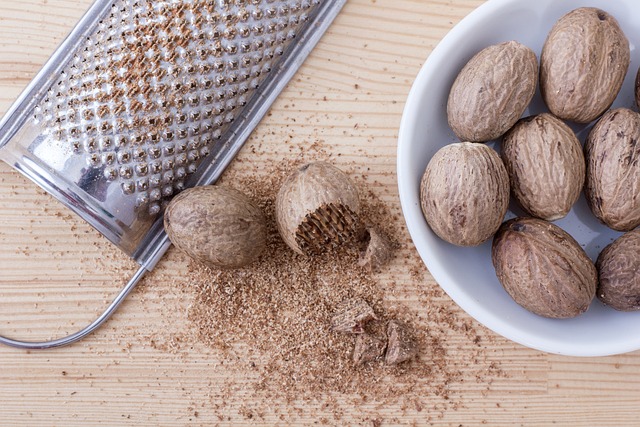
Whole nutmeg seeds, a nutmeg grater, and a little pile of ground nutmeg.

You can also use nutmeg by just… carrying it. As mentioned previously, whole nutmegs are a charm for luck and money. Wrap them in an appropriately colored cloth, anoint them with a suitable magical oil, ask them for their assistance, then keep them on you. When they get old and lose their potency, retire them by burying them in the soil and make a new charm with a fresh nutmeg.

You can also use nutmeg for meditation. I wouldn’t rely on it to induce a trance state, but drinking some warm milk flavored with honey and nutmeg can be a pleasant way to begin some meditative or journeying work. Just don’t use too much — the vast majority of nutmeg poisonings are from kids who eat it to get high and end up spending the night dizzy and throwing up instead.

Nutmegs are also good additions to charm bags or jar spells for money or luck. They’re very nice, potent, self-contained magical ingredients. If you have an assemblage of herbs, curios, and other tools, why not throw in a nutmeg? If you can’t afford a whole one, sprinkle in some of the ground stuff instead.

Nutmeg is a spice with a dark history (I mean, most of them have dark histories. Thanks, colonialism!). It’s preciousness as an incense and culinary ingredient has tied it to the concepts of luck and money, so you’ll most commonly see it in spells for financial abundance and good fortune. If you’re not a kitchen witch, a sprinkle of nutmeg can be a good place to start. If you need to practice magic discreetly, you really can’t go wrong with tucking a whole nutmeg in your bag or pocket.

Uncategorized

Time to prune the @#$% out of this apple tree.

I am not many things. An arborist is among them.

Unfortunately(?), with this house, I have become responsible for a smallish apple tree. I was excited to discover that it was a fruit tree when we first toured the place — there were a few sour greenish apples clinging to the scraggly branches. I didn’t know anything about apple trees, but this still seemed like a positive development.

I have since learned that apple trees are basically livestock.

I bought it a friend, a little Chehalis apple tree, so it could produce more fruit. I watered and fed it.

Like sheep, apple trees also need to be trimmed. Branches cross, or grow from weird, narrow angles, or jut straight up in the air. They weaken the tree, which sends its energy reserves to put leaves and buds on these branches that will inevitably snap in the wind and never bear fruit. They’re a source of illness, insects, and injury. In the event of some kind of apocalypse, it won’t take very long before it’s no longer fruitful — fruit trees as we know them have developed alongside humans, and we rely on each other for survival.

So that’s how I ended up on the internet looking up how to beneficially injure a small tree.

Narrow branch angles. Crossed branches. Watersprouts. I memorized what each one looked like, and how to best cut them. (At an angle, as close to the branch collars as possible.) Then, armed with a set of hedge clippers and a pair of saws, I trudged out to go sort shit out.

A dwarf apple tree that hasn't been pruned in years. It's winter, so the branches are bare.
Depicted: Fruit chaos.

I should note that I was not prepared for how much work it’d be. I figured it was cold out, so I dressed warmly — winter boots, my wedding sweatpants, a flannel, et cetera. Within minutes, I was stripping down.

The actual pruning process wasn’t too intimidating. The tree’s a dwarf, so it was easy enough to navigate the branches. I left some that I know I shouldn’t’ve, just because they were providing support for a wild grape vine that I’m hoping will return next year. Others, I either snipped with the clippers, or carefully sawed through while muttering apologies through clenched teeth.

If anything, the toughest part of the process was the anxiety. What if I cut something wrong, or that’d make it grow all weird? What if my tools weren’t clean enough, and I introduced some kind of disease into the soft, green wood? What if I was doing more harm than good?

When you’re climbing around under a tree and trying not to get cracked in the skull or speared through the eye with falling branches, it’s not the best time to start losing your nerve. I was projecting a lot of my own anxiety on the tree — I’ve been in a position where someone held me down and injured me, insisting it was for my own good, I know exactly how that feels — but maybe this wasn’t it. So, I did the tree-hugger thing.

I put my non-dominant hand on a robust branch and let myself fall into the xylem and phloem, breathing with the slow, wintry pace of the circulating sap. What I felt surprised me. There wasn’t really fear, though there was some pain. If I really had to describe it, it felt like what I imagine the cows in those hoof-trimming videos feel like. (If you haven’t fallen down that rabbit hole yet, you’re welcome.) Tension and relief. The acknowledgement that something is wrong, and fixing it won’t be fun, but the result will be worth it.

I’ll probably have to go back and do some more pruning, but I’ve got the bulk of it done. The problematic parts have been removed, so now everything else is just shaping and ensuring that the branches have enough space around them.

The end result remains to be seen. Hopefully, there’ll be plenty of apples next year!