Plants and Herbs

Mugwort Folklore and Magical Properties

The other day, after attending the drum class I wrote about yesterday, I was waiting in the herb shop to stock up on some things I need for teas, oils, and the like. I overheard the customer in front of me talking about mugwort, and, since it’s an herb I use often, I maybe kind of eavesdropped a little bit. What followed was a really interesting conversation about herbs, dreams, lucid dreaming, dream recall, and trance work.

It was so nice to get to talk about herbs with someone outside of a purely medicinal context, that I figured that this was a good week to talk about one of my absolute favorite plants: mugwort.
(And, if you were that person, I’m so sorry for being an eavesdropping weirdo but I also had a really fun time talking to you about herbs.)

An old statue depicting Artemis alongside a stag.
Photo by V Marin on Pexels.com

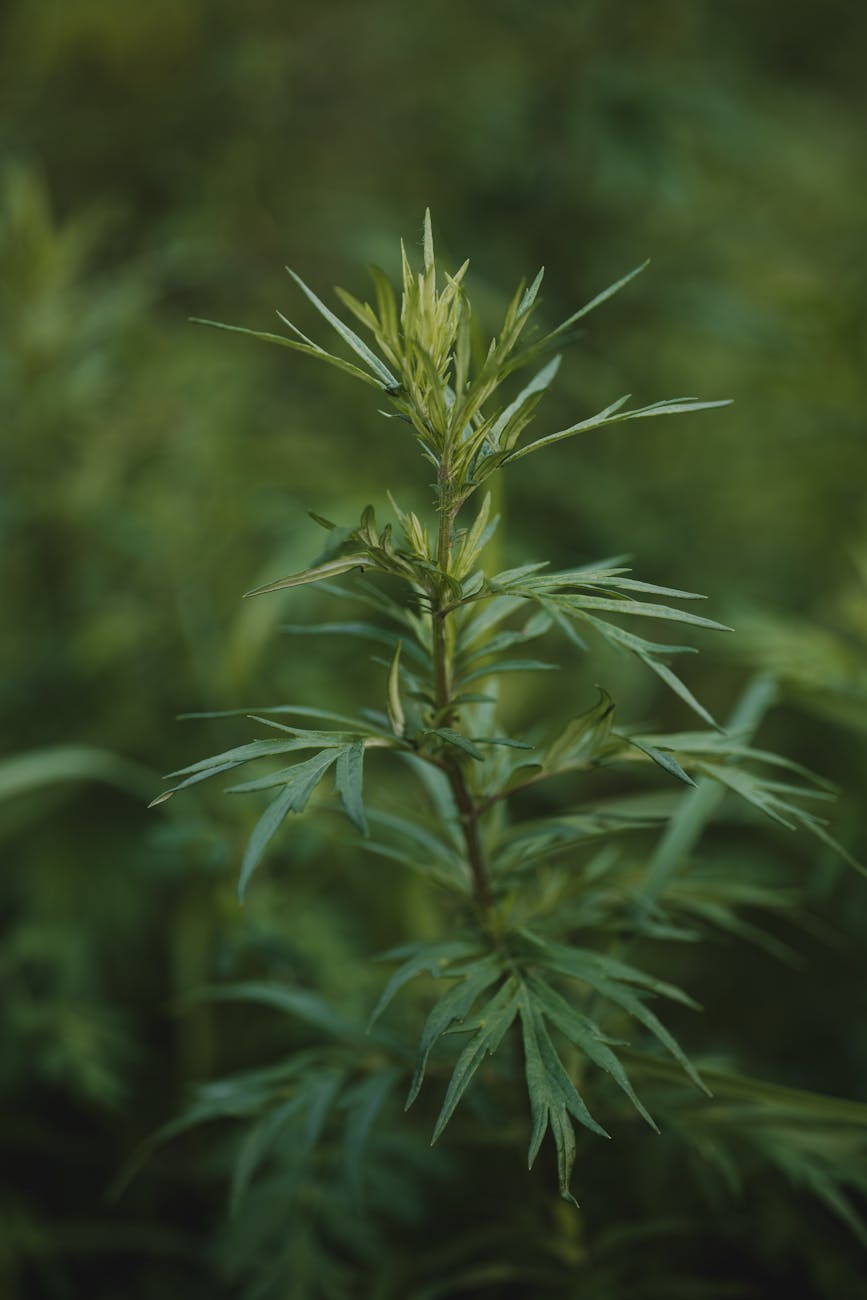
Okay, I know the name “mugwort” leaves a bit to be desired in English — it’s not exactly the most phonetically pleasing word — but its scientific name is rather beautiful: Artemisia vulgaris. The “vulgaris” in this instance means “common,” like the “wort” in “mugwort” roughly translating to “plant.” Mugwort is a very interesting, very magical, and very common plant.
The “mug” in mugwort may come from its use as an insect-repelling herb. The Old English word “mygg” is where we get the modern word “midge.” Another possibility is from its use as a flavoring herb in brewing. The “Artemisia” in Artemisia vulgaris, naturally, comes from the lunar and woodland goddess Artemis.

Mugwort was an important herb to the ancient Greeks and Romans. Soldiers and travelers would place sprigs of it into their shoes, in order to ward off fatigue.

Mugwort is very commonly included in herbal blends for dreams, psychic abilities, divination, cleansing, protection, and banishing. Like so many other herbs that are used for cleansing and banishing, this may stem from mugwort’s use as a pest repellent — it can literally banish the evils of disease brought by insects, ergo it must be useful against other evils as well. (See also: Pennyroyal.)

In Christian mythology, mugwort is associated with John the Baptist. It’s said that he carried mugwort with him to ward off evil. As a result, people would wear garlands of the herb on St. John’s Day (June 24th) and toss them into fires to ensure protection for the next year.

In some shamanic practices, mugwort is a representation of ancient wisdom. This plant is often visualized as a kind of crone figure, and used to facilitate a connection to ancestors.
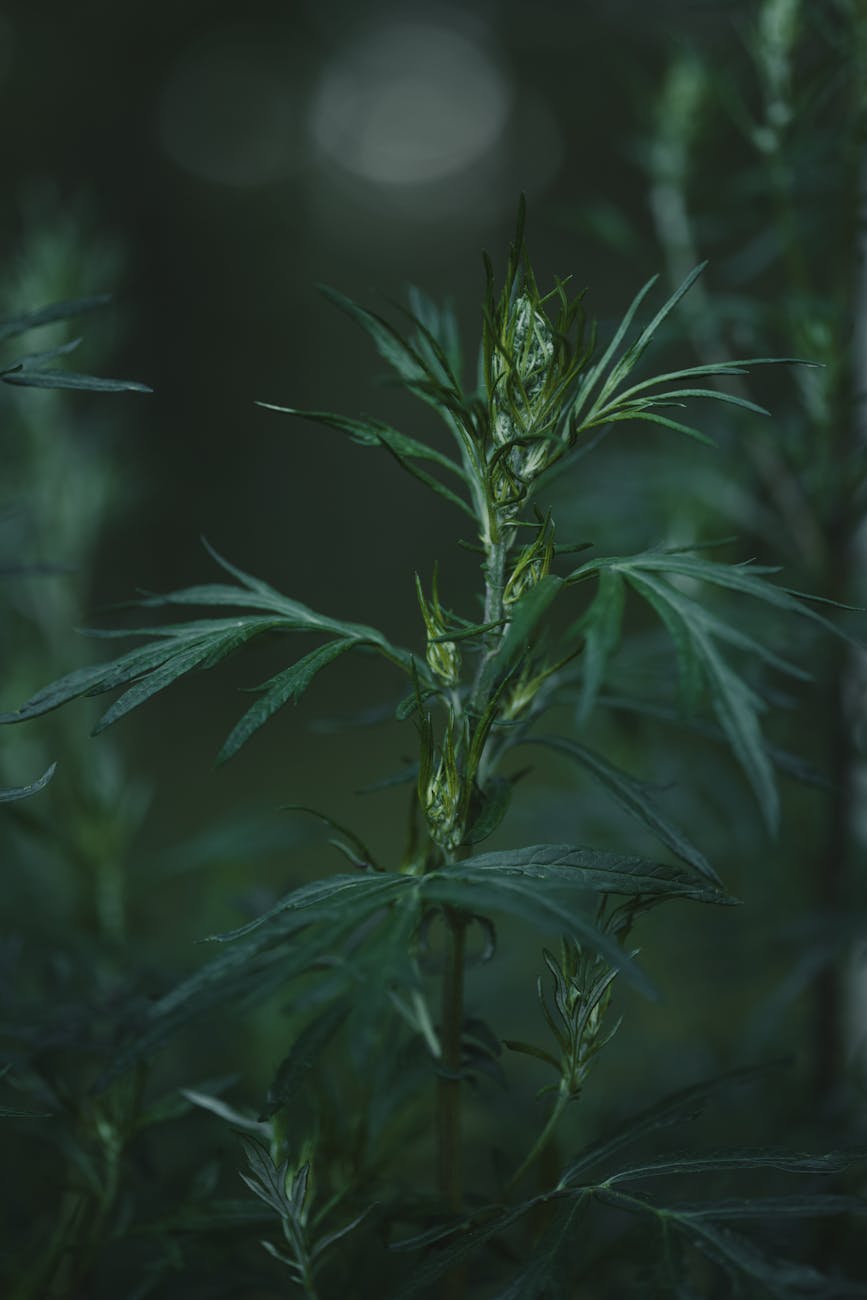
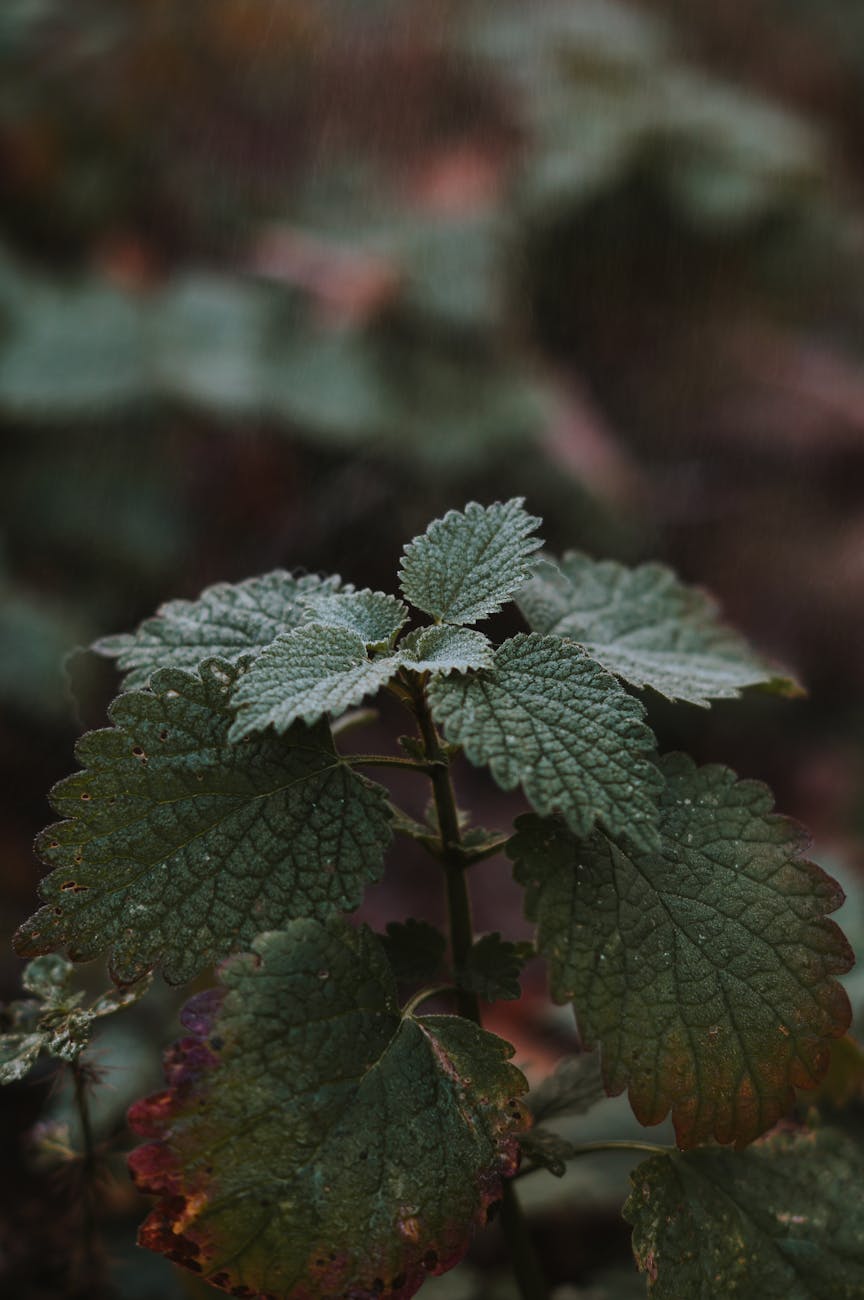
A close-up of a young sprig of mugwort.
Photo by Lauri Poldre on Pexels.com

Medicinally, mugwort was (and often still is) used to help ease difficult periods, treat menstrual irregularity, and as a mild pain reliever and anti-inflammatory. Mugwort is also used in the acupuncture practice of moxibustion, in which pieces of mugwort are placed at the end of acupuncture needles and burned.

Mugwort is also part of the Nine Herbs Charm according to one source, along with plantain, lamb’s cress, fumitory, chamomile, nettle, crab apple, chervil, and fennel. In this charm, mugwort is honored as the “oldest of plants,” strong against both poison and an unnamed force that travels the land. (This may be either a personification of evil, a venomous serpent, or a specific disease, but it’s referred to simply as “the loathsome thing.”)
The Nine Herbs Charm is a beautiful piece of poetry that combines Pagan and later Christian influences in a way that passes down important medical knowledge. The charm concludes with the recipe for a healing salve made by powdering the herbs, mixing them with old soap, mixing this with lye to make a paste, and combining it with boiled fennel. The charm is sung several times during the process — three times to each herb, then over the patient’s mouth, ears, and the wound being treated.
This is not only a magical consideration, but a practical one as well. It’s considered important to declare one’s intentions in adding an herb to a magical mixture, but the number of times the incantation is sung may correspond to how long it takes to powder and mix everything correctly. Singing it once while powdering an herb, for example, may yield a coarse consistency that doesn’t properly blend. Singing it three times, on the other hand, gives you the exact length of time needed to properly powder and mix the herbs. It’s like having a portable kitchen timer that not only tells you the recipe, it tells you what each ingredient is for and makes sure you do it right.

Mugwort was also used like hops before hops were a thing in brewing. Hops didn’t really achieve widespread use until the 15th century — before that, brewers used mugwort. It’s still used in food and teas for its unique flavor, which is like a bit astringent and savory, with a really interesting resinous character. Kind of like a mix between celery, mint, and eucalyptus.

While mugwort isn’t native to the US, it’s not exactly hard to find here, either. It does have a number of lookalikes, so you’ll want to get the help of a seasoned forager to make sure that you’re correctly IDing it. Start by looking for it in ditches, by roadsides, fields, and other places where the ground has been disturbed.
(Of course, if you’re foraging mugwort in order to consume it internally, avoid any that’s growing within ten feet of a roadside. In general, it’s better to avoid foraging near roadsides at all because the soil and plants there are contaminated by vehicular pollution. Leaving the plants in place ensures that you’re not consuming any of this pollution, and also allows them to remain and continue bioremediation.)

A large clump of mugwort, absolutely thriving next to a drainage ditch full of water.
Mugwort growing beside a drainage ditch in the Norton Marshes by Evelyn Simak is licensed under CC-BY-SA 2.0

Of course, as with many other plants, I advocate for growing mugwort if you want to develop a relationship with it. However, if you’re in the US or another area where mugwort is a problem, I recommend either growing it in containers, or trying a related native species. (Like Artemisia douglasiana, California mugwort, in the western US.)
If you’re looking for mugwort’s medicinal properties, stick with A. vulgaris or other Artemisia species specifically used in herbal medicine. Different species may not have the same active compounds in the same concentrations, and some may even have some not-very-desirable qualities as well.
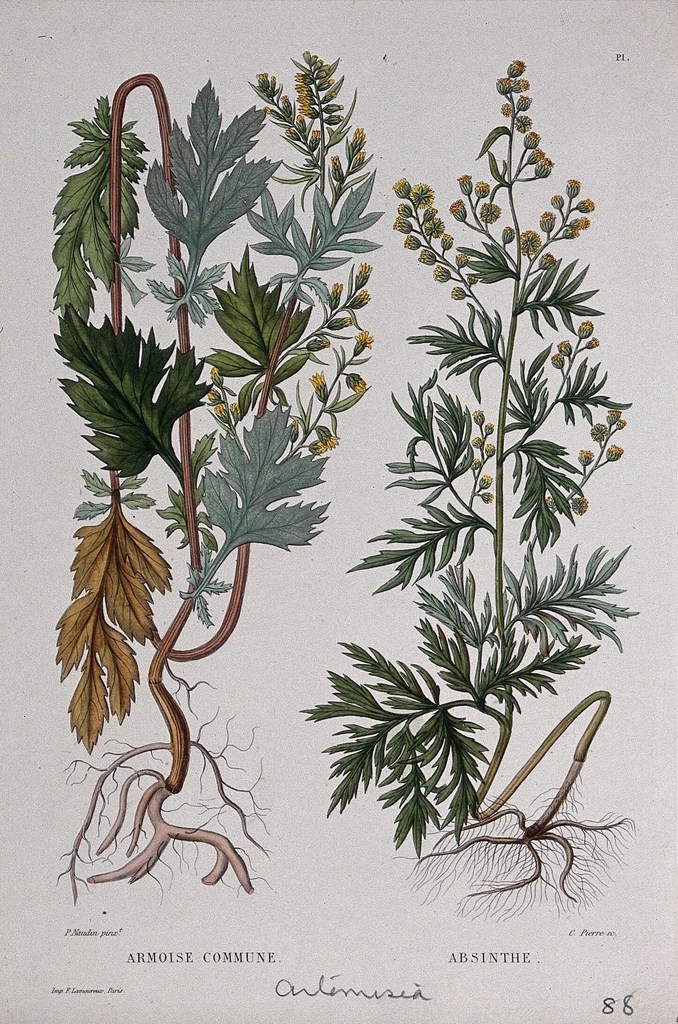
An old botanical illustration of a member of Artemisia.
The “Absinthe” on this illustration suggests wormword, Artemisia absinthum. However, the pointy leaves with green tops and silver undersides indicate mugwort.

Once you have some, using it is pretty easy:

  • Dry the leaves and add them to dream pillows along with herbs like lavender or chamomile. Squeeze the pillow and inhale the scent before dropping off to sleep.
  • Add dried mugwort to incense and light it before card reading, scrying, or other forms of divination.
  • Powder it fine and combine it with protective herbs, then sprinkle them in the corners of your home or around the border of your property.
  • Rub fresh mugwort on a black candle and burn it to banish a person, entity, or situation.
  • Dry whole sprigs of mugwort, tie them into bundles either alone or with other cleansing herbs, and burn to purify spaces and prepare them for ritual work.

You can consume mugwort as a tea or flavoring agent in breads, soups, poultry dishes, or beverages. However, high consumption of this herb does come with some unpleasant side effects like muscle spasms. If you’re looking to tap into mugwort’s psychic, trance, or dream benefits, you should still avoid consuming more than you’d normally get in an herbal tea, and avoid doing so for more than two weeks at a time. More isn’t always better.

If you’re pregnant or seeking to become so, avoid consuming mugwort. One of its chief medicinal uses has been to treat menstrual irregularity by stimulating uterine contractions. So, unless a qualified herbal practitioner says to use it, it’s best to avoid mugwort in these situations.

The mugwort of European folklore may not be from the US, but its invasive and resilient nature means that its probably here to stay. If you want to enjoy the long magical, mythological, culinary, and medicinal history of this herb, I recommend growing it in a container or purchasing the pre-dried herb to add to teas, incenses, sachets, or other preparations.
Plants and Herbs · Uncategorized

Vine Folklore and Magical Uses

Hello!

Close up of a purple passionflower.
Photo by kiwiicat on Pexels.com

My passionflower is loving this weather, though the rest of the plants here seem less than enthused about the whole thing. It’s not only encompassed half the porch, it’s climbed nearly up to the roof and sent out several tendrils along the lawn. If it didn’t also put out beautiful flowers and a ton of fruit, and act as a cozy little haven for sleepy bees, I’d be tempted to cut a bunch of it down.

That got me thinking — if I did, what would I do with that much passionflower? I can only tincture so much of it. Could I weave it into baskets? Turn it into rope?

Vines, in general, have a long history as religious symbols, the subject of legend and folklore, and magical ingredients. If you, too, are experiencing a sudden flush of viny plants that you don’t know what to do with, folklore may have some ideas for you.

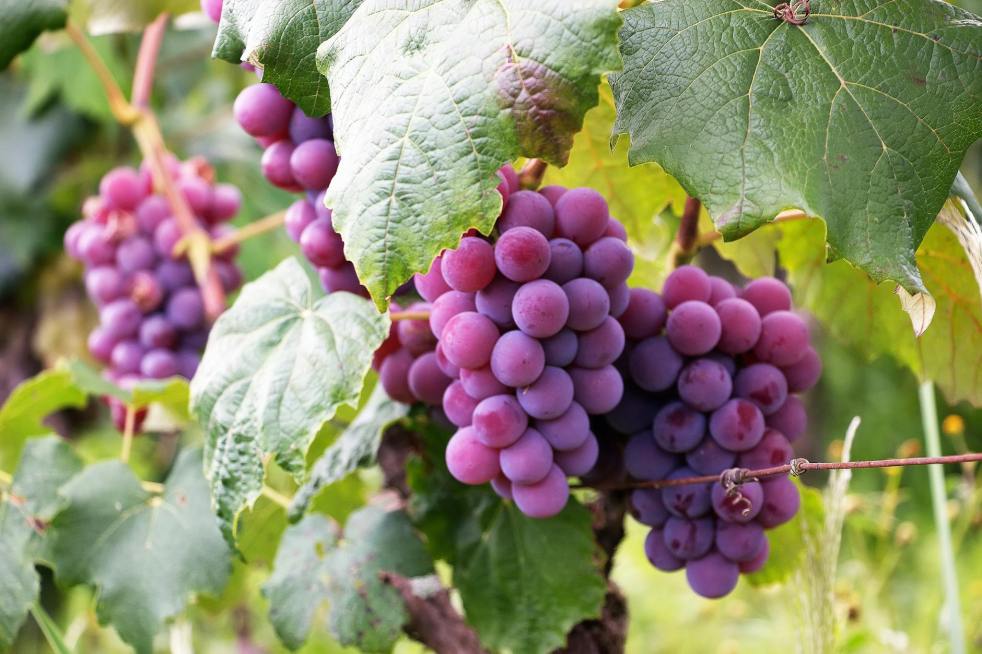
In the Ogham writing and divination system, the letter muin (ᚋ) is commonly interpreted as “vine,” and usually portrayed as either grape or ivy. However, grapes are not native to Ireland and, even when they were introduced, they never really took root there (pun intended — Ireland is not a great place to try to grow grape vines). The word “muin” also doesn’t have anything to do with vines. Instead, it refers to a thorny thicket. This has made muin one of the most controversial and seldom-agreed-upon parts of the Ogham.

The ancient Greek deity of wine, orchards, frenzy, fertility, and religious ecstasy, Dionysus, is also intimately connected to vines. (And I do mean intimately.) Not only are grape vines his domain, he is also regularly portrayed as wreathed in ivy vines. Here, the evergreen nature of ivy represents the gods’ immortality. It’s also connected to fertility and sex.

Dionysus isn’t the only one to wear an ivy crown, either. Thalia, Muse of Comedy, is also portrayed as wearing one.

In Egyptian legend, Osiris is associated with the ivy, again, because of the plant’s connection to immortality and rebirth.

There’s a Persian (now modern day Iranian) legend that tells of the origin of wine. Long, long ago, a bird dropped some seeds by a King’s feet. Intrigued, the King had the seeds planted and cared for. The seeds became sprouts, the sprouts became vines, and the vines grew heavy with grapes. Overjoyed, he had the delicious grapes picked and stored in his royal vaults.

However, grapes don’t stay fresh forever. The vault was too damp for them to dry into raisins, and too warm to chill them. Instead, the grapes began producing a dark liquid which everyone assumed was likely a deadly poison. Before the old grapes could be cleaned up and thrown away, one of the King’s wives attempted to end her life by drinking some of the grape “poison.” When the King found her later, she was far from deceased — in fact, she was dancing, singing happily, and apparently thoroughly enjoying being the first person in recorded history to ever get absolutely rocked off her tits on wine. With this evidence that the liquid was not poison and, in fact, seemed to make people quite happy, the King named it “Darou ē Shah” — The King’s Remedy.

No word on what happened to his wife, however. Therapy being in short supply thousands of years ago, one can assume she either eventually found some actual poison or developed an absolutely staggering drinking habit.

English ivy climbing a white wall.
Photo by Madison Inouye on Pexels.com

Ivy is about more than ecstasy, wine, sex, and living forever, though. One look at the growing behavior of many vines can show you exactly what else they’re good at: binding things. Even the beautiful, gentle passionflower vines climbing my front porch do so due to grasping tendrils of surprising strength and tenacity. Some vines, English ivy in particular, also get a reputation here for damaging property and killing native trees.
Depending on the context, vines are then equally as restrictive as they are freeing. Sometimes, vines are heavy with grapes and the promise of wine, intoxication, inspiration, sexual desire, and ecstasy. Sometimes, they’re ivy vines, evergreen and symbolizing enduring life and lush greenery during the winter months. Other times, they are the vines that grow around things, binding and restricting them like ropes.

Ivy is also associated with protection and healing. This may be due to its connections to immortality and rebirth. Grapes, on the other hand, are associated with fertility, money, and all things connected to the concept of abundance. Briony, on the other hand, is both money and protection. Placing money near a briony vine is said to cause it to increase.

In the tale of Sleeping Beauty, vines (sometimes) play a key role. In the Disney version, Aurora is cursed, pricks her finger, falls asleep, yadda yadda yadda, vines grow and cover everything. In an older telling, it was a dense hedge of climbing roses. One yet older version of the story (Sole, Luna, e Talia) also has Sleeping Beauty-
You know, I’ll just let Giambattista Basile tell it.

“crying aloud, he beheld her charms and felt his blood course hotly through his veins. He lifted her in his arms, and carried her to a bed, where he gathered the first fruits of love.”

Yeah. When that fails to wake her, he pulls his pants up and rides off to his castle and his already existing wife, the Queen. Sleeping Beauty only awakens again when one of the twins she subsequently births tries to nurse and accidentally sucks the splinter from her finger.
(As if that weren’t enough, the Queen gets fed up with the King’s infidelity and tries to have the children cooked and fed to her husband.)
Interestingly, vines aren’t prominent in the assault version of Sleeping Beauty — they become more important the further you get from that version, and the closer you get to Disney’s much more sanitized telling. It’s as if the presence of the vines in the story both bind Sleeping Beauty in her castle and protect her from the King.
No vines? Not even a climbing rose? You’re in for a bad time.

Vines make beautiful decorations for the home and altar. Evergreen ivy is commonly brought indoors during the winter months as a decoration, tied with swathes of ribbon, hung with bells or other ornaments, you name it.

Vines can also be used to bind things. Hollywood has portrayed magical bindings in some… interesting ways. For example, “binding” a witch à la The Craft.
This, however, is silly.

Bindings can go one of two ways: a person, thing, or situation may be bound (in the sense of binding someone with rope) to keep them/it from causing harm or otherwise interfering with you. You can also bind something to yourself. For example, a really great job that you just got, happen to enjoy, and want to make sure that you keep.

In this case, the binding is a form of sympathetic magic. You take a representation of the thing you wish to bind, and effectively tie it up with what you have on hand. (This may be vines, if you want to enlist the vine’s help and magical associations, but can also just be household twine in a pinch.) There are plenty of chants and incantations you can recite while doing so, but I find that it’s most effective if you speak from the heart — inform the subject why they are being bound, and what you hope will come of it. Put it in a jar or box, close it tightly, and keep it somewhere safe so you can undo the binding when the time comes.

To bind something to yourself, you’d use a representation of yourself (like a photo or lock of hair) and a representation of what you wish to bind to you. Wrap both objects together with the vines or string, again speaking from the heart while you do so. Place the objects in a jar or box and keep them somewhere safe.

Bindings aren’t the only type of sympathetic magic that vines are good at, though. Plant a vine (preferably not an invasive species — there are loads of native vines) along with a representation of something you wish to grow. Ask for the vine’s help, and declare that, as the vine grows, so shall grow the thing you desire. Take good care of that vine, and keep an eye on its growth.

While every species of plant has its own magical uses and depictions in legend and folklore, vines are in a class of their own. Each one has their own unique properties, but vining plants also have plenty of common ground.

Plants and Herbs

Angelica Root Folklore and Magical Uses

Recently, my Handsome Assistant experienced a minor vehicular mishap. He was on a motorcycle, so things could’ve been a lot worse, but his injuries weren’t too serious and he’s recovering well.

When he first got his bike, I made him a safe travel charm that he’s kept with him everywhere he rides. He’s dodged the “serious motorcycle accident” bullet, and it could use a refresh. This got me thinking about protective charms in general, which, naturally, led me to what’s probably one of the strongest of them all: angelica root.

Seriously. It’s probably a little too good at what it does, but more on that below.

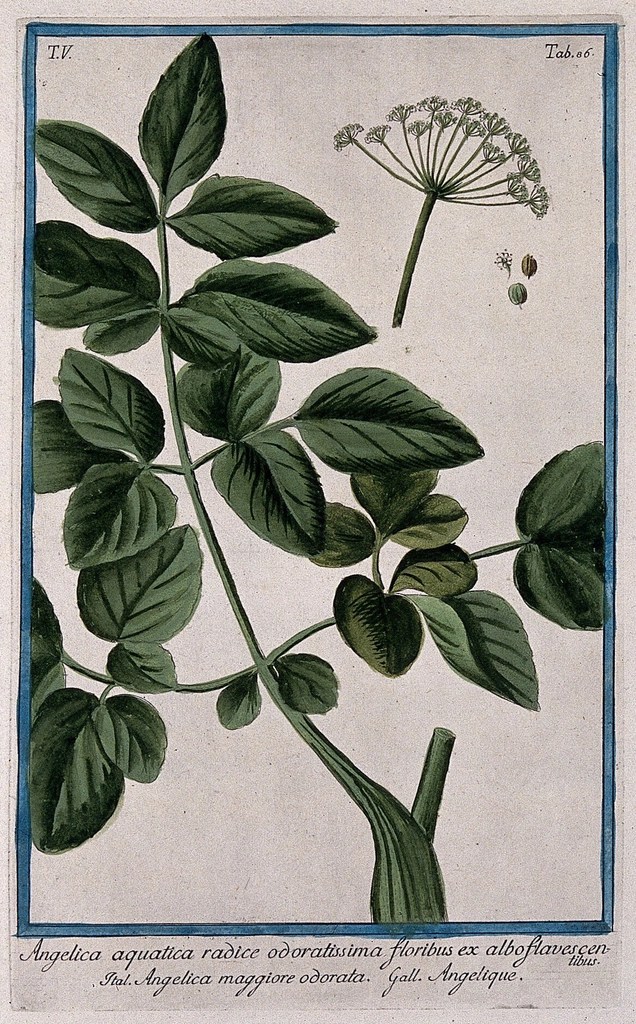
An old botanical illustration of angelica. The caption at the bottom reads, "Angelica aquatica radice odoratissima floribus ex alboflavescentibus. Ital. Angelica maggiore odorata. Gall. Angelique."

Also known as wild celery, masterwort, and archangel, angelica (Angelica archangelica) and celery are related as members of the family Apiaceae. Angelica archangelica is native to far northern Europe and Russia. Another species known as angelica, masterwort, or purple-stemmed angelica (Angelica atropurpurea) is native to wet areas in the eastern US.

The name angelica derives from the plant’s blooming period. Its flowers typically appear around Michaelmas, the feast of the Christian Archangel Michael.

In both Western European folklore and the Hoodoo tradition, angelica is associated with protection, particularly from evil spirits. It’s also occasionally used to break hexes, jinxes, or curses, depending on their nature.

Purple-stemmed angelica (A. atropurpurea) has a long history of use as both a sacred and medicinal plant by Indigenous people of the southeastern US. It could calm anxiety, ease back pains, soothe stomach trouble, and treat parasites in children. It’s also used in healing ceremonies and as a purification herb. This puts purple-stemmed angelica in the same group as many other purification herbs the world over — namely, herbs that both drive off evil or unwanted energy, and get rid of physical parasites or pests.

Angelica is also sometimes associated with luck, love, and psychic abilities. This may be because it’s so good at keeping unwanted interference at bay — combined with other herbs more directly suited to these purposes, it can keep one’s magical path clear.

On the other hand, angelica also has a reputation for being a bit too good at what it does. According to the (no longer extant) Pooka Pages’ “Concerning the Magical Properties of Herbs & Oils,” angelica may also keep away some things that you do want. If you’re attempting to use it to help you attract something into your life, it’s a good idea to keep this in mind — sometimes, those things aren’t without risk, so angelica may not be the best choice.

An angelica relative, A. sinensis, is also known as lady ginseng or dong quai. It grows in cool, mountainous areas of east Asia, and has a long history of use in Chinese medicine.

Honestly, there are few protective charms more convenient than a whole angelica root. They’re sort of lumpy and oblong, but firm, compact, and easy to stash in a pocket, bag, sachet, or any other container. I’ve never had one that was crumbly or messy, either.

Hold it in your dominant hand, tell it what you’d like it to do, project this thought, request, or energy into the root, thank it for its help, and you’re good to go. You can also anoint it with an oil, if you’d like.

You can hang a whole angelica root over your front and back doors to keep unwanted forces out or bury a root at each corner of your property.

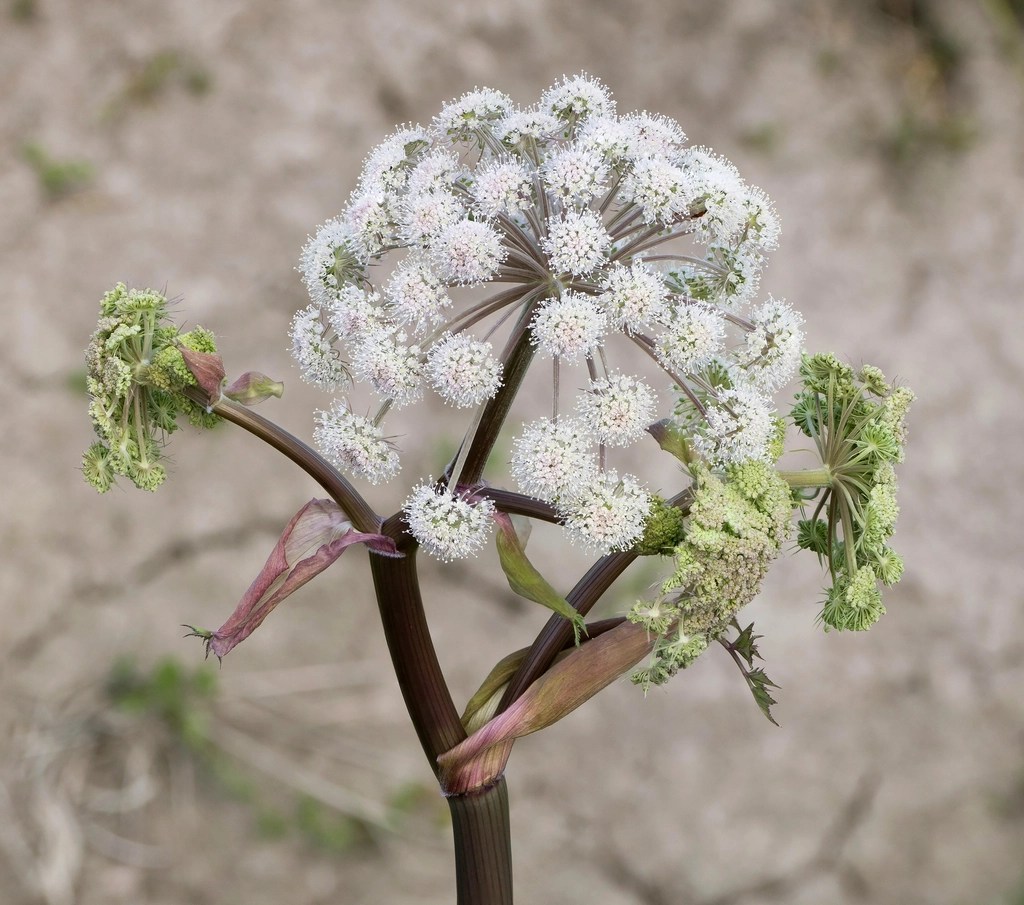
A budding wild angelica plant (Angelica sylvestris).

Soak an angelica root in water, then add the water to a floor or door wash, sprinkle it in corners of a room, or pour it along the borders of your property to ward off evil and strengthen magical boundaries.

Angelica roots also make lovely additions to protective oils themselves. Put it in a neutral carrier oil and let it infuse in a cool, dark, dry area, shaking it regularly. If you want a stronger fragrance, add essential oils just before you bottle the finished product. For this, you might want angelica root pieces rather than the whole root — it’ll have an easier time transferring its fragrance to the oil if it has more surface area.

Since the roots are fragrant themselves, and hold other fragrances well, they’re great additions to potpourri or other scented herb mixtures.

You can also eat A. archangelica stems and roots. However, you may not be able to find them in your local grocery store, and they can be challenging to identify in the wild. They have several poisonous lookalikes, so you should never consume anything that you’ve only tentatively identified as angelica. Unless you’re an expert forager yourself, get an expert forager’s opinion first. As the saying goes, you should be as confident identifying a wild edible as you would be identifying it in a grocery store. Otherwise, don’t eat it.

Angelica may not be the most versatile magical plant, but it’s one worth knowing. It’s one of the best at what it does, sometimes to the point of being too effective. It’s one of those herbs that I find it’s better to have on hand and not need, than to need and not have on hand. Whole roots aren’t too expensive, and you can use them to steep in water for magical baths, washes, or asperging, infuse them in oil, or use them whole as protective talismans.

Neodruidry · Plants and Herbs · Witchcraft

Mushroom Folklore and Magical Uses

I like mushrooms. Not so much culinarily, but aesthetically and conceptually.

There are thousands of identified mushroom species, but experts estimate that the number of actual species out there is anywhere from two to three times what we’ve managed to identify. Others say it could be in the millions.

Mushrooms have a long history of use in spiritual and magical practices around the world. Giving the folklore and uses of every known species is outside of the scope of this post, but I thought it’d be interesting to give an overview of some of the most unique, recognizable, and significant kinds.

People typically consider mushrooms and toadstools two different things, but there isn’t really a hard line between them since these are folk names. According to various sources, mushrooms are edible, and toadstools are inedible. Or else mushrooms are edible and umbrella-shaped, while toadstools are inedible and have round caps. Or toadstools are inedible and large-capped, etc.
This can be particularly confusing because there are several species of variable edibility — some are considered edible only when cooked. Some need to be leached with water to be edible. Some are only poisonous if consumed with alcohol. Some aren’t considered edible, but aren’t really poisonous either.

Amanita muscaria, the iconic red- (or tan- or yellow-) capped, white-spotted mushroom, is also called “fly agaric.” This is because it was sprinkled in milk and used as a poisonous bait for flies and gnats.

A small Amanita muscaria growing in some leaf litter.
Photo by Guy Dwelly on Pexels.com

Sami shamans traditionally have a unique way of processing A. muscaria. The mushrooms are fed to reindeer, and the psychoactive components are passed in their urine. Instead of the potentially dangerous mushrooms, the shamans use the urine to access fly agaric’s powerful qualities.

While it’s natural to associate psychoactive fungi with the spirit world, they aren’t the only mushrooms said to serve as a gateway. The famous fairy rings of Western European stories are circles or arcs of fungi (with or without visible mushrooms) that, were you to enter one, could bring you either good luck or incredible danger.

In Egypt, mushrooms were associated with immortality. In Japan and China, they have similar connotations due to their use as medicinal foods for increasing strength and longevity.

In Slavic mythology, the guardian deity of forests, Leshy, can appear as a fully vegetation-based entity. He may appear as anything from a sacred tree to a mushroom. Mushrooms are also associated with the earth, water, cattle, and underworld deity, Veles.

In Lithuania, mushrooms were said to be the fingers of Velnias, a deity of the dead. He would reach up from the underworld, beneath the soil, to feed the poor.

This isn’t the only association of mushrooms with charity, either. In one Christian myth, God and Saint Peter walk in a rye field. Peter takes a handful of rye and begins to eat it, but God scolds him for taking food that isn’t meant for him. Peter spits the chewed rye out, and God says that a mushroom will grow there as food for the poor.

Interestingly, the dead and the underworld seem to have the strongest connection to mushrooms around the world. The Sidhe of the Celts and the Alfar of the Germanic people were both associated with burial sites, and the beliefs surrounding them may be the last vestiges of ancient, indigenous ancestor worship. This would immediately associate fungal phenomena like fairy rings with the dead.

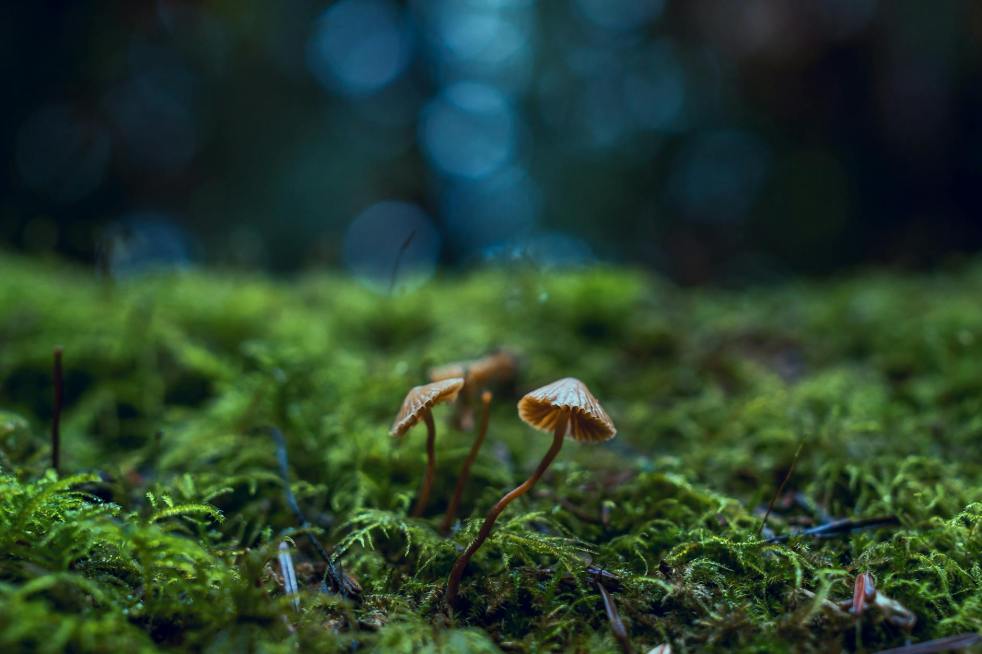
A trio of small brown mushrooms growing from a tuft of moss.
Photo by Johannes Havn on Pexels.com

So, on one hand, edible mushrooms are gifts from the dead to feed the living. On the other, the inedible ones will allow you to meet the dead!

This connection continues with the crane bag of Manannán mac Lir. In addition to being a God of the Sea, Manannán is also a guardian of the underworld. The crane bag is a bag he fashioned from a crane skin that contains several magical tools. According to many Ogham readers, these tools are indicated in the forfeda — the four additional letters at the end of the Ogham alphabet. Iphin (ᚘ) is the crossed “bones of Assail’s swine.” These were pigs that could be slaughtered and eaten and would regenerate again.
Robert Graves theorized that these swine were metaphorical, and the bones were not bones at all — they were the stems of mushrooms, discarded once the caps had been eaten or used in ritual. Since mushrooms are just fungal fruiting bodies, and picking them doesn’t harm the actual organism in the soil, it made perfect sense that they would “regenerate” so they could be consumed again.

Because mushrooms seem to spring up out of nowhere after a rain, they’re also thought to represent fertility.

Mushrooms in general are associated with the element of Earth. Planetarily, they’re associated with the Moon. The fly agaric, specifically, is associated with the element of Air and the planet Mercury.

First, I want to say that “there are old mushroom foragers, and there are bold mushroom foragers, but there are no old, bold mushroom foragers.”

If you aren’t an experienced mushroom hunter yourself, and don’t have access to one willing to take you in the field and help you positively ID mushrooms, do not attempt to harvest them yourself. There are way too many poisonous lookalikes out there, some of which can only be differentiated by spore prints or tiny, easily missed differences in appearance.

A cluster of small, thin, white mushrooms of uncertain type.
Photo by Chris G on Pexels.com

That said, simply touching a poisonous mushroom is unlikely to elicit a toxic response. However, it can still give you an allergic reaction, so you should still probably not do that.

Now, with that out of the way…

Unless you have access to a reindeer or a shaman, you should probably stick to the non-entheogenic varieties. I would also avoid commercially produced edibles intended for microdosing muscimol (a psychoactive compound). While not all brands are suspect, it seems some haven’t quite got the science figured out yet and several people have become extremely ill (and possibly even died) from using them. I wouldn’t use them myself and I don’t want bad things to happen to people, so I can’t recommend you do, either.

Also, if you drink alcohol, be careful which mushroom species you work with. Some are considered edible — delicious, even — but contain a compound that reacts with alcohol to cause some very unpleasant symptoms.

Otherwise, mushrooms are a suitable offering for deities of the dead and of forests. They’re also a good ritual food for workings relating to these deities or concepts.

You can place dried mushrooms in objects like charm bags, sachets, or spell jars, but with a bit of caution — they’re basically like sponges and will pretty readily absorb moisture and get gross if you aren’t careful to keep them dry. Other than that, go to town.

Whether you enjoy eating fungi or not, they’re fascinating organisms that form the foundation of life on Earth. Without them, other plants couldn’t grow. They’re a gift to the living from dead and decayed things, and, as such, are deserving of reverence.

Neodruidry · Plants and Herbs · Witchcraft

Vervain Folklore and Magical Uses

Vervain (Verbena officinalis) is a prominent herb in European folk and ceremonial magic. Its roots also extend to American Hoodoo.

Though most old grimoires mean V. officinalis when they refer to vervain, there are actually about 80 species in the genus Verbena. In my area (and all of the continental US, and fair bit of Canada) we have Verbena hastata, also known as blue vervain. While it’s not the same plant, you’ll often find V. hastata labeled simply as “vervain” in metaphysical contexts.

Lemon verbena, Aloysia citrodora, is also a member of the Verbenaceae family. However, since it’s a somewhat more distant relative, I wanted to limit this post to V. officinalis and V. hastata.

Vervain is sometimes called “the enchanter’s plant,” since it’s one of the most versatile herbs in European magic. Even outside of Europe, it was (and continues to be) considered a plant of considerable medicinal and spiritual significance.

As John Gerard wrote in 1597,

Many odd old wives’ tales are written of Vervain tending to witchcraft and sorcery, which you may read elsewhere, for I am not willing to trouble your ears with supporting such trifles as honest ears abhor to hear.

Magically, it’s used for purification, protection, divination, peace, luck, love, and wealth. It’s a pretty solid all-purpose herb that is often added to formulas to increase their power.

The name vervain comes from the Latin “verbena,” which refers to leaves or twigs of plants used in religious ceremonies. This, in turn, came from the Proto-Indo-European root “werbh,” meaning to turn or bend.
I have also seen the origins of the word vervain given as a Celtic word “ferfaen,” meaning to drive stones away. However, I haven’t found strong evidence for this origin — all attempts to look up “ferfaen” only yield articles claiming it as the word origin of “vervain,” and most of them only give “Celtic” as the language of origin. One source did cite the Cymric words “ferri” and “maen” as a possible origin, with the word “maen” mutating over time into “faen” to eventually yield “ferfaen.” (Upon further searching, I was not able to find the word “ferri,” though I did find “fferi,” meaning “ferry.” This would give the word “ferfaen” a meaning closer to “ferry away stone(s).”)
Nonetheless, the etymological sources I looked at gave “verbena” as the origin of vervain, not “ferfaen.”

A close-up of vervain flowers.
Photo by Tom Fisk on Pexels.com

Pliny the Elder credited vervain with quite a lot of magical properties. According to him, it was used to cleanse and purify homes and altars. He claimed the Gaulish people used it in a form of divination, and that Magi said that people rubbed with vervain would have their wishes granted, fevers cooled, friends won, and diseases cured.
Interestingly, he also pointed out that vervain was considered a bit of a party plant, for when dining-couches were sprinkled with water infused with vervain “the entertainment becomes merrier.”

While vervain is strongly associated with the Druids, they didn’t leave a whole lot of records of their activities behind. What we do know is largely through sources like Pliny, and it’s likely because of writers like him that vervain became strongly connected to the ancient Druids.

For the best potency, vervain should be gathered in a specific fashion. It’s best cut between the hours of sunset and sunrise, during the dark moon. Like many other herbs harvested for their leaves, it’s best to cut the leaves before the flowers open. After cutting, it’s best to offer some fresh milk or honey to the plant.

Vervain is thought to be the origin of the name “Van van oil.” While the van van oil recipes I’ve seen don’t include vervain or vervain oil, it’s possible that the Verbena family loaned its name, nonetheless. (In that case, it was most likely lemon verbena, vervain’s citrus-scented South American cousin.)

Vervain is also one of those contradictory herbs that is simultaneously said to be used by witches, but also effective against witchcraft.

In the very distant past, bards would use brews of vervain to enhance their creativity and draw inspiration.

Medicinally, vervain is an emetic, diuretic, astringent, alterative, diaphoretic, nervine, and antispasmodic. According to Hildegard of Bingen, a poultice of vervain tea was good for drawing out “putridness” from flesh.

Soak some vervain in water, then use the stems to asperge an area, person, or object that you wish to cleanse. It’s also an excellent addition to ritual baths for this purpose.

A cup filled with dried herbs.
Photo by lil artsy on Pexels.com

Sprigs of vervain are also worn as protective amulets, specifically against malevolent magic. Tie a bit with some string, put it in a sachet, and carry it with you. Tuck a sprig of it in the band of a hat. Use a small bud vase necklace and wear a bit of vervain like jewelry.

Planting vervain around your property is said to ward off evil and guard against damage from bad weather. If you choose to do this, please select a variety of vervain native to your area — in most of the US, V. hastata is a safe bet.

V. officinalis is often used medicinally, V. hastata is considered both medicinal and edible, but avoid consuming it if you’re pregnant, trying to become pregnant, or are breastfeeding. Talk to a qualified herbalist if you have any chronic conditions, or routinely take any medications. Avoid consuming a lot of it, since it is an emetic. It’s also important to be sure that the herb you’re working with is really V. hastata or V. officinalis — there are plenty of Verbena species that don’t offer the same benefits.

Vervain is a powerful plant, as long as you know which member of Verbenaceae you’re looking at. If you have the ability to grow a native vervain, by all means do so — these plants are tall, with interesting-looking flower spikes. They’re also easy to dry and store, ensuring that you’ll always have a stockpile of this powerfully magical plant.

Plants and Herbs

Zucchini Folklore and Magical Uses

It’s that time of year!

Have you been visited by a Zucchini Fairy yet? It’s a little early, but I have it on good authority that there have been a few of them about.
Zucchini Fairies are magical creature known to visit neighborhoods where at least one person has planted zucchini. Overnight, a Zucchini Fairy scopes out these gardens and, the next day, all of that person’s neighbors wake up to boxes of unasked-for zucchini on their doorsteps.
They’re very mysterious creatures. In fact, nobody’s ever seen one. All that’s known about them is that they are most definitely not the neighborhood zucchini-grower attempting to get rid of some of the absolutely outrageous number of vegetables that their plants put out.

Ahem.

Three zucchini on a wood table.
Photo by Angele J on Pexels.com

Honestly, zucchini are really great plants for beginning gardeners. They’re both prolific and easy to grow, so it’s not hard to end up with an absolute buttload of fresh zucchini. You can make them into noodles (aptly named “zoodles”), roast them, slice them thin and fry them, or even bake them into desserts. If you’re more magically inclined, you can also tap into their metaphysical properties.

The zucchini we have come to know and love was developed in Italy in the 19th century but did not originate there. It’s one of many plants that came from the Americas and underwent generations of selective breeding to arrive at its current form. Because the modern zucchini is relatively new, there’s not a lot of traditional herb lore around it.

In some areas, locals warn that you should never leave your car windows open during zucchini season. You may return to find your car packed full of it (probably by Zucchini Fairies).

(On a related note, August 8th is official Sneak Zucchini onto Your Neighbor’s Porch Day. I’m not doing zucchini this year, so, if you live near me, yas better strap in for some pumpkins instead.)

While squash is one of the Three Sisters in the traditional foodways of many Indigenous American cultures, that involves other species of squash and not what we picture when we hear the word “zucchini.” Combining corn, beans, and squash creates a food ecosystem in which each plant is fed, supported, and protected. In some Indigenous agricultural practices, each of the three plants is believed to be looked after by one of the Three Sister Spirits. These Spirits are three siblings who were never apart in life — so now, the Three Sister plants much always be planted together, eaten together, and celebrated together as sustainers of life.

If you intend to eat zucchini more or less as-is, seasoned growers suggest picking it when it’s between 6-8″ in length. When it becomes larger, it can get a bit seedy and lose its tenderness. Don’t worry, though — the bigger, tougher zucchini are still delicious when grated and made into breads, cakes, or fritters, so they don’t need to go to waste.

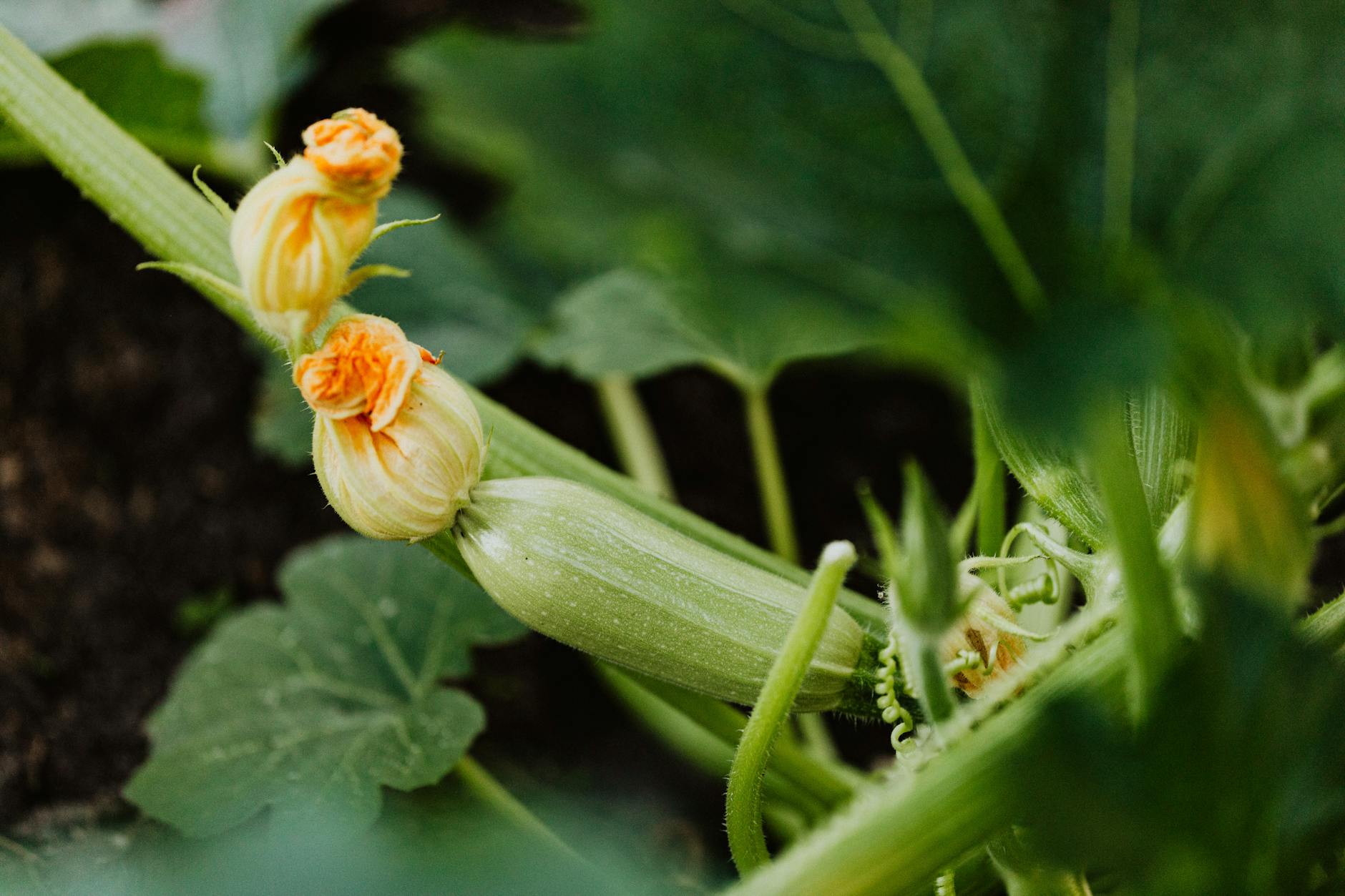
A zucchini ripening on the vine, with the blossom still attached.
Photo by Karolina Grabowska on Pexels.com

Due to its prolific nature, zucchini is commonly used in magic for fertility and abundance.

Zucchini is associated with the element of Earth. Practitioners who use the masculine/feminine energy dichotomy also associate this plant with “feminine” energy.

It’s possible to pick zucchini leaves or flowers to use in things like sachets or jar spells, if you wish. You can also batter and fry the flowers, which are delicious.

Personally, I prefer to leave the leaves and flowers where they are. I find the leaves unpleasant to touch, and the plant needs them more than I do. The flowers also provide food and shelter for pollinators — at night, squash bees like to crawl up inside them just before the flowers close. It gives them a safe, cozy little sleeping bag to curl up in.

As for the vegetables themselves… They’re not exactly the kind of thing you’ll be tucking into your dream pillows or anything (though that mental image is hilarious). So, in lieu of all that, here’s a fantastic recipe for egg-free, dairy-free, nut-free zucchini bread. It also uses cinnamon, which is considered a magical catalyst and love/money herb. Project your intention into the batter as you mix it, and you’ll have a delicious loaf of abundance and prosperity magic when you’re done!

  • 1 cup white einkorn flour (or use regular wheat flour)
  • 1/2 cup whole grain einkorn flour
  • 1/2 teaspoon baking soda
  • 1/2 teaspoon baking powder
  • 1/2 teaspoon salt
  • 1 teaspoon cinnamon
  • 1 tablespoon ground flaxseed
  • A whole bunch of chocolate chips, walnuts, or anything else you’d like to mix in (optional)
  • 1/4 cup avocado oil (or other oil or fat source of your choice)
  • 2/3 cup maple syrup
  • 1 teaspoon vanilla extract
  • 1 C grated zucchini
  1. Preheat your oven to 350 degrees Fahrenheit.
  2. While that happens, whisk or sift together your dry ingredients.
  3. Add your wet ingredients and mix thoroughly. (If you’re using regular wheat flour instead of einkorn, you may wish to add a little extra oil, maple syrup, or a few tablespoons of a milk of your choice — einkorn typically requires less liquid than regular flour.)
  4. Spread the batter in a well-greased loaf pan. Bake for 50-55 minutes, or until a toothpick inserted in the center comes out clean.
  5. Allow to cool, slice, and serve. I like it with a little of the Date Lady’s chocolate spread.

Whether you’re visited by the Zucchini Fairy, are your local Zucchini Fairy, or purchase your zucchini from the grocery store, these versatile vegetables are a great way to inexpensively pad out pretty much any recipe you can think of. Breakfast? Zucchini muffins. Lunch? Zoodles and pesto. Dinner? Roasted zucchini as a side. Dessert? Chocolate chip zucchini bread. Focus on the abundant, fertile, and prolific nature of these amazing plants, and invite their energy into your life.

Plants and Herbs

Hen and Chicks Folklore and Magical Uses

Do you have little to no success with plants?
Do you want to get into gardening, but lack confidence?
Hoo boy, are hen and chicks succulents made for you.

Members of the genus Sempervivum, these succulents are also known as “live forever” or “houseleek.” They have the plump leaves of your average succulent but can thrive in growing zones 9-4. I have one that I stuck in a pot on my deck and did literally nothing for — not even water — and it’s filled the pot, put out tons of little green pups, and is flowering like there’s no tomorrow.

A top-down view of a Sempervivum plant in a pink pot. In the center of the photo, several pink flowers and buds are visible.
A close up of that plant’s first flowers. In the background, you can kind of see other buds emerging on their talk stalks.

Along with their easygoing nature, hen and chicks plants have some interesting folklore and usages in magical disciplines.

Let’s look at their common names first. “Hen and chicks” derives from their most notable method of reproduction — in addition to producing seeds, they send off little offsets in the form of round rosettes which give the impression of a large mother “hen” plant surrounded by baby “chicks.” They’re called “live forever” because they’re evergreen and very difficult to kill. Lastly, the name “houseleek” has no relation to the other plants known as leeks. Instead, the word “leek” comes from the Anglo-Saxon word “leac,” meaning “plant.”

As for why they’re called something that literally translates to “house plant,” there’s an excellent reason for this. Hen and chicks plants were (and are) frequently grown on houses. (When I lived in California, the house I stayed in had some lovely Sempervivum growing on the roof.) This practice originated with the belief that these plants helped to ward off fire and lightning strikes.

These plants are also associated with prosperity, health, and luck. Possibly as an extension of their fire- and lightning-protective connections, some cultures grew Sempervivum on roofs as a way to ensure the health and wealth of a house’s occupants. In Wales, these plants are still sometimes grown on roofs for luck.

(Of course, if you live in the US and have an average modern shingle roof, you may not want to grow plants there. Excess moisture could cause problems, and using your roof as an ersatz garden could void your warranty. Sempervivum are great for green roofs, however.)

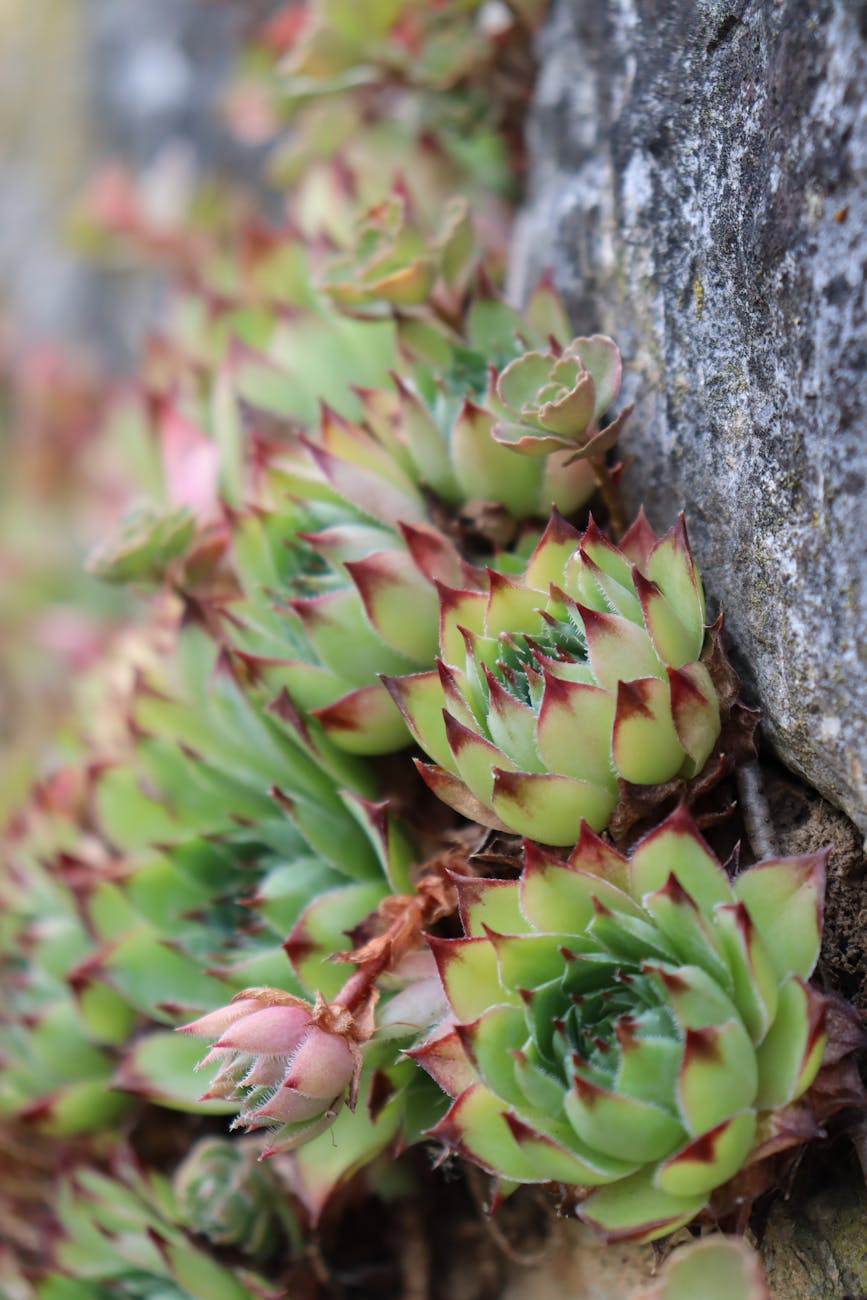
As for warding off fire and lightning strikes, there are a few reasons for this. Some species of Sempervivum grow fine, snow-white hairs on them, that look a bit like fine wool or thick cobwebs, and their growth habit can make them resemble a jutting, sculpted beard. This is reflected in the German name “Donnerbart,” or “Thunder beard.” These plants are connected to various thunder deities, like Thor and Zeus.

Sempervivums clinging to a rock face.
Photo by Honglei Yue on Pexels.com

The other reason behind it is that Sempervivum can act less as a protector than as an indicator. These plants can thrive in very dry areas, but they still need some moisture to stay plump and green. The presence of healthy hen and chicks plants generally indicates that conditions aren’t conducive to combustion.

Houseleeks are also used to ward off attacks by malevolent magic.

Medicinally, Sempervivum plants are used similarly to Aloe vera. Topically, it is sometimes a treatment for cuts, burns, or warts. This herb was also considered a very useful treatment for diarrhea, while larger doses were a powerful emetic. Traditionally, it’s considered a very cooling herb.

Elementally, Sempervivum is associated with Fire. It is also connected to all thunder deities.

From everything I’ve seen, Sempervivum‘s protective and lucky magical attributes are best employed by simply growing them. Give them a sunny spot and some well-draining soil in the right growing zones, and they’re pretty much good to go. (Of course, if you intend to use your hen and chicks plants in this fashion, it’s good form to ask them for their help.)

While these plants aren’t native to the US, I have noticed that they seem to be a favorite of small native pollinators. So far, I’ve seen three different species of sweat bee. They’re also useful for xeriscaping in especially challenging areas.

As I mentioned previously, you may want to avoid growing them on your roof. Yes, it’s very picturesque and cottagecore, and yes, it’s traditional, but having to pay upwards of five grand to fix or replace a modern shingle roof is none of those things. Plants trap moisture, which roofs need to shed. Their roots can infiltrate minute gaps between shingles, widening them and allowing water in. It may not happen immediately, but growing plants directly on a conventional roof, without any kind of barrier or container between the two, is generally not a good idea.
If you have a flat spot near your roof, like a windowsill, window box, or balcony, stick a couple Sempervivum plants in terracotta pots and put them there instead.

As for using them internally, I don’t recommend it. If you have a minor burn and don’t have a fresh aloe leaf handy, by all means, try applying some Sempervivum goop topically. Using these plants as an anti-diarrheal or purgative has largely dropped off in favor of other remedies, even in alternative medicine.

Hen and chicks plants are adorable, inexpensive, and exceptionally hard to kill. Magically, they’re just cute little protective and luck-drawing charms. If you have the space to devote to one (or a few), they’re well worth their tiny investment of time and money.

Plants and Herbs

St. John’s Wort Folklore and Magical Uses

Ah, St. John’s wort. Taken internally, it’s reportedly a balm for the nerves. Used externally, it’s a balm for cuts and scrapes. Its turpentine-scented leaves and flowers are a source of bright red, medicinal oil, but only when very fresh. The plant itself is the subject of folklore, a medicinal treasure, and a whole lot of magical help.

So, what’s so great about St. John’s wort, and why is it called that, anyway?

Let’s start with the name. Officially, St. John’s wort is known as Hypericum perforatum — “hypericum” from “hyper” and “eikon,” referring to how the flowers were hung above icons, and “perforatum” meaning “perforated,” due to the hole-like appearance of the translucent glands in its leaves.

Hypericum is a large genus, and a lot of its members are referred to as St. John’s wort. There are even some unrelated species that bear the same common name, like the marsh St. John’s worts of the genus Triadenum, or the greater celandine that’s sometimes regionally known as St. John’s wort. For our purposes here, we’re going to stick to Hypericum perforatum.

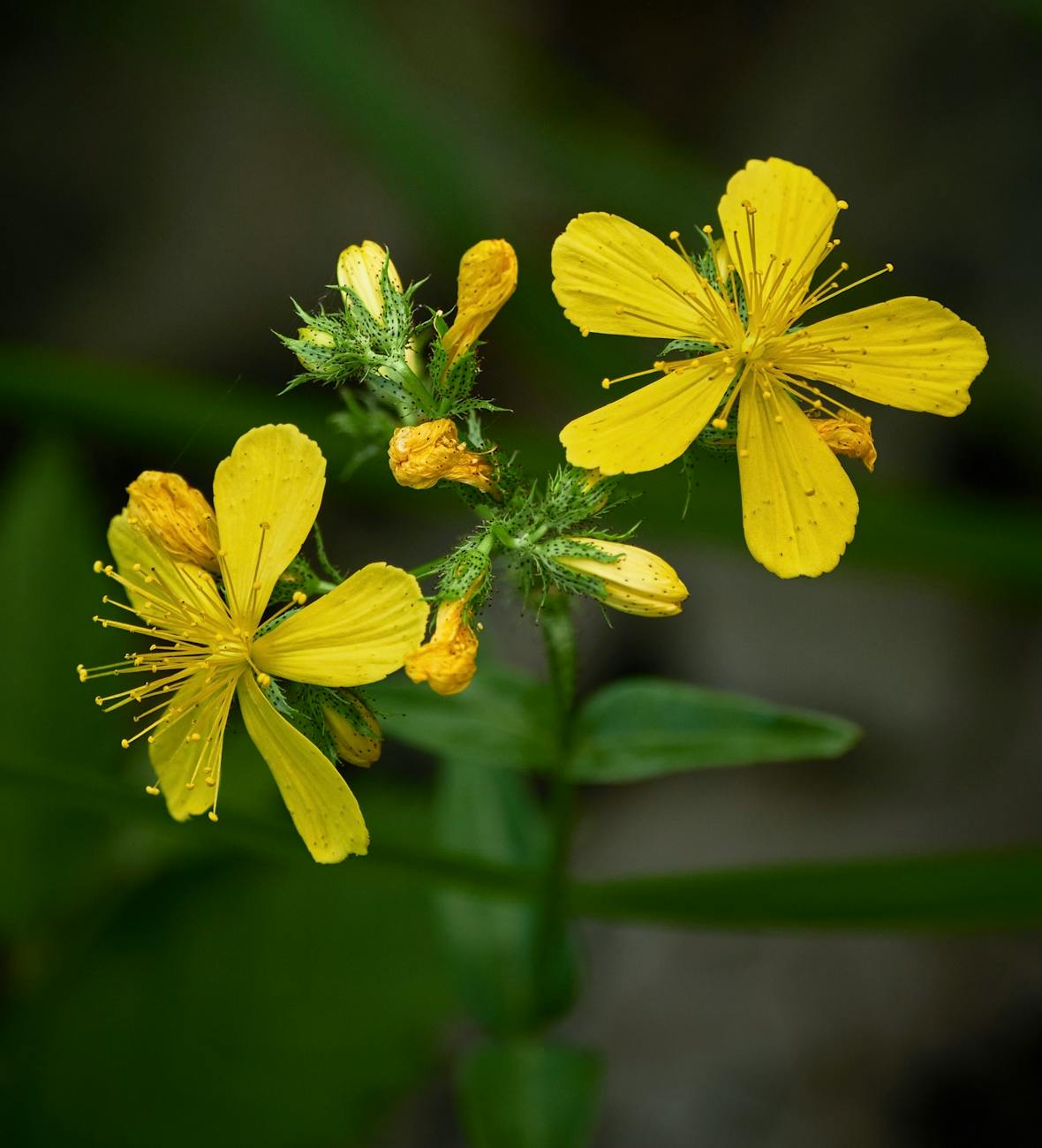
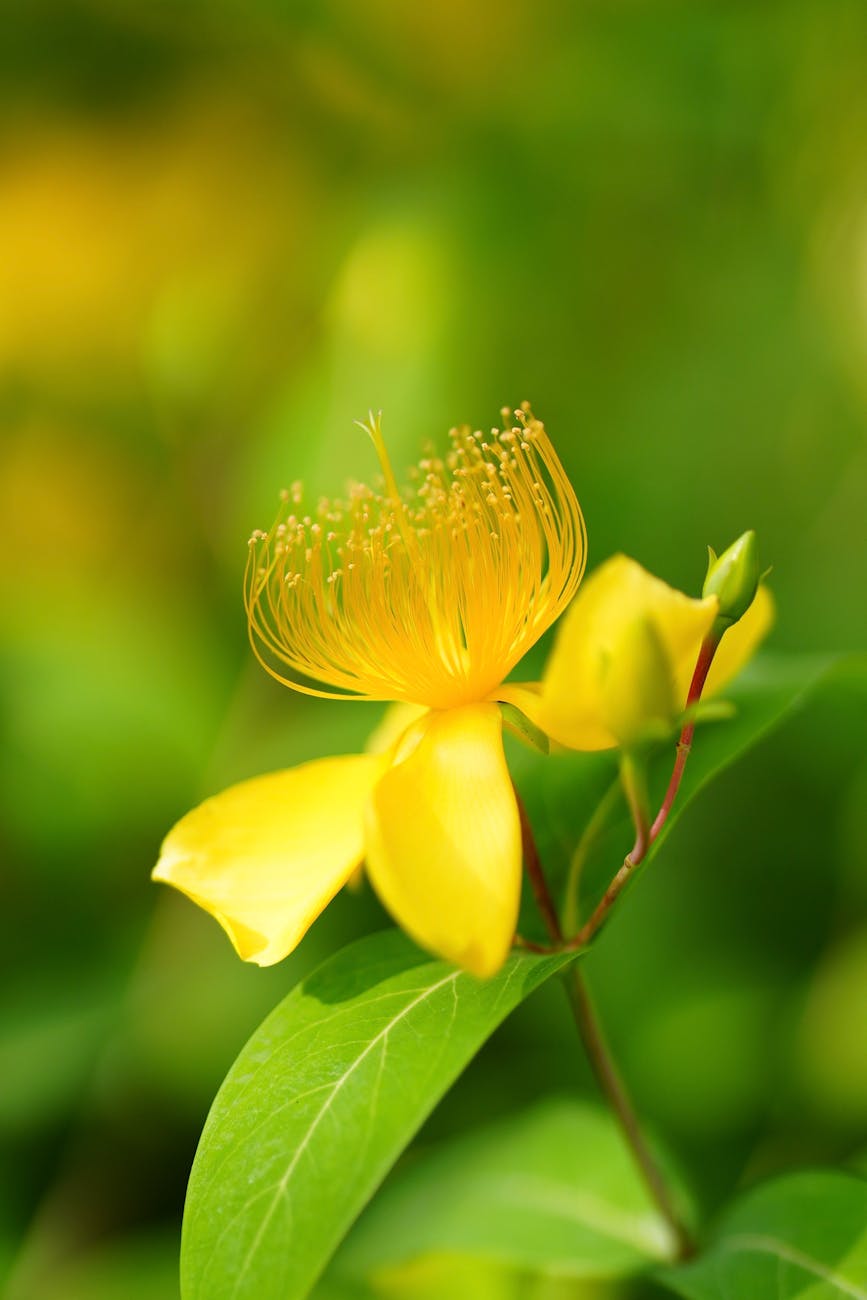
Bright yellow St. John's wort flowers.
Photo by Valter Zhara on Pexels.com

As for how this plant became known as St. John’s wort, it’s a bit of a convoluted story. Its history of use dates back to pre-Christianity, so it wasn’t always known as “St. John’s wort.” (As for the “wort” part, that’s just an old word for “plant,” derived from the Old English “wyrt.”) So, older sources will have their own names for this herb that may not be recognizable to modern readers. St. John’s wort also has a ton of regional names — in the US, it’s sometimes called goatweed, Klamath weed, or Tipton weed. In the UK, it may be called touch-and-heal, rosin rose, penny John, or balm of the warrior’s wound.

The name St. John’s wort came about because it was believed that this herb was at its most potent during Midsummer, and therefore should be harvested on or about June 24th. This was later turned into the Christian feast day of St. John, and so the plant became “St. John’s plant.” It’s also said that the plant’s red, blood-like sap runs in August, on the day that St. John was beheaded.

As evidenced by many of its healing-related common names, this herb is often hyped up in natural medicine circles. Topically, its oil is used to treat and soothe minor wounds in a similar fashion to commercial wound care ointment. Internally, it’s often used to help with symptoms of anxiety or depression. The reason it works is that St. John’s wort has a whole host of active compounds, including sesquiterpine oils, anthraquinone derivatives, and an interesting chemical called hyperforin. Hyperforin is particularly noteworthy, as it may be the source of St. John’s wort’s antidepressant effects, while the anthraquinone derivatives hypericin and pseudohypericin have demonstrated antiviral and/or antibacterial activity.

(As a side note, please avoid taking St. John’s wort internally if you’re on pretty much anything. It can alter how certain medications are metabolized by affecting specific liver enzymes, causing overdoses. It can also inhibit the effects of birth control, antivirals, chemotherapy drugs, certain anticoagulants, and medications for heart disease. Taking it with certain antidepressants also increases the risk of serotonin syndrome, and I don’t wish that on anybody.)

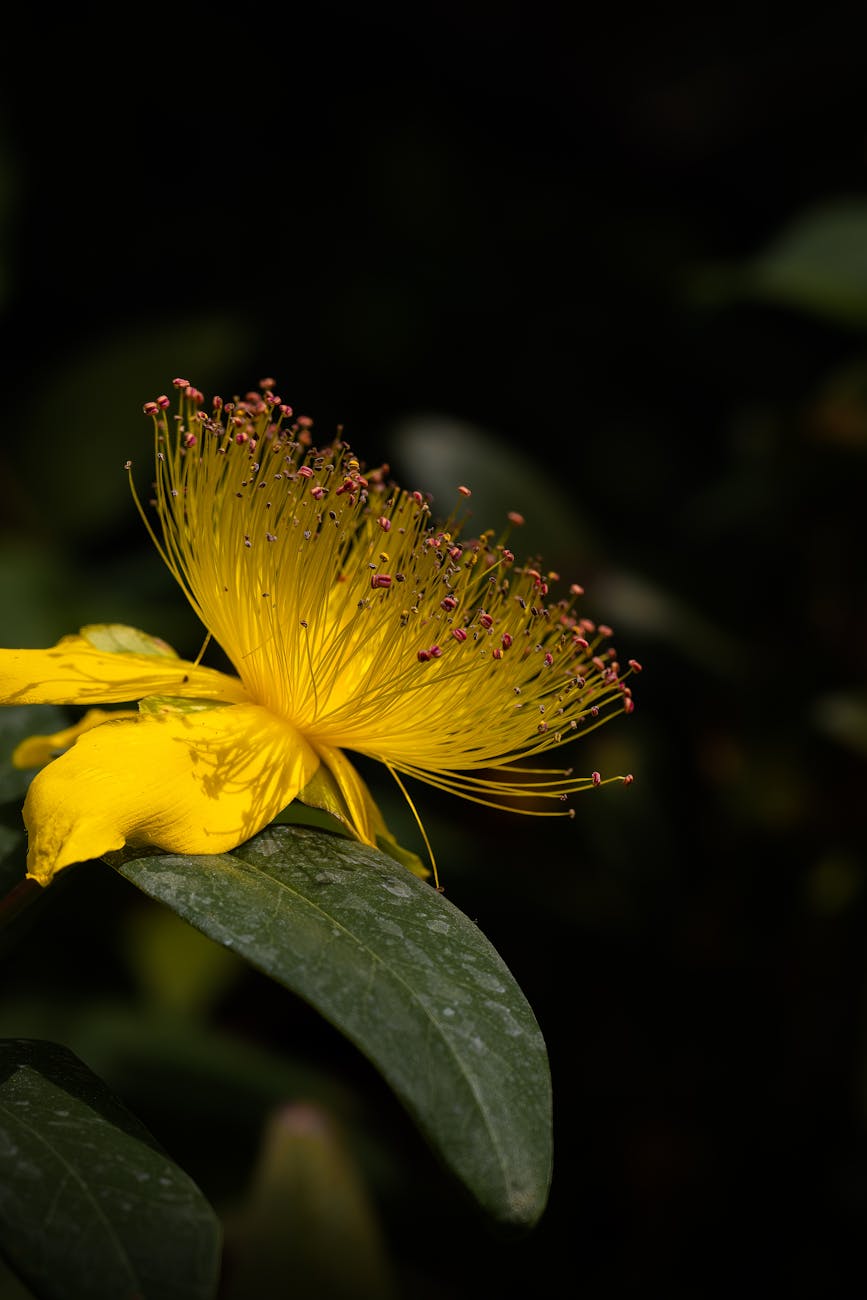
A side view of a creeping St. John's wort, Hypericum calycinum, flower.
Hypericum calycinum, or creeping St. John’s wort, displaying very similar flowers to Hypericum perforatum. Photo by shaosong sun on Pexels.com

Magically, St. John’s wort is often used to repel or banish evil. Another common name, fuga daemonium, literally means “demon flight.” It was often hung in houses, placed above religious icons, or carried as a protective talisman. Flowers, brought into the home on Midsummer’s eve, are considered particularly protective and lucky.

This plant also had some limited divinatory use as a kind of mortality predictor. If you took two sprigs of St. John’s wort and hung it over a marital bed, the sprig that wilted the fastest indicated which member of a couple would die first. Fun!

As a Midsummer plant, St. John’s wort is associated with the Sun and the element of Fire.

It’s probably best to work with this herb in dried or oil form. St. John’s wort is such a potent medicinal plant because the compounds that we use as medicine are actually the plant’s defensive mechanisms — they’re distasteful and poisonous to grazing animals, allowing the plant to grow unchecked. That’s not a super big deal if you’re within St. John’s wort’s native range across parts of Europe and Asia but can become a (rapidly spreading) problem if you’re not. This plant is considered a noxious weed elsewhere, so, unless you’re an herbalist who needs the fresh herb specifically, I’d avoid growing it.

If you have access to a patch of St. John’s wort, however, and you’re outside its native range, harvest all you like. (Not much else will use it, and you’ll be doing the native fauna and flora a favor.)

Use St. John’s wort oil for physical and magical healing. Its resemblance to blood makes it appropriate for workings related to birth, death, or rebirth (though I find a bit of bloodroot or alkanet steeped in red wine or vinegar to be a somewhat better — and easier to obtain — substitute for blood itself).

Use the dried herb for banishment. Burn it in bundles and waft the smoke around any space where you want to clear out malevolent spirits, magic, or the effects of the evil eye.

Place some of the dried herb in a protective sachet and carry it on you. You can also add it to jars, poppets, or other container spells as you deem appropriate.

Plants and Herbs

Lemon Balm Folklore and Magical Uses

Et tu, lemon balm?

I have tried so hard to love it. It’s relaxing. It’s delicious. You can make it into tea or syrup or use it to flavor anything from sugar to fish. If you have anxiety, it’s touted as a virtually ideal way to calm down — the closest thing to an herbal benzo out there.

However, I can also tell you that, from personal experience, that it can also leave you waking up from a nap that leaves you like Robin Williams in Jumanji.

Fortunately, even if you are sensitive lemon balm’s very relaxing properties, there are other things you can use it for. It’s still very tasty in less-than-therapeutic doses and has an abundance of interesting uses in folk magic.

Lemon balm’s official name is Melissa officinalis. “Melissa” is Greek for “honey bee,” since the plant is a favorite of bees and was often planted to help attract them. Beekeepers would also pinch off fresh sprigs of the plant and rub them on the entrances of beehives to entice them to move in and stay.

(“Officinalis” (or “officinale”) just denotes organisms that are useful in medicine or cooking. Kind of like how “sativa,” “sativum,” and “sativus” just mean “cultivated,” and denotes crops grown from seed.
Cannabis sativa and Avena sativa are not closely related, to put it mildly.
Melissa officinalis, the lemon balm, and Sepia officinalis, the cuttlefish, are also not related.)

A sprig of lemon balm against a dark background.
Photo by Oksana Abramova on Pexels.com

Lemon balm is good for attracting more than just bees, though. Magically, it’s frequently used as an herb for good luck and general positivity. Tons of recipes feature it for love, fertility, and money.

To a somewhat lesser extent, lemon balm is also used for repelling evil and attracting good spirits. Since it’s so fragrant, it was used to strew the floors of Christian churches. In Abruzzi, Italy, women who happened on wild lemon balm would crush a sprig between their fingers in hopes that the scent would ensure that Jesus Christ would guide them to Heaven.

Lemon balm is considered a sacred herb of Hecate. It’s said that she gave the knowledge of lemon balm and other “witches’ herbs” to her daughters, Medea and Circe.

As well as being a mild sedative, lemon balm is used to soothe digestive issues. However, while it’s a tasty and relaxing herb, it’s best avoided by people with thyroid issues. It can interfere with thyroid hormone replacement therapy.

In the past, lemon balm was also applied to scorpion stings, bites from rabid dogs, and the venom of serpents. Since this herb isn’t an antivenom or protective against rabies transmission, this practice likely met with very limited success.

Nobody seems able to agree on lemon balm’s planetary or astrological associations. Nicholas Culpeper called it an herb of Jupiter and the sign Cancer. Other authorities say it’s an herb of Venus, Neptune, or the Moon. It is considered a generally “Water”-y herb, which makes sense when you consider its ability to relax the mind and soothe the emotions.

I know I usually advocate for growing your own herbs whenever possible, but planting lemon balm is one of those situations where you really want to exercise caution. Lemon balm requires next to no maintenance. Like other members of the mint family, it spreads aggressively outside of its native habitat. Absolutely do not plant it in the ground unless you want the entire area to be lemon balm. Keep it in window boxes, pots, or even containers indoors. If you do grow it in a container outside, avoid placing that container directly on the soil. When I say this stuff spreads, I’m not messing around.

Photo by Alesia Kozik on Pexels.com

In my experience, mints do not smell very good when burned straight. Instead of making lemon balm into incense, consider using it to infuse alcohol for making sprays, or oils for anointing or making balms.

The easiest way to use lemon balm is just to sprinkle some of the dried leaves across your front doorstep. The second easiest is to brew it into a tea and either drink it, use it for washing crystals or other curios, or use it to wash the doors of your home. As you do this, visualize good fortune coming in, and back luck or malevolent spirits turning away.

Lemon balm is one of those herbs that’s readily available fresh, dried, or as an oil. You can try it in a tea, or, depending on how fancy your local shops are, in a gourmet syrup. Its flavor is refreshing, citrusy, and herbal, while also tasting quite unlike anything else. As far as magical ingredients go, it’s also hard to go wrong with lemon balm — it’s a useful herb for attracting good things (also bees) and keeping out the bad. All of that aside, I wouldn’t rely on this as a protective herb on its own, but it’s great for filling up an empty space with useful, positive energy.

Plants and Herbs

Chili Pepper Folklore and Magical Uses

Have you ever gone to the store with an idea of what you need, but no real list? And then you go home and discover that you’ve bought everything but a specific item you actually needed?

Tl;dr, I have a lot of pepper plants now.

See, I was going to the garden store for some tomato starts. (I love tomatoes. When my grandpa kept a garden, he grew big, fat beefsteak tomatoes and there are many, many photos of me and my sibling as tiny children with whole tomatoes in our hands, cheeks smeared with juice and seeds. I do not, however, try to grow tomatoes from seed because it is tedious and saving and fermenting them is Not a Good Time.)

Yellow peppers on a pepper plant.
Photo by Zen Chung on Pexels.com

Somehow, I managed to return with the herbs I wanted for some railing boxes, a bunch of pepper plants I never planned on, and exactly zero tomatoes. None. None tomatoes.

So, I figure now’s as good a time as any for a refresher on the many, many magical uses of the various cultivars of chili pepper.

Chili peppers are members of the Capsicum genus. 90% of the time, Capsicum annuum.
“What about jalapeños?” C. annuum.
“Bell peppers?” C. annuum.
“Serranos?” C. annuum.
“Habaneros?” Okay, those are C. chinense, but mostly due to a series of errors.

It’s been my experience that hot spices, in general, fall into two camps. While the heat of hot spices is great for acting as a kind of magical catalyst to really get things moving, this can be used in one of two ways. The “sweet heat” spices (your cinnamons, ginger, etc.) are commonly used for money, love, and passion. The other hot spices, like chili peppers, are commonly used to banish or protect. In both cases, hot spices are used to get things moving quickly. Whether you want things to move to you or away from you is the deciding factor.

A dried chili pepper, whole star anise, clove buds, and whole nutmegs on a wooden table.
Photo by Pranjall Kumar on Pexels.com

Hot peppers are good at repelling more than just unwanted people, entities, or energies. Capsaicin, the primary compound that gives peppers their heat, is a defensive mechanism to keep peppers from being eaten. Humans, massive weirdoes that we are, decided that capsaicin was delicious, actually, and no plant was gonna tell us what to do.
Birds are unaffected by capsaicin, so they’re a major means of pepper seed dispersal. They eat the brightly colored fruits and scatter the seeds in their droppings.

In Coahuila, Mexico, chili peppers are used to counter malevolent magic. Specifically, they’re a remedy against salting, a practice akin to Hoodoo foot track magic. The practitioner combines salt from the homes of three different widows and graveyard dirt taken from the burial site of someone who died violently, and sprinkles it in front of their intended victim’s front door. To counter this, the victim combines chili peppers, star anise, garlic, rue, rosemary, storax, and myrrh, and uses the mixture to fumigate every corner of their home to drive the evil out.

Chilis are also a remedy for the evil eye.

The Tsáchila people, who live near the foot of the Andes mountains in Ecuador, use chilis to foil a kind of vampiric entity called the red demon. This demon feeds on people’s blood, leaving them pale and lifeless. Burning chilis in a fire while serving chili pepper-laden food drives the creature away, since it can’t tolerate the spicy food or pepper fumes.

The Aymara people of Bolivia, on the other hand, add chilis to a pot of boiling water and other herbs to create a cleansing steam bath. Sitting under a blanket, in the steam, is said to drive out evil energies.

To be honest, anywhere you’ll find hot peppers, it seems you’ll find a ritual that involves burning them to drive out evil. It reminds me of a specific incident from my own life — I was making some spicy sautéed broccoli on the stove top and added the spices a little too early. The capsaicin heated up and became aerosolized, and the fumes drove my then-partner outside. So, burning hot peppers really can drive out malevolent influences!

Hot foot powder is another common use for chilis, specifically within Hoodoo. While specific recipes can vary from culture to culture and practitioner to practitioner, chili is usually the base. This is sprinkled in a target’s footprints, in their shoes, where they will walk (like in front of their door), or in a container with a photo of them, paper with their name written on it, or personal possession of theirs. This isn’t a strictly protective practice, though it is certainly used that way. It’s just meant to drive unwanted people away from the user. Some scholars of folk practices think that hot foot powder may be a variation of walkin foot, which is intended to create confusion in one’s target.

Of course, chilis also have their dark side too. One way to curse someone involves throwing specially prepared chili peppers into their home or workplace. The seeds may also be combined with other baneful ingredients, added to a fabric or paper parcel, and tossed in instead.

Medicinally, capsaicin triggers a cooling response in the body. It helps increase circulation and is often used as a topical “counter irritant” for muscle and joint pain. I personally have a few different muscle rubs and pain-relieving balms, and about half of them are capsaicin based.

Hot peppers are ruled (unsurprisingly) by the planet Mars and the element of Fire.

As mentioned above, chili peppers are excellent at making things go away.
(Well, except birds.)

Red and yellow peppers on a pepper plant.
Photo by Yan Krukau on Pexels.com

Someone bothering you? Find you someone who can make you some hot foot powder. Need protection? Add chili peppers (or the ashes or char from burned chili peppers) to protective salt and sprinkle it in the corners of all of your rooms. Getting badgered by malevolent magic or evil entities? Smoke ’em out by burning some chilis on charcoal. Just be careful with that last one — chili pepper fumes are no joke for babies, children, and people with respiratory disorders. Basically, don’t expose anyone to the smoke that you wouldn’t also want to spray in the face with bear mace.

I also want to reiterate that, while chili peppers are a magical catalyst, I’d avoid them in situations where you aren’t specifically trying to repel something in a hurry. If you’re looking to attract things instead, go for one of the “sweet heat” spices — like nutmeg, cinnamon, or ginger.

I would not advocate using them for malevolent magic. Don’t get me wrong, cursing is absolutely useful and appropriate in some situations, but that’s something you’re better off learning somewhere other than a random website.

Right now, we’re trying not to count our peppers before they hatch. Should we have an abundant harvest, we’ve got a dehydrator, several batches of mango and hot pepper mead, peach and hot pepper water kefir, pepper jelly, spicy dark chocolate, and plenty of other uses in mind. (I love sweet and spicy flavors together, and mango/pepper, peach/pepper, or red berries/pepper/chocolate are my favorites.) Here’s hoping for an abundant harvest!