As I write this, JJ is playing with the snow I tracked in on my boots, while I am listening to pan flutes and drinking a smoothie to try to combat a killer bout of agita.
One of my paintings was accepted for a juried show starting later this month (it is this guy). This morning, my Handsome Assistant gave me a ride to drop it off at the gallery… By which I mean he drove me there and he went in to drop it off, while I sat in the car and tried not to throw up.
I’ve been through this before. I’ve entered shows, had my work accepted, and gone through the whole process, but, somehow, it still never seems to fail to launch me into a tiny existential crisis. I end up expending a ton of mental and physical energy to compare myself to other people, compare my work to other artists’, and make a carefully curated mental list of all of the reasons I don’t deserve to be there.
I know a lot of people have imposter syndrome and are probably doing the same thing. However, I am sure that they pale in comparison to my level of utter charlatanry.
But even that is a kind of talent, I guess. Maybe I don’t deserve to be where I am. Unfortunately, there are no shows for chicanery. There are no legitimate places where a skilled imposter can showcase their ability to fake a level of competence. Until there’s a place for the most impostery of imposters, maybe this is where I belong after all.
To be fair, powerful solvents in general are not my friends. I get headaches at the drop of a hat, so working with paint thinner does not rank highly on my list of enjoyable activities.
That’s why I’ve always painted with acrylic. I’ve also taken steps to minimize how much of that acrylic escapes my studio — from using multiple jars of rinsing water, to multiple trays for evaporating that rinsing water, to stripping off the dried acrylic residue and trying to repurpose it.
Still, I don’t want to work with a medium that’s basic liquid plastic if I don’t have to. That’s where milk paint comes in. Rather than using acrylic as a binding agent, it uses a protein found in milk.
There are some key differences between acrylic and casein paint, though:
Casein is inflexible, while acrylic maintains flexibility when it dries. This means that acrylic is good for painting on stretched canvas, while casein is only really suitable for rigid substrates like wood or canvas-covered MDF.
Casein dries to a velvety, matte finish, while acrylic can be pretty shiny unless you add matte medium.
Casein takes a long time to dry fully. This means that you can wet it and re-work it. Once acrylic dries, it’s dry.
Casein works great as an underpainting medium, while acrylic has some drawbacks.
Casein dries to the touch very quickly. Acrylic stays wetter for longer, and the addition of retardants can further extend this drying time.
Casein has a bit of a smell, while acrylic doesn’t really smell like anything. I have to say that casein’s smell isn’t really objectionable, though. It smells kind of like lemon window cleaner, but the scent is very light.
These didn’t really influence my decision to start using casein paint, because I was more focused on reducing my dependency on acrylic media.
Here are two of my paintings. The first is acrylic, the other is casein:
As you can see, there are some differences in vibrancy and transparency. I also had to change a lot of my techniques in order to successfully work with casein. For example, I like to work wet-on-wet. That’s a bit more challenging with casein, because the under layers are pretty much dry to the touch by the time I’ve scooped up the next color I want to work in. I’m also not used to being able to re-wet and re-work paint once I’ve used it.
Casein also tends to have more opacity than acrylic. (This opacity can, of course, be reduced with the addition of a little water.) Some acrylic pigments are very opaque, but others are quite sheer — almost more like a glaze. Casein goes on like it means it.
I’ve noticed that I also have to work more quickly with casein. If I take too long, it’ll start to dry on me. The same dry-brushing techniques that I was taught with acrylic don’t really work here.
All in all, while working with casein has taken some adjustment on my part, I love it. I actually prefer it to acrylic now, especially when it comes to opacity. It’s a beautiful medium that’s been in use for millennia, and one that I hope sees even more use in the future.
We’re at the halfway point between the winter solstice and the spring equinox, when things often paradoxically feel even colder and grayer than they did in the middle of winter. So why not have a holiday?
Celebrating Imbolc in a city doesn’t really have much of a resemblance to how it’s done traditionally, especially now. There is no lambing season here, and nobody’s gathering. There’s no well here to pray around, nowhere to offer coins or clooties.
I had a small ADF-style ritual, with a glass prep bowl for the well, a small cauldron for a hearth, and my cypress knee for a tree. I offered a bit of blackberry cobbler, fresh from the oven. to Brigid. I put on some Ani DiFranco and read aloud from Jarod K. Anderson’s Field Guide to the Haunted Forest.
When you were born, your enthusiasm was a red flame atop a mountain of fuel. As you age, the fuel burns low. No one warns you. Yet, with intention, you can learn to feed that warming fire long after the fuel you were born with is ash on the wind. Be kind to yourself. Learn this.
They say cut all the wood you think you will need for the night, then double it. Cut it during the daylight when fuel seems irrelevant. Dead limbs hanging low, sun-dried, hungry for fire. The night can be longer than we expect. The wind can be colder than we predict. The dark beneath the trees is absolute. Gather the fuel. Double it.
“The Wood,” Jarod K. Anderson
I’ve never been much for poetry — writing it, I mean. I recently read an article on creativity whose title I forget. (I was one of the ones that calls everything a “hack” and measures it in terms of boosting productivity.) It was mostly forgettable, but there was one bit that stood out: the idea of creating within limits.
Humans build at right angles. We have a sense of geometry, of corners, walls, inside, and outside. If we have rules to play within, we can create amazing things. Strangely, this gets harder when those limits are removed.
I know poetry has rules, I remember spending days on iambic pentameter, sonnets, and rhyming couplets in school. I remember cutting pieces of construction paper into diamonds, to enforce the structure of a diamante poem, lines meant to swell and taper from top, to middle, to bottom. I think I have a harder time with it, though.
Visual art is easy. I can grasp the limits of color mixing, knowing how to blend things so they don’t become muddy, to work wet-on-dry or wet-on-wet, to layer fat and lean. I can see the underpinning geometric shapes. It’s simpler to perceive. I don’t really get poetry the same way.
So, I offered my baking, played someone else’s songs, and read someone else’s poems.
My offerings were accepted. In exchange, the spirits of nature offered me the things symbolized by The Magician (confidence, creativity, manifestation). My ancestors offered my the things symbolized by Justice (cause and effect, balance, fairness). The Shining Ones offered me… also Justice. It looks like I need a lot of it.
Sometimes, they know me better than I know myself. I know my life hasn’t been balanced lately. I let this lack of balance serve as an excuse for not creating things, largely because I find the prospect intimidating. I haven’t been writing as much. I haven’t been painting as much. I haven’t even been taking as many pictures.
I cracked open a root beer and hallowed the waters of life. I asked the Kindred to bless and imbue it with their blessings and advice, so I might be able to internalize and benefit from it as much as possible.
It’s hard to really find the impetus to kick myself in the ass. To tip the scales and rebalance things. To tap into the confidence to keep from making excuses for myself. Hopefully this helps.
I’ve also added a new line — now, in addition to the matte giclee prints, you can also get most of my work as lustre photographic prints. (These are just as high-quality as the others, just printed on a subtly glossy photo paper instead of heavy matte stock.)
I always purchase copies of my prints before I list them, so I can make any adjustments to the source files to make sure they look as good as possible. Not to toot my own horn, but computer images don’t really do these justice — the prints came out so good, friends.
I also have several different tarot readings available. Please feel free to drop me a line through Etsy or my Contact page if you have any questions.
Well… Re-embarking on an old one, but in a new direction. Still counts!
I started my Etsy shop years ago. It was an experiment, a new way for me to stretch my limits and see what I was capable of. I’m doing some more stretching.
All of this is to say that I have new listings available — tarot readings, prints of my artwork, you name it. (As long as you are naming one of those two things.)
Whoo!
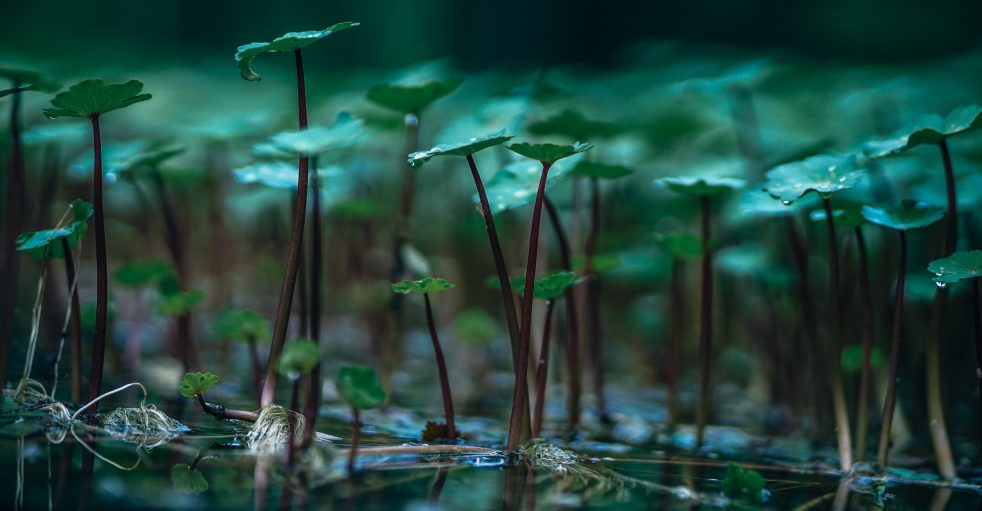
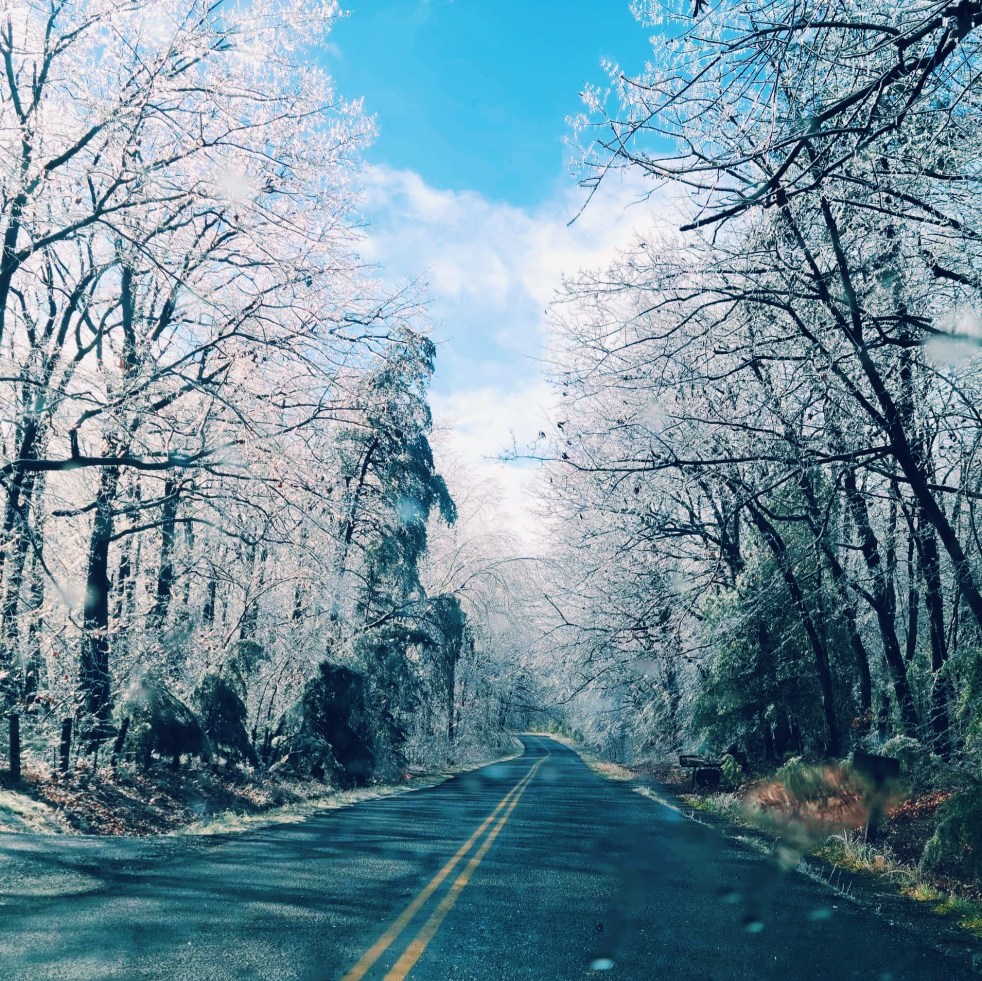
All of these are high-quality prints made using the giclée
process, on Somerset velvet fine art paper. In the future, I’d like to offer some of my original work, too, and maybe some jewelry. For now, I’m focusing on prints and seeing how things go.
Painting has always been a way for me to work through things. For years, I suffered from crippling thanatophobia — living almost seemed pointless if it was all going to end eventually, and nonexistence was terrifying. Painting ravens, crows, and other carrion birds and death imagery in bright, lively colors was one way for me to come to terms with things. To stop seeing death as something to be feared, and, instead, as a part of the cycle of life. It was a big step toward my goal of death positivity, and it was through death positivity that I could really start living.
Now, I’m not afraid. I love the aesthetic quality of juxtaposing carrion birds and bright colors. I take a lot of inspiration from ravens and crows in my artwork, my divination, and my magical workings. (I even have a raven-inspired oil that I use for journeying work that’s amazing.)
I’ve been writing a thing about sleep, which has resulted in a not-insignificant amount of research into everything from sleep apnea statistics, to what kind of effects certain sounds have on the body’s cortisol level, to what Salvador Dalí used to do with sturgeon eyes.
Let me back up.
I once read a paper on Academia.edu (which I highly recommend if you’re at all interested in Semitic mysticism, lecanomancy, ancient Greek magical texts, or Egyptian magic). Ever since, I regularly get emails about some incredibly interesting subjects. For example, I have a pretty good handle on how to get a skull to talk for divination purposes, as well as how to punish it if it only tells lies and refuses to stop yelling. I don’t recall the exact search string that led to me getting a link to a copy of Dalí’s 50 Secrets of Magic Craftsmanship, but I did.
In it, he describes an ideal meal of sea urchins (“three dozen sea urchins,” to be exact, “gathered on one of the last two days that precede the full moon, choosing only those whose star is coral red and discarding the yellow ones”) and beans à la Catalane, after which you are to sit in front of a blank canvas without any light, until it’s become too dark to see it.
“It will become more and more dim until, when night has submerged you, you will completely have ceased to see it, or at most will only be vaguely aware of the space it occupies. Continue still to look at it, without remorse, for another good fifteen minutes, for it is under these circumstances that your spirit will work best and most decisively, and do not worry about making the maid wait when she calls you and says that the soup is on the table, for after what you have eaten at noon, your long afternoon sleep and everything that you are in the midst of painting in the dark, without yet even suspecting it, you have already in a sense had your supper, and more.”
After this, he recommends dining on sea perch, specifically the eyes. After consuming all but the hard kernels inside, you are to keep them in your mouth. Then, after getting into bed:
“[T]ake these eyes out again. Keep one in your hand, and put the other two on a small book or on a black box which you will rest on your knees, placing them at a certain distance from each other in such a way that, when you hold your forefinger in front of the two super-white balls and focus on your forefinger, the eyes of the sea perch will join, thanks to the precious distance between your own eyes, the grace and the mystery of your binocular vision, and the two eyes of the sea perch will become one single ball. This ball will seem to exert a hypnotic effect on you, and it is very desirable that on that night you should go to sleep while looking at it. But at the same time that you are staring at these two balls which have become one, it is furthermore necessary that, holding the third sea perch eye — the one which your wife has smilingly yielded to you — between the crossed forefinger and middle-finger of your right hand, you should gently caress it. You will then have the striking and unbelievable sensation of having contact with two sea perch eyes, and not merely with the one which is really between your fingers.”
This is “the secret of the sleep with three sea-perch eyes,” and, ideally, will make your sleep start off on the “right, good, and wise path!”
Later, he talks about the importance of constructing an aranearium — that is, a place to keep a spider. Granted, his ideal setup is strikingly different from mine. When I kept tarantulas, a small glass or acrylic aquarium with a suitable substrate and a very firmly-locking lid was enough to keep everything from a docile rose hair to a tetchy cobalt blue. He explains:
“The best aranearium is constructed with a slender olive branch, which you shape as nearly as possible into a perfectly round hoop, leaving four or five olive leaves clinging to the outer part of the circle, on which the spider will enjoy placing himself on various occasions. This hoop of olive wood you will secure on a four-foot pine pole provided with a solid base. At the bottom of the hoop place a small box in the shape of a perfect cube, of very green pine, provided with two holes, one in the top, and the other in one of the sides. This empty cube will serve as the spider’s nest. Within the previously moistened box, introduce a little earth and allow it to dry well in the sun. Since amber is very sympathetic to the spider — and how much more to the painter! — you must always keep a little ball of it on the cube, which you will use to magnetize the tip of your wand, with which you will manipulate and train your spider, so to speak, and with which you will reach to it its feasts of flies, of which you must always have several in reserve, which you may keep in a little bowl beside the ball of amber — for between amber and dead flies there also exist numerous affinities.
I’m interested in his ideas about the affinities between dead flies and amber. We know fossilized insects are often found inside of it, and that amber exhibits an interesting triboelectric effect. Could that be adjacent to what he’s referring to? Or is it something closer to Remedios Varo’s exercises in effecting extraordinary change through the arrangement of shoes and stuffed hummingbirds?
He goes on to explain that a good artist’s studio needs five of these araneariums, for a particular purpose. You must place a crystal bowl full of water so that it reflects the landscape, and arrange the five araneariums in a line between you and it. Then, looking at the reflection in the water through the webs in the hoops of the araneariums, you can see the land adorned with a “glorious rainbow aureole produced by the irisation of your araneariums[.]” Ideally, you’ll do this around age twenty, and avoid ever looking at that sight again. This sight with therefore move you so much, it will have the effect of “set[ting] traps when we are young for our future adult emotions[.]” In other words, create a kind of a snare for nostalgia, so we can be moved by a smell, a postcard, or something equally small and mundane.
I admit, I’m not much of a fan of Dalí as a personality — while his work was undoubtedly brilliant, he was also arguably the first “celebrity artist.” While there were plenty of other famous artists before him, he arguably treated self-promotion as just as much of an art form as painting. Was he really building spider-homes and caressing sea perch eyes? I can’t say. I do find some interesting parallels between his writing and Remedios Varo’s letters and journals, though, as well as other occult practices.
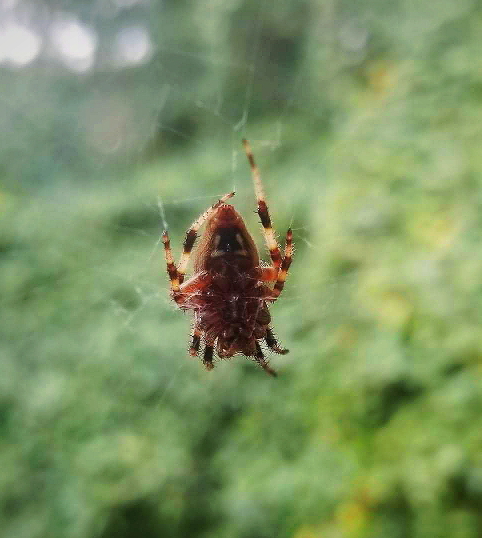
Maybe I should build a spider box or five. For now, I’ll content myself with Rigoberta’s company.






 All of these are high-quality prints made using the giclée
 Marble Crow