Plants and Herbs

Blackthorn Folklore and Magical Properties

Few trees are as divisive as the blackthorn (Prunus spinosa). When you look at it from a distance, this may be hard to believe — these trees, with their dark bark and frothy white flowers, are honestly very pretty. They also produce sloes, which are excellent in preserves and a crucial ingredient in sloe gin.

A blackthorn sloe.
Photo by Marek Kupiec on Pexels.com

So we’ve got a lovely tree with pretty white flowers and useful, equally attractive dark blue-purple fruits. How could a plant like that be divisive?

The answer lies deep in its fascinating folklore.

The blackthorn tree appears in the Irish ogham, an ancient writing system often erroneously called a “tree alphabet.” (In reality, it encompasses a variety of concepts and objects that were only connected to trees much later on.)
This ogham few, straif (ᚎ), is frequently associated with misfortune, struggle, and ill omens. It’s regarded as a few of great power, but also the negative or malicious side of magic and the capricious nature of the fae. Blackthorn trees were said to be guarded by the Leanan Sidhe, and it was terribly bad luck to cut one down.

Interestingly, straif’s original meaning likely did not have any connection to the blackthorn at all and may have been a reference to sulfur. The Bríatharogam are, unfortunately, not much help here. We get “strongest reddening” (tressam rúamnai), “increase of secrets” (mórad rún), and “seeking of clouds” (saigid nél).

Blackthorn flowers.
Photo by Atif Bangash on Pexels.com

Blackthorn trees are so named for their sharp thorns. There are a variety of ways one may use these thorns in magic, but blackthorn’s thorns seem to have gotten a bad rap. They tend to be associated chiefly with negative or malevolent workings, and old witch-lore claims both that the Devil used one of these thorns to prick a would-be witch’s finger before they signed his infernal contract, and that witches would jab blackthorn thorns into poppets to harm people.

In Christian mythology, the blackthorn is also one of the trees said to have “betrayed Jesus” at the Crucifixion.

Since blackthorn isn’t a very big tree — in fact, it’s more often seen as a big bush — it’s very useful as a hedge plant. The thorns mean that it isn’t heavily browsed or easily damaged by cattle and deer, and it grows densely.
This use may be part of its connection to the fae, since blackthorn is quite literally a plant that marks a boundary from one place to the next. It’s a plant that protects itself, as well as whatever may lay beyond it.

In fact, blackthorn occasionally crops up in old hero stories and fairy tales. The hero, pursued by a giant, throws a blackthorn sprig behind him. The sprig immediately roots and grows into an impenetrable hedge, holding back the giant and allowing the hero to escape.
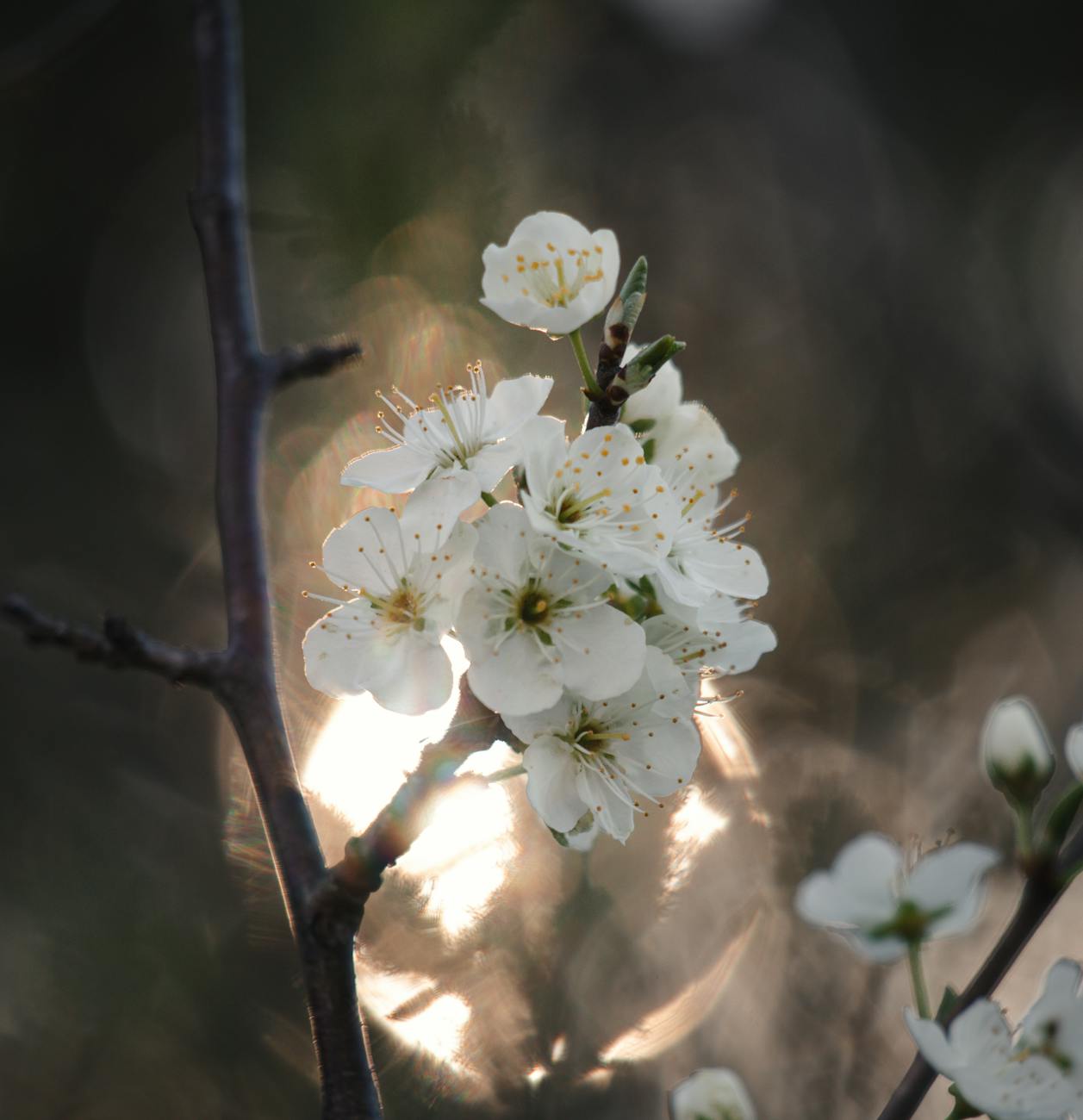
White blackthorn flowers on branches.
Photo by Ellie Burgin on Pexels.com

This protection extends beyond hedges, too. Blackthorn wood is hard and dense, and the traditional material for a bata or shillelagh. They’re part club, part walking stick, and similar in shape to the rungu used in some parts of East Africa or the iwisa, induku, or molamu of South Africa (though usually a bit longer). Shillelaghs were used in structured duels, as other cultures might use rapiers, and there’s a martial art that focuses on shillelagh training to this day.

Shillelaghs were traditionally made using the roots of the blackthorn, where they kind of naturally form a knobby end. This made them less prone to cracking, but some people would still hollow out the knob of their shillelaghs and fill them with lead — a bit like Bugs Bunny dumping horseshoes into a boxing glove.

The process of making a shillelagh took time, but not many resources. If you had access to a blackthorn bush, as well as a chimney or a dung heap, you could make a perfectly serviceable weapon. The blackthorn tree was a social equalizer that allowed even the poorest people a useful tool and a means to defend themselves.

Blackthorns aren’t easy to come by in the Americas. They aren’t native here, though they have been naturalized in parts of the Eastern US. So, if you want to work with any blackthorn-derived ingredients, you may have to get creative.

Kitchen witches or potion crafters may have an easier time. They can incorporate some sloe preserves, sloe chutney, dried sloes, sloe gin, or any of the very excellent sloe or blackthorn shoot-based liqueurs into their work.

Other than that, it is sometimes possible to find small numbers of blackthorn thorns available for sale online. When I can get them, I love using them for defensive workings. Write a name on a slip of paper or parchment, skewer it with a blackthorn thorn, and toss it into a jar or box of suitable ingredients. It’s easy, it’s poignant, and it’s perfect.
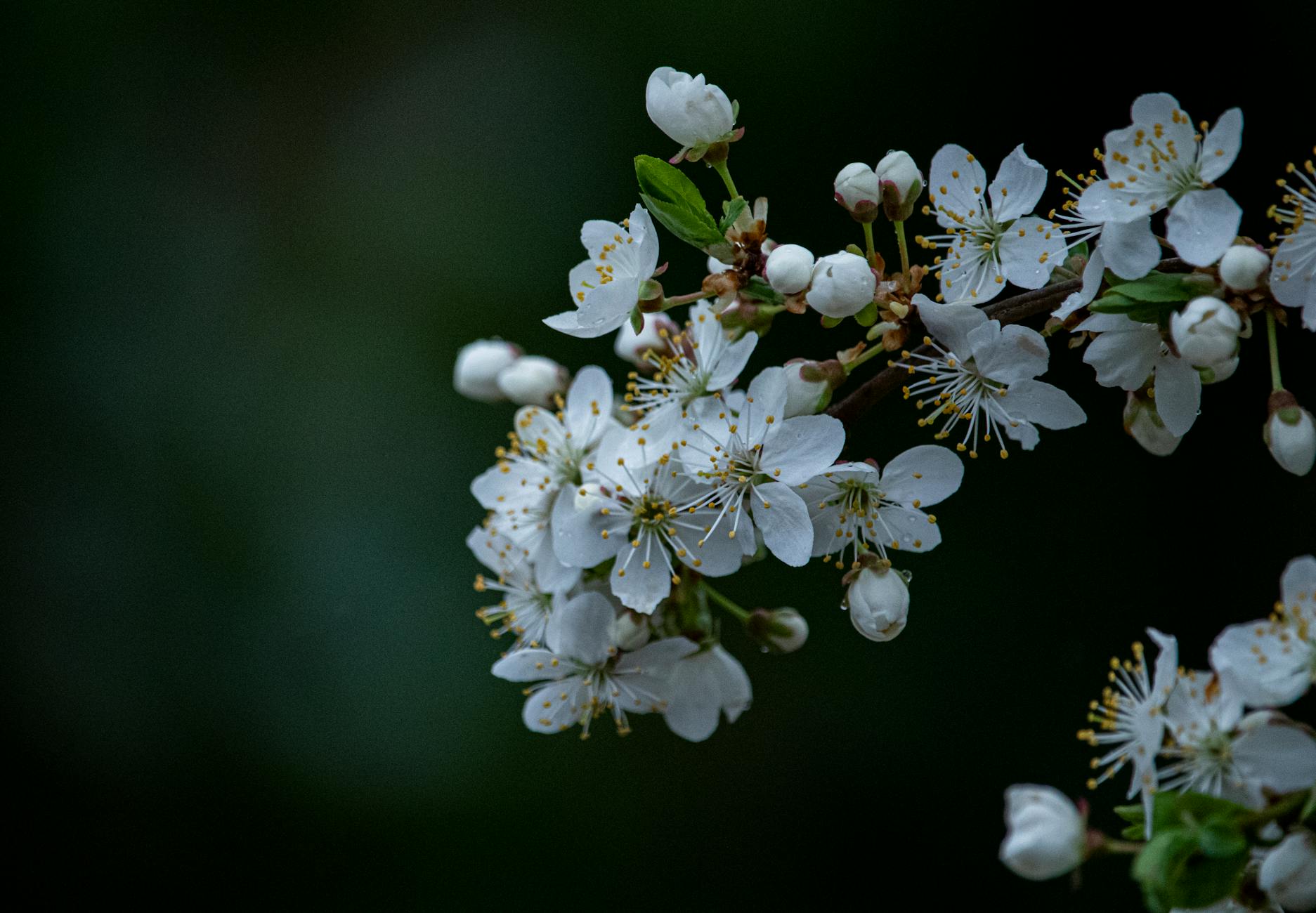
Close up of blackthorn flowers.
Photo by Nagy Richard on Pexels.com

Failing all of that, you may have to see what blackthorn characteristics you want to tap into and find a good workaround. For thorns, look for stickers from other thorny plants. (Berry canes are often a great source of these.) For working with the fae, you may have an easier time finding a rowan or hawthorn tree. For protection, you’re pretty much spoiled for choice — there are tons of other herbs used for all forms of protection, from securing your home and keeping malevolent entities away to driving out unwanted housemates.
Seriously. There are so many, this post would be a novella were I try to list them all.

Sadly, many of us outside of Europe won’t have the opportunity to work with this beautiful, useful, folklorically-rich tree firsthand, but that’s okay. The blackthorn is a plant with history and power that’s worth understanding, even if we may never have the privilege to meet one.
Plants and Herbs · Uncategorized

Vine Folklore and Magical Uses

Hello!

Close up of a purple passionflower.
Photo by kiwiicat on Pexels.com

My passionflower is loving this weather, though the rest of the plants here seem less than enthused about the whole thing. It’s not only encompassed half the porch, it’s climbed nearly up to the roof and sent out several tendrils along the lawn. If it didn’t also put out beautiful flowers and a ton of fruit, and act as a cozy little haven for sleepy bees, I’d be tempted to cut a bunch of it down.

That got me thinking — if I did, what would I do with that much passionflower? I can only tincture so much of it. Could I weave it into baskets? Turn it into rope?

Vines, in general, have a long history as religious symbols, the subject of legend and folklore, and magical ingredients. If you, too, are experiencing a sudden flush of viny plants that you don’t know what to do with, folklore may have some ideas for you.

In the Ogham writing and divination system, the letter muin (ᚋ) is commonly interpreted as “vine,” and usually portrayed as either grape or ivy. However, grapes are not native to Ireland and, even when they were introduced, they never really took root there (pun intended — Ireland is not a great place to try to grow grape vines). The word “muin” also doesn’t have anything to do with vines. Instead, it refers to a thorny thicket. This has made muin one of the most controversial and seldom-agreed-upon parts of the Ogham.

The ancient Greek deity of wine, orchards, frenzy, fertility, and religious ecstasy, Dionysus, is also intimately connected to vines. (And I do mean intimately.) Not only are grape vines his domain, he is also regularly portrayed as wreathed in ivy vines. Here, the evergreen nature of ivy represents the gods’ immortality. It’s also connected to fertility and sex.

Dionysus isn’t the only one to wear an ivy crown, either. Thalia, Muse of Comedy, is also portrayed as wearing one.

In Egyptian legend, Osiris is associated with the ivy, again, because of the plant’s connection to immortality and rebirth.

There’s a Persian (now modern day Iranian) legend that tells of the origin of wine. Long, long ago, a bird dropped some seeds by a King’s feet. Intrigued, the King had the seeds planted and cared for. The seeds became sprouts, the sprouts became vines, and the vines grew heavy with grapes. Overjoyed, he had the delicious grapes picked and stored in his royal vaults.

However, grapes don’t stay fresh forever. The vault was too damp for them to dry into raisins, and too warm to chill them. Instead, the grapes began producing a dark liquid which everyone assumed was likely a deadly poison. Before the old grapes could be cleaned up and thrown away, one of the King’s wives attempted to end her life by drinking some of the grape “poison.” When the King found her later, she was far from deceased — in fact, she was dancing, singing happily, and apparently thoroughly enjoying being the first person in recorded history to ever get absolutely rocked off her tits on wine. With this evidence that the liquid was not poison and, in fact, seemed to make people quite happy, the King named it “Darou ē Shah” — The King’s Remedy.

No word on what happened to his wife, however. Therapy being in short supply thousands of years ago, one can assume she either eventually found some actual poison or developed an absolutely staggering drinking habit.

English ivy climbing a white wall.
Photo by Madison Inouye on Pexels.com

Ivy is about more than ecstasy, wine, sex, and living forever, though. One look at the growing behavior of many vines can show you exactly what else they’re good at: binding things. Even the beautiful, gentle passionflower vines climbing my front porch do so due to grasping tendrils of surprising strength and tenacity. Some vines, English ivy in particular, also get a reputation here for damaging property and killing native trees.
Depending on the context, vines are then equally as restrictive as they are freeing. Sometimes, vines are heavy with grapes and the promise of wine, intoxication, inspiration, sexual desire, and ecstasy. Sometimes, they’re ivy vines, evergreen and symbolizing enduring life and lush greenery during the winter months. Other times, they are the vines that grow around things, binding and restricting them like ropes.

Ivy is also associated with protection and healing. This may be due to its connections to immortality and rebirth. Grapes, on the other hand, are associated with fertility, money, and all things connected to the concept of abundance. Briony, on the other hand, is both money and protection. Placing money near a briony vine is said to cause it to increase.

In the tale of Sleeping Beauty, vines (sometimes) play a key role. In the Disney version, Aurora is cursed, pricks her finger, falls asleep, yadda yadda yadda, vines grow and cover everything. In an older telling, it was a dense hedge of climbing roses. One yet older version of the story (Sole, Luna, e Talia) also has Sleeping Beauty-
You know, I’ll just let Giambattista Basile tell it.

“crying aloud, he beheld her charms and felt his blood course hotly through his veins. He lifted her in his arms, and carried her to a bed, where he gathered the first fruits of love.”

Yeah. When that fails to wake her, he pulls his pants up and rides off to his castle and his already existing wife, the Queen. Sleeping Beauty only awakens again when one of the twins she subsequently births tries to nurse and accidentally sucks the splinter from her finger.
(As if that weren’t enough, the Queen gets fed up with the King’s infidelity and tries to have the children cooked and fed to her husband.)
Interestingly, vines aren’t prominent in the assault version of Sleeping Beauty — they become more important the further you get from that version, and the closer you get to Disney’s much more sanitized telling. It’s as if the presence of the vines in the story both bind Sleeping Beauty in her castle and protect her from the King.
No vines? Not even a climbing rose? You’re in for a bad time.

Vines make beautiful decorations for the home and altar. Evergreen ivy is commonly brought indoors during the winter months as a decoration, tied with swathes of ribbon, hung with bells or other ornaments, you name it.

Vines can also be used to bind things. Hollywood has portrayed magical bindings in some… interesting ways. For example, “binding” a witch à la The Craft.
This, however, is silly.

Bindings can go one of two ways: a person, thing, or situation may be bound (in the sense of binding someone with rope) to keep them/it from causing harm or otherwise interfering with you. You can also bind something to yourself. For example, a really great job that you just got, happen to enjoy, and want to make sure that you keep.

In this case, the binding is a form of sympathetic magic. You take a representation of the thing you wish to bind, and effectively tie it up with what you have on hand. (This may be vines, if you want to enlist the vine’s help and magical associations, but can also just be household twine in a pinch.) There are plenty of chants and incantations you can recite while doing so, but I find that it’s most effective if you speak from the heart — inform the subject why they are being bound, and what you hope will come of it. Put it in a jar or box, close it tightly, and keep it somewhere safe so you can undo the binding when the time comes.

To bind something to yourself, you’d use a representation of yourself (like a photo or lock of hair) and a representation of what you wish to bind to you. Wrap both objects together with the vines or string, again speaking from the heart while you do so. Place the objects in a jar or box and keep them somewhere safe.

Bindings aren’t the only type of sympathetic magic that vines are good at, though. Plant a vine (preferably not an invasive species — there are loads of native vines) along with a representation of something you wish to grow. Ask for the vine’s help, and declare that, as the vine grows, so shall grow the thing you desire. Take good care of that vine, and keep an eye on its growth.

While every species of plant has its own magical uses and depictions in legend and folklore, vines are in a class of their own. Each one has their own unique properties, but vining plants also have plenty of common ground.

life

Vibe with me!

My house is not very large. Really, it’s the perfect size — with just my Handsome Assistant and I, there’s no need for tons of rooms. We were also fortunate that the previous owners really maximized the crap out of the space here. Everywhere that could be finished and turned into living space, has been.

Our attic is a loft with a skylight. Since the ceiling was low, it made sense to make it the room we’d spend the least amount of awake, moving around time in: the bedroom. Since there’s no paint trick or wallpaper in the world that will turn a loft with knee walls into a spacious, cathedral-ceilinged abode, I leaned into the tiny, cozy vibes hard.

Small lanterns with warm lights cast shadows like candle flames. I took the janky, stuck doors off of the built-in storage and replaced them with a curtain rod and soft, light-colored curtains. The bed area itself is separated from the rest of the room by several deliberately mismatched, vintage lace curtains in shades of cream and off-white. The floor is covered in layers of rugs in a variety of textures, to give it more depth and interest. The bed is dressed in satiny black and ivory sheets and a silk-stuffed comforter. It feels almost like glamping, or like a very luxurious treehouse. Like a small, exceedingly comfy nest tucked away at the top of the house.

(We’re having a replacement window put in. Soon as that’s done, I’m definitely posting some pictures!)

Lately, I’ve been treating it more like a sanctuary than purely a sleeping space. I like to go there around sunset, because the small window beside the bed has a very nice view of the west. I light incense, I take out my tarot cards, Lenormand deck, runes, or ogham staves. I put on some Faun or The Moon & The Nightspirit. I soak up the atmosphere, do some divination. It’s really nice.

There’s a limit to how much divination I can usefully do for myself, friends, and family, though. So, to take advantage of the very late summer and early autumn vibes and give me a bit more to do, I’ve put all of the divination in my Etsy shop on sale at twenty percent off. If you see something that calls to you, I’d be happy to make space for your questions.

Let’s vibe in the sunset. It’s nice here.

divination · Witchcraft

The Whole Show — Combining Divination Methods

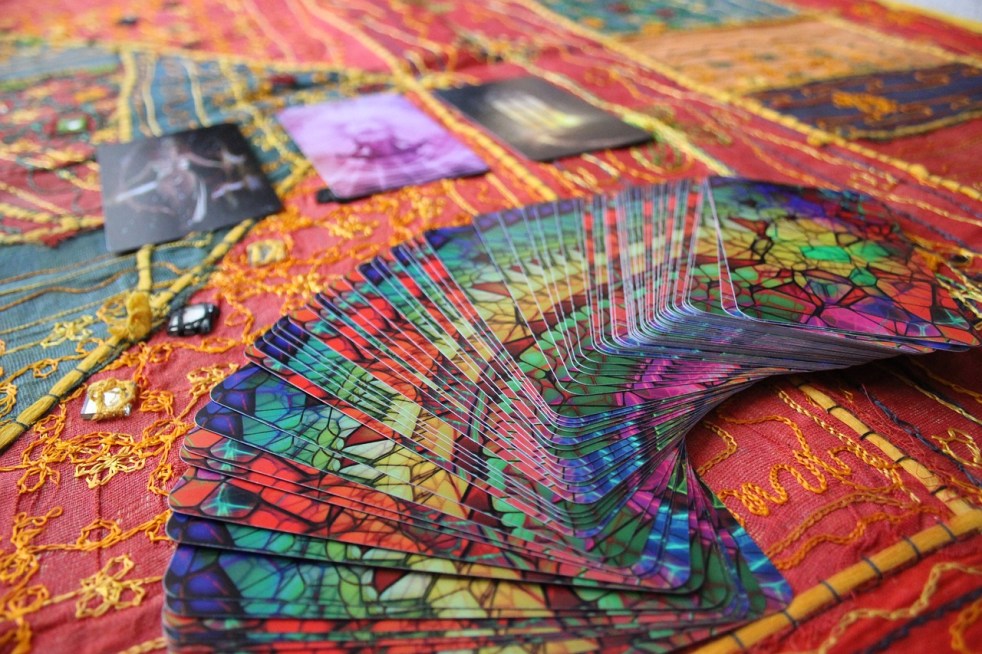
I love divination. Back when I’d just started learning, I knew that divination — more than any other magical skill — was something I wanted to become good at. I have different tarot decks that I use for different purposes, oracle decks, Lenormand cards, a set of ogham staves, a set of runes, a scrying bowl, and multiple stones that I use for crystal scrying. There’s just one problem: What do I use?

I used to get tripped by that a lot. Which method was going to be easier? Which was going to be more explicit? Which would be more accurate?

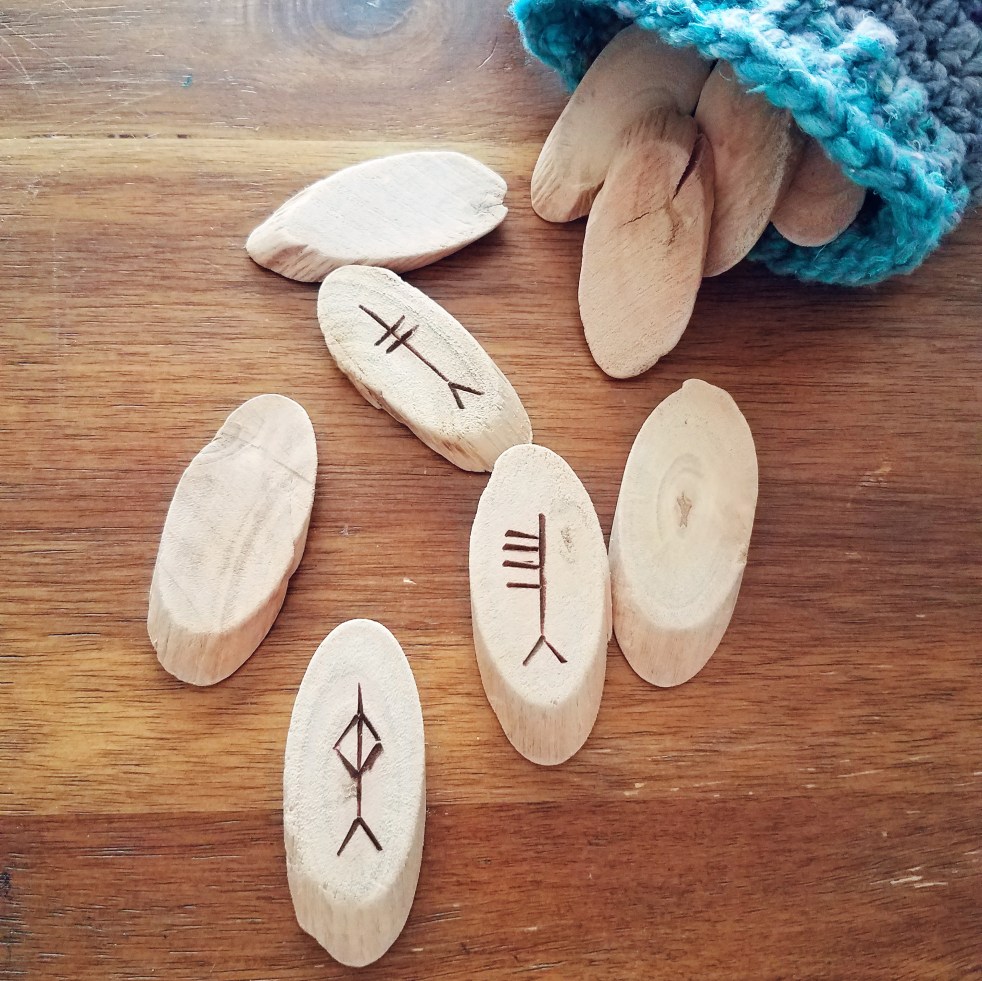
A set of carved wooden runes.

Why not use them all?

At first, I hesitated. Admittedly, some part of me was afraid that reading multiple divination methods would give me answers that were confusing at best, and contradictory at worst. It seemed like an easy way to end up concluding that divination wasn’t telling me anything useful to begin with.

Nonetheless, I pushed on. It had to be worth a try, right? In retrospect, I’m very glad I did.

When I have a very pressing question, I do a lot. I cast a rune and an ogham stave. I read a tarot spread of my own devising. I draw an oracle card. I scry in a stone or bowl. I go outside and see what the birds’re doing and what the trees have to tell me. I drop into a trance and see what bubbles up to the surface.

And every time, it paints a very clear, coherent picture.

Tarot cards on a purple velvet cloth.

Each method has its own use case and emphasis, so how do you put all of that together?

The trickiest part is viewing each method in their own cultural context. Many guides to runes and ogham, for example, have simplified the meanings to the point where they’re very far removed from their original* interpretation.

(* Or allegedly original. There are large gaps in our historic knowledge of how some divination methods were used, which adds to the confusion. One example of this is the ogham forfeda. Is Mor the beech, Scots pine, or the sea?)

The lack of consensus means that it’s not really doable to just jump into multiple different divination methods and combine them immediately. It’s important to work with each one separately, to learn its limitations and develop a kind of personal interpretation of its meaning. This doesn’t mean that you have to reinvent the wheel by discarding all of their conventional interpretations, but I highly recommend keeping a divination record that allows you to look back and see how each reading turned out. This can show you what cards, runes, symbols, and so forth tend to show up for you, and when.

After that, the only question is what order to put everything in. Personally, I enjoy laying out the tarot spread first, then ogham, then runes, and finally an oracle card. Once I have this story before me, I consult nature and, if need be, scry or enter a trance.

Putting the results together is honestly the easiest part. Here’s how things shake out for me:

  • Tarot tends to show me the “why” of a situation — what feelings, mindsets, energies, and hidden facors are bringing something about.
  • If I use Lenormand, it tells me the “what.” While it might seem like that would be extremely useful, I usually skip Lenormand reading. Believe it or not, knowing what happens is usually a lot less important than knowing all of the other stuff. Think of it like being told the future by a genie who’s a bit of a prick — knowing what isn’t as helpful as knowing why, how you’ll feel about it, and what you need to do to.
  • Runes usually highlight the most important connecting concepts that unify the whole for me.
  • Ogham usually tells me what to do or focus on.
  • Oracle cards generally offer reassurance, or a way to look at the bright side and get through a difficult situation.
  • Nature augury tells me if a situation is generally positive or negative. If something very unusual appears to me, it can give more specific information akin to ogham reading.

If this sounds like a lot of work, it certainly can be! It’s also very rewarding, and even a bit thrilling to see everything come together.

If this interests you, but you don’t want to perform it yourself, that’s totally understandable. This is one of several readings I can do for you, if you like. Just check out my shop!

divination · Plants and Herbs

Gorse, and Ogham-led Healing

I’ve been doing A Thing.

Every day, I meditate. The form that takes may differ from one day to the next, but I’m still as consistent as possible. Lately, I’ve been using my little bag of driftwood Ogham staves to guide the process — I draw one, I interpret it, and I seek out a guided meditation that focuses on that meaning.

It’s a small thing, but it keeps every day from feeling the same. That’s something that I’ve really struggled with during social distancing, more than anything else. I like structure, but I chafe under sameness. I thrive when I have a schedule of some sort to stick to, but I need variety. Consistency is a blessing. Monotony is a curse.

My intuition is pretty good at guiding me to what I need.

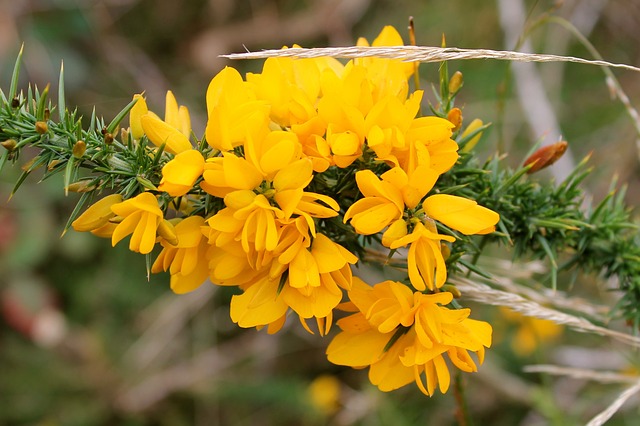
Yesterday, it was Onn — the gorse.

It’s a bit hard to believe, looking at these thorny plants with their needlelike leaves, but gorse is a sign of hope. Even in Bach flower essences, gorse is indicated “when all hope is lost.” Gorse has also been used as protection, particularly against spiteful fairies and witches.

Their bright yellow flowers are associated with the Sun, but the plants themselves have a prickly, forbidding look. (So much so that it was said that gorse needed to be “subdued” — the old growth burned so new, tender shoots could take its place!) These spines serve two functions: they keep grazing animals from eating the plant, and they minimize water loss, allowing it to flourish in some of the most inhospitable areas. Despite its spines, gorse is excellent, nutritious fodder for animals, provided it is properly prepared.

All of these things mesh with gorse’s meaning as a symbol of hope. It grows in poor, thin soil in salty breezes, where other plants wouldn’t stand a chance. Its flowers arrive in spring, when the chill of winter is fading. It’s thorny, but those thorns hide sweet-smelling flowers, a source of food for large animals, and protection for small ones.

My therapist advised me to try to do one thing each day that is a source of joy. As time goes on and each day stretches into tedium, finding those things has become more difficult. (Familiarity breeds contempt, after all, and the things that brightened April’s days have lost some of their luster in July.) Gorse is a reminder of resilience, of hope, and of the cycle of the seasons. Things kind of suck right now, but this, too, will pass. It might require burning a lot of things down to the ground and starting over, like the new, tender gorse shoots, but it will pass.

divination · life

Tinne

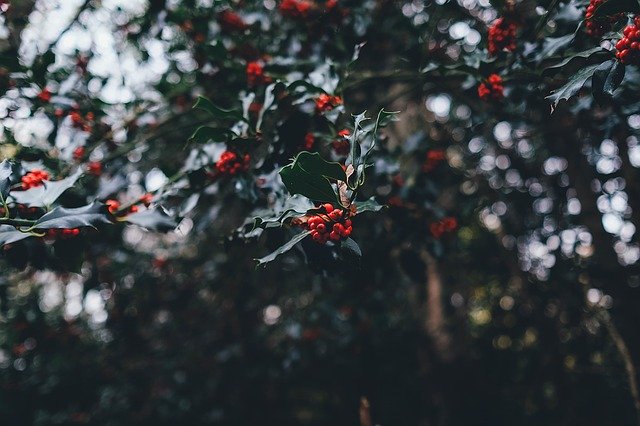
It doesn’t really feel like holly season. I mean, it objectively isn’t the time when people start decorating their houses with spiky green foliage and bright red berries. Midsummer is when the Oak King is at the height of his power — though the Holly King begins to grow in strength as the days shorten, he won’t get the upper hand until the autumnal equinox.

Still, gauging by this week’s Ogham divination, it’s holly time for me.

(Interestingly, the holly of the Ogham is very likely not the tree we think of when we hear the word “holly.” Holly didn’t come to the British Isles until the 16th century, so this holly is most likely actually the holly oak.)

Holly, Tinne, is the art of war. It’s the energy that avoids becoming too impassioned in conflict — it waits for the right time to strike. It brings justice that is restoration, not revenge. It’s the knowledge obtained from a bird’s eye view.

Weapons and chariot wheels were made from holly’s hard, dense wood. Planted near a home, it protected it from lightning strikes and fire. Inside, it defended against hexes and malignant magic. Holly is a warrior.

In this case, tinne points to the need for a good defense. Someone — or something — has you ready to go to war, or forcing you to swim against the tide. Tinne underlines the importance of facing our fear of confrontation and loss, of reining in our emotions so we can make a wise decision.

This is something that’s at the forefront for me. In my personal life, the fear of confrontation is something I’ve been fighting for awhile. Externally, the U.S. continues to fight a battle against every kind of -ism, as well as against those who place the economy ahead of human lives. Every day feels like a fight against bigotry, ignorance, and dogma.

Holly is a tree of the dark half of the year. It’s a tree of war and protection. It’s also a tree of knowledge and divine retribution, though, and I think we could use that right now.

divination · life · Plants and Herbs

The Rowan and the Heather

This week, I wanted to dive back into Ogham divination. I’ve been practicing working with a pendulum made of a fallen cypress root, and the set I have is probably the most conducive to using it.

When I first learned pendulum divination as a preteen, I did it a simple way: hanging a ring or pendant from a piece of string into an empty glass, and asking it to show me “yes” and “no.” Usually, an even number of taps on the glass was a “yes,” while an odd one was a “no.” I’ve always enjoyed using pendulums, and I’ve been having a really interesting time devising ways to mix different types of divination together. Driftwood Ogham fews and a wood pendulum seemed a natural match!

I didn’t ask a specific question this time. So far, this set seems pretty good at telling me what I need to know. It isn’t much like tarot or Lenormand, in this respect. It’s less about answering questions than providing a different, more nebulous kind of insight. If Lenormand describes actions and situations, and tarot describes the energies and emotions surrounding those situations, Ogham is another layer entirely.

The pendulum was still over every oval of driftwood, except for two that made it swing in swift, ever-widening circles: Rowan and Heather.

Heather came up for me last week, when I asked specifically about working through some old patterns. These are things that are going to take more than a week to get past, so I’m not surprised to see this friend appear again.

Rowan is Luis. In Ogham divination, it represents protection from every kind of danger — physical, emotional, and spiritual. It’s defense, precaution, and care. Bind two rowan twigs into an equal-armed cross with red thread, and you have a protective charm. This points to either having protection, or needing it. In either case, it’s time to look to the things that make us feel safe.

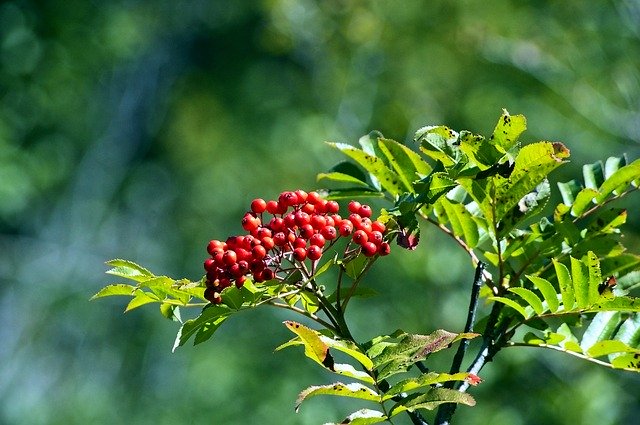
rowan-berries-in-tetons-4054016_640

Honestly, it reassures me. If Heather points to needing to metaphorically “burn down” old protective patterns so new growth can emerge, Rowan tells me that they aren’t necessary. I am protected, I am safe. I don’t need them. There are healthy behaviors and mechanisms there, better ways to protect myself that don’t involve self-sabotage.

I can keep doing the work without fear, and I’ll be better for it.


divination · life

The Alder and the Heather

For this week’s divination, I went back to my driftwood Ogham set. I asked the question that, probably unsurprisingly, has been plaguing my mind lately:

How do I heal my self-confidence and get used to self-promotion?

I drew Alder and Heather.

Alder is Fearn, the fourth consonant of the Ogham alphabet. Symbolically, alder is a battle-tree. Magically, it’s said to help us face the things we fear. Alder likes to grow in areas that give it “wet feet” — this creates an association with the liminal space between earth and water, between the logical and the emotional, between the body and the heart. It’s wood is also naturally water-resistant, a useful characteristic for creating structures designed to last underwater! It’s a supportive, protective tree spirit, with strong connotations of defense in battle, whether that’s against others or oneself.

Alder tells us to create strong boundaries and defenses, so we don’t undermine ourselves with negative emotions and self-doubt. Any decisions made right now should be carefully considered, so your emotions don’t lead us to burn the bridges we should be building instead. Seeking guidance from the spiritual realm will be helpful here — the roots of the alder help us resist being eroded by our negative emotions, the way they help the earth resist erosion by the water, but, despite this assurance, it’s a mysterious tree that isn’t always forthcoming with how it’s going to do this.

Nice. I can see it. It matches the tarot reading I received the other night, when I was told that not only am I not self-promoting, I don’t always necessarily make the right decisions when it comes to things of that nature. So… Way to call me out, alder tree!

Next is Heather, Ur, the third vowel of the Ogham alphabet. Symbolically, it’s a plant of contrasts — it’s passion and enthusiasm, and the consequences of both. Magically, it’s said to open portal to the realm of the fae. (And fairies associated with heather are said to be particularly attracted to shy people, to boot.) Burning it brings rain, sleeping on it brings prophetic dreams of good luck, and carrying it is protective. Heather tops can be brewed into alcohol, and heather honey is particularly dark and thick. It’s a flowery, sensual, intoxicating plant.

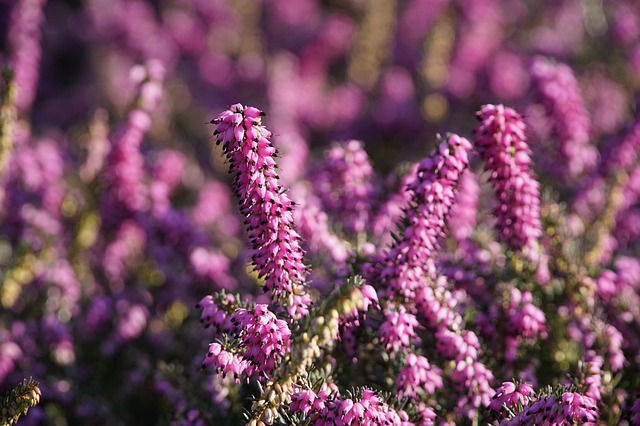
heather-4783673_640

Unfortunately, heather also doesn’t produce terribly well. At least, not if it isn’t periodically burned to the ground! The word-Ogham kennings refer to cycles of growth, or the earth. It’s said to be connected to death and fate through its connection to the soil (a connection which is somewhat reinforced by its magical use for prophetic dreams).

Drawing Heather is often interpreted as enjoying a sweetness and time of repose, but the lesson here is clear: There’s time for drinking heather beer and eating heather honey, and a time for burning the heather to the ground. There’s a time for sweetness, and a time for death. Don’t worry, though, because the burning of the heather brings it back with renewed vigor.

Taken together, I can see a path emerge. I have behaviors in place that are protective for me, but paralyzing. (If you can’t handle positive attention, hiding most of yourself away is a great way to avoid it!) Alder’s protection can help me weather my own negative emotions. Heather shows me that, while destroying my deep-seated protective mechanisms won’t be pleasant, I’ll grow stronger and better than before if I do it. Doing what feels good, avoiding my fears, needs to be balanced out by burning the whole damn thing to the ground if I want to enjoy the sweetness of new growth.

It’s going to suck, but it’ll be okay.

Now I’ve just gotta make that list my therapist told me to. Sigh.

divination · Witchcraft

Ogham Staves from WillowsPaganShop.

Note: This post contains affiliate links to the sellers and products I mention. These allow me to earn a small “finder’s fee,” at no additional cost to you. Thank you for helping to support artists, artisans, and this site!

So, I’ve been working on learning a new system of divination — Ogham staves. I used them for this week’s divination, and I’ve been trying to see where else I can incorporate them into my practice.

Many types of wood have their own specific magical and spiritual properties, so choosing a set took me awhile. I also prefer to find tools that are “neutral,” in an energetic sense; I don’t like using wood that’s been cut down, if I can help it. Windfall and reclaimed woods are more my jam.

That’s why I was so happy to find these driftwood Ogham staves by WillowsPaganShop.

A set of driftwood Ogham staves spilling from a turquoise and grey pouch.

I love the size and shape — a lot of the other staves I looked at were thinner and more rounded, which I thought might make it more difficult for me to draw them the way I’d like to. The texture is nice, too, with the velvety-softness of sea-tumbled wood. They’re also a very good weight, neither too light to keep from blowing away outdoors, nor too heavy to carry comfortably in a purse or crane bag.

I keep them in a lovely crocheted pouch by Neeedles. It’s just the right size, and gorgeous colors. The crochet is nice and tight, too, so I’m not worried about the staves stretching holes in the stitches and slipping out. At about $15, it was a very reasonable price for a handmade bag, and the craftspersonship is really, really nice. I’m considering getting more of them for my other supplies, they’d be great for carrying a few stones, vials of herbs, and tealights for mobile ritual-doing.

Now I just have to learn the meanings. Fortunately, I have a lot of opportunity to practice!

divination · life · Neodruidry · Witchcraft

Ruis and Saille.

ADF-structured rituals have an oracle portion that gives us an opportunity to know how our offerings were received, know which blessings we are receiving in turn, and get messages from the spirits we work with. I’ve always used tarot for this, but I’ve been curious about branching out into journeying, geomancy, and other means of divination.

All of this is to say that, for my reading this week, I didn’t pull a card at all.

I’ve been trying to learn to divine using Ogham staves. It’s more than a little challenging for me — memorization isn’t my strong suit (to put it mildly), and the Ogham alphabet is visually very simple. That means that, somewhat like my experience with the Tarot of Marseilles, there isn’t a whole lot for me to go on. Unlike the ToM, however, Ogham letters don’t have suits or numerical cycles on their side, which makes it even more difficult.

My best bet? Lots of practice. There are far fewer Ogham letters than there are tarot cards, so I’m bound to absorb some of it eventually.

This week, I drew two staves. Since I can’t exactly shuffle wood, I placed them face down, mixed them up, and drew them the way I would a tarot card: I moved my receptive hand over the pieces, and waited for the little energetic “tug” that led me to the right ones.

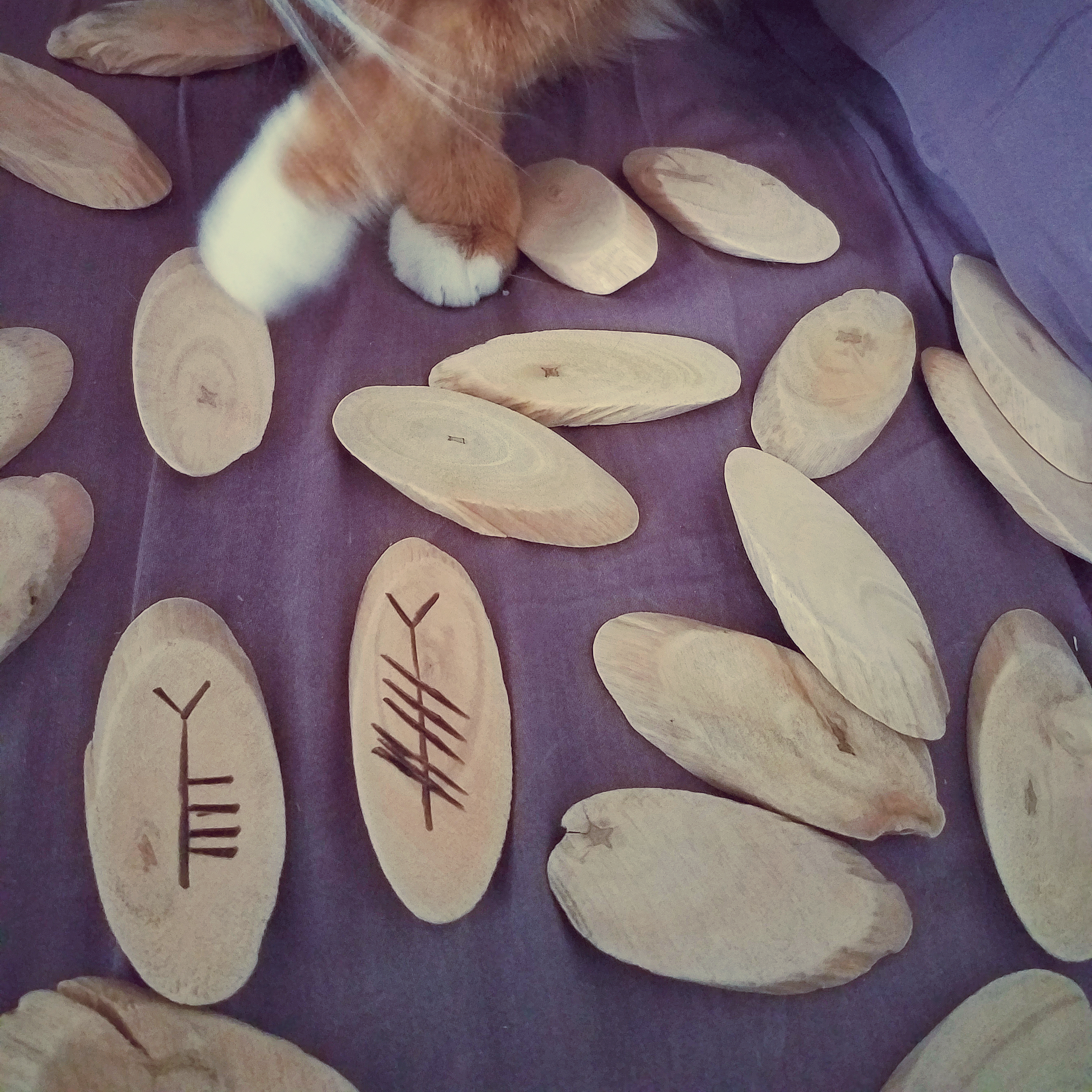
An orange cat paws at a set of driftwood Ogham staves,
Kiko attempting to draw staves for me, featuring hazel and elder.

I drew Elder (Ruis) and Willow (Saille).

Elder stands for the passing of an old cycle. This can be something that is due to pass, or something that we want to hold onto. The elder tree has a lot of connections to death and rebirth, so it’s a reminder that the only constant is change.

Willow stands for balance and equilibrium. In some sources I’ve read, it also stands for cycles, learning, and taking time to accumulate knowledge before acting.

I’ve experienced a lot of synchronicity with regards to both of these things, just in the past two or three days alone. It’s a supermoon in Virgo. This afternoon, I was listening to a webinar about living as a highly sensitive person (which, for me, is pretty much shorthand for “on the verge of a nervous meltdown basically always”), and Dr. Christine Page was giving a talk about inviting change in order to quit burning yourself out and making yourself sick. I mean, as I was typing this, I had to pause because I got an alert on my phone. It was an email: “Tips for Working With Change,” from Sharon Ramel.

It’s spring, the birds are singing, the weather’s warming, the sap is starting to run. The trees are still bare, but there are plenty of little signs that the soil’s beginning to wake up. I can’t say that I know exactly what changes the willow and the elder and pointing to, but I can’t help but look forward to them.