Plants and Herbs

Lemon Balm Folklore and Magical Uses

Et tu, lemon balm?

I have tried so hard to love it. It’s relaxing. It’s delicious. You can make it into tea or syrup or use it to flavor anything from sugar to fish. If you have anxiety, it’s touted as a virtually ideal way to calm down — the closest thing to an herbal benzo out there.

However, I can also tell you that, from personal experience, that it can also leave you waking up from a nap that leaves you like Robin Williams in Jumanji.

Fortunately, even if you are sensitive lemon balm’s very relaxing properties, there are other things you can use it for. It’s still very tasty in less-than-therapeutic doses and has an abundance of interesting uses in folk magic.

Lemon balm’s official name is Melissa officinalis. “Melissa” is Greek for “honey bee,” since the plant is a favorite of bees and was often planted to help attract them. Beekeepers would also pinch off fresh sprigs of the plant and rub them on the entrances of beehives to entice them to move in and stay.

(“Officinalis” (or “officinale”) just denotes organisms that are useful in medicine or cooking. Kind of like how “sativa,” “sativum,” and “sativus” just mean “cultivated,” and denotes crops grown from seed.
Cannabis sativa and Avena sativa are not closely related, to put it mildly.
Melissa officinalis, the lemon balm, and Sepia officinalis, the cuttlefish, are also not related.)
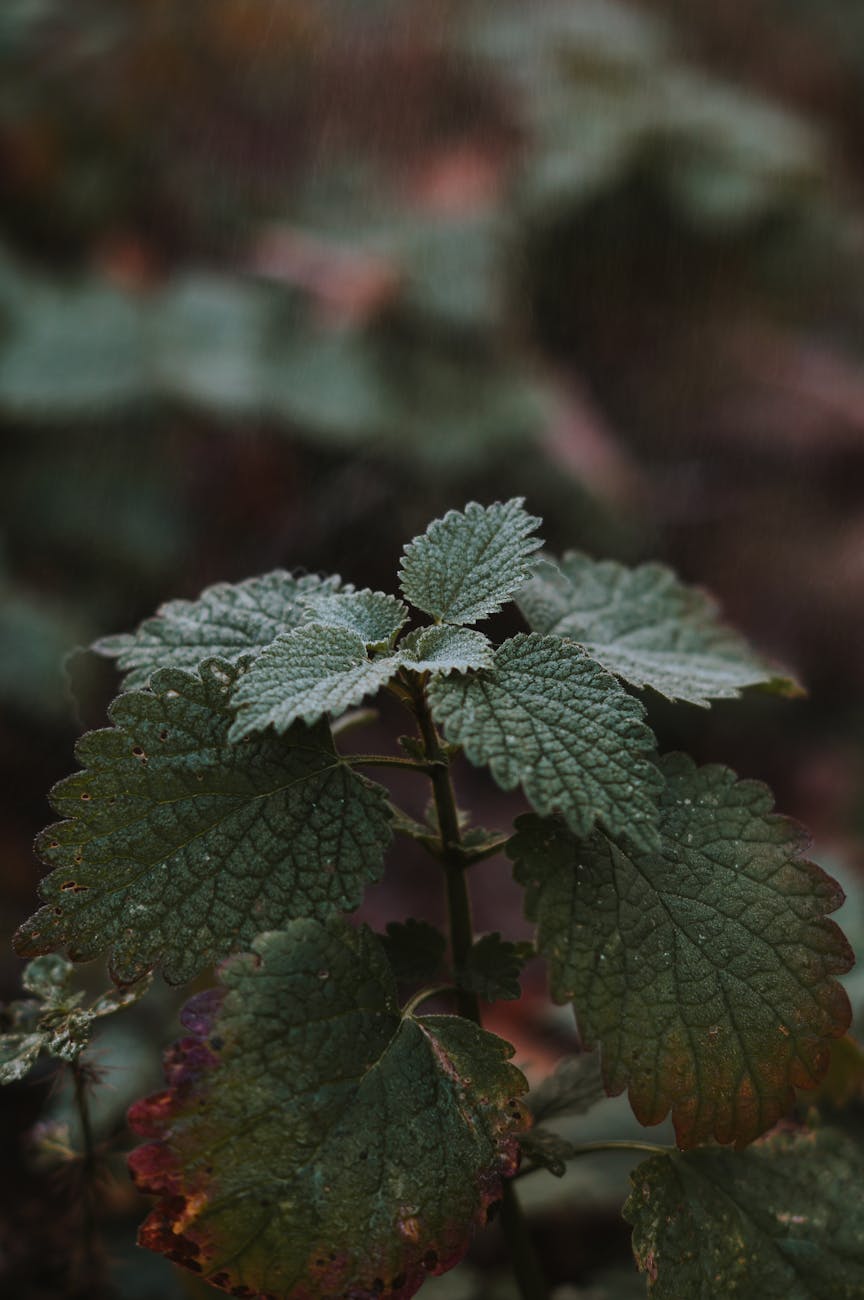
A sprig of lemon balm against a dark background.
Photo by Oksana Abramova on Pexels.com

Lemon balm is good for attracting more than just bees, though. Magically, it’s frequently used as an herb for good luck and general positivity. Tons of recipes feature it for love, fertility, and money.

To a somewhat lesser extent, lemon balm is also used for repelling evil and attracting good spirits. Since it’s so fragrant, it was used to strew the floors of Christian churches. In Abruzzi, Italy, women who happened on wild lemon balm would crush a sprig between their fingers in hopes that the scent would ensure that Jesus Christ would guide them to Heaven.

Lemon balm is considered a sacred herb of Hecate. It’s said that she gave the knowledge of lemon balm and other “witches’ herbs” to her daughters, Medea and Circe.

As well as being a mild sedative, lemon balm is used to soothe digestive issues. However, while it’s a tasty and relaxing herb, it’s best avoided by people with thyroid issues. It can interfere with thyroid hormone replacement therapy.

In the past, lemon balm was also applied to scorpion stings, bites from rabid dogs, and the venom of serpents. Since this herb isn’t an antivenom or protective against rabies transmission, this practice likely met with very limited success.

Nobody seems able to agree on lemon balm’s planetary or astrological associations. Nicholas Culpeper called it an herb of Jupiter and the sign Cancer. Other authorities say it’s an herb of Venus, Neptune, or the Moon. It is considered a generally “Water”-y herb, which makes sense when you consider its ability to relax the mind and soothe the emotions.

I know I usually advocate for growing your own herbs whenever possible, but planting lemon balm is one of those situations where you really want to exercise caution. Lemon balm requires next to no maintenance. Like other members of the mint family, it spreads aggressively outside of its native habitat. Absolutely do not plant it in the ground unless you want the entire area to be lemon balm. Keep it in window boxes, pots, or even containers indoors. If you do grow it in a container outside, avoid placing that container directly on the soil. When I say this stuff spreads, I’m not messing around.
Photo by Alesia Kozik on Pexels.com

In my experience, mints do not smell very good when burned straight. Instead of making lemon balm into incense, consider using it to infuse alcohol for making sprays, or oils for anointing or making balms.

The easiest way to use lemon balm is just to sprinkle some of the dried leaves across your front doorstep. The second easiest is to brew it into a tea and either drink it, use it for washing crystals or other curios, or use it to wash the doors of your home. As you do this, visualize good fortune coming in, and back luck or malevolent spirits turning away.

Lemon balm is one of those herbs that’s readily available fresh, dried, or as an oil. You can try it in a tea, or, depending on how fancy your local shops are, in a gourmet syrup. Its flavor is refreshing, citrusy, and herbal, while also tasting quite unlike anything else. As far as magical ingredients go, it’s also hard to go wrong with lemon balm — it’s a useful herb for attracting good things (also bees) and keeping out the bad. All of that aside, I wouldn’t rely on this as a protective herb on its own, but it’s great for filling up an empty space with useful, positive energy.

Plants and Herbs · Witchcraft

Nutmeg Folklore & Magical Uses

It’s the time of year when Trader Joes brings out their Wassail Punch. I don’t really drink fruit juices straight, but I like ’em for flavoring water kefir. This one’s blend of fruit and spices makes the end result taste like cola, which is pretty neat.

(Cola is one of those flavors that isn’t really meant to taste like anything in particular. It’s spices. It’s citrus. It’s all kinds of things that add up to one immediately recognizable taste.)

Anyhow, one of the key flavors in Wassail Punch (and probably cola, to be honest), is nutmeg. It’s one of those things that I can immediately recognize when I taste it but am completely unable to remember on its own. It’s like… a clove- and cinnamon-less pumpkin pie? I guess?

It was also one of those most precious substances in the world for a while, and a nearly invaluable magical ingredient.

Nutmeg Magical Properties and Folklore

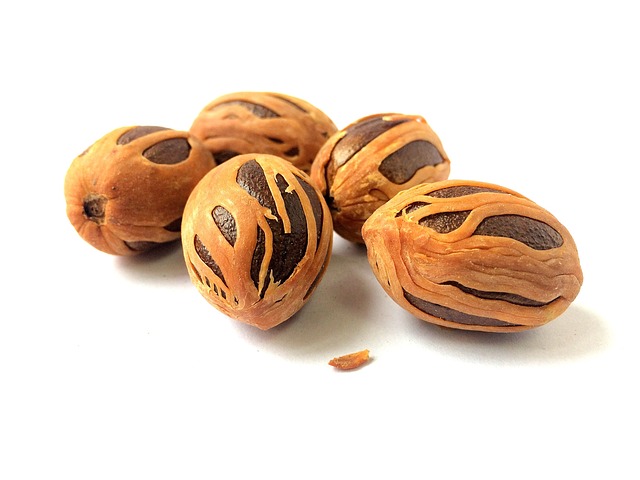
Nutmeg is a spice that comes from an evergreen tree, Myristica fragrans, native to Indonesia. It’s a weird seed, too — it grows inside of a fruit similar to an apricot, surrounded by an aril that looks kind of like a flat, fleshy spider or extremely underachieving facehugger. The dried aril is the source of the spice mace. The seed itself is the nutmeg.

An image of a ripe nutmeg fruit. The outside resembles an apricot, which has split to reveal the mace-covered nutmeg inside.

It takes a long time for nutmeg trees to bear fruit, though they can do so for several decades after that. Since the spice is native to such a small geographic area, an absolutely horrific amount of bloodshed happened in the name of obtaining it, farming it, and keeping anyone else from getting a hold of it. The Dutch tortured and killed the native people of Indonesia in order to control the nutmeg trade. They also tried their damnedest to keep the English and French from sneaking any viable seeds out of the country, by dipping the nutmegs in lime to keep them from sprouting.

People used to joke (inaccurately) about Manhattan being traded for glass beads. The Dutch really did trade Manhattan to the English for some sugar and nutmeg. For real, nutmegs were so valuable that traders would mix a handful of wooden replica nutmegs in with the real ones in order to dupe their customers.

A whole nutmeg, hollowed and filled with mercury, sealed with wax, and wrapped in a green cloth, is considered a powerful charm for luck in games of chance. (You can skip the mercury poisoning by just carrying a whole nutmeg. It’s fine. Really.)

Wrap a whole nutmeg in purple cloth, and it’s said to help you win court cases.

All forms of nutmeg are considered useful for money magic. Nutmeg oil is a common ingredient in money oils, while the powdered stuff is helpful in sachet and sprinkling powders.

Money and luck aren’t nutmeg’s only properties, however. An old spell from Louisiana involves sprinkling nutmeg in a woman’s shoe to get her to fall for you. Food and drinks flavored with nutmeg were also used as love potions.

Whole nutmegs covered in mace.

Ground nutmeg was used as incense in ancient Rome.

One old remedy for rheumatism involved boiling nutmegs and cooling the resulting liquid. The nutmegs’ natural fats rise to the surface and cool, forming a solid layer. This is skimmed off and used as a topical balm. Nutmeg is a warming spice, so this would help encourage circulation and relieve some of the pain caused by cold weather aches.

Nutmeg can make you trip balls. This is not code language.
This spice is a hallucinogen, courtesy of a compound known as myristicin. Unfortunately, you have to consume a lot to feel the effects, at which point you’re putting yourself at risk of nutmeg poisoning. “A lot” is relative here — about 10 grams (two or so teaspoons) of ground nutmeg is about to trigger symptoms of toxicity. It’s not that much, but still way more than you’d typically use in cooking. Nutmeg poisoning is pretty awful, too. While I wasn’t able to find any stories of nutmeg-based fatalities, the cases I did find mentioned nausea, dizziness, heart palpitations, fatigue, confusion, and seizures. Yikes.

Nutmeg is associated with the element of Air, the suit of Swords in tarot, and the planets Jupiter and Mercury.

Using Nutmeg

The easiest way to use nutmeg is to make your favorite autumn or winter recipe that uses this spice for flavoring. Use a wooden or metal spoon to prepare it and stir it with your dominant hand. As you do this, picture energy coming up from the Earth, down from the sky, and running through your arm, down your hand, into the spoon, and finally into the food or beverage itself. Ask the nutmeg for help with whatever you want it to do, whether that’s getting laid or making some money. Pretty easy, bog-standard kitchen witchery, really.

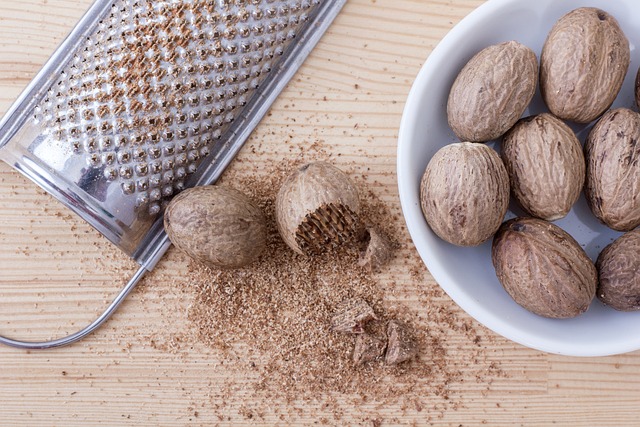
Whole nutmeg seeds, a nutmeg grater, and a little pile of ground nutmeg.

You can also use nutmeg by just… carrying it. As mentioned previously, whole nutmegs are a charm for luck and money. Wrap them in an appropriately colored cloth, anoint them with a suitable magical oil, ask them for their assistance, then keep them on you. When they get old and lose their potency, retire them by burying them in the soil and make a new charm with a fresh nutmeg.

You can also use nutmeg for meditation. I wouldn’t rely on it to induce a trance state, but drinking some warm milk flavored with honey and nutmeg can be a pleasant way to begin some meditative or journeying work. Just don’t use too much — the vast majority of nutmeg poisonings are from kids who eat it to get high and end up spending the night dizzy and throwing up instead.

Nutmegs are also good additions to charm bags or jar spells for money or luck. They’re very nice, potent, self-contained magical ingredients. If you have an assemblage of herbs, curios, and other tools, why not throw in a nutmeg? If you can’t afford a whole one, sprinkle in some of the ground stuff instead.

Nutmeg is a spice with a dark history (I mean, most of them have dark histories. Thanks, colonialism!). It’s preciousness as an incense and culinary ingredient has tied it to the concepts of luck and money, so you’ll most commonly see it in spells for financial abundance and good fortune. If you’re not a kitchen witch, a sprinkle of nutmeg can be a good place to start. If you need to practice magic discreetly, you really can’t go wrong with tucking a whole nutmeg in your bag or pocket.