

Books

Let’s Read: “Psychic Witch”

This week, I wanted to devote some time to Mat Auryn‘s Psychic Witch: A Metaphysical Guide to Meditation, Magick & Manifestation.
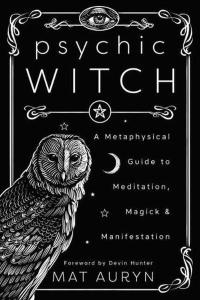
I went into this book with few expectations — it had come highly recommended, but I didn’t really know what it was. I hadn’t read Mat Auryn’s other works before, a lot of people seemed to think that this one was worth reading, so I figured it’d be a suitable introduction to this author. (Admittedly, I’ve also been working on something myself for the past year or two and I knew it’d be helpful to read more examples of genuinely helpful, well-regarded metaphysical guides.)

Psychic Witch is essentially a collection of meditative and visualization exercises. The ones that lay the groundwork reminded me a lot of high school drama class, in the best way — the first few classes were always spent doing silly things, like playing Duck Duck Goose, to help us overcome the fears that would keep us from immersing ourselves in our roles. (Because let me tell you, it’s legitimately difficult to be embarrassed in front of people you’ve chased around during Duck Duck Goose.)

This kind of exercise has precedent in sacred rituals around the world. Laughter is often the gateway to the divine. Some ceremonies even feature comedy in the beginning, in order to help everyone loosen up, laugh, and shed the inhibitions that might keep them from fully participating. Just like a rousing game of Duck Duck Goose. Psychic Witch introduces the exercise of pretending to be an omniscient witch and seer, behaving as though all of your predictions are absolutely true. This might feel a little silly, at first, but I feel like it’s a fun and necessary way to get out of one’s own way so deeper work can begin.

Later exercises involve ways to trigger different brain states that are more conducive to magical practice than our usual waking state. (I still use a number of them for inducing trances, myself). The book then goes on to build on these, introducing concepts like working with the lower and higher selves, casting circles, and the elements. Even though these are somewhat elementary concepts in magical practice, Psychic Witch introduces and discusses them in a novel enough way that I feel like even seasoned practitioners would get something out of it.

Whether you’re just embarking on a magical path, or you’ve been practicing for ages, Psychic Witch is worth a read. As mentioned above, it discusses foundational concepts in an interesting way. If you’ve ever had trouble connecting to certain aspects of magic, then this book may help you reframe them in a way that makes it easier. I found that it also helped reignite my enthusiasm for aspects of magic that I often find tedious.

life · Neodruidry

“Going within” and “seeking inner wisdom” are mostly code for boredom, tbh.

I’ve spoken in the past about some of the issues that I’ve had with various types of meditation. I don’t really get on with a lot of mindfulness meditation, because anxiety and panic disorder make it so that I’m already detrimentally hyper-aware of my breathing and heartbeat. Being instructed to focus on my breathing is a bit like telling a drowning person to take a relaxing bath.

I was introduced to a different type of meditation through a course of Druid study that I’m working on. It’s discursive meditation, and it involves many of the same key ideas as mindfulness, with one big difference. You’re still training your mind to focus, let irrelevant thoughts pass by, and gently return from wandering. The difference is that you choose a subject for your meditation to focus on. Thoughts and ideas related to this subject are desirable, and you just return to the subject at hand if you find yourself going off on a tangent.

It’s a great way to really let yourself play in a space and do a deep dive into a specific subject. It’s included as part of these studies because so much of ancient Druidry is coded in oral traditions, which means that what the tiny bit that was actually recorded was often through a poetic, mnemonic lens designed to help Druid scholars remember all of the information they were expected to know. The idea is that so many of these ancient ideas require pondering to get their meanings, and discursive meditation is a way to achieve this.

It’s a bit like if the US ceased to exist, and the only historical record of it was that Animaniacs song about state capitals. It’s not a lot of information on the surface, but some deep dives could still give you something to work with.

Consider Bríatharogaim. These are two-word kennings designed to explain the meanings of the names of the letters of the ogham. Like saille, willow, is “pallor of a lifeless one.”

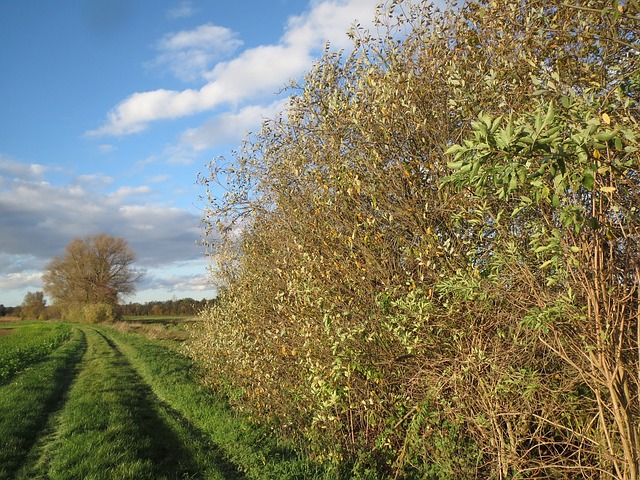
Saliax alba, white willow.
I could see it.

The thing is, brains are characteristically not good at staying on one subject. That’s why, like uncooperative puppies, they need to be led back now and then. Brains are not good at boredom., because boredom feels uncomfortable.

The trick is understanding that boredom isn’t bad.

“Profound boredom” is actually an important component of creativity. Forcing oneself to sit with a single subject and exhaust all possible tangents related to it is how breakthroughs happen.

If you’re meditating for the purpose of going within and seeking inner wisdom, this state of profound boredom is the nug. It’s the fertile ground where the good stuff comes from. If you think of it in terms of seasons, profound boredom is the fallow period. It’s the late autumn to early spring when the leaves all fall, break down, and enrich the soil. Without profound boredom, your brain dirt gets all bad.

It doesn’t even require a lot of boredom. Thus far, in my experience, thirty minutes of discursive meditation is sufficiently boring to yield about two paintings, some prose, and a few lines of poetry. If I have a specific problem, I get solutions. Everyone should be more bored more often, because being bored on purpose rules.

The difference lies in the difference between the kind of boredom you get in, say, a waiting room, and the kind of boredom you experience when you focus on a single topic. A waiting room’s boredom isn’t helpful because it’s anxiety-provoking. There’s no opportunity to relax and give your mind room to be profoundly bored, because your name might get called at any minute. The freed-up brainspace isn’t focused on creativity, it’s focused on vigilance. Being bored in the comfort of your own home, on your own timetable, though? Chef’s kiss.

To go within is to seek out this fallow period that allows new things to spring forth. Inner wisdom lies in boredom.

crystals · Witchcraft

What is Devic Temple Quartz?

Lemurian. Elestial. Devic. Lightbrary.

Buying quartz can be complicated.

Sigil. Starbrary. Garden.

The truth is, most of these terms are just names for physical features of the crystal itself. Some claim that these physical traits line up with the stones abilities or affinities, but this isn’t always the case. One of these terms is “Devic Temple Quartz.”

So, what’s a Devic Temple quartz?

In simple terms, a Devic Temple quartz is a quartz crystal that has internal fractures that resemble seats or shelves. These usually also have some visible foggy wisps produced by trapped gasses or water, often called “fairy frost.”

If the water inclusions are large enough, it might also be called “enhydro.” If it appears to have the outline of another crystal inside, it might be called “phantom.” If it contains inclusions of hematite, chlorite, or other minerals, it might be called “lodolite.” As a word of caution, while lodolite is a common term among gem enthusiasts, it’s not actually a real name. It pretty much just means “stone that has some mud inside.” You might also see these called garden or shaman quartz.

Like I said, there are a lot of words involved. Try not to sweat it too much.

What can it do?

Devic Temple quartz is purported to house light beings, nature spirits, or other allies. Sometimes, if you look at the internal fractures, rainbows, fairy frost, and other features, you can see what appear to be faces, dancing bodies, or humanoid/animal shapes.

Since these crystals are said to act as “houses” for spiritual entities, they’re considered a way to communicate with them in meditation, healing, and so forth. Having one of these guys is pretty much like a direct line to the spirit in the crystal. Some also consider them a way to communicate with faeries and/or angels.

Here’s where my opinion differs…

Honestly, from my experience, all crystals have their own presence. Sometimes, you can perceive it as a kind of electric feeling in your fingers — like the feeling you’d get if you were holding a bird, a firefly, or some other tiny life, afraid of squeezing too hard. This isn’t to say that a crystal is alive the way we typically conceptualize life, but it’s in there. In this respect, Devic Temple crystals aren’t unique.

That said, they can make it easier to access that presence. It’s kind of like the difference between trying to find a hermit in the woods, and walking up to a numbered address with a brightly-painted front door and a sign that says “Free pies, inquire within.”

Sometimes, you can see the physical appearance of a crystal’s presence in the fairy frost, even if it isn’t a Devic Temple crystal. One of my favorite meditative activities is to sit with a a crystal, a macro lens, and a good light source, and look for tiny buddies.

If you look on the left, you might see a faint image that looks like a side-on view of a human skull. What else do you see?

Do you need a Devic Temple quartz? I wouldn’t say that they’re essential — but I wouldn’t say that about any crystal. Ultimately, if a stone resonates with you and is responsibly sourced, pick it up. Don’t buy it because of the names attached to it. Choose what you’re drawn to and discover its unique features afterward, when you have a chance to sit with it.

Environment · life · Neodruidry · Witchcraft

A Daily Earth-Healing Meditation

Since today is Earth Day, I figured it’d be a good time to post about a small, simple daily meditation that I use to start my day.

It’s a combination of a grounding exercise and a planet-healing. You don’t need anything to do it, other than a comfortable, quiet place to sit (or even lie down) and five or ten minutes to spare. It’s based around the incredibly important role that fungi play in every ecosystem.

eyelash-fungi-4593804_640
Tiny eyelash fungi on mossy wood.

The Fungi

Though we often picture mushrooms when we imagine fungi, fungal fruiting bodies make up a tiny portion of the whole organism. Beneath them, spread out in a web, is a vast network of mycelium. The hyphae spread out like thin threads, transporting nutrients, secreting enzymes to break down organic matter, and supplying nutrients to the plants that depend on them. Everything in the world relies on fungi for survival, in one form or another. They secrete carbon dioxide as part of the carbon cycle, and can break down almost anything that isn’t actively toxic to them — even plastic, petroleum, or pesticides. Some fungi turn carbon into melanin, a very stable carbon-containing compound, while others help soil retain moisture. Certain fungi increase soil aggregation, potentially increasing soil carbon storage.

Still, fungi respond to a very careful natural balance. While the soil is a carbon sink, soil fungi also return carbon dioxide to the air — especially in situations where elevated levels of carbon dioxide encourage plant growth, increasing nitrogen demand and upsetting the delicate balance of carbon and nitrogen. Fungi can be vital environmental allies, but the balance needs to be preserved.

white-mushrooms-2582319_640
A pair of boletes.

Soil fungi don’t just comprise one or two species, either. Every patch of soil could be a host to a thousand distinct species. Just like the natural microflora of the body shift and change in response to illness, stress, diet, and medication, different stressors affect how these fungi grow, compete with each other, and evolve.

It’s never been more clear that protecting the planet means preserving all of the microscopic activity below the soil, not just the plants and animals above.

The Meditation

To begin, position yourself comfortably. Let your shoulders drop. Relax your jaw and the muscles around your eyes. Unclench your hands, and let them rest softly in your lap.

Inhale deeply, using your diaphragm and pushing out your belly to take in as much air as you can. Breathe in for a count of four, gently hold your breath for a count of three, and exhale for a count of seven. Repeat this three to five times.

Visualize your energy reaching from the base of your spine, through your seat, the floor, and into the soil. You don’t have to go far below the grass here — once your energy reaches the ground, let it spread out like the roots of a tree. Picture the filaments of your energy reaching through the soil, touching the filaments of mycelium that connect everything. Let your roots engage with the hyphae, gently befriending. When you have spread your energy as far as you can, begin sending a stream of loving light down through your roots.

Don’t worry if you don’t know all of the ins and outs of your local soil’s chemistry. Visualize your energy stimulating where it is needed, calming where it is needed, and balancing where it is needed. Visualize the soil fungi doing their microscopic jobs to break down what is no longer needed, and return it to the earth in a usable, nourishing form. Let your contact with the living soil recalibrate your energy, grounding you.

Continue this visualization for as long as is comfortable for you. When you are ready, gently withdraw your energetic roots from the soil. Open your eyes, stretch your limbs, and go about your day with a renewed awareness of how our actions affect everyone — and everything — around us.