
What’s black and blue and red all over?
Me. I am.
I wasn’t aware of it until recently, but one of the side effects of sertraline is bruising. This was never really a major issue, but, with the recent increase in leg days, I’ve been noticing that my lower extremities look like hobbits have been beating me with cricket bats in my sleep. This probably isn’t helped by the fact that I’ve had knee surgery, and any amount of physical activity makes my legs look like I fell down the stairs even under the best of circumstances. I’m planning to talk to my doctor about this, but I’m not in a bunch of pain, and my medication is working out well enough that I don’t want to change it if I don’t absolutely, positively need to. C’est la guerre.
For now, it’s lots of iron- and vitamin K-rich vegetables, and arnica. At the moment, I’m pretty much only using arnica to help my shins look less corpse-y, but that’s not all it can do.
It could also keep corn demons away from my knees.
Arnica Magical Uses and Folklore
Arnica is one of the best-known and most-used herbal remedies in much of Europe. The American variety was no slouch, either — both indigenous people and pioneers used it in abundance. (I don’t really want to go into all of its historical medical uses here, because there are a ton of them and not all of them were great ideas. It’s the kind of plant where it could either lower your fever, or make you bleed internally a bunch.)
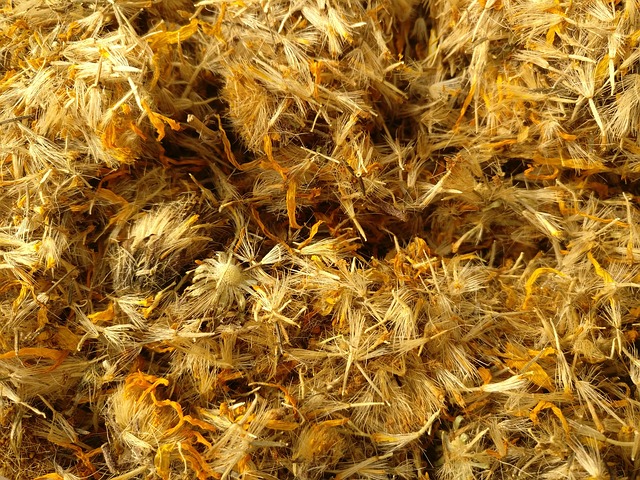
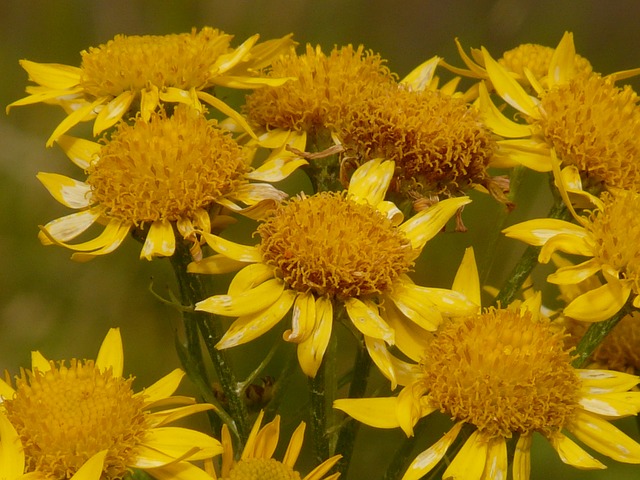
The word “arnica” is derived from the Greek “arni,” meaning “lamb.” This could be in reference to any number of the plant’s parts — it’s got fuzzy sepals, leaves, and looks almost dandelion-like when it goes to seed.
Two of its common names are “wolf’s-” and “leopard’s bane.” I haven’t been able to find any reason for this — these are also names for aconite, which is far, far more baneful than arnica. I mean, the two don’t even look alike.
In Norway, arnica was strewn in fields during Midsummer. This was to protect crops from a creature called Bilwis. In Germanic areas, Bilwis is identified as a kind of Feldgeister (field spirit) or Korndämonen (corn demon). In the Prose Edda, this creature was half of a brother-sister pair — Hjúki and Bil — that followed the Moon across the sky. There isn’t much written about Hjúki and Bil outside of the Prose Edda, but they are theorized to represent the craters visible from Earth, which are said to resemble a pair of children carrying a bucket on a pole. Over time, Bil’s image was distorted from a minor Norse deity to a malevolent spirit that cuts down corn. Bilwis has no set form, and its appearance varies across all of the folklore in which it appears.
Sprinkling arnica around your property is said to protect your home and bring fertility to your garden. This probably stems from its use to thwart corn demons, as, over time, its folk use expanded from keeping your crops from being cut down by spirits, to general protection and plant fertility.
Planting arnica around an area is said to keep a spirit penned there. This only works as long as the arnica lives, however — once it dies back, the magical boundary dies with it.
As a bright yellow Midsummer plant, it’s associated with the Sun and the element of Fire.
Some sources claim that arnica was burned as an incense, particularly in weather magic. This seems largely used to drive away violent storms, and may also be tied to its general “protective” aspect.
Using Arnica
Not gonna lie, I’ve gotten pretty fond of dabbing it on myself. But I digress.
Arnica contains a sesquiterpene lactone called Helenalin, which is said to help reduce inflammation and thereby soothe away bruising when it’s applied soon after an injury. Though it’s very healing when used topically, it is toxic when used internally and can cause sensitization over time. If you’re using arnica medically, it’s best to use it topically, over unbroken skin, for short periods of time.
That said, some people do use it internally. It’s even been used as a flavoring in foods and beverages. (I wouldn’t recommend doing so unless you’re under the guidance of an herbalist, though.) If you’re pregnant or on blood thinners, avoid it — it can stimulate contractions and interfere with blood clotting.
Harvest and the flowers when they’re at their best, around Midsummer. Scatter fresh flowers around an area you wish to protect, or brew dried ones into a tea and sprinkle the liquid. You could theoretically include dried flowers in protective sachets, jars, or other container magic, but the herb’s primary historical uses seem to largely depend on strewing, scattering, or planting arnica to create a boundary.
To turn back storms, burn arnica and say, “Arnica bright, arnica alight. Thunderstorm, turn and take flight.”
Arnica has been treated as a one-herb first aid kit, credited with any number of medical marvels. While it’s certainly good at what it does, the herb does have a tendency to cause problems if it’s used in high doses and for long periods of time. If you’ve got corn demons to thwart, thunderstorms to get rid of, or spirits you need to babysit, arnica can’t be beat.


 Marble Crow