

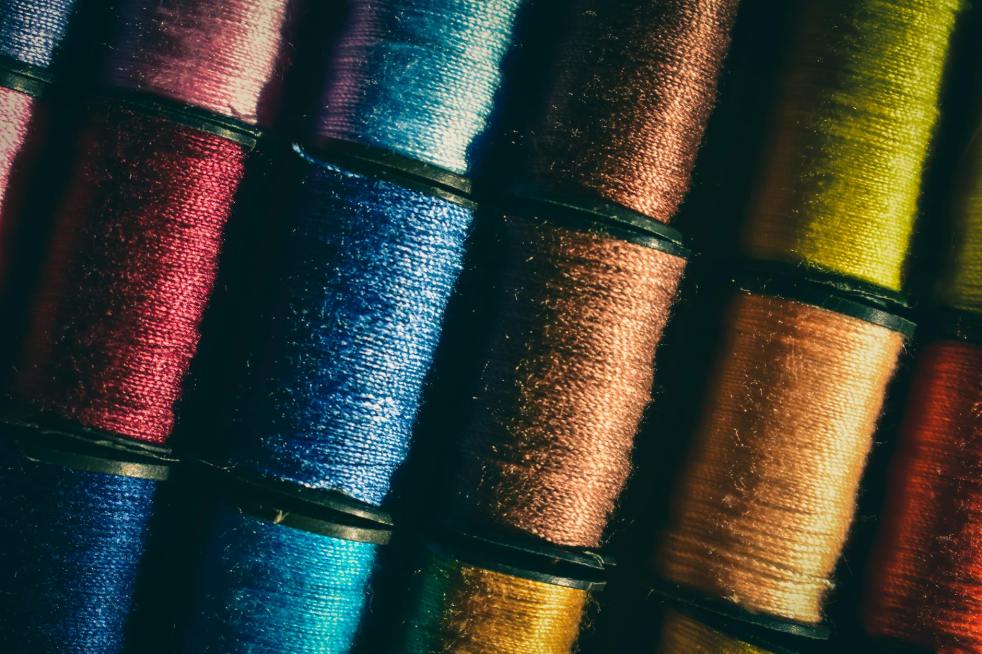
When I was a tiny child (very tiny, maybe six or seven), my grandma taught me to crochet. I didn’t learn much — my clumsy little hands weren’t able to do more than work a piece of string into a basic chain — but it was something I’ve wanted to get back into. So, as part of my desire to continue reskilling this year, I picked up some merino yarn and a basic #5 hook and got to it.
(So far, I’ve managed to make one tiddy portion of a bikini top in single crochet, and most of a scarf that I accidentally did entirely in slip stitch. This is okay, though. Even if you do crochet wrong, as long as you do it wrong enough and consistently enough, you’ll most likely end up with a useable item once you’re done anyway.)

So, since I’ve ended up with a number of odds and ends of string, I thought it’d be a good idea to point out its many magical virtues and uses.
Witches and Pagans — at least, the ones I know — are nothing if not resourceful. Every weed, seed, stick, stone, empty jar, scrap of paper, and bit of string has potential. Sure, supplies from a local metaphysical shop are beautiful and fun, but you’d be amazed at what you can get up to with the contents of your trash.
(Literally. One of my most successful workings involved nothing more than a Sharpie, some toilet paper, and about ten seconds a day for a week.)
Anyway. String.
The Magical Uses of String and Yarn
Witch’s Ladders
One of the most recognizable uses of string/yarn/floss/twine/thread/etc is the witch’s ladder. This is a length of cord knotted at intervals, often with feathers, leaves, stones, or other curios placed within the knots. Ultimately, the ladder is a talisman — as it’s made, the creator imbues each knot and curio with their intention for the ladder.
Wikipedia describes a specific instance known as the Wellington Witch Ladder, the first recorded instance of someone finding a witch’s ladder in an old house. Charles Godfrey Leland discovered that it was remarkably similar the description of a kind of folk charm used in Italy. Witches would utter a baneful spell as they braided the cord (along with locks of the victim’s hair and feathers from a black hen) and place the finished piece under a victim’s bed, in order to cause them pain, illness, and misfortune.
(As a magical device, a witch’s ladder isn’t solely for baneful magic. The inclusion of different curios and chanting a different spell would, by necessity, give the finished product a different effect.)
Knot Spells

A more stripped-down version if the witch’s ladder is basic knot magic. This involves taking a length of string and tying knots (usually nine) at intervals, starting with the center, then both ends, then working back toward the center. Each knot is accompanied by a chant.
This is useful as a kind of magic “bank” — each knot holds a portion of the spell and, when the knots are undone, the spell is released. One way to use this involves untying a knot once a day for nine days. I’ve also used them to tie around my wrist or ankle. Once the string breaks, the spell is released.
Magical Pouches and Sachets
Strings also have the more mundane use of securing magical sachets and pouches. In Hoodoo, the traditional knot for this is the miller’s knot. Other traditions may have their own methods that call for a particular knot (or number of knots), or none in particular. Here, the string is mostly just intended to keep the contents of the pouch from falling out, but it’s easy to apply basic techniques like color magic if you so choose.
Embroidery Sigils
If you know how to embroider, it’s easy to apply this skill to creating sigils or other magical images. Embroider them onto pouches, clothing, altar cloths, or any other fabric items sturdy enough to handle them. This is a great method for magic you wish to keep with you — think workings for protection, prosperity, or attraction.
Strings as Sympathetic Magic
Lastly, strings have a powerful symbolic component. Take the photographs of two would-be lovers, for example, place them face-to-face, and tie them together with red or pink string for a love spell. Or, use a string as a component of cord cutting magic, to help you visualize and act directly on the “etheric tethers” that hold you to old relationships, situations, or other undesirable things. Strings represent the “ties that bind,” for good or ill, and you can use them to either strengthen or sever these ties as you wish.
Choosing Your String (or, How to Not Become a Magical Hoarder)
Okay, so. Like I said, I’ve been crocheting. I’ve ended up with a lot of odds and ends of yarn as a result. I probably don’t need all of these bits of yarn, so it pays to be a bit selective in what I decide to keep. If you hold on to odds and ends of string for magical purposes, you’re likely to end up in the same boat.
So, how do you decide?
First, I recommend against using synthetic fibers for magical purposes. This isn’t because I feel like they’ll necessarily have a bad impact on the magic itself — they’re just not practical. They don’t break down like cotton, hemp, linen, silk, or wool do, so they’re not great for spell cords that need to fall apart eventually. They also don’t burn well (and, when they do, tend to melt and produce awful, migraine-inducing fumes), so they’re not great for any spells that involve burning cords.

Second, you don’t necessarily need a ton of strings of the same length and color. You probably know what spells you tend to work the most, and what it makes sense to hold onto. (For example, if you’ve been focusing a lot on money magic, you probably don’t need an ever-increasing stash of red strings.) If you don’t, that’s fine — shoot for white or black strings, and one or two in other basic colors. Develop your preferences from there.
Third, destash periodically. There are a ton of posts and vlogs about people who fall out of practice, or struggle to find the motivation to continue regularly doing magical workings. Let decluttering your magical supplies be a reason to use them. With knot magic, this is especially practical — knot your cords, recite your chants, and put what you’ve made to good use. (Or gift them to your witchcraft-inclined friends.)
Often times, working magic means seeing the potential in what would otherwise be discarded. A plain piece of string can be everything from a curse to a love spell, from a healing charm to a magical battery.












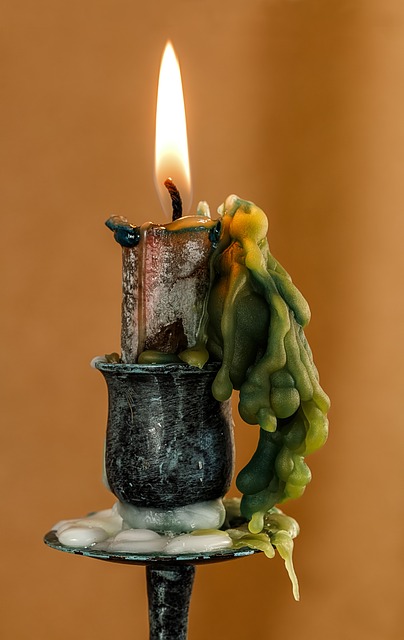 Candles made from the wax of the bayberry plant are traditionally burned on new year’s in order to bring prosperity into the home. We’re also way past the days when all we had were bulk paraffin chime candles. There’s some history behind using specific wax candles for specific purposes, and a lot of options out there. It made me to do some experimenting.
 Marble Crow