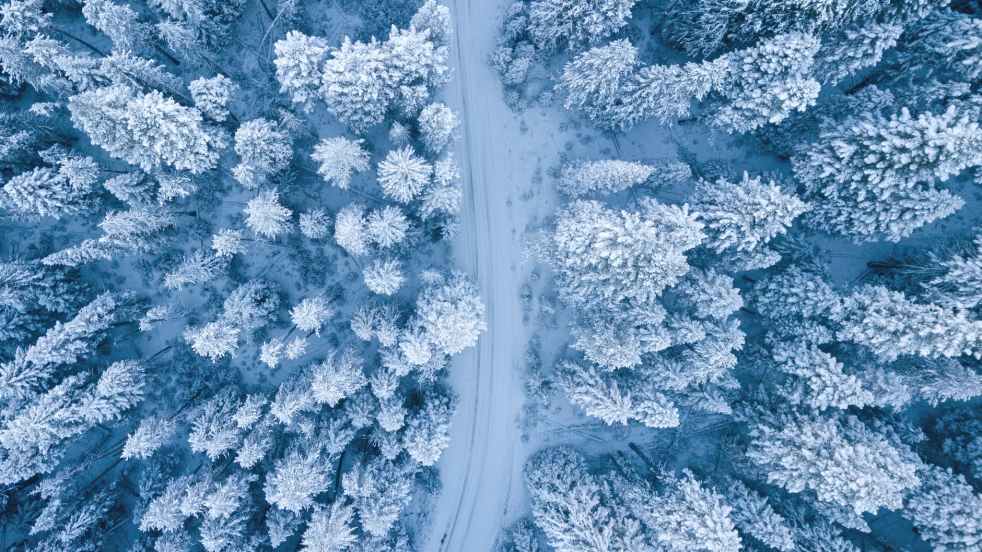
As I write this, it’s snowing. It’s a good snow, too — big, dry, puffy flakes. Kids have a snow day, and the hill in the back yard is covered in a good six inches of fluffy powder.
JJ has never seen snow before, so we tried bringing her outside to explore. She was curious, but also did not seem to enjoy the feeling of cold, wet paws. So, I brought her her own plate of snow, because we’ve got a washable rug and I’m full of bad ideas.
All of the plants are covered, branches bent under the weight of snow. Even the evergreens and the bright magenta beautyberries are hidden from view. So, I thought today might be a good time to talk about the tales, legends, myths, and magical properties of snow!
Predicting Snow
While not strictly related to snow, one of my favorite weather omens deals with cold winters: “Onion skin very thin, mild winter coming in. Onion skin thick and tough, coming winter long and rough.” The same is said of apple peels. Of course, this works best with local onions and apples — an onion grown in another country probably can’t tell you much about the weather in yours!
No onions? No problem. You can also foretell a cold winter by looking at walnuts and acorns. A heavy crop means a harsh winter. Similarly, thick shells on walnuts also warn of a cold winter.

The seeds of American persimmons are also used to predict winter weather. If they’re shaped like spoons, you’ll have lots of snow to shovel!
Leaves that fall early predict a mild winter. Leaves that fall late (or worse — wither on the branch and don’t fall at all) predict a cold one.
Animals can also warn you about a cold, snowy winter. If their fur is thicker than usual, winter is likely to be a doozy. If squirrels stash their nuts up high, then you’re likely to see a lot of snow. If you live in an area with a wild turkey population, watch where they decide to rest. If they perch in trees and won’t come down, snow is coming.
If you see a woolly bear caterpillar, take note of the width of its bands. Caterpillars with especially wide middle bands predict a mild winter.
Mushrooms are yet another way to predict snowfall. If you see abundant mushrooms in autumn, then you’re likely to get a lot of snow. If mushrooms are scarce, your winter will probably be dry. This makes a lot of sense — mushrooms need humidity. If you have a lot of humidity in the cold months, you’re likely to get a lot of precipitation, too.
Supposedly, the date of the first snowfall can help you predict more. Whatever date the first snowfall falls on will tell you how many more snowfalls you’ll get that winter. (For example, following this logic, we’d be looking at fifteen more snows!)
Another variation calculates the number of snowfalls a slightly different way: However many days past Christmas the first snow falls, that’s how many you’ll have that winter. (Using this method, we’d be looking at twenty one.)
Yet another variation calculates the number of snowfalls using the date of the new moon. The date of the first snowfall, plus the number of days since the new moon, will tell you how many snowfalls to expect. (According to this, we’d be looking at twenty.)
Snow’s Magical Uses and Folklore
In Japanese folklore, there’s a snow spirit known as yuki-onna, or some variant thereof. This translates to “snow woman,” but she may also call herself “snow daughter,” “snow granny,” “snow hag, “snow girl,” or even “icicle woman,” depending on the region. There are many stories about the origins of these spirits, ranging from otherworldly princesses trapped on Earth, women born from snow drifts, or the vengeful spirits of murdered women. Yuki-onna is also associated with children, as multiple tales describe one holding a child, accompanied by a child, or stealing children.
Frau Holle, or Old Mother Frost, is a figure from German folktales. She is related to the Germanic goddess Perchta, and it was said that the souls of those who died in infancy went to her. She also causes snowfalls when she shakes out her bedspread and beats her pillows.

Cultures all around the world have personified winter and snow. These include figures like the Cailleach in Ireland, Beira in Scotland, Despoina and Khione in Greece, Itztlacoliuhqui in Mesoamerica, Skadi in Norway, and Tengliu in China.
When it comes to the magical properties of snow, the most important thing to remember is that it’s water. It shares the same magical uses, it’s just in a more convenient, semi-solid format. You can draw runes or sigils. Snow is useful for beauty, purification, and healing, particularly emotional healing. Because of its ephemeral nature, snow is also helpful for banishing.
Using Snow
You can use snow in the same ways that you’d use water. If you like cleaning crystals or ritual objects in rain, collect some snow and use that instead. It works every bit as well!
Snow is also a great vehicle for sympathetic magic. If you’d like to banish something (or someone) from your life, collect some snow in a bowl or on a plate. Draw a representation of this thing (or, if it’s a person, write their name) in the snow. Put it in the sun, let it melt, and pour the water out far from your home.

If someone you know is creating problems for you, you can also use snow to get them to knock it off. (Assuming, of course, that pelting them with snowballs and shouting at them isn’t an option.) Write the person’s name on a slip of paper and place it in a jar or other lidded container. Pack the jar with snow, while you demand that this person piss off and stop troubling you. Put the jar in your freezer and leave it there until they go away. If you like, you can also ask the frost giants, spirits of frost, or your tradition’s frost deities to sit on them.
With the (sometimes radical) shifts in this region’s weather, my local area has experienced droughts. This makes an inconvenient amount of snow a very welcome sight, since that’s what’s going to replenish everything and help nurture new life come spring. Here’s hoping for a fruitful, abundant spring and summer this year!

 Marble Crow