Neodruidry · Witchcraft

Thundersnow — a rare (and powerful) phenomenon.

The other day, my area was witness to a very rare weather phenomenon: thundersnow. This occurs as a thunderstorm where snow falls instead of rain. This happens for the same reason that regular thunderstorms happen but is rare because very cold air is dense and not as likely to rise as warm air. For this reason, you need some special circumstances for it to be cold enough to snow and allow air to rise.

Gray stormclouds.
Photo by Pixabay on Pexels.com

Previously, I’ve written about using rain and other forms of precipitation. Winter storm water (or snow) is used to make oneself outshine competitors. From my experience, stronger storms produce stronger water. For this reason, thundersnow is some of the best water for working magic to outdo rivals, or even just for success in general. It has the traditional properties of winter storm water, coupled with the added oomph of a thunderstorm.

Catching thundersnow is just like catching other forms of precipitation. Let some snow fall first, because this will help clear out some of the particulates in the air. Then, put out a bowl, baking tray, or other container. Wide containers work best for this, because you’ll be able to catch much more in a broad, relatively shallow container than you will in a narrow, deep one. Finally, scoop your thundersnow into a jar or bowl, allow it to melt, and either keep it as-is or decant it into a bottle. Keep it away from sunlight, preferably in your refrigerator. Use melted snow for washing magical tools, anointing objects or yourself, brewing magical baths, or whatever else you’d use water for.

A white flower floating peacefully on water.
Photo by NEOSiAM 2024+ on Pexels.com

For safety’s sake, avoid drinking it — even if you’re very careful to catch clean snow and filter it afterward, an awful lot of snow contains various types of bacteria. This is because crystals (including snow) form around a nucleation site. These nucleation sites are usually specks of dust or grains of pollen, but, at certain temperatures, bacterial structures are more abundant and easier for snowflakes to crystallize around. So, while not all of these bacteria are pathogenic to humans, and catching the occasional snowflake on your tongue won’t kill you, please take the appropriate precautions when using melted snow.
Neodruidry · Plants and Herbs · Witchcraft

Chickweed Folklore and Magical Uses

Recently, we had a tiny burst of warm weather (by which I mean an extremely unseasonable 76° F/24° C). It was nice! Also very concerning, but nice!

This little bit of heat seems to have kicked the yard into overdrive — while the bigger plants haven’t started leafing out yet, we’ve had a lot of spring ephemerals suddenly make an appearance. Following the grassassination, most of our ground covers are various types of chickweed and violet while the moss phlox and other guys establish themselves. Right now, we’ve got lesser chickweed (Stellaria apetala) and regular chickweed (Stellaria media).

Some plucked sprigs of Stellaria media.
Photo of Stellaria media by kokokara on Pexels.com. If you look closely, you can see the row of tiny white hairs.

While neither of these species are native (lesser chickweed is European, while regular chickweed hails from Eurasia), they’re still a valuable herb in early spring. They’re full of minerals and vitamin C, and one of the first edible springtime greens to appear. It isn’t a good idea to eat a ton of them — not raw, anyway — but they provide nutrients that are often in short supply for winter foragers.

So, with that in mind, I figured I’d take a look at the various folklore and magical uses for these humble little groundcover plants.

Chickweed has a few poisonous lookalikes, but is also pretty easy to identify. Two of its unique characteristics are the presents of a row of white hairs (like a cock’s comb) and a firm, green stem-inside-a-stem. Pull a chickweed’s stem apart, and you’ll uncover a green “chicken bone!”

When I say that chickweed is high in vitamin C, I really mean it — sailors used chickweed steeped in vinegar to prevent scurvy during times when citrus fruits weren’t available.

Chickweed is associated with love and fidelity. This idea may stem (no pun intended) from its growth habit. Chickweed grows in groups, with spreading tendrils reaching out from the center. It’s a powerful visual metaphor for the importance of community, as each chickweed stem grows out from this connected center in order to reach its full potential.

This plant is also very tenacious. It’s hard to get rid of, and often springs right back up after being cut or pulled out. While chickweed favors moist soil with a good pH and abundant nutrients, you can also find it growing in cracks in sidewalks. This makes it useful for situations that you want to exhibit this same resilience — for example, a long-term relationship.

Some green magic practitioners also associate this plant with abundance. It produces a lot of very long-lived seeds, which connect it to fertility and prosperity.

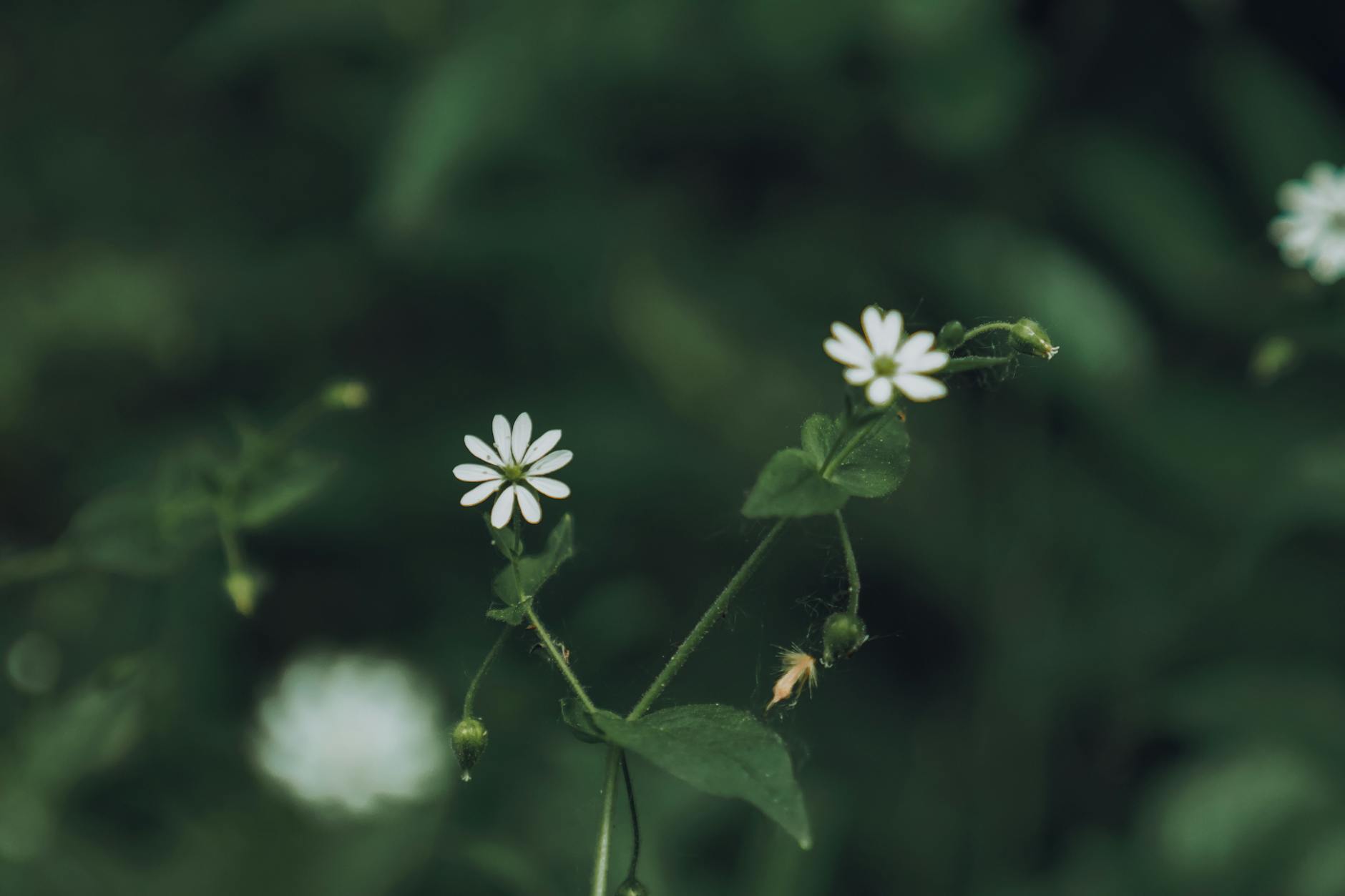
Tiny white chickweed flowers.
Photo by Imad Clicks on Pexels.com

The name “chickweed” comes from chicken and weed. Since these plants are pretty nutrient-dense and come up in early spring, they’re eagerly fed on by poultry and are particularly good for growing chicks.

Chickweed is very easy to find. Look for moist (but not soggy) soil, in early spring, just about anywhere and you can probably pick some. It’s stubborn, it’s prolific, and it’s not super fussy. Use a good plant identification app and research chickweed’s poisonous lookalikes, or, even better, go with a seasoned forager who can show you what to look for.

Once you have your chickweed, you can use it fresh or dried. Dried, it mixes well with jasmine, rose petals, lavender, and other love-drawing ingredients. Blend these dried herbs together with equal parts Epsom and sea salts, add a few drops of patchouli and rose oil, and use the resulting mixture for a love-drawing bath.

To attract a partner, wear a sprig of chickweed. These unassuming greens can be easily tucked into a boutonniere, vase necklace, flower crown, hairclip, or fascinator without too much trouble. As with the bath salt recipe above, combine them with other love-drawing plants for best effect.

To ensure the fidelity of a partner, it’s said that you should feed them chickweed. (If you do this, you should probably ensure that you have their consent, and that you’ve properly identified your chickweed or purchased it from a reputable source. Otherwise, you’re going to end up with an angry and/or poisoned partner.) Caraway seeds are used in a similar fashion.

If you have access to a yard, or even just an open field, you most likely have access to chickweed. This plant is subtle, but powerful. Whether you choose to use it as food, medicine, or a magical ingredient, this tenacious little herb can be a great friend to make.

divination · Neodruidry · Witchcraft

Footprint Folklore & Magical Properties

With so much snow on the ground, it’s been even easier to keep track of all of the visitors to the front and back yards. From the efficient single-track prints of stray cats, to snowshoe prints of rabbits, to the rodent tracks ending in the sudden whump of an owl, they all stand out starkly in fresh snow.

A set of squirrel tracks in snow.
For example, these prints by resident Absolute Unit Frederick de Bonesby, the gray squirrel.

The weather is warming up bit by bit (it’s supposed to be in the 60s F this weekend, go figure), so the snow isn’t long for this world. With that in mind, I thought this might be a good time to look at different folk beliefs and folk magic practices involving animal tracks and footprints.

Unique footprints and strange feet are a defining characteristic of many cryptids and folk monsters:

  • The Tupi-Guarani people of Brazil have the Curupira (Tupi for “blister-covered”), a kind of demon with fiery red hair and backwards feet.
  • The Scottish have the glaistig or maighdean uaine (“Green maiden”); a gray skinned, blonde-haired woman with a long green skirt to hide her goat legs.
  • In Madagascar, there is the Kalanoro. This is a humanoid cryptid described as a small, hairy person with red eyes and backwards-facing legs and feet. While they are said to have once lived in corporeal forms, habitat destruction has left only their spirit forms behind.
  • In the Himalayas, there are Abarimon (“mountain-dweller”). These are said to be vicious humanoids with backwards feet who lived solely in a single mountain valley. While Abarimon were dangerous, they could only breathe the air of their valley home, and thus were unable to ever leave it.
  • In Trinidad and Tobago, there is the Douen. This entity is another humanoid with backwards facing feet but has the distinction of also lacking any facial features other than a mouth. If they hear a child’s name, they are said to be able to mimic the parents’ voices, calling to the child to lure them into the forest. Douen may be related to the duende, humanoid spirits from Spain and Latin America.
  • In Australia, there’s the Yowie. This is a tall creature covered in dark hair, often said to have backwards-pointing feet.
  • The Dominican Republic has La Ciguapa, a lovely wild woman with long, dark, silken hair, beautiful bronze skin, and backwards feet. While small, she is perfectly proportioned and incredibly agile. She’s said to use her beauty and agility to prey on those who are foolish enough to venture into the woods — her domain — alone.
  • On the Indian subcontinent, there are ghosts known as bhuta. These can shapeshift into any animal, but often appear as perfectly normal humans — save for their backward-facing feet.

To be honest, you’d probably be hard pressed to find a culture that doesn’t have some version of “cryptid whose main thing is having weird feet.” Many of them serve as cautionary tales against wandering dangerous places alone, especially for children. They’re the personification of situations that seem perfectly safe, or even nice (like meeting a beautiful woman on a walk in the woods), and lure you in before you notice the danger that you’re in (like the fact that she’s a cannibalistic cryptid with weird feet). Across cultures, the message here is also pretty consistent: Stay away from strangers, and out of the wilderness at night.

In northeastern Tanzania, there are a series of incredibly ancient footprints set in stone. These point to two small groups of hominids (likely members of Australopithecus afarensis) traveling in the same direction. The Maasai people associate these footprints with Lakalanga, a hero so big that he was said to leave footprints sunk into the ground wherever he walked. He is said to have helped the Maasai win a battle against a neighboring enemy, long, long ago.

In South Devon, England, a heavy snow fell in the winter of 1855. The next day, and for two days after that, mysterious sets of very hooflike marks appeared. They were in single file, roughly 4 inches long by 3 inches wide, and managed to cover a total area of about 40 to 100 miles. Strangely, these hoofprints didn’t seem to care about obstacles — they traveled straight over fences, hedgerows, walls, and even houses. Called the “Devil’s Footprints,” hypotheses for their appearance range from experimental balloons to kangaroos… But there’s still no accepted explanation.

In some magical traditions, footprints are used for sympathetic magic. Any spell benefits from the addition of something belonging to the target — a nail clipping, a lock of hair, or a scrap from their clothing, perhaps. (I once managed to pull something off by getting a target just to touch a grass poppet that I’d made, but that’s neither here nor there.) In the absence of these, footprints often suffice.

Some magical powders, like the hot foot powder used in Hoodoo, are sprinkled into a person’s footprints to control their actions. This derives from the traditional West African practice of foot track magic, brought to the Americas by the transatlantic slave trade.

Reading animal tracks is also a method of divination. While augury was traditionally divination using the flight paths of birds, you can also gather omens from the number, direction, and maker of tracks you come across.

A set of cat tracks through snow.
These belong to a stray cat. Cats conserve effort when walking trough snow by placing their hind feet directly in the prints of their forefeet.

When it comes to divination using a human’s footprints, the practice is called “ichnomancy.” This comes from the Greek “ixnos,” meaning “footstep,” and “manteia,” meaning “method of divination.”

Divining with footprints can be a little difficult, since you need to be able to read them in a mundane sense first. For example, deep footprints indicate a heavy load. Widely-spaced ones indicate a long stride, perhaps someone running. The different depths of the impression in the heel and ball of the foot areas can also tell you different things.

My first suggestion for working with animal tracks and footprints is to familiarize yourself with what you’re likely to encounter. If a deer walked through your yard, what would it look like? How about a dog, or a bear? What impressions does it leave when a bird of prey scoops up a rat, or a squirrel? Consider your connections and associations to each of these creatures. What would their appearance mean to you?

Next, consider their other qualities. Movement to the left is often considered an ill omen, while the right is considered a positive one. For example, seeing the tracks of a bear or mountain lion moving quickly toward your left could be an omen of danger. Seeing the tracks of an animal you have a positive connection to, moving at a leisurely pace toward your right, could be a very good omen.

Working with footprints in a magical context is a bit different. You can collect the dirt from within a footprint and use it to target a spell toward whoever left the footprint. You can also sprinkle magical powders or crushed herbs in someone’s tracks, or over a place where you expect them to step. (There are far too many magical powders to enumerate all of their uses and qualities here, unfortunately. Since this is a method frequently employed by Hoodoo practitioners, you may wish to consult with one for more information. Many online sellers of Hoodoo supplies offer consultations and can answer your questions on foot track magic.)

As for me, I love seeing fresh tracks in the snow. It’s a reminder that, while the outdoors seems to sleep under its cold, fluffy comforter, there’s still plenty happening. Tracks also give me another way to gauge the way everything’s activity increases as we inch closer to spring. I look forward to seeing tracks in the mud and snow just as much as I look forward to seeing new faces at the feeders and in the fruit trees.

Neodruidry · Witchcraft

Snow Folklore & Magical Properties

As I write this, it’s snowing. It’s a good snow, too — big, dry, puffy flakes. Kids have a snow day, and the hill in the back yard is covered in a good six inches of fluffy powder.

JJ has never seen snow before, so we tried bringing her outside to explore. She was curious, but also did not seem to enjoy the feeling of cold, wet paws. So, I brought her her own plate of snow, because we’ve got a washable rug and I’m full of bad ideas.

A small, adorable gray tabby cat paws at a pile of snow on a plate.

All of the plants are covered, branches bent under the weight of snow. Even the evergreens and the bright magenta beautyberries are hidden from view. So, I thought today might be a good time to talk about the tales, legends, myths, and magical properties of snow!

While not strictly related to snow, one of my favorite weather omens deals with cold winters: “Onion skin very thin, mild winter coming in. Onion skin thick and tough, coming winter long and rough.” The same is said of apple peels. Of course, this works best with local onions and apples — an onion grown in another country probably can’t tell you much about the weather in yours!

No onions? No problem. You can also foretell a cold winter by looking at walnuts and acorns. A heavy crop means a harsh winter. Similarly, thick shells on walnuts also warn of a cold winter.

A pair of acorns.
Photo by Ylanite Koppens on Pexels.com

The seeds of American persimmons are also used to predict winter weather. If they’re shaped like spoons, you’ll have lots of snow to shovel!

Leaves that fall early predict a mild winter. Leaves that fall late (or worse — wither on the branch and don’t fall at all) predict a cold one.

Animals can also warn you about a cold, snowy winter. If their fur is thicker than usual, winter is likely to be a doozy. If squirrels stash their nuts up high, then you’re likely to see a lot of snow. If you live in an area with a wild turkey population, watch where they decide to rest. If they perch in trees and won’t come down, snow is coming.

If you see a woolly bear caterpillar, take note of the width of its bands. Caterpillars with especially wide middle bands predict a mild winter.

Mushrooms are yet another way to predict snowfall. If you see abundant mushrooms in autumn, then you’re likely to get a lot of snow. If mushrooms are scarce, your winter will probably be dry. This makes a lot of sense — mushrooms need humidity. If you have a lot of humidity in the cold months, you’re likely to get a lot of precipitation, too.

Supposedly, the date of the first snowfall can help you predict more. Whatever date the first snowfall falls on will tell you how many more snowfalls you’ll get that winter. (For example, following this logic, we’d be looking at fifteen more snows!)
Another variation calculates the number of snowfalls a slightly different way: However many days past Christmas the first snow falls, that’s how many you’ll have that winter. (Using this method, we’d be looking at twenty one.)
Yet another variation calculates the number of snowfalls using the date of the new moon. The date of the first snowfall, plus the number of days since the new moon, will tell you how many snowfalls to expect. (According to this, we’d be looking at twenty.)

In Japanese folklore, there’s a snow spirit known as yuki-onna, or some variant thereof. This translates to “snow woman,” but she may also call herself “snow daughter,” “snow granny,” “snow hag, “snow girl,” or even “icicle woman,” depending on the region. There are many stories about the origins of these spirits, ranging from otherworldly princesses trapped on Earth, women born from snow drifts, or the vengeful spirits of murdered women. Yuki-onna is also associated with children, as multiple tales describe one holding a child, accompanied by a child, or stealing children.

Frau Holle, or Old Mother Frost, is a figure from German folktales. She is related to the Germanic goddess Perchta, and it was said that the souls of those who died in infancy went to her. She also causes snowfalls when she shakes out her bedspread and beats her pillows.

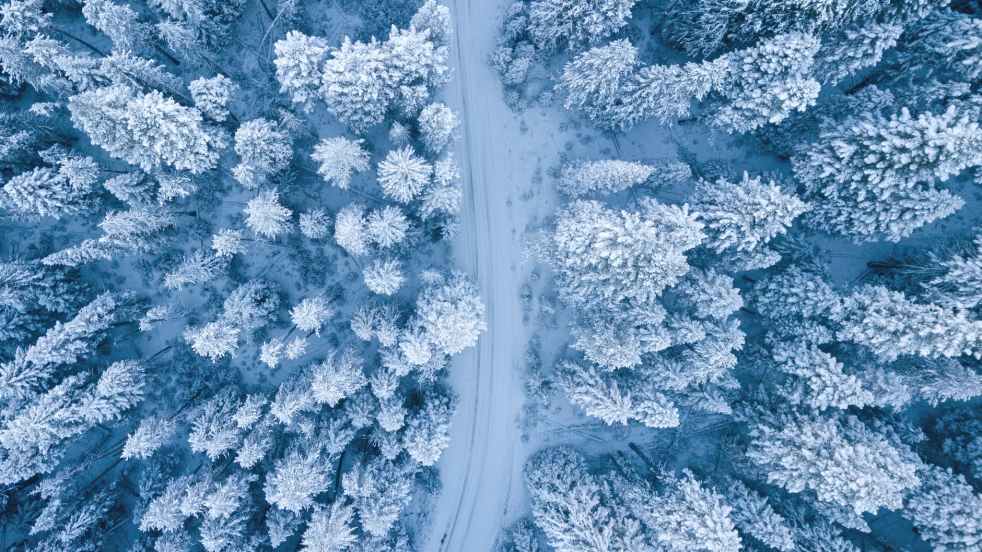
A frozen lake, with snow-covered mountains in the distance.
Photo by Riccardo on Pexels.com

Cultures all around the world have personified winter and snow. These include figures like the Cailleach in Ireland, Beira in Scotland, Despoina and Khione in Greece, Itztlacoliuhqui in Mesoamerica, Skadi in Norway, and Tengliu in China.

When it comes to the magical properties of snow, the most important thing to remember is that it’s water. It shares the same magical uses, it’s just in a more convenient, semi-solid format. You can draw runes or sigils. Snow is useful for beauty, purification, and healing, particularly emotional healing. Because of its ephemeral nature, snow is also helpful for banishing.

You can use snow in the same ways that you’d use water. If you like cleaning crystals or ritual objects in rain, collect some snow and use that instead. It works every bit as well!

Snow is also a great vehicle for sympathetic magic. If you’d like to banish something (or someone) from your life, collect some snow in a bowl or on a plate. Draw a representation of this thing (or, if it’s a person, write their name) in the snow. Put it in the sun, let it melt, and pour the water out far from your home.

Snow-covered mountains under a starry sky.
Photo by eberhard grossgasteiger on Pexels.com

If someone you know is creating problems for you, you can also use snow to get them to knock it off. (Assuming, of course, that pelting them with snowballs and shouting at them isn’t an option.) Write the person’s name on a slip of paper and place it in a jar or other lidded container. Pack the jar with snow, while you demand that this person piss off and stop troubling you. Put the jar in your freezer and leave it there until they go away. If you like, you can also ask the frost giants, spirits of frost, or your tradition’s frost deities to sit on them.

With the (sometimes radical) shifts in this region’s weather, my local area has experienced droughts. This makes an inconvenient amount of snow a very welcome sight, since that’s what’s going to replenish everything and help nurture new life come spring. Here’s hoping for a fruitful, abundant spring and summer this year!

Neodruidry · Plants and Herbs · Uncategorized

Cedar Tree Folklore & Magical Properties

I’m not a fan of fake greenery. While it can definitely amp up a room’s decor when it’s judiciously combined with real plants, I always end up forgetting to maintain it until it’s faded, dusty, and doing the exact opposite of helping things look fresh and natural. Blegh.

Anyway, when it comes to decorating for Yule, my Handsome Assistant and I go for fresh greens. There’s a florist nearby who sells trimmed branches of various evergreens pretty cheaply. Combine a few of them with some wired ribbon, and you can make a very pretty swag or garland without spending much money at all.

A close up of fanlike American cedar branches.
Photo by Abdul Zreika on Pexels.com

This year, we picked up the cutest little potted Alberta spruce tree. We’re keeping it indoors until spring, at which point I’m going to repot it and set it outdoors. Next winter, it’ll probably still be small enough to fit in the living room and be next Yule’s tree, too. Once it’s outgrown its pot, we’ll plant it in the front yard.

We also picked up some trimmed branches from an incense cedar tree (Calocedrus decurrens), which I used to decorate table tops and the top of our curiosity cabinet.

Since we’ve been taking down our Yule decorations and cleaning up the shed bits of greenery, I thought now might be a good time to look into the folk tales and magical associations of cedar trees.

First things first: “Cedar” isn’t a very exact term. True cedars are chiefly found in the Mediterranean, but there are also quite a few unrelated American species referred to as “cedar.” True cedars have needles, while American species have flat leaves, like scales, that form delicate fernlike or fingerlike structures (as seen in the photo above). There are only four species of “true” cedar: cedar of Lebanon (Cedrus libani), Atlas cedar (C. atlantica), Cyprus cedar (C. brevifolia), and deodar cedar (C. deodara). American cedar species are actually members of the cypress family, Cupressaceae!

The needles of an Atlas cedar, one of the "true cedars."
Photo by Feyza Dau015ftan on Pexels.com, showing the needles of a “true cedar.”

American cedars are culturally significant to the people indigenous to the trees’ native ranges. Indigenous people used (and continue to use) cedar as a sacred incense and purifying herb. Cedar trunks were used to make boats, the branches were used to filter sand from water and when leaching acorns for acorn flour, and the fibrous roots are still used to make beautiful baskets.

Cedar smoke was also used to prevent illness, which mirrors the old Scottish practice of fumigating one’s home with juniper for the same purpose. This is particularly interesting since the eastern red cedar, Juniperus virginiana, is actually a juniper. Junipers are also members of the cypress family, like other American cedars are.

Many Salish groups had special rituals for the felling of cedar trees. These trees are considered symbols of providence, abundance, and generosity.

A Mi’kmaq tale warns you to be careful what you wish for. A man went to the legendary Glooskap and asked if it was true that Glooskap gave people whatever they asked him for. Glooskap demurred, saying that he couldn’t always answer people’s requests, but he helped however he could. The man asked Glooskap for immortality, but he refused — all things must die. Once everything has died, even Death would probably die. Disappointed, the man asked to live longer than any man has ever lived. In return, Glooskap turned the man into a tall cedar tree.

A Potawatomi tale tells of a group of men who visited the Sun to ask for help. One desired to see the future, two desired immortality, another desired a blessing associated with water, and yet another had gone along just to help the others. The man who wished to see the future was set down in the west, where the Sun goes to end the day. One of the men who wanted to be immortal became a boulder. The man who wanted a water blessing became a half-man, half-fish. The other man who wished for immortality became a cedar tree. This is how people received the stones and cedar used in sweat lodge ceremonies.

In Judeo-Christian stories, cedar represents protection and strength. Its wood was used to build Solomon’s temple. According to Medieval Christian tradition, the cross used during the crucifixion was made of cedar. For this reason, it was considered bad luck to burn cedar wood. Planting a cedar in your yard was also believed to bring misfortune and poverty, but a cedar growing naturally was considered fortunate.

In Irish folklore, cedars were associated with strength and durability. Their wood is extremely rot-resistant, and the trees live for a very long time.

Like a lot of other magical ingredients used for protection and banishing, all types of cedar repel pests. The aromatic compounds in their essential oils are a deterrent for moths and all kinds of biting insects. All around the world, there’s a very strong connection between “plants that keep bugs out” and “plants that keep evil away.”

Depending on your needs, you may or may not be able to substitute juniper-family cedars for “true” cedars. There is quite a bit of overlap, however — no matter which species you’re working with, these trees are connected to purification, protection, longevity, and strength.

Since we’re talking about some very distinct groups of trees that use the same common name, I won’t go into cedar’s medicinal properties here. This underlines the importance of using standardized nomenclature — each of these species has its own bouquet of medicinal compounds (and some potentially dangerous ones, like thujone), so it’s important to know exactly what you’re using. Never go by a plant’s common name when you’re looking for medicinal ingredients, because there’s a ton of common name overlap between completely unrelated species.

The most important thing to recognize when working with cedar is that this is a plant that should be respected. The famous cedars of Lebanon (Cedrus libani) were highly regarded — the oldest among them were considered sacred, and anyone who harmed them would be overtaken by misfortune. In the Potawatomi tale above, the man who became a cedar says that one should “call the cedar tree your nephew when you speak of it.” Folklore all around the world warns against cutting down a cedar without performing the proper ceremonies.

With that in mind, there are multiple ways to work with cedar. Cedar essential oil is frequently used in magical aromatherapy (though a little bit goes a very long way). Cedar twigs can be burned as incense and used in smoke cleaning. Since the wood and needles are so strongly aromatic, you can also infuse them in oil.

Dried conifers are easy to crumble, so they’re an easy ingredient to include in magical powders or incenses. Grind dried cedar leaves fine and sprinkle the powder in the corner of your rooms or around the border of your property while asking for protection against malevolent forces.

If you or anyone in your household has been sick. use cedar smoke to drive the illness out. Give the sickroom (in modern homes, the sick person’s bedroom and bathroom) a thorough physical cleaning, air it out well, and fumigate it with cedar smoke.

Right now, I have some dried cedar branches waiting to be used. These didn’t require a tree to be felled — instead, they’re trimmings. My plan right now is to grind the leaves fine, mix them with a binder, and form them into incense cones. The branches have blessed and protected my home when they were fresh, and they can continue to do so once they’re processed into incense.

I love the warm, earthy, spicy smell of cedar. In my tradition, it’s connected to the sun and the element of Fire. During these dark, cold months, inviting the power of cedar into your home can bring some much-needed heat, light, cleanliness, and protection.

Witchcraft

The Magical Properties of Cat Whiskers

I’ve mentioned before that I share my home with three cats — one gray tabby, and two orange ones. (And yes, the thing people say about orange cats all sharing a single brain cell is absolutely true.) We’ve taken them on a road trip. One of them has a weird obsession with exercise bikes. The second seemed baffled about how a kitten ended up in his house, but absolutely does his best to raise what he appears to assume is his kid. They’re precious, adorable dumbasses, and I love them.

A fangy-toothed cat sleeping upside down.
Pye’s enormous, doofy face.

I also periodically find shed whiskers. I can usually tell who they belong to, too — Pye’s are gigantic, Kiko’s are thin and white, and JJ manages to pull off this natural two-tone ombre that stylists would kill for.

A cat’s whiskers are an extension of their sensory organs. This doesn’t mean that they are sensory organs, however — whiskers themselves are still just hair, and don’t contain any nerve tissue themselves. So, why shouldn’t you ever cut or pull out a cat’s whiskers?

Pulling is definitely more harmful than cutting, but neither are good. Pulling out a cat’s whisker is extremely painful. (Imagine yanking your nose hairs out, one by one. I’m feeling teary just thinking about it.) Cutting a whisker isn’t painful, but it does rob the cat of an important source of information about their environment, leading to stress and anxiety.

It’s perfectly natural for cats to occasionally shed their whiskers. They’re hair, just like any other, and they have a life cycle. Cats routinely lose a whisker here and there to time, roughhousing, and generally silly cat activities. I had a cat growing up who used to sleep on the slanted base of a space heater. When he’d come to cuddle afterward, his eyebrow and whiskers would be all singed and frizzy on one side. Somehow, this never seemed to dissuade him from his favorite nappytime spot.

If you want to use a cat’s whisker as a spell ingredient, just wait until you find one. Trust me, you will eventually.
Unless you don’t have a cat.
You should make sure you have a cat first.

Traditionally, whiskers are associated with luck and protection. Interestingly, whiskers are also associated with the opposite. Since cats depend so heavily on them, a lost or broken whisker is sometimes considered an omen of bad luck.

Since cats use their whiskers to guide themselves and keep themselves safe, whiskers are connected to the concept of spiritual guidance. They may be treated as omens — seeing a cat with lost or damaged whiskers can symbolize misfortune, while finding an intact whisker can represent good luck.

Some people also consider finding a cat’s whisker as a spirit or angel sign. Since they’re connected to the idea of guidance, they may indicate that you’re receiving help from your guardian spirits, ancestors, or other guides.

Cats’ whiskers can vary in color. Some practitioners assign different meanings to each color of whisker, but I haven’t found a consistent set of meanings. Black whiskers are sometimes considered negative omens, and sometimes considered symbols of protection. Brown whiskers represent grounding (though there are certainly easier ways to ground than waiting to find a brown cat’s whisker). Gray represent neutrality, balance, or uncertainty. White whiskers, on the other hand, are generally considered lucky… as long as they aren’t broken or damaged. Some cats have multicolored whiskers, which can give them two or more meanings. In general, I don’t worry about attaching specific meanings to each color — to me, whole whiskers are lucky and broken whiskers are a sign to be cautious.

Cats are strongly associated with the deities Bast and Freya.

If you find an intact whisker, you might want to save it to use later. I find that old vitamin or medicine jars work well for this — they’re tall enough to keep from bending or breaking the whisker and make it easy to keep track of them. I keep an eye out for whiskers while I’m cleaning, and just deposit any I find into the jar.

The simplest way to use a cat’s whisker is to hold it in your dominant hand, make a wish, and burn it. Scatter any ashes of the whisker on the wind.

You can also include them in charm bags or jar spells for luck and protection. Just avoid bending or breaking them in the process!

I also sometimes leave whiskers as offerings. One of my cats looks quite a bit like the gray cats illustrated pulling Freya’s chariot, so I often place her shed whiskers on my altar.

Overall, cat’s whiskers have more positive associations than negative ones. If you’re fortunate enough to have a feline companion in your house, keep a lookout for any whiskers they leave for you to find!

Neodruidry · Witchcraft

Traditional Healing Chants (also my blender tried to kill me)

Hello! I haven’t been around for like two weeks. Originally, I did plan to take a couple of days off for Yule, however one of my household’s Yuletide gifts was a hugely upgraded blender.

(To be fair, our bar for a blender upgrade was not high. The one we were using before cost, I think, six dollars at a thrift store. We used that thing until it flat out refused to be used anymore.)

Anyhow, long story short, fancy blenders do not always fit together the way that I assumed they would. They’re also way sharper than my old one. Yadda yadda yadda, the middle felt out, hit the side of my hand on the way down, and it took so many Steri-Strips to put everything back together. I’m talking a solid half-inch thick flap of hand meat. Enough blood for an axe murder. Half a box of strips. Most of a tube of some kind of fish glue that I’m told is supposed to seal cuts closed.

A large, flamey explosion. The remains of some kind of structure can be seen silhouetted in the flames.
A reenactment.

Anyhow, typing was problematic, so I took a little bit longer. I don’t generally keep a big bank of posts to drop automatically, hence there being no content for a little bit. C’est la guerre.

This seemed like a good time to talk about healing chants. I find these really interesting — they’re not quite sympathetic magic, since they’re just spoken words, but they do remind me a lot of certain forms of weather magic. In those, you pretty much go outside, pour water on the ground, and tell the sky to get its act together because it’s not like raining is difficult. Healing chants are essentially an instruction, telling bones to knit together, wounds to close, and blood to clot.

You can see this in the following healing chant, excerpted from Joanna van der Hoeven‘s The Book of Hedge Druidry (Spell for healing, page 274-275):

Bone to bone,

Flesh to flesh,

Sinew to sinew,

Vein to vein;

As Brighid healed that

May I heal this

This is far from a modern invention. The second Merseburg charm goes as follows:

Phol ende uuodan
uuorun zi holza.
du uuart demo balderes uolon
sin uuoz birenkit.
thu biguol en sinthgunt,
sunna era suister;
thu biguol en friia,
uolla era suister;
thu biguol en uuodan,
so he uuola conda:
sose benrenki,
sose bluotrenki,
sose lidirenki:
ben zi bena,
bluot zi bluoda,
lid zi geliden,
sose gelimida sin

“[B]en zi bena, bluot zi bluoda, lid zi geliden, sose gelimida sin” translates to “Bone to bone, blood to blood, joints to joints, so may they be glued.”

Similar healing spells are used to cast out “worms” (which may be literal parasites or maggots, or a way of conceptualizing infection in general). These use a similar “flesh to flesh, bone to bone, blood to blood” formula as the chants above, with the added step of sending the infection or infestation into an object — perhaps back into the object from which the wound and infection originated.

Interestingly, these chants are often called “horse charms.” Even the Merseburg charm above relates a story of how Uuodan (Odin), Sinthgunt, and Friia (Frigg) healed Phol’s (Balder’s) horse’s sprained foot. Of the surviving examples of these chants and charms, a disproportionate number of them seem to be for healing leg and hoof ailments in horses and sheep. (Charms for fixing blender accidents are conspicuously absent.)

This photo shows a crouched figure holding a horse hoof in one hand. It shows the relative tininess of the hoof and slenderness of the leg.
Four of these have to support an animal between 900 to 1400 pounds. It is not super surprising that there are a lot of charms for fixing horse problems. Even wild horses aren’t immune to issues — the life expectancy of a wild horse is, on the high end, about half that of a domestic one.

This form of charm isn’t exclusive to Europe, either. The Wikipedia article above cites an example from the Atharvaveda, hymn IV, that follows a similar construction:

 róhaṇy asi róhany asthṇaç chinnásya róhaṇî
róháye ‘dám arundhati
yát te rishṭáṃ yát te dyuttám ásti péshṭraṃ te âtmáni
dhâtấ tád bhadráyâ púnaḥ sáṃ dadhat párushâ páruḥ
sáṃ te majjấ majjñấ bhavatu sámu te párushâ páruḥ
sáṃ te mâmsásya vísrastaṃ sáṃ ásthy ápi rohatu
majjấ majjñấ sáṃ dhîyatâṃ cármaṇâ cárma rohatu
ásṛk te ásthi rohatu ṃâṇsáṃ mâṇséna rohatu
lóma lómnâ sáṃ kalpayâ tvacấ sáṃ kalpayâ tvácam
ásṛk te ásthi rohatu chinnáṃ sáṃ dhehy oshadhe

Here, “majjấ majjñấ sáṃ dhîyatâṃ cármaṇâ cárma rohatu ásá¹›k te ásthi rohatu ṃâṇsáṃ mâṇséna rohatu” translates to “Let marrow be put together with marrow, let skin grow with skin, let thy blood, bone grow, let flesh grow with flesh.” (Here is a further analysis from Sanskrit-linguistics.org.)

This charm is especially fascinating to me, because it means one of two things are true: Either this and the “horse charms” of Europe have a common, incredibly ancient root, or they’re an example of convergent cultural evolution. I’m inclined to believe it’s the former, but the latter would be really cool. I always get such a wonderful sense of eerie mystery when things like that happen, whether it’s culturally (everyone has some kind of bread) or physically (flight has evolved multiple times in unrelated organisms and nature tries to turn everything into crabs). It’s neat. It’s a little spooky. I love it.

Long story short, after a lot of Steri-Strips, gauze, fish glue, multiple recitations of a chant primarily intended to fix horses, and some healing time, my hand is operational again and normal content should resume next week unless I, I don’t know, get my head caught in the stand mixer or light my pants on fire again.

This is why my Handsome Assistant does the dishes, though.
I can’t be trusted.

Books

Let’s Read: “Psychic Witch”

This week, I wanted to devote some time to Mat Auryn‘s Psychic Witch: A Metaphysical Guide to Meditation, Magick & Manifestation.

I went into this book with few expectations — it had come highly recommended, but I didn’t really know what it was. I hadn’t read Mat Auryn’s other works before, a lot of people seemed to think that this one was worth reading, so I figured it’d be a suitable introduction to this author. (Admittedly, I’ve also been working on something myself for the past year or two and I knew it’d be helpful to read more examples of genuinely helpful, well-regarded metaphysical guides.)

Psychic Witch is essentially a collection of meditative and visualization exercises. The ones that lay the groundwork reminded me a lot of high school drama class, in the best way — the first few classes were always spent doing silly things, like playing Duck Duck Goose, to help us overcome the fears that would keep us from immersing ourselves in our roles. (Because let me tell you, it’s legitimately difficult to be embarrassed in front of people you’ve chased around during Duck Duck Goose.)

This kind of exercise has precedent in sacred rituals around the world. Laughter is often the gateway to the divine. Some ceremonies even feature comedy in the beginning, in order to help everyone loosen up, laugh, and shed the inhibitions that might keep them from fully participating. Just like a rousing game of Duck Duck Goose. Psychic Witch introduces the exercise of pretending to be an omniscient witch and seer, behaving as though all of your predictions are absolutely true. This might feel a little silly, at first, but I feel like it’s a fun and necessary way to get out of one’s own way so deeper work can begin.

Later exercises involve ways to trigger different brain states that are more conducive to magical practice than our usual waking state. (I still use a number of them for inducing trances, myself). The book then goes on to build on these, introducing concepts like working with the lower and higher selves, casting circles, and the elements. Even though these are somewhat elementary concepts in magical practice, Psychic Witch introduces and discusses them in a novel enough way that I feel like even seasoned practitioners would get something out of it.

Whether you’re just embarking on a magical path, or you’ve been practicing for ages, Psychic Witch is worth a read. As mentioned above, it discusses foundational concepts in an interesting way. If you’ve ever had trouble connecting to certain aspects of magic, then this book may help you reframe them in a way that makes it easier. I found that it also helped reignite my enthusiasm for aspects of magic that I often find tedious.

crystals · Neodruidry · Plants and Herbs · Witchcraft

Working with the elements (when everything’s been paved).

They paved paradise, and put up a parking lot.
Or office blocks, apartments, and retail space, as it were.

A lot of, though certainly not all, magic involves working with all of the elements. Some people do this in absolutely every spell, some only invoke them in longer, more formalized rituals. Some keep representations of all of them on their altars, some have specific, strategically placed altars dedicated to each. Point being, Earth, Air, Fire, and Water will probably come into play at some point.

But what do you do if your daily contact with nature is limited to a window box, a weedy alley, or a grassy strip of median?

For a lot of people in urban areas, working with the elements takes a little ingenuity. You have to branch out from the idea of the sea as crashing waves and be able to see it in the azure blue of a stone, or the briny scent of a vial of seawater. You probably can’t build a bonfire, but you can smell its power in the warm spice of cinnamon incense.

Every element has its own correspondences. Each has its respective colors, crystals, herbs, and symbols. Bringing them into your home or your altar space is as good a beginning as any when it comes to working with natural energies you may not fully experience in your usual environment. You can follow your intuition here, or use some herbs, stones, or other objects usually associated with each element:

Earth

Herbs: Vetiver, potato, turnip, ivy, mushrooms, alfalfa, myrrh, patchouli, sandalwood.
Crystals: Jade, onyx, salt.
Tools: Dishes of salt, crystals or other stones.
Animals: Turtles, bulls, wolves, bears.

Generally, brown, black, or green things, root vegetables, and autumnal herbs are associated with Earth.

Air

Herbs: Anise, fennel, lavender, mint, lemon.
Crystals: Celestite, citrine.
Tools: Incense, wands, fans, feathers.
Animals: Eagles and other birds.

Generally, yellow or blue things, pastel colors, and “bright” flavors are associated with Air.

A person holds a handful of lit incense sticks. Smoke wafts from their glowing, ash-covered tips.

Fire

Herbs: Ginger, rosemary, chili pepper, sunflower, dragon’s blood, cinnamon, clove.
Crystals: Amber, citrine, carnelian, ruby, fire agate, fire opal, red tourmaline, sunstone.
Tools: Blades, wands, candles, burned things.
Animals: Deer, dragons, salamanders.

Generally, red or orange things, things that thrive in sunlight, stinging things, and things that are warm or spicy correspond to the element of Fire.

Water

Herbs: Benzoin, clary sage, Irish moss, water lily, buckthorn, lotus, aloe vera, cacti.
Crystals: Aquamarine, coral, pearl, opal.
Tools: Cups or chalices, cauldrons.
Animals: Salmons and other fish, sea mammals, frogs.

Generally, blue, green, or black things, things that grow in water, things with a high water content, and things that are cool and moist correspond to the element of Water.

A big part of Druidry is the idea of reciprocity. It’s the idea that building a relationship with something — anything, whether it’s a person, a community, or the spirits of the land — requires a conscious effort to give back. Nobody waters dead flowers, and relationships that are one-sided quickly fade.

Cities provide ample opportunities to engage in reciprocity. I remember laying in bed once, in a studio apartment in Washington DC, and seeing a black and white hummingbird hover just outside the window. It was a wonderful little surprise, and a reminder that, once natural sources of food, water, and shelter are taken away, it’s up to us to make up for the loss.
Pavement and metal don’t kill the spirits of the land, just muffle them for a while.

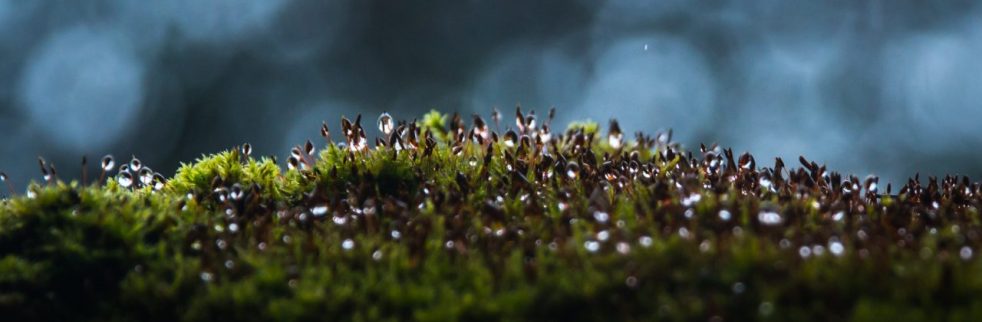
If you work with plants, cities can provide a surprisingly diverse biome. Bricks are a substrate for multiple species of moss. Concrete is no match for the plants that push themselves up through the cracks. Climbing vines, native and otherwise, cling on to rain gutters and windowsills with an admirable tenacity.

Moss growing on and around pavement at the base of a brick wall.

Urban areas are really good for some elemental work, though. The element of Earth is present in the bones of a city, from the steel beams of buildings to the ubiquitous concrete underfoot. Tall buildings give great access to working with Air — few things are as invigorating as a good energy cleanse by standing on a balcony in a strong breeze.

Living in an urban environment doesn’t always make it more difficult to work with the elements. It just takes a little digging.

Uncategorized

Ginger Folklore and Magical Properties

Hot spices have a certain reputation in magic. On one hand, they’re catalysts — helping to speed things along and bring results more quickly. On the other, many of them are baneful or strongly protective. (Chili peppers, for example, are found in many a banishment and protection recipe.)

Then there are what I call the “sweet heat” spices. These are catalysts that don’t show the powerful banishing or repelling properties of other hot spices. They have heat, but their heat is more geared toward attracting things than driving or keeping them away. This is where things like cinnamon and ginger fall.

Since it’s December, I figured a post on ginger would be timely. After all, it’ll be time for ginger cryptids soon!

Ginger (Zingiber officinale) is related to turmeric, galangal, and cardamom. It originated in Southeast Asia, but there are a number of other plants that bear the name “wild ginger.” American wild ginger species are members of the family Aristolochiaceae, making them related to Dutchman’s pipe. While American wild ginger tastes and smells similarly to Z. officinale, they are not closely related. American wild ginger also contains Aristolochic acids which, while they have some medicinal properties, can also damage kidneys and trigger particular types of liver and urinary cancer. (Exposure to Aristolochic acid also correlates with a poor prognosis for liver cancer.) In short, anything that wild ginger can do, there are other remedies that can do it better and more safely. So, for all purposes that suggest ingesting ginger, please assume that this post refers to Z. officinale, and not members of Aristolochiaceae.

In ancient Greece, it was said that ginger flowers grew where Demeter’s tears had fallen after Persephone’s abduction.

In China, ginger was associated with the Monkey King Sun Wukong. He is a fiery-tempered trickster figure who first appeared in the novel Journey to the West published during the 16th century.

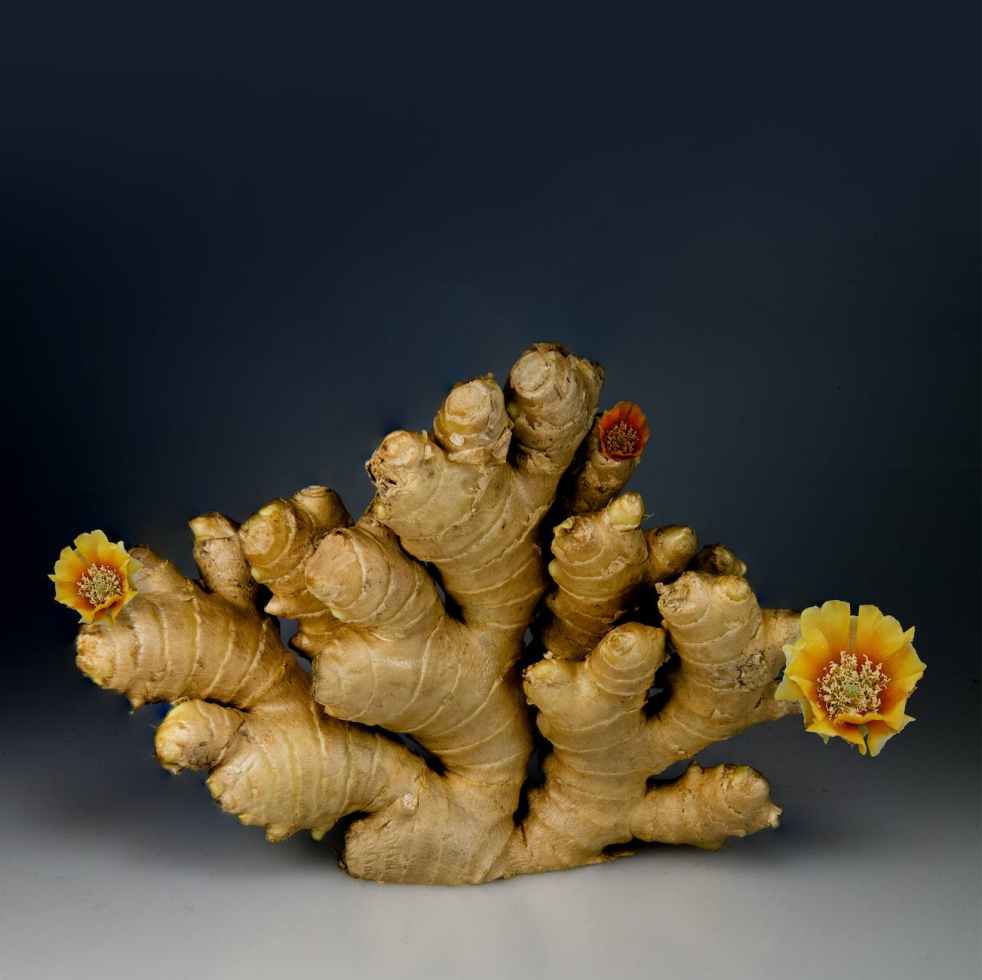
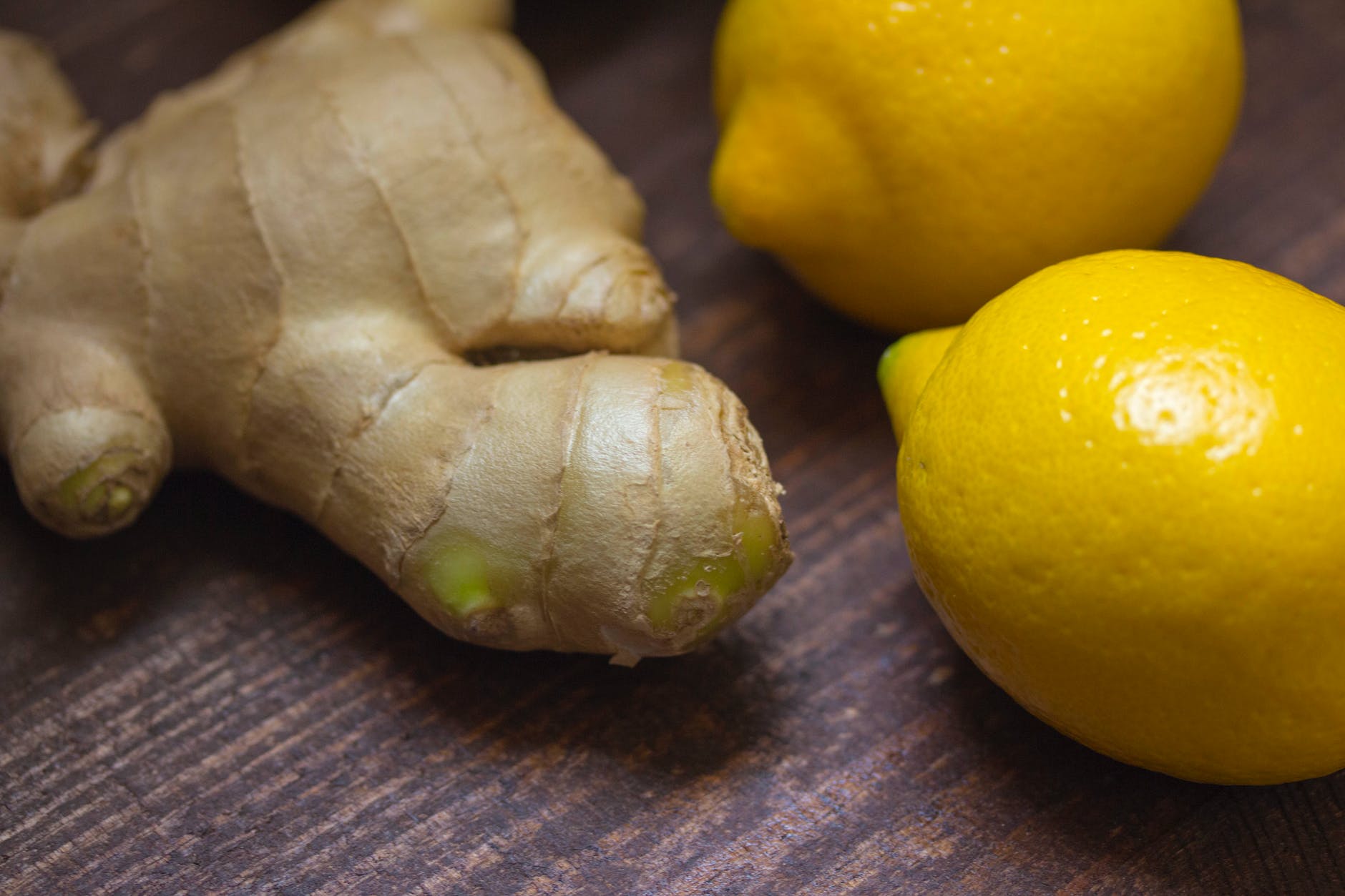
A knobby root of fresh ginger, alongside some whole lemons.

According to Hindu folklore, the first ginger plant arose when Lakshmi tossed a piece of ginger into the ocean.

Pretty much every culture that used ginger recognized it for its warming properties. In ancient Greek, traditional Chinese, and Ayurvedic medicine, ginger is regarded as a spice to ease respiratory ailments and improve digestion. Even today, ginger is used as a natural remedy to reduce nausea. It has shown remarkable efficacy for nausea triggered by pregnancy and chemotherapy.

One old healing ritual involves chewing a bit of fresh ginger root, spitting it out, and rubbing it either on a sick person, or on a photograph or poppet of the sick person.

Overall, ginger is a magical catalyst. This means that it helps achieve results more quickly. It’s also said to increase one’s “inner fire.”

Ginger is often used in romantic formulas to induce passionate feelings.

It’s said that the most powerful ginger roots are those that are shaped like humans, with a knobbly “head,” two arms, and two legs.

This root is associated with the element of Fire, as well as the Sun. As a solar herb, it’s frequently used in rituals and formulas for success and prosperity.

Just as a reminder, Z. officinale should be used for preparations that are intended to be ingested. Members of Aristolochiaceae should not be used internally.

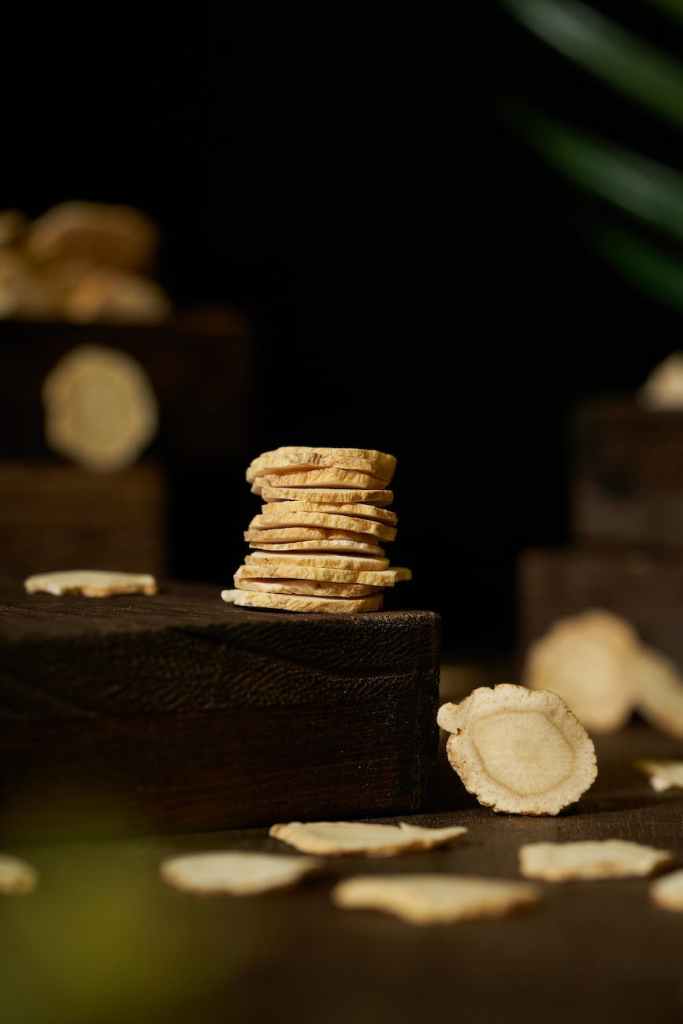
Coin-sized slices disks of ginger root.

Since ginger is a catalyst used in formulas for romantic love, it’s an excellent ingredient in “date night” recipes. Use it alone or with other love- and passion-inducing ingredients, like rose petals or cinnamon, in food or beverages to share with a lover.

A simple money spell involves sprinkling a bit of powdered ginger in your wallet. (You can also tuck a few disks of dried ginger in there, instead.)

As ginger is also considered a physically empowering, warming herb that increases heat and vitality, drinking a cup of ginger tea before a ritual may help facilitate power raising. You can also brew some ginger tea, enchant it for strength, and drink it before playing sports or doing anything physically demanding or competitive.

It’s the Yuletide season here, so ginger is very easy to come by. You can find it in tea, cookies, cakes, and savory dishes alike. With so much delicious ginger at your fingertips, why not use some in your spellcraft?