There’s a delightful metaphysical shop called Sticks & Stones Circle in Fairfax, Virginia, that my Handsome Assistant and I visit occasionally. They moved locations about a year ago, so we figured we were due for another trip. Neither of us have been out of the house much lately — him, because he’s still recovering, and I, because I’ve been busy with various tiny projects. A gentle walk around a metaphysical shop, however? Yes, please.
They used to be located in the same building, but around the back by the larger parking lot. Now, they’re out in front, by a Sherwin Williams. They don’t have a sign yet, but their distinctive front window display makes them pretty unmistakable.
Photo by the owner of Sticks & Stones Circle.
We weren’t here for anything in particular — in fact, I’ve been on a mission to destash and declutter things. If I haven’t worn it, used it, or at least remembered it fondly for a year, out it goes.
So, this was pretty much a trip to restock some herbs and incenses that are challenging to find in our regular herb shop (Smile Herb Shop, which stocks a wonderful variety of medicinal and culinary herbs).
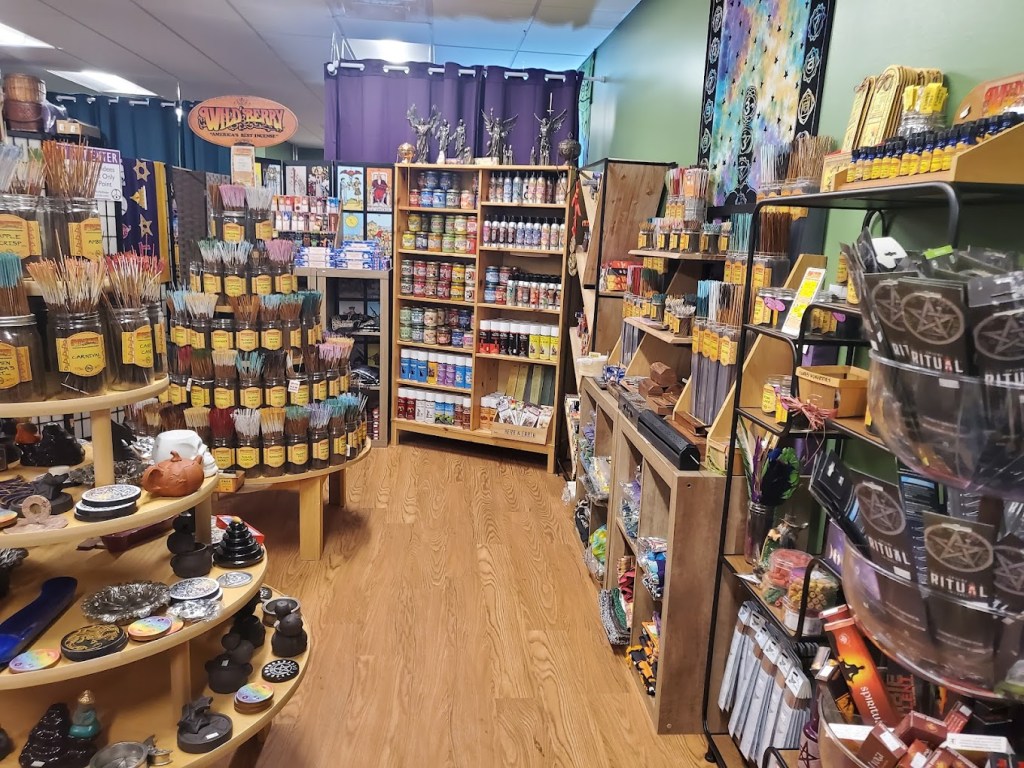
If you are on the lookout for other supplies, however, they have them in abundance — candles, sprays, oils, statuary, books, crystals, jewelry, pouches, pendulums, and altar cloths galore.
Photo by the owner of Sticks & Stones Circle.
We left with two packs of incense (Soul Sticks Celtic Summer and Wild Wood, a very inexpensive but decent-quality natural incense), some copal resin, a small tiger’s eye owl, and a piece of golden healer quartz. I’m a bit of a sucker for golden healers, but more on that another time.
After that, we stopped at a place called Midnight Treats. Neither of us were familiar with it but were delighted to find out that it’s a vegan bakery with the most massive (seriously, they’re 1/3 of a pound and feed two people each) cookies we’d ever seen. They have all kinds of flavors, so we picked up a small assortment: Oreo cake, cinnamon roll, birthday cake, and chocolate brownie. They didn’t disappoint either — they were warm, chewy, delicious, and have satisfied my cookie cravings for a good long while.
They also have new flavors every week. This week, they’ve added iced red velvet and blueberry lemon (and I’d be lying if I said I wasn’t tempted to order some).
All in all, it was a nice little shopping date. In the face of so many metaphysical shops closing, it’s nice to see one that seems to be thriving. If you’re ever up in that area, give Sticks & Stones Circle a visit. Like many other shops of this nature, they’re more than a store — they’re also a hub of classes, celebrations, and other Pagan and witchy activities.
I like mushrooms. Not so much culinarily, but aesthetically and conceptually.
There are thousands of identified mushroom species, but experts estimate that the number of actual species out there is anywhere from two to three times what we’ve managed to identify. Others say it could be in the millions.
Mushrooms have a long history of use in spiritual and magical practices around the world. Giving the folklore and uses of every known species is outside of the scope of this post, but I thought it’d be interesting to give an overview of some of the most unique, recognizable, and significant kinds.
Mushroom Magical Properties and Folklore
People typically consider mushrooms and toadstools two different things, but there isn’t really a hard line between them since these are folk names. According to various sources, mushrooms are edible, and toadstools are inedible. Or else mushrooms are edible and umbrella-shaped, while toadstools are inedible and have round caps. Or toadstools are inedible and large-capped, etc. This can be particularly confusing because there are several species of variable edibility — some are considered edible only when cooked. Some need to be leached with water to be edible. Some are only poisonous if consumed with alcohol. Some aren’t considered edible, but aren’t really poisonous either.
Amanita muscaria, the iconic red- (or tan- or yellow-) capped, white-spotted mushroom, is also called “fly agaric.” This is because it was sprinkled in milk and used as a poisonous bait for flies and gnats.
Sami shamans traditionally have a unique way of processing A. muscaria. The mushrooms are fed to reindeer, and the psychoactive components are passed in their urine. Instead of the potentially dangerous mushrooms, the shamans use the urine to access fly agaric’s powerful qualities.
While it’s natural to associate psychoactive fungi with the spirit world, they aren’t the only mushrooms said to serve as a gateway. The famous fairy rings of Western European stories are circles or arcs of fungi (with or without visible mushrooms) that, were you to enter one, could bring you either good luck or incredible danger.
In Egypt, mushrooms were associated with immortality. In Japan and China, they have similar connotations due to their use as medicinal foods for increasing strength and longevity.
In Slavic mythology, the guardian deity of forests, Leshy, can appear as a fully vegetation-based entity. He may appear as anything from a sacred tree to a mushroom. Mushrooms are also associated with the earth, water, cattle, and underworld deity, Veles.
In Lithuania, mushrooms were said to be the fingers of Velnias, a deity of the dead. He would reach up from the underworld, beneath the soil, to feed the poor.
This isn’t the only association of mushrooms with charity, either. In one Christian myth, God and Saint Peter walk in a rye field. Peter takes a handful of rye and begins to eat it, but God scolds him for taking food that isn’t meant for him. Peter spits the chewed rye out, and God says that a mushroom will grow there as food for the poor.
Interestingly, the dead and the underworld seem to have the strongest connection to mushrooms around the world. The Sidhe of the Celts and the Alfar of the Germanic people were both associated with burial sites, and the beliefs surrounding them may be the last vestiges of ancient, indigenous ancestor worship. This would immediately associate fungal phenomena like fairy rings with the dead.
So, on one hand, edible mushrooms are gifts from the dead to feed the living. On the other, the inedible ones will allow you to meet the dead!
This connection continues with the crane bag of Manannán mac Lir. In addition to being a God of the Sea, Manannán is also a guardian of the underworld. The crane bag is a bag he fashioned from a crane skin that contains several magical tools. According to many Ogham readers, these tools are indicated in the forfeda — the four additional letters at the end of the Ogham alphabet. Iphin (ᚘ) is the crossed “bones of Assail’s swine.” These were pigs that could be slaughtered and eaten and would regenerate again. Robert Graves theorized that these swine were metaphorical, and the bones were not bones at all — they were the stems of mushrooms, discarded once the caps had been eaten or used in ritual. Since mushrooms are just fungal fruiting bodies, and picking them doesn’t harm the actual organism in the soil, it made perfect sense that they would “regenerate” so they could be consumed again.
Because mushrooms seem to spring up out of nowhere after a rain, they’re also thought to represent fertility.
Mushrooms in general are associated with the element of Earth. Planetarily, they’re associated with the Moon. The fly agaric, specifically, is associated with the element of Air and the planet Mercury.
Using Mushrooms
First, I want to say that “there are old mushroom foragers, and there are bold mushroom foragers, but there are no old, bold mushroom foragers.”
If you aren’t an experienced mushroom hunter yourself, and don’t have access to one willing to take you in the field and help you positively ID mushrooms, do not attempt to harvest them yourself. There are way too many poisonous lookalikes out there, some of which can only be differentiated by spore prints or tiny, easily missed differences in appearance.
That said, simply touching a poisonous mushroom is unlikely to elicit a toxic response. However, it can still give you an allergic reaction, so you should still probably not do that.
Now, with that out of the way…
Unless you have access to a reindeer or a shaman, you should probably stick to the non-entheogenic varieties. I would also avoid commercially produced edibles intended for microdosing muscimol (a psychoactive compound). While not all brands are suspect, it seems some haven’t quite got the science figured out yet and several people have become extremely ill (and possibly even died) from using them. I wouldn’t use them myself and I don’t want bad things to happen to people, so I can’t recommend you do, either.
Also, if you drink alcohol, be careful which mushroom species you work with. Some are considered edible — delicious, even — but contain a compound that reacts with alcohol to cause some very unpleasant symptoms.
Otherwise, mushrooms are a suitable offering for deities of the dead and of forests. They’re also a good ritual food for workings relating to these deities or concepts.
You can place dried mushrooms in objects like charm bags, sachets, or spell jars, but with a bit of caution — they’re basically like sponges and will pretty readily absorb moisture and get gross if you aren’t careful to keep them dry. Other than that, go to town.
Whether you enjoy eating fungi or not, they’re fascinating organisms that form the foundation of life on Earth. Without them, other plants couldn’t grow. They’re a gift to the living from dead and decayed things, and, as such, are deserving of reverence.
To be upfront, I do not have a snake. I have had snakes in the past, and I live in in an area frequented by them, and I do have a large male bearded dragon I adopted from a classified ad.
Being a healthy, full-grown bearded dragon, he occasionally goes through periods of shedding skin while being a very sulky boy. A lot of the time, he eats it in order to reclaim the protein and minerals that would otherwise be lost. Sometimes, I find pieces just kind of around, like tiny laundry.
The skins of animals have been used in ceremonies for… about as long as humans have existed, most likely, and they’re still used today. Each animal has its own power and domain, including lizards and snakes. To be honest, serpents alone have so much symbolism and mythology behind them that it’s far too much to get into here. Instead, I want to focus specifically on the folklore and magical properties of shed reptile skin.
Reptile Skin Magical Properties and Folklore
Perhaps one of the most prevalent and enduring qualities attached to snakes is the concept of renewal or rebirth. It makes sense — unlike a lot of lizards, snakes shed their skin all at once. In a pretty short span of time, they go from appearing dull and milky-eyed, to bright, smooth, and rejuvenated. By extension, this has also made snakes a symbol of fertility, healing, and transformation.
Snakes are also associated with protection. This is particularly true of venomous snakes.
In the Danish tale King Lindworm, an infertile queen wishes to bear a child. She follows the advice of a crone and eventually gives birth to twins: one healthy boy, and one boy who’s a half-human, half-serpent lindworm. When the time comes for the lindworm to marry, his bride is horrified on their wedding night. The lindworm eats her. This continues over and over, until a shepherd’s daughter is brought to marry him. The clever girl wears every dress she owns on their wedding night and, when her lindworm husband insists she get undressed, she demands that he shed a layer of skin for every dress she removes. Finally, as he removes his last skin, he reveals his fully human body and is cured. By mimicking layers of snakeskin with her clothing, the girl tricks the lindworm-prince into shedding until he is effectively “reborn” as his human self.
In some forms of American folk magic, snakeskin is carried for luck. Some people also rub it on their hands to help them “hold onto” things.
If you find a shed snakeskin on your property, it’s said to be a sign of spiritual protection. This can also be interpreted quite literally — snakes are vulnerable mid- and post-shed, so they try to do it in places where they feel safe. If a snake feels safe on your property, rats, mice, and other potential pests won’t.
Leopard geckos frequently eat their sheds. Before they do, though, they can end up wearing them like little lizard hoodies. Photo by Pixabay on Pexels.com
Snakes are also sometimes used as a symbol of initiation, as an extension of them as a metaphor for rebirth. In this context, they represent the death of the old self, and birth of the new. This may be part of why they’re considered symbols of wisdom — with each shed, a snake metaphorically moves into a new incarnation of itself. It’s certainly a potent metaphor for becoming wise enough to realize how little we know!
Lizards carry many of the same connections and magical associations as snakes, since they go through the same shedding and renewal process. However, since reptiles very often “recycle” their sheds while snakes don’t, there isn’t as much lore on using shed lizard skin. (After all, even if you find an uneaten one, it’s unlikely to be a very large piece.)
In general, snakes and reptiles are associated with the element of Earth.
Using Reptile Skin
Reptile skin is pretty delicate (and becomes more so the more it dries out), which is good to keep in mind. A freshly shed skin may seem like great material for a poppet or spell bag, but you’re likely to be disappointed once it’s fully dry and crumbly!
Shed skin from prickly, aggressive, or venomous reptiles is good for enemy work. Grind it into dust, combine it with banishing or protective herbs, and sprinkle it around the border of your home, in front of your front door, or in the footprints of an enemy in order to keep unwanted people or entities from darkening your doorstep.
A very handsome boy.
You can also put shed reptile skin in spell jars, bottles, or sachets for protection. I prefer jars or bottles for spells that you want to keep at home (for example, keeping a protection spell bottle near your front door), and sachets for carrying. Since they’re made of fabric, they’re soft. If you’ve got a protection sachet stuck in a purse or backpack, it’s unlikely to break and get herb dust and bits of skin on things.
You don’t have to use an entire shed skin per working. If you have access to a full snake or lizard shed, you can use pieces. Consider ways to incorporate them in workings for change (like finding a new job or home), renewal, initiation, or healing spells.
Shed reptile skins also make for powerful altar pieces. Place them in a fancy bottle, make sure they’re completely dry, cork or cap them to keep the contents protected, and place them on your altar when you have need to tap into snake or lizard energy or work with deities associated with snakes.
Avoid putting shed reptile skin in anything that’s intended to be ingested. While the risk of danger is small, reptiles can carry zoonotic pathogens like Salmonella or E. coli. If any fecal matter remains on the shed, there could be a risk of infection.
Reptiles shed their skins naturally and, if all goes well, safely and painlessly. If they aren’t eaten, these shed skins are a powerful and ethical way to work with the energies of these powerful animals.
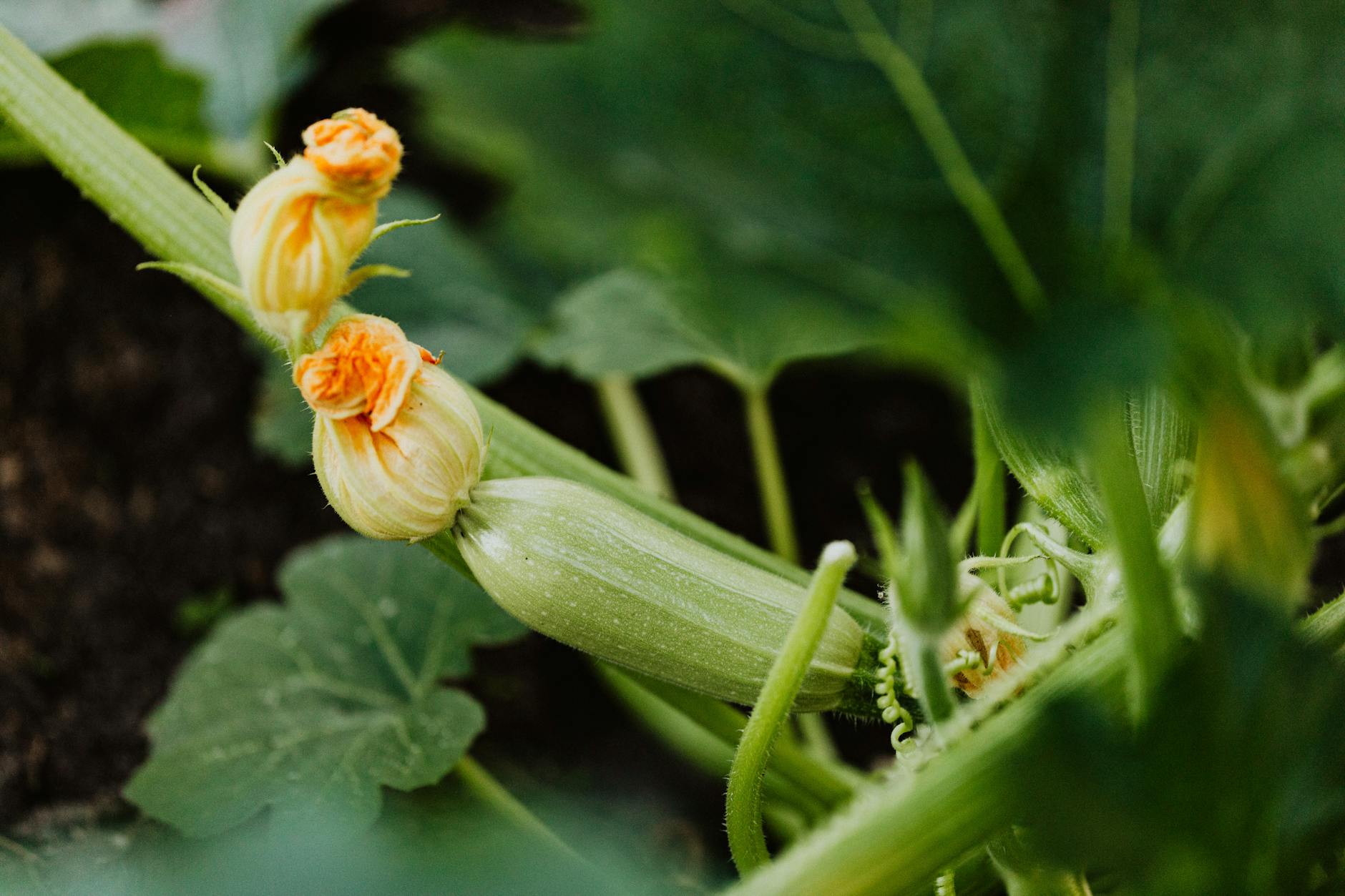
Have you been visited by a Zucchini Fairy yet? It’s a little early, but I have it on good authority that there have been a few of them about. Zucchini Fairies are magical creature known to visit neighborhoods where at least one person has planted zucchini. Overnight, a Zucchini Fairy scopes out these gardens and, the next day, all of that person’s neighbors wake up to boxes of unasked-for zucchini on their doorsteps. They’re very mysterious creatures. In fact, nobody’s ever seen one. All that’s known about them is that they are most definitely not the neighborhood zucchini-grower attempting to get rid of some of the absolutely outrageous number of vegetables that their plants put out.
Honestly, zucchini are really great plants for beginning gardeners. They’re both prolific and easy to grow, so it’s not hard to end up with an absolute buttload of fresh zucchini. You can make them into noodles (aptly named “zoodles”), roast them, slice them thin and fry them, or even bake them into desserts. If you’re more magically inclined, you can also tap into their metaphysical properties.
Zucchini Magical Properties and Folklore
The zucchini we have come to know and love was developed in Italy in the 19th century but did not originate there. It’s one of many plants that came from the Americas and underwent generations of selective breeding to arrive at its current form. Because the modern zucchini is relatively new, there’s not a lot of traditional herb lore around it.
In some areas, locals warn that you should never leave your car windows open during zucchini season. You may return to find your car packed full of it (probably by Zucchini Fairies).
(On a related note, August 8th is official Sneak Zucchini onto Your Neighbor’s Porch Day. I’m not doing zucchini this year, so, if you live near me, yas better strap in for some pumpkins instead.)
While squash is one of the Three Sisters in the traditional foodways of many Indigenous American cultures, that involves other species of squash and not what we picture when we hear the word “zucchini.” Combining corn, beans, and squash creates a food ecosystem in which each plant is fed, supported, and protected. In some Indigenous agricultural practices, each of the three plants is believed to be looked after by one of the Three Sister Spirits. These Spirits are three siblings who were never apart in life — so now, the Three Sister plants much always be planted together, eaten together, and celebrated together as sustainers of life.
If you intend to eat zucchini more or less as-is, seasoned growers suggest picking it when it’s between 6-8″ in length. When it becomes larger, it can get a bit seedy and lose its tenderness. Don’t worry, though — the bigger, tougher zucchini are still delicious when grated and made into breads, cakes, or fritters, so they don’t need to go to waste.
Due to its prolific nature, zucchini is commonly used in magic for fertility and abundance.
Zucchini is associated with the element of Earth. Practitioners who use the masculine/feminine energy dichotomy also associate this plant with “feminine” energy.
Using Zucchini
It’s possible to pick zucchini leaves or flowers to use in things like sachets or jar spells, if you wish. You can also batter and fry the flowers, which are delicious.
Personally, I prefer to leave the leaves and flowers where they are. I find the leaves unpleasant to touch, and the plant needs them more than I do. The flowers also provide food and shelter for pollinators — at night, squash bees like to crawl up inside them just before the flowers close. It gives them a safe, cozy little sleeping bag to curl up in.
As for the vegetables themselves… They’re not exactly the kind of thing you’ll be tucking into your dream pillows or anything (though that mental image is hilarious). So, in lieu of all that, here’s a fantastic recipe for egg-free, dairy-free, nut-free zucchini bread. It also uses cinnamon, which is considered a magical catalyst and love/money herb. Project your intention into the batter as you mix it, and you’ll have a delicious loaf of abundance and prosperity magic when you’re done!
Easy and Tasty Vegan Zucchini Bread
Dry Ingredients
1 cup white einkorn flour (or use regular wheat flour)
1/2 cup whole grain einkorn flour
1/2 teaspoon baking soda
1/2 teaspoon baking powder
1/2 teaspoon salt
1 teaspoon cinnamon
1 tablespoon ground flaxseed
A whole bunch of chocolate chips, walnuts, or anything else you’d like to mix in (optional)
Wet Ingredients
1/4 cup avocado oil (or other oil or fat source of your choice)
2/3 cup maple syrup
1 teaspoon vanilla extract
1 C grated zucchini
Directions
Preheat your oven to 350 degrees Fahrenheit.
While that happens, whisk or sift together your dry ingredients.
Add your wet ingredients and mix thoroughly. (If you’re using regular wheat flour instead of einkorn, you may wish to add a little extra oil, maple syrup, or a few tablespoons of a milk of your choice — einkorn typically requires less liquid than regular flour.)
Spread the batter in a well-greased loaf pan. Bake for 50-55 minutes, or until a toothpick inserted in the center comes out clean.
Whether you’re visited by the Zucchini Fairy, are your local Zucchini Fairy, or purchase your zucchini from the grocery store, these versatile vegetables are a great way to inexpensively pad out pretty much any recipe you can think of. Breakfast? Zucchini muffins. Lunch? Zoodles and pesto. Dinner? Roasted zucchini as a side. Dessert? Chocolate chip zucchini bread. Focus on the abundant, fertile, and prolific nature of these amazing plants, and invite their energy into your life.
Have you ever gone to the store with an idea of what you need, but no real list? And then you go home and discover that you’ve bought everything but a specific item you actually needed?
Tl;dr, I have a lot of pepper plants now.
See, I was going to the garden store for some tomato starts. (I love tomatoes. When my grandpa kept a garden, he grew big, fat beefsteak tomatoes and there are many, many photos of me and my sibling as tiny children with whole tomatoes in our hands, cheeks smeared with juice and seeds. I do not, however, try to grow tomatoes from seed because it is tedious and saving and fermenting them is Not a Good Time.)
Somehow, I managed to return with the herbs I wanted for some railing boxes, a bunch of pepper plants I never planned on, and exactly zero tomatoes. None. None tomatoes.
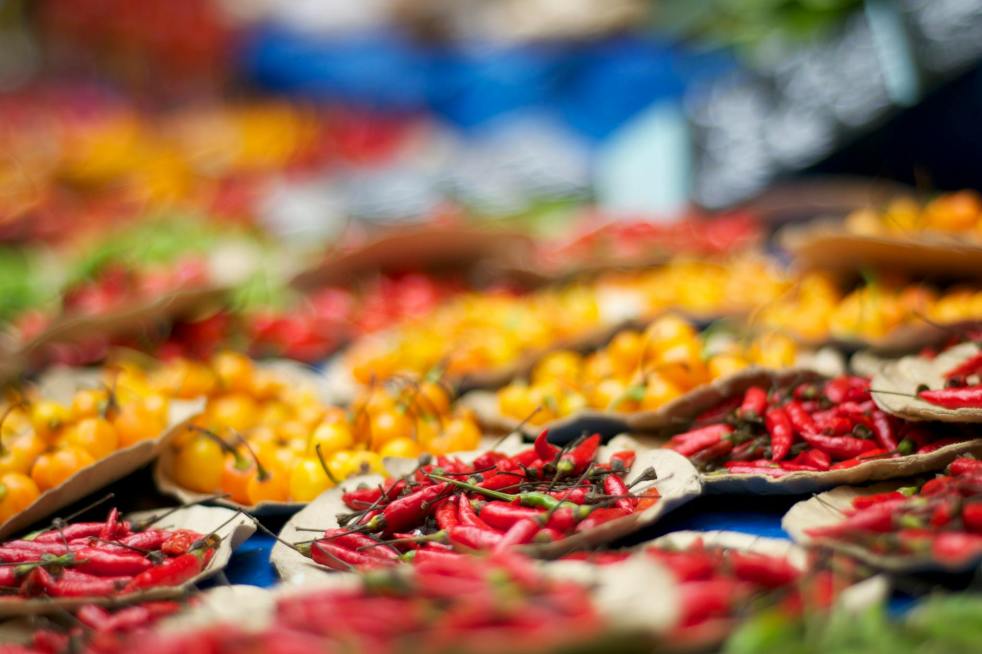
So, I figure now’s as good a time as any for a refresher on the many, many magical uses of the various cultivars of chili pepper.
Chili Pepper Magical Uses and Folklore
Chili peppers are members of the Capsicum genus. 90% of the time, Capsicum annuum. “What about jalapeños?” C. annuum. “Bell peppers?” C. annuum. “Serranos?” C. annuum. “Habaneros?” Okay, those are C. chinense, but mostly due to a series of errors.
It’s been my experience that hot spices, in general, fall into two camps. While the heat of hot spices is great for acting as a kind of magical catalyst to really get things moving, this can be used in one of two ways. The “sweet heat” spices (your cinnamons, ginger, etc.) are commonly used for money, love, and passion. The other hot spices, like chili peppers, are commonly used to banish or protect. In both cases, hot spices are used to get things moving quickly. Whether you want things to move to you or away from you is the deciding factor.
Hot peppers are good at repelling more than just unwanted people, entities, or energies. Capsaicin, the primary compound that gives peppers their heat, is a defensive mechanism to keep peppers from being eaten. Humans, massive weirdoes that we are, decided that capsaicin was delicious, actually, and no plant was gonna tell us what to do. Birds are unaffected by capsaicin, so they’re a major means of pepper seed dispersal. They eat the brightly colored fruits and scatter the seeds in their droppings.
In Coahuila, Mexico, chili peppers are used to counter malevolent magic. Specifically, they’re a remedy against salting, a practice akin to Hoodoo foot track magic. The practitioner combines salt from the homes of three different widows and graveyard dirt taken from the burial site of someone who died violently, and sprinkles it in front of their intended victim’s front door. To counter this, the victim combines chili peppers, star anise, garlic, rue, rosemary, storax, and myrrh, and uses the mixture to fumigate every corner of their home to drive the evil out.
Chilis are also a remedy for the evil eye.
The Tsáchila people, who live near the foot of the Andes mountains in Ecuador, use chilis to foil a kind of vampiric entity called the red demon. This demon feeds on people’s blood, leaving them pale and lifeless. Burning chilis in a fire while serving chili pepper-laden food drives the creature away, since it can’t tolerate the spicy food or pepper fumes.
The Aymara people of Bolivia, on the other hand, add chilis to a pot of boiling water and other herbs to create a cleansing steam bath. Sitting under a blanket, in the steam, is said to drive out evil energies.
To be honest, anywhere you’ll find hot peppers, it seems you’ll find a ritual that involves burning them to drive out evil. It reminds me of a specific incident from my own life — I was making some spicy sautéed broccoli on the stove top and added the spices a little too early. The capsaicin heated up and became aerosolized, and the fumes drove my then-partner outside. So, burning hot peppers really can drive out malevolent influences!
Hot foot powder is another common use for chilis, specifically within Hoodoo. While specific recipes can vary from culture to culture and practitioner to practitioner, chili is usually the base. This is sprinkled in a target’s footprints, in their shoes, where they will walk (like in front of their door), or in a container with a photo of them, paper with their name written on it, or personal possession of theirs. This isn’t a strictly protective practice, though it is certainly used that way. It’s just meant to drive unwanted people away from the user. Some scholars of folk practices think that hot foot powder may be a variation of walkin foot, which is intended to create confusion in one’s target.
Of course, chilis also have their dark side too. One way to curse someone involves throwing specially prepared chili peppers into their home or workplace. The seeds may also be combined with other baneful ingredients, added to a fabric or paper parcel, and tossed in instead.
Medicinally, capsaicin triggers a cooling response in the body. It helps increase circulation and is often used as a topical “counter irritant” for muscle and joint pain. I personally have a few different muscle rubs and pain-relieving balms, and about half of them are capsaicin based.
Hot peppers are ruled (unsurprisingly) by the planet Mars and the element of Fire.
Using Chili Peppers
As mentioned above, chili peppers are excellent at making things go away. (Well, except birds.)
Someone bothering you? Find you someone who can make you some hot foot powder. Need protection? Add chili peppers (or the ashes or char from burned chili peppers) to protective salt and sprinkle it in the corners of all of your rooms. Getting badgered by malevolent magic or evil entities? Smoke ’em out by burning some chilis on charcoal. Just be careful with that last one — chili pepper fumes are no joke for babies, children, and people with respiratory disorders. Basically, don’t expose anyone to the smoke that you wouldn’t also want to spray in the face with bear mace.
I also want to reiterate that, while chili peppers are a magical catalyst, I’d avoid them in situations where you aren’t specifically trying to repel something in a hurry. If you’re looking to attract things instead, go for one of the “sweet heat” spices — like nutmeg, cinnamon, or ginger.
I would not advocate using them for malevolent magic. Don’t get me wrong, cursing is absolutely useful and appropriate in some situations, but that’s something you’re better off learning somewhere other than a random website.
Right now, we’re trying not to count our peppers before they hatch. Should we have an abundant harvest, we’ve got a dehydrator, several batches of mango and hot pepper mead, peach and hot pepper water kefir, pepper jelly, spicy dark chocolate, and plenty of other uses in mind. (I love sweet and spicy flavors together, and mango/pepper, peach/pepper, or red berries/pepper/chocolate are my favorites.) Here’s hoping for an abundant harvest!
Hello! If you’re in the US, hopefully you enjoyed the eclipse on Monday. I spent most of it enjoying the lovely weather, painting my porch, and experiencing the very surreal feeling of an eclipse-dimmed sun.
The family of crows who hangs out here all came to rest in the maple tree in the backyard. (I read that zoos had noted that the eclipse affected animal behavior, and some birds seemed to be agitated by this bit of celestial disruption. I’m guessing these guys figured it wouldn’t be a terrible idea to spend the eclipse in a place they knew came with food, water, and safety.) So, once the porch was finished, I spent the rest of the time relaxing, reflecting, and feeding them hardboiled eggs.
This, and the recent Spring Equinox, got me thinking about the folklore and magical properties of eggs. I don’t eat them, myself, but they’re rich with symbolism and certainly deserve a look.
Egg Magical Properties and Folklore
In ancient Greek Orphism, there was the Orphic Egg. This was an egg, usually depicted with a serpent coiled around it, from which hatched the primordial deity Phanes.
Ancient Egypt had their own concept of a cosmic egg not unlike the Orphic Egg. There was a cosmic goose called the Great Honker (Gengen-Wer) who laid a world egg, from which the Sun and Earth hatched.
In Hinduism, there are multiple mentions of eggs. The Hiranyagarbha is similar in concept the world/cosmic egg. In one tradition, the creator deity Brahma emerged from the egg and created the world. The Shatapatha Brahmana mentions another creation story, in which the Prajapati reproduces himself, releases the waters of the world, transforms into an egg to enter the waters, then emerges from the egg to make the Earth, sky, and middle regions. In Garuda Purana, Vishnu was born from a golden egg.
Eggs are a strong recurring theme and metaphor for creation across cultures, and they’re also associated with the Sun. In Egypt, the Sun was sometimes conceptualized as an egg. In Australia, some Indigenous Australian peoples held that the Sun was produced during a fight between birds. Brolga the dancing crane and Dinewan the emu quarreled, and Brolga grabbed one of Dinewan’s eggs and tossed it from its nest. The egg struck a piece of wood, freeing the yolk from the shell and catching it aflame. This flaming yolk stayed in the heavens as the Sun.
In Europe, eggs were also a symbol of creation, birth, and fertility. French brides would break eggs to ensure a swift pregnancy. German farmers would rub egg yolks on their ploughs to transfer the egg’s fertility to their fields.
As in Australia and Egypt, eggs were also associated with the Sun in much of Europe. This, however, seems largely to do with the fact that both return at the same time. Most of Australia and Egypt have milder winters, but winters in much of Europe can be pretty harsh. The Spring Equinox marks the beginning of spring and longer, warmer days, which is also when birds start laying again. Even modern chickens, who’ve been selectively bred to produce far more eggs far more often, will take a break in winter if they aren’t “tricked” with supplemental lighting. Chickens literally need the Sun or eggs don’t happen!
Slavic egg decorating further connects eggs with the Sun, and is the source of modern Easter egg traditions. Slavic Paganism has a Sun deity named Dabog (or Dazibogu, Dazhbog, Dazhboh, Daždźboh…). Birds were his chosen creatures, for only they could get close to him. Eggs, therefore, are intimately connected to both the Sun deity, and the return of warmer weather and the fertility of animals and the land in spring. Decorating eggs was a way to honor this. The simplest form of decorated eggs, a single solid color, are to be blessed and eaten, conferring the blessing to the consumer. More elaborate designs are for ritual or amuletic purposes.
Eggs are frequently used for cleansing. In Brujeria, they’re a key component of huevo limpia — egg cleansing. Egg cleanses are also a part of Hoodoo. Sometimes, these eggs have certain restrictions imposed on them by the practitioner. For example, the egg may need to come from a specific color of hen, and be laid before noon.
Using Eggs
Using eggs can be as simple as boiling, blessing, and eating them. They’re a traditional food for spring festivals. Though I don’t eat them myself, when I end up with some, I offer them to the birds during their breeding season. The extra protein and calcium seem to be very much appreciated.
Eggs can also be a vehicle for container magic, albeit a delicate one. To do this, make a small hole at both ends of the eggshell without shattering it. Blow through the hole to push the yolk and albumen into a separate container. Use the now-hollow egg to hold dried herbs, petition papers, or other spell materials. Hang the egg from a tree branch with a bit of twine or ribbon. When the egg eventually breaks, the spell will be released.
As with Slavic decorated eggs, you can also decorate egg shells for ritual or amuletic purposes. (For this, you may actually want to use a ceramic or wooden egg instead of a real one — whole eggs will rot, and hollowed-out eggs are very fragile.) Decorate it with wax and dye, decoupage, beadwork, painting, or, if you use wood eggs, pyrography. Choose symbols that relate to the egg’s significance to your practice — creation, fertility, birth, abundance, and so forth. Carry one with you as an amulet, or use them as altar decorations or ritual power objects.
You don’t need to buy or eat eggs to be able to work with their powerful symbolism. Purchase ones made of ceramic or wood, or you can make your own using air-dry clay or papier-mâché. They represent the earliest, oldest magic — the creation of the world, the cosmos, and everything that is. Eggs are the infinite seed of creation, and a very worthy addition to any spiritual path.
Picture it. A group of early humans look up to the sky as it grows dark. A black orb moves into view, blocking the light of the light-giving Sun. The people shout in fear — will the Sun return? Will it be able to fight off the invader? After a few moments, the light returns. The Sun is safe.
If this sounds like a case of cavepeople being foolish and unadvanced, imagine this instead:
You walk outside to your car, travel mug of cold brew in hand. Your eyes are still bleary from sleep. You pat your pockets — wallet, phone, keys. Suddenly, the sky flares into an indescribable bright green color. Angry clouds of magenta move in, obscuring everything from view. It seems as if the heavens themselves overturn, pouring down a rain of tiny, glowing meteors. Confused, and probably afraid your skin is going to be stripped from your bones, you duck back into the house to wait out this bizarre phenomenon. Then, about three minutes later, the glowing meteor shower stops, the clouds part, the meteors sublimate into vapor, and it’s as if nothing ever happened.
And, lightyears away, peering through some kind of very advanced telescope, a bunch of aliens laugh their multiple asses off at the primitive Earth people who don’t even understand that glowing tiny meteor season is a perfectly normal and harmless phenomenon that happens naturally every twenty thousand years.
Sure, eclipses aren’t that rare. Eclipse season happens every six months or so, after all, and even total solar eclipses occur somewhere about every year and a half. But total solar eclipses are also a whole other animal when compared to a partial solar eclipse.
Things need to line up just right (pun only slightly intended) for a total solar eclipse to happen. When they do, the total obscuration of the Sun is only visible across a narrow band of the planet. This very rarely happens in the same place twice. Like, you’re looking at about every 360-410 years or so, or a one-in-every-fourteen-generations kind of thing. You’ll most likely experience several partial eclipses in your lifetime, but what’re the odds you’ll ever be in the path of a total solar eclipse?
Back when people didn’t travel with the kind of swiftness and ease with which they do now, a total solar eclipse was a Very Big Deal. As a result, this phenomenon has accumulated a lot of folklore and metaphysical connections over time. Since we’re about to have one in the US on April 8th, I thought now might be a good time to look at some of the folktales, traditions, and magical practices surrounding solar eclipses of all forms.
Solar Eclipse Folklore and Traditions
In Chinese, the word for eclipse is 日食 (Rì Shí). It includes the word 食 (Shí), meaning edible, food, or to eat. It was once thought that a solar eclipse occurred when sun-eating dogs (in some interpretations, dragons or demons) would attack the Sun. People would fire arrows and bang pots and pans to drive them off and ensure the Sun’s survival.
The Choctaw people saw eclipses in a similar way. Instead of dogs or dragons, greedy squirrels would come to eat the sun. And, just like in China, people would make noise and fire arrows to shoo them away.
The belief that an eclipse was the Sun being eaten (or nearly being eaten) is or was very common all around the world. In Vietnam, it was a giant frog. In the Andes, a puma. In Java, the God of Darkness. In Indonesia, it’s Rahu… but the Sun burns his tongue, so he spits it out.
In ancient Greece, a lot of things were omens. A bolt of lightning flashed from left to right? Omen. You saw a bird flying a bit weird? Omen. Bad dream? Omen. Solar eclipse? Omen. Eclipses were thought to happen as a punishment when mortals displeased the Gods in some way. This is actually reflected in the English word “eclipse,” which comes from the Greek ekleipsis, meaning “abandonment,” or “to forsake a usual place.”
This is somewhat akin to Transylvanian folklore. There, it was said that solar eclipses happened because the Sun, displeased by people’s actions, turned away from the Earth.
The idea of a solar eclipse as a bad omen took a rather funny angle in ancient Babylon. There, kings would hire a temp to stand-in for them for the day. This way, they reasoned, any harm or bad luck that might come to them as a result of the eclipse would happen to the other guy instead.
In Australia, things are a bit different. Australian Aboriginal culture has a long tradition of astronomy, passed down orally, through artwork, and in ceremony, and many different tales about the Sun and the Moon. The Warlpiri and Wirangu people say that eclipses happen when the Sun-woman and Moon-man make love — his body covers hers from view, darkening the sky.
The Diné people of North America also see eclipses differently. Rather than a thing to be feared, they’re a time for peace and reflection. People still observe traditional eclipse ceremonies, and schools and businesses close for the day.
While nobody knows what the people of ancient Ireland thought about eclipses, we do know that they recorded them. The oldest known marking of an eclipse was made over 5,000 years ago. Images of it were carved into a stone cairn at Loughcrew, in Meath. (This doesn’t mean that other cultures didn’t bother recording eclipses, but these recordings either may not have survived, or were done in a symbolic form that has since been interpreted as something else by modern eyes.)
Some harmful solar eclipse superstitions are weirdly persistent. One bit of very stubborn folklore warns that, if you’re pregnant, you should stay indoors during an eclipse. This belief holds that eclipses create radiation which can harm a developing fetus. The thing is, the Sun’s solar radiation doesn’t change during an eclipse. The sometimes weirdly colored corona you see around the Moon’s silhouette during a total solar eclipse is an optical illusion. It’s caused by the interaction between the light at the sun’s edge, the atmosphere, and your perception, not unlike the green flash you can sometimes see on the beach at sunset.
This idea also sounds an awful lot like the idea of maternal impression, an obsolete theory that holds that certain mental or physical influences can affect a developing fetus. It’s the same school of thought that claimed that Joseph Carey Merrick, the “Elephant Man,” developed Proteus syndrome because his mother was frightened by an elephant while she was pregnant, or that pregnancy cravings will give a baby a birthmark in the shape of that specific food.
Speaking of food, another bit of modern-ish folklore holds that food prepared or left out during an eclipse will be poisoned by the same mysterious baby-mutating radiation mentioned above. The thing is, were this true, all of the food growing in the fields or being picked or transported during the eclipse would need to be thrown away. Also, what kind of radiation are we talking, here? Is aluminum foil enough to keep it out? A cabinet door? A fridge? The vague mention of “radiation” is like the vague mention of “toxins” — if it doesn’t ever get more specific than that, it’s probably a fake idea.
(I’ll be real with you, we’re probably better off believing that eclipses are the Sun being eaten. At least nobody wastes food that way, and pregnancy’s stressful enough as it is without having to worry about baby-mutating sky radiation. Besides, then you get to make some noise and have a party afterward to celebrate the Sun not becoming a snack!)
In general, eclipses were (and still are) very often viewed as an omen of some kind. One persistent belief holds that an eclipse within six months of your birthday foretells bad health. Many cultures, like the ancient Greeks mentioned above, saw eclipses as a bad omen and sign of divine disfavor. In the Czech Republic, on the other hand, Bohemian miners saw solar eclipses as a good omen for finding gold.
The Magical Meaning of a Solar Eclipse
So, with such a long history of folklore and mythology behind it, what does the solar eclipse mean for magical practitioners today? That depends on a couple of things.
For one, many people still observe ancient eclipse traditions. If your cultural, religious, or magical tradition has a particular way of observing the eclipse, that can give it meaning for you.
For two, there isn’t really a guide for more modern traditions. In very modern magical circles, particularly those that are heavily shaped by astrology, eclipses are sometimes viewed as a very chaotic time during which people absolutely should not use magic. Others see it as an ideal time for manifestation, during which people definitelyshould use magic. Social media has made everything weird and confusing.
For people whose traditions don’t have a specific eclipse ceremony or belief, solar eclipses are often viewed as times of change, transformation, and renewal. This is closest to my personal feelings. My path is largely informed by what information I’ve been able to find on ancient Celtic practices. Objects like the carvings at Loughcrew seem to indicate that solar eclipses were important events, but not a thing to be feared or hidden from. Seeing it as a quiet (literally quiet — in the path of totality, the darkness causes birds and insects to fall silent and its super eerie) time of renewal makes the most sense to me. I may use this time to charge some water, and I’ll celebrate once the Sun’s back doing its thing again, but that’s about it.
No matter what you decide to do, do it safely. Does this mean shielding yourself from negative energy? I guess, if you feel that it’s appropriate to do so. I mainly mean following NASA safety guidelines so you don’t burn your retinas out, though. Retinas are really important.
My partner has a window shelf of cacti and succulents in his office. In winter, it doesn’t get much action — temperatures are too low and there’s not enough light to foster growth, so we don’t water them from about November to late March or early April. They use up the water stored in their tissues, and the lack of soil moisture means that they’re much less likely to develop rot. Since it’s warming up again, it’ll be time to start watering them soon.
We’re also continuing work on replacing our lawn. One of the plants I’ve considered putting in is a native Opuntia humifusa cactus, also known as an Eastern prickly pear. These are, believe it or not, hardy cacti that are the most wide-ranging species in the US. It can be found everywhere from Ontario, to Florida, to New Mexico. My grandfather’s house in New York had a pretty big specimen planted on one side — it was pretty surreal to see a big blue hydrangea bush, and then this cactus spread out less than ten feet away!
A very handsome, chonky boy.
I’ve also been revamping my bearded dragon’s enclosure. I’m a fan of bioactive habitats, personally, so I make an effort to establish naturalistic microclimates using a variety of lights, sources of humidity, live plants, and even live insects. While desert reptiles can live in very dry, arid conditions, a lot of enclosures don’t include the kind of microclimates that they need for optimum comfort. He’s a big guy who has to live by himself, and I want to make his enclosure as comfortable and stimulating as possible. So, I’ve been looking into spineless cacti and other desert plants that will do the job without putting him at risk of any pokes.
All of this is to say that it’s been a very cacti season, so I thought I’d write a bit on the different folklore and magical uses of these weird, wonderful plants.
Cacti Magical Properties and Folklore
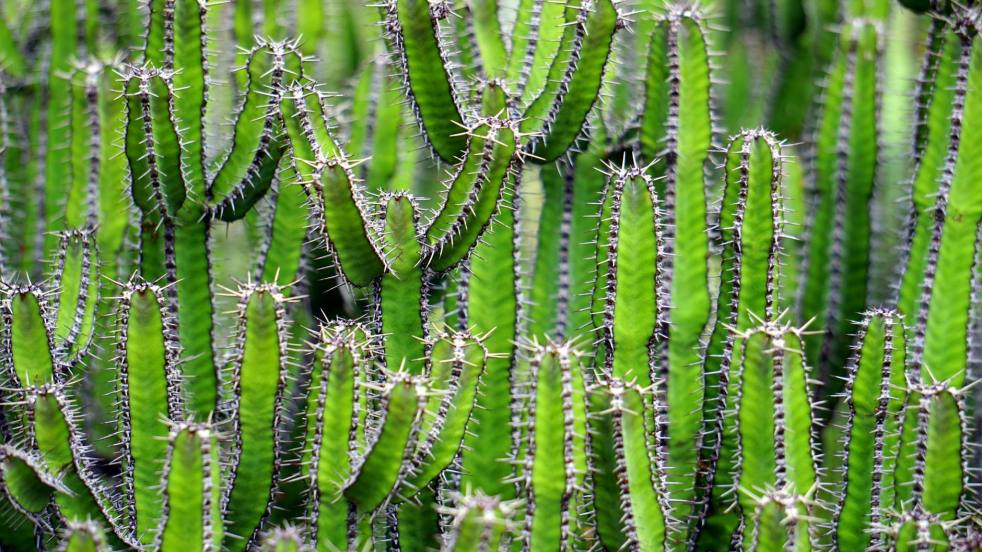
A cactus’ spines are actually its leaves. Like the specialized leaves-turned-petals of hydrangea and dogwood “flowers,” cacti spines have changed their form to suit a specific purpose. In this case, it’s reducing moisture loss and protecting the plants’ plump, water-rich flesh from herbivores. Though they’re thin, spines help shade the cactus from the harsh sun. They also catch rainfall and dew and direct the droplets toward the plants’ roots. While we typically think of dry deserts when we think of cacti, their spines and roots create humid, shady, relatively cool microclimates around their bases.
A Peruvian tale explains where cacti got their spines. On a tall, tall mountain, there was a single lush, green plant. It had broad, tender leaves like lettuce, and was all but irresistible to the local alpaca population. Every day, this plant would have to dodge their attempts to grab a mouthful of its leaves, and every day it prayed for a way to protect itself. One day, the plant heard a terrible noise. A fox was rushing down the mountain with a tremendous boulder in hot pursuit! Panting with exhaustion, the running fox begged the plant to stop the boulder somehow — if it could, the fox promised, he would give it his claws in payment. The boulder came crashing down, and the plant stopped it in the nick of time by spreading out its broad leaves. The grateful fox gave the plant his claws, and the cactus became the prickly plant we know today.
There are also many stories of the relationship between rose and cactus. One such tale talks about how, on rose’s birthday, he invited all of the plants to attend a party. The self-conscious cactus didn’t answer the invitation, since she had no gift suitable to give the rose. Still, the rose sent a butterfly to make sure cactus came to the party and enjoyed herself anyway. The cactus was grateful that rose wanted to invite her, even though she had no suitable gift to give him. When the time came to offer rose his birthday presents, cactus gave him the only thing she had — her protective spiny coat. The rose put it on immediately and, in return, offered the cactus a beautiful flower on her birthday. To this day, rose wears a spiny coat of thorns, and the cactus blooms on her birthday.
Another tale tells of a proud rose who regarded himself as the most beautiful plant in the land. He looked down on the cactus, who had neither beautiful flowers nor fragrant perfume. What use could such a plant be to anyone? When a drought came, the rose began to wither. He noticed, however, that the cactus was still plump and filled with water — so much, in fact, that the birds would visit her to poke holes in her tender flesh and drink. The proud rose humbled himself and asked the cactus for some of her water. Not wishing to see anyone suffer, she told the birds to bring the rose some water. The birds dipped their beaks into the cactus’ green skin, and, flying to the rose, dripped the water on his roots. The rose and the cactus survived the drought, and the rose was never haughty again.
One bit of very persistent folklore says that you can slice open a cactus and drink the water inside. This is only even a little true of one particular species — the fishhook barrel cactus (Ferocactus wislizeni). While this cactus’ water can be drunk in extreme situations, it contains a lot of oxalic acid. Drink it on an empty stomach, and you’re probably looking at a lot of (very dehydrating) diarrhea. Other cacti contain various acids and alkaloids that can do everything from damage your kidneys, to straight-up paralyze you. Cactus-like plants found outside the US, like those in Madagascar and southern Africa, are actually members of the highly toxic family Euphorbiaceae.
The San Pedro cactus (Trichocereus macrogonus var. pachanoi) is an Ecuadorean, Peruvian, and Colombian native that is a natural source of the psychoactive compound mescaline. Peyote (Lophophora williamsii) is native to Mexico and Texas and also contains mescaline. Both of these cacti are considered sacred plants that have been used by humans for spiritual, medicinal, and divinatory purposes for thousands of years.
Cacti are one of those plants that you won’t find in old European grimoires, but that doesn’t make them any less valuable as herbal and magical allies. They are generally associated with resilience and protection.
Some practitioners also believe that they’re capable of absorbing and storing negative energy within themselves. These practitioners cleanse their cacti by repotting it regularly and very occasionally giving it a good soak under running water.
On the flip side, another school of thought holds that cacti can store any kind of energy. Therefore, those plants that have been grown in relaxed, happy environments can actually improve the energy of wherever they’re moved to. These specific plants are frequently used for healing.
Feng shui cautions against having cacti in the home. Their spines are sait to disrupt the harmonious flow of energy.
Cacti are associated with the planet Mars and the element of Fire.
Using Cacti
I can’t really advise you on using entheogenic cacti species, so we’ll skip that part.
In general, the easiest way to “use” cacti is to grow them. I know I say that a lot, but it’s true — living plants can provide benefits above and beyond what dried herbs can.
If you live in an area which cacti can tolerate, then you may want to plant them near the perimeter of your house. They’re great for xeriscaping in desert environments, but some, like the Opuntia humifusa I mentioned earlier, can grow in plenty of other places.
If you do choose to keep a cactus, care for it well. The steps outlined above for “cleansing” cacti? They’re pretty standard care for desert plants. They’ll need repotting as they grow and their soil gets displaced. They also benefit from deep, infrequent watering. Some magic practitioners say that cacti are capable of a kind of “energy vampirism” — that is, if they’re neglected, they can start making the occupants of a home feel lethargic and dragged down.
It’s also important to research what kind of cactus you have, and where it came from. As mentioned above, Euphorbia species are very similar to cacti. They’re also very poisonous and dangerous for children and pets. Some species of cacti are also threatened by overharvesting for the houseplant trade. Cacti poaching is a very lucrative crime, so make sure that yours come from a reputable source (preferably grown from seed, domestically).
Also, be wary of “moon cactus,” also known as Ruby Ball, Hibotan, Red Hibotan, or Red Cap cactus. These plants don’t occur naturally — they’re actually a mutant desert species (Gymnocalycium mihanovichii) with no chlorophyll of its own, grafted on top of another species (usually a tropical dragonfruit cactus). Since the colorful top of the cactus has no chlorophyll of its own, it’s dependent on the host plant for survival. Since both of these species typically have very different needs, they’re very hard to keep alive. While they’re inexpensive and popular, you may want to skip them and choose an easier one. If you really love the look of Gymnocalycium mihanovichii, there are also variegated specimens that still have some of their chlorophyl and aren’t grafted onto host plants.
You can also use cacti spines in the same way that you might use pins or thorns — to spear poppets, fill witch bottles, and so forth. However, cacti generally don’t shed and regrow their spines on a fixed schedule in the same way that other plants lose their leaves, so I don’t recommend harvesting spines for this purpose. If you happen to find a dropped spine or two, however, there’s no reason to throw them away.
Cacti are strange, beautiful plants that show life’s incredible ability to adapt to the most extreme of situations. Long associated with resilience, tenacity, and self-defense, they’re a great plant to cultivate for people who want to strengthen their boundaries and discover their own innate strength.
I swear, mustard is immortal. At least, the kind I scattered in one of my raised beds is.
I had a packet of giant red mustard seeds that were initially intended for microgreens. When I cleared out a neglected spot in the front yard and turned it into a slightly raised bed, I didn’t really have anything to plant in it. So, I chucked a handful of the mustard seeds in there figuring that, at worst, I’d get some sprouts that would die back and essentially act as “green manure.” At best, I’d get some tasty mustard greens.
This was two summers ago. I have not sown mustard since. I am still harvesting tons of huge, fresh mustard leaves.
Right before sitting down to write this, I went out to grab some leaves to use on sandwiches and as salad for my bearded dragon, Cecil. (His salads use collards, turnip tops, kale, or mustard as a base, with various other vegetables, limited fruits, a dusting of calcium and/or vitamin powder, and a sprinkle of dried black soldier fly larvae. I swear, I put more effort into his nutrition than I do my own.) That got me thinking — I’m familiar with the spell uses of mustard, and I’ve heard the bit of Christian folklore about “having faith as small as a mustard seed” before, but what else is out there? What more does mustard have to offer?
Mustard Magical Properties and Folklore
Mustard, as a condiment, is old. Very old. In ancient Rome, people would grind mustard seeds with wine and use the resulting paste just like we use mustard today.
(Believe it or not, the easiest way to temper the heat of mustard is to change the liquid component. Mustard seeds, on their own, don’t really taste like much when compared to mustard as a condiment. They need to be crushed and mixed with a liquid to really express their full flavor. Using water to make a mustard paste creates a very hot mustard. Acids, like wine or vinegar, temper the heat by altering the enzymatic reactions within the crushed mustard.)
Mustard is a member of the Brassica family. That means that it’s related to broccoli, kale, cabbage, turnip, Brussels sprouts, cauliflower, and kohlrabi.
In traditional Chinese medicine, mustard is used for respiratory problems, skin conditions, and pain in the joints or muscles. Mustard is actually pretty useful for muscle or joint pain, as it’s a counterirritant that encourages blood flow to an area — similarly to the way that we use capsaicin cream today.
In early Western medicine, mustard seeds were crushed, placed in a protective dressing (usually flannel), and applied to the body to warm it, improve blood flow, and speed healing. This was most commonly used for issues like joint pain, muscle strains, and chest congestion. While it has since become less popular than standardized preparations of compounds like capsaicin or menthol, it is still sometimes used as a home remedy for aches, pains, or colds.
A bit of German folklore advises that new brides should sew mustard seeds into the hems of their wedding gowns. This helps ensure that they don’t get bossed around in their new households. It also helps ensure good luck.
Mustard is, like many hot or irritating spices, used to repel things. In both Denmark and India, scattering mustard seeds around the outside of a property was believed to keep evil away.
This is something we see time and time again — the vast majority of evil-repelling plants that I’ve encountered are also good at repelling physical pests, as well. Mustard is no exception. The leaves have a spicy, subtly bitter flavor that makes them pretty unpalatable for a lot of pests. (I got to see this in action when I was cleaning cabbage loopers off of my kale and broccoli. The mustard was untouched.)
In general, mustard is considered a useful magical herb for any workings that deal with healing, repelling evil, or attracting good luck.
Mustard is associated, probably unsurprisingly, with the element of Fire.
Using Mustard
Looking at its historical uses, mustard is one of those interesting herbs that can be a bit misleading. There are a lot of charts and tables out there that’ll tell you basic information — for luck, use x, y, or z. For love, use a, b, or c — but don’t go any further than that.
Here’s the thing: Mustard acts, in all ways, as a repellent. Medicinally, it inflames tissues, bringing in more blood flow to flush out whatever the problem is. Horticulturally, the heat and flavor in the leaves repel insects and sensitive herbivores. In folk magic, it repels evil.
While mustard is an effective herb for attracting good things, this appears to be because, traditionally, it chases away the bad. Once evil is repelled, good fortune and healing can come in.
For this reason, I don’t really recommend using mustard on its own. If you really want to dial in a working for good luck or healing, combine it with herbs that focus on those things. Mustard will help clear away the bad, and they will help bring in the good.
Since mustard is typically available as seeds, it’s also a useful tool for sympathetic magic. To increase one’s luck, combine fresh, untreated mustard seeds with luck-drawing herbs like alfalfa (another herb that’s generally better to not use alone), fenugreek, dried chamomile, or crushed allspice berries. Scatter the mixture outside declaring that your luck will grow as the mustard seeds grow.
On the other hand, if your goal is to purify or banish, then mustard is fine on its own. Scatter the seeds outside, across the area in front of your front and back doors, etc. Sprinkle bits of ground mustard powder in the corners of your rooms and under your door mat. Tell the seeds that you want them to repel evil, and thank them for their help.
Mustard is a delightful, delicious, and nutrient-dense addition to any meal. It also packs quite a metaphysical wallop — while its hot and bitter compounds are great at keeping garden pests away, it’s equally good at repelling evil. It’s a very useful addition to spells to attract good things, as it’ll help keep away the bad and make room for more blessings in your life.
Every summer, a Druidry group I am part of gets together to grill, tell stories, sing, and swap goods and gear. Some of these are things we’ve made (like artwork or preserves), some are things we’ve grown (like plant starts and seeds), and some are things we’ve purchased, and want to find a new home for. I’ve taken home books, macrame plant hangers, sculpture, watercolor art, camping gear, oracle cards, some vintage Le Creuset, and one very unique tool.
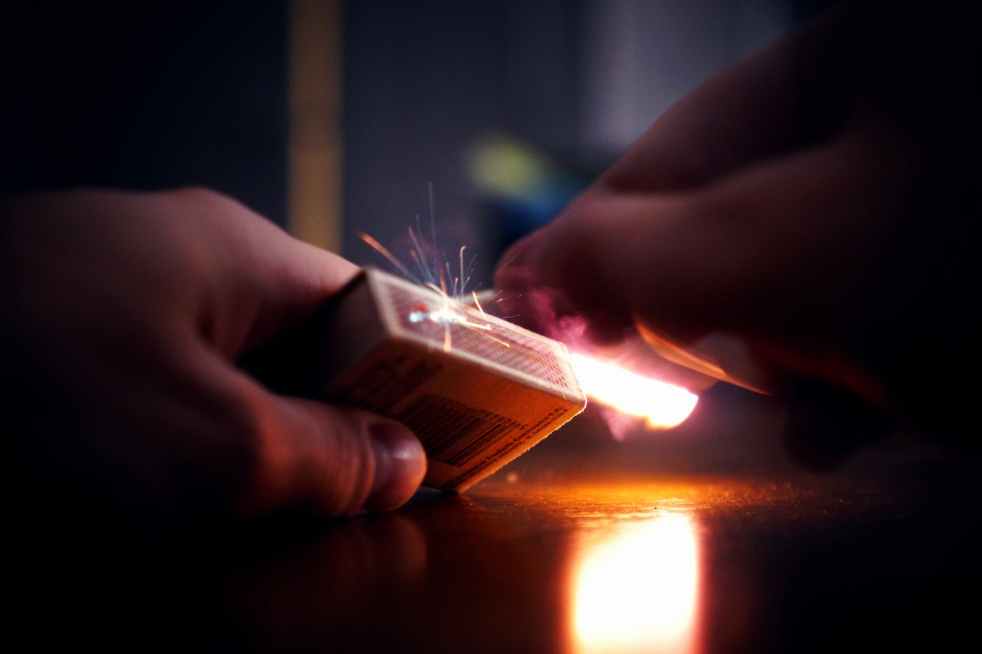
This is the Spark Magic box. It describes itself as a way to “[k]indle that inner spark,” and carries this idea through the prompts themselves. They’re all derived from various creative and spiritual practices, with a bit of self-care mixed in, printed on 50 cards shaped like matches. This makes it easy to shuffle through them just by shaking the box, plus the match design is just a really fun, unique idea.
This isn’t your standard oracle deck or list of journaling prompts, however. There are some writing prompts, of course, but this box also contains ideas for physically and mentally taking care of yourself, beautifying and enhancing the health of your immediate environment, and cultivating a regular practice to help you feel empowered and self-fulfilled.
Personally, I like it a lot. I often experience periods where I feel sort of dull and lifeless (enhanced, no doubt, by cyclothymia). While the prompts in here aren’t a substitute for a therapist, the ideas are usually pretty good at helping me to re-engage with practices that I’ve allowed to fall by the wayside. They help me feel more enthusiastic about doing stuff again. I feel like they’ve been much more helpful in this regard than the usual lists of self-care suggestions and journaling prompts that I see online.
Part of this may be due to the structure of the deck itself. It’s not a pick-and-choose list of things to do — there’s an oracle deck-style element to it. Part of the fun isn’t just drawing a match and seeing what it says, it’s taking some time to think about why I’ve drawn the specific match that I did. This also makes it fun to combine with tarot or oracle readings.
Would I recommend this? Yes, absolutely. If you’re someone who feels like they could use a little boost or some inspiration now and then, Spark Magic may be helpful for you. At $12.95, it’s also pretty inexpensive. If you like cartomancy, try combining Spark Magic with your oracle or tarot readings as a fun, interesting way to gain more insight.












 Marble Crow