My Handsome Assistant and I were originally intending to go on a camping trip with a local Druid group that we’re part of, but with him still recovering from his accident, we decided (at the last minute) that it might be better to focus on getting him to 100% before we try tent camping.
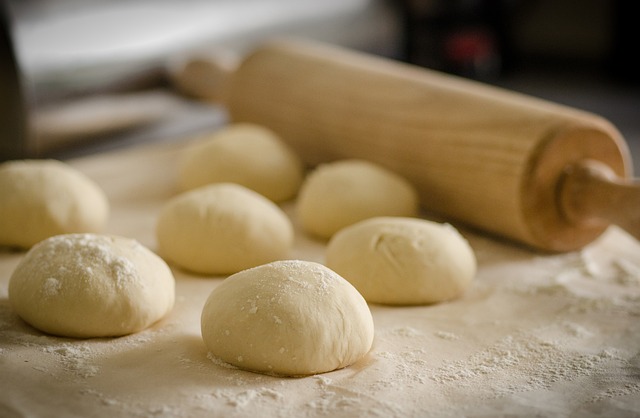
So, rather than having singing, dancing, feasting, and ritual in a group, we had a smaller, homey version: fresh baked breads, homebrewed peach mead, music, ritual, and a spirit feast.
What’s a spirit feast? Exactly what it sounds like — a feast conducted for deities, ancestors, spirits of the land, guardian and guiding spirits, and any spirits to whom we may owe a debt (for example, spirits of the land affronted by new construction, tree felling, and so forth).
Unlike the “dumb suppers” of Samhain, this is not just for ancestors and the beloved dead, and it’s more like a party. Offerings are carefully chosen and high quality. Incense. Flowers. Candles. Fresh bread. Wine. Fruit. Good food, well prepared. Is it a traditional part of Lughnasadh celebrations? Not really. But Lughnasadh is a time to offer the “first fruits,” and so, in the absence of being able to party with friends, it seemed an appropriate way to offer the first fruits. It felt right. It was equal parts fun and moving. I’ll probably make it part of my celebrations from now on. Lughnasadh, after all, may have its origins as a funerary feast for the mother of Lugh, Tailtiu. She died of exhaustion after preparing the land for agriculture, and represents the Earth that feeds us and the plants that are harvested and die back in the high summer heat. It seemed a good idea to pay back this sacrifice and invite the spirits of the land to a feast.
This year, the fruits of our garden are particularly abundant. The Virginia roses (Rosa virginiana) are all but bowed over with fruit. The passionflower (Passiflora incarnata) vines are thick and lush and heavy with their strange purple flowers and egg-like fruit. The pumpkins are pumpkining. The beautyberry (Callicarpa americana) is both beautiful and extremely berried.
It’s very good. I hope things are very good with you, too.
Today marks Lughnasadh, the celebration of the first harvest. This usually focuses on summer fruits and grains, so there’s lots of blueberries/bilberries, baked goods, apples, and pears.
In another sense, it’s about coming together to share. Traditionally, it happened during a time of year when the earliest crops were spent, and the next round wasn’t ready for harvest yet. Lugh is also credited with battling the powers of blight, which is connected to the scorching, drying heat of the summer’s hottest days. That meant celebrating with foods that either stored well (like apples and grains) or could be foraged this time of year (like bilberries).
It also started as a funerary feast. While it’s associated with the Celtic deity Lugh, he created this festival in remembrance of Tailtiu, his mother figure. She’d died of exhaustion after clearing the land for growing crops. That makes this festival a poignant combination of anticipation of what’s to come, and gratitude for what has passed. It’s joy and sorrow, thanksgiving and mourning. Tailtiu has passed on, but the land is ready.
This year, we were supposed to join in a camping trip and Lughnasadh celebration. Unfortunately, a combination of high temperatures and severe weather meant that that didn’t pan out the way we’d wanted. Instead, it’s given me more time to think and (as overused as this phrase may be) connect with this High Day.
Really, I’m at a Lughnasadh point in my life. The rise of AI chat bots has coincided with the natural end of several long-term paid writing projects that I’d been working on, so I’m not getting the same volume of work that I once was. At the same time, I’m investing more of my time, money, and energy into other things that haven’t yet paid off. There’s mostly been a lot of planning and reading stuff to help me figure out how to navigate this transition.
But I’m not doing that today. Today, I’m extremely thankful for everything that the old cycle has given me. I’ve reaped some very generous harvests from it, and that’s awesome. I’m also excited for my next projects. Having less paid writing means less money, but it also means a lot more time and creative energy to put into things that have deeper meaning for me.
Today, I’m baking bread. I’m making these very strange (but very delicious) cookies full of dried berries and cacao chunks. I’m eating dried blueberries by the handful, and searching my strawberry plants for ripe, red berries.
Have a happy and abundant Lughnasadh, and I hope we all reap a good harvest in the days to come!
I love blueberries. Few things are as delightful as a fat slice of warm blueberry pie or cobbler, with a generous dollop of ice cream (or non-dairy ice cream equivalent, as it were).
I was very excited to find that the previous occupants of this house had planted some blueberry bushes in the back yard. Unfortunately, these bushes weren’t exactly thriving — they’d been planted in an area that’s under trees. It gets plenty of light during the late autumn to early spring, but very little in the warm months. Our soil is also hard clay, and it didn’t appear that the area had been given much organic matter.
So, as much as it worried me to do it, my spouse and I uprooted these bushes and moved them into a much sunnier spot, blended well with a generous amount of shredded bark and leaf compost. We also planted two more bushes of a different variety, to fill out the tree guild we’re building around the Chehalis apple tree I talked about two weeks ago.
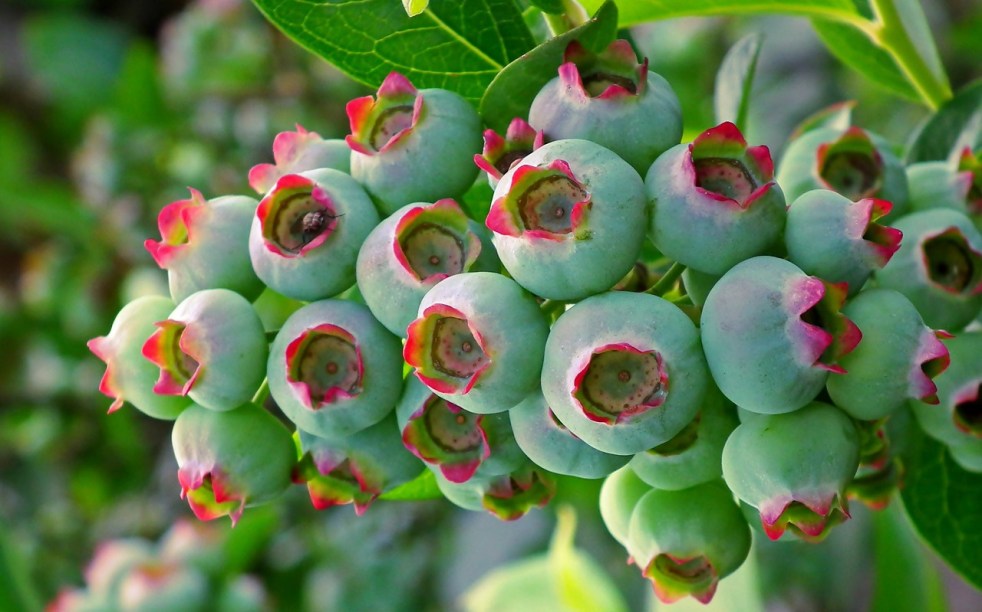
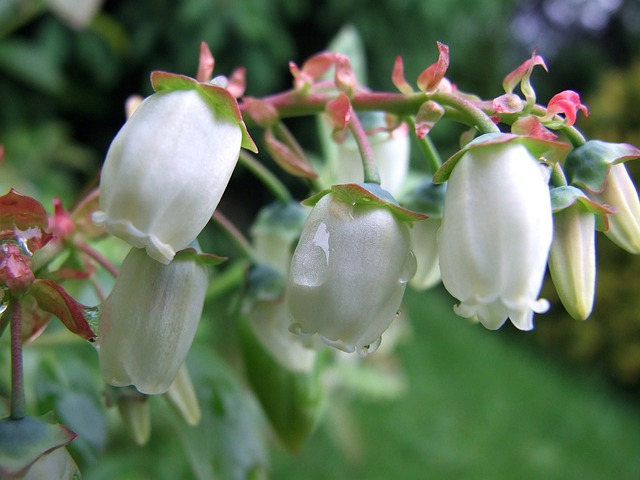
Some lovely little unripe blueberries on one of the bushes in the back yard.
This post isn’t about soil composition and permaculture, though I could definitely go on for volumes if it was.
No. Today, I want to get into some of the folklore and magical uses of these wonderful little balls of deliciousness.
It should be noted that blueberries (Vaccinium angustifolium, V. corymbosum, et al) are a strictly New World fruit. There’s a European relative called the bilberry (or European blueberry, Vaccinium myrtillus) that’s very similar, and the magical properties of these fruits are virtually interchangeable. If you live in an area where bilberries are native, use bilberries. If you live where blueberries grow, use those instead.
Blueberry and Bilberry Folklore
While blueberries are named for their deep purplish-blue color, the name “bilberry” is likely of Scandinavian origin. The Danish word bølle means “whortleberry,” which is another word for certain members of Vaccinium including the bilberry.
You can tell blue- and bilberries apart by their fruits. Blueberries grow in clusters, are a purplish-blue, and have a blossom end that looks a bit like a pentagon with five pointed flaps. Bilberries grow alone or in pairs, are almost black, and have a circular, smoother blossom end.
As you can see from this bilberry’s “butt,” they have rounder blossom ends and lack the pointy flappy bits of American blueberries. Compare it to the unripe blueberries in the photo above this one.
In Ireland, bilberries (fraochán or fraughan) are traditionally gathered during the last Sunday in July and the first of August. The first of August is Lughnasadh, a festival marking the beginning of the harvest season. Bilberries and blueberries are a traditional addition to Lughnasadh festivities all around the world.
Since gathering bilberries was traditional for the beginning of the harvest season, they were treated as a kind of oracle. If the crop was abundant, other crops would similarly flourish. If the bilberries did poorly, everything else would, too.
In ancient Greece, bilberries came from Herme’s son Myrtillus. King Oenomaus of Pisa had been given a prophecy: He would one day be killed by a son-in-law. Seeking to avoid this fate, Oenomaus decided to prevent his daughter, Hippodamia, from ever marrying by challenging every one of her would-be suitors to a chariot race on the Isthmus of Corinth. If the suitor won, he’d get Hippodamia. If he lost, Oenomaus would kill him. Since Oenomaus’ chariot was pulled by horses given to him by the god Ares, there was no way he could ever lose.
Then came Pelops. Hippodamia fell for him immediately, and went to her father’s servant, Myrtillus, for a favor. She wanted him to sabotage her father’s chariot so he’d lose the race, and Myrtillus, full of unrequited love for Hippodamia, agreed. On the day of the race, Myrtillus switched the metal linchpins of Oenomaus’ chariot with ones made of beeswax. Oenomaus’ chariot flipped, and Pelops beat him easily.
Some versions of the story say that Oenomaus, with his dying breath, asked to be avenged. Pelops then threw Myrtillus into the sea, and Hermes turned him into a bilberry shrub when he washed to shore. Another version says that Pelops, Hippodamia, and Myrtillus were traveling, when they stopped at an island so Pelops could fetch his new bride some water. When he returned, Hippodamia was in tears. Myrtillus had tried to sleep with her, she cried, while Myrtillus protested that she had promised to do so in exchange for sabotaging Oenomaus’ chariot. The enraged Pelops then killed Myrtillus.
In the folklore of some of the people indigenous to blueberry’s native range, blueberries are called “star berries” for the star-shaped blossom end.
In the Victorian language of flowers, bilberry represents treachery. This symbolism is likely borrowed from the Greek story of Myrtillus.
Blueberry and Bilberry Magical Uses
Blue- and bilberries are associated with protection and luck in European witchcraft.
Dried bilberry leaves are used in protective powders but can also be used whole for prosperity and luck.
The fruit is similarly used for protection and hex-breaking.
(Considering bilberry’s associations with treachery and crop divination, I wonder if their protective properties stem from their connection to physical danger and starvation. Today, we know that fruits like blueberry and bilberry can protect against oxidative cellular damage due to their antioxidant content, but their traditional connection to protection goes back much farther.)
Using Blueberries and Bilberries
Blueberries and bilberries couldn’t be simpler to use. For kitchen witches, include them in recipes for protection and the removal of malevolent enchantments.
Crushing the fresh berries can yield a pigment suitable for drawing protective sigils on paper talismans, the skin, and anywhere else you might need them. Just bear in mind — both of these berries are sweet, and your talismans may be sticky and likely to attract bees this way!
To protect your property, dry bilberry or blueberry leaves. Powder them well, then sprinkle the powder around the perimeter of your home or yard.
To break a hex, jinx, or run of bad luck, burn dried blue- or bilberry leaves. Use the smoke to fumigate the same way you’d use incense smoke.
Blueberry and bilberry don’t appear to be reversing herbs. That is, they don’t return treachery or malevolent magic to the sender. They just keep it from affecting you.
Since bil- and blueberry seems to predominantly be a protective herb, I would hesitate to use it solely for drawing luck. It appears that it’s virtue in luck drawing lies in its ability to get rid of jinxes and other things that hold you back. For luck spells, then, I’d pair blueberry or bilberry leaves with an ingredient used more specifically for attracting good luck. The berry leaves can clean up the things standing the way of your luck, and the other ingredients can draw it in. Allspice, chamomile, and fenugreek are all good options to consider here.
Interestingly, strawberries are sometimes used in small amounts for luck drawing. You could then theoretically make a jam, smoothie, or pie with both blueberries and strawberries, and, when appropriately made and empowered, use it to attract good luck to you.
It remains to be seen how my poor transplanted blueberries do, but the newer ones seem to be thriving. When the time is right, I’ll harvest the fruits and some of the leaves, and hopefully have enough protection and hex-breaking to last me all year!
Lughnasadh is one of the High Days that falls between the solstice and the equinox. It’s an ancient celebration of the first harvest, but I’m probably not alone in feeling less than enthusiastic about this year. To be honest, I can’t honestly say I “celebrated” it.
The harvest is when you reap what you sow, and we’re reaping a whole lot of bad right now. Unable to get the message, police forces respond to protests against police brutality with increased brutality. Told that we need to wear masks and avoid indoor gatherings to slow the spread of a virus, people vocally rebel by not wearing masks and having rallies indoors. Other countries ostracize the U.S. as if it were a mass of plague rats, and I can’t really blame them. This is what we’ve collectively sown, and what are we harvesting in return?
I made a small offering (some beans I sprouted in a jar), but this Lughnasadh was less about celebration and enjoying the fruits of the first harvest than it was about understanding cause and effect. What we sow, we reap. You can’t meet challenges with brutality and callousness and expect to harvest success.
While I have plenty of growth and cause for celebration in my own life, it pales in comparison to what’s happening outside. Even so, that serves as its own reminder to find joy where we can. Even when the world’s on fire, there are small triumphs worth recognizing. There are still new bean sprouts in the jar.
Thanks for indulging my melancholy today. Promise I’ll be less of a buzzkill tomorrow 🧡







 Marble Crow