These chocolate chip cardamom cookies are delicious, easy to make, and suit a number of dietary restrictions. You can even make them gluten-free if you substitute your favorite 1:1 GF flour for the einkorn. The cardamom gives them a unique flavor that pairs beautifully with the chocolate (and has some other unique properties, if you’re into that).
Chocolate Chip Cardamom Cookie Ingredients
Drys
2 cups of einkorn flour (I usually use 1 1/2 cups of white einkorn, and 1/2 cups of whole grain einkorn)
1/2 t baking powder
1/2 t baking soda
3/4 t salt
1 t cardamom
1/2 to 3/4 cup of chocolate chips (honestly, I just throw in handfuls until my soul says it’s good)
Wets
1/4 to 1/3 cup sugar (unbleached, raw sugar if you’re vegan)
1/2 cup maple syrup
1/2 cup avocado oil
2 T chia seeds
1 t vanilla extract
Instructions
Preheat oven to 375° Fahrenheit.
Start by combining your wet ingredients. Just put ’em all in a bowl and give them a good stir, then set them aside to thicken a bit. (For our purposes, chia seeds serve as a wet ingredient — they’re our egg substitute. Some people make a “chia egg” by soaking the seeds in water first, but I find that this makes the chia flavor a bit more forward. I’ve found that hydrating them in the maple syrup, sugar, vanilla, and avocado oil avoids this.)
Sift together your dry ingredients, except for the chocolate chips. Add those after sifting.
Add the wets to the drys, and mix until they form a dough. Einkorn doesn’t absorb as much moisture as conventional wheat flours do, so the dough is likely to be a bit looser or wetter than you may be used to. That’s fine, but, if it’s so loose that it won’t even hold together in spoonfuls, add some more flour.
Place the dough by rounded spoonfuls on a greased cookie sheet. Bake for 12-15 minutes at 375°. (I make big spoonfuls, so I usually get about 15 cookies from this recipe.)
Allow to cool, then enjoy!
I love these chocolate chip cardamom cookies with milk (hemp or Ripple), but they’re also really good with a warm cup of spice tea. Sometimes, I’ll even eat one or two for breakfast — chia seeds are good for you, and the flour and maple syrup means these’re basically pancakes, right?
Winter’s rapidly coming to an end — we still have a day or so of snow and cold temperatures here and there, but there are signs of the plants and soil waking up all over. On one particularly nice day, I was sipping a root beer on the back deck when a memory came to me out of the blue.
“I could never stand that stuff,” a friend of mine once said.
“What, root beer? It’s like the most basic beverage of no offense to anyone.”
“It tastes like mouthwash,” he replied.
“… You’ve got to be kidding me.”
He wasn’t exactly wrong, though. Some of your fancier, gourmet root beers do contain derivatives of wintergreen, perhaps best known for playing a starring role in chewing gum, breath mints, those white Lifesavers candies, and yes, toothpaste and mouthwash. Even the artificially flavored ones have echoes of this flavor.
Wintergreen is a fun ingredient. It has a ton of uses industrially, medicinally, magically, and in food. It also has one of those names that can get you in a bit of trouble if you’re not careful.
Wintergreen Magical Uses & Folklore
(and a bunch of chemistry stuff)
There are a lot of plants named “wintergreen.” Members of the genus Gaultheriaare native to Asia, Australasia, and the Americas. Pyrola is distributed temperate and arctic North America, Europe, and Asia. Chimaphila used to be a whole separate thing, but is now in the same family as the other wintergreens. (Don’t get me started on one-flowered wintergreen.) All of these genera fall under the family Ericaceae. Some members of Lysimachia are sometimes called “wintergreen” even though they’re all pimpernels and loosestrifes (loosestrives?) and aren’t related at all. As if that weren’t confusing enough, the term “wintergreen” also used to be applied to any plant that remained green through the winter, the way we now use the word “evergreen.”
While there are a ton of different wintergreens out there, the classic oil of wintergreen flavor is primarily either derived from Gaultheria wintergreens or synthesized.
A bit of modern folklore says that, if you bite a wintergreen candy in the dark, it’ll spark. Wintergreen candies can create sparks under the right conditions. This is due to triboluminescence, which occurs when energy is put into atoms by friction, heat, et cetera. When those atoms return to their normal state, that energy is released as a brief spark. Chomping on regular old sucrose is enough to generate a little triboluminescence, but the brightness of wintergreen candy sparks comes from a neat synergy between the sugar and the wintergreen oil. The oil’s most notable aromatic compound, methyl salicylate, is fluorescent. When the sugar grinds against itself when you bite it, it emits a bit of dim triboluminescence that’s mostly outside of the visible spectrum. The fluorescent methyl salicylate absorbs this energy and releases it as much more visible blue light. Put it all together and voilà, sparks!
Speaking of methyl salicylate, you might recognize the “salicyl” in there. (Methyl salicylate is an ester of salicylic acid — in fact, artificial wintergreen flavor is synthesized from straight-up salicylic acid and methanol.)
Traditionally, Indigenous people prepared the leaves as a tea to ease symptoms of rheumatism and other joint pains. In the body, methyl salicylate gets metabolized into salicylic acid, the same pain reliever derived from white willow bark (Salix alba). However, wintergreen oil is pretty potent stuff. A single teaspoon of it is about equivalent to 20 300mg aspirin tablets!
Another member of the Ericaceae family, Chimaphila maculata, is known as “spotted pipsissewa.” This is derived from the word pipsisikweu, meaning “breaks into small pieces,” since it was traditionally used to treat gall, kidney, and bladder stones.
Though the oil is highly potent, teaberry is edible. The berries can be made into pies, and the leaves eaten as a potherb.
Because of its evergreen properties, wintergreen is used for money drawing. In Hoodoo formulas, for example, it often finds its way into gambler’s incense. Nothing like an herb that stays green to help keep you rolling in green, right?
In other traditions, this herb is used for clarity, focus, and healing. It is sometimes included in anointing oils for meditation, in the belief that it’ll help the user focus and heighten the meditative experience.
Carrying a sprig of wintergreen is said to keep evil away and attract luck to the bearer. It’s often used as an herb for general protection. (Oil of wintergreen is also an ingredient in some lubricants used for weapons, for entirely unrelated reasons.)
Wintergreen is sometimes used as a love-drawing ingredient, though I haven’t often seen it included in recipes for this purpose. It makes sense, though, considering the ways it’s used to attract other good things.
Wintergreen is associated with Saturn (as a protective herb) and the Moon (as a healing and love-drawing herb). It’s also connected to the astrological sign Capricorn.
Using Wintergreen
Man, I really wish I had more to point to here.
The thing is, I’m one of those people who’re unfortunate enough to be “salicylate sensitive.” It doesn’t take all that much for me to experience salicylate poisoning. (Pepto Bismol made me deaf for a week, with the exception of a constant, maddening, high-pitched whine.)
Sure, other herbs contain various salicylate-related compounds. I mean, even rosemary is pretty high in them. Wintergreen oil has a bit of a reputation, however, and it isn’t entirely undeserved. So even anointing with an oil containing wintergreen is A Lot for me.
(Just gonna pause here to let everyone get all the “wintergreen repels evil” jokes out of the way. Aaand… okay.)
This is by no means to scare you away from this herb — far from it. It has a long history of use as medicine because it has an effect on the body. For some, that’s relieving pain. For people like me, it’s less pleasant.
As a result, I don’t really work with wintergreen much myself. When I do, it’s usually through consuming food or beverages flavored with it, rather than using the oil or herb directly. I essentially treat them as pre-made potions, which I empower and enchant for whatever I need them to do. Usually that’s using a cold herbal root beer to ease a headache or a sour stomach.
Wintergreens are also wonderful plants to grow. Under the right conditions, they can even replace non-native lawn grasses. They’re low-growing understory plants and an abundant source of food for wildlife. Growing them near your home can help repel bad energy, attract good energy, reduce the environmental and monetary burdens of pesticides, chemical fertilizers, and extra irrigation, and bring you many small bird friends.
Should you use wintergreen? If you’re not allergic or sensitive to it or any of its components, then there’s no reason to avoid this beautiful, versatile herb. Treat it responsibly and respectfully, and keep wintergreen preparations well out of the way of pets and children.
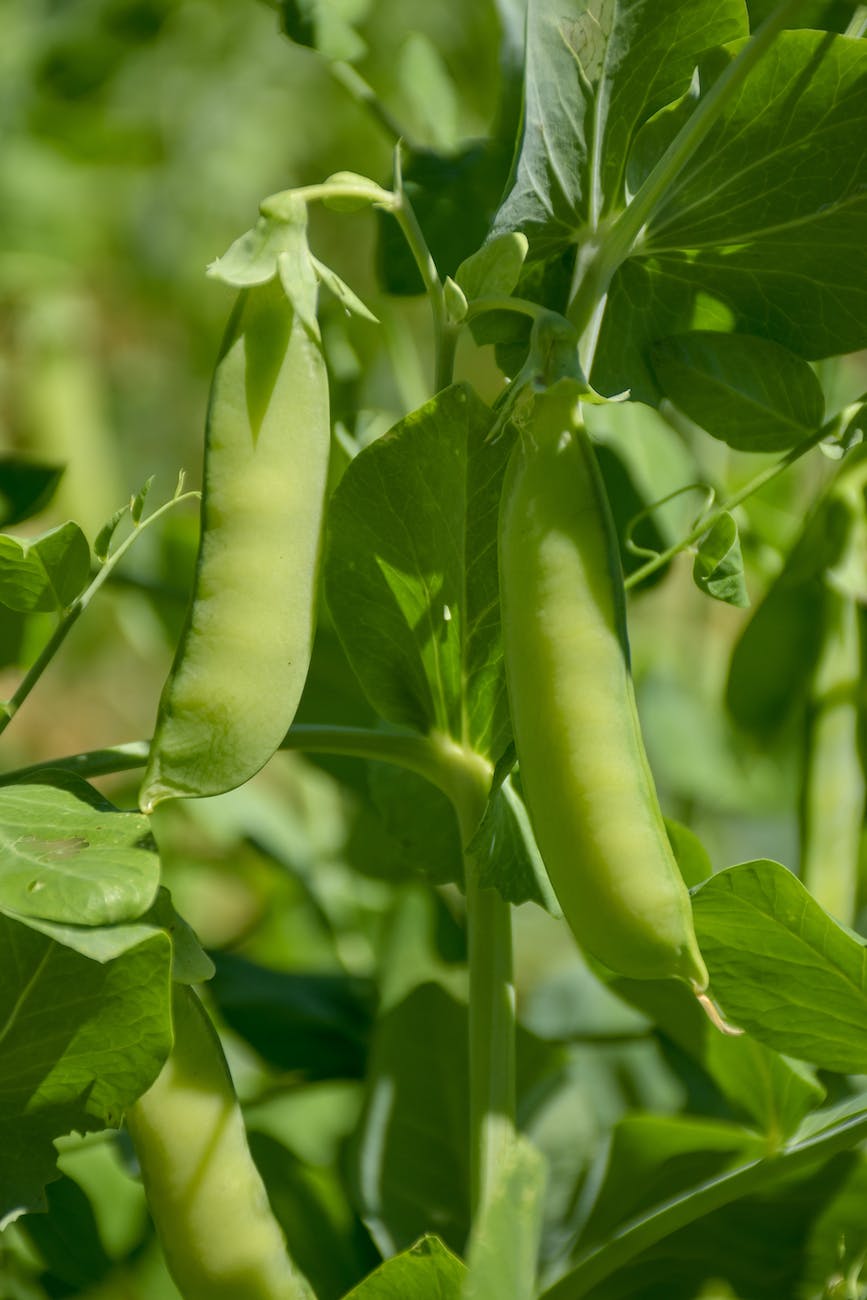
As I mentioned in my tiny plant haul, I recently picked up some packets of snap peas. I was never really a fan of peas growing up — mostly because the ones I was exposed to were the mushy, grayish kind from a can. Few things can beat a fresh, sweet peapod off of the vine, though, and they’re legitimately fun to grow!
Soon, it’ll be time to start peas from seed in my growing zone. Since I’m kind of champing at the bit to get them started, I figured this would be a good time to look into all of their folklore, symbolism, and magical correspondences.
Pea Magical Properties and Folklore
Sweet peas and rosary peas aren’t that closely related to garden peas, or even sugar snap peas. Sweet peas (Lathyrus odoratus) are grown for their flowers and have toxic seeds. Rosary peas (Abrus precatorius), as their name implies, are grown for beads and are fatal if ingested — if it’s thoroughly chewed, a single rosary pea is enough to kill an adult human. Garden, snow, and sugar snap peas are different cultivars of Pisum sativum, and are grown for their edible shoots, pods, and seeds. L. odoratus, A. precatorius, and P. sativum are members of the family Fabaceae, but so are plants like lupine, Scotch broom, and logwood trees. For this reason, it’s important to draw a distinction between folklore and magical uses of edible peas, versus sweet pea or rosary pea.
Sweet peas in bloom. These are grown for their beauty and fragrance, and are definitely not edible. Photo by Magda Ehlers on Pexels.com
Peas are an incredibly old food source grown around the world. While garden peas (Pisum sativum) are thought to have originated around Pisa, in Italy, they’ve also been found in Egyptian tombs, and the earliest evidence of them dates back to the Neolithic era, in what is now Greece, Jordan, Turkey, and Syria. They are considered to be one of the first food crops domesticated by humans.
According to British lore, pods containing nine peas are considered lucky.
Peas were used to cure warts through sympathetic magic. This is a very common old wart-removal method — you touch or rub the wart with an object, then burn, throw away, or bury said object. As it decays, the wart shrinks. In this case, the afflicted person would touch a wart with a pea, wrap the pea in a bit of paper, then bury it in the ground. When the pea broke down, so too would the wart.
Peas are a cool-weather crop, and don’t do very well in heat. One old rhyme about the planting of peas and beans says, “Be it weal or be it woe, Beans should blow before May go.”
Green peas are used in formulas for health or money. Yellow peas, on the other hand, are best for luck. In some cultures, carrying a dried pea in your purse or pocket is said to attract good luck.
Dried peas are also used for divination. They’re shaken up and cast, similarly to the way you might cast bones or runes. You then read the patterns that they form.
Using Peas
As a common food crop, using peas is pretty easy — especially if you like kitchen witchery. Cook and eat peas to bring in more wealth, health, and luck.
Dried peas can be added to sachets or bowls to attract money. Combine them with dried herbs like chamomile, basil, cinnamon, patchouli, and cinquefoil. Add this to a bowl containing a few pieces of citrine and/or pyrite, and some coins. Keep the bowl clean and free of dust, and periodically refresh it with new herbs and more coins. Never remove the coins from the bowl.
If you have a difficult decision to make, take one seed pea for each of your options. Plant them, carefully marking which pea corresponds to each option. Keep an eye on them as they sprout — their growth and vigor can provide guidance on what to do.
Peas are a useful magical ingredient that’s easy to grow yourself, even if all you have is a tiny space and a pot. They’ve got fiber and protein, are associated with luck, money, and healing, and keep well once dried. All told, no matter whether you’re into kitchen witchery or not, these little guys are a very useful addition to your store of magical ingredients.
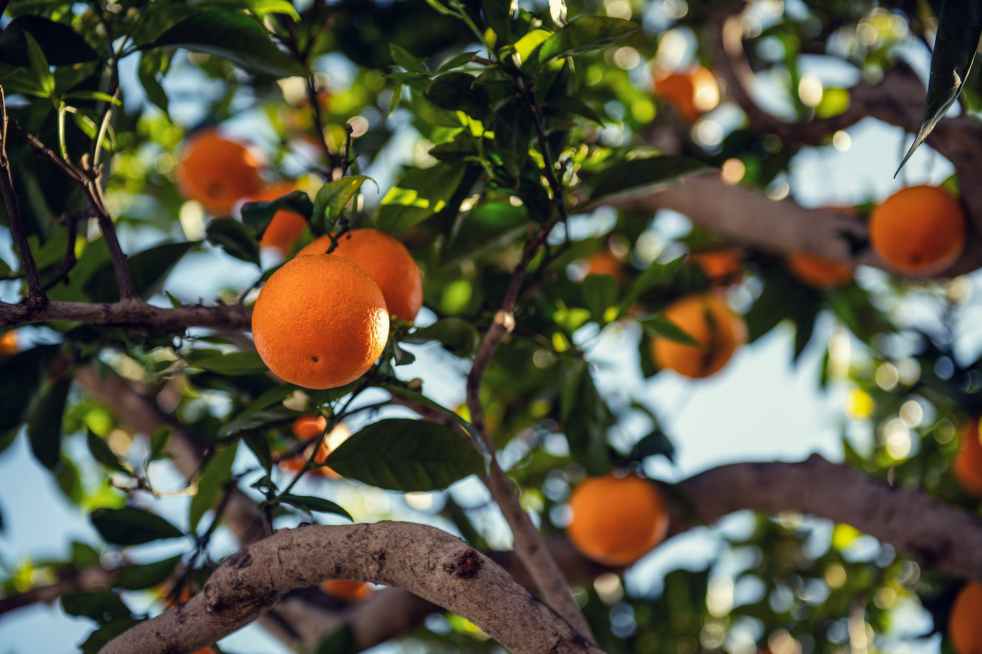
Ah, oranges. Sweet little globes of deliciousness. They run the gamut from “will basically peel themselves if you look at them hard enough” to “will peel a quarter inch at a time and leave an impenetrable layer of pith.” Some are massive, some are tiny enough to eat in a bite. Some are delightful, some can be potentiallydeadly. They’re good for you, unless they aren’t. They’re convenient to eat, unless they aren’t. In short, oranges are a land of contrasts.
Right now, I’ve got a farmers’ market box of delightful tiny oranges from Georgia. I also have some slices of orange and lemon drying in my dehydrator for making garlands. It seemed like a good time to get into the folklore and magical uses of oranges, so here we go!
Orange Magical Uses and Folklore
In general, oranges are used for attraction and positivity. They’re also a symbol of wealth and status in European art, since oranges don’t naturally grow in cold climates. They either had to be imported or grown in special conservatories called orangeries.
Even before oranges reached the colder parts of the world, they were associated with prosperity and luck. Virgil, the Roman poet, called them “lucky apples.”
A Haitian folktale tells of a girl whose mother passes away. Her father remarries a cruel woman who refuses to feed or care for the girl. One day, weak with hunger, she succumbs to temptation and eats three oranges sitting on the kitchen table. When her stepmother comes home, the girl knows she’ll be beaten. She runs from the house, all the way to her mother’s grave. While kneeling and lamenting her fate, an orange seed falls from her skirt and lands on the soil. In desperation, the girl sings to the orange seed until it becomes a sapling, then a branching tree, then a mature tree laden with fruit. Happy, the girl fills her arms with oranges and carries them home.
Her stepmother greedily eats the delicious oranges before asking the girl where they came from. The girl leads her stepmother to the orange tree. As her stepmother begins to pick and eat the oranges, the girl sings to the tree once again. It grows tall — far taller than the stepmother can climb down from — so the stepmother begs and pleads for the girl to help her down again. The girl does so, but, as soon as the tree lowers, her stepmother begins eating all of the oranges again. Knowing that she’ll be punished once the oranges are gone, the girl sings to the tree to make it grow tall. Finally, she cries out, “Break, orange tree! Break!” The tree shivers into a thousand pieces, and the stepmother with it. The girl saves a single orange seed from that tree, plants it, and goes on to sell the sweet oranges at the market.
Christian mythology from Andalusia says that Mary, Joseph, and Jesus were travelling a long distance, when Mary became hungry and thirsty. The family happened upon an orange tree guarded by an eagle. When Mary asked for some of the oranges, the eagle fell asleep and allowed her to take three — one for each part of the Trinity.
Orange blossoms and oranges are often used interchangeably in magical formulas, but orange blossoms have their own, unique associations and symbolism. They’re generally considered symbols of purity, fertility, and virtue, as well as abundance, luck, and positivity. When it comes to attracting things, orange blossoms are excellent in love formulas.
According to the Victorian language of flowers, orange blossoms represented purity and chastity. They were said to say, “Your purity equals your loveliness.” The flowers were often associated with brides.
The blossoms’ connection to purity likely comes from their white color and sweet scent. They also appear abundantly on orange trees, and are followed by fruit, hence their connection to fertility.
There’s some debate about which came first, orange the fruit or orange the color. The word “orange” comes from the Sanskrit nāranga, which originally referred to the orange tree. This gradually transformed into naranja, pomme d’orenge, and even the Middle English “pume orange.” Interestingly, the word “orange” wouldn’t refer to a color until the early 1500s.
Orange pomanders, made by studding an orange with cloves, are a descendant of the Medieval pomander. This was a small ball or case that held fragrant herbs and resins, which would be held to the nose and sniffed as a protection against bad smells (which were believed to cause disease). These cases originally usually contained ambergris, which led to the name “pomme d’ambre,” or “amber apple.” As these things often go, “pomme d’ambre” became “pomander” in English.
Using Orange
One of the most interesting ways I’ve seen to use oranges involves just two simple ingredients: a bottle of orange seltzer, and a bathtub filled with fresh water. Pour the seltzer into the bath and immerse yourself completely. (You can also stand in the shower and pour the seltzer over yourself). The scent and power of orange, coupled with the effervescence of the seltzer, is said to boost creativity.
A drop of sweet orange oil makes a lovely addition to oil blends for prosperity and luck. You only need a very little bit, though, as it can overpower the scent of other oils.
Orange peels are nice additions to potpourris. They add color, and they soak up essential oils pretty readily. To attract love, mix with cloves (a magical catalyst), cinnamon (another catalyst that draws in love and money), bay leaves (a power herb used for love and money), and orris root (a love herb that focuses the power of the other herbs with which it’s combined).
Oranges make wonderful offerings, particularly if you live in an area with orioles.
Dried or candied orange peel is great in teas. You can also add orange blossom water to other beverages. Consider putting a splash of blossom water in a cocktail for attracting or strengthening love.
If you do choose to use orange peel in food or beverages, opt for organic oranges (or, if you can, grow them yourself). A lot of conventionally raised oranges have their peels treated with colorants and antimicrobials. While the amounts used are tiny and considered safe, oranges are also typically peeled before eating. If you plan to use the peel, shoot for fruits that have as little added to their peels as possible.
Oranges are a perfect little nutrient-packed snack that was once a treat for kings and queens. Tap into their sweet powers to attract more luck, love, and money into your life.
It’s the time of year when Trader Joes brings out their Wassail Punch. I don’t really drink fruit juices straight, but I like ’em for flavoring water kefir. This one’s blend of fruit and spices makes the end result taste like cola, which is pretty neat.
(Cola is one of those flavors that isn’t really meant to taste like anything in particular. It’s spices. It’s citrus. It’s all kinds of things that add up to one immediately recognizable taste.)
Anyhow, one of the key flavors in Wassail Punch (and probably cola, to be honest), is nutmeg. It’s one of those things that I can immediately recognize when I taste it but am completely unable to remember on its own. It’s like… a clove- and cinnamon-less pumpkin pie? I guess?
It was also one of those most precious substances in the world for a while, and a nearly invaluable magical ingredient.
Nutmeg Magical Properties and Folklore
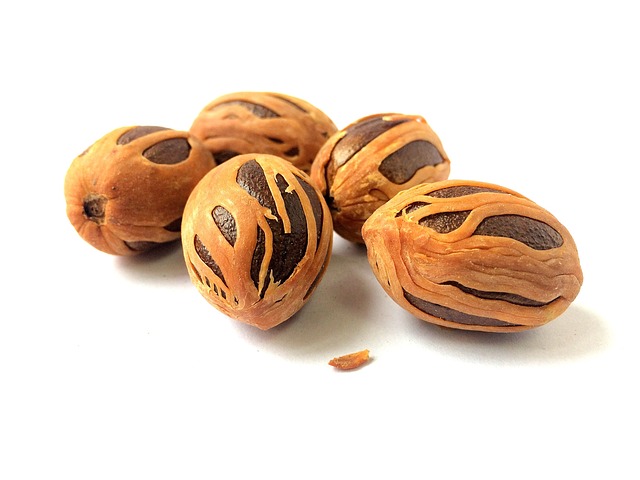
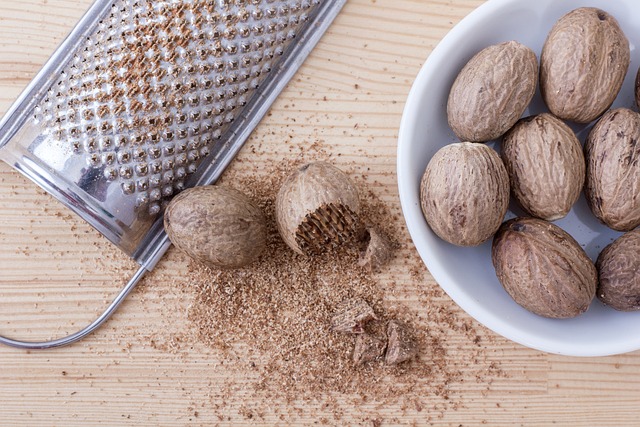
Nutmeg is a spice that comes from an evergreen tree, Myristica fragrans, native to Indonesia. It’s a weird seed, too — it grows inside of a fruit similar to an apricot, surrounded by an aril that looks kind of like a flat, fleshy spider or extremely underachieving facehugger. The dried aril is the source of the spice mace. The seed itself is the nutmeg.
It takes a long time for nutmeg trees to bear fruit, though they can do so for several decades after that. Since the spice is native to such a small geographic area, an absolutely horrific amount of bloodshed happened in the name of obtaining it, farming it, and keeping anyone else from getting a hold of it. The Dutch tortured and killed the native people of Indonesia in order to control the nutmeg trade. They also tried their damnedest to keep the English and French from sneaking any viable seeds out of the country, by dipping the nutmegs in lime to keep them from sprouting.
People used to joke (inaccurately) about Manhattan being traded for glass beads. The Dutch really did trade Manhattan to the English for some sugar and nutmeg. For real, nutmegs were so valuable that traders would mix a handful of wooden replica nutmegs in with the real ones in order to dupe their customers.
A whole nutmeg, hollowed and filled with mercury, sealed with wax, and wrapped in a green cloth, is considered a powerful charm for luck in games of chance. (You can skip the mercury poisoning by just carrying a whole nutmeg. It’s fine. Really.)
Wrap a whole nutmeg in purple cloth, and it’s said to help you win court cases.
All forms of nutmeg are considered useful for money magic. Nutmeg oil is a common ingredient in money oils, while the powdered stuff is helpful in sachet and sprinkling powders.
Money and luck aren’t nutmeg’s only properties, however. An old spell from Louisiana involves sprinkling nutmeg in a woman’s shoe to get her to fall for you. Food and drinks flavored with nutmeg were also used as love potions.
Ground nutmeg was used as incense in ancient Rome.
One old remedy for rheumatism involved boiling nutmegs and cooling the resulting liquid. The nutmegs’ natural fats rise to the surface and cool, forming a solid layer. This is skimmed off and used as a topical balm. Nutmeg is a warming spice, so this would help encourage circulation and relieve some of the pain caused by cold weather aches.
Nutmeg can make you trip balls. This is not code language. This spice is a hallucinogen, courtesy of a compound known as myristicin. Unfortunately, you have to consume a lot to feel the effects, at which point you’re putting yourself at risk of nutmeg poisoning. “A lot” is relative here — about 10 grams (two or so teaspoons) of ground nutmeg is about to trigger symptoms of toxicity. It’s not that much, but still way more than you’d typically use in cooking. Nutmeg poisoning is pretty awful, too. While I wasn’t able to find any stories of nutmeg-based fatalities, the cases I did find mentioned nausea, dizziness, heart palpitations, fatigue, confusion, and seizures. Yikes.
Nutmeg is associated with the element of Air, the suit of Swords in tarot, and the planets Jupiter and Mercury.
Using Nutmeg
The easiest way to use nutmeg is to make your favorite autumn or winter recipe that uses this spice for flavoring. Use a wooden or metal spoon to prepare it and stir it with your dominant hand. As you do this, picture energy coming up from the Earth, down from the sky, and running through your arm, down your hand, into the spoon, and finally into the food or beverage itself. Ask the nutmeg for help with whatever you want it to do, whether that’s getting laid or making some money. Pretty easy, bog-standard kitchen witchery, really.
You can also use nutmeg by just… carrying it. As mentioned previously, whole nutmegs are a charm for luck and money. Wrap them in an appropriately colored cloth, anoint them with a suitable magical oil, ask them for their assistance, then keep them on you. When they get old and lose their potency, retire them by burying them in the soil and make a new charm with a fresh nutmeg.
You can also use nutmeg for meditation. I wouldn’t rely on it to induce a trance state, but drinking some warm milk flavored with honey and nutmeg can be a pleasant way to begin some meditative or journeying work. Just don’t use too much — the vast majority of nutmeg poisonings are from kids who eat it to get high and end up spending the night dizzy and throwing up instead.
Nutmegs are also good additions to charm bags or jar spells for money or luck. They’re very nice, potent, self-contained magical ingredients. If you have an assemblage of herbs, curios, and other tools, why not throw in a nutmeg? If you can’t afford a whole one, sprinkle in some of the ground stuff instead.
Nutmeg is a spice with a dark history (I mean, most of them have dark histories. Thanks, colonialism!). It’s preciousness as an incense and culinary ingredient has tied it to the concepts of luck and money, so you’ll most commonly see it in spells for financial abundance and good fortune. If you’re not a kitchen witch, a sprinkle of nutmeg can be a good place to start. If you need to practice magic discreetly, you really can’t go wrong with tucking a whole nutmeg in your bag or pocket.














 Marble Crow