Plants and Herbs

The solution to kudzu: Eat it.

The other day, I posted a video of foraging and processing kudzu roots to a group I’m a part of. A few friends seemed interested — one messaged me that they knew of a potential patch. That weekend, armed with trowels, bags, and gloves, we set out to track us down some kudzu.

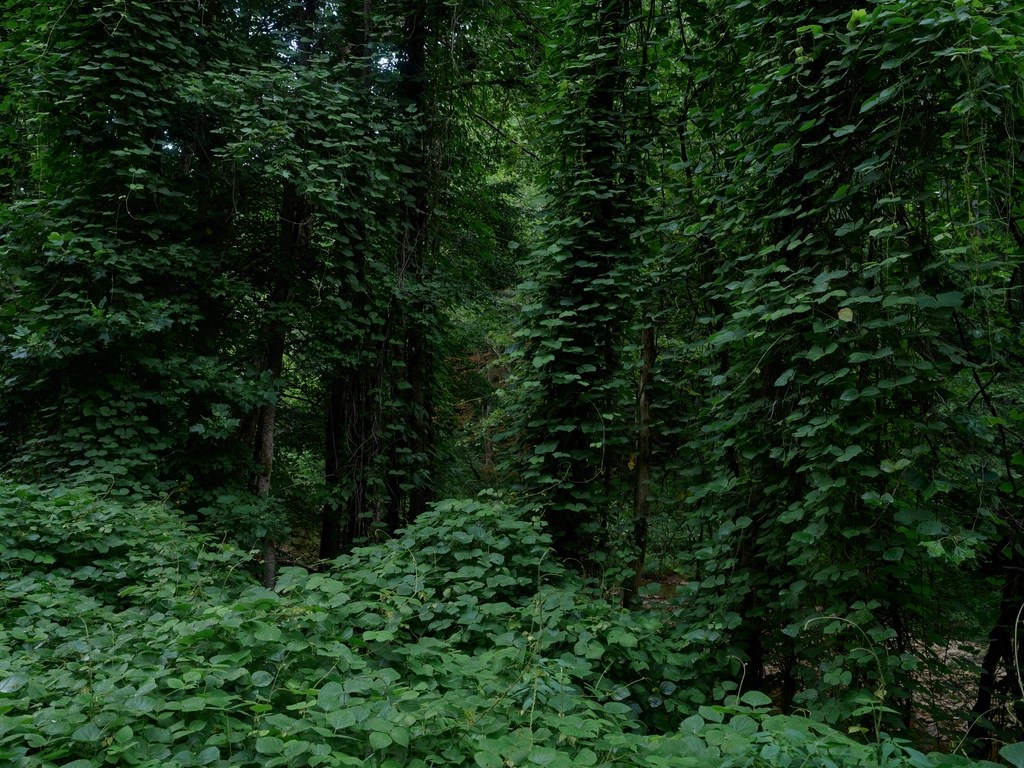
If you’re in the southeastern US and you do any kind of gardening, the word “kudzu” may well strike fear into your heart. As Nature.org‘s “Kudzu: The Invasive Vine that Ate the South” puts it, “kudzu is quite a killer, overtaking and growing over anything in its path.” Drive down a highway, and it’s not uncommon to see it choking out trees, climbing over fences, and dragging down powerlines.
In short, we were more than happy to learn how to eat some.

In its native range, kudzu is still an aggressive grower. It’s not invasive, of course, because a native plant by definition can’t be invasive. One of the things that helps keep kudzu in balance is the fact that it’s useful as a food and medicinal plant. People regularly harvest it to eat as a root vegetable and process into starch.

There’s only one problem: It was very early spring. There were no leaves on anything. Identifying it meant looking for a specific kind of brown twig in a mass of other brown twigs, then trying to follow it back to the ground, dig there for a while, and hope it had led to something resembling a kudzu root. Fortunately, kudzu doesn’t have many lookalikes, and its hairy stems and growth habit help to differentiate it.

Also, kudzu roots get enormous.

My Handsome Assistant is a powerlifter. Even with him pulling and our friend and me digging, it still took a lot of time to liberate several fairly small roots. Still, it was a success and, I figured, I decent amount for a first attempt. Nothing we’d have to bust out a table saw to cut through. Just enough to hopefully end up with some starch (and give us the opportunity to decide if it was worth the effort).
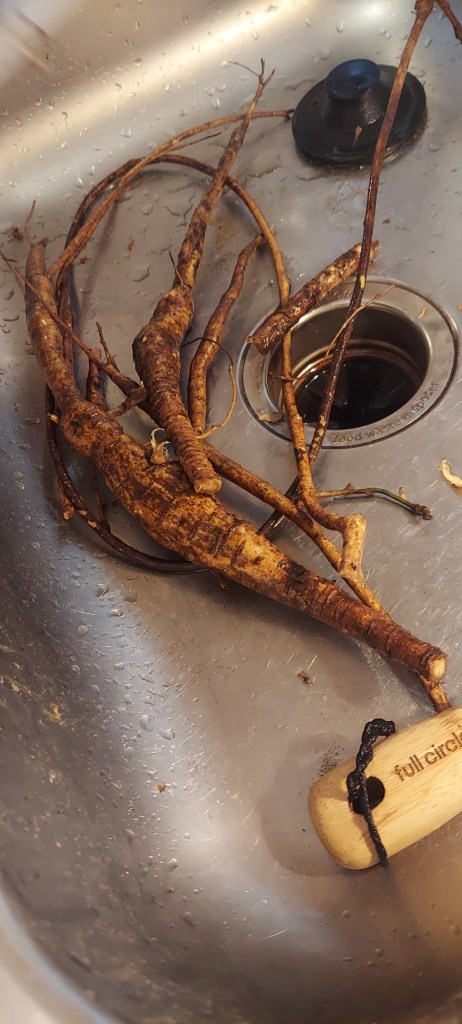
A small clump of kudzu roots in a stainless steel sink.
Some of the kudzu roots, trimmed from a larger one.

Tl;dr, I’m probably just going to make them into a stew next time. Maybe paper.

Processing the kudzu roots involved scrubbing them well, peeling away their tougher, fibrous outsides, cutting them into chunks, and pureeing them well with plenty of water. Once pureed, we strained the pulp, squeezed it out, rinsed it, squeezed it out again, and poured the liquid into large jars to let the starch settle to the bottom.

It was that last bit that proved the most problematic.

See, we’d hoped to get the roots before they used their stored energy (in other words, starch) to put out a flush of new spring growth. However, the roots we got were small and fairly skinny (which is probably for the best — we might’ve needed a backhoe for big ones). The little bit of starch that settled out ended up lost during the refinement and decanting process.

Still! It was an interesting learning experience. I’d definitely change how we did some things (like I mentioned, I’d love to try preparing the smaller roots in other ways, like roasting or stewing). I also have a mold and deckle and, considering that starch is used as sizing for papermaking, I’d like to try using the pulp to extract most of the starch and, rather than discarding/composting the pulp, see how it works in paper.

I’ve also heard that the flowers smell like grape candy and can make a jam that tastes like something between apple and peach. Since I’ve had really good results making rose petal confiture, I’m excited to try making some with kudzu flowers.

So, obtaining some kudzu starch may have been a bust this time, but I have ideas!
Environment · life · Plants and Herbs

Foraging for Flowers and Ramps

The more I think about it, the less sure I am that alien invaders would be able to set up shop here for an appreciable amount of time. They’d probably get eaten. (Even the really weird-looking ones. Especially the weird-looking ones. Maybe in an etouffee, like crawfish.)

A garlic mustard plant.

I like to consider myself an invasivore. If it’s here, causing harm, and tasty, I will find a way to eat it. This is why I was very happy to learn how to identify garlic mustard on a recent foraging walk with some friends. (A lot of invasives are valuable as medicine or food — they wouldn’t’ve been brought here if someone didn’t think they were useful for something.)

Of course, not all tasty things are invasive, which is why it’s important to be conscientious. In general, it’s best to take as little of a plant as you can, and avoid taking the roots unless absolutely necessary. One of the nice things about eating invasive plants is that you don’t need to be particularly careful about damaging their population, but this isn’t true for native species. Like ramps, for example.

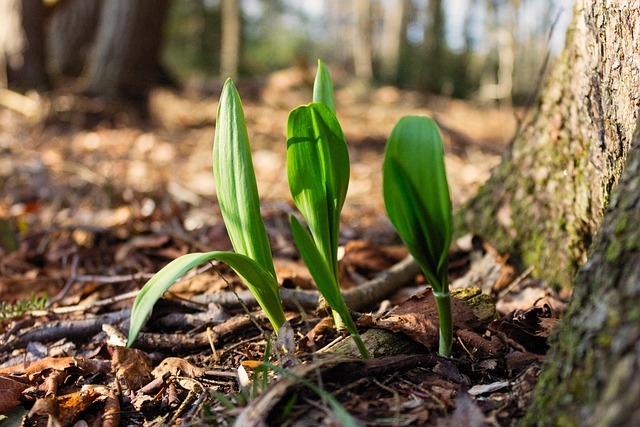
A cluster of wild leeks at the base of a tree.

Ramps are wild leeks, and sadly trendy in the culinary world. In some areas, they’re delicacies that have been harvested to endangerment. They’re a spring vegetable very similar to a leek you’d get from the grocery store, which means they’ve got an onion-like bulb topped by flat leaves. The whole plant is edible, but it’s not uncommon for a nice patch of ramps (which can take years just for the seeds to germinate, then another seven years for the plants to mature) to get harvested to oblivion for the bulbs.

Fortunately, since the leaves are also delicious, this isn’t necessary. You can enjoy ramps and still leave the live plants behind. All it takes is harvesting one leaf and moving on, rather than digging up the entire plant. (I’m planning to chiffonade the leaves for potato soup. I’ve got some new potatoes from the farmers’ market, creamline milk, and a whole bunch of home made vegetable broth!)

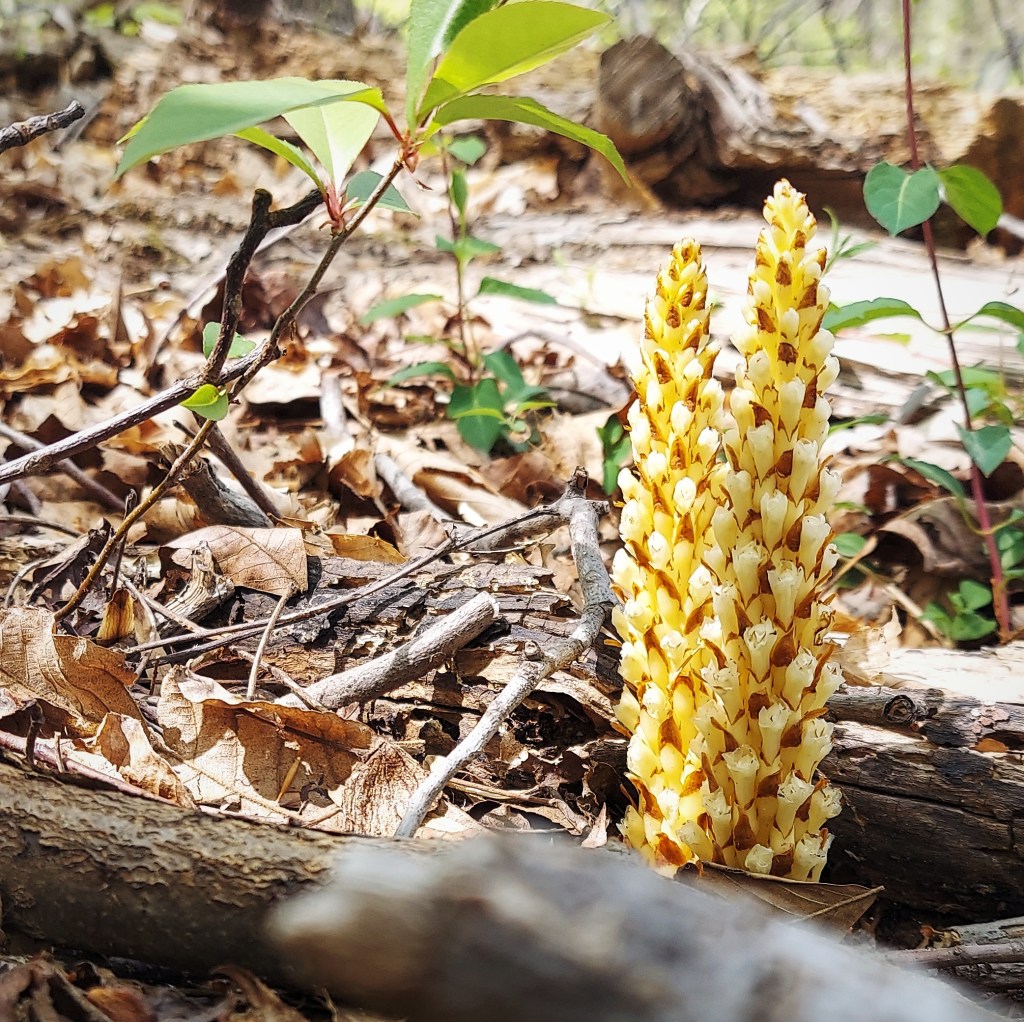
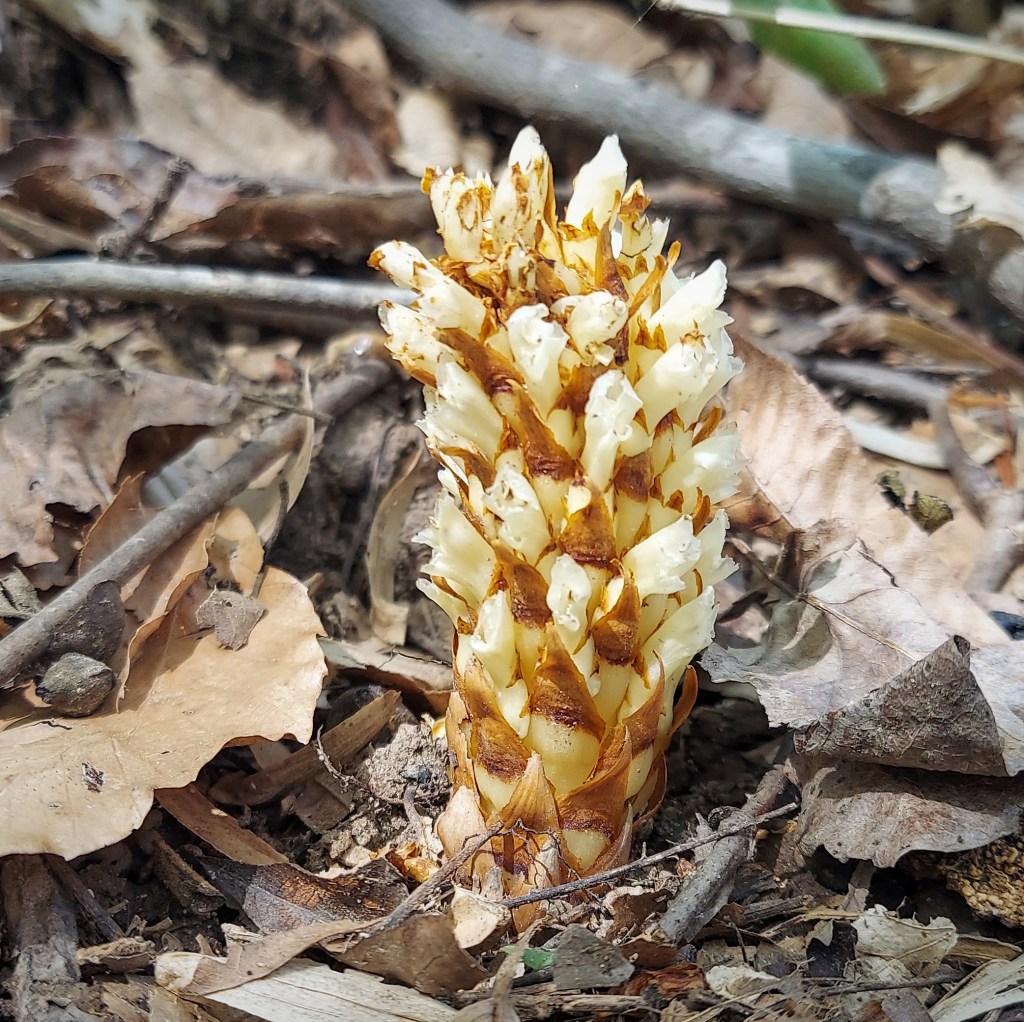
A cone-shaped inflorescence of bear corn.

One of the neatest things I saw recently wasn’t something I was looking for — in fact, I’d never encountered it in my life, and had no idea it existed. Conopholis americana, also called cancer root, bear corn, or bumeh, is a profoundly odd-looking parasitic plant that lives near oak and beech trees. At first resembling an upright corn cob or the cap of a fungus, closer inspection revealed cream-colored flowers.

Despite the name cancer root, it doesn’t appear to actually fight cancer. However, it does have some pretty powerful astringents that help with wound clotting. This plant was also used to help induce and progress labor (which gave rise to another, more offensive name that has largely fallen into disuse). It’s also a diuretic and laxative, which is what gave it the name “bear corn.” After months of hibernation, bears need to “unplug,” as it were. They’re attracted to the springtime blooms of bear corn, and eating it seems to help get things moving.
This idea is plausible enough, though I have chosen not to test it myself.

We also spotted a black squirrel, though nearly missed it. He skittered quickly along a fallen tree, and was far out of sight by the time I managed to try to get a picture. Still, even without photo evidence, it was pretty neat to spot two very rare things. (Melanistic squirrels only occur in about 1 out of every 10,000 eastern gray squirrels!)

Here ’til the day breaks and night falls,
J.