

Now that I’m home, I’ve been spending the day unpacking, straightening up the house, taking care of my cats and plants, and eating pho. It didn’t take me long to notice some new… uh, additions.

This is Audrey. Every so often, especially if she’s gotten plenty of humidity, she puts out gorgeous little pitchers. I reward her by hand-feeding her dried black soldier fly larvae.
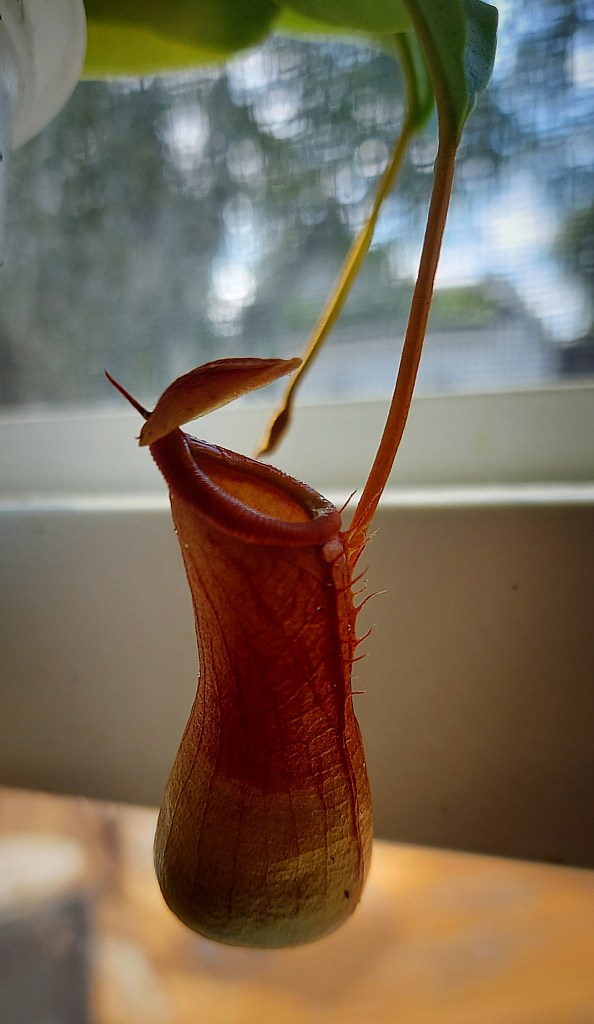
Since she seemed to be in particularly good humor when I came home, I thought now might be a good time to take a deeper look at the folklore and magical properties of the beautiful, unique, profoundly strange Nepenthes.
Nepenthes Magical Uses and Folklore
The plant genus Nepenthes is named for nepenthe, an ancient medicine said to heal sorrow and induce forgetfulness. It’s mentioned in ancient Greek literature, and is typically depicted as originating in Egypt.
It also appears in the Edgar Allan Poe poem “The Raven”:
Respite—respite and nepenthe, from thy memories of Lenore;
Quaff, oh quaff this kind nepenthe and forget this lost Lenore!”
Quoth the Raven, “Nevermore.”

Nepenthes consists of numerous species. In garden centers and plant nurseries, you’re most likely to encounter N. x ventrata — a hybrid of a N. ventricosa and N. alata.
Pitcher plants prey on insects by providing sugar and water to lure them into their pitchers. Their leaves have nectaries — special glands that secrete sweet nectar — and their pitchers contain water and digestive enzymes. Insects are attracted to the presence of food and water, and end up caught in the pitchers where they eventually drown and get digested.
(They’re pretty much Hotel California for bugs.)
However, not all pitcher plants feed on insects. N. lowii, a species native to Borneo, is known for its… rather unique shape.
Toilets.
The pitchers look like toilets.
Not only do they look like toilets, they are toilets.
N. lowii has an interesting relationship with a local shrew species. As with insects, the shrews are attracted to the pitcher plant’s nectar. While they’re there, they generally end up crapping directly into the conveniently toilet-shaped pitchers. The shrews get free nectar, and N. lowii gets free nutrient rich shrew leavings.

Other pitcher plants have symbiotic relationships with frogs. The frogs hang out in the pitchers, just under their “lids.” They eat insects that are attracted to the plant, and, as with the shrews, leave their nutritious little doots behind. They help dispose of pest insects that are more likely to harm the pitcher plant than to feed it, and the plant still gets a boost of nutrients.
One other pitcher plant species, N. rajah, has pitchers large enough to snare rats. It’s a particularly visually striking species.
In pitcher plants’ native areas, they’re often used as a source of clean water. When the pitchers initially form, they come complete with a little bit of water in their bellies to dilute the plant’s digestive enzymes to a usable level. People will sometimes crack open a fresh pitcher and drink the water inside. The trick is to use a very fresh, young pitcher — once the pitcher has opened itself, and its “lid” is raised, it may be contaminated and is no longer safe to drink.
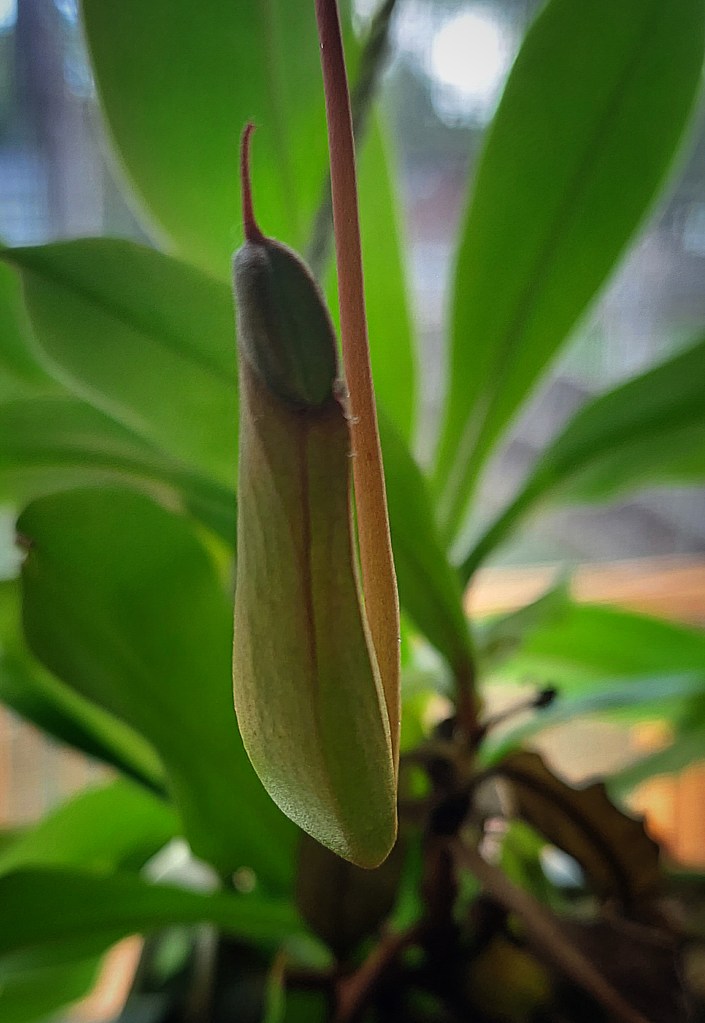
Interestingly, this water is more than just a refreshing drink on a hot day. It’s also used as medicine. Nepenthes water has been used to treat digestive issues and constipation (which makes sense, considering it’s just water and stuff that helps digest things), as well as urinary tract infections.
An extract of the plant is also used to prevent scar formation.
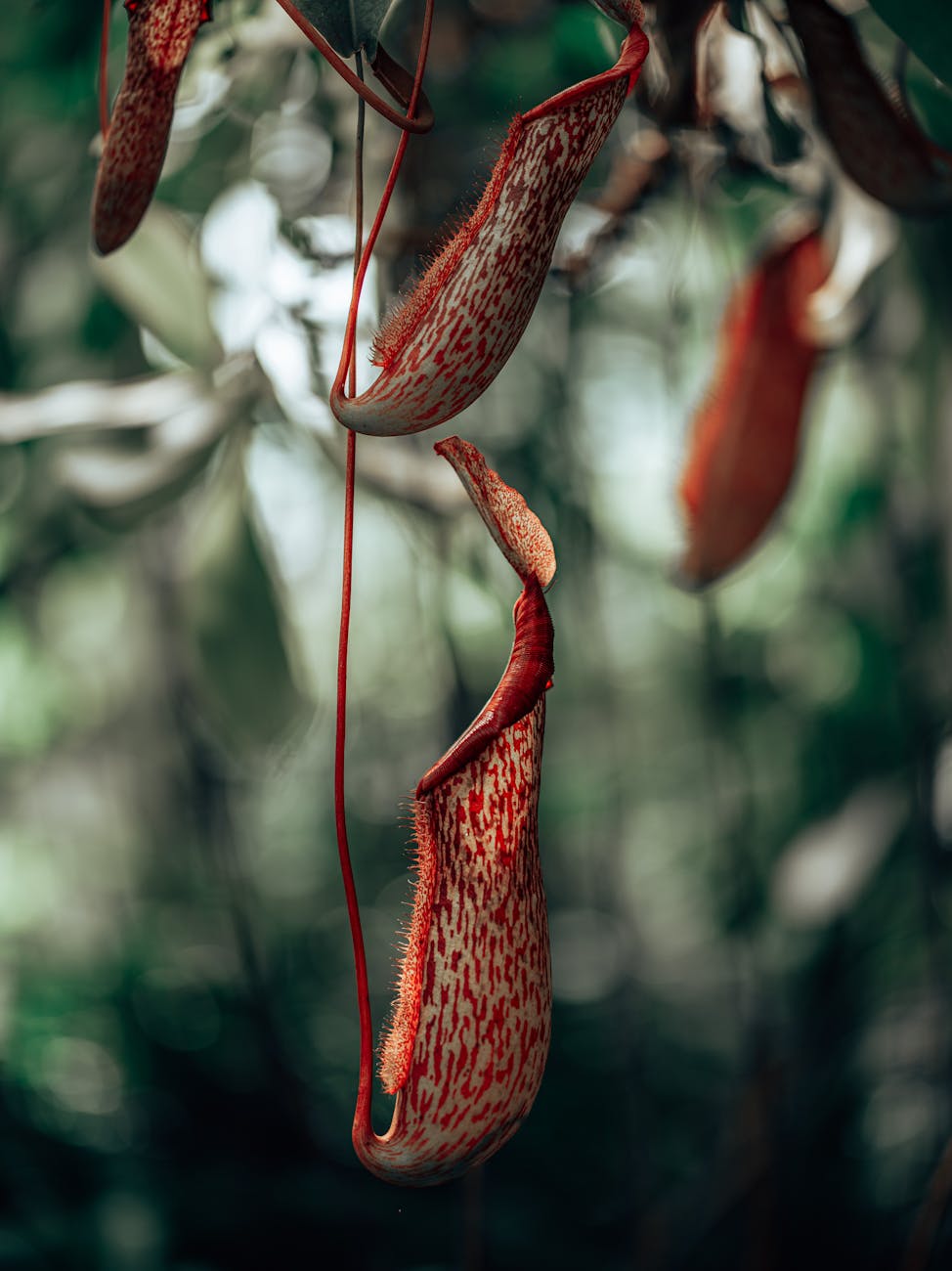
There aren’t a whole lot of resources for those looking for typical European-based magical uses for Nepenthes species. From my own experience, these plants seem to be very useful for attraction. Just be warned — while they’re effective, they aren’t quite as docile and well-intentioned as something like rose or lavender. (All things considered, this probably isn’t too surprising for a carnivorous plant!)
They’re also helpful for defense and healing.
Lastly, Considering the enormous crossover between “plants that repel or get rid of pests” and “plants historically used for purification,” it may be worth experimenting with pitcher plants as a potential purification herb.
Elementally, pitcher plants are associated with Water.
Using Pitcher Plants
If you have access to fresh pitchers, you can add the water to a ritual bath or window, door, and floor wash for attraction. Just make sure that these are fresh, unopened pitchers. You really don’t want to be dumping partially decayed bug soup into your bath.
If you don’t have access to them, then you can also use dried pitchers. Like any other part of a plant, they don’t last forever — the pitchers have a lifespan and naturally dry up and fall off after a while. Just make sure that whatever pitchers you use are cleaned up, free of insect parts, and completely dried.
Dried pitchers are suitable for container magic like jars, sachets, or spell bottles. They also look really cool when they’re pressed in a book or between glass.
I love carnivorous plants, but it’s not always easy to find resources for using them in western magic. Since I’ve begun keeping them and developing a close relationship with them, I’ve found that they have a wonderful variety of potential magical (and even medicinal) uses. Pitcher plants don’t just help keep homes bug-free, they’re also incredibly interesting and versatile friends to have!




 Marble Crow