
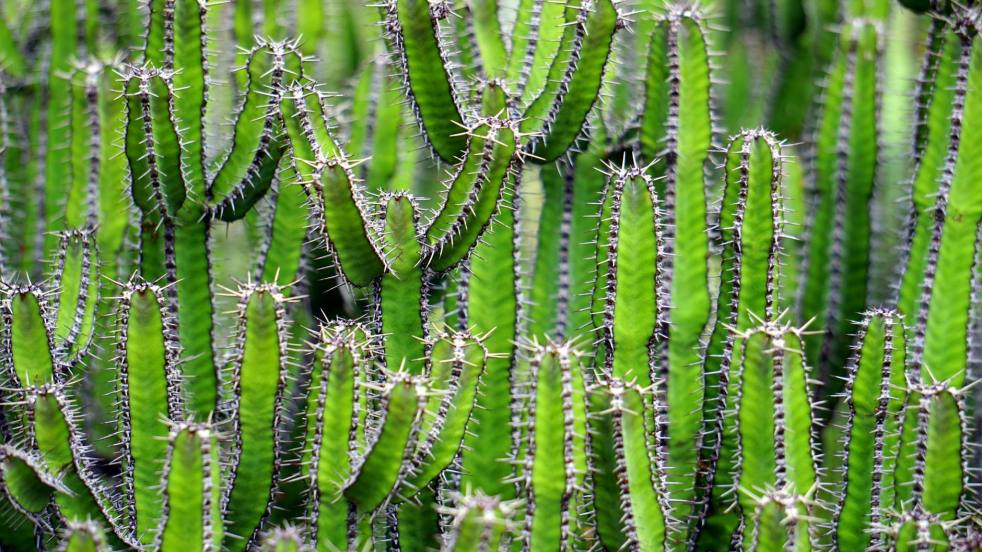
My partner has a window shelf of cacti and succulents in his office. In winter, it doesn’t get much action — temperatures are too low and there’s not enough light to foster growth, so we don’t water them from about November to late March or early April. They use up the water stored in their tissues, and the lack of soil moisture means that they’re much less likely to develop rot. Since it’s warming up again, it’ll be time to start watering them soon.

We’re also continuing work on replacing our lawn. One of the plants I’ve considered putting in is a native Opuntia humifusa cactus, also known as an Eastern prickly pear. These are, believe it or not, hardy cacti that are the most wide-ranging species in the US. It can be found everywhere from Ontario, to Florida, to New Mexico. My grandfather’s house in New York had a pretty big specimen planted on one side — it was pretty surreal to see a big blue hydrangea bush, and then this cactus spread out less than ten feet away!

I’ve also been revamping my bearded dragon’s enclosure. I’m a fan of bioactive habitats, personally, so I make an effort to establish naturalistic microclimates using a variety of lights, sources of humidity, live plants, and even live insects. While desert reptiles can live in very dry, arid conditions, a lot of enclosures don’t include the kind of microclimates that they need for optimum comfort. He’s a big guy who has to live by himself, and I want to make his enclosure as comfortable and stimulating as possible. So, I’ve been looking into spineless cacti and other desert plants that will do the job without putting him at risk of any pokes.
All of this is to say that it’s been a very cacti season, so I thought I’d write a bit on the different folklore and magical uses of these weird, wonderful plants.
Cacti Magical Properties and Folklore
A cactus’ spines are actually its leaves. Like the specialized leaves-turned-petals of hydrangea and dogwood “flowers,” cacti spines have changed their form to suit a specific purpose. In this case, it’s reducing moisture loss and protecting the plants’ plump, water-rich flesh from herbivores. Though they’re thin, spines help shade the cactus from the harsh sun. They also catch rainfall and dew and direct the droplets toward the plants’ roots. While we typically think of dry deserts when we think of cacti, their spines and roots create humid, shady, relatively cool microclimates around their bases.
A Peruvian tale explains where cacti got their spines. On a tall, tall mountain, there was a single lush, green plant. It had broad, tender leaves like lettuce, and was all but irresistible to the local alpaca population. Every day, this plant would have to dodge their attempts to grab a mouthful of its leaves, and every day it prayed for a way to protect itself.
One day, the plant heard a terrible noise. A fox was rushing down the mountain with a tremendous boulder in hot pursuit! Panting with exhaustion, the running fox begged the plant to stop the boulder somehow — if it could, the fox promised, he would give it his claws in payment. The boulder came crashing down, and the plant stopped it in the nick of time by spreading out its broad leaves. The grateful fox gave the plant his claws, and the cactus became the prickly plant we know today.
There are also many stories of the relationship between rose and cactus. One such tale talks about how, on rose’s birthday, he invited all of the plants to attend a party. The self-conscious cactus didn’t answer the invitation, since she had no gift suitable to give the rose. Still, the rose sent a butterfly to make sure cactus came to the party and enjoyed herself anyway.
The cactus was grateful that rose wanted to invite her, even though she had no suitable gift to give him. When the time came to offer rose his birthday presents, cactus gave him the only thing she had — her protective spiny coat. The rose put it on immediately and, in return, offered the cactus a beautiful flower on her birthday.
To this day, rose wears a spiny coat of thorns, and the cactus blooms on her birthday.

Another tale tells of a proud rose who regarded himself as the most beautiful plant in the land. He looked down on the cactus, who had neither beautiful flowers nor fragrant perfume. What use could such a plant be to anyone?
When a drought came, the rose began to wither. He noticed, however, that the cactus was still plump and filled with water — so much, in fact, that the birds would visit her to poke holes in her tender flesh and drink.
The proud rose humbled himself and asked the cactus for some of her water. Not wishing to see anyone suffer, she told the birds to bring the rose some water. The birds dipped their beaks into the cactus’ green skin, and, flying to the rose, dripped the water on his roots. The rose and the cactus survived the drought, and the rose was never haughty again.
One bit of very persistent folklore says that you can slice open a cactus and drink the water inside. This is only even a little true of one particular species — the fishhook barrel cactus (Ferocactus wislizeni). While this cactus’ water can be drunk in extreme situations, it contains a lot of oxalic acid. Drink it on an empty stomach, and you’re probably looking at a lot of (very dehydrating) diarrhea. Other cacti contain various acids and alkaloids that can do everything from damage your kidneys, to straight-up paralyze you. Cactus-like plants found outside the US, like those in Madagascar and southern Africa, are actually members of the highly toxic family Euphorbiaceae.
The San Pedro cactus (Trichocereus macrogonus var. pachanoi) is an Ecuadorean, Peruvian, and Colombian native that is a natural source of the psychoactive compound mescaline. Peyote (Lophophora williamsii) is native to Mexico and Texas and also contains mescaline. Both of these cacti are considered sacred plants that have been used by humans for spiritual, medicinal, and divinatory purposes for thousands of years.
Cacti are one of those plants that you won’t find in old European grimoires, but that doesn’t make them any less valuable as herbal and magical allies. They are generally associated with resilience and protection.
Some practitioners also believe that they’re capable of absorbing and storing negative energy within themselves. These practitioners cleanse their cacti by repotting it regularly and very occasionally giving it a good soak under running water.

On the flip side, another school of thought holds that cacti can store any kind of energy. Therefore, those plants that have been grown in relaxed, happy environments can actually improve the energy of wherever they’re moved to. These specific plants are frequently used for healing.
Feng shui cautions against having cacti in the home. Their spines are sait to disrupt the harmonious flow of energy.
Cacti are associated with the planet Mars and the element of Fire.
Using Cacti
I can’t really advise you on using entheogenic cacti species, so we’ll skip that part.
In general, the easiest way to “use” cacti is to grow them. I know I say that a lot, but it’s true — living plants can provide benefits above and beyond what dried herbs can.
If you live in an area which cacti can tolerate, then you may want to plant them near the perimeter of your house. They’re great for xeriscaping in desert environments, but some, like the Opuntia humifusa I mentioned earlier, can grow in plenty of other places.
If you do choose to keep a cactus, care for it well. The steps outlined above for “cleansing” cacti? They’re pretty standard care for desert plants. They’ll need repotting as they grow and their soil gets displaced. They also benefit from deep, infrequent watering. Some magic practitioners say that cacti are capable of a kind of “energy vampirism” — that is, if they’re neglected, they can start making the occupants of a home feel lethargic and dragged down.
It’s also important to research what kind of cactus you have, and where it came from. As mentioned above, Euphorbia species are very similar to cacti. They’re also very poisonous and dangerous for children and pets. Some species of cacti are also threatened by overharvesting for the houseplant trade. Cacti poaching is a very lucrative crime, so make sure that yours come from a reputable source (preferably grown from seed, domestically).
Also, be wary of “moon cactus,” also known as Ruby Ball, Hibotan, Red Hibotan, or Red Cap cactus. These plants don’t occur naturally — they’re actually a mutant desert species (Gymnocalycium mihanovichii) with no chlorophyll of its own, grafted on top of another species (usually a tropical dragonfruit cactus). Since the colorful top of the cactus has no chlorophyll of its own, it’s dependent on the host plant for survival. Since both of these species typically have very different needs, they’re very hard to keep alive. While they’re inexpensive and popular, you may want to skip them and choose an easier one. If you really love the look of Gymnocalycium mihanovichii, there are also variegated specimens that still have some of their chlorophyl and aren’t grafted onto host plants.
You can also use cacti spines in the same way that you might use pins or thorns — to spear poppets, fill witch bottles, and so forth. However, cacti generally don’t shed and regrow their spines on a fixed schedule in the same way that other plants lose their leaves, so I don’t recommend harvesting spines for this purpose. If you happen to find a dropped spine or two, however, there’s no reason to throw them away.
Cacti are strange, beautiful plants that show life’s incredible ability to adapt to the most extreme of situations. Long associated with resilience, tenacity, and self-defense, they’re a great plant to cultivate for people who want to strengthen their boundaries and discover their own innate strength.





 Marble Crow