Environment · Plants and Herbs

Dead Nettle Folklore and Magical Properties

’tis the season for deadnettles!

If you have any semi-neglected patches of ground in your life, you may have seen them — short plants with heart-shaped leaves, arranged like low towers accented by tiny flowers. Though they’re not native to this area, they’re pretty abundant. If you’re into controlling invasive plants, you’ll probably be happy to know that they’re also delicious edibles!

Don’t let the name fool you. Dead nettles aren’t poisonous, and they’re not nettles. They’re called “dead nettle” because they look an awful lot like stinging nettle, but their leaves are stingless. In reality, they’re part of the mint family (which probably explains their prolific growth and ability to thrive pretty much anywhere).

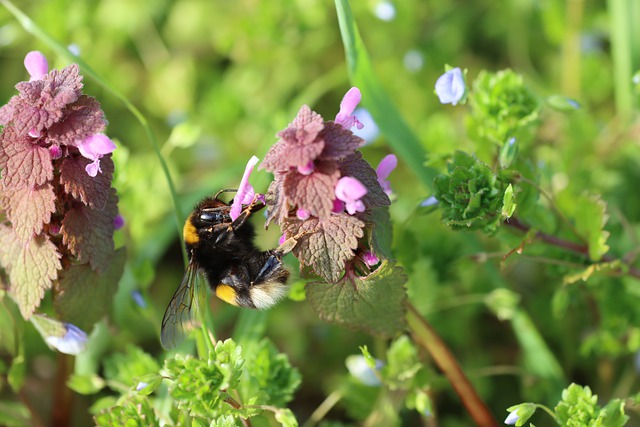
A bee enjoying some soft pink dead nettle flowers.

One of the best things about these nutritious plants? They’re easy to identify and don’t have any poisonous lookalikes. They’re also useful in all kinds of other ways.

Dead Nettle Folklore

Medically, purple dead nettle is used for allergies. It’s rich in quercetin, and has anti-inflammatory properties that make it useful for people with spring hay fever.

Some areas call it purple archangel, because it appears there around the Feast of the Apparition (May 8th). This was when the archangel Michael was said to have appeared on Mount Gargano, Italy, in the sixth century.

White dead nettle is sometimes called bee nettle. This is because it provides an early source of pollen and nectar, so it’s very popular with bees (and children! Kids sometimes suck the nectar from white dead nettle flowers, kind of like how kids used to suck the honeysuckle flowers that grew on the elementary school’s fence when I was little).

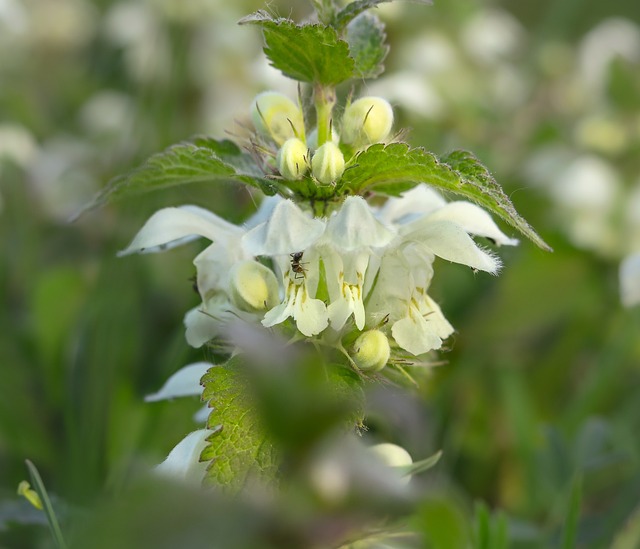
Some white dead nettle flowers. A small ant is crawling inside of one of them.

In Lancashire, it was said that white dead nettle flowers always come in twos, because they’re actually pixie shoes that have been left outside. These flowers also have two black spots inside, which are sometimes called “Cinderella’s slippers.”

White, spotted, and purple dead nettles are all used to treat stings from actual nettles. Mash the plant, squeeze out the juice, and apply it to the stung area. You can also chew some of the leaves and apply the resulting paste.

Magical Properties of Dead Nettle

Dead nettle is associated with determination, due to its ability to grow pretty much anywhere. (I’ve been harvesting it from cracks in the concrete, here.) It’s also connected to happiness, optimism, and relief.

Bright pink dead nettle flowers.

Like other members of the mint family, it dries well. Harvest some, hang it upside-down, and put a paper bag around it to keep off dust and catch any dropped leaves or flowers. Once you have some dried dead nettle, you can use it in teas, incense blends, sachets, poppets, jar spells, or pretty much anything else. This small, unassuming herb is fantastic any time you need a hit of joy and motivation.

Dead nettle is also useful in kitchen witchery. Add it to soups, salads, or even pesto to benefit from its magical and anti-inflammatory properties.

This plant also works wonderfully in tinctures, salves, and oils. This is a great way to preserve it well beyond its season.

For now, I’m pulling it out of my raised beds to prepare them for other things. Some will be left for the birds (chickens, especially, seem to love the stuff), and the rest will be brewed into tea, blended into smoothies, eaten fresh, dried, and pureed and frozen in ice cube trays to add to soup or fill out pesto!

life · Neodruidry · Plants and Herbs

A Little Late Wassail.

This weekend, my partner and I had the pleasure of wassailing some baby trees.

Traditionally, this was something that was done December-ish, but this particular wassail was for some very young trees that’ll be going in the ground soon. Consider it a kind of baby tree blessing.

Wassailing is a ritual to bless fruit trees, drive away unwelcome spirits, and ensure a bountiful harvest. It involved drinking cider, singing, making noise, and giving offerings of drinks and cider-soaked toast to the trees.

This wassail was hosted by someone in a Druidry group to which I belong. Another member put together songs and blessings, and all of the attendees gave their own blessings to a little sour cherry, a baby fig, and a small (somewhat struggling) dogwood.

A red squirrel in the branches of a fruit-laden cherry tree.

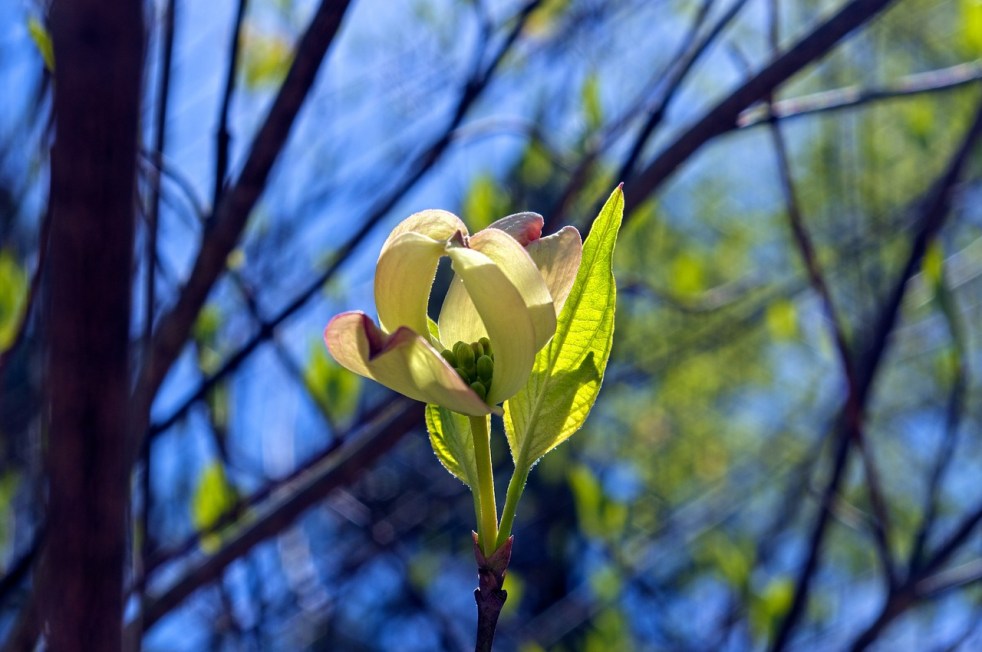
(I wished that the fruit trees would produce lots of flowers and nectar for the insect community, and tons of fruit for the birds, squirrels, and human community. To the dogwood, I just said, “Good luck, buddy.”)

The food was incredible. There was wassail cake flavored with lots of bright orange zest, homemade root beer, chocolate-Guinness cake, meat and vegetarian hand pies, tiny apple hand pies, fresh vegetables, ginger snaps, cheese, fruit, and so much more. We’re still without a decent oven, so we brought some extra sparkling water, graham crackers, fancy chocolate, and vegan marshmallows for fire pit s’mores. In lieu of hanging cider-soaked toast on the trees, there were bits of cider-splashed graham cracker.

The singing was fun, the yelling and cheering was fun, and the blessings were heartwarming. There was an adorable dog who did happy zoomies all around the yard, with deep, happy “doggy laughs.” I can’t tell you the last time I went to any kind of house party, so the feeling of gathering with a bunch of kind, warm, intelligent, funny people was almost indescribable. (It also set off my brain’s own personal social anxiety afterparty, during which I questioned every interaction I had all afternoon for several hours.)

It was also really nice to see someone else working on turning their yard into a source of food for their family and the local fauna. It gave me some inspiration for things that might work well in this yard. The warming weather has me absolutely raring to go out and do more to keep my promise to the spirits of this spot, and now I’ve got images of redbuds and sour cherries dancing in my head.

Be in good health!

Plants and Herbs · Witchcraft

Crocus Folklore & Magical Uses

It’s spring (kind of)!

At least, it’s getting spring-y here. Granted, I think we maybe had about four days of actual “winter,” but it’s been t-shirt weather for the past few days, and looks like it’s going to stay that way for at least another week.

Since things were warming up, I stepped out back to take a look at the yard. The elderberry bushed that I planted last year have some new leaves coming in, the bulbs I planted are starting to poke up through the mulch, and the apples are both looking good.

There’s also a large patch of surprise crocuses that seem to have popped up overnight next to my shed.

These are either Crocus vernus, the spring crocus, or Crocus tommasinianus, the woodland crocus. They’re beautiful, but decidedly not native to this area. (Crocus vernus and C. tommasinianus are related to C. sativus, the saffron crocus. However, these crocuses are definitely not a way to make rice more delicious.) Still, I am determined to enjoy them before it’s time to remove the bulbs and put in some native coralberry bushes. I’ll probably keep the bulbs and move them to somewhere where they’re less likely to spread.

If you’re also experiencing a flush of these tiny colorful flowers, here’s some old folklore and a few ways to make them magically useful.

Crocus Folklore

In ancient Greek legend, Crocus was a human man. The nymph Smilax was in love with him, but, ever the fuckboy, Crocus was dissatisfied with the affair. The gods turned him into a saffron crocus.

Another version of this story claims that Crocus was a companion of Hermes. Unfortunately, he stood up at an inopportune time during a discus throwing match, and Hermes accidentally killed him. As Crocus’ blood fell on the soil, saffron crocuses sprang up.

Spring crocuses are associated with Persephone, Aphrodite, and Venus. Mythology would also appear to tie this flower to Hermes.

A London source claimed that picking crocuses tended to “draw away the strength.” Therefore, only strong men or healthy young women should attempt to.

A field of purple and white crocuses at the base of a mountain.

According to Pliny, wearing crocus around the neck would prevent drunkenness. Interestingly, Swiss parents would place saffron around their children’s necks as a protective charm (presumably not against drunkenness, or else they’ve got some explaining to do).

In the Victorian language of flowers, crocuses represented cheer and youthful gladness.

This flower is associated with the planets Venus and Mercury, and the element of Water.

Crocus Magical Properties

Historic mentions of crocus as a protective charm typically refer to saffron crocus, not the spring crocuses. It can be hard to tease out folklore and uses attributed to spring crocuses, since the autumn-blooming saffron crocuses were generally considered more useful. For our purposes, I’m going to focus on spring crocuses here.

Spring blooming crocuses are used in charms for love, including platonic love or love of the self.

As an early spring-blooming flower, spring crocuses are also useful for spells for new beginnings.

These flowers are common altar decorations for Imbolc and Ostara. However, use caution if you bring spring crocuses indoors — all varieties of crocus other than C. sativus are toxic. Spring-blooming crocuses can cause diarrhea, vomiting, and digestive upset, while autumn-blooming crocuses can cause liver and kidney damage.

Simple Crocus Spells

You can include crocuses in charm bags for love. Add the dried flowers to a pink or red pouch along with rose petals, lavender flowers, and a bit of cinnamon bark. If you like, add a piece of rose quartz. Dress it with your favorite love-drawing oil (in a pinch, infuse some cinnamon, basil, and rose in grapeseed or sunflower seed oil, and use that) and keep it on you.

You can also use crocuses as a form of sympathetic magic. Plant a bulb along with a slip of paper with your name, and the name of your partner. Declare that as the plant grows, your love will flourish with it. When the flower is at its peak, pick it and save it for a love charm.

Plants and Herbs · Witchcraft

Nutmeg Folklore & Magical Uses

It’s the time of year when Trader Joes brings out their Wassail Punch. I don’t really drink fruit juices straight, but I like ’em for flavoring water kefir. This one’s blend of fruit and spices makes the end result taste like cola, which is pretty neat.

(Cola is one of those flavors that isn’t really meant to taste like anything in particular. It’s spices. It’s citrus. It’s all kinds of things that add up to one immediately recognizable taste.)

Anyhow, one of the key flavors in Wassail Punch (and probably cola, to be honest), is nutmeg. It’s one of those things that I can immediately recognize when I taste it but am completely unable to remember on its own. It’s like… a clove- and cinnamon-less pumpkin pie? I guess?

It was also one of those most precious substances in the world for a while, and a nearly invaluable magical ingredient.

Nutmeg Magical Properties and Folklore

Nutmeg is a spice that comes from an evergreen tree, Myristica fragrans, native to Indonesia. It’s a weird seed, too — it grows inside of a fruit similar to an apricot, surrounded by an aril that looks kind of like a flat, fleshy spider or extremely underachieving facehugger. The dried aril is the source of the spice mace. The seed itself is the nutmeg.

An image of a ripe nutmeg fruit. The outside resembles an apricot, which has split to reveal the mace-covered nutmeg inside.

It takes a long time for nutmeg trees to bear fruit, though they can do so for several decades after that. Since the spice is native to such a small geographic area, an absolutely horrific amount of bloodshed happened in the name of obtaining it, farming it, and keeping anyone else from getting a hold of it. The Dutch tortured and killed the native people of Indonesia in order to control the nutmeg trade. They also tried their damnedest to keep the English and French from sneaking any viable seeds out of the country, by dipping the nutmegs in lime to keep them from sprouting.

People used to joke (inaccurately) about Manhattan being traded for glass beads. The Dutch really did trade Manhattan to the English for some sugar and nutmeg. For real, nutmegs were so valuable that traders would mix a handful of wooden replica nutmegs in with the real ones in order to dupe their customers.

A whole nutmeg, hollowed and filled with mercury, sealed with wax, and wrapped in a green cloth, is considered a powerful charm for luck in games of chance. (You can skip the mercury poisoning by just carrying a whole nutmeg. It’s fine. Really.)

Wrap a whole nutmeg in purple cloth, and it’s said to help you win court cases.

All forms of nutmeg are considered useful for money magic. Nutmeg oil is a common ingredient in money oils, while the powdered stuff is helpful in sachet and sprinkling powders.

Money and luck aren’t nutmeg’s only properties, however. An old spell from Louisiana involves sprinkling nutmeg in a woman’s shoe to get her to fall for you. Food and drinks flavored with nutmeg were also used as love potions.

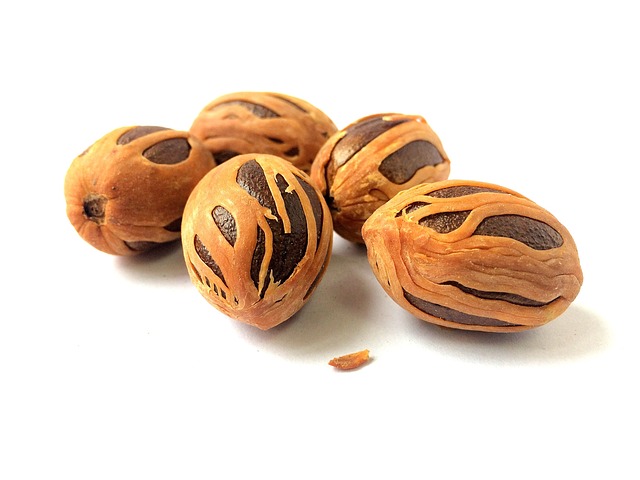
Whole nutmegs covered in mace.

Ground nutmeg was used as incense in ancient Rome.

One old remedy for rheumatism involved boiling nutmegs and cooling the resulting liquid. The nutmegs’ natural fats rise to the surface and cool, forming a solid layer. This is skimmed off and used as a topical balm. Nutmeg is a warming spice, so this would help encourage circulation and relieve some of the pain caused by cold weather aches.

Nutmeg can make you trip balls. This is not code language.
This spice is a hallucinogen, courtesy of a compound known as myristicin. Unfortunately, you have to consume a lot to feel the effects, at which point you’re putting yourself at risk of nutmeg poisoning. “A lot” is relative here — about 10 grams (two or so teaspoons) of ground nutmeg is about to trigger symptoms of toxicity. It’s not that much, but still way more than you’d typically use in cooking. Nutmeg poisoning is pretty awful, too. While I wasn’t able to find any stories of nutmeg-based fatalities, the cases I did find mentioned nausea, dizziness, heart palpitations, fatigue, confusion, and seizures. Yikes.

Nutmeg is associated with the element of Air, the suit of Swords in tarot, and the planets Jupiter and Mercury.

Using Nutmeg

The easiest way to use nutmeg is to make your favorite autumn or winter recipe that uses this spice for flavoring. Use a wooden or metal spoon to prepare it and stir it with your dominant hand. As you do this, picture energy coming up from the Earth, down from the sky, and running through your arm, down your hand, into the spoon, and finally into the food or beverage itself. Ask the nutmeg for help with whatever you want it to do, whether that’s getting laid or making some money. Pretty easy, bog-standard kitchen witchery, really.

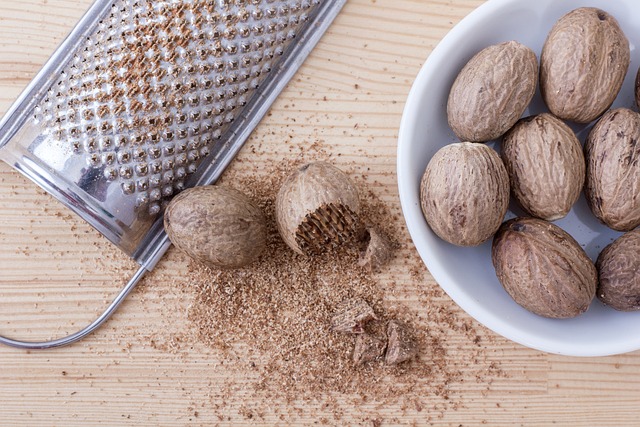
Whole nutmeg seeds, a nutmeg grater, and a little pile of ground nutmeg.

You can also use nutmeg by just… carrying it. As mentioned previously, whole nutmegs are a charm for luck and money. Wrap them in an appropriately colored cloth, anoint them with a suitable magical oil, ask them for their assistance, then keep them on you. When they get old and lose their potency, retire them by burying them in the soil and make a new charm with a fresh nutmeg.

You can also use nutmeg for meditation. I wouldn’t rely on it to induce a trance state, but drinking some warm milk flavored with honey and nutmeg can be a pleasant way to begin some meditative or journeying work. Just don’t use too much — the vast majority of nutmeg poisonings are from kids who eat it to get high and end up spending the night dizzy and throwing up instead.

Nutmegs are also good additions to charm bags or jar spells for money or luck. They’re very nice, potent, self-contained magical ingredients. If you have an assemblage of herbs, curios, and other tools, why not throw in a nutmeg? If you can’t afford a whole one, sprinkle in some of the ground stuff instead.

Nutmeg is a spice with a dark history (I mean, most of them have dark histories. Thanks, colonialism!). It’s preciousness as an incense and culinary ingredient has tied it to the concepts of luck and money, so you’ll most commonly see it in spells for financial abundance and good fortune. If you’re not a kitchen witch, a sprinkle of nutmeg can be a good place to start. If you need to practice magic discreetly, you really can’t go wrong with tucking a whole nutmeg in your bag or pocket.

Uncategorized

Time to prune the @#$% out of this apple tree.

I am not many things. An arborist is among them.

Unfortunately(?), with this house, I have become responsible for a smallish apple tree. I was excited to discover that it was a fruit tree when we first toured the place — there were a few sour greenish apples clinging to the scraggly branches. I didn’t know anything about apple trees, but this still seemed like a positive development.

I have since learned that apple trees are basically livestock.

I bought it a friend, a little Chehalis apple tree, so it could produce more fruit. I watered and fed it.

Like sheep, apple trees also need to be trimmed. Branches cross, or grow from weird, narrow angles, or jut straight up in the air. They weaken the tree, which sends its energy reserves to put leaves and buds on these branches that will inevitably snap in the wind and never bear fruit. They’re a source of illness, insects, and injury. In the event of some kind of apocalypse, it won’t take very long before it’s no longer fruitful — fruit trees as we know them have developed alongside humans, and we rely on each other for survival.

So that’s how I ended up on the internet looking up how to beneficially injure a small tree.

Narrow branch angles. Crossed branches. Watersprouts. I memorized what each one looked like, and how to best cut them. (At an angle, as close to the branch collars as possible.) Then, armed with a set of hedge clippers and a pair of saws, I trudged out to go sort shit out.

A dwarf apple tree that hasn't been pruned in years. It's winter, so the branches are bare.
Depicted: Fruit chaos.

I should note that I was not prepared for how much work it’d be. I figured it was cold out, so I dressed warmly — winter boots, my wedding sweatpants, a flannel, et cetera. Within minutes, I was stripping down.

The actual pruning process wasn’t too intimidating. The tree’s a dwarf, so it was easy enough to navigate the branches. I left some that I know I shouldn’t’ve, just because they were providing support for a wild grape vine that I’m hoping will return next year. Others, I either snipped with the clippers, or carefully sawed through while muttering apologies through clenched teeth.

If anything, the toughest part of the process was the anxiety. What if I cut something wrong, or that’d make it grow all weird? What if my tools weren’t clean enough, and I introduced some kind of disease into the soft, green wood? What if I was doing more harm than good?

When you’re climbing around under a tree and trying not to get cracked in the skull or speared through the eye with falling branches, it’s not the best time to start losing your nerve. I was projecting a lot of my own anxiety on the tree — I’ve been in a position where someone held me down and injured me, insisting it was for my own good, I know exactly how that feels — but maybe this wasn’t it. So, I did the tree-hugger thing.

I put my non-dominant hand on a robust branch and let myself fall into the xylem and phloem, breathing with the slow, wintry pace of the circulating sap. What I felt surprised me. There wasn’t really fear, though there was some pain. If I really had to describe it, it felt like what I imagine the cows in those hoof-trimming videos feel like. (If you haven’t fallen down that rabbit hole yet, you’re welcome.) Tension and relief. The acknowledgement that something is wrong, and fixing it won’t be fun, but the result will be worth it.

I’ll probably have to go back and do some more pruning, but I’ve got the bulk of it done. The problematic parts have been removed, so now everything else is just shaping and ensuring that the branches have enough space around them.

The end result remains to be seen. Hopefully, there’ll be plenty of apples next year!

Environment · life · Neodruidry · Plants and Herbs

Persimmon Foraging Quest

Hello! If you’ve been reading here for a while now, you may have come across the Persimmon Quest.

This is an annual quest my partner and I go on every autumn. We call around or visit grocery stores in order to find out who actually has persimmons (preferably the astringent kind, but non-astringent will also do). Then, we purchase and eat massive quantities of persimmons.

The first time I had one was when I still lived in California. It was a Fuyu persimmon (Diospyros kaki), crunchy and sweet, and I was sold. When I had my first perfectly ripe Hachiya, like a water balloon filled with sweet, flavorful jelly, I was smitten. When I realized that one of the trees planted here by one of the former occupants was probably a persimmon, I was ecstatic.

A Druidry group I belong to recently offered a small foraging expedition. One of our members is a biologist, and he’s kind and generous enough with his time to lead seasonal foraging walks. Last spring, we hunted for ramps. Now that it’s persimmon season, we went to track down some trees.

And oh, did we ever.

Three bags of soft, bright orange American persimmons, along with a sprig of coralberry and some dried mountain mint.

Several of them were already bare, picked over by wildlife and wind. Some were still laden with fruit that fell at the slightest touch. We picked only the ripest, squishiest ones, leaving the rest to soften in the sun and feed other things.

My partner and I came away with several pounds, which I cleaned and froze for future use. They’re very different from Japanese persimmons — we snacked on a few as we foraged, and it was striking just how much the flavor seemed to vary from tree to tree. American persimmons (Diospyros virginiana) are most similar to Hachiya-type Japanese persimmons, in that they’re very astringent before they’re ripe. When they look like they’re nearly rotten, they’re at their best.

Most of the ones I tasted were almost floral when compared to a Hachiya. Still very sweet and soft (with a slight astringent bite in a few places), but floral like lavender lemonade is floral. The comparatively large seeds got in the way a bit, but I’ve read some interesting recipes for roasting and grinding them to make a coffee substitute. As someone who doesn’t drink coffee, I’m intrigued! If I can get a foraged equivalent for Dandy Blend that isn’t dandelion root, I’ll be excited.

I haven’t yet decided what to do with the persimmons themselves. I might separate the seeds and pulp, then freeze the pulp again in an ice cube tray. I figure, if I want to add them to smoothies, sauces, or desserts, I can just thaw out some cubes of prepared persimmon mush fairly quickly and easily. I could even pop a cube or two in a jar for making persimmon kefir. (One member of the group was considering doing fruit leather but based on my experiences trying to make strawberry leather in the oven, I don’t think I want to tackle that without a dehydrator.)

There was a lot more to see than just persimmons, too. Dogbane (Apocynum cannabinum) with its stringy bark (good for stripping and braiding into twine). Horsenettle (Solanum carolinense) with its bright yellow, tomato-like, deceptively delicious-looking poisonous fruits. Fragrant tufts of mountain mint (Pycnanthemum muticum), gray and brittle with age. The most striking were the coralberries (Symphoricarpos orbiculatus), their tiny, bright magenta fruits standing in vibrant contrast to their bright green leaves.

I found these berries particularly intriguing. As it turns out, they’re a valuable native food plant for birds, grow in shade, can stabilize banks, don’t have any major pest or disease vulnerabilities, and thrive on neglect. I’m still looking for native/non-invasive plants to help feed the yard’s hard clay soil and reverse some of the damage from supporting a lawn, and coralberry fills a very important niche here. From what I have read, coralberries aren’t of much value as food for humans. That’s okay, though. Not everything in the yard has to — or should — be for me to eat.

Plus they are so pretty.

I’m considering growing some mountain mint, too. Like other mints, they can take over a yard. Since they’re a native plant, I think it’ll be easier to keep them at a reasonable level than, say, the old peppermint that’s slowly eating part of the back yard. Interestingly, it’s closer to bee balm (monarda) than it is to peppermint, and there’s a faint bee balm-ness to its scent that gives that away. Mountain mint also attracts an incredible variety of native pollinators and predatory wasps, and is both edible and medicinal. Medicinally, it’s treated almost as a panacea — it’s considered a digestive, carminative, emmenagogue, expectorant, and more, though I haven’t thoroughly researched the active constituents myself yet. If it can serve as a home-grown, native substitute for peppermint tea, I’ll be all for it. The flavor does lead me to think that it’d be great for seasoning poultry or wild game, and I’m eager to try.

That’s what I love about foraging trips. Not only do I come away with tasty food, but I also get a better idea of ways to try to heal the land I’m now responsible for. Seeing a wide variety of native plants shows me what this patch of grass could be and tells me how I can help it get there. I’m excited!

Plants and Herbs

Grass Folklore and Magical Uses

I admit, I’m staunchly anti-lawn. Only 50% of this mindset comes from the fact that I’m very allergic to grass. The other 50% comes from the fact that lawns consume more than their share of water, pesticides, and synthetic fertilizers; take up space that could be better used by useful plants; and seem to be a weird kind of status symbol. Also, I hate homeowners’ associations with a passion, and they seem to be really anal about grass.

(I used to try to deliberately sabotage a particularly douchey HOA president by discreetly hucking cannabis seeds into his lawn at every opportunity, and I apologize to no man.)

A tree in the middle of a grassy field, under a cloudy sky.

Since it’s getting into late spring soon, my feelings about grass are at a particularly high peak. It had me wondering — short of raising very small quantities of grazing livestock, is grass actually good for anything?

I also read an old recipe for a hand of glory that involved smoking the severed hand of a hanged man with a mixture of hay and other herbs, and hay is basically large grass, so I thought there might be something there. Could lawns be hiding a treasure trove of magic?

Grass Magical Properties and Folklore

First, it should be noted that “grass” on its own isn’t terribly descriptive. There are a ton of grasses that are known for their magical and medicinal properties, like vetiver and lemongrass. Others, like sweetgrass, have religious or ceremonial significance. For the purposes of this post, I’m going to confine the idea of grass to species like timothy hay and Kentucky bluegrass — the kind of grasses that you’re likely to see appear in paddocks or lawns, either intentionally or as weeds.

A spotted butterfly on a blade of grass.

Sweet vernal grass (Anthoxanthum odoratum) is said to be particularly aggressive when it comes to triggering hay fever. Interestingly, preparing a tincture of the fresh grass, splashing some into one’s hands, and inhaling the fumes is said to help halt an allergy attack.

Hay, in general, is associated with pregnancy and fertility. Some sources treat it as a healing herb.

Couch grass (Elymus repens) is used for happiness, love, lust, hex-breaking, and exorcisms. It appears to be a general “get rid of bad stuff, bring in the good” herb, particularly when it comes to getting rid of malevolent-but-not-terribly-powerful spirits.

Goosegrass is name applied to several species, some of which appear as common weeds in lawns. Cleavers (Galium aparine), which doesn’t really resemble grass, is sometimes called goosegrass. It’s often used for spells to bind two things together. Indian goosegrass (Eleusine indica) is a species that is considered a nuisance plant in lawns and golf greens. Goosegrass is generally associated with dreams, wisdom, and luck.

Bermuda grass (Cynodon dactylon), a common lawn grass in the U.S., is an important Ayurvedic herb. Some research has shown that it may be helpful for controlling blood sugar. It’s also said to regulate bowel movements, ease digestion, heal mouth ulcers and skin problems, and help stop bleeding from hemorrhoids. It has some antimicrobial properties, which can make it useful for healing minor infections.

“Hungry Grass”

In Irish folklore, there’s a phenomenon called féar gorta — famine grass, or hungry grass. This was a patch of grass, completely indistinguishable from any other, that would cause intense hunger pangs in anyone who stood upon it. Some unlucky steppers might even become suddenly exhausted, or even pass away where they stood.

In some tellings, this is because the grass is growing over the grave of a victim of the Great Famine. In others, hungry grass is attributed to malicious faeries.

Delicious Crabgrass

Crabgrass seems to be the bane of many a stereotypical suburban dad. Far from merely being an unsightly interloper into a perfect putting-green lawn, this grass is useful as animal fodder, producing fiber for paper, and even produces edible seeds. Hairy crabgrass (Digitaria sanguinalis) is sometimes cultivated in Europe, and the seeds are known as “Polish millet.” When ground, these seeds produce a useful white flour for baking.

Hairy crabgrass is also medicinally useful. In a decoction, it was used as a treatment for gonorrhea. It was also sometimes used as an emetic, or for general debility — though I’m not sure how throwing up a whole bunch would really help there.

The Hand of Glory

As I mentioned above, hay is (sometimes) instrumental in making a Hand of Glory. This was a kind of grisly candleholder intended to help thieves go about their business. When set with a candle (in some tellings, one made with the semen of the hand’s former owner), it would cause all of the occupants of a house to fall into a deep sleep, as well as unlocking any pesky doors that might stand in between you and the house’s valuables.

All recipes for this grisly curio involve cutting the left hand off of a man freshly hanged on the gallows. If he was a murderer, it should be the hand that did the deed.

According to one recipe, the hand then needed to have as much blood removed as possible. In one recipe, it must then be picked in the urine of a man, woman, stallion, mare, and dog for a month. Then, it should be smoked with hay and other herbs, then hung from a church door overnight. At that point, it’ll be ready to use.

In another, the hand must be packed in a jar with salt, pepper, and saltpeter, and left for two weeks. After that, it should be baked in an oven heated with vervain and ferns for one hour.

Recipes for the candle are pretty specific, too. Some require it to be made of the dead man’s fat and semen, with a wick made of his hair. (Unfortunately, getting hair to light isn’t exactly easy — unlike cotton, it doesn’t really burn. Animal fibers tend to just smolder.) Other instructions say it was best to just dip the whole dingdang hand in wax, then light the fingers directly. This seems a bit wasteful to me, though. After a month of pickling with horse pee and smoking with herbs, I’d like my dead guy’s hand to be more than a one-use item!

Using Grass

First, you want to make sure that you’ve removed all of the stems and see-

Wait. Hang on.

Using grass magically or medicinally is fairly simple; the only really tricky part is figuring out what you’ve got. There are reasons why all those short green lawn plants are just called “grass,” and, if you’re not an expert, it’s probably pretty tricky to tell the difference between Bermuda grass, Kentucky bluegrass, or fine fescue.

Once you’ve figured out what you’re dealing with, the next step is pretty much up to you. It’s worth acknowledging that a lot of the grass species used for lawns aren’t from Europe, so there isn’t going to be a lot of Witchcraft or Druidic lore behind them.

A kitten about to go primal on some flowers in a grassy field.

In general, grasses seem to be treated as positive omens that bring luck. This isn’t too surprising — grass is fodder for grazing animals, and its appearance in spring meant that they could graze, and not rely on stored hay. Hungry animals meant hungry people, and grass made all of the difference. Fresh grass chased away the evil spirit of starvation.

Assuming you aren’t allergic, you can place dried grass in a sachet or charm bag for luck, fertility, and protection from evil. You could also steep dried blades in hot water, and add the liquid to a floor wash for the same purposes. Sufficiently long grass blades could be dried and bound together in an herb bundle to fumigate an area, as well.

I can’t vouch for using grass medicinally, particularly given the difficulty with distinguishing one species from another. If you want to use it that way, you may be better off buying dried or tinctured grasses, versus trying to harvest and prepare your own. (Grasses are also generally doused in pesticides, fertilizers, and other things you probably don’t want in your medicine.)

Until lawns fall out of fashion, at least we can use grass for something positive.
Well, you can. I’ll be over here with the antihistamines.

life · Plants and Herbs

Pennyroyal Folklore and Magical Properties

There’s been a lot of buzz about pennyroyal on the interbutts. Even if you don’t fall in the demographic of people likely to ever have to worry about pregnancy, you might know what large doses of pennyroyal can do just through cultural osmosis.

Photo from Gardenology.com.

Unfortunately, this lovely herb’s use is controversial for good reason.

Pennyroyal Magical Uses and Folklore

Pennyroyal is either feminine and ruled by the planet Venus, or else it’s masculine and ruled by Mars. While this is confusing, I feel like it illustrates the dualistic nature of this herb very well — it’s an objectively beautiful plant, with its lush, creeping growth and clusters of purple flowers invariably covered in bees and butterflies, but it’s also a deadly poison.

As an herb for travelers, a few leaves placed in each shoe was believed to offer protection and guard against tired feet.

Because of the herb’s use as an emmenagogue, it’s sometimes used as an ingredient in sachets and jars for blood magic and protection (especially for sex workers).

Interestingly, this herb is also used for peace. When carried or hung in a space, it helps keep tempers from flaring. (Be very cautious to avoid hanging it where pets or children might ingest it!) This might be an extension of its use as protection against the evil eye. If you think about it, it makes sense — it’s a soft, fuzzy, flowery herb with an unassuming appearance, but it hides a potent poison. Pennyroyal is pretty much the embodiment of an iron fist in a velvet glove.

Pennyroyal is also used to break hexes and curses.

The botanical name, Mentha pulegium, stems from its ability to repel fleas. This might also be the source of its protective powers — it chases fleas and negative or malevolent energies away.

Image by Alex Lockton, used under CC BY-SA 4.0.

In ancient Greece and Rome, wearing a crown of pennyroyal was believed to relieve headaches. The herb was also used to flavor savory foods.

Pennyroyal is still used in North African cuisine to this day. The US Food and Drug administration allows naturally-derived pulegone, a compound found in pennyroyal, as a flavoring agent.

Pennyroyal as Medicine

Pennyroyal is a mint. Members of the mint family contain a naturally-occurring compound called pulegone, which appears to be the primary source of this herb’s toxicity. Even when it isn’t acutely toxic, pulegone has been found to cause pre-cancerous changes in the organs of rodents. The thing is, while herbs like catnip and peppermint have much less pulegone, pennyroyal has a lot.

With that in mind, let’s talk about something called the “therapeutic window.” Put briefly, this is the range where you get the benefits of a medicine, without significant adverse effects. Some medications have a pretty broad therapeutic window. Some do not. Some therapeutic windows are so narrow, they’re not worth considering as treatment.

Pennyroyal falls squarely into that last category.

The thing is, pennyroyal does have some medicinal benefits. Traditionally, it was used as an ingredient in teas. It’s said to be good for flatulence and stomach cramps, like many other members of the mint family.

This is all in very low doses, however, and the beneficial effects of pennyroyal can be found in other, much safer herbs. Flatulence? Try a carminative like caraway seed. Indigestion? Regular peppermint will probably do you just fine.

Pennyroyal also has a reputation as an abortifacient and emmenagogue, meaning that it can trigger an abortion or bring on a period that’s been delayed. The dosage required to do this is pretty much at the far end of the therapeutic window, and the variability in strength of herbal medicine makes it impossible to figure out the difference between “safe and effective” and “deadly.”

Think of it this way — plants aren’t inert. They respond to their environment. If there’s heat stress and a lot of pests, they produce more of the volatile compounds that help them survive. If they’re in a relatively low-stress area, or pampered in a greenhouse, they’ll likely be less intense. This means that, if you’re trying to figure out your own dosage of pennyroyal, you’re pretty much flying blind. You have no way of knowing how much pulegone a given dosage of pennyroyal might contain.

That means that not only might you not actually trigger an abortion, you could end up destroying your liver, kidneys, and lungs instead. Worst case scenario, you will die and it will hurt the entire time. Just like everything else, there are much safer herbs that can help bring about a late period.

I have only one piece of advice when it comes to using pennyroyal medicinally: Don’t, unless you’re doing so under the guidance of a doctor. Unfortunately, we don’t yet have an antidote for pennyroyal poisoning.

Using Pennyroyal

While it’s still used in dishes like batata bel fliou, if you don’t have experience cooking with pennyroyal, it’s best to err on the side of caution and avoid putting it in brews, potions, or foods.

Oil of pennyroyal is the most toxic form of the plant, so you may wish to find an oil with comparable magical uses instead — especially for anointing.

Other than that, pennyroyal is fine to use in jars, sachets, and spells that don’t involve taking the herb internally. Since it’s been shown that it can cause pre-cancerous changes in the lung cells of rats, I’d probably avoid putting it in incense. (Members of the mint family tend to smell awful when burned, anyhow.)

If you’re a sex worker (or just someone who enjoys sex and wants to protect themselves), you might want to include it in a jar for attraction and sensuality as a sex-specific protection herb. Combine it with ingredients like rose petals, jasmine, and sugar, seal with the wax of a red candle, and keep it under your bed.

For protection, fill a jar with pennyroyal, cactus spines, garlic, and hawthorn. Keep it under your porch, or bury it near/under your front steps.

For peace, mix pennyroyal with lavender and thyme and put it in a jar. Seal it with the wax of a white candle, and keep it in a safe place near the heart of your home.

Pennyroyal isn’t immediately and intensely poisonous like some herbs can be, but the people most likely to look for it for medicinal purposes are at the most risk. If you’re experiencing menstrual irregularities or a late period, there are other treatments out there that are much safer for you.

Neodruidry · Plants and Herbs · Witchcraft

Fennel Folklore and Magical Properties

Fennel (Foeniculum vulgare) is a Mediterranean herb related to carrots. The type you see in supermarkets is bred for its large bulb, which is eaten as a vegetable. You can also find the dried leaves in teas and herb blends. It has a flavor very reminiscent of anise or licorice that becomes mild and sweet during cooking. It’s also related to silphium, a plant that was both considered a delicacy and included in formulas to cause miscarriage.

Flowering fennel tops.

One of the most interesting things about fennel is its action on the endocrine and reproductive systems. While it isn’t true that the ancient Romans harvested a relative of fennel to extinction for to use for herbal abortions, alcohol extracts of a relative of giant fennel (the source of the spice asafoetida) have been found to prevent egg fertilization and induce miscarriages in rats.

Fennel Magical Uses and Folklore

While fennel isn’t exactly the same plant as asafoetida, fennel seeds do act as a uterine stimulant. Part of this is due to an estrogenic effect, possibly courtesy of the compounds anethole, dianethole and photoanethole. Fennel also contains an enzyme that effects the body’s ability to process certain drugs. In the 3rd century, a doctor named Metrodora included a species of fennel in a compound of herbs to cause miscarriage.

Fennel is one of the plants in the Anglo-Saxon Nine Herbs Charm. To wit:

[C]hervil and fennel

very mighty these two plants created the wise leader holy in heaven

when he hung set and sent into the 7 worlds

for wretched and rich all to remedy

stands she against pain

stands she against poison.

Who is mighty against 3 and against 30

against fiends hand

against spells

against enchantment by wicked wights.

An excerpt from the Nine Herbs Charm, from the Lacnunga

Interestingly, Pliny the Elder claimed that silphium (the much-desired fennel of ancient Greece and Rome) had a powerful purgative effect when initially consumed. It was said that the plant purged the body of undesirable “humors,” effectively causing a kind of physical purification. However, Pliny also thought that snakes ate fennel to improve their eyesight, so maybe don’t take everything he says at face value.

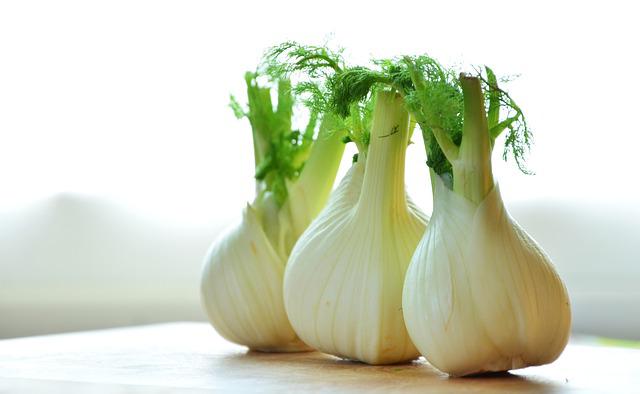
A trio of fennel bulbs.

When planted around the home, fennel acts as a magical ward. This may be based in part on its use as an insect repellant — the idea being that it repels evil just as well as it does bugs. As an extension of this idea, medieval households would hang fennel above the door and fill their locks with fennel seeds to keep wandering, unsettled ghosts away.

Fennel seeds are burned to purify spaces. You can also dress a candle with fennel seeds to break streaks of bad luck and crossed conditions in your life.

Fennel’s estrogenic effects were sometimes relied on to improve libido. By extension, the flowers and seeds are often used in sachets and charms to enhance one’s love life.

Planting fennel and dill together can result in hybrid plants that look like a cross between the two and taste like neither.

Followers of Dionysus carried wands made of fennel stalks.

Fennel is used for courage. Chew the seeds or drink fennel tea before you have to do something scary or difficult.

Using Fennel

Consume the seeds or drink the tea to help trigger a late menstrual period. The maximum dosage of fennel seeds for an adult human is about 6 grams. More than that may cause unwanted effects.

You can use pretty much any part of the fennel plant — chew the seeds, put them in tea, eat the bulb and stalk as a vegetable, you name it. This means that you’re pretty much free to choose whichever part of the plant resonates best with you, and use it however it suits your purposes. If you plan to consume it, be sure to do your research to make sure it won’t interact with any other herbs or medications you’re currently using. It’s generally safe in food amounts, but the risk of adverse side effects increases with the dose.

Fennel seeds are great additions to sachets, powders, and potions.

Growing fennel is fairly easy. It can grow in zones 5-10, and is a perennial in zones 6 and up. Nonetheless, it’s usually treated as an annual — it self-sows prolifically, and you’re likely to harvest and use the whole plant once its mature anyhow.

Sow fennel in early spring, about 16-18″ apart in an area that receives full sun and has enough headroom for the plant to reach its full 5′ adult height. (It’s best to direct sow, because fennel isn’t very receptive to transplanting.) Avoid planting it near other plants, since it secretes a compound that prevents competition. Coupled with its sun-blocking height, and you may find that its neighbors really struggle. Fennel also hybridizes readily with some other plants, so you may find that the seeds you get from it aren’t true to the parent plant at all.

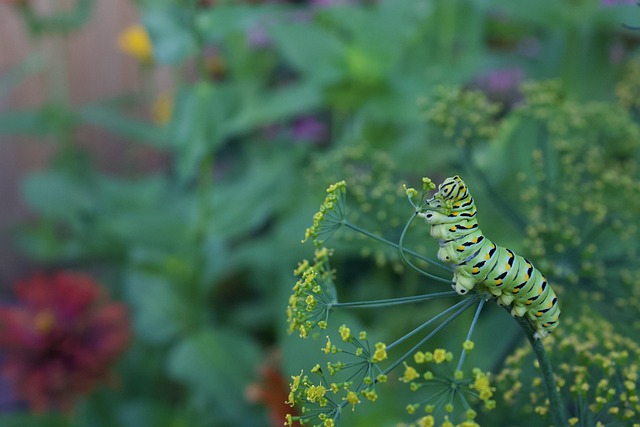
A swallowtail caterpillar crawling on a fennel flower.

Water fennel regularly until its well established. The plant generally doesn’t experience many problems, though you might find swallowtail butterfly caterpillars chewing on the leaves!

Harvest fennel after about two months, once its mature. Cut off the flowers as they appear, unless you want to gather the seeds (or would like the plant to self-sow).

Burn the seeds or stalks for purification or protection. Blend with rose petals, cinnamon, and other love and lust herbs for use in aphrodisiac formulas.

Neodruidry · Plants and Herbs · Witchcraft

Strawberry Folklore and Magical Properties

Ever since my strawberry buying and planting misadventure, I figured it’d be worthwhile to write a bit about the historical and potential magical uses for them. (Especially since, having done the math, I may need to find uses for up to 140 pounds of ’em.)

Strawberries come from various species of the genus Fragaria. Like so many other popular fruiting plants, they’re actually related to roses. The typical strawberries that you grow in the garden or buy in the store are varieties of a hybrid cultivar called Fragaria × ananassa, but there are over 20 species that appear all over the world. Another popular species is Fragaria vesca, the Alpine strawberry. These plants produce small fruits with a flavor reminiscent of pineapple.

A cream-filled strawberry cake roll, decorated with fresh berries.

I remember playing in a patch of wild strawberries when I was very small. We had a ton of volunteer Fragaria virginiana in our back yard, which returned every year with pretty much no effort on anyone’s part. The birds usually got to the fruits long before we could, so finding the tiny, jewel-like berries hidden under the leaves was like finding treasure.

Strawberry Magical Uses and Folklore

The term “strawberry” comes from the Old English streawberige. This may refer to the tiny seeds on the outside of strawberries (the actual fruits — what we generally think of as the “berry” part, isn’t!) which resemble wheat chaff. A cognate name was eorðberge, for “earth-berry.” This can still be seen in the modern German word for the fruit, Erdbeere.  

The deep red color and heart shape of strawberries makes them sacred to Venus and Aphrodite. One may extend this to other goddesses of love and beauty, as well.

This connection to love goddesses may be the source of one legend about the berries. It’s said that double strawberries are potent love charms. If you find one, break it in half and give one half to your intended partner. If you both eat the halves of the double strawberry, you’ll fall in love with each other.

In some parts of Bavaria, strawberries are used to ensure healthy cattle and abundant milk. Farmers hang small baskets of wild strawberries on the horns of their cows, as an offering to local faeries. These faeries are said to love strawberries, and will protect the cattle in return.

A small wild strawberry.

Strawberry plants are potent emblems of fertility. They reproduce via seed, largely by attracting birds to their bright red fruit. The birds eat the flesh, and the seeds (actually achenes, or ovaries containing a single seed) pass through their digestive systems. Strawberry seeds only require light and moisture to germinate, so they grow easily pretty much wherever they’re dropped. The plants also reproduce via runners, or specialized shoots that grow out from the mother plant and produce full plants of their own. In other words, it’s almost harder not to grow strawberries!

Using Strawberries

I mean… You can just eat them. Strawberries are kind of neat that way. Convenient. This advice is probably not what you’re here for, however.

It should be noted that, while it’s highly likely you have wild strawberries in your area, you may also stumble across the mock strawberry. This is Potentilla indica, and not a variety of true strawberries (though, like true strawberries, they’re also a member of the Rosaceae family). They very closely resemble wild strawberries, but have yellow flowers and less flavor. Fortunately, they aren’t toxic.

Medicinally, the leaves and roots can be brewed into a tea. This tea is believed to help get rid of “toxins,” which means that it acts as a diuretic. That helps flush compounds like uric acid, so strawberry may be prescribed as a treatment for gout. The astringent properties of this tea is also said to help with gastritis, intestinal bleeding, heartburn, and other digestive complaints.

When used topically, an infusion of the leaves and roots may help clear up acne by acting as an astringent. The fruits, too, are also rumored to be beneficial here — eat a strawberry, then rub the leftover bit of flesh at the top on your face. The natural acids present in the fruit can help with cell turnover and unclog pores.

Magically, you can offer strawberry fruit and flowers to deities of love and beauty. You may also want to use the fruit in kitchen witchery for beauty or attraction spells. If love spells are your bag, you may even wish to include these fruits in brews or desserts to share with your desired partner.

A brew of mint and lime, with fresh strawberries.

Strawberries are a beautiful part of the transition into spring. Their medicinal properties are helpful for shaking off the effects of winter, and their vibrant taste and color are a treat after months of gray weather.