Environment

Deepening Resilience: Hoping for the best, expecting the worst.

Learn more about Deepening Resilience here, or read my previous post in this series here

“Climate change” seems like such a soft term, doesn’t it? George Carlin talked about how euphemistic “global warming” and the “greenhouse effect” sounded, and I agree with him — warm sounds cozy, a house is a home, and greenhouses grow things. Climate change doesn’t really seem to encapsulate the full scope of acidifying oceans, dust-choked air, and the creeping horror of feeling your muscles freeze stiff in the deathgrip of a polar vortex, either.

If you can’t tell, I find the whole thing pretty frightening.

Part of it is that I worry for all of the people hurt the worst by it. This is especially true because the people most affected by climate change are women, especially those in developing nations where poor infrastructure creates additional barriers to preparedness. As long as low income women are the ones experiencing the worst of climate change, you will never get the people capable of making a global impact to care.

Part of it is knowing how many animals suffer because of climate change. Unless they’re cute and marketable, though, the people capable of making a global impact still won’t care.

Part of it is a gnawing dread, like watching a slow-motion car wreck. Knowing that there is a tipping point at which we can no longer do anything (how are we going to capture all of the methane currently trapped in melting ice?). Knowing that we’re pretty much there. Knowing that those with the ability to hit the breaks, aren’t.

Part of it is pure self-interest. Extremes in temperature mess me up. The heat makes my brain feel like its being crushed, I can’t breathe, and my heart pounds. The cold makes every limb feel swarmed with fire ants. Knowing that these extremes are only going to be worse, and come more often, isn’t comforting.

Climate change isn’t necessarily the kind of thing you can prepare for. Sure, you can develop a Bartertown-style compound for surviving a Mad Maxesque, worst-case-scenario apocalypse, but that only lasts as long as your ability to defend it does. Investing in gold or other concrete things would make for a great updated retelling of The Cock and the Jewel. Land and supplies are only as good as your ability to keep them, and even the most ardent stockpiler will run out of bullets, eventually.

Personally, I’m not sure how I’d prepare even if I were entirely able-bodied. I know how to grow food and forage, but this is only helpful as long as the right conditions for growing things last. With the weather weirding and disappearing pollinators, I have no misapprehensions about being able to feed myself. I have other useful skills I could barter, but that isn’t really bankable in such an extreme scenario.

I feel the most prepared when I open myself to the possibility of disaster. It might sound fatalistic, but death positivity has done more to help make me an effective person than anything else. When I embrace the fact that everything is probably not going to be okay, when I can look in the face of the absolute certainty that I’m going to die of something at some point, it’s freeing because I don’t have to worry about it anymore. I can hope and work for the best, but expect (and accept) the worst. Death, itself, holds no fear for me.

As trite as it is, an ounce of prevention is worth a pound of cure. There are things that can be done now (not “things we can do” — there is very little, on a day-to-day level, that individuals can do to stop climate change), and the people preventing them are not gods.

life

The Buzzcut: One Year(ish) Later

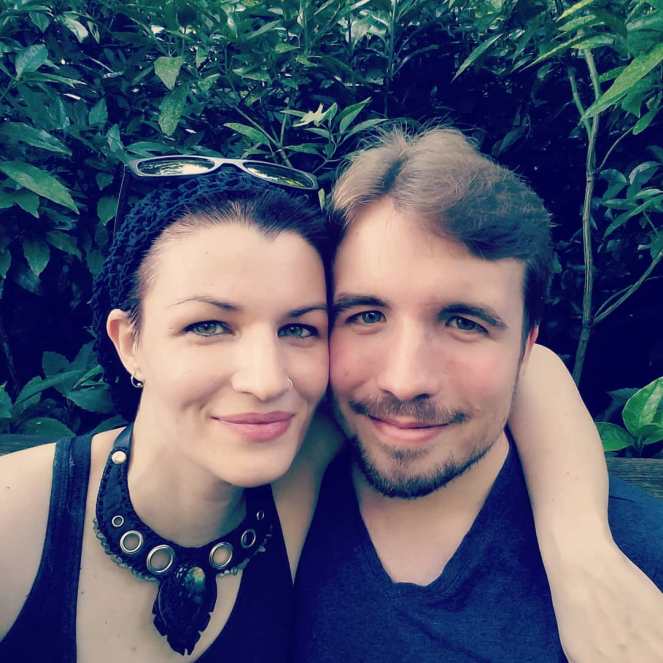
The New Year’s day before last, I shaved my head. The whole thing, right down to the skin. I did it for a variety of reasons — some magical, most mundane. Now, after a year (and change), how does it feel?

17952710_10211841750497007_6599383343916337071_n
Not shown: the picked-over patches hidden by that ridiculous part.

I’ve gotta be honest, I don’t regret it. I only regret not having done it sooner.

I don’t keep my hair as (non-existently) short as that first cut. Most of the time, it hovers between a #3 and a #5. I’ve debated allowing it to grow out again, but, every time, I hit about an inch in length and get the urge to buzz it again.

26240277_10214210989086491_5780526394462620721_o
Bald af.

It was a little tough to get used to, at first. I’ve almost always had very long hair. It was part of how I mentally pictured myself. Even in dreams, I had long hair. A big part of why I cut it was trichotillomania — after two decades of feeling through my hair, looking for all of the strands that were too thick, to coarse, too curly, or otherwise too different, and then pulling them out, I was ready to stop. I also knew I didn’t want to go the route of buying hair fiber sprays or putting in expensive extensions that’d only end up damaging what hair I had left. Unfortunately, like a lot of things on the obsessive-compulsive spectrum, it’s not that easy to just up and quit trich. Buzzing it short removes not only the temptation, but the ability to grasp hairs and pull them. As a “fix,” it’s a bit hardcore… but it works.

Sometimes I struggle with the idea of keeping my hair short. Most of the people — men, women, or otherwise — who informed my standard of beauty growing up had long hair. The typical image of the witch in popular imagination is a woman with long, wild hair. Some spells even call for unbinding and shaking out hair, using hair as a taglock, braiding hair together with other objects, or wearing items in hair. Some traditions call for keeping hair bound or covered. I have never been a part of one that did, but I kept my hair bound anyway — I shed like a golden retriever, so it helped keep my hair off of things. (It also helped keep it out of other people’s hands. No sense in giving someone an easy way to focus a jinx on you, you know?)

On the flip side, a large component of magic is embracing change and releasing what no longer serves you. Honoring sunk costs or holding on to things that do nothing for you only serves as an energy sink that detracts from your ability to grow, create, and bring in things that don’t suck the joy out of living. With that in mind, and considering how much mental energy it took to go through the hair-pulling process, obsess about it afterward, try to hide the evidence, and keep my hair in decent shape, I don’t at all regret shaving it.

Will I let my hair grow out again? I don’t think so. I like how it looks short. I love how little care it requires. I like that I can make bars of shampoo last much longer now. I love that I never have to worry about it being dull, or limp, or frizzy, or unmanageable. Not having long hair has taken a tremendous load off of me.

Strangely enough for someone who’s had long hair pretty much her whole life, I feel more like myself with little-to-no hair at all.

40535922_10216173871437323_8889769613303218176_o
I still like to wear hats, though.
life

Let’s eat paste!

Okay, not really.

I haven’t written much lately, mostly because of two reasons:

  1. I was incredibly sick and felt like death, and
  2. It’s almost time for me to turn in all of the essays I’ve written over the past year for evaluation by whoever at ADF is in charge of that kind of thing.

So, in essence, I haven’t written much because I’ve been busy writing in between bouts of coughing and other assorted misery. I have done some other creative-type things, though, which is awesome. I’m in the process of moving my altar (hopefully to a place where cats can’t happen to it), too.

Anyway, you’re probably wondering what the paste bit is about. Let me explain.

Continue reading “Let’s eat paste!”

life

DIY Brain Chemistry

I’ve been doing a lot of reading.

I don’t want to call it “research,” because looking up a bunch of studies isn’t really the same as designing an experiment or compiling a meta analysis, but it’s a lot of reading nonetheless.

See, for years, I’ve been trying to find ways to mitigate some Brain Things. It isn’t purely panic disorder, because there are some very evident physiological aspects to that aren’t really adequately explained by anxiety. It also isn’t purely physical, either.

The first doctor I ever discussed it with was my pediatrician. I was thirteen, had begun experiencing regular panic attacks, and my mother was tired of it.

“It’s anxiety,” he said. And that was it.

It went untreated for years — I was told it was all in my head, that the liver absorbs adrenaline in under a minute (lol what), and there was no reason for any panic attack to last longer than that. This left me with two things:

  1. A raging, untreated panic disorder.
  2. A diagnosis of anxiety.

Getting diagnosed with anxiety is a curse in its own right, particularly if you’re medically female. Women’s pain is often ignored as it is, particularly for black women. If you have a history of anxiety and depression, it is downright impressive how many medical conditions it’ll get blamed for. (Like the time I was given SSRIs to treat a symptomatic hemangioma. Fun!)

Continue reading “DIY Brain Chemistry”

Blog · life

Living my best life is sucking the life out of me.

Its 2:00 in the morning, and I am writing because I have, once again, destroyed my sleep schedule.

Well, not just my sleep schedule.

I have idiopathic intracranial hypertension. It makes me forget things, feel crushing headaches every moment of the day, occasionally lose my ability to see, and want to sleep basically forever. Left to my own devices, I will sleep for twelve hours and still be able to take a substantial midday nap.

Such is life.

Unfortunately, this doesn’t allow me much time for anything else. This doubly sucks, because what time I am left is also devoted to coping with the headaches, dizziness, anxiety, depression, and other trappings of having a head full of surplus brainjuice. Showering is tiring. Clothes hurt. On a high-pressure day, even holding my head up is more than my neck can manage.

Continue reading “Living my best life is sucking the life out of me.”

life

Why “Unseelie?”

So, I’ve gotten asked, “Why do you go by Unseelie J online?”

There are a couple of reasons. Yes, it’s a pun on unseelie fae, but it goes a bit deeper than that.

While the word unseelie, particularly when attached to the unseelie court, is taken to mean “malevolent,” it has a number of uses. Seelie, its opposite, meant blessed, lucky, or happy. Unseelie, therefore, meant unhappy, unfortunate, or not blessed. It’s a term that resonates with me.

I have mostly created my own luck in life — I was born to a poor family, in a not-terribly-great family situation, raised by an abusive, staunchly religious homophobe, nearly killed in a car accident as a teenager, and, to top it all off, was diagnosed with a very rare, poorly understood, incurable, potentially lethal neurological disorder about six years ago.
It’s been quite a time.

I’ve also long realized that my primary purpose in life may very well be to serve as a cautionary tale to others, and I’ve become okay with that. I’m also okay with the fact that I am chiefly alive out of pure contrariness.

After all, like Maria Bamford says,

spite.gif

So, while I’ve got a neurological disorder, anxiety, physical pain, and the weight of my past to carry around, I’m okay with being unseelie. At this point, I also aim to be the biggest thorn in the side of the status quo that I can be, so I’m even okay with being considered malevolent.

It all depends on who’s doing the considering.  💜


life

A small, helpful rock.

Chronic illness demands strange rituals from you.

Sure, you go to the doctor. You take what they give you, though you might find that you have to do so at a certain time of night, or with a certain type of food, or adjust your dosage based on the weather or time of the month you take it. You start developing the small repetitions that (hopefully) keep you functioning.

Sometimes, that isn’t enough. So you branch out — you start adding medicinal baths, special pillows, vitamins, herbs. You go to a massage therapist, maybe an acupuncturist. You stretch, meditate, and spray yourself with magnesium oil. Your house becomes a haven for therapeutic smells.

Maybe you go further still. You look up the meanings and properties of crystals, and leave little groups of them huddled on your shelves or nightstand. You draw sigils on your medicine bottles, and paint runes on yourself in arnica gel and muscle rub.

heart-3243179_1280

All of this is to explain how I ended up with my favorite medicinal rock.

Crystal guides usually give the same set of properties for a given stone — you use rose quartz for love, amethyst for peace and relaxation, and so forth. I come from a magical background staunchly rooted in personal associations. I don’t believe it’s necessary or desirable to reinvent the wheel, but most of the herbs, stones, and other tools I use are ones that I have a personal history with, and what I’ve learned about them doesn’t always match what the guides say.

Selenite is usually used to cleanse things. You can keep it with other stones or tools, or use the little wands to clear negative energy out of spaces like a spiritual lint roller. One crystalworker uses them to help itching from bug bites and eczema. I used to keep a couple pieces of it around to keep stagnant energy from accumulating. Now? I use selenite crystals for pain.

I get terrible neck pains sometimes, a direct consequence of a rare, incurable  neurological condition. There’s no help for it. I’ve been given everything from massage, to camphor gel, to opiates, to tricyclic antidepressants, all to little avail. If the pain becomes bad enough, it means I need to visit the ER for an emergency lumbar puncture and more hardcore pain management (which is also why I have several opinions on how the opiate crisis is affecting the way pain is managed in emergency settings, but that’s neither here nor there). If it isn’t yet at the ER point, I just have to suck it up.

One night, in a moment of sleepless desperation, I picked up a rough selenite wand and pressed it to my neck. And it worked.

Now, I keep a smoothed and shaped wand of selenite in my bedside table, ready for all of the times when pain keeps me awake. I don’t need to do much with it, just pressing it lightly to the places that hurt is often enough to give me enough relief to sleep. Would I use it instead of evidence-based medicine? No, but I also haven’t met a doctor yet that objects to me having a safe, drug-free means of relieving pain. I still need to visit the ER when things become bad enough — I haven’t found any stone that can substitute for having about 15 mmHg of extra fluids siphoned off my brain, unfortunately — but this helps make the other days more bearable.

Sometimes, chronic illness makes you do things. You might give up nightshade vegetables, take up polyphasic sleeping, or begin carrying magnesium oil in your bag.

Or, you might befriend a small, helpful rock.