Plants and Herbs

Phlox Folklore and Magical Uses

Right now, my moss phlox (Phlox subulata) is absolutely popping off. I posted some photos in my last post about murdering the lawn, and they’ve continued to open more flowers as the days go on.

Phlox is more than just a pollinator-friendly native groundcover, however. Though most species are in North America, they’re a useful (if often overlooked) magical ally and ingredient for all kinds of traditions.

The name “phlox” comes from the Ancient Greek word phlox, for “blaze.” I’ve seen two reasons given for this etymology: One is that the intensely colored flowers are as bright as little flames. The other is the flame-shaped flower clusters of upright varieties of phlox.
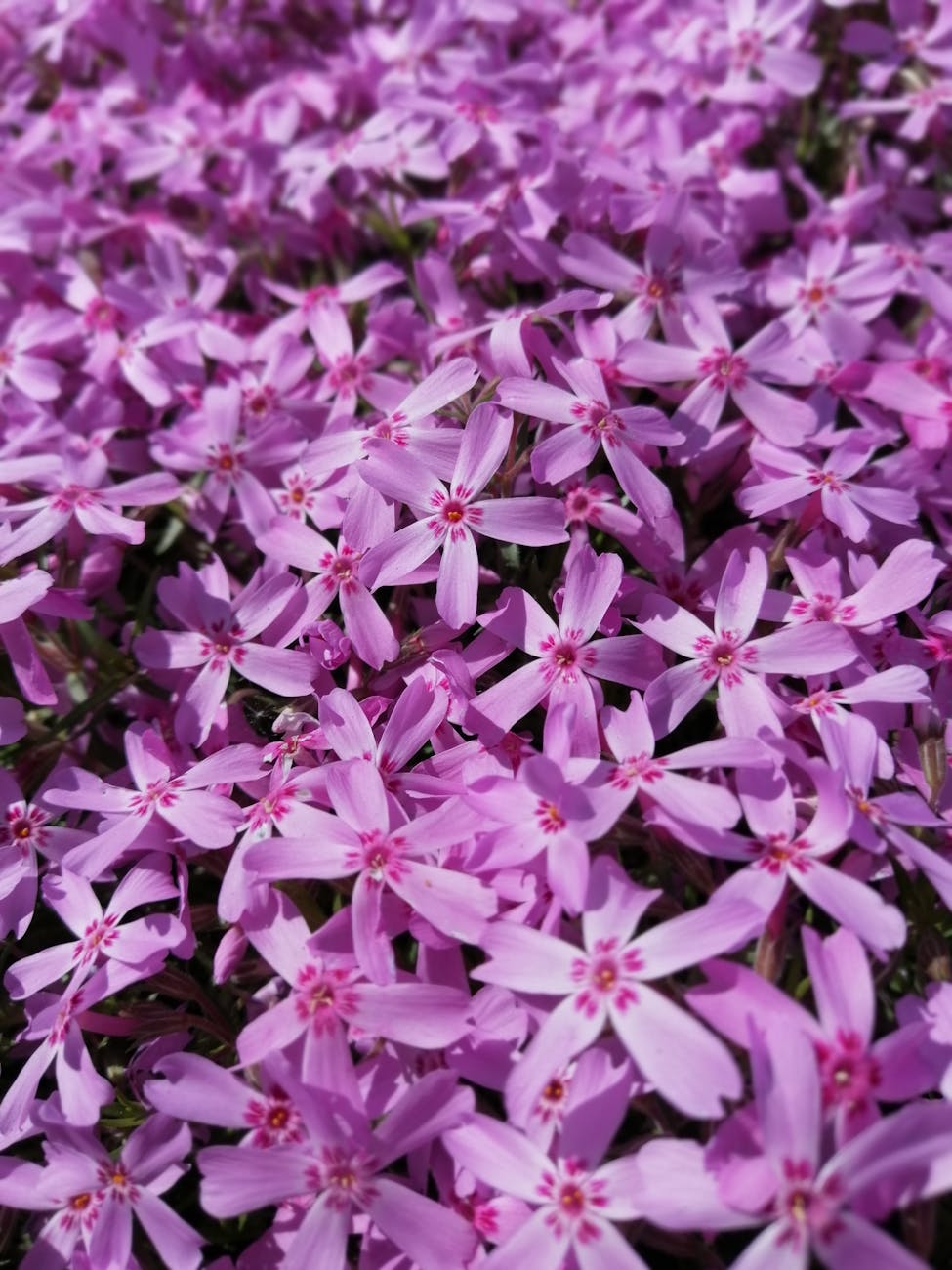
A bunch of violet-colored phlox flowers.
Photo by u042eu043bu0438u0430u043du043du0430 u041eu0441u0438u043fu043eu0432u0430 on Pexels.com

It’s said that phlox flowers were created by the torches of Odysseus’ men when they descended to Hades. When they returned, they threw their torches to the ground, where they became phlox flowers. This tale most likely refers to Polemonium caeruleum, a member of the phlox family known as Jacob’s ladder or Greek valerian.

The kantuta (Cantua buxifolia), also known as the Peruvian magic tree, is a tree with bright, trumpet-shaped flowers. It’s the national flower of both Bolivia and Peru.
An Incan legend tells of two kings who, jealous of each other’s wealth, went to war against each other. They were evenly matched, and, in the final battle, both struck mortal blows. On their deathbeds, they called their sons to them and made them swore to avenge their deaths — even though their sons hadn’t been in favor of the senseless war in the first place. Nonetheless, their sense of filial piety drove them to continue their fathers’ war.
History repeated itself, and the two sons also inflicted mortal wounds on each other. However, instead of demanding that the war continue, they forgave each other and died in peace. They were buried together, on the green ground of the battlefield.
Pachamama, the Goddess of fertility, punished the sons’ unjust fathers by making their stars fall from the heavens. When they landed on Earth again, they became the mountains Illimani and Illampu. The melting snows that run down them and water the valleys below are their tears of regret for what they have done. The kantuta trees represent unity and the hope that such a war should never happen again.

A North American legend tells a similar tale, but about Phlox subulata. There, the Creek and Chickasaw peoples engaged in a battle when one nation disrespected the other. It was seen as an attempt to provoke a war, and the two nations battled for days.
When the Chickasaw people tried to retreat, they were trapped by a wall of flames. In desperation, a young boy asked all of the animals for help extinguishing the fire so his people could escape. The animals tried, but they were unsuccessful and exhausted by the attempt — the deer’s long tail was burned off by the intense flames, and the once-white squirrel was stained gray with ashes. Taking pity on the animals and people, the Great Spirit changed the burning flames into bright phlox flowers.

In Victorian floriography (the cryptographic “language of flowers”), phlox meant “our souls are united,” or even “we think/feel alike.”

Blue phlox flowers.
Photo by Julia Filirovska on Pexels.com

Planting it in a garden is said to encourage family harmony and unity within the household.

Another source holds that phlox flowers symbolize pleasant dreams and love.

Phlox is associated with the elements of Earth and Fire.

The best way to use phlox is to find a variety native to your area, and plant it. (If you’re in the eastern US, Phlox subulata makes a great substitute for turf grass.) The presence of phlox is said to encourage unity and peace, and forges a harmonious household.

You can also use phlox flowers based on their color. Include dried flowers in sachets, jar spells, or herbal offerings. Since they’re a very peace-love-and-harmony plant, that may affect your perception of what each color is good for. Pink flowers are the most suitable for love, and red for passion, while white or blue are best for peace and healing. Purple flowers are useful for meditative or spiritual pursuits. Oranges and yellows are helpful for positivity and optimism. This isn’t really a flower you’d want to include in, for example, banishing work.

Phlox is associated with protection, but, from the folklore and legends that I’ve seen, this mostly seems to be “protection from harm by calming hostilities.” It doesn’t seem to be a flower for more aggressive protection magic.

To harvest phlox flowers, pick them early in the morning — just after the dew has dried. Hang them upside-down somewhere dry and out of sunlight. (Dried flowers inevitably lose some of their color, but exposure to bright light can cause their colors to fade more.) Once the flowers are dry, store them in a jar in a cool, dark, dry area.

From Odysseus to Illimani and Illampu, phlox flowers are representations of hope, togetherness, and peace. Their legends talk about the senselessness of war and the relief that comes when peace is achieved. They’re excellent allies for works involving calming, hope, and unity.
Plants and Herbs

Cacti Folklore and Magical Uses

My partner has a window shelf of cacti and succulents in his office. In winter, it doesn’t get much action — temperatures are too low and there’s not enough light to foster growth, so we don’t water them from about November to late March or early April. They use up the water stored in their tissues, and the lack of soil moisture means that they’re much less likely to develop rot. Since it’s warming up again, it’ll be time to start watering them soon.

Close up of opuntia cactus fruits.
Photo by Fiam So Iam on Pexels.com

We’re also continuing work on replacing our lawn. One of the plants I’ve considered putting in is a native Opuntia humifusa cactus, also known as an Eastern prickly pear. These are, believe it or not, hardy cacti that are the most wide-ranging species in the US. It can be found everywhere from Ontario, to Florida, to New Mexico. My grandfather’s house in New York had a pretty big specimen planted on one side — it was pretty surreal to see a big blue hydrangea bush, and then this cactus spread out less than ten feet away!

A bearded dragon perched on a moss pole in the center of a Monstera deliciosa.
A very handsome, chonky boy.

I’ve also been revamping my bearded dragon’s enclosure. I’m a fan of bioactive habitats, personally, so I make an effort to establish naturalistic microclimates using a variety of lights, sources of humidity, live plants, and even live insects. While desert reptiles can live in very dry, arid conditions, a lot of enclosures don’t include the kind of microclimates that they need for optimum comfort. He’s a big guy who has to live by himself, and I want to make his enclosure as comfortable and stimulating as possible. So, I’ve been looking into spineless cacti and other desert plants that will do the job without putting him at risk of any pokes.

All of this is to say that it’s been a very cacti season, so I thought I’d write a bit on the different folklore and magical uses of these weird, wonderful plants.

A cactus’ spines are actually its leaves. Like the specialized leaves-turned-petals of hydrangea and dogwood “flowers,” cacti spines have changed their form to suit a specific purpose. In this case, it’s reducing moisture loss and protecting the plants’ plump, water-rich flesh from herbivores. Though they’re thin, spines help shade the cactus from the harsh sun. They also catch rainfall and dew and direct the droplets toward the plants’ roots. While we typically think of dry deserts when we think of cacti, their spines and roots create humid, shady, relatively cool microclimates around their bases.

A Peruvian tale explains where cacti got their spines. On a tall, tall mountain, there was a single lush, green plant. It had broad, tender leaves like lettuce, and was all but irresistible to the local alpaca population. Every day, this plant would have to dodge their attempts to grab a mouthful of its leaves, and every day it prayed for a way to protect itself.
One day, the plant heard a terrible noise. A fox was rushing down the mountain with a tremendous boulder in hot pursuit! Panting with exhaustion, the running fox begged the plant to stop the boulder somehow — if it could, the fox promised, he would give it his claws in payment. The boulder came crashing down, and the plant stopped it in the nick of time by spreading out its broad leaves. The grateful fox gave the plant his claws, and the cactus became the prickly plant we know today.

There are also many stories of the relationship between rose and cactus. One such tale talks about how, on rose’s birthday, he invited all of the plants to attend a party. The self-conscious cactus didn’t answer the invitation, since she had no gift suitable to give the rose. Still, the rose sent a butterfly to make sure cactus came to the party and enjoyed herself anyway.
The cactus was grateful that rose wanted to invite her, even though she had no suitable gift to give him. When the time came to offer rose his birthday presents, cactus gave him the only thing she had — her protective spiny coat. The rose put it on immediately and, in return, offered the cactus a beautiful flower on her birthday.
To this day, rose wears a spiny coat of thorns, and the cactus blooms on her birthday.

A close-up of a yellow and orange cactus flower.
Photo by Anna Tarazevich on Pexels.com

Another tale tells of a proud rose who regarded himself as the most beautiful plant in the land. He looked down on the cactus, who had neither beautiful flowers nor fragrant perfume. What use could such a plant be to anyone?
When a drought came, the rose began to wither. He noticed, however, that the cactus was still plump and filled with water — so much, in fact, that the birds would visit her to poke holes in her tender flesh and drink.
The proud rose humbled himself and asked the cactus for some of her water. Not wishing to see anyone suffer, she told the birds to bring the rose some water. The birds dipped their beaks into the cactus’ green skin, and, flying to the rose, dripped the water on his roots. The rose and the cactus survived the drought, and the rose was never haughty again.

One bit of very persistent folklore says that you can slice open a cactus and drink the water inside. This is only even a little true of one particular species — the fishhook barrel cactus (Ferocactus wislizeni). While this cactus’ water can be drunk in extreme situations, it contains a lot of oxalic acid. Drink it on an empty stomach, and you’re probably looking at a lot of (very dehydrating) diarrhea. Other cacti contain various acids and alkaloids that can do everything from damage your kidneys, to straight-up paralyze you. Cactus-like plants found outside the US, like those in Madagascar and southern Africa, are actually members of the highly toxic family Euphorbiaceae.

The San Pedro cactus (Trichocereus macrogonus var. pachanoi) is an Ecuadorean, Peruvian, and Colombian native that is a natural source of the psychoactive compound mescaline. Peyote (Lophophora williamsii) is native to Mexico and Texas and also contains mescaline. Both of these cacti are considered sacred plants that have been used by humans for spiritual, medicinal, and divinatory purposes for thousands of years.

Cacti are one of those plants that you won’t find in old European grimoires, but that doesn’t make them any less valuable as herbal and magical allies. They are generally associated with resilience and protection.

Some practitioners also believe that they’re capable of absorbing and storing negative energy within themselves. These practitioners cleanse their cacti by repotting it regularly and very occasionally giving it a good soak under running water.

A close-up of a round, very spiny cactus.
Photo by SevenStorm JUHASZIMRUS on Pexels.com

On the flip side, another school of thought holds that cacti can store any kind of energy. Therefore, those plants that have been grown in relaxed, happy environments can actually improve the energy of wherever they’re moved to. These specific plants are frequently used for healing.

Feng shui cautions against having cacti in the home. Their spines are sait to disrupt the harmonious flow of energy.

Cacti are associated with the planet Mars and the element of Fire.

I can’t really advise you on using entheogenic cacti species, so we’ll skip that part.

In general, the easiest way to “use” cacti is to grow them. I know I say that a lot, but it’s true — living plants can provide benefits above and beyond what dried herbs can.

If you live in an area which cacti can tolerate, then you may want to plant them near the perimeter of your house. They’re great for xeriscaping in desert environments, but some, like the Opuntia humifusa I mentioned earlier, can grow in plenty of other places.

If you do choose to keep a cactus, care for it well. The steps outlined above for “cleansing” cacti? They’re pretty standard care for desert plants. They’ll need repotting as they grow and their soil gets displaced. They also benefit from deep, infrequent watering. Some magic practitioners say that cacti are capable of a kind of “energy vampirism” — that is, if they’re neglected, they can start making the occupants of a home feel lethargic and dragged down.

It’s also important to research what kind of cactus you have, and where it came from. As mentioned above, Euphorbia species are very similar to cacti. They’re also very poisonous and dangerous for children and pets. Some species of cacti are also threatened by overharvesting for the houseplant trade. Cacti poaching is a very lucrative crime, so make sure that yours come from a reputable source (preferably grown from seed, domestically).

Also, be wary of “moon cactus,” also known as Ruby Ball, Hibotan, Red Hibotan, or Red Cap cactus. These plants don’t occur naturally — they’re actually a mutant desert species (Gymnocalycium mihanovichii) with no chlorophyll of its own, grafted on top of another species (usually a tropical dragonfruit cactus). Since the colorful top of the cactus has no chlorophyll of its own, it’s dependent on the host plant for survival. Since both of these species typically have very different needs, they’re very hard to keep alive. While they’re inexpensive and popular, you may want to skip them and choose an easier one. If you really love the look of Gymnocalycium mihanovichii, there are also variegated specimens that still have some of their chlorophyl and aren’t grafted onto host plants.

You can also use cacti spines in the same way that you might use pins or thorns — to spear poppets, fill witch bottles, and so forth. However, cacti generally don’t shed and regrow their spines on a fixed schedule in the same way that other plants lose their leaves, so I don’t recommend harvesting spines for this purpose. If you happen to find a dropped spine or two, however, there’s no reason to throw them away.

Cacti are strange, beautiful plants that show life’s incredible ability to adapt to the most extreme of situations. Long associated with resilience, tenacity, and self-defense, they’re a great plant to cultivate for people who want to strengthen their boundaries and discover their own innate strength.

Neodruidry · Plants and Herbs · Witchcraft

Hydrangea Folklore and Magical Uses

I’ve written a bit about the hydrangeas we planted here. We’ve got two oakleaf and one bigleaf hydrangea, all of whom did pretty well after planting. (Well, until an incident with some botanical mosquito control, but that’s another story and everyone is fine.) It was interesting to see how the sunlight and shade seemed to affect them — the oakleaf hydrangea who got the most sun exhibited some signs of stress in the beginning, where the one planted in partial shade seemed to settle right in. Once it had time to acclimate, however, the sunny oakleaf hydrangea rapidly outgrew its compatriot!

It’s going to be a little while before I can see how my guys fared through the winter, but I’m confident that they’ll do okay and very excited to see them put out new flowers this year. In the meantime, I thought I’d soothe some of my impatience by writing about the various traditions, folklore, magical uses, and fun sciency things surrounding hydrangea.

(Also, as you read this, my Handsome Assistant is obtaining the Replacement Car. It has more cargo space than the Hyundai did, so you know what that means: I can convince him to haul home even more bushes, because I’ve got coupons to American Plant and a head full of weird ideas.)

The name “hydrangea” translates almost perfectly into “water jar.” It comes from the Greek words angeion, for vessel or capsule, and hydr-, for water. It makes sense, too — the seeds look like little amphorae, and these plants like water.

A blue cluster of hydrangea flowers against a backdrop of dark green leaves.
Photo by Rifqi Ramadhan on Pexels.com

In Victorian floriography, the cryptic language of flowers, hydrangeas have a somewhat contradictory meaning. On one hand, they represent gratitude. On the other, they represent heartlessness. This kind of makes sense if you consider them as a response to a would-be suitor. Very “thanks… but nah.”

In China, hydrangeas are associated with heartfelt apologies. These flowers are sometimes poetically called “the flowers of the Eight Immortals.” The Eight Immortals are legendary figures revered in Taoism. In one tale, the forces of the Immortals and the Dragon King clash. To apologize, the Dragon King offers seven of the Immortals beautiful hydrangea flowers.

Different colored hydrangeas can represent different things. Blue hydrangeas are the ones most commonly associated with regret and apology. White ones represent grace, purity, and vanity. Pink are for appreciation and gratitude. Yellow are for joy and friendship. Green hydrangeas are for rebirth, prosperity, abundance, and renewal. (This rather closely follows the meanings attributed to different colored roses, with the notable exception of blue. Roses do not produce blue pigment, so any “blue” roses are either actually lilac in color, artificially colored, or photo edited.)

It should be noted that a hydrangea’s colors can be variable. Unlike other plants, the things that give them their colors aren’t different pigments. Pink hydrangeas, for example, aren’t actually any different from blue ones. Hydrangeas act as giant, living masses of litmus paper. When they grow in acidic soil, their growing conditions cause their pigment to exhibit a blue color. If the soil is more basic, then it will exhibit a pinker color.

Here’s where it gets a bit more complicated. The soil pH itself isn’t actually what influences the hydrangeas’ color. It’s the naturally occurring aluminum ions in the soil. When soil is acidic, these aluminum ions are free to do their thing, hook up with other ions, have a gap year, go clubbing, get tiny little asymmetric haircuts, etc. They’re also easily taken up by the hydrangea plant, where they get all up in the hydrangea’s reddish pigment and turn it blue. In basic soil, aluminum ions connect with hydroxide ions, settle down, buy property, and get tiny little purse dogs. Aluminum hydroxide isn’t easily taken up by hydrangea plants, so the blooms stay pink. You can force a hydrangea’s blooms to change color, but it’s a whole Thing involving a lot of chemistry, soil amendments, and time.

Also, hydrangea flowers aren’t flowers at all — like flowering dogwoods, their “petals” are really modified leaves. The actual flowery bits (the tiny fertile parts in the center) aren’t super noticeable, so these jazzed-up leaves provide support and protection for the flowers, and help pollinators figure out what’s what.

Pink hydrangeas, the product of basic soil.
If you look closely at the center of each “flower,” you can see the actual hydrangea flower. You can also see the leafy veining pattern in each “petal.” Photo by Alena Yanovich on Pexels.com

From what I’ve seen, at least three online sources indicate that hydrangeas were once used to break curses. If a malevolent witch put a curse on someone, hydrangea flowers could get rid of it. However, I haven’t seen this attributed to any specific culture or tradition, nor have I found exactly how to use hydrangeas as hex-breakers.

A great many herbs with magical and folkloric significance have also historically been known for their medicinal properties. Hydrangeas are poisonous overall, but their roots and rhizomes do have some medicinal virtues. Both traditional medicine and modern research demonstrate some potential effectiveness against inflammation and problems with the bladder and kidneys, as well as a diuretic effect.

Hydrangeas aren’t just a little poisonous, either. They contain amygdalin, the same cyanide-producing compound in bitter almonds. It’s also related to the one that was rebranded as “laetrile” and “vitamin B17” and sold to unsuspecting and desperate cancer patients. That said, a completely different compound called hydrangenol may inhibit bladder cancer, and that’s neat!

Astrologically, hydrangeas are connected to Libra. Elementally, they’re associated with Water. (Which makes a lot of sense, considering their preferred growing conditions and the whole diuretic thing.)

Though I wasn’t able to find a source for breaking curses with hydrangeas, they can be useful to grow as boundary plants. In most cases, a plant’s magical function follows its mundane form and use. Hydrangeas are dense, lush, and also poisonous. () A nice, healthy hedge of hydrangeas is a wonderful boundary. Just shoot for native varieties — they’ll thrive more easily, require less intervention, and you’ll be helping out your local pollinators and combating habitat loss!

A cluster of light blue hydrangea flowers against a dark background.
Photo by Sonny Sixteen on Pexels.com

Hydrangeas also make beautiful, very easy bouquets, offerings, and altar decorations. Each head is pretty much a bouquet on its own. Choose a bloom that’s the right color for your intention — for money or fertility spells, for example, choose green ones. For purification, pick white. Just make sure to keep them away from children and pets.

Hydrangeas also dry beautifully, though they lose some of their color in the process. Still, the “flowers” have a structural beauty. They’re good for wreaths and basket arrangements. Consider making a dried hydrangea wreath and empowering it to energetically protect your home’s entryway.

I still have some time before these hydrangeas bloom, but I can hardly wait. Here’s hoping they’ve settled in enough to fill out and flower abundantly this year!

Plants and Herbs

Moss Folklore and Magical Uses

In honor of the adorable little clump of moss that I found when hiking last weekend, I thought that I’d write about the different folk tales, cultural significance, and magical properties of these awesome little plants.

Before I do, I do want to point out one thing that’s pretty funny: A lot of the plants we consider/call “moss” aren’t actually moss at all. Some of them aren’t even the same kind of organism. Oakmoss (Evernia prunastri), for example, is a source of fragrance and often considered to be a grounding ingredient that’s associated with the element of Earth. However, it’s a lichen — a composite organism of fungi and cyanobacteria or algae species — that spends its entire life in trees. Reindeer moss (Cladonia rangiferina)? Also a lichen. Spanish moss (Tillandsia usneoides) is neither lichen nor moss — it’s a flowering plant related to those spiky little air plant guys you find glued to magnets at gift shops. Irish moss (Chondrus crispus) is algae. The other Irish moss (Sagina subulata) is actually part of the carnation family. You probably get the idea.

A close-up of moss-covered tree roots.
Photo by mali maeder on Pexels.com

So, for this post, I’m limiting myself to the “true” mosses. These short, spongy little members of Bryophyta occupy a unique place in magical traditions and folklore.

In a Cree legend, Wisagatcak the Trickster attempts to catch the Great Beaver. His attempt backfires when the Great Beaver gets muskrat to bite Wisagatcak in the backside. Seeking revenge, the Great Beaver begins to flood the whole planet. In response, Wisagatcak made a great raft to wait out the flood waters. Moss began to grow on the raft’s damp wood. As it grew, a wolf on the raft ran around and around, working magic to expand the moss and cover the Earth in land once again.

A Salish story tells about a Chief with a very beautiful daughter. When she came of age, he wanted to make sure that she married well, so he held a race: The man who had the strongest legs could marry his daughter. Many creatures showed off their physical prowess. Coyote was swift and cunning, Deer was strong and graceful, and Bear was powerful.
And then there was Blue Jay, with his twiggy little bird legs. He thought this whole competition wasn’t fair, so he hid behind a tree and covered his legs in moss and clay. He sculpted false muscles into the moss and clay, so, when he came out of his hiding place, he looked like he had the most powerful legs of all. (He also brought gifts of beautiful feathers, which certainly helped.)
Blue Jay won the girl, scooped her up, and carried her to his home across the river. Unfortunately for him, the river water washed away his fancy moss-and-clay legs. When he emerged from the water with his little skinny bird legs, everyone laughed.

A close-up of a snail crawling on some bright green moss.
Photo by PhotoMIX Company on Pexels.com

German folklore talks about the moss people, or Moosleute. These are a kind of forest fae that are said to be about the size of human children, but gray, old-looking, and clad in moss. In some tales, they’re said to be taller and beautiful.
These creatures are similar to the Irish sidhe, in that they can be capricious — on one hand, they may ask for help from humans and reward them generously for giving it. On the other, they’re really easy to anger by either scorning them or their gifts, or trying to give them caraway bread.
Moss people are often, though not always, the objectives of the Wild Hunt.

Lada (also known as Ladona or Lelja), is widely regarded as a Baltic and Slavic Goddess of spring, harvests, love, marriage, and fertility. She’s a deity akin to Freyja, Venus, or Aphrodite. She’s sometimes said to scatter moss as she passes, bringing new life and fertility to the soil. (Interestingly, she may have been invented by medieval Christian scholars in an attempt to malign local folk beliefs and Pagan practices, but opinions on this are divided.)

One common bit of modern myth involves painting with moss. It’s said that you can get moss to grow anywhere you want by putting it in a blender with buttermilk, then painting the slurry on fences, walls, et cetera. In fact, the buttermilk isn’t necessary — it doesn’t feed the moss in any way, because moss doesn’t take up nutrients from its substrate. Moss doesn’t even have roots. It has rhizoids, which allow it to draw moisture and nutrients from its surface. Give moss moisture and a flat place to grow, meet its lighting needs, and it’ll happen.

A fallen tree completely overgrown with moss.
Photo by Pixabay on Pexels.com

It’s often said that you can navigate with moss, because it only grows on the north side of trees. While this can be true in specific circumstances, it’s not true often enough to be useful. In the northern hemisphere, the north side of anything generally receives the least sun. This means that the north side of a tree is likely to be the dampest, coolest, and shadiest side. However, if there’s anything around the tree to provide shade (like buildings, other plants, or even just the tree’s own leaves and branches), then moss will grow wherever it pleases.

Traditionally, moss is associated with healing, resilience, persistence, and rejuvenation. It’s not a fussy plant and will grow in places many other things can’t. Even when it’s removed, as long as conditions are right, it’ll come right back.

The hardest part about working with moss is figuring out what’s actually moss. The first step, then, should be to learn to identify local moss species. Avoid going by common names, as these can be misleading. This isn’t to say that the plants-that-are-called-moss-but-aren’t-actually-moss don’t have their own special properties, but there’re quite a few differences between a terrestrial, non-vascular, spore-producing plant, and a tree-growing colony of fungus and algae!

A glass jar terrarium planted with moss and orchids.
Photo by Katarzyna Modrzejewska on Pexels.com

You can include bits of dried moss in sachets or amulets for protection and stability.

Beds of moss are great decorations for outdoor altars. They’re soft, beautiful, and provide an effective and tactile way to connect with Earth energy.

Moss is also a good offering for faeries and nature spirits. In some cultures, moss is considered a source of their power. Some members of the faerie realm are also said to use moss to camouflage themselves from human eyes.

If you do practice moss painting, you can use it to place protective sigils around your property.

Moss is a beautiful, unique, and resilient little plant. It survives where other things give up, and doesn’t really need much to thrive. Whether you use it as a magical ingredient, or just view it as a source of inspiration, it’s a really lovely thing to work with.

Plants and Herbs · Witchcraft

Pea Folklore and Magical Uses

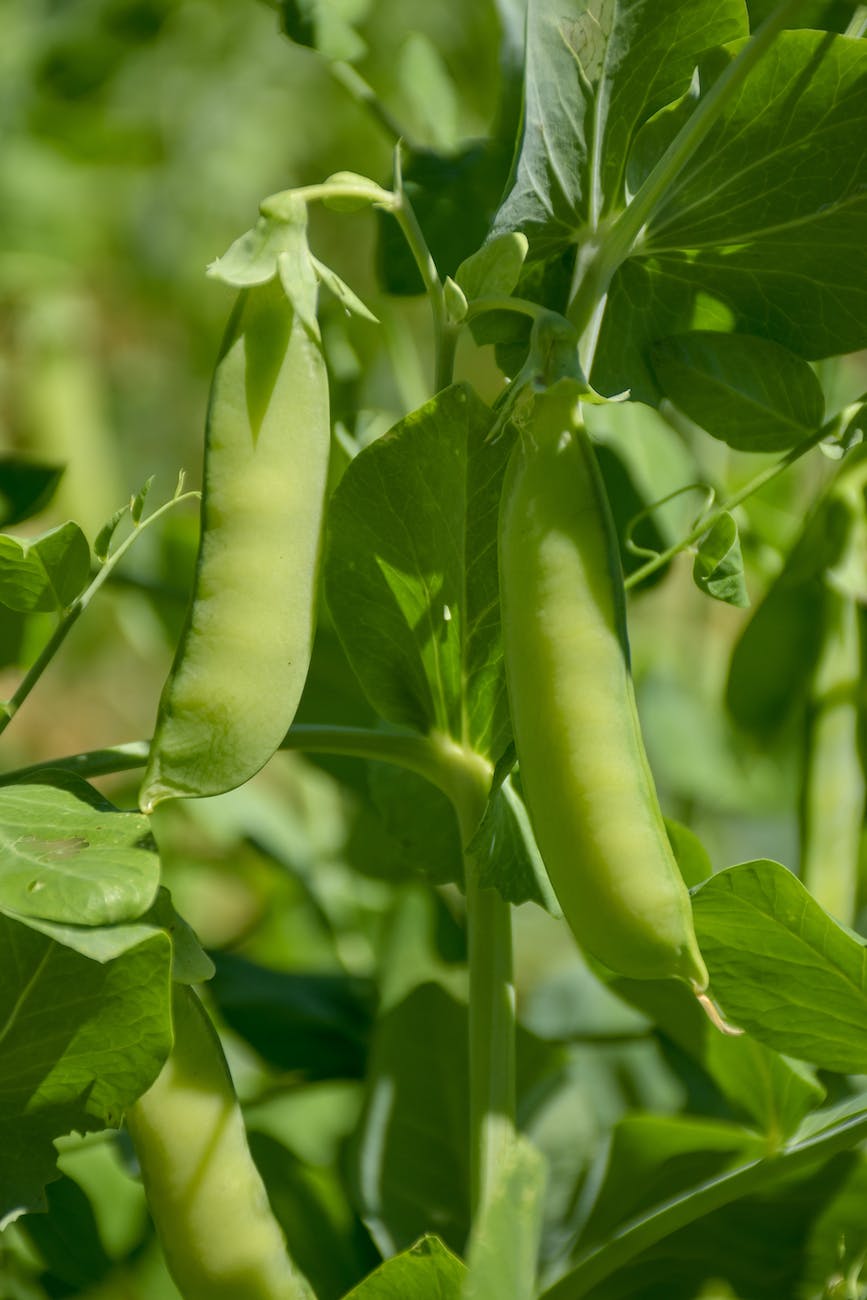
As I mentioned in my tiny plant haul, I recently picked up some packets of snap peas. I was never really a fan of peas growing up — mostly because the ones I was exposed to were the mushy, grayish kind from a can. Few things can beat a fresh, sweet peapod off of the vine, though, and they’re legitimately fun to grow!

Three pea pods, split to reveal the peas inside.
Photo by R Khalil on Pexels.com

Soon, it’ll be time to start peas from seed in my growing zone. Since I’m kind of champing at the bit to get them started, I figured this would be a good time to look into all of their folklore, symbolism, and magical correspondences.

Sweet peas and rosary peas aren’t that closely related to garden peas, or even sugar snap peas. Sweet peas (Lathyrus odoratus) are grown for their flowers and have toxic seeds. Rosary peas (Abrus precatorius), as their name implies, are grown for beads and are fatal if ingested — if it’s thoroughly chewed, a single rosary pea is enough to kill an adult human. Garden, snow, and sugar snap peas are different cultivars of Pisum sativum, and are grown for their edible shoots, pods, and seeds. L. odoratus, A. precatorius, and P. sativum are members of the family Fabaceae, but so are plants like lupine, Scotch broom, and logwood trees. For this reason, it’s important to draw a distinction between folklore and magical uses of edible peas, versus sweet pea or rosary pea.

A pair of pink sweet pea flowers.
Sweet peas in bloom. These are grown for their beauty and fragrance, and are definitely not edible. Photo by Magda Ehlers on Pexels.com

Peas are an incredibly old food source grown around the world. While garden peas (Pisum sativum) are thought to have originated around Pisa, in Italy, they’ve also been found in Egyptian tombs, and the earliest evidence of them dates back to the Neolithic era, in what is now Greece, Jordan, Turkey, and Syria. They are considered to be one of the first food crops domesticated by humans.

According to British lore, pods containing nine peas are considered lucky.

Peas were used to cure warts through sympathetic magic. This is a very common old wart-removal method — you touch or rub the wart with an object, then burn, throw away, or bury said object. As it decays, the wart shrinks. In this case, the afflicted person would touch a wart with a pea, wrap the pea in a bit of paper, then bury it in the ground. When the pea broke down, so too would the wart.

Peas are a cool-weather crop, and don’t do very well in heat. One old rhyme about the planting of peas and beans says, “Be it weal or be it woe, Beans should blow before May go.”

Pea pods growing on the vine.
Photo by Gilmer Diaz Estela on Pexels.com

Green peas are used in formulas for health or money. Yellow peas, on the other hand, are best for luck. In some cultures, carrying a dried pea in your purse or pocket is said to attract good luck.

Dried peas are also used for divination. They’re shaken up and cast, similarly to the way you might cast bones or runes. You then read the patterns that they form.

As a common food crop, using peas is pretty easy — especially if you like kitchen witchery. Cook and eat peas to bring in more wealth, health, and luck.

Dried peas can be added to sachets or bowls to attract money. Combine them with dried herbs like chamomile, basil, cinnamon, patchouli, and cinquefoil. Add this to a bowl containing a few pieces of citrine and/or pyrite, and some coins. Keep the bowl clean and free of dust, and periodically refresh it with new herbs and more coins. Never remove the coins from the bowl.

If you have a difficult decision to make, take one seed pea for each of your options. Plant them, carefully marking which pea corresponds to each option. Keep an eye on them as they sprout — their growth and vigor can provide guidance on what to do.

Peas are a useful magical ingredient that’s easy to grow yourself, even if all you have is a tiny space and a pot. They’ve got fiber and protein, are associated with luck, money, and healing, and keep well once dried. All told, no matter whether you’re into kitchen witchery or not, these little guys are a very useful addition to your store of magical ingredients.

Neodruidry · Plants and Herbs · Witchcraft

Chickweed Folklore and Magical Uses

Recently, we had a tiny burst of warm weather (by which I mean an extremely unseasonable 76° F/24° C). It was nice! Also very concerning, but nice!

This little bit of heat seems to have kicked the yard into overdrive — while the bigger plants haven’t started leafing out yet, we’ve had a lot of spring ephemerals suddenly make an appearance. Following the grassassination, most of our ground covers are various types of chickweed and violet while the moss phlox and other guys establish themselves. Right now, we’ve got lesser chickweed (Stellaria apetala) and regular chickweed (Stellaria media).

Some plucked sprigs of Stellaria media.
Photo of Stellaria media by kokokara on Pexels.com. If you look closely, you can see the row of tiny white hairs.

While neither of these species are native (lesser chickweed is European, while regular chickweed hails from Eurasia), they’re still a valuable herb in early spring. They’re full of minerals and vitamin C, and one of the first edible springtime greens to appear. It isn’t a good idea to eat a ton of them — not raw, anyway — but they provide nutrients that are often in short supply for winter foragers.

So, with that in mind, I figured I’d take a look at the various folklore and magical uses for these humble little groundcover plants.

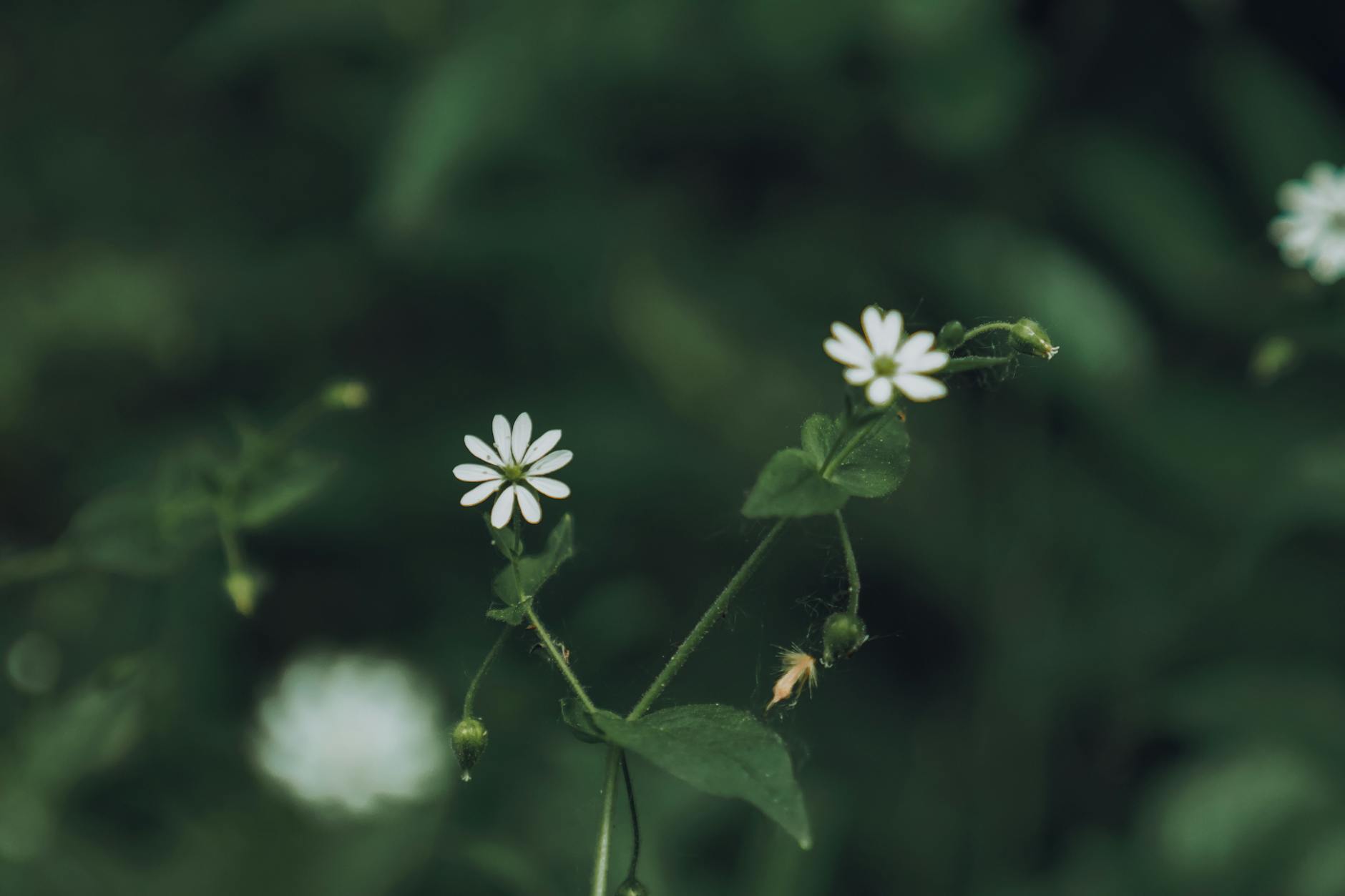
Chickweed has a few poisonous lookalikes, but is also pretty easy to identify. Two of its unique characteristics are the presents of a row of white hairs (like a cock’s comb) and a firm, green stem-inside-a-stem. Pull a chickweed’s stem apart, and you’ll uncover a green “chicken bone!”

When I say that chickweed is high in vitamin C, I really mean it — sailors used chickweed steeped in vinegar to prevent scurvy during times when citrus fruits weren’t available.

Chickweed is associated with love and fidelity. This idea may stem (no pun intended) from its growth habit. Chickweed grows in groups, with spreading tendrils reaching out from the center. It’s a powerful visual metaphor for the importance of community, as each chickweed stem grows out from this connected center in order to reach its full potential.

This plant is also very tenacious. It’s hard to get rid of, and often springs right back up after being cut or pulled out. While chickweed favors moist soil with a good pH and abundant nutrients, you can also find it growing in cracks in sidewalks. This makes it useful for situations that you want to exhibit this same resilience — for example, a long-term relationship.

Some green magic practitioners also associate this plant with abundance. It produces a lot of very long-lived seeds, which connect it to fertility and prosperity.

Tiny white chickweed flowers.
Photo by Imad Clicks on Pexels.com

The name “chickweed” comes from chicken and weed. Since these plants are pretty nutrient-dense and come up in early spring, they’re eagerly fed on by poultry and are particularly good for growing chicks.

Chickweed is very easy to find. Look for moist (but not soggy) soil, in early spring, just about anywhere and you can probably pick some. It’s stubborn, it’s prolific, and it’s not super fussy. Use a good plant identification app and research chickweed’s poisonous lookalikes, or, even better, go with a seasoned forager who can show you what to look for.

Once you have your chickweed, you can use it fresh or dried. Dried, it mixes well with jasmine, rose petals, lavender, and other love-drawing ingredients. Blend these dried herbs together with equal parts Epsom and sea salts, add a few drops of patchouli and rose oil, and use the resulting mixture for a love-drawing bath.

To attract a partner, wear a sprig of chickweed. These unassuming greens can be easily tucked into a boutonniere, vase necklace, flower crown, hairclip, or fascinator without too much trouble. As with the bath salt recipe above, combine them with other love-drawing plants for best effect.

To ensure the fidelity of a partner, it’s said that you should feed them chickweed. (If you do this, you should probably ensure that you have their consent, and that you’ve properly identified your chickweed or purchased it from a reputable source. Otherwise, you’re going to end up with an angry and/or poisoned partner.) Caraway seeds are used in a similar fashion.

If you have access to a yard, or even just an open field, you most likely have access to chickweed. This plant is subtle, but powerful. Whether you choose to use it as food, medicine, or a magical ingredient, this tenacious little herb can be a great friend to make.

Neodruidry · Plants and Herbs · Uncategorized

Cedar Tree Folklore & Magical Properties

I’m not a fan of fake greenery. While it can definitely amp up a room’s decor when it’s judiciously combined with real plants, I always end up forgetting to maintain it until it’s faded, dusty, and doing the exact opposite of helping things look fresh and natural. Blegh.

Anyway, when it comes to decorating for Yule, my Handsome Assistant and I go for fresh greens. There’s a florist nearby who sells trimmed branches of various evergreens pretty cheaply. Combine a few of them with some wired ribbon, and you can make a very pretty swag or garland without spending much money at all.

A close up of fanlike American cedar branches.
Photo by Abdul Zreika on Pexels.com

This year, we picked up the cutest little potted Alberta spruce tree. We’re keeping it indoors until spring, at which point I’m going to repot it and set it outdoors. Next winter, it’ll probably still be small enough to fit in the living room and be next Yule’s tree, too. Once it’s outgrown its pot, we’ll plant it in the front yard.

We also picked up some trimmed branches from an incense cedar tree (Calocedrus decurrens), which I used to decorate table tops and the top of our curiosity cabinet.

Since we’ve been taking down our Yule decorations and cleaning up the shed bits of greenery, I thought now might be a good time to look into the folk tales and magical associations of cedar trees.

First things first: “Cedar” isn’t a very exact term. True cedars are chiefly found in the Mediterranean, but there are also quite a few unrelated American species referred to as “cedar.” True cedars have needles, while American species have flat leaves, like scales, that form delicate fernlike or fingerlike structures (as seen in the photo above). There are only four species of “true” cedar: cedar of Lebanon (Cedrus libani), Atlas cedar (C. atlantica), Cyprus cedar (C. brevifolia), and deodar cedar (C. deodara). American cedar species are actually members of the cypress family, Cupressaceae!

The needles of an Atlas cedar, one of the "true cedars."
Photo by Feyza Dau015ftan on Pexels.com, showing the needles of a “true cedar.”

American cedars are culturally significant to the people indigenous to the trees’ native ranges. Indigenous people used (and continue to use) cedar as a sacred incense and purifying herb. Cedar trunks were used to make boats, the branches were used to filter sand from water and when leaching acorns for acorn flour, and the fibrous roots are still used to make beautiful baskets.

Cedar smoke was also used to prevent illness, which mirrors the old Scottish practice of fumigating one’s home with juniper for the same purpose. This is particularly interesting since the eastern red cedar, Juniperus virginiana, is actually a juniper. Junipers are also members of the cypress family, like other American cedars are.

Many Salish groups had special rituals for the felling of cedar trees. These trees are considered symbols of providence, abundance, and generosity.

A Mi’kmaq tale warns you to be careful what you wish for. A man went to the legendary Glooskap and asked if it was true that Glooskap gave people whatever they asked him for. Glooskap demurred, saying that he couldn’t always answer people’s requests, but he helped however he could. The man asked Glooskap for immortality, but he refused — all things must die. Once everything has died, even Death would probably die. Disappointed, the man asked to live longer than any man has ever lived. In return, Glooskap turned the man into a tall cedar tree.

A Potawatomi tale tells of a group of men who visited the Sun to ask for help. One desired to see the future, two desired immortality, another desired a blessing associated with water, and yet another had gone along just to help the others. The man who wished to see the future was set down in the west, where the Sun goes to end the day. One of the men who wanted to be immortal became a boulder. The man who wanted a water blessing became a half-man, half-fish. The other man who wished for immortality became a cedar tree. This is how people received the stones and cedar used in sweat lodge ceremonies.

In Judeo-Christian stories, cedar represents protection and strength. Its wood was used to build Solomon’s temple. According to Medieval Christian tradition, the cross used during the crucifixion was made of cedar. For this reason, it was considered bad luck to burn cedar wood. Planting a cedar in your yard was also believed to bring misfortune and poverty, but a cedar growing naturally was considered fortunate.

In Irish folklore, cedars were associated with strength and durability. Their wood is extremely rot-resistant, and the trees live for a very long time.

Like a lot of other magical ingredients used for protection and banishing, all types of cedar repel pests. The aromatic compounds in their essential oils are a deterrent for moths and all kinds of biting insects. All around the world, there’s a very strong connection between “plants that keep bugs out” and “plants that keep evil away.”

Depending on your needs, you may or may not be able to substitute juniper-family cedars for “true” cedars. There is quite a bit of overlap, however — no matter which species you’re working with, these trees are connected to purification, protection, longevity, and strength.

Since we’re talking about some very distinct groups of trees that use the same common name, I won’t go into cedar’s medicinal properties here. This underlines the importance of using standardized nomenclature — each of these species has its own bouquet of medicinal compounds (and some potentially dangerous ones, like thujone), so it’s important to know exactly what you’re using. Never go by a plant’s common name when you’re looking for medicinal ingredients, because there’s a ton of common name overlap between completely unrelated species.

The most important thing to recognize when working with cedar is that this is a plant that should be respected. The famous cedars of Lebanon (Cedrus libani) were highly regarded — the oldest among them were considered sacred, and anyone who harmed them would be overtaken by misfortune. In the Potawatomi tale above, the man who became a cedar says that one should “call the cedar tree your nephew when you speak of it.” Folklore all around the world warns against cutting down a cedar without performing the proper ceremonies.

With that in mind, there are multiple ways to work with cedar. Cedar essential oil is frequently used in magical aromatherapy (though a little bit goes a very long way). Cedar twigs can be burned as incense and used in smoke cleaning. Since the wood and needles are so strongly aromatic, you can also infuse them in oil.

Dried conifers are easy to crumble, so they’re an easy ingredient to include in magical powders or incenses. Grind dried cedar leaves fine and sprinkle the powder in the corner of your rooms or around the border of your property while asking for protection against malevolent forces.

If you or anyone in your household has been sick. use cedar smoke to drive the illness out. Give the sickroom (in modern homes, the sick person’s bedroom and bathroom) a thorough physical cleaning, air it out well, and fumigate it with cedar smoke.

Right now, I have some dried cedar branches waiting to be used. These didn’t require a tree to be felled — instead, they’re trimmings. My plan right now is to grind the leaves fine, mix them with a binder, and form them into incense cones. The branches have blessed and protected my home when they were fresh, and they can continue to do so once they’re processed into incense.

I love the warm, earthy, spicy smell of cedar. In my tradition, it’s connected to the sun and the element of Fire. During these dark, cold months, inviting the power of cedar into your home can bring some much-needed heat, light, cleanliness, and protection.

Plants and Herbs

Orange Folklore & Magical Properties

Ah, oranges. Sweet little globes of deliciousness. They run the gamut from “will basically peel themselves if you look at them hard enough” to “will peel a quarter inch at a time and leave an impenetrable layer of pith.” Some are massive, some are tiny enough to eat in a bite. Some are delightful, some can be potentially deadly. They’re good for you, unless they aren’t. They’re convenient to eat, unless they aren’t. In short, oranges are a land of contrasts.

Right now, I’ve got a farmers’ market box of delightful tiny oranges from Georgia. I also have some slices of orange and lemon drying in my dehydrator for making garlands. It seemed like a good time to get into the folklore and magical uses of oranges, so here we go!

In general, oranges are used for attraction and positivity. They’re also a symbol of wealth and status in European art, since oranges don’t naturally grow in cold climates. They either had to be imported or grown in special conservatories called orangeries.

Even before oranges reached the colder parts of the world, they were associated with prosperity and luck. Virgil, the Roman poet, called them “lucky apples.”

A bowl of peeled oranges.

A Haitian folktale tells of a girl whose mother passes away. Her father remarries a cruel woman who refuses to feed or care for the girl. One day, weak with hunger, she succumbs to temptation and eats three oranges sitting on the kitchen table. When her stepmother comes home, the girl knows she’ll be beaten. She runs from the house, all the way to her mother’s grave. While kneeling and lamenting her fate, an orange seed falls from her skirt and lands on the soil. In desperation, the girl sings to the orange seed until it becomes a sapling, then a branching tree, then a mature tree laden with fruit. Happy, the girl fills her arms with oranges and carries them home.

Her stepmother greedily eats the delicious oranges before asking the girl where they came from. The girl leads her stepmother to the orange tree. As her stepmother begins to pick and eat the oranges, the girl sings to the tree once again. It grows tall — far taller than the stepmother can climb down from — so the stepmother begs and pleads for the girl to help her down again. The girl does so, but, as soon as the tree lowers, her stepmother begins eating all of the oranges again. Knowing that she’ll be punished once the oranges are gone, the girl sings to the tree to make it grow tall. Finally, she cries out, “Break, orange tree! Break!” The tree shivers into a thousand pieces, and the stepmother with it. The girl saves a single orange seed from that tree, plants it, and goes on to sell the sweet oranges at the market.

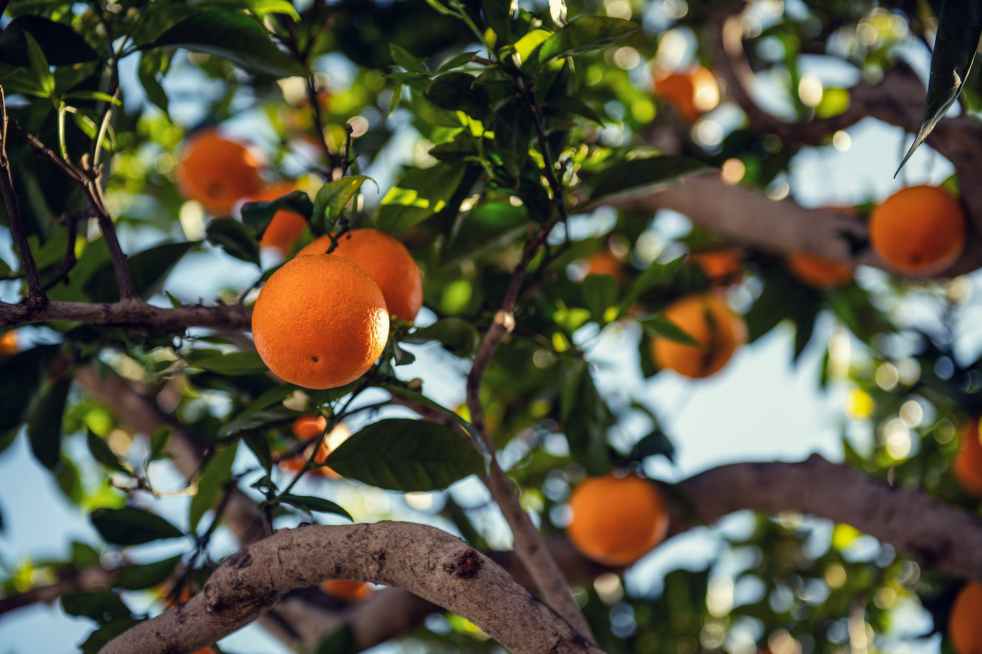
An orange tree, filled with fruit, against a blue sky.
Photo by Olena Bohovyk on Pexels.com

Christian mythology from Andalusia says that Mary, Joseph, and Jesus were travelling a long distance, when Mary became hungry and thirsty. The family happened upon an orange tree guarded by an eagle. When Mary asked for some of the oranges, the eagle fell asleep and allowed her to take three — one for each part of the Trinity.

Orange blossoms and oranges are often used interchangeably in magical formulas, but orange blossoms have their own, unique associations and symbolism. They’re generally considered symbols of purity, fertility, and virtue, as well as abundance, luck, and positivity. When it comes to attracting things, orange blossoms are excellent in love formulas.

According to the Victorian language of flowers, orange blossoms represented purity and chastity. They were said to say, “Your purity equals your loveliness.” The flowers were often associated with brides.

The blossoms’ connection to purity likely comes from their white color and sweet scent. They also appear abundantly on orange trees, and are followed by fruit, hence their connection to fertility.

There’s some debate about which came first, orange the fruit or orange the color. The word “orange” comes from the Sanskrit nāranga, which originally referred to the orange tree. This gradually transformed into naranja, pomme d’orenge, and even the Middle English “pume orange.” Interestingly, the word “orange” wouldn’t refer to a color until the early 1500s.

Orange pomanders, made by studding an orange with cloves, are a descendant of the Medieval pomander. This was a small ball or case that held fragrant herbs and resins, which would be held to the nose and sniffed as a protection against bad smells (which were believed to cause disease). These cases originally usually contained ambergris, which led to the name “pomme d’ambre,” or “amber apple.” As these things often go, “pomme d’ambre” became “pomander” in English.

One of the most interesting ways I’ve seen to use oranges involves just two simple ingredients: a bottle of orange seltzer, and a bathtub filled with fresh water. Pour the seltzer into the bath and immerse yourself completely. (You can also stand in the shower and pour the seltzer over yourself). The scent and power of orange, coupled with the effervescence of the seltzer, is said to boost creativity.

A drop of sweet orange oil makes a lovely addition to oil blends for prosperity and luck. You only need a very little bit, though, as it can overpower the scent of other oils.

Orange peels are nice additions to potpourris. They add color, and they soak up essential oils pretty readily. To attract love, mix with cloves (a magical catalyst), cinnamon (another catalyst that draws in love and money), bay leaves (a power herb used for love and money), and orris root (a love herb that focuses the power of the other herbs with which it’s combined).

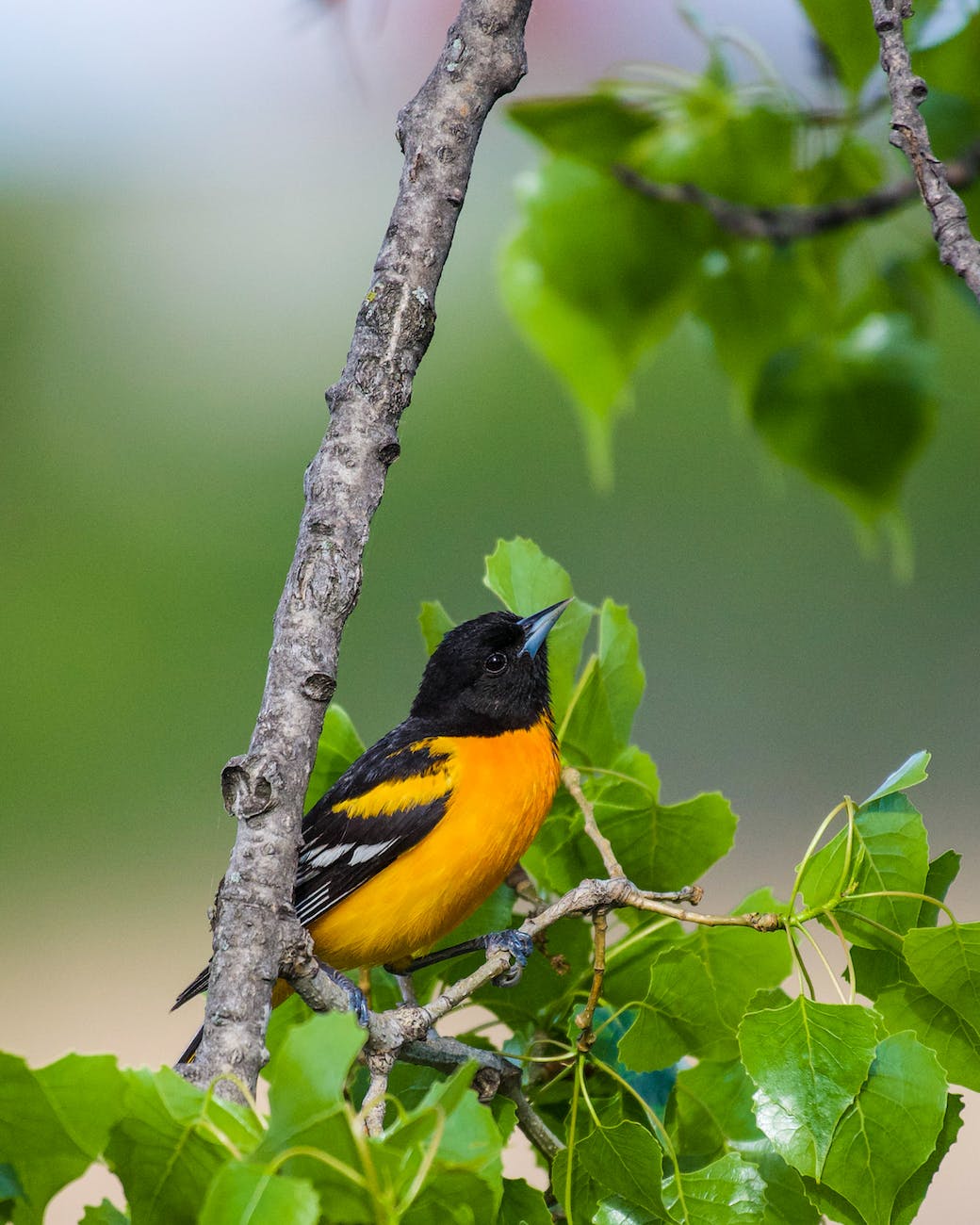
Oranges make wonderful offerings, particularly if you live in an area with orioles.

An oriole perched on a branch. The bird has a jet black head, bright orange breast, and wings with black, orange, and white bars.
Photo by Andrew Patrick on Pexels.com

Dried or candied orange peel is great in teas. You can also add orange blossom water to other beverages. Consider putting a splash of blossom water in a cocktail for attracting or strengthening love.

If you do choose to use orange peel in food or beverages, opt for organic oranges (or, if you can, grow them yourself). A lot of conventionally raised oranges have their peels treated with colorants and antimicrobials. While the amounts used are tiny and considered safe, oranges are also typically peeled before eating. If you plan to use the peel, shoot for fruits that have as little added to their peels as possible.

Oranges are a perfect little nutrient-packed snack that was once a treat for kings and queens. Tap into their sweet powers to attract more luck, love, and money into your life.

Plants and Herbs

Maple Folklore & Magical Properties

This past weekend, my Handsome Assistant and I took a small drive down Falls Road (alias Scenic Route 25). This was recently dubbed the second-best route in the country for seeing fall colors, and, while the leaves haven’t quite reached their peak just yet, it was a really lovely drive.

Red maples (Acer rubrum) are one of my favorite trees to see in autumn, and I’m lucky to share a home with one. Their leaves turn a vibrant scarlet every autumn, hence the name.

Bright red maple leaves on a branch.

Honestly, I just love maples in general. As a little kid, I used to pick up their samaras (we called them “pollynoses”) from the sidewalk, open the seed capsules, and stick them on the end of my nose. I bake primarily with maple syrup. I’m trying to convince my Handsome Assistant to make his next back of mead a batch of acerglyn (a similar beverage made of half honey, half maple syrup) instead.

I probably don’t need to say that trees have featured prominently in Pagan practices probably ever since the first Pagan. Each one has its own traits and associations, and, when it comes to working with the wood, leaves, or fruits, its own magical properties.

To be honest, maples were so ubiquitous where I grew up that I didn’t know they weren’t more widely harvested from. When I was thirteen, I was a foreign exchange student, which resulted in a brief stay in the Netherlands before going to Sweden. My student group (jetlagged and exhausted) stopped at a cafe on our first day there, where I happily ordered a plate of silver dollar pancakes and syrup.

But it was not syrup.
It was stroop.

Stroop (rhymes with “rope”) is often made of boiled-down fruit, water, and sugar, but can also be made with molasses and brown sugar. While it isn’t bad by any means, the latter variety is kind of an unpleasant surprise when you’re a kid who’s used to maple syrup with pancakes, hates molasses, and also desperately needs a nap. Not knowing any better, I drenched my pancakes in stroop and made myself a very avoidable struggleplate.

Anyway, all of this is to say that maples rock, maple syrup is the food of the Gods and should absolutely never be taken for granted, and I may still carry some molasses-induced trauma.

Maple’s genus, Acer, is Latin for “sharp.” This is due to their very unique, pointy leaves.

An Abenaki story tells how maple syrup once flowed freely from trees. It came so easily, people would lay on their backs and just let the syrup run right into their mouths. The legendary figure Glooskap saw how lazy people had become, so he turned the thick, sweet syrup into runny sap. From then on, if people wanted to eat maple syrup, they would have to work for it!

Another story, said to be of Haudenosaunee origin, tells of a man who watched a red squirrel nibble the end of a maple branch. The sap flowed until the sugars dried, hardened, and crystallized. The squirrel then came back to lick the sweet maple sugar.

In European-based magical systems, maple syrup is often used as an ingredient in love spells.

Maple sugar or syrup is also a useful ingredient in sweetening jars.

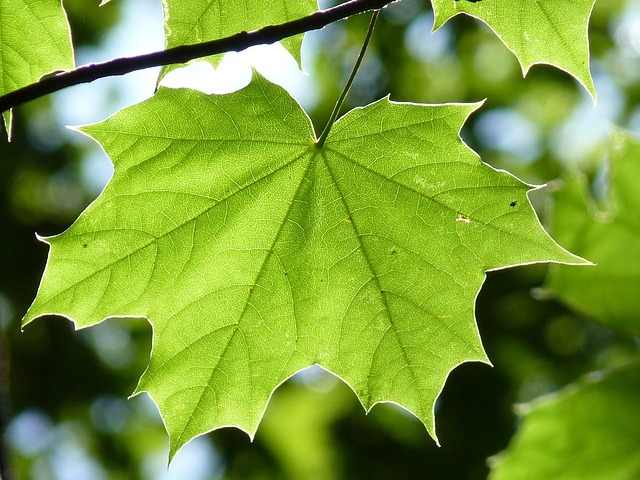
A bright green maple leaf.

By contrast, maple wood is considered very protective. It was sometimes incorporated into doorframes for this purpose.

Some sources consider maple to be good for prosperity and abundance in general.

As wand wood, maple is known for having a somewhat erratic energy. It also helps dispel negative energy, center oneself, and reveal paths and options one may not have considered.

Maples, particularly silver maple (Acer saccharinum) are considered Moon plants. They’re also associated with the element of Water.

Working with maple can be as simple as using magical tools made from the wood. Every tree — and thus every wood — has its own energy. I haven’t personally found maple to be erratic, but, to be totally honest with you, I’m erratic enough myself. (I think it also helps to have sourced the wood from a tree that I know pretty well!)

If you’re in the eastern US, you’re probably located near a maple tree. If that maple tree is anything like the one here, it probably drops plenty of sticks and smallish branches every time there’s a storm. Should you be of a mind to make your own magical tools, deadfall maple wood is honestly really easy to come by.

I can only vouch for red maple, but, once the bark and cambium are stripped off, the wood itself is light and silky-feeling. Sanded well, it takes on an almost metallic sheen. I love it.

The next easiest way to work with maple is to use maple syrup. You’ll need the real stuff for this, unfortunately — the fake stuff is cheaper, but also doesn’t really bear any resemblance to the genuine article. (There’s a good reason for that, too. Maple sap is chemically very complex, and we still don’t really understand all of the different compounds and reactions that give boiled sap its flavor. That makes it pretty much impossible to make a decent imitation syrup.)

If you’re looking to make a sweetening jar, artificial syrup is probably fine if you can’t get your hands on the real stuff. That said, plain sugar and tap water will make you a perfectly fine simple syrup that’ll a) be cheaper, b) let you add your intention or energy during the syrup-making process, and c) let you bypass the artificial flavors, colors, and other ingredients that don’t really add anything to the magic-making.

Otherwise, add maple syrup to your favorite edible magical recipes. Like I mentioned above, I bake with it almost exclusively — it’s pricey, but I love what it does for the flavor and texture of desserts. Seriously. It makes amazing breads and cakes, and is fantastic in chocolate chip cookies. Add the maple syrup, thank the tree for its sacrifice, tell the syrup what you want it to do for you, and stir your concoction clockwise using your dominant hand. Easy peasy.

Maple samaras (aka, pollynoses) can also be helpful additions to a charm bag. They end up all over the place in late spring to early autumn, so, if there’s a maple anywhere near you, you probably won’t have any trouble finding some. Add them to bags for prosperity, love, or protection.

Plants and Herbs

Milkweed Folklore & Magical Properties

I planted a swamp milkweed (Asclepias incarnata) in the back yard not too long ago. Though I did it well after I could hope for monarch butterflies, I still wanted one of these beautiful, interesting native plants. (Besides, they’re perennials — if it could survive this year, there’ll be plenty of plant for the monarch babies next year!)

It was blooming happily, playing host to all kinds of tiny fauna, and finally put out lots of big, fat pods. Apparently it wanted to wait until the recent supermoon to bust those suckers open, because that whole part of the yard is inundated with milkweed fluff!

Flat, brown milkweed seeds, showing their tassels of silky white fluff.

I gathered a good quantity of the fluff and seeds to save, share, and use for various purposes. So, I figured, now’s probably a good time to write about this lovely plant’s magical properties!

Like many of the plants I choose to explore, this one’s native to the Americas. That means that you won’t see it in a lot of older folk or ceremonial magic resources. This plant is still powerful, however, and has a lot to offer practitioners in its native range.

Like I mentioned, milkweed produces tons of fluff. This fluff appears as silky white tassels on its seeds and helps them disperse via wind — just like dandelions. If you catch a floating milkweed seed, make a wish, then release it to go along its merry way, its said that your wish will come true.

Milkweed fluff can also be used as filling for pillows, sachets, and poppets. Thistledown is a traditional poppet filling, but, if you don’t live in an area with abundant thistles, milkweed fluff can be used as a substitute.

Filling a dream pillow with milkweed fluff is said to cause the user to dream of the fae.

The juices of the milkweed plant, when used for anointing, are said to strengthen one’s “third eye.” (However, these juices are also irritating, so maybe just place a whole leaf or sprig of flowers to your forehead instead.)

In World War II, military life jackets were filled with milkweed fluff as an alternative to kapok (Ceiba pentandra).

Milkweed’s genus, Asclepias, was named for Asclepius. He’s the Greek God of Healing, and a son of Apollo.

Though it’s associated with a god of Healing, one of milkweed’s primary virtues is its toxicity. When monarch caterpillars feed on milkweed, they take in the plant’s toxins. This, in turn, makes the vulnerable caterpillars toxic and unpalatable to predators. As a result, milkweed is associated with protection.

A plump, stripey monarch caterpillar.

There’s also a very fine line between “poison” and “medicine.” To the people indigenous to milkweed’s native range, milkweed sap was used to remove warts. Boiling helps leach out the toxins in the plant’s sap, and cleaned up extracts of milkweed proved useful for respiratory ailments, sore throats, and kidney problems. Some of the toxins in milkweed sap are cardiac glycosides, which, in small doses, behave similarly to the digitalin extracted from foxglove (genus Digitalis).

Milkweed is a very liminal plant. Swamp milkweed (A. incarnata) can be found at the edges of wetlands, where the water meets the land. Common milkweed (A. syriaca) often grows in disturbed areas, like roadsides.

Milkweed is associated with the Moon and the element of Earth. (Personally, I also associated swamp milkweed with water.)

Milkweed’s a really lovely plant, though it can also be hazardous to work with if you aren’t careful. Personally, I limit myself to the flowers, fluff, and seeds — I have sensitive skin, and the last thing I want to worry about is getting milkweed sap on myself!

The fluff is really lovely as a filling for poppets and dream pillows. Blend it with herbs like mugwort, hops, and lavender, and add a clear Herkimer quartz crystal for a wonderful dream pillow that’ll help improve dream recall and make it easier to dream lucidly.

The seeds, like a lot of native American seeds, need to be stratified. That means that they’re great to use for sowing rituals during the colder months — the winter solstice, for example.

Seeds are a great spell component in general, because they embody as-yet-unrealized potential. They’re a bit of sympathetic magic, too. As the seed grows, so will the thing you hope to get from your spell.

Milkweed seeds are also flat, so they’re nice to incorporate into homemade paper. Once the paper’s used, you can plant it and allow the seeds to grow. Just make sure that you’re using varieties native to your area!

The pink flower clusters of A. incarnata.

Milkweed is a beautiful, protective plant that has much to offer those who can get past its defense mechanisms. Inside those pods, protected by poisonous, milky-white sap, is an abundance of silky, silvery fluff and seeds. If you have the ability to grow or otherwise hang out with milkweed, I highly recommend it.