Blog · life · Uncategorized

A riverside hike (with *giant* mushrooms!)

This past weekend, my Handsome Assistant and I packed a small picnic and went for a bit of a walk. This particular area is beside the northwest branch of the Anacostia River, near an abandoned mica mine. There are some really cool mineral specimens here — the usual bull quartz, but also tons of mica-bearing rocks and golden beryl.

That’s not all it has, though.

The trail is mostly shaded by trees, so it stays fairly cool even when the weather’s warm. Lesser celandine (lush, but invasive) covers the ground between the trees, creating a dense carpet that reflects the sunlight and further cools the ground. It’s poisonous to eat, though the tubers are said to be edible, and has a long history of use as a topical medicine for hemorrhoids and scrofula.

A brown haired, caucasian man in a dark blue and white tanktop reclines on a bed of lesser celandine. His eyes are closed and his expression is peaceful.
“That’s a really bad idea, you know.”
“I know, but it looks so soft.”
“There’s probably poison ivy in it.”
“Worth it.”
“You’re going to get eaten by snakes. Or ticks. Probably both.”
“It’s so soft, though!”
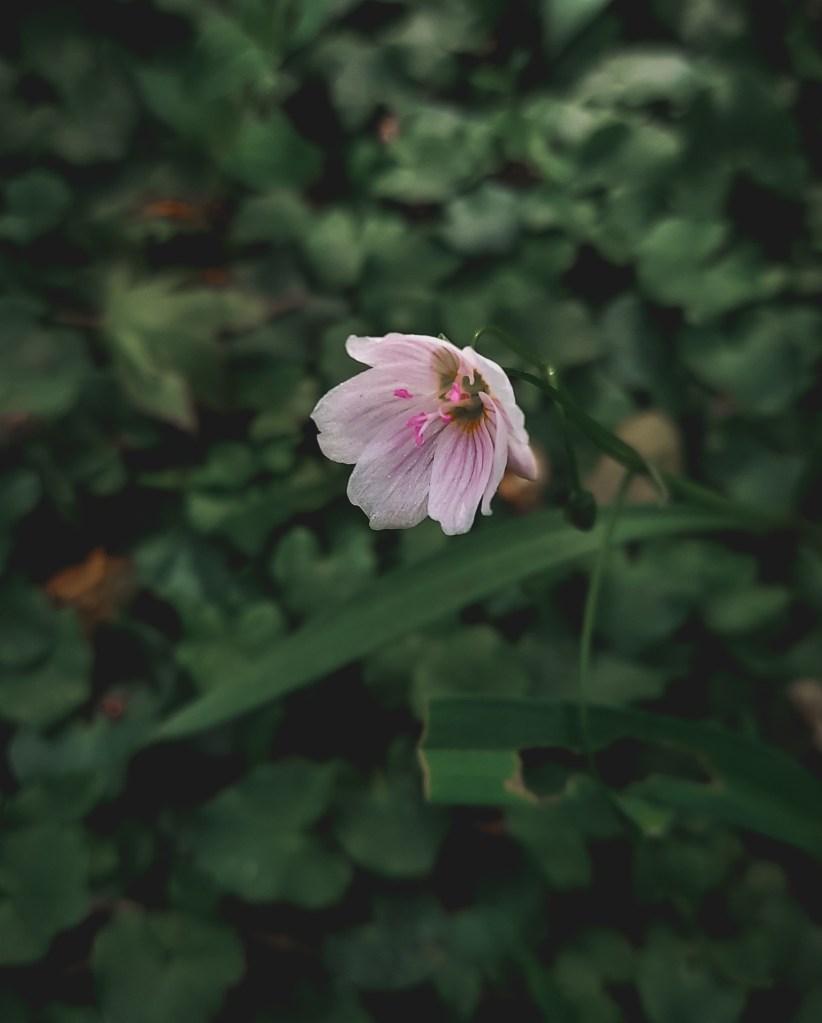
A close up of a small pink springbeauty flower.
Springbeauty (Claytonia virginica)

Fortunately, there was more to see than just lesser celandine. There were tiny pink blossoms of springbeauty, dense pillows of moss, fern fiddleheads, and some of the lushest skunk cabbage I’ve ever seen. We also spotted some mayapples, a few of which were even mature enough to flower. I don’t know if I’m brave enough to go back and see if there’s any fruit later this summer, but it was lovely to see regardless! (I snapped a few pics of the ones we saw, which you can find in my post on mayapple folklore and magical properties.)

Large skunk cabbage plants growing up out of a dense mat of lesser celandine.
Seriously, just look at that skunk cabbage (Symplocarpus foetidus).

We passed next to the water, eyes peeled for sparkly mica-bearing stones, when I heard a soft “bloop.” I turned my head just in time to see a startled common watersnake (Nerodia sipedon) slipping away across to the opposite bank, gracefully undulating and occasionally poking its head up like a snorkel to take a breath. I apologized for spooking it as I fumbled for my phone but wasn’t able to snap a picture before it had swum away and camouflaged itself in the mud and fallen leaves.

They’re one of the species of snakes that are often vilified for no reason. They’re perfectly harmless but can bear a passing resemblance to a venomous copperhead (Agkistrodon contortrix). Admittedly, I made the same mistake myself at first glance — not that I would’ve behaved any differently, as both the snake and I seemed pretty chill about the whole situation. Like black racers and ratsnakes, they’re guys you actually want to have around if you don’t want to have to deal with pest animals. Also, they’re one of the few reptile species that gives birth to live young, and that’s really neat!

(Also, copperheads are pretty chill, too. They might be venomous, but they’re not aggressive. Their first defensive instinct is to freeze up and rely on their natural camouflage. Bites typically occur when that either fails, or people don’t see them, step too close, and the snake gets desperate.)

A pair of young fern fronds, still curled into a "fiddlehead" shape.
Young ferns.

A little further up the trail, we were navigating over a large fallen tree. Another tree lay across it, forming a kind of steep natural bridge. As I investigated it to see if it’d be safe to cross, I heard a silky rasping sound. There, nestled in the root ball of the fallen tree, I saw the shiny black coil and pointed tail of a black racer (Coluber constrictor priapus) vanishing deeper into the tangled roots.

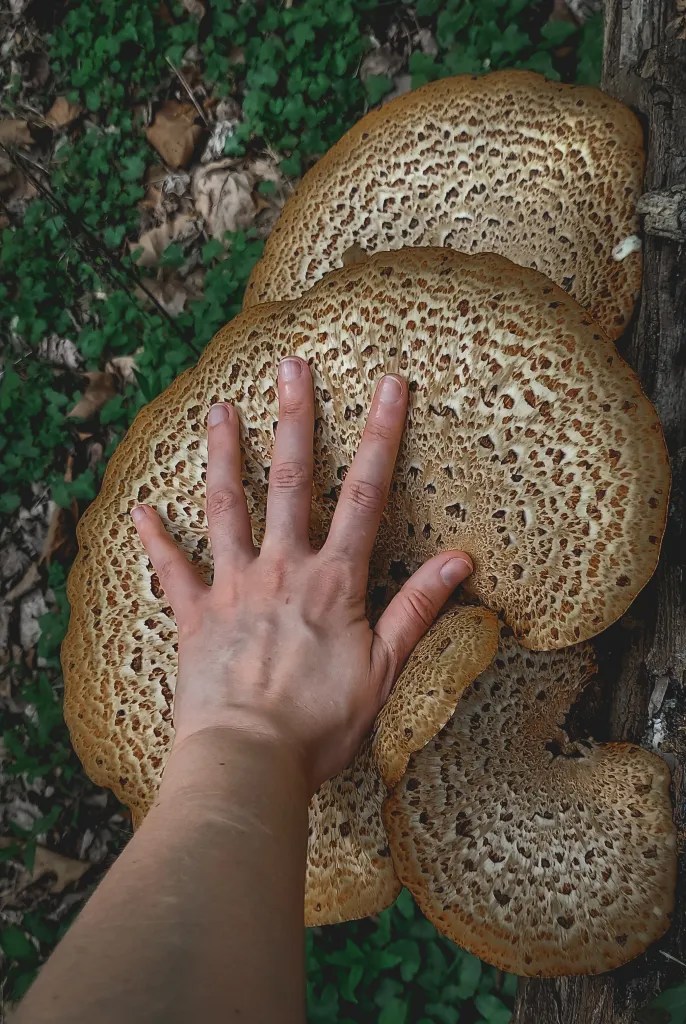
My favorite part, however, was running into a colony of dryad’s saddle (Cerioporus squamosus) growing from a dead tree. These are edible, fairly easy to identify, and don’t really have poisonous lookalikes. They also smell exactly like watermelon rinds, which is honestly very weird. Kind of a green, watery, fruity smell, of decidedly not the type you’d expect from a scaly tan mushroom growing out of a dead tree. I wasn’t 100% positive that that’s what I was looking at, at first. Fortunately, a combination of a quick-and-dirty ID app and friends with much more foraging experience were able to reassure me.

Also?

Dryad’s saddles get enormous.
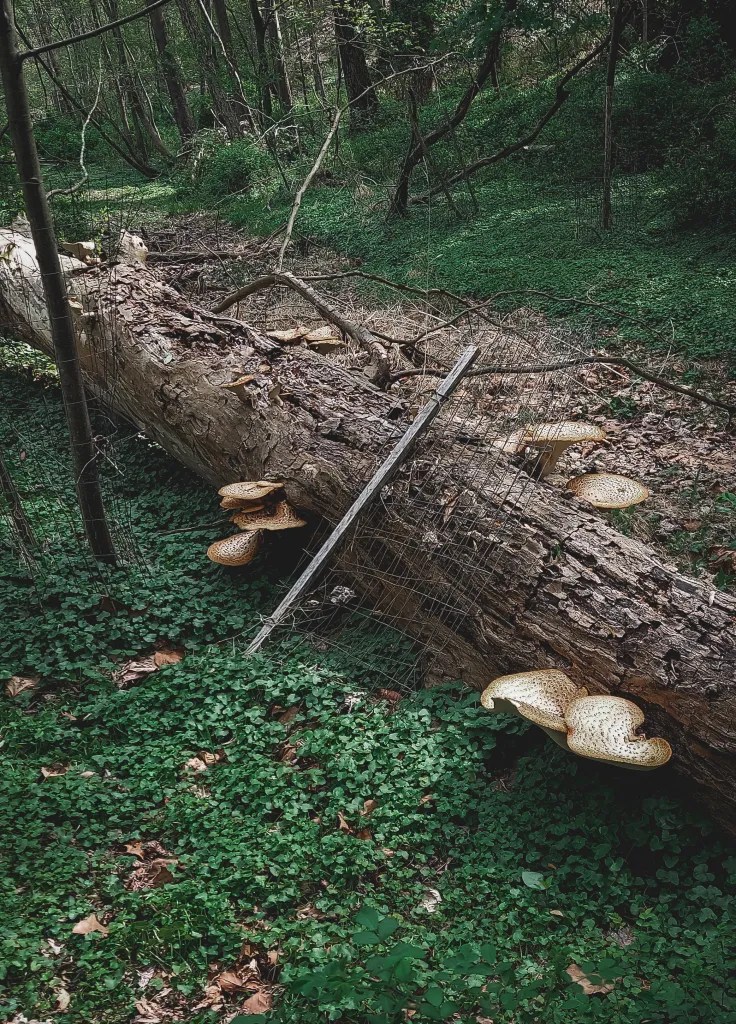
Like, far larger than I felt was reasonable for a mushroom. Much bigger than the reishi and armillaria that grow in my front yard, at any rate.

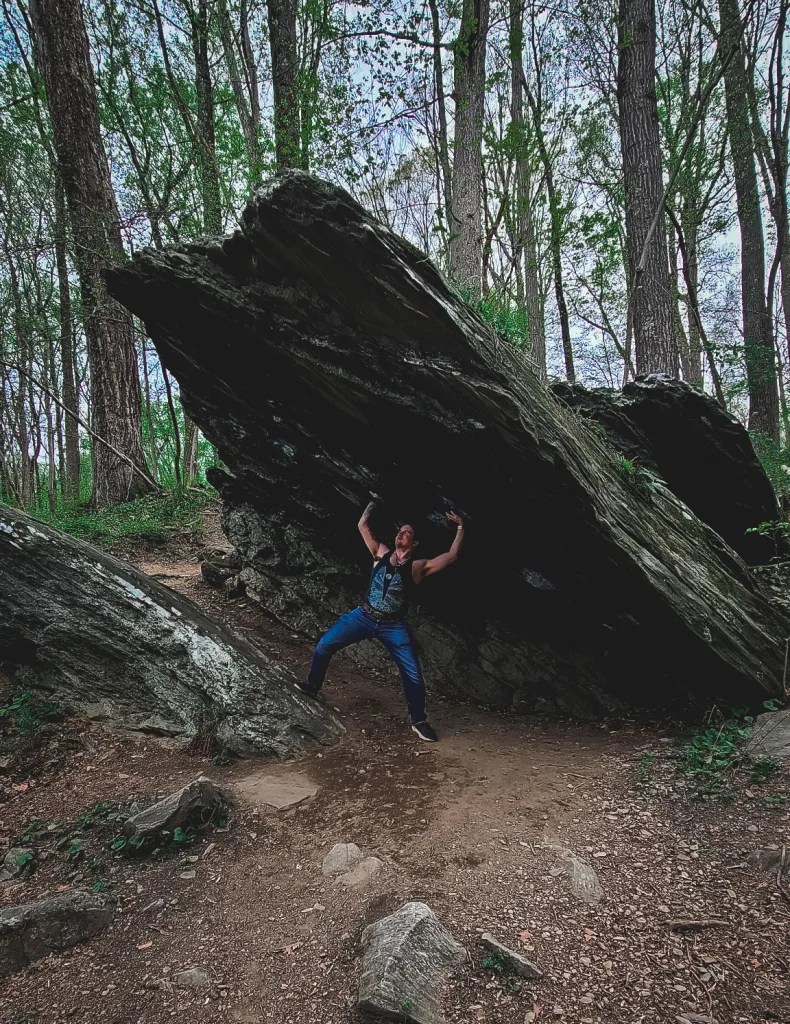
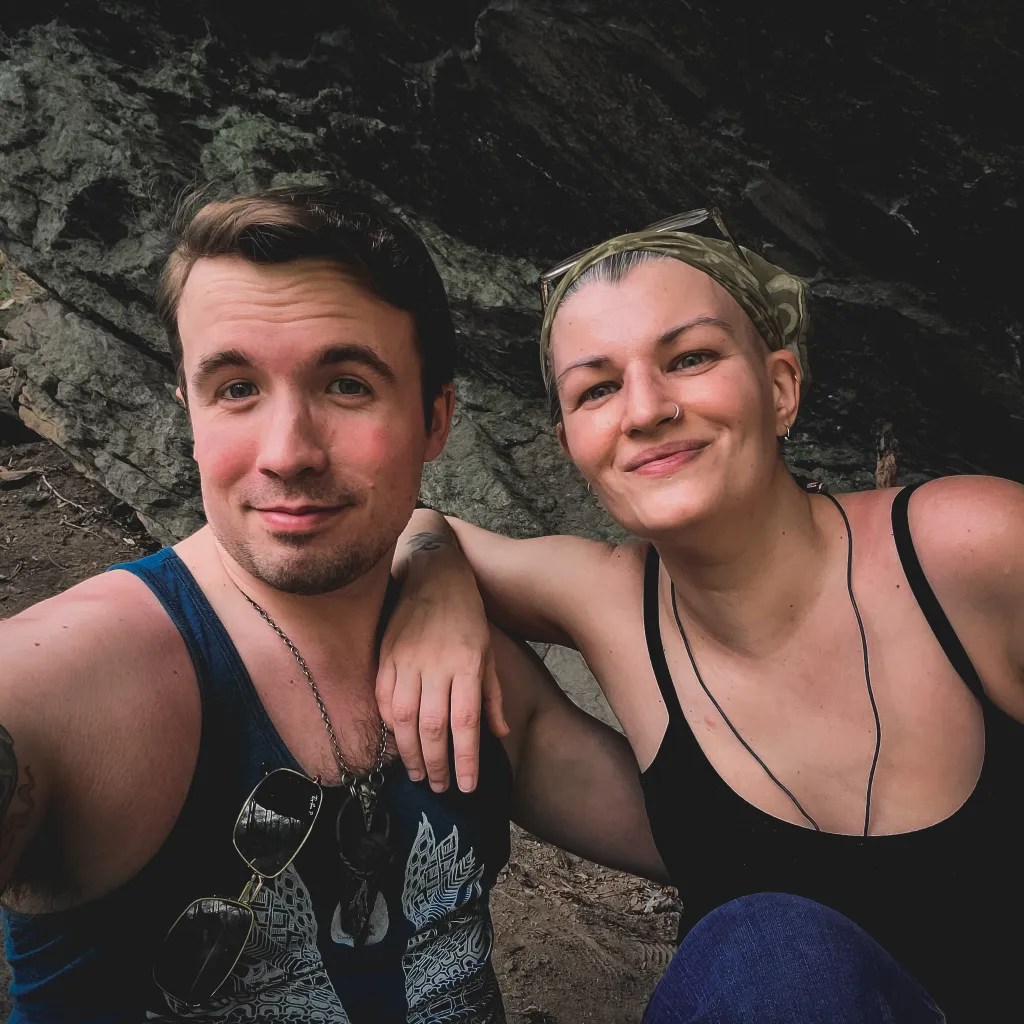
This area has another cool feature, labeled on the map as “prehistoric rock shelter.” I haven’t found any other information about it, but it’s a nice, cool, shaded spot to sit and rest for a bit. The area underneath is at a bit of a slope, but it’s still a comfortable place to take a break.

I also found a tree that was shaped kind of like a sad skull, and a very neat feather — most likely from a hawk.

All told, it was an eventful walk and a lovely picnic. Everything was vibrant and green, and we saw (and heard!) a lot of cool wildlife.

Here’s hoping you’re also finding cool things wherever your adventures take you.

Neodruidry · Plants and Herbs · Witchcraft

Mushroom Folklore and Magical Uses

I like mushrooms. Not so much culinarily, but aesthetically and conceptually.

There are thousands of identified mushroom species, but experts estimate that the number of actual species out there is anywhere from two to three times what we’ve managed to identify. Others say it could be in the millions.

Mushrooms have a long history of use in spiritual and magical practices around the world. Giving the folklore and uses of every known species is outside of the scope of this post, but I thought it’d be interesting to give an overview of some of the most unique, recognizable, and significant kinds.

People typically consider mushrooms and toadstools two different things, but there isn’t really a hard line between them since these are folk names. According to various sources, mushrooms are edible, and toadstools are inedible. Or else mushrooms are edible and umbrella-shaped, while toadstools are inedible and have round caps. Or toadstools are inedible and large-capped, etc.
This can be particularly confusing because there are several species of variable edibility — some are considered edible only when cooked. Some need to be leached with water to be edible. Some are only poisonous if consumed with alcohol. Some aren’t considered edible, but aren’t really poisonous either.

Amanita muscaria, the iconic red- (or tan- or yellow-) capped, white-spotted mushroom, is also called “fly agaric.” This is because it was sprinkled in milk and used as a poisonous bait for flies and gnats.

A small Amanita muscaria growing in some leaf litter.
Photo by Guy Dwelly on Pexels.com

Sami shamans traditionally have a unique way of processing A. muscaria. The mushrooms are fed to reindeer, and the psychoactive components are passed in their urine. Instead of the potentially dangerous mushrooms, the shamans use the urine to access fly agaric’s powerful qualities.

While it’s natural to associate psychoactive fungi with the spirit world, they aren’t the only mushrooms said to serve as a gateway. The famous fairy rings of Western European stories are circles or arcs of fungi (with or without visible mushrooms) that, were you to enter one, could bring you either good luck or incredible danger.

In Egypt, mushrooms were associated with immortality. In Japan and China, they have similar connotations due to their use as medicinal foods for increasing strength and longevity.

In Slavic mythology, the guardian deity of forests, Leshy, can appear as a fully vegetation-based entity. He may appear as anything from a sacred tree to a mushroom. Mushrooms are also associated with the earth, water, cattle, and underworld deity, Veles.

In Lithuania, mushrooms were said to be the fingers of Velnias, a deity of the dead. He would reach up from the underworld, beneath the soil, to feed the poor.

This isn’t the only association of mushrooms with charity, either. In one Christian myth, God and Saint Peter walk in a rye field. Peter takes a handful of rye and begins to eat it, but God scolds him for taking food that isn’t meant for him. Peter spits the chewed rye out, and God says that a mushroom will grow there as food for the poor.

Interestingly, the dead and the underworld seem to have the strongest connection to mushrooms around the world. The Sidhe of the Celts and the Alfar of the Germanic people were both associated with burial sites, and the beliefs surrounding them may be the last vestiges of ancient, indigenous ancestor worship. This would immediately associate fungal phenomena like fairy rings with the dead.

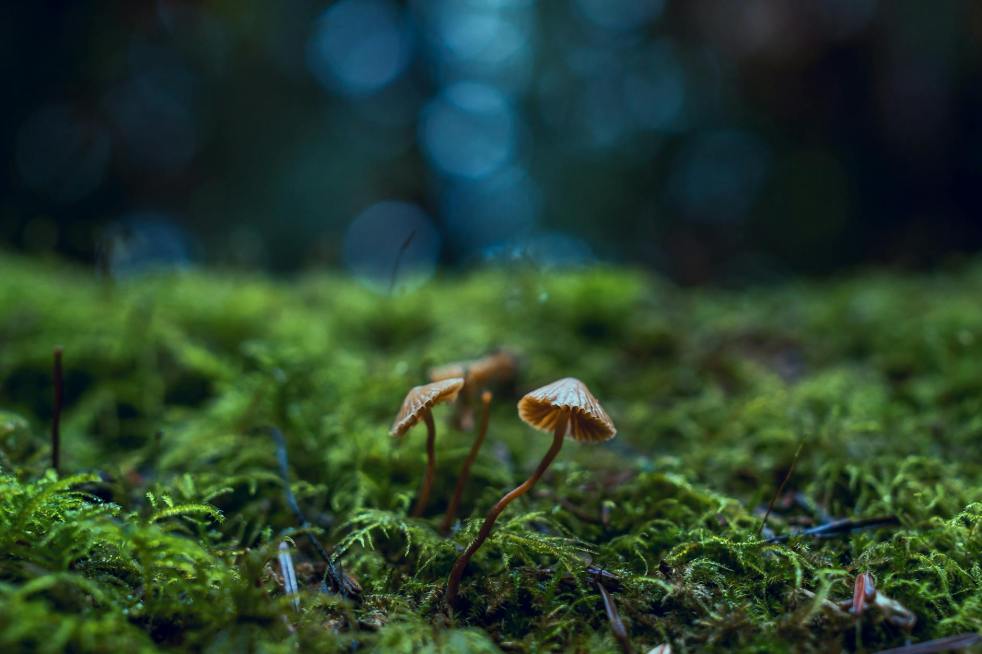
A trio of small brown mushrooms growing from a tuft of moss.
Photo by Johannes Havn on Pexels.com

So, on one hand, edible mushrooms are gifts from the dead to feed the living. On the other, the inedible ones will allow you to meet the dead!

This connection continues with the crane bag of Manannán mac Lir. In addition to being a God of the Sea, Manannán is also a guardian of the underworld. The crane bag is a bag he fashioned from a crane skin that contains several magical tools. According to many Ogham readers, these tools are indicated in the forfeda — the four additional letters at the end of the Ogham alphabet. Iphin (ᚘ) is the crossed “bones of Assail’s swine.” These were pigs that could be slaughtered and eaten and would regenerate again.
Robert Graves theorized that these swine were metaphorical, and the bones were not bones at all — they were the stems of mushrooms, discarded once the caps had been eaten or used in ritual. Since mushrooms are just fungal fruiting bodies, and picking them doesn’t harm the actual organism in the soil, it made perfect sense that they would “regenerate” so they could be consumed again.

Because mushrooms seem to spring up out of nowhere after a rain, they’re also thought to represent fertility.

Mushrooms in general are associated with the element of Earth. Planetarily, they’re associated with the Moon. The fly agaric, specifically, is associated with the element of Air and the planet Mercury.

First, I want to say that “there are old mushroom foragers, and there are bold mushroom foragers, but there are no old, bold mushroom foragers.”

If you aren’t an experienced mushroom hunter yourself, and don’t have access to one willing to take you in the field and help you positively ID mushrooms, do not attempt to harvest them yourself. There are way too many poisonous lookalikes out there, some of which can only be differentiated by spore prints or tiny, easily missed differences in appearance.

A cluster of small, thin, white mushrooms of uncertain type.
Photo by Chris G on Pexels.com

That said, simply touching a poisonous mushroom is unlikely to elicit a toxic response. However, it can still give you an allergic reaction, so you should still probably not do that.

Now, with that out of the way…

Unless you have access to a reindeer or a shaman, you should probably stick to the non-entheogenic varieties. I would also avoid commercially produced edibles intended for microdosing muscimol (a psychoactive compound). While not all brands are suspect, it seems some haven’t quite got the science figured out yet and several people have become extremely ill (and possibly even died) from using them. I wouldn’t use them myself and I don’t want bad things to happen to people, so I can’t recommend you do, either.

Also, if you drink alcohol, be careful which mushroom species you work with. Some are considered edible — delicious, even — but contain a compound that reacts with alcohol to cause some very unpleasant symptoms.

Otherwise, mushrooms are a suitable offering for deities of the dead and of forests. They’re also a good ritual food for workings relating to these deities or concepts.

You can place dried mushrooms in objects like charm bags, sachets, or spell jars, but with a bit of caution — they’re basically like sponges and will pretty readily absorb moisture and get gross if you aren’t careful to keep them dry. Other than that, go to town.

Whether you enjoy eating fungi or not, they’re fascinating organisms that form the foundation of life on Earth. Without them, other plants couldn’t grow. They’re a gift to the living from dead and decayed things, and, as such, are deserving of reverence.

Environment · life · Plants and Herbs

Sharks’ Eyes and Poison Orange

Some parts of DC are weird.

I mean, some parts of everywhere are weird, don’t get me wrong. Where I grew up, our favorite activity was spelunking in the sewers (I found a stray femur and was almost eaten by geese). When I lived in Delaware, it took me a bit to get used to the way the landscape was broken up — apartment complex, forest, strip mall, pasture, wetlands, wetlands, wetlands, city. In California, the neighborhood was a very tiny island in the middle of fields and pastures. Sometimes, you’d wake up and see all of the puddles shimmering strangely with whatever the crop dusters were spraying the day before. At night, even without seeing any cows for miles, you’d hear their eldritch moos as if they were right in the yard. The songs of coyotes carried for untold distances. Uncanny-valley strangers would come and knock on your door, ask to borrow things, and disappear. It had a very Southern Gothic atmosphere, especially for a place that was emphatically neither.

DC is weird in its own way. I love it here, and there are some extremely cool places and people. The architecture is gorgeous, and you can find some very lovely Victorian-style houses and unexpected details. Still, there are plenty of other areas here that I try to avoid if there’s any way to help it.

This was one of those.

My partner and I were picking up food at this place we found at the beginning of COVID — a little pricey, but they’ve got the best damned catfish po’boy and blackberry shortcake I’ve ever had. (I’d drop the name, but the location is called four different things depending on whether you go there on foot, find it via Google Maps, read their bags, or try to order through a delivery app. Like I said, weird.)

It’s situated in an area that, not unlike the rest of the city, combines historical architecture with modern touches. The thing is, where other areas of DC seem to give the impression that this is done out of necessity, or to fulfill actual human needs, this seems almost malicious. Concrete angel faces stare mutely out over doorways to imposing office and municipal buildings, expressions framed in equally-stony olive branches. At street level, there are stores — jewelers, Nordstrom Rack, a seemingly impossible number of Starbucks cafés — with large, thoroughly modern plate glass windows with the dead, flat gleam of sharks’ eyes.

There’s something about it that strikes me as very calculated. There’s a cultivated air of diversity here, but the kind of diversity that wouldn’t welcome anything that wasn’t a high-end department store, a Starbucks, or an eatery capable of suiting a very narrowly defined sensibility. Some of it is very pretty, but stifling, almost.

On the sidewalks, people sit too close together at outdoor tables. A maskless couple walk by, pushing a leather-clad baby carriage that mommyblogs say could pay a month of my neighbors’ rent.

People live here, too, but everything feels aggressively tailored to those who work here instead. I don’t think they’re the same population. Thinking about it too much makes my teeth itch.

I need to get the fuck out of here,” I whisper-hiss to my partner, “Because I’ve got maybe ten minutes before this place turns me into an anprim.”

I wonder if this is how fireflies feel when you put them in a mason jar with a stick and a leaf.

Fortunately, getting elsewhere only takes about ten minutes. It might be a strange byproduct of this one self-hypnosis program I sort-of-kind-of-maybe did wrong a few years ago, but the sight of the color green makes my nerves finally start to unknot themselves.

We park and walk a ways. I know my food’s getting cold, but I don’t really care. I take big breaths — there’s smoke coming from somewhere, and it tinges the smell of soil, gently decaying leaves, and damp wood with an earthy sweetness.

We find a picnic table. I always eat fast, but today I manage to finish before my partner’s done unpacking.

“Okay! Gonna go climb on that tree and look for friends!”

He’s grown used to this. I think you kind of have to, after awhile — it’s something that seems pretty firmly baked-in to me. I’m told that when I was very little, maybe four, we had some kind of family function at a beach. My dad says he heard me walking around making tiny proclamations: “Anyone who wants to go find bentures, follow me!” (Then I disappeared into some trees for awhile and he had to peel me off of a sheer clay cliff face, but that’s another story.)

When I was dating one ex-partner, it was a near-constant bone of contention that he never wanted to go exploring with me. I ended up having a lot of adventures with my dog, including finding a broken wooden footbridge that led to nowhere, covered in graffiti that dated back to the ’40s. (I’m almost positive it was Extremely Haunted.)

After that, another ex-partner used to give me survival equipment for every holiday. They figured the odds were pretty good that I’d end up disappearing into the woods some day, and they wanted to hedge their bets on me coming back alive eventually.

In short, I think most of my loved ones throughout history have adapted to the idea of probably seeing me show up on the internet after being mistaken for some kind of pygmy sasquatch.

There’s so much moss. Damp and feathery, sporophytes reaching up on stalks like delicate red threads. I could probably photograph it all day, to be honest — the structures are so beautifully complex when you get close enough.

My partner comes to join me, so we can look for mushy boys.

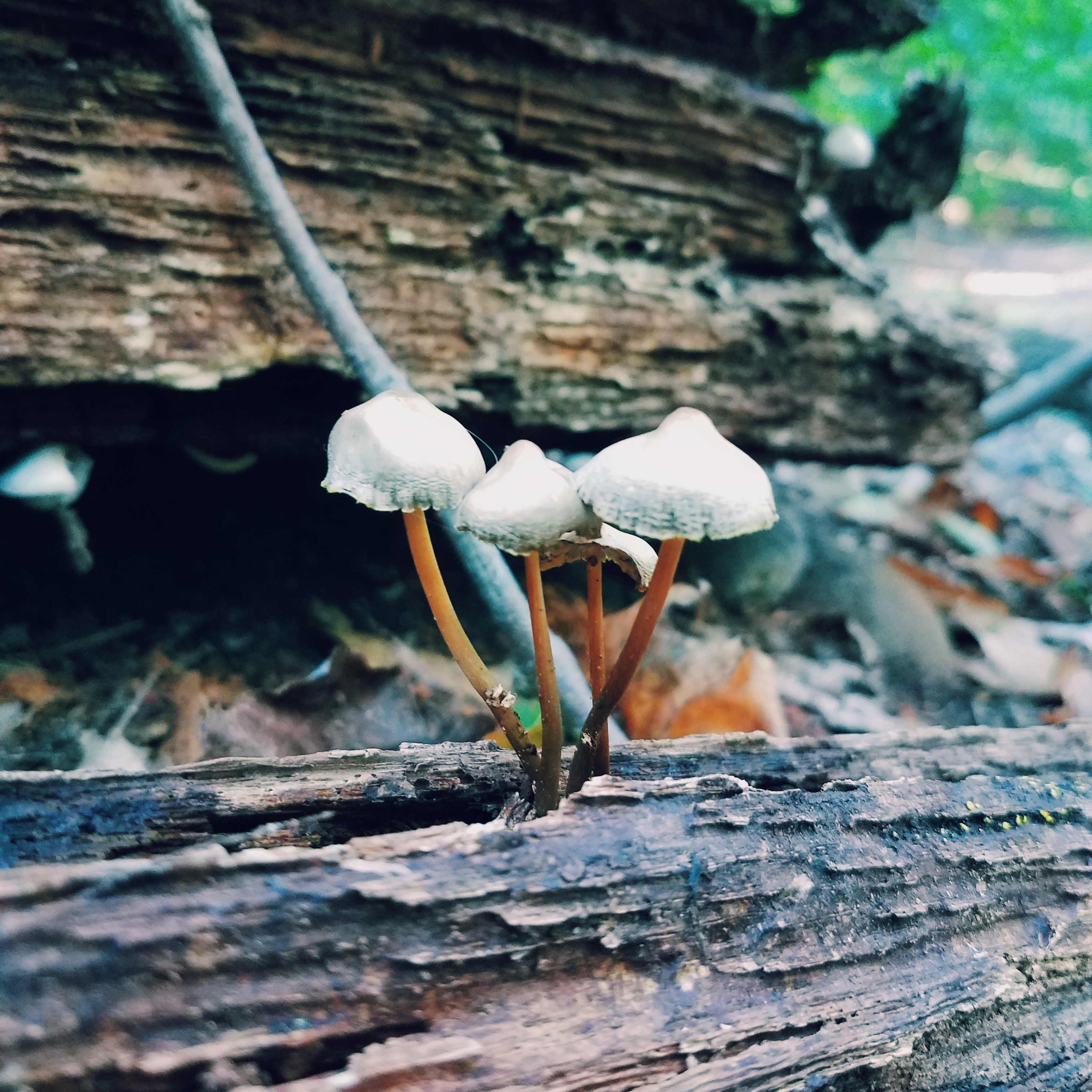
Some type of Mycena builds a tiny cathedral in a fallen tree. I find another type growing from a separate tree, its cap an almost ghostly translucent white. It’s the only one there, and I don’t have the heart to touch it, see what color it bruises, or try to take a specimen for a spore print.

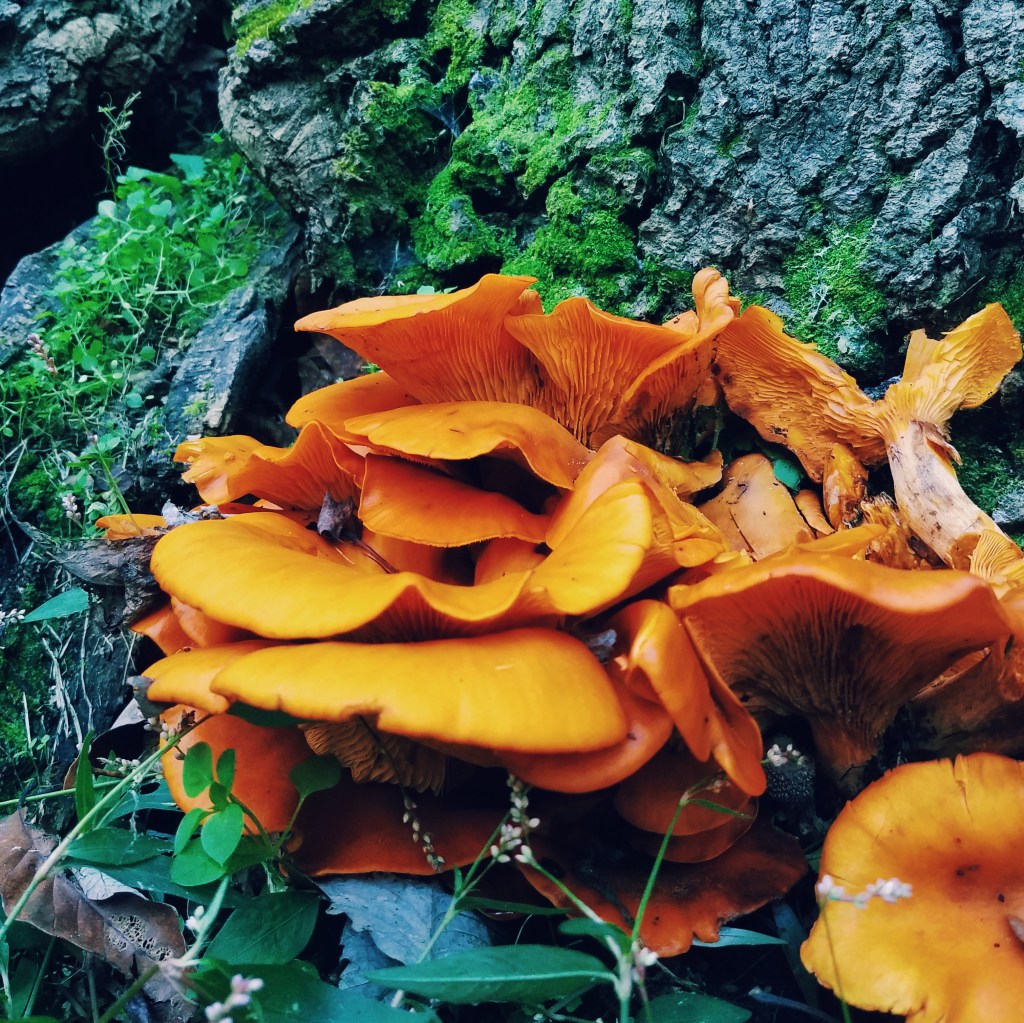
“Oh, hey,” my partner points to a dead stump. I make a kind of excited pterodactyl noise and get on my stomach for pictures. I haven’t seen jack-o-lantern mushrooms before, but their intense “fuck off” orange and fine, deeply-ridged gills are weirdly, poisonously beautiful.

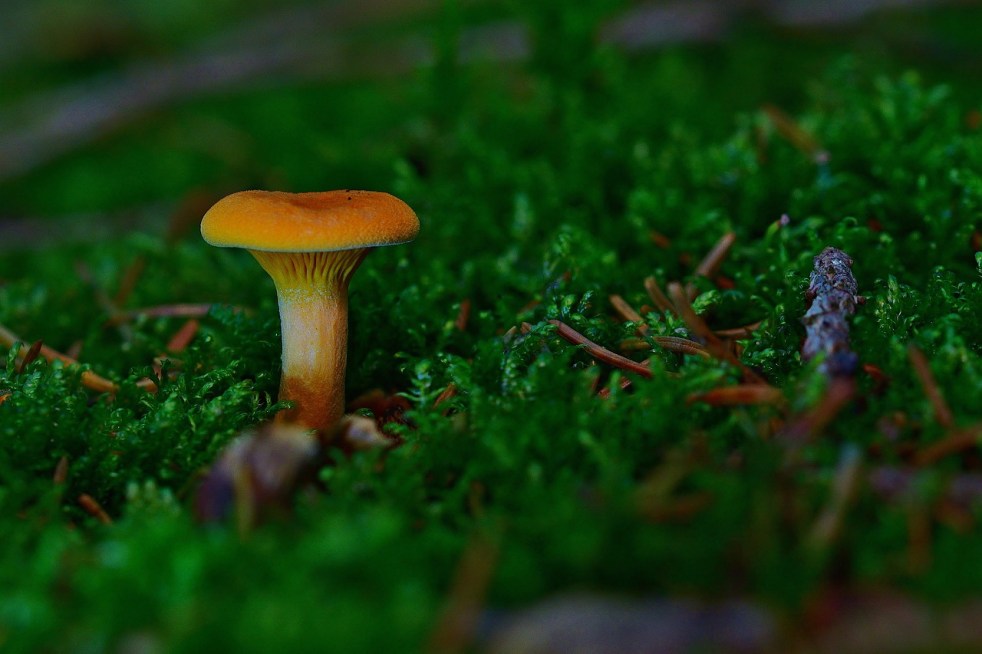
I can see why they’re often mistaken for chanterelles, though it makes me wonder what came first. Did the chanterelle grow to resemble the false chanterelle and jack-o-lantern mushrooms because it kept it from being eaten, or was it a case of convergent evolution?

It strikes me with some irony that I feel better about poisonous mushrooms than I do about the “Welcome” sign in a shop. Warning orange is easier to look at than shark-eyed windows, I guess.

Environment · life · Neodruidry · Witchcraft

A Daily Earth-Healing Meditation

Since today is Earth Day, I figured it’d be a good time to post about a small, simple daily meditation that I use to start my day.

It’s a combination of a grounding exercise and a planet-healing. You don’t need anything to do it, other than a comfortable, quiet place to sit (or even lie down) and five or ten minutes to spare. It’s based around the incredibly important role that fungi play in every ecosystem.

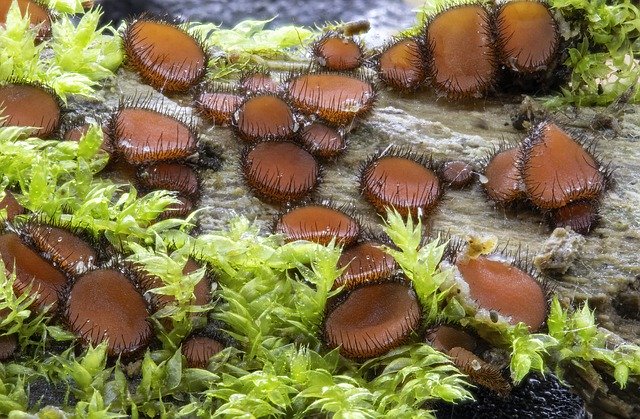
eyelash-fungi-4593804_640
Tiny eyelash fungi on mossy wood.

The Fungi

Though we often picture mushrooms when we imagine fungi, fungal fruiting bodies make up a tiny portion of the whole organism. Beneath them, spread out in a web, is a vast network of mycelium. The hyphae spread out like thin threads, transporting nutrients, secreting enzymes to break down organic matter, and supplying nutrients to the plants that depend on them. Everything in the world relies on fungi for survival, in one form or another. They secrete carbon dioxide as part of the carbon cycle, and can break down almost anything that isn’t actively toxic to them — even plastic, petroleum, or pesticides. Some fungi turn carbon into melanin, a very stable carbon-containing compound, while others help soil retain moisture. Certain fungi increase soil aggregation, potentially increasing soil carbon storage.

Still, fungi respond to a very careful natural balance. While the soil is a carbon sink, soil fungi also return carbon dioxide to the air — especially in situations where elevated levels of carbon dioxide encourage plant growth, increasing nitrogen demand and upsetting the delicate balance of carbon and nitrogen. Fungi can be vital environmental allies, but the balance needs to be preserved.

white-mushrooms-2582319_640
A pair of boletes.

Soil fungi don’t just comprise one or two species, either. Every patch of soil could be a host to a thousand distinct species. Just like the natural microflora of the body shift and change in response to illness, stress, diet, and medication, different stressors affect how these fungi grow, compete with each other, and evolve.

It’s never been more clear that protecting the planet means preserving all of the microscopic activity below the soil, not just the plants and animals above.

The Meditation

To begin, position yourself comfortably. Let your shoulders drop. Relax your jaw and the muscles around your eyes. Unclench your hands, and let them rest softly in your lap.

Inhale deeply, using your diaphragm and pushing out your belly to take in as much air as you can. Breathe in for a count of four, gently hold your breath for a count of three, and exhale for a count of seven. Repeat this three to five times.

Visualize your energy reaching from the base of your spine, through your seat, the floor, and into the soil. You don’t have to go far below the grass here — once your energy reaches the ground, let it spread out like the roots of a tree. Picture the filaments of your energy reaching through the soil, touching the filaments of mycelium that connect everything. Let your roots engage with the hyphae, gently befriending. When you have spread your energy as far as you can, begin sending a stream of loving light down through your roots.

Don’t worry if you don’t know all of the ins and outs of your local soil’s chemistry. Visualize your energy stimulating where it is needed, calming where it is needed, and balancing where it is needed. Visualize the soil fungi doing their microscopic jobs to break down what is no longer needed, and return it to the earth in a usable, nourishing form. Let your contact with the living soil recalibrate your energy, grounding you.

Continue this visualization for as long as is comfortable for you. When you are ready, gently withdraw your energetic roots from the soil. Open your eyes, stretch your limbs, and go about your day with a renewed awareness of how our actions affect everyone — and everything — around us.