You know, most folk horror movies wouldn’t be folk horror without a nice, solid cult somewhere in the mix. It helps to have a bunch of naked old people levitating in the woods somewhere to really drive the creepiness home, you know? Besides, most of the Big Bads of these movies just wouldn’t be the same without a bunch of minions, lackeys, or at least a couple of fawning lickspittles.
With this in mind (and having marathoned a bunch of horror movies while swallowing large pills and waiting for my organs to stop hating me) my Handsome Assistant and I came up with a ranking system. We now have the answer to a question absolutely nobody asked: Which folk horror cult would suck the least to be part of?
Please note that this is going to be full of spoilers, so proceed with caution.
Langiva’s Village (Black Death)
As far as cults go, the Necromancy Cult in Black Death is probably the easiest. They’re sort of broadly Pagan, and they live in a pretty isolated location in the woods that’s given them natural protection from the plague. Langiva demands people sacrifice outsiders that come to the village, but “human sacrifice” is kind of the baseline for a horror movie cult. She also comes across as a narcissist, but that’s pretty much a given for any cult leader.
As long as you’re willing to put up with her, you’ll probably be fine. There’s also drugs and feasts with makeout sessions, and the villagers are likely way less racist than the Hårga. It kind of sucks that Langiva’s totally lying about the necromancy thing, but that’s not really a huge dealbreaker in the grand scheme of things (especially compared to some of our other options here).
A-
The Hårga (Midsommar)
Ah, the Hårga. For the purposes of this ranking, we had to assume that we’d met the cults requirements for acceptance to begin with. (Namely, being a) very white, b) astrologically favorable, c) under the age of 72, and d) not inclined to indiscriminately urinate on trees.) Once you’re in the Hårga, however, things probably wouldn’t be terrible for you. There’s food, a beautiful setting, a large, seemingly loving family, and movie night. They also only do the whole “burning people alive” thing every 90 years, so it’s very likely that you’ll go your whole life without ever experiencing it. It seems entirely possible for a cult member to live a pretty decent life with the Hårga.
As long as you’re not their deliberately inbred prophet child, you’ll probably have an okay time. At least, until your 72nd birthday. Things tend to fall off rather sharply then.
B
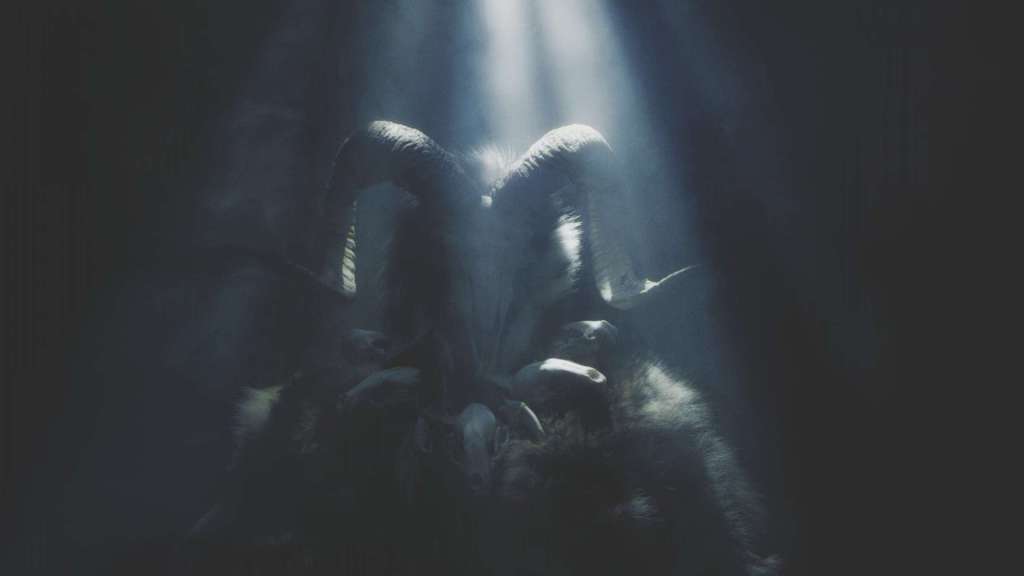
Sator’s Cult (Sator)
Sator’s cult gets several points for costuming and does seem to primarily consist of a large family, but otherwise kind of falls apart. Sator’s main objective seems to be some kind of “purification” for his followers, and he doesn’t really make any promises beyond that.
I think that Sator may only be debatably evil. This could very well be a case of an old-school, “FEAR NOT,” Biblically angelic-style entity with the unfortunate side effect of sanity slippage. As long as you stay the hell away from Adam’s cabin in the woods, you’ll probably be largely unscathed (or, at least, unburnt). On the other hand, you’re most likely not going to get anything out of this cult other than a really cool mask and the occasional levitation. Not worth the risk of dementia, in my opinion.
C
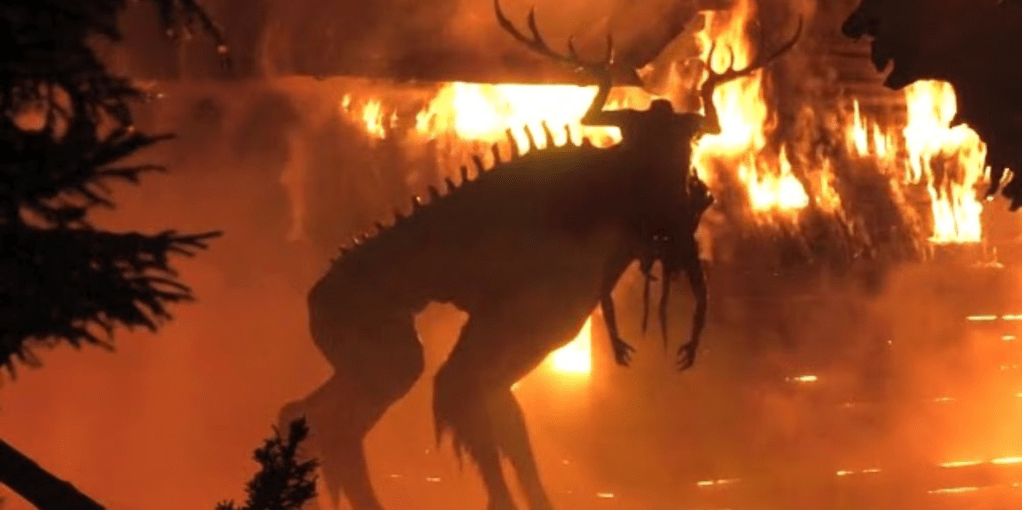
Moder’s Cult (The Ritual)
Uuuuugh.
Look, I love Moder. Her visual design? Impeccable. Her sound design? Perfect, no notes. Her behavior? Exactly as violent, animalistic, and inscrutable as I want from my horror monsters. But it doesn’t look like the people in the cult want to be there. Hell, not even Moder seems to be having a good time.
Sure, there’s the immortality thing. That seems pretty cool, until a picosecond later when you realize that “eternal life” is not synonymous with “eternal youth.” Moder also doesn’t appear to be too fond of being looked at, so you don’t even get to hang out and enjoy her completely awesome entire-human-corpse-head-on-a-skeletal-half-plant-elk monster design. It’s just an endless cycle of bowing, sacrificing hikers, and waiting to shrivel up into a mummy. Boring.
D-
The Coven (The VVitch)
Look, horror movie cults need to have some kind of payoff. Thomasin signs the Devil’s book in exchange for the offer of a taste of butter, a pretty dress, and the ability to fly (as long as the flying ointment holds out, anyway). While I get that this is more of an indictment of the utter bleakness, repression, and poverty of Thomasin’s life than anything else, I feel like you’re gonna need more out of a creepy cult than condiments, an outfit, and occasional floating parties. (Especially if it means having to lose your entire family and be stuck hanging out with the Devil and his retinue of naked octogenarians.)
Wading through a freezing cold stream with a bunch of Christian fanatics, beating yourself, and dying painfully of the black plague anyway? Absolutely not. They don’t even have makeout parties like Langiva’s village, flowers and Austin Powers movies like the Hårga, or a cool figurehead like Moder. It’s all the worst parts of being in a creepy cult, but with absolutely no pay off. Hard pass.
F-
Honorable Mention: King Paimon’s Cult (Hereditary)
Okay, it’s not folk horror, but still. King Paimon’s cult in Hereditary is an excellent portrayal and I felt like it deserved to be on this list.
However, it would still be total ass to be part of.
I get that we see them when their mission is only half-accomplished. They’re still hoping for that wealth, power, and bunch of good familiars, all while dutifully shopping for craft supplies and setting up rubegoldbergian decapitation schemes. As far as the movie goes, nobody’s gotten anything out of this bargain despite ostensibly the entire town being in on it for decades.
Still, if someone’s going to spend an eternity as “Paimon’s sexual furniture” (thanks, Novum), I feel like they’re going to need something more than as-yet-unrealized promises. It’s also not like demons are known for keeping their word, that’s the whole reason why they have so many pain-in-the-ass rules and etiquette. He could decide that you’re next up on the decapitation docket, and then what?
Okay, look. I’m not a film buff. I have no desire to turn this blog into a collection of movie reviews. But I saw a movie that I loved and most of the rest of the internet seems to hate, and oh boy do I have some Thoughts.
I like watching horror movies during winter, especially during the Yuletide season. I have a few favorites that I return to, but lately I’ve been into folk horror (like Midsommar, The VVitch, and Sauna). After chewing through a decently long list of scary movies, I was searching for some more in that same vein when I came across The Head Hunter.
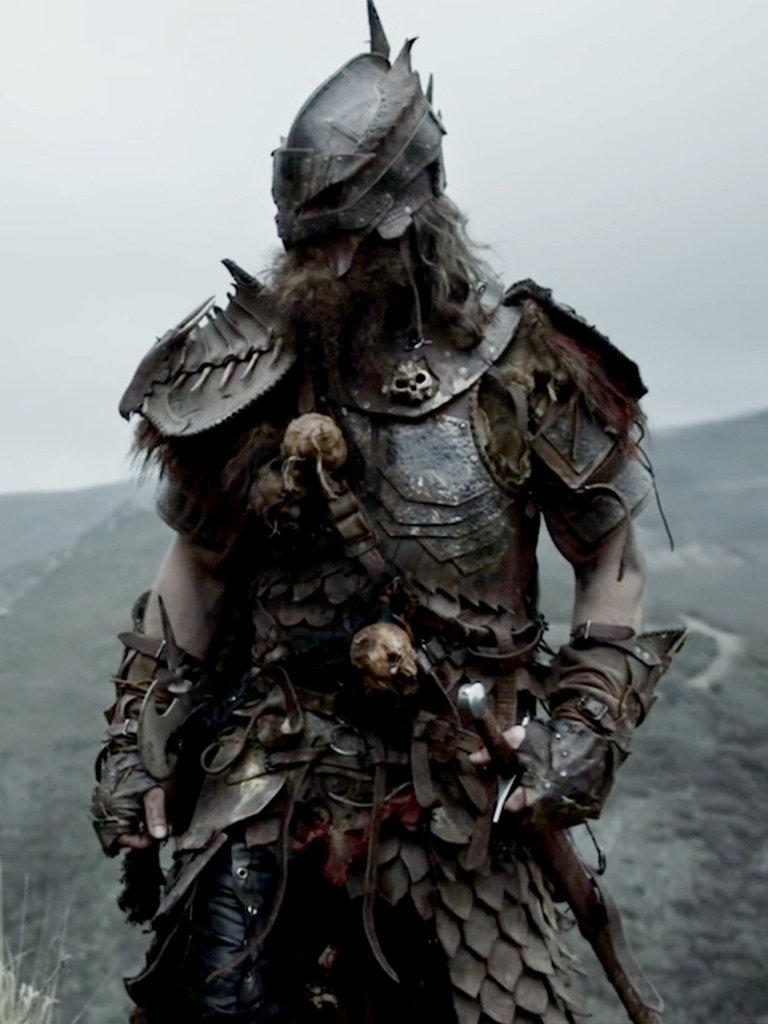
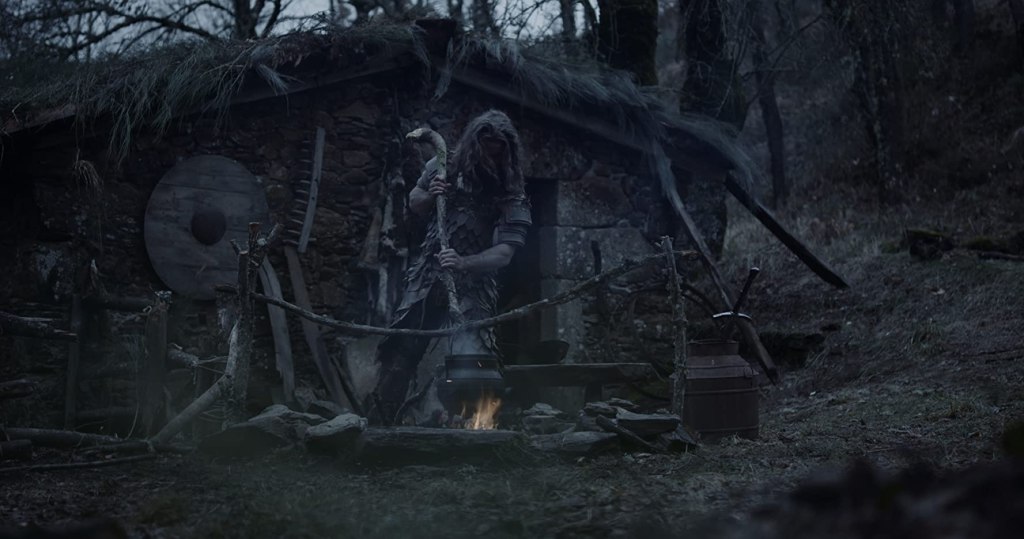
If you’re not familiar with it, The Head Hunter is a dark fantasy/folk horror film directed by Jordan Downey, starring Christopher Rygh, and filmed in Portugal on a ludicrously tiny budget (like, Cube tiny). Fortunately for this film, the miniscule budget seemed to be a help rather than a hindrance — The Head Hunter, like Cube, is a really excellent example of doing a whole lot with a little. Like, one-room-a-forest-and-some-Halloween-decorations-from-Party-City little.
What’s The Head Hunter about?
So, first off, the trailer for this movie is a bit misleading. Based on a number of reviews I’ve read, it seems like a lot of people went into it expecting to get a hack and slash sword-and-sorcery monster movie. Instead, The Head Hunter delivers a portrayal of grief, loss, obsession, and revenge, dressed in minimalist horror and stunningly effective character- and worldbuilding.
It’s also the bleakest movie I’ve ever seen. I love Sauna and Hereditary, so that’s saying a lot.
The story opens with a father and daughter (known only as Father and Daughter). We only get to see the two interact in a brief flashback before we’re brought to the present day — the Daughter is dead, and the Father is a monster hunter.
Every so often, a trumpet blasts. The Father follows the sound to a specific tree, where he finds an arrow, wrapped in a scroll, piercing the bark. On these scrolls are his assignments — basically charcoal and parchment “wanted posters” of whatever monsters are presumably making nuisances of themselves in the local area.
He goes on the hunt. We’re never shown the battles, just the aftermath. The Father returns, bruised, bloodied, and exhausted, with his quarry’s head in a bag. He opens a jar of some kind of substance, rubs it on his wounds, passes out, and awakens healed. Before long, there’s another horn blast, and the process repeats.
That is, until he gets called to hunt the monster that killed his daughter.
Alchemy, Worldbuilding, and the Monster Mash
If the plot sounds a bit thin, that’s because it is. It also doesn’t really need to be more than that. It’s very minimalistic, and it uses this minimalism. This movie is character-driven, not really plot-driven. We follow the Father through his day-to-day, and these mundane, tiny activities do an astonishing amount of heavy lifting when it comes to fleshing out the world that he inhabits.
For one, he keeps the heads as trophies, but that’s not all. The Father is also an alchemist, akin to The Witcher. He has a book filled with the scrolls of each monster he’s killed, but a brief flip through it shows that it also contains information on astrology and herbology. He also has a lot of specialized apparatuses — grinders, a cauldron, jars for macerating, that kind of thing.
We’re shown scenes of him boiling down monster parts into a kind of sludge. He strains things. He dries them. He grinds them down to a powder. He sets the end result up in jars with locking lids, kept behind heavy chains to keep them safe. He doesn’t say a word during this process, and there’s no narration, but there doesn’t need to be. This collection of scenes shows us exactly what we need to know: The Father is a learned man who has either created or been taught the complex alchemical process of turning dead monsters into a healing salve.
There’s no magic here, either. The whole monster mash process is… visceral. Chemical. It’s not showy, bloody, or gory, but the scenes have a smell and a texture.
Some other subtle touches here and there tell us a lot more. For one, the Father gets his assignments by following a horn blast to a tree. He never interacts with another person. At one point, he passes by a castle filled with music and, presumably, other people enjoying themselves. Interestingly, even when his Daughter was still alive, there was a deep sense of isolation about him. Neither he nor the Daughter are shown in a town or even talking to anyone else. Has he isolated himself and his family by choice? Did he do something to drive them to the fringes of society? Is he an outlaw? Where’s the Daughter’s mother? Did something happen to him or his family? How did he become the head hunter?
These questions aren’t answered, and they don’t really need to be. Just like his name, the Father’s backstory isn’t really important. What’s important is his present day: He’s angry. He’s grieving. He’s propelled by vengeance. He’s utterly alone.
And he isn’t a hero.
The Ending
A lot of people didn’t understand the ending or felt that the movie really fell apart because it killed their suspension of disbelief. While I get it, I don’t agree.
(I’m also about to spoil the shit out of this movie, so skip this part if you haven’t seen it yet.)
The Monster Mash (and That @#$%ing Window)
Throughout the movie, we see and hear a window shutter creaking and swinging in the wind. It’s a minor, annoying thing — the kind of small home project that might get put on the back burner for anyone, let alone someone whose days primarily consist of fighting for his life, repairing his armor and weapons, and making monster mash to make sure he doesn’t die. (He also doesn’t seem to be making a ton of money as a monster hunter, so add “getting food, water, and the necessities of life” to that list.)
After the Father gets the call that the monster that killed his Daughter has returned, he goes off to kill it. We don’t see the battle, but he’s successful. He carries the head back in a canvas bag, just like all the others, and tosses it on the floor as he tends to his wounds and otherwise prepares to spear the head on one of his wall stakes. (Say what you will about his interior decorating, the man knows how to commit to a theme.)
Unfortunately, that damned window shutter keeps creaking and banging. Violently enough, in fact, that it knocks a jar of monster mash onto the bag containing the Head. Unbeknownst to the Father, the monster mash is more than just a healing salve — it can even reanimate the dead. The head creeps from the house, painfully propelled by its spinal cord, desperately seeking a body.
When the Father sees the spilled monster mash and now-Head-free space on the floor, he’s shocked. In disbelief, he tests the mash on a dead spider. When it reanimates, he curses, smashes it flat, and goes off to find the Head and finish the job properly.
There’s only one problem: He leaves too quickly. He doesn’t see the smashed spider as it trembles to life second time, with horrifying implications for the effects of the mash. This is what sets up the climax of the movie.
With the Head now on the prowl for a body, it first comes across the corpse of a creature the Father snared in a trap earlier. It attaches itself to it and awkwardly pilots it along, until it gets caught in another trap. The Head then tears itself free again and continues on… until it comes to the Daughter’s grave.
The Father doesn’t just have to kill the Head again, he has to do it while it’s piloting his Daughter’s skeletal body and raspily calling out, “Father.”
The Arrow
At one point earlier in the film, the Father returns to the Daughter’s grave with an iron arrowhead. He briefly explains that people say that firing the arrow can send a soul to the afterlife, but he’s never believed that kind of thing. He tosses the arrowhead onto her grave, almost apologetically.
After the Father defeats the Head a second time, he re-buries his Daughter’s body. The grave is shallow — we can see him scooping loose soil with his hands, seemingly barely able to fully cover her bony limbs in his grief and desperation.
He fires the arrow high into the sky. He wasn’t able to save her life. He wasn’t able to protect her corpse. But maybe, by finally firing the arrow to send her to the afterlife, he can protect her soul.
The Corpse
Firing the arrow is an acknowledgement that the safest place for the Daughter is away from the Father. He kept her with him, presumably after the loss of her mother, and it cost her her life when a monster attacked. He continued to keep her with him, by burying her nearby, visiting her, and giving her occasional gifts, and the Head stole her body and defiled her corpse. Firing the arrow is the final acceptance that he needs to let her go.
Unfortunately, the Father lives a cold and bloody life. We see him bring back the heads of his prey, we see him set traps and make the monster mash, but that’s all. He’s got a lot of heads on his wall. The landscape is still littered with bodies.
The arrow travels high and far, only to thunk into a fly-swarmed corpse on the bank of a stream.
The corpse is an indistinct, furry mass overlaid with the drone of flies. It isn’t the Daughter’s head, because the rest of her is skeletal at this point and this corpse is too recent. It isn’t a rucksack, because we can hear the din of flies feeding on it. It could be the corpse of the wolflike monster from earlier in the film, or the Father’s dead horse, the Head’s original body, or even a random bit of carrion. Like many other things in this movie, its origins aren’t important. It’s a rotting body, presumably just one of many in a hard, violent landscape.
The arrow doesn’t contain the daughter’s soul, or the monster’s soul. It isn’t tainted with monster mash. It’s a superstition the Father doesn’t even believe in, but it’s also all he has right now. It’s the last act of a grieving parent desperate to save his child in some way, after he’s failed too many times already. And it fails, too.
“Body Mine.”
The Father’s mission is accomplished. The Head severed and placed in a bag, he sinks his axe into it to kill it a second time.
In the end, we’re given a scene through the window with the banging shutter. We see the Father walk past, followed by the sound of sawing wood. (Presumably to finally fix the goddamned window.)
Then, there’s a groan. A wet snap and a squelch. And more sawing.
The movie ends with the Head, now attached to the Father’s body, clumsily walking into the house, taking a jar of monster mash, and making one final, triumphant declaration:
“Body mine.“
And a lot of people absolutely hate this ending, because it doesn’t seem to make sense. What’s more, it doesn’t follow what people want from a hero’s story.
I see two problems with that, though:
1) There are little things scattered here and there that make it completely plausible.
As far as the implausibility of the Head winning a fight against the Father goes, there are a lot of theories. One in particular stands out to me.
The Head, on its own, likely couldn’t have overpowered the Father (even without his weapons and armor) even if it had the element of surprise. We are already shown a scene where it comes very close, though. During the fight in the cave, the Head gives just about as good as it gets to a fully-armored Father, head-on, in close quarters.
During that same fight, we’re shown the Father apologizing as he tears the Head from his Daughter’s body. He doesn’t destroy the body, he just pulls the intruder free. Then, he takes her body with him and re-buries her in a shallow grave.
A grave the Head already knows.
It wouldn’t have had to look hard, or even particularly far, for a new body to pilot. If the Head was able to nearly overcome the Father in hand-to-hand combat already, there’s enough evidence that it could’ve done so again.
With the Daughter’s body, stolen from a fresh grave (again), and the Father unarmed, unarmored, and distracted with noisy work, the Head could kill him.
And it did.
2) The Father is not a hero.
The character of the Father is not set up as a hero. He’s our protagonist, but the worldbuilding doesn’t lend itself to heroics. He isn’t on a hero’s journey, and he doesn’t get a hero’s ending.
For example, take the sense of isolation. We’re never told if he’s isolated by choice, by necessity, or by law. Nobody knocks on his door to ask him for help. They pin a message to a tree, blast a horn, and (even when he’s visibly standing in the same field) seem to go out of their way to avoid him. They know he’s there, but there’s something about the Father that’s otherworldly. Outside. Wrong.
Second, the journey of the Head mirrors that of the Father. Both of them are shown using dead bodies as a way to heal themselves and prolong their lives. The Father uses them by breaking them down via alchemy to make his healing, immortalizing monster mash. The Head uses them by attaching itself into one corpse after another. Both of them effectively leapfrog from one body to another, picking up a fresh corpse, using it to repair themselves, then moving on. One just uses more jars than the other one does.
Third, we’re not really shown what the monsters do. There are implications — in one scene, the Father finds a corpse and has a brief, one-sided conversation with it about how it died. It’s implied that it was killed by one monster or another, but we’re never given the kind of swathes of destruction we’d expect from the word “monster.” You could replace them with perfectly ordinary bears, or particularly dedicated pigs, and the effect would be about the same. We kind of have to take the scrolls at face value that these are, in fact, monsters in need of killing.
The Head killed the Daughter, but we aren’t shown that, either. On one hand, the exact circumstances aren’t important. The details don’t matter nearly as much as the fact that this is the incident that sets the Father on his path of vengeance. Still, it made me wonder:
We know the Head is sapient to some degree, because it can speak and understand concepts like “body” and “ownership.” Did the Head also understand familial relationships? Has it lost more than just its body?
The Father and Daughter were outside of society from the beginning, but did the Father become a monster hunter only after the Daughter died? Could the Head have killed her for its own revenge?
If we were watching this from the Head’s perspective… Would anything other than the ending be different?
Ultimately…
The Head Hunter is and isn’t a monster movie. It’s a very effective, minimalist portrayal of how the desire for vengeance leads to obsession, and that obsession can make monsters of us. It’s a depiction of grief and pain that isn’t given a voice, and how that manifests in other ways.
The Father buries his Daughter, but his grief is expressed in rage. He learns (or develops) an entire science in order to hold on just long enough to get his revenge. He’s single-minded, looking solely to the day when the creature who killed his child returns. He has no contact with the town, other than accepting their demands that he kill the things that they’ve deemed monsters. In his obsession, he ignores the banging shutter until it ultimately becomes his undoing. Like Orpheus, he’s unable to keep from looking back. Because of that, there can be no future for him.
I don’t think there is a deeper magical significance to the arrow, or a secret plot twist involving the corpse on the stream, but that doesn’t mean they don’t have meaning. They’re part of the futile action of a parent who desperately wants to save their child and isn’t able to. Like Annie trying the seance in Hereditary, or Katherine lying in Caleb’s grave, the Father fires the arrow because he cannot imagine doing anything less for the child he grieves. It hits a corpse because there is no happy ending here.
Those who live by the sword, die by the sword, and so often condemn their loved ones too.
The Head Hunter is a bleak, bleak movie, but I enjoyed it. With a tiny budget, almost no dialogue, and a few, artfully handled scenes, it manages to build an interesting, complex world and a portrait of a man in torment.
If you go into it anticipating a fantasy monster movie, you’ll likely be disappointed. If you go into it anticipating minimalist horror with some stunning atmosphere and worldbuilding, I think you’ll enjoy it.

 Marble Crow