
life

The Feline Terrible (almost) Twos

When you adopt a cat, it takes a little bit of time for their personality to unfold.

I remember bringing home Pye and Kiko — she had to stay confined for a bit, because she’d recently had an operation (one of her hind legs had been barely injured and she needed a bunch of necrotic skin and muscle removed), but Pye was free to roam around.

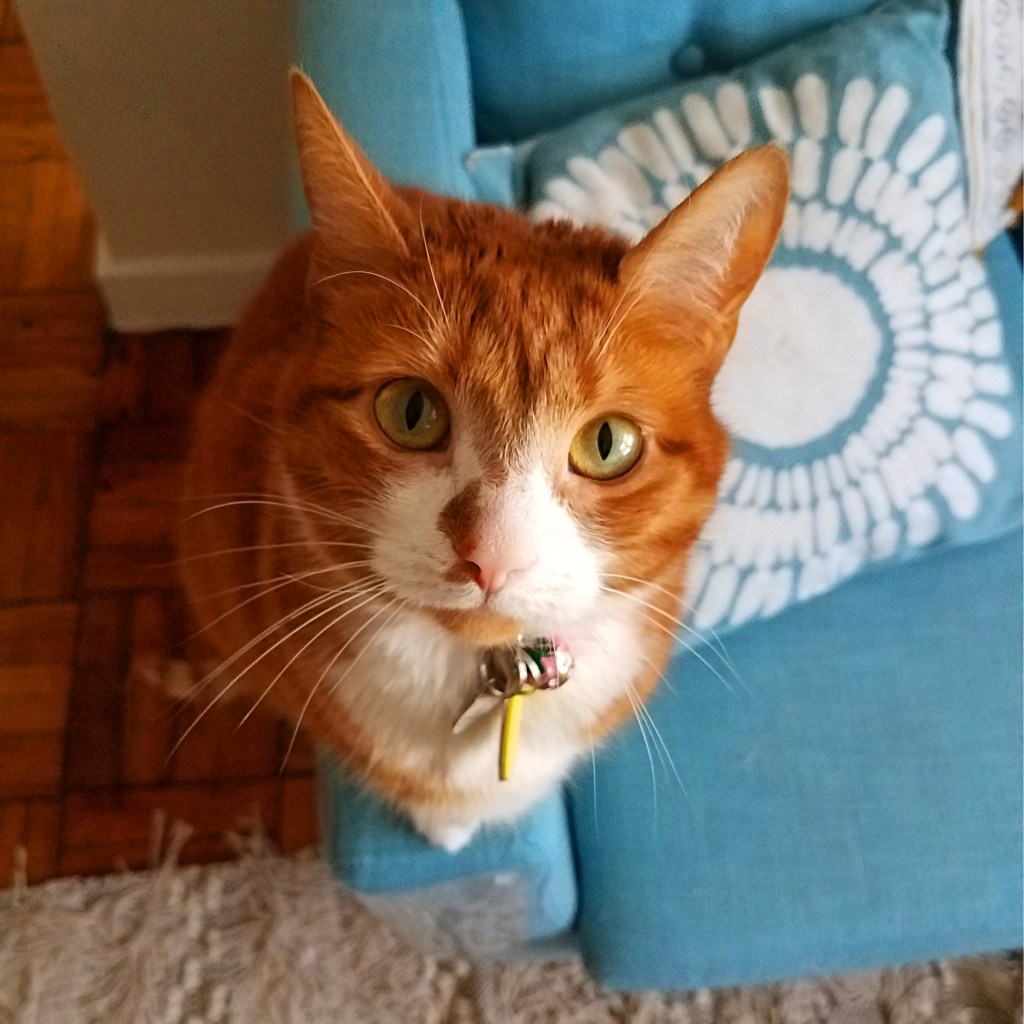
A small female orange tabby cat sits on the arm of a blue sofa.
She got better.

Instead, he decided to find a sunbeam on the bed and curl up. He pretty much owned the place, and he knew it immediately.

He was a kitten at the time, but an older one. At about eleven months (give or take), he was at the end of his kitten stage. Allegedly.

A few weeks later, he started misbehaving more. He wanted more attention, but he wouldn’t come over to receive it. No. Instead, he’d hassle Kiko. Push things over. Yell at the ceiling. Climb into places he didn’t fit, then sternly make eye contact as if to say, “Look what you made me do.”

We couldn’t figure out what his deal was. We figured that, as he’d become more comfortable, his true personality was coming out more. And, to be honest, he was being a bit of a dick about it.

That’s when I discovered the remedy: I had to call him over to me, make a space for him under my arm, and gently hold his face for him as he slept. He would not come cuddle of his own volition. He would not come tap or meow at me to get my attention. He’d act up, and I’d have to put him down for a nap like a cranky toddler. Once he’d slept for a bit (wearing my hand like some kind of disturbingly organic sleep mask), he’d be a perfect angel.
I don’t know, man.

A large male orange tabby cat lays on the edge of a bed. He's curled up on his side, paws in the air.
His entire internal monologue is just hold music.

He eventually grew out of this phase around age two, and it was as if it never happened. I just figured he was a weirdo and went on with life. He gradually settled down into a cat who is very much a buddy who wants to hang out with us all day, but actually prefers not to be cuddled.

Now, we have Pye, Kiko, and JJ. We’ve had JJ since she was a tiny, very sick baby, so we’ve been able to see her personality develop from the beginning. Once she hit a little over a year old… well, she suddenly started doing the same thing Pye did.
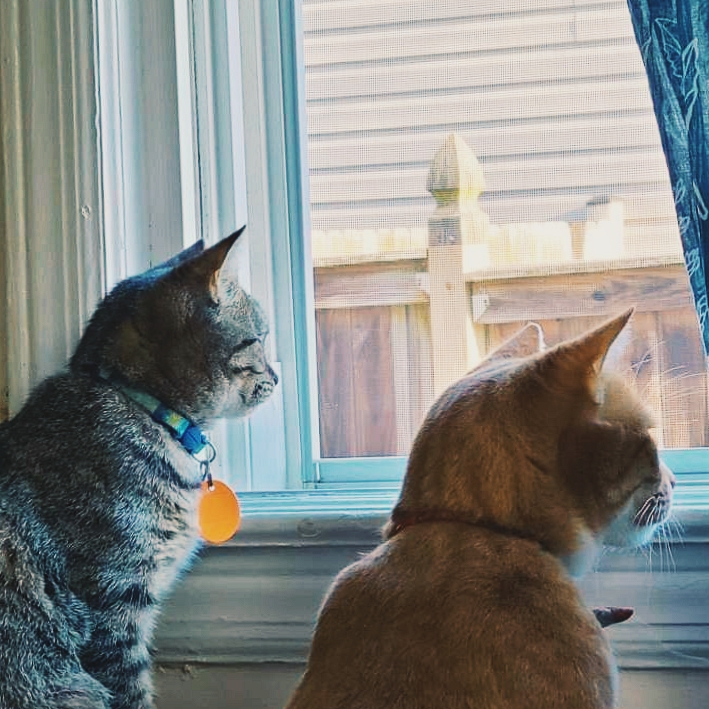
A large male orange tabby sits beside a much smaller female gray tabby. They look out of a window together.
Did he teach her the ways?

Acting up. Misbehaving. Hassling Kiko. Chewing on Pye’s face (though he’s pretty good natured about it). Being rambunctious and cranky until and unless she is given a nap. At times, circling me like a tiny shark and making small clown honking noises.

I’m not sure what it is about this age that seems to have instilled this very odd tendency in both of them. It seems like there’s some kind of physical or mental growth spurt that coincides with a) an increased need for snuggles and sleep, and b) an absolute refusal to admit it. Like human children testing boundaries and asserting their independence, it seems like they push themselves until they become tired and cranky, and I have to be the one to notice this and enforce naptime.

Pye seemed to grow out of this eventually, and I’m pretty confident JJ will too. It’s just interesting to see how nature doesn’t conform to a neat timetable — we can say that cats are kittens until one year of age, but there’s still so much growing and developing that they do beyond that. They’re not babies, but they still aren’t adults yet. There’s boundary testing and a lot of feelings, but it seems like naps and snuggles are suitable emotional reset buttons.

life

Crow commerce. Crowmmerce.

Birds like fruit. Some fruits, like prickly pears, actually evolved to benefit from the acidic environment of an animal’s digestive tract. The exposure to acid helps make it easier for the seeds to germinate. The fruits are delicious to incentivize animals to eat them and scatter the seeds around. Neat, huh?

This means that, if you are both planning to grow fruits for your own consumption and also exist in a place with birds, you need a plan. A big part of my plan involved just planting an absolute buttload of strawberry plants. Some will be eaten, sure, but that’s a sacrifice that I’m happy to make.

The other part of my plan involved special rocks.

The idea is that, if you’re concerned about birds getting into your fruit, you place inedible, non-toxic decoys around. Decorate the areas immediately around your strawberry plants with mediumish-sized rocks painted to look like strawberries, for example, and birds will leave your actual strawberries alone.

You have to do this before the plants actually set fruit, though. This is so birds have a chance to peck at the fake ones, be disappointed, and complain about your crappy, hard, imposter strawberries to all of the other birds before the real strawberries show up.

So far, it seems to be working! My strawberries haven’t produced a whole lot yet (mostly because the majority of them were just twiggy little starts a few weeks ago), but the few I’ve gotten have been untouched.

The crows, however, appear to be fascinated by my various gardening objects.

The younger ones like to play with the small black plant pots from the nursery. If a new thing shows up, they bop around to thoroughly investigate its amusement potential.

My strawberry rocks appear to be a huge hit. The crows are even trying to buy them off of me.

For serious. The strawberry decoy rock in my terracotta pot vanished, and, in its place, I received one (1) thoroughly pecked blue foam ball. It’s a very pretty shade of blue, and I appreciate it, but I’m also extremely curious about the corvid thought process that goes, “Yes. One red rock = one blue ball. Pleasure to do a business, okay.”

A hand holds a round blue ball made of some kind of stiff foam material. The ball is covered in tiny peck/chew marks.

The thing is, I put all kinds of tasty stuff in their platform feeder as it is. Grapes. Blueberries. Bits of strawberries. And, like I said, the whole, growing strawberries have gone untouched by beak or claw. They seriously only wanted that one, particular decoy strawberry, and apparently valued it highly enough to barter for it.

I’m honestly kind of tempted to go rockhounding and see if I can pick up some nice, sparkly rocks to put by the platform feeders. We have a ton of mica around here, so I’m pretty confident that I could find something suitably eye-catching for them.

I mean, I know they’re no strawberry rocks, but maybe the crows’ll like them anyway.

crystals · Neodruidry · Plants and Herbs · Witchcraft

7 Ways to Set Up a Pet-Proof Altar

Let me preface this by saying that I love my cats. I do. But one of them has an odd obsession with getting into any plant that’s within reach (and several that aren’t), and the other will hurl things and scream if one of us fails to sit on the kitchen floor with him in the morning. I don’t know why this is, but it’s the reality of the situation.

Anyway, as you can probably tell, this makes setting up and maintaining a home altar somewhat… challenging, shall we say. Not only do I not want my altar disturbed, I also don’t want to have to worry about someone eating something they shouldn’t. So, here’s how I keep everyone (and everything) safe:

Train Your Cats to- hahahahahaha

Sorry, couldn’t resist. Couldn’t finish that thought with a straight face, either.

She might be your familiar, but that doesn’t mean she cares about your stuff.

Choose Portable Altar Decor (But a Permanent Space)

In my opinion, part of an altar’s power is in its presence even when it isn’t being used. Some of that is lost when you have to set up and take down your altar every time you need it, but that doesn’t make a portable altar any less beautiful or meaningful.

If you do have to go the portable route, however, I’d recommend keeping a dedicated altar space. Even if you can’t have food offerings out without your dog getting into them, or your cat tries to knock over all of your statuary, you can still have a specific space that’s only used for your temporary altar. Get a nice accent table and cover it with a cloth. Set it with a good-sized crystal or a vase of flowers (if your animal companions will allow for it). Save the other altar tools and decorations for when you’re actually performing a working, but keep that space as a designated altar even when it isn’t in use.

Use a Drawer

One of the best ways I’ve found to avoid my felines’ penchant for destruction is to choose a table with a nice, deep drawer, and set up an altar in that. You can still have a permanent space, and all you have to do is pull the drawer open to get to work.

Remember to close it gently, though — you’ll keep your altar tools and decorations from rattling and knocking around that way.

Use the Floor

If having things knocked over is your primary concern, why not just put them on the floor to begin with? The fact is, having chairs and tables so far from the floor isn’t a universal thing — plenty of cultures around the world use low tables, floor cushions, or nothing at all.

Designate a space for a floor altar. Set it with a small accent rug and your altar supplies. Place a comfy floor pillow in front of it, and you’re golden.

Use the Outdoors

If your interior space is too thoroughly dominated by your four-legged roommates, consider working outside. It’s a bit less convenient if the weather’s bad, but outdoor altars are beautiful, functional, and, if you work closely with your local nature spirits, immensely powerful.

The only tip I’d offer here is to choose altar decorations that are resistant to walking away. Expensive statues might disappear on you, and shiny crystals may prove irresistible to the local bird population. Materials that aren’t durable enough might end up a bit worse for wear after a few rainstorms and a couple of rounds of sun bleaching, too. Largish stones, garden statuary, candles, and — of course — plants are inconspicuous, not likely to disappear, and can handle being outside.

Watch the Center of Gravity

Few things are as nerve-wracking as a tall, lit candle. This is especially true when that candle is in the same room as a cat. If candles are part of your practice, make sure to invest in some good, heavy candle holders. If you can make sure your candles are sufficiently bottom-heavy, they’ll be less likely to tip over easily. For this reason, I also recommend tealights and jar candles over, say, long, fancy tapers.

The same is true of any statuary or other decorations. Avoid choosing items that have a high center of gravity, because they’re much more likely to tip over if, for example, a very zealous boxer puppy wags his tail too close to your altar.

Invest in Some Museum Wax

Museum wax is what helps keep museum displays in place. It comes in several types, from an opaque, gummy material to one more like clear dental wax, and can help things stay stationary if they get bumped. The only caveat here is that it doesn’t work on an altar cloth — museum wax provides a tacky surface between two smooth finishes, so it won’t really help to keep your statues in place on top of fabric.

Know Your Poisons (They May Not Be What You Think)

So, we probably all know not to let our pets get into toxic herbs or houseplants. The ASPCA has a good list of plants that can trigger adverse reactions.

I remember watching a video by a crystal worker a few years ago. In it, they mentioned being guided by their intuition to charge a piece of cinnabar(!) using fire(!!). The reason I mention this is that, sometimes, the list of things we know we should keep away from our pets isn’t as long as it ought to be.

For example, cinnabar is an ore of mercury. Some specimens even have droplets of mercury on or in them. Metallic mercury is, itself, not that toxic — organic mercury compounds are far more dangerous — but inhaling heated mercury vapor is a super bad idea. Honestly, you shouldn’t even really handle cinnabar or wear it next to your skin. If you want to work with it, use gloves, keep it in a glass container, and definitely don’t let your pets touch, lick, or play with it. Definitely definitely don’t heat it up.

Some other gemstones contain toxic materials, like lead, arsenic, or antimony.

Plants and mineral specimens aren’t the only sources of a potential poisoning, either. Some pottery — particularly very old or inexpensive stuff — may not be food safe. This means that its paint or glaze can contain toxic minerals that might leach out if you use it to cook with or eat from. While this isn’t usually a super serious concern for altar tools, it can be if you have a pet who tries to sneak a drink out of your altar’s water vessel or steal your food offerings!

The bottom line is, it’s important to know what goes on your altar. If you have pets, it’s equally important to assume that everything is going to end up on the floor or in someone’s mouth eventually.

life

A Bicycle Built for Who

Some people don’t like the idea of adopting rescue animals, especially adult ones. They worry that they won’t be as trainable as a puppy or kitten — they might have all kinds of behavioral issues and odd quirks from their past home(s).

To be perfectly honest, I’m pretty sure Kiko and Pye were normal before we got them. (At least, I’m reasonably certain that Pye didn’t throw noisy tantrums if you neglected to sit next to him and eat cereal in the morning.)

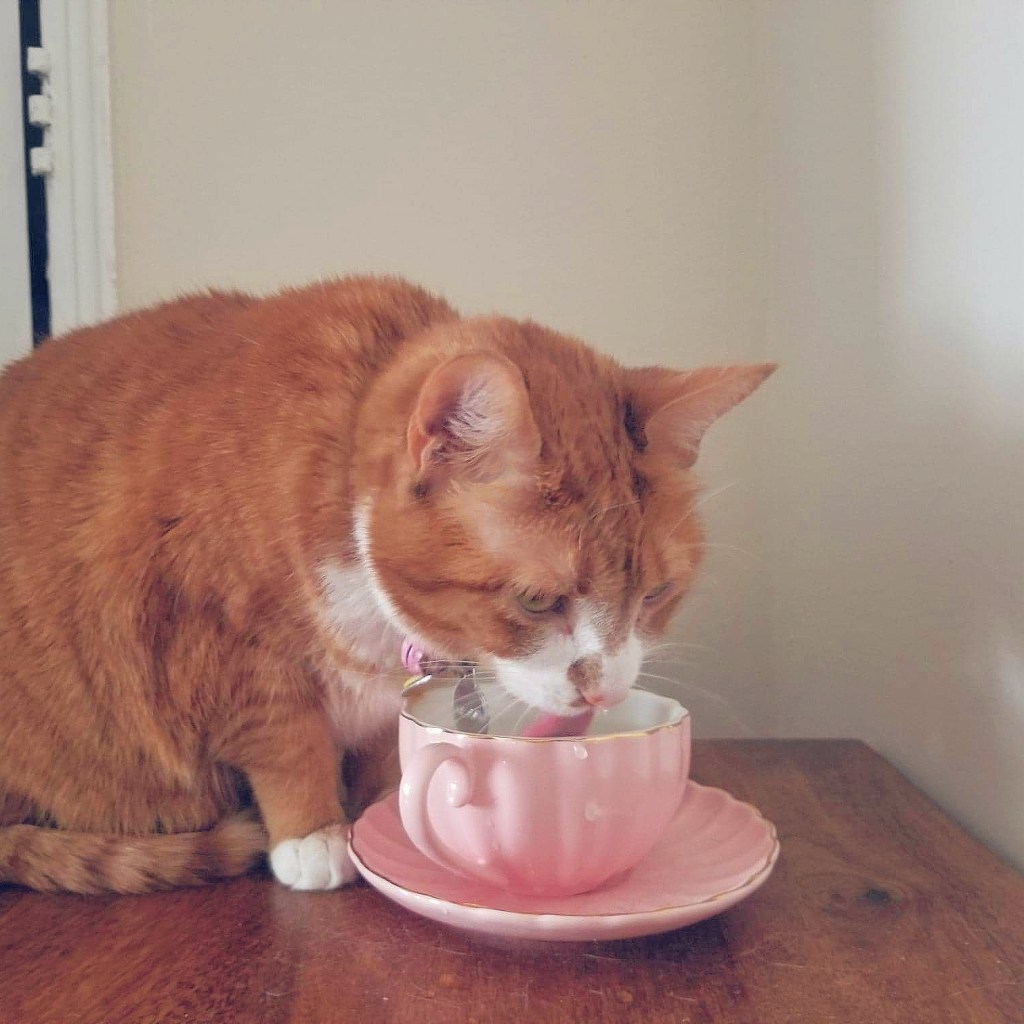
I don’t know how Kiko could’ve survived otherwise. Her history indicates she was an outdoor cat — undersized, post-partum, a hair’s breadth from losing a leg to gangrene. Now, she taps my forehead to wake me up to watch her eat, will only drink out of a special pink teacup, requires smooches on the head at exactly 11:30 AM, and knows that the sound of me brushing my teeth means it will shortly be Cuddle Time. She won’t eat cat treats — her preferred snacks are strawberry yogurt and butter lettuce. She doesn’t like to walk through the apartment, either — she’ll launch herself face-first at my ankles, cry and hold up a paw as if she’s injured, and make big, sad eyes at me until I pick her up.

Her favorite thing, though, is the exercise bike.

I have a bog-standard stationary bike ever since my cardiologist recommended that I start taking short, easy rides to rebuild my endurance. I don’t know how, and I don’t know when, but Kiko made up her macadamia-sized mind that This Was an Activity of Buddies.

And so, she chubbles.

She sits at the edge of the bed, gazing up at me with her cartoonishly large, round eyes. She knows she has me wrapped around her little white paws, and all she has to do is wait patiently. If I fail to respond, she daintily taps at my knee.

Eventually, I will have to pick her up.

I always do.

I have no idea what she gets out of this. It’s a stationary bike. We don’t go anywhere. There is nothing to see but the bedroom door. She nestles herself into my elbow, flops her head back to mush her face on mine and give me her little :3 smile, and purrs. And she’ll stay like that until I’m done pedaling.

There’s no reason for it. She could be ignoring me, happily cuddling with my partner. The second she hears the telltale boop of my exercise tracker app, she pries herself away to chubble at me. She could be asleep, she’ll wake up. She could be in a different room, I’ll hear the strawberry bell on her collar jingling as she hurries from wherever she’s been hiding. She cannot get enough of turning me into some kind of incredibly inefficient one-person palanquin.

So, yes. Sometimes, when you adopt an older animal, they can be a little weird. Most of the time, it’s in the best way.