
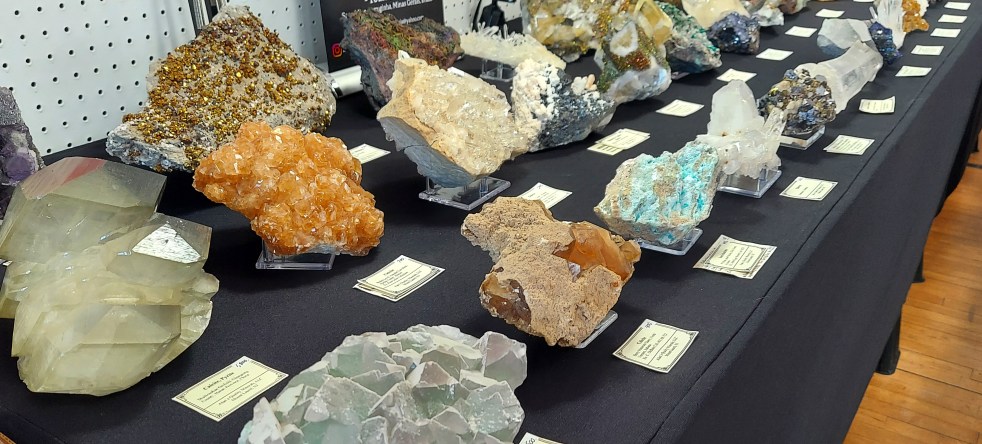
This past weekend was the 58th annual GLMSMC Gem, Mineral, and Fossil Show. It fell at a slightly weird time for us — I’m still in an ennui, and my Handsome Assistant has Dungeons & Dragons Hot Boy Activities every other weekend — but it A) it only comes once a year, 2) we’d been looking forward to it before realizing it happened at such a bad time, and III) it’s pretty easy to control how much time you spend there. Most of the time.
This year, to save some time and our limited energy, we skipped most of the displays on the first floor. If you’ve never been to the show, don’t miss these. They’re local minerals, geology displays, some really neat insect taxidermy, activities for kids, and a really cool blacklight tent of wild-looking fluorescent minerals.
The second floor is the vendors. When I say “vendors,” I mean sellers of stones of every description. Tumbled minerals like pieces of brightly colored candy. High-end faceted jewels of every color. Opal cabochons like fragments of rainbows. Fossilized creatures that seem to come from an alien world. Fist-sized geodes promising worlds of never-seen minerals within. Ropes upon ropes of artisan crafted beads.


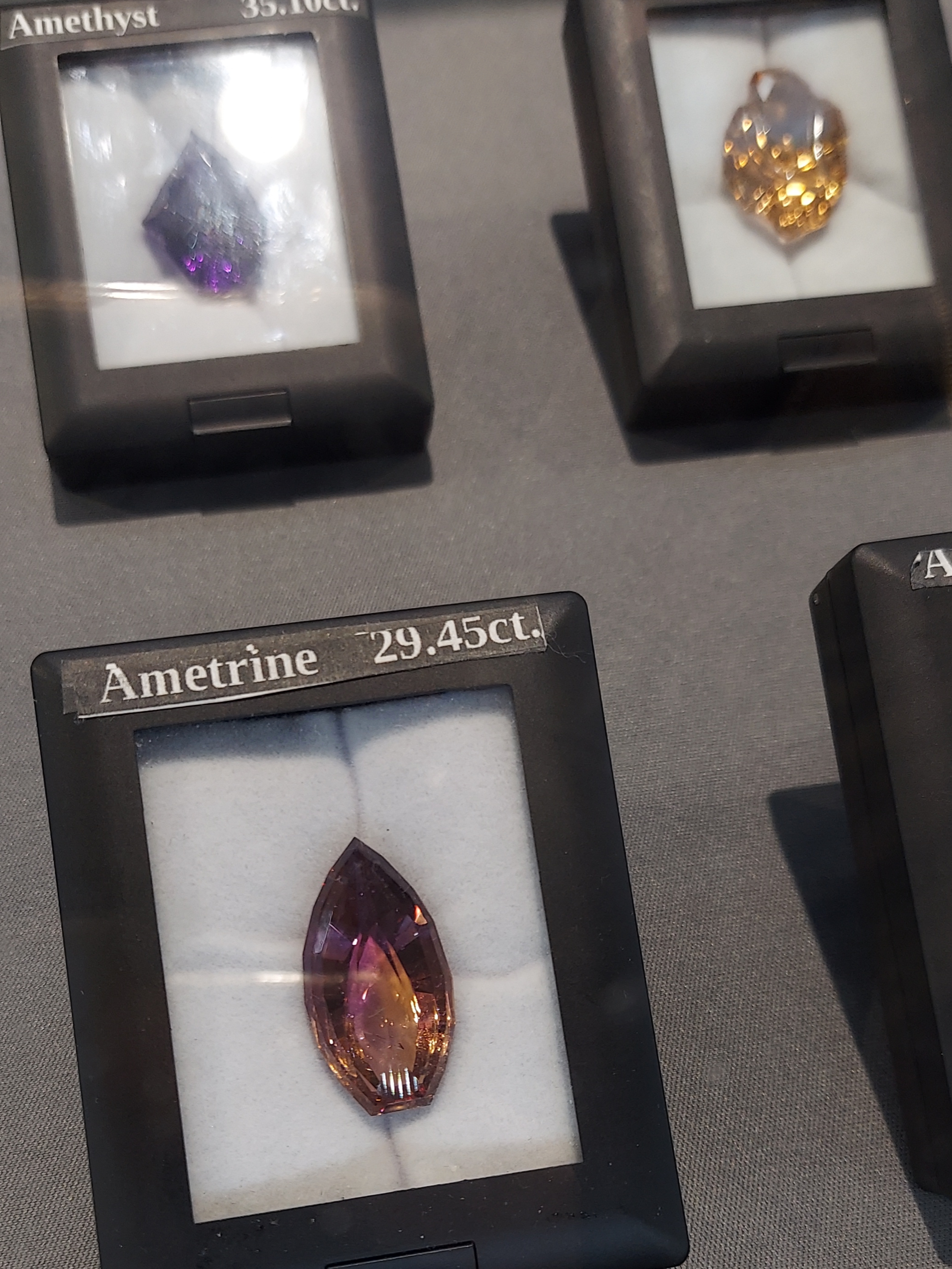
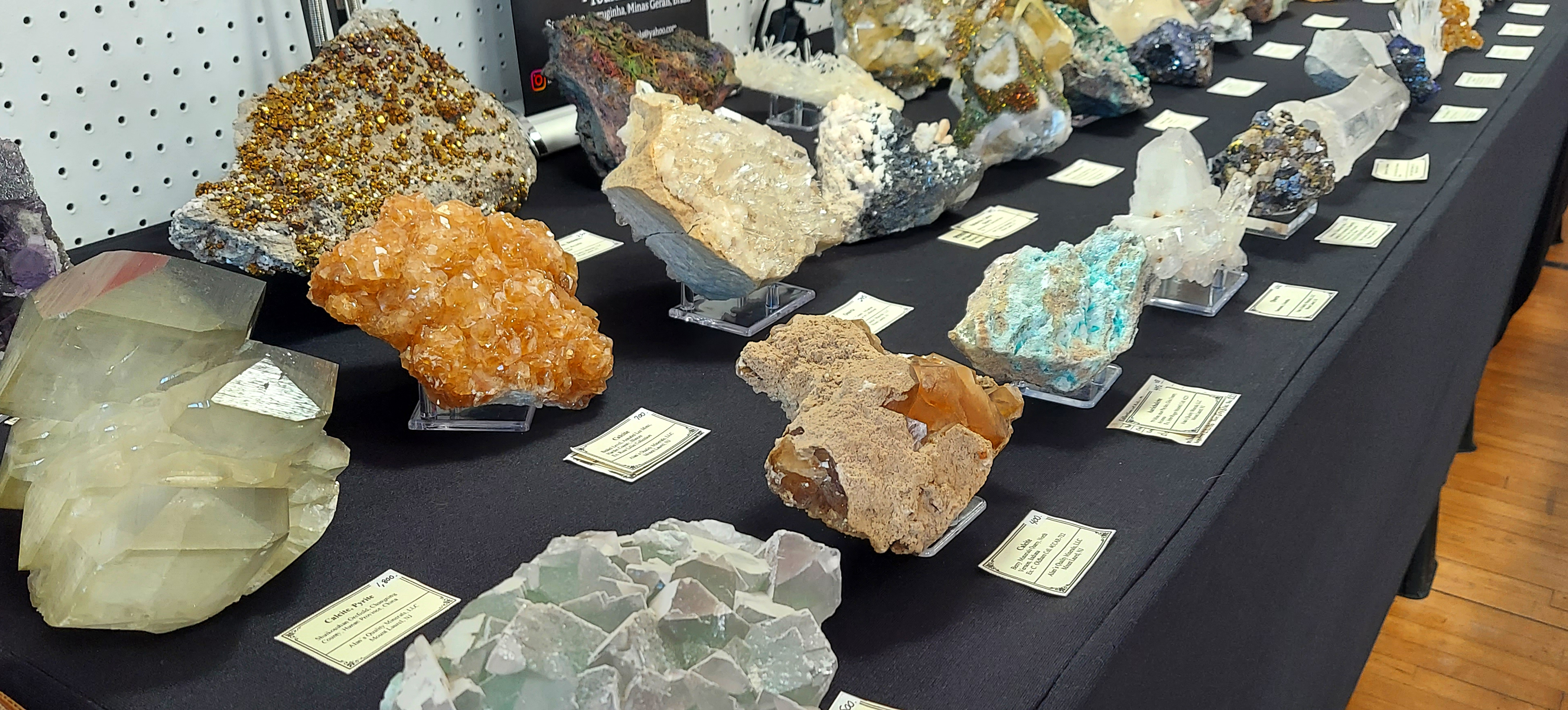
What I’m saying is, it’s really cool and you should see it. It is an excellent place to go if you want to look through trays upon trays of precious minerals (many of which are domestically sourced, like some beautiful Herkimer quartz and uncommon minerals from Pennsylvania) and feel very fancy.
Last year, we “rolled the geode gacha” as my Assistant says, and ended up with a beautiful specimen of smoky quartz with sharp, clear calcite blades growing within. This year, we picked a small, reddish stone with some interesting globular formations outside that I thought might mean some botryoidal or mammillary formations inside.
Sure enough, the inside was filled with beautiful, rounded mounds of a soft gray, druzy mist, like little hillsides under snow. That’s not the most interesting part, though. That’d be this:

It’s a bit difficult to make out with the ambient lighting and the way my phone tends to handle such things, but these geodes showed several bright (and I mean bright) green specks and areas. You can really see one on the small rounded globule at the bottom of the first geode, and at the top of the second.
“Those are uranium inclusions,” the seller helpfully explained.
“Oh! Neat!” We replied.
And this is how we came into possession of a very small quantity of radioactive material. It’s really pretty in person — my plan is to find a small blacklight that I can mount in my mineral cabinet, and give this specimen a home that’ll show it to its best advantage.
(I’m not too concerned about radioactivity. This mineral appears to be chalcedony, in which uranyl ions can appear as a natural contaminant. These ions mostly emit alpha particles and weak gamma rays, and I wouldn’t honestly expect a specimen with only a few inclusions to emit much detectable radiation at all. I cleaned it well to remove inhalable dust. In a cabinet, in a well-ventilated room, located a few feet from where people sit, this geode is probably safer than my kitchen’s granite countertops.)
This is also a great place to go if you enjoy collecting fossils. This year, there were some really excellent specimens from a cave bear, Ursus spelaeus, including a bunch of jaws and fully-intact paw!

There were also fascinating specimens of smaller guys, too. Last year, we brought home a trilobite. This year, we just took pictures. Several specimens were loose, like little armored cabochon jewels. Others were still embedded in ancient silt, like tiny aliens traversing an undiscovered moon.
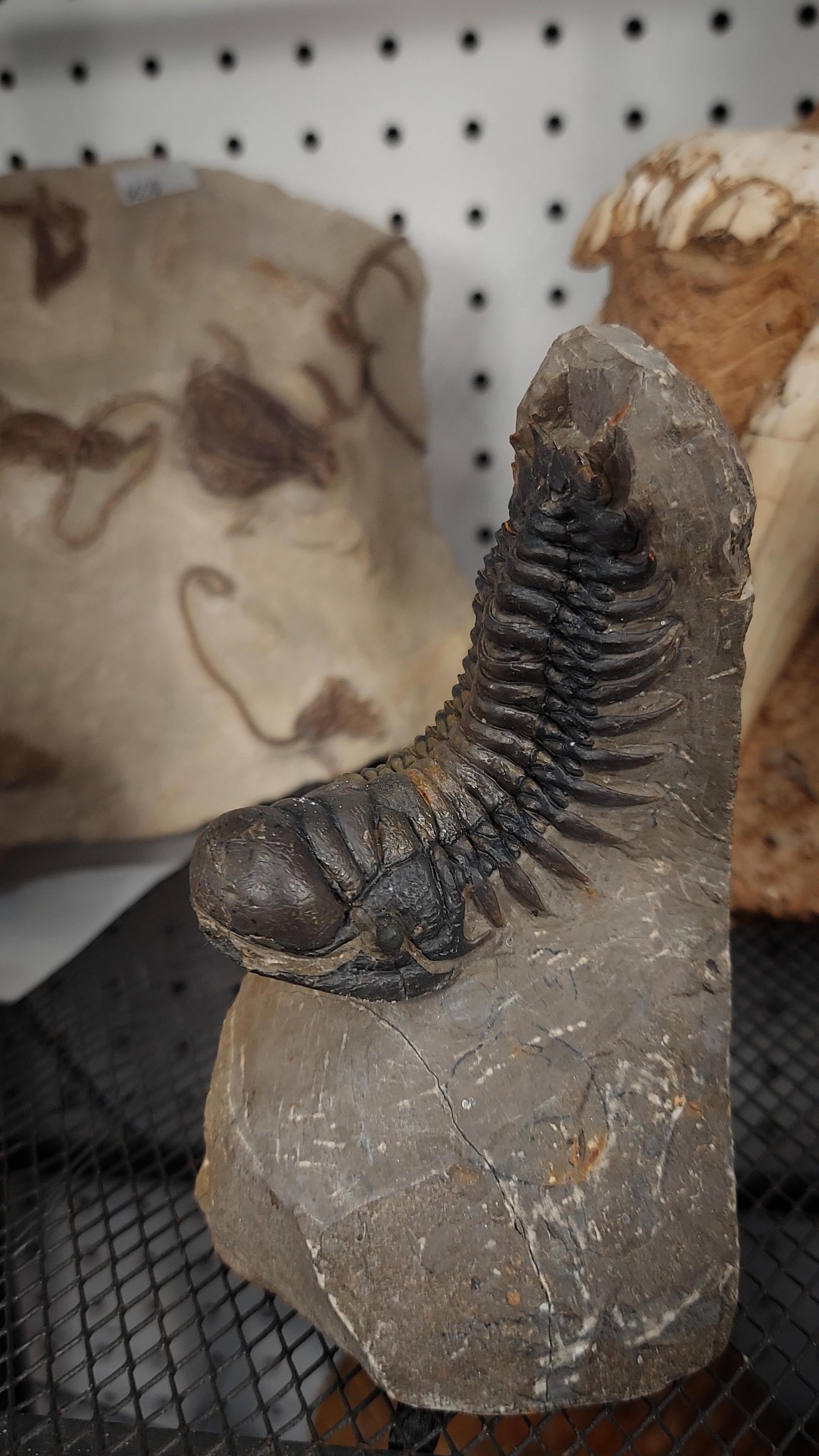


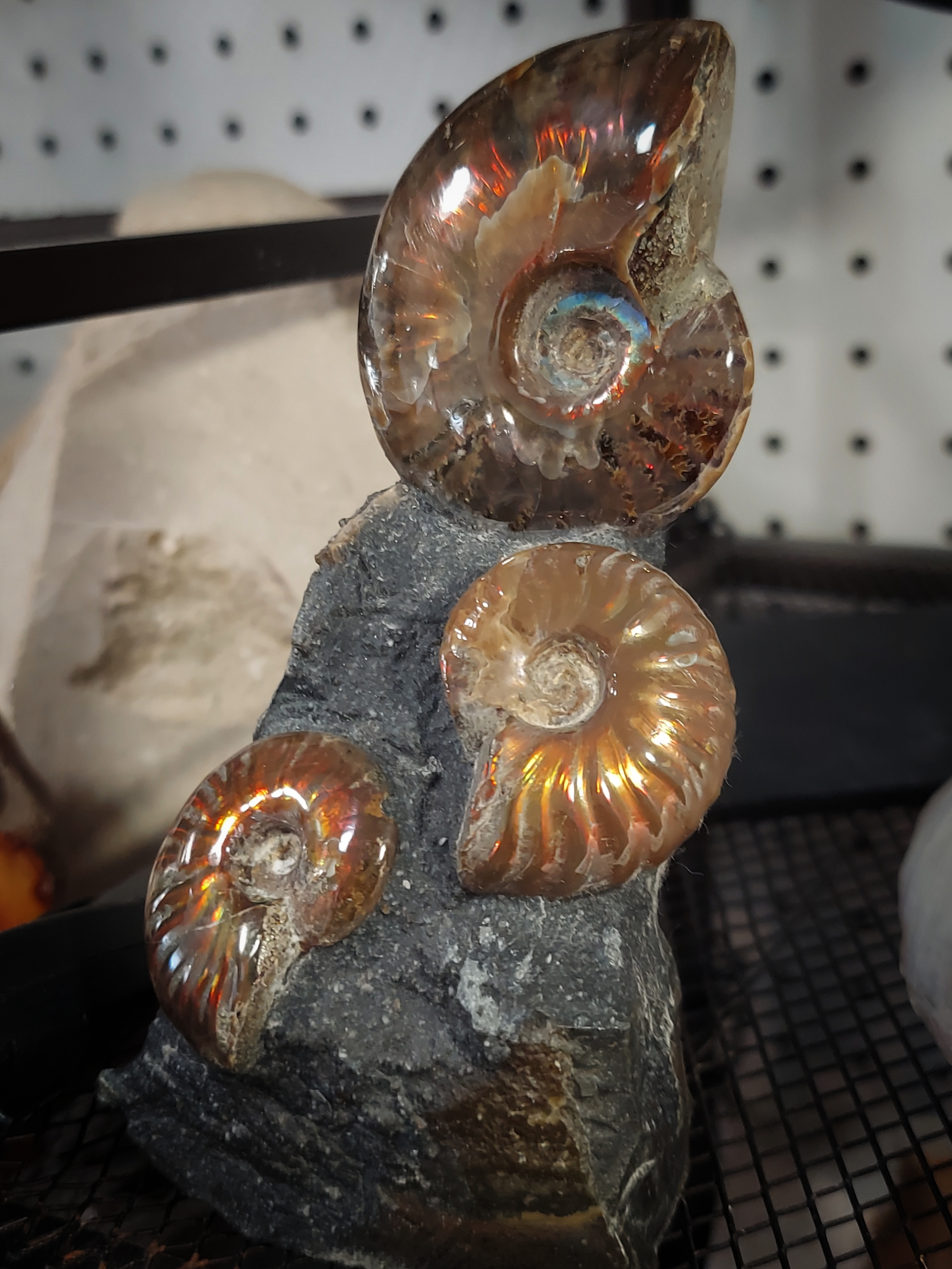
Also, there was a facehugger.
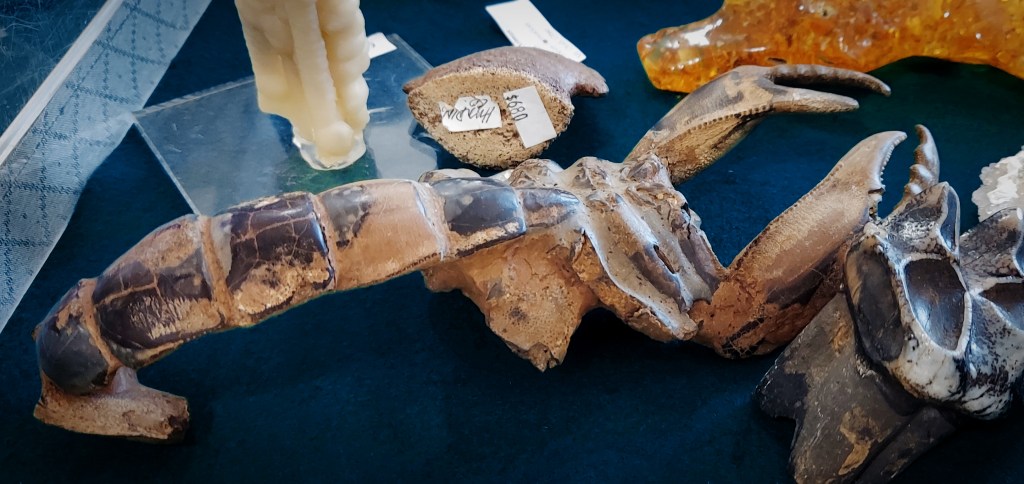
Some tables held rare specimens in combination. Giant dogtooth calcites growing on beds of glittery chalcopyrite. Tiny, fine threads of stibnite jutting up from barite and quartz. Really pretty stuff worthy of a museum (or the display of someone with a much bigger cabinet than I have). As beautiful as they were, they were some of the most challenging to photograph — each one was like a tiny ecosystem of its own, and their depth and complexity made it difficult to choose a spot to focus on!


We came home with some interesting crystal carvings, our geode, a particularly lovely amethyst specimen, and a small bit of amber (I like to offer them to Freya when I can).
Admission to the show is only six dollars, and you can save a buck by downloading and printing out the coupon on their website. Even if you didn’t get to attend this year’s show, mark your calendar for next year — it’s always a good time, and there are tons of beautiful things to see!


 Marble Crow