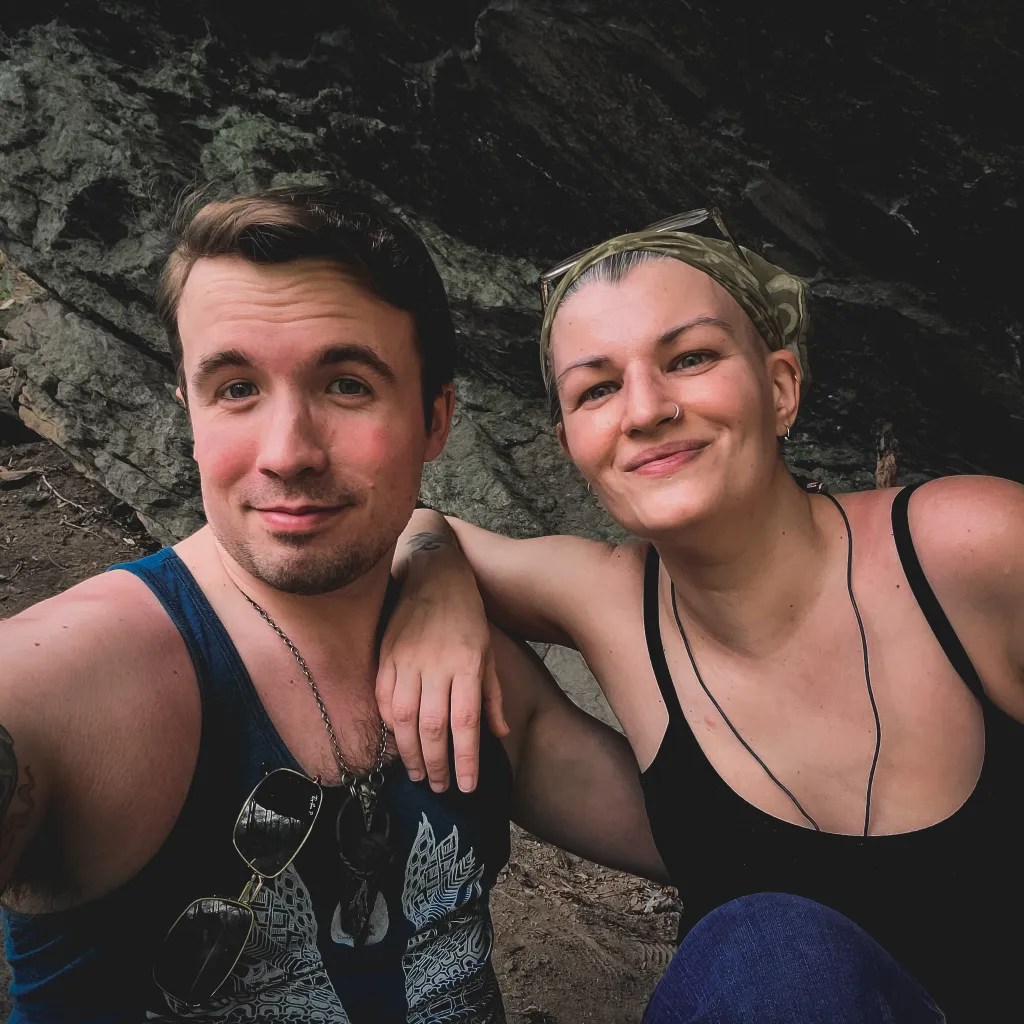
This past weekend, my Handsome Assistant and I packed a small picnic and went for a bit of a walk. This particular area is beside the northwest branch of the Anacostia River, near an abandoned mica mine. There are some really cool mineral specimens here — the usual bull quartz, but also tons of mica-bearing rocks and golden beryl.
That’s not all it has, though.
The trail is mostly shaded by trees, so it stays fairly cool even when the weather’s warm. Lesser celandine (lush, but invasive) covers the ground between the trees, creating a dense carpet that reflects the sunlight and further cools the ground. It’s poisonous to eat, though the tubers are said to be edible, and has a long history of use as a topical medicine for hemorrhoids and scrofula.
“That’s a really bad idea, you know.” “I know, but it looks so soft.” “There’s probably poison ivy in it.” “Worth it.” “You’re going to get eaten by snakes. Or ticks. Probably both.” “It’s so soft, though!”
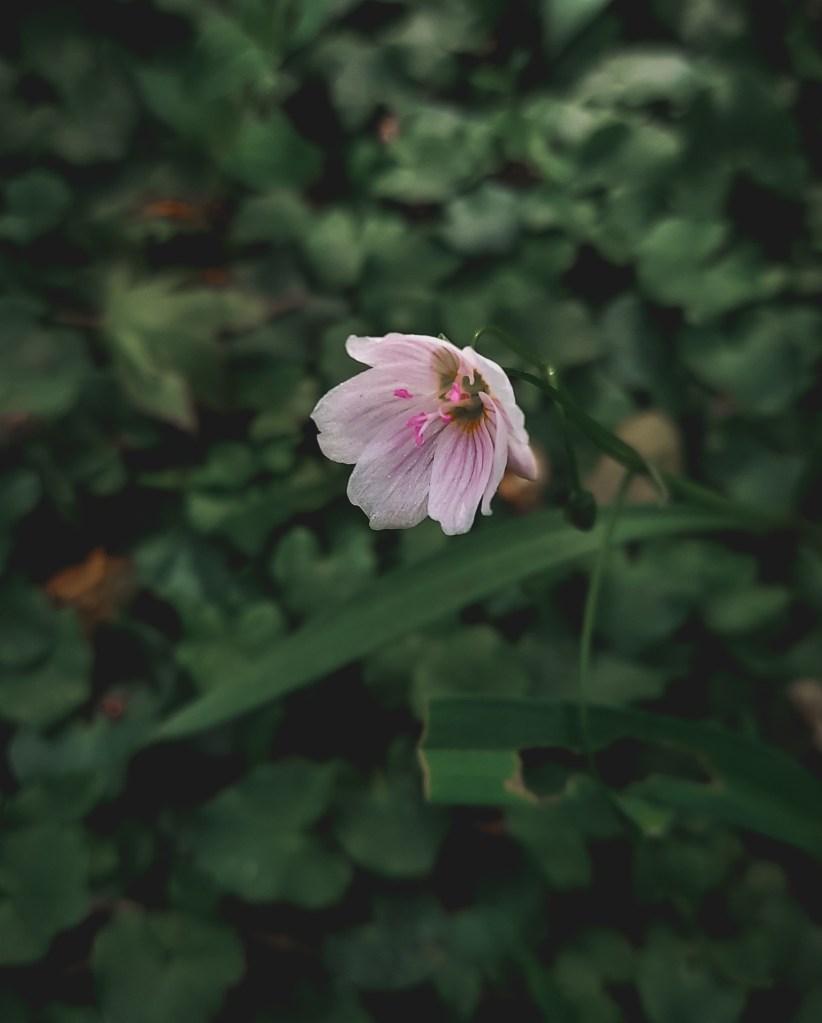
Springbeauty (Claytonia virginica)
Fortunately, there was more to see than just lesser celandine. There were tiny pink blossoms of springbeauty, dense pillows of moss, fern fiddleheads, and some of the lushest skunk cabbage I’ve ever seen. We also spotted some mayapples, a few of which were even mature enough to flower. I don’t know if I’m brave enough to go back and see if there’s any fruit later this summer, but it was lovely to see regardless! (I snapped a few pics of the ones we saw, which you can find in my post on mayapple folklore and magical properties.)
Seriously, just look at that skunk cabbage (Symplocarpus foetidus).
We passed next to the water, eyes peeled for sparkly mica-bearing stones, when I heard a soft “bloop.” I turned my head just in time to see a startled common watersnake (Nerodia sipedon) slipping away across to the opposite bank, gracefully undulating and occasionally poking its head up like a snorkel to take a breath. I apologized for spooking it as I fumbled for my phone but wasn’t able to snap a picture before it had swum away and camouflaged itself in the mud and fallen leaves.
They’re one of the species of snakes that are often vilified for no reason. They’re perfectly harmless but can bear a passing resemblance to a venomous copperhead (Agkistrodon contortrix). Admittedly, I made the same mistake myself at first glance — not that I would’ve behaved any differently, as both the snake and I seemed pretty chill about the whole situation. Like black racers and ratsnakes, they’re guys you actually want to have around if you don’t want to have to deal with pest animals. Also, they’re one of the few reptile species that gives birth to live young, and that’s really neat!
(Also, copperheads are pretty chill, too. They might be venomous, but they’re not aggressive. Their first defensive instinct is to freeze up and rely on their natural camouflage. Bites typically occur when that either fails, or people don’t see them, step too close, and the snake gets desperate.)
Young ferns.
A little further up the trail, we were navigating over a large fallen tree. Another tree lay across it, forming a kind of steep natural bridge. As I investigated it to see if it’d be safe to cross, I heard a silky rasping sound. There, nestled in the root ball of the fallen tree, I saw the shiny black coil and pointed tail of a black racer (Coluber constrictor priapus) vanishing deeper into the tangled roots.
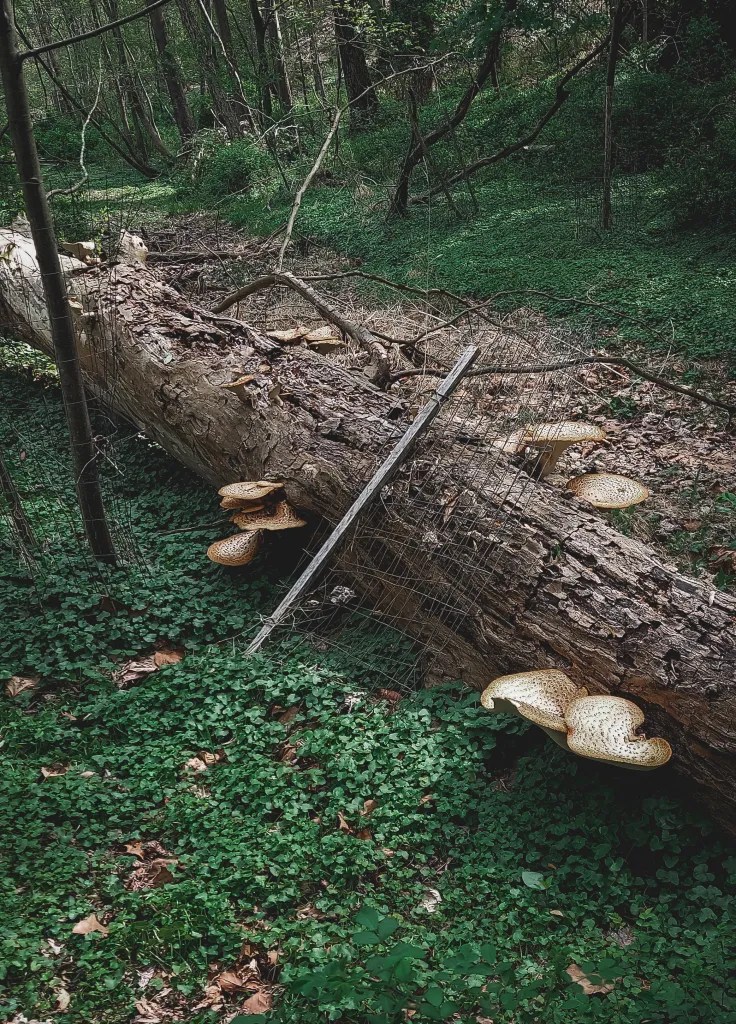
My favorite part, however, was running into a colony of dryad’s saddle (Cerioporus squamosus) growing from a dead tree. These are edible, fairly easy to identify, and don’t really have poisonous lookalikes. They also smell exactly like watermelon rinds, which is honestly very weird. Kind of a green, watery, fruity smell, of decidedly not the type you’d expect from a scaly tan mushroom growing out of a dead tree. I wasn’t 100% positive that that’s what I was looking at, at first. Fortunately, a combination of a quick-and-dirty ID app and friends with much more foraging experience were able to reassure me.
Also?
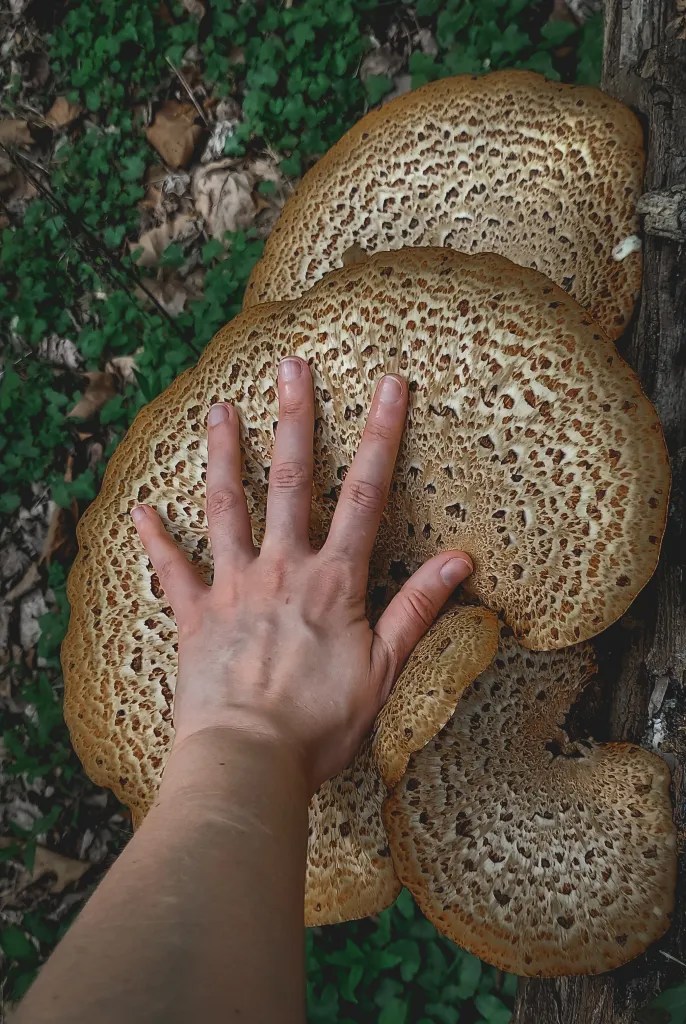
Dryad’s saddles get enormous.
Like, far larger than I felt was reasonable for a mushroom. Much bigger than the reishi and armillaria that grow in my front yard, at any rate.
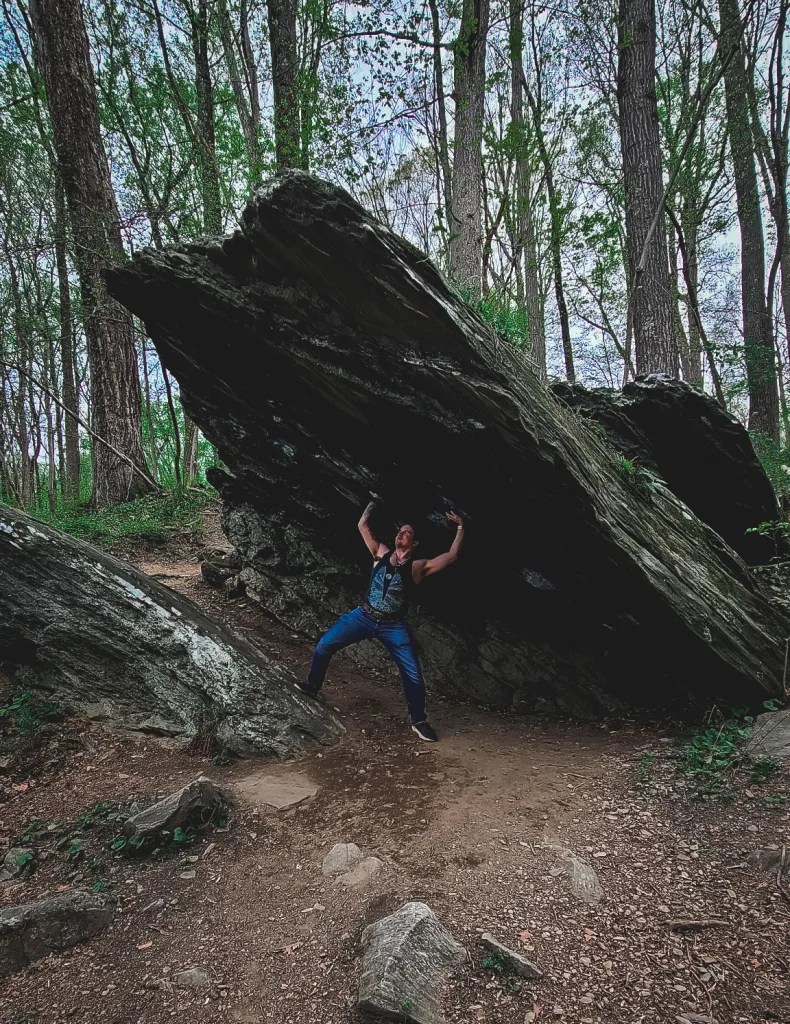
This area has another cool feature, labeled on the map as “prehistoric rock shelter.” I haven’t found any other information about it, but it’s a nice, cool, shaded spot to sit and rest for a bit. The area underneath is at a bit of a slope, but it’s still a comfortable place to take a break.
I also found a tree that was shaped kind of like a sad skull, and a very neat feather — most likely from a hawk.
All told, it was an eventful walk and a lovely picnic. Everything was vibrant and green, and we saw (and heard!) a lot of cool wildlife.
Here’s hoping you’re also finding cool things wherever your adventures take you.
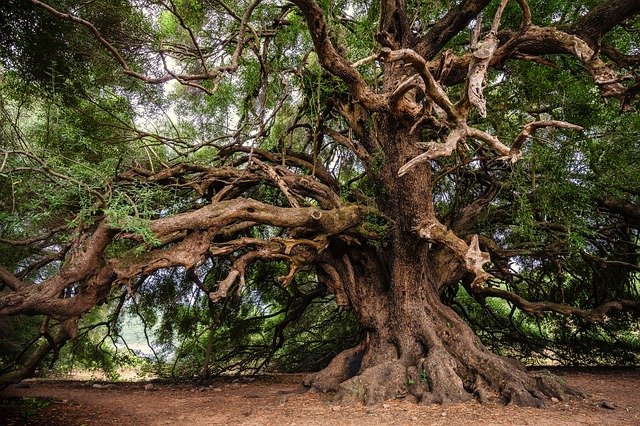
This weekend, my Handsome Assistant and I attended an educational picnic to save Rock Creek, which is currently at risk from the continued expansion of a golf course. Construction has already begun, parts of the forest are being turned into mulch as we speak. Over 1,200 trees are slated to be cut down, including some that would otherwise be considered special or heritage trees under DC law.
This deforestation is part of an effort to expand multiple golf courses throughout the DC area.
Yeah, I know.
Even without further examination, I mean — who is building golf courses right now, of all things? The answer is the National Links Trust. While people worry about paying rent and getting their next meal, the National Links Trust apparently thinks that the public yearns for more golf courses. It’s something that sounds almost moustache-twirlingly villainous. Like the plot of an after school special where the heroes are a band of plucky cartoon kittens. Unfortunately, this is actually happening.
What’s the deal with the National Links Trust?
The NLT’s stated intention is “positively impacting our community and changing lives through affordable and accessible municipal golf.”
This is something that doesn’t sound… terrible, barring the whole “people-can’t-afford-food-right-now-you-rich-weirdoes” aspect. However, here’s what the NLT isn’t saying:
Lem Smith, NLT board member, International & Federal Government Affairs Manager for Chevron, and Former VP, Federal Government Relations for the American Petroleum Institute.
While they claim that they’re attempting to mitigate the harm done by the deforestation of Rock Creek (harm that is, once again, completely unnecessary and unasked for), they are not adhering to the best practices for doing so. There are multiple ways to mitigate the damage of both removing old growth trees and the presence of invasive plants, but their policy seems to be to mulch everything and call it good.
They’re not actually accountable to anyone. They can make half-hearted promises to plant meadows and maintain the forest all they want, but there is no incentive for them to keep them and nothing to stop them from doing whatever they want.
They claim that they’re willing to dedicate unused golf courses to being replanted as meadows. This is not a suitable compromise for multiple reasons:
For two, if there are already unused golf courses, they don’t need to cut down old growth trees in Rock Creek in order to make new ones. WT-actual-F?
There’s also the fact that it doesn’t seem like anybody actually asked for this. When asked, local golfers appear to be ambivalent at best. The NLT was able to scrape together some who are in favor of it to make a public appearance, but these don’t appear to reflect the opinion of the majority of the new course’s ostensible user base. They are absolutely not reflective of the larger population of DC and the adjacent area.
Here’s why it matters (no matter where or who you are).
So the NLT is attempting to build a golf course. Like I said, this is a huge deal and will have far-reaching effects even if you don’t live anywhere near DC. Here’s why:
Old growth areas are carbon sinks.
It is generally thought that old forests cease to accumulate carbon, but this isn’t the case. Research shows that in forests between 15-800 years of age, “net ecosystem productivity (the net carbon balance of the forest including soils) is usually positive.” What’s more, carbon doesn’t cease to exist once it’s taken up. When these areas are disturbed, that carbon is liberated as plant matter decays or is burned. Rather than trees dying naturally over time, breaking down, and having their nutrients (including carbon) absorbed into the mature forest, deforestation disrupts this natural cycle.
Rock Creek is part of the Potomac watershed.
Trees support healthy watersheds. Rock Creek itself connects to the Potomac River, and eventually drains into the Atlantic Ocean via the Chesapeake Bay. Trees contribute to healthy waterways by anchoring soil in place, preventing erosion. Their root systems (including the mycorrhizae within the soil that surrounds their roots) help capture nutrients. Without these systems in place, they would otherwise flow into the water to encourage algal blooms and fish kills, a process known as eutrophication. Removing these trees and replacing them with grass that requires a regimen of fertilizers and treatments to maintain is a terrible idea.
The last thing anyone needs is golf course runoff oozing into our local waterways.
Golf courses need a lot of water.
I already mentioned supplemental irrigation, but I’ll say it again: Golf courses need a lot of water. They are generally watered with sprinkler systems that lead to a lot of waste and loss through evaporation. This also puts strain on existing systems, reducing the availability of water for other uses and increasing scarcity issues. Only about 12% of golf courses surveyed use recycled water, and even with more efficient irrigation methods, turf grass remains a very wasteful use of land and water.
We’ve already had droughts here. We’re already told not to use any more water than necessary during the summer because of scarcity issues. Why are they building a golf course?
This could increase the transmission of avian flu.
I’m not being hyperbolic when I say this. Destruction of wildlife habitats drive populations of wild animals into greater contact with humans. If old growth trees are destroyed, the thousands of birds that they house and feed get pushed elsewhere. That “elsewhere” is going to be people’s back yards.
How does that relate to the H5N1 virus? More displaced birds mean more contact between wild birds and flocks of backyard fowl. It means more indoor-outdoor cats that come in contact with potentially infected birds. It means more bird feces on cars, decks, and feeders. A higher overall population of birds congregating in the same feeding and shelter areas means a higher risk of potentially zoonotic H5N1 moving through that population.
Birds aren’t the only ones that’re going to be displaced, either. Look for more conflicts with foxes, raccoons, rodents, and coyotes, too.
If it was living in that part of Rock Creek, it’s gonna need a new place to go. In an area as densely populated as DC and the surrounding suburbs, there aren’t many other options.
This further undermines Washington, DC, as a political entity.
Washington, DC, has been pushing for statehood for some time now. (A significant part of the reason why it keeps getting struck down is that DC would be a majority blue state, so it benefits the Conservative party to avoid allowing it to have any more representation than it already does.) While it isn’t a state, DC does still have home rule in some aspects. For example, DC’s tree law provides numerous protections specifically for heritage trees. Removal of a tree that qualifies as a “special tree” requires a permit. Healthy heritage trees cannot be removed, period.
Rock Creek is part of the National Park System. As such, even though a significant portion is within DC, DC isn’t able to enforce its tree laws to protect it. This inability to protect trees within its area further undermines DC as a legal and political entity.
The National Park Service is part of the problem.
Rock Creek is a national park, but it hasn’t been maintained as one. Invasive plants are a significant issue, and one that the National Park Service hasn’t adequately remedied. There are local people who are trained as Weed Warriors, who are able to legally remove invasive plants. However, there’s only so much they can do.
Part of the inception of the National Park Service was to push Indigenous Americans off of their ancestral land, with the claim that the land must be “preserved.” (Madison Grant helped launch the national parks movement — he also wrote The Passing of the Great Race, which gave a very detailed account of his negative views of Indigenous people, Black people, and immigrants.) In reality, the land in the National Park System was being preserved just fine while its original stewards were living there.
The neglect of Rock Creek shows that this land is not being protected or preserved. Furthermore, its current state has incentivized the NPS to sell part of Rock Creek in order to have it cut down and turned into a golf course. The idea is, I guess, that the National Links Trust would do the preserving instead, by… cutting the trees down and turning the land into a putting green.
It’s all so, so ridiculous, and it’s a terrible omen of things to come. Nothing good will come of the NPS being allowed to neglect public lands, then sell them off.
Light pollution is going to be a problem, too.
In addition to the loss of exceptionally old trees, biodiversity, and wildlife habitat, the presence of a golf course will increase light pollution in the area. The plans call for a driving range that will be lit through the night hours. This will disrupt nocturnal animals, including (especially) insects. We’re already experiencing a dramatic drop in insect populations. We don’t need a @#$%ing driving rangethat nobody asked for to begin with.
The land is removed from public use.
Right now, you can just go to Rock Creek. You can walk around. Picnic. Bird watch. Have a grand old time.
Already, the area of the forest that is earmarked for cutting has been removed from public use. You can’t just go there — people who have have been told to leave.
Meadows aren’t forests.
Even if the NTL carries out their plan to turn unused golf courses into meadows, meadows do not provide the same benefits as forests. I’ve been very vocal here about my efforts to remediate the immature, hard clay soil and turn it into mature soil. Cultivating turf grass is terrible for soil and doesn’t allow it to mature.
So here’s a bunch of immature soil that’ll be used to grow some (one can hope, but certainly not assume) native flowers and grasses. This will take over a hundred years become anything like the area that’s currently being cut down, in a process known as forest succession. While meadows are certainly better than the sterile monoculture of a putting green, they do not play the same role or have the same benefits as a century old forest.
This effort to turn part of Rock Creek into a golf course is just a continuation of Chevron’s ongoing pattern of land acquisition and destruction. They are promoting this destruction via the National Links Trust. If you are interested in helping to put a stop to this, please visit Defend Rock Creek’s Linktree for further steps that you can take.
See, I thought I’d learn stuff about soil composition and companion planting. I kind of did the former, if by “learning about soil composition” you mean “discovering that this soil is almost entirely hard clay, good luck.” I have developed strong opinions about mulch, however.
If I had to sum up the two biggest lessons that I’ve learned in my first full year of being responsible for an entire yard, they’d go something like this:
1. If I plant native (or near-native) plants, everything pretty much takes care of itself.
As part of my current course of Druid studies, I’m required to plant and tend a tree (or, lacking a tree, another, smaller plant). I began this study pretty much right after my Handsome Assistant and I planted an Eastern redbud in the front (formerly grass) plot. I was given the okay to use that tree, so that’s what I’ve been working with.
The lesson is supposed to involve building a relationship from planting, watering, and helping a young tree become established, to watching it grow. To be honest, I think I’ve watered this tree maybe three times over several months. It’s native to the area. It’s fine with this soil. It’s putting out new branches and beautiful, heart-shaped leaves on a nearly daily basis.
This seemed a bit like cheating, so I thought I’d start a smaller, auxiliary tree. I wasn’t sure what to plant at first, but the birds made that decision for me: There are an abundance of mulberry sprouts, courtesy of the crows and other birds. They didn’t enjoy being moved, but are doing just fine with minimal intervention. My takeaway here if that if I have to carefully nurture a plant, it probably isn’t the right one. Nature, even transplanted nature, doesn’t really need as much intervention as one might assume.
2. It’s not so much a garden as it is a kind of potluck.
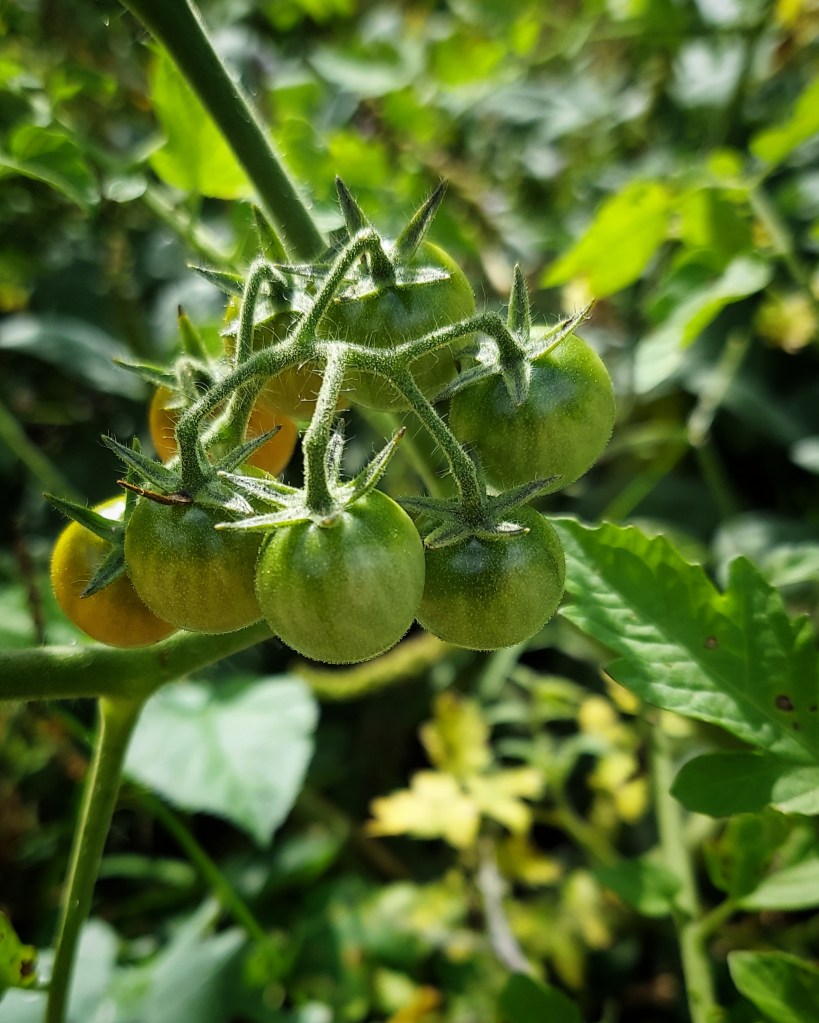
As for the potluck… I’ve mentioned all of the pumpkins in previous entries. (They’ve made for some amazing pumpkin bread.) There’re also sprigs of various kales popping up random places where they were certainly not planted, a thriving bush of bright orange cherry tomatoes, the aforementioned mulberry bushes, and what appears to be a chia plant.
Really, it seems like I don’t actually have to worry about planting fruits and vegetables myself. If I help make this place welcoming enough, tiny guests will show up and bring food. That food may not always show up where I anticipate it, but it flourishes, and I end up with more than enough to share.
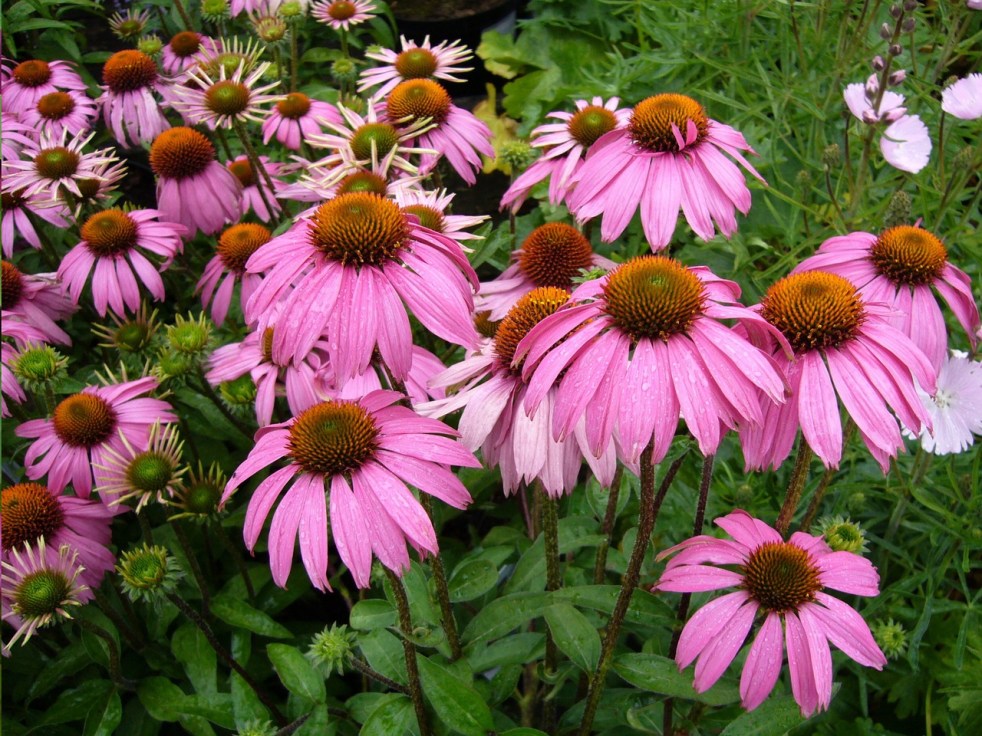
The plants here have mostly gone to seed, so the pollinator garden is as full of birds as it is bees and butterflies. I have no idea what horticultural surprises next spring and summer may hold, but I’m excited to find out!
Monetary punishments only work as a deterrent for poor people. For the wealthy, fines are just the cost of doing business.
This happens across the entire legal system, too. To someone living at or below poverty level, parking fines actually work — you think twice about parking illegally if it’s going to get you hit with a $200 fine. For someone who can afford to lose that money, the world looks different. There are no illegal spots, just spots that cost more to park in than others.
If that sounds outlandish, look at this bullshit here:
The title buries the lede a bit. This wasn’t a bunch of nosy neighbors protesting the felling of a tree. This was a developer outright breaking the law in a way that impacts an entire community, and that community attempting to stop them.
Looking deeper, you can see where the parking space analogy comes into play:
“‘Get off my property, I’m going to cut this tree down,’’ Giancola recalls him saying. Neighbors told the owner that cutting the tree was illegal, Giancola says.
“He said, ‘I don’t care. Everybody does it, all developers do it. We pay the fines, nobody cares,’” Giancola says.
[…]
Eutsler says the property owner is facing as much as $72,000 in fines for cutting down three protected trees — the heritage oak, and two smaller “special trees.”
It’s the same thing. Only, instead of talking about a $200 parking space, we’re talking about a fine potentially over $72,000.
And it doesn’t matter. Why doesn’t it matter?
“If by removing a protected heritage tree, you can add substantial square footage to a building, you’re probably able to simply recover the cost that the fine imposes,” says Eutsler.
So, in short, wealthy developers are incentivized to break the law, because doing so lets them squeeze another couple hundred square feet out of a property. That allows them to absorb the cost of the fine, and then some.
What’s even more laughable is that this is, at the moment, completely unpreventable. The channels that handle this aren’t empowered to actually stop it from happening. Forestry has to wait for the trees to be felled, and then the fines (the completely pointless fines that developers don’t care about) are levied.
The thing is, bigger fines wouldn’t even necessarily help. Making them proportional to the perpetrator’s income would, as well as keep poor families from being bankrupt by a minor infraction. The angry treehugger in me, however, wishes it was a jailable offense. If Forestry can’t order them to stop work, then they need to be stopped somehow. (I should note that I’m not in favor of the carceral state. However, in the absence of a law that would allow the forestry department to stuff perpetrators into burlap sacks, I figure you need to work with what’s available.)
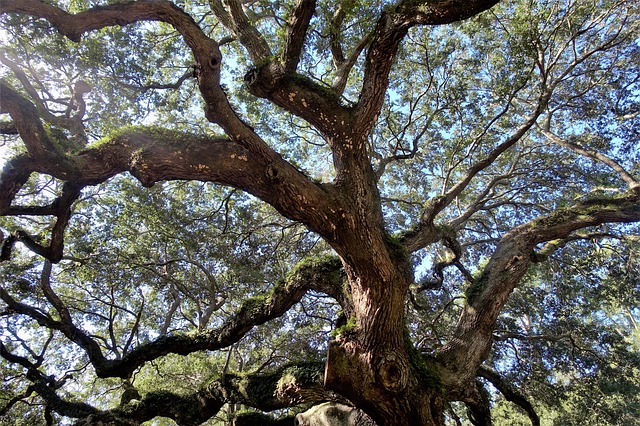
This isn’t even necessarily about the trees themselves, as much as I hate seeing a 100-year-old oak fall. It could’ve been a street sign instead. It could’ve been a tree that was getting ready to fall over. It could be anything, and the fact that money allows people to break the law with impunity would still be abhorrent. Fines don’t work to deter crime except for at the poorest levels of society, but poor people aren’t the ones going around dumping hazardous materials, lying about safety, or chopping down heritage trees.
I could get into the urban heat island effect, the importance of old trees as micro-ecosystems unto themselves, the deleterious impact of urban deforestation, or that people of color (especially women) bear the brunt of the impact of poor conservation and climate change, but I don’t think anyone has that much time.
Just remember. Environmental destruction isn’t a faceless, unstoppable phenomenon. It’s perpetrated by people, and they have names.
Since today is Earth Day, I figured it’d be a good time to post about a small, simple daily meditation that I use to start my day.
It’s a combination of a grounding exercise and a planet-healing. You don’t need anything to do it, other than a comfortable, quiet place to sit (or even lie down) and five or ten minutes to spare. It’s based around the incredibly important role that fungi play in every ecosystem.
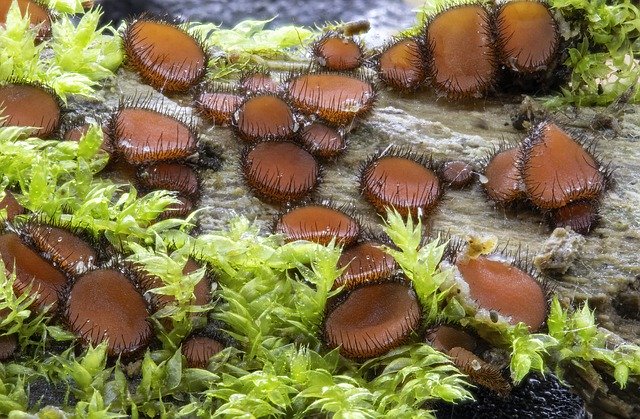
Tiny eyelash fungi on mossy wood.
The Fungi
Though we often picture mushrooms when we imagine fungi, fungal fruiting bodies make up a tiny portion of the whole organism. Beneath them, spread out in a web, is a vast network of mycelium. The hyphae spread out like thin threads, transporting nutrients, secreting enzymes to break down organic matter, and supplying nutrients to the plants that depend on them. Everything in the world relies on fungi for survival, in one form or another. They secrete carbon dioxide as part of the carbon cycle, and can break down almost anything that isn’t actively toxic to them — even plastic, petroleum, or pesticides. Some fungi turn carbon into melanin, a very stable carbon-containing compound, while others help soil retain moisture. Certain fungi increase soil aggregation, potentially increasing soil carbon storage.
Still, fungi respond to a very careful natural balance. While the soil is a carbon sink, soil fungi also return carbon dioxide to the air — especially in situations where elevated levels of carbon dioxide encourage plant growth, increasing nitrogen demand and upsetting the delicate balance of carbon and nitrogen. Fungi can be vital environmental allies, but the balance needs to be preserved.
A pair of boletes.
Soil fungi don’t just comprise one or two species, either. Every patch of soil could be a host to a thousand distinct species. Just like the natural microflora of the body shift and change in response to illness, stress, diet, and medication, different stressors affect how these fungi grow, compete with each other, and evolve.
It’s never been more clear that protecting the planet means preserving all of the microscopic activity below the soil, not just the plants and animals above.
The Meditation
To begin, position yourself comfortably. Let your shoulders drop. Relax your jaw and the muscles around your eyes. Unclench your hands, and let them rest softly in your lap.
Inhale deeply, using your diaphragm and pushing out your belly to take in as much air as you can. Breathe in for a count of four, gently hold your breath for a count of three, and exhale for a count of seven. Repeat this three to five times.
Visualize your energy reaching from the base of your spine, through your seat, the floor, and into the soil. You don’t have to go far below the grass here — once your energy reaches the ground, let it spread out like the roots of a tree. Picture the filaments of your energy reaching through the soil, touching the filaments of mycelium that connect everything. Let your roots engage with the hyphae, gently befriending. When you have spread your energy as far as you can, begin sending a stream of loving light down through your roots.
Don’t worry if you don’t know all of the ins and outs of your local soil’s chemistry. Visualize your energy stimulating where it is needed, calming where it is needed, and balancing where it is needed. Visualize the soil fungi doing their microscopic jobs to break down what is no longer needed, and return it to the earth in a usable, nourishing form. Let your contact with the living soil recalibrate your energy, grounding you.
Continue this visualization for as long as is comfortable for you. When you are ready, gently withdraw your energetic roots from the soil. Open your eyes, stretch your limbs, and go about your day with a renewed awareness of how our actions affect everyone — and everything — around us.














 Marble Crow