Neodruidry · Plants and Herbs · Witchcraft

Vervain Folklore and Magical Uses

Vervain (Verbena officinalis) is a prominent herb in European folk and ceremonial magic. Its roots also extend to American Hoodoo.

Though most old grimoires mean V. officinalis when they refer to vervain, there are actually about 80 species in the genus Verbena. In my area (and all of the continental US, and fair bit of Canada) we have Verbena hastata, also known as blue vervain. While it’s not the same plant, you’ll often find V. hastata labeled simply as “vervain” in metaphysical contexts.

Lemon verbena, Aloysia citrodora, is also a member of the Verbenaceae family. However, since it’s a somewhat more distant relative, I wanted to limit this post to V. officinalis and V. hastata.

Vervain is sometimes called “the enchanter’s plant,” since it’s one of the most versatile herbs in European magic. Even outside of Europe, it was (and continues to be) considered a plant of considerable medicinal and spiritual significance.

As John Gerard wrote in 1597,

Many odd old wives’ tales are written of Vervain tending to witchcraft and sorcery, which you may read elsewhere, for I am not willing to trouble your ears with supporting such trifles as honest ears abhor to hear.

Magically, it’s used for purification, protection, divination, peace, luck, love, and wealth. It’s a pretty solid all-purpose herb that is often added to formulas to increase their power.

The name vervain comes from the Latin “verbena,” which refers to leaves or twigs of plants used in religious ceremonies. This, in turn, came from the Proto-Indo-European root “werbh,” meaning to turn or bend.
I have also seen the origins of the word vervain given as a Celtic word “ferfaen,” meaning to drive stones away. However, I haven’t found strong evidence for this origin — all attempts to look up “ferfaen” only yield articles claiming it as the word origin of “vervain,” and most of them only give “Celtic” as the language of origin. One source did cite the Cymric words “ferri” and “maen” as a possible origin, with the word “maen” mutating over time into “faen” to eventually yield “ferfaen.” (Upon further searching, I was not able to find the word “ferri,” though I did find “fferi,” meaning “ferry.” This would give the word “ferfaen” a meaning closer to “ferry away stone(s).”)
Nonetheless, the etymological sources I looked at gave “verbena” as the origin of vervain, not “ferfaen.”

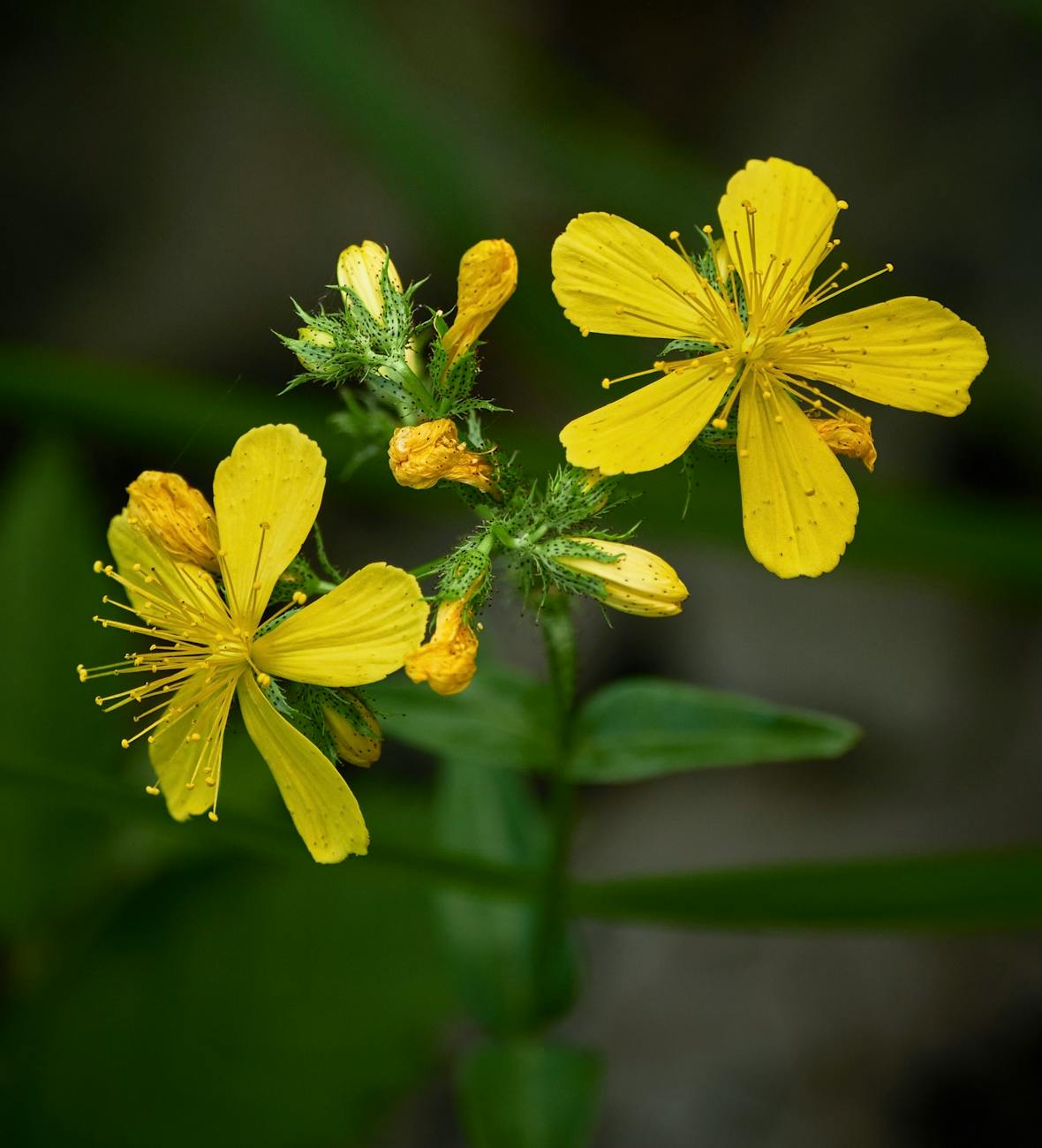
A close-up of vervain flowers.
Photo by Tom Fisk on Pexels.com

Pliny the Elder credited vervain with quite a lot of magical properties. According to him, it was used to cleanse and purify homes and altars. He claimed the Gaulish people used it in a form of divination, and that Magi said that people rubbed with vervain would have their wishes granted, fevers cooled, friends won, and diseases cured.
Interestingly, he also pointed out that vervain was considered a bit of a party plant, for when dining-couches were sprinkled with water infused with vervain “the entertainment becomes merrier.”

While vervain is strongly associated with the Druids, they didn’t leave a whole lot of records of their activities behind. What we do know is largely through sources like Pliny, and it’s likely because of writers like him that vervain became strongly connected to the ancient Druids.

For the best potency, vervain should be gathered in a specific fashion. It’s best cut between the hours of sunset and sunrise, during the dark moon. Like many other herbs harvested for their leaves, it’s best to cut the leaves before the flowers open. After cutting, it’s best to offer some fresh milk or honey to the plant.

Vervain is thought to be the origin of the name “Van van oil.” While the van van oil recipes I’ve seen don’t include vervain or vervain oil, it’s possible that the Verbena family loaned its name, nonetheless. (In that case, it was most likely lemon verbena, vervain’s citrus-scented South American cousin.)

Vervain is also one of those contradictory herbs that is simultaneously said to be used by witches, but also effective against witchcraft.

In the very distant past, bards would use brews of vervain to enhance their creativity and draw inspiration.

Medicinally, vervain is an emetic, diuretic, astringent, alterative, diaphoretic, nervine, and antispasmodic. According to Hildegard of Bingen, a poultice of vervain tea was good for drawing out “putridness” from flesh.

Soak some vervain in water, then use the stems to asperge an area, person, or object that you wish to cleanse. It’s also an excellent addition to ritual baths for this purpose.

A cup filled with dried herbs.
Photo by lil artsy on Pexels.com

Sprigs of vervain are also worn as protective amulets, specifically against malevolent magic. Tie a bit with some string, put it in a sachet, and carry it with you. Tuck a sprig of it in the band of a hat. Use a small bud vase necklace and wear a bit of vervain like jewelry.

Planting vervain around your property is said to ward off evil and guard against damage from bad weather. If you choose to do this, please select a variety of vervain native to your area — in most of the US, V. hastata is a safe bet.

V. officinalis is often used medicinally, V. hastata is considered both medicinal and edible, but avoid consuming it if you’re pregnant, trying to become pregnant, or are breastfeeding. Talk to a qualified herbalist if you have any chronic conditions, or routinely take any medications. Avoid consuming a lot of it, since it is an emetic. It’s also important to be sure that the herb you’re working with is really V. hastata or V. officinalis — there are plenty of Verbena species that don’t offer the same benefits.

Vervain is a powerful plant, as long as you know which member of Verbenaceae you’re looking at. If you have the ability to grow a native vervain, by all means do so — these plants are tall, with interesting-looking flower spikes. They’re also easy to dry and store, ensuring that you’ll always have a stockpile of this powerfully magical plant.

animals

The Magical Meaning of Black Squirrels

The other day, I was on the deck having breakfast with my local crowbros. (It’s funny — as soon as I go outside, I hear their calls pick up speed and intensity. Then they start to swoop around and gather in the big maple tree. Once some of the braver members of the family are present, they’ll start making forays to the feeders. Gradually, once they’ve proven its safe, the timid members follow suit.) This day was different, though.

This day had squirrels.
Not just the usual suspects (Freddy de Bonesby and the pruno-making delinquents), either.
Today, there was a black squirrel.

A photo of a black squirrel on a clover-covered hillside. He looks like he's just realized he left his stove on.

Black squirrels are a naturally occurring melanistic variation of grey or fox squirrels. They’re fairly rare under normal circumstances, appearing at a rate of about one for every 10,000. This is overall, however — black squirrels do occur more commonly in specific areas. They’re generally seen more often in urban places (theoretically because they blend in better there than they do elsewhere) and at the northernmost portions of their ranges (theoretically because they absorb sunlight more efficiently, keeping them warm and extending their active, foraging times during the cooler months).

Melanism in squirrels doesn’t occur with the same beautiful variety as human skin colors, and isn’t even the same as melanism in other animals. In most other animals, melanism is a recessive gene and an individual must inherit it from both parents. In humans, coloration is controlled by multiple genes that come in a variety of alleles that show incomplete dominance, resulting in an incredible variety of hair, eye, and skin colors. In squirrels, melanism is associated with the is associated with the MC1R-Δ24 E B allele EB and is incompletely dominant with the “wild” coloration allele E+. So, a squirrel that inherits two wild coloration alleles will be the color of the average gray squirrel (E+ + E+). A squirrel that inherits one copy of the melanistic allele will exhibit a dark brownish, nearly black coloration (EB + E+). A squirrel that inherits two copies will be a deep, shiny, inky black (EB + EB).

Even rarer than melanistic squirrels are leucistic squirrels — white squirrels with black eyes. These are not the same as albino squirrels, which typically have pink and blue eyes. Albino squirrels typically have poor eyesight. Leucistic squirrels have normal eyesight. Both stick out like sore thumbs to predators and generally don’t survive long in the wild.

Where I live, melanistic squirrels more common because it’s a) by a major city, where b) a bunch of them escaped from a zoo this one time.

I had seen a few here and there in the past, but I’d never seen one in the yard before. Out of curiosity, I decided to look up the magical and folkloric significance of these adorable weirdos.

Remember that bit about escaped zoo squirrels? Well, the tale goes like this: As far back as 1900, Frank Baker (superintendent of the National Zoo) repeatedly requested rare, beautiful black squirrels from several locations in Ontario, Canada. Two years later, Thomas W. Gibson (Ontario’s former commissioner of Crown lands) sent the National Zoo eight black squirrels. Canada is in the northernmost portion of the eastern gray squirrel’s (Sciurus carolinensis) range, so melanistic individuals are far more common there.
In 1906, eighteen of the black squirrels were released onto the zoo’s grounds. For some reason, people okayed this decision because they literally didn’t think they’d get out. However, being squirrels, that’s exactly what they did. As a result, DC has an exceptionally high population of melanistic squirrels.

A close-up of a black squirrel in autumn leaves.
Photo by Lauren Hedges on Pexels.com

Remember when I wrote about solar eclipses a bit ago? I briefly mentioned the Choctaw legend about greedy squirrels coming to eat the Sun. These weren’t just any squirrels, though — they were particularly hungry and mischievous black squirrels.

In Ireland and the UK, black squirrels were viewed similarly to black cats: as signs of good luck or prosperity. Rare as they are, they were also thought to have connections to the fae realm. While they don’t appear to have the “messenger” connotations of animals like crows, they are no less connected to occult knowledge.

Given squirrels’ propensity for burying things, black squirrels were associated with finding hidden treasure.

Of course, as has often happened throughout history, the spread of various forms of Christianity during the medieval period turned what were once good luck symbols into something sinister. Black animals, like cats, crows, ravens, and even squirrels, were then associated with misfortune and evil. They were often accused of being witches’ familiars.

In general, black squirrels are associated with good luck. English coal miners would keep them around for luck, and it was considered very unlucky to ever harm one.

Even in cultures where melanistic squirrels are viewed as troublesome, they were typically seen more as eccentric trickster figures than something expressly evil.

Today, places that are fortunate enough to be blessed with lots of black squirrels often take pride in it. Some of them are jokingly called “squirrel towns,” and feature black squirrels on their signs, as the subject of annual festivals, and represented on souvenirs in gift shops.

In a divinatory sense, the appearance of a black squirrel heralds a positive change of some sort.

While they may not be super rare here, black squirrels are still delightful to see. From what I’ve noticed, they seem jumpier and more skittish than other eastern gray squirrels, so being able to get a photo of one (or even a clear look at one) is a treat.

Plants and Herbs

St. John’s Wort Folklore and Magical Uses

Ah, St. John’s wort. Taken internally, it’s reportedly a balm for the nerves. Used externally, it’s a balm for cuts and scrapes. Its turpentine-scented leaves and flowers are a source of bright red, medicinal oil, but only when very fresh. The plant itself is the subject of folklore, a medicinal treasure, and a whole lot of magical help.

So, what’s so great about St. John’s wort, and why is it called that, anyway?

Let’s start with the name. Officially, St. John’s wort is known as Hypericum perforatum — “hypericum” from “hyper” and “eikon,” referring to how the flowers were hung above icons, and “perforatum” meaning “perforated,” due to the hole-like appearance of the translucent glands in its leaves.

Hypericum is a large genus, and a lot of its members are referred to as St. John’s wort. There are even some unrelated species that bear the same common name, like the marsh St. John’s worts of the genus Triadenum, or the greater celandine that’s sometimes regionally known as St. John’s wort. For our purposes here, we’re going to stick to Hypericum perforatum.

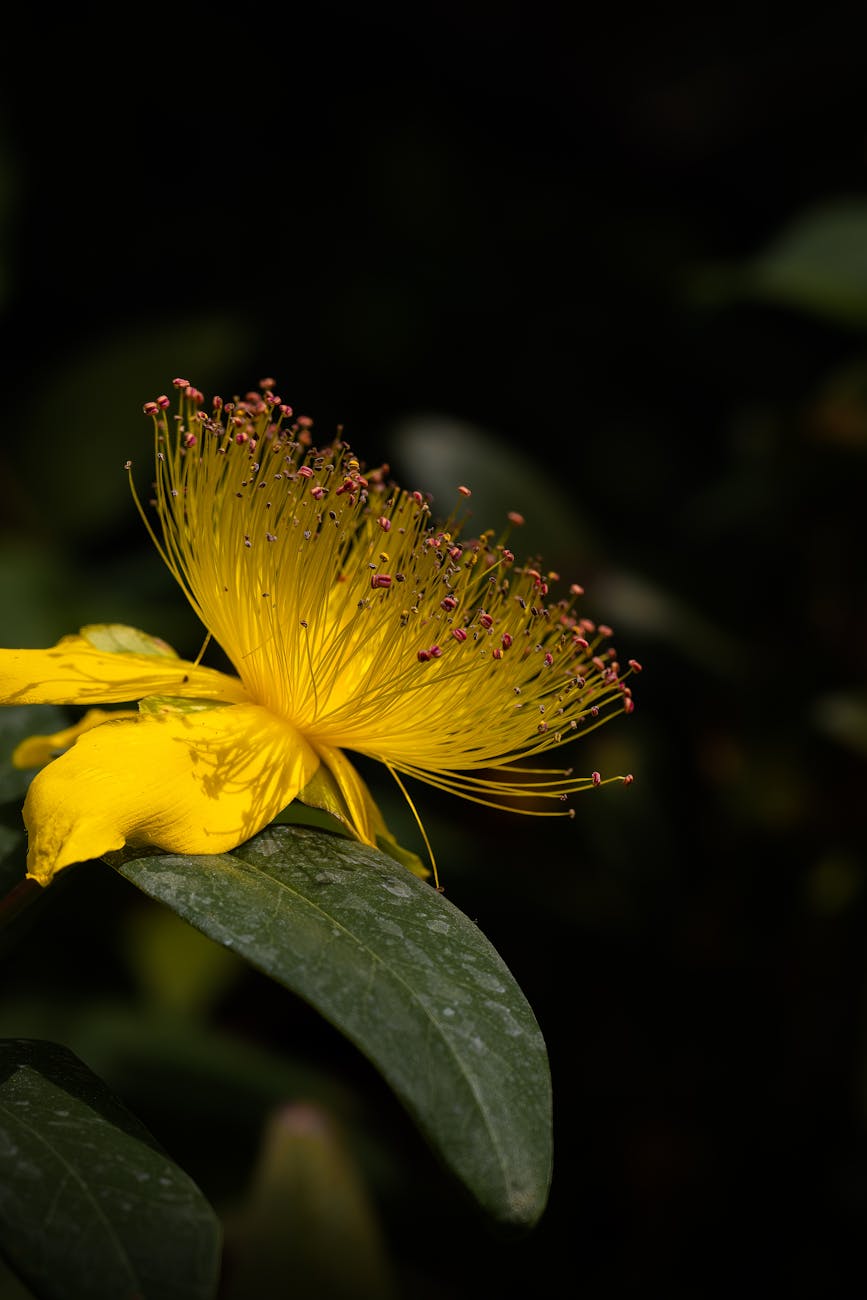
Bright yellow St. John's wort flowers.
Photo by Valter Zhara on Pexels.com

As for how this plant became known as St. John’s wort, it’s a bit of a convoluted story. Its history of use dates back to pre-Christianity, so it wasn’t always known as “St. John’s wort.” (As for the “wort” part, that’s just an old word for “plant,” derived from the Old English “wyrt.”) So, older sources will have their own names for this herb that may not be recognizable to modern readers. St. John’s wort also has a ton of regional names — in the US, it’s sometimes called goatweed, Klamath weed, or Tipton weed. In the UK, it may be called touch-and-heal, rosin rose, penny John, or balm of the warrior’s wound.

The name St. John’s wort came about because it was believed that this herb was at its most potent during Midsummer, and therefore should be harvested on or about June 24th. This was later turned into the Christian feast day of St. John, and so the plant became “St. John’s plant.” It’s also said that the plant’s red, blood-like sap runs in August, on the day that St. John was beheaded.

As evidenced by many of its healing-related common names, this herb is often hyped up in natural medicine circles. Topically, its oil is used to treat and soothe minor wounds in a similar fashion to commercial wound care ointment. Internally, it’s often used to help with symptoms of anxiety or depression. The reason it works is that St. John’s wort has a whole host of active compounds, including sesquiterpine oils, anthraquinone derivatives, and an interesting chemical called hyperforin. Hyperforin is particularly noteworthy, as it may be the source of St. John’s wort’s antidepressant effects, while the anthraquinone derivatives hypericin and pseudohypericin have demonstrated antiviral and/or antibacterial activity.

(As a side note, please avoid taking St. John’s wort internally if you’re on pretty much anything. It can alter how certain medications are metabolized by affecting specific liver enzymes, causing overdoses. It can also inhibit the effects of birth control, antivirals, chemotherapy drugs, certain anticoagulants, and medications for heart disease. Taking it with certain antidepressants also increases the risk of serotonin syndrome, and I don’t wish that on anybody.)

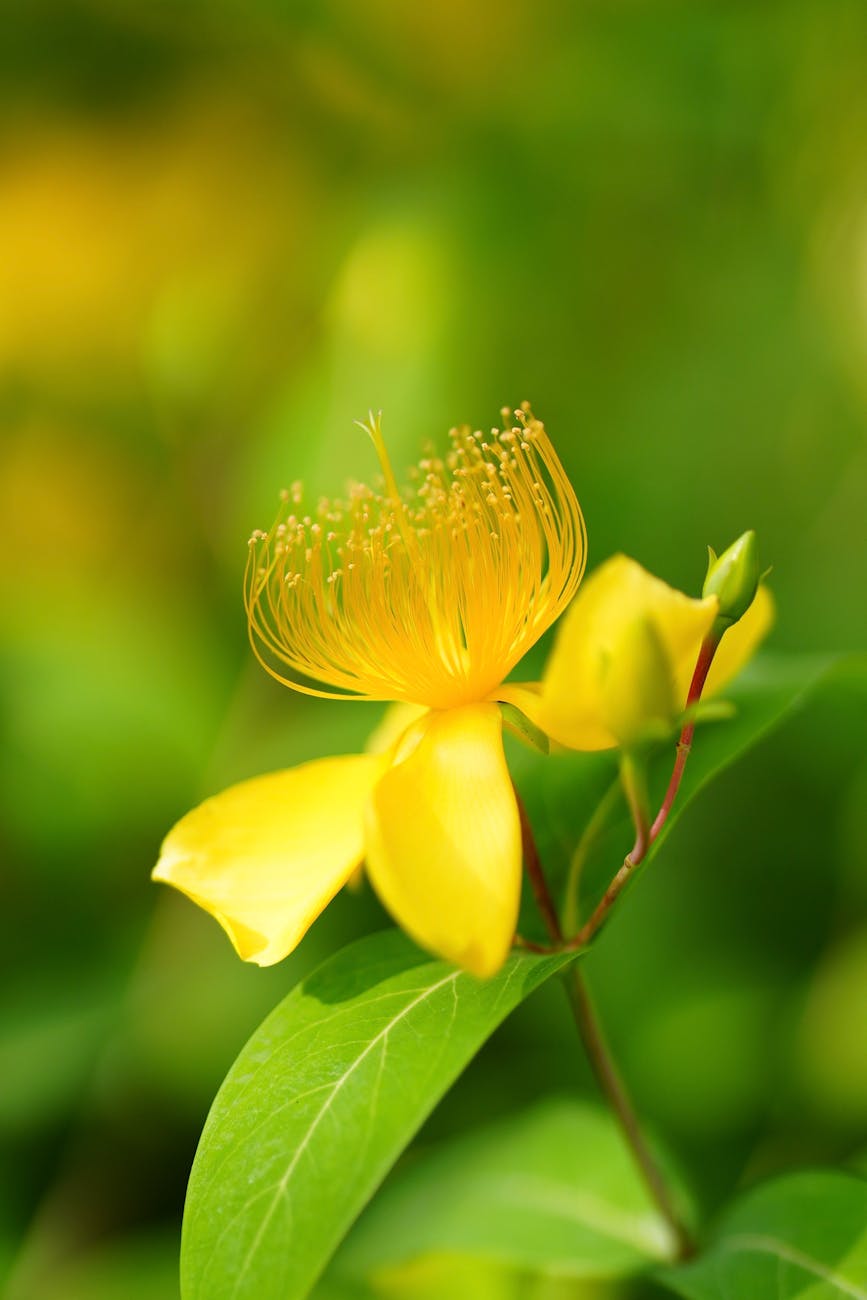
A side view of a creeping St. John's wort, Hypericum calycinum, flower.
Hypericum calycinum, or creeping St. John’s wort, displaying very similar flowers to Hypericum perforatum. Photo by shaosong sun on Pexels.com

Magically, St. John’s wort is often used to repel or banish evil. Another common name, fuga daemonium, literally means “demon flight.” It was often hung in houses, placed above religious icons, or carried as a protective talisman. Flowers, brought into the home on Midsummer’s eve, are considered particularly protective and lucky.

This plant also had some limited divinatory use as a kind of mortality predictor. If you took two sprigs of St. John’s wort and hung it over a marital bed, the sprig that wilted the fastest indicated which member of a couple would die first. Fun!

As a Midsummer plant, St. John’s wort is associated with the Sun and the element of Fire.

It’s probably best to work with this herb in dried or oil form. St. John’s wort is such a potent medicinal plant because the compounds that we use as medicine are actually the plant’s defensive mechanisms — they’re distasteful and poisonous to grazing animals, allowing the plant to grow unchecked. That’s not a super big deal if you’re within St. John’s wort’s native range across parts of Europe and Asia but can become a (rapidly spreading) problem if you’re not. This plant is considered a noxious weed elsewhere, so, unless you’re an herbalist who needs the fresh herb specifically, I’d avoid growing it.

If you have access to a patch of St. John’s wort, however, and you’re outside its native range, harvest all you like. (Not much else will use it, and you’ll be doing the native fauna and flora a favor.)

Use St. John’s wort oil for physical and magical healing. Its resemblance to blood makes it appropriate for workings related to birth, death, or rebirth (though I find a bit of bloodroot or alkanet steeped in red wine or vinegar to be a somewhat better — and easier to obtain — substitute for blood itself).

Use the dried herb for banishment. Burn it in bundles and waft the smoke around any space where you want to clear out malevolent spirits, magic, or the effects of the evil eye.

Place some of the dried herb in a protective sachet and carry it on you. You can also add it to jars, poppets, or other container spells as you deem appropriate.

animals · life · Witchcraft

The Magical Meaning of Mockingbirds

I’ve been filling the little raised bed next to the house. It isn’t much, just a long, sturdy box made of cedar planks, but I didn’t want it to sit fallow for too long. I built it last autumn, a bit too late in the season to plant anything, but that’s okay — my objective was mainly to set it up and observe how it interacted with its surroundings. Would it get enough rainfall, or accumulate too much? Would the sun fall on it in the right way, or would it be too shady all day long?

Anyhow, gardening angsting aside, I returned from filling the bed with soil and compost to see a mockingbird eating on the deck. They eyed me curiously, but not warily, and didn’t seem to care much about what I did or how close I came. I said, “Hello.” They went about their business. It was all very chill. It was also interesting, because I’ve never seen a mockingbird back here before. There’ve been plenty of crows, starlings, a blue jay, juncos, house sparrows, a pair of cardinals, and absolute loads of morning derps, but no mockingbirds.

A close up of a gray mockingbird in green grass.
Photo by Tessa Riley on Pexels.com

That got me thinking: What kind of omen is a single, friendly mockingbird?

Mockingbird, known as Yapa or Yaupa, is a spirit that figures in Hopi Katsina ceremonies. Mockingbird is credited as the spirit being who first taught mankind to speak.

The Shasta people, a linguistic group of Indigenous peoples from the Klamath Mountains area of the Pacific Northwest, Mockingbird was a protector of the dead. (Considering their very protective tendencies, this makes a lot of sense.)

To people of the Southeastern US, mockingbirds were considered not only very intelligent, but capable of passing on this intelligence. Some even ate them in the hopes that they would then acquire the bird’s cleverness.

A mockingbird perched on a railing.
Photo by Connor kane on Pexels.com

In O’odham folklore, mockingbirds feature as mediators in two speeches used for rain ceremonies. In one, mockingbirds use their calls to calm a heaving Earth and bring gentle rains. In another, they carry the raucous shouts and laughter of intoxicated people to the home of the winds. The winds then send forth clouds and rain.

Across all of these Indigenous folktales and traditions, mockingbirds are known for their intelligence, ability to mimic sounds, and desire to protect.

In Harper Lee’s novel To Kill a Mockingbird, the titular bird represents innocence. It’s said that the mockingbird sings only for the pleasure of others, not for its own enjoyment — therefore, it’s a sin to kill one. In nature, they’re mostly harmless birds. They eat insects, fruit, seeds, and occasionally small reptiles or crustaceans.

They can, however, be very aggressive when it comes to defending their territory. I remember when a mockingbird built a nest just outside a hospital I was in. (It definitely made things more complicated when my Handsome Assistant came to visit me!) For this reason, they’re also associated with protection.

A mockingbird perched atop a bird feeder.
Photo by A. G. Rosales on Pexels.com

Mockingbirds are also highly intelligent. The name mockingbird comes from the birds’ talent for imitation, as does the scientific name of the northern mockingbird — Mimus polyglottos, which roughly translates to “many-tongued mimic.” They’ve been found to mimic the calls of other birds, insects, and amphibians, human voices, and even cellphones and landscaping equipment. All birds are considered messengers across various traditions, but mockingbirds are especially associated with communication and messages.

It’s said that mockingbirds can answer any question that’s asked of them. While that’s probably a lot of responsibility to pin on one bird, you can ask a mockingbird a pressing question and then observe its behavior for signs. Divination by the behavior of birds is called ornithomancy or augury, which is an ancient art that is or was practiced all around the world.

In light of all of this, I think my small gray visitor was a positive omen. I hope to see him or her many more times in the future… Just maybe not during nesting season. That could be complicated.

Books · divination

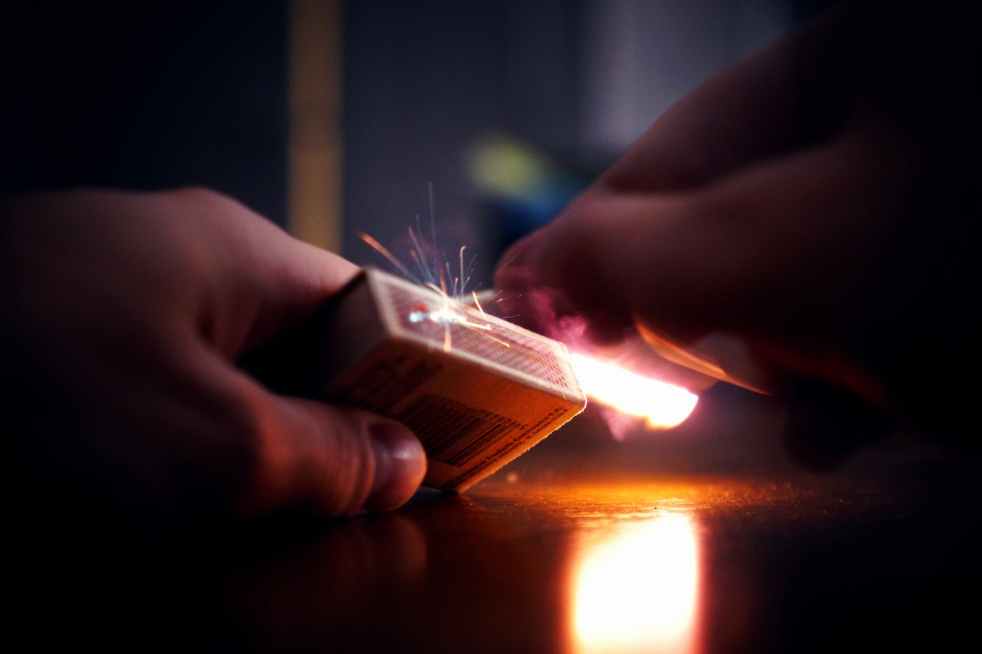
“Spark Magic,” a fun little box of ideas.

Every summer, a Druidry group I am part of gets together to grill, tell stories, sing, and swap goods and gear. Some of these are things we’ve made (like artwork or preserves), some are things we’ve grown (like plant starts and seeds), and some are things we’ve purchased, and want to find a new home for. I’ve taken home books, macrame plant hangers, sculpture, watercolor art, camping gear, oracle cards, some vintage Le Creuset, and one very unique tool.

A black and iridescent blue box, modeled after a match box, labeled "Spark Magic. 50 ways to find your power."

This is the Spark Magic box. It describes itself as a way to “[k]indle that inner spark,” and carries this idea through the prompts themselves. They’re all derived from various creative and spiritual practices, with a bit of self-care mixed in, printed on 50 cards shaped like matches. This makes it easy to shuffle through them just by shaking the box, plus the match design is just a really fun, unique idea.

This isn’t your standard oracle deck or list of journaling prompts, however. There are some writing prompts, of course, but this box also contains ideas for physically and mentally taking care of yourself, beautifying and enhancing the health of your immediate environment, and cultivating a regular practice to help you feel empowered and self-fulfilled.

Personally, I like it a lot. I often experience periods where I feel sort of dull and lifeless (enhanced, no doubt, by cyclothymia). While the prompts in here aren’t a substitute for a therapist, the ideas are usually pretty good at helping me to re-engage with practices that I’ve allowed to fall by the wayside. They help me feel more enthusiastic about doing stuff again. I feel like they’ve been much more helpful in this regard than the usual lists of self-care suggestions and journaling prompts that I see online.

Part of this may be due to the structure of the deck itself. It’s not a pick-and-choose list of things to do — there’s an oracle deck-style element to it. Part of the fun isn’t just drawing a match and seeing what it says, it’s taking some time to think about why I’ve drawn the specific match that I did. This also makes it fun to combine with tarot or oracle readings.

Would I recommend this? Yes, absolutely. If you’re someone who feels like they could use a little boost or some inspiration now and then, Spark Magic may be helpful for you. At $12.95, it’s also pretty inexpensive. If you like cartomancy, try combining Spark Magic with your oracle or tarot readings as a fun, interesting way to gain more insight.

life · Neodruidry

An Imbolc Hike (and Tree Divination) at Patuxent Research Refuge

One of the nice things about having other Pagans around is that it makes the High Days a lot more fun. On my own, Imbolc is mostly divination and spring cleaning (or, in this year’s case, divination, deep cleaning, and rearranging my entire house). Traditionally, it’d involve pilgrimages to sacred wells, asking for healing, and leaving offerings and clooties.

This past Saturday, my Handsome Assistant and I met with a local group that we’re a part of for a hike around a lake at Patuxent Research Refuge. It was a nice, flat loop, mostly on a gravel or mulch trail, so it wasn’t too challenging. It left a lot of mental and breathing space for conversation, catching up with friends we hadn’t seen in a while, and contemplation. (One group member who’d moved away was back for a visit, and it was really nice to have the chance to talk to them again!)

We covered about a mile and a half before pausing for tree branch divination. Admittedly, as much as I enjoy divination, this was something I hadn’t tried before. The group split up to find places to sit — fortunately, it seemed like every tree near the path has spread out a welcoming pillow of moss at its roots. From there, we thought of the questions we wanted answered, or the problems we needed guidance on. After relaxing our gazes and letting them rest on the bare, outstretched tree branches above us, shapes began to emerge.

The experience was very different for each of us. My Handsome Assistant experienced it almost like a story, with images coming and going in an evolving plot that gave him a hopeful look into his questions. I had a little more trouble — I just wanted to know whether I’d achieve the goals I set for myself this spring. The trouble is, divination methods like this aren’t often conducive to “yes” or “no” answers. What would the trees even do? Give me a check mark for “yes” and an X for “no?” Spell out “Yup” in their branches? It was a little frustrating.

Finally, I kind of gave up. If the trees had something to say to me, I wasn’t going to constrain them to a “yes” or “no.” As soon as I did, my eyes came to rest on a spot that was only visible from the angle I was looking from. The branches of multiple trees came together to form a pentagon, and their twigs radiated outward into an almost perfect spiderweb shape. In the second when it all came together, it made perfect sense — I’d only be successful if I could keep from sabotaging myself. Catastrophizing is a snare. Worrying over inconsequential details is a web I build to trap myself. Even the expectations I had around this divination yielded only frustration, not answers.

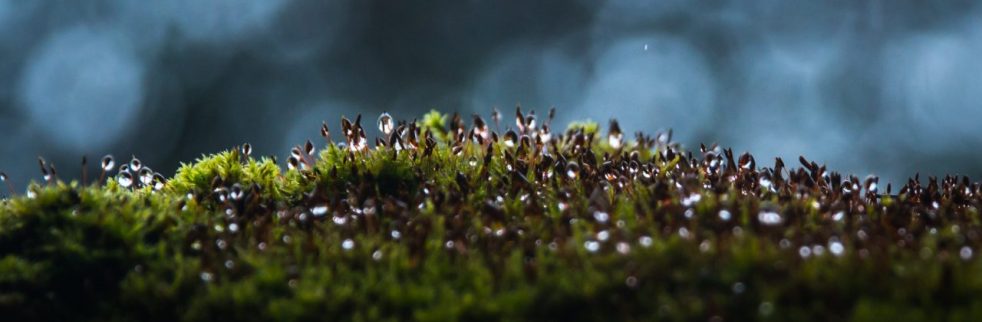
I also found a really neat little clump of moss.

A small clump of bright green moss nestled amid some leaf litter.

After the divination, we all walked silently to the lake. On the shore, we meditated on what we wanted to be cleansed and healed of, made an offering of water gathered from different sacred sites, and dipped strips of cotton cloth into the water of the lake. One would traditionally tie a clootie to a tree near the sacred spring itself, as a type of sympathetic magic (as the clootie breaks down, so too would the issue to be cleansed/healed). In this case, we all brought ours back with us to be tied to our own fences or trees, composted, or burnt and scattered. I’m planning to tie mine to the branches of the little redbud tree in the front yard, myself.

A single bright red holly berry among spiky green leaves.

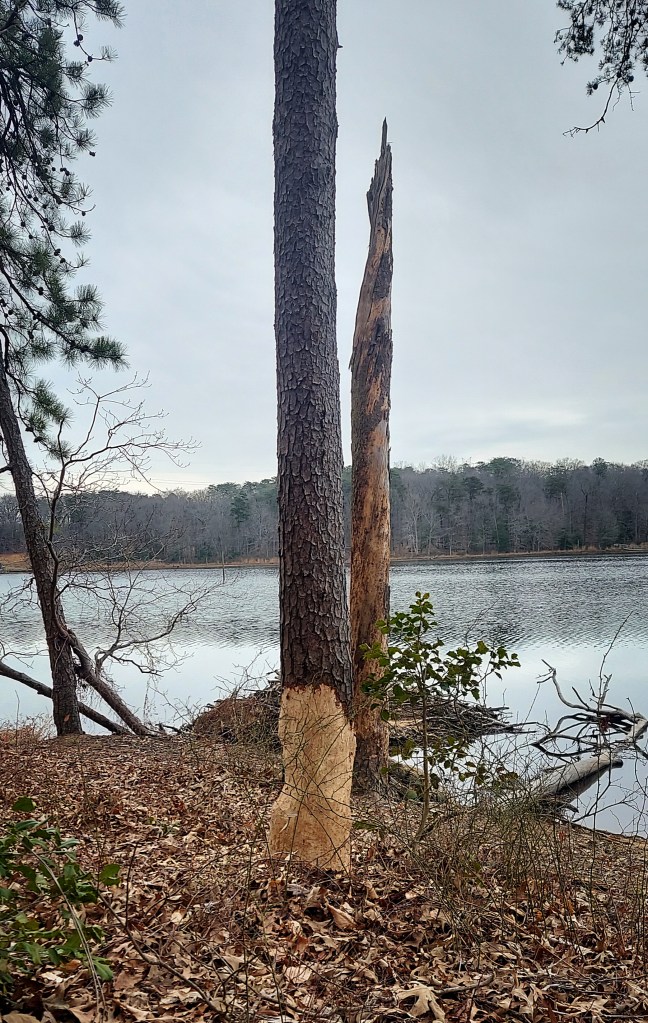
Things haven’t really “greened up” yet, but there’s a beauty in that. You could see the tiny sprouts and buds of things just starting to awaken from dormancy. The green needles of pine trees and spongy carpets of emerald moss were bright splashes against all of the shades of silver, gold, brown, and gray leaves. The sunlight was thin and silvery, shining through an even blanket of clouds. Even though it’s late in the cold season, some bright, jewel-like fruits still lingered — like yellow horsenettle and ruby red holly berries. The seedheads of dried mountain mint stuck up here and there, ashen gray, fluffy, and smelling strongly of mint, oregano, and bergamot. A few trees showed signs of beavers, and we even passed near the entry way to a beaver lodge.

A conifer, girdled by beavers. Though the bark's stripped away, the wood itself isn't gnawed on very deeply.
(I’m guessing conifer wood didn’t agree with this beaver.)

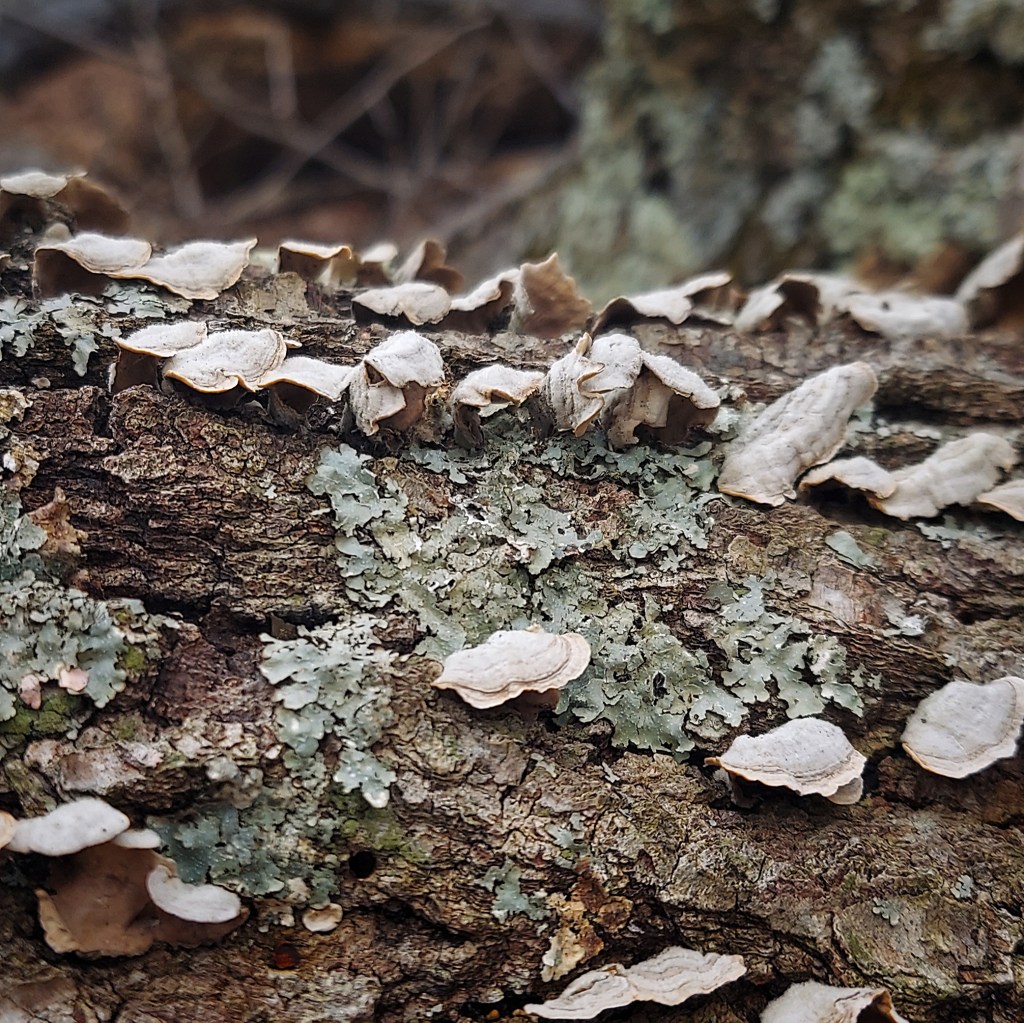
I’d hoped to see some mushrooms since it’s been so damp and warm, but it’s still a bit too early for that. There was plenty of bracket fungus on fallen tree trunks, clinging to the bark like oysters to a stone. One tree even had really interesting lichen on its bark, forming shapes like rivers.

A closeup of a fallen tree trunk, with lichen and tiny bracket mushrooms.

By the time we were finished, three hours and several miles had passed. Now, I’m back feeling a little bit lighter, a little reassured. Here’s hoping that Imbolc has treated you well, too!

divination · Neodruidry · Witchcraft

Footprint Folklore & Magical Properties

With so much snow on the ground, it’s been even easier to keep track of all of the visitors to the front and back yards. From the efficient single-track prints of stray cats, to snowshoe prints of rabbits, to the rodent tracks ending in the sudden whump of an owl, they all stand out starkly in fresh snow.

A set of squirrel tracks in snow.
For example, these prints by resident Absolute Unit Frederick de Bonesby, the gray squirrel.

The weather is warming up bit by bit (it’s supposed to be in the 60s F this weekend, go figure), so the snow isn’t long for this world. With that in mind, I thought this might be a good time to look at different folk beliefs and folk magic practices involving animal tracks and footprints.

Unique footprints and strange feet are a defining characteristic of many cryptids and folk monsters:

  • The Tupi-Guarani people of Brazil have the Curupira (Tupi for “blister-covered”), a kind of demon with fiery red hair and backwards feet.
  • The Scottish have the glaistig or maighdean uaine (“Green maiden”); a gray skinned, blonde-haired woman with a long green skirt to hide her goat legs.
  • In Madagascar, there is the Kalanoro. This is a humanoid cryptid described as a small, hairy person with red eyes and backwards-facing legs and feet. While they are said to have once lived in corporeal forms, habitat destruction has left only their spirit forms behind.
  • In the Himalayas, there are Abarimon (“mountain-dweller”). These are said to be vicious humanoids with backwards feet who lived solely in a single mountain valley. While Abarimon were dangerous, they could only breathe the air of their valley home, and thus were unable to ever leave it.
  • In Trinidad and Tobago, there is the Douen. This entity is another humanoid with backwards facing feet but has the distinction of also lacking any facial features other than a mouth. If they hear a child’s name, they are said to be able to mimic the parents’ voices, calling to the child to lure them into the forest. Douen may be related to the duende, humanoid spirits from Spain and Latin America.
  • In Australia, there’s the Yowie. This is a tall creature covered in dark hair, often said to have backwards-pointing feet.
  • The Dominican Republic has La Ciguapa, a lovely wild woman with long, dark, silken hair, beautiful bronze skin, and backwards feet. While small, she is perfectly proportioned and incredibly agile. She’s said to use her beauty and agility to prey on those who are foolish enough to venture into the woods — her domain — alone.
  • On the Indian subcontinent, there are ghosts known as bhuta. These can shapeshift into any animal, but often appear as perfectly normal humans — save for their backward-facing feet.

To be honest, you’d probably be hard pressed to find a culture that doesn’t have some version of “cryptid whose main thing is having weird feet.” Many of them serve as cautionary tales against wandering dangerous places alone, especially for children. They’re the personification of situations that seem perfectly safe, or even nice (like meeting a beautiful woman on a walk in the woods), and lure you in before you notice the danger that you’re in (like the fact that she’s a cannibalistic cryptid with weird feet). Across cultures, the message here is also pretty consistent: Stay away from strangers, and out of the wilderness at night.

In northeastern Tanzania, there are a series of incredibly ancient footprints set in stone. These point to two small groups of hominids (likely members of Australopithecus afarensis) traveling in the same direction. The Maasai people associate these footprints with Lakalanga, a hero so big that he was said to leave footprints sunk into the ground wherever he walked. He is said to have helped the Maasai win a battle against a neighboring enemy, long, long ago.

In South Devon, England, a heavy snow fell in the winter of 1855. The next day, and for two days after that, mysterious sets of very hooflike marks appeared. They were in single file, roughly 4 inches long by 3 inches wide, and managed to cover a total area of about 40 to 100 miles. Strangely, these hoofprints didn’t seem to care about obstacles — they traveled straight over fences, hedgerows, walls, and even houses. Called the “Devil’s Footprints,” hypotheses for their appearance range from experimental balloons to kangaroos… But there’s still no accepted explanation.

In some magical traditions, footprints are used for sympathetic magic. Any spell benefits from the addition of something belonging to the target — a nail clipping, a lock of hair, or a scrap from their clothing, perhaps. (I once managed to pull something off by getting a target just to touch a grass poppet that I’d made, but that’s neither here nor there.) In the absence of these, footprints often suffice.

Some magical powders, like the hot foot powder used in Hoodoo, are sprinkled into a person’s footprints to control their actions. This derives from the traditional West African practice of foot track magic, brought to the Americas by the transatlantic slave trade.

Reading animal tracks is also a method of divination. While augury was traditionally divination using the flight paths of birds, you can also gather omens from the number, direction, and maker of tracks you come across.

A set of cat tracks through snow.
These belong to a stray cat. Cats conserve effort when walking trough snow by placing their hind feet directly in the prints of their forefeet.

When it comes to divination using a human’s footprints, the practice is called “ichnomancy.” This comes from the Greek “ixnos,” meaning “footstep,” and “manteia,” meaning “method of divination.”

Divining with footprints can be a little difficult, since you need to be able to read them in a mundane sense first. For example, deep footprints indicate a heavy load. Widely-spaced ones indicate a long stride, perhaps someone running. The different depths of the impression in the heel and ball of the foot areas can also tell you different things.

My first suggestion for working with animal tracks and footprints is to familiarize yourself with what you’re likely to encounter. If a deer walked through your yard, what would it look like? How about a dog, or a bear? What impressions does it leave when a bird of prey scoops up a rat, or a squirrel? Consider your connections and associations to each of these creatures. What would their appearance mean to you?

Next, consider their other qualities. Movement to the left is often considered an ill omen, while the right is considered a positive one. For example, seeing the tracks of a bear or mountain lion moving quickly toward your left could be an omen of danger. Seeing the tracks of an animal you have a positive connection to, moving at a leisurely pace toward your right, could be a very good omen.

Working with footprints in a magical context is a bit different. You can collect the dirt from within a footprint and use it to target a spell toward whoever left the footprint. You can also sprinkle magical powders or crushed herbs in someone’s tracks, or over a place where you expect them to step. (There are far too many magical powders to enumerate all of their uses and qualities here, unfortunately. Since this is a method frequently employed by Hoodoo practitioners, you may wish to consult with one for more information. Many online sellers of Hoodoo supplies offer consultations and can answer your questions on foot track magic.)

As for me, I love seeing fresh tracks in the snow. It’s a reminder that, while the outdoors seems to sleep under its cold, fluffy comforter, there’s still plenty happening. Tracks also give me another way to gauge the way everything’s activity increases as we inch closer to spring. I look forward to seeing tracks in the mud and snow just as much as I look forward to seeing new faces at the feeders and in the fruit trees.

Books

Let’s Read: “Psychic Witch”

This week, I wanted to devote some time to Mat Auryn‘s Psychic Witch: A Metaphysical Guide to Meditation, Magick & Manifestation.

I went into this book with few expectations — it had come highly recommended, but I didn’t really know what it was. I hadn’t read Mat Auryn’s other works before, a lot of people seemed to think that this one was worth reading, so I figured it’d be a suitable introduction to this author. (Admittedly, I’ve also been working on something myself for the past year or two and I knew it’d be helpful to read more examples of genuinely helpful, well-regarded metaphysical guides.)

Psychic Witch is essentially a collection of meditative and visualization exercises. The ones that lay the groundwork reminded me a lot of high school drama class, in the best way — the first few classes were always spent doing silly things, like playing Duck Duck Goose, to help us overcome the fears that would keep us from immersing ourselves in our roles. (Because let me tell you, it’s legitimately difficult to be embarrassed in front of people you’ve chased around during Duck Duck Goose.)

This kind of exercise has precedent in sacred rituals around the world. Laughter is often the gateway to the divine. Some ceremonies even feature comedy in the beginning, in order to help everyone loosen up, laugh, and shed the inhibitions that might keep them from fully participating. Just like a rousing game of Duck Duck Goose. Psychic Witch introduces the exercise of pretending to be an omniscient witch and seer, behaving as though all of your predictions are absolutely true. This might feel a little silly, at first, but I feel like it’s a fun and necessary way to get out of one’s own way so deeper work can begin.

Later exercises involve ways to trigger different brain states that are more conducive to magical practice than our usual waking state. (I still use a number of them for inducing trances, myself). The book then goes on to build on these, introducing concepts like working with the lower and higher selves, casting circles, and the elements. Even though these are somewhat elementary concepts in magical practice, Psychic Witch introduces and discusses them in a novel enough way that I feel like even seasoned practitioners would get something out of it.

Whether you’re just embarking on a magical path, or you’ve been practicing for ages, Psychic Witch is worth a read. As mentioned above, it discusses foundational concepts in an interesting way. If you’ve ever had trouble connecting to certain aspects of magic, then this book may help you reframe them in a way that makes it easier. I found that it also helped reignite my enthusiasm for aspects of magic that I often find tedious.

life

Vibe with me!

My house is not very large. Really, it’s the perfect size — with just my Handsome Assistant and I, there’s no need for tons of rooms. We were also fortunate that the previous owners really maximized the crap out of the space here. Everywhere that could be finished and turned into living space, has been.

Our attic is a loft with a skylight. Since the ceiling was low, it made sense to make it the room we’d spend the least amount of awake, moving around time in: the bedroom. Since there’s no paint trick or wallpaper in the world that will turn a loft with knee walls into a spacious, cathedral-ceilinged abode, I leaned into the tiny, cozy vibes hard.

Small lanterns with warm lights cast shadows like candle flames. I took the janky, stuck doors off of the built-in storage and replaced them with a curtain rod and soft, light-colored curtains. The bed area itself is separated from the rest of the room by several deliberately mismatched, vintage lace curtains in shades of cream and off-white. The floor is covered in layers of rugs in a variety of textures, to give it more depth and interest. The bed is dressed in satiny black and ivory sheets and a silk-stuffed comforter. It feels almost like glamping, or like a very luxurious treehouse. Like a small, exceedingly comfy nest tucked away at the top of the house.

(We’re having a replacement window put in. Soon as that’s done, I’m definitely posting some pictures!)

Lately, I’ve been treating it more like a sanctuary than purely a sleeping space. I like to go there around sunset, because the small window beside the bed has a very nice view of the west. I light incense, I take out my tarot cards, Lenormand deck, runes, or ogham staves. I put on some Faun or The Moon & The Nightspirit. I soak up the atmosphere, do some divination. It’s really nice.

There’s a limit to how much divination I can usefully do for myself, friends, and family, though. So, to take advantage of the very late summer and early autumn vibes and give me a bit more to do, I’ve put all of the divination in my Etsy shop on sale at twenty percent off. If you see something that calls to you, I’d be happy to make space for your questions.

Let’s vibe in the sunset. It’s nice here.

Just for fun · life

Alex Dav’s music is a treasure, tbh.

Note: Nobody paid me or otherwise compensated me for this. I just really like Alex Dav’s music. Notice me, senpai.

I need background music.

Music, lighting, and scents are the most effective ways to set a vibe, to me. I can be in a parking garage, but if there’s some chill music playing, the faint scent of incense wafting on the air, and patches of a nice, peachy-colored sunset kind of sliding in between the concrete pillars, it’s nice. Cozy. Meditative.

That’s why I was so happy to come across Alex Dav’s music on YouTube. I was even happier to find it on Spotify, where I can just kind of keep it on without commercial breaks.

All of the songs feature a hang (also called hang drum), guitar, kalimba, piano, variety of drums, and more. Most, if not all, are tuned to a frequency of 432 Hz.

432 Hz is regarded as a “healing frequency.” Meditating to it is said to produce deeper states of relaxation. Doing so before bed may even improve sleep quality. Some also credit it with helping to release energetic blockages within the body.

While this all sounds very unscientific, there is a little bit of research to back it up. A double-blind cross-over study comparing listening sessions involving music at 440 Hz and 432 Hz had some very interesting results: The study participants experienced a slight decrease in blood pressure values (although not significant), a marked decrease in heart rate, and a slight decrease of respiratory rate values when listening to 432 Hz versus 440 Hz. These values do point to a greater state of relaxation. Subjectively, researchers also noted that “[t]he subjects were more focused about listening to music and more generally satisfied after the sessions in which they listened to 432 Hz tuned music.”

I use it for meditation, divination, maintaining a relaxed atmosphere at home, and just as background sound. It’s at once organic and ethereal, earthy and dreamlike. Personally, even as just background music, I feel like it helps me be more relaxed and creative. It’s even what inspired me to pick up a (smaller, less fancy) tongue drum.

If you’d like something that you can just turn on and go about your day, Alex Dav’s YouTube channel also has multiple live streams that are just music, all day long. If you want sleep music, there are some tracks that subtly loop for 12 hours. I highly recommend them!