
As I write this, the results of the US presidential election are being calculated. I’m trying to do anything other than be uselessly anxious about that all night, so I figured I’d write about a cozier topic to get my mind off of it.
Hence: Apples.
Apples are a traditional food for Samhain. This year, I had originally hoped to save at least an apple or two for us. I went out, covered about half of the young fruits with organza bags I had left over from gifts, and thought I was good to go. There were some for me, some for the local fauna, and everyone should’ve been fine. Then there was a spell of dry weather.
Anyhow, I got no apples, and also the squirrels stole all of my bags.
Then, at Mabon, we were working on masks and costumes for the Council of All Beings. Someone found a dropped googly eye, and I made a joke about them not having natural predators. That’s when it hit me — what if I put googly eyes on the apples?
“They might just attack the apples from the side without eyes,” a friend of mine said.
“I’d put them all around,” I explained. “Biblically accurate apples.”
Anyhow, as the time for various delightful apple dishes approaches (like my favorite, cornbread stuffing with sage, onions, and apples), I figured it’d be a good time to look at their folklore, mythology, and metaphysical aspects.
Apple Magical Uses and Folklore
Jokes about Biblically accurate apples aside, the forbidden fruit of Christian mythology most likely wasn’t a member of Malus domestica. While apples are cultivated all over the world, they originate from Central Asia. The Bible also doesn’t mention the fruit by name — it’s just commonly depicted as an apple as a kind of visual shorthand.
(It’s also a fun bit of wordplay. In Latin, the worlds for both “an apple” and “an evil” are written as malum. Pronounced with a long a, it’s apple. With a short a, it’s evil.)

In China, apples are also a source of a bit of wordplay. The funny thing is, it’s almost exactly the opposite to Latin. The word for apple (苹果) and peace (平安) both start with the same sound in Cantonese and Mandarin. As a result, apples are associated with peace.
Apples have a long and varied history in Germanic Paganism. The Norse goddess Iðunn is the keeper of golden apples that give the gods eternal youth. The Poetic Edda details eleven golden apples given to the jötunn Gerðr, as a gift from the god Freyr. In the Völsunga saga, the goddess Frigg sends King Rerir an apple as he prays for a child. Rerir’s wife eats the apple and conceives Völsung. This demonstrates a connection between apples, youth, fertility, and life.
Interestingly, the skald Thorbiorn Brúnarson also mentions “apples of Hel.” Scholar H.R. Ellis Davidson points out that this may indicate that apples were considered the “life-giving fruit of the other world.”

There is a similar connection between apples and the Otherworld in Celtic mythology, as well. Manannán mac Lir’s domain, Emhain Abhlach, translates to Isle of Apple Trees and is said to be a place where there is nothing but truth and disease and decay are absent. (Emhain Abhlach may also be where Avalon ultimately derives from.)
In the tale Echtra Cormaic, Manannán gives Cormac mac Airt gifts including a silver branch with apples of gold. This branch made magical music that was said to lull anyone suffering from sickness, injury, or childbirth to sleep.
Another tale tells of Connla, the son of Queen Aife and King Connaught. A fairy woman gives him an apple that, once eaten, becomes whole again. Infatuated with the fairy woman, Connla allows her to take him to the Otherworld where the fruit grows. The otherworldly apples give him everlasting youth, but for a great price: Connla can’t return to the land of the living.
Apples also have a lot of representation in Greek and Roman legend. The most infamous example is probably the Apple of Discord. When the Goddess of Strife, Eris, wasn’t invited to the wedding of Peleus and Thetis, she decided to start some trouble. She threw a golden apple inscribed “For the most beautiful” into the wedding party. Hera, Aphrodite, and Athena all claimed the prize, so Paris of Troy was tasked with selecting a winner. Each goddess offered him a bribe to choose her, but only Aphrodite’s bribe appealed to him — she’d give him the most beautiful woman in the world for a wife.
There was only one problem.
That woman was Helen of Sparta.
And she was married.
Whoops.
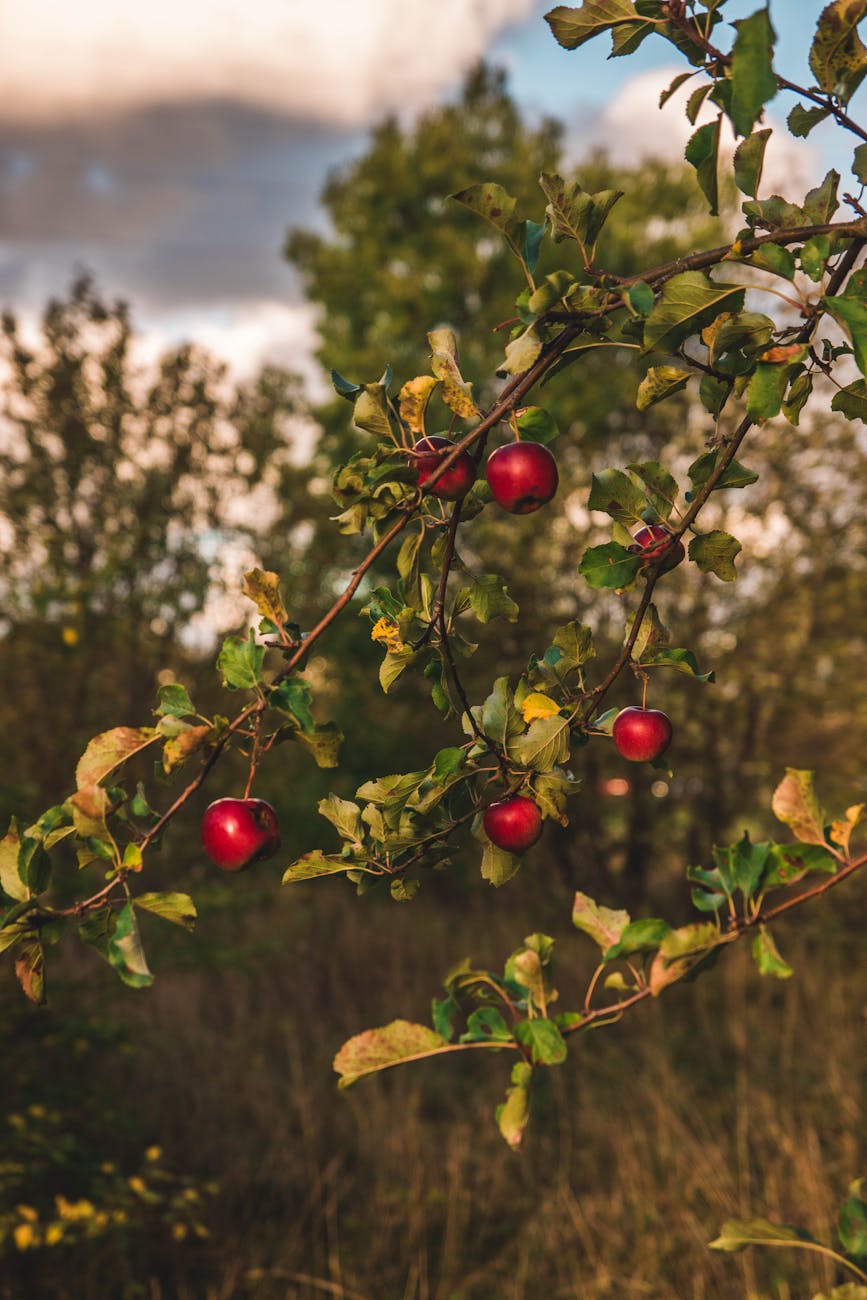
Apples were then considered sacred to Aphrodite and were even used as declarations of love. In the story of Atalanta and Hippomenes, Atalanta challenged all of her prospective suitors to races. If they could beat her, she’d marry them. (Since she was unbeatable, this seemed like a safe bet for her.) Hippomenes knew he’d never be able to outrun her, so he distracted her with three golden apples. With both his speed and his cunning, he barely managed to beat Atalanta and win her hand in marriage.
One of the labors of Hercules also involved retrieving golden apples from the Tree of Life in the Garden of the Hesperides, which creates another link between apples and life.
So, why are these fruits so deeply connected with life? Why do they come from the gods or Otherworld? Part of this might be because they literally came from afar — the ancestor of most of our modern apples came from Central Asia, so it would’ve traveled a great distance to reach the Mediterranean and Northern and Western Europe.
They may be deeply connected with life because they’re honestly pretty durable. They’ve got firm flesh and can last a long time when properly harvested and stored. That makes them an important staple in areas that experience cold winters — you could grow a bunch of apples, keep them in a cold, humid area with good air circulation, and they could last you all winter. Having a source of fresh fruit during the depths of winter could be the difference between life and death.
This may also be part of their connection with fertility. The fruit remains good in storage all through winter, when everything else withers. As a source of food when food is at its most scarce, those who have access to apples would likely experience better fertility than those who didn’t.
If you slice the fruit in half horizontally, the seeds form a pentagram.
Apple wood is considered a good material for tools for working with the fae and the Otherworld.
In modern European-based witchcraft, apples are used for fertility, healing, divination, wisdom, and knowledge. In some traditions, they are used for ancestor veneration and workings related to the dead.
They are said to be associated with the element of Water.
Using Apples
The simplest way to use these fruits is to eat or cook with them, first asking their help with whatever your goal or intention may be. Make your favorite sauce or pie recipe, tell each of the ingredients what you’d like them to do, thank them, and add them to your dish. Stir it clockwise with your dominant hand, serve, and enjoy.

You can also bury apples or place them on an ancestor altar as an offering.
Apples are frequently used for love divination. One old method involves peeling an apple in one continuous piece, then tossing the peel over your shoulder while saying, “Saint Simon and Saint Jude, on your I intrude, with this paring to discover, the first letter of my own true lover.” Look at the shape of the peel when it falls to see your true love’s initial.
Another love divination involves cutting an apple into nine equal pieces and eating them while mirror-gazing. Pierce the last piece with a knife and hold it over your shoulder, and an apparition of your true love may just appear in the mirror to take it.
When it comes to using apples for love magic, the blossoms are usually the best. (They have an amazing fragrance.) They’re seductive, but not overtly so — think of it as a sensual invitation rather than a command. They’re a great addition to a love-drawing bath, as well as baths for success, peace, and relaxation.
Apples aren’t just delicious; they have a lot of magical tradition behind them. They’re the food of the Otherworld, sustenance through the cold of winter, and a fruit of boundless fertility, youth, and eternal life.














 Marble Crow