Uncategorized

Wild Bergamot/Bee Balm Folklore and Magical Properties

Monarda species, also known as bee balm, Oswego tea, and wild bergamot, is one of my favorite native flowers. The blooms themselves are striking, the leaves are fragrant, they spread very easily, and they thrive where other plants falter. They’re fantastic additions to permaculture guilds, since they’re good at attracting oft-neglected native US pollinators like the raspberry pyrausta moth. It’s also tolerant of juglone, a natural herbicide produced by black walnut trees.

Bright pink Monarda flowers, growing in a bed of maroon Coreopsis.
Some bright pink Monarda didyma flowers in my garden, planted along with some deep maroon-pink lance leaf Coreopsis.

The name “wild bergamot” is a bit misleading — these plants aren’t related to bergamot at all. Monarda is part of the mint family, while actual bergamot is a citrus fruit. I haven’t been able to find an explanation for why this group of plants is called wild bergamot, so I can only venture that it’s because of the fragrance of the leaves. They’ve a sort of minty-citrusy-herbal scent, very reminiscent of Earl Grey tea.

Wild Bergamot Magical Properties and Folklore

Monarda plants are native to the US and have a very important place in the medicinal lore of indigenous American people. The leaves soothe stomach aches when used internally, treat wounds externally, and ease headaches when used as a poultice. The name “bee balm” comes from the plants ability to calm bee stings.

After the Townshend Revenue Act of 1767, colonist American people began boycotting imported British tea. Instead, Monarda leaves provided a suitable substitute.

Bright pink Monarda flowers, of a cultivar called "Marshall's Delight."

Since Monarda is native to the US, you won’t find it in ancient herb lore or medieval European grimoires. It still has a pretty long history of use as a magical ingredient, however, as people have adapted to using what’s around them over the centuries.

Some magical resources claim that lemon balm and bee balm are synonymous. Though they’re both members of Lamiaceae, the mint family, they aren’t the same plants. Lemon balm is Melissa officinalis, native to Europe, and pretty sedating when drunk as a tea. Bee balms are Monarda species, native to the US, and gently stimulating.

Due to its associations with medicine, it’s considered a healing herb.

Monarda can also be used as a purifying and cleansing herb.

It is generally considered to be ruled by Mercury and the element of Air. Due to these planetary associations, it’s sometimes used in spells for money or success in business/academic endeavors.

Using Wild Bergamot

You’ll be pleased to know that, unlike a lot of the magical herbs I talk about, wild bergamot is edible. The whole thing. Stems, flowers, and leaves. The flowers can be used to add color and interest to salads, and the leaves make a wonderful tea. You can also use the leaves to flavor pork or poultry dishes. If you do want to eat your Monarda leaves, treat them like most other herbs: Harvest the leaves before the plant flowers, when they’re sweeter and more tender. They tend to get a bit tough and bitter after the plant matures and flowers appear.

Personally, I find wild bergamot leaves and flowers to be a very nice addition to drinkable/edible brews. Use it in place of Camellia sinensis leaves as a base for magical teas. Historically, it has been drunk to ease flatulence and as a gentle, general stimulant.

One thing I enjoy doing is making simple sugar cookies and decorating the tops with magical sigils. Candied flowers, chosen for their properties, can both decorate and empower these edible spells.

For purifying, pack some fresh leaves into a large muslin tea bag and place it under your bath faucet. You can also brew Monarda leaves into a tea, strain out the plant matter, add the liquid to a bath, and fully submerge yourself.

To purify spaces or groups of people, bundle fresh Monarda stems together, dip them in salt water, and use them to asperge.

Monarda is known to attract bees, as well as ease their stings. Since it’s connected to Mercury and Air, it’s also used as a success herb. Brew a strong tea from the leaves and use it to wash your front door and steps to attract success to your door like bees to a flower. You can also add this tea to floor washes, if you wish.

A prickly-looking Monarda seed head. Its rounded, comprising many small tubes formed by the base of the flowers.
A Monarda seed head. Each of those little “tubes” houses a single loose seed, which will be picked up by birds or scattered by the wind.

In general, Monarda is a very nice herb that plays well with others. In my experience, it acts as a general attractant — magically drawing in your desires the same way that the flowers call to hummingbirds, moths, and bees. Its flavor and scent are delicious and intriguing without being overpowering, so it’s an excellent addition to brews, kitchen witchery, and spell jars. (Most members of the mint family smell pretty acrid when burned, however, so I’d avoid putting it in incense.)

If you’re in the US, Monarda is a delightful addition to the garden. It’s easy to grow, thrives on neglect, and produces an abundance of seeds and rhizomes. You’ll have plenty to harvest and share, but, unlike non-native mints, it’s not considered invasive.

Neodruidry · Plants and Herbs · Witchcraft

It’s Imbolc season. Get the bucket.

I think a big part of what kept me from really connecting with a lot of Wiccan-based Paganism when I was younger was that, at the time, the available source material was pretty prescriptive. Sabbats were on specific days, with specific traditions attached, and there was an onus the follower to do things “right.”

Having lived in a pretty big range of climates, I can say that that’s had an impact, too. It’s hard to feel in the harvest or growing seasons when they just don’t line up with the harvest and growing seasons where these traditions were based. If the wheel of the year is supposed to reconnect humanity to nature and its cycles, a strict interpretation is the opposite of helpful. When I lived in California, for example, it felt like observing the traditional sacred days was sometimes counterproductive — spring didn’t look like it did in Europe, or even in the Eastern US. Neither did winter. It made things feel rote, which robbed them of meaning.

That’s why I’m a big proponent of celebrating the High Days when and how it makes sense to do so. If your growing zone means that you’re not going to see the first signs of spring until March, or won’t ever experience cold and snowfall, then so be it.

All of this is to say that the vast majority of my High Day traditions are pragmatic (perhaps to a fault).

Imbolc passed recently, amid surgeries (one for me, one for the Certified Lap Loaf. We’re both doing well!), falling down the stairs (just me. That part of me is not doing well.), and probably other stuff that I’m forgetting because of the first two things. A lot of ADF members celebrate the High Days on the nearest weekend, which is nice. Less pressure that way when your most-of-you isn’t working correctly.

A picture of the face of a small gray tabby cat. She looks very angry, probably about the blue nylon cone surrounding her head like some kind of fucked-up satellite dish.
Don’t let the barely concealed rage fool you. She’s purring here.

To me, Imbolc is refreshment. It’s deep cleaning, washing my front door, doing repairs, and making food. (This year, it’s also starting plans for home improvements that we won’t be able to do until later spring and early summer, like replacing the roof.) It’s also almost never actually on the first of February.

I don’t set up an Imbolc altar. I follow the same basic ritual structure that I do for any other day. For me, the main difference is the feeling of lightness and renewal that I carry through doing things like scrubbing grout, cleaning out garden beds, de-scaling the dishwasher, and chucking Affresh tablets down the garbage disposal.

When you’re re-learning lost, buried, or reinvented cultural traditions, it’s easy to get caught up in the need for accuracy and correctness. It’s also easy to forget why the High Days existed in the first place — to mark significant occasions throughout the year, largely based on what people who grew crops and raised animals considered significant.
When you get too invested in following the letter of a tradition, you can lose the spirit of it.

From my house to yours, here’s a small thing that I like to do each spring. It works equally well whenever you need to feel that sense of newness and freshness that only spring can bring.

Imbolc Home Cleansing

You’ll want to have:

  • A white candle. (The golden beige of natural beeswax is fine, too.)
  • Dried vervain.
  • Water.
  • A bowl.

First, steep the vervain in some hot water, as if you were going to make a tea. (I like to put vervain and water in a clear jar, then stick it in the sun for a while to infuse. If it’s cloudy where you are, a kettle of boiling water is fine.)

Vervain flowers.

Once the infusion cools, strain out the leaves and pour the resulting liquid into the bowl.

Next, light the candle. Declare, either out loud or to yourself, that this flame represents the return of the sun — whether that’s the literal return of longer daylight hours, or a metaphorical return of warmth and light is up to you.

Carry the bowl and candle to each room of your home, moving in a clockwise direction. Set the candle down in a safe spot and use your fingers to flick the vervain infusion around the perimeter of the room (be sure to get the corners). If you have prayers or chants that feel appropriate here, use them. I usually fall into a kind of stream-of-consciousness monologue about the objective of the working. It’s less important that your words sound nice than it is that they mean something to you and help you focus on what you’re doing.

When you’re through cleansing your entire home, offer the rest of the vervain infusion to your yard, garden, or nearest patch of green stuff. If your candle is small, you can let it burn completely and dispose of the remnants. If it’s a big one, snuff it and re-use it for a cleansing or purification ritual another day.

life · Witchcraft

Cleansing Your Space After an Illness

By now, your home has probably had some sick people in it. Even if you’ve been fortunate (or diligent) enough to avoid COVID-19, the pandemic has triggered a spike in people using telemedicine — which means that they’re avoiding healthcare offices and handling more things at home.

Even in homes that haven’t seen illness, the vibes might be getting kind of weird by now. Being in close proximity to other people, no matter how much you love them, can result in more arguments, more tiny annoyances, just more of everything. (Absence may not always make the heart grow fonder, but it can certainly do a lot for sanity now and then.)

Cleansing is intended to recalibrate the energy of a space. Without getting too Witchcraft 101, it’s a good idea to do it where there have been arguments, nightmares, annoying guests, or anything that just makes a room feel a little “off.” It makes sense that you’d want to energetically cleanse a place where people have experienced sickness or physical or emotional pain. Odds are, you’re going to be giving the whole room a regular disinfecting anyhow, so why not combine the two?

In many folk magic traditions, magic and housework go hand-in-hand. As cleaning protects the home from filth and sickness, magic protects from spiritual ills. Hoodoo, in particular, has a strong tradition of using floor washes for bringing good in and shooing evil out. In nature, the cycles of weather and the seasons keep things moving. Fresh energy is brought in, the old is re-integrated. This isn’t something that can take place indoors, where it’s sealed-up, soilless, dry, and climate controlled all year!

Open Up

Cleansing a space gets things moving. That’s why it’s important to allow as much of the outdoors in as you can. Open windows and doors, bring in the wind and the sun. Much like grounding allows us to recalibrate our own energy fields, this lets the energy stirred up by the process to re-integrate into the world outside.

Perform a Physical Clearing

Vacuum carpets. Sweep floors. Change linens (preferably for a set that’s been aired in the sunlight). Wash curtains. Air out bedding. Anything that can be physically cleaned, should be. Pay particular attention to areas that don’t see much action, like the corners of rooms. These spaces allow things — both physically and energetically — to accumulate.

Do a Double-Duty Cleansing

Many of the ingredients that are used for energetic cleansing are also useful for sickrooms.

Floor cleaners with pine oil purify spaces and ward off evil, while having some antimicrobial activity. (Unfortunately, Pine-Sol no longer contains pine oil.)

Lemon is also used for energetic cleansing, while the citral and linool in lemon oil have some bacteria-inhibiting and antiviral action.

Fresh herbs.

Vinegar is sometimes used for energetic cleansing, by leaving a dish in an empty room to evaporate. When prepared as an appropriate dilution, vinegar also inhibits candida, e. coli, and staph.

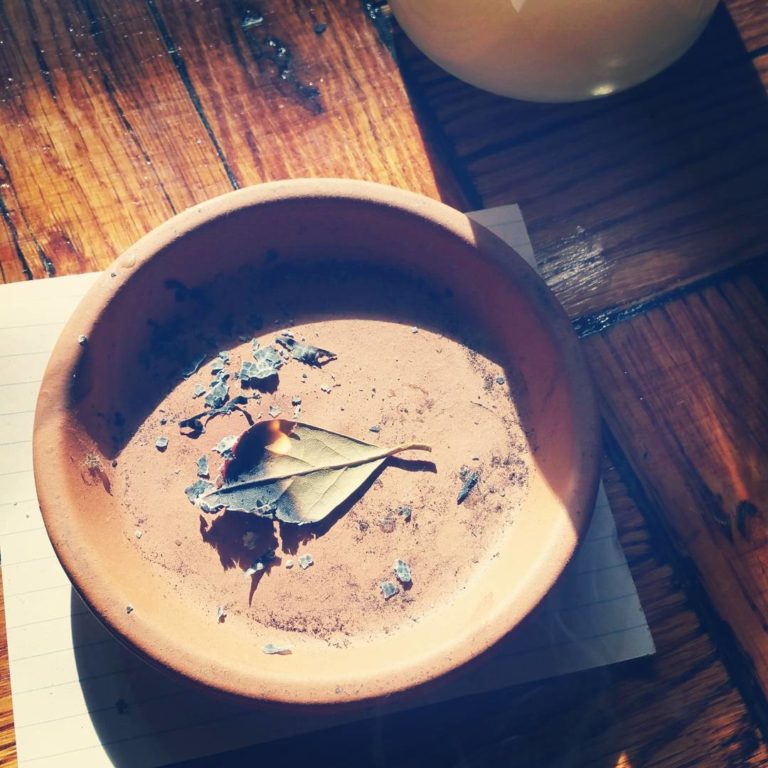
Some herbs, like white sage, are antimicrobial when burned. If you don’t use white sage, bay leaf has also shown some similar effects.

These measures will shift the most resistant energy patterns and restore the flow.

It’s important to note that these ingredients are all aromatic. That means that they might be too strong to be tolerated by someone with a respiratory condition or sensitivity to smells. Air everything out well afterward. Even if the smell is dissipated, the cleansing action is still there.

It’s also important to note that, if you’re dealing with a serious pathogen like the novel coronavirus, you should disinfect using a cleaner approved by the EPA for that specific purpose. Not every cleaner, herb, or oil is effective against every pathogen out there. If you know what bacteria, fungus, or virus you’re dealing with, make sure you knock it out first with a good disinfecting agent. You can clear the vibes afterward.

Bring in the New

Next, it’s important to bring in the kind of vibrations you want to have around. You can place crystals that correspond to the kind of energy you want to bring in (or the kind of illness you’re working on healing), but it should be noted that a lot of crystals come with energy you may not want. If you’re in doubt, find a piece of Arkansas quartz or a Herkimer diamond harvested by the seller. Arkansas and Herkimer county are home to some beautiful, powerful clear quartz crystals — you can ask for their assistance, inform them of your intent, and they’ll work just as well.

You may also want to sprinkle cleansing salt in the corners of the room. Plain sea salt is fine here, but you can create your own cleansing salt by combining it with your preferred herbs. Eucalyptus leaves, lavender buds, and dried lemon zest with some coarse sea salt all work well for this purpose.

Playing music helps, too. Music and sound have a powerful effect on our mental — and even physical — states. The frequency of a cat’s purr helps speed the healing of bones, muscles, and connective tissue. In one study, 528hz was found to lower biomarkers for stress. Even if you can’t replicate exact frequencies, your favorite music can have a strong impact on a room’s energetic imprint.

As a chronically ill person, I’ve found that I’m especially sensitive to when things start to go a little bit “off.” Even if you don’t have the energy to do all of the things on this list, doing just a few (opening a window, playing music, getting rid of some clutter) can help improve the feel of a place.

crystals · life · Plants and Herbs · Witchcraft

Cleaning House, and Don’t Try the Brown Mushrooms

Note: This post contains affiliate links to some items. These links allow me to earn a small commission, at no additional cost to you. Thank you for supporting small businesses, the post office, and this site!

This weekend, my partner and I decided it’d be a good time to give everything a nice, solid deep-clean. Everything. The windows, the stove, the weird, hard-to-reach area behind the toilet, everything.

Cleaning house is a great opportunity to refresh the energy in a place. While there are small, day-to-day things you can do to keep the flow from going stagnant on you, nothing really beats a solid top-to-bottom scrubbing and airing out.

Due to a combination of frugality and scent-sensitivity headaches, I make pretty much all of our cleaning products. (What I save in glass cleaner and counter spray, however, I more than spend on ethanol, vinegar, baking soda, and castile soap.) I keep a canister of homemade cleaning wipes in the bathroom, and another in the kitchen. I’ve got pretty cobalt glass bottles of spray cleaner on my kitchen counter, and another of tub and tile cleaner under my bathroom sink.

Frugality and lack of synthetic scents aside, the nicest thing about these DIY cleaners is that the ingredients easily pull double-duty; the same things that keep stains from my counters and rings out of my tub also have a history of use as spiritual cleansing agents. Make them on the right day, in the right moon phase, during the best planetary hour for whatever you’re trying to do, speak your intentions as you add each ingredient, and charge them by whatever method is preferable for you. (I would, however, advise against using sunlight — depending on what ingredients you use, heat and UV light might denature them, leaving you with a concoction that’s mostly water.)

We opened up the curtains and all of the windows. We played upbeat music. We scrubbed everything.

When the physical cleaning was done and my partner was figuring out lunch, I worked on the other side.

I love tarot cards. Not only are they useful divination tools, they’re useful aids for focusing magic. Whatever you’re trying to draw in or push away, there’s a card for that. In each room, I set up a small altar with a candle or incense, a clear quartz,and three cards: The Sun, The World, and the Ten of Cups.

94225825_253429959348725_986577567261655040_n
Cards from the Tarot de Maria-Celia. Massive Herkimer diamond from TheElusiveHerkShop. Lavender and lemongrass candle from SweetgrassApothecary.

These three cards are among the most positive omens in the deck. The Sun speaks of radiant positivity, abundance, and optimism. The World speaks of auspicious beginnings and infinite possibility. The Ten of Cups speaks of ultimate fulfillment. Good stuff to bring into your life and home, right?

I treated them the way you might treat a crystal grid — placing them, charging them, and releasing the energy. It was a small ritual, moving room-by-room, setting up each grid, and putting them to work, but it felt more uplifting and powerful than I can say.

I definitely needed it after the day before that. Friday, I had ambitious (well, relatively ambitious) dinner plans. I made penne, a quasi-homemade mushroom risotto, and grilled vegetables marinated in balsamic vinegar and herbs. Everything came out tasty, and all was well.

You know how some people have genetic quirks that keep them from enjoying certain foods? I don’t even necessarily mean allergies. Some people are lactose intolerant, some think cilantro tastes like soap, and so on.
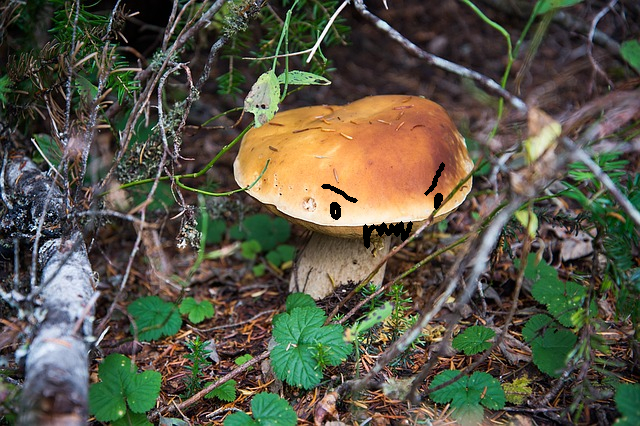
As it turns out, some people can’t handle boletes.
Like, really can’t handle them.

I am apparently one of them.

mushroom-1281733_640
More like “bol-eat-your-insides-apart,” amirite?

I know the mushrooms weren’t actually toxic, because they came in a prepared blend and I really hope Trader Joe’s knows better. I was lucky, though. Some pretty intense gastric pain and dehydration was the most I had to deal with, though I was legitimately concerned that I was going to need some kind of intervention if things didn’t improve quickly enough. I definitely didn’t want to need a spinal tap because my intracranial and blood pressure decided to shoot way up on me. I definitely definitely didn’t want to go to the hospital and have to explain that I was there because my dumb ass decided now was the time to try eating unfamiliar fungi.

Lesson learned. If you’re trying to avoid using ER resources, maybe stick with things you’re absolutely certain you can tolerate. Save the risotto experiments for the future.

Here’s hoping you’re safe, staying sane, and not eating anything weird.


life · Plants and Herbs · Witchcraft

DIY Bath Bomb Magic

Remember when I mentioned taking some magic bath bombs on the road?

Seeing as how they worked extremely well for my purposes, I figured I’d drop how I made ’em. Though they’re not exactly something I’d display in a fancy basket next to my Lush Perles de Sel, they smell fantastic and leave my skin soft (and, more importantly, magic af).

Bath bombs, the easy way

A basic recipe for bath bombs calls for three ingredients:

  1. 1 part acid
  2. 2 parts base
  3. Enough binder to get it to stick together

For most purposes, these are answered by vitamin C, baking soda, and water or oil. Put those together, and you’ll get a basic bomb that will fizz when it gets wet (and help remove the chlorine from your tap water at the same time). From there, you can play with additives, colorants, glitter, and any other ingredients that suit your purpose. You can also add one part of your choice of dry ingredients — dried herbs, epsom salt, arrowroot powder, or what have you — and enough skin-safe essential oil to fragrance the lot.

herb

So, for example, a sample love bomb recipe might look like this:

Continue reading “DIY Bath Bomb Magic”

life · Witchcraft

Have Familiar, Will Travel. Part II: Mobile Magic.

Note: This post contains some affiliate links to things I think might be helpful or interesting to you. They allow me to earn a small “finder’s fee” if you buy something, at no additional cost to you. Thank you for supporting cool people who make neat stuff, and this site!

Man, where do I start?

This trip came right when I was in the middle of a thirteen-day uncrossing. (It’s something I like to do periodically to ditch other people’s accumulated nonsense, in addition to regular clearing and protection stuff.) Fortunately, I was able to take it with me. This got me thinking — how do you perform spells or rituals on the road?

We were going to be gone for a week, so I knew I wanted to be able to handle whatever came up. Since we’d be in hotels every night, whatever I used had to be:

  • Discreet.
  • Transportable.
  • Smokeless. Not all hotels have smoking rooms anymore, and almost none have windows that can open. It’d be really rude of me to light a bunch of incense or diffuse oils in a confined, temporary space in a non-smoking room — what if the person after me has severe asthma or allergies? It’s one thing if I accidentally give myself a headache or trigger my allergies, but another thing entirely if I accidentally smoke out my cats or the poor unwitting soul who’s going to occupy the room after me. (Also, some places will heck of charge you if your room smells like smoke when you leave.)
  • Difficult for me to forget. This is saying a lot — I have a neurological disorder that makes me forget things very easily. I’m not even supposed to do things like cook, because there is a significant chance I will lose track of what I’m doing and burn my entire block down.

In the end, I settled on a couple of key items that I could use for pretty much whatever I needed to do.

Like a portable altar.

The altar structure I use only really needs three things: a tree, a well, and a hearth. These are somewhat malleable. The tree can be any representation of a tree, or even an upright stone. The well can be a cup. The hearth can be three candles. With a quartz point and three tea lights stored in a glass food saver, I had a tree, a well, and a hearth that could travel. (And I brought along a wand I made recently, so I could both have it with me, and see how well it traveled/held up to being in my purse for days at a time.) Score.

I also wanted to be able to do some more specific work in contexts where busting out an altar (even a portable one) and lighting candles wasn’t exactly… doable.

Continue reading “Have Familiar, Will Travel. Part II: Mobile Magic.”

Witchcraft

Autumn Rituals for Getting Your Energy Right

Not gonna lie, it doesn’t really feel like fall. Like, as I’m typing this, I’m also sitting in a tank top and shorts, drinking ice water while I wait for my place’s maintenance dude to come fix the air conditioner because it’s supposed to be near 90°F.  Butts.

Nevertheless, the autumnal equinox has passed, so it is (at least technically) fall. It’s the end of the year, Samhain’s coming, the veil is thinning, and the weather will hopefully be cooling off soon. All of these things make this the perfect time to let the past year’s badness go, cleanse yourself and your stuff, and get yourself ready to face the next season right.

Do a Solid Fall Cleaning

Everyone’s familiar with “spring cleaning,” but I love fall cleaning. Besides, most places seem to benefit from doing a good, heavy, deep cleaning more than once a year, you know? So, let’s get ready to turn this into a ritual that will cleanse more than just baseboards and the dark, forbidden area under the fridge.

In a lot of magical practices, hoodoo especially, floor washes are a pretty important tool. You sweep your house, fill your mop bucket, add the floor wash of your choice, do the appropriate spiritual bits, and mop your home from back to front. You can buy floor washes prepared, but I usually skip them and add lemon juice or herbal infusions to mine instead.

(It should also be noted that my apartment is tiny, so I get by with one of those reusable spray mops more easily than an old-school mop and bucket situation. I feel a little more confident in spray mops if I know exactly what’s going into the reservoir, so I don’t end up with a solution that’s going to damage my reservoir or pads. YMMV.)

So! If you don’t have a ready supply of dried cleansing herbs in your cabinets, here are some purification herbs that are likely ready for a fall harvest:

Continue reading “Autumn Rituals for Getting Your Energy Right”