
animals

The Magical Meaning and Symbolism of Turkeys

In the US, this coming Thursday is Thanksgiving. This holiday has a fair amount of folklore and mythology itself — much of which doesn’t actually come anywhere near explaining the truth of the first Thanksgiving. Rather than recount this (especially when so many historians, Indigenous and non, have already done so) I figured I’d look into the creature that is symbolic of Thanksgiving for so many Americans.

The turkey.

I like turkeys (Meleagris species). I think they’re beautiful, for the most part, and I love the noises they make.

wild turkey
Photo by ASHISH SHARMA on Pexels.com

(Once, as a tiny child at a Powwow at Queens County Farm, I found a turkey egg. It was unfertilized, of course, but I didn’t know that. I made a small bed for it out of a sweatshirt because I thought sacrificing my hoodie would be enough to keep it warm until it hatched. What I was going to do with a turkey chick after that, nobody knows.)

Turkeys came by their name via a very circuitous route. Originally, colonists thought that they were a kind of guineafowl, an African bird imported through Türkiye. Hence, the turkey.

An Akawaio story speaks of a terrible flood and explains how several animals got their unique traits — turkey included. Makunaima created a single tree that bore food. He also made all of the animals and placed Sigu, his son, in charge of them. While Makunaima was away, Sigu thought it best to cut the tree down and spread the seeds and cuttings so food would be more abundant. Unfortunately, upon felling the tree, Sigu and the animals discovered that the stump was hollow and filled with water and all kinds of freshwater fish. The water began to rise, and Sigu contained it under a magic basket.
Unfortunately, Monkey lifted the basket and release the water again, so Sigu led the birds and climbing animals to tall trees for safety, and all of the terrestrial animals into a cave sealed up with wax to keep the water out. Sigu remained in the trees with the birds and climbing animals and, one day, he tried to make a fire. He rubbed two pieces of wood together until a spark appeared, but Bush-Turkey was so hungry that he mistook the spark for a firefly, tried to eat it, and burned himself. This is why turkeys have red throats to this day.

two black turkeys
Photo by Kranthi Remala on Pexels.com

Many old tales portray turkeys as foolish or gullible figures, from some Indigenous American legends to children’s stories like Chicken Little. In fact, a lot of people still believe that turkeys are so unintelligent, they drown in the rain because they stare up at it. They do sometimes look up at the sky for no reason, but this is because of tetanic torticollar spasms — a genetic problem exacerbated by breeding for sizeee and rapid growth, not fitness.

Fortunately, not all stories depict turkeys as foolish. In one Zuni tale, a girl who tends turkeys longs to go to a dance with everyone else. The turkeys, knowing she’s taken such good care of them, promise to help her by dressing her so beautifully that nobody else would recognize her. They only have one condition: She must enjoy the dance but not forget the turkeys who helped her go.
The turkeys keep their word, and the girl is able to enjoy the dance. She enjoys it so much, in fact, that she forgets about the turkeys. Annoyed to find that she clearly doesn’t care enough about them, the turkeys leave captivity and run off.
The girl chases and chases them, to no avail. Not only can she not catch up to the turkeys, all of the dust and sweat from running has turned her beautiful clothes to rags again.
This is why, when you look at Shoya-k’oskwi (Cañon Mesa), you can still see the tracks of the turkeys embedded in the stone.
This story highlights the importance of remaining in balance with the animals that give so much to humanity. In it, the turkeys aren’t foolish or gullible — they’re grateful to the girl and trust her to do the right thing. She takes their gifts and forgets to return to care for them, so they leave.
One version ends with, “if the poor be poor in heart and spirit as well as in appearance, how will they be aught but poor to the end of their days?”

The Aztec deity Chalchiuhtotolin (Nahuatl for ‘Jade Turkey,” also known as The Jeweled Fowl) is a disease and plague deity. Unfortunately, researchers don’t seem to have much more information about this figure.

In Hopi kachina ceremonies, there’s the Koyona (turkey) kachina. This figure is unique in that it only dances either at night, in the kiva with other birds, or during the Mixed Dances in the springtime.

wild turkey bird
Photo by Chris F on Pexels.com

A common bit of modern lore says that eating turkey makes you sleepy. While turkey does contain tryptophan (which the body converts to serotonin and melatonin) so do a ton of other foods. The urge to take a nap after eating turkey comes from eating a lot of food, not the turkey itself.

Ben Franklin also didn’t push to have the turkey made the United States bird. He wasn’t even part of the 1782 committee that finalized the design of the US seal. In 1784, he wrote a letter to his daughter in which he complained about the Society of the Cincinnati, a military fraternity. Part of his criticism was of the Society’s badge, which included an eagle.

As a birds from North America, turkeys aren’t represented in European, Asian, African, or Middle Eastern mythology. They don’t appear in the Bible, Greek or Roman legends, Celtic oral traditions, nada.
(That said, people in Europe did start farming turkeys pretty much as soon as they got their hands on them in the mid-1500s. Ironically, turkey probably wasn’t present at the first Thanksgiving.)

Since turkeys don’t have a whole lot of representation in world mythology, they’ve been kind of shafted. Colonists, in general, didn’t really care about their place in Indigenous traditions or legends. They were big, dumb birds and it made economic sense to make them bigger and dumber because you get more meat that way. Enter: The Broad Breasted White, America’s most popular commercial turkey.

Turkeys are often symbolic of gullibility and a lack of intelligence.

It’s said that dreaming of a turkey means that you’re acting foolish. If you dream of a turkey flying, then it may represent a rise from obscurity to fame. Dreaming of a dead turkey may symbolize a bruised ego or attack on your pride.

Turkey feathers appear in various magical traditions as representations of birds, animals, and the element of Air. When you buy “imitation eagle feathers,” for example, these are usually actually dyed board breasted white turkey feathers.

Thanksgiving is celebrated as a day for feasting and gratitude, but it isn’t like that for everyone. This year, remember the Mashpee Wampanoag and Wampanoag Tribe of Gay Head who not only suffered the effects of colonization, but the continuing insult of having a false, sanitized version of their own history forced on them and their children. If you are able, please donate to help them continue to preserve their language and culture, as well as provide necessary services to their members.
animals · life

Pagan Pride 2024! (In which I meet some very handsome lads.)

This past Saturday was Pagan Pride at the Unitarian Universalist Congregation of Frederick. If you’ve never been, I highly recommend it — there’s live music, workshops on a variety of subjects, food, and tons of vendors of all kinds of cool stuff!

(I, personally, came away with a mug, some artwork, a mushroom-shaped incense holder, a pin, a set of earrings, dried organic lavender, magnesium butter, a really cool jar shaped like a skull, a hand-dyed and block printed bandana, and a display of a mossy log set with three corked test tubes. The stump in the front yard has been putting out a ton of interesting mushrooms lately, and I’ve been dehydrating what I can identify. I’m looking forward to displaying them once they’re done!)

This year, I decided to skip the workshops in favor of hanging out with friends (actually, many of the friends that I just saw at the Mabon celebration), listening to music, and eating delicious sorbet. The Street Cow‘s Cowabunga sorbet pop is non-dairy, real fruit puree, and awesome.

An image of a series of moon-shaped suncatchers. They're all made of copper wire, decorated with gemstones, brass charms, and crystals.

Also, I met some very handsome lads.

This is Spectre.

An image of a snowy owl, with his beak agape.
Spectre is fine, it was just toasty out and he is a young boy who is very excited to see new things.

He was part of Avian Encounters, a group of falconers who provide people with the chance to learn about and see raptors close up. These are all trained birds, kept by licensed professionals who know how to properly feed, care for, and mentally engage them. Getting to see birds like this up close is a rare and fascinating experience.

They also had a little screech owl, an American kestrel…

And (oh, be still my heart) a gorgeous African pied crow.

A close up of an African pied crow, showing their distinctive white chests and backs. They look like black crows that are constantly wearing little white sweater vests.

“May I take a picture of him?” I asked, barely able to contain my excitement.

“Sure! If you make a donation, you can also hold him and take a picture.”

!!!!

A photo of the author with the pied crow perched on their arm.

Needless to say, I did. He sat still for a short video (the picture to the right is a still), before hopping back to his handler. The whole time, I gushed to him (like a starstruck dork) about how pretty he is.

Human celebrities are all well and good (I saw one of my favorite musicians not long ago and managed to be surprisingly normal about it). A really cool bird or bug, though? I will absolutely lose my mind.

Pagan Pride is delightful every year, but this year was particularly special. I really hope Avian Encounters is there next year, too — the birds are all beautiful, alert, and well cared-for, and it’s a great opportunity to learn more about them and get some close-up reference photos for paintings.

animals · Neodruidry · Witchcraft

The Magical Meaning of Feathers

Right about now, several species of birds have turned the area around my house into a kind of avian daycare. Again.

There are birds of every distinction turning up, kids in tow. Most of these kids look almost exactly like the adults — the starlings, for example, are fully the size of their parents and the only difference is that some still have their brown feathers. The baby crows look just like their parents, save for being a little smaller and still having pink corners on their beaks.

Since these babies are rapidly transitioning from their juvenile plumage to their full adult feathers, that means that they’re molting. You can find feathers everywhere — mostly fluffy white down, but the occasional primary feather, too. That’s why I thought that it might be a good idea to write a bit about the magical meaning of feathers.

A barred feather caught on a leaf of a tree.
Photo by Eftodii Aurelia on Pexels.com

Before I do, though, there’s one important caveat: All parts of native birds, including shed feathers, are protected by the Migratory Bird Treaty Act of 1918. This is to protect them from poaching by ensuring that there isn’t a legal market for their feathers, bones, etc. If you see a shed feather outside and you aren’t sure if it’s from a native species, invasive species, or domesticated species, leave it right where it is.

Feather pillows can also be a source of ominous omens. In Appalachia, death crowns or angel crowns are complex, crownlike whorls of feathers found in the pillows of the deceased. Usually, they’re only found after the person has died — it’s unlikely that anyone would go probing their pillow for death crowns otherwise. However, it is said that, if you find and break up a death crown in someone’s pillow, you can prevent their death.

In Celtic legend, feathers are commonly associated with the Otherworld. Some fairies are said to wear cloaks trimmed with red feathers, and The Morrigan wears a cloak of black ones.

The Morrigan isn’t the only goddess to have a feather cloak. Freyja, the Norse Goddess of love, war, sex, and magic, is said to have a cloak of gray falcon feathers (fjaðrhamr). This cloak grants her the ability to shape-shift into a falcon at will.

In Egyptian legend, Ma’at is associated with the Feather of Truth. She is the personification of truth, justice, and balance, and this feather is a representation of her. When a person dies, their heart is placed on a scale and weighed against this feather. The hearts of virtuous people are lighter than this feather, and they are allowed to pass on to Aaru, the Field of Reeds. The hearts of the wicked are heavy, and they are devoured by the goddess Ammit.

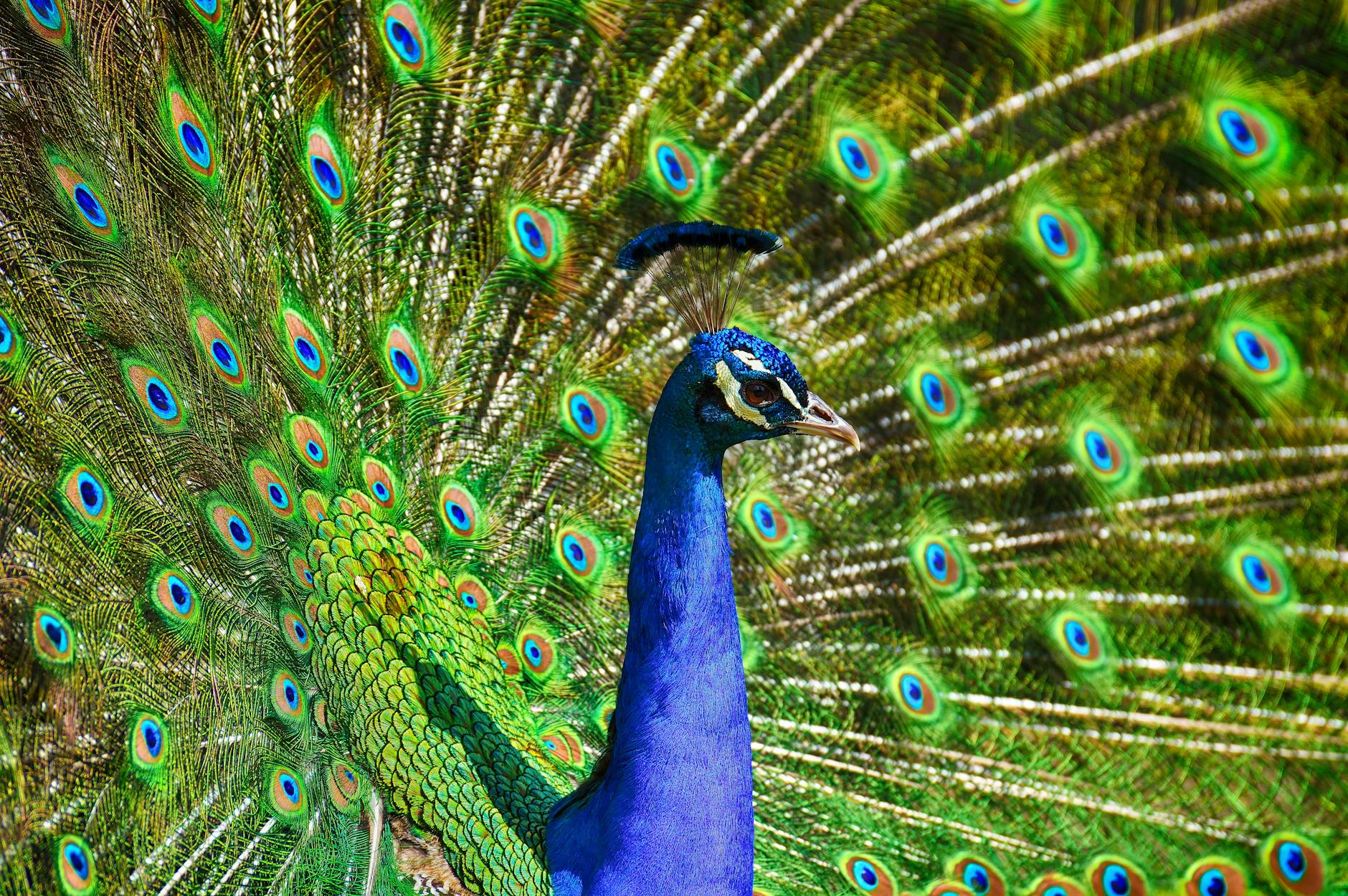
In Greek legend, Hera, the Goddess of marriage, family, and women, took the peacock as her sacred animal. She’s also the one responsible for the male peafowl’s beautiful, unusual plumage.
When Zeus seduced Io, he knew his wife would be jealous. He either turned Io into a white cow (another one of Hera’s sacred animals) to protect her from his wife, or Hera transformed her herself. Either way, Hera set the many-eyed giant, Argus Panoptes, to watch over her new prized cow. Having many eyes, he only needed to close a few at a time in order to sleep. This made him the perfect watchman… until Hermes came along.
Zeus asked Hermes to free Io. Hermes, in turn, disguised himself as a shepherd and used charms to put all of Argus’ many eyes to sleep at once, then killed him. Having lost her watchman, Hera immortalized him by placing his many eyes on the tailfeathers of the peacock.

A male peacock, tailfeathers spread to show their distinctive eye-spots.
Photo by Alexas Fotos on Pexels.com

In North America, Indigenous people have also attached significance to feathers for ages. Eagle feathers, in particular. (I remember being at a Powwow where another dancer I knew had dropped an eagle feather. It was retrieved from the ground with ceremony, treated as a fallen warrior. It was a very emotional experience, especially for her.)
Indigenous textile artists have also woven feathers into warm blankets and beautiful garments (sometimes called match-coats).

In modern witchcraft, feathers are commonly used as representations of the East or element of Air.

In addition to representing the East, Air, multiple deities, and various concepts of the Otherworld, feathers are also considered an “angel sign.” These “angel signs” are a collection of circumstances that are said to indicate that one’s guardian angels, spirit guides, or ancestor spirits are nearby. They include finding white feathers or shiny coins, hearing mysterious music, or smelling sweet, unexplainable smells.
It’s important to be careful with angel signs, however, since so many of them have mundane explanations. It’s very easy to get caught up in looking for signs, start interpreting everything as some kind of “angel sign,” and end up in spiritual psychosis, where the desire for significance blurs the line between reality and delusion.
Sometimes, an angel number is an angel number. Sometimes, it means you spend too much time looking at the clock. Similarly, sometimes, finding a feather is an “angel sign.” Sometimes, it means your neighborhood has stray cats.

Feathers are also subject to color symbolism. Finding a feather of a specific color is said to have a specific meaning. For example:

  • White feathers are positive omens, or indicate the presence of benevolent beings.
  • Black feathers symbolize protection.
  • Red feathers can represent protection, passion, or good fortune.
  • Blue feathers represent peace.
  • Green feathers symbolize abundance or fertility.
  • Yellow feathers represent joy.
  • Orange feathers symbolize creativity.
  • Ground feathers are omens of stability and groundedness.
  • Gray feathers, like blue ones, represent peace.

Of course, all of this is highly contextual. If you’re at a duck pond, the presence of white or gray feathers is unremarkable and not likely to represent anything but the presence of ducks.
On the other hand, finding a bright green feather in your yard, when you don’t have an abundance of green birds in your area, may be a bit more significant.

Feathers represent all kinds of things, but their primary association is with the fine line between this world and the others. They are tools of shapeshifters and symbols of creatures capable of traveling between worlds. If you find a feather outside, appreciate it for its beauty, see if you can identify what species it came from, and leave it be to return to the soil. If you work with feathers in your practice, source them from pets or well-treated backyard fowl.

animals

The Return of Boink!

Remember Boink? The weird little scrunglemuppet who spent an entire summer living on top of my shed?

He’s back. At least, I’m pretty certain sure it’s him, though he appears able to fly now. This crow has a distinctive appearance and a set of behaviors I had previously only observed in Boink, so I am somewhat confident in my assertion that The Shed-Dwelling Scrunglemuppet Has Returned.

Last year, he spent evenings roosting in the big apple tree, and mornings and afternoons sitting on top of the shed. When I went outside, he’d run to the far side to “hide.” If he heard the back door close, his little head would pop up over the shed’s roofline to see if I was still there. If not, he’d hop his way over to the feeders to grab some food before the other crows came.

Now, he appears with the rest of the family. He still appears to be pushed away from the food and scolded, and he still does the same goofy little run, but he’s at least better able to get away from predators. I don’t think there are many animals who would go out of their way to eat a Boink, but there are certainly creatures who would take the opportunity to hunt a land-locked crow.

Two crows at perched on a deck railing near a feeder. One is larger and sleeker. The other is smaller and distinctly scrungy.

Boink still has to be a bit opportunistic when he eats. He’s still scrungy. His tail is still kind of karked up, and I don’t think he’s capable of not looking bedraggled, but his flight feathers are back and that’s what’s important.

Good job, scrunglemuppet.

animals · life

The Magical Meaning of Grackles

The first time I saw a grackle, I mistook it for a crow for a split second. It was only when I noticed its long tail and absolutely furious facial expression that I was like, “Oh.”

While grackles are typically pretty gregarious birds, we have a single male boat-tailed grackle (Quiscalus major) that visits the back yard here. He’s very pretty — black at first blush, but iridescent shades of peacock blue, bronze, and violet when the sun hits just right. Unlike crows, he also has light eyes. (Which, I think, lends to the whole expression thing.)

A grackle, with a classic irritated expression.
A male grackle. Photo by Gabriel Espinoza on Pexels.com

He’s usually very difficult to get a picture of, since he’s nothing if not wary and easy to startle. Lately, he’s been coming closer to the kitchen window and displaying more curiosity. I thought it might be a good time to write a post dedicated to these beautiful, interesting birds.

Most grackles move in large groups, called “plagues” or “annoyances.” This might seem unfair — worse than a murder of crows, even, or an unkindness of ravens — but it likely comes from their ability to decimate corn harvests. They’ll show up to follow behind plows in order to grab the turned-up worms, insects, and mice that wind up in the furrows (which isn’t really a bad thing, if you’re a farmer) but they’ll also descend on ripe corn to feast on the grain.

Grackles can be a bit of a problem for bird feeders, too. Smaller than crows, they’re quite happy to avoid the work of digging up worms and bugs and instead go for the nice, nutritious seed in a feeder. Where a crow or other, larger bird will ignore things like thistle and millet, grackles will dive right in. This can end up leaving nothing for seed-eating songbirds, so many people aren’t too stoked about seeing a crowd of grackles turn up in their yards.

Nonetheless, these birds have an important role. Unlike many small songbirds, which primarily feed on seeds and don’t dig up burrowing insects, grackles help control pests like invasive grubs and worms. During the time of year when seeds are the most abundant and make up a larger portion of their diet, they also help propagate them in their feces.

Not everyone finds these birds to be nuisances, either. In the late 1400s to early 1500s, the Aztec Emperor Ahuitztol purposefully introduced great-tailed grackles (Quiscalus mexicanus) into the capital Tenochtitlan and the Valley of Mexico. These birds were taken from the Aztec provinces of Totonacapan and Cuextlan in the Totonac and Huastec regions of Mexico, and received plenty of human intervention to help them establish themselves and grow their numbers in their new home. They were well protected and well fed, which allowed their population to take root.
These birds were named teotzanatl, which roughly translates to “divine” or “marvelous grackle.” Certainly a far cry from calling them a plague or annoyance!

(This is far from the only case of something like this happening. Aztec emperors kind of had a thing for bringing in exotic plant and bird species, and even importing special gardening staff to help their new acquisitions thrive.)

Interestingly, these grackles were protected — not only by guards, but also by public shaming. It’s uncertain why this was so necessary, unless attempts to hunt the birds were legitimately an issue. This could have been because they’d become pests, or because their feathers were considered very valuable. Probably both.

A grackle, showing its light yellow eyes and brilliantly iridescent feathers. Its mouth is open and it looks genuinely offended.
A male grackle. Photo by Tina Nord on Pexels.com

Grackles are also the subject of an ancient legend. In it, Zapate the great-tailed grackle was unable to sing. Being a very clever, tricky bird, he stole songs from the sea turtle. This left the turtle without a voice, and the grackle filled with… well, all kinds of noises.

While they aren’t members of the corvid family, they share crow, raven, and magpie’s intelligence. They’re able to solve puzzles, catch fish, and will even clean the grills of cars in order to get at the tasty, tasty smushed bugs.

Grackles also seem to be uniquely equipped to detect the Earth’s magnetic field due to natural deposits of magnetite in their little heads. This may be helpful for navigation and migration.

In general, these birds are said to represent caution, resourcefulness, and community support. Be cautious, however — the appearance of a grackle is also considered a symbol of misfortune.

As with a lot of birds, you often have to pay attention to what they’re doing when you see them since their behavior can color their meaning.

For example, a bunch of grackles can represent friendship, community, and support. A single grackle, not so much.

A grackle foraging or stealing food can be a sign that you need to be resourceful. You may be entering a time when you’ll have to survive by your wits.

These birds also engage in a behavior called “anting.” There, they crouch and spread their wings over anthills. As the tiny insects scurry over them, they pick off mites and release formic acid, which helps repel pests. These birds will also fumigate themselves with everything from stolen moth balls to discarded cigarette butts — whatever keeps the feather mites away.
If you see a grackle anting or fumigating themselves, it may be a sign that it’s time for some reflection, spiritual cleansing, or actual decluttering. You might need to schedule some time to take inventory, clear some of the chaos from yourself or your environment, and make a fresh start.

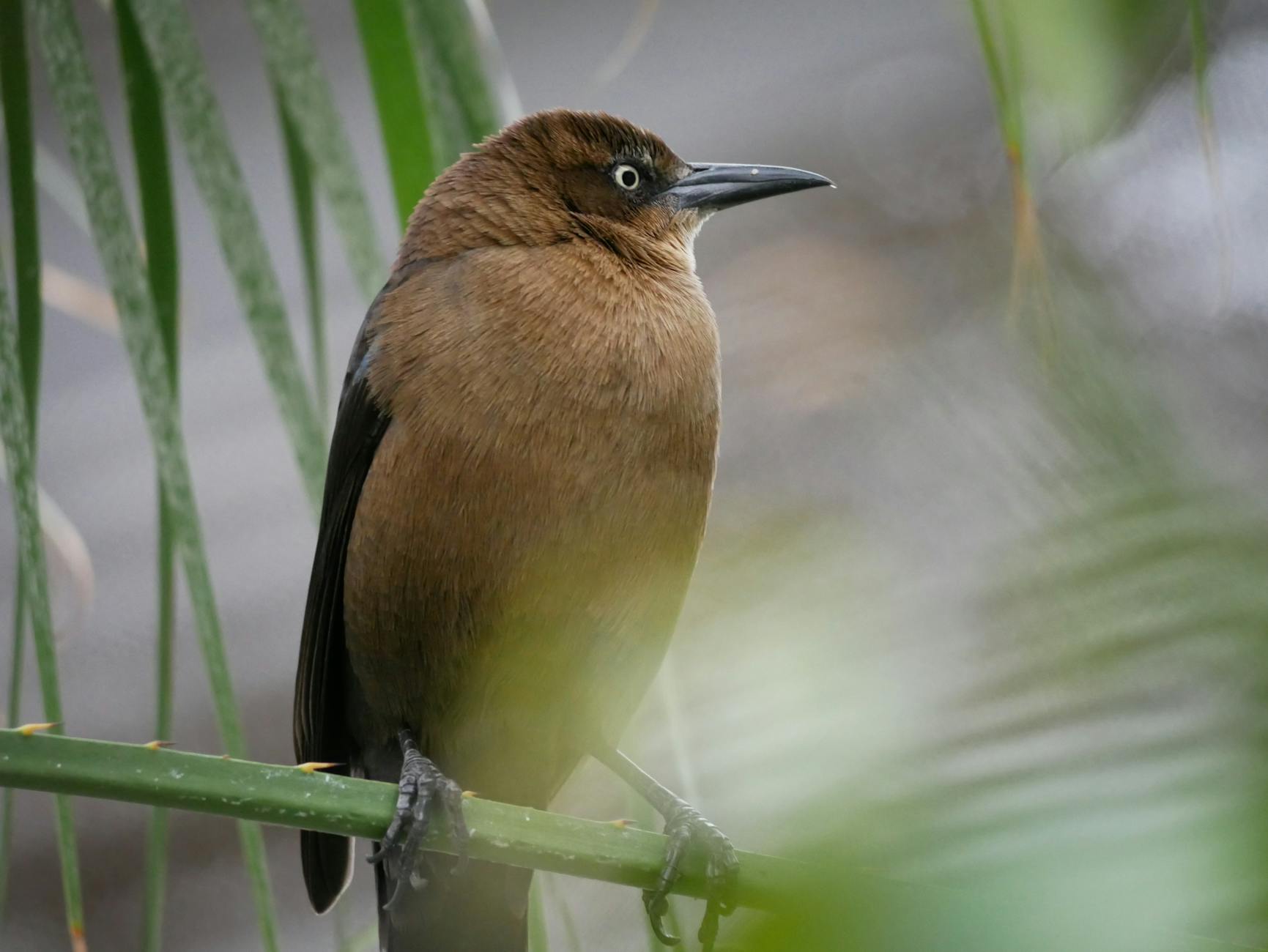
A female grackle, displaying soft reddish brown plumage.
A female grackle. They lack the dark, iridescent feathers of the males, instead displaying beautiful shades of a rich brown. Photo by Connor kane on Pexels.com

No matter whether grackles are a welcome sight to you or not, these are brilliant, beautiful birds with a fascinating history. From dumpster scavengers to the protected birds of an imperial house, they have lived closely with humans and fulfilled many roles for ages.

animals · life

What I’ve learned from coexisting with crows.

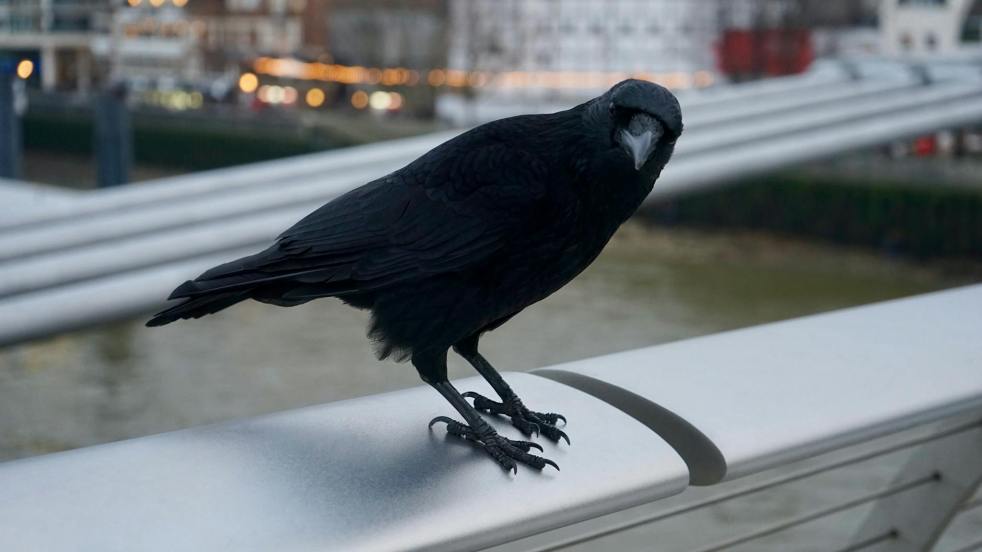
Crows (and corvids in general) can be pretty divisive. I don’t think I’ve met someone who can just take or leave them — it’s always either a fervent love, or a deep dislike.

And I get it, honestly. They’re noisy. They’ve been known to eat nestlings, eggs, and small mammals. To many, they’re a nuisance and they don’t understand why anyone would go out of their way to make their yard more attractive to these birds.

Ever since we moved here, I’ve been feeding a small family of crows whom I’ve come to love dearly. I’ve hesitated to feed other species, because I don’t want to encourage them to congregate (and potentially spread avian flu) when that isn’t their normal feeding pattern. While the debate about feeding birds and crow/raven behavior will likely never come to an end, here are a couple of things I’ve personally observed when making an effort to coexist with crows:

With most members of corvidae, you’re dealing with a very intelligent animal. With crows specifically, something on the level of a toddler or a very bright dog.

I wanted to mention this right off the bat because it heavily impacts a lot of my other points.

In general, crows aren’t really hunter hunters. They do eat meat, and they will eat young, weak, or sick animals, but they’re opportunistic feeders. If the opportunity isn’t there, or there’s an easier source of high-value food somewhere else, they’ll go elsewhere.

Crows are also a prey species for larger carnivores. When they’re eating, they’re vulnerable because their attention is directed toward that and not toward looking for threats. This is why groups typically have a sentry or two, to keep an eye on things while the others feed.

A blue jar, perched on a twig, looks over his shoulder.
A blue jay, one of the more colorful members of the corvid family. Photo by Pixabay on Pexels.com

They’re also still wild animals, no matter how closely they may coexist with humans. Wild animals will go for easier-to-get food sources whenever possible, because more challenging ones a) aren’t guaranteed, and b) require more effort (read: calories) and attention to access. The exception to this seems to be when there’s a particularly appealing, usually calorie-dense food item available that’ll make up for the potential danger and extra effort expended to get it.

With the above things in mind, you can direct their behavior to a degree.

I’ll give you an example. When I worked in pet retail, I had customers that’d come in and complain that squirrels and large birds that kept getting into their bird feeders. We had tons of anti-squirrel technology available — baffles, special lubricants for poles, specially shaped feeders, and even battery powered ones that vibrated, spun, or did all kinds of other gymnastics. I’d gently try to guide these customers to dedicated platform feeders and bags of corn, but they always turned it down.
No matter what they bought, they’d be back in a few weeks for something else. A greased pole was no longer enough, because the squirrel learned how to jump from a tree at just the right angle to defeat it. A specially shaped feeder wasn’t enough, because the crows would team up to work around it.
The cycle would inevitably repeat, until they finally just gave up and bought the platform feeder and the bag of corn. After that, the squirrels and large birds would eat the easy to access food, and the smaller birds had their own.

Since this crow population was already established here (and has since grown due to habitat destruction caused by some recent construction), giving them high-value, easy to access food has ensured that I get to keep more of the fruit and vegetables from my garden. This isn’t just because the crows don’t take as much, either — they’ve also done quite a bit to keep various garden pests away.

I don’t leave their food unattended — I usually feed them items I know they like, then sit out there just a few feet away with my own lunch. I have never once been harassed for my food. I’m pretty sure it’s because, like other intelligent animals, they’re able to distinguish between what food is given to them and what food is mine. Why bother me to eat off of my plate, when their plates are right over there? Why run the risk of a potential conflict with a human when they have accessible, desirable food already?

This study covers the relationship between various predator and prey species. One of its findings is that, as prey species numbers increase, so do predator species numbers, and there isn’t strong evidence that native (non-invasive) predators alone drive species decline.

A single predator, or small group of predators, can impact local numbers of prey animals, but don’t appear to correlate with a decline in overall numbers. The thing here is that crows are, like I said, opportunistic. They take prey from nests, where other predators are more likely to be less discriminating and take reproductively mature animals (since those are the ones they’re most likely to encounter out and about). Many corvids are also very territorial — an established family of crows will actively drive off other, larger, less opportunistic predators. They appear to exert both a predatory and protective influence on local prey species.

A crow, perched on a fence, observes a distant group of people.
A crow. Photo by mali maeder on Pexels.com

While I offer food for the local birds and squirrels, I’m careful not to do it every day. (Water, on the other hand, is always available.) Nobody goes hungry, and there seems to be less impetus for them to eat what I’m growing or trying to protect, but they still need to engage in natural foraging behavior.

This works in my case because this crow family had already established this area as their territory. If you listen to their calls, you can hear them relaying from one tree to the next. While they’ll cover a lot of ground in order to find food and water, a sentry alerts the others when there are snacks available. They can go about their business and stop by when there’s food.

(One funny thing I’ve noticed is that their vocalizations change when I’m on the deck, whether I’m putting food out or not, like they’re telling everyone that it’s almost time to eat. Once, I was only watering a few plants and went right back inside, and I got to hear a very excited crow call trail off into something that sounded unmistakably like disappointment.)

Crows (and many other members of corvidae) will get into dumpsters if there’s an opportunity, somewhat rightly earning them the nickname of “garbage chickens.” Stories abound of people feeding them fries, chips, and other very palatable, salty, oily, and largely carbohydrate-based foods. These really aren’t optimal dietary contributions for them, though, and having a positive relationship with your local corvids should mean taking their actual nutritional needs into account.

I explored the foraging habits of crows, plus the diets fed to pet pied crows in captivity as well as crows and ravens at rehabilitation centers. In the end, I came up with a mixture of cat or puppy kibble, cracked corn, raisins, and a low sodium, unfortified cereal as a base. To that, I add hardboiled eggs (cut into quarters, shell attached), dried mealworms or black soldier fly larvae, peanuts (in the shell), and fruit, depending on what I have on hand. Sometimes, if I have the leftover tail end of a loaf of homemade bread, I’ll cut that into cubes and toss it in too. This all seems to work out pretty well — they appear to enjoy it, and they’ve got some of the darkest, shiniest feathers I’ve ever seen on an urban crow.

One thing people bring up often is that crows will get used to humans, which will cause problems.

There are definitely cases of birds, including corvids, losing their fear in areas with frequent, close contact with a variety of people. Anyone who’s ever tried to eat French fries on a boardwalk can probably give you several examples.
(I was almost eaten by a pelican when I was little. It was a defining experience.)

I can’t speak to this in general, but I can point out my own observations as someone dealing with an urban crow population that already has a lot of incidental contact with humans. Like I mentioned above, I also stay out there by the feeders after I fill them. While the family of crows has certainly grown bolder with time, this change in behavior seems to be limited to me. If I’m out there and my Handsome Assistant joins me, their behavior switches gears immediately. They keep their distance, and even make some unique vocalizations. If I’m there with a stranger, the difference is even more stark. As intelligent animals with the capacity to recognize individuals, they seem to have drawn some very firm lines between “human what puts the food,” “other human,” and “some guy, idk.”

One interesting experiment with ravens kind of highlights this. A researcher was teaching a raven to trade, by offering the bird a small piece of cheese (a high-value food item) in exchange for a piece of bread (a lower-value one). At one point, the researcher accepted the raven’s bread, then had the audacity to eat the cheese right in front of them. The raven, understandably pissed, refused to engage in any more trading exercises… but only with that particular researcher.

Animals have their own agenda, though it’s often tempting to see them through a humanized lens. I’ve seen a lot of posts from people asking why their local population of crows just left — do the birds not like them anymore? Did they offend them somehow???

The truth is, wild animals have their own schedule. They likely won’t, don’t need to, and shouldn’t come hang out every day. During summer, when a lot of fruits ripen and grains are harvested, crows are likely to go off to agricultural areas to eat the dropped grain. They also have babies, so they’ll be off doing parent activities. In winter, they may need to go to a more desirable climate or more abundant food and water source. If the larger murder of crows is going off to do something, a given crow family will go with them.

If they stop showing up for a while, it can honestly be a good sign because it means they’re still being wild birds. It might suck if larger carnivores move in and start causing trouble in their absence, but that’s nature for you.

A magpie, flying in front of a group of rose bushes.
A magpie. Photo by Manuel Torres Garcia on Pexels.com

On top of all of this stuff, I’ve also noticed some interesting impacts on my hyper-local environment since I began putting food out for these birds:

In the beginning, I was lucky to get some house sparrows, starlings, and the occasional mourning dove. As time goes on, I’ve begun to see more species. Like, a lot more. Blue jays, cardinals, finches, dark-eyed juncos, woodpeckers, and grackles, to name a few. (Even a mockingbird that has absolutely given the crows a run for their money when it comes to territoriality.)

Part of this may be because there’s more food available, but most of the food I put out consists of things that would appeal to crows and jays, not necessarily other species. I have, however, noticed that the local crows do a lot to keep the smaller birds safe, because…

I’ve written before about how this family of crows have effectively become my unpaid, unasked-for yard bouncers. In addition to dispatching particularly chaotic squirrels, I’ve seen them bounce bigger predators, too. They’ll get together and mob a hawk (which is honestly fascinating to watch). They’ll chase away stray and feral animals. They’ll even warn me if there’s a particularly suspicious snake in the vicinity. They’ve kept rats, mice, and grubs away, too.
They have very definite ideas about Who Belongs and Who Does Not.

These crows seem like a protection racket. Like a dragon that demands an occasional sacrifice from a local village, or a rat snake that keeps mice and rats out of a chicken coop in exchange for the occasional egg. It’s weird, but I’ve seen them on my deck, coexisting perfectly fine with the smaller birds and other squirrels… So, I guess it’s all chill?

Granted, a lot of this is because I’m not particularly fussy about garden borders. If something neat springs up, isn’t a noxious weed, and won’t run the risk of poisoning me, I’m inclined to let it be and see what happens.

As it turns out, “what happens” is a ton of volunteer tomatoes, corn, grapes, and berries. (The smaller birds even planted a bunch of millet and broccoli.)

They’ve also brought me occasional small gifts, but I can’t eat those.

When it comes to coexisting with these incredible animals, the important thing to remember is that a) they’re very smart, b) they have the capacity to remember and distinguish between individuals, and c) they’re wild. While it might seem flattering to feel needed and loved like you would with, say, a dog, that’s counterproductive to a wild animal’s survival both physically and mentally. It is possible to interact positively with them without harming their ability to live without you, and this should be the goal of anyone who really loves these birds.

animals · life · Witchcraft

The Magical Meaning of Mockingbirds

I’ve been filling the little raised bed next to the house. It isn’t much, just a long, sturdy box made of cedar planks, but I didn’t want it to sit fallow for too long. I built it last autumn, a bit too late in the season to plant anything, but that’s okay — my objective was mainly to set it up and observe how it interacted with its surroundings. Would it get enough rainfall, or accumulate too much? Would the sun fall on it in the right way, or would it be too shady all day long?

Anyhow, gardening angsting aside, I returned from filling the bed with soil and compost to see a mockingbird eating on the deck. They eyed me curiously, but not warily, and didn’t seem to care much about what I did or how close I came. I said, “Hello.” They went about their business. It was all very chill. It was also interesting, because I’ve never seen a mockingbird back here before. There’ve been plenty of crows, starlings, a blue jay, juncos, house sparrows, a pair of cardinals, and absolute loads of morning derps, but no mockingbirds.

A close up of a gray mockingbird in green grass.
Photo by Tessa Riley on Pexels.com

That got me thinking: What kind of omen is a single, friendly mockingbird?

Mockingbird, known as Yapa or Yaupa, is a spirit that figures in Hopi Katsina ceremonies. Mockingbird is credited as the spirit being who first taught mankind to speak.

The Shasta people, a linguistic group of Indigenous peoples from the Klamath Mountains area of the Pacific Northwest, Mockingbird was a protector of the dead. (Considering their very protective tendencies, this makes a lot of sense.)

To people of the Southeastern US, mockingbirds were considered not only very intelligent, but capable of passing on this intelligence. Some even ate them in the hopes that they would then acquire the bird’s cleverness.

A mockingbird perched on a railing.
Photo by Connor kane on Pexels.com

In O’odham folklore, mockingbirds feature as mediators in two speeches used for rain ceremonies. In one, mockingbirds use their calls to calm a heaving Earth and bring gentle rains. In another, they carry the raucous shouts and laughter of intoxicated people to the home of the winds. The winds then send forth clouds and rain.

Across all of these Indigenous folktales and traditions, mockingbirds are known for their intelligence, ability to mimic sounds, and desire to protect.

In Harper Lee’s novel To Kill a Mockingbird, the titular bird represents innocence. It’s said that the mockingbird sings only for the pleasure of others, not for its own enjoyment — therefore, it’s a sin to kill one. In nature, they’re mostly harmless birds. They eat insects, fruit, seeds, and occasionally small reptiles or crustaceans.

They can, however, be very aggressive when it comes to defending their territory. I remember when a mockingbird built a nest just outside a hospital I was in. (It definitely made things more complicated when my Handsome Assistant came to visit me!) For this reason, they’re also associated with protection.

A mockingbird perched atop a bird feeder.
Photo by A. G. Rosales on Pexels.com

Mockingbirds are also highly intelligent. The name mockingbird comes from the birds’ talent for imitation, as does the scientific name of the northern mockingbird — Mimus polyglottos, which roughly translates to “many-tongued mimic.” They’ve been found to mimic the calls of other birds, insects, and amphibians, human voices, and even cellphones and landscaping equipment. All birds are considered messengers across various traditions, but mockingbirds are especially associated with communication and messages.

It’s said that mockingbirds can answer any question that’s asked of them. While that’s probably a lot of responsibility to pin on one bird, you can ask a mockingbird a pressing question and then observe its behavior for signs. Divination by the behavior of birds is called ornithomancy or augury, which is an ancient art that is or was practiced all around the world.

In light of all of this, I think my small gray visitor was a positive omen. I hope to see him or her many more times in the future… Just maybe not during nesting season. That could be complicated.

life

THE BOYS’RE BACK IN TOOOO-OOO-OOOWN!

Not long ago, I wrote about the family of starlings that had pretty much taken over. A squawping mass of tiny kicks, punches, flung food, and babies that would walk up and demand to be fed by anything that moved (and a few things that didn’t).

While they were fun to watch, they also seemed to drive away a lot of the other birds that visited me — especially the crows. Given how much energy I’d put into building a relationship with my local crows, this bummed me out. Still, I knew that starlings aren’t forever, and it wouldn’t be long before they’d join a migratory murmuration and the yard would be peaceful once again.

At that point, I figured, I could try attracting crows again. They might not be the same family that I’d grown to love, but I knew this area was hospitable to breeding populations of crows and would easily become so again.

Anyhow, the starlings have gone on their yearly vacation. I discovered this when I woke up the other morning to big, black shadows passing over the skylight. I went to investigate, and what to my wondering eyes should appear but…

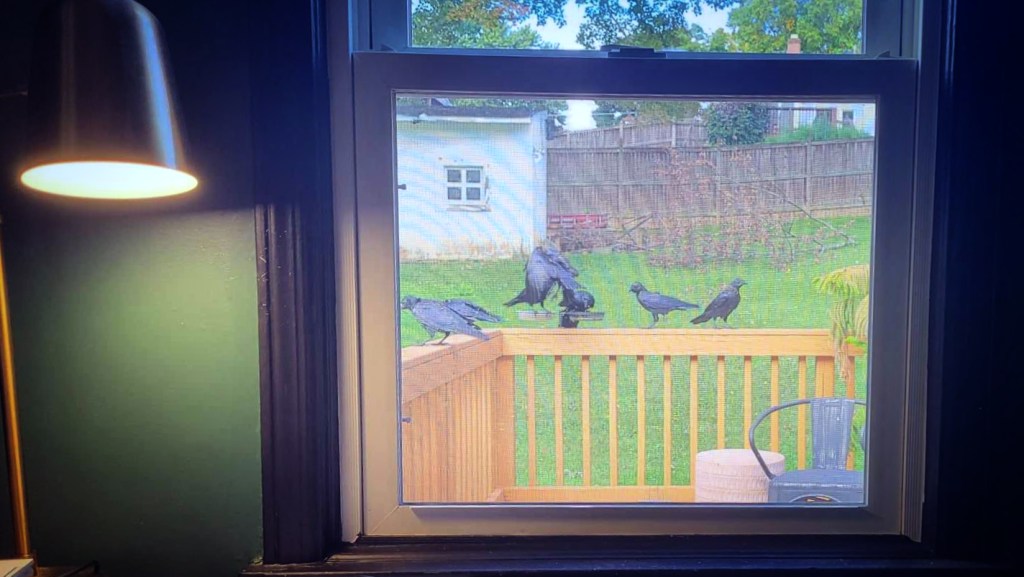
A view through a window, showing seven crows crowding around a feeder.
The view from my Handsome Assistant’s office. Not shown: The other six crows at the feeder on the other side of the deck.

All of the crows.
At the same time.

I knew it was the same group because they have a handful of pretty visually and behaviorally distinct individuals. They scrapped over cat kibble, raisins, nuts, and fancy organic peanut butter cereal (which is apparently a very hot commodity among corvids). I went outside to refill the feeders once they’d nearly wiped them out, and they flew off to the roof, waited for me to finish, and immediately swooped back to resume feeding.

It feels nice. As far-fetched as it seemed, there was always a nagging fear that I’d done something wrong somehow. Something to drive them away. Crows are intelligent, perceptive creatures, and I’ve heard stories of them spurning people for things like imitating the wrong crow calls. It’s good to have some confirmation that it wasn’t me — if anything, it seems like they’d been champing at the bit to get back and hang out.

It was also great to see how much they remembered. In the beginning, they’d fly off when I went outside. Things got to the point where they’d hop to the roof, at most, and wait for me to fill the feeders. Sometimes, if I was sitting down on the deck, they’d land near me to eat anyhow. Despite their hiatus, they still aren’t afraid. A couple flaps to perch on the roof, or the fence, or the shed, and they’re content to wait patiently and watch me put more food down.

A group of five crows swooping in to feed.

I missed these dorks so much. ❤

animals · divination

The Magical Meaning and Symbolism of Starlings

Since there are still small, belligerent starlings all over the yard, I figured I’d make the best of a very noisy situation and write a bit on starling symbolism and magical significance. While I mostly know them as small weirdoes who periodically walk up to me and gape to be fed (which is almost admirable in its temerity, to be honest), they’re powerful, sacred animals in their own right.

Despite their ubiquity in my area, starlings aren’t native to the United States. The story is that they were brought here in the late 1800s in what is, perhaps, the silliest fashion imaginable. A German-American Shakespeare enthusiast named Eugene Schieffelin wanted the US to have all of the birds mentioned in Shakespeare’s plays, so he imported and released about sixty to eighty of them. (Invasive species who?) However entertaining this tale might be, it most likely isn’t actually true.

Shakespeare’s mention of starlings refers to their talent at mimicry:

Nay,

I’ll have a starling shall be taught to speak

Nothing but “Mortimer,” and give it him

To keep his anger still in motion.

spoken by Hotspur, in Act 1, Scene 3 of Henry IV
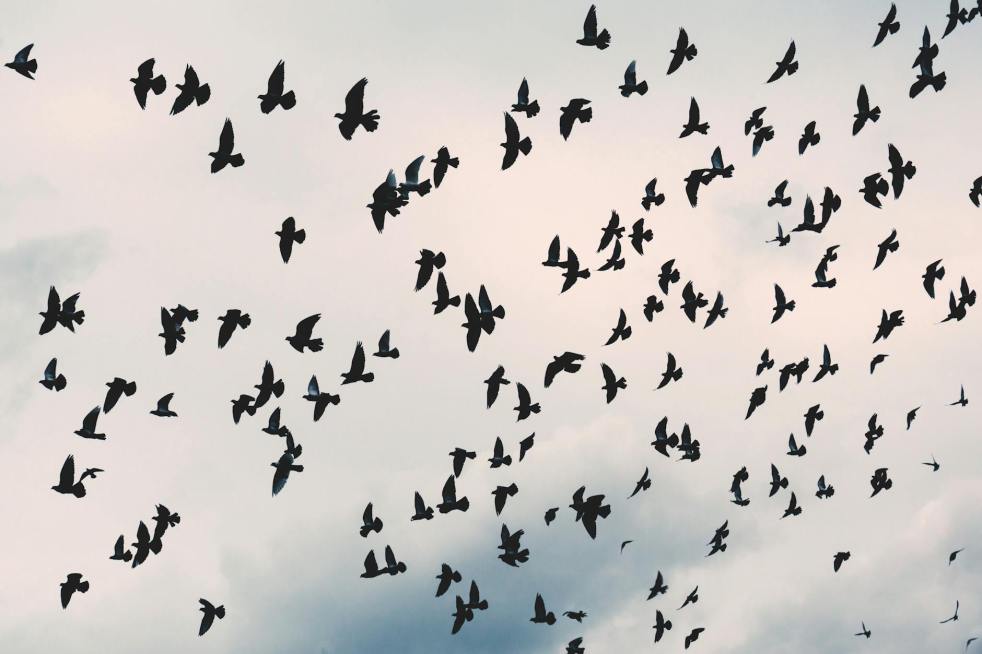
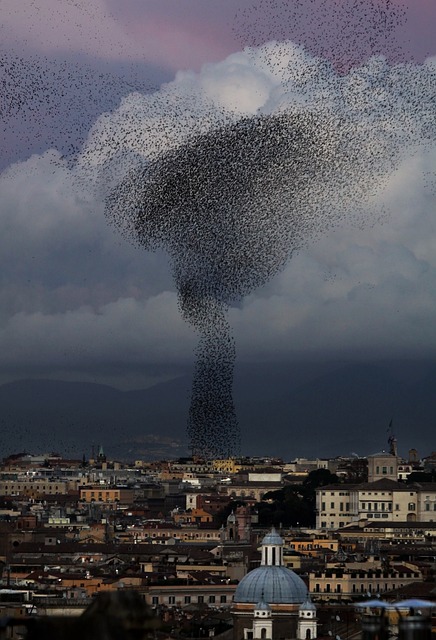
A murmuration of birds over a city, against a dark, cloudy sky.

In Rome, however, starlings were more than a curiosity or a passing note in a play, and starling symbolism was a important thing. Starlings form very large, elaborate migrating flocks called murmurations. These are exceptionally striking formations of thousands of individual birds who seem to cover the sky in a flowing, undulating mass. Augurs, diviners who read the movement of birds, would watch these murmurations to receive messages from their gods. Some forms and flows were very good omens. Others, not so much.

In the Welsh Mabinogion, Branwen is sent to Ireland to marry King Matholwch . Her marriage is far from happy, however, so she tames a starling and teaches it to speak. She sends the starling back to Wales, where it alerts her brother Bran to come and save her.

Starlings can mimic far more than words. Mozart kept one as a pet, and it learned to repeat portions of his compositions. When it died, he was heartbroken. He performed a funeral that his biographer (and wife’s second husband) described thus:

When a bird died, he arranged a funeral procession, in which everyone who could sing had to join in, heavily veiled – made a sort of requiem, epitaph in verse.

Georg Nikolaus von Nissen 

Starlings also seem to imprint readily on people. Personally, I have made every attempt to avoid them, however their babies still don’t seem to have any issue strolling up to me with their mouths open, expectantly. It’s kind of like walking up to a grizzly bear and demanding spaghetti.

In general, the starling’s place in folklore seems to have been secured by their ability to bond with people, and their talent at mimicking speech and other sounds they encounter. Just watch this one, who not only imitates a human, but flawlessly mimics an Alexa unit immediately afterward:

It’s almost eerie!

Starlings are said to represent everything from freedom, to prosperity, to love. Given their folklore, starling symbolism is most strongly connected to communication and divination.

To divine using a flock of starlings (or even just one, though they always seem to show up in groups!) involves noting their number and behavior. It can sometimes be hard to count starlings, particularly since they can number in the thousands within a single murmuration.

If you observe them in flight, like the ancient Romans, pay attention to the shapes they form. What do they evoke for you?

Note the direction in which they’re flying. This means both the cardinal direction, and their relative direction. The east represents beginnings, renewal, spring, and the dawn. The south represents a climax, an apex, summer, and high noon. The west represents a decline, a release, autumn, and twilight. The north represents endings, death, winter, and midnight.

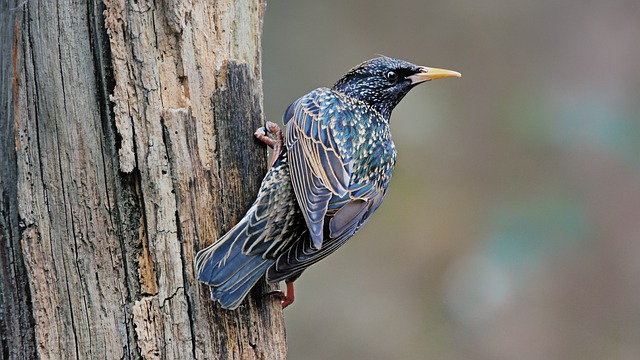
A starling clinging to the trunk of a tree.

In terms of relative directions, birds flying to the right generally indicates a positive or affirmative response. Birds flying to the left generally indicates a negative response.

As with any divination method, keep a journal of what you see and your interpretations. After some time has passed, revisit what you wrote and see how accurate it was. This can help you decode what the flight of birds means specifically to you.

Starlings are polarizing little guys. Some people absolutely love these noisy, funny little birds, while others hate them. I’ve come to be amused by their antics, though I’m also looking forward to when their fledglings are finally grown and it’s time for them to migrate!

animals · divination

The Magical Meaning of Starlings

Since there are still small, belligerent starlings all over the yard, I figured I’d make the best of a very noisy situation and write a bit on their magical significance. While I mostly know them as small weirdoes who periodically walk up to me and gape to be fed (which is almost admirable in its temerity, to be honest), they’re powerful, sacred animals in their own right.

Despite their ubiquity in my area, starlings aren’t native to the United States. The story is that they were brought here in the late 1800s in what is, perhaps, the silliest fashion imaginable. A German-American Shakespeare enthusiast named Eugene Schieffelin wanted the US to have all of the birds mentioned in Shakespeare’s plays, so he imported and released about sixty to eighty of them. (Invasive species who?) However entertaining this tale might be, it most likely isn’t actually true.

Shakespeare’s mention of starlings refers to their talent at mimicry:

Nay,

I’ll have a starling shall be taught to speak

Nothing but “Mortimer,” and give it him

To keep his anger still in motion.

spoken by Hotspur, in Act 1, Scene 3 of Henry IV
A murmuration of birds over a city, against a dark, cloudy sky.

In Rome, however, starlings were more than a curiosity or a passing note in a play. Starlings form very large, elaborate migrating flocks called murmurations. These are exceptionally striking formations of thousands of individual birds who seem to cover the sky in a flowing, undulating mass. Augurs, diviners who read the movement of birds, would watch these murmurations to receive messages from their gods. Some forms and flows were very good omens. Others, not so much.

In the Welsh Mabinogion, Branwen is sent to Ireland to marry King Matholwch . Her marriage is far from happy, however, so she tames a starling and teaches it to speak. She sends the starling back to Wales, where it alerts her brother Bran to come and save her.

Starlings can mimic far more than words. Mozart kept one as a pet, and it learned to repeat portions of his compositions. When it died, he was heartbroken. He performed a funeral that his biographer (and wife’s second husband) described thus:

When a bird died, he arranged a funeral procession, in which everyone who could sing had to join in, heavily veiled – made a sort of requiem, epitaph in verse.

Georg Nikolaus von Nissen 

Starlings also seem to imprint readily on people. Personally, I have made every attempt to avoid them, however their babies still don’t seem to have any issue strolling up to me with their mouths open, expectantly. It’s kind of like walking up to a grizzly bear and demanding spaghetti.

In general, the starling’s place in folklore seems to have been secured by their ability to bond with people, and their talent at mimicking speech and other sounds they encounter. Just watch this one, who not only imitates a human, but flawlessly mimics an Alexa unit immediately afterward:

It’s almost eerie!

Starlings are said to represent everything from freedom, to prosperity, to love. Given their folklore, they’re most strongly connected to communication and divination.

To divine using a flock of starlings (or even just one, though they always seem to show up in groups!) involves noting their number and behavior. It can sometimes be hard to count starlings, particularly since they can number in the thousands within a single murmuration.

If you observe them in flight, like the ancient Romans, pay attention to the shapes they form. What do they evoke for you?

Note the direction in which they’re flying. This means both the cardinal direction, and their relative direction. The east represents beginnings, renewal, spring, and the dawn. The south represents a climax, an apex, summer, and high noon. The west represents a decline, a release, autumn, and twilight. The north represents endings, death, winter, and midnight.

A starling clinging to the trunk of a tree.

In terms of relative directions, birds flying to the right generally indicates a positive or affirmative response. Birds flying to the left generally indicates a negative response.

As with any divination method, keep a journal of what you see and your interpretations. After some time has passed, revisit what you wrote and see how accurate it was. This can help you decode what the flight of birds means specifically to you.

Starlings are polarizing little guys. Some people absolutely love these noisy, funny little birds, while others hate them. I’ve come to be amused by their antics, though I’m also looking forward to when their fledglings are finally grown and it’s time for them to migrate!